






Abstract

Many girls around the world are told their schooling is a waste of resources, and yet they are left with no voice to protest. Here, three young women from Uganda, Nigeria and Pakistan share their stories of struggle and determination
UGANDA: “Girls become the opportunity cost”
Most people advised my parents not to waste time and money on my education. I was a girl, after all. I would get married and end up wasting the little resources they had.
I grew up in the rural area of central Uganda. My journey through school was a constant struggle, from lacking school fees to walking a long distance from home to school and its poor facilities. At primary school, we studied under a big tree until the government built classrooms. We used to sit on locally made mats until one day my father made me a three-seater desk, which I shared with my friends. There were lots of distractions, and whenever it rained we would not study, even if it rained a whole week. Most parents found it hard to push their children to school, so many dropped out, especially the girls.
The costs associated with attaining education are high. In most countries in Africa, including Uganda, there is free universal education, especially for primary levels. But there are costs parents still need to meet: food, uniforms, scholastic materials, and transport to school. These costs increase or double when their children get to secondary level, which forces parents to make a decision on whom to send to school. Girls become the opportunity cost.
Natumanya Sarah
Credit: Jane Mulungi
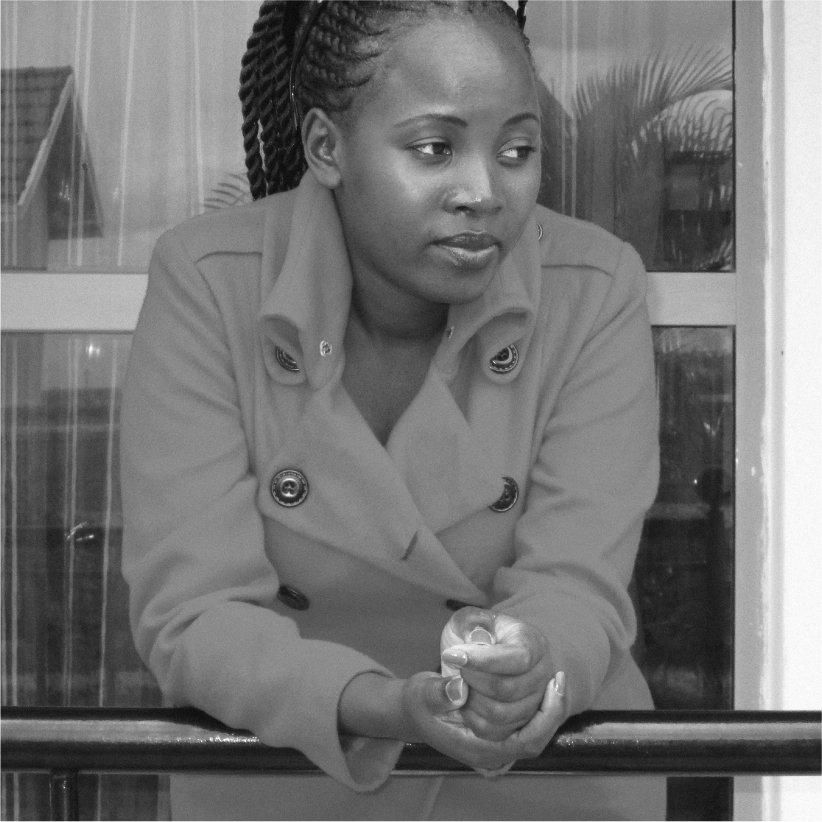
My parents, who are farmers, were very supportive. They always went to my school to negotiate my fees payment plan, which was based on instalments because they could not afford paying it all at once. Sometime they would succeed and sometimes I would be sent back home to fetch the money before I would be allowed to stay, especially during examination time. We sat for our primary leaving examinations (PLE) when we were 14 years old, but out of a class of 48, only one girl managed to continue with school up to university. And that girl is me. The rest dropped out one by one, and are now married.
Forging solutions to obstacles young girls face is important because education is the biggest empowerment tool one can ever have. I grew up wanting to know the science behind flying an aircraft. I thought one day I would be the person behind the science I always dreamt about. Unfortunately I didn’t realise this dream because there were too many obstacles.
But I did go to university. I studied business administration and I am currently working as an accounts assistant, a job that has helped me to put my younger brother through school. My own school days were very hard, but persistence and determination led me through. Giving a voice to the voiceless girls is one important thing I am proud to do today
© Natumanya Sarah
NIGERIA: “Education is seen as a luxury”
Access to education, especially for the girl child from low-income families and broken homes, is seen as a luxury rather than a necessity in Nigeria. As I was growing up, societal norms made me understand that girls play secondary roles: in the kitchen, as a maid, as a baby-maker and the bride. Girls with a passion to have a career are seen as abnormal, courageous and disrespectful.
Ijeoma Idika-Chima
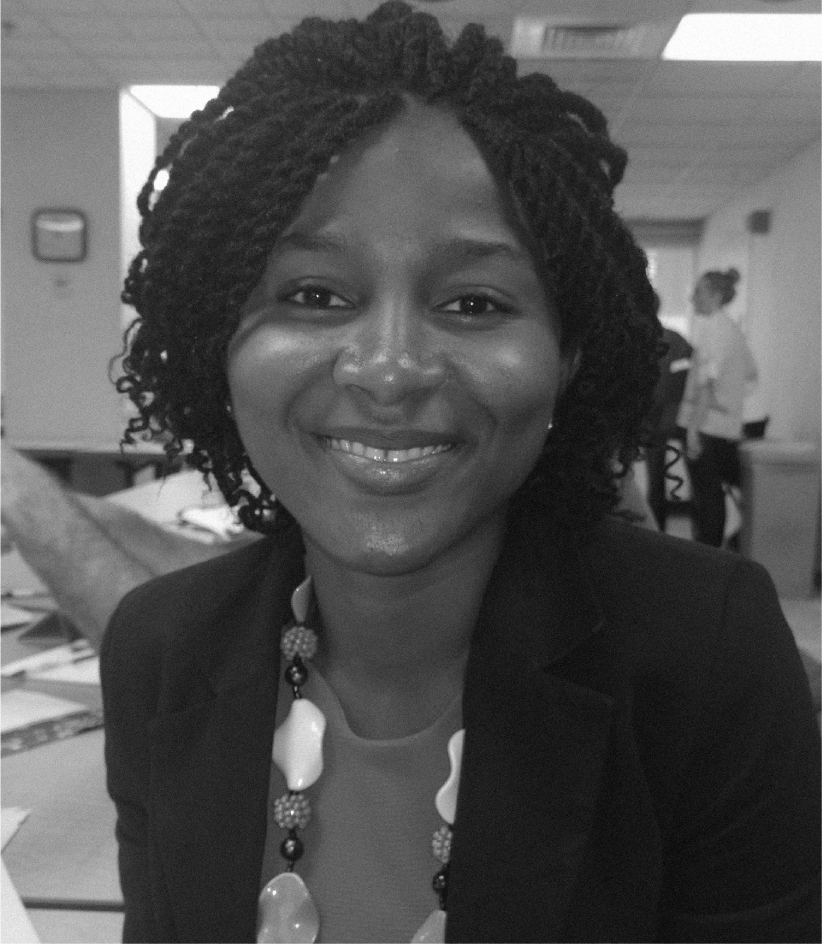
I was born three weeks after my parents broke up in Owerri, eastern Nigeria. When my father heard the news of my birth, he rejected me because I was a girl-child and he showed no interest in my education. I lived with aunts, uncles and others. I would go to sleep at 1am and wake up at 4am to do domestic chores before going to school. I was often perceived as a hopeless child, without a future. I made several suicide attempts.
Yet I was always determined to further my education. I resisted the temptation to drop out and after secondary school I searched for a part-time job to pay fees for an English language degree through a distance-learning programme at the University of Abuja. Last year, I was recognised as a Young African Leader and a Mandela Washington Fellow (YALI) by US President Barack Obama.
Challenges faced by girls in Nigeria include: lack of parental awareness about the benefits of education; lack of access to schools, especially in rural communities; religious and cultural practices, including early marriage and working as maids; lack of interest from some girls; sexual harassment and teen pregnancies; and insecurity, especially in north-east Nigeria, where the schoolgirls were kidnapped by Boko Haram militants in Chibok in April 2014.
Every child has a basic right of access to education and to quality education. In 1990, the Unesco-led Education For All movement was launched to ensure that by 2015, all children, particularly girls, complete compulsory primary education. The gap still exists despite the Millennium Development Goal.
Girl-child education is the key to the empowerment of females and one of the ways to improve developing nations. Educated women are likely to participate in political discussions, meetings and decision-making that promote effective governance. I believe that improving girl-child education has to be a collective effort by all stakeholders in Nigerian society.
© Ijeoma Idika-Chima
PAKISTAN: Finding a voice and respect
Meet Mehwish from Hyderabad. I have known her for years and I have seen her struggling to be what she is now. She comes from a not-so-well-off family. Her father wanted his kids to go further than he had.
They had only one teacher for all the science subjects – physics, chemistry, biology, maths – and they would sit on mats outside because the science room was too small. Out of a class of about 60 students in the final year, only three moved up because of financial and social issues.
Mehwish became the first girl of her family to go to a very good, private college in city, after receiving a scholarship. But people around were talking all kind of stuff, pressuring her parents to stop her, as “she wouldn’t find a match in family or caste for wedding”. Such pressure is sometimes immense.
Mehwish stood her ground and despite the frustration, she carried on. Travelling 22km to college every day was a nightmare. She had to take two vans and walk on foot for the rest of the way in scorching sun, and in winter in very low temperatures. Then came the catcalling, and other harassment from walking alone.
For a girl from her background, her scores for the Higher Secondary School Certificate were remarkable. Yet she had no resources to pay for further education, so she just dropped her plans, and she started home tuition for the kids of the town.
Then she got university admission and a scholarship, but a new trouble began for her: talk demonising her for going to a co-education institution. Some people also said to her father that he should stop wasting his resources on her. These things reinforced her passion though and she earned a silver medal while passing out with a four-year degree in chemistry. She then started graduate school and got a job to help her father. She was also happy to see her siblings following her and getting good grades. Now she has a voice and she is respected. Things have changed, she says, “those who would talk behind my back now stand up for me”. Most of them are even willing to send their girls to school and co-ed institutions now.
However, that’s just a small village that has changed. There are so many girls, who unlike Mehwish, cannot stand up for themselves against the odds, who do not have their families to support them, and who lose their goals because they were made to cook and clean.
© Sajiha Batool