






Abstract

Following the removal from power of a corrupt official, the “official narrative” is that it is a lot less dangerous to be a reporter in the state of Veracruz. But recent events paint a different picture, reports
Every 4 January, Mexico marks National Journalist Day with newspaper columns reflecting on the country’s freedom of expression crisis. But there are no easy solutions for media workers in Veracruz, the single most dangerous place for the press in the deadliest country for journalists in 2020.
“We are totally defenceless,” Valdivia’s friend told Index. “State police act as if we are enemies and offer zero information… Walking through this region, you feel the darkness.”
The media crisis in the state of about eight million inhabitants is a product of its strategic location in Mexico’s ongoing crime war. Cartels have long smuggled drugs through the Port of Veracruz. In the past decade, they have also diversified into activities such as extortion, kidnapping and fuel theft from pipelines.
Valdivia worked for El Mundo newspaper, covering the border region between Veracruz and the adjacent state of Oaxaca. The area is a key battleground for criminal gangs, including the Jalisco New Generation Cartel (CJNG), a sprawling syndicate now considered the country’s top security threat.
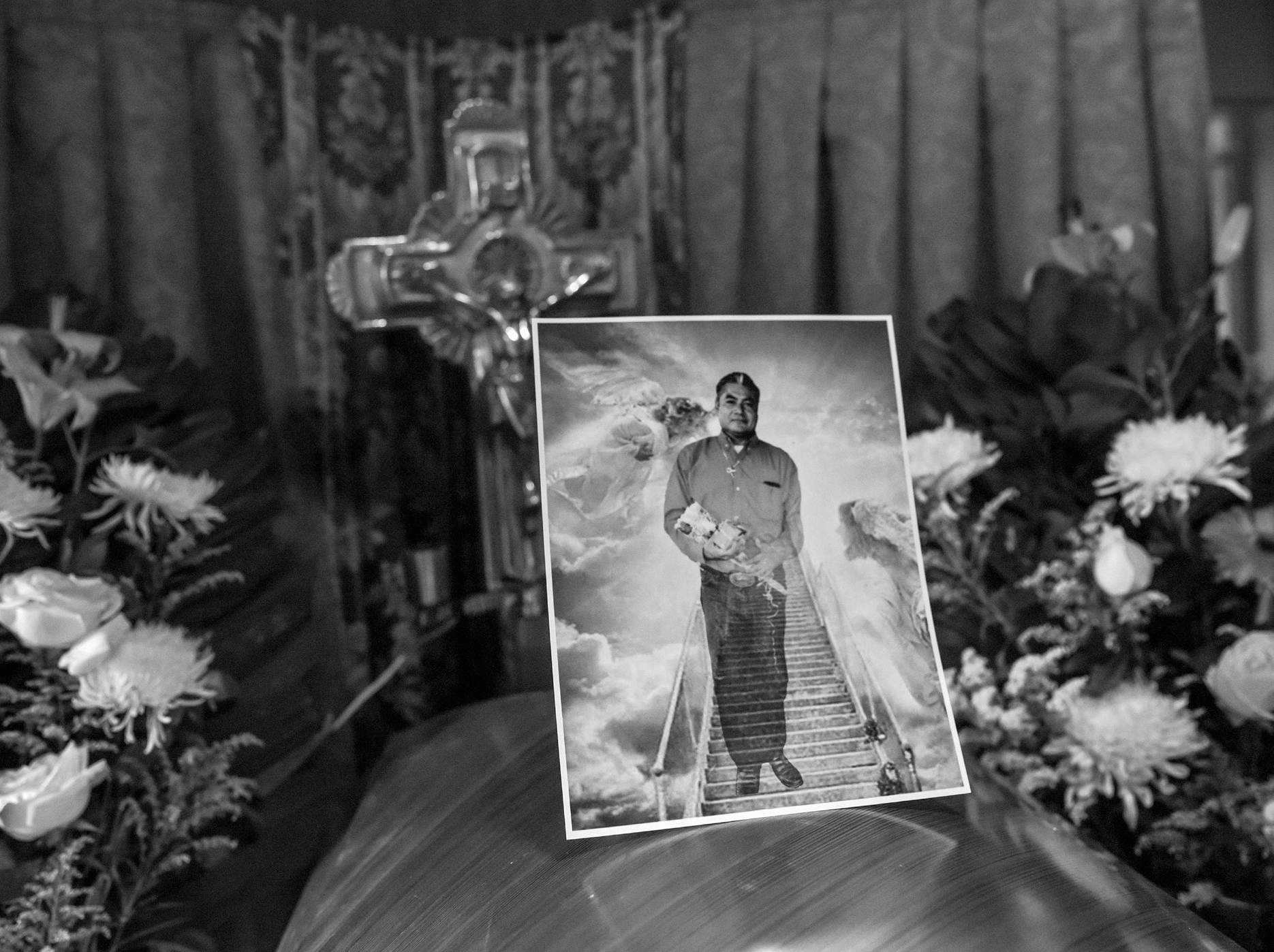
Despite the dangers he faced, El Mundo reduced Valdivia’s salary earlier this year. At the time of his murder, the journalist was earning the equivalent of about $47 a week. The father of six was buried in a metal casket because his family could not afford a wooden coffin.
“Journalists have endured massive salary cuts,” said Ana Laura Pérez, the president of the Veracruz State Commission for Attention to and Protection of Journalists (Ceapp). Those economic difficulties have become even more complicated with the pandemic.
Pérez said that financial pressure on journalists was another form of censorship, reducing interest in the profession. “Reporters need better working conditions because they are the eyes of society,” Pérez said. “Independent journalism is a vital part of a democratic state.”
Veracruz became synonymous with corruption during the term of state governor Javier Duarte. Elected in 2010, Duarte stole vast sums of federal money designated for social initiatives in the state.
The governor allied with the CJNG against the Zetas cartel, which had previously controlled the state’s illicit economy. Violence soared as he directed state security forces to murder and disappear suspected Zetas.
To avoid scrutiny, the state government spent about $430 million on advertising contracts with media outlets. In return, the administration expected favourable coverage.
Journalists who refused to comply became targets. Article 19, the press freedom campaign group, documented 271 acts of aggression against the press in Veracruz between 2010 and 2016. These included physical attacks, direct threats, abductions and harassment. On one occasion, Duarte’s own security guards jostled with a photojournalist at the official signing of an agreement to protect freedom of expression.
Lethal violence against the press also escalated under Duarte. During his term of office, Veracruz recorded at least 17 killings of journalists and three disappearances.
Duarte announced he was resigning to face criminal charges in 2016. Instead, he fled Veracruz in a helicopter. After six months on the run, he was arrested in Guatemala and extradited to Mexico. After agreeing to plead guilty, Duarte received a nine-year prison sentence for organised crime association and money laundering. The light punishment sparked national outrage and he may now face further charges related to the enforced disappearance of a police officer. Duarte’s ex-wife and suspected co-conspirator Karime Macias is fighting an extradition case after fleeing to London.
The current governor of Veracruz, Cuitláhuac García, says the freedom-of-expression crisis that peaked under Duarte is now under control. But rights groups offer contradictory accounts.
“The problem continues because of the political culture [in Veracruz],” said Ceapp’s Pérez. “Our public officials are very intolerant of criticism. We have recently seen officials threatening media workers. If the boss maintains a negative attitude with the press, their subordinates know they can also violate their rights.”
Freedom-of-expression studies show public servants, rather than drug traffickers, are the main violators of press freedom in Mexico.
A picture of murdered journalist Julio Valdivia on his coffin during his wake in Tezonapa, Veracruz, September 2020
CREDIT: Victoria Razo/Getty
But in many states, including Veracruz, the line between political and criminal interests has blurred.
During the past decade of violence, self-censorship has become the norm in many regions. In Veracruz, coverage of corruption and cartel-related crimes has reduced. But in contrast to the adjacent state of Tamaulipas, where investigative journalists have fallen silent, some reporters in Veracruz continue to cover political scandals and cartel activity.
“A small sector of the press held firm in its decision to report on these incidents,” said the Inter-American Commission on Human Rights in a report on freedom of expression.
Journalists have paid for their refusal to censor, and 25 reporters have been killed in Veracruz in the past decade, according to Article 19. That figure accounts for nearly 30% of the total across the country.
After an international outcry, national and state authorities both introduced schemes to provide support measures such as security cameras and armed protection for at-risk journalists in 2012.
But such measures do nothing to address the underlying impunity driving the crisis. The government estimates authorities across the country punish fewer than 1% of crimes against the press. In Veracruz, no single case of a murdered journalist has been resolved.
Fernanda De Luna desperately hopes that situation will change. Following the murder of her mother, the journalist Maria Elena Ferral, in March, authorities issued arrest warrants for 11 suspects. Police have since detained six people. But De Luna, who is also a reporter, remains sceptical about the government’s commitment to defending freedom of expression in the region.
Ferral was a correspondent for a local newspaper, El Diario de Xalapa, and co-founded the digital outlet El Quinto Poder with her daughter. Days before her death, she published a final column on her website. In that article, Ferral described the murder of four aspiring politicians in northern Veracruz. She identified the members of a powerful political group as the key suspects in the killings. “In this new political landscape, the fight for power will be brutal,” Ferral wrote. “Without a doubt, there will be more political crimes in this region.”
Later that month, a masked gunman on a motorcycle shot the 49-year-old as she left a notary’s office in the city of Papantla. She was rushed to hospital but died later that day.
De Luna notes her mother had suffered violence in the past. In 2005, she was shot in the leg after providing a taped interview to the police linking local mayor Basilio Picazo to the murder of a former municipal official. Seven years later, unknown assailants shot into her car and caused a crash with another vehicle.
In 2016, Ferral accused Picazo of threatening to abduct and kill her during his campaign for Veracruz state congress. Following the threat, Ceapp assigned Ferral a bodyguard. But the government withdrew that protection the following year.
De Luna believes the murder was linked to her final publication. “When I read that column… I told her to be careful,” she said. “But she always wanted to defend people and expose politicians that exploited them.”
Less than two months after her mother’s murder, De Luna was travelling by car through rural Veracruz. Gunmen started shooting from another vehicle but retreated when her bodyguards returned fire.
De Luna said the experience would not deter her reporting, which had transformed into a vehicle for channelling grief.
“My mother’s passion was journalism and I want to carry on because I don’t want to see our joint project fail,” she said. “I know the risks, but I need to keep working.”