






Abstract

Lawyer and children’s rights campaigner Babar Qadri was shot dead at his house in Kashmir last year.
KASHMIRIS ARE KNOWN for being gracious hosts. But last September at Babar Qadri’s home, this ritual of hospitality became a prelude to his murder.
Two men went to the human rights lawyer’s house, saying they wanted a consultation, and were shown into his garden. Qadri’s father, in traditional Kashmiri style, asked for tea to be brought for them. But the guests were not seeking legal advice. They were assassins.
A roaring voice on Indian television and defender of human rights, Qadri was gunned down in his garden in a densely populated area of Hawal in Srinagar, the summer capital of Indian-administered Kashmir.
Immediately after firing upon Qadri, the gunmen fled the area. While lying in the pool of blood, Qadri told his brother Zafar, who is also an advocate, to rush him to the hospital, but he was declared dead on arrival.
Qadri had been at the frontline of civil rights defence for more than a decade and was one of the founder members of Kashmir Thinkers Guild, a local movement for training and mobilising students, civil advocates and environmental rights defenders.
He was also a part of Initiative for Peace and Justice, an organisation seeking to establish peace in the violent region. Qadri organised human rights workshops, awareness drives and non-violent marches to highlight the plight of Kashmiris. He had taken up many lawsuits alleging human rights abuses against children and vigorously advocated for a better criminal justice system for young offenders.
A vocal champion of Kashmir in the media, Qadri’s murder was one of the most high-profile killings in the conflict-torn region of Jammu and Kashmir.
His father, Yasin Qadri, told Index that his son was a fearless man.
“He was aware of the threat to his life. However, the police didn’t take him seriously,” he said.
“Babar time and again raised the alarm and requested security cover, which was never provided to him.”
According to Qadri’s social media posts he had escaped two previous attacks, but his father said that police thought his son made the threats public for “cheap publicity”, saying: “Had the police taken him seriously, it wouldn’t have happened.”
Qadri was a regular guest on Indian TV, condemning the Indian state for the harsh way it handled Kashmir.
The killers had been waiting for Qadri outside the small lane leading to his home, going into the garden with him and his younger brother.
Qadri told them to wait on the lawn and went inside to tell his mother to prepare some food.
He told her that he would first deal with the clients and then eat.
Little did she know that Qadri would leave this world without even tasting the food she prepared for him.
Qadri standing on the chessboard tiles in his garden where he was shot dead
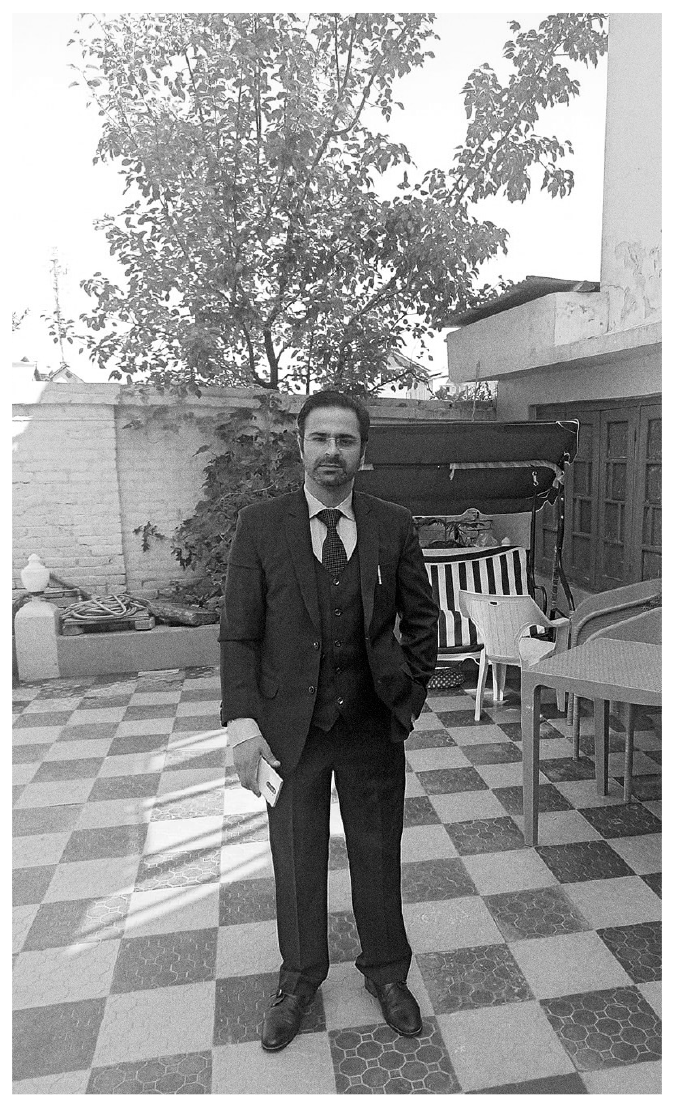
Qadri stepped out onto a small area tiled like a chessboard – black and yellow – to talk to the men, who were carrying a file with them.
Qadri’s father heard raised voices and a few minutes later his parents heard gunshots.The guests had checkmated the kingmaker, as his brother called him, on the chessboard. Tears rolled down her cheeks when Syed Shameema Bano, Qadri’s mother, recalled the tragic event. She said: “Babar braved multiple bullets and rushed inside the home. He fell in the corridor with blood oozing out from multiple wounds because of bullets.”
Journalist and political analyst Majid Hyderi, a longtime friend of Qadri, told Index that his friend had paid for his bravery with his life. Describing him as “a fearless lion killed in his den”.
Hyderi said Qadir had received death threats over the past two years but the Jammu and Kashmir police did nothing, even after he escaped a bid on his life in 2018.
“Even two days before his assassination he tagged police in a tweet about the threat to his life, but police did nothing again,” Hyderi claimed.
“From veteran journalist Syed Shujaat Bukhari [who was gunned down in 2018] to Babar, the police are responsible for having miserably failed to save their lives.”
He said Qadri was a vociferous orator and a fearless defender of human rights who loved Kashmir and wanted a peaceful settlement to its problems.
“But apart from all this, he was also a family man – an exemplary father of two daughters,” said Hyderi. “I would see him loving and spending lavishly on them. His assassination has killed the home-sweet-home of his daughters as well.”
Born on 15 September 1980, Qadri received his early education in Dhobiwan, in the Tangmarg district of Baramulla, and later studied and grew up in Srinagar.
“My son studied in a government school and would outsmart kids of his age from private schools,” his father said.
After high school, Qadri took a course in computers for almost a year but information technology didn’t hold him for long. He took an entrance exam to the University of Kashmir and was selected for a three-year degree in law, during which time he revived the banned Kashmir University Students Union.
Later, Qadri started practising at the Jammu and Kashmir High Court and challenged the Kashmir High Court Bar Association. The association suspended Babar’s membership for “indiscipline”, so he formed the Kashmir Lawyers Club.
His father said: “I always used to advise Babar not to challenge the exploiters and the system. He was for an independent Kashmir.”
Humayun Qadri told Index that his brother was a kingmaker who never had a lust for power. “He was a democrat in a real sense, not only in his professional acts but in his personal life as well,” he said.
Recalling her son’s life, Shameema, said that when he had no money to pay for public transport to travel home from school he used to walk. “On return, he never used to complain of not having money. Rather, he used to say that he had a good walk,” she recollected.
Qadri married Saima Wani – the daughter of Ghulam Qadir Wani, a philosopher, politician and supporter of Kashmiri independence who was similarly gunned down at his home 22 years ago. Together, they had two daughters, Zahra and Zaineb. Eight-year-old Zahra, the eldest, asked her grandparents: “Why did you offer tea to the killers of my father? Were you fools?”
Babar Qadri’s two children, Zahra (left) and Zaineb (right),photographed after his death
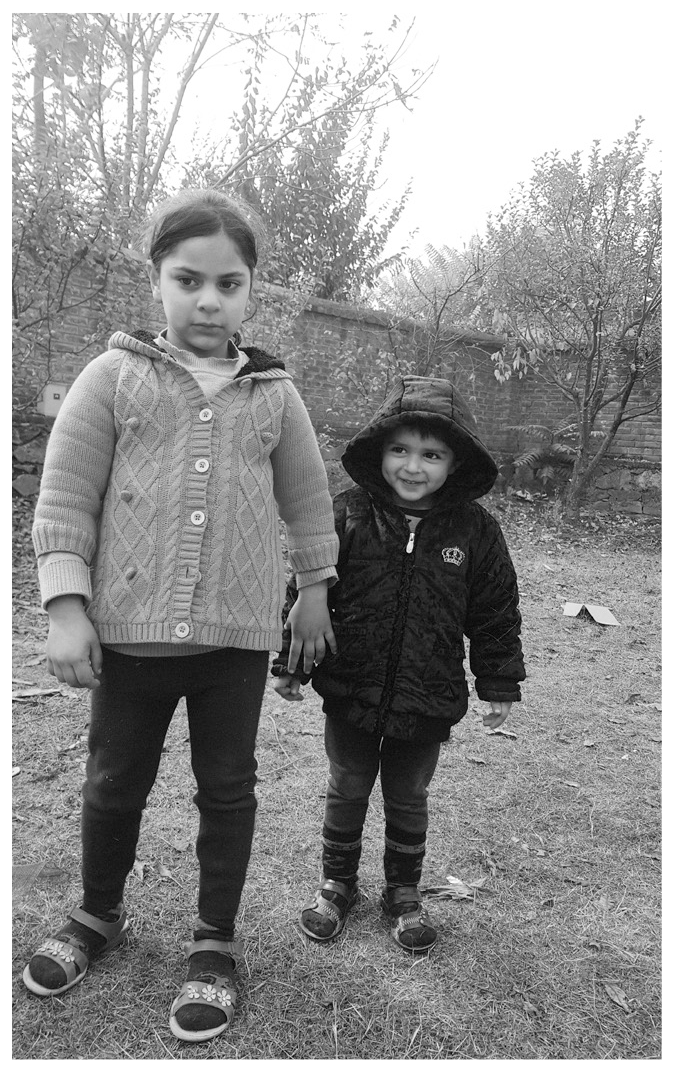
Saima Wani told Index that Qadri was a good father. “I couldn’t do as much for the kids as he used to,” she said, adding that Zahra asked every day about when her father will come back.
“Since the killing of Babar, she has not been able to concentrate on her studies.”
Even the burial was not easy for the family, who wanted to go to their family graveyard. After bringing Qadri’s body back home from the hospital, there was the worry that the authorities might take it away. “As police and the army cordoned the entire area, in the late evening we took him to our ancestral graveyard at Dhobiwan...for the burial,” said Yasin Qadri.
Days before the killing, Qadri posted on social media about the threat to his life, saying: “I urge the state police administration to register an FIR [a report filed by police after they receive notification of a crime] against this [name withheld] who has spread a wrong campaign that I work for agencies. This untrue statement can lead to threats to my life.”
According to Qadri’s father, two critical incidents could have led to his son’s killing.
One is that, on national television, Qadri said “down with India”. The other could be the posts Qadri made after the abrogation of Article 370 and 35A of the Indian constitution that provides quasi-autonomy to the region, saying that big corporations would take control of resources in Kashmir.
Laila Qureshi, a family friend, said that Qadri was killed because of the truth. “I don’t know anything about his affiliations but all I know is he was speaking the truth and, to my analysis, he was killed because of speaking the truth.” She said he had helped her with a legal case. “I found him a generous, good human being [and I] haven’t seen many like him. He believed in giving and not taking. He always believed in loving people without any expectations.”
Another client, Hina Kazmi, said that Qadri was handling her divorce case. “I remember him many a time going out of his way to help people without getting anything in return,” she said.
Arshid Bashir, a Delhi-based lawyer told Index that Qadri was a fighter by nature. He said: “He was a lively person. He would make his presence felt in the court and was concerned for Kashmir. He used to take cases of stone-pelters [Kashmiri people who throw stones at the police] and the poor pro-bono. He was politically very conscious.”
According to Bashir, Qadri believed in electoral politics to address day-to-day issues and would consider democratic institutions the best platform to express one’s political opinion.
“He had serious reservations with India and Pakistan alike. He would often speak about their complicity in aggravating the Kashmir issue and bringing it to the present point,” he said.
A young university teacher who does not want to be named feels that such killings by unidentified gunmen will have an enormous effect on the psychological health of society in Kashmir. In other words, people, especially those who hold any opinions around Kashmir politics, will have to be extremely careful what they say. Babar’s killing is deeply condemnable. Whatever his political opinions, his voice should not have been silenced. Those who have killed him, and whatever they stand for, do not stand for upholding human rights in Kashmir.
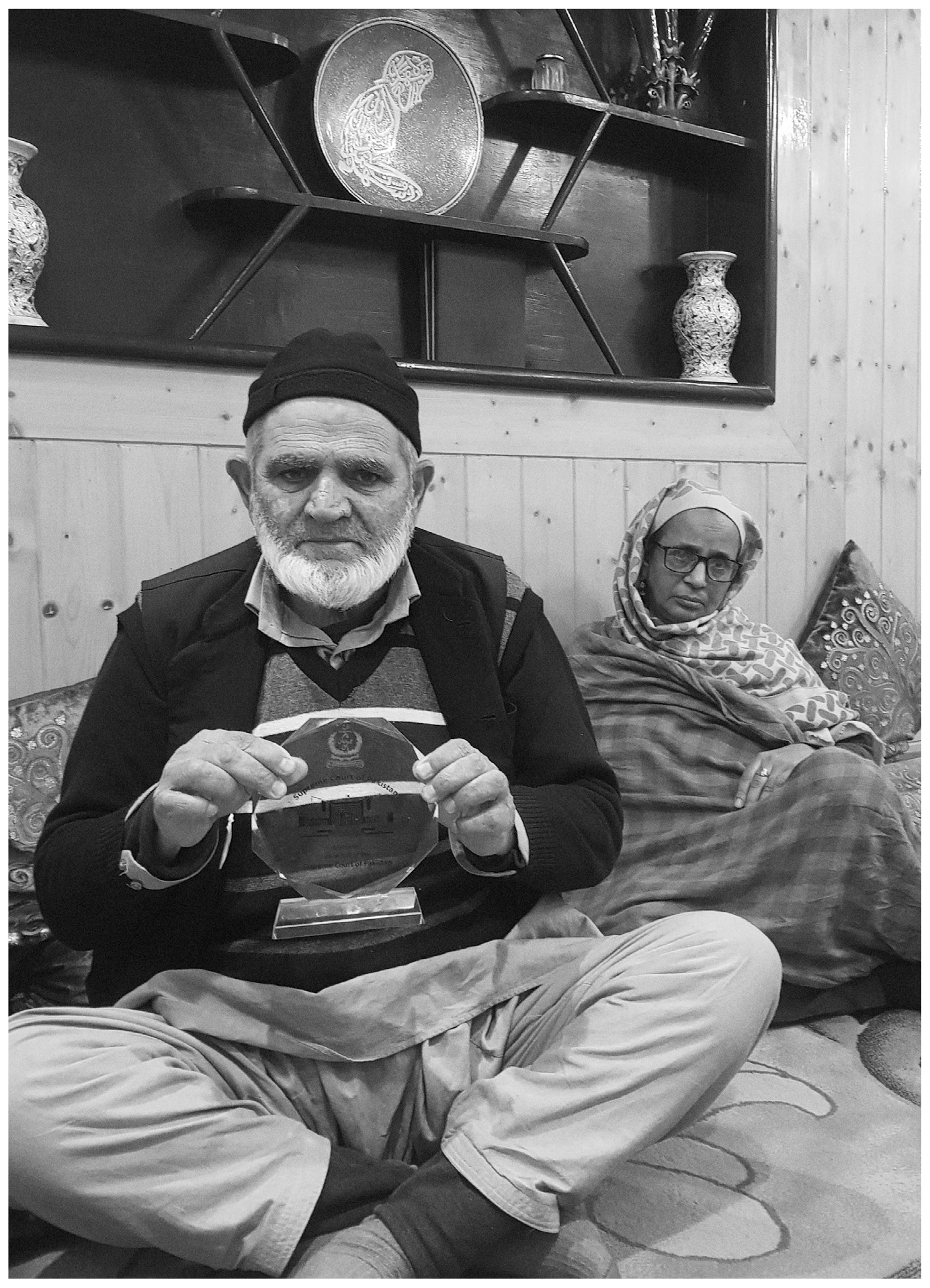
Qadri’s mother Syed Shameema Bano (right) found him with blood oozing out of bullet wounds
CREDIT: Bilal Ahmad Pandow
Omar Abdullah, National Conference vice-president and former chief minister of the region, said: “The sense of tragedy is all the more because he warned of the threat. Sadly, his warning was his last tweet.”
People’s Conference chairman Sajad Lone tweeted: “One more Kashmiri falls to bullets. Yet another victim of conflict.”
The police investigation
A FORMAL FIR video number 62/2020 under section 302, 7/27 Arms Act and 16/18 UAPA was recorded at the Lal Bazar police station shortly after Qadri’s killing, while a special team was set up to investigate the murder on the orders of Vijay Kumar, the inspector general of police for the Kashmir region. However, Qadri’s family are on the record as saying that they have no faith in the investigation. After more than five months, three people who had been accused were named by the Qadri family and their domestic help and were sent to prison on remand. Two members of the trio’s family vouched for their innocence, claiming they were wrongly implicated and tortured.