






Abstract

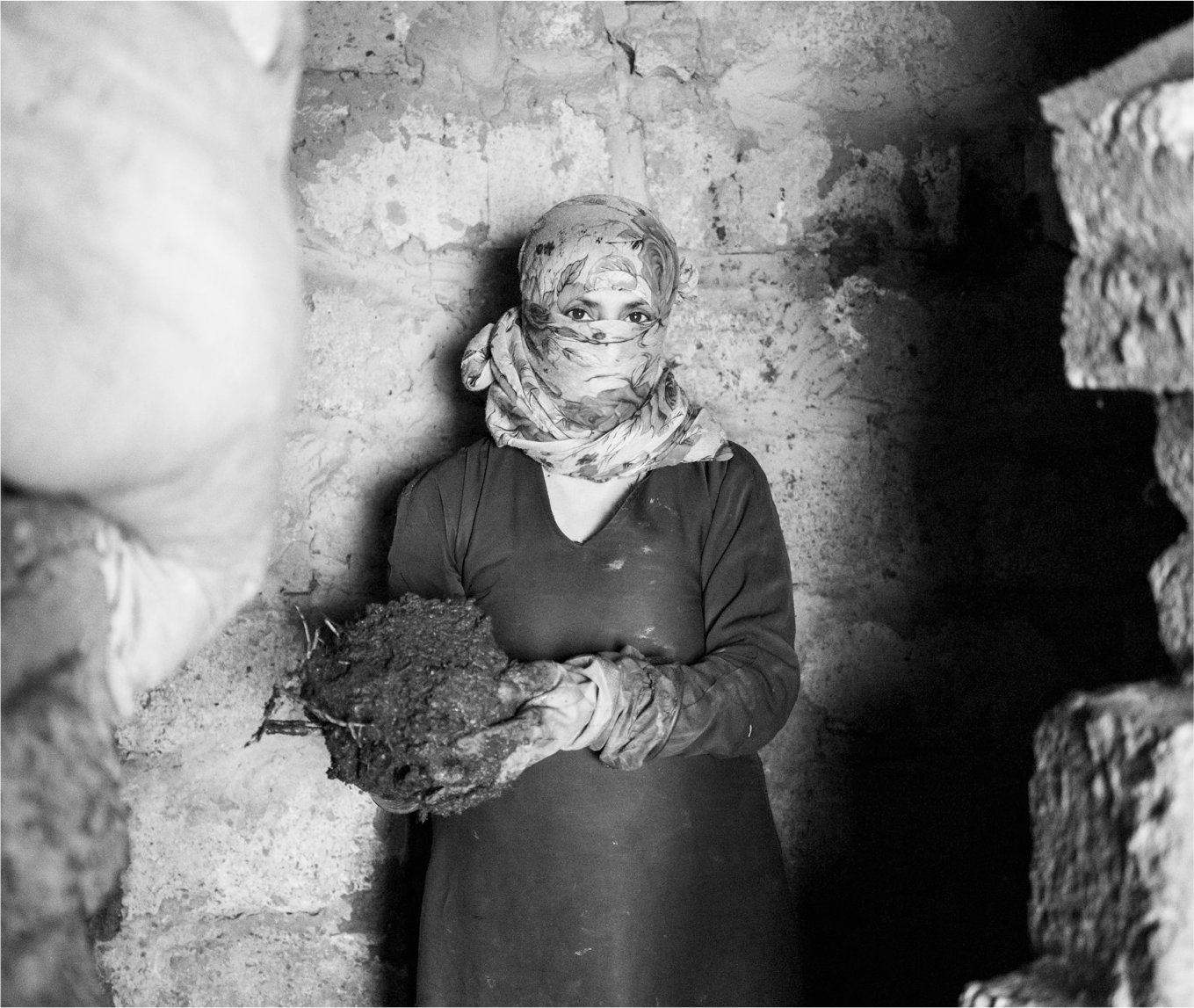
Photo-journalist Hayat al-Sharif is known for her portraits of Yemeni women
CREDIT: Hayat al-Sharif
Her debut novel, Behind the Sun, was written in 2012 and released to critical acclaim. She won the Françoise Giroud Award for Defence of Freedom and Liberties a year later but her work has never yet been translated into English.
The book, an extract from which we are publishing below, reflects on Yemen’s fall into the mire of civil war and the world’s worst humanitarian crisis. It details how glorious revolution developed into grim disillusion, where women appear as little more than an irritant.
For other women writers in Yemen, al-Maqtari, who is currently being treated for a brain tumour, is an example of courage in the face of a world that doesn’t approve of what they do.
She told the German broadcaster Deutsche Welle that Yemen was where “her writer’s soul belongs” and she did not want to alienate her country by leaving. She has created a large body of work including books which document the testimony of victims of war.
When al-Maqtari won the Johann Philipp Palm Award for Freedom of Speech and the Press in 2020, her friend Monika Bolliger, a Der Spiegel writer, said: “Bushra’s writing is a refusal to give in. I hope that she will continue to be that voice that is a thorn in the side of tyrants and war criminals.”
Al-Maqtari is not the only one determined to carry on, even though female activists and journalists are constantly held back.
Houthi-controlled Sana’a is particularly restrictive. The Houthis, who now control most of the Yemeni population, are a theocratic Shia force akin to the regime in Iran, which is their biggest backer.
Photo-journalist Hayat al-Sharif is based there, and she explained that a combination of a lack of education and condemnation of female voices meant women writers were “aggressively fought”.
“Yemen has a very high illiteracy rate and the people here are linked to customs and traditions that prohibit women from working,” she said. “Women are not allowed to speak or write on social or political issues. The society is aggressively fighting women’s work. Writing in Yemen is considered a crime by the authorities, and by the society that is subordinate to the authorities. The corrupt use force against the writer – you are not allowed to write, take pictures or speak.”
Barriers to writing and reporting are numerous and al-Sharif must apply to each of the four local authorities for permission to carry out her work.
Should this be denied, she would be actively defying the state that frowns upon a woman carrying out her occupation.
“As a photo-journalist in a war-torn country, I have suffered between my work and the four powers – the Sana’a authority, the Marib authority, the Aden authority and the coalition authority. In order to film a project I must obtain permission from everyone. This is very difficult.”
The Yemeni civil war has raged for nearly seven years. The longer it continues, the worse the humanitarian disaster will get and the harder it will be for Yemeni women to speak out.
An end to the war is not likely to bring relief, either. The Houthis will not provide Yemeni women with the ability to express themselves. They are in a tunnel with no light in sight.
Behind the Sun
By Bushra al-Maqtari
“Didn’t you run away, soldier? With your tail between your legs? Leaving us exposed? As if you get a say in the matter now!”
No words came out, my hands slick with sweat.
“You’ve been blacklisted, Yahya,” my superior continued, slipping the report into my file.
Whenever I think about what he wrote in that 500-page report, crammed with black text from top to bottom, scribbles falling out of the margins, I feel my heart in my mouth. All my dedication, my struggle, my love for the nation: all of it hidden from the committee’s eyes. Reading the camp commander’s damning statement, my throat tightened, the military penal code a cleaver dangling over my head.
“It wasn’t like that, sir!” I cried out. My superior officer didn’t answer, and in the closed proceedings of the military court I sat crouched, a guilty child in the lawyer’s shadow. Five years in military prison. Case closed. My record scrubbed clean. Sign here, Yahya. I signed the papers and returned to my duties at the prison clinic with a filthy black file.
God, those Saada war years are all anyone talks about. They said jump. I said how high? And now, with the anniversary of their victory coming, I’ve got to stand up for what I did. I can feel their eyes boring into me; keep your ears open, Yahya, listen up. My superior officer left the room, leaving me alone with my demons. Stuffing my mouth with khat, I focused on making my breathing more deliberate. When is Abbas’s night shift again? I need a break. But the power’s been out for some time, and I’m afraid to go back to our neighborhood, a battlefield between the Dawa’ men and the youth. Ever since I’ve been living here, I’ve been avoiding those Muslim preachers as much as I can, but sometimes they’d greet me and I’d respond warmly; they’d ask about how things were, meaning with me, and I’d say everything’s well, brothers. They’d ask our names, which mosques we pray in, and if we chew khat before praying or after. I’d answer patiently, yes, we chew khat with our wives and sometimes at work to keep loneliness at bay. At night they grow rowdy, threatening the young men sitting in the vacant lot watching TV, passing round joints. “Why are you all sitting out here?” they’d ask. “Why don’t you go on inside?” A sarcastic quip or two would result in blows. A few weeks ago, their group showed up in their shortened white trousers and thick beards, led by bulldozers. My neighbor Mohammed yelled from his window, “They’re coming! Should we go outside or turn off the lights?”
“Turn off the lights,” I said. “It’s got nothing to do with us.”
But my wife wanted to throw me into the fire. “Go on, Yahya,” she urged. “Aren’t you a soldier?”
“What am I supposed to do? The police are already dealing with it, don’t you see the squad lights across the street? And look, our aqil, too, he’s standing right there.” Our neighbour’s voice was cut off suddenly. I heard his footsteps outside, women’s shrieks mingled with exclamations of “Allahu Akbar!” I watched as bulldozers tore down Muhsin Allawzi’s home. Furniture smashed to pieces on the street, children crying and women sobbing on the stairs. Eyes staring out from windows, watching what was happening, as I did the same. But what matters is that it didn’t happen to me. The Dawa’ men set off down one of the alleys with Muhsin, who had been gripped by silence like so many other things.
I went back to bed. “Come here, woman, come closer.” My wife threw me a dirty look. Silence. Yahya can’t even control his own home. How I hate this woman. Since when has she hated me? I keep a gun under my pillow. A soldier’s got to be on his toes these days, you never know what’s in store. “Get over here, now,” I told her. “I’ll give it to you like they did Muhsin.” She paid me no mind, like I wasn’t even there. After I beat her, she tried to run away. I locked the door, pocketing the key. You’ll get over it in a few days. But she never did.
Don’t you know you’re my legal property? I can have my way with you whenever the hell I want – it’s my right. Damn you and damn the way this marriage has rotted away my soul. What do I care about your life? What matters is that you came to me as a virgin.
That day the men from my tribe gathered, their gunfire ringing out in the neighbourhood. I sang Ayoub’s wedding ballad, it always moved me deeply whenever I heard it at other weddings. I sing the wedding song from our old house. It’s not the same house now, not the same life. I sing, thinking of that distant night.
The sheen of my tribe’s eyes remained fixed on their rifles. I was the cocky groom on his first night. You laughed at me, and I laughed too. That was the last time we laughed together, before we grew to hate one another. A miserable husband, a stubborn wife, your head always in the clouds pouring resentment onto me. Why is this woman such a stranger to me? Be patient, Yahya, I told myself, this depression will go away on its own, but you grew even more distant, and now when I get a sense of the scale of your hatred, it blinds me. I come home late from work and find you reading. Who gave you that book? Why don’t you answer? I don’t seem to exist for you. I feel a lump in my throat when I look at the woman living in my house. The woman I coldly have sex with, why don’t you come to me for once, then we can both apologise and make up? Everybody has another face, it’s like Yusuf said. Is everybody dead and I’m the only one who’s alive? No, I’m not alive. Everything inside of me was dead before you came with your suitcase into this house. I put my hand on my heart and I feel the coldness of death, like the bodies I saw, the bodies I killed, the bodies hidden under my skin.
Why don’t you draw near to me? I need to sleep and forget my combat boots, my helmet, my file, my years of service. Forget the prison clinic and Yusuf. For some time now we’ve stopped recording what he says. Before, we used to write daily reports: his movements, his visitors, his words, and sometimes I’d get fed up with writing, but my superior would say, “He’s the leader of a cell.”
“Which cell, sir?”
“A Marxist group that’s threatening the country.”
I’d asked him, what does Marxist mean to us here?
“Atheist, you idiot. You want to be an officer with lots of stars on your shoulders? With a car, and hands saluting when you go past?”
“Yes, yes, I do, sir. I’ve been waiting for that moment since the day I first wore this badge on my shoulder.”
Write, Yahya, and don’t get tired, keep writing, Yahya, and don’t ask questions. For days on end, I wrote down everything he said and everything he didn’t say. Had he gotten better? Could he write? Did they give him a pen? No pen. No paper. He could be planning something. Write, Yahya. Today he spoke of some people, said they’re from his generation, and it’ll be the same tomorrow: the same talk, the same names, the same books. I got tired of him, just like everyone else did, and left him alone.
For the past few weeks the Dawa’ men have been turning their attention to a new battle, marrying off underage girls. They gathered their Korans and camped outside Parliament, surrounding it. The images of them broadcast by the news channels, in their eyesore threadbare clothes, were chilling, but isn’t religion all we’ve got left? What do you want, darling, would you rather go back to your religion? They’ll make you choose, and maybe they’ll burn your face with nitric acid, but why do you let every passerby see your face at all? Your face that’s become an insult to me on the street and at work, they’re saying Yahya can’t control his woman, while I choke on my long rope of rage. My rage that you don’t know the first thing about.
You’re just a soldier, Yahya. How I hate the word when you say it, it’s only then that I really know how much you hate me. Or even “Askur”, like our neighbour Mohammed calls me. Sometimes names like “little soldier” annoy me, and I don’t know what to make of them: and sometimes, I’m pleased, remembering the soldier I used to be; at others, I just want to scrape the label off with a knife, but it’s forever stuck to my skin. I told myself, extend an olive branch to her, try to see her side of things. But your thoughts are dark, wife of mine, I know this, and I know that all those who are like me get whipped by your barbed tongue. You say I hate soldiers. I’m afraid that one day I might wake up and not see your resentful face next to me.
I got up from where I was and went to look for Yusuf. I found him leaning against the wall. I lit a candle for him and brought him a chair, saying, “Have a seat Yusuf, you’ll get tired of going round and round.” He mumbled and made his way to the window. I fetched him some water. “Have you had your medicine?” He swore while I just stood there. He gathered up the chairs and placed them in a circle. Then he sat in the middle with his hands held high, looking at me; we exchanged looks and he smiled.
“Why are you smiling at me?” he said. “I never smile at you.” Who the hell was he smiling at, then? Annoyed, I went back to my bag of khat.
Khat wasn’t giving me the energy or motivation today that it usually did. I’d been up since early this morning, woken by the racket of the nurses in the clinic corridors. The senior officer was pacing in the courtyard. Seeing him made me remember my black file. I gulped.
“There’s an electroshock session going on,” Dr Saeed informed me, and I excused myself. I always avoided anything that could take me back to that glass-panelled room. Years ago I’d witnessed an electroshock session like that. It was March and it had been pouring since the crack of dawn. Muddy water on the ward floors and the public squares, the whole world cloudy. The doctor asked me to restrain the patient stuffed into the room. A very young man, barely more than a child, really, who I still think about. What made you go crazy, son? Did someone bewitch you, a stepmother perhaps, or one of your “friends”? Did you lose your mind because you saw the children coming back from there, limbs without faces, their families sobbing while some cold-blooded officer tells them, “They’re the martyrs we need.” I spoke to the patient, his cloudy eyes first directed at me but then drop to the floor empty, like our soldiers in Saada. The boy smiled with a simplemindedness that frightened me. Seeing me perplexed, the doctor said, “Secure him, Yahya.” I grabbed him by the hands and held him back against the chair. The doctor pressed the button and the boy convulsed. Oh, you dear boy... Be strong for your mother, she’s right there behind the glass in tears, just imagine you’re a boy like everyone else. While I spoke to him, the boy’s eyes bulged and his body began to shake even more violently. Stronger than all of us. For a fleeting moment he looked off in one direction, as if at the opening in a door ajar, smiled at his mother, and his flame was extinguished forever.
Translated by