






Abstract

AFTER YEARS OF President Reccep Erdoğan chipping away at freedoms in Turkey, Kaya Genç is concerned that even if his rule ends, rights might not recover.
“I’m worried that this psychological assault – conducted through Erdoğan’s media empire, which includes CNN’s Turkish edition which is the most passionate defender of the autocratic regime – may succeed.”
CREDIT: Studiostoks
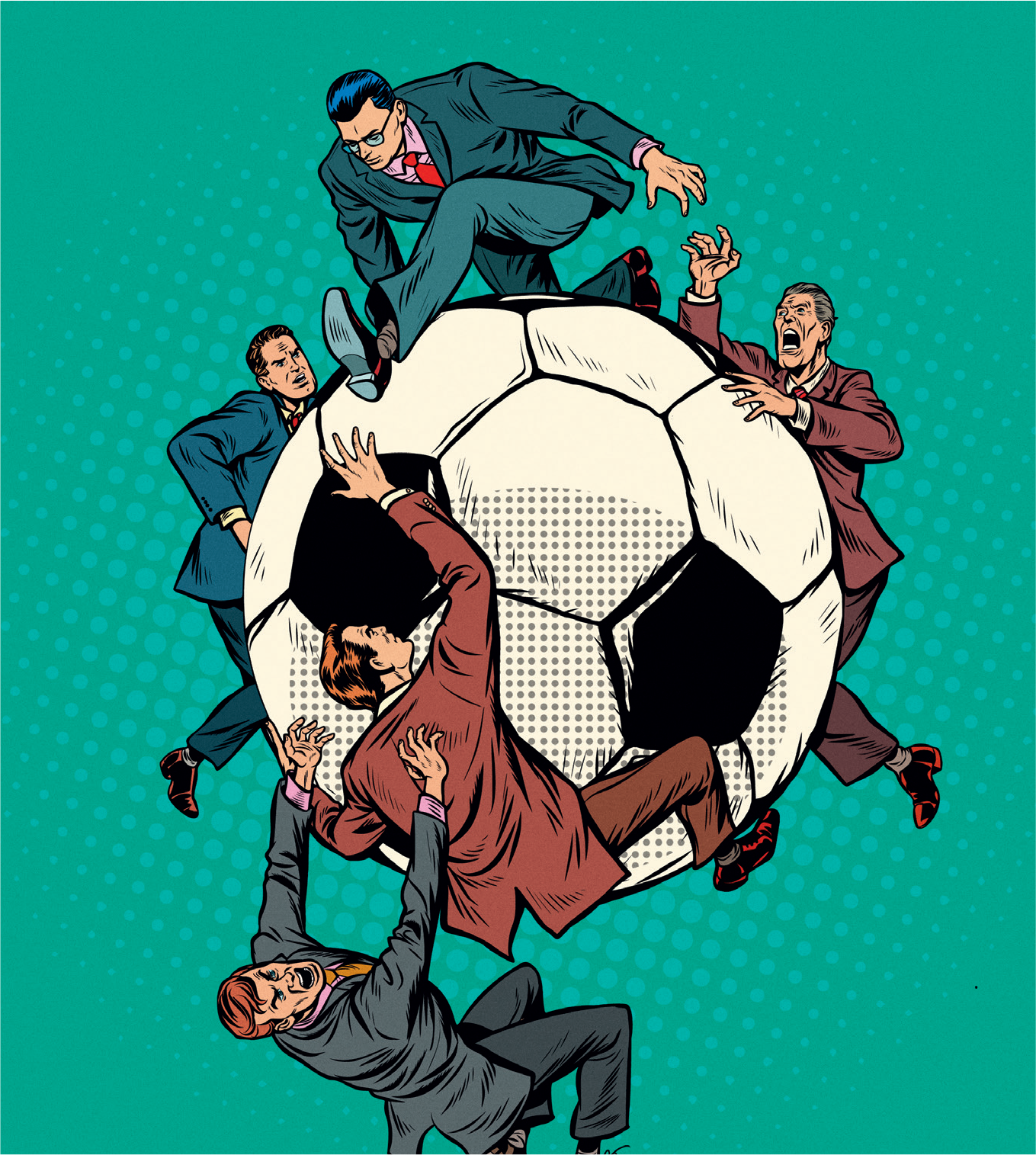
We’re talking to Genç in light of his short story written and published below, which fictionalises an infamous football match organised in Istanbul before the 2014 presidential elections, in order to boost Erdoğan’s popularity among the electorate. Erdoğan was prime minister then; he wore a jersey numbered “12”; it was a fixed match, a “show” for audiences. A fortnight later Erdoğan became the 12th president of Turkey.
“Football and politics are the two most important things in Turkey,” said the journalist and Index contributor. In his words, football is a platform where people feel they can make their voices heard. In recent years, however, as this incidents shows, football has become politicised and controlled.
“The government has decided to contain this issue, by introducing a surveillance system with a special card and a seat assigned to you”, said Genç. “If a camera catches you chanting against the government, they might knock at your door or the police take you away,” he said.
This has led to people self-censoring.
“Everyone seems very muted.”
Even so, Genç says football fans haven’t stopped singing against the ruthless government led by Erdoğan.
“Suddenly you hear chants from the stadiums about a commander in the Ottoman army who rebelled against the monarchy and started a revolution. So everyone knows it’s a message to the government.”
In April 2017, a constitutional referendum took place in Turkey and the parliamentary system gave way to an executive presidency and a presidential system. More than five years on, Genç talks about a coalition of opposition parties that today offers a way out for Turkey. It brings hopes that people can regain their freedom. But Genç is afraid of the fear Erdoğan has spread across Turkey in case his government falls.
Another point of concern is the relationship between Turkey and Russia.
“Opportunism, not principles, guides Ankara’s relationship with Moscow. Sadly, the Turkish foreign ministry has tilted the country’s axis to illiberal regimes, and, is firmly aligning Turkey with Russia and former Soviet autocracies, instead of Brussels and Washington.”
THE PRIME MINISTER is coming to the game. That’s what my teammates say. Not to watch, but to play. In just two weeks, he’ll have his big day, I say. With the presidential elections just around the corner, what’s he doing, spending precious time kicking balls with the likes of us? Perhaps, my teammates say, he wants to score a goal or two, that famed former player who exchanged football for power. In front of an audience, they say, the autocrat shall show some of his tricks, and that’s good before the polling day before he’s crowned emperor. He’s coming to our stadium tomorrow, I tell myself, and I’m the goalie, and when my teammates ask what I’ll do when our leader approaches me with a ball in his foot and a determined look in his eye, I stay mum. Whether I’ll let him score is my business, I say.
It’s July 26, a humid day, and we’re under the spotlights, as we often are. Eighteen thousand people are watching from the stands. Eight state-of-the-art cameras are buzzing around, filming our movements in HD: Spidercams, Jimmy Jibs, all that high-tech crap. Spectators speak in different voices tonight. They’re chanting “One nation! One flag! One homeland! One state! One chief!” as if in a German book-burning rally from 1933. They’re singing: “Chief! Chief! You lead! We follow!”
I fail to get politics. I get it when spectators shout: “Referee, pussy referee, oh referee, pussy referee!” or scream, “Blind, this referee is, blind, this referee iiiis!” All those rhymes are rooted in frustrations about our beautiful game. But politics is all sham: how can people devote their lives to them, I say. Still, my wife swears it’s part of the job—we’re just players in games designed by others, she says. Play along. Play along, honey. It’s just a game, a game.
But I’m not just a player, I sneer, I’m a defender, and I need to, and I shall defend as much as I can.
The roar is deafening. The prime minister’s son-in-law is running in circles. Suave, American-educated, he’s in my team. Dressed in white like me, he is standing next to me, that bright man with a future role in the prime minister’s “A-team.” These conservatives are all snobs, I notice, even more so when they showily play “the people’s game” or shake a poor man’s hand.
“Our white jersey may be an advantage,” I propose to Reza. “They’re named the ‘White Party,’ no?” My friend, the now-retired football legend, will play forward with us tonight, and he inspects my words like a field commander mulling over a map. No, he mumbles in a dreadful tone, “white was what they claimed to be, you see. Fifteen years ago is now ancient history. Today, white equals ’white Turks’, the elites! We’re the arrogance of ‘white Europe,’ which they’ll need to publicly screw for votes. All the ‘black Turks’ today will wish death to thee.”
Not well-versed in sociology, I stare at him blankly. We pee together, exchanging observations, and comparing stratagems. “I’ll go easy on them,” muses Reza as I struggle not to stain my underwear with the last drop, hopelessly defending its whiteness. “And you shall let the chief score goals, kiddie.”
The prime minister’s team, dressed in orange, materialises like lions on a colosseum. That’s the colour of their party, and he’s wearing a jersey numbered 12—a reference to next month’s elections. If elected, the former ball kicker will be Turkey’s twelfth president, you see.
*
I’m a man who likes to play by the rules. We don’t have in football a Hippocratic oath, but I do profess one: primum non fallere. First, do not cheat.
My dad used to take us to the sea when I was a kid and when he was alive, where he allowed me to swim away from the sureties of the beach. Under one condition: “As long as you’re careful in the depths, son, there’ll be nothing to fear.” So he gave me freedom, and my mom’s protestations disappeared like vanishing sands.
I’d follow his rules at all times. Swim into depths and rotate back when it feels dangerous. Bike on my lane and use the horn and signal before turns because that is what’s right—a lifelong habit of following rules, not leaders.
Dead and casketed for years now, he watches me, I see.
“Crush them! Crush them! Just give the order, and we’ll crush vandals of Gezi, crush the vandals of Gezi!” The chant appals and infuriates, and I remember our time at Gezi Park last year with my wife and sister-in-law, when we watched activists, those brave souls, singing songs and lighting bonfires. Defenders like me of goals others desired to prey on.
I watch the son of the prime minister. A different sort of character. Sprinting on the field, playing with his old man. Behind him, a chubby man, newly tasked with buying off Freedom and Nationhood, two mainstream papers, once so critical, now servile to their bone.
The crony’s rumoured not to have read a single book his entire life. Proud of that, I suppose. Loyal and servile, he’s a winner in their New Turkey.
The Istanbul head of the ruling party is there, too, cracking jokes with a basketball star. Photographers, having a field day, snap frantically. Spent 15 seasons in the NBA, played for Orlando Magic, Toronto Raptors and Los Angeles Clippers, and is now an adviser to the prime minister. Not where I dream of ending up. Next to them stands Turkey’s most incredible living football legend, his moniker, the Devil.
Reza’s great opponent in the past, the Devil, is playing for the orange team tonight. I hear the whistle and a rising roar from the stands: “Say die, die, and we all die! We all die for you, oh Chief, we all die for you, oh Chief!”
I sense a heaviness around me and hear a precept issued by unseen forces. It demands me to disappear, to comply. During the kick off, Reza tosses a coin with the prime minister, and I watch the dime whirl around and drop with a clink. Reza smiles and courtesies towards the prime minister, who smiles before kickstarting this game.
He passes the ball to Devil, who delivers it to the prime minister’s chubby crony. Accustomed to spending his time on Instagram chasing women and drinking bourbon on his yacht, the poor man cannot carry the ball and soon collapses. A distant applause rises when the bearded son-in-law takes the ball from his foot and passes it to Reza, who shoots it with such impeccable skill that we score tonight’s first goal.
Silence in the stadium. What reporters must be feeling the mornings they expose state secrets? Panicked executives ponder possibilities at the bench. The linesman, a deadly expression on his face, his hand on his heart, in pain for having rebelled. Players in orange jerseys turn to him confrontationally, expecting an offside whistle, at the least. He’s frozen, his arms refusing to rise, for there was no offside, you see, and he’s made a career of following rules until this moment. Now the prime minister is running to him, shouting that the goal was unfair. “Hear the nation’s will! Hear their chants! Nobody can resist the will of our nation! Know your place, white Turk!” The referee whistles promptly, and the goal is cancelled in the name of “advanced democracy”. Players must continue as if the previous five minutes were but a dream.
His mood boosted by the decision—always, always good to be on the winners’ team! — the NBA player approaches the centre circle and makes a back pass to the prime minister, who crosses the ball as the Devil attempts a dummy run. But it’s the prime minister who gallops between our midfielders and comes perilously close to my castle.
After a brief pause, he hoofs—the ball, surprisingly fast, approaches my goal post, like an inevitable historical event, the Fall of the Berlin Wall, and yet I interfere, I jump and catch it, I defend my home.
The prime minister, disappointed and furious, feels his throne is in peril. Silence among spectators soothes my soul. I goal kick; as the ball leaves the goal line, frustrated executives point in my direction, shouting in each other’s ears: oh, that mad boy, the usurper of people’s will!
The son-in-law kicks the ball. With a brisk sprint, he back-passes it to another small-time crony who, unusually fit, starts hugging the line while another “businessman”, who gets all our government’s hospital tenders, defends him. That man’s ancestors had taken over several properties of a Greek family in Istanbul, I know (“squatted on them” as we say in Turkish, a language so rich with words about such robberies!) thanks to their steadfast loyalty to the Turkish state. Now at loggerheads with the orange team, a nasty foul fells him on the ground.
The young crony screams obscenities, and boos rise from the stands. “Get up, stand up, stand up for your Chief!”
The prime minister orders the fighting duo to make up—bad press otherwise. And so his adaptable allies hug like old lovers, shaking hands, whispering niceties. Still, there is a free kick. I see a wall formed outside the penalty area, and the header by Reza hits the crossbar leading to a corner kick. Watching them, I leave my castle momentarily when the prime minister spots a chance. Taking the ball, he passes the centre circle, attempting a chip shot. I jump high and punch his rubber gift and hear another boo from the stands.
***
Kick off. The second half begins. Reza, that football wizard, steals the ball from the prime minister’s son, which leaves the young Islamic entrepreneur in tears. I have failed, oh father, I have failed you so badly! Half a minute later, Reza scored another goal which the referee again cancelled. This time, no need to hear from the prime minister. His instincts have turned into our rules.
I remain proud of my clean sheet. The other goalie conceded twice, despite cancellations, never shall I be guided by rules other than football’s. The match extends into extra time, and in a moment of confusion, the son-in-law trips up the NBA player who falls to his face near the goal-post.
I hear the distant voices of commentators and coaches, and spectators sitting in bars as the Chief warms up for his penalty kick. Last orders, I hear, last chance for this once flourishing goalie. Then I hear my wife begging me to play ball, and I hear Reza, “don’t be proud, it’s a sin, kiddie, it’s a sin.” But a sin is when we acquiesce under fear, and I see this light in the air, and my father descends from the heavens to say: “Just play it by the rules, son, and what relief thou shall feel.”
The prime minister reaches the penalty spot and kicks the ball. Our freedoms on the precipice, our justice hanging by a thread, it’s coming, the football, and I punch with all my might this oppressive offering outside the pitch, outside the border of my being, outside what I see today, so that I can face tomorrow, that terrifying thing, with some self-respect. The ball spins like a fortune’s wheel, and it disappears into a future where my child may thank me for doing the right thing when the assault was real and the repercussions severe.
“Arrest the goalie! Arrest the goalie!” roars the stadium in unison. I raise my fist triumphantly, the defender of the faith of rule-followers, a world champion, naive perhaps, but at least, free.