






Abstract

CREDIT: Matt Kenyon/ Ikon
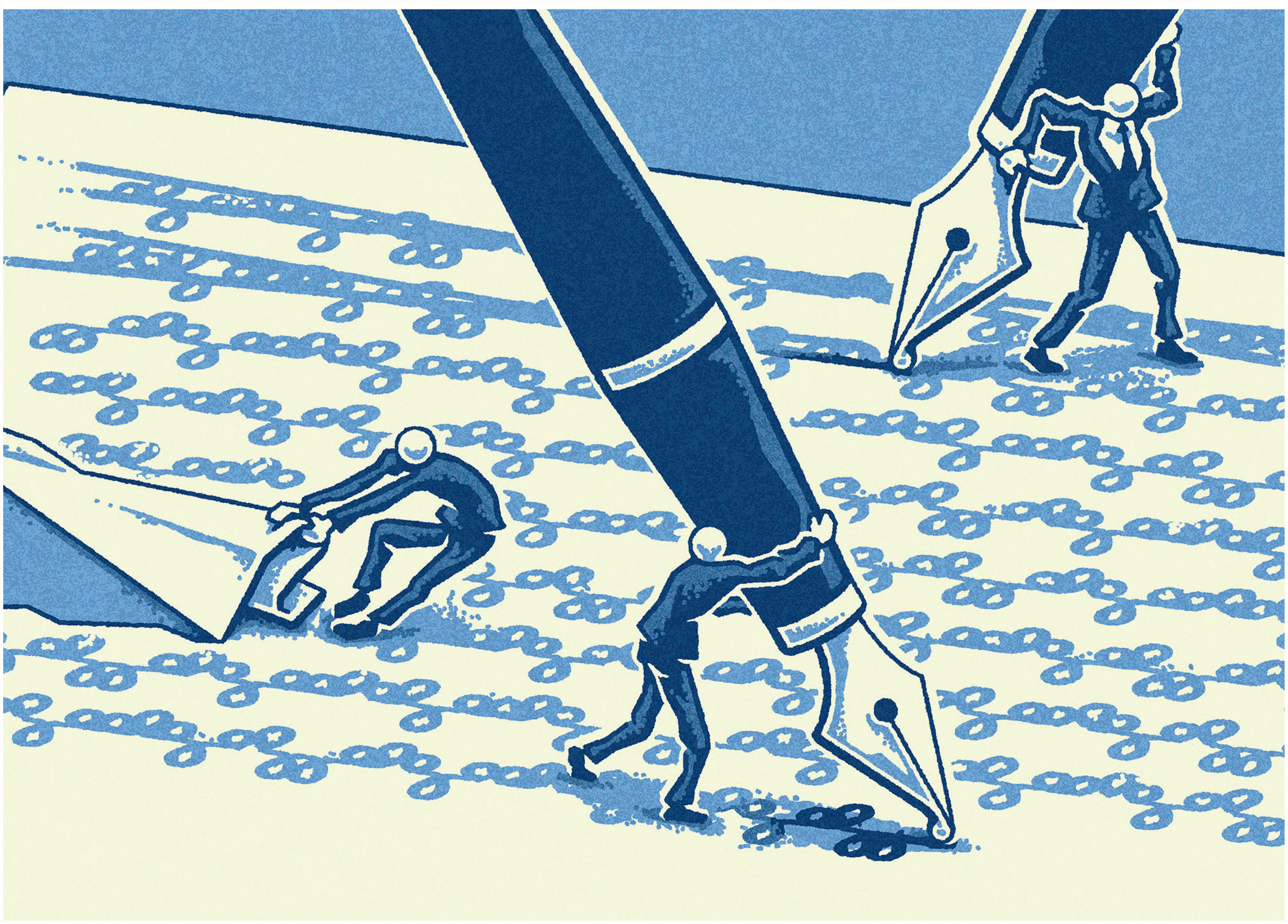
The lives of the censored are well documented in these pages but what about those doing the censoring? What do their lives look like?
Has the censor’s boss promised to raise him even higher in the state bureaucracy, provided he uses the fountain pen effectively? Sign censorship orders a few times each day? What was the tone of their conversation while their aides photographed the ceremony? Has the Chief commented on the shows he wanted to be pulled from the air immediately? Anything in that series about a secular girl’s marriage to a pious boy? On that daily news and current affairs programme, whose anchor fumes at the Chief each evening? That rascal?
Has the censor ever truly supported his Chief’s politics?
Is the censor afraid to be tried in a court of law if his Chief is toppled from the presidency? For which crimes specifically? Has the censor fined stations preparing to run stories on a case involving a government MP? What did the censor feel when he saw pictures of the 18-year-old Ukrainian girl who worked as a nanny for one of Chief’s most beloved MPs? Did he believe she shot herself in the head with the MP’s weapon? What were the features of the dead nanny most resembling his daughter’s? Did the censor throw up after issuing the censorship order?
Is the censor afraid to confess to Allah that he played a vital role in a regime that takes bribes, imprisons the innocent and absolves the guilty?
Will the censor enjoy his iftar tonight, breaking his fast with lamb kebab in his favourite restaurant — Kebabland? Is the censor sufficiently well-paid? Is he paid as well as the MP whose nanny died in his house? As well as the driver who performed the post-mortem for the dead Ukrainian girl?
Does Kebabland serve alcohol? Can the censor tolerate his colleague from the Censorship Board if he chooses to drink up? Beer? Raki? Wine? Several glasses of wine? Is it true that the Chief surrounds himself with alcohol-drinking aides these days who find pious Muslims too weak to do the dirty work of governing?
Does the censor measure the importance of his Chief in terms of the number of censors he requires? Should there not be dozens of other censors chasing and catching and reporting on rebels who dare call the Chief a dictator? Those ungrateful traitors? Are there sometimes such additional staff demands, and does the chief, at these times, feel himself part of a sea of censors? Is he conflicted about his role?
After leaving journalism school, in what sort of media companies did the censor work before accepting his present post? Did he dream of becoming a meteorologist? Has he become fond of moving his arms while discussing solid winds and intermittent showers? Has the Chief ever watched those segments preserved on Betamax cassettes? Would he like them? When his Chief watches television with him, is the censor offered tea? Coffee? Do they only watch opposition channels? Does anyone even watch Chief’s television networks?
A well-dressed censor, an opposition party member, works with him in the Censorship Board, and he comes to meet him for the iftar tonight. Is the censor afraid that he might be replaced in case the opposition triumphs in the elections and reappoints members of the Censorship Board?
In the restaurant, he’s not allowed to take his favourite table, located away from the crowds, secluded in the back. Has the opposition censor, who doesn’t mind the location of their table, truly been fasting today? Can anyone not serving the Chief and his party be a real Muslim? Isn’t secularism a sin?
What did the censor feel when he located his fountain pen in the bottom of his leather suitcase just before leaving home? Did he feel a pang of joy and say to himself, “I deserve gold” as he sometimes did in moments of doubt? Did he thank Allah for his job as the Chief’s favourite censor? Would the censor die for his Chief as he chanted in his rallies: “Say the word, and we die for you, oh Chief”?
Or is it rather the case that the censor kept a secret archive of the Chief’s written requests to promote his allies and sack his enemies as a precaution? For years? Did everyone in the bureaucracy keep such archives?
Between the table with the two censors and the door stands a tall waiter who used to be a reporter. What are the chances of the waiter poisoning the censor for ruining his career two years ago? Had the censor reported him as a potential terrorist to the public prosecutor? When was the reporter’s “civilian death” finalised?
Does the waiter today earn almost the same amount of money he did back in journalism? Might the censor have done him a favour? How does that feel like, losing your name as a person and working in an industry where your name least matters? Is that the censor’s fate as well?
What is the quality of the conversation between the censors this evening? Do they talk about interesting topics during the iftar dinner? Why does the censor believe that the opposition party members are always better read than the Chief’s followers? Does he feel inferior? The opposition censor talks about Donald Barthelme, a story of his composed entirely in questions, a classic music concert he attended, and his favourite television series. Honestly, both are addicted to the Turkish show about the secular girl’s marriage to a pious boy. Has the censor noted the difference in quality between his suit and his colleague’s? Between their shirts?
His colleague looks intensely at the censor’s breast. Why does he do that? Is there something warm flowing around his heart? Is that how cardiac arrest feels like? Death? The black ink, reserved for censorship orders, conquers his chest, painting the map of an expansionist autocracy as the opposition censor watches its quickly changing liquid borders in awe.
How does the censor feel when he enters the small room behind Kebabland to discover that his secrets have spilled out for everyone to see? Is this the Chief’s doing? Does the black ink stand for the censor’s sense of guilt? His crimes? His fear of the all-seeing eye of his boss?
What are the censor’s political views? Does he have any? Is it the case that the censor has the contact details of the opposition party’s chief of staff? Has he arrived at Kebabland on his advice?
Does the censor despise betrayers? Yet does he tolerate those who need to betray in extraordinary circumstances?
His tie and jacket removed and his blackened blue shirt thrown into the bin, he returns to the dining room in a white t-shirt. Is it the case that he feels at ease now? Seated in his favourite restaurant with a colleague that may soon become an ally? As an appetiser, the censor is served, involuntarily, fish soup. Does he object as his colleague eats without protest? Why is the opposition censor so carefree when tasked with the same job as a political party representative in the Censorship Board? How does his fountain pen not spoil his shirt? Why doesn’t he get called a bootlicker in the press? Can that change?
Does the Chief really deserve the censor and scores of others to protect his reputation? What was the role the censor played for him for the past two decades? A lightning rod, as his wife said once? What would the Chief give him in case he won the elections? A seat in the cabinet? One of those electric cars he distributes to his cronies?
Those young women with long blonde hair staring at their table - who are they? Does the censor recognise them as actors in a series he pulled from the air last year? Has the petite one approaching the table lost all her income because of an order he signed with his fountain pen? The girl raises her head in disgust. “Couldn’t work for a single show for seventeen months because of you piece of shit,” she whispers. “Hope you choke on your soup.”
Does the censor feel funny a few minutes later when the shock wears off, and is there an awful taste on his tongue? Does he feel like pulling down his pants and defecating on the parquet floor of Kebabland?
Is the black door of the toilet thick enough to mute the sounds of his bowels? Is the censor in pain when he squats, finally, after a frantic escape from the public eye? His blue-black shirt - is it still there, resting in the bin?
Has the censor been poisoned? By the sacked journalist who waited at their table? The fish soup? Was it the petite actress? A collaboration? A conspiracy!
Does he fill the toilet with processed remnants of his regrets? When the censor visits the Chief tomorrow, will he mention the waiter first, the actress or the opposition censor? Can he mention them at all? Too late for that, no? Can he resign from his post? Ask to be pardoned? “I’ll no longer serve you.” Is he allowed to say that? Is anyone?
Has he trusted the Chief like a father? Someone who gets you out of trouble and beats bullies? Always takes care of you no matter what? Erases your shortcomings, from mediocre education to insufficient wealth, and makes you boastful of them?
What will he do when the Chief is no longer the country’s leader? What about those who continue to serve him to the end?
Inside the dining room, the censor feels a little better. Makes up his mind. Stares at men and women, young and old, who move around their table. In the opposite seat, his colleague is speaking into a telephone. For the censor, the people in the opposite party cannot be truly known; he cannot predict their behaviour. When the waiter arrives with the bill, there is a slight pause between the censors, and the better-dressed one looks him in the eye. Pulls out his credit card.
What has the censor signed up to? In that moment of transgression, does he think of the MP’s driver? How he was present during the postmortem procedures of the girl shot in the head with the MP’s gun? After the post-mortem, the deceased’s body was sent to her home country. Laid to rest there. Did the censor think of her and was reminded of his daughter as he made up his mind about crossing the fence?
Are the streets full of carefree pedestrians when they walk out? Nonchalant citizens minding their own business, smoking cigarettes, talking on the phone, window-shopping, miming characters from the television series he had censored just a few weeks ago. Is the censor’s blackened-blue shirt transported from the bin in the toilet to the back of a garbage truck? Has the censor wrapped his fountain pen inside its inky fabric? As a goodbye?
Is it the case that, on a particular morning in May, the election day, the bins of Istanbul, the streets of the entire country, are overflowing with empty beer bottles? With issues of once-banned newspapers and magazines? A nation in celebration.
How does the censor feel about his wife’s gift for his new position? When he places its cap on the barrel, before returning the pen to its rightful place, does the clicking sound give him joy?