






Abstract

A misogynistic corner of the internet is silencing Muslim women, both online and in real life.
The 46-year-old single mother - a Muslim convert from eastern Europe - had been raising her three children on her own in London.
But now, in his early 20s, her son had become heavily invested in online communities led by Muslim men, and would spend all day on his laptop.
These communities, she soon realised as he became more vocal about his opinions, were what many people online know as “Muslim red pill”, or “Muslim incels” or “Mincels”.
Incel is a term used to describe men who are involuntarily celibate and are hostile towards those (often women) who are sexually active. In some parts of the men’s rights movement, the term “red pill” describes the belief that women have all the power and men are oppressed.
One example of the type of content Ilsa’s son saw as a result of following these personalities - or, in the Muslim context, “akh right bros” - is a video put out by influencer Sneako that went viral after he argued that women could come to God and to Islam only through a man.
Javad Hashmi, an Islamic studies scholar at Harvard University, explained to CNN that “akh right bros situate themselves in opposition to so-called Western values in favour of a version of Islam that is rife with misogyny”.
A lot of these male influencers create content that is meant to be in direct opposition to feminism. They claim these views are the true essence of Islam.
While Ilsa (not her real name) tends to stay away from such conversations online, and explained that she never interacted with such influencers, she saw first-hand the very real offline harm these mindsets can cause.
“I am very aware of what my children are going through, as a single mother,” she told Index.
“I was aware online conversations have an impact on him, but he never said such idiotic things until his father passed away - then he became more expressive that he agreed with people like [influencers] Daniel Haqiqatjou and Ali Dawah.”
When she tried to have a conversation with him, her son would act as though Ilsa didn’t know what she was talking about because she was a woman. He used examples he found online to tell his mother that she was good only for doing housework.
This was even though, as Ilsa pointed out, she was a single mother providing for him while he spent the whole day behind his computer.
“I had no support from him, financial or emotional, in terms of looking after his siblings or the house. He was more like a burden on me,” she said, adding that last year he finally moved out - after she asked him to do so.
She had to make this difficult decision after he started displaying verbal aggression towards his sister, especially in matters of her clothing.
“As a mother it hurts, but I can’t be crushed about it, because I believe even with bad there is good,” said Ilsa. “Every relationship is different. Online you can just cut them off, but if it’s someone in your family, Allah says you cannot cut off relationships
“However, you can put boundaries which are very, very needed.”
While most people tend to see the Muslim “manosphere” - a general name for online communities promoting anti-feminism, misogyny and hateful ideas about women, trans and non-binary people - as being an online problem, fewer see its real-life implications.
Women’s rights activists in Pakistan have taken to the streets to protest against gender-based violence
CREDIT: Associated Press / Alamy

Much of the popularity of this culture is linked to Muslim male influencers who preach Islamic content side-by-side with misogyny.
These “Dawah bros”, as they’ve become known, often gain popularity through Instagram, X (formerly Twitter) and the podcasts they host.
“Existing Mincel culture is not an abnormality. It’s actually an extension and acceleration of existing norms. That culture already existed - this just monetises it,” said Dawud, a researcher on the manosphere who often calls out such behaviour online. He did not want to share his full name due to previous online attacks for speaking out.
He explained that the idea was inspired by right-wing populist influencer Andrew Tate’s War Room, which charges nearly $8,000 for membership of what claims to be an “elite” men’s club. Evidence gathered by the BBC suggests “generals” in Tate’s War Room taught members how to groom women into sex work. Tate himself has denied wrongdoing and said he is prepared to defend his innocence.
Another way of making money, Dawud said, is by creating “rage bait” - content that will enrage viewers - which might include out-of-context clips used to incite criticism. When that content goes viral, the influencers earn money.
Many women in Pakistan who have interacted with such content online have told of men they knew who had never shared such beliefs but who had then gone down this path.
In one case, a male influencer messaged women he knew, telling them he could no longer follow them because he was now religious. He asked them to keep following him so he could maintain his follower count on Instagram.
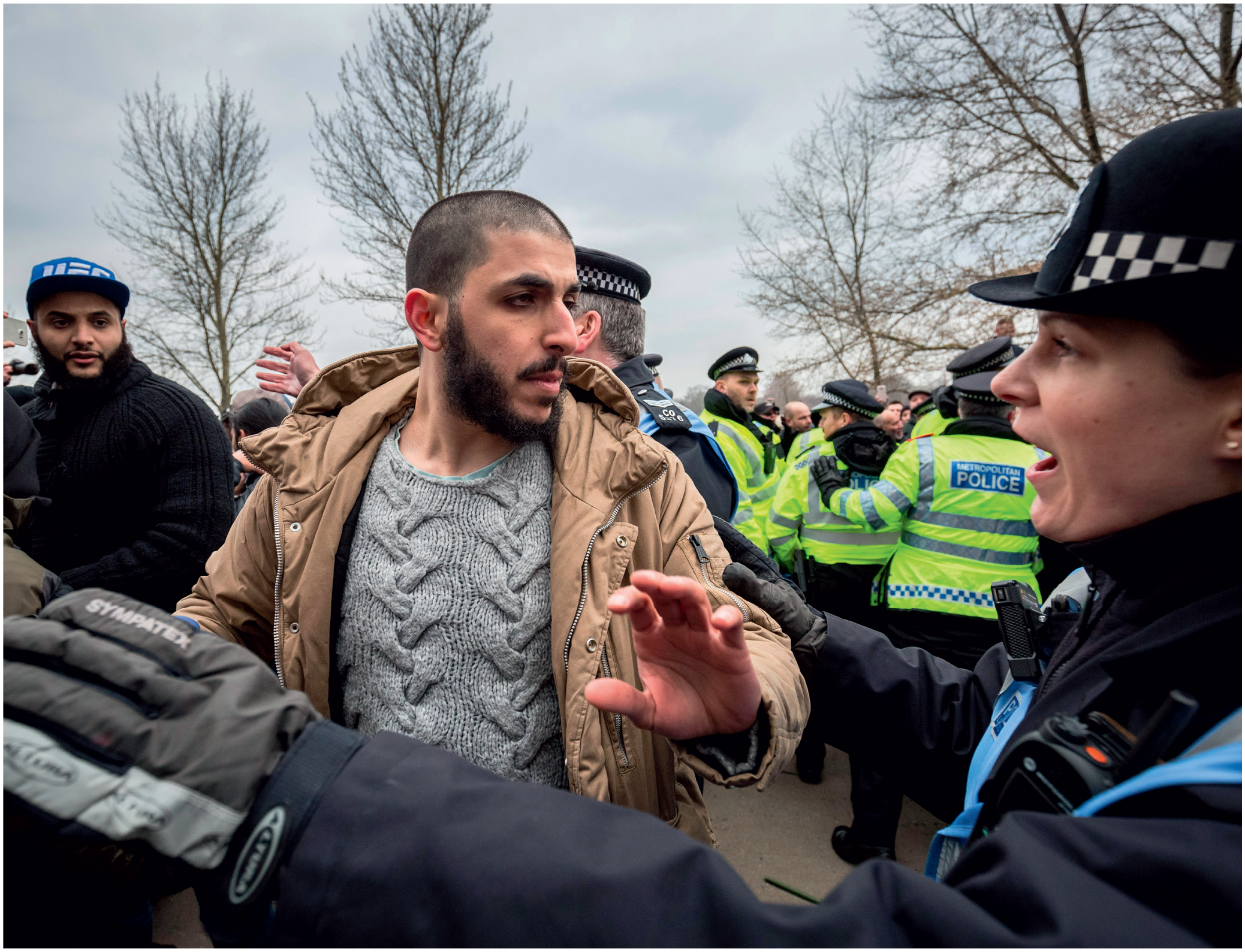
Influencer Ali Dawah, who has been accused of spreading hateful rhetoric about women, clashes with British nationalist groups
CREDIT: Guy Corbishley / Alamy
These tactics have formed a culture of “online Islam”, where everything shared online needs to be approved by these so-called leaders, who often have little or no expertise in Islamic scholarship.
Instead, many of them are imitating a very white, right-wing conservative movement – which has historically been Islamophobic - and combining that with their perception of Islamic beliefs to fight what they believe is the damage done by feminism to Muslim communities.
Yousra Samir Imran, a journalist and the author of Hijab and Red Lipstick, has regularly spoken out about the harms of red-pill culture, saying that even though she used to engage with many of these men she has now stopped doing so because she feels it brings no benefit.
“When I saw people from the British Muslim community tweet something against women, I felt it was my place to stand up for my Muslim sisters,” she said.
“However, then I would feel it would develop into a really unhelpful conversation online, and I felt like this is what they wanted and I’m adding fuel to their fire. It made them aggressive and made me stressed and anxious. So I just block or mute them.”
Instead, she focuses on challenging beliefs through her newsletter and her writing, although she is aware that social media’s echo chamber means her words won’t always reach those who need to hear them most.
“Anyone can turn out this content based on their opinions, but they put this content out there as if it’s researched. But it’s not,” Imran added.
Such content normalises a culture of hatred and ostracism, turning against anyone who fails to completely reject feminism.
“You need to bash Muslim women to maintain ideological purity,” Dawud said of the Mincel culture, adding that even as a man he was not completely safe from their attacks. He has been called a fake Muslim, a kafir, a hypocrite and a conspiracist, but he says all this was tame compared with the way they treated women.
“They totally ignore and bypass facts like Prophet Mohammed (peace be upon him) helped with housework, and sewed his clothes,” said Imran. “They just focus on the aspects of male companions being warriors or ultra-masculine, and use weak ahadith and out-of-context information to perpetuate their beliefs about women.”
Sana (which is not her real name), an ethicist and medical student currently living in the USA, was one of the women who became victim to these attacks after she spoke out against Tate and the allegations of human trafficking. She had previously worked with victims of sexual violence, including within legal settings, and often spoke out on this issue. But it was when she spoke out against Tate that Pakistani men, who were his fans, found her account and decided to punish her for it.It was only when they released photos of her much later - months after she’d deleted the Facebook account which contained them - that she realised they’d found the images much earlier and had been planning this for a long time.
“My response wasn’t the best. I tried to deny it and ignore it and I should have immediately involved the police,” the young medical student said, adding: “They found where I lived, started posting pics of my house, my number, found my workplaces and emailed them and even found all my friends. And the whole time I was trying to tune it out.”
They didn’t stop there. They leaked pictures of Sana’s husband, calling him a rapist and making it seem like he was an ex-imam from Iran, which brought another wave of attacks on both of them. Then Haqiqatjou got involved. After Sana called him out, she says he attacked her online, and she consequently got him blocked from X for two months.
“The whole time this was going on I got so many death and rape threats. It affected my mental health and I had to step away.”
She also pointed out that most of the accounts that doxxed her had additional accounts that focused on Islamic content. She couldn’t comprehend how the two could ever go together.
In Pakistan, journalist Sajeer Shaikh shares similar beliefs. Shaikh, whose work often focuses on gender issues, said she used to moderate an online forum focused on feminism and saw similar content there as well.
“They would say things like, ‘You are going against Allah’s orders.’ There were comments like, ‘I hope a Taliban comes and beheads you and rapes your head,’ and I was like, how do you put Allah and Taliban and rape in the same sentence?” she told Index.
Shaikh said she had learnt to tune these comments out, but added: “What has happened to our mentality? The increased aggression people have towards women is what bothers and upsets me because that has a definitive real-world impact and you see that in the wave of female murders in Pakistan. These things manifest in these ways when you allow them to exist in these spheres.”
Sana now helps other women who have been victimised by men online to get in touch with police, file reports and use reporting mechanisms on social media platforms. She didn’t have anyone to help her do that, and she said she went to the police much later than she should have.
“They did a Twitter space where they actually planned how to doxx me, and there was a girl in that space who was pretending to be a guy and she recorded it and sent it to me. I later sent it to the police. I should’ve sent that to the police at that moment because it showed intent.”
When Sana sent the recording to the police, they told her it was exactly what they needed.
The weaponising of misinformation by Mincel groups is not only stirring up hatred but also leaving all who dare to speak out at real risk.They are silenced, they are losing family connections and they are at risk of physical harm.