






Abstract

Russia’s most popular writer
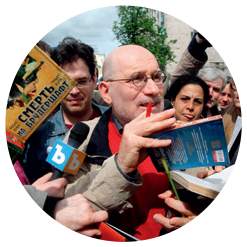
Yet now he is on Russia’s register of “terrorists and extremists” and a warrant was issued for his arrest by a Moscow court earlier this year for “discrediting the army”, “justifying terrorism” and spreading “fake news” about the Russian military.
His books have been banned, his plays cannot be performed and his website is blocked. How did it feel, I wondered, for a writer to be labelled in this way?
“It feels interesting. It feels as if I haven’t lived and written in vain. There is a saying by Confucius: one should live in such a manner that good people would love you and bad people hate you. There are people who love me, people who hate me, the latter ones as we all know are quite bad. Confucius would be satisfied,” Chkhartishvili told Index.
He fell out with President Vladimir Putin first over Crimea and left Russia in 2014 after criticising the annexation. He went back once, and it was made clear to him that he was not welcome.
Although he has always been supportive of Ukrainians, helping them when they came as refugees to London, the “terrorist” label and arrest warrant came after a bizarre incident at the end of last year where he was scammed by two Russian “pranksters” Vovon and Lexus who have a history of embarrassing celebrities from Prince Harry to Elton John.
They used deep fake technology to persuade him he was talking over video to the Ukrainian president. He told Cathrin Kahlweit, Suddeutsche Zeitung’s correspondent for Central and Eastern Europe at an event in Vienna, that he was convinced it was Volodymyr Zelensky.
“Because it was not a public talk, I told him everything that the Ukrainian government was doing wrong... ‘you’re doing this and that’, like an idiot.”
The tape was then edited to make it as incriminating as possible.
Chkhartishvili was born in Georgia, but until his exile had spent most of his life in Moscow. He started his career as a literary editor before moving on to writing in 1998. He’s a specialist in Japanese literature and enjoys experimenting with many different forms of writing from populist and literary fiction to non-fiction and drama.
One of his biggest recent projects is his History of the Russian State, consisting of 20 books. “There are 10 volumes of historical facts and analysis in parallel with 10 volumes of historical fiction: novels, novellas, theatre plays,” he told Index. “My intention was to explain what really happened and then to make history alive with storytelling. It’s 10 volumes which are a 1,000 year history of Russia and 10 volumes of one family’s history, generation after generation.”
Writing this history has made him understand Russia much better and become more realistic about what might be possible post-Putin.
“Russia must cease being an empire. It is such a huge and diverse country that it can be managed only in two fashions: either by dictatoring [sic] or in a confederalist mode - like Switzerland. The latter has never been tried, but it should. A United States of Eurasia wouldn’t need to be an empire.”
He went on: “Russians want a decent life, like everybody else. And anti-centralist sentiment in the provinces, especially ethnically non-Russian parts of the country, runs high. In fact, this turn of event (we call it “de-moscowsation”) is pretty much inevitable when the present dictatorship collapses. It is vital though that this process doesn’t go out of control. Nobody needs a repetition of the Yugoslavian crisis on a much bigger scale, and with nuclear arsenal too.”
The extract we publish below from A Russian in England has been translated into English for the first time, exclusively for Index, by Chkhartishvili’s translator Andrew Bromfield. The passage focuses mainly on Alexander Herzen - also a Russian exile - the “epitome of a Russian free thinker finding safe haven in England,” said Chkhartishvili.
“[The book] was a genre experiment. I wanted to combine essay (my thoughts on writing) with non-fiction and fiction. This symbiosis allows me to express myself as a writer in full. The book can be used as a creative writing manual by those who intend to become writers - there are lots of writers’ “lifehacks” in the essay parts, but most people read it just for fun.”
Alexander Ivanovich Herzen, a political emigre, writer and publisher, left Russia ten years ago and will never return. For the last five years he has lived in England, where he arrived from France following a series of turbulent upheavals, which need not distract us here. That French life was frantic and chaotic, dominated by the concerns of the Lesser World, a world of amatory and familial relationships, but here we see a well-ordered English life. The only thing that gives Herzen’s existence meaning now is service to the Greater World, a world of ideas and the common good of society. Especially so, since, in any case, nothing remains of Alexander Ivanovich’s personal life, and he is sure it will never be resumed. He regards himself as an elderly individual in whom all passion has been spent forever. After all, forty-five is a serious age.
In the Greater World things are going splendidly. Following the death of the despot Nicholas, the winds of free speech are stirring in his distant homeland, and great reforms are under discussion. Only a few years ago, Herzen and his almanac The Pole Star were of interest only to a small band of dissidents, but now the entire readership of Russia lends an ear to the voice of liberty from London. Alexander Ivanovich’s newspaper The Bell made its appearance quite recently and although it is formally banned, it is read by everyone, even government ministers and the tsar himself. Sometimes on the pages of his publication Herzen appeals directly to the absolute monarch - and Alexander III takes these appeals under advisement.
CREDIT: Sergei Lvovich Levitsky
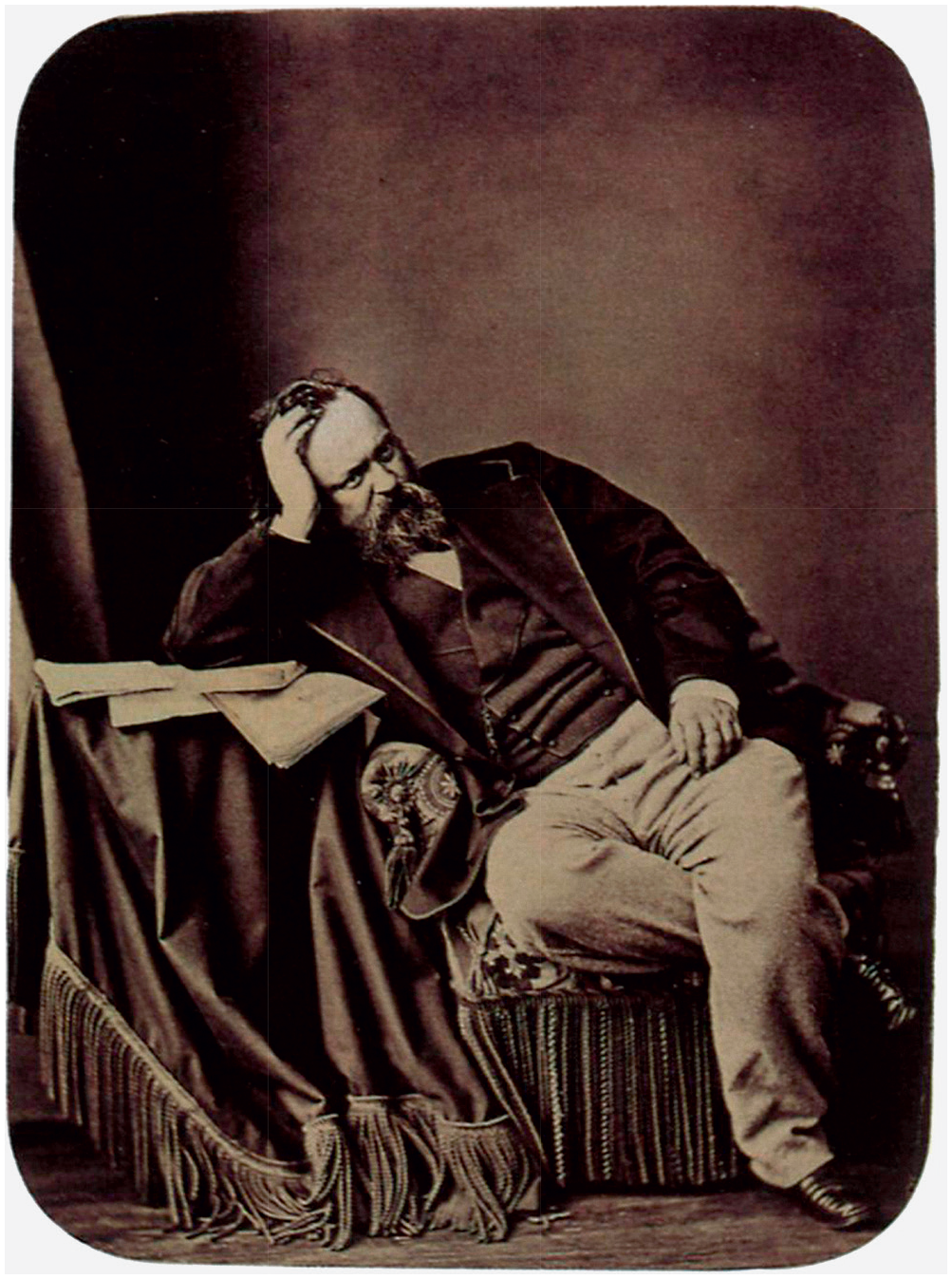
All in all, an age of euphoria. One of the portents of new times is the opening of the borders, which had been almost hermetically sealed under Nicholas’ regime.
“Generally speaking, with the arrival of the new reign, everything that had been restrained by force under Nicholas I flooded abroad in an irrepressible torrent. People went to study in Germany or Switzerland, they went to Vienna, Paris and London for consultations with doctors and, last but not least, they went because now everyone was permitted to go,” we read in the memoirs of Natalya Tuchkova, with whom we shall shortly become acquainted.
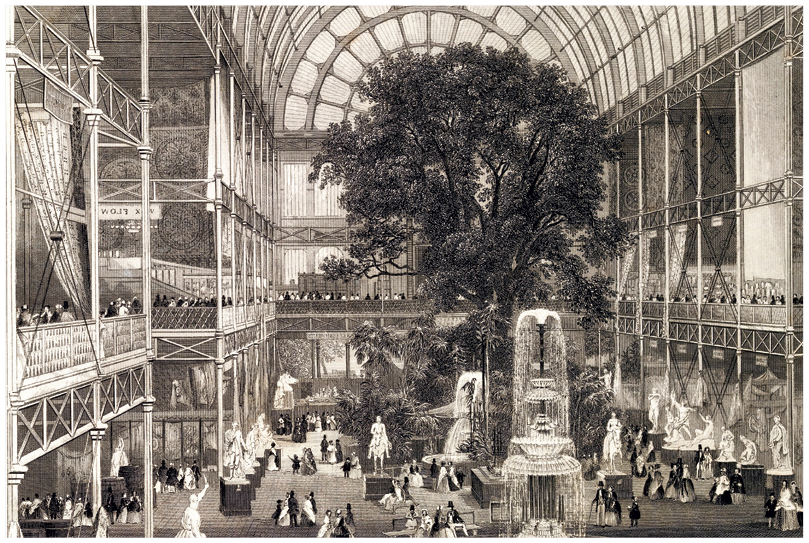
To use a modern expression, for Russians Alexander Ivanovich has suddenly become a star, one of the “sights” of London. After gawping at Big Ben and that miracle of technology, Crystal Palace, many visitors to the city now dream of taking a peek at Herzen too - so that they will have something to tell everyone when they get back home.
This broken-hearted man had once withdrawn into obscurity in England, where nobody knew him, in order to spend the remainder of his life in solitude. “Nowhere could I find such eremitic seclusion as in London,” he wrote.
But his reclusive life is now a thing of the past, and not only because Herzen has become something of a tourist attraction. A year ago our second character, Nikolai Platonovich Ogaryov, arrived and took up residence in his home.
Ogaryov is an old friend from Herzen’s childhood days. Once, in their youth, they had sworn an oath on the Sparrow Hills - “to sacrifice our lives to our chosen struggle” - and they have both fulfilled this oath, paying for their idealism in arrests, exile and banishment.
Ogaryov is forty-three. He also writes and helps his comrade publish The Bell, but he has not made a name for himself.
Despite the congruence of their political views, the two friends are not much alike. While Herzen is rational to the point of pedantry, firm of purpose, sarcastic and absolutely not inclined to rapturous exaltation - in short, adult - Ogaryov is an overgrown child. Everybody loves him, he is infinitely charming, always passionately engrossed with something, emotional, generous and carefree. He used to be very rich, but he was robbed blind and now he doesn’t have a penny to his name. And like a biblical bird of the air, he takes no care to weave an enduring nest.
For Herzen, who is generous even with people he does not know, this co-inhabitant is not a burden, but a joy. They love and respect each other very much. Alexander Ivanovich is also very considerate - he makes a point of not taking any important decisions without involving his friend.
However, the greatest change in the former hermit’s life has resulted from the fact that now there is a young, attractive woman living under the same roof - his friend’s consort, Natalya Tuchkova. I call her a “consort” because this young, strong-willed, independent-minded lady started openly living with Ogaryov when he was still married to another woman. The loving couple have overcome a myriad of obstacles to be together and in England they have an idyllic Wordsworthian “nest like a dove’s”.
But at the moment described, dark clouds have already gathered over Elysium and a storm is approaching. When three people living together love each other too much, the amatory energy accumulates, and it can be discharged in an unanticipated direction. The force of attraction between Herzen and Natalya Tuchkova will soon become irresistible.
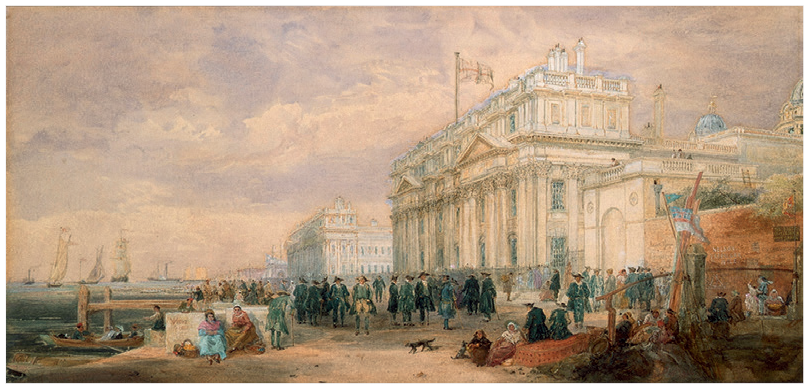
To accommodate the three of them comfortably, Herzen has rented a wonderful, detached house with a garden, close to the Thames in Putney. To go “into town” from here they have to take a train or an omnibus, which departs every ten minutes, with true British punctuality. They can also sail to the city centre and further, to Greenwich, on a river steamboat - as you still can, by the way, in our time.
Their dwelling is called Laurel House. Tuchkova writes: “With its red-painted iron roof, from the outside it resembled an English farm rather than a town house, and on the garden side it was entirely shrouded in the dense foliage of ivy that wound down over its walls from their top; extending in front of the house was a large, oval meadow, with pathways running along its edges; everywhere there were bushes of lilac, fragrant jasmine and others; and in addition, there was an entire multitude of flowers, and even a small floral conservatory”. All in all, practically the abode of Bulgakov’s Master and Margarita, only here Margarita has a husband.
Two hearts will burst into flames, one will be broken, a firm friendship will be subjected to severe trials - and will withstand them. Natalya Tuchkova-Ogaryova will become Tuchkova-Herzen. The drama has not yet erupted, but it should be palpable in the atmosphere of the narrative, charging it with electricity. As yet, on the surface everything is still serene, the life of the jolly little commune is idyllic.
This is how things stand, when another Russian appears in London - for only a few days, passing through.
He is our main character, a quite astounding individual.
Pavel Alexandrovich Bakhmetiev is the scion of an ancient line that can be traced back to the Tatar prince Bakhmet, who crossed over into the service of the sovereign of Moscow in the 15th century. At first glance there is absolutely nothing remarkable in this young man’s biography. At the age of twenty-nine he has no special accomplishments to his name: he has merely completed the course of study at Saratov Grammar School and studied for some time at an agricultural institute.
But Bakhmetiev’s teacher at the grammar school was Chernyshevsky, who will later present him in the novel What is to be Done? under the name of Rakhmetov, and the young nobleman did not study the agricultural sciences in order to manage his estate, but with a Purpose.
We’ll get to the Purpose a little later, but first a few words about Pavel Alexandrovich. He is exactly like Chernyshevsky’s character. Strange, taciturn, pitilessly demanding of himself. He has tempered his body and spirit with torments of every possible kind, preparing himself to serve his homeland - by which the young idealists of that time meant the revolution. However, having roamed around Rus for a while, Bakhmetiev, unlike the future agrarian-socialist Narodniks, has realised that there is nothing in his homeland worth sleeping on nails for. There will not be any revolution. Evidently this was the point at which a different Purpose took shape.
Since there was no enthusiasm for the idea of a commune in his homeland, he could build a cell of the free world of the future far away from civilisation. After reading a few books, Pavel Alexandrovich decided that the best location for realising this aim would be the Marquesas Islands, which are beautiful, pristine and free.
He studied a bit of agricultural management, not in order to earn a diploma, but to acquire essential knowledge. When he decided that he had learned enough, he moved on to action. He converted the inheritance from his father into cash and ascertained that in order to reach the Marquesas Islands he had to go via New Zealand. To get there, he had to sail from London, and so he set out for England.
CREDIT: National Maritime Museum, Greenwich, London
“Yes, this gentleman was a special kind of person, a representative of a very rare breed,” Chernyshevsky writes in his novel. Another astonishing deed performed by Rakhmetov’s prototype is also described in the book.
“There were also rumours that a young Russian, a former landowner, presented himself to the very greatest European thinker of the 19th century, the progenitor of a new philosophy, a German, and said to him: ‘I have thirty thousand thalers: I only need five thousand: I ask you to take the rest... ‘ Naturally, the philosopher did not take the money, but the Russian supposedly left it with a banker under the other man’s name anyway and wrote this to him: ‘Do as you wish with the money, throw it into the water if you like, but now you cannot give it back to me, you will never find me,’ - and supposedly this money is still sitting there with the banker. If this rumour is correct, there is absolutely no doubt that it was Rakhmetov who presented himself to the philosopher.”
The German philosopher is a - somewhat ironical - reference to Herzen, with his German surname and foreign sententiousness.
The real idealist, not the literary one, approached Herzen with his exotic proposal, because he respected him and trusted him.
One day Alexander Ivanovich received a letter from a stranger, who requested an urgent meeting. The urgency was motivated by the fact that this individual was sailing for New Zealand in a few days, but before taking his leave of the Old World, he wished “to do something useful for Russia”.
Pavel Alexandrovich Bakhmetiev brought with him 50,000 francs (not 30,000 thalers). He had calculated that such a large amount was not required for his commune, 30,000 would be enough. He asked Herzen to take the rest for “propaganda work”, adding “however, make whatever use of it you wish”. Pavel Alexandrovich had no doubt that Herzen would use the capital for the good of the cause.
Alexander Ivanovich behaved irreproachably. First of all, he tried to persuade the dreamer to abandon his bizarre plan. Then he agreed to accept the money, but exclusively for safekeeping, spending only the interest for a period of ten years - in case Bakhmetiev might change his mind and come back. And he set an additional condition: Ogaryov must endorse this contract and be its second guarantor.
Bakhmetiev went to Laurel House, where a further, expanded meeting took place. He didn’t want to take a receipt - his friends thrust it on him almost by force.
After that Herzen took the traveller to the Rothschild Bank, deposited the 20,000 in an account at five per cent annual interest and recommended that Bakhmetiev should convert the 30,000 to gold. Pavel Alexandrovich tipped the heap of money into some kind of sheet, tied it in a knot, and sailed away to the back of beyond, from where he never returned. What happened to him, whether he succeeded in founding a commune or perished on his journey, no one knows. This mystery has intrigued many researchers since then. In the 1960s, Natan Eidelman carried out his own investigation. In particular, he established that Bakhmetiev very probably sailed on the clipper Acasta, which left London on the first of September, 1857 (this was the only ship that set out for New Zealand at that time). But it proved impossible to obtain the passenger list, and no indications of Bakhmetiev’s presence in New Zealand were discovered either. Pavel Alexandrovich disappeared in a highly romantic fashion, leaving behind a beautiful memory of himself, as well as an entirely material reminder in the form of the “Bakhmetiev Fund” - the name by which the capital he left behind came to be known among Russian revolutionaries. The sum was fairly trifling, something like $200,000 in today’s terms, but for the perpetually impecunious “crusaders against the regime”, this was huge money. Many of them tried to obtain it from Herzen, but Alexander Ivanovich kept his word and only paid out the interest for “propaganda”.
Unfortunately, the monetary thread of this marvellous story has an ugly ending, because money in general is not very beautiful.
Ten years went by. Bakhmetiev dissolved into the vast oceanic expanses. And the revolutionary Nechaev - the same individual whom Dostoevsky portrayed in The Devils as Petrusha Verkhovensky - showed up to see Herzen and spun him a heap of hokum about being a really important member of the underground. Herzen did not believe him. Then Nechaev duped the over-credulous Ogaryov, who gave the swindler his half of the money. At this point Herzen passed away and gullible Nikolai Platonovich gave Nechaev everything that was left, although he himself was living in poverty.
After Ogaryov’s beloved wife left him for his best friend he went through a period of depression, drinking constantly. He was saved from total and absolute ruination by the English prostitute Mary, who became his wife. She cared for Nikolai Ivanovich until he died. All exactly like the progressive novels of the time, in which a noble man saves a “fallen woman”, only the other way round - it was the fallen Mary who saved Ogaryov.
They write that he aged early and was already a decrepit old man by the age of sixty. His health was poor and he drank every now and then, but to his very last day, he lived for ideas and the cause of freedom. He died after missing his footing and injuring himself badly (he had always been ungainly, and on this occasion, he was probably also drunk). He died in Greenwich, in his Mary’s arms: “He longed to set the whole world free, and make each person happy. Yet dangling by a thread was he, a soldier cut from paper.” Okudzhava’s song fits Ogaryov to a tee.
CREDIT: Wellcome Trust
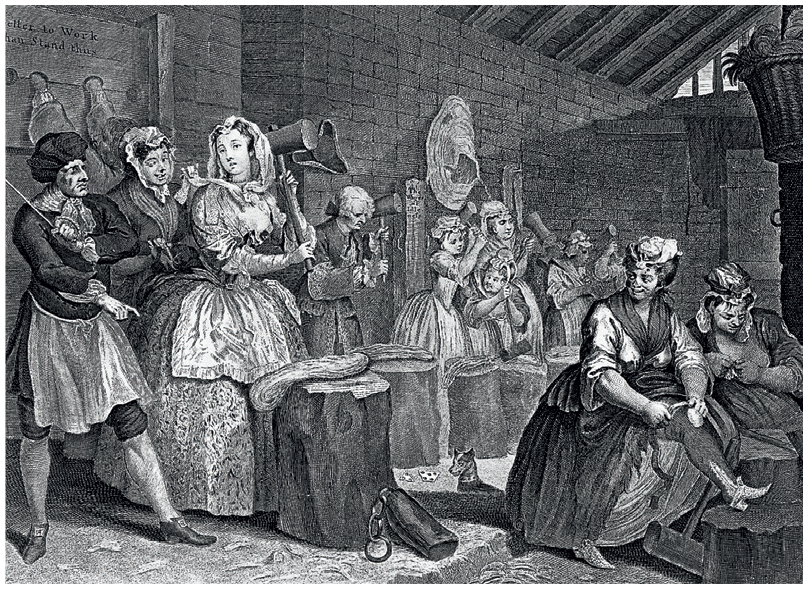
Natalya Tuchkova was the only one of our characters who returned to Russia. She outlived the men by a long time and left us her memoirs about them, for which we are very grateful.
All this is sad. Beautiful, but sad.
The Assignment
You have to write a romantic novella - this is almost the only genre, in which the wholesale likeability of the populace does not seem preposterous. Romanticism is when very beautiful people live very beautiful lives. In short - absolutely our case here. But even if you do not like Revolutionary Democrats at all, and their creed does not seem beautiful to you, love them for the present, become them - we have already said that a writer must be able to become absolutely anyone.
Write so that the reader will feel a pleasant tickling sensation in his nose, forget the mortgage for a while and think: perhaps I should just say to hell with everything and sail away to Alexandr Grin’s town of Zurbagan?
Only remember that you should not overdo the sugarcoating. And for this reason, we shall not take as our literary model the jellied-fruit candy style of the leading Russian romantic, but the impish mockery of the novel What Is to Be Done? - especially since the spirit of Chernyshevsky hovers over our storyline in any case. I must say that I like this work. It was my good fortune not to read it in the ninth class of school, out of laziness. I limited myself to the textbook exegesis, and only discovered the book itself at a mature age. I fell totally in love with the novel - not for the absurdities preached in it, but for its adrenaline-driven vigour, its endearing faith that reason is bound to triumph. (In point of fact, this is by no means certain, but we shall leave that for the next lesson.)
Chernyshevsky feels uncomfortable with pretty flourishes and therefore treats them sarcastically:
“Decent people have started meeting together. And how can this possibly fail to happen more and more often, with the number of decent people increasing with every new year? With time, this will become an entirely ordinary occurrence, and with more time, there will cease to be any other occurrences, because all people will be decent people. Then everything will be very good.”
Sincere love and hope can be sensed in the author’s scoffing tone, and this is more beautiful than any smooth, vapid writing style.
But in our case the problem of excess sugar cannot be solved simply by lowering the style. The motive force of any plot is confrontation. Life is boring when there is no struggling. But here, as in socialist realism, you will have a very limited space for collisions: the conflict of the good with the better. As in Gogol - the sweet bickering of a “pleasant lady” with a lady who is “pleasant in every respect”:
“This way, this way, into this little nook here!” said the hostess, seating her guest in the corner of the sofa. “That’s it! That’s it. And here’s a cushion for you!”
Muddle through any way you like, but it must not be boring. And that, by the way, is an indispensable condition of the assignment set for every one of our lessons. Only serious literature can be boring, but popular fiction - never.
To Sail or Not to Sail?
An Eccentric
On one of the final days of summer in the year 1857, a young man disembarked from the Dover train at London’s Waterloo Station. It was obvious immediately that he was a foreigner, yet he himself was convinced that he looked like a genuine Briton, for he was wearing a jockey cap on his head and had a tartan rug across his shoulders. No one in London ever dressed in this freakish manner, and apart from that, it was a very hot August day. The new arrival, however, had trained himself to ignore the weather conditions. He had acquired his present outfit immediately before leaving St Petersburg, from a junk stall at the Sennoi Market, because the traveller’s intentions, on arriving in England, included that of “merging entirely with the natives”.
CREDIT: Wellcome Trust
On glancing round and observing that no one in the crowd was paying the slightest attention to him (you cannot surprise Londoners with eccentrics and foreigners), the young man felt most gratified.
“Excellent!” he told himself cheerfully in Russian. “Now, where do you keep your cabbies around here?”
A row of cabs was standing on the station square.
“Far to Khotel Sablonier?” The Russian asked a driver.
He had taught himself English, learning twenty words a day, and he knew many, but he pronounced them as they were written. The cab-driver, however, understood that the foreigner was asking about the Hôtel Sablonnière on Leicester Square and quoted him a crazy price: one shilling and two pence.
This mattered not a whit to the young man, he never used cabbies on principle. What for, if you have a sound pair of legs?
“Far?” he repeated.
“Very far.”
The cabman gestured broadly to the north, beyond the river Thames.
The Russian nodded, took a firmer grip on his unimpressive luggage - a carpet travelling bag and a small calico bundle - and set out in the direction indicated with a long, rapid stride.
At an earlier time, he had walked round almost half of Russia in exactly the same way, sometimes covering fifty versts a day. A mile or two was nothing to a walker like that.
But it is time for us to introduce this eccentric. In Foreign Passport No. 3338, issued by the administrative office of the Governor of Saratov Province, he was identified as Pavel Alexandrovich Bakhmetiev, a non-serving nobleman, 29 years of age. We could take a very long time telling his story, since in many respects he was a remarkable individual, but we can also be brief. It will probably suffice to explain why, out of hundreds of hotels in London, he had chosen the little-known Sablonniere. Someone had told Bakhmetiev that when Ivan Sergeyevich Turgenev was in England, he stayed at this hotel. Several years earlier, while still a grammar-school student, Pavel Bakhmetiev had read Turgenev’s story “Mumu”, which had shaken him to the depths of his soul, following which he had firmly and irrevocably determined to devote his life to the struggle against slavery. All of Bakhmetiev’s decisions were firm and irrevocable and his mental attitude was methodical. No task was immense enough to frighten him, but he considered it necessary to ascertain whether it was physically feasible. Pavel Alexandrovich had spent several years “studying the subject” - it was with this purpose that, as we have already mentioned, he had trudged around half of his native land. As for the conclusion that he had reached - we shall get to that later.
At the Hôtel Sablonnière the young man took the cheapest room, just under the roof. The first thing he did was to send a letter by city post to an address written on a piece of paper. Then he took a look out of the window at London’s liveliest square. Its gaslights glowed enticingly (evening had already set in), but Bakhmetiev was not attracted by the temptations of civilisation. He had an enquiring mind, but he was not inquisitive. As we know, the difference between these two qualities is that an inquisitive person takes an interest in everything and anything, while a person with an enquiring mind is only concerned with what they need for the task at hand.
Bakhmetiev decided the best thing would be to get a good sleep. He was able to sleep at any time of the day or night, and, if necessary, could go without any sleep at all for days on end.
He didn’t like the look of the bed, especially the mattress. Any other guest would have considered it lumpy and hard, but Bakhmetiev was accustomed to sleeping in a different style. He dragged the mattress down onto the floor, together with the sheet and pillow. Then he took a strange object out of his carpet bag - a thin pallet, studded all over with drawing-pins - and stretched out imperturbably on this torturous item of bedding. Pavel Alexandrovich’s skin was as tough as leather, and well used to such treatment.
A minute later the ascetic was soundly asleep.
A Moral Sybarite
Alexander Ivanovich Herzen valued a state of ease above everything else in the world; he was traumatised by any kind of suffering, or even simple discomfort. In fact, “comfort” was his favourite word. For instance, if he wished to say that a certain action was unacceptable to him, he said: “I would find that uncomfortable”.
However, this individual’s ideas concerning comfort were not entirely commonplace. He put up with hardships, and even dangers, rather easily (all sorts of things had happened in his uneven life), but he absolutely could not tolerate emotional unease. Herzen could be plunged into this state - which, it must be admitted, is extremely unpleasant - by something entirely extraneous, to which a normal person would not have given a second thought. Such as, for instance, news of famine in Calcutta or mass floggings of peasants in Poltava Province, although our Alexander Ivanovich had never even been in India or Little Russia. Nonetheless, he was unable to recover his state of ease and comfort until he had made a contribution to support the starving or responded to the hideous crime in the province of Poltava - he was such a great moral sybarite.
He always spent the morning reading his voluminous correspondence, the bulk of which arrived from Russia. The address written on the envelopes was often simply “Mr Herzen in London”. There were so many letters that Her Majesty’s Postal Service had learned to identify them and forward them directly to Putney, where the famous exile lived.
Most of the letters told of sundry atrocities in Russia, and Herzen suffered torment as a result. This, however, was useful. The powerful emotions were subsequently vented in fervent social and political essays.
Setting aside the sheets of paper on which places circled in red stood out like bleeding wounds, Herzen pulled another little pile of city post towards him. The pleasant items - a letter from Louis Blanc, an invitation to pasta from Giuseppe Mazzini, a catalogue of new acquisitions from a book shop - he set aside for the time being. He moved two envelopes closer. Their senders were denoted by two unfamiliar Russian names. As the most famous Russian in England, Alexander Ivanovich often received appeals from compatriots who were in need of help, usually financial in nature. It was uncomfortable to refuse. From long ago, he had imposed a “seventh-part” tax on himself - he reserved one seventh of his income for appeasing his moral susceptibility: helping those, whom it was impossible not to help. Dividing all incoming sums by seven was inconvenient, but Alexander Ivanovich liked figures and he had no fear of fractions. He had imposed a similar “sennight” tax on his own time: every seventh day, on Sunday, he kept an open house for emigres. Most of them lived in straitened circumstances and they came, not only to socialise with each other, but also simply to eat their fill. The host found these gatherings wearisome, because for the most part emigres are a tedious and peevish crowd, but after all, for many of them Herzen’s Sundays were their only escape from the drab confines of life in a foreign land.
One of the Russian letters was from a student who didn’t have enough money for a ticket home, to Moscow. Alexander Ivanovich put two one-pound notes into an envelope and made a corresponding entry in his account book. The “seventh-part” funds for this month were already exhausted, he had to add something taken from the funds allocated for his own personal pleasures. For instance, he could buy slightly cheaper tobacco, that was quite all right, or - even better - smoke two cigars instead of three, that would also be better for his health.
The second letter made its recipient sigh. A certain Bakhmetiev, who was staying at the thoroughly bourgeois Hôtel Sablonnière - that is, he was obviously a man of means - sought to lay claim to something more precious than money - Herzen’s time: he requested a meeting, and an urgent one at that.
The letter could have been ignored and left unanswered, but there was a palpable nervous energy in the angular, inelegant handwriting, in the clumsiness of the style, and Alexander Ivanovich sensed genuine urgency in the phrase “you would oblige me greatly, the matter will not brook delay, for I have very little time”. Perhaps this person had a fatal illness, or faced some acute emergency? Was this not the way that people about to commit suicide wrote, clutching at a straw? A normal person would have told himself: And what’s that to me? But moral sybaritism is a subtle business.
“I intend to visit the printshop in any case, from there it’s not far to Leicester Square,” Herzen told himself. “That really would be better than this person turning up here and devouring the whole day.”
And he immediately felt more comfortable.
A Strange Conversation
Mr Bakhmetiev did not resemble a suicidal individual in the least and, judging from his broad shoulders and ruddy features, his health in general was quite excellent. When asked what the reason for his request was and, most importantly, why it was so urgent, he didn’t reply - that is, he literally said nothing and merely gazed at his unexpected visitor, occasionally blinking his wide-set eyes.
After waiting for a while, Alexander Ivanovich started feeling annoyed. It occurred to him that this was an ordinary “tourist”, as he called his otiose compatriots, who came to take a look at the sites of the British capital, one of which the famous publisher of The Pole Star, and now The Bell, had become.
“Listen here, my dear sir, if you have nothing to say to me, why in hell’s name did you write to me?” Herzen enquired sternly: he was capable of discourtesy with dunces.
“I love Russia very much. As do you,” Bakhmetiev replied irrelevantly and hesitated. After that he kept hesitating all the time. He was evidently a man more accustomed to internal monologue than dialogues. “But I have made a point of walking all around it, looking at it and unriddling it. It will be a long time before living there becomes interesting for someone like me. Not in my lifetime.”
“Someone like you?” asked Herzen, intrigued.
The young man gestured vaguely.
“I can’t explain. Gerasims on all sides. Mu-mu, mu-mu, and the master gives the orders...” He lost his thread. “Anyway, being there is not to my liking. I have thought of something else.”
Alexander Ivanovich no longer regretted having come. His curiosity was piqued.
“I want to build a different life. With people who are equal and free. At liberty. On an island, somewhere, far away. So that no one will hinder me.”
“On what island would that be?”
“Here, look,” the incomprehensible fellow replied, becoming animated. Reaching into his travelling bag, he extracted a folded map and opened it out. “In the Marquesas Islands. Do you see the little yellow dots in the Pacific Ocean? I read about them in Kruzenshtern’s Voyage. A very good place, apparently. I’ll set up home and pick up some comrades. And we’ll start living differently from everyone else, the right way.”
“A madman,” thought Alexander Ivanovich, looking at the map.
“Don’t think that I’m some kind of crank,” Bakhmetiev declared, as if he had overheard. “I’ve thought everything through. I’ll sail to New Zealand, stock up with everything necessary, and from there - to the island, Nuku Hiva. I have money, an inheritance from my late father.”
He pointed to the bundle lying beside his travelling bag. Seeing his companion’s bewildered expression, he untied the cloth. Lying inside it were bundles of paper money.
“There’s fifty thousand francs here. I collected it in Paris against a letter of credit.”
“You carry it around just like that, in a cloth bundle?” Herzen asked in amazement. “But then, that’s your business. I simply don’t see the point of expounding your... interesting plans to me.”
“The point is that I don’t need that much. I’ve calculated everything. Thirty thousand will be enough for the passage and the commune. Before I leave, I want to do something for Russia. I thought about it and decided that you know better than I do how to spend twenty thousand to good purpose. The money is superfluous to me.”
Alexander Ivanovich realised immediately that this was not a joke. He could tell from Bakhmetiev’s manner that he didn’t know how to joke.
“Which precise purpose did you have in mind?”
“I don’t know. Something that will make people want freedom. I’ll count out twenty bundles right away and won’t detain you any longer.”
The young man apparently thought everything had been said and there was nothing more to add.
“Wait!” Herzen cried out. “Pavel... Alexandrovich...” - he couldn’t immediately recall Bakhmetiev’s patronymic. “This is inconceivable! I cannot accept such a substantial sum - actually, any sum - from someone I’ve never seen before, and with such indefinite instructions. . . Without witnesses! No, it is impossible!” Then an idea that might solve the problem occurred to him. “I’ll tell you what, come to see me at home tomorrow. An old friend of mine, almost a brother, will be there, Mr Ogaryov.”
“I know that name,” Pavel Alexandrovich said with a nod. “He was exiled, wasn’t he? That means he’s a worthy individual.”
“Extremely worthy. He can be the witness and the guarantor.”
Bakhmetiev suddenly frowned:
“At your home? I suppose you have a wife?”
“No. I’m a widower,” Alexander Ivanovich replied drily, making it clear that this was not a subject for conversation, and even condolences would be excessive.
But offering condolences didn’t even occur to his odd companion.
“That’s very good!” he exclaimed in relief. But the next moment he realised this sounded awkward and he became embarrassed. “I didn’t mean it’s a good thing that you were widowed, it’s just that I always feel embarrassed in the presence of ladies.”
Herzen burst out laughing - the apologetic young man really did look very comical.
“Don’t count your chickens just yet. A lady will be there too, and a spirited lady at that!”
A Troubled Soul
Natalya Alexeievna took a long time summoning up her courage before going down to the drawing room on the ground floor. Just recently she had been late all the time - for meals, and for going out when the three of them were due to take a walk or a drive to visit someone. She had to prepare herself or, as she called it, “gird on her armour”. But somehow it protected her less and less, that armour.
Having steeled herself and even gone out onto the stairway, she froze again halfway down.
Below her she heard a jolly voice say:
“Good gracious, why on nails?”
A different, toneless voice replied:
“I took the idea from the life of a certain ascetic monk. In his cave he slept ‘on a board studded with nails in disdain of the flesh’. Who knows what hardships there might be on Nuku Hiva? Only I don’t sleep on nails, but on drawing pins, you know, the kind they use for pinning up paper. I tried nails. You don’t sleep very well.”
“I should say not!” exclaimed a third party to the conversation, bursting into merry, childish laughter. “Ah, where’s Natasha got to? She should hear this!”
The first voice was Iskander’s, the second must belong to that crank, Bakhmetiev, and the third belonged to Kolya - he was Natalya Alexeievna’s husband. On hearing her own name, the young woman blenched, turned back and started walking upwards again, trying not to make the steps creak.
“You despicable, despicable wretch,” she whispered in anguish.
Anguish had taken up residence in her heart two weeks earlier, on that day when the three of them went boating on the Thames and clumsy Kolya (he was rowing) swayed the boat. Natalya Alexeievna, who had just stood up in order to reach out to the picnic hamper, lost her balance and fell straight onto Iskander, and he caught her in his arms. Everything suddenly went dark, she could scarcely breathe, a hot tremor ran through her body, it went completely limp - and Natalya Alexeievna realised with horror that she loved him, she loved him beyond all endurance. That is, she had loved him before, of course - as Kolya’s closest friend, as a fine person and, in general, as Herzen, but there is love, and there is Love. God only knew when the former had grown into the latter, but the trivial incident in the boat had opened Natalya Alexeievna’s eyes to the nightmarish reality of her situation.
If you gathered together all the men living in the world, from Lapland to Patagonia, Iskander was the only one whom she must never, under any circumstances, admit into her heart. Poor, wonderful, vulnerable Kolya would never survive the double betrayal. And worst of all, it would be so vulgar! All those discussions and dreams about Russia, about wonderful ideas and the humankind of the future, and in the outcome - an absolutely banal case of adultery. What hideous ignominy.
It was a good thing that the men, in their convenient, perennial blindness, had not guessed about anything. Natalya Alexeievna had sworn to herself that she would scorch this shameful weakness out of her heart with red-hot iron. And if that didn’t work, she could simply up and leave both of them. At least that would be honest.
Cheered by this new idea, she finally pulled herself together and ran down.
“I’m sorry,” she said cheerfully on entering the drawing room, “I became engrossed in reading Flaubert. Now there’s a writer who understands women!”
“A most insensitive remark in the presence of another writer,” Iskander replied jokingly.
The men stood up. Bakhmetiev squeezed the lady’s fingers more tightly than necessary, became embarrassed and jerked his hand away. He was plain, but likeable enough. Natalya Alexeievna deliberately did not look at the other two.
“Ah, Nathalie, what a story you missed!” her husband told her reproachfully. “Just imagine, Pavel Alexandrovich walked along the Volga with barge-haulers. And he got a job with an artel of loaders.”
“What for?” she asked, touching her left cheek. It was burning, because Iskander was standing on her left, close.
“I needed to find out if Rousseau was correct about the usefulness of simple labour for developing the personality,” Bakhmetiev explained. “He was not. Arduous physical labour is degrading and it reduces a human being to a beast of burden. In the future it will be carried out by machines, and then equality will be possible. But not before that.”
It was a familiar kind of Russian conversation. Natalya Alexeievna started feeling calmer.
“And what have you decided to do with the twenty thousand?” she asked Iskander, even managing to look him in the eye.
“Two things. The money will be managed by Nikolai and myself. I shall place it with Rothschild for ten years, at five per cent. If Pavel Alexandrovich changes his mind, the money will be returned to him. These terms to be secured by a written undertaking.”
“No written undertaking is needed,” Bakhmetiev declared agitatedly. “And I don’t need the ten years either. Just take it and have done with it.”
“We cannot agree on any other terms,” Iskander snapped. “You will have to find other beneficiaries.”
“How magnificently benevolence and strength are combined in him,” Natalya Alexeievna thought and turned away.
“Very well,” the chump sighed. “If you insist, let there be a written undertaking.”
“And there’s another thing,” said Iskander, after a moment’s thought. “Since we shall be going to Rothschild’s to formalise the matter, I would advise you to exchange your money for gold. Owing to imminent events in Italy, the exchange rate of the paper franc is unreliable. While you are sailing to the Pacific Ocean, Little Napoleon could totally destroy his currency. It is already listed at zero point nine five.”
CREDIT: The Illustrated London News
“Are there any areas of learning that he is not well-informed about?” Natalya Alexeievna thought as she sat beside her husband. She felt very happy and very wretched.
A Barricade and a Ditch
On their way to Greenwich, they spoke first about Natalya Alexeievna. Ogaryov was concerned about his wife’s health. Just recently her migraines and bouts of melancholy had been more frequent: she either became very agitated, or started weeping uncontrollably for no reason. Her mood swings were unpredictable. Take today, for instance. She herself had said: “Let’s all go together to see the eccentric off on his voyage,” - and at the last moment, just before we left the house, it was: “No, go without me”.
“Women have all kinds of quirks. They are not like us,” Iskander replied to that as he gazed at the murky water of the Thames, through which a small municipal steamboat was splashing its paddle-wheels. “Anna Alexeievna’s foibles are mere trifles, brother.”
And he sighed, recalling his own deceased wife.
Nikolai Platonovich flung up his arms, struck by a sudden thought.
“Listen! Maybe she could be pregnant? That would be a real turn-up! We’d given up hoping.”
Alexander Ivanovich’s eyebrows merged together on his high forehead.
“Very possibly,” he responded somewhat dryly and changed the subject. “I was just thinking what a loss it is for Russia that people like Bakhmetiev abandon her for such far-distant lands, for a mere chimera, anything to be as far away as possible. They’ll be needed when the storm breaks, won’t they? Exactly their kind of people. After all, there aren’t many of these Bakhmetievs in the world. But when the time of testing arrives, without champions like them the revolution will become bogged down. On his Marquesas Islands he won’t even find out about it.”
“Never mind, on the bright side, you and I are here. I, for instance, will go straight back to Russia just as soon as the barricades appear there!” declared Nikolai Platonovich, shaking his fist defiantly in the direction of the Greenwich Pier as it moved closer. They could already see the masts of the clipper on which Bakhmetiev would set out for New Zealand.
“I can just imagine you on a barricade,” Herzen said with a smile. “With your agility, you’ll tumble down off it and break your neck.”
His friend shrugged light-heartedly.
“A gypsy woman foretold that I would die after tripping over my own feet. Better break my neck on a Russian barricade than an English road - and he gestured at the roofs of the quiet London suburb.
A quarter of an hour later, at the long-voyage mooring, beside the three-masted barque “Acasta”, which was ready to depart, they both tried to persuade Bakhmetiev to see reason, adducing the aforementioned argument and sundry others, no less convincing.
Pavel Alexandrovich listened without interrupting. He also waited for a little while after Herzen and Ogaryov fell silent - in case they might have more to say. Then he explained:
“Things in Russia will not become interesting soon, and I can’t wait. I’m no longer young, I’m already thirty. I want to devote my life to action, not conversation.”
And that was all he said.
As previously, he was holding only a travelling bag and small bundle, but now it was a heavy one.
“What have you got there, gold coins?”
Herzen asked incredulously. “The entire one and a half thousand napoleons?”
Bakhmetiev nodded.
“They don’t fit into the carpet bag.”
“For God’s sake, they jangle! You’ll be robbed and killed! You should have bought a bag with a lock!”
“I don’t want to spend the money. It belongs to the future commune. And robbing me isn’t easy - I’m strong,” Pavel Alexandrovich replied.
A bell sounded on deck. The small number of passengers started saying goodbye to the people seeing them off.
“Will we meet again?” asked Herzen, agitated for some reason. “If things don’t work out there, come back. Your money’s waiting for you. And write from Wellington.”
“I don’t know how to come back to a place. And I’m not in the habit of writing either.”
“Well, in that case, I’ll write, for collection. If there’s some kind of post office there.”
“It won’t reach me. I’ve changed my name. England isn’t Russia. Here they take what you say on trust and don’t ask for a document. I simply called myself by a different name, and they wrote it down. Goodbye, gentlemen. You are probably the last Russians I’ll see.”
He shook both of them by the hand, for which he had to set the jangling bundle down on the wooden planking, and then walked up the gangway, without glancing back.
Even afterwards, when the ship cast off and started moving away, he didn’t come out to wave.
Watching as the “Acasta” departed, pulled in the direction of the sea by a panting tugboat, Ogaryov asked:
“Tell me, do you sometimes also feel like sailing off to somewhere far, far away, to a different life from which you can never return, and there is no reason to return anyway?”
Alexander Ivanovich chuckled.
“‘To sail or not to sail? That is the question. Whether ‘tis nobler in the mind to suffer the slings and arrows of outrageous fortune, or to take arms against a sea of troubles, and by opposing end them?’ Is that what you’re asking about? Of course I do. Everyone sometimes wants to sail off into a different life and never look back. But the thing is, that someday, whether you want to or not, you will sail away in any case, there’s no escaping it. So why be in such a great hurry?”
Commentary
One possible way out of a difficult storyline situation - the absence of confrontation that I warned you about in the Assignment - is to switch the narrative motor’s fuel from events to atmosphere.
Nothing special happens, all the interest is focused on the characters. Each one of them, even the scarcely adumbrated Ogaryov, adds his own element of coloration to this impressionistic canvas.
The other device used here is what I call “the haiku effect”. It is only possible when you are sure that the reader possesses certain supplemental knowledge. You press hidden levers that prompt the reader to make a certain mental effort and experience the feelings you require. The most elementary example is my favourite tercet by the poetess O-Chiyo (I once composed a very hefty novel around it - The Diamond Chariot):
Dragonfly-catcher, Oh, how very far away You have run today!
(In order to appreciate the meaning, you need to know that the haiku was written on the death of a three-year-old son.)
It is the same here. I have exploited the fact that the reader already knows from the preparatory materials:
■ that Natalya Alexeievna will not scorch out her love with red-hot iron;
■ that poor Ogaryov will break his neck in that very same Greenwich at which he gestured so dismissively;
■ that Bakhmetiev will disappear without trace.
Translated by