






Abstract

As the country’s divisive new “foreign agent law” is put into action,
RESO KIKNADZE HAS a colourful musical career that stretches back five decades.
He played saxophone in the Georgian TV Big Band and sang in a choir that made traditional music popular again during the 1980s in Georgia, a small transcontinental nation at the crossroads between Europe and Asia.
In 1991, Kiknadze left the country and emigrated to Lubeck in northern Germany to study composition and electro-acoustic music. That December, Mikhail Gorbachev, the last leader of the Soviet Union, resigned and the union was formally dissolved. Georgia had been a member, but its secession had happened earlier that year.
The date the parliament chose to formally mark the country’s independence - 9 April 1991 - was not coincidental. It was exactly two years after the tragedy of 1989, also known as the massacre of
Tbilisi, when the Soviet army killed 21 civilians who had been taking part in a peaceful pro-independence demonstration on Rustaveli Avenue in Georgia’s capital.
Kiknadze, who returned to Georgia in 2008 and is now a professor and head of the music centre at Ilia State University in Tbilisi, remembers that brutality. Today, state-sanctioned violence against peaceful street protestors is happening again.
Many of his students regularly attend street demonstrations “because they feel that freedom of speech and freedom of expression is being taken away from them”, he told Index.
In April, Kiknadze joined them and other musicians in those protests in Tbilisi, which continued into May. “We were breathing in this terrible [tear] gas, and the [police] were using water cannons against us,” the 64-year-old musician said. “Two artists I know were sadistically beaten by the police.”
Those protests happened after Georgian Dream, a populist party which has been in power since 2012, announced that it was resurrecting its “foreign agent law”.
In March 2023, a previous version of the law was defeated by a wave of street protests.
But in May 2024, parliament finally passed an updated version of the law, which requires non-governmental organisations and independent media in Georgia that receive more than 20% of their funding from foreign donors to register as organisations “bearing the interests of a foreign power”.
Many Georgians refer to it as “the Russian law”, as it’s loosely modelled on legislation the Kremlin passed in 2012.
In 2015, Georgia joined the EU’s Creative Europe Programme, which provides funding for Georgian artists to attend residencies in Europe, collaborate internationally and receive grants for their work.
“This funding has been crucial for promoting Georgian culture, music and art on international platforms,” said Mariam Otarashvili, a spokesperson for Mutant Radio, which broadcasts educational shows and live performances of Georgian musicians, artists and DJs. “As an NGO, Mutant Radio has chosen not to register as ‘foreign agents’ and so we will be forced to close.”
She claims Georgian Dream is weaponising culture for its own conservative political agenda, and said: “There is a resemblance here to the Soviet strategy of controlling public expression - where theatres, literature and artistic spaces were monitored and censored to ensure they aligned with state ideology.”
Rezo Glonti, a Tbilisi-based sound artist and electronic music producer, said Georgian Dream did not have any ideology per se. “All they want is a way to stay [in] power,” he explained. “In this sense, their model is basically Putin’s Russia.”
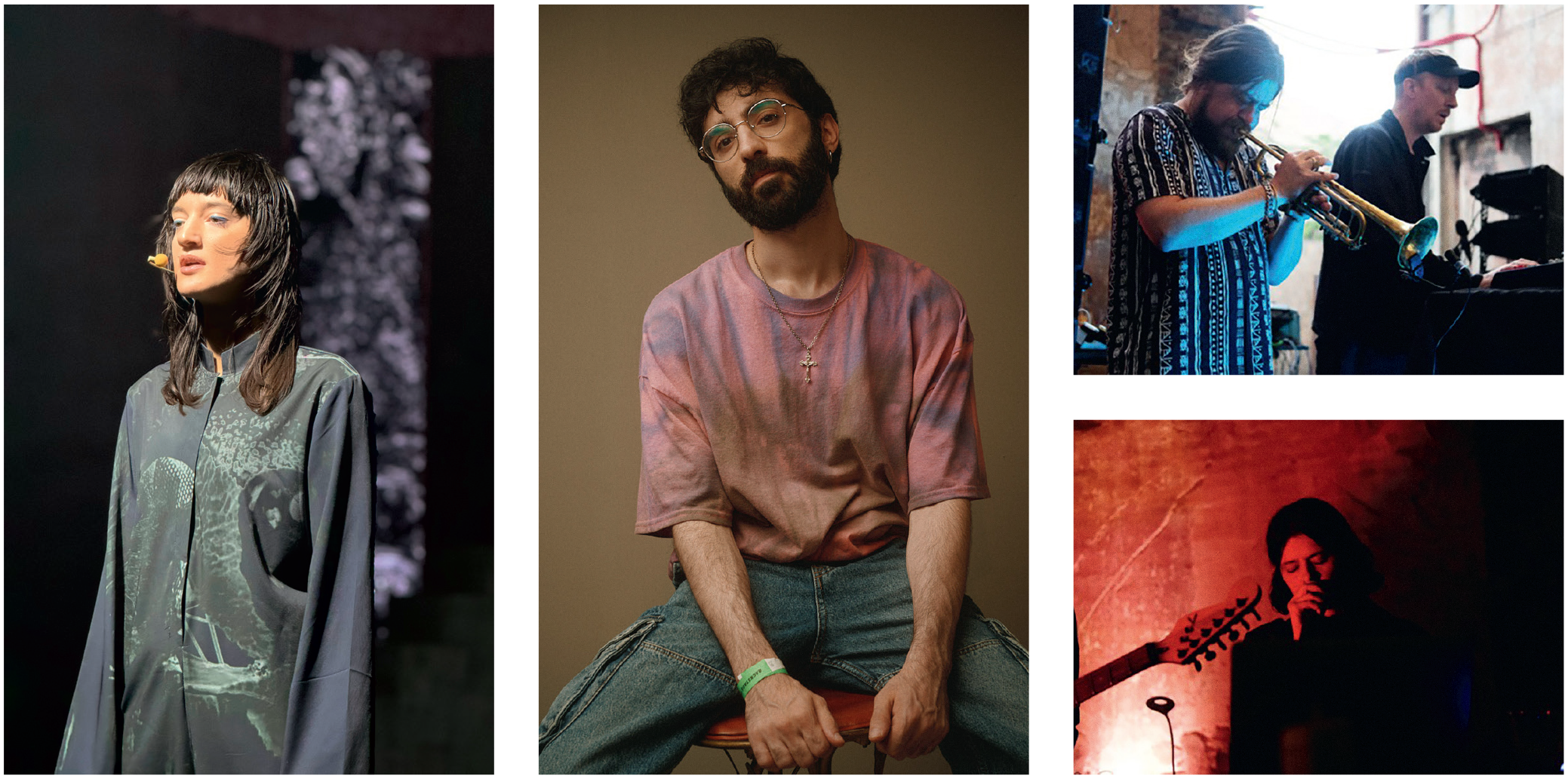
LEFT: Musician and producer Gvantsa Uma Japaridze
CREDIT: (band) Tako Skripnichenko / M.K. / Outer Emigrant
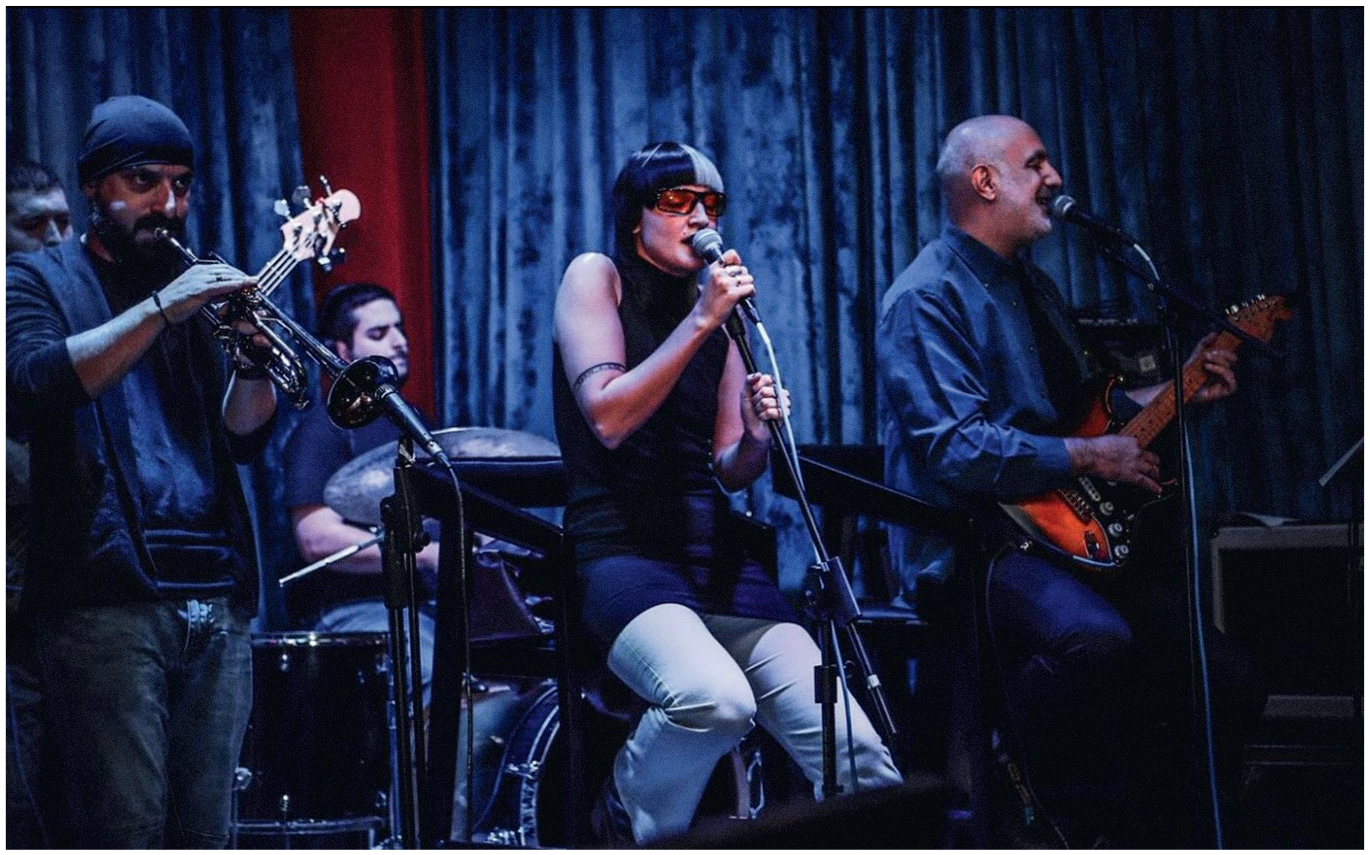
ABOVE: Musicians in Georgia have spoken out about the government and partaken in political protest. From left to right: Gvantsa Uma Japaridze; Dato of Bedford Falls; performances for the media platform, Mutant Radio
The 38-year-old also participated in Tbilisi’s demonstrations in the spring.
“This year, the police seemed more prepared and were noticeably more aggressive - they wore balaclavas and were extremely intimidating,” he said. “Some of my musician friends were captured by the police, brutally beaten up, then taken into custody for 48 hours where they were interrogated.”
Glonti also mentioned how many of the protesters “received phone calls from unknown numbers. These callers threatened more violence if the protests continued”.
Many musicians, artists, journalists and members of opposition parties have received similar anonymous phone calls “with threats and intimidation” over the past few months, said Guram Imnadze, director of the democracy and justice programme at the Social Justice Centre, a Tbilisi-based human rights NGO.
He also spoke about the “family values and the protection of minors” law that the parliament approved in September, which forbids Georgian media from freely broadcasting any information related to LGBTQ+ issues.
“This law restricts legal rights for any sexual minority groups,” he said. “It also impacts on freedom of expression for musicians, who can be punished for representing homosexuality in a positive manner.”
Gvantsa Japaridze, an experimental artist whose music combines natural sounds with various instruments, said: “This law is yet another step by Georgian Dream to spread homophobic influence in Georgia and to suppress free artistic expression.
“It denies LGBTQ+ people basic human rights and refuses to grant them equality, so many people from the LGBTQ+ community are now planning to leave Georgia.”
She said many female musicians “felt threatened at the street protests in Tbilisi last spring, especially those who were called to appear in court over their views”.
Political street protests in Tbilisi continue. The latest wave began after the election on 26 October, when Georgian Dream claimed victory with 54% of the vote.
The opposition, which includes Georgia’s pro-European president, Salome Zourabichvili, has refused to recognise the validity of the results, alleging massive fraud, vote rigging, intimidation and Russian interference. This is a view that Japaridze shares.
“Georgian Dream stole the election with the help of Russia,” she said.
Creatives believe that Georgian Dream is weaponising culture for its own conservative political agenda
Glonti also claimed there was intimidation leading up to, and during, the election.
“These intimidation tactics generally happen in rural regions, where many people get their information from state-run television,” he said.
And Kiknadze added: “Georgian Dream collects many of its votes through intimidation and bribery. People from poorer socio-economic backgrounds are very easy to intimidate and bribe and this [is] how our government collects many of its votes.”
Georgia applied for EU membership in March 2022, shortly after Russia invaded Ukraine, and was granted candidate status in December 2023.
Index interviewed a wide cohort of Tbilisi-based musicians, who all spoke about the benefits of the country joining the EU.
In a statement, indie rock band Loudspeakers said: “Georgia has always been part of European civilisation, and our future belongs with Europe and the European Union. We believe our relentless struggle will soon turn into victory.”
But not all musicians share that enthusiasm. Many speak about an uninspiring protest movement which lacks energy, direction, a clear goal and, most importantly, leadership.
“The problem in Georgia right now is that there is nobody in the opposition that people can trust,” said Glonti.
Some of my musician friends were captured by the police, brutally beaten up, then taken into custody for 48 hours, where they were interrogated
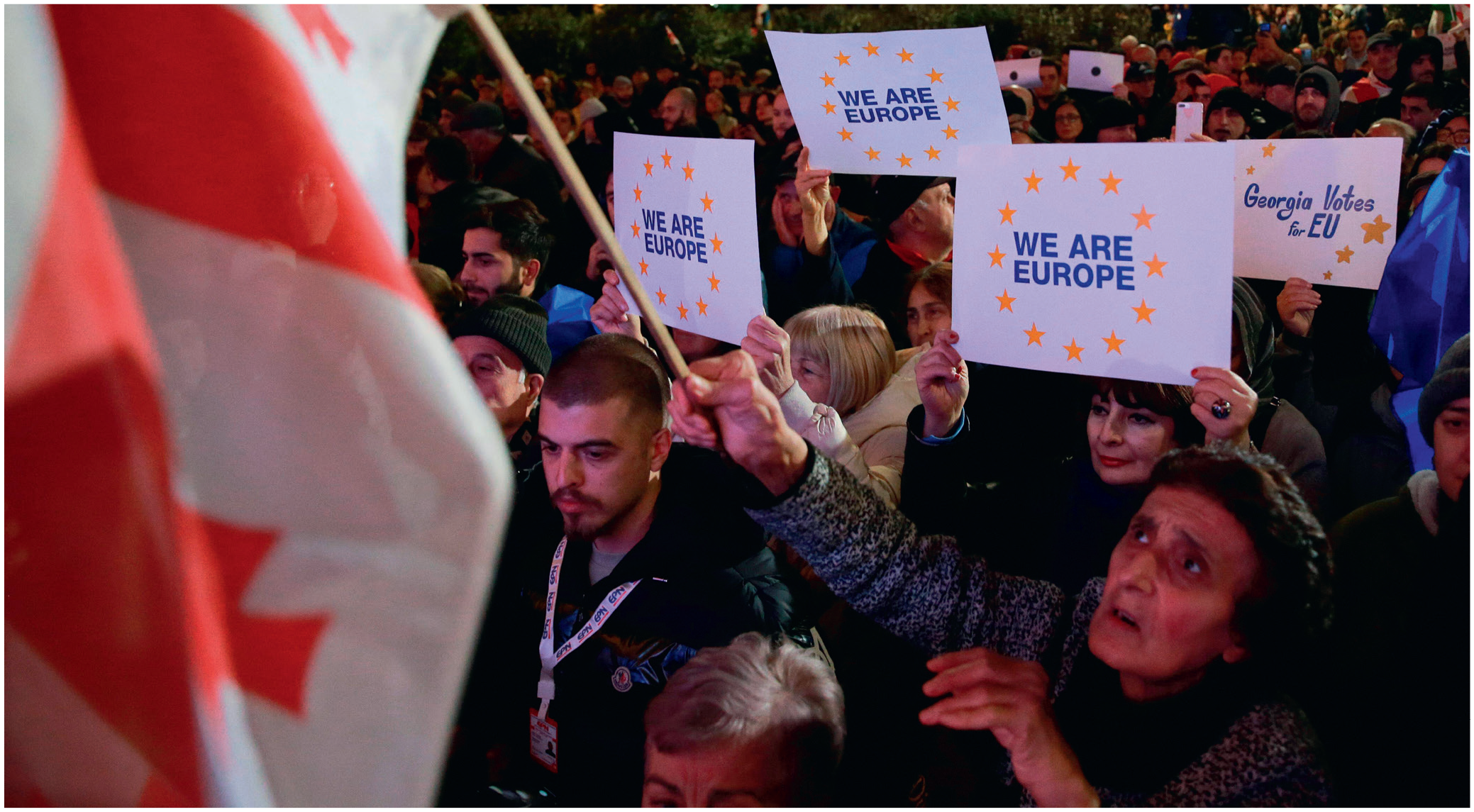
ABOVE: A woman holds the Georgian flag during a protest against alleged violations in a recent parliamentary election in Tbilisi
CREDIT: Associated Press / Zurab Tsertsvadze / Alamy
Dato is the lead singer in indie rock band Bedford Falls. “The enthusiasm to keep protesting is dying out,” he said. “We already protested in April and May against this Russian law, but there was no compromise from our government on it. We are being ignored. There is no real plan here.”
The Georgian-Swiss composer and performer Alexandre Kordzaia, aka Kordz, echoed that view. He said that “as time goes on, the political opposition in this country just becomes weaker and weaker”.
Still, a glimmer of hope remains. “There was great music made in the Soviet Union where extreme political conditions often prevailed,” he said. “Ultimately, the quality of art will not be affected. We will make music no matter what happens.” ✘
Footnotes