






Abstract

From Fela Kuti to Burna Boy, Afrobeats has long been a symbol of resistance against brutality and corruption in Nigeria, writes
MUSIC HAS ALWAYS been more than just a mirror for Nigeria’s effervescent spirit. It exists as a force that speaks truth to power and amplifies the voices of the oppressed, and musicians have long wielded their art to confront injustice and call for change.
Since its independence in 1960, the country’s history has been marked by episodes of torrid leadership and political upheaval - a turbulent journey that led to its first military coup just six years after gaining independence.
Against this backdrop, musicians became activists, with the late Fela Kuti at the forefront, draping Nigeria’s hypocrisies in rhythm and biting lyrics with anthems such as Zombie.
From Sound Sultan’s Jagbajantis (Mathematics), which captures the struggle of Nigerians seeking greener pastures, to today’s icons including Burna Boy and Falz, who use their platforms to rally for justice, Nigerian music has long been intertwined with social and political activism. Nigerians continue to confront the same struggles that Kuti sang about years ago.
At a time when issues such as police brutality, corruption and economic inequality weigh heavily on the nation, music has become a weapon - it is a tool that brings people together, challenges authority and ignites movements.
Historical background
This tradition of musical activism isn’t new; Nigerian artists have long used their music to confront political and social issues. No one embodied this more than Kuti, the legendary pioneer of Afrobeats, whose songs continue to resonate as symbols of defiance.
In Zombie, he criticised the military’s robotic obedience to corrupt leaders, using sharp, satirical lyrics and relentless beats to depict the oppressive reality faced by ordinary Nigerians.
For this, he endured raids, arrests and assaults - yet he never muted his message. Instead, these experiences became fuel for his pioneering music.
In Coffin for Head of State - written after his mother (who was herself a prominent women’s rights activist) was thrown from a balcony, his sanctuary was desecrated and he was beaten by the military - he confronted how religion was used as a smokescreen while those in power fed off Nigeria’s resources.
He sang: “Look Obasanjo! Before anything at all, him go dey shout: ‘Oh Lord, oh Lord, oh Lord, Almighty Lord! Oh Lord, oh God!’”
In his view, these same leaders “do bad, bad, bad, bad, bad, bad things”, using religion as a cover for their corrupt actions.
In Authority Stealing, he exposed how “authority people” steal without repercussions while petty thieves are swiftly arrested and jailed. Kuti sharply contrasted small-time criminals with those in power, singing: “Authority people them go dey steal, public contribute plenty money, na authority people dey steal.”
His verses paint a vivid image of how authority figures commit theft on a grand scale, beyond the reach of traditional crime and punishment.
As he put it: “Armed robber him need gun, authority man him need pen… if gun steal eighty thousand naira, pen go steal two billion naira.”
Kuti’s lyrics underscored his belief that the true power - and danger - lay with those in authority, who wielded pens to drain public resources far beyond what any armed robber could ever steal.
Kuti’s songs, raw and uncompromising, set a powerful precedent, proving that music could be a tool of resistance in the face of overwhelming power.
Inspired by his activism, other artists continued to push boundaries. Musicians such as Sonny Okosun, with songs including Which Way Nigeria?, voiced opposition to apartheid and colonial legacies, linking Nigerian struggles to the broader African liberation movement.
LEFT: Fela Kuti, who is widely regarded as the founding father of Afrobeats, performs at Hippodrome de Pantin in Paris on 15 March 1981
CREDIT: Philippe Gras / Alamy
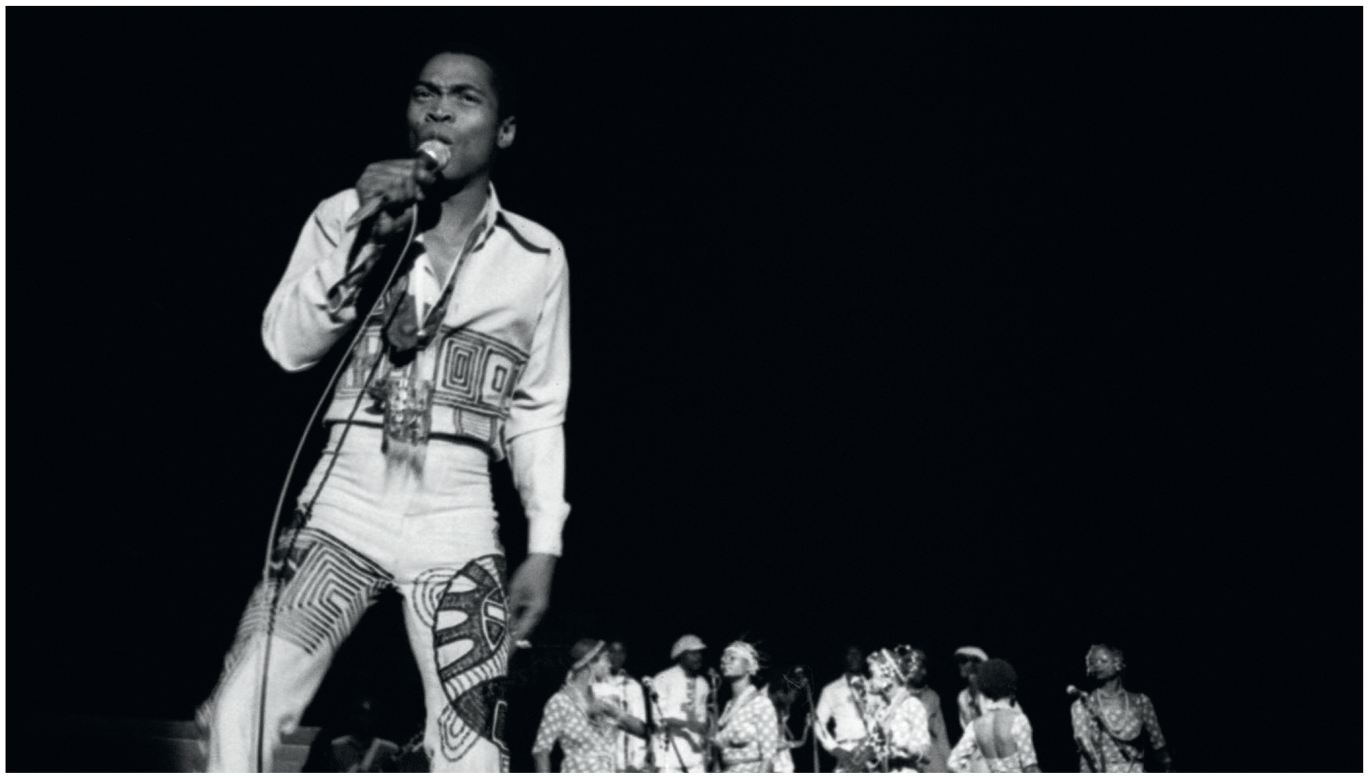
In a society where speaking out can bring real consequences, each beat and lyric becomes an act of courage
These pioneers laid a foundation for later activism. Songs such as Eedris Abdulkareem’s Jaga Jaga and Charly Boy’s 1990 transformed Nigerian music into a weapon against oppression and created a lasting legacy.
Modern-day impact
Today, Nigerian artists continue this legacy, tackling new challenges that impact millions. During the #EndSARS protest movement against police brutality - which called for the disbandment of the Special Anti-Robbery Squad - musicians including Burna Boy and Falz emerged as powerful voices of the people.
Burna Boy’s 20 10 20 was named after the date of the Lekki Toll Gate shooting, when 12 unarmed protesters were killed by the Nigerian Army. The song, haunting and direct, captures the trauma many Nigerians felt - a memory the government sought to silence.
In Monsters You Made, from his Grammy-winning album Twice As Tall, Burna Boy similarly confronts how greed in power has turned everyday citizens into “monsters”.
Falz, an artist and lawyer, has been unwavering in his commitment to speak out against social injustice, corruption and Nigeria’s poor state of affairs. His 2019 album, Moral Instruction, tackles these issues directly, even sampling Fela’s Zombie in the track Follow Follow.
In This Is Nigeria, Falz blends hip-hop with social commentary to expose the country’s deep-rooted issues, from corruption to religious extremism, capturing the ironies and struggles of everyday Nigerian life, sparking conversations nationwide.
With social media amplifying these messages, musicians now reach global audiences, fostering solidarity and greater awareness of their country’s realities.
Music as a cultural connector and catalyst for change
But Nigerian music doesn’t only highlight oppression - it also unites and empowers.
It has become a cultural connector, rallying communities within the country and across the diaspora. For young people especially, these songs resonate deeply, reflecting their lives and struggles and inspiring them to see themselves as agents of change. The music builds a collective identity, empowering the youth and giving them a sense of purpose.
International listeners have also connected with these narratives, with Nigerian artists sparking global conversations on social justice.
This was evident during #EndSARS, when Afrobeats icons Davido, Burna Boy, Falz and Wizkid joined rallies both in Nigeria and abroad. This visibility created a bridge, enabling cultural exchange and raising international awareness of Nigerian issues.
Challenges and limitations
Yet despite its power, musical activism in Nigeria faces significant challenges. Censorship looms constantly, with the authorities quick to silence dissenting voices. Musicians risk harassment, legal repercussions and even physical danger when they choose to speak out, making freedom of expression a fragile right. This presents a daunting barrier for artists who attempt to confront powerful institutions.
ABOVE: Afrobeats artist Burna Boy performs at State Farm Arena in July 2022 in Atlanta
CREDIT: Paul R. Giunta/Invision/AP

There’s also the question of whether music alone can effect lasting change. While it certainly raises awareness, music often has its strongest impact when it complements larger movements, such as #EndSARS, when street protests and social media campaigns against police brutality amplified messages of resistance. This synergy gives a voice to the voiceless and strengthens the call for reform, suggesting that music’s true power lies in its ability to inspire collective action.
However, since the Lekki Toll Gate shooting, Nigerians have become more cautious. Witnessing the government’s ruthless response has deterred many from criticising them openly. The fear of being met with violence simply for protesting has also made them less willing to risk peaceful demonstrations - leaving a culture of caution after that tragedy.
Despite these formidable challenges, Nigerian music remains an enduring testament to resilience and resistance. Musicians continue to echo the struggles of the people, using their voices to expose injustice and create space for dialogue. In a society where speaking out can bring real consequences, each beat and lyric becomes an act of courage - a defiant statement that change is possible.
As the world tunes in, Nigerian artists are no longer just voices of their nation - they have become ambassadors of truth on the global stage. Through the powerful language of music, they bring their nation’s struggles into international conversations, inviting listeners everywhere to witness and engage.
While music alone may not bring about all the answers, it has the power to build bridges
This growing global solidarity suggests that while music alone may not bring about all the answers, it has the power to build bridges, spark movements and inspire hope.
In the end, Nigerian music is more than a call for change. It is a unifying force that reminds millions, both at home and abroad, that the fight for justice is far from over. ✘
Footnotes