






Abstract

Getting barred from Georgia felt like a fever dream, writes
CREDIT: Handout
“MY BODY’S STILL starving,” Khachik says. Behind the wheel of his father’s car, slugging okroshka (a fermented yoghurt-based Russian soup) from the bottle. He’s regaling me with the marathon he ran a few days back. His jogging playlist blares from the speakers. Imagine Dragons, mixed with Classical symphonies, Caucasian folk songs, and a lot of John Williams.
It’s late afternoon, Tuesday 20 May, 2025. We’re headed from Yerevan in Armenia for the crossing near Sadakhlo, a village on the Georgian side of Armenia’s northern border. Lake Sevan whips past to the rousing overtures of Indiana Jones, Radioactive, Beethoven’s ninth. In the cool valleys of Tavush, crags soar skyward to the soundtrack of Star Wars’ more portentous motifs.
Pulling up to the border to the Darth Vader theme feels apt. My earlier border experience wasn’t a happy one. It followed a week-long campaign by the Georgian government to smear me as the Soros agent of a nefarious “Deep State” conspiracy, dispatched to assist “radical” opposition elements in their efforts to overthrow the ruling party, drag the country into war, and turn the children gay.
Some context. By the date of my earlier trip, I’d been living in Georgia since the 2022 invasion of Ukraine. In that time, I’d witnessed a country, once held up as an exemplar of democracy in the former Soviet Union, descend into violent authoritarianism. It happened slowly at first, with rhetorical attacks, creeping legislative changes and political manoeuvring, then all out as elections were rigged, critics jailed, and protesters tortured.
Much of my work as a journalist has focused on the ruling Georgian Dream party’s use of propaganda and disinformation, the narratives it’s weaponised in sabotaging a constitutionally mandated bid for EU accession, supported by 80% of the population, while reorienting the country away from the West and back toward the Kremlin’s influence.
Critics, with whom (on this) I tend to agree, have attributed this turn to the paranoia of a single man: Bidzina Ivanishvili. Having made his billions in Moscow during the anarchy of privatisation that followed the Soviet collapse, he founded Georgian Dream leading it to its first electoral victory in 2012 and today continues to serve as its éminence grise.
Some believe Ivanishvili has driven his government along this course because he believes he’s the victim of a Western plot against his finances with sanctions, or threats of sanctions from the USA and others. There are nuances to his conspiracy theories, echoed by officials and ubiquitous across progovernment media, which warn of a “Global Party of War” hellbent on opening a “second front” to Russia’s war by fomenting a coup in Georgia, all while flooding the country with “pseudo-liberal LGBT propaganda”. For the most part they represent a housebrand rehash of the same playbook used for years by Putin, Orban, and more recently, Trump.
A month prior to my refusal for entry to Georgia, I’d published an investigation into Hunnewell Partners. Founded by associates of Ivanishvili, it’s the British private equity group that owns Georgia’s largest broadcast network. Critics have accused the firm of using Imedi TV, Georgia’s largest TV station, to push anti-Western propaganda in support of the government’s “pro-Russian” pivot. Our story revealed Hunnewell also had secret ties with sanctioned Kremlin oligarch Roman Abramovich. Hunnewell has since described my reporting as “grossly defamatory” and a “campaign of misinformation” while stating it is both “pro-Europe” and “pro-Ukraine,” and that Hunnewell has “no business dealings or investments, directly or indirectly, in Russia.”
A Hunnewell Partners spokesperson quoted in the article said that its dealings with Abramovich were “more than a decade ago”, when the former Chelsea FC owner was not sanctioned.
My Byline Times article went down about as well as a bottle of car-warm
By the end of the first week in April, the backlash had culminated in an hour-long exposé from Imedi TV. Entitled Commissioned Lies, it touted allegations of Deep State collusion based on “revelations” about my professional history and funding, which I’d inadvertently betrayed to their reporters by sharing literally all of it to my public website and social media profiles.
As it happened, I was already due to leave the country in just a few days.
Passport control at 4am in Tbilisi International Airport is usually breezy. They’re tired, you’re a little blitzed from the wait at one of the city’s wine bars, and all being well you can be out of a cab and through to your gate in as little as an hour. Not so this time around, given the litany of questions I faced from the unimpressed border guard who scanned my documents.
“How long have you lived in Georgia?” (nosey), “Do you have any friends here?” (rude), “What do you think of the political situation?” (fabulous, obviously). This wasn’t something I, nor anyone else I know in the country, had encountered before. A clear red flag, and a prompt to strategise before returning towards the end of May.
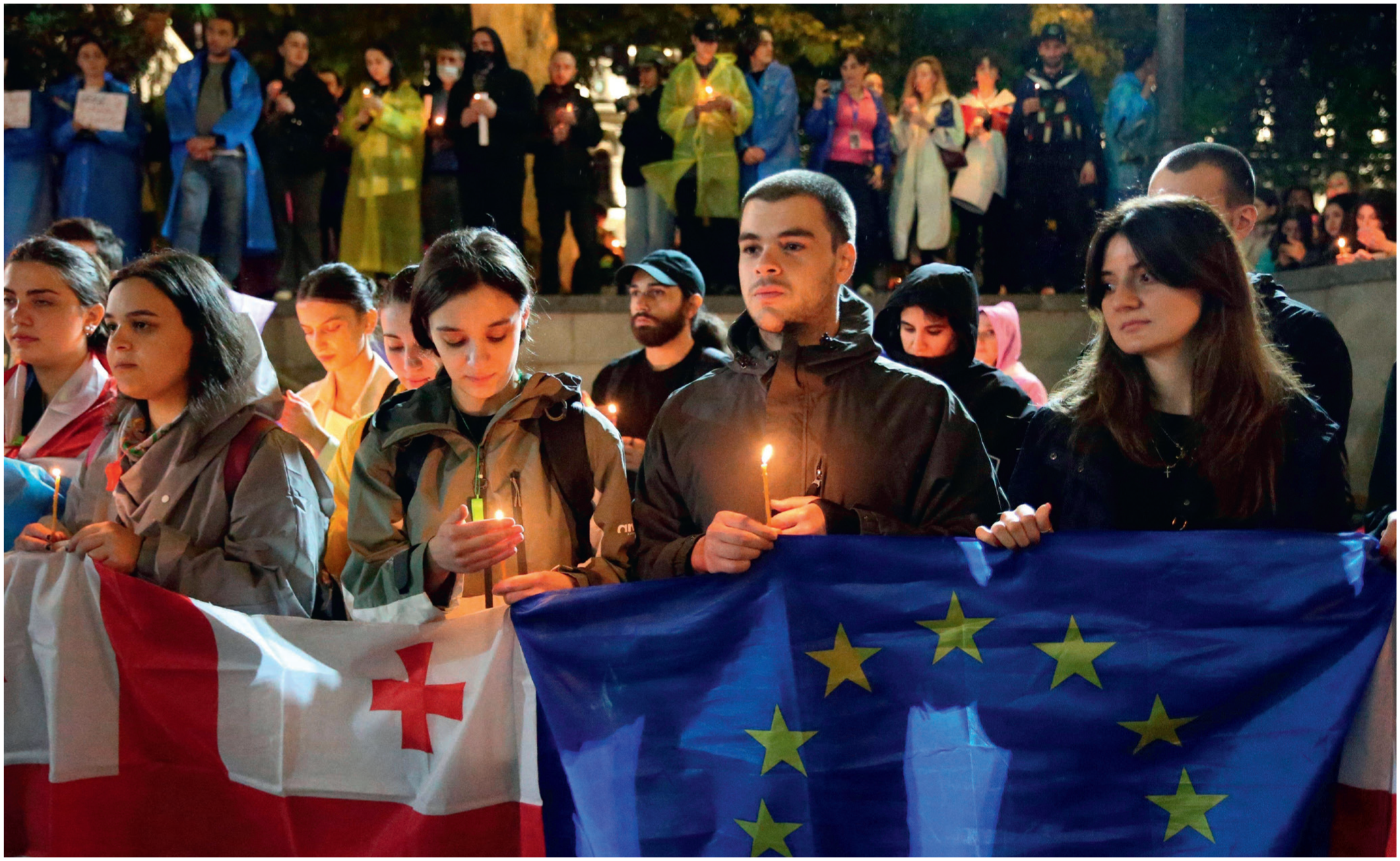
Demonstrators with Georgian and EU flags stand in front of the Kashveti Church of St. George during an opposition protest against “Russian law” in the centre of Tbilisi, May 2024
CREDIT: AP Photo/Zurab Tsertsvadze/Alamy
I did debate it. In all, the worst that seemed likely was getting turned away at the border. Mindful that in flying to Tbilisi a refusal would’ve seen me detained ahead of the next return flight, potentially leaving time for state security to peruse my devices, I choose instead to leave London for Yerevan and the onward schlep to Tbilisi. Cue the Vader motif.
The first sign things weren’t boding well was after being waved through the Armenian side of the border, Khachik told me he’d be going through the Georgian checkpoint with the car while I’d need to pass through a separate hall. It was through that building’s window I then spied him speeding back down the way we’d come.
At that moment, and for a $200 driver’s fee to Tbilisi rather than a border town, this felt like a dick move. He soon popped up again to say he hadn’t realised he wouldn’t be permitted to take his father’s car into Georgia, and that he’d help with onward travel. By that point the woman at the booth had already instructed me to wait on the far side of the hall, so it was feeling wise to take things one at a time.
In the end I was out in 45 minutes. Perfectly polite, save the camera jammed in my face to record the exchange, during which I was told I’d been denied entry for “other cases envisaged by Georgian legislation” and given ten days to appeal the decision. The guard even begrudgingly shook my hand.
We were back in Yerevan by 2am.
Ten days turns out to be a short window for appeal, given the hassle that is not only finding yourself a lawyer but also sorting power of attorney without being physically present to sign the documents.
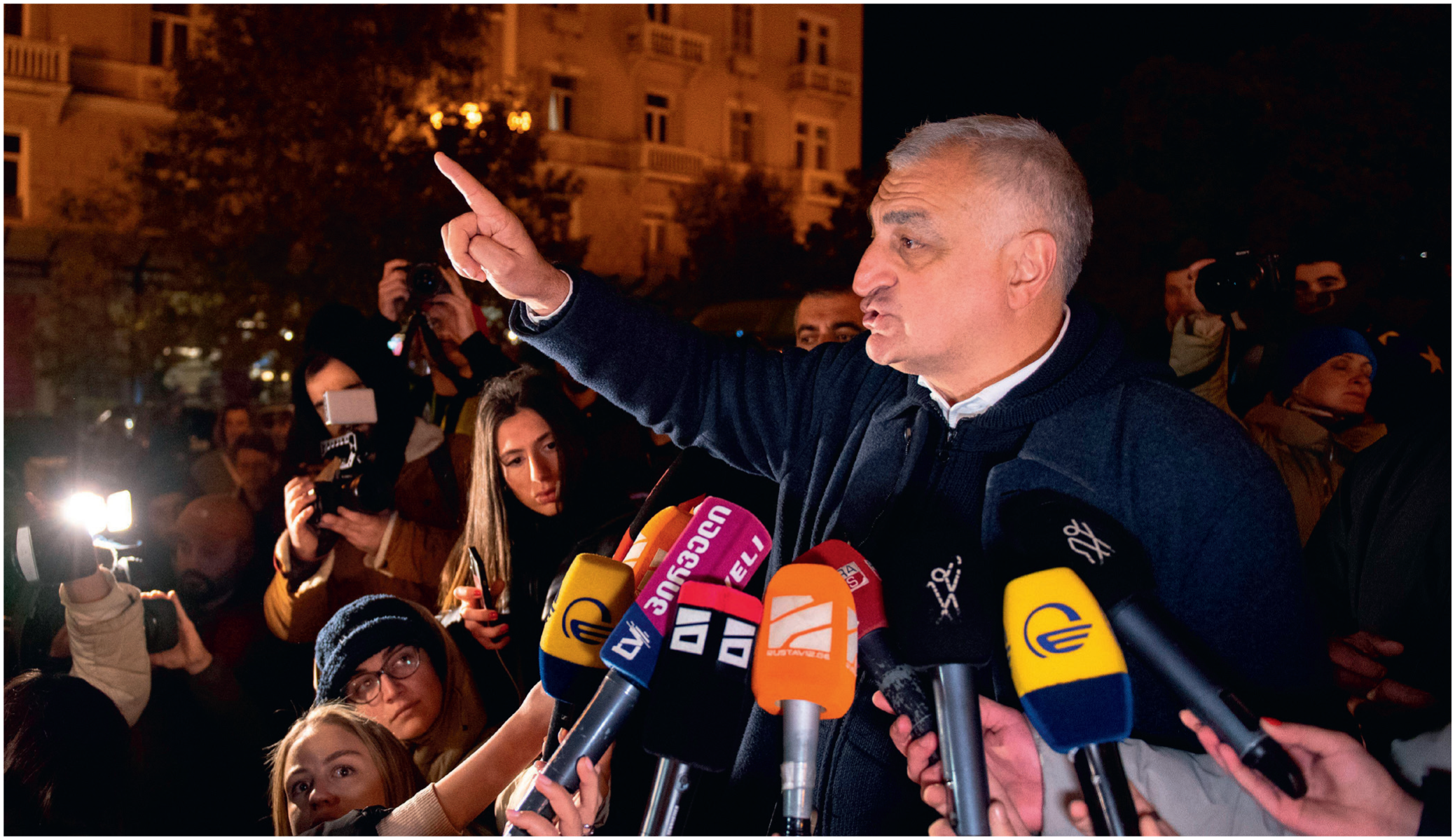
Mamuka Khazaradze, leader of the Strong Georgia coalition, speaks to a crowd at a pro-Europe protest in Tbilisi in 2024
CREDIT: Jay Kogler/Alamy Live News
In Tbilisi, your lawyer needs to translate the letter from Georgian into English, then email it over so that it can be printed and signed and in turn taken to someone in Yerevan to be translated into Armenian, with the swelling dossier then taken to a notary for certification before on again to the Ministry of Justice to be apostilled, which all takes significantly longer than you’ll be expecting.
So, by the time the documents are finally ready you’ll be pegging it down to the bus station with a few dollars to slip one of the drivers who’ll then ferry them across the border overnight, to hand them on the other side to a mate of yours who’ll drop them with your lawyer the next morning, who then has to translate all of it back into Georgian, then have that translation notarised, before maybe making it down to the courthouse ahead of the deadline.
After two weeks stranded in Yerevan it was the task of getting my stuff couriered from Tbilisi that proved least challenging. Partly because suspecting the ban was a distinct possibility, I’d taken the precaution of leaving two suitcases by the door before leaving in April. A possibility, not just after the smear campaign, but also because I am now one of six Western journalists to have been denied entry into Georgia under the same provision of “other cases” since last October. One British, one Czech, one Swiss, three French.
Contrary to what Georgian border officials may think, I do have friends in Tbilisi. I miss them. I miss my apartment, evenings out in the city, weekend getaways in provincial towns and road trips through the mountains in all their stark and imposing beauty. It has been harder for one of my married colleagues with children, who had lived in the country for more than 15 years.
We are both luckier still than many of Georgia’s independent journalists, civic activists and government-critical NGOs. Because what the country is currently witnessing is nothing short of a stain on its post-independence history, one that promises to leave debilitating scars for years, if not decades to come.
Over the past twelve months, Ivanishvili’s government has passed laws restricting journalistic access to parliament and the courts, targeting NGOs and media outlets as “foreign agents”, criminalising opposition parties, tightening penalties for protesters, expanding police powers, and outlawing materials it deems “LGBT propaganda”. It has streamlined the process for firing civil servants and reintroduced treason to the criminal code, imposed restrictive “coverage standards” on broadcasters and overhauled the electoral system so that presidents are appointed not by popular vote, but by an electoral college composed of party loyalists. As of a few weeks ago, it is now a crime to swear at officials on Facebook.
Georgian journalist Mzia Amaglobeli holds the book How to Stand Up to a Dictator by Maria Ressa whilst standing trial in 2025
CREDIT: Formula TV via AP
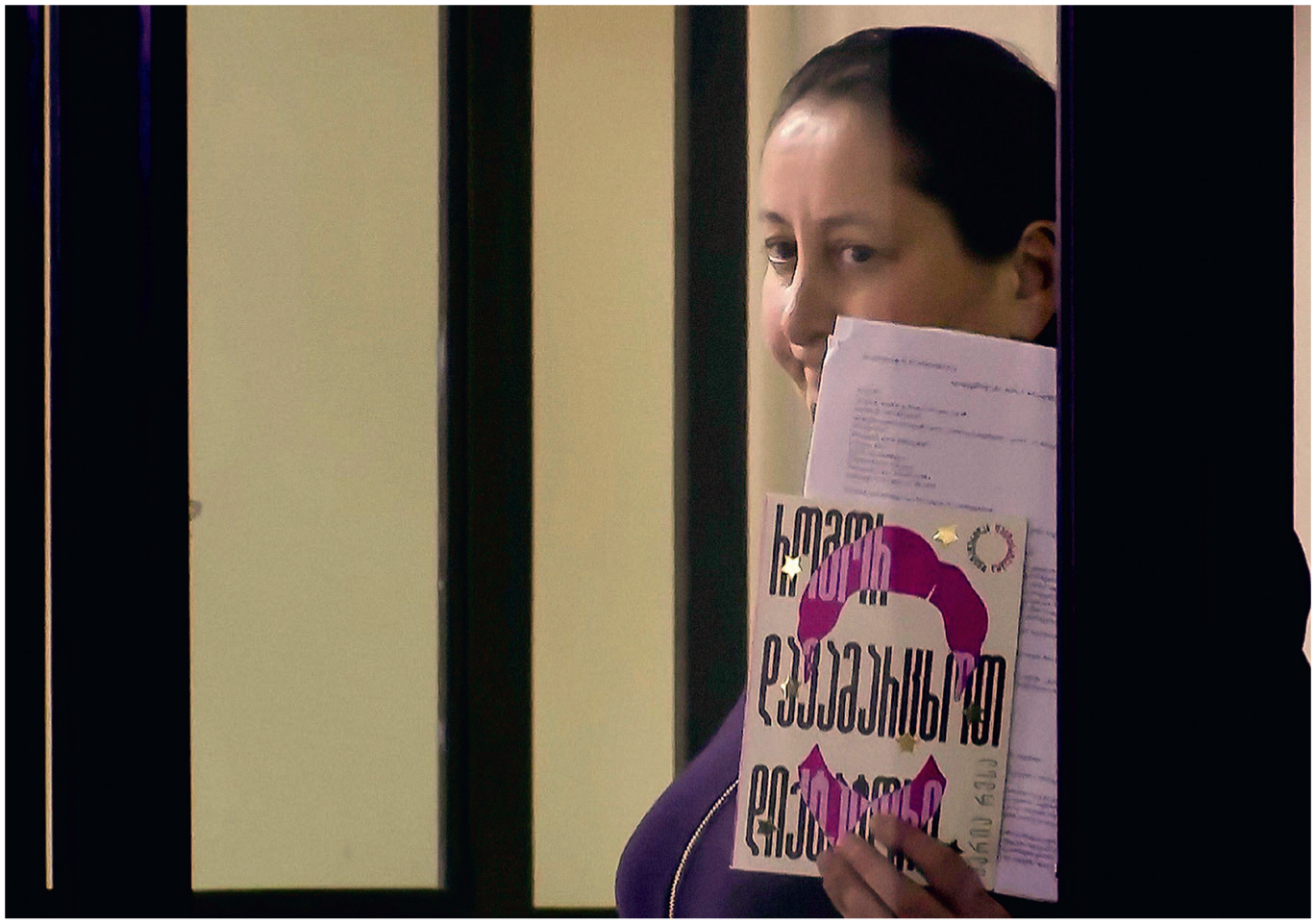
One needn’t look far for evidence of the repression accompanying these changes. Take Mzia Amaglobeli, cofounder of independent media outlet Batumelebi, who became the country’s first female political prisoner since the fall of the Soviet Union, jailed for two years for “attacking” a police officer. Or the nine opposition politicians jailed and banned from holding office – Mamuka Khazaradze, Badri Japaridze, Zurab Japaridze, Nika Melia, Nika Gvaramia, Giorgi Vashadze, Giorgi Targamadze, Irakli Okruashvili, and Elene Khostaria who has escaped jail to date.
And these are the cases within the bloating remit of the Georgian courts. They do not account for the extrajudicial attacks that have been routinely carried out over the past year, with
As a Western journalist, a crucial question emerges: where are Georgia’s partners? The ones who last year backed protests against the excesses of the regime, who called for Georgia to stand fast with Ukraine against the Kremlin’s twisted revanchism, who for decades funded Tbilisi’s NGOs and independent media, and who promised an embrace of democracy would herald a bright new future after the terrors of the Soviet Union?
The time for sanctions has long since passed. We cannot continue to stand idly by, issuing strongly worded statements and wringing our hands under the pretence that rhetoric alone might stay the accelerating failure of a state in real time.