






Abstract

AN INDEPENDENT JOURNALIST in Yemen thinks twice before posting on social media, writing a story or moving to another city. There is a risk they could be killed, detained or interrogated at any time, and anywhere.
Since the war in the country began a decade ago, the Yemeni Journalists Syndicate has documented the killing of 45 journalists and more than 2,000 violations against media freedom.
Media workers have been under fire amid an increasingly hostile environment. They find it difficult to operate and face tremendous challenges – particularly on field assignments. And with the political instability, military divisions and face-offs ongoing in the small country in southern Arabia, their ordeal intensifies.
Talking to a journalist in Yemen reveals the magnitude of the struggle. The job is a battle fraught with fear, danger and pain.
Below are the testimonies of three journalists talking about their experiences and presenting a vivid picture of how perilous reporting is in Yemen today. Their names have been changed to protect their identities.
Yasser
I always wonder why the warring sides in Yemen suspect and punish independent journalists. I simultaneously answer my own question: they hate the truth and seek to conceal it. Even if what we share and write about is real, they seek to prevent the revelation of anything that shows their faults.
In 2018, I was living in Al-Hodeida province, which is under the Houthi group’s control. Four military vehicles arrived suddenly in front of my home. They raided the house and arrested me. I was powerless, helpless and terrified. I did not expect such a scenario. When the armed men arrested me, I was asking myself: “Am I a dangerous person? What did I do wrong? I am only a journalist.”
I was taken to a police station in Hodeida city, handcuffed, blindfolded and interrogated. Many charges were brought against me, including colluding with foreign forces. In their eyes, a journalist could be a spy.
I was subjected to physical torture and had three of my teeth broken and my legs injured.
I could not defend myself or seek the help of a lawyer and was disappeared for two years, during which I was prevented from receiving calls or being visited.
I was insulted by security personnel inside the prison – all because of my media job.
When my health deteriorated in prison, I was allowed to receive treatment in Hodeida city and managed to escape to Alkhokha district, which is under the control of pro-government Yemeni forces. I was lucky to flee such unbearable misery and it feels safe today.
Though I escaped that horrible experience, its mark is indelible. It is a lifelong scar for me and my family. I did not imagine that being a journalist would land me in such trouble.
Fuad
Journalists in various regions of Yemen have faced many difficulties during the 10-year war, with the degree and level of difficulties varying from one region to another. In 2022, I was surprised to find my name on a list of journalists who should be banned from speaking to TV channels.
The ban was enforced by an armed entity calling itself the National Authority for Southern Media. In February 2023, it stormed and took control of a number of media institutions in Aden, including the headquarters of the Yemeni Journalists Syndicate and the Saba News Agency. It continues to control them, exploiting its influence in light of the weakness of state institutions.
Currently, journalists in Aden, to the south of Yemen, cannot practise their profession without a licence from this authority. Covering events and engaging in media activities is challenging. Photography is mostly prohibited and, when allowed, is subject to numerous restrictions.
Many media workers have been forced to seek other work.
For about three years, I have been writing studies and research articles. I abandoned journalistic work because of censorship, controls, restrictions and obstacles.
I cherish journalism as a profession, and I see it as the lifeblood of a free and democratic society. But we have lost freedom of opinion as oppression keeps tightening its grip amid the ongoing war.
Journalism is unsafe and unprotected in such a hostile climate. If I am thrown into prison or killed on the grounds of my work, I am not sure justice will be done to the perpetrators.
Imagine that your job on your passport can prompt security personnel at a checkpoint to stop you and crossexamine you. This happened to me many times when I travelled between Yemeni provinces. They deal with us as suspects.
Mohammed Abdu
In 2010, I graduated from the Mass Communication College at Sanaa University and was optimistic about the future of media work in Yemen. I thought my profession would be free of dangers and serious risks.
Footage from Al Masirah TV shows the aftermath of US airstrikes targeting the Ras Isa oil port held by Houthi rebels in Hodeida on 18 April 2025. Journalists face constant threats in the area, making this image from TV a rare glimpse into the conflict
CREDIT: Associated Press / Alamy
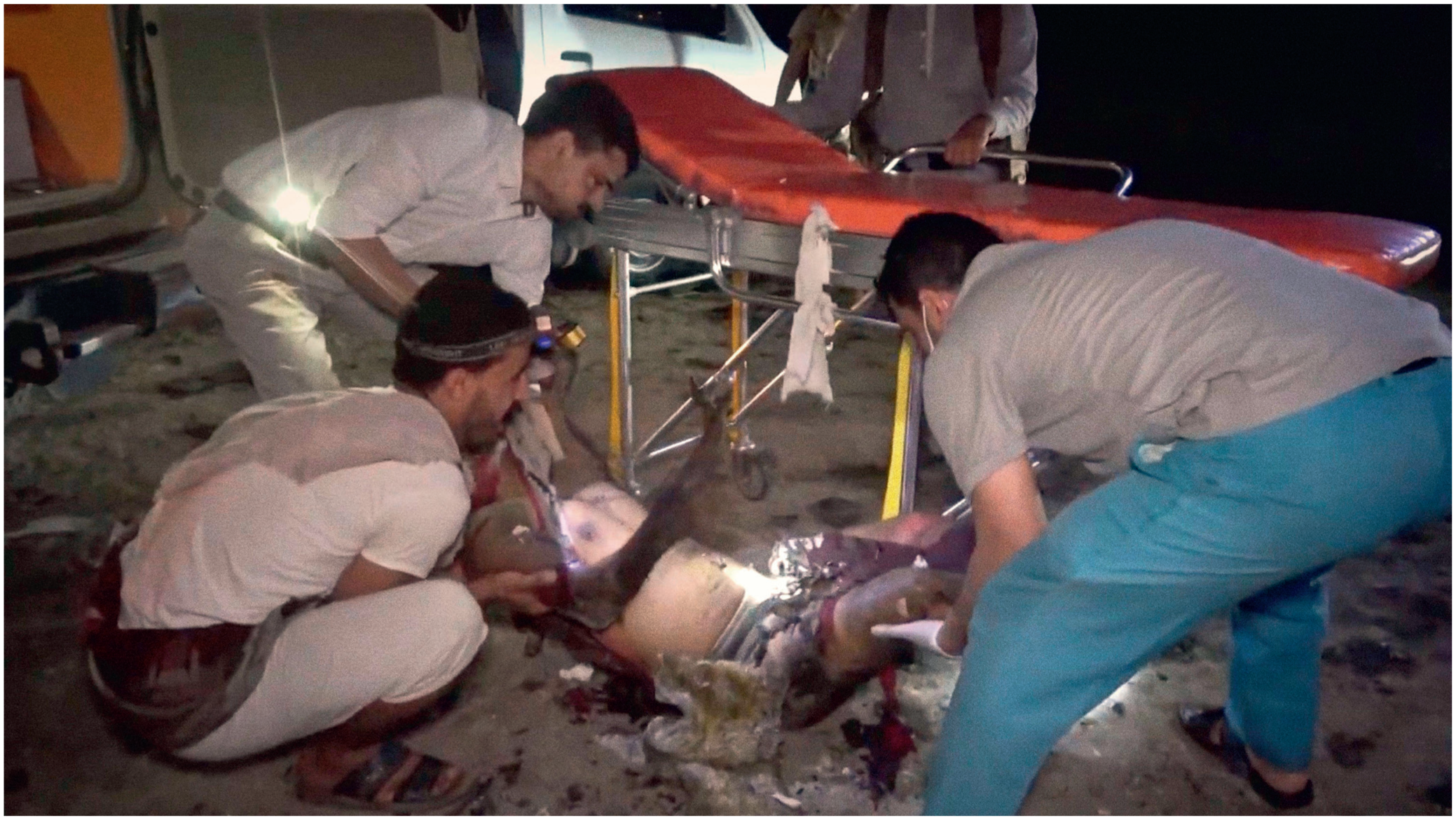
However, as soon as 2011 began, the country fell into political turmoil, and journalism gradually became a risky job. I felt the danger of covering events in the field, and I saw how journalists were exposed to beatings and shootings during public protests.
When the civil war broke out in 2015, media freedom further declined. I limited my movement, reduced my writing activities and dropped my byline on many stories. At the time, I was in Sanaa.
One day, I attended a tribal rally and I was carrying a camera. A tribesman told me: “I prefer to see a man carrying a rifle to a man holding a camera.”
The environment became more hostile to media members, particularly the independent ones. We were forced to move repeatedly from one governorate to another due to the security situation, and we faced numerous threats.
For a decade, I have written hundreds of stories anonymously, fearing being harmed. I know journalists who hide their activities from even their family members. They are worried about being reported to the authorities or a militant group.
I remember publishing a story in an international media outlet. A day later a member of a political party contacted me, objecting to the way I reported.
Although the story was completely professional, it did not meet his expectations. He wanted me to narrate the story to serve the agenda of his political party.
Even if we report the truth, some would find a justification to attack, libel or threaten us.