






Abstract

“MUSLIM LEADERS IN Feud with the BBC” may sound familiar, but this headline is not about the broadcaster’s recent coverage of the conflict in Gaza. It is a news story from The Observer newspaper on 14 August 2005.
BBC investigative journalist John Ware had been looking into the Muslim Council of Britain and The Observer, where I was home affairs editor at the time, had been doing the same.
The BBC was about to broadcast a Panorama documentary about the MCB and its origins in the sectarian politics of South Asia. It would be highly critical of the organisation’s secretary-general, Sir Iqbal Sacranie, who was very close to the UK’s New Labour government, over his ambivalent stance on suicide bombers and the Palestinian terror organisation Hamas. In response, the MCB issued a statement blaming the influence of the so-called Israel lobby: “It appears the Panorama team is more interested in furthering a pro-Israeli agenda than assessing the work of Muslim organisations in the UK.”
As it turned out, The Observer investigation and the Panorama documentary marked the beginning of a significant shift in the discussion of what constituted extremism in British Islam and transformed the relationship between the UK government and the British Muslim community forever.
For me, it had all begun over lunch with Malise Ruthven, a Middle East and Islamic history expert.
In the summer of 2005, shortly after the al-Qaeda attacks on London, Ruthven suggested I take a look at the Muslim Council of Britain and investigate whether the organisation, which advertised itself as the moderate, representative body of British Islam, was everything it claimed to be.
Free expression and extremism have often been intertwined in my work as a journalist. But never more so than in the series of articles I wrote for The Observer over that period. I had previously covered the growth of political Islam in the UK and the crackdown on terror suspects following 9/11. But the home-grown terror attacks of 7 July 2005 had taken everyone by surprise.
That summer, the police and the intelligence services were struggling to get a grip on the situation, and the Blair government was desperate for moderate Muslims with whom they could engage. The MCB, with its quasi-democratic structure, led by the recently knighted Sacranie seemed to fit the bill perfectly. The consensus within government was that the best way to keep young Muslims from the path of violence was to keep the MCB close and listen to their advice about what was happening on the ground.
But the approach was already causing concern in some quarters.
Author Salman Rushdie had raised his voice in protest about the increasing influence of Sacranie, who had said “death was perhaps too easy” for Rushdie when Ayatollah Khomeini of Iran had called for Muslims to assassinate the writer in 1989.
Sixteen years later, Rushdie criticised Sacranie and the Muslim Council of Britain for boycotting the Holocaust Memorial Day ceremony. Writing in The Times, the Satanic Verses author said: “If Sir Iqbal Sacranie is the best Mr Blair can offer in the way of a good Muslim, we have a problem.”
By the summer of 2005, the internal contradictions of the MCB had become impossible to ignore. Its leadership had condemned the terror attacks of July and Sacranie issued a personal statement saying: “Nothing in Islam can ever justify the evil actions of the bombers.” But this didn’t seem to entirely square with his position on suicide bombings when Israel was the target.
The Observer investigation noted the roots of the MCB in the extremist politics of South Asia. Its leaders, including Sacranie, were inspired by Maulana Maududi, the founder of Jamaat-i Islami, which promoted the establishment of an Islamic state in Pakistan. Ahl-i-Hadith, one of the MCB’s affiliate organisations described the ways of “disbelievers” as “based on sick and deviant views concerning their societies, the universe and their very existence.”
By November 1997, when the MCB was founded, the recently elected Labour government was keen to have a reliable line of communication with the Muslim community, and the MCB quickly became the one-stop-shop for all Muslim matters.
By 2005, its partial interpretation of Islam was fast becoming the orthodox position of the British government.
The increasingly problematic role of the MCB within Whitehall came into sharp focus when the British Council decided to fund a Festival of Muslim Cultures planned for 2006.
Some of the performers and art works were potentially problematic for the MCB, and Sacranie made its position clear: “If any activities are seen to contradict the teachings of Islam, then we will oppose them. If you organise a festival in the name of Islam, then it must be Islamic. We will advise them accordingly.”
When The Observer published its investigation, the MCB came out fighting. In a long riposte, the council attacked its detractors and defended its stance on Israel and the boycott of Holocaust Memorial Day, which it felt should be extended to create a more “inclusive” Genocide Memorial Day. “Fortunately, the MCB derives its mandate from British Muslim organisations and not from pro-Israeli sections of the media,” it said.
This response attacked the “mischievous efforts of the Panorama team” and suggested that my approach in The Observer “reveals all too clearly his own Islamophobic agenda”. This was a cheap, unsubstantiated and potentially dangerous claim. It would have been more accurate to describe me as a curious Islamophile rather than someone hostile to the religion.
This was a month before the Danish cartoons controversy, when the magazine Jyllands Posten published satirical drawings of the prophet Muhammad to challenge self-censorship. This was also 10 years before cartoonists at French magazine Charlie Hebdo were murdered for their consistently satirical approach to the Muslim religion. I felt I had been fastidiously respectful, and the charge of Islamophobia was hugely irresponsible in this context.
But there was a further element to the MCB statement that was even more troubling. Whoever wrote the response had drawn attention to a cover piece I had written for the New Statesman in December 2001. The article looked at the work of a group of Western scholars of Islam, who had examined the origins of the religion and raised some important questions about the reliability of scriptural sources. This approach, though not uncommon in biblical studies, was highly controversial in the study of Islam. It’s safe to say that some of the scholars involved were not happy with my approach.
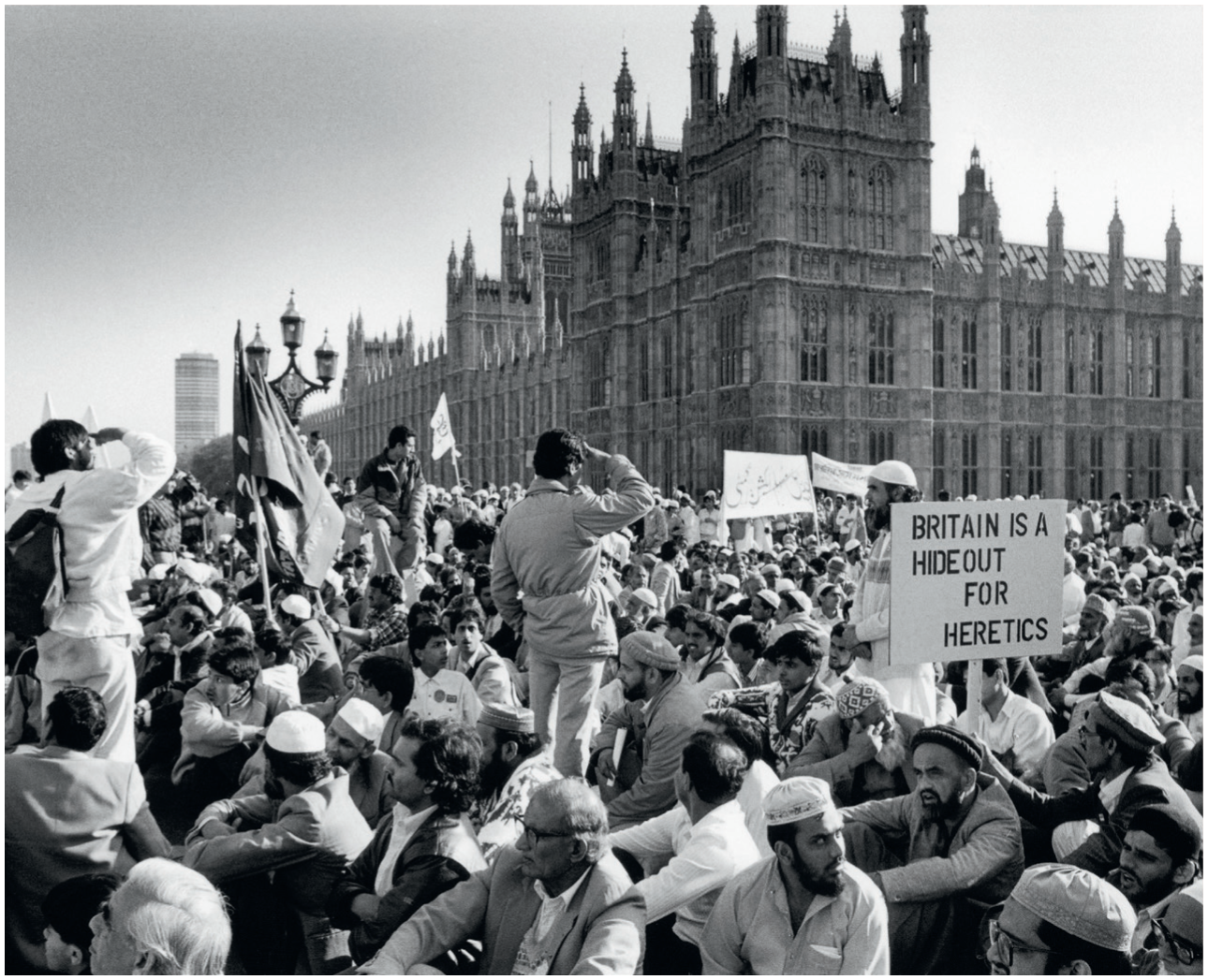
Thousands of British Muslims protested outside The Houses of Parliament in 1989 against Salman Rushdie’s Satanic Verses
CREDIT: Roger Hutchings/Alamy
The sensationalist headline, The Great Koran Con Trick, was an error on the part of an overzealous editor and a gross distortion of the content of the piece. In 2005, the MCB, not surprisingly, jumped on the New Statesman headline as evidence of my hostility to Islam.
This was an absurd charge. As an atheist, I have no interest in what Muslims want to believe about the holiness of the Koran. But the whole incident raised important questions about what can and can’t be said about Islam and what constitutes blasphemy and extremism. The charges of Islamophobia were part of a concerted effort to close down a debate of significant public interest about who speaks for Muslims in Britain.
The BBC programme and The Observer investigation were entirely positive and initiated discussions at public meetings and across the Muslim media.
I assumed it would end there, but there was more to come.
Later that summer, I started to receive documents from a Foreign Office civil servant concerned about what he saw as the Islamist capture of policy within Whitehall. This led initially to a story about Foreign Office concerns a year before the 7/7 bombings that UK intervention in Iraq was fuelling a rise in radicalisation among young Muslims. This had always been denied by the government. Further leaks to The Observer included an ingenious plan by MI6 to infiltrate Islamist groups online by spreading anti-Western propaganda and then persuading jihadists to pursue the path of peace.
More concerning was advice to approve a visa for the Qatar-based Sheikh Yusuf al-Qaradawi, who had consistently argued for the legitimacy of suicide bombings in Israel and armed resistance to the coalition forces in Iraq. The memo from Islamic issues adviser Mockbul Ali stated: “We certainly do not agree with Qaradawi’s views on Israel and Iraq, but we have to recognise that they are not unusual amongst Muslims. Refusing entry on these grounds would also open a Pandora’s box in relation to entry clearance for others in the Muslim world.”
The view was supported by then political director of the Foreign Office, John Sawers.
Towards the end of September 2005 I took up the post of political editor of the New Statesman and the leaks from the Foreign Office kept coming.
The documents provided a nearlive commentary on policy making as ministers and officials grappled with the aftermath of the London terrorist attacks. The disclosures also allowed me to demonstrate that the government’s anti-extremism task force, set up after the London bombings, was little more than a cosmetic exercise.
Most seriously, at the heart of it all, was a record of the profound soul searching about who on the spectrum of Islamist radicals thought the British government should engage in dialogue. The leaks showed the government was already talking to one of the more radical groups in the Middle East, revealing secret Foreign Office negotiations with Egypt’s Islamist opposition movement, the Muslim Brotherhood.
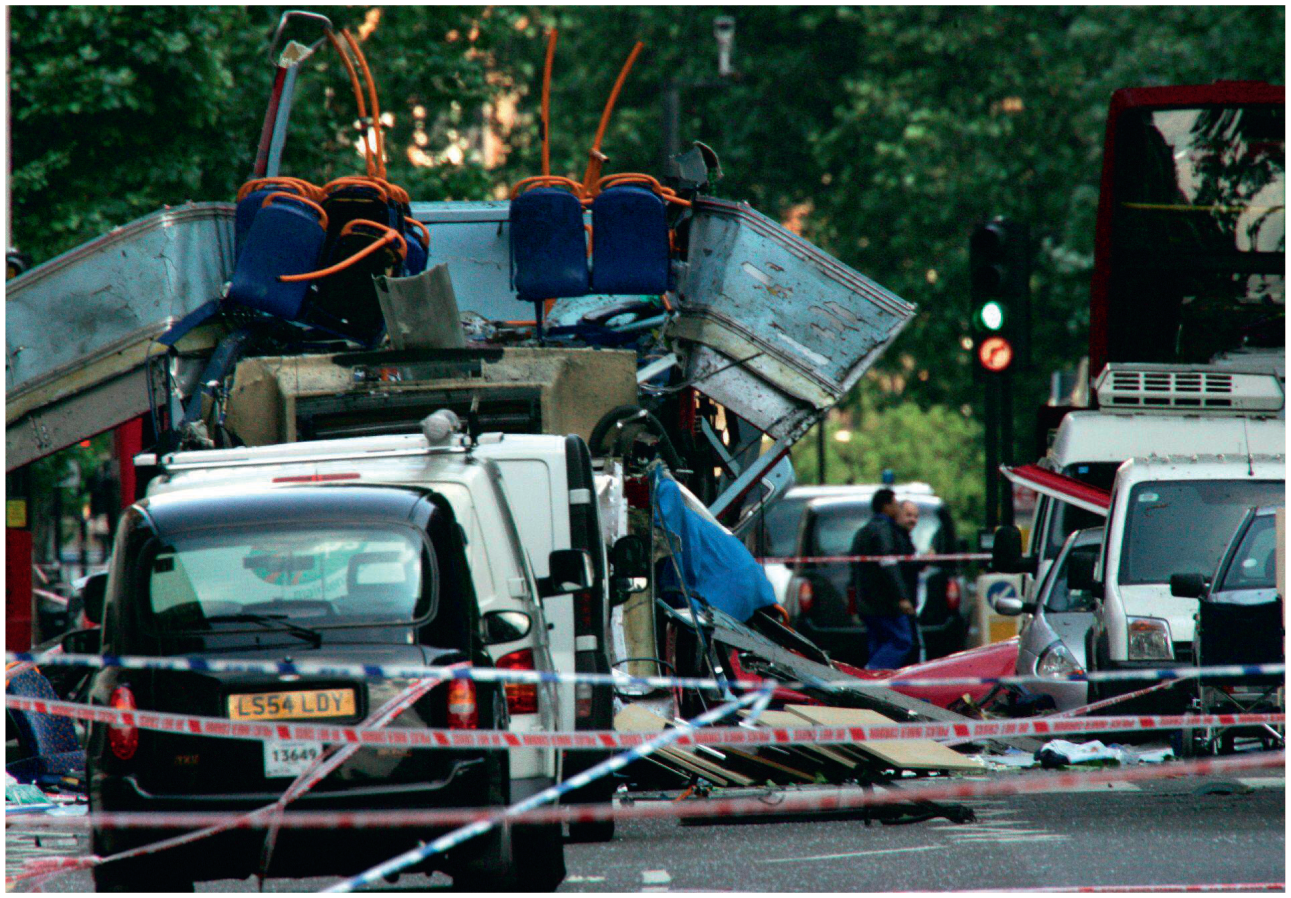
The aftermath of the July 2005 bombings in London: a double-decker bus with its top blown off and damaged cars scattered on the road in Tavistock Square. Some 52 people were killed and a further 700 injured. The four suicide bombers, all young British Muslim men, detonated devices in different parts of the city, three in underground trains and one on a bus
CREDIT: AP Photo/Sang Tan
Some within the diplomatic service were worried. In June 2005, Sir Derek Plumbly, the British ambassador to Egypt, wrote to Sawers: “I… detect a tendency for us to be drawn towards engagement for its own sake; to confuse ‘engaging with the Islamic world’ with ‘engaging with Islamism’.”
In January 2006, my source in the Foreign Office was arrested for breaching the Official Secrets Act. Derek Pasquill had been working in the Engaging With the Islamic World Group and, like Plumbly in Egypt, had become worried about the ideological drive to engage with Islamists. The leaks dried up, but already the policy mood music was changing. A revived Conservative Party under David Cameron began to ask serious questions about Labour’s relationship with the MCB.
Through 2006, the New Statesman continued to publish stories on the subject. At the same time, I was approached by Channel 4 to make a short documentary, Who Speaks for Muslims? about the Foreign Office and the MCB. Policy Exchange, the centre-right think tank, commissioned a report entitled When Progressives Treat with Reactionaries, which enabled me to examine in detail the evidence from the Pasquill disclosures.
The documentary and the report helped embolden critics of government policy within the Labour Party. In May 2006, Ruth Kelly had become secretary of state for communities and local government and was already deeply sceptical of the MCB. Immediately after the broadcast of Who Speaks for Muslims? Kelly announced the establishment of the Sufi Muslim Council to provide an alternative voice. Then, in October 2006, she announced the government would no longer be funding organisations which boycotted Holocaust Memorial Day.
In just over a year, the Muslim Council of Britain had gone from favoured partner to pariah. Inevitably, there were unintended consequences.
For a start, I began to be feted by the political right. David Frum, the American neo-Conservative credited with coining the phrase “axis of evil” began quoting my work favourably,
One of the most insightful pieces came from former Spectator editor Frank Johnson, who wrote: “Some of us distinctly non-leftists have been worried about the growing signs that certain Western leftists have embraced militant Islam as they embraced Jacobinism and Stalinism: as a powerful force against the Western bourgeoisie and as a source of support among the British masses.”
It took another year for charges to be brought against Derek Pasquill. In January 2008, government prosecutors announced there was no longer a realistic prospect of a conviction in this case. Internal FCO papers revealed that far from harming British interests, Pasquill’s leaking of the documents had helped to provoke a constructive debate. But by then his career was over.
In sharp contrast, the architects of the policy of “engagement for its own sake” were never held to account for their questionable judgement. Mockbul Ali went on to have a successful career in the UK diplomatic service, being made an OBE for services to foreign policy in 2010, while John Sawers received a knighthood and went on to head up MI6.
The London bombings were devastating for the families of the victims and those who had survived. They were also deeply troubling for British Muslims, who had to recognise that the bombers came from among them, and for the police and intelligence services who had failed to see it coming. Politicians and officials were also forced to recognise that their strategy of engagement with Islamists may have been unwise. I still believe that the work done by journalists during this period to expose these policy errors remains crucially important.
But there is a price to pay for speaking out. In my case, there are those who would have those 18 months in 2005 and 2006 define my whole 30-year career. My take on radical Islam put me on a collision course with the hard left in British politics, and particularly former London Mayor Ken Livingstone.
In January 2008, I made The Court of Ken for Channel 4 Dispatches. which discussed Livingstone’s decision to invite the radical cleric Yusuf al-Qaradawi to London. I discovered that the mayor’s own adviser on race issues, Atma Singh, had warned against the invitation, but had been overruled and subjected to a campaign of harassment until he resigned.
Gay rights campaigner Peter Tatchell was also in Livingstone’s sights for his criticism: “Ken took the view that because I didn’t agree with him inviting to London someone who is anti-Semitic, homophobic, misogynistic and who justifies terrorist suicide bombings I was an Islamophobe,” he told the programme.
This became a familiar smear to those of us who tried to call out Livingstone and his ill-advised flirtation with an Islamist ideology he barely understood. The letter explaining I considered myself an Islamophile who had devoted considerable time to the study of the religion and the history of the Muslim world still stands as an important statement of principle for me.
Livingstone never apologised.
Why does this debate from 20 years ago matter so much? Because the politics of extremism test the limits of democracy and the principles of free expression that underpin it. Yusuf al-Qaradawi said: “Through [Allah’s] infinite wisdom he has given the weak a weapon the strong do not have and that is their ability to turn their bodies into bombs as Palestinians do.”
It was, therefore, entirely legitimate to challenge those who believed he should be invited to speak in Britain and that refusal to let him into the country would inflame young Muslims. In 2008, the government refused the cleric a visa. No one took to the streets in response.
This debate also matters because it has ossified over the past two decades. The anti-terrorism strategy brought in after the 2005 bombings has had mixed results, although critics must recognise there has been no attack on the scale of the 7/7 since.
Sadly, attempts by the government to find alternative interlocutors to the MCB have never quite taken root. But the pro-Palestinian demonstrations have shown we still have a problem drawing the line between free expression rights and support for terrorism. Perhaps the 20th anniversary of the terrorist attacks of 2005, should prompt us to find new ways of addressing the problem. We still have a long way to go.
This is an edited version of the essay A Question of Leadership: The Failure of Engagement for Its Own Sake which appeared on gov.uk as part of a series of essays about free speech and counter extremism commissioned by the former Commissioner for Countering Extremism, Robin Simcox.