






Abstract

As frustrating as this response may be (and weird, too, that the publishers admitted it to him) it was not, in my view, censorship. It was a business decision.
Yes, censorship and business do sometimes meet, and we’ve spoken about that a lot in the pages of this magazine. This wasn’t the same, in my opinion. Ultimately, publishers have a right to say “No” to a book because they know what sells, they know who sells and they bear a financial burden if they bet the wrong way.
But his email, alleging as it did that he was a victim of the “culture wars”, did touch on a contentious and important issue right now. The publishing industry has, over the last decade or so, undergone a reckoning.
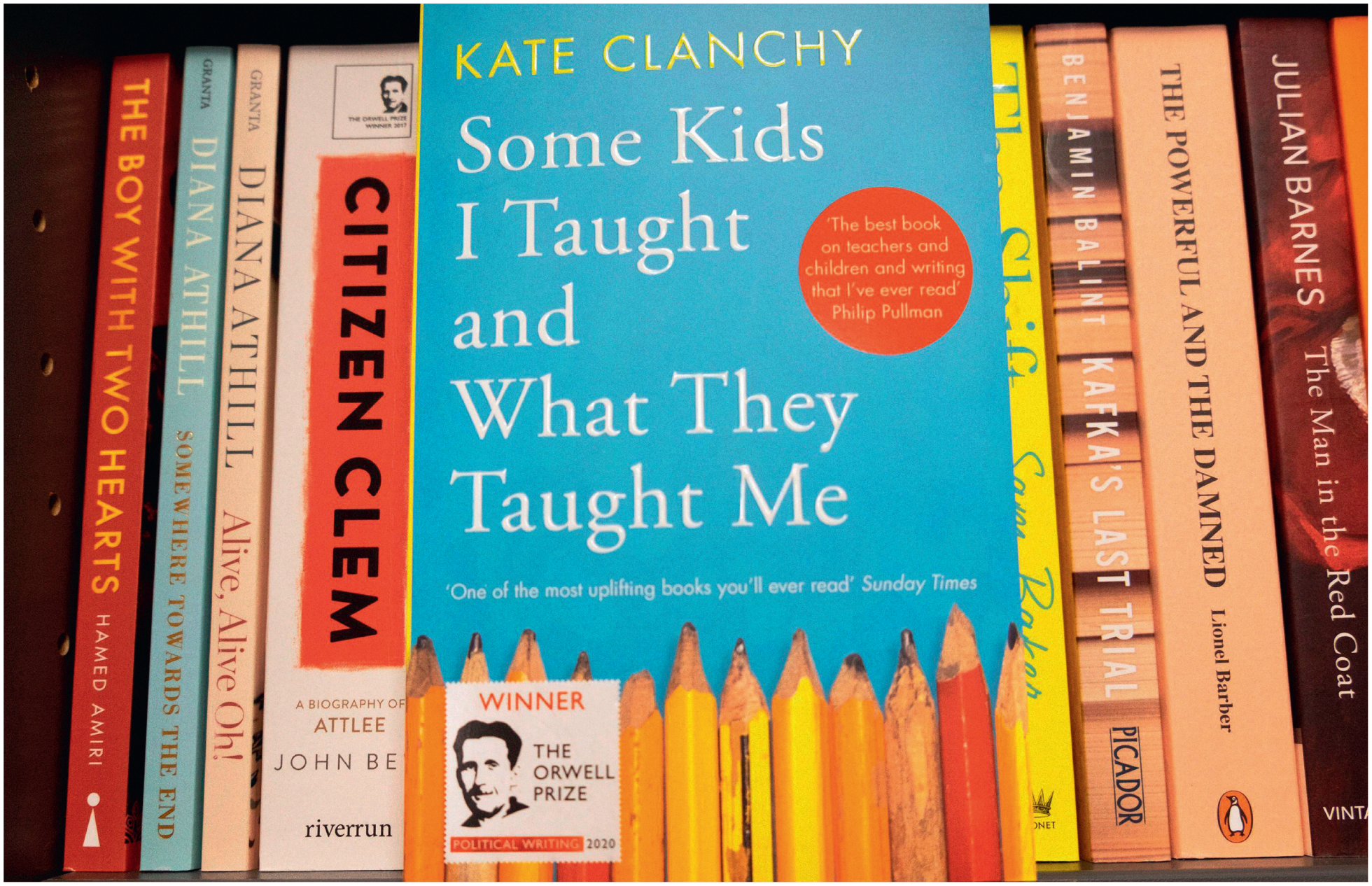
Orwell prize-winning book Some Kids I Taught and What They Taught Me by British author Kate Clanchy
CREDIT: Kathy deWitt
A cursory look at the current literary landscape reveals a plethora of authors and themes that weren’t being published before – voices and stories that were themselves marginalised and silenced, if not directly censored. That these voices are finally being heard is a wonderful thing and no one sensible would argue that publishing should return to being a closed shop dominated by a narrow demographic.
The problem comes when the pendulum swing towards inclusion becomes entangled with fear – fear of social media backlash, internal dissent or reputational damage – and editorial judgment starts to serve anxiety rather than curiosity.
Offence has been a damning charge. Not wanting to cause it has seen a string of books being rejected by mainstream publishers.
It has seen authors signed and then dropped following internal protests, such as the more than 200 employees at US publisher Simon & Schuster who petitioned the company not to publish a memoir by US president Donald Trump’s previous vice-president, Mike Pence; and a walkout at Hachette following the announcement of Woody Allen’s memoir.
It has seen writers not get published because their works were “a bit too Jewish”, a seemingly growing problem in a post-7 October world for Jews and Israelis who either aren’t high-profile enough or aren’t critical of Israel enough.
Perhaps the most famous example, in the UK at least, is Kate Clanchy. Her book Some Kids I Taught and What They Taught Me was published in 2019 by Picador to critical acclaim. It went on to win the Orwell Prize. But in 2021 it was labelled offensive and Clanchy was dropped, unceremoniously, by Picador. She said she was at times suicidal as the attacks gained speed.
Later, Picador’s publishing director, Philip Gwyn Jones, told The Daily Telegraph he regretted not being braver in defending her. But his words sparked such an internal backlash that he was forced to apologise for his apology. Then Clanchy was issued an apology again this November by the CEO of Pan Macmillan, of which Picador is an imprint.
What’s striking is that the same industry once lionised itself for taking risks.
It’s the industry that brought us The Bell Jar, American Psycho, Lady Chatterley’s Lover and A Clockwork Orange – books that caused outrage, and headaches for the publishers, at the time. Tensions around artistic freedoms aren’t new. It’s just that whereas before pressure might have come from the State or the Church, today much of it is from within the industry itself.
Publishers, of course, can’t just publish everything. But while I have no doubt that some of the decisions might simply be because the book wasn’t good enough (my suspicion for the author who pitched to me), I’m still concerned that enough of it isn’t and is instead routed in a sense of fear.
This isn’t to say boundarypushing books or ones representing “unpopular” political views don’t make it through (some do) or that all books need to cater to those two tests – just that there are enough examples of books that have been passed over, despite commercial promise.
There’s a quiet counter-movement brewing, though. A few agents and small publishers now see themselves as the last line of defence for heterodox or risky work, taking on manuscripts others shy away from not out of contrarianism but out of belief that debate is the mark of a healthy culture.
Swift Publishing is one. It has published bestsellers that were turned down by others in the industry, such as Hannah Barnes’s Time to Think about the Tavistock Clinic. Mark Richards, from Swift, said he was pleased they published Barnes’s book, but that he’d rather the situation wasn’t like this. Swift isn’t an accept-all publisher – there are topics it won’t publish and it’s a business which needs to cover its costs, too. It will, however, publish books whose premise the editorial team might not always agree with and it is willing to take risks because, in the words of Richards: “I just want the circle to be as wide as possible.”
A network of people in publishing are also cooking up plans to publish Jewish and Israeli authors who have felt shunned by the industry.
All of which is good news. I’m evangelical here. I believe that a good idea isn’t a good idea unless tested against a bad idea. So I want all books, from all types of authors, out there.
I also know that when people move away from being brave, this impact travels. Leading figures have said that UK publishing is less accessible to Black authors today than it was five years ago, when there was an uptick in the wake of the Black Lives Matter movement. This is hardly surprising. When publishers think of their audience in narrow terms it narrows access for all. It is also really depressing, and we can see it on the bookshop shelves, too, which are dominated by household names – names that are, essentially, safe.
Publishers must be brave. Part of that bravery is acceptance that they might, and likely will, make mistakes along the way. They might attract controversy. They might have a commercial flop. But literature occupies a unique role in society. Few arenas allow us to travel into the minds of others like the crisp pages of a novel, an engaging memoir or a provocative non-fiction book.
I want to feel when I read. To be transported. To even be revolted. Because the world is messy and we should be able to read about that.