






Abstract

Once upon a time, history was written by the winners. But the persuasive impact of victim ideology in regional geopolitics means the permanent record is anything but settled fact. Historian
FOR DOMESTIC HUNGARIAN visitors, the Monument to National Togetherness is one of the most popular tourist sites in Budapest. Children especially are encouraged to see it and it is one of the first items on the itinerary of innumerable school trips.
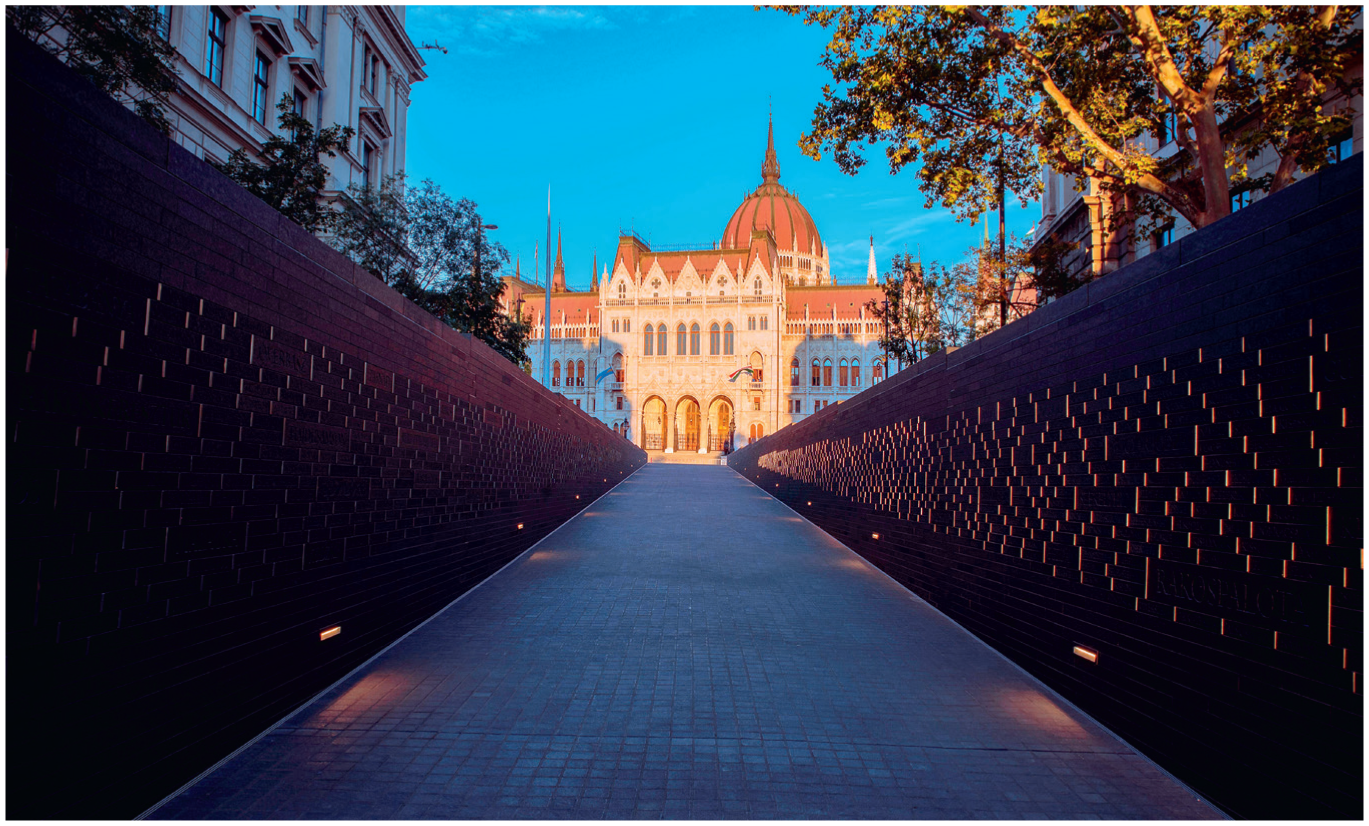
Right by the parliament building in the centre of the city, a 12-metre concrete ramp descends towards what presents as a secular altar, an eternal flame burning atop. Inlaid along the walls are 12,537 granite bricks, each bearing the names (in Hungarian) of a town or village in Hungary recorded in the census of 1910 – including those awarded to other nations by the 1920 Treaty of Trianon that followed the end of World War I (the Great War).
For outsiders with little knowledge of the background or history involved, the Monument would at first sight appear rather moving, possibly even eliciting sympathy. No surprise this; the structure was carefully designed to do precisely this. It was inaugurated with a huge fanfare by the government of Viktor Orbán, Hungary’s prime minister, in August 2020, to commemorate the hundredth anniversary of the Treaty. Who, after all, would object to national unity and “togetherness”?
Yet in the Hungarian context, the Monument, and the symbolism around it, mean a great deal more – much of this not at all connected to the sentimental, schmaltzy national nostalgia-lite on display in Budapest, which (perhaps oddly) helps make the city so interesting and such fun. The neo-nationalism pushed by the present government’s ideologues is much darker than this, more desperate and sinister; the myths being created by the present administration more deceitful.
Trianon is a hundred-year-old scab that successive regimes of cynical Hungarian autocrats have persuaded the public to pick at relentlessly. Very often, the result has been toxic. The Monument and so much of the language used by Orbán’s ruling Fidesz party, refer constantly – even if sometimes in coded ways – to Hungary being a victim of a tragedy, treated unfairly by the other European powers. It is true that Hungary was the biggest “loser” from the Great War. More than a third of its land mass was handed over to successor states to form the new territories of Czechoslovakia and Yugoslavia, along with nearly half of its population. The whole of Transylvania, part of historic Hungary for centuries, was given to Romania. Once a joint partner in the biggest European land empire, controlling vast international trade routes, Hungary almost overnight became a landlocked rump country of nine million people.
Between the wars, under increasingly far-right regimes, nearly all politics in Hungary was concerned with the revanchist aims of recovering the “lost” lands. Hungary enthusiastically allied itself with Hitler at least in part because the Nazis promised to return these lost lands – part of greater Hungary by right, as the people believed – when they took over the whole of Europe.
On the wrong side in two world wars and then for 40 years under the USSR during the Cold War, Trianon was a taboo subject. Most of the “successor states” that took over former Hungarian lands were also part of the Soviet bloc; there was no room for “bourgeois nationalism” under the new communist order. The possession of pre-Trianon maps showing the old borders of Hungary was forbidden; people who did own these hid them carefully in their homes, showing them only to trusted relatives and friends. Discussing Trianon was a “thought crime”. Even in the early 1980s, it was considered dangerous dissidence to reveal the existence of these maps.
But after 1989 and the collapse of Communism, the once forbidden maps began to appear everywhere: on keyrings, fridge magnets, even jean patches, becoming the biggest selling tat in Budapest street markets. Citizens were free once again to discuss the past. But seldom, even with the lapse of so many years and with the creation of a more open society, were the obvious questions ever asked about how the disaster of Trianon – as it was always seen – actually happened.
In fact, Hungary was all but destroyed by its own extreme nationalism, a point hardly ever considered by Hungarian historians under regimes of the right or left. One of the most significant episodes in the country’s modern history was the failed rebellion against the Austrian Habsburgs and the war of Independence between 1848 and 1849, eventually suppressed with much brutality by a huge Russian invasion. Most books about the subject are full of the heroic exploits of Hungarian patriots – true, but only up to a point.
An abandoned Soviet tank during the 1956 Hungarian uprising
CREDIT: Alamy
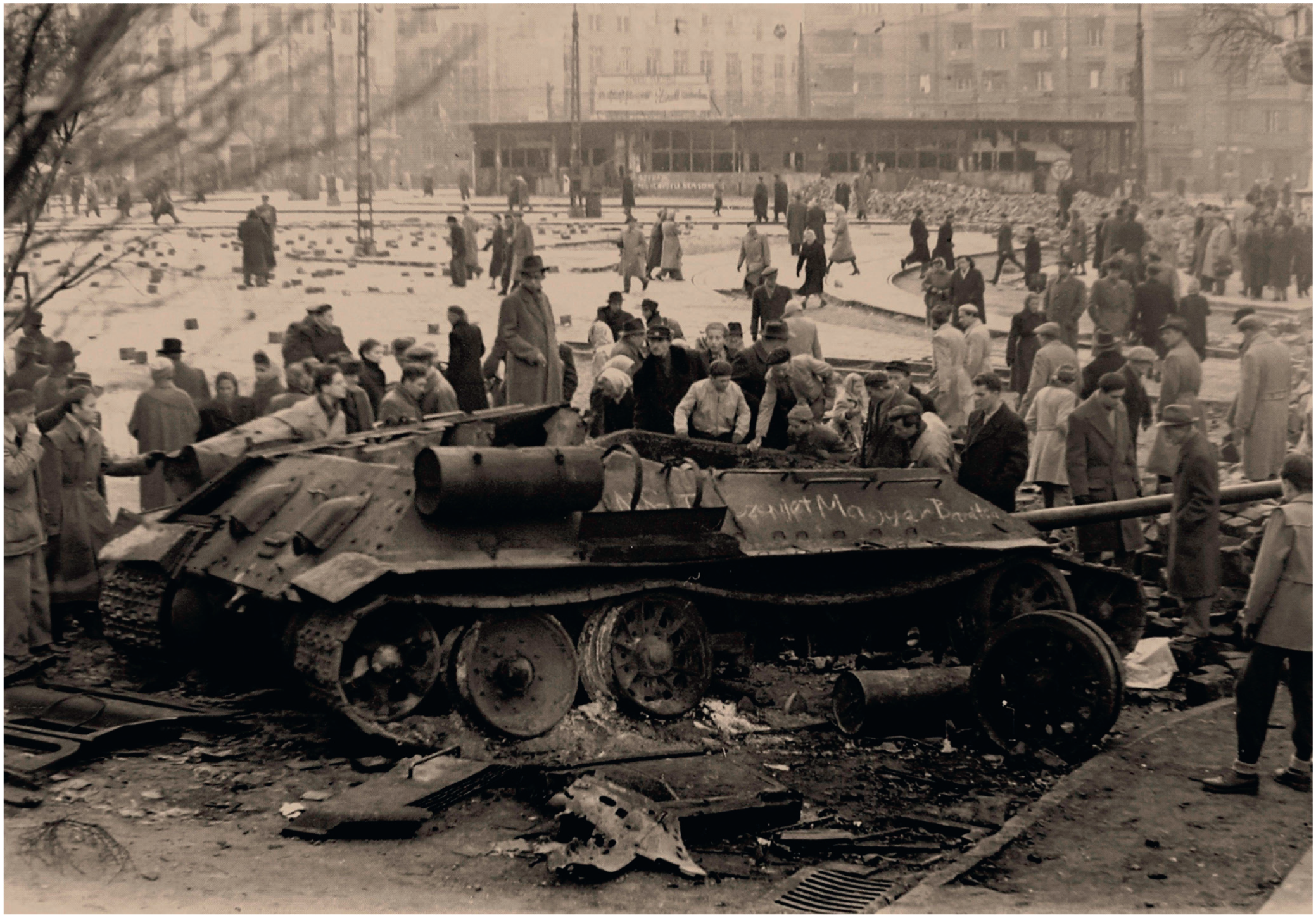
The rest of the story is more complicated. Two decades later, Austria and Hungary came to a compromise, and Hungary was given total authority to run its part of the empire as it wished. Budapest only granted the Slovaks, Romanian Transylvanians and Slavs from the Vojvodina (northern Serbia), who all formed large majorities in their parts of Hungary, very limited self-government or autonomy, and no rights even to use their own language. Campaigns for independence were suppressed.
The Hungarians were lousy imperialists. In the Hungarian parliament – that wonderful, huge, gilded and domed site on the banks of the Danube, the largest legislative building in the world – there was precious little pretence at democracy. In 1907, out of 414 seats in Parliament, non-Magyars (Hungarians) had only nine seats, even though the population in the entire country was split around 50/50 between Hungarians and the various Slav groups.
When The Great War started, the Hungarian ruling class was enthusiastic for a conflict that they believed would finally teach their Slav minorities a lesson and put them in their place – under Hungarian dominion forever. The peacemakers of Versailles and Trianon may have made mistakes in 1919 about how to implement their goal of selfdetermination of people and nations, but the principle itself was not ignoble or unjust; when Hungary lost the war the leadership might have expected the outcome that confronted them – or at least a large part of it – but they had lost any sense of reality.
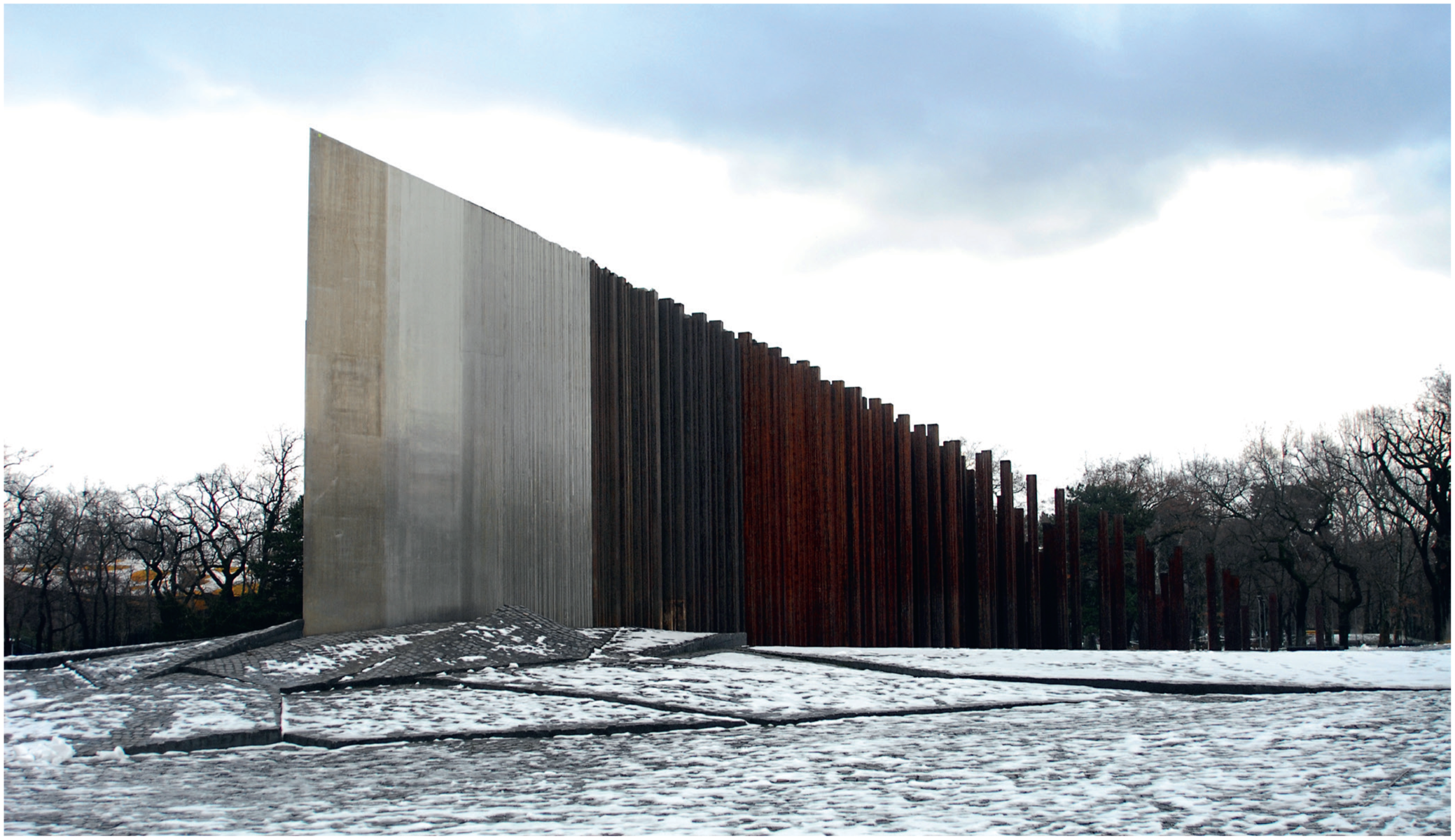
Memorial to the 1956 Revolution at the Museum of Ethnography, Budapest
CREDIT: Connor O’Brien
Fast forward nearly 100 years, and a cynical Hungarian leader is still using the old familiar snake oil. Admittedly, the fearsomely clever Orbán is probably the smartest politician in Europe, the kind of leader who can make the weather. It is hard to imagine him before he transformed himself into the godfather of the new-look populist right, the politician who remade Hungary into a mirror image of the last days of Communism – in essence, into a one-party state under him.
In the late 1980s, Orbán was the Remembering the Uprising has been a political football ever since the end of the Cold War go-to dissident for foreign journalists, always ready to give brilliant analysis of events in Hungary and the rest of the Soviet bloc and to pass on titbits of high-grade political gossip. When he founded Fidesz as the Alliance of Young Democrats in 1988, it quickly became the byword for revolutionary cool. A campaign leaflets declared “Don’t trust anyone over 35” – Orbán was 25 at the time. Another favoured slogan was “Down with Communist boredom. We are the party of fun.” I asked him once, around a year before the Berlin Wall came down and the Soviet empire in Eastern Europe fell apart, what he wanted for his country when Communism disappeared. “I hope we’ll become like a normal dull European country,” he replied. “Say Austria or Sweden.” Anywhere less like Sweden than Orbán’s Hungary would be pretty hard to find. Fidesz apparatchiks now look very much like the old, third-rate Politburo members of the late communist years and act like them too.
Orbán became well known in Hungary in 1989, when he was aged 26, through a famous expression of nationalism, albeit of an altogether different kind than that which he is adept at using now. In Hungary, the landmark event in that year of revolutions which brought down Communism was the reburial of Imre Nagy, the man who led the doomed and bloody uprising against the Russians in 1956 and was hanged two years later. In front of a crowd of at least 300,000, dressed in jeans and wearing three-day old stubble, he made an electrifying speech calling on the 70,000 Russian troops still on Hungarian soil to leave – a big taboo subject even at that time. I’ll never forget the deafening cries of Russkik Haza – Russians Go Home – that thundered through Budapest for nearly half an hour.
How Orbán has managed to turn that visceral feeling among Hungarians, cultural animosity against the Russians has traditionally been strong for many generations, into becoming Vladimir Putin’s best friend in Europe shows his chutzpah, his skill as a politician and his utter cynicism. He has convinced himself that cheap oil and gas and staying out of the war in Ukraine will keep him popular. Whether he is right remains to be seen.
The 70th anniversary this year of the 1956 Revolution throws up another dilemma. Remembering the uprising has been a political football ever since the end of the Cold War. Before 1989 it was still dangerous even to mention it, certainly tricky without calling it a “counter revolution”. Since then, successive governments have used it for their own purposes. In the late 1990s, a socialist mayor of Budapest erected a charming statue to Imre Nagy overlooking a popular square near the parliament building. Soon after Orbán came to power, it was removed from downtown Budapest and placed in a remote suburb barely visited by anyone. Nagy, of course, was a communist to his dying day, even though he was executed by fellow comrades; and under Orbánism you can’t have a hero, even a flawed one, who was a communist. Nagy’s role has been played down to a bit part under the current interpretation of 1956.
The Monument to National Togetherness has attracted controversy. If Fidesz loses power in the forthcoming elections, whoever takes over will very likely get rid of it, or use it to mark something else. Statues and monuments come and go in Budapest with whatever is politically correct at the time as regimes change.
The Romanian and Serbian governments complained that the Monument insulted their sovereignty, as it seemed to suggest that the Romanian or Serb place names being remembered ought, by right, to still be Hungarian. The Slovak and Croatians did not officially complain, but some of their nationalistic politicians were known to be displeased. Budapest argued it did not mean anything untoward; it was simply about a “shared togetherness over a long time” and there was no question about reclaiming these areas. But this was diplomatic gobbledegook. The monument is very clearly a loud statement of Hungarian identity of nationalism.
They speak a lot of the same language about culture wars, “values” and wokeness and they hate European integration
The Monument to National Togetherness in Budapest, commemorating the 1920 Treaty of Trianon. Hungary’s parliament building can be seen at the top of the ramp
CREDIT: Geza Kurka/Alamy
All the countries involved are members of the European Union or want to be, so this was all a minor spat. As with the occasional row in Soviet times between Hungary and Romania about minority rights in Transylvania, it blew over very quickly. But it is not a given that the current disputes will always be so easily settled. Far-right parties in Middle Europe, following Hungary’s lead and embraced by MAGA in the United States, are cosying up to each other, at least on the surface. They speak a lot of the same language about culture wars, “values” and wokeness, and they all hate European integration. Some of the alt-right ideologues, particularly the American ones who know nothing about the complex history of old Europe, imagine that there can be a kind of “international nationalism” that crosses borders, a barmy oxymoron if ever there was one and an illusion. They should witness a full-scale brawl on the Romania/Hungary border about the name of a tiny village, as I did not so long ago. Nationalism unleashed will not lessen these things; it is bound to open up old wounds once more.
Hungarians see their nationalism as a fine and romantic thing, about which their poets write about so magnificently. Any other nationalism, not so much. ✗