







Abstract
Social scientists have long studied the patterns, motivations, and recidivism rates of sexual offenders; however, the majority of prior research has examined rape, where victims are assaulted by a single offender in isolated events. Often overlooked are sexually violent assaults committed during armed conflicts, which often exhibit group-level sexual offending. This oversight could be a result of perceived notions that sexual violence during conflict is a rare or regrettable event; however, it has been documented consistently throughout history. The purpose of this study was to improve our understanding of sexual violence during war by comparing and contrasting preconflict characteristics, conflict framing, and justifications for sexual violence in the Bosnian and Sierra Leone armed conflicts. This greater understanding can then be used to identify factors that may contribute to the collectivization of sexual violence during war.
Introduction
Social scientists have long been studying traditional criminal rape, in which victims are assaulted in isolated events by one or multiple perpetrators. Only recently have researchers begun to examine sexual violence 1 during political conflicts (Baaz & Stern, 2009; Cohen, 2013; Farr, 2009; Leiby, 2009; ten Bensel, 2014; Wood, 2006, 2009). Sex crimes during war have typically been discussed as a by-product of war, a natural-yet regrettable behavior committed by rogue individuals (Brownmiller, 1994). This explanation comports with the empirical reality that it is historically difficult to find armed conflicts in which sex crimes did not occur (ten Bensel & Sample, 2014). Although the presence of rape during war may appear in the majority of conflicts throughout history, the prevalence, frequency, and duration of rape during war vary across armed conflicts (Wood, 2006). Recent research focusing on the variations in sexual violence has found that there are conflicts in which sexual violence was minimal, regardless of the use and frequency of other types of violence (Wood, 2006). Thus, sexual violence during war can be, at a minimum, limited if we uncover the differences in social, historical, and political contexts that influence variations in rates of sexual violence across conflicts.
With this in mind, the purpose of this study was to explore why variability in sexual violence during armed conflicts exists across conflicts and over time, focusing specifically on the framing of collective sexual violence. Collective frames are developed by social movement actors to cultivate a group-level understanding of situations or undesirable societal conditions such as gender inequality, a lack of political opportunity, or terroristic movements (Benford & Snow, 2000; Diani, 1996; Ferree, 2003; Pedriana, 2006). Movement activists advocate a need for change in society by identifying the problem, proposing alternative solutions, developing strategies to alleviate the problem, and recruiting others to join the movement (Benford & Snow, 2000). Within the context of war, the manner in which frames are constructed and implemented by leaders or activists can influence others in society to take up arms and fight for the movement’s cause. Moreover, leaders can advocate a repertoire of violent strategies to accomplish movement goals. When soldiers engage in sexual violence for the purpose of enhancing movement goals, they are participating in collective sexual violence. Based on our understanding of the wartime sexual violence and social movement literature, we define collective sexual violence as any sexual activity without the consent of the victim by an individual or a group of individuals driven by social movement goals. The process in which soldiers move from individual to group-level motivations can be thought of as the collectivization process. Thus, for this study, we focused on the variability of sexual violence within political conflicts across conflicts and over time, focusing on collective sexual violence.
We conducted a comparative case study analysis using court transcripts from the United Nations for the 1990s conflicts of Bosnia and Sierra Leone. Specifically, we drew cases from the International Criminal Tribunal for the former Yugoslavia (ICTY) and the Special Courts of Sierra Leone (SCSL). These cases were selected because both cases experienced sexual violence, yet the timing, motive, and the manner in which the use of sexual violence was framed in the conflict varied across cases. In Bosnia, an estimated 20,000 to 40,000 Bosnian and Croatian women and children were raped in their homes, in front of family members, brothels, and/or taken to designated areas called “rape camps” by Serbian and Montenegrin soldiers within 6 months (Brownmiller, 1994; Seifert, 1994; Sharlach, 2000). In contrast, Sierra Leone was selected due to the extended time frame (11 years) of the Revolutionary United Front (RUF) movement in which an estimated 200,000 to 260,000 women and children were exposed to sexual victimization (Reis, Amowitz, Hare-Lyons, & Iacopino, 2002). The findings of this study can have numerous policy implications. This study will help us begin to isolate and disentangle the factors that are likely to contribute to collective sexual violence through the use of cross-case comparison, which will provide decision makers possible indicators of mass sexual violence during war to reduce the frequency of violence in the future.
Sexual Violence During Conflicts
Sexual violence during war can take many forms such as rape, sexual mutilation or torture, and sexual slavery. During war, it is typically committed by men in private or public settings (homes, streets, brothels, detention centers, rape camps, refugee camps), in front of family or community members, during opportunistic or planned events, and by one or multiple assailants (Bastick, Grimm, & Kunz, 2007; Brownmiller, 1994; Farr, 2009; Pipkin, 2009; Seifert, 1994; Sharlach, 2000; Wood, 2006). Such violence can vary within and across conflicts in a number of ways including methods of abuse, frequency, motivation, and even targeted population (Wood, 2013). Although leaders can advocate for a repertoire of violence, such as abduction, torture, rape, murder, and/or forced displacement (Wood, 2009), the methods of abuse are not static. Various forms of violence can be added, modified, or excluded from the repertoire depending on oppositional tactics and organizational changes (Ron, 2000; Sanín, 2008).
The frequency of sexual violence can also vary across conflicts. In some armed conflicts, sexual violence was found to be little to none such as in Israel/Palestine conflict where there were a few reported cases (Wood, 2010). In the Salvadoran insurgency, sexual violence was prohibited by leaders (Leiby, 2009; Wood, 2010); however, other conflicts experienced sexual violence in mass proportions. In Rwanda, approximately 350,000 women and children were sexually assaulted by Hutus as a larger part of a genocidal movement (Bijleveld, Morssinkhof, & Smeulers, 2009). In the 1971 Bangladesh Liberation War, an estimated 200,000 to 400,000 Bengali women were sexually assaulted and impregnated by Pakistani soldiers in a 9-month time frame (Brownmiller, 1994). Similar atrocities were found in Sierra Leone, Guatemala, and Democratic Republic of the Congo during military infiltrations (Wood, 2013). Yet, in one of the biggest armed conflicts in history, World War II, sexual violence by German soldiers against female Jewish, Polish, Romanian, and other political prisoners was minimal at best (Brownmiller, 1994). Sexual violence during World War II committed by Russian soldiers against German women was quite frequent, whereas during the American civil war, rape was somewhat rare and limited (Brownmiller, 1994). The existence and constancy of sexual violence during war has been well cited, but what are less understood is why the variation in frequency, type, and intensity of it exists and what factors influence this variation.
As a constant, a number of theoretical explanations at the individual and aggregate levels have been suggested to explain rape during war. Some argue it is individually opportunistic in nature and a form of leisure, pastime, or a technique to alleviate frustrations caused by the hardships of war (Baaz & Stern, 2009; Enloe, 1990, 2007; Seifert, 1994). Others argue that sexual violence against women during war is a way to express dominance over another, especially in patriarchal societies (Brownmiller, 1975; Copelon, 1994; MacKinnon, 1989). Rape serves as a social control mechanism for men to instill fear and terror in women, which allows men to retain their social dominance in society and assert their power over women—hegemonic masculinity (Brownmiller, 1975; MacKinnon, 1989; Tosh, 2004). Women are subjugated into forced motherhood, sexual and domestic slavery, and prostitution, and denied basic human rights (MacKinnon, 1989). However, Wood (2013) argued individualistic explanations provide minimal support for conflicts that have experienced little to no sexual violence during war, such as Sri Lankan rebel groups, the Salvadoran insurgency, or the Israel/Palestine conflict. Macro-level theories focus on group dynamics, collective encouragement, and the strategic influence of leaders. For example, Cohen (2013) argued that sexual violence is a means of developing group cohesion and socialization among soldiers. Particularly relevant for groups with new recruits, higher rates of victimization will likely occur during and after civilians are recruited and more likely if individuals are self-recruited. It serves as a method of group cohesion and unity among recruits, who are part of a “collection of strangers” (Cohen, 2013, p. 461).
Strategic explanations of sexual violence emphasize the role and control of military leaders. Wood (2006, 2009, 2010) suggested that the methods of abuse, frequency, and targeted victims are dependent on effective hierarchical command structures. Leaders can “prohibit, promote, or tolerate rape against certain groups” through formal and informal training and discipline (Wood, 2013, p. 146). Effective leadership depends on clear and detailed communication and consistency in discipline when military regulations are violated (Wood, 2009). Although these measures can limit sexual violence, some leaders can actively or passively promote sexual violence against targeted groups to reach their military goals.
Sexual violence is often promoted by leaders as a reward for bearing the hardships of war or a way to cultivate bonds and socialization (Cohen, 2013; Wood, 2006). It can also be used as a larger strategic component such as enemy oppression, ethnic cleansing, and genocide. Armed forces may rape the opponents’ women and children as a strategic technique to convey oppositional weakness (Baaz & Stern, 2009; Bastick et al., 2007). Rape can send a political message that conveys the enemies’ inability to “protect their women” and communities (Baaz & Stern, 2009). Ethnic wars can escalate to dramatic forms including ethnic cleansing, the removal and relocation of a targeted population by force or intimidation based on ethnic, religious, political, or ideological discrimination (Bell-Fialkoff, 1993; Salzman, 1998).
Some scholars suggest sexual violence may become a strategic method of genocide—the systematic elimination of a national or ethnic group (Mullins, 2009; Power, 2002; Sharlach, 2000). Within this context, rape 2 can be used to redirect the targeted population through spread of disease (leading to death) or forced pregnancies (Power, 2002). This was documented in Rwanda when some Hutus sexually assaulted Tutsi women to spread disease (Power, 2002). Hutus militants who were infected with HIV/AIDS knowingly continued to rape Tutsi women to taint and eradicate their ethnicity (Power, 2002). In Bangladesh, Pakistani soldiers also raped and impregnated Bengali women to redirect the bloodline (Brownmiller, 1994). During war, the manner in which leaders frame goals, strategies, and solutions can influence the use of sexual violence by soldiers; therefore, this study relies on the social movement literature to understand the influence of frames and processes in which sexual violence can become part of a group’s behavior.
The Framing of Collective Actions
Collective actions can take many forms, including social movements, riots, crowd behaviors, terrorism, gang activity, rallies, campaigns, and even sporting events. Some forms of collective actions create group identity (i.e., gang activities, fraternities, football, etc.), while others result from grievances about fundamental rights, welfare, or simply a need for change such as a social movement (Snow, Soule, & Kriesi, 2004). At the most basic level, a social movement can be defined as goal-oriented activities with some degree of organization, carried out by at least two individuals outside of formal channels with the goal of challenging and/or defending authority (Snow et al., 2004). Common grievances addressed through social movements include issues of world hunger, equality, human rights, governmental intrusions, and religious freedom.
Within the collective action research, one of the more prominent theoretical explanations of social movements is the framing perspective. With developmental roots in sociology (Goffman, 1974), psychology (Kahneman & Tversky, 1984), cognitive linguistics (Lakoff, 2004), and communication (Entman, 1991; Iyengar, 1991), theorists argue that experiences, events, and objects are meaningful through an interactive process based on context and previous experiences (Benford & Snow, 2000; Gamson, 1992; Johnston, 2002; Johnston & Noakes, 2005; Snow & Benford, 1988; Snow & Byrd, 2000; Snow, Rochford, Worden, & Benford, 1986; Tarrow, 1998; Williams & Benford, 2000). Inspired by the symbolic interactionist and social constructionist approaches, frames are defined as “an interpretive schemata that simplifies and condenses the ‘world out there’ by selectively punctuating and encoding objects, situations, events, experiences, and sequences of actions within one’s present or past environments” (Snow & Benford, 1992, p. 137). Within a social movement, the manner in which movement leaders and members interpret meanings and experiences can mobilize members, recruit bystanders, and demobilize opposition (Benford & Snow, 2000; Gamson, 1992; Johnston, 2002; Johnston & Noakes, 2005; Snow & Benford, 1988; Snow & Byrd, 2000; Snow, Rochford, Worden, & Benford, 1986; Tarrow, 1998; Williams & Benford, 2000). This is referred to as collective action frames, often developed by movement leaders to cultivate a group understanding of undesirable societal conditions (Benford & Snow, 2000; Diani, 1996; Ferree, 2003; Pedriana, 2006).
Although there are a number of focal areas within the framing perspective, there are two primary elements: action-oriented function and the interactive process. The action-oriented function involves identifying issues and attributes (diagnostic), proposing alternative solutions (prognostic), and recruitment (motivational/action; Benford, 1993; Gerhards & Rucht, 1992; Johnson, 1997; Meyer, 1995; Nepstad, 1997; Weed, 1997). Diagnostic frames seek to identify the sources of causality or those who are responsible for problematic events, societal conditions, or governmental entities (Ferree & Miller, 1985; Turner & Killian, 1972; Zurcher & Snow, 1981). Essentially, two questions are asked: “What is or went wrong and who or what is to blame” (Snow & Byrd, 2000, p. 124)? Prognostic frames advocate alternative solutions or approaches for implementing strategies to reach movement goals, focusing specifically on the Leninesque question of “what is to be done” (Benford & Snow, 2000; Gerhards & Rucht, 1992; Haines, 1996; Nepstad, 1997; Snow & Byrd, 2000)? Motivational frames are based on Mill’s (1940) “vocabulary of motives” and seek to create strategies for recruitment and sustainability of the movement (Benford, 1993; Benford & Snow, 2000).
The interactive process (discursive) connects problematic conditions and experiences through verbal and written communication (Benford & Snow, 2000; Snow & Byrd, 2000). Slices or fragments of reality are constructed, organized, and assembled to signify a new vision and understanding of social order. It is not the actual vision that is important, but the manner in which the vision is formulated, utilizing techniques of articulation and bundling portions of lived experiences to develop a new reality (Snow & Byrd, 2000). During social movements or war, the manner in which leaders frame their campaign can increase or decrease the level of violence experienced by nonmovement citizens, more specifically in regard to sexual victimization (ten Bensel, 2014). The manner in which frames are constructed and implemented by leaders can influence others to take up arms and fight for a cause. In the former Yugoslavia, President Milosevic resurrected Serbian nationalism by strategically instilling fear among Serbian civilians (Stiglmayer, 1994). Although his ultimate goal was to secure Bosnia under his control, he claimed the Bosnian Muslims were planning genocide against the Serbian population. President Milosevic framed his campaign to resurrect Serbian resentment and memories of oppression experienced at the hands of Bosnian Muslims (Kressel, 2002; Power, 2002; Stiglmayer, 1994).
The research discussed has provided a foundation to further study rape during war. Guided by this knowledge, the present study is a comparative case analysis to understand the similarities and differences in sex offending. More specifically, we examined why variability in sexual violence during armed conflicts existed across conflicts and over time, focusing specifically on the framing of collective sexual violence. Testimonies from victims, offenders, and witnesses of violence in Bosnia and Sierra Leone were examined to understand the role of elite-frames, movement ideologies, and the dynamic nature and evolution of sexual violence during war.
Data and Method
The primary data source for this research was archival court transcripts from the United Nations’ database, which provided public access to all court proceedings in the ICTY and Special Court of Sierra Leone (SCSL). All trial transcripts from ICTY and SCSL were downloaded and cases involving sex crimes were identified through trial indictments. A purposive sampling method was used to select one trial from each case—Bosnia and Sierra Leone. Trials were chosen based on an inductive theory building strategy, often used to develop theoretical constructs, hypothesis, or produce empirical findings (Eisenhardt & Graebner, 2007; Ragin, 1999). A theoretical sampling technique allowed us to select trials suitable for understanding variations in sexual offending in warring countries.
For Bosnia, we examined Prosecutor v. Dragoljub Kunarac, Radomir Kovac, and Zoran Vukovic. This trial consisted of 55 testimonies from defendants, victims, and witnesses of the conflict and sexual violence within the Foca municipality. This trial was selected based on several theoretical advancements. First, it focused exclusively on rape, enslavement, and torture of women in the 1990s former Yugoslavian conflict (Aksar, 2004; Buss, 2002). Second, it was the first to prosecute and convict individuals of rape and enslavement as a crime against humanity (Aksar, 2004; Buss, 2002). Finally, Barkan (2002) and UNSC (1994) argued the violence experienced by Bosnian victims within the district of Foca illustrated the pattern of sexual violence across the country during this war.
For Sierra Leone, we examined Prosecutor v. Sesay, Kallon, and Gbao. The SCSL only held four trials that prosecuted leaders of the RUF, Armed Forces Revolutionary Council (AFRC), Republic of Sierra Leone Armed (SLA) Forces, and Civil Defense Forces (CDF). We specifically focused on the RUF trial that prosecuted three RUF leaders charged and convicted of crimes against humanity such as rape, sexual slavery, murder, and war crimes. Sexual violence committed by the RUF accounted for the majority of rapes in the civil war (Human Rights Watch, 2003). This trial consists of 171 testimonies of defendants, victims, and witnesses of the conflict and sexual violence.
Coding and Analysis
Qualitative coding procedures were used to examine trial transcripts for individual, social, and structural conditions associated with sexual violence. Using Creswell’s (2007) template for qualitative coding, we used a specification model to present the hierarchical organization of factors for each case (see Figure 1). Prior to the coding process, we conducted a preliminary read of the transcripts to understand the nature of each case to limit the possibility of inaccurate coding. Through this initial process, we created and notated a list of codes based on the repetitive patterns/themes found throughout the cases, which included 5 to 10 codes with shorthand labels often called “lean coding” (Creswell, 2007). Lean codes were developed using existing sexual and collective violence theoretical literature. After concluding the preliminary read, we began the primary read, which resulted in an increase in the number of codes.
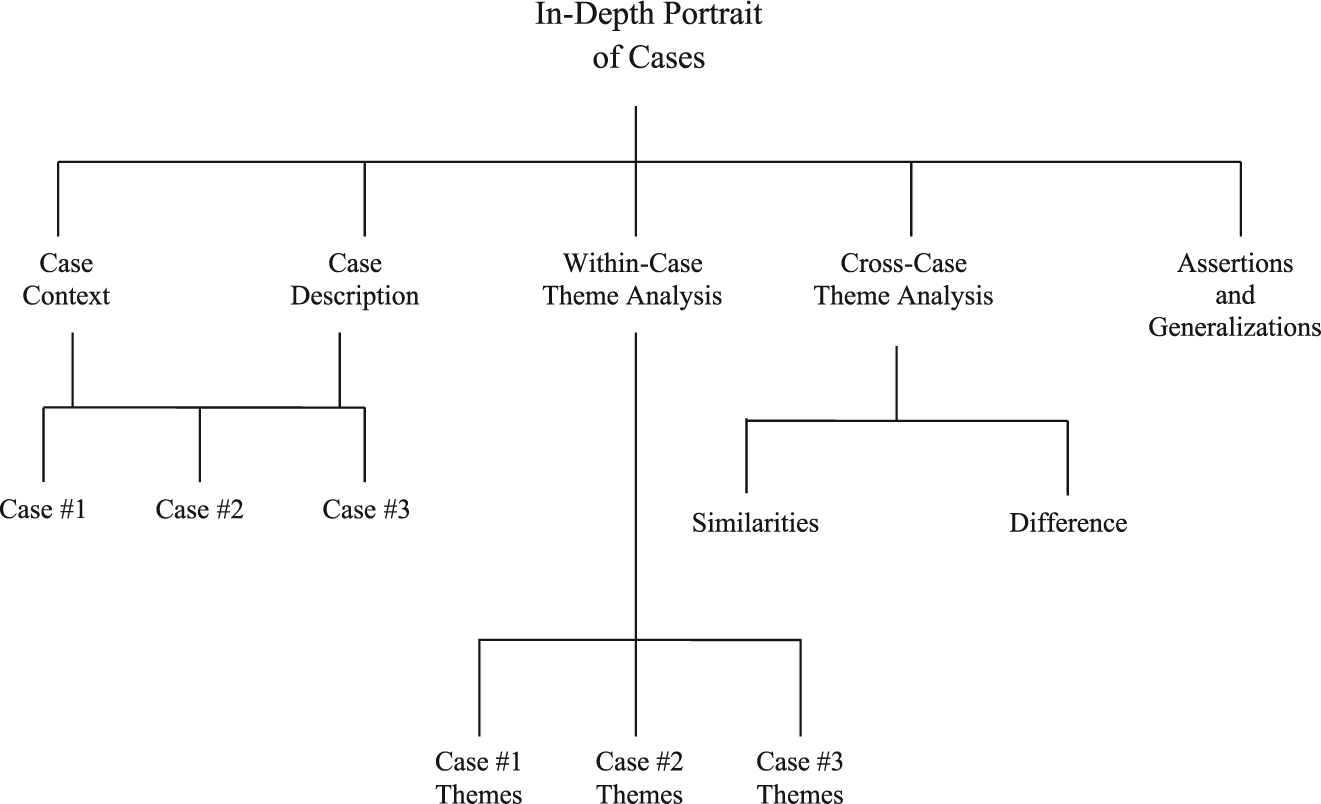
Specification model of hierarchical factorial organization.
We coded the data using the MAXqda software, which allowed us to systematically identify themes during the analysis (Creswell, 2007). The program stored all trial transcripts and allowed us to read through the passages line-by-line to identify within factors. Subthemes were identified throughout the texts as support for central themes and subthemes within the narratives. The case description and within-case results were derived from the qualitative coding of testimonies given by offenders, victims, and witnesses. Documents submitted as evidence and judgments were also analyzed to triangulate, support, and supplement the findings.
Before presenting the results, we must note some of the limitations of this study. There are a variety of factors that influence whether individuals testify in court, such as initial identification, location, and willingness of witnesses. These factors limit testimonies from being generalizable; however, the goal of this study was not to generalize beyond the cases studies. In addition, the selection of witnesses was dependent on attorney discretion. The experiences of voluntary witnesses could be different than if they were randomly selected. Furthermore, the direct and cross-examinations by attorneys were not intended to answer the above research questions. However, court transcripts and records have been repeatedly used by researchers to investigate various topics such as sexual and domestic violence, sentencing outcomes, prosecutor discretion, mental health, linguistics, and racial/gender disparities (Belknap & Graham, 2000; Davies & Seymour, 1998; Horney & Spohn, 1996; McCabe & Wauchope, 2005; Mirchandani, 2005; Mullins, 2009; Ruva & Bryant, 2004). Despite these limitations, court transcripts have been used as a rich data source from which to qualitatively analyze social phenomena.
Bosnia
The Serbian territorial conquest over Bosnia-Herzegovina killed and displaced thousands of non-Serbs from the region for the purpose of uniting Serbians under one nation. The war in Foca municipality broke out in April 1992 and continued until mid-August, 1992. Serbian forces, under President Milosevic’s command, set-up roadblocks respective to ethnic villages. Armed with heavy artillery, the fighting ended when Serb forces took control of the area and Bosnian Muslims were forced to retreat across the Drina River. A few days after Serbian takeover, Muslim houses, Ottoman Empire architecture, and Islamic mosques were set on fire. There were public announcements that Bosnian Muslims were prohibited to engage with other Bosnian Muslims and they were not free to move about the city. Serbian soldiers collected weapons from Bosnian Muslims, stating residents would be safe as long as they complied with the Serbian military. Witness 33 watched parliament sessions and recalled, I recall one particular statement made by Karadzic when he said, “Either Bosnia will be divided according to ethnic principle, or one of the nations will be wiped out from these areas, and that would be the Muslims.” And of course every normal human being would begin to be afraid of something like that. But nobody believed that anything like that could ever happen. (Witness 33, March, 21st, 2000, line: 213-219)
Once the Serb forces established control over Foca, they began detaining the non-Serb population. Initially, the majority of the Muslim men were either killed or taken to the KP Dom (Foca Kazneno-Popravni Dom—male prison), while women and children were detained at various facilities in the area. Witness 48 recalled, They lined us up . . . first women, then children. Some said that we should be killed. Others said that they were taking us somewhere to put us up somewhere. And then others said, “Why should we let them live?” And then others said, “Well, women and children were innocent so let’s put them up somewhere. Foca, and then there is an empty classroom in the secondary school building, so perhaps we could take them there.” (Witness 48, May 2nd, 2000, line: 764-774)
While in detention or collection centers, women and children were verbally and physically assaulted and raped. It may have been that women and children were initially taken to collection center barracks to be interrogated; however, sexual violence against Bosnian women began immediately after capture. Once in the interrogation room, the women were searched for money, gold, cigarettes, and anything of value and questioned about their husbands, weapons, and political affiliations. Several females were raped after their interrogations. Witness 75 recalled, He forced me onto the bed to take my clothes off, and then he raped me, he attacked me and raped me . . . I was conscious up to 10, up to that time I counted 10. Then I lost consciousness, and I know that some of them brought some water to splash over me and that I was all wet from that water when I came to, when I regained consciousness . . . They continued doing what they were doing. One of them came in and made me take all my clothes off, just to see what I looked like. And he said, “That’s a pity for you. You look so beautiful.” (Witness 75, March 30th, 2000, line: 1595-1613)
Witness 75 stated she was conscious for about 10 different rapes, but claimed she could have been raped more while unconscious. Witness 48 was also raped after she was interrogated: There were three soldiers there. [He] said I had to undress. I didn’t want to. I started to cry. And he asked me why I was crying, and I said, “I don’t want to undress.” And he said, “You have to undress.” He slapped my face, and then he started undressing me . . . Then he raped me two or three times . . . [He] said that it was quite natural. “You’re not the only Muslim to be raped. Other Muslim women have been raped in other villages, and that is nothing terrible,” and that I had no right to protect myself. And he said, “You’re going to bear Serb children, not Muslim anymore,” and that there won’t be a single Muslim left in Foca. (Witness 48, May, 2nd, 2000, line: 888-894)
All of the witnesses at the Partizan Sports Hall, another collection center, stated that the last 10 days of their detention were the worst. They were taken out of the facility almost every night. The night before some of the victims were taken and released in Montenegro (August 1992), several of the victims were taken to the Foca High stadium where a group of soldiers gang raped them. Witness 95 recalled, It was one of my worst moments when I was taken . . . to the stadium and when many, many people were there. We were escorted to Novi Pazar, and that was one of the most painful days, because at the stadium many of them were exchanged, they took turns . . . Well, it was like this: They divided themselves up. Some of them would come up for oral sex. Others would anal, sit from behind, so that there were always two of them at the same time. (Witness 95, April 25th, 2000, line: 1629-1686)
Witness 95 claimed sexual assaults lasted about two continuous hours. She felt helpless and did not know how to survive afterward. Later, the victims were taken back to Buk Bijela and the rapes continued, until they were finally exchanged.
Throughout the Bosnian conflict, Serbian soldiers had a single command structure headed by President Milosevic. Fueled by years of social and political resentment toward the former Ottoman Empire, President Milosevic effectively used various forms of media to increase Serbian nationalism through fabricated stories of murder, mutilation, and oppression by Bosnian Muslims against Christian Serbs. Although there is nothing to be found in the Christian faith that encourages the rape of women, this tactic was used to achieve political movement goals of establishing Serbian controlled territories.
The Framing of the Bosnian Conflict
The collective action framing of the Bosnian conflict can be found through the use of reminders of historical oppression of Serbs at the hands of the Ottoman Empire and those who supported it. Witness 185 stated, “They [Serbians] started arming themselves immediately. They didn’t want to meet with us anymore. They were evading us.” Witness 96 recalled, [W]e noticed, towards the end of 1991, that something strange was happening that there were no contacts. I had Serb neighbors who never had any celebrations without us being present. . . . We were good neighbors with the Serbs and I thought they were my friends, as close as a brother of mine, the only one I have. And I’m sure it’s politics that was behind it all. (Witness 96, April 27th, 2000, line: 1848-1870)
All of the witnesses noticed a growing difference between ethnic groups as a result of one primary event: the formation of the national parties. Within the Foca municipality, the Bosnian and Slavic Muslim “Party of Democratic Action” (SDA) held their first rally in August 1990 during which the party president gave a speech alluding to the sufferings of Bosnian Muslims in World War II, further stating that it can never happen again. The Serbian Democratic Party (SDS) held their first rally in September 1990, in which leaders also referenced mass murders in World War II and claimed the Drina River would flow bloody again. This is one of the many interactive ways movement leaders molded slices or fragments of history to create emotions of hatred and animosity against the Bosnian Muslims. The reminders of historic oppression helped fuel nationalistic sentiments needed to set the stage for collective violence, including sexual assault, by reminding Serbians of their historical sufferings.
Diagnostic and Prognostic Framing
Witness and soldier testimonies infer the identification of the social issues addressed in the Bosnian/Serbian conflict were historic, social, and financial oppression of ethnic groups under the Ottoman Empire. Fueled by territorial conquest, the Serbian leadership framed and justified the war by awakening collective memories of historical oppression, manipulation, and making historical parallels to present dangers. This eventually created ethnic hatred against the Albanian, Croatian, and Bosnian Muslims by the Serbian population. Ultimately, President Milosevic identified the problem-diagnostic frames—as a fear of the continuation of historic inequity, and he blamed non-Serbs as the source of the problem (Benford & Snow, 2000).
Based on this diagnostic framing, the prognostic frames or solutions to the problem seem obvious—eliminate the group that causes inequity from all territories in which Serbians dwell. President Milosevic claimed, “Serbia existed wherever there were Serbian graves: in Croatia, Bosnia-Herzegovina, Montenegro, Kosovo, Vojvodina, and Macedonia” (Stiglmayer, 1994, p. 16). Prognostic frames suggest alternative approaches to solving problems through either specific or general strategies (Benford & Snow, 2000; Gerhards & Rucht, 1992; Haines, 1996; Snow & Byrd, 2000). President Milosevic and his leadership party proposed war as a solution (prognostic frames) against those who tried to limit their homogeneous territory, as evident by the violent independence of Slovenia, Croatia, and Bosnia from Serbian form Yugoslavian rule. Inherent in the declaration of war as a solution to inequity and oppression is the eradication of those who are to blame for the oppression, or in this case, Bosnian Muslims. Generally, one can think of a number of possible avenues to cleanse Serbian territories of Bosnian Muslims, that of mass homicide to eliminate Bosnian Muslims or mass sexual assault in an effort to create Serbians or humiliate this population enough to where they leave the area. This form of rape can be viewed as an effective means to humiliate male enemies by sullying their women, nation, or homeland (Baaz & Stern, 2009). As bearers of children, women are seen as providing the ethnic basis of communities, and rape of an opponent can produce children that will help transform an ethnic population (Leiby, 2009). It can also been seen as sending a more generalized political message of weakening the enemy by demonstrating men’s inability to protect their women and a community’s inability to defend its citizens (Baaz & Stern, 2009). Such violence appeared as military tactics in this conflict to achieve strategic military and social goals.
Recruitment and Interactive Framing
Serbian military and political leaders used a number of motivational frames to recruit and motivate civilians to join the movement/war. Beyond appeals to memories of historic ethnic oppression within the Ottoman Empire, recruitment strategies began long before the armed conflict. In the mid-1980s, Serbian leaders generated fabricated stories of Albanian cruelty against the Serbian population (Kressel, 2002). An estimated 4,000 publications were released by media outlets to remind the Serbian population of the injustices that occurred in the 1939 Battle of Kosovo by the Albanian population and Bosnian Muslims in the Ottoman Empire (la Brosse, 2003). President Milosevic also strategically instilled fear in the minds of Serbian civilians by claiming the Bosnian Muslims were planning genocide against the Serbian population (Stiglmayer, 1994). Through the interactive process (discursive), slices of reality were constructed, organized, and assembled to signify a new vision and understanding of social order. To amplify support, images of Serbian dead bodies were on the evening news, highlighting Serbian churches and houses destroyed, bodies decomposing, and graves desecrated (la Brosse, 2003). Propaganda and disinformation such as Bosnian “Muslims are throwing Serbian children and women to starving lions in the Sarajevo zoo” ultimately created extreme ethnic hatred and persuaded the Serbian population that war was necessary against the Bosnian nation. It was also an effective strategy to recruit volunteers to fight in the war.
Collective Sexual Assault
If problems of historical unemployment, lack of education, and social inequity are perceived to be caused by single ethnic/religious groups, not only does armed conflict between groups appear inevitable but also so does the violence that occurs during it. It is likely, however, that variations in prognostic frames, solutions to problems, or goals of collective action would affect the types of violence experienced. As in many armed conflicts, individual motives for sexual violence were evident in this conflict, evidenced by the location and frequency with which it occurred at the beginning of the conflict. Bosnian women and girls were raped during homes searches, weapon searches, and/or interrogations. Once detention or collections centers were created to house those to be interrogated, sexual violence was quickly collectivized to achieve macro-level goals. Detention facilities created the opportunity for collective sexual violence to be used for individual gratification and strategic goals—ethnic oppression, ethnic cleansing, and some indicators of genocidal motives, in addition to offering ways to increase social cohesion among soldiers and provide rites of passage for young men. The motives and processes for collectivizing sexual assault were largely established before the Serbian/Bosnian conflict began through diagnostic, prognostic, recruitment, and interactive framing. The almost instantaneous collectivization of sexual violence from the war’s inception could, to some degree, be predicted by these fames and the self-imposed opportunities that Serbian soldiers created with collection centers/detention facilities. Both diagnostic and prognostic framing likely encouraged the creation of these centers and the mass rapes that occurred thereafter.
Sierra Leone
In 1961, Sierra Leone gained independence from Great Britain. It consisted of four main regions: the Western, Northern, Eastern, and Southern provinces, which were divided into 13 districts and subdivided into chiefdoms governed by more than 200 chiefs (Hanlon, 2005; Reis et al., 2002). For decades, Sierra Leone was governed by a patrimonial, one-party system, which denied adequate health care, public services, and employment opportunities (Bellows & Miguel, 2006; Hanlon, 2005). Resources such as education were a privilege to be granted only to those chosen by the patrimonial government (Bellows & Miguel, 2006; Hanlon, 2005). This enraged many in Sierra Leone, who by 1991, ultimately decided to form the RUF—rebels (Hanlon, 2005). The rebels comprised idealistic middle-class students who were unemployed, isolated, and resentful for being excluded from governmental roles (Bellows & Miguel, 2006; Human Rights Watch, 2003).
RUF members were trained by the National Patriotic Front of Liberia (NPFL—a militant group that supported Charles Taylor
3
of Liberia). The RUF’s primary goal was to overthrow the APC (All People’s Congress), take control of the government, and bring in an age of democracy to Sierra Leone (Bellows & Miguel, 2006; Richards, 2005; Human Rights Watch, 2003). RUF leadership highlighted the decades of oppressive ruling by the APC government. They blamed corrupt politicians and military adventurists for disparate treatment. To replace the corrupt APC government, the RUF advocated all Sierra Leonean citizens should take up arms against the government and fight for a revolution. The RUF training manual explained, The APC regime will intimidate the people by a show of force with guns to “show the people where power lies.” It is experience that has taught the suffering Africans of Sierra Leone that power lies in the gun and whoever controls the guns controls the means of suppression and the means to steal the wealth of the country. And the only way to stop this corruption of power is for the people to take up arms in order to take back their power and use this power to create wealth for themselves and generations to come by reconstructing a new African society in Sierra Leone consistent with the highest ideals of our glorious past and the challenges of Sierra Leone . . .
In numerous excerpts from RUF documents, it was evident they used historical frustrations and lack of governmental change to motivate civilians to join their cause.
The RUF began with a centralized leadership command that ordered rebels to treat civilians with respect. The RUF soldiers introduced themselves to civilians as “Liberators,” and “Freedom Fighters” of the RUF, who have taken up arms to overthrow the APC who have oppressed the citizens of Sierra Leone for decades. Rebels were given books that highlighted reasons for the war, eleven principles of leadership, and eight codes of conduct: To speak politely to masses. To pay fairly for all [that] you buy. To return everything that you borrow. To pay for everything that you demand or damage. Do not damage crops. Do not take liberty from women. Do not ill-treat captives. Do not hate or swear people.
The first couple of years of the civil war, these rules and ideologies were strictly enforced. Witness DIS-149 recalled during training, he was taught the basic RUF ideology: Well, one, they said the war that had happened was because of democracy, and the laws involved in the war, that an individual should not rape a woman; you should not grab a woman and lie with her. You should not do that . . . They said whatever an individual took, you should pay for it. You should not take it by force from anyone, and they said we should respect our elders, especially the civilians and the chiefs; anyone who was a chief should be respected; and they said no one should steal; and everyone should speak politely to anybody, whether you knew him before or not, you should speak to him or her politely. These were some of the laws that operated in the base. (Witness 149, November 5th, 2007, line: 374-398)
Rebels who violated these codes were punished; however, it must be noted that punishments only occurred in areas where the leadership had stable control of the area. In addition, the leadership of the RUF did initially establish some security units such as the G5, which oversaw civilian warfare and mediated relationships between soldiers and civilians. Any civilian complaints were investigated by the G5 security units and the military police (MP). The RUF saw some early victories by taking APC territories.
To hold RUF territories, new rebel recruits no longer joined the movement voluntarily and were forced to join the RUF. They were given scant instructions on the conduct and rationale for the RUF movement. In addition, Liberian “Special Forces” soldiers who were connected to RUF member training at the beginning of the conflict were given significant leadership positions in the war. The Liberian soldiers were driven by the opportunity to acquire wealth in the diamond mines and through looting of civilians, not by the creation of a government for and by the people in Sierra Leone. By 1994, pro-government forces, the SLA, began retaking RUF territory, which forced the rebels to adopt a new plan, changing their military tactics from face-to-face combat to guerrilla warfare. As part of their military tactics, the RUF went underground and became less visible, predictable, and consistent in their strategies. They targeted villages at night, breaking into groups and surrounding the villages. Led by Liberian soldiers, rebels engaged in systematic disorder and massive destruction against the civilians, industrial sites, and landmark buildings in hopes these methods would force the government into negotiations.
By 1998, the RUF had control of half of the country and attacked Freetown, the capital of Sierra Leone. The casualties among civilians peaked as civilians were abducted, tortured, raped, and killed by the RUF. After several attempts, the pro-government forces were able to eventually retake control of the capital, with the help of the Economic Community of West African States Monitoring Group (ECOMOG; Human Rights Watch, 1999; Human Rights Watch, 2003). This period was called the “Intervention.” In 1999, a ceasefire agreement was known as the Lome Peace Accord, in which all RUF members were given amnesty from their crimes. The fighting in Sierra Leone between rebels and pro-government forces continued throughout Sierra Leone until 2002, when the government announced that all groups have ceased fire (Hoffman, 2004).
Diagnostic and Prognostic Framing
The decade long conflict in Sierra Leone, such as the case with Bosnia, began with strong ideologies advocated by RUF movement leaders. The RUF leadership framed their movement to highlight decades of oppressive rule by the government that led to systemic disparity in citizens’ opportunities for employment, education, and wealth. RUF leadership initially diagnosed the problem as the government and blamed corrupt politicians and military adventurists for their disparate treatment, which brought out negative emotions and experiences of idealistic students who were resentful, unemployed, isolated from the government, and lacked resources (Bellows & Miguel, 2006; Human Rights Watch, 2003). Once responsible parties were identified, leadership advocated various approaches and solutions.
To replace the corrupt the government, the RUF advocated that all Sierra Leonean citizens should take up arms against the government and fight for a revolution as part of the solution—prognostic frames. The RUF’s primary goal was to overthrow and take control of the government, bring in an age of democracy, and liberate the people of Sierra Leone from an oppressive APC government (Abdullah, 1998; Bellows & Miguel, 2006; Richards, 2005). However, as the war raged on, a number of factors including changes in military leadership, individual greed, drug use, and loss of movement ideology replaced collective goals of democracy with individual goals of greed (Abdullah, 1998). Given that the new Liberian leadership had little invested in the quality of life among Sierra Leone citizens, war provided an opportunity to fulfill individual goals of greed and revenge as RUF began losing territory to pro-government forces. This evolution in diagnostic and prognostic frames removed the movement barriers against collectivizing violence against citizens. Once the diagnostic frame of government oppression was replaced by the pursuit of individual and small group wealth, the collectivization of sexual violence could occur and be justified by group goals.
Recruitment and Interactive Framing
RUF movement leaders recruited and trained civilians through motivational frames. In the beginning of the conflict when the RUF captured a territory, they introduced themselves as “Liberators,” and “Freedom Fighters,” who have taken up arms to fight the corrupt government. They were recruited through strong ideologies of protecting the people from the government and bringing in an age of democracy. In fact, a mediation system was set up by the local militia to handle grievances between the rebels and civilians. As evidenced by some of the testimonies of soldiers, the RUF leadership maintained a “no violence against civilians” policy and was protective of civilians, thereby recruiting rebels through the use of historical memory, calls for justice, and protective sentiments. As the RUF was forced to concede territory to pro-government forces, these strategies were no longer effective, so the RUF resorted to forced recruitment through abduction and intimidation.
Over time, RUF recruits were less likely to conform to initial movement goals because they were forced to join, were young, held grudges against some civilians, sought revenge against the government, and were given insufficient ideological training, so they began imitating the behaviors of the Liberian soldiers. Eventually, the Liberians were forced to leave by the RUF leadership; however, not before they influenced the mind-set of the recruits and damaged the reputation of RUF among civilians. Interactive framing through media sources was not needed in Sierra Leone as it was in Bosnia as citizens could see firsthand the atrocities being committed against civilians by RUF fighters in the name of individual and small group goals of wealth, revenge, and greed.
Collective Sexual Assault
Problems of historical unemployment, lack of education, and social inequity propelled citizens to rise against their own government, but the collectivization of sexual violence in Sierra Leone could not be predicted on initial diagnostic and prognostic framing as they could be in Bosnia. It was the evolution of military leadership and the strategic goals of war that permitted the collective sexual violence in this conflict. Initially, RUF rebels were heavily trained in codes of conduct, in which no liberty was to be taken against the civilian population, more specifically against women. The rebels followed those orders, especially as many of the testimonies indicated those who violated the handbook and codes of conduct faced severe consequences, such as beatings, imprisonment, and even execution. From 1994 to 1997 when the RUF changed its military strategy to guerrilla warfare, the rebels began to systematically engage in sexual assaults. Thousands of women and girls were abducted and forced into marriages by the rebel militia, oftentimes during hit-and-run raids and food finding missions (Reis et al., 2002; Smith, Gambette, & Longley, 2004; Human Rights Watch, 2003). Women were captured and “given” to soldiers as “bush wives.” These women were expected to clean, cook, do the laundry, and have sex with their “bush husbands” much like traditional wives. Witness 197 discussed the process of distribution: [T]hey came together and then divided all the women among themselves. Each one will come and say “This is my own wife,” and they distributed all the women among themselves. . . . (Witness 197, October 21st, 2004, line: 1036-1044)
During the guerilla warfare phase, rebels forced women to travel with them from village to village. Once selected as bush wives, victims were typically protected by their “bush husbands” from being assaulted by others. However, it should be noted that each rebel could have multiple “bush wives.” The majority of the rebels not only selected women for sexual purpose, but also used them as domestic slaves. Witness 016 recalled her experience: I used to cook for him . . . I used to launder for him . . . I used to sweep the house, clean the house; I did everything . . . I used to prepare the palm fruits, beat—pound rice for him. I used to do this work up to an extent all my hands were all blistered. He had sex with me to his satisfaction. Even when I was in my menstrual period, when I complain, he say that is not his business. He will do it regular, every day . . . I didn’t feel good, because somebody who is not your legal husband, I was not happy at all. (Witness 016, October 21st, 2004, line: 1176-1243)
The rebels who testified did not deny selecting “bush wives”; however, they felt justified in their actions because they did not force the women to become their wives. They claimed the women wanted to be their wives in exchange for protection and assurance of daily necessities such as food and shelter. By taking women as “bush wives,” fighters could neutralize their actions within traditional cultural values of husbandry. However, all of the victims claimed they were detained and forced to be slaves. Furthermore, many of the victims were already married and were abducted from their husbands and children; therefore, they could not be legally married to their “bush husbands,” nor were there any ceremonial practices, deeming bush marriages as legitimate. Soldier Witness 071 described the “taking of women”: This was most effective in the Kono District, from Sewafe Town up to Koidu nearly most villages visited or for food-finding—you know anywhere you find in this war you must see women . . . They were adopted. They were taken away from their husbands, from their parents, their husbands and their home villages . . . That is forced arrangement . . . Some of these women were used for cooking, some were used for forced marriage . . .
The women served traditional gender roles, including home keeping and nonconsensual sexual relationship, while the men performed the traditional male roles of protector and provider. The findings indicate sex crimes became prominent during this phase of war and were committed for individualist domestic reasons such as cooking, cleaning, and having sex with “bush husbands.”
The collectivization of forced “bush marriages” was then not associated with group-level goals of ethnic cleansing as seen in Bosnia, but rather based on group-level acceptance of individual needs and practicality. Changes in military leadership, training, and the loss of movement goals facilitated the collectivization process, thus demonstrating what Patten and Arboleda-Florez (2004) called “behavioral contagion” or the spread of behavior within a group much akin to the spread of disease. Once rebels were no longer punished for crimes against civilians and group-level goals of democracy evolved to individual goals of wealth and revenge, RUF soldiers perceived they could act in a violent manner and that it was militarily acceptable. The creation of “bush wives” then served individual-level motives within culturally and militarily accepted traditional marriage arrangements. The forced taking of “bush wives” could be individually, and eventually collectively, justified as fulfilling individual need and as a natural extension of behavioral contagion.
Discussion
Several similarities and differences can be observed across the Bosnian and Sierra Leone conflicts with regard to the collectivization of sexual violence. Although the number of victims and years of war varied across conflicts, the political culture, and perceptions of historic disparity, and oppression were similar between countries prior to armed conflict. In both conflicts, the diagnostic frames were centered on historical perceptions of oppression and social exclusion. The prognostic framing for war were similar in both cases because the solutions to oppression and exclusion all involved governmental change/replacement. What differed across cases, however, was leadership of the movement, military goals, recruitment and interactive framing, and motives for sexual assaults. This comparative case study also suggests the importance of not only making cross-case comparisons but also within-case comparisons over time. To some degree, a cross-sectional analysis of both these armed conflicts would support a rather homogeneous understanding of collectivization of rape. In both cases, ultimately the results were thousands of women sexually assaulted, often multiple times, by multiple individuals, over long periods. Upon closer within-case examination, however, we can see differences in the collectivization process across conflicts.
In Bosnia, the political frames used by leaders were present from the beginning of the war and were consistent throughout the conflict, while for Sierra Leone, the frames used by leadership slowly changed over time, especially in regard to sexual violence. If consistency in leadership and military goals could have remained stable in Sierra Leone, it is possible the collectivization of sexual violence may not have occurred or would have been minimal, at best. The consistency of the interaction frames in Bosnia obviously affected sexual violence from the start of the conflict; however, in Sierra Leone, the changing interactive framing condoned sexual violence in the beginning of the war, which changed as leadership encouraged it toward the middle and end of the war. As we further our understanding of collective sexual violence during war, our findings suggest that we miss much of the broader picture of rape by examining only one case at a time. Comparative case analysis has allowed us to uncover differences of rape during war by understanding how the evolution in military leadership, fighting tactics, and interactive framing can influence the prevalence, duration, and intensity of sexual assault.
Differences can be seen across cases regarding the individual and collective military goals for sexual assault. Although both cases experienced individual reasons for rape, in Bosnia individual motives were sanctioned from the start of the conflict, which was not the case in the beginning of the conflict in Sierra Leone. More importantly, the ways in which individual motives for rape interacted with collective motives and the diagnostic, prognostic, recruitment, and interactive framing of the both conflicts varied. The framing of the Serbian political campaign was instigated to persuade Serbian civilians to create an enemy group, “all non-Serbs.” Sexual violence was easily endorsed by military leadership and supported by the public as simply a “weapon of war.” In contrast, the RUF in Sierra Leone identified their problem as the oppressive government who misused power for personal gain and believed the only solution was to take up arms and overthrow the government to improve the lives of Sierra Leone citizens. Initially, civilians were protected which made it more difficult to support sexual violence against them. In Sierra Leone, individual motives for rape were discouraged and prohibited in the face of initial broader military goals. In Bosnia, however, individual reasons for rape were built into the collective goals of the movement, which was to create a homogeneous society.
The justifications for rape during war varied across cases over time as well. In Bosnia, the need to strengthen the bonds across soldiers and maintain soldiers’ morale justified rape, whereas a “behavior contagion” likely justified the forced taking of bush wives to satisfy basic biological and domestic needs in Sierra Leone. In one case, collectivized rape appears to be supported by movement goals, whereas in the other case, group recognition of the behavior as eventually acceptable seems to justify the behavior. Although it is beyond the scope of this research to determine how the length of time of armed conflict may influence sexual assault, we can presume that if the Bosnian conflict would have gone on longer, perhaps justifications for rape would have changed over time to more practical individual motives. In contrast, if the Sierra Leone conflict were shorter in duration, changes of military leadership and strategic goals would have remained the same, thus limiting the degree of rape during this conflict.
Although this study did not identify all factors within the collectivization process of rape, it suggests attention must be given to the framing of movement ideologies and how these ideologies change over time. As conflicts begin, it may be likely to determine which prognostic frames are more conducive to collective sexual assaults than others. As conflicts progress, we should take note closely to recruitment and interactive frames to determine whether and how these could change the nature of sexual assault over time, and we should pay heed to the environmental opportunities for rape as inherent in battle versus those opportunities created by soldiers to collective rape. Environmental factors of opportunity, however, cannot fully account for the variation in the number of victims of rape during war. After all, Nazi Germany was infamous for creating camps and collection centers that could house numerous readymade female victims, but this was not the case. Environmental factors of the collectivization of rape during war should likely be examined in the presence of other framing factors.
In addition, we cannot ignore the influence of culture, tradition, and normative ideologies that may be transferred into times of war. For example, the notion of “bush wives” was a cultural element reinforced during war from non-conflict times. In Sierra Leone, “bush wives” were captured during raids and forced to take on “wifely duties” such cleaning, cooking, and engaging in intimate relations. The “bush wives” served traditional gender roles of home keeping, while the men performed the traditional male roles of protector and provider. Even though it is likely that rebels designated women as bush “wives,” as opposed to simply “victims,” to neutralize their actions within traditional cultural values of husbandry, culture and tradition seemed to be integrated with movement ideologies, goals, and thus into everyday group behaviors.
Despite limitations of the data used in this study or flaws in research design, we have been able to highlight some factors that may be predictive of the collectivization of rape during war. We hope the identification of these factors can be used to study emerging conflicts across the globe. If nothing else, this study provides us with variables to examine as conflicts continue to rage in various countries. Scholars and journalists should be aware of how the need for war, the reasons for war, and solutions to perceived social ills is being related to soldiers and citizens. We may then be able to guide international intervention on the basis of protection of women before thousands of girls and women are forced to endure sex against their wills.
Footnotes
Authors’ Note
An earlier version of this article was a product of an invited presentation at the Harvard Kennedy School during the workshop on “Sexual Violence During Armed Conflict.”
Declaration of Conflicting Interests
The author(s) declared no potential conflicts of interest with respect to the research, authorship, and/or publication of this article.
Funding
The author(s) disclosed receipt of the following financial support for the research, authorship, and/or publication of this article: The authors wish to thank the University of Nebraska at Omaha for funding to complete this project.