







Abstract
The aim of the present study was to identify and analyze the determinants of prison inmates’ psychosocial quality of life (PQol) as a positive and negative correlates. Three hundred ninety prison inmates were recruited from the correctional facilities administered by the Warsaw District Inspectorate of Prisons. Data were collected by means of the SQLQ, SOC-29, SWS, SPI/TPI, SIPR, COPE, GSES questionnaires and analyzed by means of SEM. The positive correlates for prison inmates’ PQol are: sense of coherence, self-efficacy, intensity of religious attitude, social support, and trait curiosity. Among the strategies of coping with stress, only seeking social support for emotional reasons is a significant factor that directly predicts PQol. Substance use and planning play only a mediating role in PQol prediction. The negative correlate for inmates’ PQol is trait depression. Contrary to predictions, anxiety is not a negative correlate—as noted above, it is associated with a positive score on PQol.
Keywords
Introduction
Studies on prisoners’ quality of life can contribute to knowledge on imprisonment and yield ideas on what must be done to improve the humane treatment of offenders by the criminal justice system. As some authors have noted, the experience of violence and the fear of victimization in prison are associated with decreased well-being or QoL (Baidawi et al., 2016; Wooldredge, 1999). Conducting research on prisoners’ quality of life can contribute to minimize the harmful consequences of imprisonment (Ginneken et al., 2018). This means maintaining a safe environment for the staff and for prisoners is a key task for prison management service (Ginneken et al., 2018).
Quality of life (QoL) is a multidimensional concept, and there are many conceptualizations of this idea. The most popular definition, proposed by the WHOQOL Group, conceptualizes QoL as “an individual’s perception of their position in life in the context of the culture and value systems in which they live and in relation to their goals, expectations, standards and concerns” and as “a broad ranging concept affected in a complex way by the person’s physical health, psychological state, personal beliefs, social relationships and their relationship to salient features of their environment” (WHO, 1997, p. 1). Some concept analysis studies have identified well-being as synonymous with comfort, and quality of life as a related concept (Mandzuk & McMillan, 2005; Pinto et al., 2017).
In the comprehensive theory proposed by Straś-Romanowska (Straś- Romanowska, 2005; Straś-Romanowska & Frąckowiak, 2007), quality of life is defined as the content of life experiences, linked with their subjective cognitive and emotional evaluation. This concept consists of four dimensions: psychophysical, personal, metaphysical, and psychosocial. The psychophysical dimension is the biological basis for a sense of identity, consciousness, volition, and other aspects human psychological experience (Dolińska-Zygmunt & Mokrzyńska, 2013; Straś-Romanowska & Frąckowiak, 2007). The personal dimension is associated with self-identity, the need for freedom, a sense of individuality, self-determination, the need for creative activity, and self-realization (Straś-Romanowska & Frąckowiak, 2007). The metaphysical dimension is connected with the seeking of meaning in life despite the setbacks experienced. It is focused on universal and transcendent values. Finally, the psychosocial dimension is associated with the sense of safety resulting from adaptation to the environment.
There are some studies that have examined associations and/or predictors of QoL among prison inmates. For example Carcedo et al. (2011) has investigated the differences in loneliness, sexual satisfaction, and quality of life between three groups of prisoners: inmates in a heterosexual romantic relationship with a fellow prisoner, inmates with a partner outside the prison, and inmates without a partner. After controlling for age, nationality, total time in prison, actual sentence time served, and estimated time to parole, the results showed a lower level of romantic loneliness and a higher level of sexual satisfaction and global, psychological, and environment quality of life in the group of inmates with a heterosexual partner inside prison (Carcedo et al., 2011). Cardeco et al. (2012) investigated the moderating effect of having vs. not having a romantic partner and quality of life. In-person interviews were conducted with 55 male and 64 female inmates from the Topas Penitentiary (Spain). The authors found that higher levels of social loneliness and lower levels of sexual satisfaction were associated with lower levels of quality of life. In addition, the interaction between sexual satisfaction and romantic partner status was significant. Higher levels of sexual satisfaction were associated with higher levels of quality of life only in the group without a partner (Carcedo et al., 2012). Combalbert et al. (2017) tested the cognitive performance of older male prisoners and its effect on their perceived health and quality of life. These authors found no clear association between cognitive impairment and perceived health or quality of life, which may appear surprising in that elderly people with efficient cognitive functioning generally report a better quality of life than people with cognitive deficits with or without dementia. The results reveal a very high prevalence of mental disorders, notably depression and anxiety, in older prisoners. Perceived health and quality of life is also significantly lower in the group of older prisoners (Combalbert et al., 2017).
Compared to both reference groups, namely general Dutch population and prisoners without psychopathology, prisoners with mental disorders had worse QoL scores on all WHOQOL-Brief dimensions except the domains of Social Relationships (GDP) and Environment (prisoners without psychopathology) (Zwemstra et al., 2009). Prost et al. (Prost et al., 2019) used independent t-tests and correlational and regression analyses to study the dimensions and correlates of QoL and differences between genders in QoL among persons serving prison sentences in a large jail in southeastern United States (n = 299). They found all dimensions of QoL to be significantly related to overall QoL; the dimension that contributed the most significantly to respondents’ overall QoL was psychological QoL. On average, women reported lower QoL than men; the gender groups differed significantly differences in the physical health and psychological domains. The authors also discuss the importance of psychological QoL intervention and healthcare continuity.
The psychosocial dimension plays a special role in the context of prisoners. The imprisonment leads to a decrease in inmates’ quality of life (Coid, 1993; Williams, 2003), mainly due to the deprivation of many important needs—above all, the need for autonomy and freedom and the need for social contact (Dolińska-Zygmunt & Mokrzyńska, 2013). Moreover, prisoners are deprived of factors that—as research shows—increase the self-perceived quality of life, such as good material conditions or high economic status (Dolińska-Zygmunt & Mokrzyńska, 2013). The lowered self-perceived quality of life in prison inmates manifests itself, among other symptoms, in increased anxiety and depression (Chmielewska-Hampel & Wawrzyniak, 2009) and in decreased emotional intelligence (Dolińska-Zygmunt & Mokrzyńska, 2013).
The variables recognized as those which positive correlate with quality of life has been empirically confirmed in other samples, namely: coherence, understood as the sense of comprehensibility, meaningfulness, and manageability, which give a person certainty that he or she will cope with life’s challenges (Antonovsky, 1993); it is positively correlated with quality of life, for instance, in individuals suffering from Parkinson’s disease (Gison et al., 2014) or schizophrenia (Gassmann et al., 2013) and in cardiological patients (Silarova et al., 2012); self-efficacy—the belief in one’s ability to cope in difficult situations (Bandura, 1993)—is a significant predictor of self-perceived quality of life in parents of children with cerebral palsy (Guillamón et al., 2013), in people with multiple sclerosis (Motl, McAuley et al., 2013), or in individuals suffering from pain disorders (Yazdi-Ravandi et al., 2013). Another frequently investigated predictor of quality of life is social support (Boyle, 2015; Chung et al., 2013; Salonen et al., 2014), whose positive influence on quality of life has been found also in a sample of prison inmates (Jacoby & Kozie-Peak, 1997). In addition, in the presented project we investigated two variables that had not been analyzed before in the context of quality of life: the intensity of religious attitude as well as state and trait curiosity. The former is understood as the certainty and strength of a person’s positive or negative attitude towards God and the supernatural domain (Prężyna, 1981). Its significance for the individual’s subjective well-being is indirectly suggested by studies highlighting the importance of religiosity to quality of life (Allen et al., 2013; Lee et al., 2014; Stroppa & Moreira-Almeida, 2013). The latter additional variable, curiosity, understood as the force motivating a person to act out of the need to gain new knowledge and experience (Spielberger & Reheiser, 2009), has not been investigated so far in research on quality of life.
Curiosity is defined as the positive emotional–motivational system oriented toward the recognition, pursuit, and self-regulation of novel and challenging information and experiences (Kashdan & Roberts, 2004). Research has shown that curiosity is associated with resilience against aggression (Kashdan et al., 2013) and promotes personal growth (Kashdan et al., 2004). It can be a source of pleasure and meaning (Sheldon & Elliot, 1999) and supports motivation toward change (Kaczmarek et al., 2013). The trait and state curiosity variables seem to us to be interesting, especially in the prison context: are inmates curious at all? If so, which is it to a greater extent: a current emotional state or the subject’s emotional disposition (trait)? How is this variable connected with quality of life?
The factors selected in the current project were state and trait: anxiety, anger, and depression, as defined by Spielberger (Spielberger & Reheiser, 2009), whose negative association with quality of life has been found in numerous studies (Dubayova et al., 2013; Oleś, 2010; Yıkılkan et al., 2014).
Styles of coping with stress can positive and negative correlate with QoL (Skowroński & Talik, 2018; Talik & Skowroński, 2018). Coping with stress has been found to be significantly and, in most cases, strongly associated with psychological well-being. Taken together, the coping factors (particularly emotion-focused coping) explained as much as 62% of the variance in psychological well-being (Gullone et al., 2000).
Method
The aim of the study was to analyze the determinants of psychosocial quality of life in prison inmates and it’s positive and negative associations. We formulated the following general research problem:
Q1: What are the determinants of psychosocial quality of life in prison inmates?
The specific questions were as follows:
Q2: Which variables are positive correlates for prison inmates’ psychosocial quality of life?
Q3: Which variables are negative correlates for prison inmates’ psychosocial quality of life?
We formulated the following research hypotheses, pertaining to variables not analyzed before in the context of prisoners’ psychosocial quality of life:
H1: Sense of coherence, self-efficacy, intensity of religious attitude, social support, and curiosity (state and trait) are positive correlates for prison inmates’ psychosocial quality of life.
H2: Anger, anxiety, and depression are negative correlates for prison inmates’ psychosocial quality of life.
H3: Some of the coping strategies play a mediating role between positive/negative correlates and psychosocial QoL.
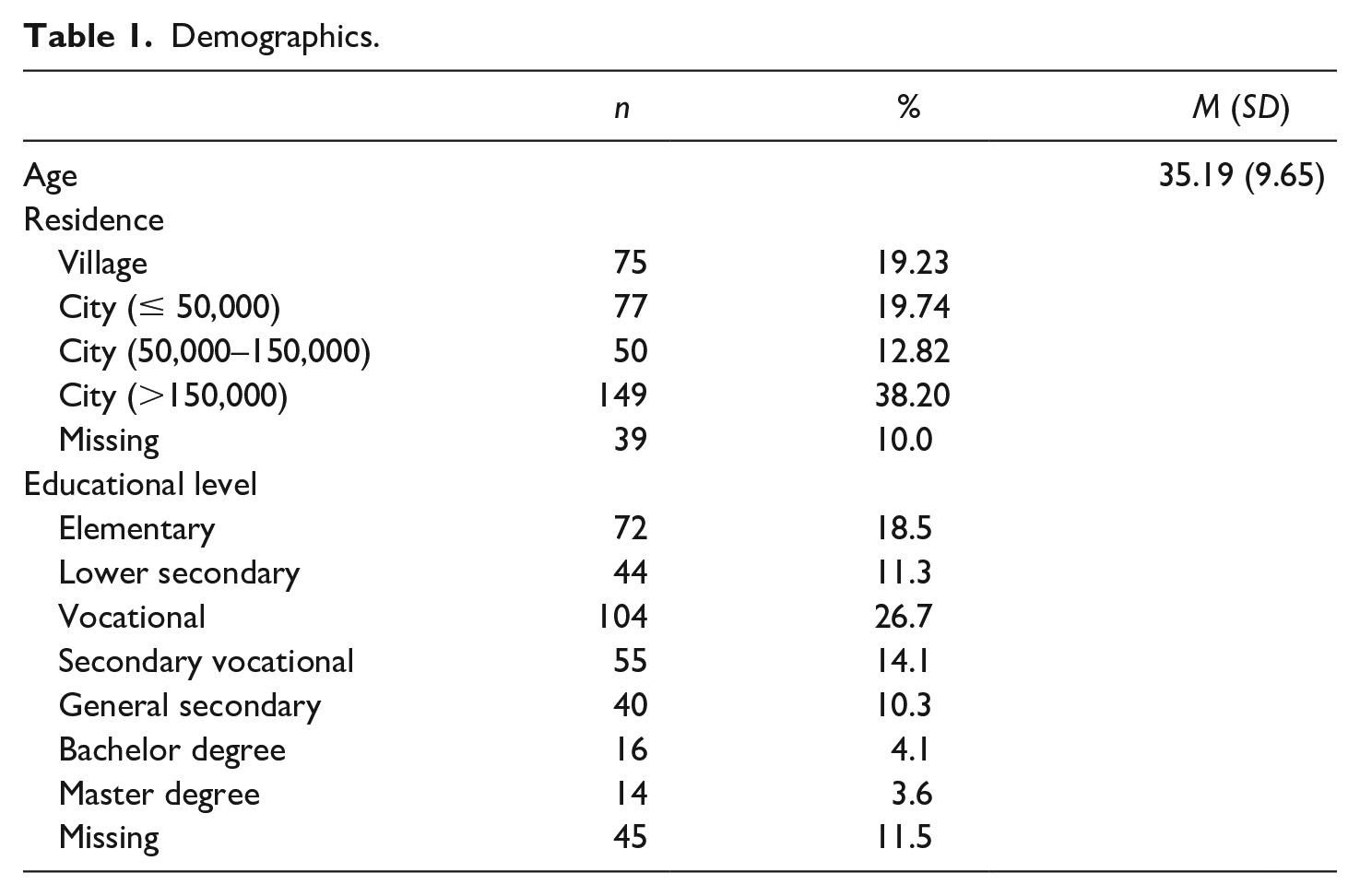
In order to test the hypotheses, we conducted a study on a sample of 390 men imprisoned in penitentiary institutions, aged 19 to 68 (M = 35.19, SD = 9.65). The largest number of participants had vocational (26.7%) or elementary education (18.5%), and only 7.7% of the sample were people with higher education. Inmates from big cities (over 150,000 inhabitants) constituted 38.2% of the sample (see Table 1).
Demographics.
The study was conducted in correctional facilities administrated by the District Inspectorate of Prison Service in Warsaw (Poland), and specifically in the Warsaw–Grochów, Warsaw–Białołęka, Warsaw–Mokotów, and Warsaw–Służewiec Remand Prisons and in the Warsaw–Białołęka Penitentiary. Although we conducted some of the studies in remand prisons, all participants were individuals serving prison sentences. Due to the overpopulation of Polish penitentiary facilities, some inmates serve their sentences in remand prisons. These institutions are only for men. The living conditions and rules in these institutions (i.e., medical care, communication with family and with the external world, internal order, free time, freedom of religion, and access to public information) are similar.
All procedures performed in this study involving human participants were in accordance with the ethical standards of the institutional and/or national research committee and with the 1964 Helsinki Declaration and its later amendments or comparable ethical standards. The study was approved by the Bioethics Committee of the Institute of Social Prevention and Resocialization, University of Warsaw. Informed consent was obtained from all individual participants involved in the study. The inmates completed the questionnaires, and then the questionnaires were collected by the researcher. Thus, the prisoners remained anonymous from the prison administration. Participation in the study was absolutely voluntary. The prisoners were previously asked to take part in the study by a person conducting the research, who then distributed questionnaires among those who agreed to participate. The study was conducted on a group basis. The collected data were analyzed by the authors.
We used the following measures:
The Sense of Quality of Life Questionnaire (SQLQ) by Straś-Romanowska (Straś- Romanowska, 2005), measuring self-perceived quality of life. We did not choose the most popular measures of QoL (e.g., WHOQOL-100, WHOQOL-BREF, or the Lancashire Quality of Life Interview) because no Polish adaptation of these measures is available. The instrument we have chosen (SQLQ) is based on the holistic conception of quality of life proposed by its author, Maria Straś-Romanowska. According to this conception—which, in our opinion, is comprehensive enough—the quality of life consists life experiences, coupled with their subjective cognitive and emotional evaluation (Straś- Romanowska, 2005). Moreover, the four dimensions of quality of life distinguished by Straś-Romanowska (psychophysical, personal, metaphysical, and psychosocial) seem to be interesting and noteworthy. The SQLQ was validated among men without criminal record (n = 253), but not among prisoners. However, the SQLQ has been used in research on Polish prisoners (Dolińska-Zygmunt & Mokrzyńska, 2013), and it has not been used outside Poland so far. The instrument consists of 60 items. The reliability of the scale—its test-retest stability (over a three-week interval) is r = 0.81 in a group of young people, r = 0.73 in a group of elderly people, and r = 0.65 in adults. The internal consistency of the scale, assessed using the Cronbach’s alpha coefficient, is the following, respectively: α = .77 for the Psychophysical Quality of Life scale, α = .71 for the Psychosocial Quality of Life scale, α = .72 for the Personal Quality of Life scale, α = .65 for the Metaphysical Quality of Life scale, and α = .70 for the whole SQLQ. The construct validity of the SQLQ was assessed, based on the correlations of particular scales with other measures; the correlations found were significant and ranged from .30 (Psychophysical Quality of Life scale) to 0.53 (Personal Quality of Life scale) (Straś-Romanowska & Frąckowiak, 2007).
The Life Orientation Questionnaire (SOC–29) by Antonovsky (Antonovsky, 1993) consists of 29 items and measures three dimensions of the sense of coherence: manageability, meaningfulness, and comprehensibility. The reliability and validity of the SOC-29 has been confirmed. The reliability of the scale was measured by estimating its internal consistency, that is, by means of Cronbach’s alpha, whose values ranged between 0.84 and 0.93. Validity was measured by the correlation between SOC-29 and Rumbaut’s sense of coherence scale. The correlation between the two scales was 0.639. Congruent and discriminant validity was measured, too. As expected, there was a positive correlation (0.385) between SOC-29 and a scale developed by Rotter for measuring locus of control. SOC-29 also correlated with fear. Correlation coefficient between SOC-29 and Sarason’s test anxiety was −0.212. As the state of health deteriorated, the percentage of respondents who belonged to the group with the best health condition dropped from 33 to 12 (Antonovsky, 2005).
The General Self-Efficacy Scale (GSES) by Schwarzer, Jerusalem, and Juczyński, measuring self-efficacy (Juczyński, 2001). The General Self-Efficacy Scale (GSES) was developed by Ralf Schwarzer, Michael Jerusalem, and Zygfryd Juczyński. It is based on Bandura’s concepts of expectations and personal self-efficacy. Expectations of personal self-efficacy refer to the control of one’s actions. GSES consists of 10 items. It was used in 21 countries until 1998. GSES is a valid and reliable tool. In order to determine the reliability of the scale, its internal consistency was measured. For the entire scale, internal consistency was α = .85; the test-retest correlation coefficient (with a five-week interval) was 0.78 (Juczyński, 2001).
The Social Support Scale (SWS) by Kmiecik-Baran (Kmiecik-Baran, 1995), measuring global social support and its four types: informational, instrumental, appraisal, and emotional. The SWS was developed based on Thardy’s theory (Tardy, 1985). The SSS consists of four subscales (each consisting of six true-false items) which measure informational, instrumental, evaluative, and emotional support. The four subscales showed acceptable internal consistency (0.70–0.82) and acceptable convergent and divergent validity as ascertained by correlations with different measures of loneliness, alienation, and locus of control (Kmiecik-Baran, 1995).
The Intensity of Religious Attitude Scale (SIPR) by Prężyna, measuring the intensity of the individual’s attitude towards the object of religiosity (as understood in the Christian tradition): God and the entire supernatural reality (Prężyna, 1981; Śliwak & Bartczuk, 2011). Prężyna assumed that religiosity had three components: cognitive, emotional-motivational, and behavioral. The author of the scale believes that the object of religious attitude is God or, more precisely, the reality marked by supernaturalism. This manifests itself in the recognition of God as the creator of the world and the ultimate goal of man, in conscious acceptance of dependence on God, and in the worship to God. The Intensity of Religious Attitude Scale consists 30 items, 17 expressing a positive attitude, 13 expressing a negative attitude. The test-retest correlation coefficient (with an interval of seven days) was 0.98. The Cronbach’s alpha coefficient was 0.96.
The SPI/TPI Questionnaire by Spielberger (Spielberger & Reheiser, 2009), as adapted into Polish by Wrześniewski and Oleś, measuring anxiety, depression, curiosity, and anger as states (SPI) and traits (TPI). The instrument consists of two independent parts. The first one (SPI) measures anxiety, anger, depression, and curiosity as emotional states experienced at the moment. Part two (TPI) measures the same emotions as personality traits. The STPI comprises four scales measuring anxiety, anger, depression, and curiosity as states and four scales measuring anxiety, anger, depression, and curiosity as traits. Each of the scales consists of 10 short and simple items. The reliability of the scales was measured by estimating their internal consistency using Cronbach’s alpha; the values ranged from 0.82 to 0.92 for the SPI and from .68 to .88 for the TPI. The theoretical and diagnostic validity of the STPI were assessed. The results are acceptable and similar to the original version of the STPI.
The COPE Inventory was developed by Carver, Scheier, and Weintraub (Carver, Scheier, & Weintraub, 1989) and adapted into Polish by Juczyński and Ogińska-Bulik (Juczyński & Ogińska-Bulik, 2009). It consists of 60 items representing 15 coping strategies, four items per strategy. The COPE Inventory measures the following strategies: Active coping, Planning, Seeking social support for instrumental reasons, Seeking social support for emotional reasons, Suppression of competing activities, Turning to religion, Positive reinterpretation and growth, Restraint, Acceptance, Focus on and venting of emotions, Denial, Mental disengagement (Self-distraction); Behavioral disengagement, Substance use, and Humor (Juczyński & Ogińska-Bulik, 2009). The reliability of this instrument was measured using internal consistency assessed by computing Cronbach’s alpha coefficient. The values of alpha ranged from 0.48 to 0.94. They were the lowest for the Mental disengagement and Active coping strategies and the highest for Turning to religion. The absolute stability coefficients were also computed, and they ranged from 0.45 to 0.82. The construct validity of the COPE Inventory was assessed—diagnostic validity was confirmed by correlating the results obtained using the COPE Inventory with those obtained using other instruments measuring ways of coping with stress. A high positive correlation was found between Task focus measured using Endler and Parker’s CISS questionnaire and the variables measured using the COPE Inventory: Planning (0.70), Suppression of competing activities (0.64), and Active coping (0.62). We also found a relationship between Emotion-focused strategies (CISS), and Use of emotional social support (0.45). Avoidance style (CISS) correlated positively with Mental disengagement (0.62). Correlations were also tested between the COPE Inventory and Self-efficacy measured using Schwarzer’s GSES. Self-efficacy correlated positively with Active coping (0.42) and negatively with Behavioral disengagement (−0.43). The use of Active coping strategies correlated with higher self-esteem measured using the Rosenberg SES, internal locus of control measured using the Rotter I-E Scale, and anxiety—both trait and state—measured using the Spielberger STAI.
All the measures used were standardized tools and self-report scales.
The variables chosen for this study have been empirically tested in other samples before and were found to be positive correlated with QoL. All of the above measures have high validity and reliability (Antonovsky, 1993; Carver et al., 1989; Juczyński, 2001; Kmiecik-Baran, 1995; Śliwak & Bartczuk, 2011; Spielberger & Reheiser, 2009; Straś- Romanowska, 2005). All of these scales are suitable for use with a correctional population.
Results
We began the analysis by computing descriptive statistics for each variable—psychosocial quality of life and positive and negative correlates. Table 2 presents the means and standard deviations for the variables measured.
Descriptive Statistics for Psychosocial Quality of Life and for the Positive and Negative associations (n = 390).
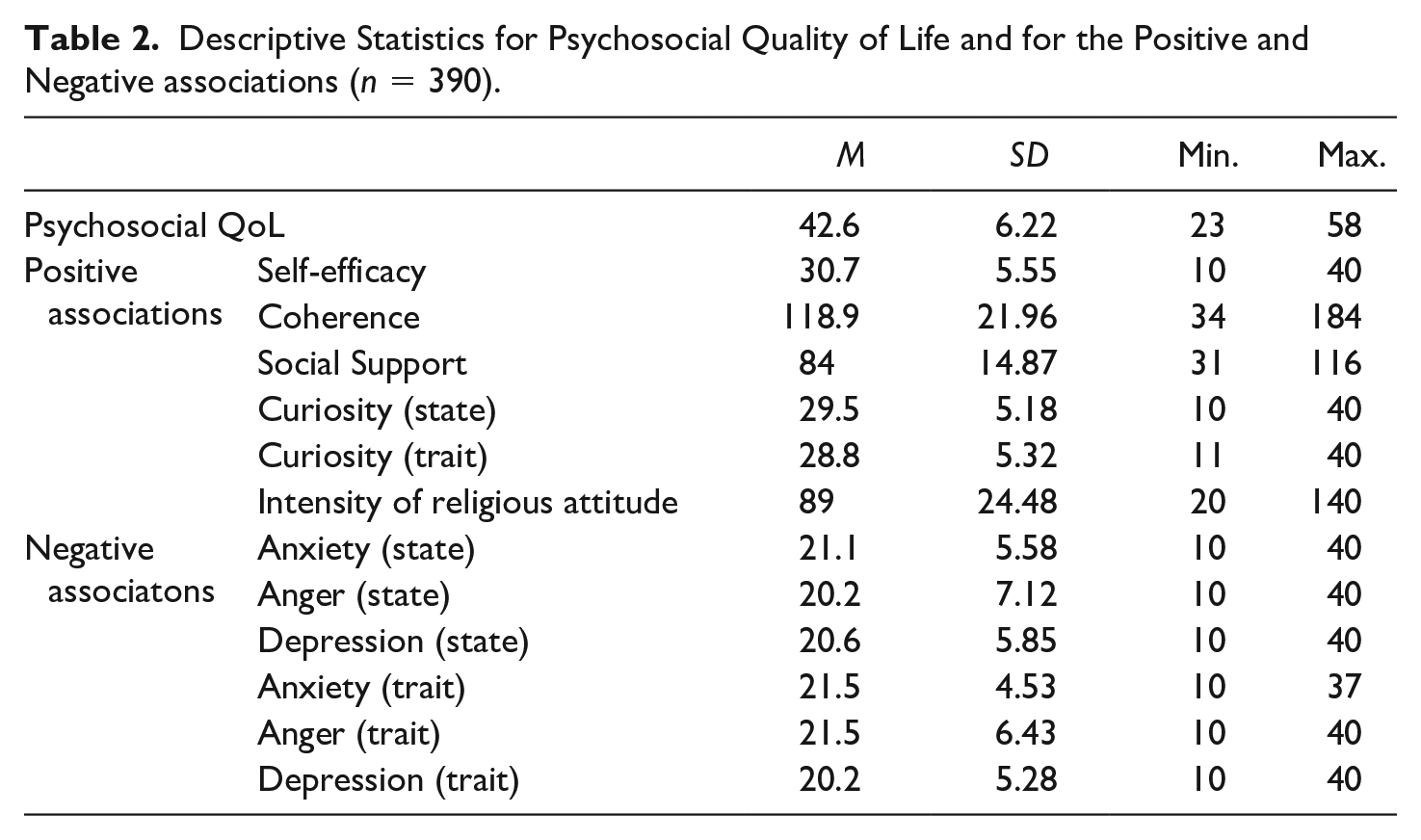
Raw scores were juxtaposed with the norms specified by the authors of the SQLQ. It should be noted that these norms were set on the basis of research conducted on various groups: adolescents (n = 93), adults (n = 73), and elderly people (n = 55) (Frąckowiak, 2004). The juxtaposition revealed that the mean overall psychosocial quality of life score fell within the norm, though it verged on the bottom limit of the norm.
The score on the intensity of religious attitude—for normalized data (Śliwak & Bartczuk, 2011)—shows a low level of religious attitude.
As potential protective factors, we measured both state curiosity (SPI) and trait curiosity (TPI); the means in both cases were similar: M = 29.5 (SD = 5.18) and M = 28.8 (SD = 5.32), respectively.
Anxiety, anger, and depression also were measured both as states (SPI) and as traits (TPI). In both cases, the mean values were similar.
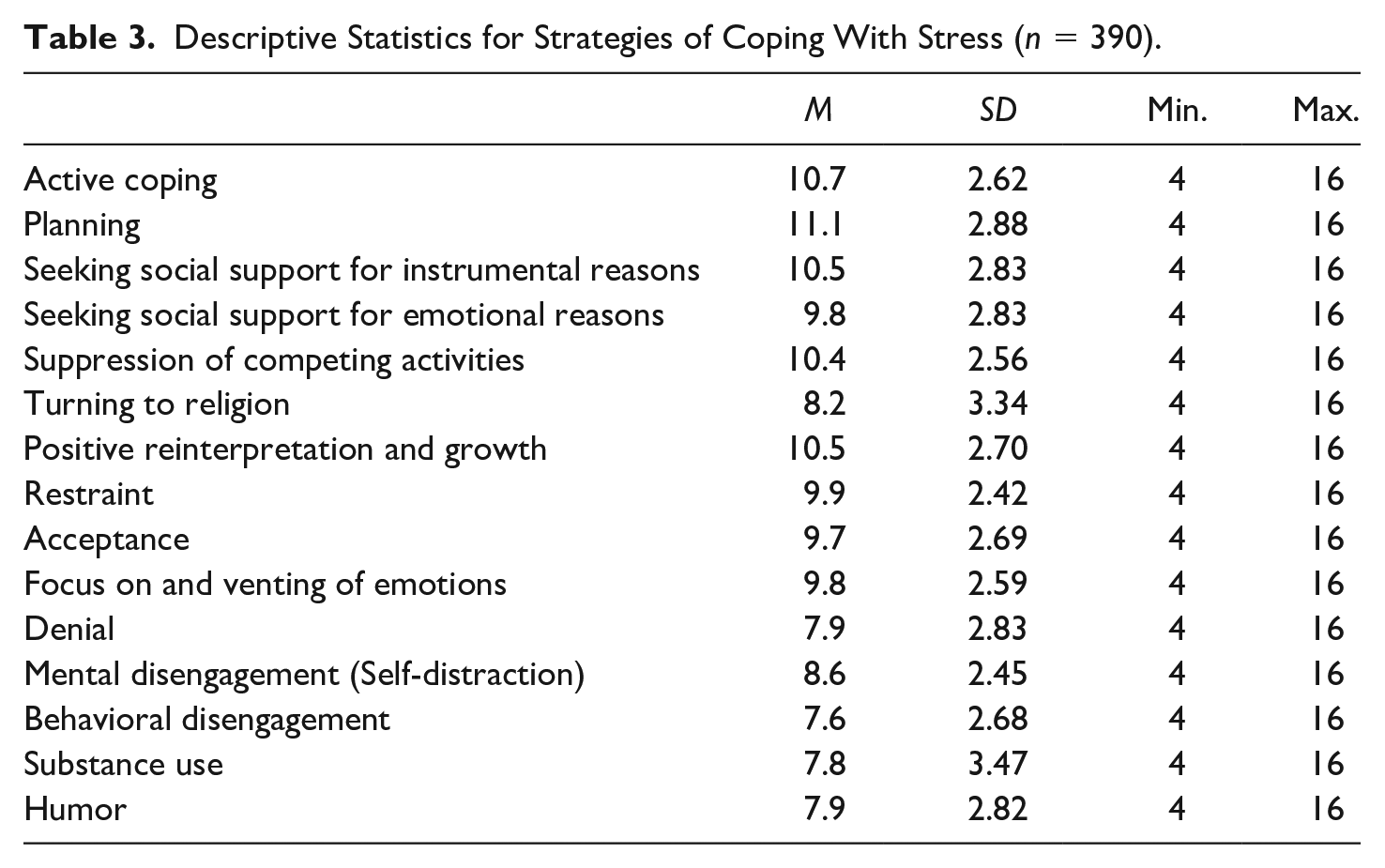
The coping strategies least often used by prison inmates were: behavioral disengagement (M = 7.6, SD = 2.68), substance use (M = 7.8, SD = 3.47), denial (M = 7.9, SD = 2.83), and humor (M = 7.9, SD = 2.82) (Table 3).
Descriptive Statistics for Strategies of Coping With Stress (n = 390).
Among the positive correlates, the strongest and the most significant correlates of psychosocial QoL were: coherence (r = 0.563) and social support (r = 0.520). State depression (r = −0.524) and trait depression (r = −0.568) were the strongest correlates of psychosocial QoL among the risk factors (see Table 4).
Pearson’s Product Moment Correlation Coefficients for Psychosocial QoL and Positive and Negative Associations.
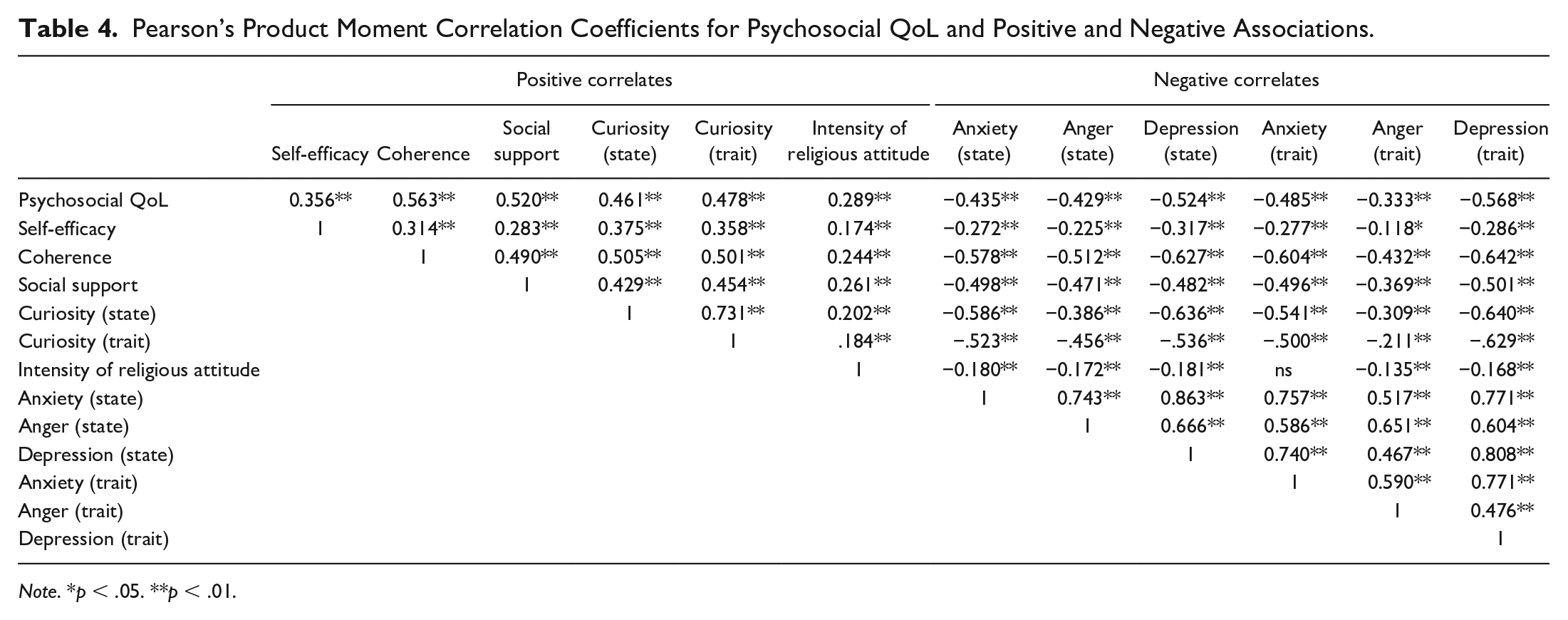
Note. *p < .05. **p < .01.
As regards coping style factors, the strongest correlates of psychosocial QoL were: planning (r = 0.415), seeking social support for emotional reasons (r = 0.328), active coping (r = 0.325), substance use (r = −0.325), and positive reinterpretation and growth (r = 0.307). Turning to religion, acceptance, and focus on and venting of emotions turned out to be statistically non-significant correlates of psychosocial QoL (see Table 5).
Pearson’s Product Moment Correlation Coefficients for Psychosocial QoL and the Coping Style Factors.
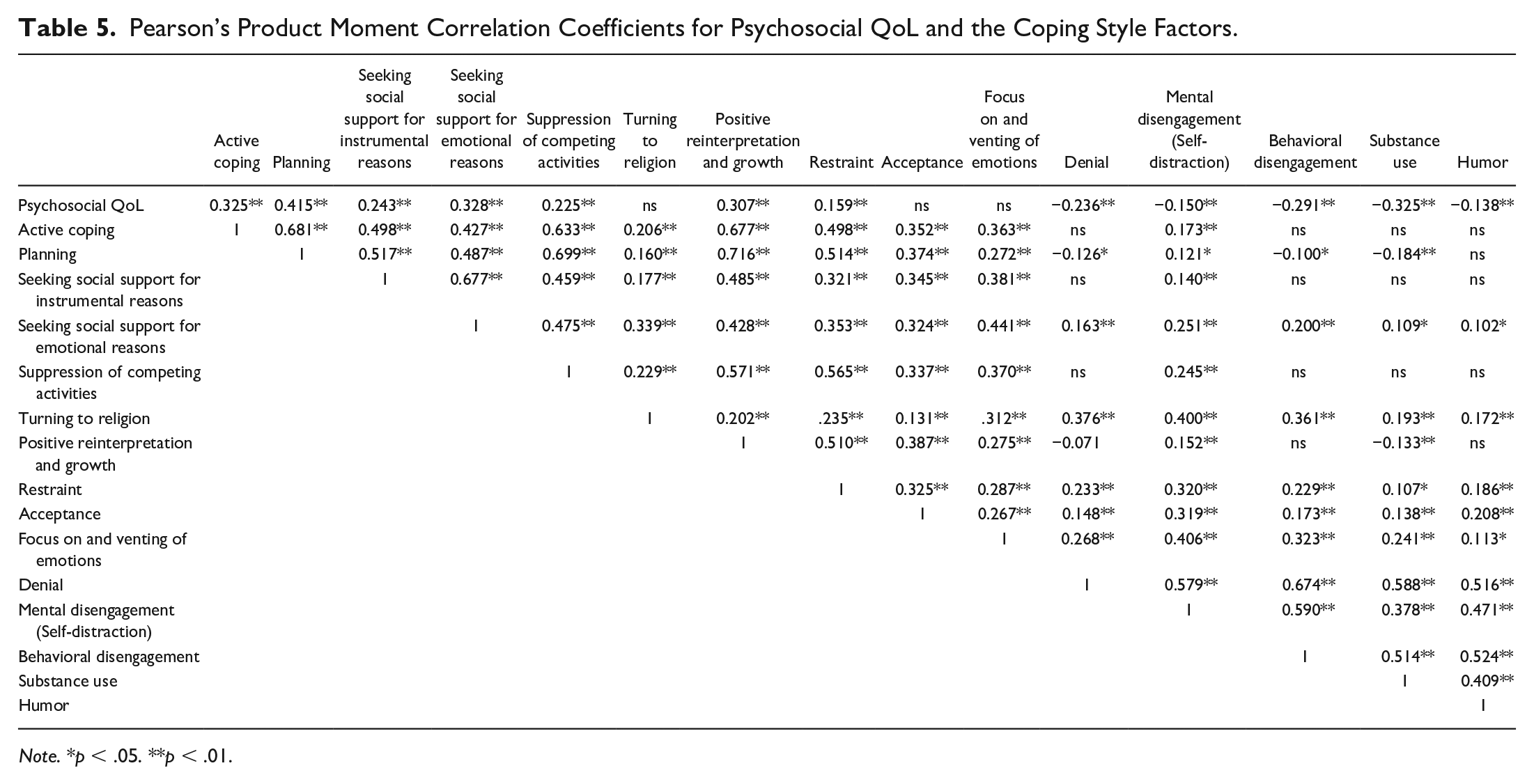
Note. *p < .05. **p < .01.
We used structural equation modelling (SEM) in order to get deeper insight into the research results. All models were specified in a path analysis using Mplus version 8.2. In accordance with Hu and Bentler’s recommendations, we used the following goodness-of-fit indices: comparative fit index (CFI), Tucker–Lewis index (TLI), root mean square error of approximation (RMSEA), and standardized root mean square residual (SRMR) (Hu & Bentler, 1999).
The basic model we constructed included the styles of coping with stress as mediators between independent variables (in particular: self-efficacy, coherence, social support, depression, curiosity, anxiety, anger, and intensity of religious attitude) and psychosocial quality of life as a dependent variable. We chose the styles of coping that significantly correlated with the dependent variable (psychosocial quality of life). The criterion for the inclusion of a variable as a predictor of PQoL was the degree to which it correlated with the dependent variable.
We have tested many different models of the predictors of psychosocial QoL. These models were calibrated based on goodness-of-fit indices and theory. We have found a new model, which does not include all of the initial predictors, although the correlations between the excluded ones and psychosocial QoL (Pearson’s product moment correlation coefficients) were also significant. The path model is presented in Figure 1.
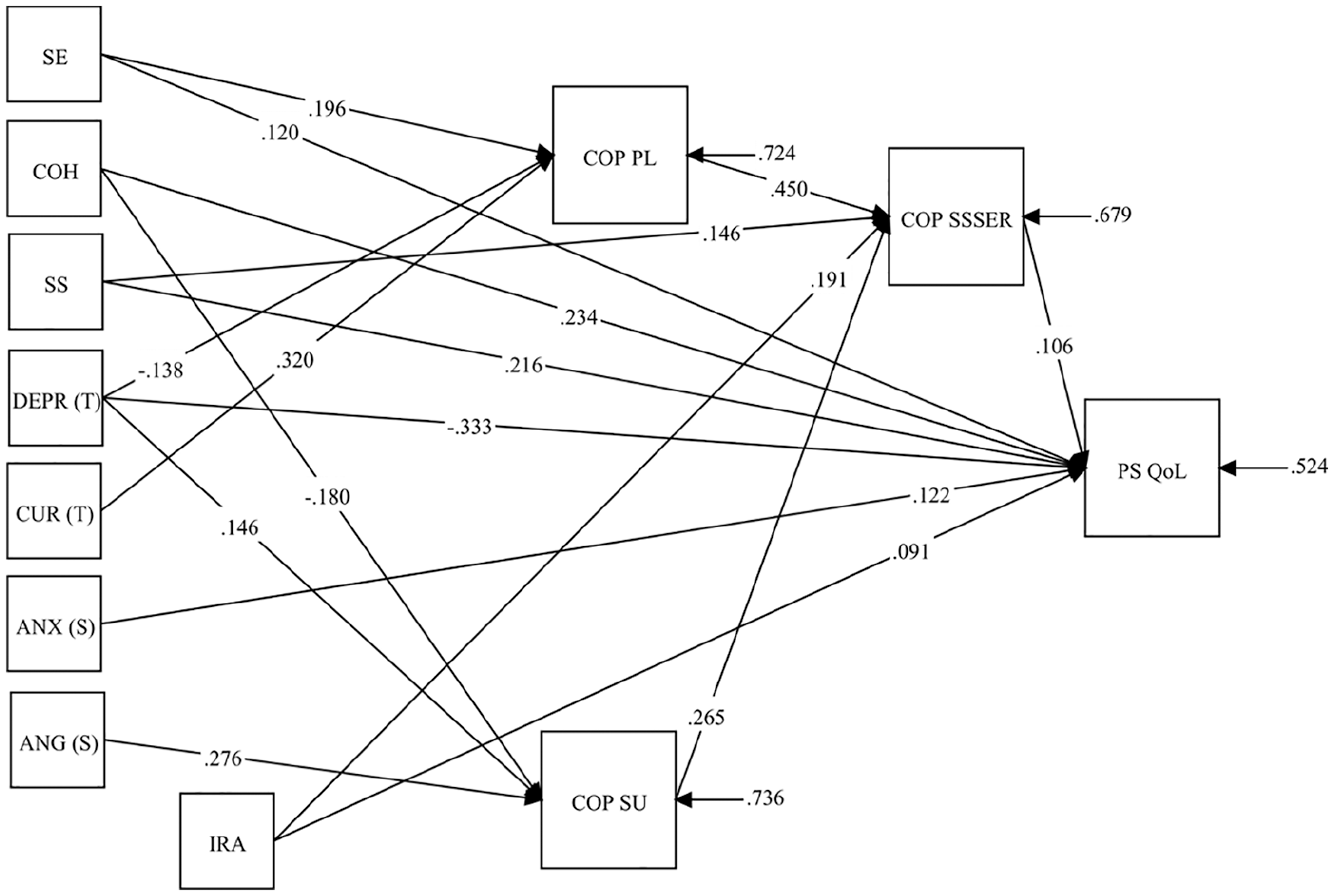
Path model.
The final model provided a good fit to the data according to traditional structural equation modeling fit indices (χ2 = 36.597, df = 21, p > .01; RMSEA = .044, 90% CI [0.018, 0.067]; SRMR = 0.036; CFI = 0.976; TLI = 0.957). The model presented in Figure 1 accounts for almost 48% of the variance in psychosocial quality of life (R2 = 0.48).
Direct Effects
The significant predictors of psychosocial QoL are: self-efficacy (β = .120, p < .01), coherence (β = .234, p < .001), social support (β = .216, p < .001), trait depression (β = −.333, p < .001), seeking social support for emotional reasons (β = .106, p < .01), anxiety (state) (β = .122, p < .05), and intensity of religious attitude (β = .091, p < .05) (see Table 6).
Results Depicting the Observed Relationships Among the Study Variables.
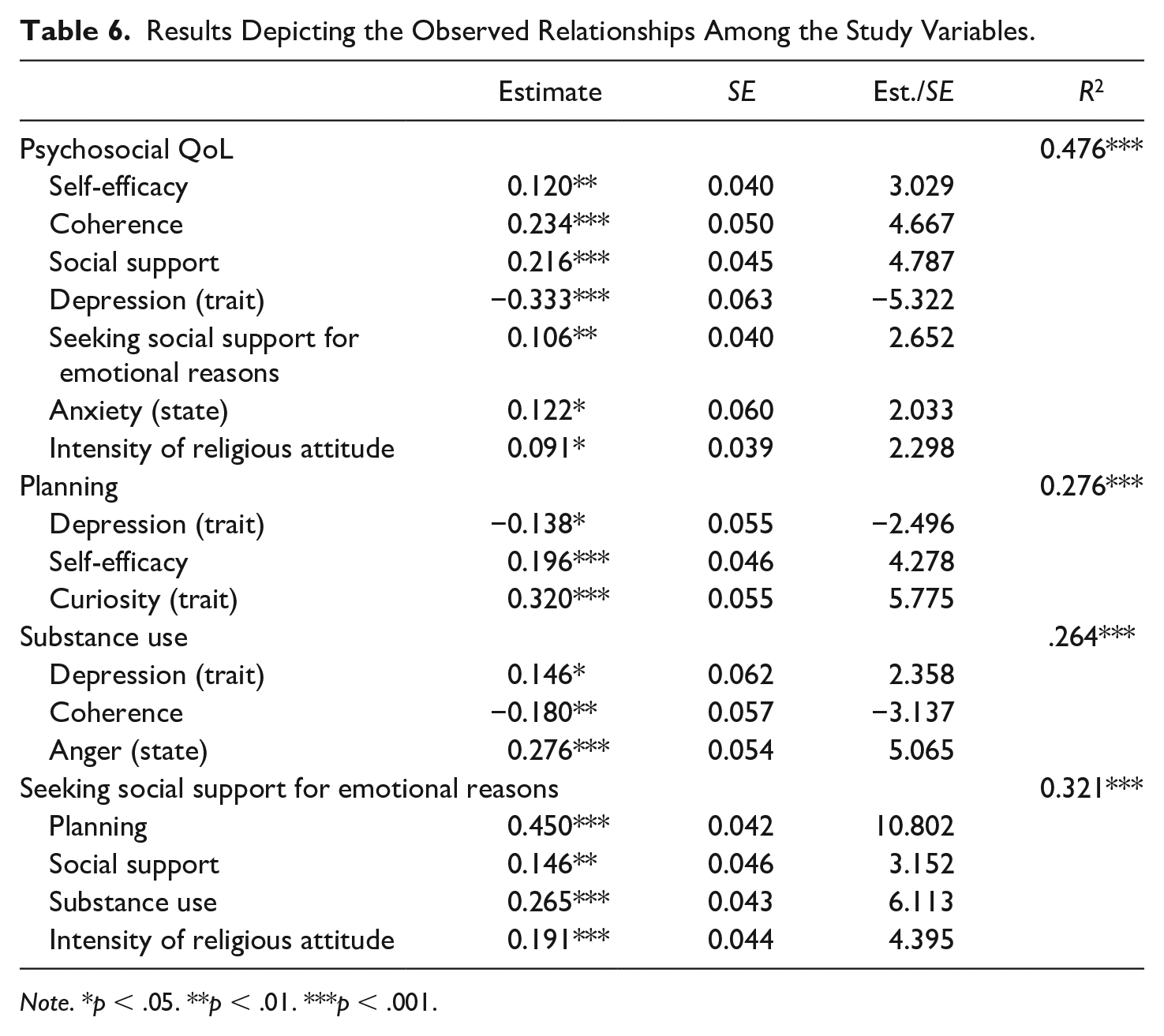
Note. *p < .05. **p < .01. ***p < .001.
Indirect Effects
Self-efficacy indirectly impacts psychosocial QoL through planning and seeking social support for emotional reasons (β = .009, p < .05). Another measure that indirectly impacts the dependent variable is coherence; in this case, the mediators are substance use and seeking social support for emotional reasons (β = −.005, p < .05). As we have mentioned before, social support can directly predict psychosocial QoL, but it also indirectly impacts PQoL through seeking social support for emotional reasons, as shown in Figure 1 (β = .016, p < .05). Trait depression impacts psychosocial QoL indirectly through planning and seeking social support for emotional reasons (β = −.007, p = .05) and, separately, through substance use and seeking social support for emotional reasons (β = .004, p = .092). Trait curiosity impacts psychosocial QoL only indirectly through planning and seeking social support for emotional reasons (β = .015, p < .05). The direct effect of trait curiosity on psychosocial QoL is non-significant. Anger does not impact psychosocial QoL directly, but it does have indirect effect on PQoL through substance use and seeking social support for emotional reasons (β = .008, p < .05). Finally the intensity of religious attitude impacts the dependent variable indirectly through seeking social support for emotional reasons (β = .020, p < .05).
Discussion
The main aim of this research was to explore psychological correlates of PQOL; therefore, other important variables measures related specifically to incarceration were not included.
As predicted, the positive correlates of psychosocial quality of life are self-efficacy and sense of coherence. This means the more convinced a person is about the meaningfulness of the world and about their own ability to cope in it, the higher is more their psychosocial quality of life. Both sense of coherence and self-efficacy are significant in the context of functioning, for example in the case of ill people (Motl et al., 2013; Silarova et al., 2012). In the case of prisoners, both self-efficacy and sense of coherence are associated with positive adaptation of individuals at risk of a criminal career (Niewiadomska & Chwaszcz, 2010). The self-efficacy positively and indirectly impacts psychosocial QoL through planning and seeking social support for emotional reasons. The results obtained by Shen (Shen, 2009) on a sample of Chinese teachers revealed that self-efficacy correlated positively with active strategies of stress coping. Parto and Besharat (2011) found evidence of the mediating mechanisms through which effective coping and ineffective coping mediated the relationships between self-efficacy and solving mental health problems in adolescents.
The several studies confirms a positive relation between sense of coherence and task-oriented style (Cohen et al., 2008; Cohen & Dekel, 2000; Krok, 2016). On the other hand, research demonstrates a negative relation between self-efficacy and emotion-oriented strategies of coping with stress (Dahlbeck & Lightsey, 2008). The results of the present study have confirmed that a lower level of coherence predicts more frequent substance use, which is associated with seeking social support for emotional reasons. In this way, coherence is related to PQoL.
Another significant positive correlate of prisoner’s psychosocial quality of life is social support (Jacoby & Kozie-Peak, 1997). This is understandable in the context of the functioning of prison inmates, for whom one of the priority challenges is to find their place in the prison hierarchy and to adapt to the norms established by the prison subculture. The more a person feels a member of the prison subculture, the more satisfied his or her needs are, such as: the need for belonging, security, and social contact. In this context, relations with the prison staff are of importance—research shows that the more positive and supportive they are, the higher is the prison inmates’ quality of life (Beijersbergen et al., 2015).
The present study reveals that one of the negative correlate of prison inmates’ psychosocial quality of life is trait depression. The negative association of depression with quality of life has been found in numerous studies (Dubayova et al., 2013; Oleś, 2010; Yıkılkan et al., 2014), which means the results of the present study are consistent with previous ones. It is worth noting that prison inmates’ experience of depression is associated with a decrease in psychosocial quality of life. This gives rise to the suggestion that, in penitentiary practice, attention should be devoted to depressive individuals and that support should be provided to them in the first place because depressiveness—trait depression—is an important risk factor for important aspects of prison inmates’ quality of life (Pennington et al., 2015) and is strictly related to suicide risk (Martin et al., 2014).
Anger impacts psychosocial QoL indirectly through substance use and seeking social support for emotional reasons. The results of the presented study are consistent with the findings of Julkunen and Ahlström, whose study has revealed that SOC was the strongest predictor of HQoL while hostility and anger lost their direct impact on HQoL (Julkunen & Ahlström, 2006).
Depression and anxiety are negatively correlated with well-being (Boelen & Prigerson, 2007). Based on his own study, Hanson (2002) concluded that anxiety disorders were illnesses that impaired quality of life and social functioning in a number of life domains. There is some evidence that quality of life is most compromised in panic disorder (PD) and PTSD. Thus, research shows the negative correlation between the psychosocial QoL and anxiety. In this light, the positive relationship between anxiety and psychosocial quality of life is surprising. It seems that a high level of anxiety leads prisoners to look for contact with other people to be able to survive in prison. Anxiety correlates positively with psychosocial quality of life. However, the findings of some researchers indicate that a person is unlikely to be both satisfied with life and depressed, but one may be satisfied and anxious (data come from the fourth wave of an Australian quality of life panel study conducted in Australia’s mostly densely populated state, Victoria) (Headey et al., 1993). Perhaps the respondents assessed their psychosocial quality of life in the context of their whole life, while the assessment of the level of anxiety concerned the current situation, which is closely related to imprisonment.
Imprisonment and the ensuing frustration of many needs may naturally lead to the loss of the sense of meaning in life and, consequently, to a decrease in subjective well-being in inmates. For this reason, it seems important to look for solutions in the penitentiary system that will help prisoners find meaning and develop a belief in the possibility of coping with the situation of imprisonment. Research shows that one of the ways to accomplish that is to provide them with opportunities to name and express their experiences and emotions as well as with opportunities to pursue their interests (De Smet et al., 2017).
The intensity of religious attitude significantly correlates with psychosocial quality of life which directly relates to supernatural reality (Prężyna, 1981). Interestingly, its level in the prison inmates examined in the present study was low, which means they may have exhibited a confrontational attitude towards God—for instance, they may not necessarily have recognized Him as the Creator of the world and the ultimate goal of man (Śliwak & Bartczuk, 2011). It is worth stressing, however, that the deeper their religiosity became, the greater increase there was in the level of their psychosocial QoL. These results are consistent with the findings of other studies, highlighting the importance of religiosity for quality of life (Lee et al., 2014; Stroppa & Moreira-Almeida, 2013; Talik & Skowroński, 2018). The intensity of religious attitude impacts psychosocial quality of life indirectly through seeking social support for emotional reasons. In the process of coping with stress, religion reveals many of its functions; for instance, it can give people hope, emotional support, and guidance for action. Pargament states that religion can be involved in any part of the stress management process (Pargament, 1997; Pargament et al., 1998). Individuals who turn to religion also seek emotional support. Religiosity has prosocial functions: a religious person is open to others and builds a community (thus improving his or her psychosocial quality of life). A religious person knows his or her limitations and weaknesses and is not ashamed to seek help (seeking support; [Pargament, 1997]).
Curiosity does not impact psychosocial quality of life directly, but it does influence it indirectly through planning and seeking social support for emotional reasons. The essence of curiosity lies in openness to the acquisition of new knowledge and experience (Spielberger & Reheiser, 2009), which seems to be equally significant for psychosocial quality of life. It is therefore easy to understand that, with an increase in openness understood in this way and emotional support seeking, inmates’ psychosocial QoL increases as well.
To sum up, the positive correlates of prison inmates’ psychosocial quality of life are: sense of coherence, self-efficacy, intensity of religious attitude, social support, and trait curiosity. Among the strategies of coping with stress, only seeking social support for emotional reasons is a significant factor that directly predicts psychosocial quality of life. Substance use and planning play only a mediating role in psychosocial quality of life prediction.
As hypothesized, the negative correlate of inmates’ psychosocial quality of life is trait depression, which are consistent with previous studies (Dubayova et al., 2013; Oleś, 2010; Yıkılkan et al., 2014). Trait depression is also the strongest (negative) predictor of PQoL. Contrary to predictions, anxiety is not a risk factor—as noted above, it is associated with a positive score on psychosocial quality of life.
A novelty of the study is the inclusion of variables that have not been analyzed before in the context of prison inmates’ psychosocial quality of life (intensity of religious attitude, curiosity).
The implementation of programs aimed at enhancing sense of coherence by the prison’s administration contributes to prisoner health promotion. A study of the salutogenic model suggests that there are two basic mechanisms: behavioral and perceptual. The behavioral mechanism consists in people being empowered to make use of their resources in stressful situations. In the perceptual mechanism, in order to deal with life stressors, people must be able to reflect on their understanding of the stressful situation and the resources available (Super et al., 2016). Niewiadomska and Chwaszcz (2010) propose a program aimed at increasing the sense of coherence as one of the most important “subjective mechanisms of readaptation”. The program includes: providing reliable knowledge on the understanding of mechanisms influencing human behavior, teaching rational behavior, and using the “cognitive preprograming” strategy, aimed at correcting cognitive bias—for example, the bias concerning the causes of events or the motives of behaviors, which are often asocial and aggressive in prisoners (e.g., perceiving the world as unjust and other people as hostile). Sense of coherence is strictly related to health promotion, as research shows that an increase in sense of coherence is accompanied by an increase in resistance to stress and effectiveness in coping with difficulties (Antonovsky, 1984). Especially prisoners with high sense of coherence show a higher level of personal goal achievement and a lower level of mental difficulties experienced (Niewiadomska & Chwaszcz, 2010).
Allowing religious groups to meet prisoners in prisons is an opportunity to increase the prisoners’ quality of life, but it can also support their social rehabilitation and could develop specific kind of strategies of coping with stress, namely religious and non-religious coping strategies (Skowroński & Talik, 2018; Talik & Skowroński, 2018). In general, in Polish prisons and in those in which the study was conducted, prisoners’ contacts with religious groups and communities are only occasional, rare, and irregular. In most Polish prisons, guaranteeing prisoners’ right to practice their religion of choice is limited to enabling them to attend mass or service once every few weeks. According to Pargament’s theory of religious coping (1997), the more often a person has contact with the religious sphere, the more likely his or her personal religiosity is to grow. In the context of the research discussed here, this means that more frequent contact with religious groups and events may contribute to an increase in prisoners’ religiosity. The enhancement of the educational offer addressed to prisoners can contribute to the development of curiosity, which may also increase prisoners’ self-awareness. Gonçalves et al. (2015) concludes that participation in activities in prison can help prisoners pass the time and relieves the boredom. As noted by Ginneken et al. (2018, p. 256), “in some instances, activities may even be experienced as meaningful and potentially useful after release. Some jobs in prison may be considered meaningful where prisoners develop skills and are given responsibilities, including more freedom to move around the prison.” These conclusions were confirmed on the basis of the studies by Stevens (2012).
Social support is provided by contacts with the outside world. Ginneken et al. (2018, p. 256) observed: “Visits and other forms of contact can provide emotional support and mitigate the pains of separation. It also allows for maintenance (albeit minimal) of the role of mother or father for prisoners with children; facilities for family visits are also very diverse and can influence the quality of prison life.”
The main limitation of the present study is its failure to include the social climate of the prisons as a predictor of prisoners’ QoL. Another limitation is the failure to take gender differences into account in analyses, due to the absence of women in the sample. An interesting challenge would be to conduct longitudinal research exploring the relations between prisoners’ QoL and the following variables: health problems, conflicts in prisons, and committing crimes. There are likely important facets of incarceration that are significantly related to PQoL, for instance: age of incarceration, length of stay in prison, length of sentence, type of crime or size of the prison cell. However, the authors did not obtain all data from prison staff (e.g., size of the prison cell), and the data obtained from the prisoners were incomplete, which made it impossible to carry out analyzes in this regard (e.g., length of sentence).
Footnotes
Declaration of Conflicting Interests
The author(s) declared no potential conflicts of interest with respect to the research, authorship, and/or publication of this article.
Funding
The author(s) received no financial support for the research, authorship, and/or publication of this article.
