







Abstract
Shiite Muslims are one of the most influential ethnic minorities in Afghanistan. It appears that they are more victims of violence than other population groups in Afghanistan. On the other hand, the victimization rate in society is one of the most critical issues in criminology. Being victimized can lead to property loss, psychological trauma, and even death. Sensitive ethnic minorities are particularly pronounced in these challenges, especially in traditional societies such as Afghanistan. Therefore, the victimization rate and its influential factors among Shiite Muslims in Afghanistan need to be carefully analyzed. This is a survey study whose statistical population includes all residents of District 13 of Kabul, 285 of whom were selected using a structured questionnaire designed by the researcher and a multistage cluster sampling method. In addition, a multiple-choice Likert scale was used to measure the dependent and independent variables. The study’s results indicate that more than 75% of the respondents and, in the past 5 years, more than 80% of their friends and family members have been victimized. In addition, respondents reported that the overall average probability of victimization over the next 10 years is 3.41 (the probability rate ranged from a minimum of 1 to a maximum of 5). Women were more likely to be victimized than men, with average victimization rates of 1.38 and 1.24, respectively (the probability rate ranged from a minimum of 1 to a maximum of 2). There was also a significant positive correlation between victimization and other variables such as age, gender, marital status, education level, and economic status.
Introduction
Afghanistan is an Asian country with a majority Muslim population. It borders China, Tajikistan, Uzbekistan, Turkmenistan, Iran, and Pakistan. Two religious groups divide Afghanistan’s people: Sunni and Shiite. The Hanafi (Sunni) sect is in the majority, while the Imami and Ismaili Shiite sects are in the minority. The Shiite population in the country is estimated to be 25 to 30% (wikishia). The constitution adopted in 2002 officially recognized the Shiite religion in Afghanistan for the first time. The Hazara are the largest Shiite group in Afghanistan. Kabul is the capital and economic and cultural center of Afghanistan. Various Sunni and Shiite ethnic groups, such as Tajiks, Pashtuns, Hazaras, and Qazalbash, live in this city. Kabul is the most populous Shiite city in Afghanistan, where approximately one-third of the population is Shiite. Most Shiites live in western Kabul and areas such as Dasht-e Barchi. Dasht-e Barchi is divided into districts 13 and 18, and District 13 is the subject of the current study. District 13 is the most populous Shiite city in Kabul, with approximately one-third of the population being Shiite. According to the authors of this article, the victimization of Shiite minorities in District 13 of Kabul is due to several factors: sectarian tensions, extremist ideologies, political instability, lack of government protection, and historical discrimination. For example, in the constitution of the Mojahedin government, which was enacted in 1994, the president and chancellor had to be from the Hanafi religion. That is, a Shiite had no right to run for the presidency or to be responsible for the formation of the cabinet by the president. However, the developments of recent years, especially the Constitution of 1382, removed this historical problem from how Shiites provided equal rights to other compatriots (Shiite News, 2010).
While these factors contribute to the victimization of Shiites in Kabul, not all Sunnis or members of other sects participate in or support such actions. Despite these challenges, many Afghans strive for peace and coexistence among religious communities.
The above factors have caused specific crimes in Kabul’s District 13 to be subject to the victimization of Shiite Muslim minorities. (e.g., terror, genocide, or trafficking and everyday crimes such as carjacking, bag snatch, insult, burglary, and street harassment). For example, a powerful horrific suicide bomb explosion ripped through a packed classroom inside the Kaaj Education Center in District 13 of Kabul City early Friday, killing at least 19 Shiite students and injuring 27 others (Gul, 2022). A massive suicide bombing on October 24 outside the Kawsar-e Danish educational center in west Kabul was the latest attack that cruelly targeted the Shiite minority. The explosion occurred in a crowded, narrow street outside the center, killing 30 people and injuring more than 70, mostly children and young adults between 15 and 26 years old who attended classes (Gossman Patricia, 2020). In addition, the United Nations has condemned the deadly bomb blasts at two educational institutions, Abdul Rahim Shahid High School and nearby Mumtaz Education Center, located in District 13, predominantly Shiite in western Kabul (UN News, 2022). In addition, according to the experience of three decades of war, they used ethnic and religious interpretations for all issues. Due to political problems, some politicians even encouraged religious discrimination in various ways (Yusofi & Sayyedzadeh, 2019).
Because of such events, criminal victimization is a frightening and unsettling experience for many Shiite Afghan Muslims. It is unpredictable, unpredictable, and often unpredictable. Unlike ordinary life experiences, victimization is not sought and never welcomed. Shiite Muslim minorities who have been victims are often confused, worried, upset, and angry. They want to know why this happened and how it affected them. They usually do not know who or where to complain to, and they do not know who to trust or rely on for support, understanding, and help. Not only do they suffer physically, emotionally, psychologically, and financially from their victimization, but they also often struggle with the difficulties of the criminal justice system.
According to national and international studies, victimization also depends on factors such as culture, politics, economy, and geographical and climatic conditions (Najafi Aberandabadi, 2012). In addition to the above-mentioned characteristics, personal characteristics such as gender, age, and education also play an essential role in victimization. On the basis of these details, we can divide victims into different categories to understand why the victimization rate is higher for some individuals. Victimization entails social, economic, physical, emotional, and psychological problems, including loss of property, emotional trauma, and risk of death (Siegel, 2003). An example from this study is that women are more likely to be victims of crime than men. When women are sexually assaulted in Kabul, any report puts them directly in the position of the main accused because the norm of Afghan society accepts “masculinity” as a value and suppresses “femininity” as an honor.
In addition, young people are at greater risk of victimization than older people because of their particular lifestyle. In contrast, the relationship between marital status and victimization can be influenced by age, gender, and lifestyle (Jibat & Nigussie, 2015). People with higher education levels are more likely to be victimized than those with lower education levels. However, respondents with higher education were less likely to be involved in criminal activity. Econometric results also recommend that workers are more likely to be victims of crime than the unemployed (Glaeser & Sacerdote, 1999). In addition, factors such as immigration, neighborhood relations, the media, satisfaction with police performance and services, and community unrest may also play an essential role in reducing and increasing the likelihood of victimization.
Therefore, this study examined the statistical analysis of the victimization of Shiite minorities in Kabul’s District 13 during the pre-Taliban period of specific types of everyday crimes (e.g., carjacking, pickpocketing, insulting, burglarizing, and street harassment).
As indicated by personal observations and statistical analysis, the victimization rate in the 13th District of Kabul is very high. Hence, residents (usually women) in this part of Kabul cannot go about their daily routines peacefully, especially at night. Therefore, this study attempted to examine the victimization rate and factors involved in the victimization of Shiite Muslim minorities in District 13 of Kabul, Afghanistan, to answer the following main questions and sub-questions:
How are Shiite Muslim minorities victimized in District 13 of Kabul?
What is the victimization rate of Shiite Muslim minorities in District 13 of Kabul, and what factors play a role?
Sub-questions: What is the influence of gender on victimization? Are women more likely to be victims of certain crimes than men?
Is education the key to solving the problems of Shiite Muslim minorities?
Is police presence effective in combating the victimization of Shiite Muslim minorities?
Does the media play a positive role in the victimization of Shiite Muslim minorities?
To answer the above questions, we first briefly discuss the methodology and results of the study to gain a basic understanding of victimization and its influential factors. Each variable is discussed and compared with the results of studies conducted by non-Afghan scholars.
Literature Review
Domestic Studies
To the best of our knowledge, the issue of victimization in Afghanistan has rarely been researched by Afghan scholars. Few studies on this topic have focused on the violence-related victimization of women and children rather than on the epidemiology of the victimization. The findings of this study were mentioned in a report published by the United Nations Assistance Mission in Afghanistan (UNAMA) in 2012. According to the report, 896 cases of assault, 95 cases of honor killing, more than 93 cases of rape, and more than 62 cases of running away from home were registered by the Afghan judiciary. However, as claimed in the UNAMA report (2012), the victimization of women was largely unreported.
In another study titled “Factors Influencing Domestic Violence Victims: A Case Study of Referrals to Herat Social Agencies in Herat, Afghanistan”, Seidzahde and Abdolluhi (2020) examined victims, who were generally under 40 years old and had been married for less than 5 years, and reported that they mostly complained of psychological violence.
Non-Afghan Studies
In a study titled “Investigating the effective factors of female victimization in Tehran,” Sadeghi Fasaei and Mir Hosseini (2011) found that factors such as women’s negligence, daily routines, family and social disorganization, unemployment, and poverty are the leading causes of victimization. In his study titled “Victimization of the Elderly: An Application of Lifestyles/Routine Activities Theory,” Policastro (2013) reported that age is a significant predictor of victimization risk, which generally decreases with age.
In another study conducted by Nunziata (2015) with 1,687 Mexican students surveyed in public and private high schools, poor communication between father and son increased the likelihood of victimization, and open communication between mother and daughter decreased this possibility.
In addition, Turner et al. (2013) recommended that child abuse, sexual victimization, and peer assault are associated with social disorganization. On the other hand, Daday et al. (2005) showed that victims and perpetrators who live in a disorganized area are more likely to practice a risky lifestyle and violent, offensive behaviors, suggesting that personal characteristics and neighborhood status are influential factors for victimization.
This study of Shiite Muslim minority victimization in Afghanistan, which focuses specifically on Kabul’s District 13 in the pre-Taliban era, fits within the field of Victimology by looking at a specific group of victims and examining the factors contributing to their victimization. Victimology is a branch of criminology that focuses on the study of victims, their experiences, and the factors that make them vulnerable to victimization. This study contributes to Victimology by shedding light on the particular elements and challenges (such as gender, age, education, and economic situation) faced by Shiite Muslim minorities in Kabul during a specific period.
Methodology
This field research is a descriptive survey, and there was no intervention in the data production. The primary purpose of this study is not to measure the cause-effect relationships between the variables. Rather, only the prevalence of the variables at the research community level was considered.
The survey project extracted from the present data was general and included questions on several topics (e.g., gender and victimization, police performance and victimization, education and victimization). However, because of the time required to complete the survey, the research questions were reduced to the minimum possible in each part. Regarding victimization, we asked respondents if they had ever been a victim of burglary, street harassment, assault, kidnapping, fraud, assault, battery by strangers, or assault. The survey also included questions about victimization guided by existing conceptual frameworks and methodological strategies.
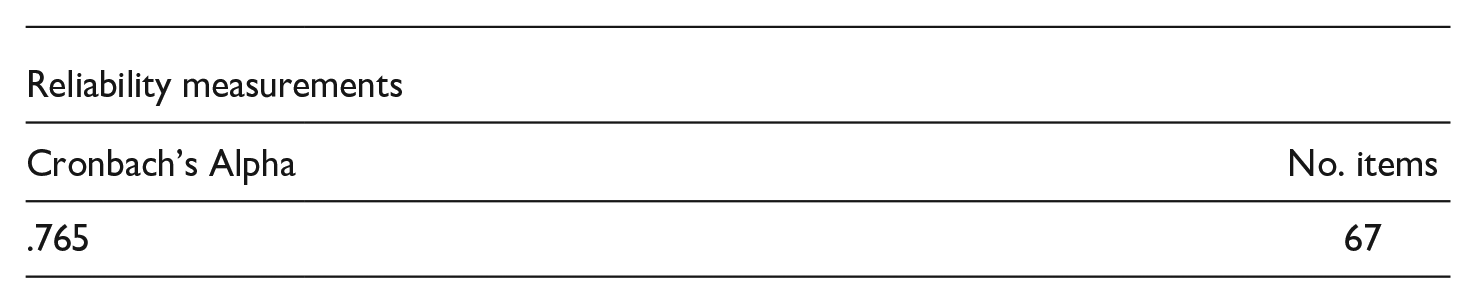
A total of 64 items were designed for the questionnaire variables, all of which were quantitative, and the Likert spectrum technique was used. After determining the required parameters of the questionnaire, its validity and reliability were confirmed. For assessing the validity of the questionnaire, both face validity and content validity methods were used; Cronbach’s alpha coefficient. The Cronbach’s alpha coefficient obtained for 67 questions is .765.
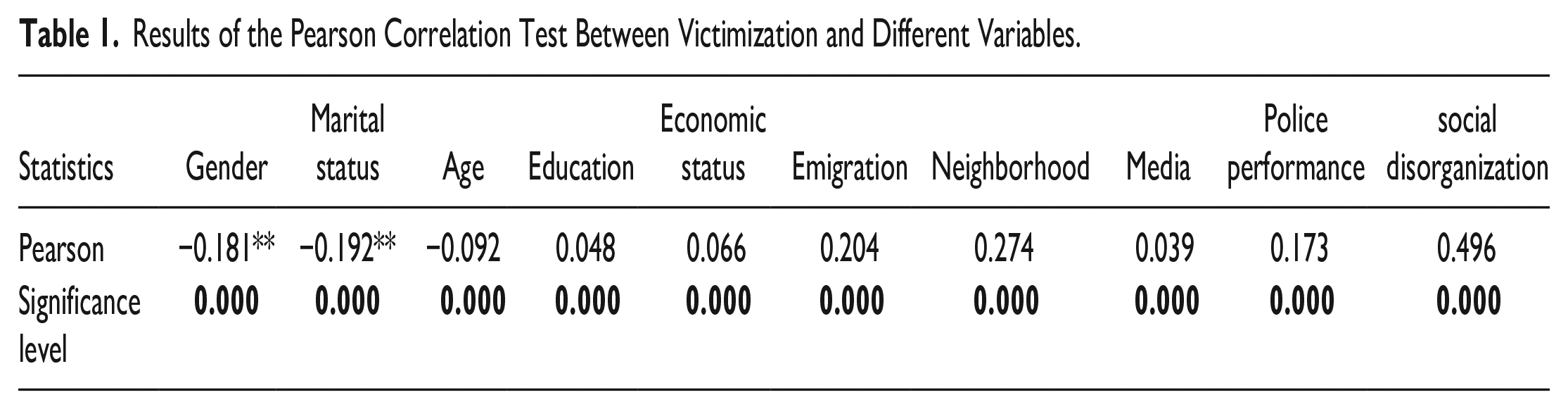
Eventually, to ensure the validity of the questionnaire developed by the researcher, approximately 30 questionnaires were given to the respondents as a pilot study, based on which some items were either modified or omitted. To ensure the comprehensibility of the items to the respondents, some explanations were added to the final version of the questionnaire. Finally, the questionnaires were completed anonymously by the respondents, and the collected data were analyzed using SPSS software. In addition, to examine the factors of victimization, that is, the relationships between victimization and other variables, the Pearson correlation test was used. Descriptive statistics were used to explain the data. Table 1 shows the results of this test.
Results of the Pearson Correlation Test Between Victimization and Different Variables.
Demographic Characteristics and Questionnaire
In this study, the required data were collected using survey documents. Approximately 285 individuals completed the questionnaires developed and distributed by the researchers of this study, including 176 males, 108 females, and one individual who left the gender option blank.
A structured questionnaire was used in this study. In some cases where respondents did not understand the questions for various reasons, the unclear questions were clarified by the author and then ticked by the respondent. The questionnaire consists of 13 items, with each item containing several questions. These items are divided into two parts: independent variables (3 items) and dependent variables (10 items):
(a) Independent Variable (victimization); for the independent variable of victimization, three items are considered, each containing several questions. Have the respondents been victims of a crime in the last 5 years? If yes, what crimes were they? Have any of the respondent's family members, friends, or acquaintances been victims of a crime in the past 5 years? If yes, what were the crimes? The third question is: What is the probability that you will be a victim of crimes such as robbery, extortion, murder, rape, insult, and other crimes in the next 10 years? For the answer, five possibilities (very high, high, medium, low, and very low) are considered. To determine the average victimization of people in the next decade, a minimum of 1 and a maximum of 5 were considered.
(b) Dependent Variables: This section contains 10 items, each containing several questions.
I. Gender (women (1) and men (2)).
II. Marital Status: We divided the marital status question into four categories (single, married, divorced, and widowed). Regarding marital status, 37.5% of respondents were single, 52.6% were married, 7.7% were widowed, and 0.7% were divorced. In addition, three respondents did not provide information on their marital status, and one respondent gave an incorrect answer.
III. Age: For this item, we divided the respondents into four categories: 18 to 30, 31 to 40, 50 to 41, and 50 years and older. Regarding age, the respondents were divided into four categories: 43.2% were between 18 and 30 years old, 37.2% were between 31 and 40 years old, 10.9% were between 41 and 50 years old, and 8.8% were over 50 years old.
IV. Educational Level (from elementary school to doctorate). In terms of educational level, respondents were divided into five groups: 23.9% had an elementary school degree, 15.1% had a high school degree, 38.9% had a bachelor’s degree, 18.6% had a master’s degree, 2.1% were doctoral students, and three people did not answer this question.
V. Economic status: We measured respondents’ economic status by residence, property ownership, income, and car ownership. We considered a minimum of 25 and a maximum of 100 people for each option, and in this way, we separated the rich from the poor residents of the thirteenth district of Kabul. Regarding economic status, 10.9% of the respondents were very poor, 21.8% were poor, 43.5% had average economic status, 20% were wealthy, and 3.9% were very rich.
VI. Emigration and Residence: We asked three questions about immigration. How long have the respondents lived in the area? If the residence was less than 5 years, what type of migration did respondents make in this area (from village to the city, city to city, within a city, and from city to village)? Furthermore, do many immigrants come and die in District 13 of Kabul every year? Regarding length of stay, 14.7%, 21.8%, 39.6%, and 23.2% of respondents had lived in the district for less than 1 year, 1 to 5 years, 5 to 10 years, and more than 10 years, respectively. Two respondents did not answer this question. For those who have lived in the 13th District of Kabul City for less than 5 years, 8.3%, 27.8%, 51.9%, and 12% moved from the village to the city, in the city, and from the city to the villages, respectively. Finally, for each option, we considered a minimum of 5 and a maximum of 20 to calculate the percentage of out-migration in the area, determine the total equivalent of out-migration, and evaluate its impact on the vulnerability of the respondents.
VII. Neighborhood: Eight questions were asked in the neighborhood survey, such as helping neighbors, visiting each other, visiting recreational facilities together, and entrusting children to neighbors. We considered five response options: very high, high, medium, low, and very low. To calculate the average of neighborhood relations with victimization, we considered a minimum of one and a maximum of five. Regarding neighborhood relationships, 0.4% of respondents indicated that their relationship with their neighborhood is very low, 12.6% described it as low, 47.7% as moderate, 32.6 % as high, and 4.6% indicated that such a relationship is very high; however, 2.1% of respondents gave an incorrect answer to this question.
VIII. Media: In the media item, we asked two questions: to what extent do respondents follow daily events and news from newspapers and magazines? And to what extent from TV and the Internet? We also considered five response options: very much, much, moderately, little, and very little. To calculate the neighborhood average, we considered a minimum of one and a maximum of five. In addition, 8.1%, 33.3%, 38.2%, 16.8%, and 3.5% of the respondents followed the news published in the media hardly, to some extent, moderately, a lot, and very much, respectively.
IX. Satisfaction With Police Performance: We asked these two questions to measure satisfaction with police knowledge. How good is the performance of the police in this area? In answering this question, we considered four options (very good, fairly good, fairly poor, and poor). Furthermore, how do respondents rate the efficiency of the police in this area? In answering this question, we considered four options (strongly agree, somewhat agree, somewhat disagree, and strongly disagree). Then, a minimum of 5 and a maximum of 20 responses for each option were obtained, and the percentage of satisfaction with police performance in this area was determined. A total of 62.5% of respondents rated police performance as good, 3.8% rated it as poor, and 0.7% of respondents did not give a correct answer to this question. Respondents indicated that 55.5% of the police services were helpful, 43.5% were useless, and 0.7% didn't give a correct answer to this question.
X. Social Disorganization: Ten different questions were asked about social disorganization, such as drug use or sale, sleeping caricaturists, drunkenness, beggars, dilapidated houses and broken walls, garbage, dark streets, and damage to public property to what extent. To answer these questions, we considered five options (very high, high, medium, low, and very low). A minimum of 1 and a maximum of 2 were considered to calculate the average value of social disorganization.
Sample Size and Statistical Population
The statistical population for this study included all Shiite Muslim minorities (including Hazaras and other Shiite ethnic groups) over 18 years of age living in District 13 of Kabul, Afghanistan. They were selected primarily for two reasons: heavier traffic in District 13 of Kabul than in other districts in the city.
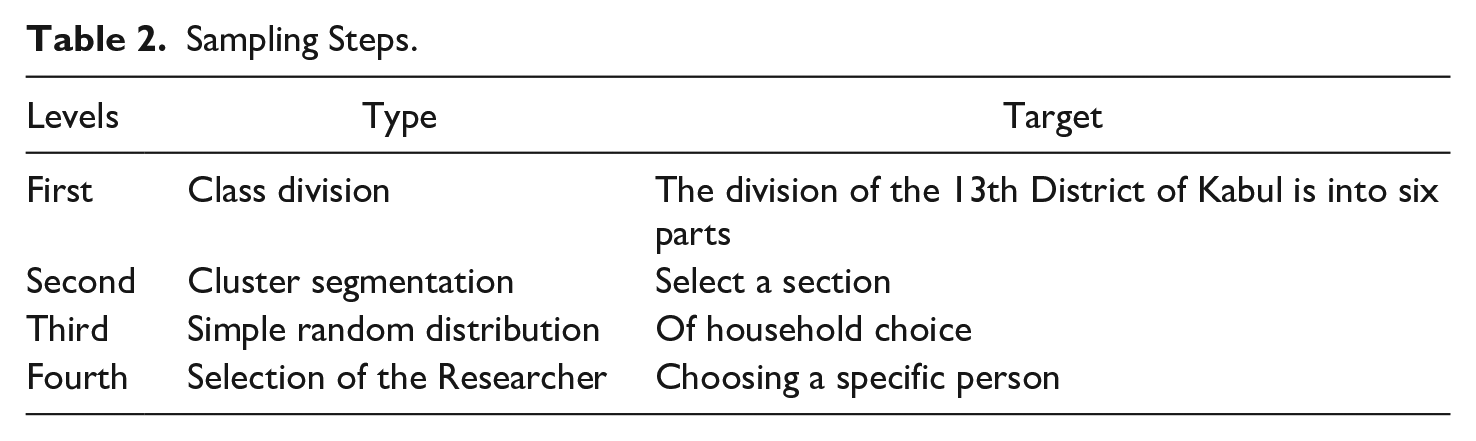
A multistage sampling method was used to determine the individuals for the sample. This method was chosen on the basis of factors such as the size and distribution of District 13 in Kabul and household size. Specifying the sample was considered to be the most appropriate method for conducting this survey. The method proceeded as follows: in the first phase, a stratified sampling method was used to divide District 13 of Kabul into smaller regions. In the second phase, a cluster sampling method was used to create a map of the areas and identify all the blocks, considering each section as a cluster. In the third phase, simple random sampling was used within these clusters to select the sampling units. Finally, in the last phase, the researcher chooses a specific person to ensure the diversity of the sample subjects. These sampling steps are shown in Table 2.
Sampling Steps.
We have divided District 13 of Kabul City into six different sections, marked in red on Map 1. A total of 60 people were selected to answer the questionnaire, but only about 47 people in each section showed interest in answering and completing the questionnaire. A total of 285 people completed the questionnaires.
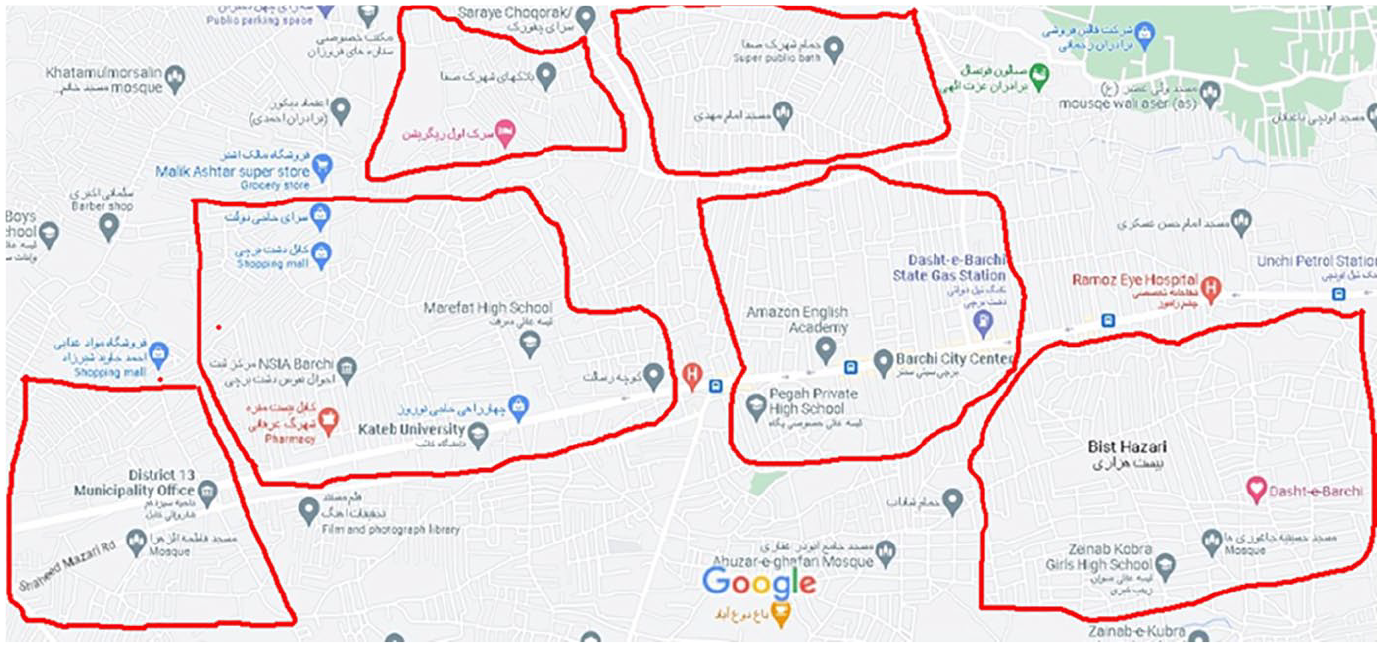
Areas where the questionnaire was distributed.
Introduction of Researched Localities
District 13 is a very densely populated area in the west of Kabul City, home to approximately 750,000 people and 66,000 families. It is bounded by Lake Paghman to the north, Kruqh Mountain to the south, the Sixth District to the east, and the Kabul-Kandahar highway to the west. In addition, more than 90% of the people living in District 13 of Kabul are Shiite. Migration from rural areas to urban areas and the return of immigrants from Iran and Pakistan are considered to be the two main reasons for the district’s high population density. The objective observations in the region also indicate physical and social chaos and irregularities in the thirteenth district. For example, street harassment, unnecessary roaming of people, and debris have been observed in many areas of this region. On the other hand, uncivilized practices such as littering in alleys and writing graffiti are standard in this district. Extortion, loitering, and drunken people commuting in public are common (Popal & Seydzadeh, 2021), making citizens afraid to go into narrow, dark alleys (Shafaei, 2014; Map 2).
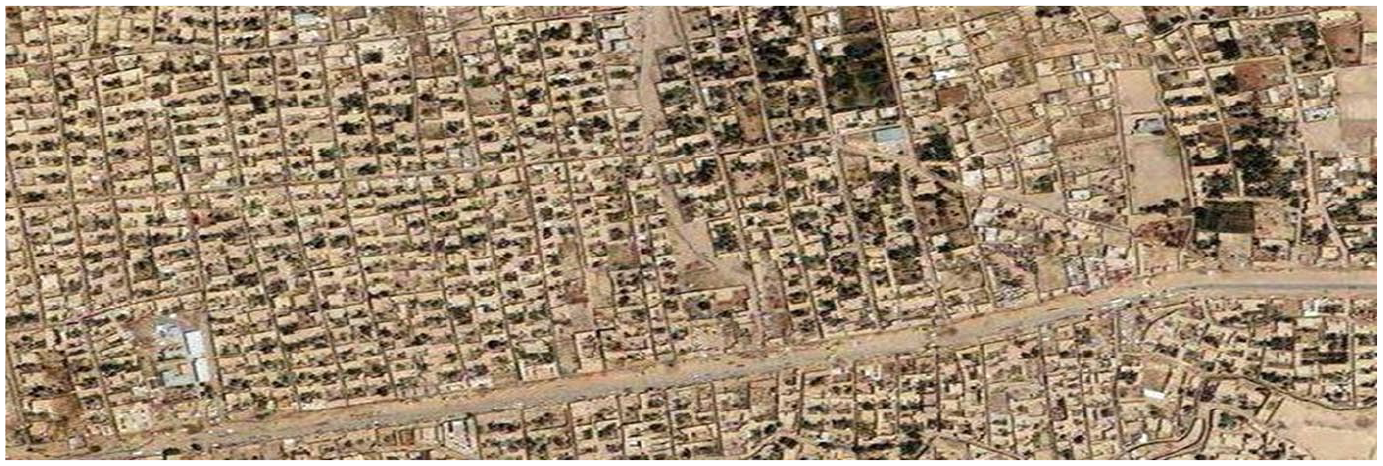
A view of unplanned district 13 of Kabul city.
Research Limitations
A limitation of current research on the victimization of Shiite Muslim minorities in Kabul is that the authors use different criteria to measure the extent of victimization. Since there is no globally accepted definition of victimization, another problem in the victimization of the Shiite Muslim minority in Kabul is that Afghanistan is a traditional and patriarchal society and women do not readily respond to questionnaires.
3-Rate of Victimization
Nine items were considered for investigating victimization over the last 5 years. Accordingly, 75.8% of the respondents and 80.4% of their family members were victims of victimization, mainly by being hit by strangers, pickpocketing, and street harassment. Look at the statistics of these crimes in Figure 1.
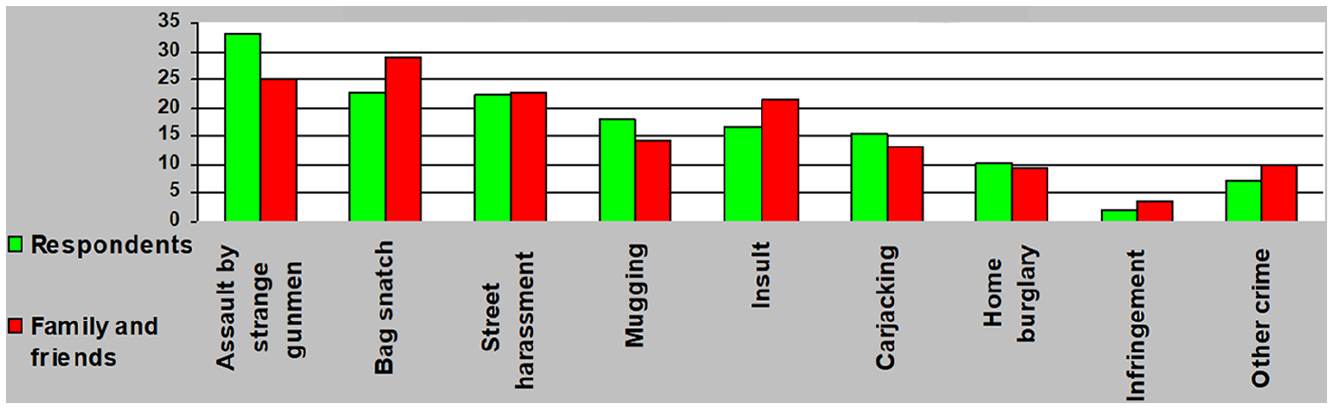
Victimization rate in the last 5 years.
In general, the probability rate of victimization for the next 10 years (ranging from minimum 1 to maximum 5) was found to be 3.41, which proved to be very high among the residents of District 13 of Kabul City. On the other hand, 4.6%, 40.4%, 47.0%, 6.3%, and 1.1% of the people were found to have been victimized by very high, high, moderate, low, and very low rates, respectively. To see these statistics, see Figure 2. Respondents also reported that within the next 10 years, they would probably be victims of carjacking, purse snatching, insulting, burglary, street harassment, banditry, kidnapping, fraud, assault and battery by strangers armed with weapons, illegal home invasion, murder, and rape or sexual assault on average 3.64%, 3.54%, 3.47%, 3.18%, 3.14%, 2.90%, 2.74%, 2.73%, 2.72%, 2.71%, 2.45%, and 2.21%, respectively.
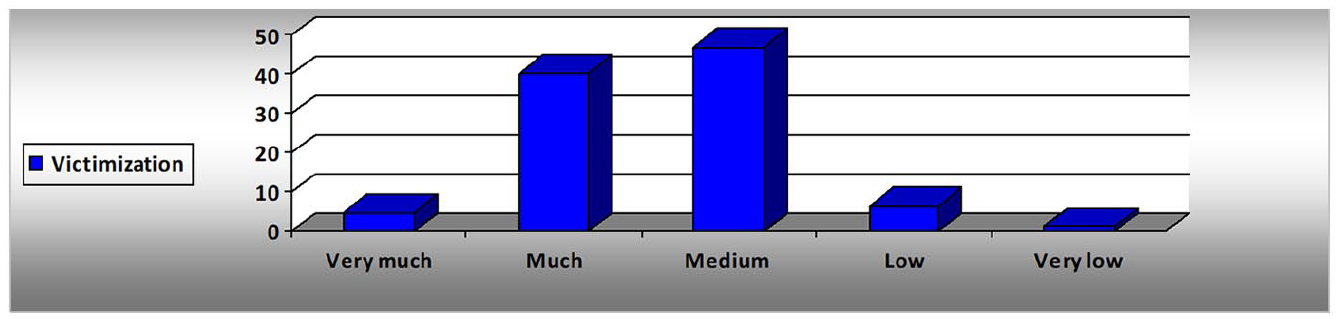
Total of victimization.
Findings and Results
This study investigated the victimization rate and factors involved in the victimization of Shiites in District 13 of Kabul, Afghanistan. Therefore, the significance level and correlation coefficient were determined using paired samples and Pearson’s test.
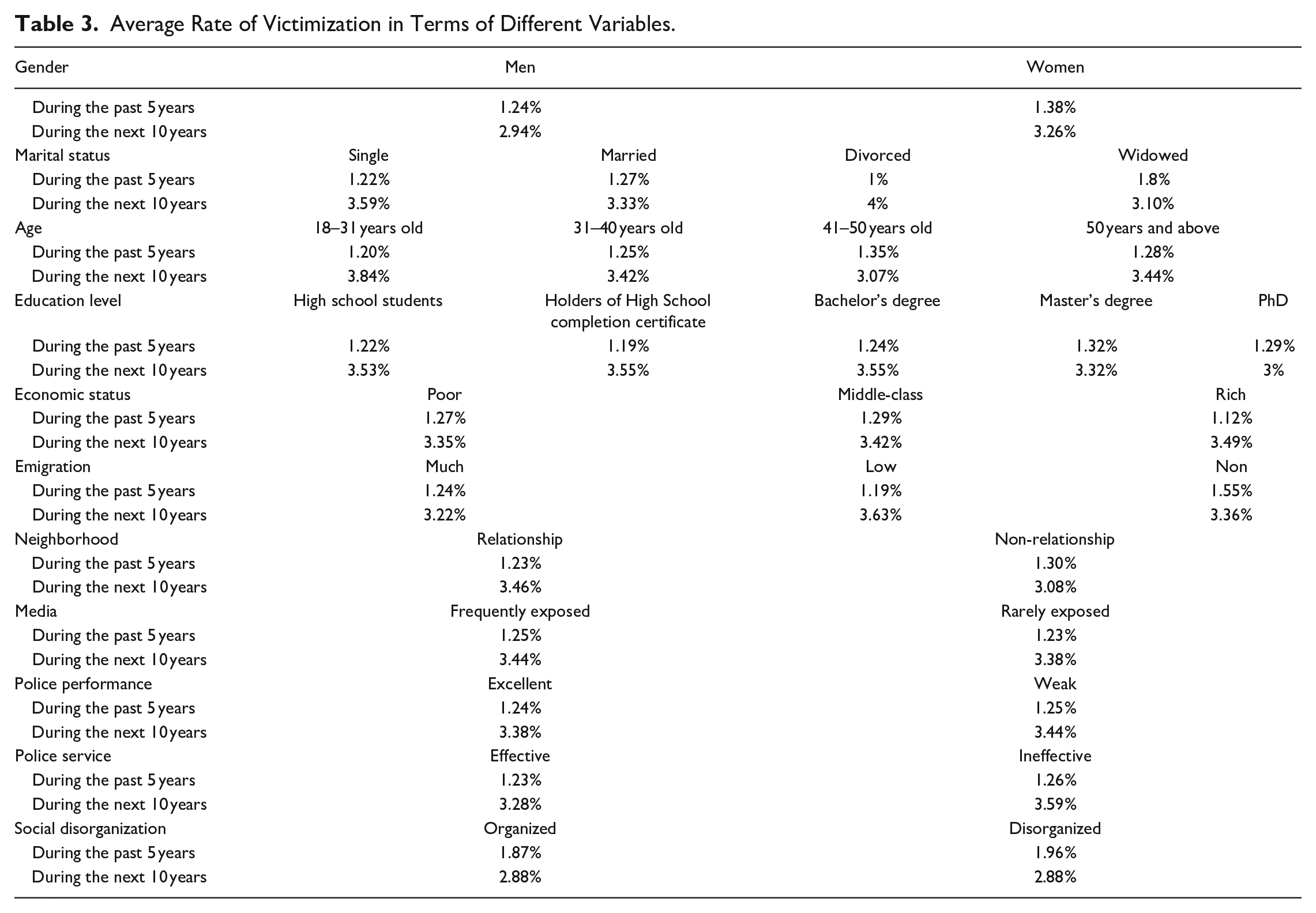
The study found that the most important demographic variables related to victimization were gender, marital status, age, education level, economic status, immigration, neighborhood relations, media role, police performance, and social disorganization. The average victimization rate of the Shiite minority in Kabul as a function of these variables is shown in Table 3 at the end of this section.
Average Rate of Victimization in Terms of Different Variables.
Gender
Gender plays a vital role in people’s activities and lifestyles. In contrast, men and women were usually exposed to different forms of social activities and expectations. For example, while men are expected to be aggressive and stubborn, women are expected to be obedient and passive (Billinkoff, 1995; Makepeace, 1999). However, in this study, women were found to be less likely to be victimized than men because they tend to be more protected and supported than men.
In addition, men typically spend more time outside the home interacting with peers and strangers (Hindelang et al., 1978; Janet & Heimer, 2009). Women typically assume responsibility for the household in adulthood. However, this assumption is not valid for all women worldwide. For example, according to some studies, women are more likely to be victimized than men because they are more vulnerable than men and cannot defend themselves against criminals (Alesha, 2019).
Overall, the average victimization rate in this study over the past 5 years (ranging from a minimum of 1 to a maximum of 2) was 1.38 for women and 1.24 for men. Accordingly, women were mainly victimized by crimes such as insults, street harassment, and pickpocketing. In contrast, men were mainly victims of car theft, residential burglary, and assault by armed strangers.
Generally, the average probability of victimization for women and men (from a minimum of 1 to a maximum of 5) over the next 10 years was 3.26 and 2.94, respectively. Women rated their probability of being victimized as very high, high, moderate, low, and very low at 7.7%, 30.7%, 57%, 7.5%, and 66.7%, respectively. In contrast, men rated their probability of being victimized as very high, high, moderate, low, and very low at 92.3%, 69.3%, 54.5%, 55.6%, and 33.3%, respectively.
As shown by the Pearson correlation test, there was a significant relationship between gender and risk of victimization, with the correlation coefficient and significance level being 181** and 0.000, respectively, indicating that females are more likely to be victimized than males, which is consistent with the results found by Alesha (2019).
Marital Status
Married people, who have more responsibilities than before, tend to spend more time at home than single people, especially if they have children. In addition, outdoor activities are usually performed in the presence of the couple or other married friends. Consequently, married people spend more time with their family members. Therefore, since married people spend less time in public places, it has been argued that their victimization rates are lower than those of single people (Dastile, 2004; Entorf, 2015). In this regard, Robin (2008) showed that divorced and single individuals have higher victimization rates than widowed and married individuals (Robin, 2008).
Regarding the marital status of the victims examined in this study, in the past 5 years, the average victimization rate found (from a minimum of 1 to a maximum of 2) was 1.22%, 1.27%, 1%, and 1.8% for single, married, divorced, and widowed individuals, respectively.
In addition, we found that single people were victims of assault and battery by stranger gunmen, carjacking, and insult; married people were victims of assault and battery by stranger gunmen, pickpocketing, and street harassment; divorced people were victims of street harassment, pickpocketing, and assault by stranger gunmen; and widows were mainly victims of street harassment, insulting, and pickpocketing.
In general, the average probability of being a victim of harassment in the next 10 years (from a minimum of 1 to a maximum of 5) was 3.59%, 3.33%, 4%, and 3.10% for single, married, divorced, and widowed persons, respectively. In addition, more than 30% of the married and zero percent of the divorced reported that they expected to become victims in the next decade years. In addition, more than 69% of single people said they were more likely than others to be victimized in the same period.
As the Pearson correlation test showed, there was a significant relationship between marital status and risk of victimization, with a correlation coefficient and significance level of −0.192** and 0.000, respectively, indicating that single individuals are more likely to be victimized than married individuals, consistent with the findings of Pearl and Entorf (2015).
Age
According to some studies, the negative consequences of victimization vary at different stages of life, becoming smaller as people reach adulthood. In other words, as age increases, the victimization rate decreases (Juliet Turanovic, 2015). Considering that children spend more time at home or school, it has been argued that young people are more likely to form new relationships with strangers and peers that can end in victimization. On the other hand, as people age, contact with others decreases, so older people are less likely to be victims of crime because their lifestyles make them unavailable as potential victims (Hindelang et al., 1978).
Regarding the age group, the overall victimization rate (from a minimum of 1 to a maximum of 2) in the last 5 years in the age groups 18–30 years, 31–40 years, 41–50 years, and 50 years and older was 1.20%, 1.25%, 1.35%, and 1.28%, respectively.
Based on this, 46% of respondents in the age group of 18–30 years and 0% of those 41 years and older consider the probability of being a victim in the next 10 years very high. In the age group of 31 to 40 years, 53% of the respondents considered the possibility of being a victim in the same period more than other age groups.
As the Pearson correlation test showed, there was a positive relationship between age and risk of victimization, with the correlation coefficient and significance level being −0.092 and 0.000, respectively, indicating that as age increases, the risk of victimization decreases, which is consistent with the findings of Juliet Turanovic (2015) and Handling (1978).
Education
Educational level plays an essential role in victimization. Studies show that people with higher education are much less likely to be victims than people with lower education levels (Makuba, 2019). Therefore, it is natural to consider an individual’s level of education as an essential indicator of their social lifestyle.
Regarding the level of education, we found that the overall victimization rate in the last 5 years (from a minimum of 1 to a maximum of 2) was 1.22%, 1.19%, 1.24%, 1.32%, and 1.29% for high school students, bachelor’s degree holders, master’s degree holders, and doctoral degree holders, respectively. Accordingly, baccalaureate degree holders were victims of insults, robberies, and rights violations; baccalaureate degree holders were victims of residential burglaries, pickpocketing, and street harassment; bachelor’s degree holders were victims of street harassment, insults, and assaults by strangers armed with weapons; Master’ss graduates were victims of street harassment, pickpocketing, and assault by stranger gunmen; and doctoral graduates were victims of residential burglaries, auto thefts, and robberies.
In addition, we found that the probability of victimization (from a minimum of 1 to a maximum of 5) among students and holders of high school diplomas, bachelor's, master's, and doctoral degrees in the next 10 years was 3.53%, 3.55%, 3.55%, 3.32%, and 3%, respectively.
Accordingly, more than 28% of high school students, more than 8% of respondents with a baccalaureate degree, more than 16% of holders of a master’s degree, and more than 14% of respondents with a doctorate rated their likelihood of becoming a victim in the next 10 years as high and very high. However, bachelor’s degree holders are predicted to be more likely to be victimized (69%) than those at other educational levels.
The Pearson correlation test revealed a significant positive correlation between education level and victimization risk, with a correlation coefficient and significance level of 0.048 and 0.000, respectively, indicating that educated individuals are less likely to be victims than uneducated individuals, consistent with the findings of Chrisantus Makuba (2019).
Economic Status
Economic studies and surveys show that personal income plays an essential role in the risk of victimization, with some scholars signifying that rich and employed people are more likely to be victims of crime than poor and unemployed people (Glaeser & Sacerdote, 1999). However, the opposite is true, as poor people use public transportation for their daily commute and live in high-crime areas. In contrast, rich people live in more prestigious homes and use personal vehicles (Hindelang et al., 1978). In addition, a study conducted by Taylor-Butss (2009) in Canada found that low-income Canadian families are more likely to be victims of crime than higher-income families (Taylor-Butss, 2009). The average victimization rate of economic status (from a minimum of 1 to a maximum of 2) over the past 5 years for poor, middle, and rich people was 1.27%, 1.29%, and 1.12%, respectively.
Accordingly, rich people were victims of insults, assaults, and assaults by strange gunmen; middle-class people were victims of car thefts, burglaries, and assaults by strange gunmen; and poor people were victims of assaults, street harassment, and pickpocketing.
In general, the average victimization rate for the next 10 years (from a minimum of 1 to a maximum of 5) was 3.35%, 3.42%, and 3.49% for the poor, middle class, and rich, respectively. Accordingly, more than 30% of poor people and more than 28% of rich people estimated their victimization probability to be very high. However, more than 46% of middle-class people reported that they would be victims of crime in the next 10 years and thus were more likely to be victims of various crimes than other social classes.
As the Pearson correlation test showed, there was a significant positive relationship between economic status and victimization risk, with the correlation coefficient and significance level being 0.066 and 0.000, respectively, indicating that rich people are more likely to be victimized than poor people, which is consistent with the findings of Glaeser and Sacerdot (1999). Insecurity in Kabul appears to be the main reason for the higher risk of victimization among the rich than among the poor.
Immigration
According to some studies, immigration plays an essential role in the risk of victimization. For example, Nunziata (2015) found no relationship between immigration and victimization and showed that increasing immigration rates would increase the risk of victimization. However, there appears to be a direct link between immigration and victimization, with the likelihood of victimization increasing as immigration rates increase because immigrants are exposed to different cultures, languages, lifestyles, norms, and social values due to the changed environment (Connie Kuo, 2008). For example, Peguero and Williams (2011) have shown that young immigrants are exposed to bullying at school.
The overall average of victimization in the past 5 years (from a minimum of 1 to a maximum of 2) was 1.24% for people who considered the immigration rate in their area to be very high, 1.19% for people who considered the immigration rate in their neighborhood to be low, and 1.55% in areas where there had been no immigration. Accordingly, in areas with a high rate of immigration, people were victimized mainly by assault, residential burglary, and street harassment. In regions with a low rate of immigration, people were victimized mainly by insults, street harassment, and residential burglary. In contrast, in non-immigrant regions, residents were victims of street harassment, assault, and purse snatching. The statistics of these crimes are shown in Figure 3.
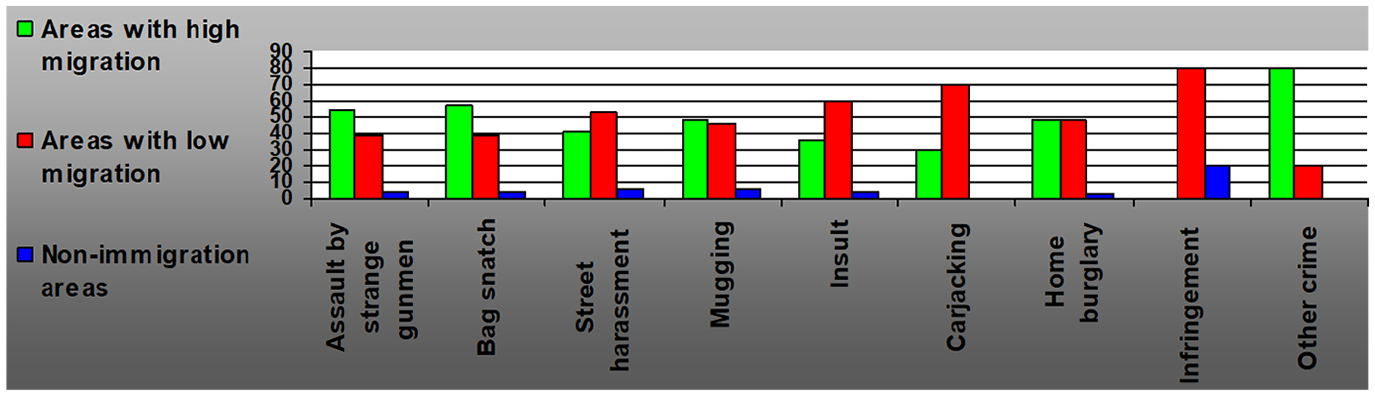
Relationship between migration and victimization rates.
On the other hand, the average overall rate of victimization in the next 10 years (from a minimum of 1 to a maximum of 5) was found to be 3.22%, 3.63%, and 3% in regions with high, low, and no migration, respectively. Accordingly, residents of regions with many immigrants estimated their probability of being victimized in the next 10 years to be more than 31%, whereas residents of regions with no immigrants estimated the rate to be more than 7%. In contrast, residents of regions with few immigrants estimated their likelihood of victimization to be more than 63%. These statistics are shown in Figure 4.
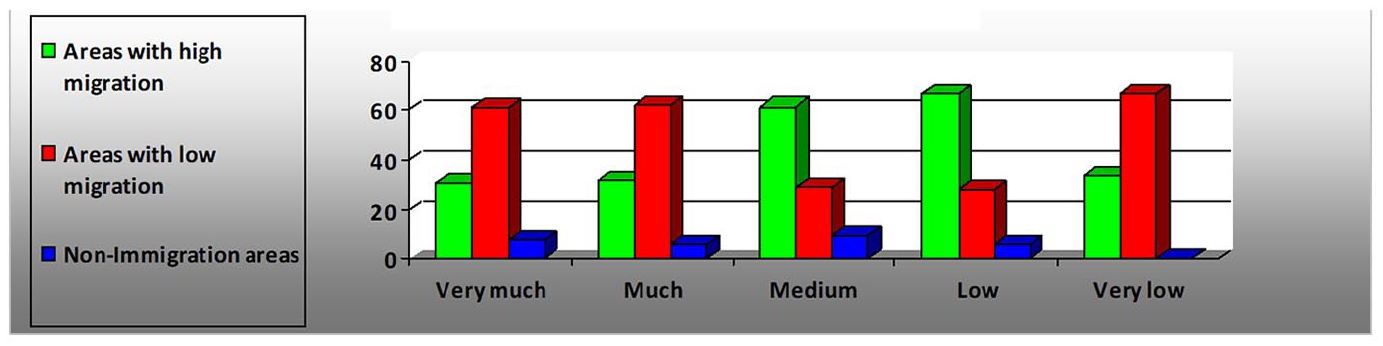
Percentage of victimization and migration.
As evidenced by the Pearson correlation test, there is a significant relationship between immigration and victimization risk, with correlation coefficient and significance levels of 0.204** and 0.000, respectively, indicating that in the last 5 years, victimization rates have been much higher in neighborhoods with high immigration capacity than in neighborhoods with low immigration capacity, which is consistent with the results found by Nunziata (2015). However, over the next decade, people are more likely to be victimized in neighborhoods with lower immigrant populations than in neighborhoods with higher immigrant populations, which is consistent with the findings of Connie Kuo (2008).
Neighborhood
Neighborhood relations play a crucial role in victimization, with some studies showing an inverse correlation between neighborhood relations and victimization, that is, the risk of victimization decreases when trust and solidarity among neighbors increase and vice versa (Gibson, 2012). In addition, some other studies have found that people living in neighborhoods with high poverty, lack of trust and solidarity, and ethnic prejudice are more vulnerable to victimization (Sampson & Wooldredge, 1987; Rountree et al., 1994).
In terms of relationships with neighbors, the average victimization rate over the past 5 years (from a minimum of 1 to a maximum of 2) was 1.23% in areas where people had a good relationship with their neighbors and 1.30% in regions where people did not have a relationship with their neighbors. Accordingly, people who had a relationship with their neighbors were mainly victims of street harassment, pickpocketing, and assault by stranger gunmen. In contrast, people who did not have a relationship with their neighbors were victims of pickpocketing, residential burglary, and robbery.
In addition, the average probability of victimization over the next 10 years (from a minimum of 1 to a maximum of 5) was 3.46% in areas where people had a good relationship with their neighbors and 3.08% for those who did not have a relationship with their neighbors. Accordingly, more than 91% of people who had a good relationship with their neighbors and 8% of residents who did not have a relationship with their neighbors rated their probability of victimization as very high.
As the Pearson correlation test showed, there was a significant positive relationship between neighbor relationship and victimization risk, with the correlation coefficient and significance level being 0.274** and 0.000, respectively, indicating that victimization risk is much lower in residential areas where people establish a good relationship with their neighbors than in areas where there is a poor relationship between neighbors, which is consistent with the findings of Gibson (2012).
Media
In this context, some studies argue that social media acts as a catalyst for people to meet and get to know each other, especially young people. For example, studies by Fansher and Randa (2019) have shown that most people were victims of cybertalk, of which 13% reported hypersexual assault.
In terms of media exposure, the average victimization rate in the past 5 years (from a minimum of 1 to a maximum of 2) was 1.23% for those who had rarely been exposed to the media and 1.25% for those who had frequently been exposed to the media. Accordingly, those respondents rarely in contact with the media were the victims of car theft, house robbery, and pickpocketing. In contrast, respondents in frequent contact with the media were victims of assaults, robberies, and attacks by armed strangers.
In general, the average probability of victimization in the next 10 years (from a minimum of 1 to a maximum of 5) was 3.38% for those who used the media infrequently and 3.44% for those who used the media frequently. Accordingly, those who followed the news media very closely estimated their probability of victimization at over 66% and those who did so infrequently at 61%, higher than others.
As the Pearson correlation test showed, there was a significant relationship between the role of media exposure and victimization, with the correlation coefficient and significance level being 0.039 and 0.000, respectively, indicating that the risk of victimization increases with increasing levels of media exposure.
Police Performance
Although crime reduction is one of the most essential tasks of the police, it can also be an indicator of police performance. According to the results of various studies, in addition to factors such as educational level, economic status, and age, satisfaction with police performance could have a significant impact on victimization. In this regard, there appears to be an inverse relationship between satisfaction with police performance and risk of victimization, with the likelihood of victimization decreasing as satisfaction with police performance increases and vice versa (Ashcroft et al., 2003).
Concerning police performance, the average victimization rate over the past 5 years (from a minimum of 1 to a maximum of 2) was 1.23% and 1.26% for those who rated police performance positively and negatively, respectively. Accordingly, those who thought police performance was poor were mainly victims of residential burglaries, insults, and assaults by strangers armed with weapons. On the other hand, those who thought police performance was positive were mainly victims of assault, street harassment, pickpocketing, and purse snatching.
Generally, the average probability of victimization over the next 10 years (ranging from a minimum of 1 to a maximum of 5) was 3.32% and 3.45%, respectively. In addition, those who rated police performance positively and negatively predicted their probability of victimization over the next decade at 43% and 57%, respectively. The average probability of victimization within the next decade (from a minimum of 1 to a maximum of 3) was 3.28% and 3.59% for those who rated police performance as satisfactory and poor, respectively. In this context, 30% of the respondents with a positive evaluation of the police performance and more than 69% of the respondents with poor performance of the police predicted that they would be victims in the future.
As the Pearson correlation test showed, there was a significant positive relationship between police performance and risk of victimization, with a correlation coefficient and significance level of 0.173** and 0.000, respectively, indicating that individuals who are satisfied with police performance and services are less likely to be victimized than those who are not, which is consistent with Ashcroft et al.’s (2003) findings.
Social Disorganization
Social disorganization is another factor that plays a critical role in the victimization of individuals and has various adverse effects on adolescent mental health. In other words: those who live in neighborhoods where dilapidated houses, graffiti, alcohol, and drug addiction are prevalent have a higher risk of victimization. According to the results of some studies, there is a direct relationship between social disorganization and victimization, with the risk of victimization increasing with the degree of social disorganization and vice versa (Turner et al., 2013).
Regarding the social disorganization variable, the average overall rate of victimization in the past 5 years (ranging from a minimum of 1 to a maximum of 2) was higher among those who considered the thirteenth district a socially disorganized area. Accordingly, those who considered the thirteenth district a socially disorganized area were mainly victims of muggings, street harassment, and residential burglaries; those who did not consider the District a socially disorganized area were victims of pickpocketing, car theft, and street harassment.
Overall, the average probability of victimization over the next 10 years (ranging from a minimum of 1 to a maximum of 5) was 3.45% for those who considered District 13 of Kabul City to be a socially disordered area and 2.88% for those who did not. Accordingly, those who considered the area to be socially disturbed predicted a probability of victimization of 98% and 1% within the next 10 years, respectively.
As the Pearson correlation test showed, there was a significant relationship between social disorder and risk of victimization, with the correlation coefficient and significance level being 0.496** and 0.000, respectively, indicating that those who view their neighborhood as socially disordered are more likely to be victimized than those who do not, consistent with the findings of Turner et al. Consider the average victimization of the Shiite minority in Kabul by different variables in Table 3.
Conclusions and Suggestions
The analysis of the data collected in this study revealed that the victimization rate in District 13 of Kabul City is very high. For example, it was found that more than 75% of the study participants and more than 80% of their family members and friends had been victims of various crimes in the past 5 years. In addition, participants indicated that the probability of becoming a victim of a crime in the next 10 years was 3.41% (with a range from a minimum of 1 to a maximum of 5). On the other hand, factors such as gender, marital status, age, economic status, education level, immigration, neighborhood relations, media exposure, police performance and services, and social disorganization were found to be involved in the increased victimization rate. Therefore, considering the alarming victimization rate in District 13 of Kabul City, the following suggestions are made:
1- In this study, it was found that women are more likely to be victimized than men. Therefore, women have to undergo effective awareness programs. Avoid visiting crowded, remote, dark, and dead-end streets, and refrain from using private transportation.
2- The results of this study show that people are not satisfied with the performance and services of the police and consider the weak performance of the police as one of the factors that lead them to become victims themselves. Therefore, we recommend that police patrols and security cameras be increased in different parts of the thirteenth district of Kabul City.
3- The study found that social disorganization is the main reason for the highest average victimization rate. Therefore, the 13th District Municipality, municipal authorities, and other responsible institutions must focus on urban issues, including cleaning, demolishing abandoned buildings, and improving the environment.
4- Since residents of Kabul’s thirteenth district cited poor neighborhood relations as a practical factor in their victimization, the researchers recommend that the municipality rely on influential local programs, civil society capacity, and citizen responses to address the problem.
5- This study was limited to the problem of victimization in District 13 of Kabul City. Therefore, more frequent studies should be conducted, and more accurate information must be published as a survey about the victimization rate and the influential factors of victimization.
Footnotes
Declaration of Conflicting Interests
The author(s) declared no potential conflicts of interest with respect to the research, authorship, and/or publication of this article.
Funding
The author(s) received no financial support for the research, authorship, and/or publication of this article.
