







Abstract
This Rapid Evidence Assessment investigates the risk, protective, and responsivity factors for children who commit crime to inform the design and delivery of interventions. Eligible studies published between 2015 and 2025 were searched for and assessed using the EPPI Centre Weight of Evidence framework. Thirty studies of mainly medium to medium-high quality were included. The findings identify social, biological, and psychological factors, each assessed as risk, protective, or responsivity factors, and as being well-evidenced, moderately-evidenced, or indicative but insufficiently-evidenced. The findings suggest focussing on the following areas to support desistance: developing pro-social peer associations, addressing substance misuse, managing impulsivity, overcoming difficulties with education/employment, support with adverse experiences/trauma, support with special educational needs, strengthening positive family relationships, addressing anti-social personality traits, and addressing antisocial attitudes. Priority responsivity factors include the experience of past trauma, mental health difficulties, physical health difficulties (including traumatic brain injury), psychosocial immaturity, and special educational needs.
Plain Language Summary
This research looked at recent high-quality studies to find out what the risk, responsivity, and protective factors of children who commit crime are. Thirty studies published between 2015 and 2025 were reviewed and social, biological, and psychological factors were identified. Factors were judged on how strong the evidence supporting them was, and grouped into categories of well-evidenced, moderately-evidenced, or insufficiently-evidenced. The findings suggest focussing on the following areas to support children to move away from crime: developing positive friendship groups, treating drug and alcohol misuse, improving self-control, gaining education/employment, help with traumatic experiences, support with special educational needs, developing positive family relationships, addressing anti-social personality traits, and addressing criminal attitudes, To work effectively with children, the following factors should be accounted for: the experience of past trauma, mental health difficulties, physical health difficulties, psychosocial immaturity, and special educational needs.
Introduction
In England and Wales, children committing crime continues to be a significant issue. In the most recently published statistics (year ending March 2024), 58,899 children were arrested, resulting in approximately 18,000 court proceedings, and around 13,000 court sentences (Youth Justice Board [YJB], 2025). Approximately 9,000 children were given community sentences, 660 were given custodial sentences, and just over 3,000 were given other court sentences. The proven reoffending rate of children in England and Wales, as of March 2023, was 32.5% which represents a 0.3% point increase from the previous year. To effectively tackle this issue, and improve outcomes for children and society more widely, it is crucial that the justice system understands what works effectively to support children to move away from crime.
Early work by Cullen, Gendreau, and colleagues played a key role in challenging the ‘nothing works’ claims that were prevalent in the 1970s and 1980s (Cullen, 2013). A growing body of large-scale reviews and meta-analyses demonstrated that well-designed interventions can achieve meaningful reductions in recidivism, when they target empirically supported risk factors of recidivism and when delivered with appropriate intensity and quality (Andrews et al., 1990; Cullen & Gendreau, 2000). Meta-analytic evidence further identified the strongest predictors of reoffending to include criminal history/history of antisocial behaviour, age/gender/race, and family factors (Gendreau et al., 1996). These studies provided the basis for the Risk, Needs, and Responsivity Model (RNR; Bonta & Andrews, 2024), which has since been widely adopted in both adult and youth criminal justice systems internationally in the assessment of risk of reoffending and design of interventions to reduce this risk. Three core aspects of this model include the matching of interventions to the likelihood of reoffending (risk principle), targeting of criminogenic needs (need principle), and ensuring responsivity to individuals’ needs, both specifically and generally, by adopting methods which effectively influence behaviour, and are tailored to the characteristics of the individuals taking part (responsivity principle). Research translating these principles into practice further demonstrated that interventions which fail to adhere to them are often ineffective and may even increase recidivism (Latessa et al., 2002; Lowenkamp et al., 2006; Lowenkamp & Latessa, 2004).
While a recent umbrella review cast doubt on the empirical grounding of the RNR Model (Fazel et al., 2024), that review’s findings have been since criticised on the basis of omissions, errors, and misinterpretations, resulting in what was described as an unfounded undermining of the ‘most soundly based and useful guide available in the field of criminal justice rehabilitation’ (J. McGuire et al., 2025, p. 12). Collectively, the large body of international evidence relating to RNR, albeit not without its limitations, provides good support for the Model – when interventions are designed and implemented according to these principles, they can effectively reduce reoffending (J. McGuire et al., 2025).
However, the majority of this research has been conducted with adults; comparatively less has focussed on children. A child-focussed evidence base is growing though. Findings include the identification of many similar risk factors as identified for adults, such as criminal history, aggression, emotional and behavioural problems, antisocial attitudes, and substance misuse (e.g., Assink et al., 2015). The evidence base also includes, for example, some systematic reviews and Rapid Evidence Assessments (REAs) which suggest that the application of the RNR principles to interventions with children increases their effectiveness (e.g., Adler et al., 2016; Baglivio et al., 2018; Barnett et al., 2026; Pooley, 2020). Importantly though, the existing empirical literature often contains greater focus on risk factors, with relatively limited attention given to protective and responsivity factors. Several relatively recent studies highlight the importance of researchers and clinicians paying greater attention to identifying and accounting for these (e.g., Brogan et al., 2015; Hazel & Bateman, 2021).
This recommendation aligns well with a shift over the last 20 years in England and Wales in not just focussing on what reduces risk, but also what promotes desistance by emphasising the importance of the social context, identity development, and wider factors which influence outcomes. The approach taken in response to youth offending has also moved away from targeting and managing individual-level, predominantly psychological, risk factors for offending, and towards a more contextual understanding of children’s offending, taking into account their social circumstances and stage of development (R. Smith & Gray, 2019). The Child First model of practice adopted by the Youth Justice Board (YJB) in England and Wales emphasises, amongst other central tenets, that practice should be child-friendly and developmentally appropriate, foster a pro-social identity, and should focus on the future and on building on strengths, in line with desistance theory (YJB, 2024). Both observations of the evidence base, and this shift in national approach, reinforces the need for a less narrow focus when working to understand the range of factors contributing to children engaging with crime, and to the importance of focussing on protective factors as well as risk factors.
Whilst the RNR model and the Child First model have differing foci, recent arguments have been well made for the need to bring such frameworks together and treat them as complementary rather than competing (Maruna & Mann, 2019; Willis & Ward, 2024); addressing risk alongside strengthening protective and strengths-based factors seems to be central to supporting people to sustain crime-free lives. This position is reinforced by Case and Browning’s (2021) synthesis of the Child First evidence base, which argues that both risk and desistance are important for understanding children’s offending, but that they should not be approached in the same way as for adults. The authors highlight that children’s risk is changeable and linked to their development, while desistance is influenced by maturation, identity development, and wider relationships. They caution against approaches for children which focus too heavily on risk, instead indicating that attention should be given to both risk and strengths-based, future-focussed support.
Research Context and Aim
The Youth Custody Service (YCS) within His Majesty’s Prison and Probation Service accommodates all children (aged 10–18 years) in custody across England and Wales. As with services for adults, the YCS protects the public by holding those in custody as directed by the Courts whilst also providing a safe environment which promotes desistance from offending upon release. In addition, however, the YCS has a legal duty to promote and protect the welfare and well-being of every child in custody (regardless of whether they are remanded or sentenced); this includes supporting their healthy development into adulthood. All services must therefore be responsive to the specific needs of this cohort of developing adolescents, with the ultimate aim of improving their outcomes.
One area of service includes the provision of psychologically-informed interventions designed in accordance with up-to-date and robust empirical evidence. Such interventions include those specifically designed to address offending behaviour, reduce reoffending, and promote desistance from crime after release. They also include interventions that may meet the welfare needs of children in custody, and therefore better prepare them for a pro-social adulthood and/or enable engagement in other positive developmental opportunities, interventions, and activities. Such interventions include those which apply psychological theory with the intention of increasing likelihood of positive behaviour whilst in custody and successful engagement in other interventions or pro-social activities (which may in turn contribute to desistance and reductions in reoffending).
With these duties and services in mind, the YCS commissioned two REAs in 2025 to inform their review and design of the psychological interventions on offer to children in their care. The first, which is the focus of this article, to synthesise the best quality and most recent evidence regarding the risk, protective, and responsivity factors of children who commit crime, with a particular focus on children in England and Wales. This review attempts to make a distinct contribution by synthesising the most recent evidence within the evolving social and developmental context of children’s lives, and by examining both risk and protective factors – the latter of which have been comparatively neglected in prior reviews that have largely focussed on risk. The second, sister REA examined the characteristics of tertiary psychological interventions that work to reduce reoffending among children in forensic settings, and their moderators of effectiveness (Barnett et al., 2026).
Method
REAs provide a way of identifying evidence relevant to a policy question quickly, and weighting that evidence to give a view on its adequacy (Varker et al., 2015). While REAs use a similar methodology to systematic reviews, they are completed over a shorter period of time, tend to have a narrower focus, and concessions are made on the breadth and/or depth of studies included.
Inclusion and Exclusion Criteria
The following inclusion criteria were systematically applied: (a) published in English in peer reviewed journals between 1st January 2015 and 1st January 2025; (b) use of qualitative, quantitative, or mixed research methods; (c) examination of risk factors, protective factors, desistance-related factors, strengths, or responsivity factors, for people aged 10–18 years. For the purpose of generalisability to an English and Welsh context, studies were also required to (d) originate from Western Europe, North America, or Australasia. The 10-year publication window was applied to balance comprehensiveness with relevance. Limiting inclusion to recent studies intended to ensure that findings were more likely aligned with current societal conditions and contemporary childhood experiences, while also maintaining a manageable and focussed evidence base within the constraints of a rapid review.
Search Strategy
The search was conducted in February 2025, employing multiple scholarly databases via EBSCO Academic. The search terms used are located in the Supplemental Appendix. A manual search was also executed to identify any articles that may not have been captured through the initial database search. This included reviewing the reference lists of key papers identified through the initial search, as well as searching numerous criminal justice related websites (e.g., Gov.uk and College of Policing), Google Scholar, and online research libraries (e.g., Cochrane Library and Campbell Collaboration).
Study Selection
Two independent researchers screened the studies for eligibility. Figure 1 provides details of the results of the process. The initial searches returned 3,022 papers. Screening of the titles of those papers identified 545 for an abstract review. Three hundred and thirty-three papers were excluded based on their abstracts; the remaining 45 were then subject to a full text review. Thirty-four of these were subject to full quality assessment.
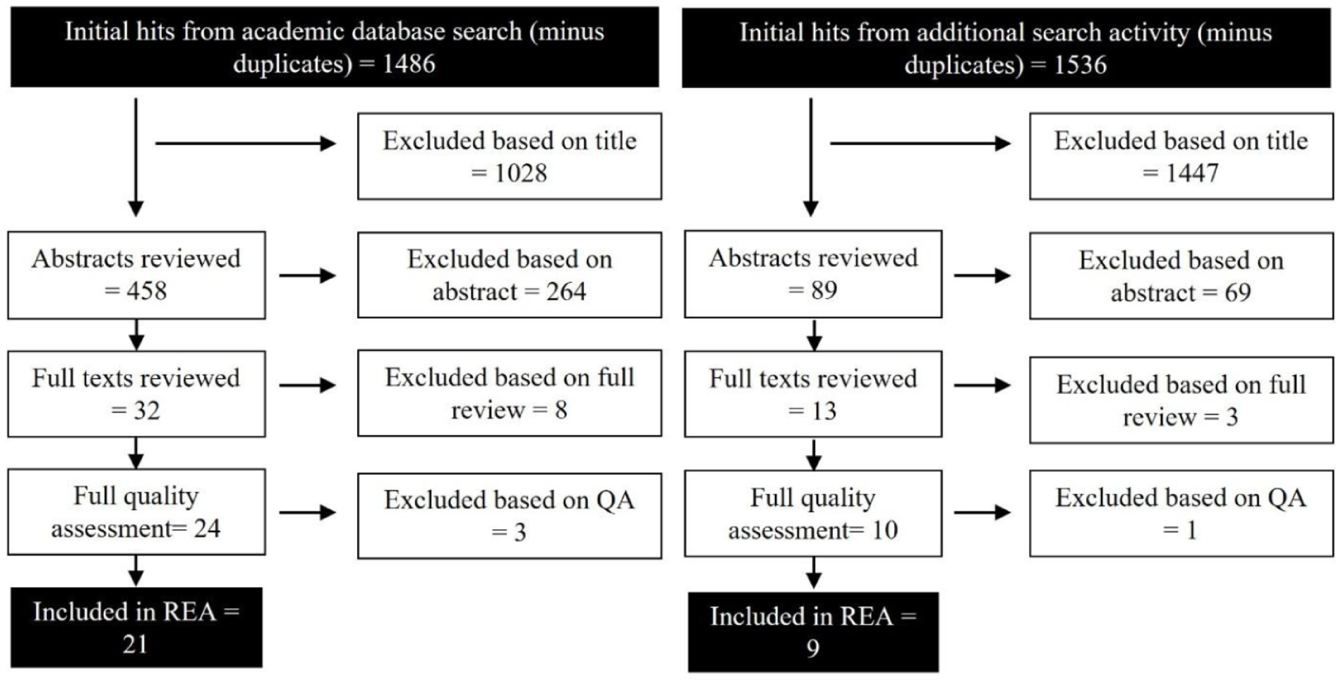
Publications identified and retained at each stage of the review process (final N = 30).
Quality Appraisal
Data were extracted from the assessed studies using a customised data extraction tool based on that developed by Barnett et al. (2021). All authors reviewed the tool to ensure there was consistency in interpretation of meaning between reviewers. Research quality was assessed using the EPPI Centre Weight of Evidence framework (Gough, 2007), considering methodological quality (A), methodological relevance (B), topic relevance (C), and an overall assessment (D). As part of the EPPI assessment, methodological quality was assessed using the JBI Critical Appraisal Checklist for Systematic Reviews and Research Syntheses (Aromataris et al., 2015), the Cabinet Office Quality Framework (Spencer et al., 2003), and the Mixed Methods Appraisal Tool (Hong et al., 2018). Studies had to be assessed as at least medium for methodological quality (EPPI A) as well as overall (EPPI D) for inclusion.
Four researchers independently conducted the quality assessments. The first 10 percent were subjected to inter-rater reliability checks by two researchers working independently from each other, and scoring differences were resolved through discussion and consensus between the whole research team. This process was used to ensure a consistent and systematic approach to inclusion decisions, in the absence of a formal inter-rater reliability coefficient. Overall, there was a high level of consensus between ratings; discrepancies were minimal – only one rating (EPPI D) was inconsistently scored. Four studies were excluded based on their quality assessment, resulting in 30 papers of sufficient quality for inclusion in the REA.
Analysis
The data from each study were drawn together from the extraction table (see Supplemental Appendix) and findings were subject to narrative synthesis, which is commonly used to communicate findings for policy and practice (Popay et al., 2006). The findings are structured in this article by domain (social and background, psychological, and biological). It should be noted that some factors could potentially sit in more than one domain (e.g., psychosocial maturity can be considered both psychological and biological), but to avoid repetition each only appears once. The factors reported reflect the measures and variables examined in the reviewed studies. While some conceptual overlap between factors is acknowledged, efforts were made to avoid double counting (e.g., impulsivity is presented here under self-management, although it also relates conceptually to psychosocial maturity).
For this REA, risk factors are broadly defined as factors, static or dynamic, which significantly predict future recidivism. Those factors which are dynamic (and therefore amenable to change and treatment intervention) must demonstrate change, and reductions in these must lead to simultaneous reductions in level of risk for future recidivism (Serin et al., 2016). Protective factors are broadly defined as those which significantly enhance an individual’s success in desisting from future crime. This definition does not identify protective factors as merely the opposite/absence of risk factors (e.g., presence of anti-social peers as a risk factor and absence of anti-social peers as a protective factor) though they can be; protective factors are also the presence of positive attributes that protect people from further offending (e.g., presence of pro-social peers). In this definition, protective factors act as buffers against risk. Responsivity factors, in line with the RNR model of rehabilitation (Bonta & Andrews, 2024), are defined as those which need to be considered when deciding how rehabilitation should be delivered. Responsivity therefore includes taking into account and tailoring services to the needs, motivations, and strengths of individuals.
Strength of evidence determinations, for risk and protective factors, were made based on the number of studies supporting each factor (including those comprising meta-analyses, systematic, and scoping reviews), the methodological quality (weight) of those studies, and the consistency/inconsistency in reported findings. Independence of data was also considered – where more than one study for a factor used Pathways to Desistance data (see study chracteristics section for more information), this was counted only once. Factors were classified as either: (1) well-evidenced: those for which there were numerous good quality studies, the majority of which supported the factor being criminogenic or protective, (2) moderately-evidenced: those for which there was good (volume and quality of) evidence but mixed/inconsistent findings within the studies, or (3) promising but insufficiently-evidenced: those for which there were indications of criminogenic or protective effect, but there was not enough evidence (volume or quality of studies) to be more certain. Factors were categorised using these criteria by the three authors collectively, who discussed each until agreement was reached.
Results
Study Characteristics
Thirty studies were included in this review (full details in the Supplemental Appendix). In summary, the studies included five synthesis/review papers (three systematic reviews, one meta-analysis, and one scoping review), 24 primary quantitative studies, and one primary qualitative study. Only one study was assessed as high quality; 10 were assessed as medium-high, and 19 as medium. The majority of the studies came from the US (syntheses/reviews: US (k = 43), Canada (k = 10), Australasia (k = 6), Europe (k = 32; including nine from the UK), other countries (k = 6); primary quantitative studies: US (k = 19), UK (k = 2), Denmark (k = 1), Australia (k = 1), Spain (k = 1); primary qualitative study: US (k = 1)). Sample sizes varied considerably but were mostly large or very large (syntheses/reviews ranging from approximately N = 2,000 to N = 14,000; primary quantitative studies ranging from N = 100 to N = 343,027; primary qualitative study N = 39). Noteworthy, however, is that almost half (11/24) of the primary quantitative studies used the whole sample or a subsample of the Pathways to Desistance study (Mulvey et al., 2013) – referred to from this point on as ‘Pathways’. The time period of study (when data collection started) ranged from the 1960s to the mid-2010s, although most were from the 2000s. All participants were under the age of 18 at the start of study, with the majority sample age ranging from 14 to 17 years; nine studies included children under the age of 14. Most samples included boys and girls, with one exclusively focussing on girls, and five exclusively on boys. The majority of participant were in, or had prior, contact with the criminal justice system. Not all studies reported sufficient information on participant ethnicity (k = 10), but in those that did, a range of ethnic groups were typically included (but the largest group was typically Black). Most commonly the studies focussed on reoffending or desistance outcome in relation to ‘any’ crime (k = 20), with 10 focussing on violent crime, one on engagement in gainful activity, and one on expectations of future success (note that some studies focussed on more than one outcome type). Recidivism was measured via various methods across the studies, including official data (e.g., arrests, convictions) and self-report, with some studies using multiple measures.
Social and Background Factors
Criminal History/Delinquency
Many adolescents desist from criminal activity during late adolescence and early adulthood. The four included studies which examined the relationship between criminal history and recidivism indicate this to be a well-evidenced risk factor.
Assink et al. (2015) meta-analysis identified criminal history (such as having ever been incarcerated, being young at first arrest, high level of versatility in criminal offending, having ever used a weapon, and having ever been convicted for a violent crime) to be predictive of persistent, life-course offending. In fact, of all the risk factors examined, criminal history was found to be one of the strongest predictors of persistence into adulthood. A scoping review too linked early age of onset of offending coupled with a high number of offences to reduced chances of successful desistance (Villeneuve et al., 2019), and two longitudinal studies (one of which used Pathways data) also found a greater number of prior arrests to be predictive of a higher frequency of future re-arrests (Cardwell & Piquero, 2018; Cuervo & Villanueva, 2015). Interestingly, both Villeneuve et al. (2019) and Cardwell and Piquero (2018) found that more serious types of crime (i.e., violent offending) were not predictive of reoffending; this suggests that it is possibly the frequency of criminal activity, rather than the severity of acts, which is more predictive of reoffending.
Peer Influence and Relationships with Peers
Eighteen studies examined peer influence/relationships and, overall, indicate anti-social peers/influence to be a well-evidenced risk factor, and the presence of positive peers to be a moderately-evidenced protective factor.
Meta-analytic evidence found factors within the relationship domain (comprising items relating to the nature/quality of peer relationships primarily) to be a strong predictor of life course persistent offending, though peer relationships were found to be a more important predictor during childhood and may be less predictive for non-Western minority ethnic groups (Assink et al., 2015). Systematic reviews also identified negative peer influence as a predictor of knife crime, weapons carrying, and gang membership (Haylock et al., 2020), and school relationships to be associated with female delinquency (Farrington et al., 2017). Additional primary studies (four longitudinal (three of which used Pathways data) and one cross-sectional) identified anti-social peers as predictive of delinquency (Perez et al., 2018), future offending (Park & Metcalfe, 2022; Walters, 2018b), number of future criminal charges incurred (Cuervo & Villanueva, 2015), high persistence in offending, and carrying weapons (Cardwell & Piquero, 2018). The research also suggested peer influence may mediate the impact of other variables on crime-related outcomes; for example, deviant peer imitation to mediate the relationship between adverse childhood experiences (ACEs) and delinquency (Perez et al., 2018).
With respect to desistance from crime, reductions in exposure to delinquent or anti-social peers were found to promote desistance in three longitudinal Pathways studies and one retrospective multilevel study (Ashton & Ioannou, 2022; Baglivio et al., 2017; Crank & Brezina, 2019; Schubert et al., 2016), possibly irrespective of age (Ashton & Ioannou, 2022). In fact, reduction in exposure was identified as a stronger predictor of desistance than other factors, including gang membership status (Ashton & Ioannou, 2022), and self-control (Crank & Brezina, 2019), and was found to be a moderating factor in the relationship between self-control and desistance (Crank & Brezina, 2019). How such reductions are achieved is not sufficiently clear. Two primary studies examined children’s resistance to peer influence and concluded this did not have a direct relationship with further reoffending (Ashton & Ioannou, 2022; Walters, 2018b). However, one of these suggested it had an indirect effect via moral disengagement (Walters, 2018b).
Five studies, comprising a scoping review, a longitudinal, a retrospective multilevel, a cross-sectional, and a qualitative study, also suggests the presence of pro-social influence contributes to positive outcomes for children, including desistance from crime and violent delinquency (Amemiya et al., 2017; Baglivio et al., 2017; Bekbolatkyzy et al., 2019; Schofield et al., 2015; Villeneuve et al., 2019). Villeneuve et al. (2019) suggest that the development of friendships with prosocial peers contributes to the development of a new sense of self and enables children to gain moral support and advice as they progress towards desistance.
It should be noted, however, that two of the reviewed studies provided contradictory evidence to the aforementioned patterns. Basto-Pereira et al.’s (2015) systematic review found that neither the presence of delinquent friends, nor having pro-social friends and pro-social behaviour, predicted desistance from crime in adulthood. Similarly, Hinton et al.’s (2021) longitudinal Pathways study found no relationship between peer delinquency and expectations for success in engaging in law-abiding behaviour.
Substance Use
Thirteen studies reviewed in this REA explored substance misuse; overall they indicate substance misuse to be a moderately-evidenced risk factor.
Children involved in crime present with significantly greater problems with alcohol and drugs compared with those not involved in crime (e.g., Schofield et al., 2015) and both meta-analyses and longitudinal studies found alcohol and drug abuse to be strong predictors of life-course persistent offending amongst children involved in crime (Assink et al., 2015; Cuervo & Villanueva, 2015; Hein et al., 2017). In further studies, substance abuse predicted reoffending as a direct predictor, and as an indirect predictor between ACEs and reoffending in cross sectional research (Perez et al., 2018), and delinquency when combined with other variables into a risk factor index in longitudinal Pathways research (Park & Metcalfe, 2022). Substance abuse was also related to levels of victimisation in children, with greater substance abuse found amongst children who were victimised (D. M. Smith et al., 2020), which in turn seems to be related to reoffending (see subsection on adverse childhood experiences).
The findings regarding substance use and desistance from crime are less clear, however. On the one hand, a scoping review, three longitudinal (including two using Pathways data) and a retrospective multilevel study collectively indicated substance abuse to be a significant factor in predicting and promoting desistance (Ashton & Ioannou, 2022; Baglivio et al., 2017; Crank & Brezina, 2019; Cuervo & Villanueva, 2015; Villeneuve et al., 2019). On the other hand, this conflicts with systematic review and longitudinal Pathways research reporting inconsistent findings regarding the predictive ability of substance use and alcohol abuse for crime desistance as children enter adulthood (Basto-Pereira et al., 2015; Schubert et al., 2016).
Education and Employment
Fourteen included studies examined education and/or employment using varied measures, such as work engagement, academic achievement, academic behaviour, school exclusion, and interest and motivation. Overall, the included studies indicate difficulties with education/employment to be a moderately-evidenced risk factor, and engagement and attainment in these areas to be a well-evidenced protective factor.
Two of the systematic reviews reported inconclusive or mixed findings about the influence of education/employment on reoffending/desistance amongst the studies they reviewed (Basto-Pereira et al., 2015; Haylock et al., 2020), and one of the longitudinal Pathways studies did not find employment and post-secondary education to be predictive of recidivism as young people entered adulthood (Crank & Brezina, 2019). However, the remaining studies reviewed in this REA tell a more consistent and positive story. Both Assink et al. (2015) and Farrington et al. (2017) meta-analyses found more positive outcomes on education/employment measures effectively predicted and distinguished between juvenile desistance versus persistence in criminal behaviour. Villeneuve et al.’s (2019) scoping review suggested that stable employment aids identity transformation which contributes to reductions in criminal activity. Primary studies (longitudinal and retrospective multilevel) suggested that school engagement and employment predict non-reoffending (Baglivio et al., 2017; Shepherd et al., 2016) and the number of future criminal charges incurred (Cuervo & Villanueva, 2015), and that changes in dynamic risk scores relating to education engagement whilst in justice care predict decreases in reoffending post-release (Baglivio et al., 2017). Research also indicates that there may be differences for specific groups. For children in care, cross-sectional research indicates difficulties with education attendance/engagement may be linked to crime (Schofield et al., 2015), and that while school exclusion is linked to increased recidivism for justice-involved youth with or without special educational needs, the effect appears greater for the former according to longitudinal study (Kim et al., 2021).
Three longitudinal studies (two of which used Pathways data) also report positive associations between education/employment and crime reduction or desistance. Farrington et al. (2016) found school attainment to be a protective factor against criminal behaviour, while Hinton et al. (2021) found that employment and academic commitment positively influenced young people’s expectations of their future success. Schubert et al. (2016) found education and employment activities to be associated with increasing engagement in and earnings from legal sources of employment.
Adverse Childhood Experiences
Fourteen studies examined the impact of ACEs on children’s later outcomes. Multiple ACEs were included across these studies, in combination or singly, but the most studied were victimisation and exposure to violence. Overall, the findings and strength of evidence indicate ACEs to be a well-evidenced risk factor, as well as an important factor to consider in relation to children’s well-being and the responsivity of interventions.
A small number of the studies (a systematic review, a longitudinal Pathways, and a cross-sectional study), found no relationship between ACEs and subsequent recidivism (Basto-Pereira et al., 2015; Schofield et al., 2015; Schubert et al., 2016). Most of the studies, however, found ACEs to be associated with, or to increase the chances of, criminality, including engagement in violent crime, including two systematic reviews (one of which was a review of 42 systematic reviews), five longitudinal (four of which used Pathways data), and two cross-sectional studies (Ashton & Ioannou, 2022; Cardwell & Piquero, 2018; Farrington et al., 2017; Fox et al., 2015; Haylock et al., 2020; Park & Metcalfe, 2022; Perez et al., 2018; Sargent et al., 2022; D. M. Smith et al., 2020).
Several of the studies looked at non-criminal outcomes which have implications for potential onwards influence on criminality, such as expectations of future success and engagement in meaningful activities. Two large longitudinal Pathways studies found that victimisation significantly and negatively impacted on young people’s expectations of future success (Hinton et al., 2021), and that exposure to violence was marginally associated with less engagement in meaningful activities (K. McGuire et al., 2021). A large US cross-sectional cohort study found ACEs to be predictive of a number of personality traits and problem behaviours, including admiration and imitation of anti-social peers, school difficulties, substance abuse, impulsivity, aggression, and mental illness (Perez et al., 2018). Additionally, in a longitudinal study exclusively involving girls, experiences of high levels of/multiple victimisation and abuses were related to a series of worse outcomes when girls reached young adulthood, including in relation to substance use, mental health, educational attainment, and economic instability (D. M. Smith et al., 2020).
Family/Parental Factors, and Wider Social Support
There were somewhat mixed findings for the significance of familial/social support factors for recidivism based on the 16 studies which examined this. Overall though, the findings and strength of evidence indicate problematic familial relationships to be a well-evidenced risk factor, and the presence of positive relationships and support to be a well-evidenced protective factor.
Two systematic reviews and five primary studies (four longitudinal (two of which used Pathways data) and one cross-sectional) identified problematic familial relationships as predictive of criminal or violent behaviour (Cardwell & Piquero, 2018; Cuervo & Villanueva, 2015; Farrington et al., 2016, 2017; Haylock et al., 2020; Park & Metcalfe, 2022; Schofield et al., 2015). Most of these combined multiple variables into one, but significant predictors or contributing factors included low parental education, parental discord, poor parental management, poor parental attachment, adverse family environment, parental criminality and incarceration, family arrest, authoritarian control, physical punishment, conflict with parents, parental separation, large family size, inconsistent use of discipline, and placement in care. However, a systematic review and additional primary studies (two longitudinal (one Pathways) and a retrospective multilevel study) found family variables to be unrelated to reoffending and/or desistance outcomes (Baglivio et al., 2017; Basto-Pereira et al., 2015; Bekbolatkyzy et al., 2019; Crank & Brezina, 2019). In addition, a meta-analysis found relatively small differences in family problems between life course-persistent offending and adolescent-limited offending samples (Assink et al., 2015). That said, more nuanced analysis by Assink et al. suggests differing effects of different variables; static familial risk factors appeared to have larger effects on recidivism than dynamic factors, and the effects of father-, sibling-, and family-related risk factors were stronger than the non-significant effect of mother-related factors.
A number of the studies suggested that family factors can protect against children’s involvement in crime. A systematic review, scoping review, and two longitudinal studies report findings including strong parental attachment, positive family circumstances, and parents who provide support, adopt sound disciplinary practices and facilitate engagement in family activities acting as protective factors (Cuervo & Villanueva, 2015; Haylock et al., 2020; Villeneuve et al., 2019), and wider pro-social involvement and strong social support predicting desistance from crime (Shepherd et al., 2016). Further, greater parental monitoring and living with the biological father have been reported in a longitudinal Pathways study to predict engagement in more gainful activity (which is known to be related to desistance), though parental warmth and parental hostility were not (K. McGuire et al., 2021). Finally, qualitative investigation found seeking and maintaining supportive relationships to be one of the most commonly discussed desistance factors (Amemiya et al., 2017); this included prosocial relationships with adults and caregivers helping children and young people to monitor their behaviours and serving as motivation for change.
Activities, Recreation, and Structured Use of Time
Eight studies examined activities, recreation, or structured use of time and, overall, their findings and strength of evidence indicate unstructured time and lack of pro-social activity to be a promising but insufficiently-evidenced risk factor, and the same for the presence and active engagement of pro-social activity as a protective factor.
Four studies (one retrospective multilevel, and three longitudinal – two of which used Pathways data) reported unstructured use of time or poor leisure activities to be related to or predictive of higher rates of reoffending (Baglivio et al., 2017; Crank & Brezina, 2019; Cuervo & Villanueva, 2015; Park & Metcalfe, 2022), with one identifying this as exerting a stronger effect than some other risk factors. Noteworthy, however, a small longitudinal Pathways study did not identify engagement in unstructured routine activities as a significant predictor of desistance from crime (Schubert et al., 2016), potentially due to their unstructured nature.
Three primary quantitative studies (two longitudinal and one cross-sectional) reported greater involvement in positive leisure activities and structured time to be related to or predictive of lower recidivism, with one identifying this as a stronger predictor than a number of other variables (Cuervo & Villanueva, 2015; Schofield et al., 2015; Shepherd et al., 2016). Further, qualitative research suggested structured use of time may help the desistance process by enabling children and young people to work on long-term goals, and to locate themselves in places or areas where crime could be more easily avoided (Amemiya et al., 2017).
Socioeconomic Status
Ten studies explored the relationship between socioeconomic status (SES) and outcomes for children. Overall, the findings and strength of evidence indicate that whilst low SES strongly influences initial engagement in criminality, it is well-evidenced as not being a risk factor for reoffending.
The evidence suggests that while low SES (and associated variables such as neighbourhood conditions, parental occupation, and deprivation) may be a risk factor for criminal onset in children, based on a systematic review and a longitudinal Pathways study (Haylock et al., 2020; Park & Metcalfe, 2022), two systematic reviews, a meta-analysis, and another longitudinal Pathways study suggest it is not closely linked to recidivism (Assink et al., 2015; Basto-Pereira et al., 2015; Cardwell & Piquero, 2018; Farrington et al., 2017). Noteworthy though is evidence which suggests that socioeconomic variables may moderate the effect of other risk or vulnerability factors on subsequent crime. For example, across a meta-analysis, four longitudinal (including two Pathways), and a retrospective multilevel study, findings relating to a range of variables include high family income possibly being a protective factor against having a convicted parent (Farrington et al., 2016), higher SES (specifically higher parental education and greater financial security) appearing related to higher expectations of future success among children (Hinton et al., 2021), lower/poorer socioeconomic variables (economic instability and neighbourhood conditions) appearing connected to greater victimisation (Park & Metcalfe, 2022; D. M. Smith et al., 2020), and changes in relationships and drug/alcohol use possibly enhancing the protective effects of affluence (Assink et al., 2015; Baglivio et al., 2017).
Gang Affiliation
It is noteworthy that defining ‘gang affiliation’ is not straightforward, and this and similar terms, such as ‘gang membership’, are used within the criminological literature to refer to varied activities which may not be comparable. Within this REA, only three studies examined gang affiliation and, overall, the findings and strength of evidence indicate gang affiliation to be an as yet insufficiently-evidenced risk factor for children’s reoffending.
Two of the included studies (both longitudinal, using Pathways data) focussed on the relationship with recidivism and provide an inconclusive picture. Ashton and Ioannou (2022) identified associations between never having been in a gang and desistance, but overall, concluded that gang status was not a strong or consistent predictor of desistance. In contrast, Cardwell and Piquero (2018) reported gang involvement to be associated with increased odds of violence. It could be, therefore, that the relationship between gang membership and recidivism is specific to violent offending. Finally, Haylock et al. (2020) systematic review of UK studies examined factors associated with gang membership and found these provided a method of gaining status, power and masculinity, and identity and status within communities.
Roles and Responsibilities
Very little of the reviewed research focussed on roles and responsibilities; only one study examined this and, overall, the findings and strength of evidence indicate taking on pro-social roles and responsibilities to be an as yet insufficiently-evidenced protective factor against reoffending for children.
Villeneuve et al.’s (2019) scoping review reported that entering into romantic relationships may contribute to desistance outcomes by facilitating the construction of new social networks, or by reducing the time spent with pro-criminal peers. Further, becoming a mother during adolescence may serve as a powerful motive for girls moving away from crime. Having to take on new responsibilities, to care for a more vulnerable person than oneself, to take care of someone, or to gain social recognition were all listed by desisting mothers as sources of motivation to end their involvement in crime. However, they also reported that motivation to change in this circumstance came from the fear that their children would be taken away by child protective services.
Psychological Factors
Self-Management
Thirteen studies examined variables associated with self-management and their relationship with recidivism or desistance. The self-management factors most commonly studied by the research reviewed in this REA were impulse and emotional control. Overall, the findings and strength of evidence indicate impulsivity to be a well-evidenced risk factor, and poor emotional regulation to be a promising but insufficiently-evidenced risk factor.
A series of primary studies, six longitudinal (with half using Pathways data) and two cross-sectional, conclude similarly that poor impulse management is prevalent in justice involved child cohorts (e.g., Schofield et al., 2015), and is a consistent and significant contributor to recidivism and desistance. Impulsivity was identified as a predictor of reoffending and persistence with criminal activity (Bekbolatkyzy et al., 2019; Farrington et al., 2016; Kim et al., 2021), predicting non-violent and ‘total’ offending rates (although somewhat mixed with regard to violent recidivism; Bekbolatkyzy et al., 2019; Perez et al., 2018). Lesser levels of impulsivity, in contrast, predict lower rearrest rates and greater likelihood of (and earlier) desistance from crime (Cardwell & Piquero, 2018; Crank & Brezina, 2019), and predict more positive expectations for future success (which may be related to desistance outcomes; Hinton et al., 2021). However, a systematic review found no significant association between recidivism and impulsivity, although the authors posited this could be an artefact of the variation in methodologies and control variables used in the included studies (Basto-Pereira et al., 2015).
Lacking skills to effectively deal with emotions and control aggression has also been identified as predictive of recidivism by two longitudinal Pathways studies. Greater levels of temperance (which includes the ability to kerb impulses and to supress aggression) was found to be predictive of desistance from crime during adolescence (Ashton & Ioannou, 2022; Schubert et al., 2016). However, in a retrospective multilevel study that examined the impact of changes in risk of reoffending, improved risk scores in these areas during residential treatment were not predictive of altered recidivism outcomes post-release (Baglivio et al., 2017).
Finally, qualitative accounts of desistance also suggest that features of self-management are important to children’s trajectories; for example, they include reference to planning and determination to ‘be better’, setting and working towards positive long-term goals, and improved self-control as enabling them to refrain from criminality (Amemiya et al., 2017).
Personality Traits
Thirteen studies examined various personality variables and, overall, the findings and strength of evidence indicate anti-social personality traits, including aggression, to be a well-evidenced risk factor.
Based on a meta-analysis and two longitudinal studies (one of which used Pathways data), anti-social personality traits and aggression appear overall to be related to recidivism, including persistent criminality (Assink et al., 2015), general recidivism and number of future criminal charges (Cuervo & Villanueva, 2015), and rearrests and increased length of time before achieving desistance (Cardwell & Piquero, 2018). Further, longitudinal research has reported anger/irritability to significantly increase the odds of violent recidivism (Hein et al., 2017), retrospective multilevel research has reported aggression to predict both general recidivism (Baglivio et al., 2017), and cross-sectional research has reported greater levels of serious, violent, and chronic delinquent behaviour (Perez et al., 2018). Additionally, positive changes in aggression were found to predict significant reductions in children and young people’s recidivism in the 12 months post-release from residential treatment settings (Perez et al., 2018). In contrast, however, systematic review research found no association between anti-social disorder/conduct disorder and risk of reoffending, and an inconsistent relationship between aggression and reoffending outcomes (Basto-Pereira et al., 2015). In addition, longitudinal Pathways studies report traits related to grandiosity and manipulativeness, callousness and unemotionality, and impulsivity and irresponsibility to be mostly unrelated to desistance (Ashton & Ioannou, 2022), and aggression to not predict gainful activity outcomes for young people who had received a conviction for a serious offence (K. McGuire et al., 2021).
Other personality traits were less-well studied: the predictive nature of extraversion appears mixed/inconclusive based on systematic review, scoping review, and longitudinal research (Basto-Pereira et al., 2015; Farrington et al., 2016; Villeneuve et al., 2019), neuroticism and nervousness may be associated with lower risk according to a longitudinal study (Farrington et al., 2016), benign attribution bias may be negatively associated with criminal engagement based on a cross-sectional study (Schofield et al., 2015), and research of longitudinal design indicates resilient personality traits may be a significant protective factor in relation to general (although not violent) recidivism (Shepherd et al., 2016).
Attitudes
Eleven studies examined attitudes and, overall, the findings and strength of evidence indicate anti-social attitudes to be a well-evidenced risk factor, and the presence or development of pro-social attitudes to be a promising but as yet insufficiently-evidenced protective factor.
A large meta-analysis and a scoping review found that positive attitudes towards crime (including anti-social behaviour, negativity towards official authorities, being hostile to the police, being anti-establishment, and having a low perceived likelihood of getting caught) had a small effect on persistent delinquency (Assink et al., 2015; Villeneuve et al., 2019). Similarly, three longitudinal studies (all using Pathways data) examining moral disengagement (the process by which an individual convinces themself that moral and ethical standards do not apply to them in a particular context), shaped by low legitimacy of authority beliefs, found this to be related to delinquency too (Park & Metcalfe, 2022; Walters, 2018a, 2018b). Further, in a systematic review which identified risk factors associated with weapon-related crime in the UK, violence and weapon carrying were described as methods of gaining status, power and masculinity, and providing identity, status and membership (Haylock et al., 2020). The same review also found links between negative attitudes towards the police and knife crime. However, two primary longitudinal studies (one of which was a Pathways study) found that attitudes and hostility were not significant predictors of general recidivism, further offending, or future charges (Cuervo & Villanueva, 2015; Sargent et al., 2022).
Three longitudinal studies (one using Pathways data) indicated that pro-social attitudes, including positive attitudes towards intervention and authority, and legitimacy of the law, were associated with or significant protective factors for desistance from crime (Cuervo & Villanueva, 2015; Schubert et al., 2016; Shepherd et al., 2016). Further, positive changes in criminal and anti-social attitudes (i.e., reductions in these) appear to predict lower recidivism rates or absence of offending based on Pathways longitudinal, and retrospective multilevel, research (Baglivio et al., 2017; Schubert et al., 2016).
Future Orientation
Drawing on four studies, the findings and strength of evidence indicate future orientation to be a potential but insufficiently-evidenced protective factor against reoffending among children and young people.
A scoping review found that having goals for the future and thinking about where they want to be may help initiate the personal transformation and growth necessary for young people to sustain a transition towards desistance (Villeneuve et al., 2019). Further, adolescents who accept losing ties with anti-social peers and believe that change is possible were reported to be more likely to desist. Longitudinal research (two Pathways studies) has identified more positive future expectations to be significantly predictive of lower reoffending likelihood (Crank & Brezina, 2019), and greater motivation to succeed to predict more gainful activity (which in turn is associated with desistance) in youth who have been involved in crime (K. McGuire et al., 2021). Qualitative research further reported that young people who desisted from further criminality talked about having a psychological reorientation – an experience of self-discovery or self-empowerment driven by internal or external sources – and expressed the desire to make good and change and make positive contributions to society (Amemiya et al., 2017).
Biological Factors
Mental Health Difficulties
Eight studies investigated mental health difficulties. Overall, the findings and strength of evidence suggest this is a moderately-evidenced risk factor, and that it should be considered in relation to children’s well-being and responsivity of interventions for this group.
Cross-sectional and also longitudinal research found mental health difficulties to be prevalent in justice-involved children (especially those who are also ‘looked after’ (Schofield et al., 2015), to be more prevalent amongst justice-involved girls (than boys), and those who have experienced ACEs (Perez et al., 2018; D. M. Smith et al., 2020), and to be a partial mediator in the relationship between ACEs and the commission of subsequent serious, violent, and chronic delinquency (Perez et al., 2018).
In relation to recidivism, the evidence is somewhat varied, which may be in part a reflection of the variety of conditions which are subsumed under the term ‘mental health’. One systematic review reported no relationship between recidivism and depression (Basto-Pereira et al., 2015), another found poor mental health to be associated with involvement in weapons-related crime (Haylock et al., 2020), and two primary studies (one longitudinal and one retrospective multilevel) reported associations with higher rates of ‘any’ reoffending to be associated with mental health difficulties (Baglivio et al., 2017; Kim et al., 2021). That said, Hein et al.’s (2017) longitudinal research found lower odds of reoffending for those experiencing depression/anxiety, and retrospective multilevel research reported no relationship between changes in mental health difficulties during residential placement and criminal outcomes 12 months post-release (Baglivio et al., 2017).
Psychosocial Maturity
Similarly, very few of the studies included in the REA examined psychosocial maturity, and those that did (two longitudinal studies, both using Pathways data) reported mixed findings. Overall, the findings and strength of evidence indicate psychosocial immaturity to be an insufficiently-evidenced risk factor, but it should be considered in relation to children’s well-being and responsivity of interventions for this group.
Whilst increases in psychosocial maturity levels have been associated with increased desistance from crime, supporting the notion that developmental growth is associated with less crime (Schubert et al., 2016), a more recent longitudinal study explored factors related to desistance for adolescents involved in gang membership or co-offending, and did not find psychosocial maturity to be a predictor (Ashton & Ioannou, 2022). Noteworthy, however, in the latter study lower levels of peer delinquency, and the ability to control aggression (both of which are subcomponents of psychosocial maturity – responsibility and temperance) did contribute to desistance outcomes.
Special Educational Needs
Amongst eight studies included are examinations of (singly or in combination) learning disabilities (LD), attention disorder, attention deficit hyperactivity disorder (ADHD), and intelligence. Overall, the findings and strength of evidence indicate special educational needs (SEN; specifically LD and ADHD) to be a moderately-evidenced risk factor, and it should be considered in relation to children’s well-being and the responsivity of interventions for this group.
A longitudinal study found high rates of ADHD, attention disorder, and LD amongst young people sentenced to probation in the US, and high prevalence of multiple diagnosis/needs (Kim et al., 2021). In this study, having a SEN was associated with a significantly higher number of reoffences, and school exclusion increased the number of recidivism events significantly more for justice-involved youth with SENs than those without. In further research, longitudinal (using Pathways data) and cross-sectional, attention disorder symptoms, ADHD and LD diagnoses, had a positive association with risk of violent reoffending, and in one case, were associated with greater frequency of offending (Evans et al., 2015; Wojciechowski, 2021).
Findings in relation to neurocognitive impairment (primarily IQ) are more mixed/inconclusive. A meta-analysis, a systematic review, and a longitudinal study found IQ difficulties to be associated with greater risk of reoffending or that higher intelligence acted as a protective factor (Assink et al., 2015; Farrington et al., 2016, 2017). In direct contrast, a longitudinal study reported higher intelligence to be associated with risk of reoffending/not desisting from crime (Bekbolatkyzy et al., 2019), and yet another, a systematic review, reported inconclusive results (Basto-Pereira et al., 2015).
Physical Health
Only two studies examined physical health and, overall, the findings and strength of evidence indicate physical health is well-evidenced as not being a risk factor, but it should be considered in relation to children’s well-being and intervention responsivity.
The first study, a meta-analysis, found rates of physical health symptoms (e.g., having a history of health problems, having ever had a head injury, and having ever been hospitalised for an illness) were not a significant factor in predicting persistent offending (Assink et al., 2015). The second, a whole population longitudinal study examining mild traumatic brain injury (mTBI), concluded that whilst experiencing mTBI at an early age (before the age of 10) was predictive of incurring juvenile criminal charges or convictions before the age of 20, there was no evidence that mTBI was causal (Blaabæk et al., 2024).
Factor Summary
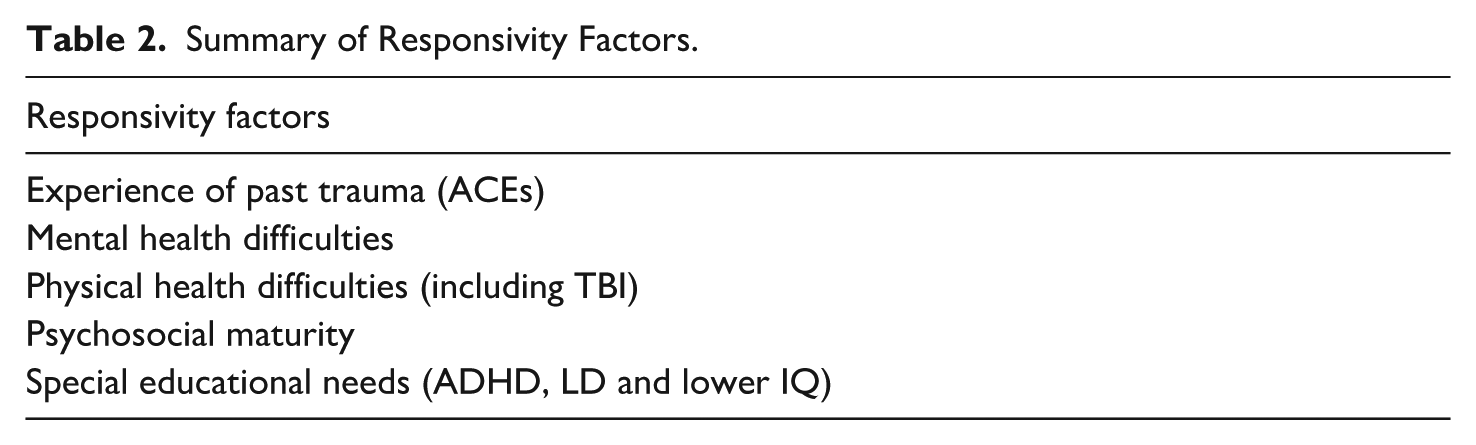
Table 1 provides a summary of those risk and protective factors, and strength of underpinning evidence, based on the studies reviewed, and Table 2 provides a summary of the identified responsivity factors.
Summary of Risk and Protective Factors Relating to Reoffending.
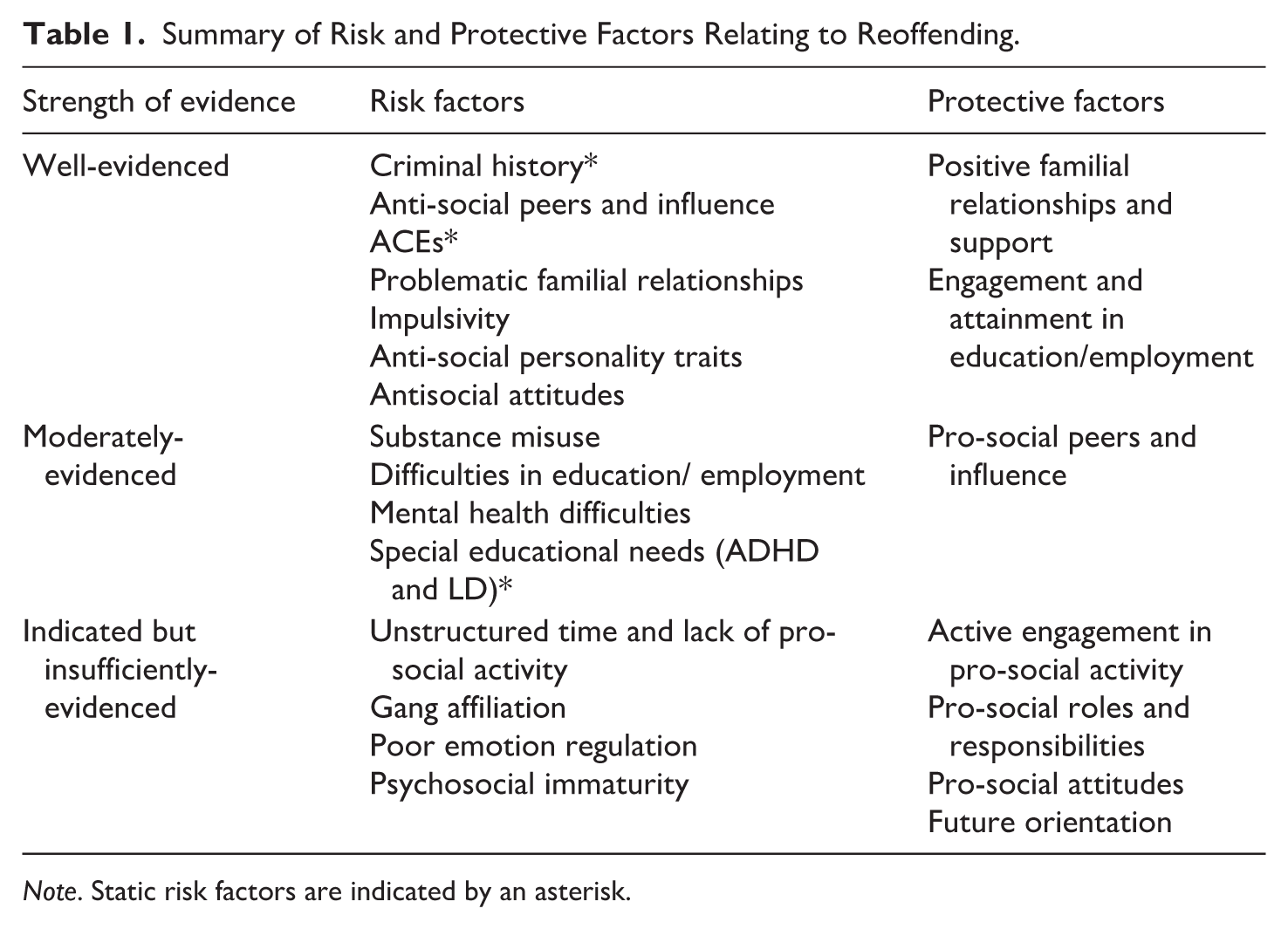
Note. Static risk factors are indicated by an asterisk.
Summary of Responsivity Factors.
Discussion
This review identified 30 studies, mostly medium to medium-high quality, published between 2015 and 2025 which aimed to answer questions concerning the risk, protective, and responsivity factors of children involved in committing crime.
The risk factors identified are consistent with the ‘Central Eight’ (Bonta & Wormith, 2013) that have been evidenced for adults. Based on this review, well-evidenced dynamic risk factors for children include anti-social peers and influence, problematic family relationships, impulsivity, anti-social personality traits, and antisocial attitudes. Criminal history and ACEs are judged to be well-evidenced static risk factors. Moderately-evidenced dynamic risk factors include substance misuse, difficulties in education/employment, and mental health difficulties. SEN is judged to be a moderately-evidenced static risk factor. There are a number of possible reasons for inconsistency in findings for factors across the included studies, such as variability in how factors and outcomes were operationalised and measured (including recidivism outcomes, each of which is limited and likely underestimates true rates of activity), methodological differences, and differences in sampling (such as gender and offence type). Finally, the following are indicated as possible risk factors but considered as yet insufficiently-evidenced: unstructured time and lack of pro-social activity, gang affiliation, poor emotional regulation, and psychosocial immaturity.
In relation to protective factors, the REA judged the well-evidenced factors to include positive familial relationships and support, and engagement and attainment in education/employment. Pro-social peers and influence is assessed as a moderately-evidenced protective factor. Indicated but not yet sufficiently evidenced factors include active engagement in pro-social activity, pro-social roles and responsibilities, pro-social attitudes, and future orientation.
A series of responsivity factors have also been identified, including the experience of past trauma, mental health difficulties, physical health difficulties (including TBI), psychosocial immaturity, and special educational needs. These factors are important to attend to in relation to the design and delivery of treatment aiming to reduce risk of reoffending, as well as for delivering effective care for children’s well-being and their development into adulthood.
Noteworthy is the absence of identity as a factor reported here, which has gained attention (and debate) in recent years in the literature (e.g., Hazel & Bateman, 2021; Wigzell et al., 2024). The challenge of reliably measuring this construct may explain why it has been less studied than other factors to date, and why it therefore does not appear in the research reviewed for this REA. As research in this area progresses and measures are developed, however, specific consideration should be given to whether this should be added to our summary of factors related to reoffending by children.
Whilst this REA did not set out to analyse findings by gender, a few points warrant mention. The majority of the studies in this REA included both boys and girls in their samples (albeit with the majority of samples comprising boys), and these included gender as a covariate/control variable. As such, the findings reported are considered reasonably applicable to both sexes, however, some specific observations of the evidence are worthy of further consideration and investigation. This is important too given arguments in the wider literature for gender-sensitive approaches to risk assessment and treatment planning (Brogan et al., 2015). For example, consistent with the wider literature, recidivism rates for girls tend to be lower than for boys, girls tend to commit less violent crime than boys, and girls tend to ‘age out’ of crime sooner than boys (i.e., desisting vs. persisting; e.g., see Bekbolatkyzy et al., 2019; Cardwell & Piquero, 2018; Hein et al., 2017; Kim et al., 2021; Park & Metcalfe, 2022; Schubert et al., 2016). While girls appear to present with lower levels of risk of reoffending than boys, overall and in relation to specific risk factors, there may be gender-specific nuances that need to be better understood. For example, while Cuervo and Villanueva (2015) reported that boys present with higher risk scores for substance abuse than girls, alcohol and drug use was found by Hein et al. (2017) to be associated with a higher likelihood of violent recidivism among girls but not boys. Further, while girls, in general, tended to have experienced more ACEs than boys (Perez et al., 2018), boys may witness more violence and experience more violent victimisation than girls (Sargent et al., 2022). Finally, pregnancy is a gendered issue. The significance of pregnancy in facilitating potential desistance from crime (as described by Villeneuve et al., 2019), the impact on health and well-being (including the fear about and repercussions of a child being taken by protective services), warrants further examination.
Limitations and Evidence Gaps
The constraints of REAs, which are by design less comprehensive than systematic reviews, means that it is possible that some relevant studies or reviews have been missed. This REA was confined to research published since 2015, thus providing an overview of only the most recent evidence; this decision aimed to balance comprehensiveness with relevance, but means that earlier important works will not have been included. The REA did not include any research not published in English, and excluded any unpublished work or grey literature, resulting in possible bias in the findings. The REA deliberately focussed on research conducted in Western countries to enhance generalisability of the findings to England and Wales, but this means geographically and more culturally diverse findings have not been considered. Additionally, only evidence judged as medium quality or above was included in the REA; as such, some studies which might have provided unique or very specific insight into the experience of different subgroups of children may have been excluded. The conceptual overlap between some factors (e.g., impulsivity and psychosocial maturity) and interactions between factors were not specifically examined in this REA.
The children within almost all of the included studies were in, or had had, contact with the criminal justice system, having received convictions/a record for criminal action, and were located in both community and custody settings; as such, transferability of the findings to children across the justice system is considered reasonably good. The majority of studies reviewed came from the US, however, and therefore the generalisability of the findings to other countries cannot be guaranteed, and some caution should be applied even regarding applicability in England and Wales. The inclusion of 11 studies using Pathways data (which came from young people from two US cities who were primarily charged with felony offences and were collected in the 2000s), will have introduced a lack of independence between some findings and thus potentially skewed the findings, although this was taken into account in rating the strength of evidence for each factor.
The evidence is also heavily weighted towards boys; more published studies focus on this group, or boys usually represent the majority in research samples. Further, studies with boys often examine more risk-related variables, and studies with girls tend to put greater focus on variables relating to victimisation than on psychopathological variables or criminal behaviour. While there was an overrepresentation of children from ethnic minorities in many of the studies included, the reviewed research lacked sufficient study of racial disparities; few focussed on comparing risk and protective factors or reoffending/desistance outcomes by ethnicity. The differential influence and impact of social and structural, as well as psychological factors for people from different backgrounds and communities, is an important area for further research.
All the studies focussed on either ‘any’ or ‘violent’ crime specifically. Whilst these broad categories will comprise a range of offence types, it is likely that factors specific to less prevalent and potentially more complex crime types, such as sexual crime, terrorism, and arson, were not sufficiently captured. It is not yet sufficiently understood how risk, protective, and responsivity factors may interact with each other, may moderate each other, or may cluster or present differently for children, including for subgroups of children and children in different countries.
Finally, the primary focus of the included studies was recidivism, but other outcomes, such as psychological ones, are also of importance to many justice services but do not appear to have yet received the same level of attention. Very little of the evidence reviewed was qualitative in nature; as such, there is little information about the desistance journeys of children who have previously been involved with crime.
Implications for Practice and Policy
The majority of both risk and protective factors identified in this REA are dynamic rather than static, and as such are amenable to change. Those that are currently well- or moderately-evidenced should be primary targets for interventions with children that are designed for reducing risk of reoffending or promoting desistance.
The evidence reviewed in this REA supports the Child First principles, suggesting diversion from custody is most likely to address key risk factors and promote protective factors that can reduce youth reoffending. Antisocial peers and influence is a well-evidenced risk factor, and a direct consequence of incarceration. Similarly, substance misuse and mental health issues are moderately-evidenced risk factors for youth reoffending, which evidence suggests can be exacerbated by incarceration (Duchschere et al., 2023; Thomas et al., 2026). Conversely, prosocial peers and influence, positive family relationships, education and employment are well- or moderately-evidenced protective factors; all of which are more readily accessible and amendable to change in the community.
Despite an increasing focus on psychosocial maturity among children and young people in contact with the justice system, this REA suggests that there is currently insufficient evidence to suggest that it is a risk factor for youth reoffending (Steinberg et al., 2004, 2015). However, along with trauma, mental and physical health, and special educational needs, psychosocial maturity was identified as an important responsivity factor, which should factor into the design and delivery of any interventions/services for children, to ensure they are developmentally appropriate, and likely to facilitate healthy development.
Future Research
Future research would helpfully focus on addressing gaps in the evidence base by paying particular attention to girls, children from gender and ethnic minorities, samples from different countries (including England and Wales), younger children, investigating the risk and protective factors currently deemed indicated but insufficiently-evidenced, examining less common and potentially more complex crime types, examining the impact of change in risk factors over time (such as through intervention) on children’s outcomes, and further qualitative examination of children’s desistance journeys.
Future research could also build upon the findings of this REA by undertaking a comprehensive meta-analysis. While the present review provides a structured synthesis of the recent evidence, it does not quantitatively estimate effect sizes across studies. A meta-analysis would enable a more precise evaluation of the magnitude and consistency of observed effects, as well as allow for the exploration of heterogeneity and potential moderating variables. This would strengthen the evidence base and support more definitive conclusions.
Supplemental Material
sj-docx-1-ijo-10.1177_0306624X261457480 – Supplemental material for Criminogenic Risk, Responsivity, and Protective Factors of Children Who Commit Crime: A Rapid Evidence Assessment
Supplemental material, sj-docx-1-ijo-10.1177_0306624X261457480 for Criminogenic Risk, Responsivity, and Protective Factors of Children Who Commit Crime: A Rapid Evidence Assessment by Flora Fitzalan Howard, Helen Wakeling and Georgia Barnett in International Journal of Offender Therapy and Comparative Criminology
Footnotes
Acknowledgements
We would like to thank Matthew Hurley for his support with the quality assessments of the studies included in this research, and we would like to thank Dr Neil Gredecki, Alisa Purton, and Elisabeth Thompson for their feedback on earlier drafts of the manuscript.

Ethical Considerations
Ethical approval was not required for this review.
Funding
The authors disclosed receipt of the following financial support for the research, authorship, and/or publication of this article: This work was supported by the Youth Custody Service of His Majesty’s Prison and Probation Service, England and Wales.
Declaration of Conflicting Interests
The authors declared no potential conflicts of interest with respect to the research, authorship, and/or publication of this article.
Data Availability Statement
Data sharing not applicable to this article as no datasets were generated or analysed during the current study.
Supplemental Material
Supplemental material for this article is available online.
References
Supplementary Material
Please find the following supplemental material available below.
For Open Access articles published under a Creative Commons License, all supplemental material carries the same license as the article it is associated with.
For non-Open Access articles published, all supplemental material carries a non-exclusive license, and permission requests for re-use of supplemental material or any part of supplemental material shall be sent directly to the copyright owner as specified in the copyright notice associated with the article.
