






Abstract
Arts-based interventions create meaningful opportunities for emotional expression, strengthening personal competencies that can enhance prison social climate and support reintegration. This study examined the perceived feasibility and acceptability of RadioACTIVITY, a co-creative arts-based program combining radio theatre production with participatory practices (RadioLAB, RadioSTUDIO, RadioDIFFUSION), implemented across three 10-month editions in a Portuguese prison. Twenty-eight incarcerated individuals (53.6% female; 46.4% male) participated in focus groups. Thematic analysis indicated that feasibility was supported by sustained engagement facilitated through non-judgmental facilitation, collaborative processes, and dynamic sessions. Acceptability was reflected in positive evaluations of the program as meaningful and appropriate, alongside interest in its continuation. Participants also reported intrapersonal (e.g., self-regulation, language skills) and interpersonal (e.g., empathy) gains, as well as perceived social impacts, including reduced stigma. Findings highlight the potential of arts-based approaches to foster rehabilitation and more constructive prison environments.
Plain Language Summary
Creative arts programs can help people in prison express their thoughts and emotions, build personal skills, and improve relationships with others. These benefits may also contribute to a more positive prison environment and support successful reintegration into society. This study explored how people in prison experienced RadioACTIVITY, an innovative arts-based program that uses radio theatre and collaborative creative activities. RadioACTIVITY was implemented over three editions (i.e., three groups of participants), each lasting 10 months, in a Portuguese prison. The program involved three main stages: experimenting with ideas and voices (RadioLAB), creating radio productions together (RadioSTUDIO), and sharing the final content with others (RadioDIFFUSION). A total of 28 incarcerated participants (men and women) took part in group discussions to share their views about the program. Overall, participants found the program easy to engage with and highly meaningful. They highlighted the importance of facilitators who showed respect, listened without judgment, and worked collaboratively with the group. The creative and varied structure of the sessions also helped maintain motivation and interest. Participants reported several personal benefits. On an individual level, they described improvements in emotional control, self-discipline, and language skills. On a social level, they noted better understanding of others, increased empathy, and more positive interactions. Beyond personal change, participants felt the program had a wider impact by helping to challenge negative stereotypes about people in prison and by creating content that could be shared with other prisons. These findings suggest that arts-based programs like RadioACTIVITY can play an important role in rehabilitation by fostering personal growth, improving relationships, and contributing to healthier and more constructive prison environments.
Keywords
Introduction
Research has demonstrated that imprisonment can markedly affect psychological well-being due to lack of privacy, overcrowding, isolation from family and friends, enforced solitude, and lack of purpose (Tallent et al., 2022). Studies further suggest that incarcerated individuals may have been exposed to multiple forms of trauma arising from previous life events related to poverty, violence, family fragmentation, school challenges, substance abuse, and other factors that accompany their entry into the justice system (Mazher & Arai, 2025). Consequently, they often experience pronounced mental health challenges, particularly heightened symptoms of depression, anxiety, and distress compared to the general population (Moore et al., 2021). Furthermore, the generally low educational attainment of incarcerated individuals, combined with the limited resources and strategies available within prison systems, underscores the need to enhance participation in educational, cultural and intervention programs, which are pivotal to successful rehabilitation and recidivism reduction (Chloupis & Kontompasi, 2025).
Arts-Based Intervention
According to Ezell and Levy (2003), arts-based interventions in prison can be broadly categorized into two types: those led by professional therapists offering art therapy for clinical or treatment purposes, and those facilitated by artists or writers who, although not formally trained as therapists, recognize the potential of art to enrich and transform individuals’ lives. The present study focuses on the latter category and, more specifically, on an applied theater-based radio program that draws on experiences of prison theater and participatory performance to foster reflection, dialog, and critical engagement rather than clinical therapeutic outcomes (Balfour, 2004). Research on prison theater and applied drama indicates that artist-led interventions can support rehabilitation by creating spaces for narrative expression, strengthening participants’ sense of agency and authorship over personal and collective narratives (McAvinchey, 2011; Shailor, 2011), and remaining accessible to participants who may be reluctant to engage in therapeutic programs (Thompson, 2003). Within this context, arts-based interventions – particularly those grounded in applied theater and collaborative media production – have increasingly been recognized as innovative and feasible approaches to rehabilitation in prison settings, offering opportunities for personal insight, social connection, and institutional engagement beyond formal treatment frameworks (Brewster, 2014; Hidalgo Isern et al., 2025; Tallent et al., 2022). Such programs provide meaningful opportunities for both verbal and non-verbal emotional expression while fostering empowerment, self-efficacy, and constructive peer interaction (Brewster, 2014; Duursma et al., 2025). By engaging participants in creative processes – such as theater, visual arts, and writing – these initiatives encourage the sharing of experiences and emotions, promote the development of communication skills, and support the reconstruction of aspects of identity often undermined by imprisonment. A growing body of evidence further underscores their psychosocial benefits. Quantitative studies conducted in correctional settings indicate reductions in depressive symptoms and improvements in emotional expression, affect regulation, and locus of control following arts-based interventions, despite structural constraints on randomized research designs within prisons (Gussak, 2017). Additionally, program evaluations highlight positive shifts in cooperation, self-discipline, and attitudes toward others, suggesting contributions to rehabilitative goals and desistance pathways, even though stronger causal evidence is still needed (Tallent et al., 2022).
Moreover, several studies demonstrate the efficacy of arts-based programs in reducing antisocial behavior, mitigating interpersonal conflict, and alleviating social isolation in correctional contexts (Brewster, 2014; Cheliotis & Jordanoska, 2016). Improvements in self-efficacy, self-confidence, self-esteem, task completion, emotional control, and well-being have also been reported (Littman & Sliva, 2020). In a recent study Silva et al. (2024) conducted a mixed-methods quasi-experimental study in a Portuguese prison setting that demonstrated that participatory arts-based activities in theater and music can enhance incarcerated individuals’ emotional regulation, resilient coping, and inhibitory control, while qualitative findings highlighted positive perceptions of their socio-emotional benefits. Taken together, these findings highlight the potential of artistic and educational interventions to promote psychosocial adjustment, strengthen social connections, and support rehabilitation within prison settings.
Radio in Prison Settings
Research exploring the use of radio within prison settings remains relatively limited, particularly when compared to other arts-based and performative interventions. Nevertheless, existing studies suggest that participatory creative practices in custodial contexts can meaningfully support emotional regulation, interpersonal relationships, and self-reflection among people with criminal justice involvement (Mundt et al., 2019). Within this broader landscape of arts-based approaches, radio theater has emerged as a promising format due to its distinctive combination of writing, performance, and collaborative production processes. Creative writing interventions, for example, have been shown to enhance reflection, emotional communication, and self-confidence, particularly through the sharing, and discussion of texts among peers (Duursma et al., 2025).
Building on these benefits, radio theater initiatives integrate script development, vocal performance, and audio production, offering participants opportunities to engage in educational activities, explore creative self-expression, and develop both oral, and written communication skills. Moreover, the inherently collaborative nature of radio production encourages cooperation, the adoption of defined roles and responsibilities, and the negotiation of group dynamics – skills that are particularly relevant within prison environments (Doliwa, 2013; Einat & Nagar, 2023; Laor & Muchtar, 2023).
Previous international research on prison radio highlights qualitative gains in fostering positive prosocial norms, responsibility and well-being among incarcerated individuals. Engagement in creative practices has been shown to support processes of self-reflection and narrative change, which are central to identity reconstruction within custodial contexts (Albertson, 2015; Cheliotis & Jordanoska, 2016). Such programs enable participants to re-author personal narratives, explore alternative self-understandings, and develop a sense of agency that extends beyond the imposed identity of an incarcerated person (Khan, 2023). Within the constraints of the total institution, arts-based initiatives – including prison radio – can therefore facilitate experiences of autonomy, recognition, and self-respect, contributing to meaningful forms of personal transformation (Bedford, 2018; Bonini & Perrotta, 2007; Wilkinson & Davidson, 2010).
Such radio-based interventions create opportunities for collaborative co-creation, encourage sharing of experiences and emotions, and provide a platform for participants’ voices to reach both peer and broader audiences (Anderson, 2013), addressing topics such as opinion, music, literature, poetry, theater, and to promote healthy lifestyles among prisoners (Minc et al., 2007).
Furthermore, community radio in specific contexts can serve as an important tool to empower vulnerable and marginalized groups, promoting active citizenship, and participation, and counteracting the isolation, and the high levels of illiteracy that are often present in contexts of deprivation of liberty (Anderson & Bedford, 2017).
RadioACTIVITY: A Novel Co-Creative Arts-Based Intervention
In Portugal, artistic practices have been increasingly incorporated into the prison context, supported by external organizations, volunteers, prison administrations, and the Directorate-General for Reintegration and Prison Services (DGRSP). This development is grounded in key legal instruments of the Portuguese penal system, namely Law No. 115/2009, which approves the Code for the Execution of Sentences and Measures Involving Depriving Liberty (Assembly of the Republic, 2009), and Decree-Law No. 51/2011, which approves the General Prison Regulations (Ministry of Justice, 2011). Together, these legal frameworks establish social reintegration as a central objective of sentence execution, explicitly promoting access to educational, cultural, and occupational activities that contribute to the personal, social, and professional development of incarcerated individuals. They also operationalize these principles by recognizing cultural, recreational, and expressive activities as relevant tools for promoting well-being, active participation, and skill development in prison settings. Although these legal frameworks do not explicitly refer to arts-based interventions as a distinct methodology, they create a favorable legal and institutional environment for the implementation of artistic practices in prisons, legitimizing them as means of fostering well-being, personal expression, and preparation for social reintegration.
Several initiatives already implemented in Portugal encompass diverse art forms – including music, theater, literature, and visual arts – and have demonstrated positive qualitative impacts at intrapersonal, interpersonal, and institutional levels (Cruz, 2020; Lamela & Rodrigues, 2016; Serafino, 2019; Silva et al., 2024). However, radio-based interventions within Portuguese prisons remain scarce (Coelho, 2025).
Building on the available evidence, the RadioACTIVITY project [RadioATIVIDADE] stands out as a pioneering and conceptually distinct initiative. Drawing on international traditions of prison radio, the project integrates radio theater production as a novel artistic and participatory practice within a prison setting. The project combines creative writing, performance, sound design, and broadcasting, enabling participants to engage with multiple artistic languages while producing content disseminated both inside and outside the prison. A multidisciplinary team – including performing artists, writers, and audiovisual professionals – worked alongside male and female incarcerated participants to co-create scripts and adapt them into radio theater plays. This co-creative methodology fosters shared authority, creativity, and identity exploration, offering a cultural space that bridges artistic practice and personal expression.
Beyond its artistic dimension, radio-theater work has the potential to activate mechanisms that are highly relevant to the rehabilitation of imprisoned people, including self-control and emotional regulation, perspective-taking, oral and written communication skills, and collaborative problem-solving. The processes of script development and performance require participants to articulate emotions, negotiate meaning, assume roles, and engage in reflective dialog – activities that can foster therapeutic change and strengthen socio-emotional competencies.
Given its innovative nature and the absence of comparable radio-based interventions in the Portuguese context, the present study aims to evaluate the perceived feasibility and acceptability of the RadioACTIVITY project based on participants’ experiences. It serves as an initial proof-of-concept study to inform future refinement, sustainability, and scalability, while exploring the potential of radio theater as a creative modality with therapeutic and rehabilitative value in prison settings.
Method
Study Setting and Design
The present study was conducted in a prison located in the interior of Portugal. The institution accommodates both male and female populations in two physically distinct units and has a maximum capacity of approximately 264 incarcerated individuals, which is consistent with the scale of several local and regional prisons within the Portuguese prison system. The RadioACTIVITY intervention was implemented over three consecutive years, from October 2022 to July 2025, and was conducted in both units to ensure the inclusion of both male and female participants. Exploratory qualitative data were collected throughout the project to examine participants’ and stakeholders’ perceptions of the intervention’s feasibility and acceptability as a part of a broader mixed-methods, open proof-of-concept study. In this context, feasibility refers to the practical conditions required to implement the program within the prison setting, including institutional support, logistical constraints, and sustained participation, while acceptability captures participants’ engagement with the intervention, its perceived relevance, and their satisfaction with it.
In addition, the study explored preliminary indicators of effectiveness, understood not as causal evidence of impact but as perceived benefits such as enhanced communication skills, emotional expression, and social interaction, as reported by participants, and staff. Over a three-year period, the program was replicated three times to increase participant reach and to examine the consistency of these feasibility, acceptability, and perceived effectiveness indicators across implementations.
Eligibility Criteria, Recruitment and Sampling Procedure
The RadioACTIVITY intervention involved a purposive sample of incarcerated individuals, selected by the prison administration to participate in the program based on the following criteria: (a) a remaining prison sentence expected to cover the full duration of the intervention (at least 10 months); (b) appropriate behavioral conduct within the prison; (c) expressed interest in participating in the intervention activities; and (d) ability to read and understand Portuguese.
A total of 86 individuals had contact with the RadioACTIVITY program, of whom 68 participated in the evaluation of intervention effectiveness. Of the 36 intervention participants, 77.8% (n = 28) also took part in post-intervention focus groups, which comprised the qualitative component of the study. Accordingly, only participants involved in these focus group discussions were included in the qualitative analysis. Recruitment for the focus groups was conducted among individuals who had completed the RadioACTIVITY program and were available at the time of data collection. This study adhered to the Declaration of Helsinki and received ethical approval from the Piaget Institute Ethics Committee (No. 3/2019). In line with ethical principles, all participants signed informed consent forms detailing the study’s objectives and procedures. Participation was voluntary, and, in accordance with ethical guidelines for scientific research, no form of compensation was provided.
Intervention: RadioACTIVITY Art-Based Program
The intervention was implemented over a 10-month period each year and was facilitated by professionals from a cultural organization based in the interior region of Portugal (Terceira Pessoa – Cultural Association). The association’s mission is to promote access to artistic and cultural creation as a means of strengthening civic participation and fostering connections between art, education, and community engagement. Weekly sessions of up to two hours were conducted separately with male and female participants, following a co-creative methodology that emphasized shared authorship between facilitators and incarcerated individuals. Each annual cycle was led by a professional from the association (OS; AG; NL) with specialized training in the performing arts (e.g., theater, performance) and was supported by guest artists who expanded participants’ exposure to diverse literary genres and creative practices. The RadioACTIVITY program was structured annually into three interconnected components – RadioLAB, RadioSTUDIO, and RadioDIFFUSION – each contributing to a cumulative artistic and developmental process.
RadioLAB functioned as a co-creation space between the artistic team and incarcerated participants, with the aim of developing radio theater scripts. Each year, ten laboratory sessions were conducted, reflecting the exploratory, and conceptual nature of this phase. These text-focused sessions were facilitated by one member of the organization, together with guest artists from different creative fields, who provided dramaturgical, and literary frameworks. Participants were invited to reflect on how the texts and artistic materials resonated with their identities, histories, values, and lived experiences. This rotating artistic structure allowed participants to engage with and appreciate multiple literary genres and textual forms – including theater, poetry, and essay writing – exposing them to diverse national and international references. In the first year, the male and female incarcerated participants engaged with dramaturgical work of the national writers (Regina Guimarães and Saguenail). The second year focused on the Shakespearean universe, in the collaboration with a writer (Maria Sequeira Mendes; Cavanagh & Mendes, 2025). In the third year involved a writer and poet (Miguel Manso), who used photography to foster engagement and identity exploration and to support the creative writing process with the participants. Despite the variation in artistic stimuli across the three years, the creative process itself remained consistent: all cycles followed the same co-creative methodology, the same sequence of collaborative script-development activities, and the same pedagogical structure. The changing guest artists enriched the content without altering the underlying intervention model, while remaining time-limited to support focused script development. Although the creative development of radio theater scripts was the main focus of RadioLAB, each session also incorporated dynamics to promote social, emotional, and reflective dimensions, fostering continuity, and reinforcing the notion of creative work as an evolving, shared process. The creative process was guided by thematic and textual prompts introduced by the artistic team. These prompts included literary excerpts, poems, and other artistic materials selected to stimulate free-writing exercises and collective discussion. Rather than encouraging literary analysis, these materials functioned as catalysts for imagination, cultural appreciation, and narrative exploration, allowing participants to reinterpret external references through their own experiences and perspectives.
RadioSTUDIO emphasized sustained practical engagement and rehearsal; therefore it comprised 26 sessions per year. This extended format was necessary to allow iterative experimentation, vocal rehearsal, dramatization, and collective refinement of the scripts produced in RadioLAB. Under the guidance of the artistic directors, participants engaged in practical theater dynamics, dramatization, and creative exercises based on the scripts produced in RadioLAB. With the support of a community partner (School of Applied Arts (ESART) – Polytechnic University of Castelo Branco (IPCB)), participants collaborated with a lecturer and researcher in composition and multimedia, as well as graduate students in Electronic Music, on the recording, editing, and post-production of the radio plays. Over approximately four months, the work focused on enhancing communicative and cognitive skills (oral expression, intonation, character interpretation, critical, and creative thinking) and technical competencies related to sound recording, editing, and production. The greater number of RadioSTUDIO sessions thus reflects its production-oriented purpose and the need for repeated rehearsal cycles to prepare material for recording and dissemination. In addition, during the RadioSTUDIO phase, the program integrated technical, and media-related learning. In collaboration with a professional radio partner (Antena 2), participants received training in sound editing software, role definition within a production team, interview script development, audio recording, and collective listening, and discussion of the final recorded materials.
RadioDIFFUSION emphasized dissemination. Participants were actively involved in selecting, refining, and approving the narrative pieces developed during the creative process for public sharing. Each year, eight final productions were broadcast annually on two platforms: a national radio channel (Antena 2; archive available at https://antena2.rtp.pt/em-antena/teatro-radiofonico/radioatividade-teatro-radiofonico-3-as-feiras-19h00/ ) and an internal prison broadcast channel, allowing participants both external visibility and internal peer recognition within the prison community. Figure 1 provides an overview of the specific objectives associated with each component of RadioACTIVITY, illustrating the stable structure and consistent developmental trajectory maintained throughout the three years of implementation.
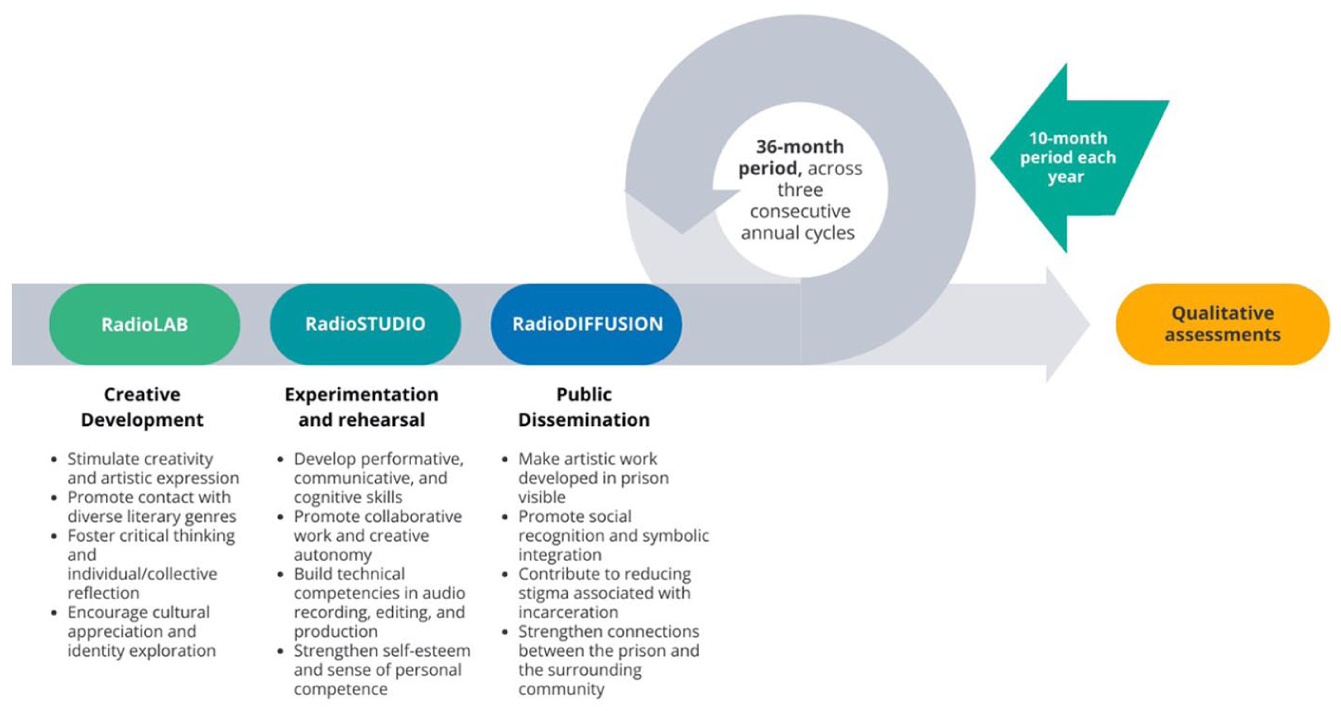
Objectives of the RadioACTIVITY Intervention Components.
Data Collection Methods
Qualitative approaches allow for an in-depth understanding of behavioral and social changes associated with participation in intervention programs. Among these, focus groups are particularly suitable for exploring experiences, meanings, and collective perceptions, enabling a richer, and more contextualized understanding of the phenomena under study (e.g., Ayala & Elder, 2011). In the present study, focus group discussions were conducted at the end of each annual intervention cycle (post-test), facilitated by two members of the research team (ISS and PM). A semi-structured interview guide was developed in line with the study objectives, incorporating questions related to two central constructs in intervention evaluation: feasibility and acceptability. Feasibility was conceptualized as the extent to which an intervention can be successfully implemented within a given context, reflected in aspects such as recruitment, retention, and participation (e.g., Proctor et al., 2011). In this study, feasibility was operationalized through questions exploring facilitators and barriers to implementation, as well as factors influencing participant engagement, considering the specificities of the prison setting.
Acceptability was defined as stakeholders’ perception that an intervention is agreeable, appropriate, or satisfactory (e.g., Proctor et al., 2011), and its assessment should be grounded in participants’ direct experience of the intervention’s content, complexity, and comfort. Focus groups are widely recognized as a standard qualitative method for assessing acceptability, as they allow for the capture of emotional, cognitive, and relational nuances associated with participants’ experiences. Following the Theoretical Framework of Acceptability proposed by Sekhon et al. (2017), the assessment of this construct should consider seven components: affective attitude, burden, perceived effectiveness, ethicality, intervention coherence, opportunity costs, and self-efficacy.
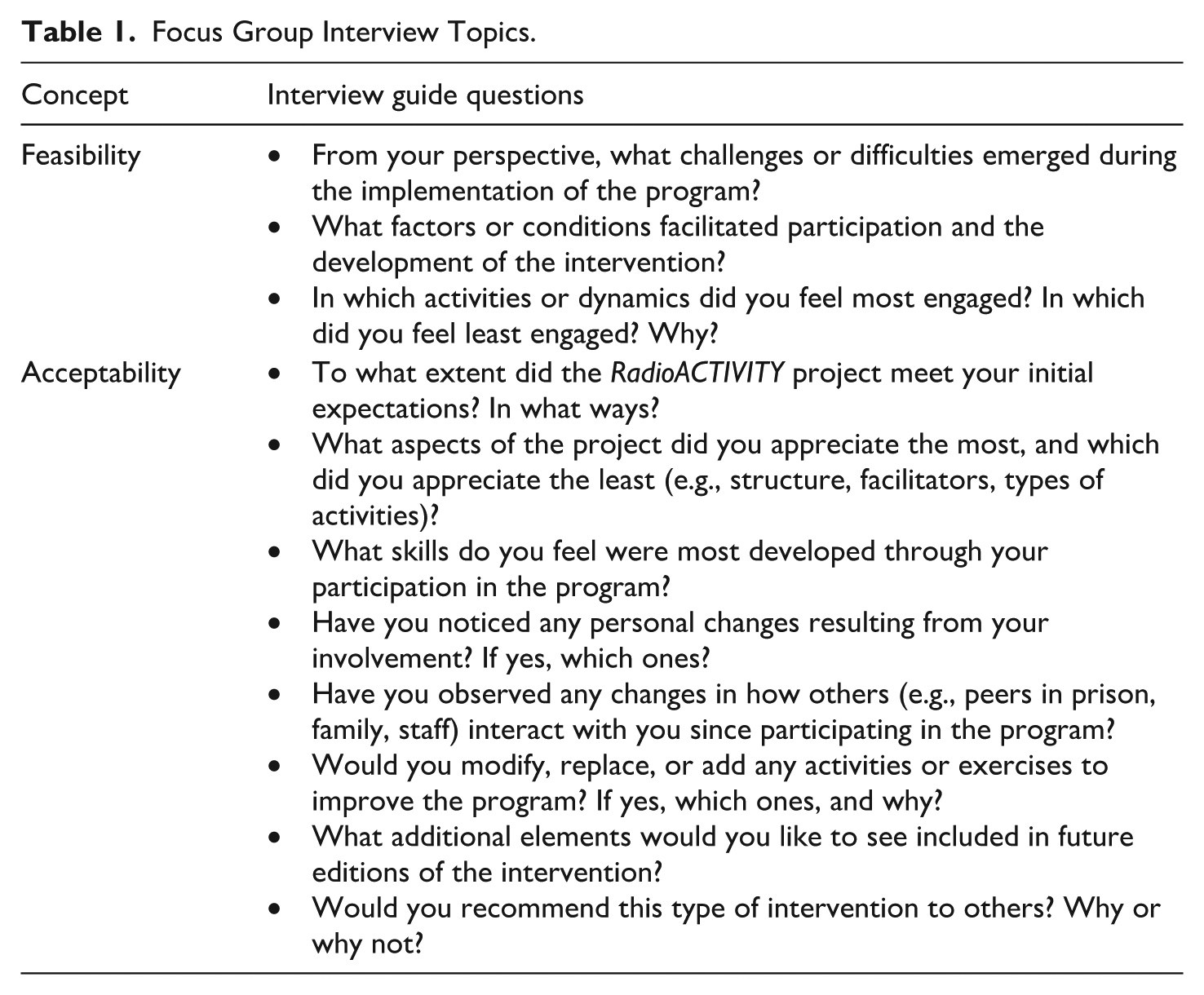
The interview guide (see Table 1) was structured to reflect these core principles, incorporating questions that collectively enabled exploration of these dimensions – from alignment with initial expectations (affective attitude; intervention coherence), to perceived engagement and challenges (burden; opportunity costs), to perceptions of personal and social change (perceived effectiveness; self-efficacy), as well as the perceived appropriateness of the intervention in relation to participants’ values (ethicality). Each session lasted approximately 40 to 60 minutes and took place in a private room within the prison facility, conducted separately for the male and female wings. Group size ranged from 4 to 7 participants per session, depending on availability and institutional scheduling constraints. Participants had no prior direct contact with the research team. The focus groups were conducted by researchers who were not involved in the delivery of the intervention, ensuring independence from the program implementation.
Focus Group Interview Topics.
Data Analysis
The focus group interviews were audio-recorded with written consent from participants, fully transcribed (AN), and coded and analyzed using thematic analysis. This approach was considered appropriate for capturing shared perspectives and group-level meanings (e.g., Braun & Clarke, 2014), following the six phases proposed by Braun and Clarke (2022): (a) familiarization with the data; (b) generation of initial codes; (c) searching for themes; (d) reviewing themes; (e) defining and naming themes; and (f) producing the report. The analysis was initially deductive, guided by the main conceptual definitions of feasibility and acceptability (e.g., Proctor et al., 2011). Subsequently, additional codes were developed inductively from the data to capture emergent themes. The researcher AB conducted the analysis independently using ATLAS.ti (version 25). To strengthen the credibility of the analytic process, a second author (ISS) independently coded a purposive sample of transcripts, enabling the assessment of coding consistency and interpretative alignment. Any discrepancies were discussed until consensus was reached, and refinements to the coding framework were made where necessary. All authors agreed on the final set of themes and subthemes.
Research Team, Rigor, and Reflexivity
The study was designed, conducted, and reported in accordance with the Consolidated Criteria for Reporting Qualitative Research (COREQ; Tong et al., 2007), ensuring transparency in the description of the research team, study context, data collection procedures, and data analysis. The researchers’ diverse disciplinary backgrounds and professional experiences informed their pre-understandings and shaped decisions throughout the research process, from developing the interview guide to interpreting the data. The group included PhD psychologists with expertise in qualitative methods, intervention development, and research in prison settings. Focus groups were facilitated by two researchers (ISS and PM) who were familiar with the intervention but not involved in its delivery, helping minimize potential power dynamics and encouraging open discussion among participants. The primary analyst (AB) who was also not involved in the delivery of the intervention, had prior experience with thematic analysis and conducted the coding independently. Throughout the data analysis process, the team engaged in reflexive discussions regarding their assumptions, disciplinary backgrounds, and potential influences on data interpretation. These procedures contributed to the credibility, transparency, and trustworthiness of the findings.
Results
Participants’ Characteristics
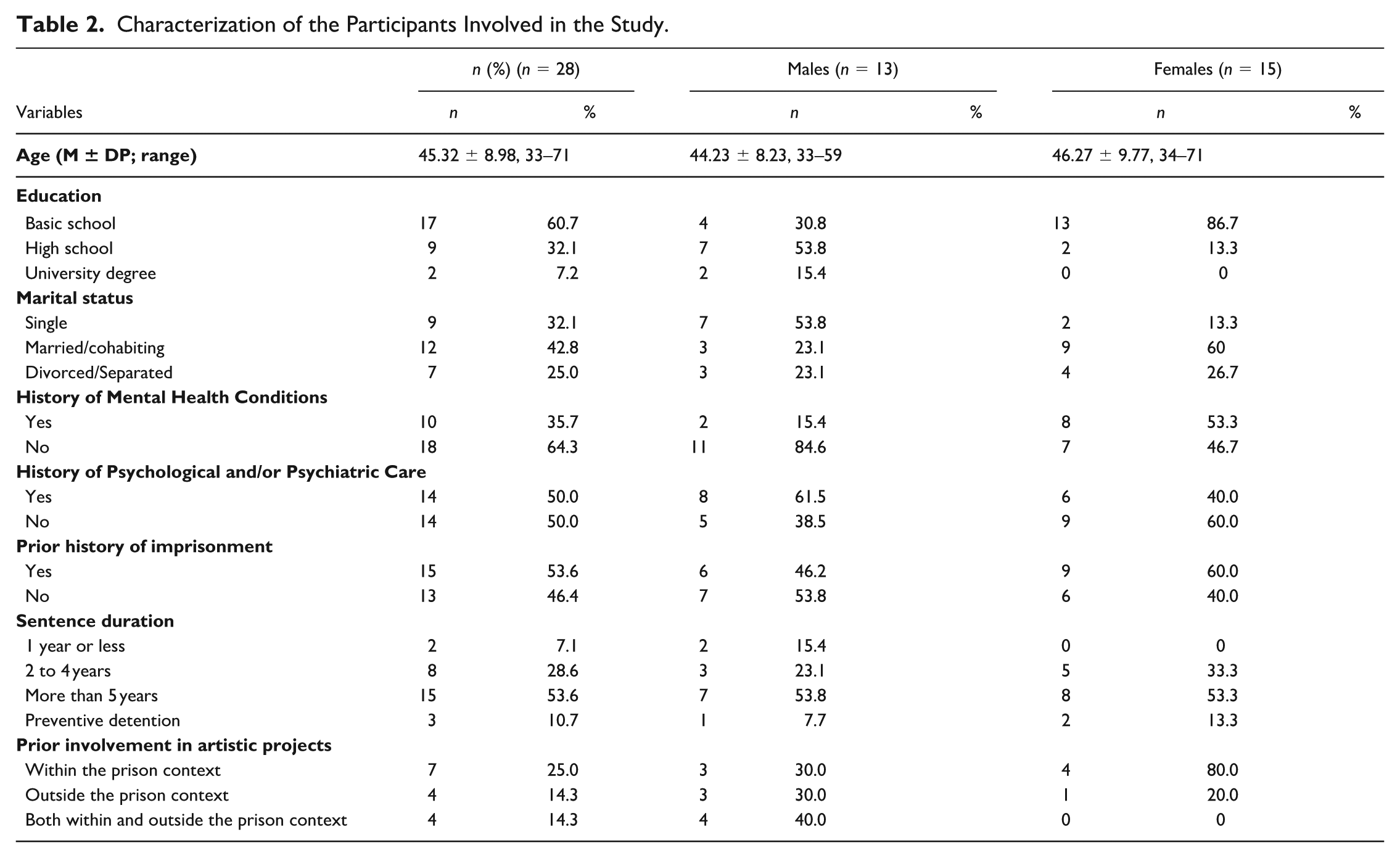
This study included 28 purposively selected participants who completed the art-based intervention program and participated in a focus group. Among the participants, 53.6% (n = 15) were female and 46.4% (n = 13) were male. The mean age was 45.32 years (SD = 8.98), and 60.7% (n = 17) had completed basic education. Approximately 35.7% of participants (n = 10) had previously been diagnosed with mental health conditions, namely mood disorders (n = 5; 17.9%) and anxiety (n = 3; 10.7%). Half of the participants were currently or had previously been under psychological or psychiatric care. Most participants (n = 15; 53.6%) had previously experienced imprisonment, with the majority serving sentences of 5 years or more (n = 15; 53.6%). Notably, 35.7% of participants (n = 10) were incarcerated for drug trafficking. Around 50% (n = 14) had prior involvement in artistic projects, including within the prison context (n = 7; 25%). Table 2 provides a more detailed description of the participants’ characteristics.
Characterization of the Participants Involved in the Study.
Thematic Analysis: Overview
The thematic analysis process initially identified 66 codes (comprising 228 relevant excerpts) capturing key elements related to the evaluation of the intervention’s feasibility and acceptability. Guided by the study’s analytical framework, these codes were subsequently organized into higher-order themes reflecting participants’ shared perceptions and experiences. Regarding perceived feasibility, three overarching themes were identified: (1) Initial engagement, reflecting factors that influenced participants’ early uptake of the program; (2) Sustained participation, encompassing elements that supported continued attendance and engagement throughout implementation; and (3) Contextual factors, capturing institutional and relational conditions within the prison environment that either facilitated or hindered participation.
In turn, perceptions of program acceptability were organized into four central themes, implicitly anchored in the Theoretical Framework of Acceptability (TFA; Sekhon et al., 2017). These themes reflect participants’ direct experiences of the intervention and map onto key TFA components. (1) Perceived Appropriateness and Satisfaction captures participants’ affective attitudes toward the intervention, its ethical alignment with their values, and their understanding of the program’s purpose, alongside their appraisal of the balance between perceived benefits and associated demands, including burden, and opportunity costs; (2) Development of Intrapersonal and Interpersonal Competencies reflects perceived effectiveness and self-efficacy, as participants identify gains in personal and relational capacities arising from their involvement; (3) Changes in Social Perception relates to perceived effectiveness at a broader level, encompassing relational and social impacts within the prison community as well as in the wider society; and (4) Dissemination and Perceived Capacity for Sustainability encompasses participants’ views on the visibility and continuity of the project over time, reflecting a forward-looking dimension of perceived effectiveness, as participants recognize the intervention’s potential to generate sustained impact in the future. Together, these themes provide an integrated understanding of how the RadioACTIVITY intervention was experienced, implemented, and valued within the prison context, offering a nuanced account of both its feasibility and acceptability as a novel arts-based program.
Perceived Program Feasibility
In line with the conceptualization of feasibility adopted in this study, qualitative data analysis identified several factors that influenced both participants’ initial uptake of the program and the maintenance of their participation and engagement throughout its implementation (see Figure 2).
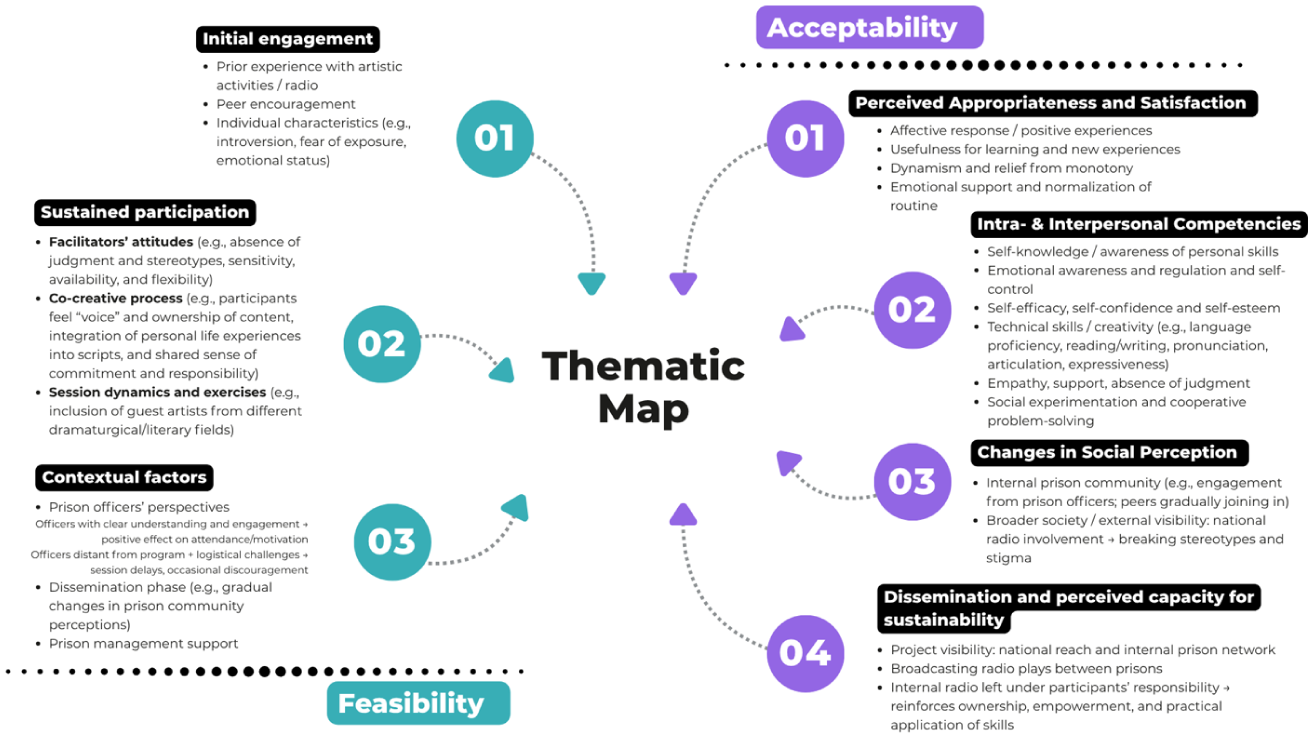
Thematic map of perceived program feasibility and acceptability: Key factors influencing engagement, competency development, social perception, dissemination, and perceived capacity for sustainability.
Theme 1. Initial Engagement
The findings suggest that, at an early stage, prior experiences with artistic activities – and more specifically with radio – contributed to participants’ curiosity and willingness to engage in the RadioACTIVITY program (e.g., “I used to do radio before coming to this institution, many years ago. . . and I ended up doing it again in the place where I least expected it” – male; M1). Peer encouragement was also consistently reported as a facilitator of participation, particularly following the first edition of the program (e.g., “I already knew about the project through my colleagues, and I knew the work they were doing” – male; M2). Conversely, individual characteristics such as introversion (e.g., shyness, discomfort with being observed), fear of exposure, and emotional states marked by discouragement and demotivation – often associated with the incarceration process and restrictions on family contact – emerged as initial barriers to engagement (e.g., “For me, all of that was confusing. So, at the beginning, I was very afraid to read, to expose myself by reading.” – male; M1).
Theme 2. Sustained Participation
During implementation, participants identified several strengths of the intervention and its facilitation that supported regular attendance and sustained motivation. These were primarily associated with the facilitators’ attitudes during the sessions, particularly the absence of judgment and of stereotypes linked to incarceration (e.g., “They really know how to work with people without putting labels on them” – male; M3; “The welcoming, not feeling discriminated against, feeling equal, being treated on the same level, even though some are outside and I am inside” – female; F1).
Participants also highlighted the team’s sensitivity to their emotional states in each session, as well as their availability and flexibility throughout the program (e.g., “The human warmth with which we were welcomed in every session”; “They had an incredible sensitivity (. . .) If one of us was feeling down, the session was immediately adapted to make participation easier” – male; M4). The co-creative process, embedded in the RadioLAB component and grounded in a participatory approach, further facilitated sustained engagement. Participants reported feeling that they “had a voice,” were able to express their opinions throughout the process, and that the texts and dynamics they created incorporated elements of their own life histories (e.g., “It was a good strategy to make us write, to make us participate, to make us more active. Because we realized, wow, this sentence. . . I was the one who said it” – male; M5; “It was through our ideas, our feelings, our abilities” – female; F2).
The dynamic nature of the sessions – particularly the inclusion of guest artists from different dramaturgical and literary fields – was also recognized as a facilitator of engagement, contrasting with the monotony often experienced in prison routines. Additionally, the possibility of practicing exercises outside the sessions, within participants’ own cells, was identified as a favorable feature for continued involvement. Nevertheless, some participants reported initial difficulties in understanding the objectives of certain activities, a barrier that tended to diminish over time (e.g., “At the beginning it was a bit complicated because we didn’t really understand where it was going to lead us” – male; M1). Finally, a shared sense of commitment and responsibility emerged as an additional facilitator of sustained engagement and cooperation within the co-creative dynamics (e.g., “A sense of responsibility is saying, no, they come here, they gave us this to do, this has to be ready” – female; F3).
Theme 3. Contextual Factors
Perceptions of the wider prison community functioned as both facilitators and barriers to participation. While some prison officers demonstrated a clear understanding of the program’s objectives and actively supported participants’ attendance and motivation (e.g., “Yes, the female officers were very committed, like all staff, to making sure we attended RadioACTIVITY” – female; F4), others appeared more distant from the intervention, which limited consistent support (“Some of them, we feel, enjoy it, and understand what we are doing – they encourage us and take responsibility for making sure we are in the right place at the right time, without bothering us about anything. But unfortunately, others do not” – male; M1). This variability in engagement, combined with internal logistical challenges such as bureaucratic procedures and communication difficulties, created tangible barriers to participation, including session delays, and moments of discouragement among participants. These constraints highlight the structural and organizational complexities inherent to implementing interventions in prison settings and may have affected the consistency of participants’ experiences. Although some of these challenges were gradually mitigated over time, their presence underscores the importance of acknowledging less favorable aspects of the intervention. At the same time, gradual shifts in the prison community’s perceptions – particularly during the dissemination phase (RadioDIFFUSION) – and strong support from prison management were identified as key facilitators that helped sustain engagement. Participants recognized this institutional support as an important motivational factor (e.g., “At the management level, I never felt a lack of support; on the contrary, they gave us a lot of openness, many facilities for participation” – male; M1; “It was visible from the directors’ side, because you could see the pride in the work we did” – female; F4).
Taken together, these findings highlight that feasibility in prison settings is inherently ecological, emerging from the interplay between individual-level factors (e.g., motivation and emotional readiness), relational dynamics (e.g., peer support and facilitator-participant interactions), and institutional conditions (e.g., organizational support and logistical structures). This perspective helps to clarify how different dimensions of feasibility operate simultaneously while remaining analytically distinguishable.
Perceived Program Acceptability
Theme 1. Perceived Appropriateness and Satisfaction
Qualitative data broadly supported the intervention as agreeable, appropriate, and satisfactory, suggesting a broad, cross-cutting acceptability among participants from both the male and female units. Participants highlighted the program’s usefulness for gaining new learning experiences: “Right from the start, the time we had here. . . if we hadn’t had it, we would have been locked up in our cells (. . .) So, this opened new horizons, meeting other people from different units, making use of the time in a different way for learning” – male; M5; “Everything was rewarding for me! It was comforting. And it made me a much more enriched person” – female; F1. The dynamism brought to daily routines through participation in the intervention was also consistently emphasized: “A moment to escape monotony and experience something new” – male; M8. At the same time, the intervention offered a sense of normalized routines and freedom, in some cases helping to manage the emotional burden of incarceration (e.g., “Because this coincided practically with the middle of my sentence, it was a difficult phase for me. . . It helped me a lot because, in the end (. . .) this almost functioned as an escape, here we didn’t feel imprisoned, and the only thing that differentiated us (. . .) from the others was that we were incarcerated” – male; M6; “During the two hours we were there, I think we all felt the same. We were all free” – female; F5).
Theme 2. Development of Intrapersonal and Interpersonal Competencies
Participants’ recognition of the development of personal and social competencies during the project was also evident. The intervention was particularly valued as promoting self-knowledge, allowing participants to identify new skills and abilities that they “had not recognized as their own” (e.g., “At RadioACTIVITY, I learned to defend myself without hurting anyone” – female; F2; “I learned to do things I didn’t know I could do and reached deep within myself” – male; M2; “I developed a lot of skills I had but didn’t know, I had never discovered them, and it made me a new person” – female; F1).
Further competencies highlighted as outcomes of participation included: (i) Emotional awareness and regulation, particularly through cognitive reappraisal strategies (e.g., “We handled everyday situations better, especially managing emotions” – male; M3; “I can separate things better, considering different contexts, and stay focused on the task (. . .)” – female; F3); (ii) Self-control, reflected in improved management of impulsive behaviors and conflicts, as well as increased deliberation through deconstructing pre-existing beliefs about social interaction; (iii) Self-efficacy, particularly in participants’ perceived capacity to perform different activities associated with the project, from co-creating radio content to the dissemination phase through the internal and national radio channels (e.g., “Bring on whatever challenge comes, we’re ready” – female; F4; “I think RadioGuarda is at its best. It reached a very high level. The content creation is of high quality (. . .)” – male; M1); and consequently, (iv) Self-confidence and self-esteem, with participants reporting that, despite initial fear of making mistakes, they could “overcome fear, shyness” and “gain more confidence in themselves,” with significant improvements in self-esteem (e.g., “It really helped me boost my self-esteem. . . when I was feeling down, RadioACTIVITY made me feel important (. . .) feel that I am not society’s scum (. . .) we are people” – female; F2). These aspects were also essential for changes in perceptions of individual identity, as well as for fostering a positive view of the future and the social reintegration process (e.g., “RadioACTIVITY gives us the chance not to go back to the same; we have another vision, other expectations; even (. . .) when I get out, I’ll start by registering at the Employment Center because I am not limited” – female; F2; “There is hope for us (. . .) we need to be reintegrated into society” – female; F1).
On a personal level, participants also highlighted the development of specific technical competencies based on the artistic co-creation, particularly proficiency in Portuguese through the introduction and/or recovery of reading and writing habits (e.g., reading books and texts as tasks integrated between sessions). Participants reported improvements in vocabulary, pronunciation/diction, breath control, verbal articulation, and expressiveness, which directly supported communication skills fostered during the program (e.g., “We did tongue-twisters, ways of speaking. We trained everything, and I think it was beneficial for everyone. Everyone became more comfortable communicating with each other” – male; M3). Creativity was also reported as a competence promoted by the project’s activities, requiring continuous stimulation of creative processes for co-creating content, often based on participants’ personal life stories.
Regarding interpersonal competencies, the importance of social interaction within the intervention groups was highlighted, particularly through pair-creation dynamics that initially generated some resistance but gradually fostered a sense of belonging and group cohesion (e.g., “We are not forced to be friends, no, but we are partners (. . .) here it is one for all and all for one, and we always want the best” – female; F2). These dynamics offered opportunities for social experimentation, with participants recognizing increased empathy, mutual support, and the absence of judgment within the group (e.g., “Nothing prevented us, because we were here to help (. . .) a very shy colleague overcame her shyness” – female; F4).
Theme 3. Changes in Social Perception
From a broader perspective, participants perceived that the program may have contributed to changes in social perception, both within and beyond the prison community. Internally, participants, particularly those in the male unit, where initial resistance was reported as higher, described growing interest from prison officers over time. Additionally, the creation of an internal radio channel appeared to have an indirect influence on other members of the prison community, including peers who progressively expressed interest and began to “want to collaborate and take part” (e.g., “It keeps expanding and reaching more and more people (. . .) I think the intervention doesn’t just happen with the direct participants, but also spreads to colleagues who get closer” – male; M4). Externally, the involvement of the national radio broadcaster (Antena 2) was especially valued for the project’s national visibility, as it “gave participants a voice,” challenged stereotypes and stigma about life inside prison walls, and promoted a fairer and more merit-based perception: “It dispels the idea that prisoners just eat, sleep, smoke, drink coffee, and do nothing” – male; M4; “I think it does change mentalities outside (. . .) because we are often discriminated against as inmates (. . .) by slowly listening to these projects, people realize, ‘no, they are also capable of other things, not just crime, not just doing harm’” – female; F3).
Theme 4. Dissemination and Perceived Capacity for Sustainability
Finally, regarding project continuity and its capacity for sustainability, participants consistently expressed interest in the continuation of the project. Most highlighted the need to increase both the duration and weekly frequency of sessions, particularly during the initial phase and during the preparation of radio plays (e.g., at least twice per week). In terms of dissemination, participants emphasized the importance of “spreading the project to the national prison network” – male; M2 – as a way to promote equal opportunities and foster the development of new competencies. Broadcasting radio plays across prisons was also suggested as a potential strategy to enhance project dissemination. Moreover, participants perceived the decision to leave the internal radio under their responsibility after the project’s completion as a key element supporting its potential continuity (e.g., “We’ll have the impact of the radio being left in our hands, we will be delegated responsibility from now on, managing programming, content, topics, music, and the approach inside the prison” – male; M1). This ongoing responsibility appears to reinforce participants’ sense of ownership and empowerment, while creating opportunities for the continued application of acquired skills. These processes suggest that the intervention is perceived as capable of generating sustained effects beyond its formal duration. Taken together, these findings indicate that participants associate dissemination and continuity with the intervention’s longer-term impact. Within an acceptability framework, such perceptions reflect a forward-looking dimension of perceived effectiveness, whereby the value of the program is linked not only to immediate experiences but also to its perceived capacity to endure and produce meaningful change over time. While not constituting definitive evidence of sustainability, participants’ accounts suggest that dissemination practices may enhance the perceived value of the program and support expectations regarding its continuation.
Discussion
Arts-based interventions in prison contexts are increasingly recognized as experiential and embodied learning practices that can foster reflective awareness, emotional expression, and constructive problem-solving among incarcerated individuals (Arjona & Van Lith, 2025; Tucker & Luetz, 2025). Within this landscape, radio theater represents a hybrid modality that combines artistic practice, media production, and participatory processes, offering a particularly suitable medium for prison settings. RadioACTIVITY was developed on these principles by integrating co-creation, production, and dissemination, thereby enabling participants to explore diverse experiences and perspectives, engage creatively with literary content, and develop expressive, and technical competencies, and communicate beyond the prison setting. This proof-of-concept study examined whether such an intervention is feasible and acceptable within a prison environment (see Table 3).
Summary of Key Findings by Implementation Construct.
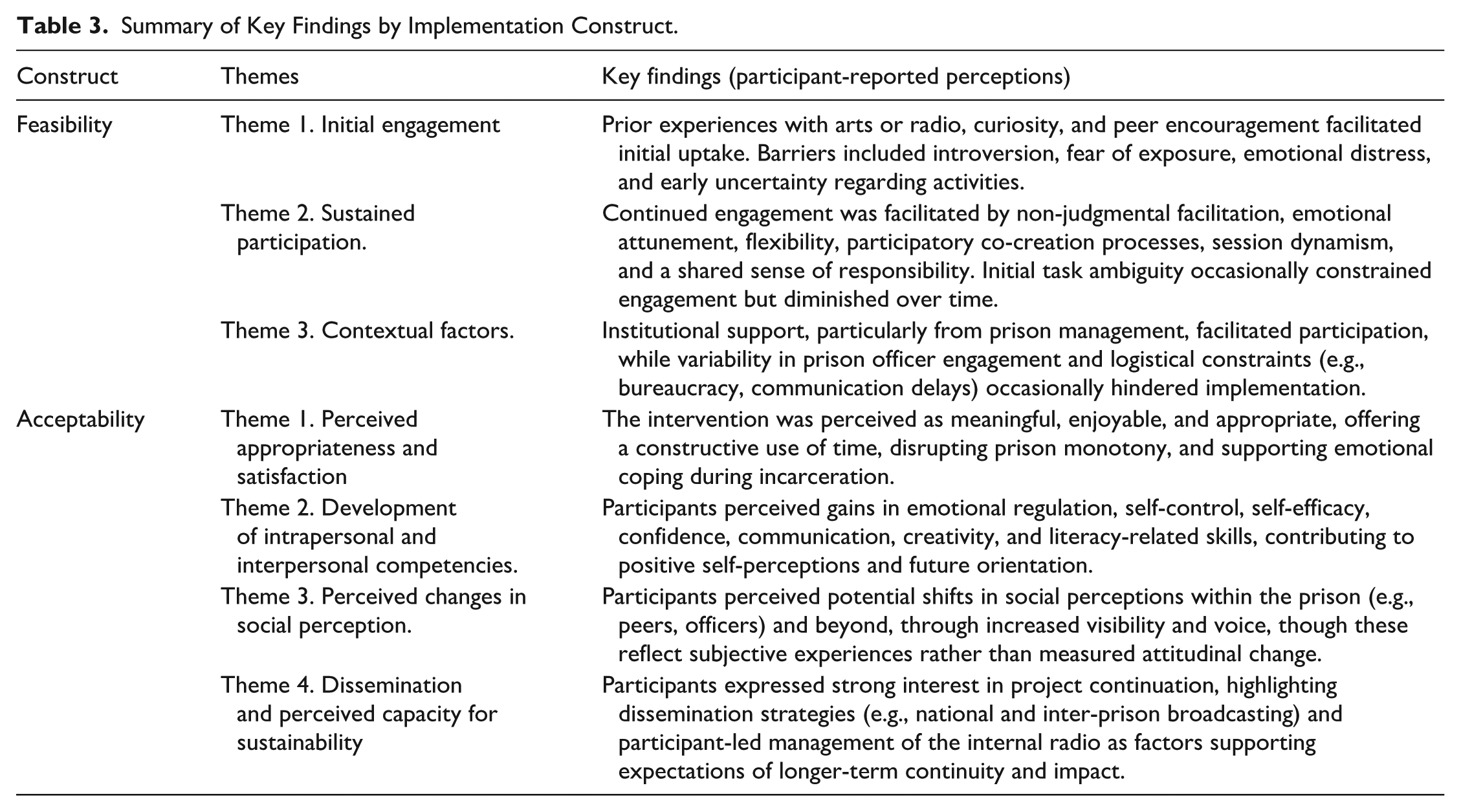
The findings indicate that RadioACTIVITY was both implementable and meaningful, aligning with institutional routines while offering incarcerated individuals opportunities for emotional expression, skill development, and social engagement. Importantly, feasibility was shaped not only by logistical conditions but also by relational and emotional factors, a finding that aligns with contemporary prison implementation research. Curiosity, peer encouragement, and the facilitators’ non-judgmental and emotionally attuned stance supported initial uptake and sustained participation, which are important to engagement in carceral interventions (Albertson, 2015; Bensimon, 2024; Kougiali et al., 2018). Moreover, institutional support and the gradual transformation of perceptions within the prison community reinforced the program’s integration and continuity, consistent with studies highlighting of organizational alignment and prison climate in sustaining rehabilitative initiatives (La Vigne, 2024). Taken together, these findings highlight that feasibility in prison settings is inherently ecological, emerging from the dynamic interplay between individual motivation, group processes, and institutional culture rather than program design features alone (Galouzis et al., 2022). Participants consistently described the program as a space for self-knowledge, reflexivity, and creative exploration, allowing them to engage with their lived experiences in a structured yet flexible environment. The enactment of roles inherent to radio theater production enabled participants to explore emotionally and socially demanding situations, echoing prior evidence that artistic interventions can expand individuals’ repertoires of adaptive responses across contexts (Boal, 2021; Hughes & Wilson, 2004). The sense of freedom and disruption of routine afforded by radio theater further underscores its potential to create psychologically restorative spaces within coercive environments (Bieda, 2019; Hughes & Wilson, 2004).
Acceptability was consistently high across participants and was reflected in their subjective appraisal of the intervention’s relevance, meaningfulness and experiential value. In line with key components of the Theoretical Framework of Acceptability (Sekhon et al., 2017), participants’ accounts reflected positive affective attitudes, ethical alignment, perceived effectiveness, and enhanced self-efficacy. Importantly, acceptability in this context functioned not merely as an outcome but as a prerequisite for continued engagement, particularly within an environment characterized by power asymmetries and limited autonomy. The program’s collaborative ethos, perceived relevance to participants’ life trajectories, and favorable balance between perceived benefits and demands contributed to this positive appraisal, with participation frequently described as a constructive use of time that mitigated monotony and emotional distress. The perceived benefits reported by participants – spanning emotional regulation, self-control, self-efficacy, interpersonal functioning, and literacy – align with existing evidence that participatory arts-based interventions can promote psychosocial development, enhance social connections, and enhance cognitive, and communicative skills (Balfour, 2004; Marie Heard et al., 2013; Prendergast & Saxton, 2009). Engagement with creative writing, scripts and oral performance appeared to foster reading practices in a population where literacy is often compromised. Prior research suggests that promoting reading skills in prison can improve quality of life, increase motivation for educational engagement (Halperin et al., 2012), and reduce recidivism (Tuominen et al., 2014; Vacca, 2004; Wade, 2007), with arts participation further enhancing confidence and cognitive flexibility (Littman & Sliva, 2020).
Beyond individual-level outcomes, the dissemination component (RadioDIFFUSION) appeared to strengthen acceptability by reinforcing perceptions of the program’s continuity over time. External broadcasting through national radio channels challenged stigma and expanded social visibility, while the continuation of the internal prison radio under participant responsibility reinforced ownership, empowerment, and the practical application of acquired skills. These processes illustrate that acceptability operated not only at an individual level but also at relational, institutional, and societal levels. Taken together, the findings position RadioACTIVITY as a promising arts-based intervention that is both feasible and highly acceptable within a Portuguese prison context. By integrating co-creative artistic processes with structured dissemination pathways, the program demonstrates the potential of radio theater – an underexplored modality – to contribute to socio-emotional development, identity reconstruction, and broader social impact beyond prison walls.
Limitations and Future Directions
Despite the promising nature of these findings, several limitations should be acknowledged. The qualitative design and relatively small sample size limit the generalizability of the results beyond the specific institutional context in which the program was implemented. Participant selection, conducted in collaboration with prison administration, may have introduced selection bias by favoring individuals who were more motivated, behaviorally stable, or perceived as suitable for participation. Additionally, the reliance on self-reported perceptions entails a potential risk of social desirability bias; however, this was mitigated by the independence of the research team from program delivery and by the use of group-based discussions that encouraged the expression of multiple and, at times, divergent perspectives.
A further limitation concerns the broader transferability of the intervention across international and institutional contexts. The program was implemented within the Portuguese prison system, which is characterized by a comparatively strong emphasis on rehabilitation, cultural programming, and partnerships with civil society organizations. Such supportive policy environments and institutional openness may not be present in many prison systems globally, where more punitive approaches, limited resources, or security-driven priorities constrain opportunities for arts-based or participatory initiatives. Consequently, the feasibility, acceptability, and perceived legitimacy of radio-based arts interventions may vary considerably across jurisdictions, posing challenges to implementation, and sustainability.
Future research should build on this proof-of-concept study through longitudinal and mixed-methods designs capable of examining the sustainability of outcomes associated with radio-based arts interventions, including follow-up assessments to determine program continuation and the maintenance of effects over time, particularly regarding psychosocial adjustment. In addition, future studies may extend this line of inquiry by examining broader and as-yet unexplored outcomes, such as prison social climate and post-release trajectories.
Implementation across multiple prison systems and cultural settings would also allow for a more systematic examination of contextual variability, institutional embedding, and scalability. Such work would not only strengthen the empirical foundation for radio theater as a rehabilitative, acceptable, and socially meaningful arts-based intervention, but also contribute to broader advocacy efforts aimed at prison reform and the expansion of human, creative, and participatory opportunities for people in custody.
Footnotes
Acknowledgements
We thank all participants (men and women) for their time and active participation, as well as the Guarda Prison administration team, technical staff and prison guards for their support in facilitating the implementation of the intervention program.
Ethical Considerations
Ethical approval was obtained from Piaget ethics committee (No. 3/2019).
Consent to Participate
All participants provided written informed consent prior to enrollment in the study.
Funding
The authors disclosed receipt of the following financial support for the research, authorship, and/or publication of this article: The RadioACTIVITY project has received funding from 2nd edition of the PARTIS & Art for Change initiative, promoted by the Calouste Gulbenkian Foundation and the ‘la Caixa’ Foundation [ID: 266480]. [Project details available at: https://gulbenkian.pt/en/projects/radioatividade/;  ].
].
Declaration of Conflicting Interests
The authors declared no potential conflicts of interest with respect to the research, authorship, and/or publication of this article.