







Abstract
Introduction
During role-emerging placements students require different support as occupational therapy specific supervision is provided periodically and they cannot model their practice on experienced occupational therapists. This paper describes the development and evaluation of a workbook designed to reinforce the integration of theory with practice and provide an additional resource to support students when a supervisor was not present.
Method
A social constructionist perspective and action research methodology were used. Participants were 14 final year occupational therapy students and three off-site occupational therapy supervisors. All participants were involved in role-emerging placements in school settings in England. In-depth, semi-structured interviews across four action research cycles informed the development and evaluation of the workbook.
Findings
While the workbook originally focused on supplementing students’ knowledge of occupational therapy theory, during the action research cycles the focus shifted to consider how educational theory informed workbook design and content. Key features and critical aspects which supported students’ learning were identified.
Conclusion
The workbook was received positively by students and supervisors. Aspects which were particularly valued included the provision of examples and scenarios which contextualised theory within the placement setting. The workbook was proposed to have scope for use in placements beyond school-based practice.
Introduction
Practice placements enable students to develop skills and consolidate theoretical knowledge in real situations (Koski et al., 2013). During placements, students develop their professional identity through practising and experimenting with their disciplinary knowledge. As students are novices, it is vital that these learning opportunities promote the development of reasoning and decision-making commensurate with the theoretical tenets of the profession (Clarke et al., 2015). In role-emerging placements, where there is no established occupational therapy service, students do not have the same structures and supports that are provided in established placements. Hence, they cannot model their practice on that of experienced occupational therapists (Clarke et al., 2015). While off-site occupational therapy supervision is provided periodically, together with more frequent supervision from an on-site professional from another discipline, there is a need for ongoing specific guidance between supervision sessions (Dancza et al., 2013). This paper describes the development, using an action research process (Crotty, 1998), of a workbook to support students during school-based role-emerging placements in the UK.
Literature review
Placements provide opportunities for students to integrate theoretical knowledge and become socialised into occupational therapy roles (Higgs, 2012). Role-emerging placements promote occupational therapy services in settings where the role of the occupational therapist has not yet been established (Thew et al., 2011). They have been used internationally to meet placement capacity demands and prepare students for changing health and social care contexts (Rodger et al., 2007). With no established role, students draw from theory to determine their profession’s scope of practice.
Theory defines a profession’s domain of concern, provides a shared identity for members, and contributes to the profession’s recognition by the wider society (Wimpenny et al., 2010). Contemporary occupational therapy theory focuses on the central nature of occupation to promote health and wellbeing, namely occupation-centred practice (Ikiugu, 2010).
Applying theory to practice, however, remains challenging for many experienced occupational therapists; for students the challenge is magnified (Evenson, 2013; Ikiugu, 2010). This is often described as a theory–practice gap, where the link between theoretical concepts taught at university and how these guide practice is unclear or absent (Evenson, 2013; Leclair et al., 2013).
Unsworth (2001) compared novice and expert practitioners and identified novices as being more likely to base their practice on set assessment and intervention procedures. Advancing the learning of a novice practitioner to the level of an advanced beginner requires: (a) scaffolding to guide the student’s understanding and application of theory to practice; (b) time for consolidation of learning and (c) timely access to experts for feedback, debate and discussion (James et al., 2008). To achieve this, a supportive relationship between the students and supervisor is important (Koski et al., 2013; Towns and Ashby, 2014). On a role-emerging placement, however, the student does not experience daily occupational therapy specific supervision (Thew et al., 2011). Therefore, additional ways to scaffold students’ learning are required.
One strategy is the use of literature which guides the integration of theory with practice, complements the off-site supervisor’s guidance and offers timely support. A number of available texts are intended to maximise the learning potential of placements (see Appendix 1). These focus on strategies such as a consideration of learning styles, use of reflection, working with a peer or supervisor and use of learning contracts. Texts by Thew et al. (2011), Lorenzo et al. (2006) and Stagnitti et al. (2013), which specifically describe role-emerging placements, are limited to descriptions of placement set-up and illustrative examples. There is a dearth of literature promoting the use of theory to guide practice within role-emerging placements.
The first author, as off-site supervisor, was challenged by the lack of suitable resources to scaffold students’ learning, which emphasised the application of contemporary occupation-centred theory to practice. A workbook was subsequently developed and evaluated to address this need.
Method
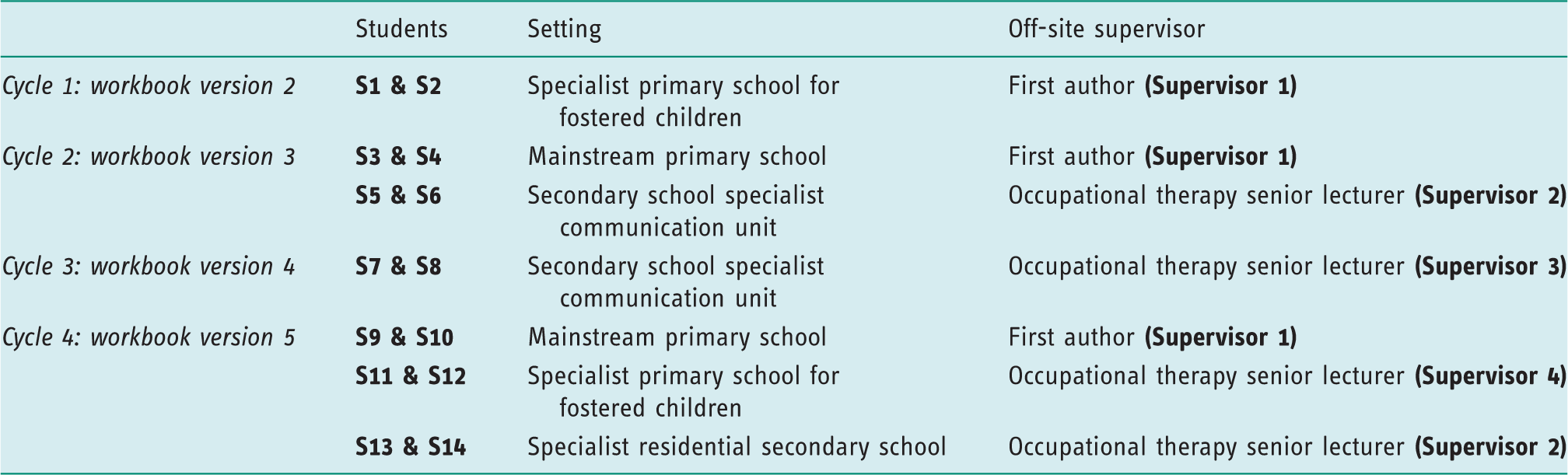
The study formed part of a larger action research (AR) project that explored the learning experiences of four groups of students on role-emerging placements in English school settings between September 2011 and April 2013. Each role-emerging placement was 10 weeks full-time in a school setting and all students were undertaking their final placement. Students were placed in pairs at each placement site to promote peer learning, as recommended by Rodger et al. (2007).
Perspectives describing the framework and procedures for research are numerous. In an attempt to promote transparency and logic in the decision-making process, Case and Light (2011: 188) promoted the use of Crotty’s (1998) framework, which ‘makes the relationship between methodology and broader theoretical orientations very explicit’. This was deemed useful to illustrate the research design for this study and is depicted diagrammatically in Figure 1.
Theoretical overview of the research.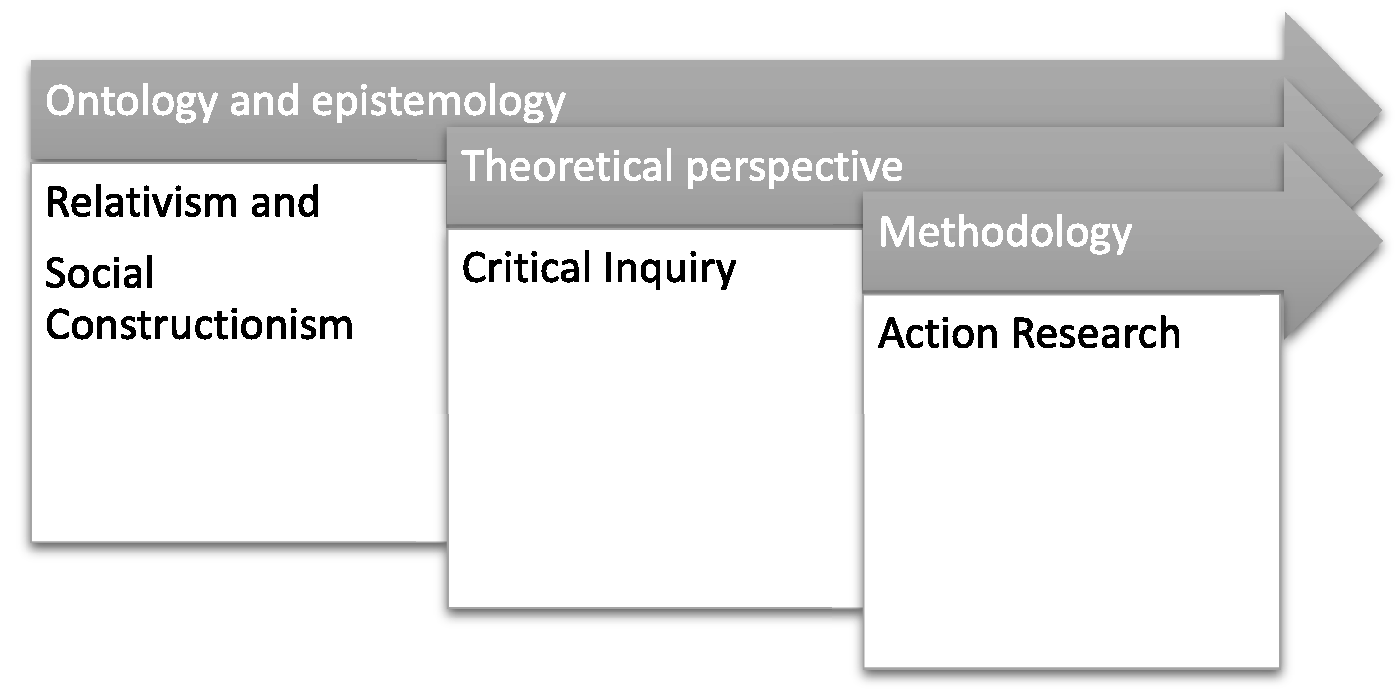
The ontological perspective of relativism informed the epistemology within this research. This epistemological view was one of social constructionism which embodies relativity (Patton, 2002). From a social constructionism perspective, the understanding of the important features and critical aspects of the workbook was determined from analysis of the different perspectives of the students and supervisors, including the first author as researcher and supervisor.
After each role-emerging placement, changes were made to the workbook and it was trialled with, and critiqued by, the next group of students and supervisors. This approach reflects the AR methodology where ‘a cyclical process (better seen, perhaps, as a spiralling process for there is movement forward and upward) of reflection and action’ was used (Crotty, 1998: 157).
This paper describes the action and reflection procedures which drove changes to the workbook’s focus, content and structure.
Development and structure of the workbook
The first version of the workbook, developed prior to the commencement of the study, intended to supplement students’ knowledge of occupational therapy theory through offering summaries of models and reflective questions to promote engagement. Feedback from students indicated that this content was repetitive of their university preparation and insufficient for supporting them on placement. Instead, students were seeking practical guidance for enacting their practice, such as prioritising who to work with, undertaking assessments and documenting results.
For the first AR cycle, the workbook was redesigned (version two) to illuminate the students’ role in supporting the children to undertake their school-based occupations through a graduated approach, similar to principles from the ‘response to intervention’ theory developed in education (Clark, 2008) (Figure 2). This introduction was followed by a description of the Occupational Therapy Intervention Process Model (OTIPM) (Fisher, 2009), selected as it provided a detailed, step-by-step occupational therapy process. Moreover, the OTIPM (Fisher, 2009) directed students to maintain occupational performance as their central concern. Practical examples of each step were provided, such as ideas for developing rapport, a framework for undertaking classroom observations and general approaches to intervention.
Options for occupational therapy provision in schools.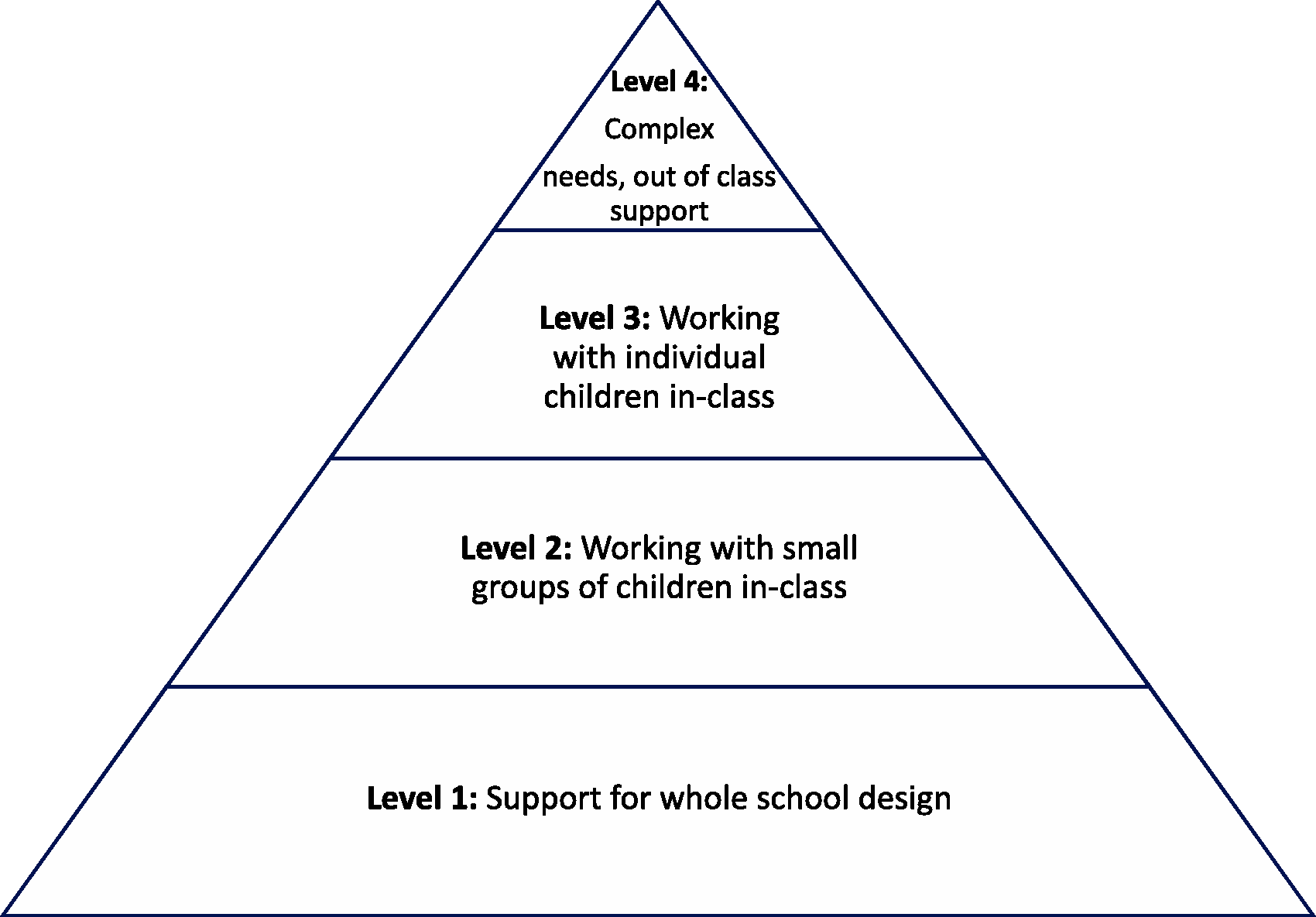
Participant recruitment
The student and supervisor participants were recruited via purposive sampling (Patton, 2002). In total, 14 final year students and three off-site supervisors, in addition to the first author, were recruited.
Data collection
Semi-structured interviews (Patton, 2002) were conducted by the first author with each pair of students at three time points: 1 week prior to the commencement of placement, at the midpoint and within 2 weeks following the conclusion of placement. Three time points were chosen so the constructions of the students’ learning and views about the workbook could be tracked across the placement, rather than being captured at one time point only. All interviews were conducted at the university campus, audio-recorded and transcribed verbatim by the first author.
Students were provided with the workbook prior to their placement, and during the pre-placement interviews they were asked about their initial impressions. At the mid- and end-of-placement interviews, further details about the workbook were sought, with questions relating to how students used it, most useful aspects, improvements and other facilitation they perceived was needed.
The off-site supervisors’ views were sought during the end-of-placement semi-structured interview. Only a post-placement interview was conducted to reduce the burden of the research for the off-site supervisor. Questions focused on how they used the workbook with students, perceptions of its contents, any additional resources used and its perceived value in other settings.
The first author conducted all interviews, which were held at the university. Supervisors were interviewed individually and students with their placement partner. The term ‘joint interviewing’ (Arksey and Knight, 1999: 74) has been used to describe an interview with two interviewees. Whilst there was a pragmatic rationale for this, joint interviews also enabled reflection and comment on each other’s perspectives, which added depth to the data and was consistent with the social constructionist epistemology underpinning the research.
Ethical approval was provided by The University of Queensland and the Faculty of Health and Social Care Research Ethics Committee at Canterbury Christ Church University. Written consent was obtained from students and supervisors, who were able to withdraw from the research at any time without impact on their studies or employment.
Data analysis
Template analysis was used to thematically analyse the data (King, 2004). King (2004) described template analysis as a flexible approach, involving researchers developing a coding template based on knowledge of what is likely to be meaningful within the data set. The shared assumptions of the authors were collated into units and assembled into an initial coding tree (Patton, 2002). Seemingly related codes were grouped beneath larger categories and overarching themes. Gibbs (2007: 44) referred to this as a form of ‘concept-driven coding’. The benefit of using these a priori codes was that it accelerated the initial coding phase and acknowledged the co-construction of knowledge between the researchers and participants, consistent with the social constructionist epistemology of the research (King, 2004). In other words, the findings and subsequent changes made to the workbook were an amalgamation of the researchers’ perceptions (indicated by the initial coding tree) and the data gathered from the student and supervisor interviews (King, 2004).
As recommended by King (2004), the initial coding tree was explored with a sample of the data by the first author. This was undertaken with QSR International’s NVivo 9 software (2010). Where the data reflected the initial codes, these were assigned; where the data did not reflect the initial codes, existing codes were modified or additional codes created. This process occurred during the reflection phase of each action research cycle. From this analysis, changes were made to the workbook in preparation for the following cycle. Thus, the opportunity to continuously evaluate and improve the workbook design and contents was exploited throughout the study.
Findings
Summary of participants.
Students and supervisors valued the workbook as a learning tool, with some students referring to it as ‘[off-site] supervision without the [off-site] supervisor’ or their placement ‘bible’. The key features and critical aspects in the development of the workbook which contributed to its usefulness across the AR cycles are summarised into four themes: (1) Introduction to the placement; (2) Guidance and examples of theory-informed occupational therapy processes; (3) Changing the structure of the workbook to promote student learning; and (4) Further potential.
Introduction to the placement
Provision of the workbook
During the first AR cycle, students were provided with the workbook at the initial interview immediately prior to placement commencement. These students later commented on the lack of information available to prepare for their placement. Maybe being given the workbook a bit before the first visit because it was really good to have it to read through before placement. (S2, end of placement, cycle 1)
In subsequent cycles, students were provided with the workbook around 2 weeks prior to the placement. This was received positively by students. The pre-placement reading in the workbook was good … That was good, to start getting an idea of what you are going to be expected to do. (S3, end of placement, cycle 2)
Reflections on personal strengths and weaknesses
During the first two cycles, challenges were reported in the relationship between the student-peers. This prompted the inclusion, in cycle 3, of preparatory material to support students to recognise and openly share their learning strengths and weakness. These resources were reported to assist students’ development of learning objectives. I think it is very different on a role-emerging placement when you have to work together with a peer. The thing we did on our strengths and weaknesses would be quite nice to have in the workbook so you could think about where your strengths and weaknesses lie and how you can help each other. (S1, end of placement, cycle 1)
The benefits of the inclusion of this information were evident in cycle 4. I started filling in the bit about the personal strengths and weaknesses. That is insightful … [It] will help me to identify what to work on and how I am going to manage the challenges. (S9, pre-placement, cycle 4)
Inclusion of a placement timeline
Students and supervisors discussed how a gradual pace was needed in order to settle into the placement, make decisions about who they will see and how they will carry out their assessment and interventions. This caused significant anxiety for students during the first cycle, as they wanted to immediately begin their interventions, but were required by the off-site supervisor to first undertake detailed observations and plan their involvement carefully. This uncertainty prompted the inclusion of a timeline in cycle 2. The timetable at the beginning of the workbook really made me feel so much better. Because I was thinking I had to jump in there making changes, and I was thinking oh my, how will I do this? And then reading that timetable I was like okay, it is all right. (S10, pre-placement, cycle 4)
Explaining the role of occupational therapy
Articulating the role of the occupational therapist in a school setting was an ongoing challenge for students. From cycle 3, examples of how to explain the role were added to the workbook along with questions for students to complete which asked them to explain their role in their own words. I especially like the bits when it asks you to describe how you would explain your role to the teacher, a parent and a child. (S7, pre-placement, cycle 3)
Guidance and examples of theory-informed occupational therapy processes
Completing assessments and reasoning interventions
Consistent with the evaluation phase of the OTIPM (Fisher, 2009), students were encouraged to use an occupational performance analysis as their primary assessment tool. In the first two cycles the workbook provided a template for this. Feedback from students indicated that they were unfamiliar with how to use the form as, while they had seen it at university, they had not used it in previous placements. They were also unsure about how to interpret this assessment information, use it to reason their interventions and write a report. Hence, an example of a completed occupational performance analysis, additional explanation and reflective questions supporting intervention reasoning and multiple examples of completed reports were added. This offered students a variety of tools and formats they could choose from and adapt. These changes were well received by students, who positively commented during subsequent cycles. I think more explanation around the intervention section would have helped. I think it could maybe have some examples with older children, so our age group would have been good. (S5, end of placement, cycle 2) Finishing the first stage of assessment and report writing and planning interventions, the workbook has been really good guidance. (S9, mid placement, cycle 4)
Balance between whole class and individual occupational therapy
In the first two cycles, the workbook introduced the concept of whole class and whole school approaches as the framework for the students’ school-based practice (see Figure 2). It became clear, however, that in some instances occupational therapy which focused on the needs of individual children was more appropriate. Students reflected that the workbook did not assist them to plan their work with individuals. To address this, modifications were made to incorporate whole class or whole school approaches during the intervention phase of the occupational therapy process rather than as the overarching framework. For example, the assessment focused on observing individual children and, if appropriate, the intervention (such as movement breaks or written as well as verbal directions) could be applied to the whole class. Part way through we decided to work one to one with the students. We then needed to adapt the workbook. So perhaps a separate section about how to work with an individual student rather than the whole class would have been helpful. (S1, end of placement, cycle 1)
Additional examples of documentation
In the first cycle, the workbook recommended students prioritise the occupational needs of the children to determine the focus for assessment and intervention. Student feedback indicated this guidance was insufficient. Examples of interview questions and strategies for gathering different perspectives were subsequently included. Some examples of how to get that feedback such as interviews with the teachers or post-it notes for the children [to write their thoughts on] would be useful in the workbook. (S1, end of placement, cycle 1)
Students were required to create their own consent and documentation systems for their work in the school. During cycle 2, students reported how time consuming this was. Following this feedback, example notes pages and consent forms were added to the workbook. Further development of these examples was indicated based on off-site supervisor feedback from cycle 4. A lot of our time has been taken up setting up those systems … [so] we have developed a template of the consent form and notes pages to act as prompts. (S5, mid placement, cycle 2) It might be good to have some more guidance on note-writing, because they hadn’t got names on the top of their notes, and they hadn’t got the school and a page reference, so things like that which I would do in clinical practice. (Supervisor 4, cycle 4)
Changing the structure of the workbook to promote student learning
Dividing the workbook into clear sections
Until cycle 3, the workbook was presented to students as loose leaf pages in a folder (between 48 pages for version two and 135 pages for version five, reflecting the additional examples). The sections were titled, although not separated into chapters. Students reported that they found the amount of information overwhelming. During cycle 4, each part of the workbook was separated into clear, discrete sections based on the phases of the OTIPM (Fisher, 2009). Students could then consider one section, for example gathering information and prioritising occupational needs, and then gradually build on this information, progressing to assessment and completing an occupational performance analysis. I found the workbook difficult to absorb. I tried, but I couldn’t relate exactly what I read to the stage I was at … perhaps we got overwhelmed by having too much information. (S7, end of placement, cycle 3) The workbook doesn’t seem so overwhelming now, because it is quite big but it stages it, and is very logical in the ordering. (S14, pre-placement, cycle 4)
Students completing worksheets to contextualise the workbook for their own placement
Students reported that the opportunity to actively engage with the workbook through filling in sections helped them contextualise the information to their particular placement. To enhance this, sections where students could write in their own ideas about how to prepare for placement, particular interview techniques or suitable interventions were added. Further additions included reflective questions, which prompted students to consider their own learning needs and achievements. Perhaps having a prompt in the workbook about your own learning needs? Because this did change a lot about what I thought was important in my learning objectives. (S2, end of placement, cycle 1)
These changes were positively reviewed by students during cycles 3 and 4. The workbook is really useful. And we filled in the sections in the beginning about preparing for placement. It was nice to help you get your head into the right frame of mind ready for placement. (S14, mid placement, cycle 4)
Further potential
As the workbook offered a structure to support the placement experience, off-site supervisors felt that it may also be helpful in placement settings other than schools, albeit with some modifications. I think obviously [the workbook] needs to be contextualised for another setting, but I don’t think there’s anything which makes it particularly school-based therapy … I think a lot of it is about process and the process is applicable to all. (Supervisor 2, cycle 2)
Off-site supervisors also suggested further developments for the workbook. I think the way it is written at the moment, this is for a student market. But there might be some merit of having the student one with a brief instructor manual. So I think that would be an ideal partnership. (Supervisor 2, cycle 4) The beauty of the workbook is it is different from other texts on practice education; there are very few texts which provide you with a toolbox, and that’s what this could be. Most of the practice education texts are about what is practice education, let’s define it, rather than how do you actually supervise in action and what tools and strategies could you use. (Supervisor 2, cycle 4)
Discussion and implications
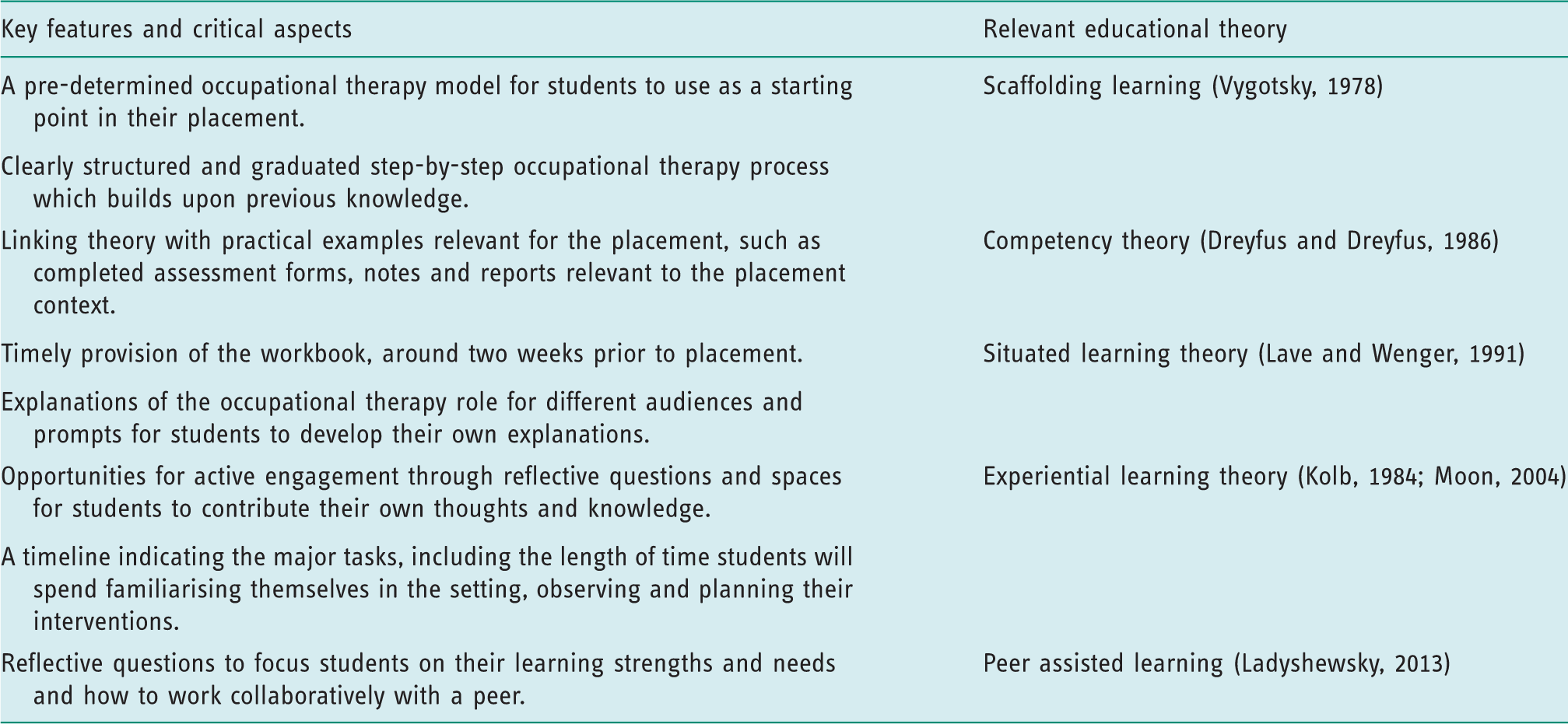
Key features and critical aspects of the workbook and relevant educational theory.
Scaffolding learning
Students required a starting point and ‘gradual release’ of information in the workbook (Evans and Guile, 2012: 113). Through selecting the OTIPM (Fisher, 2009) as the primary model and dividing the workbook into clear sections, students were guided by an ‘expert’ from their base knowledge of occupational therapy theory to new understandings through the application of this theory to a practical situation. This is consistent with Vygotsky’s (1978) description of scaffolding learning so that it is within the learner’s zone of proximal development.
Competency theory
While students appreciated the structure of the OTIPM (Fisher, 2009), it was the contextualisation of the information to their own placement setting which was of greatest use. The initial iterations of the workbook contained general information about models of practice, types of assessment and intervention approaches. Students requested examples of how this information could be used in their specific placement context as they were not able to bridge the ‘theory–practice gap’ for themselves (Leclair et al., 2013). The examples provided in the workbook formed procedural knowledge which is consistent with a novice practitioner’s preference for following established routines (Unsworth, 2001) within competency theory (Dreyfus and Dreyfus, 1986).
Situated learning theory
Students described how challenging they found it to integrate theory with practice until there was an immediate need and relevance for them to do so. This urgency for students to understand theory only happened in the few weeks prior to and during the placement, when they required it to guide their practice. Consistent with situated learning theory (Lave and Wenger, 1991), preparation for placement which included consideration of the role of the occupational therapist needed to be timely and embedded in the real-world situation.
Experiential learning theory
Experiential learning theory (Kolb, 1984) proposes there is an opportunity to learn from reflecting on and analysing an experience, then testing out any new ideas in a ‘real’ context. Adding questions to the workbook prompted students to document their reflections on the workbook content, consider how it related to their placement experience, try out the ideas these new conceptualisations proposed and evaluate the outcomes. Moreover, Moon (2004) suggested that experiential learning has an emotional component, which was consistent with the experiences of students in this study. The inclusion of the timeline reduced students’ anxieties regarding the perceived slower pace of placement.
Peer assisted learning
Guidance in the workbook on the use of reflection to promote peer relationships was valued by students and supervisors alike. Ladyshewsky (2013) advocates the value of peer assisted learning, particularly when there are clearly defined roles, which the workbook’s reflective questions promoted. Although this information was available in other books (see Appendix 1), students valued the information being located in one text and introduced at a relevant time in their placement.
Limitations
The workbook development was based on the feedback from a limited number of participants in this qualitative study. In addition, while the research advisory team were based in Australia, the study was conducted in one geographic area in England so the workbook content may be specific to local occupational therapy educational contexts. In addition, while the workbook could be useful in other practice contexts, this remains untested. Further testing of the workbook in other settings and countries is recommended.
A further limitation is that the interviews were carried out by the first author, who was known to all the students through the interview process and was the off-site supervisor for six of the 14 students. Care was taken to minimise the power differentials as described within the data collection procedures. While the closeness of the research to the participants is consistent with the social constructionist epistemology and action research methodology of the research, it is possible that this relationship may have impacted on the students’ responses to the workbook reflecting a social desirability bias.
Conclusion
The workbook was developed to support both students and off-site supervisors to articulate and use occupation-centred theories to guide their school-based practice. Through cycles of action and reflection, it was revised and key features and critical aspects identified. These were considered alongside how students were using the workbook and the influence of educational theory. The resultant resource was received positively by students and off-site supervisors, specifically the examples which contextualised theory within the placement setting. While there are areas which would benefit from additional improvement, the workbook was deemed valuable, with scope for use in placements beyond school-based practice. The intention is for the workbook to be published, with guidance for students and supervisors to support appropriate contextualisation.
Key messages
A workbook can scaffold students’ learning and application of theory to practice on role-emerging placements. The OTIPM (Fisher, 2009), with examples of processes and documentation, was highly valued.
What the study has added
Student learning and application of theory to guide practice on role-emerging placements can be supported through the use of a workbook as an adjunct to off-site supervision.
Footnotes
Acknowledgements
Thank you to the students and supervisors who contributed to the evaluation of the workbook. An additional thank you to Jeannette Head, Sarah Harvey and Sue Mesa for their invaluable advice and support in the development of the workbook.
Research ethics
Ethical approval was obtained from The University of Queensland, reference number: 2011000720, 23 June 2011 and Canterbury Christ Church University, reference number: UoQ/2011000720, 10 November 2011.
Declaration of conflicting interests
The authors confirm that there is no conflict of interest.
Funding
This research received no specific grant support from any funding agency in the public, commercial, or not-for-profit sectors.