






Abstract
Introduction
There is limited evidence to support use of sensory interventions by teachers in the classroom. The purpose of this pilot study is to determine the effectiveness of sensory activity schedule intervention in supporting participation and increasing classroom task performance in students with autism.
Method
A non-concurrent, AB single system research design across multiple baselines was used with four students with autism who attended an autism-specific school. Students demonstrated atypical sensory processing, which negatively affected their school performance. Repeated baseline and intervention data were collected by school staff using video recording during classroom tasks. Tasks performed were designated by the child’s teacher. Stage one of the Perceive, Recall, Plan, Perform System of Task Analysis was used as a repeated measure of student performance. Ratings were carried out by independent raters who were blinded to the condition of performance.
Results
Results revealed three out of four students achieved significant improvements in classroom task performance following the use of sensory activity schedule intervention developed in consultation with an occupational therapist as measured by the task analysis.
Conclusion
This study provides emerging evidence for the use of sensory activity schedule intervention in the classroom for students with autism.
Introduction
Autism spectrum disorder (ASD) is characterised by impairment in social relating and repetitive and restricted interests (American Psychiatric Association, 2014). Following consistent documentation of atypical sensory processing experienced by people with ASD (Ben-Sasson et al., 2009), sensory processing is a more clearly defined core diagnostic feature of ASD in the current Diagnostic and Statistical Manual of Mental Disorders (DSM-V) than previous DSM schedules (Schaaf et al., 2013). Many children with ASD have co-occurring intellectual disability (ID) (Matson and Shoemaker, 2009), and both disorders are thought to contribute to reduced classroom performance. Despite this, evidence of the most effective way to teach children with ASD and ID how to manage and utilise their sensory processing capacity during task performance is piecemeal and limited, with a large proportion of outcome studies focusing on children with mild impairment (Miller et al., 2007).
The current study aimed to evaluate the use of a purposefully planned set of sensory activities, termed the sensory activity schedule (SAS) on task mastery in the classroom for four children with ASD and ID. The key research question addressed in this study was: ‘What is the impact of a classroom based SAS on classroom task mastery in children with ASD and ID?’.
Literature review
Children with ASD and atypical sensory processing may exhibit reduced task performance in the classroom. Sub-optimal performance has been linked to difficulties interpreting and using sensory information in a functional way, with children over-responding or under-responding to everyday sensations (Anzalone and Lane, 2011). Such children have their own unique response style, which is accompanied by behavioural patterns such as avoidance of situations, seeking out sensory experiences, fear, anxiety and aggression (Ashburner et al., 2008; Ben-Sasson et al., 2009; Tomcheck et al., 2014). These patterns vary widely and may be perceived as being emotionally or behaviourally based (Wilbarger and Wilbarger, 2007), and may contribute to stress experienced by classroom teachers (Lecavalier et al., 2006).
Many children with ID also present with atypical sensory responsivities. In the present study, ID is defined as a significant delay in intellectual functioning of at least two standard deviations below the mean on a standardised intelligence assessment (American Association on Intellectual and Developmental Disability, 2013). It is characterised by significant limitations both in intellectual functioning and in adaptive behaviour, impacting self-care, social and learning skills. ID is present in up to 70% of people with ASD (Matson and Shoemaker, 2009), and as with ASD, atypical sensory processing may affect student participation in classroom activities. It is possible that the sensory and learning needs of children with ASD and ID may be different from those with ASD alone (Matson and Shoemaker, 2009). Reduced cognitive capacity may further compromise the ability of a child with ASD to generate strategies to manage sensory aspects of the classroom environment and perform school tasks (Matson and Shoemaker, 2009).
Successful participation within a school context requires that children meet the demands of learning and social tasks, which are often unique to each child and set by the school curriculum and the teacher’s evaluation of their capacity to perform (Chapparo and Lowe, 2011). Children with ASD and ID who present with atypical sensory processing may have significant difficulties participating successfully at school and completing set work tasks. Objective and relevant measurement of how well children with ASD and ID are able to engage in these classroom tasks is difficult for clinicians. Norm referenced standardised assessments may not be appropriate for use, as comparing these children with typical peers rarely yields useful clinical information (Losardo and Notari-Syverson, 2001). While criterion referenced and curriculum-based assessment is viewed as more suitable, there are few standardised curriculum based assessments available for use by occupational therapists. This study utilised the Perceive, Recall, Plan, Perform (PRPP) System of Task Analysis – Stage One (Chapparo and Ranka, 2011). The PRPP is a standardised criterion-referenced procedural task analysis that measures a person’s performance against performance requirements set by the task context. In this instance, the tasks nominated for evaluation were curriculum based and individually set for each child. The standard of performance expected was nominated by the classroom teacher. The outcome of PRPP stage one is a ‘mastery’ percentage score, which indicates the level of skill attained.
There is a range of different interventions which target atypical sensory processing in children with ASD and ID, and each has been described with varying terminology, outcome measures and results (Case-Smith et al., 2015). First, studies have described the use of traditional clinic-based sensory integration therapy (SIT), which involves child-led, play-based interactions between the child and therapist during sensory enhancing activities. Outcomes from SIT efficacy studies have yielded mixed results for children with ASD (Case-Smith et al., 2015; Lang et al., 2012) and have focused largely on children who do not have marked ID. As SIT is clinic based, it is difficult to implement in a classroom context with expected fidelity (Case-Smith et al., 2015). Second, Wilbarger and Wilbarger (2007) proposed the use of a two tiered sensory-based programme consisting of a ‘sensory diet’, a metaphor for engagement in targeted sensory inputs throughout the day consistent with the child’s sensory need, and with the objective to maintain a regulated behavioural state. The Wilbargers suggest a sensory diet is used in conjunction with therapressure (a deep pressure proprioceptive technique), which involves brushing and joint compressions at specified times. This approach was proposed for children with sensory defensiveness (over-responsivity). However, there are few published data showing the effectiveness of these procedures with children with ASD (Ashburner et al., 2014).
Third, sensory-based interventions that utilise equipment such as weighted vests, blankets or ball chairs to enhance sensory regulation have been employed (Barton et al., 2015). Use of these strategies is generally adult directed and designed to fit within the child’s routine and context (Case-Smith et al., 2015). Outcomes of classroom use of sensory-based equipment report mixed results (Barton et al., 2015). There are few studies involving children with ASD and ID and there is little information about the nature of sensory assessment used to determine need, description of a practice framework on which application was based, or evidence of the extent of occupational therapy consultation in the design of interventions. Finally, there is scant evidence of the impact of teacher moderated, purposefully scheduled sensory activities on the classroom performance of children with ASD and ID (Barton et al., 2015). Consequently, there is little guidance about how to instruct school staff and children with ASD and ID best to utilise sensory-based activities to facilitate occupational performance in the classroom.
The intervention used in this study is the SAS. The SAS is a functional, context-embedded approach to classroom management of atypical sensory responses that is inclusive of the diverse needs of children with ASD and school staff. The SAS is designed for children based on assessment of their individual sensory needs. Sensory processing is considered within the context of occupational performance and aims to improve a child’s ability to interpret and use sensory information for successful task performance and participation in the classroom (Case-Smith et al., 2015). Informed by theories of sensory processing and behaviour analysis, activities are designed for each child to promote behaviours required for specific task performance. The sensory activities used focus largely on sensations of muscle effort, movement and tactile cues. They are derived from Wilbargers’ (Wilbarger and Wilbarger, 2007) original notion of a ‘sensory diet’, and the assumption that sensory input experienced at specific times may have an impact on functional participation in daily occupations. For example, researchers have found structured physical exercise is effective in improving engagement in classroom tasks (Lang et al., 2012). Although therapressure is a central component to the sensory diet protocol, it was not used in this study. Use of the term ‘diet’ in relation to therapeutic activities is at odds with health language in the Australian school curriculum and is therefore unsuitable. However, emerging evidence in education (Ashburner et al., 2014) supports opportunities to engage in sensory activities as part of the overall curriculum for children who demonstrate particular sensory needs (Queensland DET, 2011). The SAS activities used are ‘occupation-driven’ and may serve as functional and contextually appropriate replacement behaviours, which may allow children to complete tasks and participate within their environment successfully and appropriately according to task demands. Therefore the purpose of this study was to evaluate the impact of SAS intervention on classroom performance for four children with ASD and ID.
Method
Research design
A non-concurrent, AB single system research design (SSRD) across multiple behaviours and participants was employed for this pilot study (Ottenbacher, 1986). Single system designs are ideally suited for research into the effects of a novel intervention such as this study (Zhan and Ottenbacher, 2001). The ‘A’ phase represented a baseline of performance under the Aspect comprehensive approach to education (ACAE) (Aspect, 2012). The ‘B’ phase represented the intervention phase in which the application of the in-class SAS occurred together with the ACAE. The use of SSRD has been supported in recent disability research as being able to offer a high level of evidence (Kazdin, 2011). The design of this study conforms to ten out of the 11 criteria as outlined in the single case experimental design rating scale, which includes an expectation of control parameters such as use of repeated measures, replication across at least three subjects and control of rater bias (Tate et al., 2008). The eleventh criterion, involving evidence of generalisation, was not addressed as this was a pilot study.
Three main reasons support the use of the SSRD in this study. First, participants function as their own controls, allowing for functional relationships to be measured between different interventions (Kazdin, 2011). Children with ASD and ID have very individual behavioural and sensory traits, and a research design is required that allows individualised, rather than group, interventions (Mesibov and Shea, 2011). Studying the impact of SAS on individual children helps identify how these individual traits are associated with task performance compared to group studies in which individual variations may be masked by the group average (Kazdin, 2011; Ottenbacher, 1986; Zhan and Ottenbacher, 2001). Second, SSRD enabled repeated measures to be taken throughout both intervention phases to track not only the amount of performance change, but also the rate and timing. Repeated measures enabled the researchers to observe irregularities in performance that may have related to the classroom social, sensory and curriculum contexts (Kazdin, 2011). Third, a non-concurrent design was used as the children who met the requirements of the selection criteria and their teachers were not able to participate in the study at the same time due to staffing and curriculum restrictions (Ottenbacher, 1986). An AB design was chosen over an ABAB design for pragmatic purposes. The intervention was teacher driven and teachers were unlikely to stop the intervention if they found it to be effective in the classroom.
Participants
Summary of participants.

Note: names are pseudonyms.
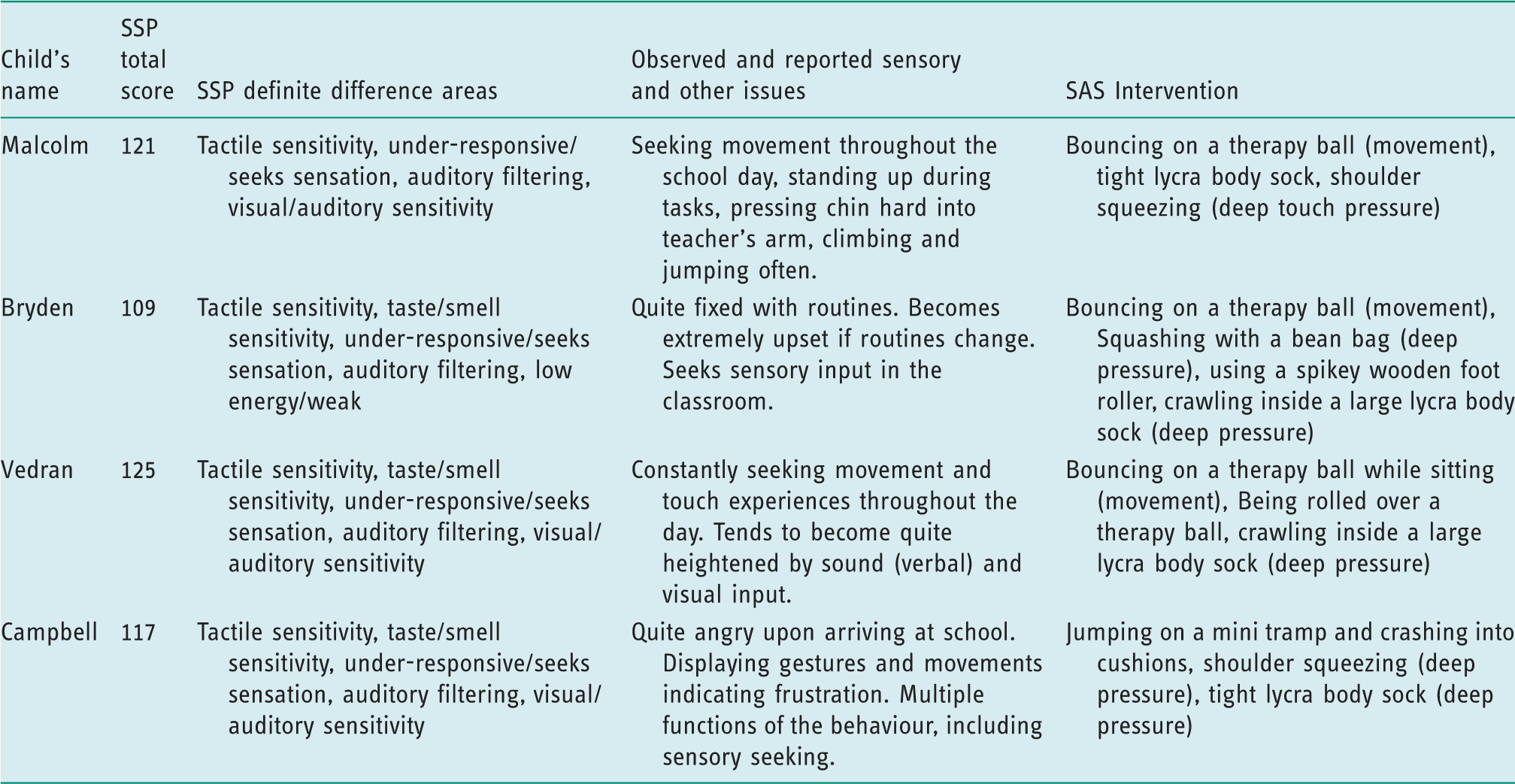
Children were recruited from teacher referrals, which indicated that all children had displayed movement-seeking behaviours that interrupted their functional performance in the classroom. Two of the children presented with behaviours which, in addition to sensory seeking, are commonly reported in children with ASD (Happé and Frith, 2006) and may not have been sensory in nature. Bryden, for example, was very upset with any change to his environment. Campbell was observed to point and shout at school staff and stomp very heavily around the classroom in response to frustration with communication and task avoidance. Children’s responses to sensory aspects of school life were assessed using the short sensory profile (SSP) (McIntosh et al., 1999). In this study, the SSP was not used as an outcome measure, but rather to confirm the presence of atypical sensory processing. It is common for children with ASD to display a pattern of sensory processing which encompasses simultaneous seeking and avoiding behaviours (Tomcheck et al., 2014).
Outcome measure
Perceive, Recall, Plan, Perform Stage One procedural task analysis
PRPP Stage One (Chapparo and Ranka, 2011) is a criterion-referenced procedural task analysis, which allows a therapist to identify errors in task performance in the context of occupational performance. PRPP Stage One has been used to measure performance mastery in a range of different populations including children with learning difficulties (Lowe, 2010), adults with traumatic brain injury (Nott et al., 2009) and adults with schizophrenia (Aubin et al., 2014). The PRPP System of Task Analysis has demonstrated good validity and reliability (Aubin et al., 2014; Lowe, 2010; Nott et al., 2009). At the time of writing, no published studies were found that measured task performance mastery in children with ASD and ID using PRPP Stage One.
During PRPP stage one analysis, functional tasks are broken down into observable, measurable units. Mastery in these tasks is determined by the percentage of steps performed error free. Errors were defined according to the standardised PRPP procedures for administration and scoring of Stage One as errors of accuracy (a step is performed incorrectly), errors of repetition (a step is unnecessarily repeated), errors of omission (a step is omitted) and errors of timing (performance of a particular step takes too long relative to the task context). In this study, errors of accuracy, repetition and omission only were scored as children were given as long as they needed to complete classroom tasks. A percentage mastery score was calculated by comparing the number of steps performed without errors to the total number of required steps for the task.
Procedure
Approval to undertake the study was obtained through the University of Sydney Human Research Ethics Committee as well as the Aspect Research Approvals Committee. Written informed consent from parents was obtained prior to data collection. Children were selected following teacher referral to the school’s occupational therapy service for classroom task performance difficulties that may have been sensory in nature. Informal observational assessment of the child within the classroom was conducted by the school’s occupational therapist to confirm that atypical sensory processing may have been contributing to school performance difficulties. Children’s parents also completed the SSP to identify the presence of atypical sensory processing patterns that may have affected their school performance. Phase A and phase B data were collected from participants during terms two, three and four of the school year. Teachers had taught the children for one or more years before the study commenced.
Children were filmed by school staff while completing teacher-nominated desk work tasks which were part of their class programme. Tasks were designed based on the teachers’ knowledge of best practice instruction for children with ASD as well as assessment of a child’s individual learning needs. These tasks included activities such as matching, cutting, gluing, threading and puzzles. Tasks differed depending on the class and the teacher. Children were filmed completing the same work tasks during phases A and B. To control for rater bias, videotaped performances were placed in random order for viewing before being scored by researchers who were blinded to the phase represented. Researchers who scored the videos using the PRPP Stage One procedures were qualified occupational therapists who had been trained to administer and score the PRPP. Teachers were not involved in scoring or analysis of research videos and were unfamiliar with PRPP assessment and scoring. PRPP Stage One percentage scores obtained during phase A and phase B were graphed for visual analysis (see Figures 1–4).
Malcolm.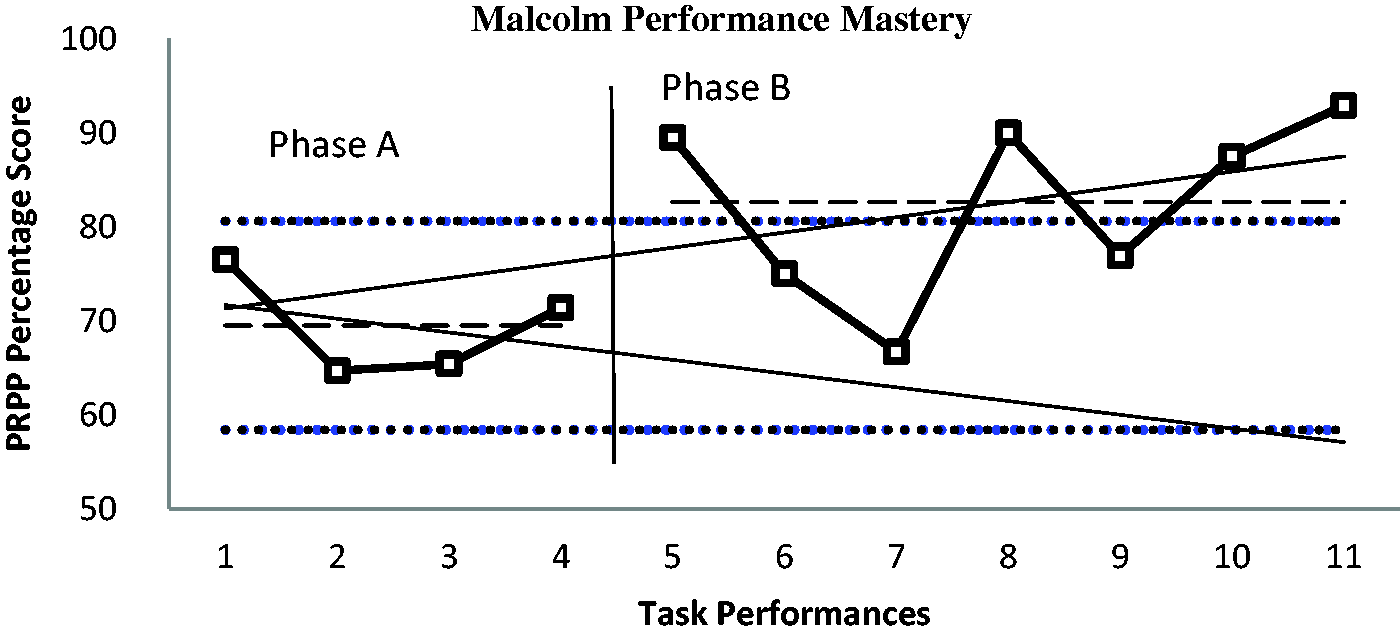
Interventions
Aspect comprehensive approach to education
In this study, ACAE only was used during phase A. The ACAE is an evidence-informed framework guiding everyday educational practice for students with ASD (Aspect, 2012) and was already in place at the school. ACAE consists of eight elements including environmental supports and structured teaching approaches, individualised planning, positive behaviour support, curriculum, family involvement, inclusion and multidisciplinary team involvement.
Sensory activity schedule intervention
During phase B, SAS intervention was used in addition to the ACAE. Five key elements of the SAS were developed as a practice framework for this study and are described below:
Evidence of need
Summary of sensory assessment and intervention.
Use of sensory activities
Second, the SAS comprises a number of sensory activities which occur in the classroom, with a classroom staff member (teacher or teacher’s aide) and take approximately 10 minutes. In this study, sensory activities nominated for use (for example, jumping on a mini trampoline, being squashed under a therapy ball) varied depending on each child’s needs and ability as identified by an occupational therapist, as well as the resources available in the classroom. Activities selected were easy, quick and appeared to have immediate behavioural benefit when piloted by the therapist. Participants were given an opportunity to express preferences for particular activities and these were considered during activity selection. Sensory activities for each participant are outlined in Table 2.
Task specific
SAS is used to promote the performance of specific tasks within the classroom and is purposefully scheduled into the classroom programme. For example, SAS intervention occurred before sitting to complete a difficult visual matching task. The specificity of expected outcome, rather than general behavioural change per se is the goal. This follows the assumption that successful therapeutic intervention in the classroom facilitates access to the curriculum (Hinder and Ashburner, 2010).
Teacher directed
In this study, the design of the sensory activities, nomination of target tasks for improved performance and goal setting occurred in consultation with classroom teachers, children and families. Goals were functional and reflected the learning and behavioural needs of the child and teacher, and included successful task completion or group participation. This supports best practice in schools, which emphasises the need for therapists to understand the educational context and teacher priorities in student performance (Hinder and Ashburner, 2010). Teachers received specific training from occupational therapists in the use of activities and equipment.
Contextual fit
All aspects of the SAS intervention are relevant to the relationships and inclusive context of a child’s everyday life. The sensory context of the classroom offers affordances or barriers to children’s performance (Chapparo and Lowe, 2011). In this study, the context of the child’s performance was the classroom sensory, physical, social and cognitive learning environment and informed the nature of SAS goals and activities. This supports the notion that therapy intervention in schools should be ‘educationally relevant’ (Hinder and Ashburner, 2010). Each classroom had a slightly different set up, according to the available space, classroom resources and student needs.
Data analysis
Data from PRPP Stage One procedural task analyses (Chapparo and Ranka, 2011) were calculated as a percentage of task mastery, graphed and entered into SPSS (version 22). Each data point observed on the graph represents a PRPP analysis of classroom task mastery in relation to the teacher’s expected outcome. The data were checked and found to be free from serial dependency. Data analysis was then carried out in the following step-wise fashion: visual analysis, semi-statistical analysis and finally, statistical analysis, which was used to confirm visual analysis (Ottenbacher, 1986). Significance level was set at 0.05.
Visual analysis
Means and standard deviation scores were generated for phases A and B for each child and plotted on the graphs to enable visual scrutiny of the magnitude of change between phase A and B (Figures 1–4). Linear trend lines using the line of best fit method were calculated and graphed (Ottenbacher, 1986), allowing visual analysis of differences between the direction and rate of change between phases (Figures 1–4). Trend lines generated for the baseline phases were also carried through to the intervention phase to allow comparison of direction and rate of change between phases (Figures 1–4).
Semi-statistical analysis
A two standard deviation band semi-statistical procedure (Ottenbacher, 1986) was used initially to determine the significance of changes visualised between phases A and B. Two standard deviation lines were placed on each side of the phase A mean line and extended into phase B. Phase B graphs were scrutinised to determine the number of data points that fell above the upper two standard deviation band. Where two consecutive data points fell more than two standard deviations above the mean, a significant change was deemed to have occurred between phases A and B (Figures 1–4).
Statistical analysis
To confirm results from visual and semi-statistical analysis, each child’s data were analysed separately using a non-parametric Mann–Whitney U statistic. This statistical analysis using an independent sample test was possible because there was no serial dependency (Greenwood, 2004; Kazdin, 2011). The mean score from phase A data points was compared to the mean score from phase B data points for each individual child.
Results
Differences between phase A and phase B scores were noted for all four children. Each child’s results will be discussed separately.
Malcolm
Summary of results from phase A and phase B.
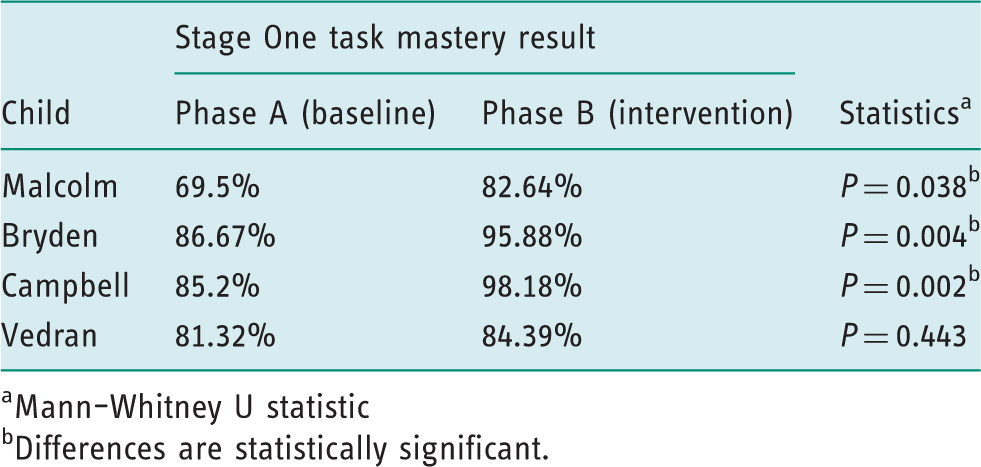
Mann–Whitney U statistic
Differences are statistically significant.
Bryden
Figure 2 shows seven data points from phase A and seven from phase B. Bryden’s mean phase scores showed an increase from phase A (86.6%) to phase B (95.8%). Trend lines suggest a slight slope towards declining performance in both phases A and B. Two consecutive scores fall above the upper two standard deviation band indicating significant improvement in phase B performance. Phase B scores showed a statistically significant increase in performance (P = 0.004) (Table 3).
Bryden.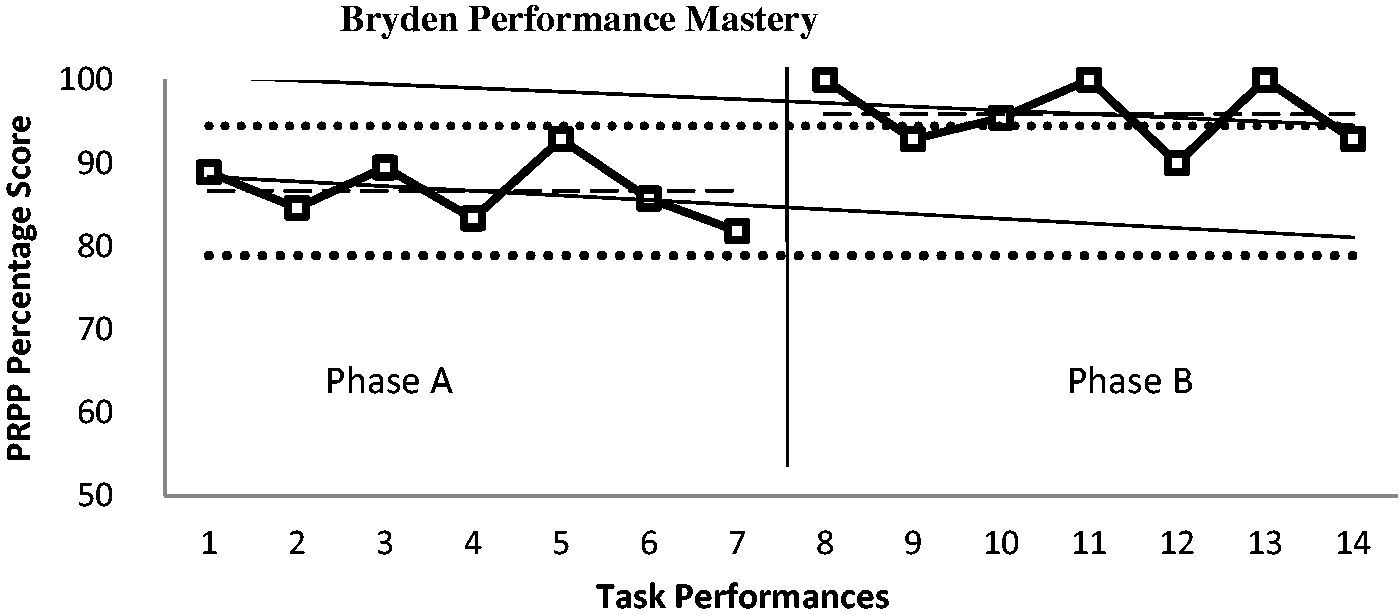
Campbell
In Figure 3, there are nine phase A data points and five phase B data points. Campbell’s scores showed an increase from phase A (85.2%) to phase B (98.1%), with three scores falling outside the upper two standard deviation band. Trend lines indicate a decline in performance during phase A and a trend towards improvement during phase B. This result demonstrated a statistically significant increase in performance mastery for Campbell (P = 0.002) (Table 3).
Campbell. Vedran.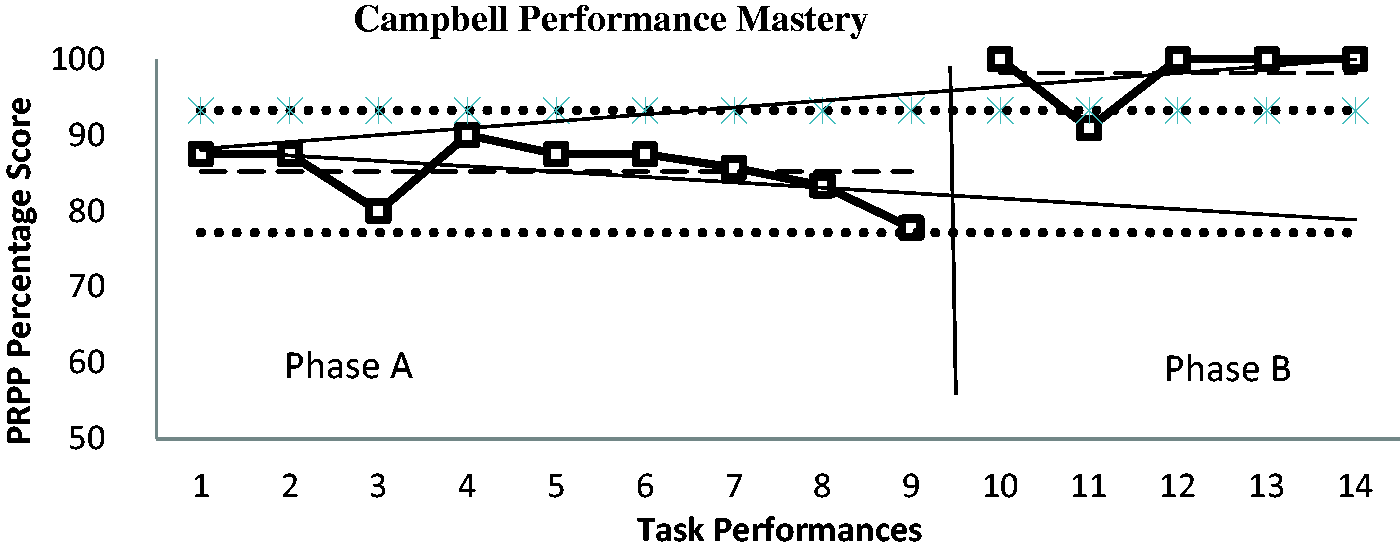
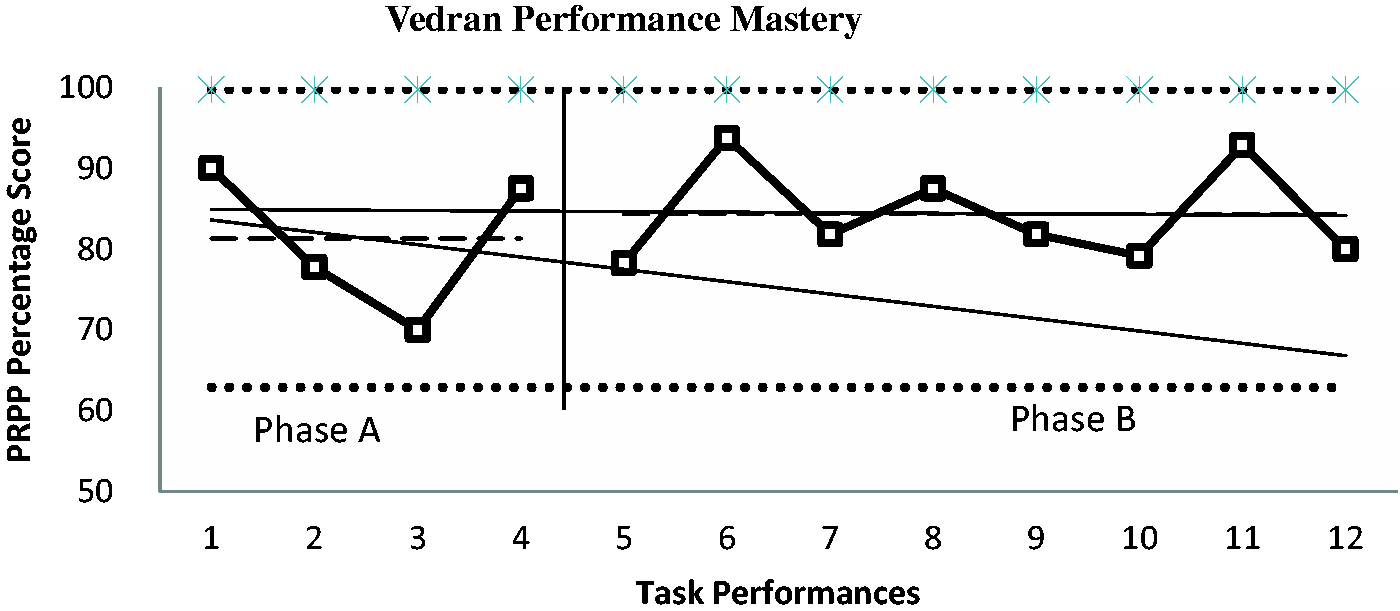
Vedran
Figure 4 reveals a small increase in performance mastery in phase B (84.3%) compared with phase A (81.3%). The trend line indicates a mild change in slope towards improved performance indicating possible clinical but not statistical significance (P = 0.443) (Table 3).
Discussion
This pilot study aimed to identify the impact of a classroom based SAS on classroom task mastery in four children with ASD and ID. Results showed that three out of the four participants made significant improvements in task mastery following SAS intervention, with the fourth child showing clinically significant, but not statistically significant improvement. These results suggest that targeted sensory activities may have had a positive effect on classroom task mastery for the children with ASD and ID who participated in the study.
Current research addressing sensory-based intervention yields mixed results in terms of efficacy (Case-Smith et al., 2015). Few studies have reported on the use of sensory activities before the commencement of functional tasks within the classroom. Many of these studies have found sensory intervention to be ineffective, which is inconsistent with findings in the current study. Murdock et al. (2014), for example, found the use of a platform swing ineffective in reducing stereotyped and repetitive behaviours and being engaged and ‘on-task’ with a group of children with ASD. Similarly, Sniezyk and Zane (2015) found no effects of classroom-based intervention to decrease stereotypy, but did not describe whether sensory assessment was linked to sensory interventions used for children with ASD and ID. The current study differed in that only children with sensory processing difficulties were included, and their sensory needs were specifically assessed and used to design interventions that targeted particular classroom performance objectives.
Bryden and Campbell showed the lowest overall scores on the SSP (109 and 117, respectively), indicating more atypical sensory processing than the other two participants. These children also demonstrated the most improvement following SAS intervention. There are several possible reasons for this finding. First, perhaps children with more significant difficulties with sensory aspects of task performance may benefit most from SAS intervention. Vedran, who made the least change during the SAS intervention phase, had a higher SSP total score than the other children (125) indicating that according to that measure, he had fewer difficulties with sensory aspects of task performance than the other children. Further studies with larger numbers of children with ASD would be required to confirm this hypothesis. Second, the difference in Vedran’s response to SAS compared with the other three children may be due to the design of the study. Vedran showed large variability in his baseline, which was quite short, generating a wide two standard deviation band. A longer, more stable baseline was not obtained due to staffing and resource issues in the classroom during the baseline phase, including temporary absence of a key staff member from the classroom. Future studies using SSRD would need to generate extended baselines for participants who demonstrated similar variability in phase A data. Third, the SAS was delivered by classroom staff. It is possible that there was variability in the way teachers administered the interventions. Research with larger numbers of children and school staff will be required to investigate the ‘teacher effect’ further.
At the time of writing, no studies were found that evaluated SAS or any classroom-based sensory intervention using a criterion referenced measure of procedural task analysis such as PRPP with children with ASD and ID. Research using this outcome measure was unique in that it measures occupationally relevant outcomes such as task mastery in the context of the child’s current educational programme. Previous studies of sensory intervention have used a range of outcome measures such as a reduction in stereotypy and incidence of repetitive behaviours (Murdock et al., 2014; Sniezyk and Zane, 2015). It is possible that the positive change noted in this study was due to the ability of the PRPP to measure stepwise increments of change in performance that were not available in outcome methods used in previous studies.
Limitations
The results of this pilot study should be interpreted with caution. The SAS intervention described was not used as a strategy in isolation. Rather, the SAS intervention involving selected activities was used in addition to best practice teaching for children with ASD and ID. Sensory activities were specifically designed for each child based on a prior standardised and non-standardised assessment of sensory needs and consideration of the child’s educational programme and context. This study measured performance outcome only. Further research is required to examine concomitant change in supporting capacities such as attention and behavioural regulation.
Further limitations in the study include the generalisability of results to all children with ASD and ID. Although a multiple subject design was used, generalisability will only be confirmed through future replication of this study or a larger controlled experimental design. Data collected from both phases were constrained to one school term with a short phase A for two of the children. Data points varied between children due to the practicalities of collecting data in a busy classroom. A longer study with more data points and which includes replication of a second A and B phase is needed to determine the long term effects of the use of the SAS with this population. However, this was a classroom based study, with interventions conducted by trained teachers and teaching assistants under the guidance of an occupational therapist, mirroring real-world intervention conditions. Occupational therapists within education often work in a consultative model of practice (Hinder and Ashburner, 2010). In this model of service provision, there would be an expectation of measurable signs of performance improvement apparent over the course of one school term following suggestions made by occupational therapists. Studies have suggested that implementation of sensory interventions may provide secondary social reinforcement to sensory-based behaviours (McGinnis et al., 2013). This study took place in a classroom that had a small space for sensory activities and limited resources. In both phases, there was at least one staff member to every three students. During phase A, children were afforded the same amount of social interaction opportunities with staff as during phase B. Further research may evaluate differences in social reinforcement that may be afforded students receiving SAS in comparison to other teaching strategies.
Conclusion
Managing sensory processing difficulties in the classroom for children with ASD and ID remains a challenge for school staff. This study may contribute to emerging evidence for the use of a targeted SAS within the school day. This study used a single system AB design with four children with ASD and ID in order to evaluate the impact of SAS within the classroom. Results are promising, with three out of four children demonstrating statistically significant improvements in task mastery following the SAS intervention. Further studies are needed using more rigorous methodology, greater numbers of participants and a longer period of intervention in order to evaluate further the effectiveness of SAS intervention.
Key findings
SAS intervention can improve classroom task mastery for children with ASD and ID. The PRPP is a suitable tool for measuring classroom task mastery.
What the study has added
The SAS framework can be used to guide the practice of occupational therapists working in schools with children with ASD who have difficulties with sensory aspects of task performance.
Footnotes
Research ethics
Ethical approval was obtained from the University of Sydney Human Research Ethics Committee (HREC). Project Title: Classroom Based Sensory Processing Intervention for Children with Autism Spectrum Disorder. Project no.: 2014/305, granted 24/07/2014. Ethical approval was also obtained from Autism Spectrum Australia (Aspect) Research Approvals Committee (ref no.: 1430), granted: 26/08/2014.
Declaration of conflicting interests
The first author (Caroline Mills) is currently employed by Autism Spectrum Australia (Aspect) where the research took place. As the first author is permanently employed, results of the study have no impact on her current or future employment with Aspect. Aspect is a large not-for-profit organisation, which will not profit financially from the favourable results of this study. The other authors have no conflicts of interest to declare.
Funding
A small amount of research funding was obtained through the Aspect Elizabeth Hoyles Fellowship.