







Abstract
Introduction:
Occupational balance is an important concept in occupational therapy. However, no validated Occupational balance assessments currently exist in Lithuania. This study aimed to examine the psychometric properties of the Lithuanian version of the Occupational Balance Questionnaire 11 (OBQ11-LT).
Method:
A total of 127 healthy adults completed the OBQ11-LT to evaluate construct validity. Of these, 53 participants were randomly assigned to complete the questionnaire again after 7–10 days to assess test-retest reliability. Construct validity was examined using exploratory and confirmatory factor analyses. Test-retest reliability was evaluated using the intraclass correlation coefficient (ICC) for both total scores and individual items. Internal consistency was assessed with Cronbach’s alpha.
Findings:
The model demonstrated acceptable fit (χ²(45) = 719.79, p < 0.001; CFI = 0.933; TLI = 0.909; RMSEA = 0.106). The ICC between test and retest OBQ11-LT total score was 0.924. Total scores showed a significant statistical relationship (p < 0.01), indicating good reliability. Cronbach’s alpha for the OBQ11-LT total score was 0.915, indicating acceptable internal consistency.
Conclusion:
OBQ11-LT demonstrates good reliability and validity for assessing occupational balance in general populations. Its psychometric properties are suitable for practice and research, making it a valuable tool for studying occupational balance in similar contexts and broadening the research areas for Lithuanian occupational therapists.
Introduction
An occupation encompasses activities that hold distinct significance and purpose for each individual. It represents a fundamental part of one’s identity and abilities, shaping how a person chooses to spend their time and make decisions (Youngstrom, 2002). Engaging in occupation is so essential that it serves as a cornerstone of life, with meaningful occupations contributing positively to health and well-being (Cha, 2022). The concept of occupation plays a vital role in a person’s life, and the relationship between occupation and time is deeply intertwined, as people are constantly engaged in some form of occupation throughout each hour of the day (Cha, 2022).
Occupational balance (OB) is a subjective feeling for everyone that includes the right number of occupations and the right variety of occupations in life (Wagman et al., 2012). The balance of occupations consists of at least three decisions of a person: a person’s opinion of how many activities correspond to his/her values; having individual capabilities and resources to manage their activities; and the perception that the overall mix of activities is harmonious (Wilcock and Hocking, 2024), a foundational source in occupational science. OB is influenced by unique cultural, social, and occupational norms that vary by country (Wagman and Håkansson, 2014). OB involves both the personal desire to engage in certain activities and the necessity of fulfilling major life responsibilities. The balance between spending time alone, with family, engaging in leisure activities, and managing other essential life duties is a key to overall well-being (Backman, 2004).
The concept of OB is based on the idea that optimal well-being is achieved when there is a harmony between personal, work, and leisure activities. Imbalances in these areas may lead to stress, fatigue, and decreased overall life satisfaction (Reitz and Scaffa, 2020). Park et al. (2021) have investigated that it is possible to improve subjectively assessed health and quality of life by promoting a better balance between activities. Wagman et al. (2012) have contributed foundational work in defining OB by examining how individuals manage their daily activities and achieve a satisfying balance between various aspects of life.
The OBQ11 was developed by Wagman and Håkansson (2014) to assess how individuals perceive balance between different types of daily activities, including work, rest, leisure, and social participation. The questionnaire aims to capture the subjective experience of balance based on how meaningful and satisfying the distribution of activities is to the person, rather than relying on objective measures of time or productivity. Its items reflect key components of OB as described in occupational science literature.
Occupational Balance Questionnaire (OBQ11) is widely used (e.g., Günal et al., 2020; Bonsaksen et al., 2021; Dhas et al., 2024) in occupational therapy to better understand how different life demands affect a person’s ability to achieve a satisfying and meaningful lifestyle. As Lithuania’s health and occupational contexts may differ from Sweden where the original OBQ11 was validated (Håkansson et al., 2020), it is essential to adapt the questionnaire to the cultural, linguistic, and socioeconomic characteristics of the Lithuanian population. Cultural adaptation ensures that the tool reflects local values, norms and daily routines, allowing practitioners to use a relevant and individualized assessment that supports more effective client care.
Without adaptation, certain terms or concepts might lack relevance or clarity, which could affect the validity of responses. By developing a Lithuanian version, researchers and practitioners can confidently gather data that reflects the unique experiences and social context of Lithuanian users, aiding in more targeted health and occupational interventions. Therefore, the aim of the study was to examine the translation, cultural adaptation, and psychometric properties of the Lithuanian version of the Occupational Balance Questionnaire.
Method
Before the initial study started, the authors contacted the developers of the original OBQ11 and obtained written permission to translate the questionnaire into the Lithuanian language. Ethical approval was granted by the Kauno kolegija Higher Education Institution Committee for the Evaluation of Research Compliance with Research Ethics, protocol 2024-03-14 No. 13-35. Potential participants were informed about the concept of OB and the aim and objectives of the study. Volunteers who agreed to participate had fulfilled the online survey using the “Google Forms” platform.
Participants
The study was conducted in Kauno kolegija Higher Education Institution. Participants from the teaching and administrative staff, students, and family members of the employees were recruited for the study using convenience sampling. Participants were invited to participate via email and word of mouth. Information about the study’s purpose and objectives was sent to the potential participants, and those who volunteered were included in the study.
In scale development and adaptation research, a typical guideline is to include 10 participants for each item on the scale (Boateng et al., 2018; Osborne and Costello, 2004). Following this approach, given that the Occupational Balance Questionnaire comprises 11 items, the target was to include a minimum of 110 participants in the study. The inclusion criteria required participants to be at least 19 years of age, literate, and free of any medical conditions, including cognitive disorders, psychological conditions, and sensory impairments, that could affect the study results. These criteria were confirmed through an online pre-participation questionnaire, in which participants self-reported their ability to read and understand Lithuanian and the absence of any conditions that might interfere with completing the OBQ11-LT.
Outcome measures
Occupational balance
In this study, OB was measured using the Lithuanian-adapted version of the Occupational Balance Questionnaire (OBQ11). The OBQ11 is a concise, 11-item self-rated instrument designed to assess individuals’ satisfaction with their balance in daily occupations across various domains. Each item is scored on a 4-point Likert-type scale, from “strongly disagree” (0) to “strongly agree” (3), resulting in a total score ranging from 0 to 33. Higher scores indicate a higher level of OB. A recent validation study in Sweden (Håkansson et al., 2020) demonstrated that OBQ11 items are logically ordered, progressing from easier to more complex ones, and showed good internal consistency (Cronbach’s α = 0.92), acceptable model fit according to Rasch analysis and measurement invariance across age and gender groups.
OBQ11 was adapted to address cultural relevance, with previous studies confirming its validity and reliability in other languages. For instance, the English version of OBQ11 showed good reliability (PSI = 0.92; Håkansson et al., 2020), while the Turkish version (OBQ11-T) demonstrated strong test-retest reliability (0.922) and good internal consistency (Cronbach’s α = 0.785; Günal et al., 2020).
Sociodemographic information
Information on age, gender, marital status, education level, and employment status was collected using an investigator-developed questionnaire.
Lithuanian adaptation, validity, and reliability
Evaluation of the validity of the OBQ11-LT in healthy individuals was conducted in three consecutive stages: translation, piloting, and analysis of psychometric properties.
Phase 1: Translation
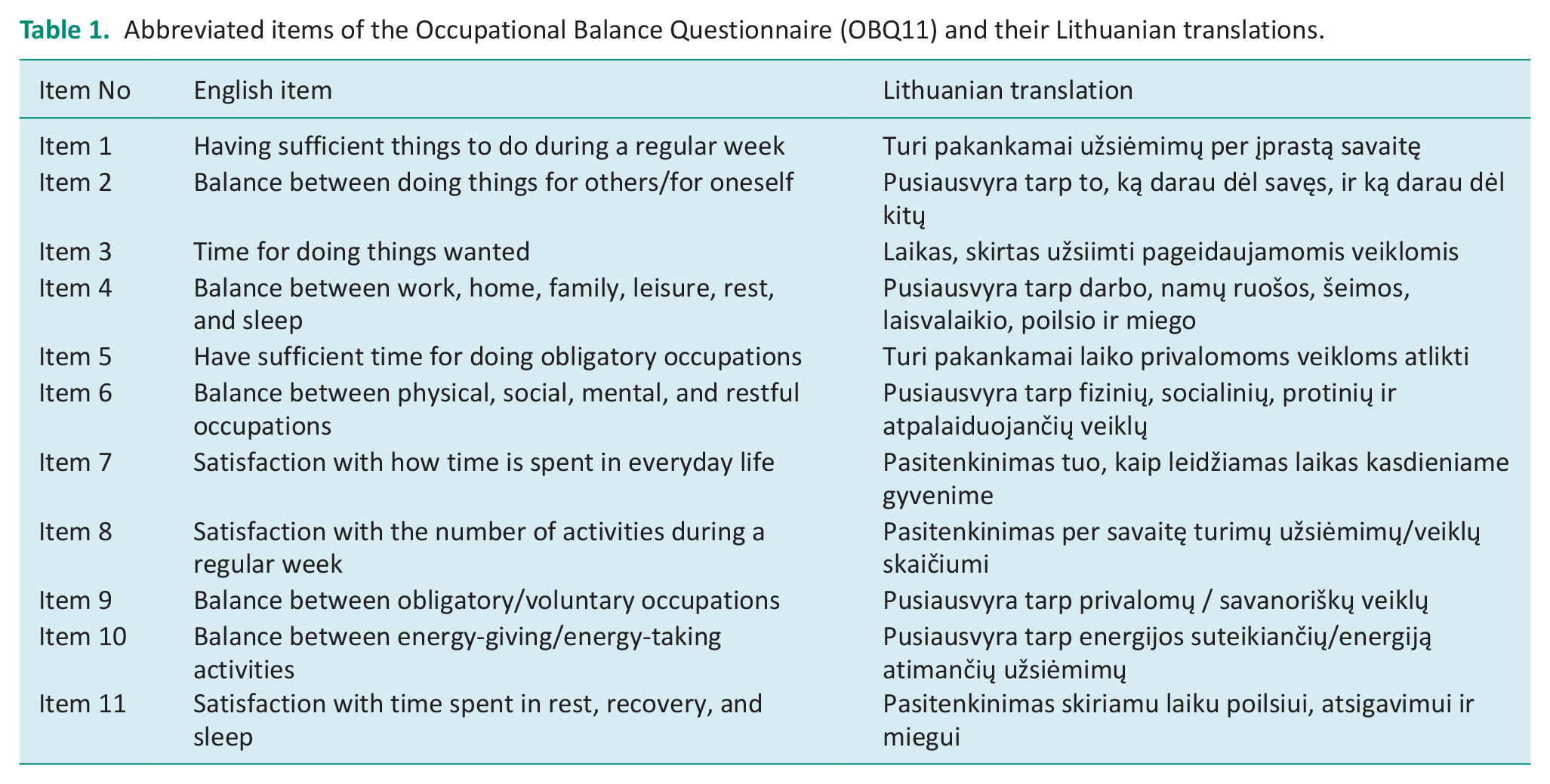
The translation process followed previously established procedures (Beaton et al., 2000). Two English-proficient occupational therapists, who were also native Lithuanian speakers, translated the OBQ11 into Lithuanian. Their translations were then merged into a single version. Two translation experts performed a back-translation into English, which was sent to the original developers to ensure consistency with the original version. A Lithuanian philologist reviewed and approved the final version of the translation, ensuring linguistic clarity, natural phrasing, and cultural appropriateness, and produced the preliminary OBQ11-LT. Linguistic adjustments were made during the translation phase. Table 1 presents the final version of the OBQ11-LT items after pilot testing and linguistic revisions.
Abbreviated items of the Occupational Balance Questionnaire (OBQ11) and their Lithuanian translations.
Phase 2: Piloting
A pilot study was conducted to prevent unintended meanings and get feedback about the questionnaire from the respondents. The preliminary version of the Lithuanian OBQ11 was applied to 20 healthy individuals (85% female; mean age 42.0 ± 11.3 years; and 35% held a master’s degree).
Item-level feedback and revisions following pilot testing
Based on feedback from 20 pilot participants, several items were revised to improve linguistic clarity and cultural appropriateness by introducing idiomatic expressions or terminology better suited to the Lithuanian context. Below is a summary of item-specific comments and corresponding actions.
Two respondents stated that item one and item eight are similar, and one stated that item one was difficult to understand. To make the final version of items more comprehensible, we had to make cultural adaptation to the Lithuanian language so that item one refers to having sufficient things to do, whereas item eight relates to satisfaction with the number of activities during a week. In preliminary version item one was translated “Įprastą savaitę aš jaučiu, kad turiu nei per daug, nei per mažai veiklų” and later it was changed to “Aš jaučiu, kad įprastą savaitę turiu pakankamai veiklų.” Respectively, item eight first translation was “Įprastą savaitę esu patenkintas/-a veiklų, kuriose dalyvauju, kiekiu” and later it was changed to “Esu patenkintas veiklų kiekiu, kuriose dalyvauju įprastą savaitę.”
One respondent stated that item two construction of the sentence needed correction, so it was changed from the first version “Išlaikau pusiausvyrą tarp dalykų, kuriuos darau sau ir kitiems” to final version “Išlaikau pusiausvyrą tarp dalykų, kuriuos darau dėl savęs ir dėl kitų.”
One respondent said it was difficult to decide about the rating option for item seven, but we had not made any changes because the item's structure was comprehensible.
Two respondents stated that they had difficulties in comprehending item nine. The research group had the most discussions while translating this item to avoid losing the intended content of the original item. However, this was not possible due to linguistic peculiarities, because the word “variation” cannot be straightforwardly translated to Lithuanian, so we had to translate it “I have enough options/choices.” In the future, the use of clearer explanations written in parentheses would be useful (i.e., explain that the item content is about the balance between obligatory/voluntary occupations).
Two respondents suggested that five response option rating scale might be a better balance (the option for “average” was missing). Also, it was mentioned that it was difficult to discriminate between “strongly disagree” and “disagree.” But this was not changed to keep the consistency with the original scale.
Phase 3: Establishment of the psychometric properties phase
Exploratory and confirmatory factor analyses were conducted to assess construct validity, while test-retest analysis and Cronbach’s alpha were utilized to evaluate the instrument’s reliability.
Data analysis
The analysis aimed to evaluate the psychometric properties of the OBQ11-LT scale, specifically focusing on its factor structure, test-retest reliability, and internal consistency. The procedure involved conducting exploratory and confirmatory factor analyses, along with assessments of test-retest reliability and internal consistency. Data were analyzed using the SPSS statistical software package (version 23.0) and SPSS AMOS (version 23.0). Exploratory factor analysis examined the factor loadings of the OBQ11-LT scores. In the confirmatory factor analysis, RMSEA (Root Mean Square Error of Approximation) values below 0.08 were deemed significant. In addition, CFI (Comparative Fit Index), Tucker-Lewis Index (TLI), and the chi-square to degrees of freedom ratio (CMIN/DF) were analyzed, with statistical significance accepted at values over 0.9 for CFI, TLI, and between one and three for CMIN/DF (Hu and Bentler, 1999).
The reliability of the instrument was assessed using the test-retest method and Cronbach’s alpha. The reliability of the OBQ11-LT between the first and second evaluations was measured using the intraclass correlation coefficient (ICC). ICC values were calculated for each item and the total OBQ11-LT score. The interpretation of ICC values was as follows: poor (<0.40), fair (0.40–0.60), good (0.60–0.75), and excellent (0.75–1.0; Cicchetti, 1994). A p-value of <0.05 was considered statistically significant. Internal consistency was evaluated using Cronbach’s alpha.
Findings
Participants
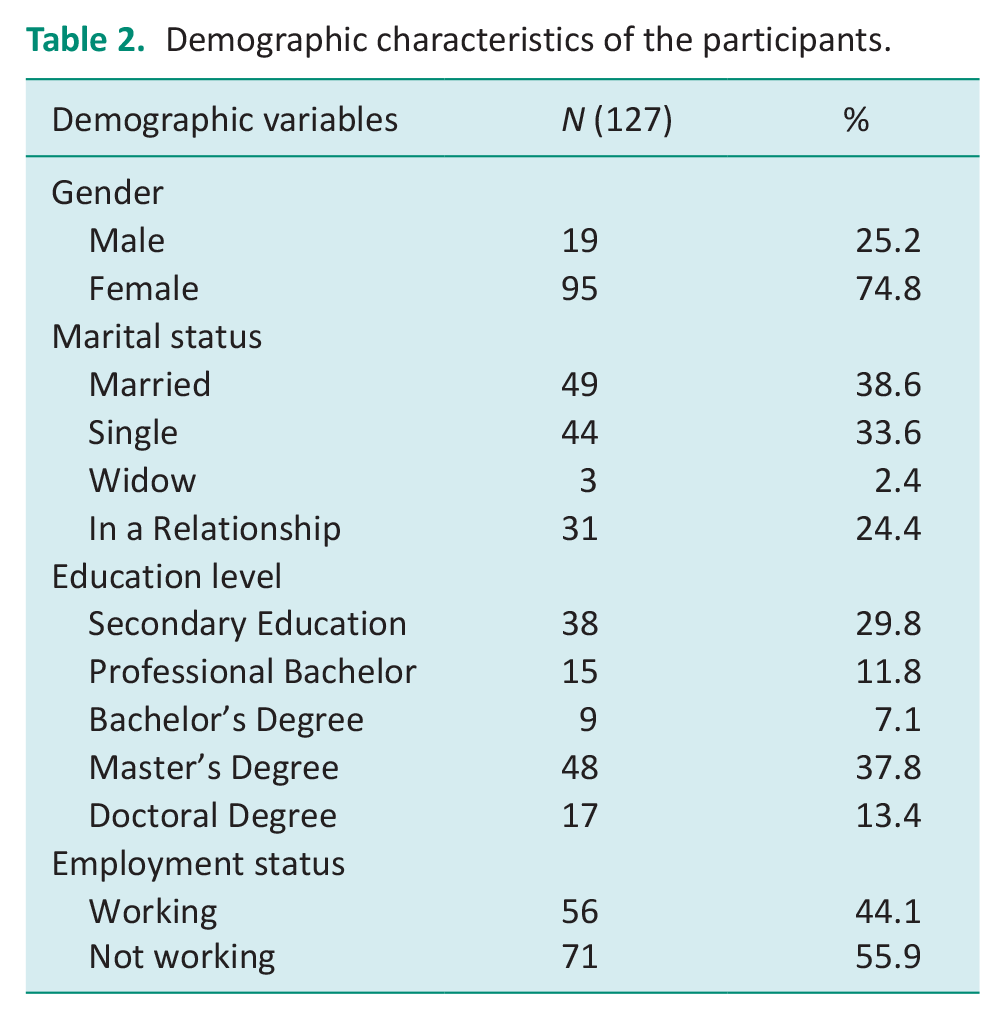
A total of 200 healthy individuals were invited to participate, of whom 147 agreed. Twenty individuals were included in the pilot phase of the study; hence, data from 127 participants were analyzed to evaluate the construct validity of the OBQ11-LT. Of those, 53 were randomly assigned to complete the questionnaire again, 7–10 days later, to assess test-retest reliability. The mean age of the 127 participants was 36.63 ± 14.33 years (min = 19 years, max = 65 years). Other demographic characteristics are presented in Table 2.
Demographic characteristics of the participants.
Construct validity
Exploratory Factor Analysis (EFA)
The Kaiser-Meyer-Olkin (KMO) measure indicated strong sampling adequacy with a value of 0.891, confirming the data’s suitability for factor analysis. In addition, Bartlett’s Test of Sphericity was significant (Approx. Chi-Square = 719.791, df = 45, p < 0.001), further validating the appropriateness of factor analysis for this dataset.
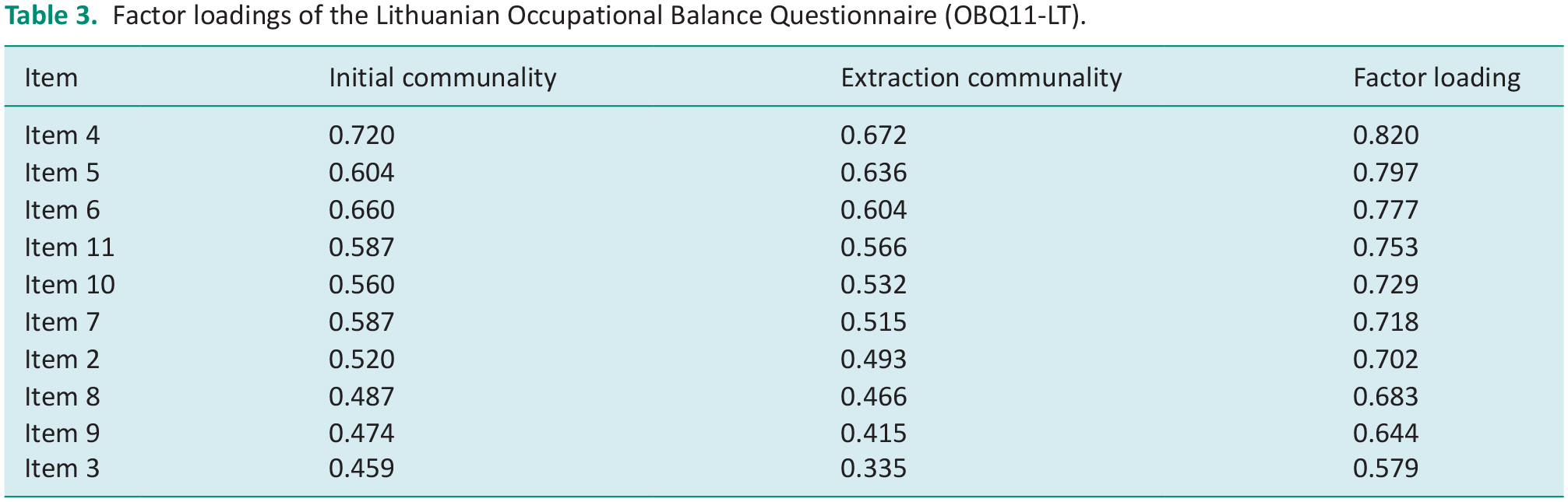
Item one (Having sufficient things to do during a regular week) was removed due to its low factor loading and communality, suggesting it did not align well with the intended factor structure. The removal of this item streamlined the model, resulting in a cohesive single-factor structure that accounted for 52.3% of the total variance, indicating a meaningful representation of the construct within this measurement scale.
The remaining items exhibited satisfactory factor loadings, with Item four (Balance between work, home, family, leisure, rest, and sleep) demonstrating the highest loading, reflecting its strong contribution to the factor. In contrast, Item three (Time for doing things wanted) displayed the lowest acceptable loading. These results confirm the internal consistency and single-factor cohesion of the scale used to assess the target construct. Table 3 provides detailed factor loadings for each item.
Factor loadings of the Lithuanian Occupational Balance Questionnaire (OBQ11-LT).
Confirmatory factor analysis
A Confirmatory Factor Analysis (CFA) was conducted to test the single-factor structure suggested by the EFA. The model fit indices indicate an overall good fit for the single-factor model, as follows: CMIN/DF: 2.410; RMSEA: 0.106. While the RMSEA value was 0.106, slightly above the ideal cutoff, it remains within a marginally acceptable range. Therefore, it may be considered a borderline acceptable fit. CFI: 0.933, which is above the commonly accepted threshold of 0.90, indicating good model fit. TLI: 0.909, also close to the 0.90 threshold, supporting the model fit. The path diagram of the CFA is presented in Figure 1.
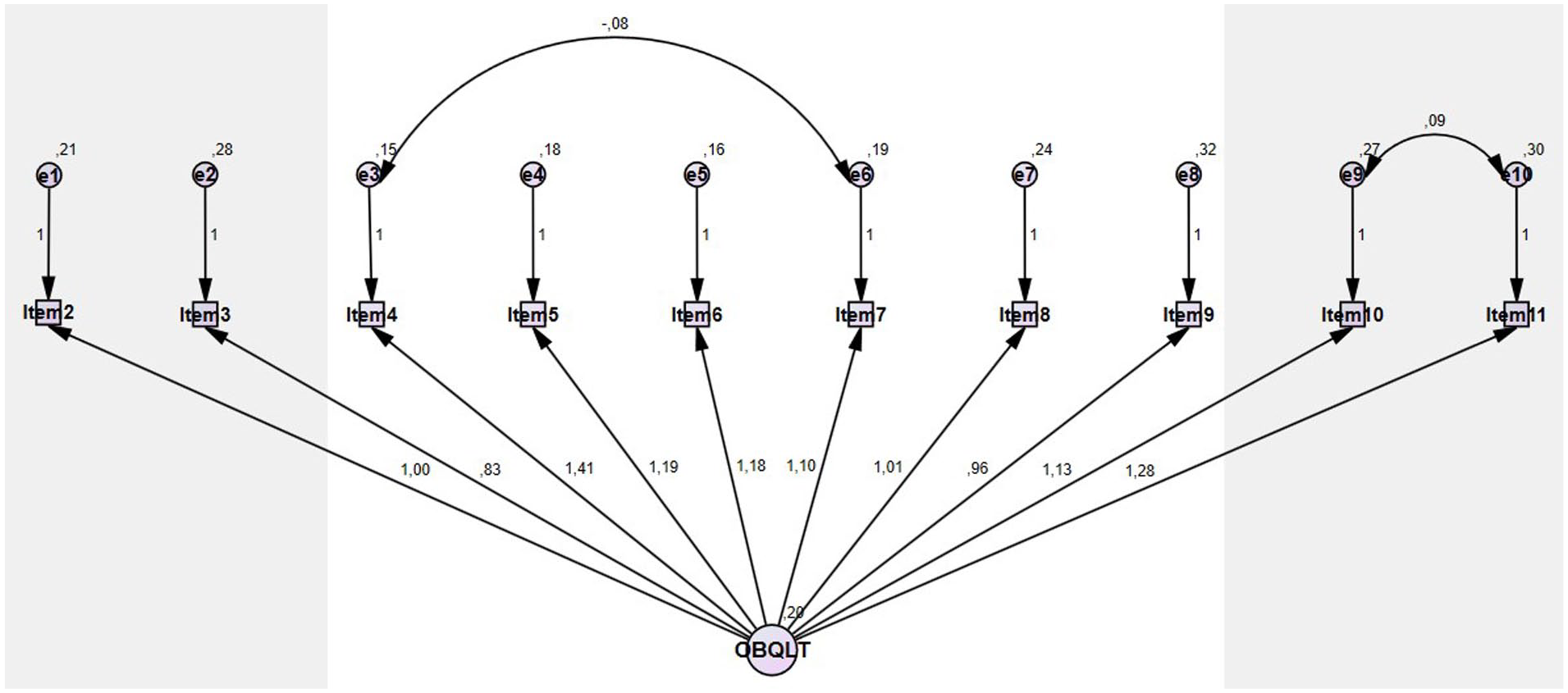
The path diagram of the Confirmatory Factor Analysis.
Test-retest reliability
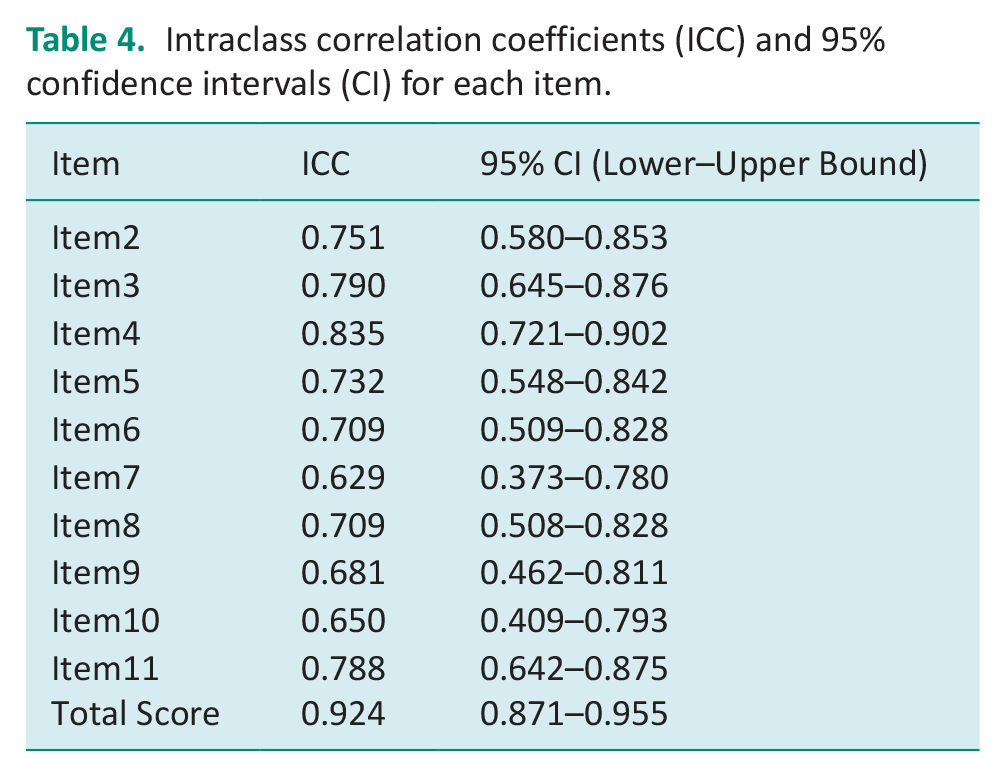
Test-retest reliability was evaluated using OBQ11-LT responses from 53 individuals who were retested 7 to 10 days after the initial test. There was an excellent correlation between the test and retest OBQ11-LT total scores (ICC = 0.924). The analysis revealed excellent reliability for items two, three, four, and 11. while the remaining items demonstrated good reliability (Table 4). Notably, items 7 and 10 demonstrated lower ICC values (0.629 and 0.650, respectively), indicating relatively lower test-retest reliability compared to other items.
Intraclass correlation coefficients (ICC) and 95% confidence intervals (CI) for each item.
Measuring internal consistency
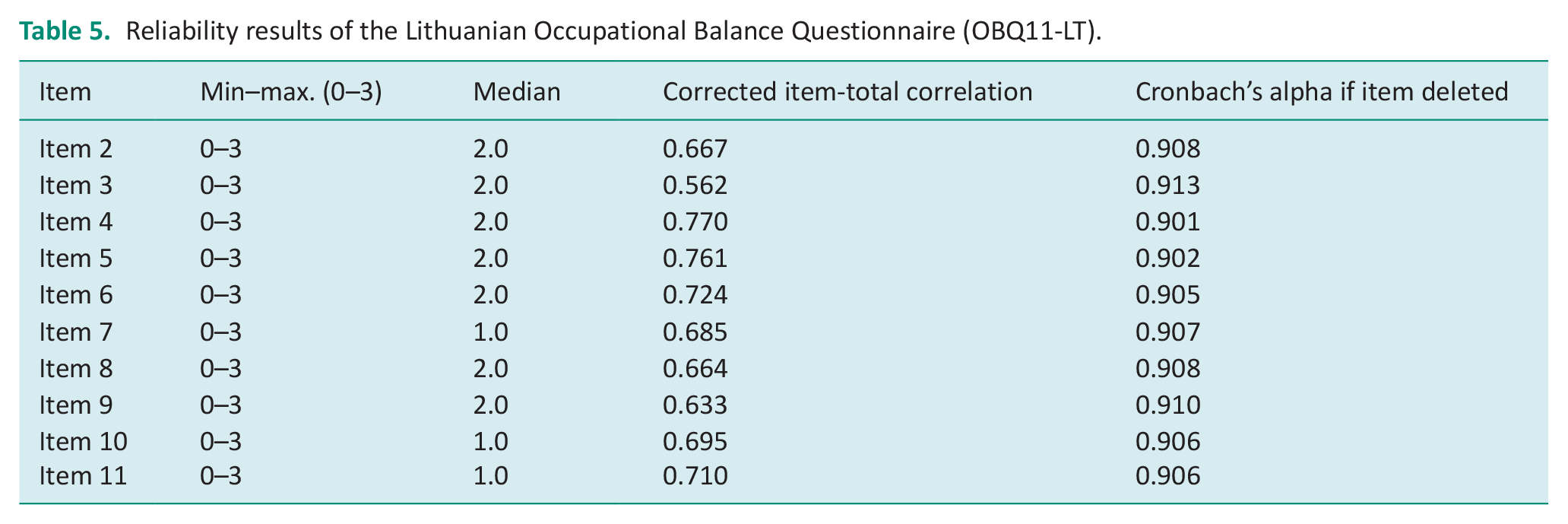
Cronbach’s alpha for the OBQ11-LT total score was 0.915, indicating acceptable internal consistency. Each item in the OBQ11-LT also demonstrated reliability (Table 5).
Reliability results of the Lithuanian Occupational Balance Questionnaire (OBQ11-LT).
In summary, these results indicate that the OBQ11-LT is a valid and reliable instrument for evaluating OB in healthy individuals.
Discussion and implications
This study aimed at examining the psychometric properties of the Lithuanian version of the Occupational Balance Questionnaire (OBQ11-LT), and found that it is a valid and reliable instrument for assessing occupational balance among healthy adult individuals. The findings confirm that the OBQ11-LT captures the multidimensional nature of occupational balance in a way that is culturally relevant and meaningful for Lithuanian respondents. The adapted questionnaire performed well in terms of reflecting individuals’ subjective experiences of balance between their daily activities, personal needs, and social roles, supporting its use in both research and clinical practice. Overall, the results indicate that the OBQ11-LT is a culturally appropriate and psychometrically sound tool for evaluating occupational balance and identifying potential imbalances in the Lithuanian context.
The factor structure observed in this study supports the construct validity of the OBQ11-LT and is consistent with findings from previous studies (Dhas et al., 2024; Ercan Doğu et al., 2023; Günal et al., 2020). All items exhibited satisfactory factor loadings, except for item one, which was removed due to its low factor loading and communality. This result is consistent with findings in other versions of the OBQ11, where item one also showed weak psychometric properties in both healthy populations (Dhas et al., 2024; Günal et al., 2020) and in individuals with mental disorders (Ercan Doğu et al., 2023). The consistency of this issue across different cultural contexts suggests that item one may be less conceptually aligned with the overall construct of OB. However, in the original Swedish version, item one is well-functioning and part of the uni-dimensional structure of the OBQ11 (Håkansson et al., 2020).
In the Lithuanian version, challenges may also be determined from linguistic nuances. The word “enough” was translated as “pakankamai,” which in Lithuanian carries a meaning close to “užtektinai” – both of which emphasize “not too little,” but lack the nuance of “not too much.” Therefore, it confuses respondents by making it difficult to decide which option to choose if he or she feels having too many options. As a result, this linguistic gap may struggle the respondents to decide whether the item accurately reflects their experience.
In addition, a significant portion of our sample had multiple roles—for example, being both a student and working, or running a business while studying—which may lead to a stronger sense of overload or imbalance. These individual characteristics likely interact with cultural tendencies. Previous research has shown that cultural values strongly influence how people perceive time, manage priorities, and evaluate risk (Weber and Morris, 2010). In Lithuania, cultural norms emphasizing caution, self-control, and collective responsibility may make it more difficult for individuals to recognize or express a sense of having “just enough” occupations. These findings suggest that both linguistic and sociocultural factors should be considered when interpreting responses to item one, and may explain why it performed less well psychometrically. Future research might consider rephrasing item one or offering examples to reduce ambiguity in culturally adapted versions.
Item 4 (balance between work, home, family, leisure, rest, and sleep) showed the strongest association with the construct of OB in our study, which is consistent with the findings from previous validations in Swedish and Turkish contexts (Ercan Doğu et al., 2023; Håkansson et al., 2020). It was previously discussed that it is simple to plan time for activities we are willing to do, as individuals often prioritize tasks, they find enjoyable or fulfilling and do not require a high level of OB. Engaging in desired tasks also tends to provide a sense of autonomy and control, making these activities feel less like obligations. However, achieving a balanced distribution across all types of activities, like work, leisure, and rest, is often more challenging (Fotiadis et al., 2019). Item three (Time for doing things wanted) was the weakest-performing item among those retained, though still aligned with the OB construct. This finding has not been widely reported in previous literature but may reflect context-specific differences in how individuals interpret personal time versus structured obligations.
The findings from this study on the internal consistency of the OBQ11-LT are consistent with those reported in other language versions of the questionnaire. A Cronbach’s alpha of 0.915 and test-retest ICC of 0.924 in our study reflect strong psychometric performance, similar to values reported in Turkish and Arabic versions (Dhas et al., 2024; Günal et al., 2020), and comparable to findings from mental health populations (Ercan Doğu et al., 2023). This suggests that the Lithuanian version maintains both internal consistency and temporal stability, supporting its cross-cultural robustness. Previous research from Sweden, China, France and Spain also demonstrated satisfactory reliability metrics, reinforcing the applicability of OBQ11 across diverse cultural settings (Chen et al., 2024; Håkansson et al. 2020; Larivière et al., 2023; Peral-Gómez et al., 2021).
These findings support the importance of culturally adapting and validating instruments like the OBQ11 to reflect the lived experiences and occupational routines specific to different populations. The OBQ11-LT provides Lithuanian occupational therapists with a valid tool that respects local cultural values while aligning with international standards.
A major strength of this study was the collaboration with the original OBQ developers, enhancing the adapted questionnaire’s reliability and theoretical consistency. The sample size was adequate, allowing a thorough evaluation of the tool across a diverse population with a variety of education levels, age, gender, and employment status. Using the self-reported OBQ11-LT also helped directly capture participant views on occupational balance.
However, the current study has some limitations. First, the use of convenience sampling and the level of education limit the generalizability of the findings; second, the participants’ prior understanding of OB was not assessed, which may have influenced responses. Thirdly, item one was removed because of not aligning well with the intended factor structure. Although similar findings were reported in other studies, item one functions well in the original Swedish version, suggesting that its poor performance in our study may reflect translational or cultural interpretation issues rather than conceptual misalignment. Future studies should employ randomized sampling and include diverse populations to improve validation. Testing across varied demographic and cultural backgrounds could clarify the relevance of the excluded item.
Conclusion
In conclusion, the OBQ11-LT demonstrates good reliability and validity for assessing occupational balance in healthy populations. Its psychometric properties are suitable for research and practice, making it a valuable tool for studying OB in similar contexts and broadening the research areas for Lithuanian occupational therapists.
Key findings
The Lithuanian version of the Occupational Balance Questionnaire (OBQ11-LT) is being adapted and tested for validity and reliability among Lithuanian populations.
OBQ11-LT can be used to predict rehabilitation outcomes in Lithuania.
What the study has added
The study underscores the potential of utilizing the OBQ11-LT as a predictive tool for health outcomes, as well as its capacity to inform rehabilitation practices and guide targeted interventions within the field of occupational therapy.
Footnotes
Acknowledgements
The authors would like to state that in the preparation of this manuscript, ChatGPT (model GPT-4, source: OpenAI) was used to assist in language editing and improving the clarity of the text.
Research ethics
Ethical approval was granted by the Kauno Kolegija Higher Education Institution Committee for the Evaluation of Research Compliance with Research Ethics, protocol 2024-03-14 No. 13-35.
Consent
Informed consent was obtained from all participants prior to their inclusion in the study. As the survey was conducted online, participants were presented with an information sheet detailing the study’s purpose, procedures, risks, and benefits. Consent was obtained electronically by requiring participants to mark a box indicating their agreement to participate before proceeding with the survey.
Patient and public involvement data
During the development, progress, and reporting of the submitted research, Patient and Public Involvement in the research was not included at any stage of the research.
Declaration of conflicting interests
The author(s) declared no potential conflicts of interest with respect to the research, authorship, and/or publication of this article.
Funding
The author(s) declared no financial support for the research, authorship, and/or publication of this article.
Contributorship
All authors meet the criteria for authorship. Individual contributions are specified as follows: conceptualization, L.Z., E.L., and S.P.; methodology, L.Z., C.H., P.W., and S.P.; formal analysis, S.P.; investigation, L.Z., M.G., E.L., and G.S.; data curation, L.Z.; writing – original draft, L.Z., M.G., E.L., and G.S.; writing – review & editing, C.H., P.W., and S.P.; visualization, S.P.; supervision, S.P. All authors reviewed and edited the manuscript and approved the final version of the manuscript.
