






Abstract
Introduction:
Women face limitations in occupational participation due to intersecting social and structural factors, which negatively influence health and well-being. This systematic review examined how occupational therapy-based advocacy and occupational justice approaches have been applied to support women across diverse contexts.
Methods:
This systematic review was conducted in accordance with the Preferred Reporting Items for Systematic Reviews and Meta-Analyses framework, using 13 keywords across 4 databases. Fifteen studies met the inclusion criteria. Quality assessment and risk of bias were evaluated for all studies.
Findings:
Most studies were rated as high quality (n = 10), with the remainder rated as moderate (n = 5). The majority was qualitative (Level VI), with a small number of conceptual or theoretical studies (Level V), and overall risk of bias was low to moderate. The studies focused on women experiencing intersecting forms of marginalization, including disability, migration, violence, homelessness, and gendered and racialized inequities in employment. Three themes emerged: (1) individual-level empowerment, (2) societal and policy-level advocacy, and (3) professional responsibilities of occupational therapists. Overall, evidence was largely recommendation-based, with limited intervention-focused models.
Conclusions:
Integrating advocacy and occupational justice frameworks into clinical and community-based occupational therapy have the potential to enhance women’s occupational participation and inform future intervention development, education, and policy engagement.
Introduction and Literature Review
Women along with specific groups such as individuals with disabilities, Black individuals, people experiencing homelessness, and the elderly, as well as communities such as immigrants and victims of war or natural disasters are often placed in disadvantaged situations because of structural and contextual factors (Allison, 1995; Durocher et al., 2014; Smith and White, 2025). Occupational therapy, through its roles in activism and advocacy, aims to enhance the health, well-being, and participation of individuals from marginalized or disadvantaged groups in meaningful and purposeful occupations, thereby promoting access to life opportunities (Gupta, 2016). Occupational therapists strive to promote occupational justice and social inclusion as fundamental human rights (Agner, 2017; Gupta, 2016; Fisher and Hotchkiss, 2008).
In the literature, women and individuals with disabilities are among the most disadvantaged groups. Women within these marginalized groups experience a wide range of challenges (Allison, 1995; Fisher and Hotchkiss, 2008). Studies have emphasized the importance of addressing violence against marginalized women (Townsend and Marval, 2013), as well as the need for sustained efforts in collective activism, accountability and justice systems (Nilsson and Townsend, 2010), policy advocacy (Frank, 2012), legal protections (Durocher et al., 2014), and employment support strategies. Moreover, inclusive access to assistive technologies and home/workplace modifications, and professional advocacy for the right to work, have been identified as critical areas where women require support (Nilsson and Townsend, 2010). Other studies have reported the need for interventions that create opportunities for engagement in meaningful occupations, promote culturally appropriate employment (Pizarro et al., 2018), design rights-based frameworks, develop community programs, and offer flexible housing options and income support (Dyck and Jongbloed, 2000; Townsend and Marval, 2013; Townsend, 2022).
Theoretical frameworks and critical analyses on occupational justice and advocacy in the literature reveal that occupational therapists encounter several barriers in clinical assessment and practice. These include the promotion of passive client roles due to healthcare policies (i.e., doing for clients instead of with them) and the dominance of an individualized perspective (Agner, 2017; Gupta, 2016; Hocking, 2017). As a result, the need to strengthen the skills and competencies of occupational therapists in advocacy and occupational justice has become increasingly apparent. Recent scholarship further suggests that understanding occupational injustice requires moving beyond individual-level explanations towards critical and participatory frameworks that address power relations, social inclusion, and structural determinants of occupational participation. The Participatory Occupational Justice Framework (POJF) proposed by Whiteford and Townsend (2011) provides a conceptual basis for such an approach, emphasizing collaborative processes, human rights perspectives, and transformative action aimed at promoting social inclusion and addressing occupational injustices within complex socio-political contexts. Complementing this perspective, feminist theoretical frameworks (Frank, 1992; Gerlach and Magalhães, 2024; Goodkind et al., 2021) highlight how gendered power relations, historical gender segregation within health professions, and intersectional inequalities shape both occupational opportunities and professional practice, underscoring the importance of advocacy and social justice-oriented approaches in occupational therapy. Although the theoretical models and frameworks provide important conceptual foundations for understanding occupational justice and advocacy, gender-sensitive or women-centered perspectives appear to be comparatively less emphasized within the existing literature (presented in the Supplemental Table 1). Integrating participatory occupational justice and feminist perspectives therefore supports a broader conceptualization of occupational therapy practice, positioning occupational therapists not only as clinicians addressing individual needs but also as agents engaging in structural change, advocacy, and rights-based action to challenge systemic inequities influencing occupational participation. Consistent with this perspective, the conceptual and theoretical literature summarized in Supplemental Table 1 highlights multilevel advocacy and justice-oriented practice models that emphasize individual empowerment, community participation, and policy-level transformation within occupational therapy (Agner, 2017; Durocher et al., 2014; Frank, 2012; Gupta, 2016; Hocking, 2017; Kirsh, 2015; Nilsson and Townsend, 2010; Pizarro et al., 2018; Townsend and Marval, 2013; Townsend, 2022). These works collectively reinforce the integration of occupational justice principles into education, interdisciplinary collaboration, and sociopolitical engagement as essential components of contemporary occupational therapy practice. However, the lack of established guidelines and the limited number of studies addressing advocacy and occupational justice-based interventions have been identified as major issues in the literature (Agner, 2017; Gupta, 2016; Hocking, 2017).
The aim of this review is to explore the progress made over the past 2 decades in occupational therapy-based advocacy and occupational justice practices targeting women. Occupational justice is a key determinant of health, ethics, and human rights. Furthermore, advocacy and occupational justice practices are considered ethical, moral, and professional obligations for occupational therapists (Nilsson and Townsend, 2010). Thus, this systematic review aims to answer the following questions:
What is the current scope and nature of occupational therapy-based occupational justice and advocacy interventions targeting women in diverse contexts?
What populations of women (women with disabilities, immigrant women, survivors of violence etc.) have been the focus of occupational justice-based interventions in the literature?
What are the main themes and gaps of focus in occupational therapy research addressing advocacy for women experiencing marginalization or occupational injustice?
By examining studies that address occupational therapy-based advocacy approaches for women, this review seeks to offer guidance to occupational therapists and inform future clinical and academic endeavors.
Methods
Study design
This review was conducted in accordance with the Preferred Reporting Items for Systematic Reviews and Meta-Analyses (PRISMA) guidelines proposed by Moher et al. (2009). The review followed the PRISMA (Preferred Reporting Items for Systematic Reviews and Meta-Analyses) guidelines, adhering to the following steps: (I) formulation of the research question and protocol development, (II) comprehensive literature search across appropriate electronic databases, (III) selection of studies according to predefined inclusion and exclusion criteria, (IV) visualization of the study selection process using a PRISMA flow diagram, (V) systematic extraction and summarization of data, (VI) assessment of methodological quality of included studies using the Critical Appraisal Skills Program (CASP) tool, and (VII) reporting of analyses as appropriate (Moher et al., 2009). The review protocol was registered in International Prospective Register of Systematic Reviews (PROSPERO) under registration number CRD420251026186.
Search strategy
The study employed the Population, Intervention, Comparison, and Outcome (PICO) framework (Methley et al., 2014). Population (P): women experiencing occupational injustice across diverse sociocultural and structural contexts; Intervention (I): occupational therapy-based advocacy and occupational justice-oriented interventions; Comparison (C): standard services, nonadvocacy-based approaches, or no intervention; Outcome (O): occupational participation, empowerment, social inclusion, and indicators related to occupational justice.
The aim of this systematic review was to investigate how occupational therapy-based advocacy and occupational justice approaches have been developed and implemented to address the needs of women. A systematic search was conducted using combinations of the keywords “advocacy,” “elderly woman,” “homeless woman,” “immigrant women,” “occupational therapy,” “vocational therapy,” “woman,” “women employee,” “women with physical disabilities,” “women survivors of violence “women with mental disorders,” “women worker,” and “working women.” These keywords were combined using “AND” and “OR” operators to maximize search outcomes. Databases searched included CINAHL (EBSCO Industries, USA), Google Scholar, PubMed (NLM, USA), MEDLINE (NLM, USA), PsycINFO (APA, USA), ScienceDirect (Elsevier, The Netherlands), Scopus (Elsevier, The Netherlands), Web of Science (Clarivate Analytics, UK), and OTSeeker.
Eligibility criteria
Inclusion criteria
Studies were included if they examined or discussed occupational therapy’s contribution to advocacy and occupational justice specifically for women. Eligible articles met the following criteria: (i) at least one author had an occupational therapy background, (ii) the study focused exclusively on women participants or women-specific issues related to occupational justice and advocacy, (iii) publication in English, (iv) availability of full-text articles, and (v) original research articles, randomized controlled trials, theoretical papers, or review studies. The selection process followed PRISMA guidelines, and the article screening process is illustrated in Figure 1. Screening and eligibility assessment were conducted independently by two reviewers, and any disagreements were resolved through discussion; when consensus could not be reached, a third reviewer was consulted to make the final decision.
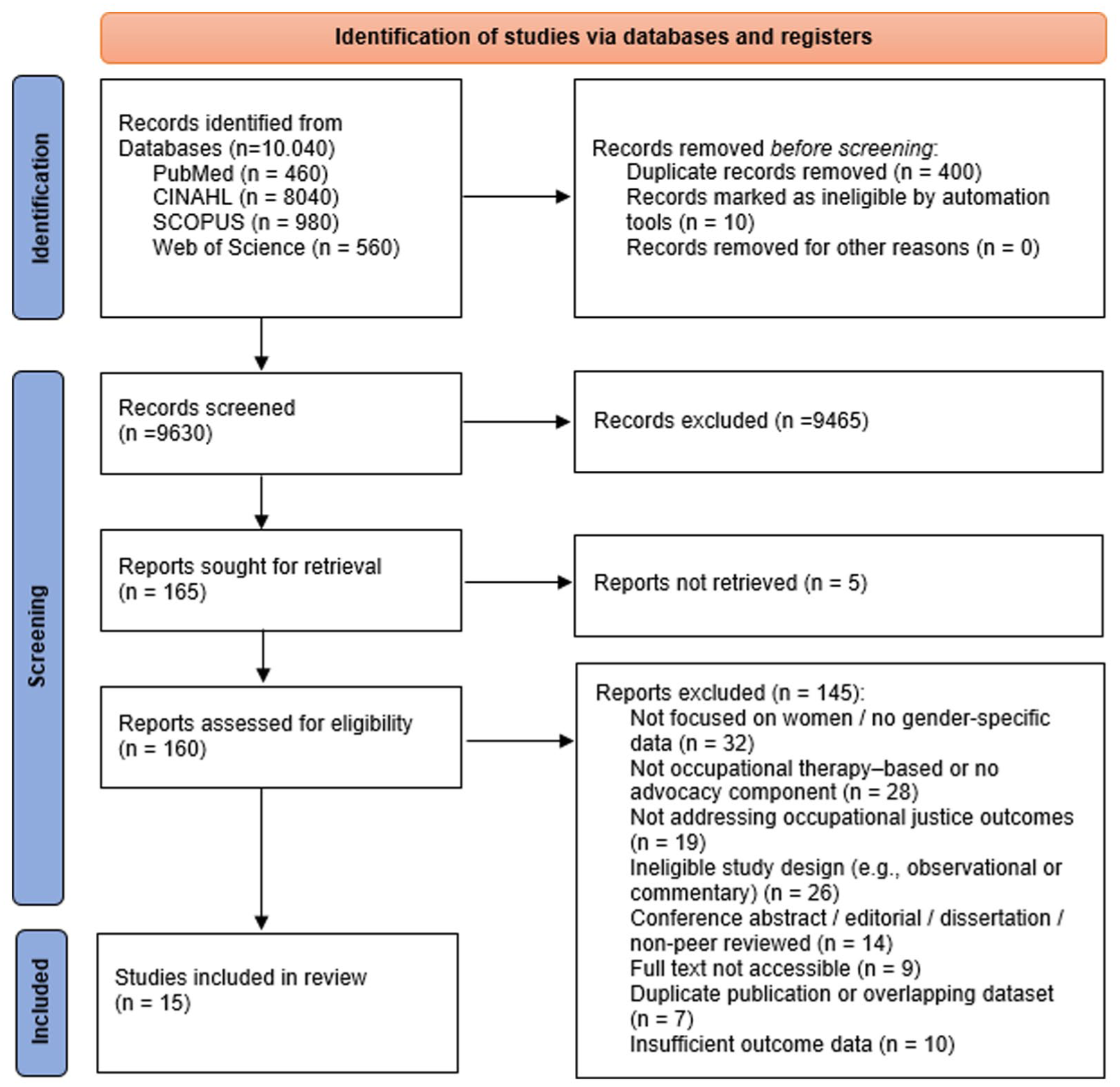
PRISMA flow chart for selection of included studies.
Exclusion criteria
Studies were excluded if they included male participants, mixed-gender samples, or populations where findings were not reported separately for women, regardless of the proportion of women in the sample (e.g., studies including more than 50% women without gender-specific analyses). Studies focusing primarily on men, children, or general populations without a clear women-centered focus were also excluded. Editorials, conference abstracts, non-English publications, and studies without full-text availability were removed. Screening and eligibility assessment were conducted independently by two reviewers, and any disagreements were resolved through discussion and consensus.
Study selection
Between 2000 and 2023, a total of 10,040 records were screened (PubMed: 460; CINAHL: 8040; Scopus: 980; Web of Science: 560). After eliminating duplicates, 165 articles remained. Title and abstract screening narrowed this to 80 articles. Following independent evaluations and consensus among authors, a final list of 15 articles meeting the inclusion criteria was established (Figure 1).
Critical appraisal of individual sources of evidence
Each article was rated for overall risk of bias (low, moderate, or high). Two authors evaluated the studies in terms of evidence level and risk of bias. The level and strength of evidence for each included article were determined using the Oxford Center for Evidence-Based Medicine Levels of Evidence (Wallace, 2010), the American Occupational Therapy Association’s (AOTA) Evidence-Based Practice Guidelines (AOTA, 2019), and the CASP checklist for qualitative studies (Long et al., 2020).
Synthesis of results/data analysis
A total of 15 publications met the inclusion criteria and were reviewed in detail. Evidence levels and risk of bias and summary characteristics were documented. Using inductive thematic content analysis, studies were read, key data charted, and open coding applied to identify recurring concepts. Codes were grouped into three themes: (1) Individual-level interventions, (2) Societal-level interventions, and (3) Professional-level interventions. These reflect the focus and scope of occupational therapy-based advocacy and justice practices targeting women, based on intervention level and therapist roles. Numeric codes were used to classify recommendation levels.
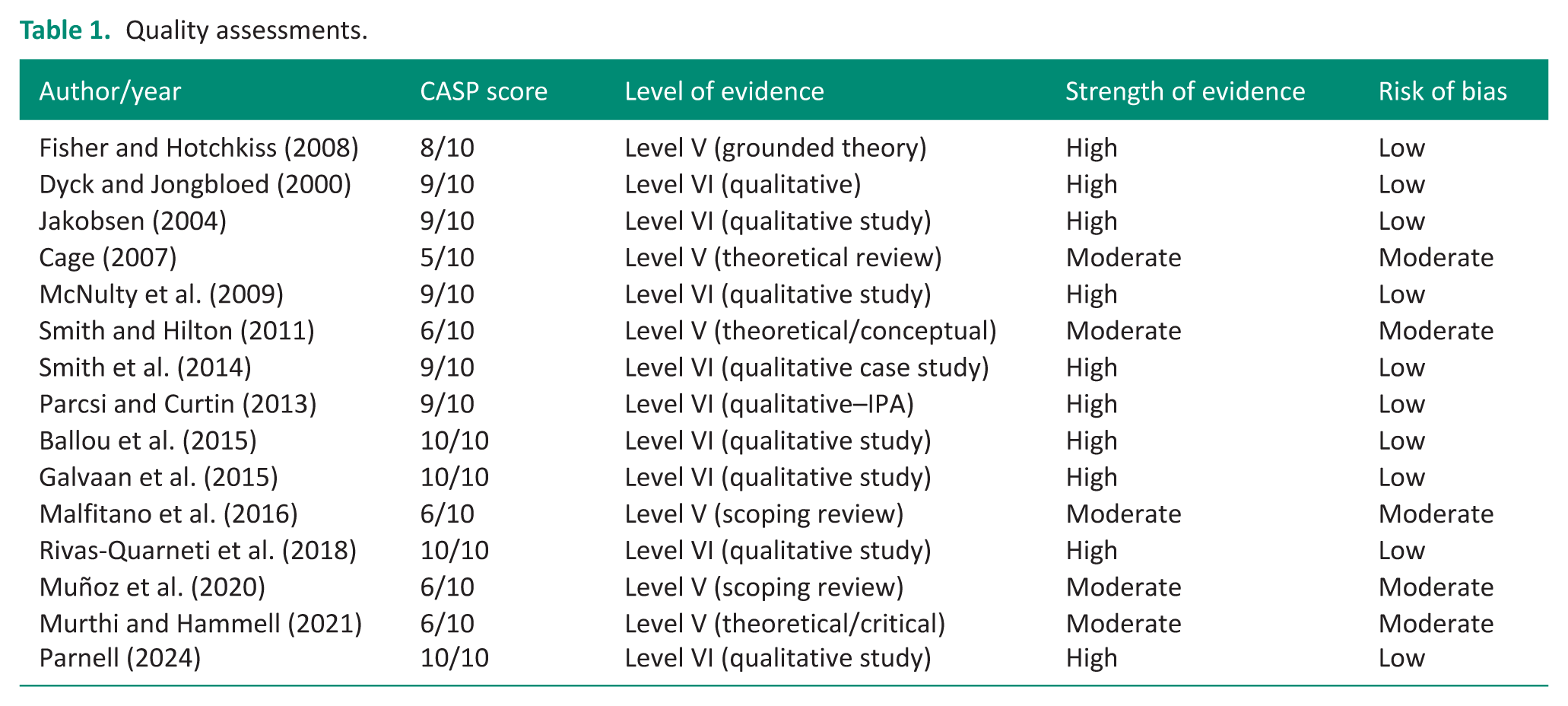
Studies, published between 2000 and 2023, addressed diverse female populations: three focused on working women, one on Black women, two on immigrants, one on women with mental health conditions, three on those with physical disabilities, four on survivors of violence/homelessness, and three on women’s health/rights (Figure 2). All studies used qualitative designs. Ten studies had high and five had moderate evidence. Twelve were Level VI (e.g., phenomenology, case study), and three were Level V (e.g., theoretical or conceptual). Based on CASP scores (5–10), twelve studies had low risk of bias, while three had moderate risk (Table 1).
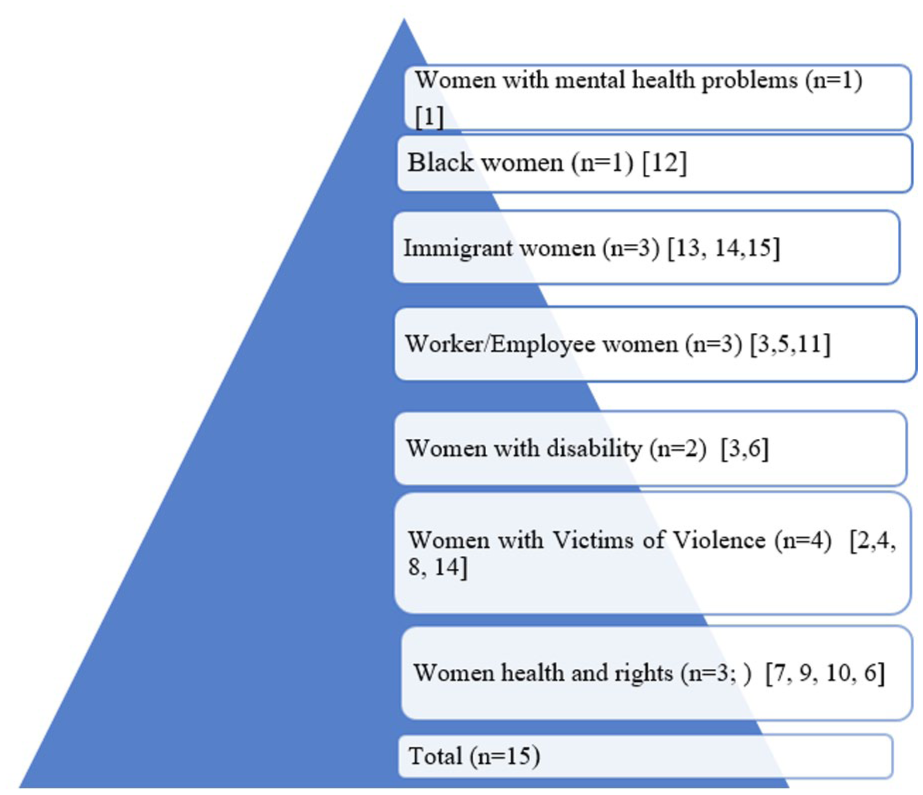
Categorization of participant groups in studies addressing advocacy and occupational justice for women (n = 15).
Quality assessments.
Results
The search identified 15 articles that were eligible for inclusion in the final review. Table 2 provides a summary of the articles, including information on outcomes and relevant themes. The majority of the included studies used qualitative research designs, while several were narrative or scoping reviews (Cage, 2007; Smith and Hilton, 2011; Malfitano et al., 2016; Muñoz et al., 2020). Sample sizes varied, ranging from three participants in Jakobsen’s study (Jakobsen, 2004) to 91 in Parnell’s 2023 research. Smith et al. (2011) was based on a single case involving a woman from the Karen community. Several qualitative studies included smaller, in-depth samples (Smith et al., 2014, n = 1; Parcsi and Curtin, 2013, n = 6; Rivas-Quarneti et al., 2018, n = 6), while larger participant groups were reported in studies examining employment, trauma, or role participation among women (Dyck and Jongbloed, 2000, n = 54; McNulty et al., 2009, n = 27; Ballou et al., 2015, n = 15). The participant profiles represented various marginalized groups, including women with disabilities (Dyck and Jongbloed, 2000; Jakobsen, 2004; Smith and Hilton, 2011), immigrant women (Rivas-Quarneti et al., 2018; Smith et al., 2011), homeless women (Fisher and Hotchkiss, 2008; McNulty et al., 2009), survivors of domestic violence (Cage, 2007; Smith and Hilton, 2011), mothers returning to work postpartum (Parcsi and Curtin, 2013), and women exposed to racial discrimination (Parnell, 2024). The most commonly used data collection method was semistructured interviews (Ballou et al., 2015; Dyck and Jongbloed, 2000; Jakobsen, 2004; Parcsi and Curtin, 2013; Parnell, 2024), along with in-depth individual interviews (Galvaan et al., 2015; Smith et al., 2014), focus group discussions (Rivas-Quarneti et al., 2018), time diaries (McNulty et al., 2009), and Metaplan sessions (Rivas-Quarneti et al., 2018). Phenomenological approaches were common (Galvaan et al., 2015; Jakobsen, 2004; Parcsi and Curtin, 2013; Smith et al., 2014), in addition to action research (Fisher and Hotchkiss, 2008) and participatory research methods (Rivas-Quarneti et al., 2018). Thematic analysis (Ballou et al., 2015; Galvaan et al., 2015; Parcsi and Curtin, 2013; Parnell, 2024), narrative analysis (Fisher and Hotchkiss, 2008), and conceptual framework analyses (Murthi and Hammell, 2021; Smith and Hilton, 2011) were frequently used for data analysis. The studies examined women’s experiences from three perspectives.
Characteristics of the studies.
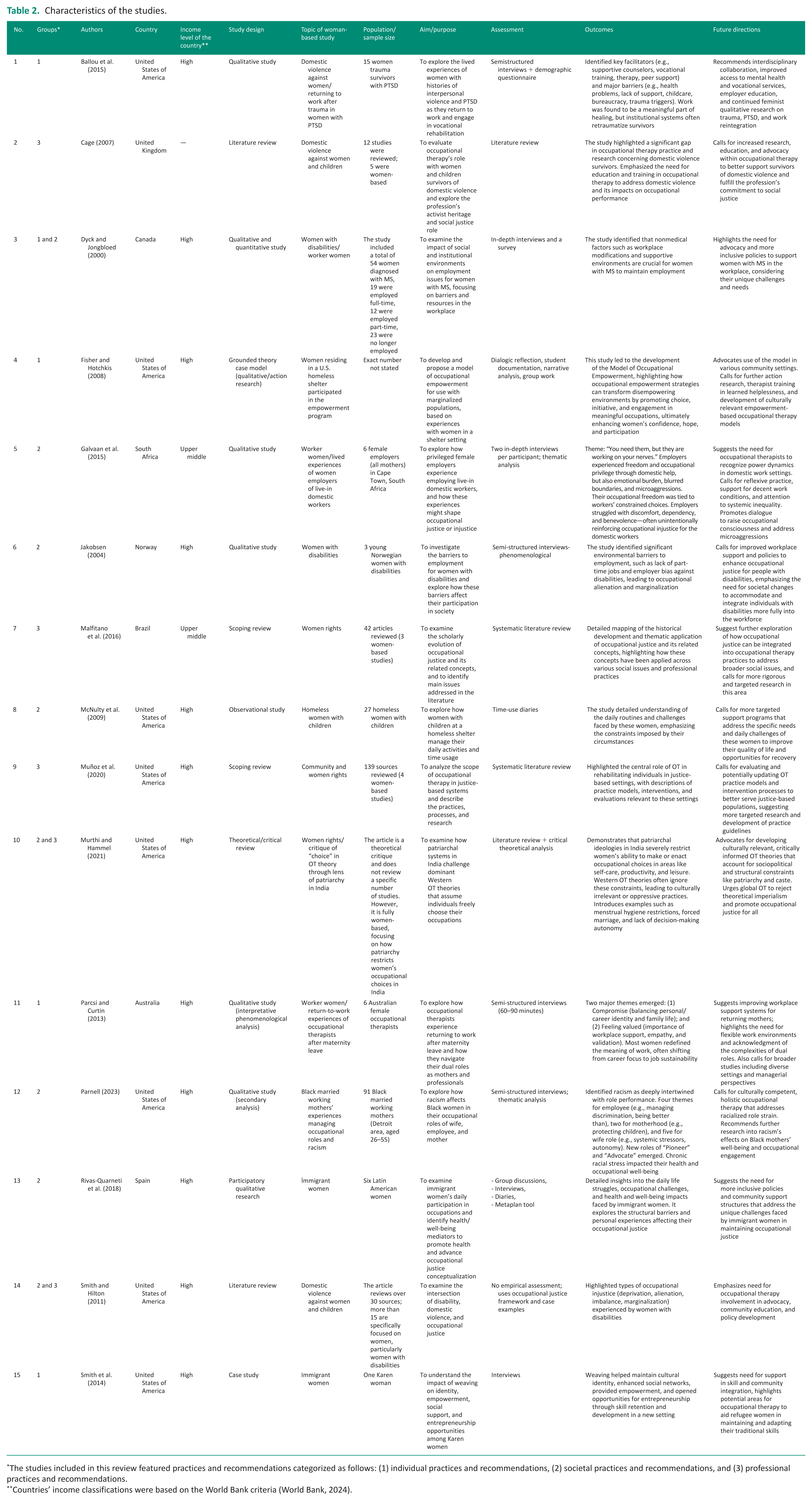
The studies included in this review featured practices and recommendations categorized as follows: (1) individual practices and recommendations, (2) societal practices and recommendations, and (3) professional practices and recommendations.
Countries’ income classifications were based on the World Bank criteria (World Bank, 2024).
Theme 1: Individual-level interventions and recommendations
Individual-level studies (e.g., Ballou et al., 2015; Dyck and Jongbloed, 2000; Fisher and Hotchkiss, 2008; Parcsi and Curtin, 2013; Smith and Hilton, 2011) addressed women’s empowerment, identity, autonomy, and occupational participation. Ballou et al. (2015) examined vocational reintegration in women with PTSD; Fisher and Hotchkiss (2008) implemented an empowerment program in a shelter. Smith et al. (2014) and Parcsi and Curtin (2013) highlighted occupation’s role in restoring identity and well-being.
Theme 2: Societal-level interventions and recommendations
Eight studies (Dyck and Jongbloed, 2000; Galvaan et al., 2015; Jakobsen, 2004; McNulty et al., 2009; Murthi and Hammell, 2021; Parnell, 2024; Rivas-Quarneti et al., 2018; Smith and Hilton, 2011) examined how systemic inequities—such as racism, gender discrimination, and immigration policies—limit women’s occupational participation. Several highlighted the role of NGOs, community-based services, and inclusive policies. Notably, Smith and Hilton (2011), Malfitano et al. (2016), Muñoz et al. (2020), and Murthi and Hammell (2021) emphasized that structural injustices require rights-based policies and systemic advocacy beyond individual interventions.
Theme 3: Professional-level interventions and recommendations
Five studies (Cage, 2007; Malfitano et al., 2016; Muñoz et al., 2020; Murthi and Hammell, 2021; Smith and Hilton, 2011) discussed the evolving role of occupational therapists in advocacy, social justice, and policy engagement. The studies advocated for occupational therapists to adopt active roles not only in clinical practice but also in the domains of social justice and policy, highlighting the importance of collaboration with NGOs and public institutions in advocacy initiatives. At the professional level, the focus was on the roles and responsibilities of occupational therapists in advocacy efforts, the development of socially just interventions, and the implementation of culturally responsive approaches (Cage, 2007; Malfitano et al., 2016; Muñoz et al., 2020; Murthi and Hammell, 2021; Smith and Hilton, 2011).
Discussion and implications
This systematic review highlights the multifaceted role of occupational therapy in addressing the occupational injustices faced by women. The findings emphasize three interrelated domains of intervention: individual empowerment, systemic advocacy, and professional responsibility. Although interest in advocacy and occupational justice is increasing, evidence-based practices remain scarce, especially outside of high-income contexts. This discussion summarizes key thematic insights and their implications for occupational therapy practice and research, based on three primary themes identified in studies focusing on women from diverse sociocultural and contextual backgrounds: (1) Individual-Level Interventions and Recommendations, (2) Societal-Level Interventions and Recommendations, and (3) Professional-Level Interventions and Recommendations.
Ballou et al. (2015) conducted the only study in this review focusing on women with mental health conditions, specifically PTSD. Using a feminist qualitative approach, they interviewed 15 women receiving vocational and mental health services. Key facilitators of return-to-work included therapy, counseling, and community support, while barriers involved health issues, isolation, and bureaucracy. The study highlighted the importance of advocacy roles for occupational therapists in addressing systemic obstacles. This study exemplifies how mental health-related occupational injustices intersect with institutional and societal barriers, underscoring the need for trauma-informed, advocacy-oriented occupational therapy approaches.
Smith et al. (2014) and Rivas-Quarneti et al. (2018) examined occupational injustice among immigrant women. Smith focused on refugee women’s engagement in culturally meaningful activities to support identity and well-being, while Rivas-Quarneti addressed structural barriers faced by immigrant women in Spain’s economic crisis. Both studies emphasized the value of culturally relevant occupations and the advocacy role of occupational therapists. They called for greater attention to refugee support and policy-level interventions. The limited number of studies in this field underscores the need for greater emphasis on advocacy roles within occupational therapy (Rivas-Quarneti et al., 2018; Smith et al., 2014). These findings build on the previous mental health-focused work by emphasizing how intersectional vulnerabilities—such as migration status, ethnicity, and cultural displacement—compound occupational marginalization, necessitating context-specific and policy-informed occupational therapy practices.
Three studies addressed working women’s working experiences Parcsi and Curtin (2013) explored how female occupational therapists balanced work and motherhood after maternity leave, highlighting the role of workplace support and flexible arrangements. Galvaan et al. (2015) examined how employer privilege reinforces class and racial inequalities, affecting domestic workers’ occupational rights. Parnell (2024) investigated the complex roles of employed Black women, revealing how racism, gender, and marital status shape daily participation. Together, these studies emphasize the importance of occupational justice, workplace flexibility, and culturally responsive practices in supporting women’s occupational balance. In contrast to previous studies focusing on vulnerable populations, these contributions shift the lens toward employed women navigating systemic inequities in professional spaces, illustrating that occupational injustice can persist even among those with formal employment and education.
Three studies (Malfitano et al., 2016; Muñoz et al., 2020; Murthi and Hammell, 2021) provided critical perspectives on women’s rights and occupational justice. Malfitano et al. (2016) and Muñoz et al. (2020) conducted scoping reviews, highlighting a literature focus on forensic mental health and limited macro-level engagement. Murthi and Hammell (2021) critiqued Western Occupational Therapy models, emphasizing overlooked gendered and caste-based barriers in India. They called for culturally relevant, rights-based approaches. All three studies stressed the need for systemic responses, community-based practices, and international collaboration in occupational therapy. These critical perspectives extend the discussion by questioning foundational assumptions in the occupational therapy field, advocating for a global shift in how occupational justice is theorized and operationalized.
Three studies (Dyck and Jongbloed, 2000; Jakobsen, 2004; Smith and Hilton, 2011) examined occupational challenges faced by women with physical disabilities. Dyck and Jongbloed (2000) explored employment barriers for women with multiple sclerosis, while Jakobsen (2004) highlighted social expectations and illness-related burdens in educated disabled women. Smith and Hilton (2011) discussed domestic violence as a layered form of occupational injustice. All studies emphasized structural barriers beyond health conditions and called for advocacy-focused, context-sensitive occupational therapy practices. This group of studies reinforces the importance of recognizing disability not solely as a health issue but as a complex interplay of societal and environmental exclusions that constrain participation, particularly when combined with gender-based violence.
Four studies (Cage, 2007; Fisher and Hotchkiss, 2008; McNulty et al., 2009; Smith & Hilton, 2011) addressed occupational injustice among women experiencing violence or homelessness. Fisher and Hotchkiss (2008) and McNulty et al. (2009) highlighted how shelter environments restrict autonomy and meaningful activity, while Cage (2007) emphasized occupational therapists’ role in identifying abuse and promoting recovery. Smith and Hilton (2011) bridged all themes through their focus on violence against disabled women. Collectively, these studies called for greater environmental analysis, therapist training, and advocacy-driven practice in marginalized contexts. Taken together, these findings demonstrate that occupational injustice in the context of violence and homelessness requires a multisystemic response, integrating clinical, community, and policy-level interventions to ensure sustained support for women in crisis.
This review synthesized three thematic areas highlighting the role of occupational therapy in advocacy and occupational justice for women across diverse contexts. Studies addressing women’s rights emphasized the advancement of occupational justice and the need for culturally sensitive, rights-based approaches (Malfitano et al., 2016; Muñoz et al., 2020; Murthi and Hammell, 2021). Research focusing on women with physical disabilities and mental illness underscored the pervasive impact of structural barriers, discrimination, and occupational deprivation, while drawing attention to the critical advocacy role of therapists (Ballou et al., 2015; Dyck and Jongbloed, 2000; Jakobsen, 2004; Smith and Hilton, 2011). Investigations involving survivors of violence, homeless women, and immigrant women revealed themes of occupational exclusion, empowerment through meaningful activities, and the importance of community support and solidarity networks (Cage, 2007; Fisher and Hotchkiss, 2008; McNulty et al., 2009; Rivas-Quarneti et al., 2018; Smith et al., 2011). Studies on working women highlighted challenges in achieving occupational balance, the influence of gender roles, and the intersection of race and class in shaping occupational participation (Galvaan et al., 2015; Parcsi and Curtin, 2013; Parnell, 2023). Collectively, the evidence demonstrates that while occupational therapy contributes significantly to recognizing injustices and advocating for women, current practices are limited, context-specific, and largely recommendation-based. These findings underscore the need for more intervention-focused, culturally adaptable, and policy-driven approaches, alongside expanded research from diverse sociocultural and economic settings.
Nonetheless, this review has several limitations. Most of the included studies utilized qualitative designs and exhibited considerable heterogeneity in terms of participant characteristics, intervention types, and outcome measures, which made direct comparisons challenging. Furthermore, many studies lacked detailed reporting on the advocacy strategies or occupational justice frameworks used, limiting the assessment of intervention effectiveness. Of the 15 included studies, 11 were conducted in high-income countries, 2 in upper-middle-income countries, and 2 were literature reviews. This geographic distribution indicates that the findings are largely situated within the sociocultural and structural contexts of high-income countries. As a result, the applicability of the proposed advocacy and occupational justice approaches to low- and lower-middle-income countries may be limited. Future research should therefore include studies from more diverse socioeconomic settings and prioritize the cultural adaptation of interventions to ensure local relevance.
A key theme that emerged across the studies was the need to address advocacy at societal and policy levels. While most studies were recommendation-based, only a few described direct intervention practices. Although there was a strong emphasis on increasing public awareness and promoting systemic change, concrete details about intervention implementation were often lacking. This underscores the need for more intervention-focused studies that can help occupational therapists establish a clear professional framework in the realm of social policy and respond effectively to shifting societal dynamics.
Implications for occupational therapy practice
Occupational therapy has a strong potential to align with feminist praxis through its concern for systemic transformation and social justice (Goodkind et al., 2021; Miller, 1992). The reviewed studies show that calls for individual-level empowerment often coexist with recognition that meaningful change must also take place at institutional and policy levels. This dual perspective resonates with feminist theories that emphasize both the strengthening of personal agency and the dismantling of patriarchal, capitalist, and colonial systems that perpetuate occupational marginalization (Gerlach and Magalhães, 2024).
From a feminist occupational therapy standpoint, the profession is challenged to move beyond individualized, biomedical framings of health and occupation. Instead, it must interrogate how gendered power relations and intersecting oppressions shape occupational possibilities and constraints. A feminist lens in occupational therapy requires critical reflexivity, acknowledgment of therapists’ positionalities, and collaborative practices that redistribute power, center lived experiences, and resist epistemic injustice (Dominelli, 2017). However, the limited cultural and geographic diversity among the existing studies highlights a significant gap in feminist-oriented occupational therapy research. The dominance of Western, high-income country perspectives risks silencing knowledge emerging from the Global South and marginalized communities. Therefore, occupational therapy must broaden its methodological and geographic scope to incorporate contextually situated, community-driven, and activist-informed interventions that challenge normative assumptions about occupation, gender, and health (Miller, 1992). By doing so, occupational therapy can reinforce its identity not only as a healthcare profession but also as a transformative force advocating for feminist occupational justice and liberation.
Conclusion
This systematic review synthesized evidence from 15 studies examining occupational injustices experienced by women across diverse contexts, including immigrant women, women with physical or mental disabilities, survivors of violence or homelessness, and working women exposed to gendered and racialized inequities. Across these populations, the literature consistently demonstrated that barriers to occupational participation stemmed primarily from structural and contextual conditions rather than individual impairment. Three interrelated themes were identified: individual-level empowerment and identity reconstruction, societal and policy-level advocacy addressing structural exclusion, and the expanding professional responsibilities of occupational therapists in promoting occupational justice. Although the studies offered valuable insights into lived experiences and advocacy needs, the evidence base remained largely qualitative and concept-driven, with limited description of clearly defined and testable intervention models, indicating that the translation of occupational justice principles into practice-oriented frameworks is still at an early stage. Situating these findings within the POJF proposed by Whiteford and Townsend (2011) highlights the alignment between the identified themes and key dimensions of participatory occupational justice, including inclusion, rights, and systemic change. Building on this alignment, the review proposes a preliminary, multilevel occupational justice approach to inform future occupational therapy practice and research. At the individual level, interventions may focus on empowerment, agency, and meaningful participation, while at community and policy levels, occupational therapists may engage in advocacy, institutional reform, and rights-based action targeting gendered power relations and broader social inequities. Importantly, this perspective underscores that occupational injustice should not be viewed solely as a women’s issue, as dominant gender norms, including those associated with masculinity, also contribute to inequitable occupational structures (Goodkind et al., 2021).
Future research should move beyond descriptive and recommendation-based studies toward intervention-focused, occupation-centered models that aim to enhance functional participation and vocational skills. Longitudinal and mixed-methods designs are needed to strengthen the evidence base and examine sustained effects on occupational participation and mental health. At a systems level, greater engagement with policymakers and legal frameworks may support preventive and structural responses to occupational injustice. Community-level strategies, including public awareness initiatives and the strategic use of social media, may further contribute to prevention and empowerment. Integrating individual, community, and policy-level approaches may help translate occupational justice principles into transferable and context-sensitive occupational therapy practices (Oktavia et al., 2023).
What the study has added?
This systematic review clarifies how occupational therapy has addressed women’s occupational injustices through advocacy and occupational justice approaches across diverse populations. The review identifies important gaps in the literature, including a lack of intervention-focused studies, limited operationalization of advocacy in practice, and a strong concentration of evidence from high-income countries. By synthesizing findings across populations such as immigrant women, women with disabilities, survivors of violence or homelessness, and working women, the review highlights the structural nature of occupational injustice and underscores emerging needs for occupation-centered, culturally adaptable, and policy-informed occupational therapy interventions.
Key points for occupational therapy
Occupational therapists can engage in clinical advocacy by identifying structural barriers to occupational participation, collaborating with community resources, and supporting clients’ access to services within health, social care, and work environments.
Occupational therapy curricula should include focused content on women’s health, problem-based learning, and preventive and community-based practices, alongside occupational justice and rights-based frameworks, to prepare students for justice-oriented and advocacy-informed practice.
Client-centered practice can inform policy engagement by translating clients’ lived occupational challenges into evidence-informed advocacy for systemic and policy-level change.
Positionality statement
The authors approach this systematic review from a feminist, occupational justice–oriented perspective that emphasizes equity, inclusion, and the right to meaningful participation in daily life. This standpoint has informed the selection, interpretation, and synthesis of the literature, particularly in highlighting structural inequalities, gendered power relations, and systemic barriers affecting women’s occupations.
The authors acknowledge that advocacy and policy-oriented occupational therapy practices are shaped by contextual factors such as population size, socioeconomic structures, and governance systems. In high-population countries such as Türkiye, large-scale policy implementation and population-level interventions may require long-term, phased strategies (e.g., 5-, 10-, and 20-year planning horizons) to ensure sustainable and equitable reach. In contrast, smaller European contexts may benefit from lower population density and more rapid integration of occupational justice initiatives. Recognizing these contextual differences is essential for transparent interpretation and responsible application of the review findings.
Supplemental Material
sj-docx-1-bjo-10.1177_03080226261454914 – Supplemental material for Occupational therapy-based advocacy and occupational justice for women: A systematic review
Supplemental material, sj-docx-1-bjo-10.1177_03080226261454914 for Occupational therapy-based advocacy and occupational justice for women: A systematic review by Gokcen Akyurek and Aysenur Karakus in British Journal of Occupational Therapy
Footnotes
Acknowledgements
The authors would like to thank their families for their continuous support throughout the research process. We also sincerely thank Irem CEYHAN for her valuable contribution as a third reviewer during the screening and eligibility assessment process.

Ethical considerations
This was a systematic review, and therefore, no ethical approval was required.
Consent to participate
Not applicable.
Author contributions
All authors contributed to the writing of the manuscript. Gokcen Akyurek completed the preliminary scoping review search, and both authors engaged in the review of the final articles to discuss themes. All authors read and approved the final manuscript.
Funding
The authors declared no financial support for the research, authorship, and/or publication of this article.
Declaration of conflicting interests
The authors declared no potential conflicts of interest with respect to the research, authorship, and/or publication of this article.
Data availability statement
Data sharing is not applicable to this article as no new data were created or analyzed in this study.
Patient and public involvement statement
During the development, progress, and reporting of the submitted research, Patient and Public Involvement in the research was not included at any stage of the research
PROSPERO ID
CRD420251026186.
Supplemental material
Supplemental material for this article is available online.
References
Supplementary Material
Please find the following supplemental material available below.
For Open Access articles published under a Creative Commons License, all supplemental material carries the same license as the article it is associated with.
For non-Open Access articles published, all supplemental material carries a non-exclusive license, and permission requests for re-use of supplemental material or any part of supplemental material shall be sent directly to the copyright owner as specified in the copyright notice associated with the article.
