






Abstract
Introduction:
Despite growing evidence base demonstrating the psychological benefits of forest bathing, research with adolescent populations is limited. In the context of worsening adolescent mental health, this systematic review seeks to determine the efficacy of forest bathing on adolescent psychological wellbeing, with implications for occupational therapy practice.
Methods:
Six databases were systematically searched, and eight papers that met the inclusion criteria were included for analysis. Relevant quantitative findings were extracted from the papers. A narrative synthesis was employed to guide the presentation of results due to the heterogeneity of the articles.
Results:
Psychological outcome measures were grouped into four themes: a reduction in depression and anxiety, improvements in mental state, self-esteem, and interpersonal relationships. Forest bathing varies across session length, frequency, facilitation, and location and was distinguished as either short or long duration.
Conclusion:
The findings of this systematic review provide support for forest bathing as a meaningful occupation to promote psychological wellbeing for adolescents. The findings offer guidance to occupational therapists to inform therapeutic interventions. However, further high-quality, controlled research is needed, particularly involving clinical populations, and should explore the qualitative and longitudinal effects of forest bathing.
Introduction
Exposure to natural environments is known to have a positive influence on psychological wellbeing (Jimenez et al., 2021). Psychological wellbeing encompasses happiness, life satisfaction, mental health, autonomy, relationships, and personal growth, including positive emotions and low levels of negative emotions (Dhanabhakyam and Sarath, 2023). There is a growing evidence base for the use of nature-based interventions within occupational therapy to promote health across diverse populations internationally (Bonham-Corcoran et al., 2022; Thomas et al., 2025; Vibholm et al., 2023). Nature-based interventions, also referred to as ecotherapy, encompass a broad range of approaches, including healing gardens, horticultural therapy, care farming, and forest bathing (Shanahan et al., 2019), reflecting a heterogeneous evidence base that varies considerably in intensity, structure, and therapeutic intent. Forest bathing, also referred to as shinrin-yoku or forest therapy, is derived from Eastern practices and refers to the process of immersing oneself in nature by mindfully using the senses (Hansen et al., 2017).
Forest bathing can be considered a meaningful occupation that fosters a therapeutic connection between individuals and the natural environment. Occupation is defined as any activity or task that individuals engage in as part of their daily lives, contributing to their physical, mental, and social health (Yerxa, 1990). Occupational science examines how participation in meaningful occupations can positively influence health and wellbeing, providing a theoretical foundation for understanding the impact of nature-based interventions such as forest bathing. Early forest bathing research conducted in Japan reported reductions in biomarkers of stress and negative mood states in response to viewing and walking in the forest (Park et al., 2010). Since forest bathing has been gaining traction globally, reviews of the literature point to benefits in elevated mood (Subirana-Malaret et al., 2023) and reduction of depression and anxiety (Kotera et al., 2022). Given the growing evidence base demonstrating improvements in mental health, forest bathing as an occupation offers unique therapeutic potential to enhance psychological wellbeing. The current literature highlights forest bathing’s potential as a mental health intervention within occupational therapy.
Evidence demonstrating the efficacy of nature-based interventions has grown exponentially in recent years. However, adolescents are a population that is often overlooked in this context (Owens and Bunce, 2022). Adolescence defines the period between ages 10 and 19, encompassing the transition from childhood to adulthood (World Health Organization, 2025). Although urbanisation and modern lifestyle changes are associated with reduced nature exposure (Soga and Gaston, 2016), the causal relationship between reduced engagement and adolescent mental health outcomes remains complex and not fully established. Living in urban compared to rural environments has been associated with increased risk of mood and anxiety disorders (Peen et al., 2010), and with 84.4% of the UK population residing in urban areas (IBIS World, 2023), access to green space may be limited for many young people. Concurrently, the prevalence of mental illness among adolescents in the UK continues to rise (Gunnell et al., 2018), with substantial increases in anxiety and depression reported between 2003 and 2018 (Cybulski et al., 2021).
The term nature-deficit disorder, coined by Louv (2005), describes young people’s alienation from nature due to factors such as increased technology use, urbanisation, and changing social practices; however, it is not a formally recognised clinical diagnosis. Louv (2005) explores the contribution of nature-deficit to a reduced use of the senses, attention problems, and increased rates of emotional and physical illness. Supporting this, Dong and Geng (2023) found that nature-deficit was positively correlated with anxiety and depression in adolescents. Modern lifestyles also involve increased screen use, with reduced time spent outdoors (Edwards and Larson, 2020). While higher ‘screen time’ has been associated with poorer mental health outcomes, and ‘green time’ with more favourable outcomes such as increased self-esteem (Oswald et al., 2020), much of this evidence is cross-sectional, limiting conclusions about causality or directionality.
Research broadly indicates improvements in mental health for children and adolescents following immersion in natural environments (Mygind et al., 2019). Cruze and Remus (2013) champion occupational therapists as the driving force to implement nature-based interventions due to the profession’s focus on the environment to influence health. The link between the environment and health appears to be particularly important for those experiencing mental health difficulties. Natural environments, including forests, beaches, gardens, and parks, are being used across mental health services by occupational therapists to deliver interventions (Bishop et al., 2023). Therefore, occupational therapists are well placed to harness forest bathing as an occupation to promote psychological wellbeing. There is a wealth of evidence demonstrating the positive effects of forest bathing in adult populations (Antonelli et al., 2022; Wen et al., 2019). Current evidence investigating forest bathing with adolescent populations appears to be following a similar trajectory; however, a systematic synthesis of this literature is lacking. The aim of this review is to systematically review and synthesise evidence relating to forest bathing and adolescent psychological wellbeing to inform occupational therapy practice and its use as a therapeutic occupation.
Research question
The following research question guided this systematic review: ‘what is the effect of forest bathing on adolescent psychological wellbeing?’
Methods
A protocol was submitted to and approved by London South Bank University’s School of Applied and Health Science systematic review board. This systematic review was conducted according to the preferred reporting items for systematic reviews and meta-analyses (PRISMA) guidelines (Page et al., 2021) and the JBI (2024) Manual for Evidence Synthesis guidance. This systematic review is situated within a positivist paradigm and identified papers that examined quantifiable measures of psychological wellbeing.
Search strategy
A literature search was conducted in January 2025 using six electronic databases: Academic Search Complete, The Allied and Complementary Medicine Database, APA PsychArticles, CINAHL Complete, MEDLINE, and Scopus to obtain full-text, peer-reviewed journal articles. Studies published within the last 12 years were searched.
The search combined the following terms using Boolean operators: (‘forest bathing’ OR ‘forest therapy’ OR ‘shinrin yoku’) AND (‘adolescent’ OR ‘teenage’ OR ‘children’) AND (‘wellbeing’ OR ‘well being’ OR ‘mental health’). Full-text articles were retrieved and evaluated for eligibility. A manual search of the reference lists of eligible articles was conducted to identify the most relevant evidence, resulting in the inclusion of one additional article.
Selection criteria
Inclusion criteria were participants aged 10–19, primary research, forest bathing intervention, quantitative psychological wellbeing outcome measures, peer-reviewed, and full articles published in English. Exclusion criteria included participants outside the age range, secondary research, qualitative research, non-peer-reviewed articles, non-English publications, and forest school studies.
A systematic sifting and selection process was carried out based on the inclusion and exclusion criteria. Abstracts were screened first, followed by a full-text review to ensure articles met the age criteria. Articles that met all the inclusion criteria were included for analysis in the review. The study selection process is outlined in the PRISMA flow diagram (Figure 1). A total of 34 studies were identified from the literature search. One additional study was identified through a manual search of the reference lists of the included publications. Nine studies were removed due to duplication. The titles and abstracts of the remaining 26 publications were screened. Fourteen were excluded due to the article being in a non-English language, adult populations, intervention not specifically forest bathing, or being secondary research. An additional three studies were excluded due to participants’ age falling outside of the inclusion parameters, and one study did not assess psychological outcomes. The total number of articles identified for inclusion is eight.
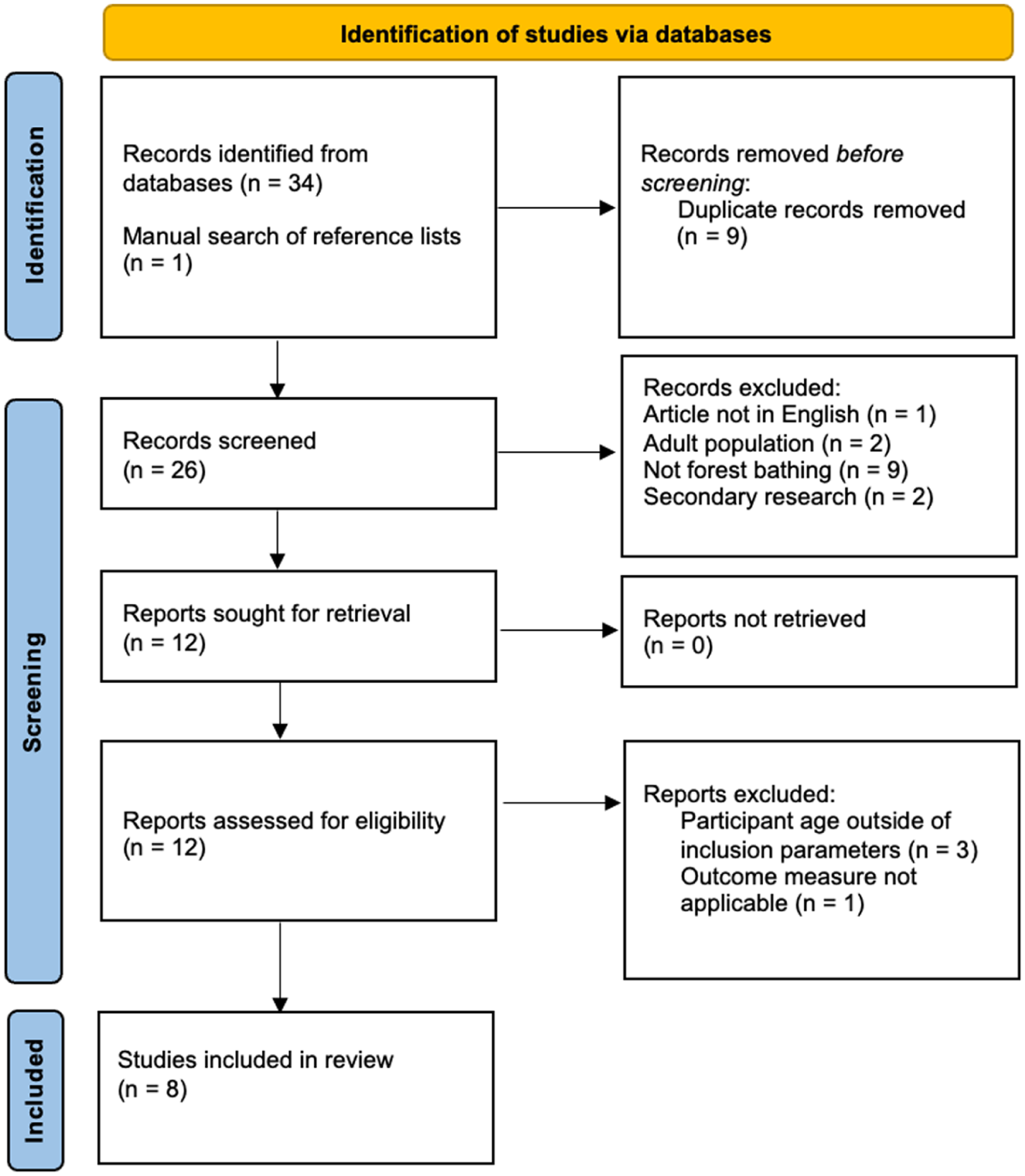
PRISMA flow chart.
Data extraction and analysis
A data extraction form was devised to capture the relevant quantitative findings from each study, enabling a comprehensive comparison and synthesise of the body of research. Data extracted included country of publication, study aim and design, sample size and demographics, intervention, outcome measurement tools and timing, results, effect size and significance, and limitations. To determine variation in forest bathing interventions, descriptions of session, location, facilitation, duration, and frequency were extracted for analysis.
A narrative synthesis, following guidance from Popay et al. (2006), was used to integrate findings across the included studies due to substantial heterogeneity in study design, intervention characteristics, outcome measures, and reporting, which precluded meta-analysis. Narrative synthesis is appropriate when quantitative studies are too diverse for statistical pooling, allowing for a structured and transparent comparison of findings. The synthesis focussed on summarising and comparing quantitative outcomes within and between studies, organised by domains of psychological wellbeing. Study quality was considered in interpreting findings, and non-significant results were included to provide a balanced account and reduce positivity bias.
The methodological quality of the papers was assessed using the Quality Assessment for Diverse Studies (QuADs) tool (Harrison et al., 2021) for the two mixed-methods studies, and the JBI Checklist for Quasi-Experimental Studies (Barker et al., 2024) for the remaining six quantitative articles. Included papers were appraised by both the primary researcher and supervisor to ensure a shared understanding of the criteria, highlight any discrepancies, and reduce bias.
Results
The initial search identified 34 studies, with eight meeting the inclusion criteria following screening. Study characteristics are summarised in Table 1.
Summary of study characteristics.
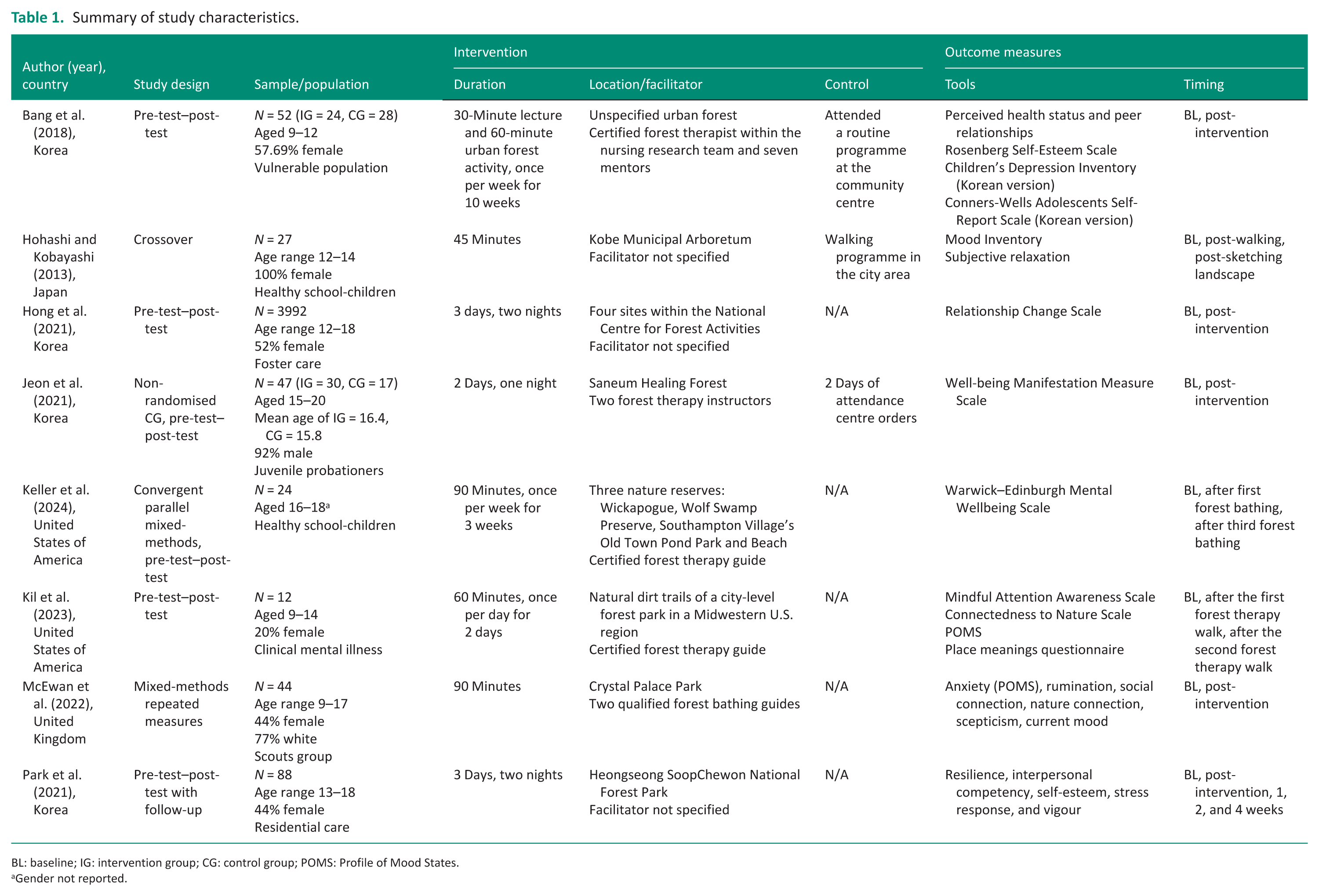
BL: baseline; IG: intervention group; CG: control group; POMS: Profile of Mood States.
Gender not reported.
Quality appraisal
Broadly, study quality was strong (Table 2). Using the JBI checklist, most studies were rated high (⩾7) or moderate (6), with clear aims, appropriate measures, and reliable pre–post assessments. However, three studies lacked control groups, and three had unclear follow-up, limiting confidence in attribution and sustainability of effects. Hong et al.’s study (2021) was rated as low quality but retained due to its relevance. The (QuADS) appraisal tool similarly indicated high overall methodological quality (scores >30). Despite this, limitations highlight the need for more robust controlled designs, clearer sampling strategies, and longer-term follow-up. These considerations informed the interpretation of the findings.
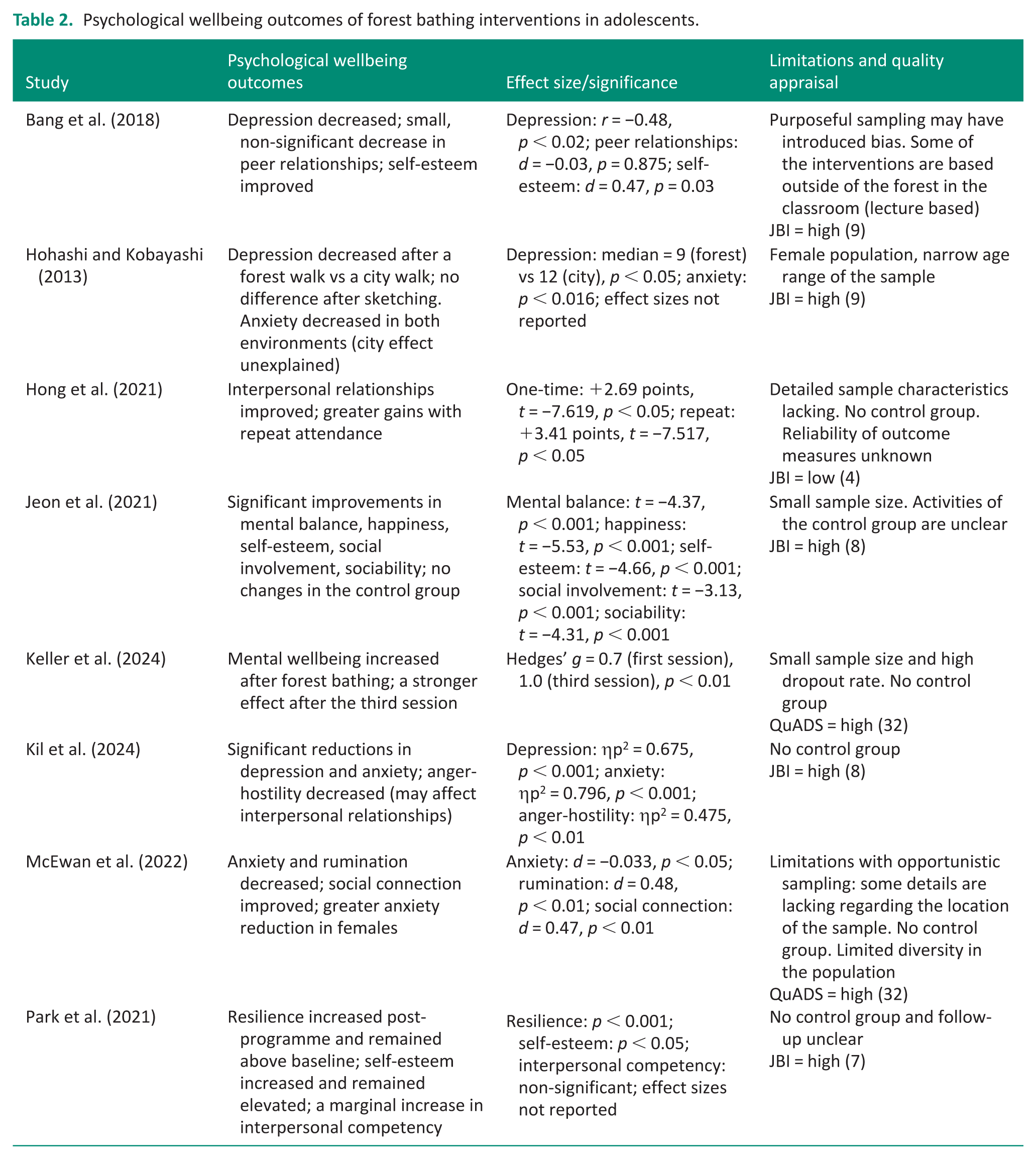
Psychological wellbeing outcomes of forest bathing interventions in adolescents.
Intervention
Forest bathing interventions varied across studies and were categorised as short duration (n = 4) or long duration (n = 4), with longer programmes often including overnight stays. Session length, frequency, facilitation, and location are summarised below.
Short duration
Short-duration interventions lasted 45–90 minutes and typically involved guided walks in forest environments. Hohashi and Kobayashi (2013) combined a 30-minute walk with 25 minutes of landscape sketching. McEwan et al. (2022) delivered a 90-minute session incorporating sensory activities, an empathy exercise, and sharing circles. Kil et al. (2023) conducted two 60-minute guided sessions over 2 days, including introduction, sensory activities, mindful movement, nature connection, and a tea ceremony. Keller et al. (2024) implemented three 90-minute sessions over 3 weeks using a structured framework of sensory engagement, nature interaction, and a tea ceremony.
Long duration
Longer interventions ranged from multi-day programmes to extended multi-week delivery. Hong et al. (2021) and Park et al. (2021) conducted 3-day, two-night programmes including educational components, forest walks, crafts, and group activities. Jeon et al. (2021) implemented a 2-day, one-night programme for juvenile probationers focussed on nature connection, relaxation, and future-oriented reflection. Bang et al. (2018) delivered a 10-week programme combining health education with forest-based activities and two extended day camps.
Location
Studies were conducted across diverse settings, from urban parks to remote forests. In Korea, interventions took place in established forest healing sites such as Heongseong, Yeongju, Chilgok, Jangseong, and Saneum Healing Forest (Hong et al., 2021; Jeon et al., 2021; Park et al., 2021). Bang et al. (2018) used an urban forest setting. In Japan, Hohashi and Kobayashi (2013) used the Kobe Municipal Arboretum. In the United Kingdom, McEwan et al. (2022) based their urban forest bathing session in Crystal Palace Park, London. In the United States of America, Kil et al. (2023) explored a city-level forest park in the Midwest, and Keller et al. (2024) used multiple nature sites, including a coastal environment. These examples highlight the adaptability of forest bathing across varied landscapes.
Psychological wellbeing outcome domains
To facilitate synthesis, the quantitative findings were categorised into four psychological wellbeing outcome domains. A summary of the results, including effect sizes and statistical significance, is presented in Table 2.
Anxiety and depression
Hohashi and Kobayashi (2013) assessed mood using the Mood Inventory before and after walking and sketching in forest and city environments. Depression decreased significantly after forest walking (median = 9) compared to the city (median = 12, p < 0.05), with no difference following sketching; anxiety decreased in both settings, though the city effect was unexplained. Kil et al. (2023) reported a decrease in both depression (ηp2 = 0.675, p < 0.001) and anxiety (ηp2 = 0.796, p < 0.001), using the Profile of Mood States (POMS), with large effect sizes. Similarly, Bang et al. (2018) reported a significant decrease in depression (r = −0.48, p < 0.02), measured by the Korean Children’s Depression Inventory, though the control group also showed a non-significant small reduction. McEwan et al. (2022) used a self-report survey with a six-item subscale of the POMS to measure anxiety, and one item to measure rumination. Both anxiety (d = −0.033, p < 0.05) and rumination (d = 0.48, p < 0.01) showed medium-sized effect-size reductions, with a greater decrease in anxiety among females.
Improving mental state
Keller et al. (2024) used the Warwick–Edinburgh Mental Wellbeing Scale (WEMWBS), a 14-item positively phrased scale, and found that mental wellbeing increased significantly after repeated sessions of forest bathing (Hedges’ g = 0.7, p < 0.01). Jeon et al. (2021) reported significant increases in mental balance (t = −4.37, p = 0.000) and happiness (t = −5.53, p = 0.000) as measured by the Korean Well-being Manifestation Measure Scale (K-WBMMS), compared with no improvements in the control group. Hohashi and Kobayashi (2013) found significantly higher refreshing mood scores after walking in the forest (median = 9) compared to the city (median = 11), whereas sketching the landscape showed no difference. Park et al. (2021) devised a non-standardised scale to measure resilience, finding a significant increase post-programme (p < 0.001) which decreased at follow-up but remained above baseline; however, the magnitude of the effect was not reported.
Self-esteem
Three studies reported improvement in self-esteem. Jeon et al. (2021) found significant increases in self-esteem (t = −4.66, p < 0.001) and perceived control (t = −5.73, p < 0.001). Bang et al. (2018) reported a moderate improvement (d = 0.47, p = 0.03) as measured by the Rosenberg self-esteem scale. Park et al. (2021) found that self-esteem increased after completion of the programme and remained elevated at follow-up (p < 0.05); though the effect size was not reported.
Interpersonal relationships
Hong et al. (2021) report significant improvements in interpersonal relationships, measured by the Relationship Change Scale, with greater gains among repeat participants. McEwan et al. (2022) used the Inclusion of Other in the Self Scale to measure social connection, reporting a medium effect improvement (d = 0.47, p < 0.01). Jeon et al. (2021) report a significant improvement in social involvement (t = −3.13, p < 0.001) and sociability (t = −4.31, p < 0.001) as measured by the K-WBMMS, compared with no changes in the control group. Kil et al. (2023) reported a significant reduction in anger-hostility (ηp2 = 0.475, p < 0.01). Park et al. (2021) reported a marginal but non-significant increase in interpersonal competency post-programme and at follow-up. By contrast, Bang et al. (2018) found a small, non-significant decrease (d = −0.0.03, p = 0.875) in peer relationship scores following completion of the 10-week programme, as measured by a 20-item peer relationship scale previously used by Kim (2005).
Discussion
This review systematically examined evidence on the effects of forest bathing on adolescent psychological wellbeing. Improvements were reported across depression, anxiety, mental state, self-esteem, and interpersonal relationships. However, interpretation of these findings is limited by methodological constraints across the included studies, including small sample sizes, lack of randomisation, and limited use of control groups, which restrict the extent to which causal effects can be determined.
A secondary finding of the review was that forest bathing interventions are versatile and can be adapted in terms of duration and setting. Interventions ranged from brief guided sessions to multi-day immersive programmes involving structured nature-based and sensory activities. This supports the potential integration of forest bathing into occupational therapy practice in the UK, aligned with person–environment–occupation principles (Law et al., 1996).
Interventions typically involved walking and sensory engagement, consistent with broader forest bathing literature (Kotera et al., 2022). However, adaptations were evident within adolescent-focussed interventions; for example, silent walking, commonly used in adult interventions, was modified to better suit adolescent energy levels. This highlights the importance of tailoring interventions to developmental needs, as flexibility in delivery may enhance engagement and support intervention success (Georgiadis et al., 2020). Forest bathing may be appealing to adolescents due to its sensory-based and interactive nature, including creative and craft-based activities. Longer programmes included group activities and psychoeducational elements, which may have contributed to wellbeing outcomes, although mechanisms remain unclear. A common feature across studies was the inclusion of sharing circles and tea ceremonies to promote social interaction and reflection. From an occupational therapy perspective, shorter sessions may align more closely with service constraints, while repeated sessions may enhance potential benefits.
The studies also demonstrate that forest bathing can be adapted across a range of environments. While most interventions were conducted in forest settings, some included coastal environments, which still incorporate core principles of sensory immersion in nature. Expanding the concept to include diverse natural environments may increase opportunities for implementation in the UK context. This aligns with the World Federation of Occupational Therapists’ (2018) sustainability principles, promoting occupations that are both health-enhancing and environmentally sustainable. However, inequalities in access to natural environments may limit implementation. Nonetheless, several studies reported improvements in urban park settings, suggesting that benefits may still be achievable in more accessible environments (Bang et al., 2018; Kil et al., 2023; McEwan et al., 2022).
Significant improvements were reported for anxiety and depression across studies, aligning with broader literature (Chen et al., 2025; Siah et al., 2023). McEwan et al. (2022) also reported reduced rumination, which may act as a mediating mechanism. As forest bathing incorporates mindfulness-based attention to the present environment, this may underpin reductions in depression and anxiety. However, only one study included a clinically diagnosed population, limiting generalisability to clinical settings. In addition, methodological limitations such as lack of randomisation and small sample sizes reduce confidence in causal effects.
Improvements were also observed in broader mental state outcomes, including wellbeing, happiness, mental balance, and resilience. These findings align with research reporting increased positive emotions following forest bathing (Subirana-Malaret et al., 2023). In relation to self-esteem, improvements may be explained by mindfulness-based emotion regulation processes that reduce self-criticism and enhance self-compassion (Szitás et al., 2024). These findings are consistent with wider evidence that nature exposure can enhance adolescent self-esteem (Oswald et al., 2020). Notably, some studies reported that gains in self-esteem were maintained at follow-up, suggesting potential longer-term benefits. Overall, the findings suggest potential for forest bathing in preventative mental healthcare and wellbeing promotion.
Interpersonal improvements may be particularly relevant in adolescence due to heightened sensitivity to peer relationships and social evaluation (Sahi et al., 2023; Venticinque et al., 2024). These outcomes may be supported by group-based activities such as sharing circles, collaborative games, and nature-based tasks, which foster social connection. Relational health is a key component of psychological wellbeing, as social relationships can enhance mental health through emotional support and reduced loneliness (Richman, 2023), aligning with the focus of this review. Kil et al. (2023) additionally reported reductions in anger hostility following forest bathing, which may contribute to more harmonious interpersonal functioning. Furthermore, as items within the WEMWBS relate to interest in and closeness to others, the improvements reported by Keller et al. (2024) may also reflect positive interpersonal change. Interpersonal wellbeing is consistent with occupational therapy models emphasising person–environment–occupation interaction (Iwama, 2006). However, findings were inconsistent across studies, with some reporting no significant effects on peer relationships or interpersonal competency, and methodological limitations reduce confidence in this outcome.
Forest bathing may be relevant for occupational therapy practice due to its sensory-based, accessible, and person-centred nature. The natural environment has long been used therapeutically in occupational therapy (Bishop et al., 2023), although the application of its multiple benefits remains an emerging area of practice (Firby and Raine, 2023). There is therefore scope for occupational therapists to facilitate engagement with nature as a health-promoting occupation. As the evidence base develops, forest bathing may support psychological, social, and potentially physical aspects of adolescent wellbeing. However, implementation will depend on practical considerations, including access to green space, training, risk management, and service constraints.
Limitations
Several limitations should be considered when interpreting the findings of this review. The search strategy and use of key search terms may have introduced indexing bias, while the inclusion of English-language publications only may have introduced language bias, and the relatively small number of included studies (n = 8) reflects the limited adolescent-focussed evidence base. Methodological limitations were common, including the absence of control groups in several studies, variability in intervention facilitation, and limited follow-up data, restricting confidence in causal inference and long-term effects. In addition, heterogeneity of outcomes precluded meta-analysis, physiological measures were underreported, and only one study included a clinical sample, limiting the generalisability of findings to adolescents with diagnosed mental health conditions.
Recommendations for future research
There is a need for high-quality research examining the effects of forest bathing on adolescent psychological wellbeing, particularly in relation to underexplored outcomes such as self-esteem and interpersonal relationships. Future studies should adopt well-reported, controlled, and longitudinal designs, include more diverse and UK-based populations, and prioritise inclusion of clinical samples to strengthen relevance for practice. In addition, the use of standardised outcome measures alongside qualitative exploration of adolescents’ experiences and perspectives and, where appropriate, physiological indicators would support more robust evaluation and comparability across studies.
Conclusion
To address the research question ‘what is the effect of forest bathing on adolescent psychological wellbeing?’ the existing literature was systematically reviewed, resulting in the inclusion of eight papers for analysis. Synthesis of the evidence demonstrates that forest bathing improves adolescent psychological wellbeing, through decreasing depression and anxiety, promoting positive mood, increasing self-esteem, and improving interpersonal relationships. It follows that the benefits reported in the wider forest bathing literature could also be extended to adolescent populations. However, interventions should be tailored to meet the needs of this group by emphasising sensory elements and the inclusion of a sharing circle. The benefits to self-esteem and interpersonal relationships are notable and warrant further exploration. In addition, future research should explore the long-term effects and include clinical populations. The findings provide support for forest bathing as an occupational therapy intervention to promote mental wellbeing for adolescents.
Key findings
Forest bathing is versatile and can be adapted to intervention length and location.
Benefits include reducing anxiety and depression, and improving mental state, self-esteem, and interpersonal relationships.
What this study has added?
This review has summarised the psychological health benefits of engaging in the occupation of forest bathing for adolescents, filling a gap in the literature and informing occupational therapy practice.
Footnotes

Ethical considerations
A protocol was submitted to and approved by London South Bank University’s School of Applied and Health Science systematic review board.
Author contributions
S.R. conducted the systematic review as part of a Master’s dissertation in Occupational Therapy and was responsible for conceptualisation, methodology, literature searching, screening, data extraction, critical appraisal, synthesis, and writing the original draft of the manuscript. SJ.R. provided supervision and contributed to methodological guidance, critical review, and editing of the manuscript. Both authors approved the final version of the manuscript.
Funding
The authors declared no financial support for the research, authorship, and/or publication of this article.
Declaration of conflicting interests
The authors declared no potential conflicts of interest with respect to the research, authorship, and/or publication of this article.