






Abstract
Introduction:
Occupational therapy (OT) contributes to global health through rehabilitation, yet public awareness varies. This study aims to quantify and compare public interest in OT across emerging and established healthcare markets to identify awareness gaps. Using Google Trends (2015–2025), we analyzed OT versus physiotherapy search behaviors across emerging (Türkiye, Jordan, Saudi Arabia, Kuwait, India) and established contexts (United States, United Kingdom, Australia, Canada), examining trends, October peaks, seasonality, and COVID-19 effects.
Method:
This retrospective study analyzed 88 validated keywords across ten regions. Global comparisons focused on OT versus physiotherapy; Türkiye’s analysis incorporated a broader multidisciplinary spectrum (including nursing, psychology, social work) to capture national context. The R statistical software environment (R Core Team) was used for linear regression (trends), Seasonal-Trend decomposition (October peaks), analysis of variance (seasonality), and interrupted time series (COVID-19 impacts).
Findings:
Globally, OT interest was stable (slope = 0.003, p = 0.846), but Türkiye’s “sensory integration” searches grew (slope = 0.507, p < 0.001), showing October spikes and summer increases. Post-COVID-19 surges occurred globally for “what does OT do” (p < 0.001), with minimal growth in Saudi Arabia, India, and Jordan. Physiotherapy outperformed OT across all regions.
Conclusion:
Growing OT interest signals advocacy and policy opportunities to enhance visibility, aligning with WHO Rehabilitation 2030 goals for equitable rehabilitation.
Keywords
Introduction and literature review
Occupational therapy (OT) is a client-centered health profession and an integral component of multidisciplinary healthcare, including primary care, that promotes health and well-being through engagement in occupations (Donnelly et al., 2023). Rehabilitation services, including occupational therapy, aim to improve quality of life by supporting adults and other populations in managing daily life challenges related to chronic illnesses (American Occupational Therapy Association (AOTA), 2020). Additionally, in pediatric populations, occupational therapy plays a critical role in supporting children’s development and participation in age-appropriate activities, particularly in areas such as sensory integration, motor skills, and social engagement (AOTA, 2020).
Occupational therapists collaborate as part of interprofessional teams in both primary care and community settings to improve patient outcomes (Bolt et al., 2019). Effective interprofessional collaboration is grounded in role clarity, mutual trust, and open communication (Donnelly et al., 2023).
Awareness gaps in occupational therapy within emerging healthcare markets
Emerging markets such as Saudi Arabia and Jordan have experienced a growing need for occupational therapy services, driven by healthcare system modernization and demographic changes (Aljabri et al., 2024, Alotaibi et al., 2024). Studies from these regions highlight the importance of culturally sensitive, interdisciplinary approaches to occupational therapy practice, shaped by unique sociocultural and healthcare contexts (Alotaibi et al., 2024).
In the context of health sciences and rehabilitation, “emerging markets” represent regions where there is a temporal lag between rapid healthcare infrastructure expansion and the establishment of supporting regulatory frameworks (Salter et al., 2022). In these systems, service delivery is often characterized by institutional gaps and evolving regulations (Bloom et al., 2014). For instance, occupational therapy education in Türkiye only began in 2009. While it has experienced rapid academic expansion—reaching 17 active bachelor’s degree programs with an 89.7% quota fill rate over the last 5 years—significant institutional vulnerabilities remain. A recent nationwide analysis revealed that out of 113 teaching staff in these programs, only 35.4% are actual occupational therapists (Yıldırım and Zengin Yazıcı, 2025). This structural reality highlights that while occupational therapy is gaining market value as a “profession of the future,” its professional standardization and clear identity construction are still in the foundational phase.
Challenges in role clarity and integration
Public and interprofessional confusion regarding the role of occupational therapy is highly prevalent in such regions. Many patients and healthcare providers struggle to differentiate it from physiotherapy, often misperceiving occupational therapy as a sub-branch “under the umbrella of physiotherapy” due to overlapping physical interventions (Wong et al., 2021). This lack of role clarity contributes to interprofessional confusion and underutilization within multidisciplinary teams (Sarsak, 2022). Furthermore, as primary care typically serves as the initial gatekeeper in these emerging healthcare systems, growing public interest in specialized rehabilitation must be met with adequate awareness among frontline physicians to ensure effective referral pathways. To contextualize this demand in Türkiye, we contrasted occupational therapy with established (e.g., nursing, psychology) and emerging (e.g., audiology, social work, podiatry) disciplines to determine whether observed trends are unique to OT or reflect a broader public interest in allied health sciences.
The World Health Organization (WHO) calls on countries to integrate rehabilitation into national health strategies to meet increasing demand (Rehabilitation 2030, 2023). In direct response to these global directives, healthcare reforms and expanding rehabilitation infrastructure in Türkiye and similar regions have positioned occupational therapy as a vital and evolving profession capable of addressing pressing global health challenges, particularly in low- and middle-income countries.
Persistent knowledge gaps and the role of digital tools
Persistent knowledge gaps about occupational therapy exist among the general public and healthcare professionals in countries where the profession is still emerging (Abu Tariah et al., 2012; Aljabri et al., 2024; Alotaibi et al., 2015; İnan et al., 2025; Kasar et al., 2021). This awareness gap limits efforts to advocate for the integration and advancement of occupational therapy within evolving health systems, where public perception plays a key role in resource allocation, workforce development, and policy implementation.
Online search data have become a valuable proxy for studying public health behaviors, offering near real-time insights into population-level interest and concern (Nuti et al., 2014). Google Trends, a validated tool for such analyses, provides normalized measures of keyword search volume and has been widely used to track interest in health topics, policy shifts, and disease trends (Cervellin et al., 2017).
Building on these insights, to address awareness gaps, Google Trends presents a novel, underutilized tool to assess public awareness and interest in occupational therapy. Leveraging this tool, the current study examines countries such as Türkiye, Jordan, Saudi Arabia, Kuwait, and India for their emerging occupational therapy workforce structures and ongoing healthcare transitions, alongside the United States, United Kingdom, Australia, Canada, and worldwide data for cross-regional comparison of established and developing markets. Emerging healthcare markets in this study refer to regions characterized by rapid healthcare infrastructure development and evolving professional regulations for allied health sciences.
Study aims and objectives
This study aims to quantify public interest in occupational therapy and related disciplines in Türkiye and emerging markets (2015–2025) using Google Trends. Specifically, it seeks to:
assess long-term trends in search interest for occupational therapy and physiotherapy across regions, alongside a broader multidisciplinary spectrum (including nursing, psychology, social work, audiology, and podiatry) within Türkiye
evaluate October search patterns, particularly linked to World Occupational Therapy Day (October 27), to gauge awareness campaign impacts;
examine differences in summer (June–August) versus non-summer months to explore academic or societal influences;
investigate shifts in search behavior following COVID-19’s onset (March 2020);
and compare trends and October interest across disciplines to identify relative visibility.
Through these objectives, this study aims to inform healthcare policy, professional advocacy, and public health campaigns to strengthen occupational therapy’s role in addressing evolving healthcare needs in emerging healthcare markets.
Methods
Design
This retrospective observational study explored search interest in multidisciplinary healthcare professions, emphasizing occupational therapy in emerging regions, using Google Trends data, which provides relative search volume (RSV) on a 0–100 scale to reflect search query popularity over time and across regions. While the global comparative analysis centered primarily on occupational therapy versus physiotherapy, the scope for Türkiye was expanded to include a broader multidisciplinary spectrum (e.g., nursing, psychology, social work, podiatry) to capture a detailed national context.
The keyword selection process was curated and validated by a professor of family medicine and a professor of occupational therapy, who evaluated preliminary search results drawing upon their clinical expertise. To address both the global and national objectives, we analyzed a total of 88 culturally validated keywords. Keywords lacking sufficient search volume were excluded to maintain focus. The selected keywords encompassed professional roles, educational programs, salaries, and service inquiries (see Supplemental File for the complete list).
Data spanned January 2015 to May 2025, incorporating partial 2025 data to capture recent trends, while acknowledging limitations of incomplete yearly data.
Data collection
Publicly available, anonymized Google Trends data were exported as comma-separated values files containing monthly RSV values for single or multiple keywords. Low-volume “geoMap” files excluded to focus on temporal trends. Since the study utilized anonymized public data, institutional ethical approval was not required. Data preprocessing was conducted in R (version 4.3.1) using the readr, dplyr, and tidyr packages. Specifically, readr was utilized to accurately import the raw data, dplyr facilitated data transformations and filtering, and tidyr was employed to standardize the data structure for subsequent analyses. RSV values of “<1” were set to 0.5 and empty or “N/A” entries were converted to 0 to minimize bias, and keywords were standardized into English while retaining region identifiers for cross-linguistic consistency.
For both single- and multiple-keyword files, we analyzed temporal trends using linear regression to model RSV over time (months since January 2015) to assess trend significance. Furthermore, we evaluated October RSV patterns linked to events like World Occupational Therapy Day (October 27) using Seasonal-Trend decomposition (STL). We also compared RSV in June, July, and August versus other months using analysis of variance (ANOVA) with Tukey’s HSD test for significant differences (p < 0.05). Additionally, we assessed RSV slope changes post-March 2020 using interrupted time series analysis to examine COVID-19 impacts, with multiple-keyword files further analyzed by comparing trend slopes across keywords using linear regression with interaction terms and the emmeans package for pairwise differences, and ANOVA to test differences in October RSV among keywords.
To investigate seasonal differences, ANOVA was applied. For Northern Hemisphere regions (e.g., Türkiye, USA, UK, Canada), summer was defined as June, July, and August. For Australia (Southern Hemisphere), summer was adjusted to December, January, and February.
Results included trend slopes, p-values, seasonal effects, and COVID-19 impact metrics, with visualizations generated using ggplot2, displaying trend lines, a March 2020 marker, and highlighted summer months in 16 × 9 plots, and sensitivity analyses excluding 2025 data confirmed consistent trends.
Data analysis
Analyses were conducted in The R statistical software environment (R Core Team, 2023) using the forecast package for STL and the emmeans package for pairwise trend slope comparisons. Post-COVID-19 impacts were evaluated using interrupted time series analysis, a robust method for assessing population-level public health shifts. For detailed methodology, see Supplemental File.
Results
Long-term search interest (2015–2025)
Occupational therapy trends in Türkiye
In Türkiye, occupational therapy searches showed significant growth from 2015 to 2025. “Occupational therapy” had a trend slope of 0.263 (p < 0.001), “what is occupational therapy” 0.284 (p < 0.001), “sensory integration” 0.507 (p < 0.001), “occupational therapist” 0.143 (p < 0.001), and “occupational therapy salary” 0.075 (p < 0.001). Non-significant slopes included “occupational therapy appointment” (0.038, p = 0.086) and “occupational therapy department” (0.030, p = 0.532).
Global trends in occupational therapy
Worldwide, “occupational therapy” was stable (0.003, p = 0.846), but in the United Kingdom, it grew (0.069, p < 0.001). In the United States, Saudi Arabia, and India, slopes were low (the United States: −0.019, p = 0.410; Saudi Arabia: 0.001, p = 0.194; India: 0.002, p = 0.086). Additionally, there was no detectable search volume for these terms in Jordan. In contrast, in Kuwait, “occupational therapy” also showed a modest but significant upward trend (slope = 0.024, p = 0.016).
Comparisons with physiotherapy in Türkiye
In Türkiye, “occupational therapy” (0.263) and “occupational therapist” (0.143) had lower slopes than “physiotherapy” (0.097, p = 0.027; pairwise p < 0.001) and “physical therapy” (0.174, p < 0.001; pairwise p < 0.001). “Occupational therapist” had a lower slope than “physiotherapist” (0.407, p < 0.001; pairwise p < 0.001). Additionally, the search interest for “what is occupational therapy” showed a significant long-term increase with a trend slope of 0.218 (p < 0.001), while “what is physiotherapy” exhibited a non-significant long-term trend slope of 0.071 (p = 0.054). See Figure 1 for trend slopes for “what is occupational therapy” and “what is physiotherapy” in Türkiye.
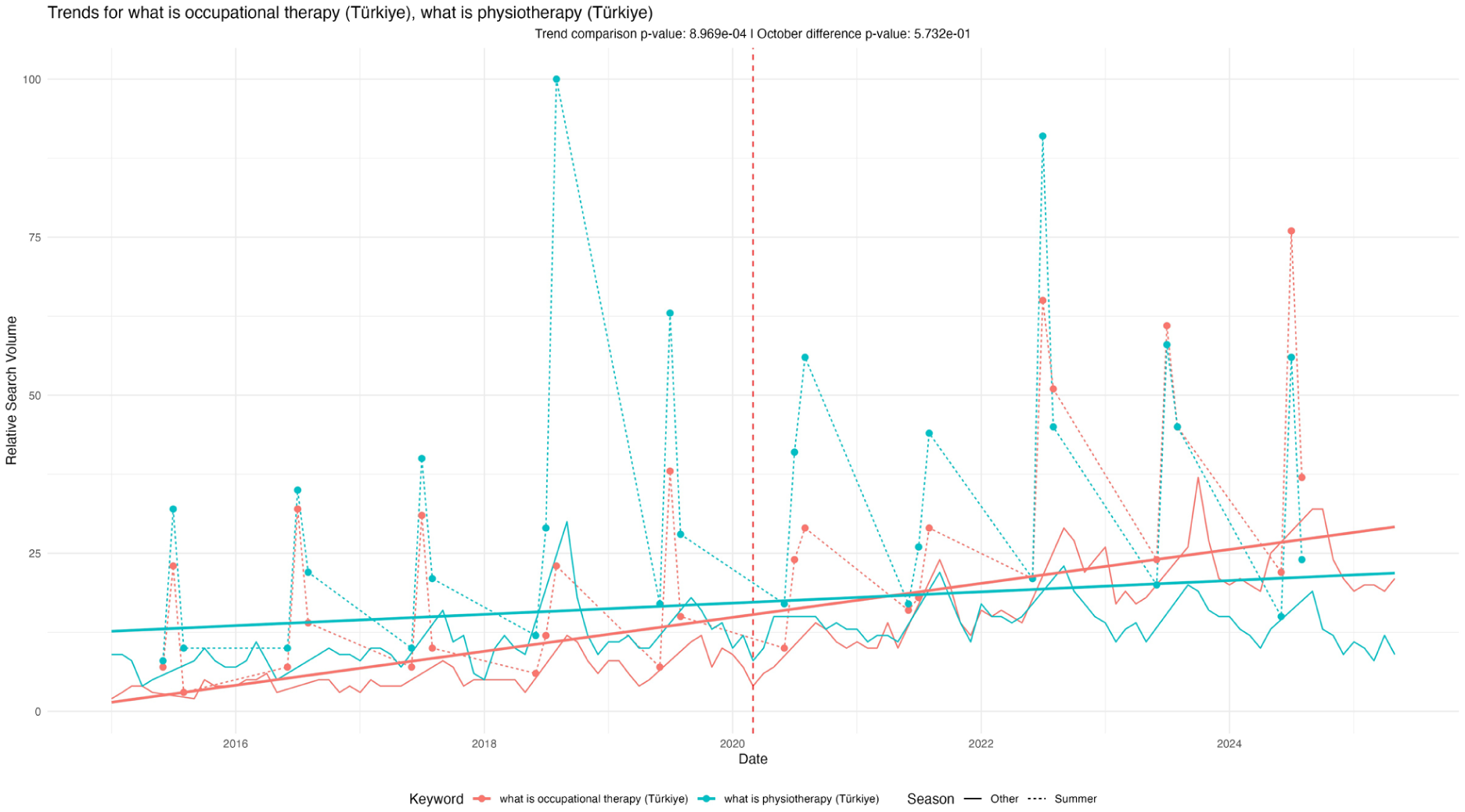
Trend slopes (2015–2025) for “what is occupational therapy” and “what is physiotherapy” in Türkiye.
Multidisciplinary comparisons in Türkiye
In Türkiye, broader comparisons across the multidisciplinary healthcare spectrum revealed significant long-term growth for “occupational therapy” (slope = 0.263, p < 0.001), “podiatrist” (slope = 0.334, p < 0.001) and “psychologist” (slope = 0.296, p < 0.001). In contrast, fields such as “social work” (slope = −0.023, p = 0.314), “audiology” (slope = −0.004, p = 0.540), and “nursing” (slope = 0.052, p = 0.156) remained relatively stable.
Global profession comparisons
Worldwide, “occupational therapy” (0.003, p = 0.846) had a lower slope than “physiotherapy” (0.281, p < 0.001; pairwise p < 0.001). In Australia, “occupational therapy” showed significant growth with a trend slope of 0.101 (p < 0.001), while “physiotherapy” had a non-significant negative trend (slope = −0.025, p = 0.254). The trend for “occupational therapy” was significantly stronger than for “physiotherapy” (pairwise p < 0.001).
In the United States, “occupational therapy” (−0.019, p = 0.410) was lower than “physical therapy” (0.151, p < 0.001; pairwise p < 0.001); similar differences occurred in the United Kingdom, Saudi Arabia, India, and Kuwait (e.g., Kuwait: physiotherapy 0.080, p = 0.040; pairwise p < 0.001). In Canada, similar to the United States, “occupational therapy” search interest remained stable (slope = −0.002, p = 0.545), while “physiotherapy” showed a significant upward trend (slope = 0.232, p < 0.001).
October search patterns
October effects in Türkiye
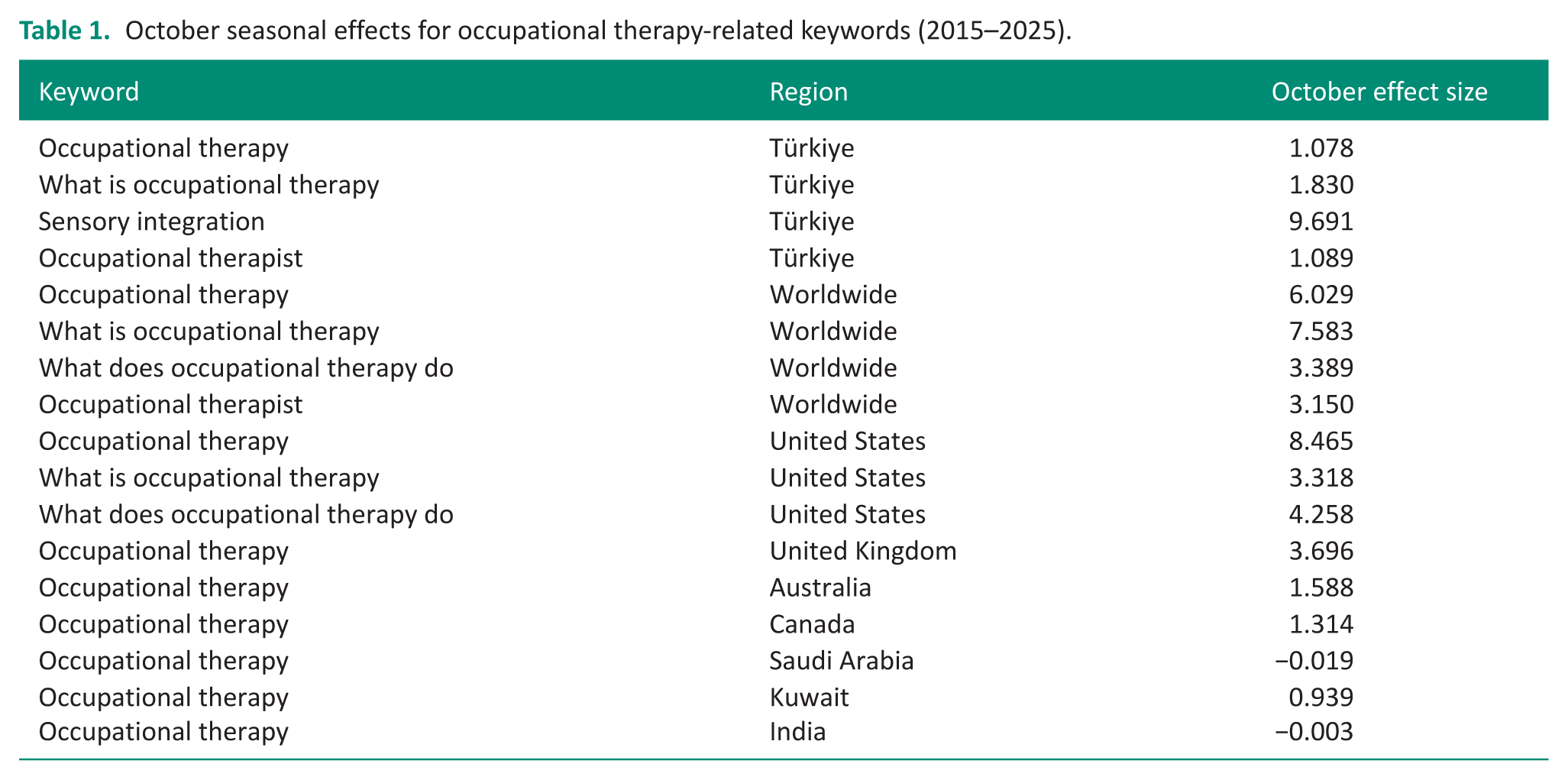
In Türkiye, occupational therapy searches increased significantly in October, linked to World Occupational Therapy Day. “Sensory integration” had a high effect (9.691), “what is occupational therapy” 1.830, and “occupational therapist” 1.089. “Occupational therapy” showed no significant effect (1.078).
Global October effects
Worldwide, “occupational therapy” (6.029) and “what does occupational therapy do” (3.389) had high effects. In the United States (8.465), United Kingdom (3.696), Australia (1.588), and Canada (1.314), effects were high; Kuwait (0.939), Saudi Arabia (−0.019) and India (−0.003) showed no notable effects.
Profession comparisons during October
In Türkiye, “occupational therapy” (1.078) and “occupational therapist” (1.089) had higher October effects than “physiotherapy” (−4.217; p < 0.001) and “physiotherapist” (0.892 < 0.001). In stark contrast, other professions like “social work” (0.063), “audiology” (−0.830), and “nursing” (−2.304) exhibited minimal or negative October effects.
Worldwide, “what does occupational therapy do” (3.389) had a higher effect than “what does physiotherapy do” (0.849, p < 0.001). See Table 1 for October increases in occupational therapy-related keywords.
October seasonal effects for occupational therapy-related keywords (2015–2025).
Summer month search patterns
Summer increases in Türkiye
In Türkiye, occupational therapy searches showed significant increases in summer (June–August). “Occupational therapy” had effects of 0.437 (June), 33.737 (July), and 20.737 (August) (p < 0.001); “what is occupational therapy” had 0.416 (June), 34.016 (July), and 17.216 (August) (p < 0.001). “Sensory integration” decreased (−5.558 June, −10.058 July, −8.558 August; p = 0.093), and “occupational therapist” was stable (−1.053 June, 2.647 July, 0.447 August; p = 0.631). See Table 2 for summer-month effects comparing occupational therapy and physiotherapy in Türkiye.
Summer-month effect sizes (June–August) for occupational therapy versus physiotherapy/physical therapy in Türkiye.
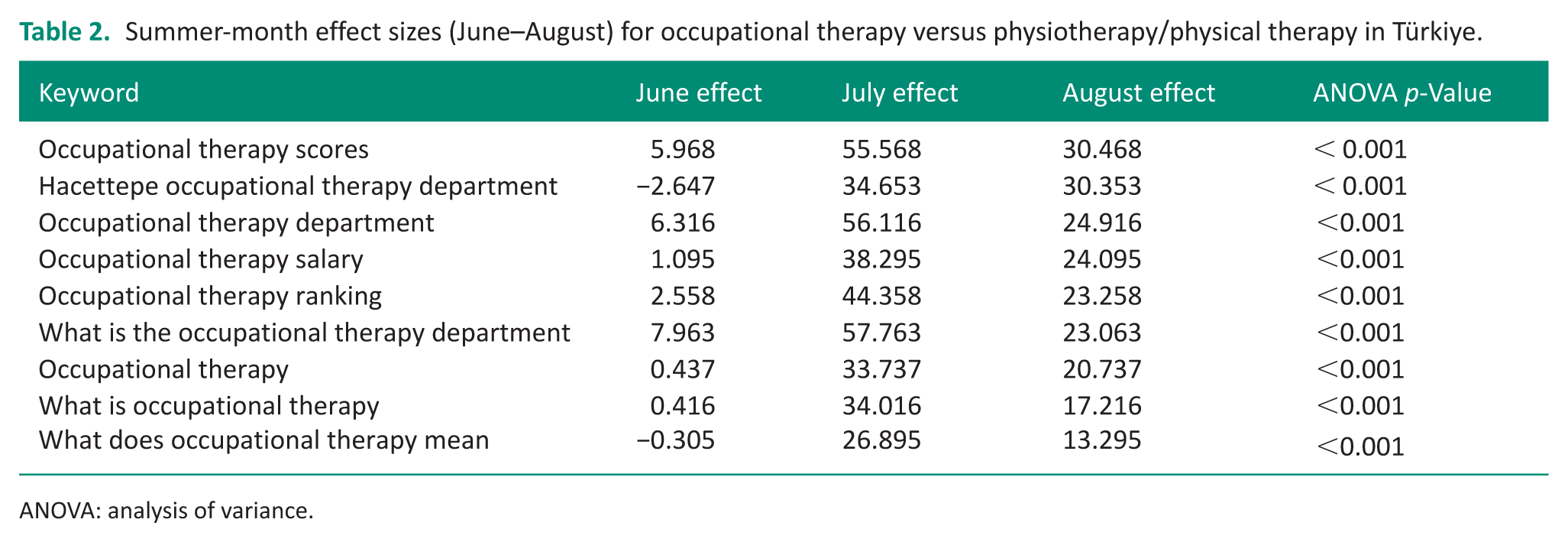
ANOVA: analysis of variance.
Global summer declines
Worldwide, “occupational therapy” declined (−5.347 June, −7.147 July, −3.647 August; p < 0.001), as in the United States (−7.995 June, −9.695 July, −3.895 August; p < 0.001) and United Kingdom (−4.763 June, −9.263 July, −10.463 August; p < 0.001). Saudi Arabia and India had low effects (Saudi Arabia: −0.021, p = 0.576; India: −0.011, p = 0.576). In Australia, “occupational therapy” showed significant summer month decreases with effect sizes of −8.219 (December), −4.692 (January), and −0.328 (February) (p < 0.001). Similarly, “physiotherapy” exhibited significant early summer decreases (December: −19.015, January: −3.761) before a slight rebound (February: 2.239) (p < 0.001). In the Northern Hemisphere context, Canada mirrored this occupational therapy summer decline with effect sizes of −1.149 (June), −2.195 (July), and −2.295 (August) (p < 0.001), whereas Canadian “physiotherapy” search interest remained statistically unaffected by the summer season (p = 0.975).
Summer profession comparisons in Türkiye
In Türkiye, “occupational therapy” (July: 33.737) and “occupational therapist” had lower effects than “physiotherapy” (July: 44.500, p < 0.001; pairwise p < 0.001) in context to summer season. Additionally, significant summer increases were not exclusive to occupational therapy; “social work” (July effect: 14.626; p < 0.001), “nursing” (July: 39.289; p < 0.001), and “audiology” (July: 9.021; p < 0.001) also experienced significant mid-summer spikes.
Post-COVID-19 search interest shifts
Post-pandemic shifts in Türkiye
Post-March 2020, occupational therapy searches in Türkiye increased significantly for “occupational therapist” (p < 0.001), “sensory integration” (p < 0.001), “what is occupational therapy” (p = 0.048), and “occupational therapy center” (p < 0.001), but not for “occupational therapy” (p = 0.104).
Global post-pandemic surges
Worldwide, search volumes for “occupational therapy” (p < 0.001, see Figure 2), “what is occupational therapy” (p < 0.001), and “what does occupational therapy do” (p < 0.001) increased, but not those for “occupational therapist” (p = 0.114). “What does occupational therapy do” also increased in the United States (p < 0.001) and the United Kingdom (p < 0.001). Saudi Arabia (p = 0.388), Kuwait (p = 0.402) and India (p = 0.091) showed no increases. In Australia, “occupational therapy” showed a significant post-COVID-19 increase (p < 0.001), as did “physiotherapy” (p < 0.001), with a significant difference in trend slopes (pairwise p < 0.001). In Canada, both “occupational therapy” (p < 0.001) and “physiotherapy” (p = 0.004) saw significant post-pandemic surges, similar to the significant increases observed for both fields in Australia (p < 0.001 for both).
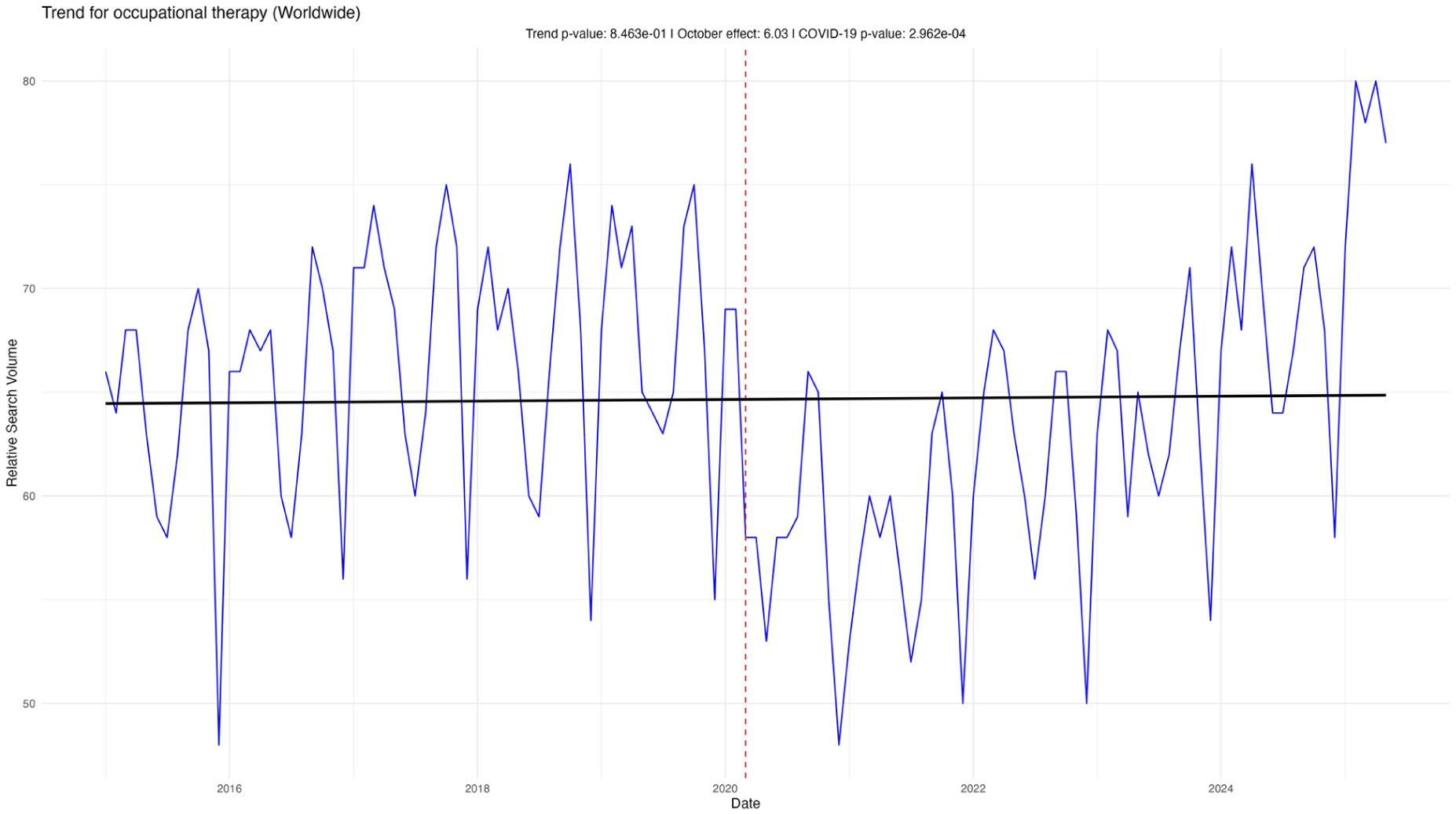
Global trend slopes in occupational therapy interest following the onset of COVID-19 (Post-March 2020).
Post-pandemic profession comparisons
In Türkiye, “occupational therapy” (p = 0.104, no increase) had a different pattern than “physiotherapy” (p = 0.496, no increase; pairwise p < 0.001). Significant post-pandemic increases were also observed for “podiatrist” (p < 0.001), “psychologist” (p < 0.001), and “social work” (p = 0.006).
In the United States, the United Kingdom, Australia and also worldwide, “physiotherapy” increased (p < 0.001 for each); in India, “physical therapy” increased (p = 0.019), unlike “occupational therapy” (p = 0.091, no increase) in India. In Türkiye, “speech and language therapy” (p = 0.805), “audiology” (p = 0.586) and “nursing” (p = 0.195) showed no post-pandemic increases, nor did Kuwait’s “physiotherapy” (p = 0.108).
Discussion
Drawing on a decade of Google Trends data, this study—being the first to examine public interest in occupational therapy using this tool—reveals how public interest in occupational therapy has evolved in Türkiye, offering comparative insights from both established and emerging healthcare systems worldwide. The data demonstrate seasonal surges, post-pandemic increases, and overall positive momentum—particularly in Türkiye—while highlighting substantial gaps in awareness and engagement elsewhere.
The significant rise in “sensory integration” searches in Türkiye underscores growing public interest in pediatric occupational therapy, particularly for children with sensory processing disorders or autism. This trend, amplified post-COVID-19, suggests increased parental concern about developmental challenges. Occupational therapists can leverage these findings to develop targeted interventions, such as sensory integration programs in schools, to address these needs.
Long-term search interest (2015–2025)
The sustained growth of occupational therapy-related searches in Türkiye likely reflects modernization in healthcare, increasing awareness of rehabilitation professions, and expanding academic opportunities. The significant rise in “sensory integration” searches in Türkiye reflects growing public interest in pediatric occupational therapy, particularly for children with sensory processing disorders. This trend suggests occupational therapists can promote sensory integration interventions to address developmental needs, enhancing early intervention programs in emerging markets.
The rise in queries such as “what is occupational therapy” and “sensory integration” suggests growing curiosity about occupational therapy’s scope. However, this growth remains overshadowed by consistently stronger interest in physiotherapy, both in Türkiye and globally. In another study from Türkiye, it was found that most of the doctors were aware of OT, with specialties like physical medicine and rehabilitation showing higher knowledge compared to others (İnan et al., 2025). This discrepancy suggests that while public curiosity is rising, professional understanding remains a barrier, necessitating targeted education for healthcare providers to enhance OT referrals and integration.
In countries like the United States, the United Kingdom and Australia, flat or slowly increasing trends indicate saturation and maturity. In contrast, Saudi Arabia, India, and Jordan show minimal or no growth, in line with previously reported public and professional unawareness (Darawsheh, 2018; Kasar et al., 2021; Mani and Velan, 2020; Meny et al., 2021).
Limited occupational therapy engagement in these regions may also stem from sociocultural factors—including stigma, traditional beliefs, and insufficient exposure—which influence both service use and perceptions. In Saudi Arabia and the broader Gulf region, for instance, sociocultural stigma and traditional beliefs surrounding mental health and developmental rehabilitation continue to hinder families from accessing formal therapeutic services (Alanazi et al., 2023). Uneven internet access in rural areas in India (Stoltzfus et al., 2023) may further limit online engagement and awareness. Addressing these barriers requires not only service availability, but targeted, culturally tailored public education.
October search patterns
October search spikes in Türkiye and select other countries align with World Occupational Therapy Day, demonstrating the potential impact of awareness campaigns. However, these effects are temporary and insufficient to elevate occupational therapy to physiotherapy’s level of visibility. The high October effect for “sensory integration” in Türkiye (effect size = 9.691) aligns with this global event, offering occupational therapists a strategic opportunity to engage the public. Organizing community workshops focused on sensory integration for children with autism or developmental delays during this time can boost parental awareness and increase service utilization. In countries like Saudi Arabia and India, negligible October effects highlight a lack of campaign reach or resonance. Optimizing campaign timing and scope using tools like Google Trends may help improve future impact.
Summer month search patterns
In Türkiye, summer spikes—especially in July—are driven by academic calendar cycles rather than clinical needs. Digital epidemiology studies confirm that health profession search volumes peak during summer as prospective students and parents engage in career choice strategies (Chen et al., 2020). Corroborating this, 89.73% of the 3,311 OT student quotas in Türkiye were filled over the last 5 years (Yıldırım and Zengin Yazıcı, 2025). This offers a unique engagement window to promote OT among students. Globally, however, OT interest drops in summer, likely due to established programs requiring less seasonal exploration. Integrating targeted digital campaigns during academic decision-making periods in emerging markets could significantly strengthen OT’s visibility.
Post-COVID-19 search interest shifts
The post-COVID-19 surge in Türkiye and other countries for terms like “occupational therapist” and “sensory integration” reflects heightened reported demand for rehabilitation services addressing long COVID-related neurological and functional impairments (Fernandez-de-las-Peñas et al., 2021). In Türkiye, the post-COVID-19 surge in “sensory integration” searches (p < 0.001) highlights increased parental concern about children’s neurological and sensory challenges, likely linked to long COVID. Increased health awareness post-pandemic may fuel this interest, aligning with health-seeking behavior models (Khan et al., 2024). Additionally, the pandemic heightened public awareness of health risks, leading to a surge in health information-seeking, particularly online (Zhao et al., 2022). Beyond clinical needs, COVID-19 significantly disrupted daily occupations across populations—from infected individuals to those impacted by lockdowns and economic shifts. Occupational therapists, with their expertise in analyzing and restoring participation in meaningful activities, were uniquely positioned to formulate adaptive strategies and support re-engagement in everyday life (Kamalakannan and Chakraborty, 2020). These disruptions and the therapeutic potential of occupational therapy to address them may have triggered renewed public curiosity and Google search behaviors.
Additionally, while global curiosity about occupational therapy also rose (e.g., “What does occupational therapy do?”), countries like India and Saudi Arabia showed no significant change—highlighting persistent awareness gaps. Additionally, in established markets like Canada and Australia, both occupational therapy and physiotherapy saw significant post-pandemic surges. This indicates a broad, renewed public interest in general rehabilitation and recovery services following the pandemic, rather than a profession-specific spike.
These results emphasize the importance of embedding occupational therapy in pandemic recovery initiatives and using real-world cases to educate the public.
Comparative search interest: Occupational therapy versus physiotherapy
Occupational therapy consistently trails physiotherapy in search interest across all regions. This may be attributed to physiotherapy’s earlier institutionalization and broader recognition by public health systems. In the context of Türkiye, this observation might also be heavily associated with the fact that occupational therapists are currently employed solely in the physical therapy and rehabilitation units of hospitals (İnan et al., 2025), except for private institutions and clinics.
The implication is clear: awareness precedes engagement. Without foundational recognition, the public is unlikely to seek out occupational therapy information or services. Promoting occupational therapy’s distinctive focus on holistic, occupation-based rehabilitation—especially in contrast to physiotherapy—can help clarify its value. Joint advocacy with allied professions may further enhance reach. Australia’s stronger growth in “occupational therapy” (p < 0.001) compared to “physiotherapy” (p = 0.254) suggests opportunities to highlight occupational therapy’s unique contributions in established markets, complementing joint advocacy efforts.
Despite lower overall interest in OT compared to physiotherapy, the strong rise in “sensory integration” searches in Türkiye underscores pediatric occupational therapy’s unique role in addressing sensory processing issues, offering therapists a chance to differentiate occupational therapy through targeted advocacy for pediatric interventions.
Policy recommendations: Education, workforce, and collaboration
Rising interest in occupational therapy underscores the need for strategic policy measures to bolster its global integration. Expanding training programs can address workforce shortages, ensuring the profession meets growing demand. In Türkiye, this shortage is profoundly evident, with only 0.01 practicing occupational therapists per 10,000 population (World Federation of Occupational Therapists [WFOT], 2024). Other emerging markets evaluated in this study demonstrate similarly restricted capacities, such as India (0.1), Saudi Arabia (0.1), Jordan (1), and Kuwait (1) per 10,000 people. In contrast, established healthcare markets have significantly higher ratios: there are 4 occupational therapists per 10,000 population in the United States, 5 in Canada, 6 in the United Kingdom, and 11 in Australia (WFOT, 2024). These profound workforce disparities are entirely consistent with the digital search behaviors observed in our study; the severe lack of practicing occupational therapists in emerging markets physically limits public exposure to the profession, directly mirroring the persistently low search interest such as no detectable search volume in Jordan and lack of response to global awareness campaigns (e.g., World OT Day) that we identified.
These disparities underscore the urgent need to enhance the occupational therapy workforce, particularly in regions with critically low ratios. Increasing the availability of occupational therapy education programs is essential to address this shortage. However, internal standardization is paramount; expanding programs without specialized occupational therapy faculty dilutes professional identity and weakens graduates’ advocacy skills within medical-hegemonic systems (Garcia et al., 2016; Yıldırım and Zengin Yazıcı, 2025). Globally, occupational therapy workforce research is key in providing evidence regarding whether and how the occupational therapy workforce exists in sufficient quantity, is equitably distributed, and meets key competency standards (Jesus et al., 2023). To safely increase the accessibility of occupational therapy education, policymakers must align new student quotas with formally trained faculty capacity by incentivizing specialization through postgraduate scholarships. Furthermore, to improve workforce research, health ministries in emerging markets should implement centralized occupational registries that systematically track practitioner distribution and clinical settings.
To strengthen interdisciplinary collaboration and address the visibility gap, advocacy must shift toward curriculum designers to enhance interprofessional education. Low referral rates are heavily rooted in role ambiguity, as physicians often lack confidence when occupational therapy is not adequately demonstrated “in action” during their medical training (Trio et al., 2022; Vij, 2023). Consistently, İnan et al. (2025) reported that medical doctors in Türkiye who had prior exposure to occupational therapy concepts—through specific courses, seminars, or training during their medical education—demonstrated significantly higher referral rates and better knowledge scores. This suggests that formally integrating occupational therapy awareness, via theoretical and practical modules within undergraduate medical curricula and residency programs, could significantly enhance interdisciplinary collaboration and appropriate patient referrals (İnan et al., 2025).
Furthermore, policymakers should prioritize sensory integration training within pediatric occupational therapy programs, as evidenced by rising “sensory integration” searches in Türkiye, to meet growing demand for developmental interventions. Embedding occupational therapy in primary care and all other health care contexts, post-COVID recovery plans, and more health contexts aligns with global calls for accessible rehabilitation (Rehabilitation 2030, 2023). Sustained awareness campaigns, extending beyond seasonal peaks, can maintain engagement. International collaboration with organizations like the World Federation of Occupational Therapists can adapt context-specific best practices. Partnerships with allied health professions can co-promote rehabilitation, enhancing occupational therapy’s global recognition.
Systemic funding barriers must also be addressed to ensure sustainable service delivery. In emerging systems like Türkiye, centralized third-party payers historically tend to reject coverage for essential assistive technology devices by deeming them “not medically necessary,” a barrier that severely hinders the adaptation of occupational therapy interventions to daily life (Öksüz et al., 2011). To overcome systemic funding barriers, emerging markets must transition from restrictive centralized reimbursement systems to targeted cost-effectiveness advocacy directed at healthcare administrators, drawing inspiration from successful rights-based models like Australia’s National Disability Insurance Scheme (Currie and Dafny, 2025; Loh et al., 2021).
Future research directions
To build upon these digital infodemiology findings efficiently, future research should shift from broad, resource-intensive qualitative designs to highly targeted assessments. Specifically, research should engage two key stakeholder groups via structured digital surveys or small, targeted focus groups: (1) parents of children with developmental challenges, to elucidate the sociocultural drivers behind the massive “sensory integration” search surges and identify concrete barriers to clinical access; and (2) healthcare administrators and medical curriculum developers, to explore practical attitudes toward funding (e.g., reimbursement barriers) and interprofessional educational integration. Focusing on these specific populations clarifies both the “who” and the “why,” providing actionable, resource-efficient data to validate online search behaviors and directly shape future advocacy strategies.
Limitations
While this study is the first to assess public interest in occupational therapy through Google Trends data, these data reflect search behavior, not direct engagement or understanding. Crucially, Google Trends lacks user demographic data (e.g., age, profession), meaning inferences about user identity—such as attributing summer spikes to students—rely on contextual correlations rather than direct proof. Populations with limited internet access may be underrepresented, and low search volume may underestimate true awareness gaps. Despite this bias, the relatively low search volume suggests that public awareness and interest in occupational therapy may be even lower than expected. Furthermore, because our study design intentionally focused the comprehensive multidisciplinary comparison on Türkiye to establish a detailed national context, this broader spectrum was not analyzed for other regions, which limits the cross-cultural generalizability of these specific allied health trends. Additionally, partial 2025 data and algorithm changes could introduce bias, though sensitivity checks confirmed trend consistency.
Conclusion
Google Trends analysis reveals that occupational therapy is gaining visibility in Türkiye but still lags behind physiotherapy globally. The significant rise in “sensory integration” searches in Türkiye, particularly post-COVID-19, highlights growing public interest in pediatric occupational therapy for addressing developmental and sensory challenges in children. Seasonal peaks, post-COVID-19 interest and October spikes related to World Occupational Therapy Day offer strategic opportunities for awareness efforts. Aligning these insights with WHO’s Rehabilitation 2030 goals can promote equitable access to occupational therapy and strengthen its role in global health systems.
Key findings
Global occupational therapy interest remained stable (2015–2025), with physiotherapy consistently dominating search volume.
October spikes, linked to World OT Day, were significant globally, except in Saudi Arabia, Kuwait, India.
Post-COVID-19, global searches for “what does occupational therapy do” surged significantly.
What the study has added
This is the first study to use Google Trends to examine global occupational therapy interest, identifying awareness gaps and advocacy opportunities aligned with WHO’s Rehabilitation 2030 goals.
Supplemental Material
sj-docx-1-bjo-10.1177_03080226261463107 – Supplemental material for Public interest trends in occupational therapy across Türkiye and emerging healthcare markets (2015–2025)
Supplemental material, sj-docx-1-bjo-10.1177_03080226261463107 for Public interest trends in occupational therapy across Türkiye and emerging healthcare markets (2015–2025) by Muhammed İnan, Gonca Bumin and Cenk Aypak in British Journal of Occupational Therapy
Footnotes
Acknowledgements
No specific acknowledgments are provided for this study.

Ethical considerations
No ethical approval was required due to the use of anonymized public data.
Author contributions
M.I. contributed to the conceptualization, data curation, formal analysis, methodology development, software implementation, resource acquisition, and visualization. M.I. conducted the investigation and drafted the original version of the manuscript. G.B. and C.A. provided supervision and were responsible for critical review and revision of the manuscript. All authors reviewed the manuscript and approved the final version of the manuscript.
Funding
The authors declared no financial support for the research, authorship, and/or publication of this article.
Declaration of conflicting interests
The authors declared no potential conflicts of interest with respect to the research, authorship, and/or publication of this article.
Patient and public involvement data
During the development, progress, and reporting of the submitted research, Patient and Public were not included at any stage of the research.
Supplemental material
Supplemental material for this article is available online.
References
Supplementary Material
Please find the following supplemental material available below.
For Open Access articles published under a Creative Commons License, all supplemental material carries the same license as the article it is associated with.
For non-Open Access articles published, all supplemental material carries a non-exclusive license, and permission requests for re-use of supplemental material or any part of supplemental material shall be sent directly to the copyright owner as specified in the copyright notice associated with the article.
