







Abstract
Regional trends of global significance involving frontier peasants in deforestation are seen through the eyes of those who produce them in remote places of the Amazon, where during their lives thousands of settlers from the underdeveloped North-east of Brazil have moved from frontier farming to gold prospecting and back again. Going beyond simplistic environmental rhetoric blaming slash-and-burn agriculture for global problems with carbon emissions, local perceptions of life paths and rural livelihoods are scrutinized to show how settlers escaped from desperate poverty in their place of origin but wound up living in degrading conditions of gold prospecting and finally arrived at their current situation as struggling but independent frontier farmers in western Pará state. As this relative improvement in livelihood comes at a cost of deforestation due to the unsustainable nature of frontier farming and risks recreating the social problems of the North-east in the North, it is argued that proposed solutions to reduce environmental degradation and poverty in the Amazon will also have to address issues of underdevelopment in the North-east in order to overcome the problems which compel so many peasants to emigrate from that region.
Keywords
Introduction
This study offers a critique of interpretations of frontier peasant farming in the Amazon which are based solely on remote sensing imagery and aggregate statistics concerning deforestation and carbon emissions. First, aggregate trends for deforestation by land use type and emissions produced by country are briefly reviewed in order to show that settlers of the Amazon are treated as scapegoats. A regional anthropology is pursued here, which goes beyond the largely ethnographic-monograph mode of Amazonian anthropology that does not permit generalization and synthesis (Nugent, 2002: 170). A more complex spatial view is presented of the relationship between frontier farming, migration and deforestation which focuses on inter-regional relationships that push peasants ever deeper into the Amazon. Regional origin is shown to be extremely important for understanding how peasants from the deforested North-east perceive the land, their farming practices and their livelihood in general. In the last section, different policies for reducing deforestation through carbon offset programs are criticized for being too limited in focus and of dubious feasibility, particularly in light of the current global economic crisis and the recently failed Rio + 20 world environmental summit.
Global commodity chains, frontier peasants, deforestation and carbon emissions
In environmental discourse the relationship between frontier settlement, slash-and-burn agriculture and deforestation in tropical regions of the world is considered to be one of the main sources of global greenhouse gases, about 17% according to one estimate (GCP, 2007), and Brazil and Indonesia are singled out as major culprits because the two are responsible for roughly 44% of the area of tropical forests destroyed per year (Butler, 2010). Of the different social actors engaged in this process in tropical regions of the world, between 2000 and 2005, 35–45% of deforestation was caused by smallholders as opposed to 20–25% by cattle ranchers, 10–15% by commodity farmers, 10–15% by logging firms and another 5% by other rural and urban activities. Cattle ranching is responsible for more deforestation in the Amazon than elsewhere in the world. Between 2000 and 2005 about 23% of deforestation in the Brazilian Amazon was caused by smallholders as opposed to 66% by ranchers, 8% by commodity farmers, 2% by logging firms and another 1% by other activities (Butler, 2012). 1
However, shocking scenes of ranchers directly deforesting enormous areas with the use of tractors and chains are rarer than ranchers buying out smallholders. Since the first colonization projects of the 1960s in western Maranhão, frontier peasants 2 have been the ones who actually do the hard work of initial clearing of land. Ranchers arrive afterward and acquire land legally through purchase or illegally through usurpation (Foweracker, 1981; Ianni, 1979; Schmick and Wood, 1994). During the 1970s and 1980s this process was extremely violent on the expanding frontier but from the 1990s onward the Brazilian Land Office (Instituto Nacional de Colonização e Reforma Agrária, INCRA) defused much of the tension by registering the land of squatters. Today, the highly deforested landscapes of areas of consolidated settlement behind the advancing frontier are far more contentious, where in places like El Dourado do Carajás peasants struggle to gain access to the limited resources still available (Aldrich et al., 2012; Bicalho and Hoefle, 2008; Hoefle, 2006; Simmons, 2007).
Further complicating this process is the fact that the commodity frontier has reached the southern edges of the Amazon in Mato Grosso and Rondônia states where pasture is replaced by soybeans, maize and cotton production but this is still a limited trend within the heart of the Amazon (Bicalho and Hoefle, 2008; Brown et al., 2004; Hoefle, 2012). This forward movement of the commodity frontier is thought to be caused by the expansion of sugarcane cropping for ethanol production in the southern part of the Central-West region of Brazil, which pushes soybeans to the northern part of this region. There soybean cropping displaces cattle ranching and the latter advances further into the Amazon and pressures peasants to move along the frontier (Walker, 2011). The commodity chain is even more global than this, a point made in high profile publications such as Grunwald (2008) and Brown (2009). Maize production for ethanol in the US Midwest has been replacing soybean cropping there and skyrocketing demand for soybeans for cattle feed in China have caused the price of soybeans to go up even higher, ultimately impacting the Amazon at the other end of the chain reaction. This article focuses on the frontier peasants at the last link in the commodity chain reaction.
Ever since the planned colonization projects and massive road building programmes of the 1970s deforestation in the Amazon has been a major global issue because it causes loss of bio-diversity, interferes with precipitation patterns and river discharge, releases carbon dioxide through forest burning and by eliminating trees reduces the capacity for absorbing carbon (for details see Davidson et al., 2012). However, it should be noted that after 2004 deforestation has declined in Brazil and the country never was the greatest villain in releasing greenhouse gases, particularly if one looks at overall emissions produced (Figures 1 and 2). Emissions spike in Brazil during a few weeks per year just before the wet season when forest burning occurs, producing about 74% of the country’s annual emissions, before returning to a lower level again (Marengo, 2008).
Declining deforestation in Brazil. Source of data: Instituto Nacional de Pesquisas Espaciais, cited in Butler (2012). Carbon colonialism? Total CO2 emissions by country, 2007. Source of data: UNSTAT (2012).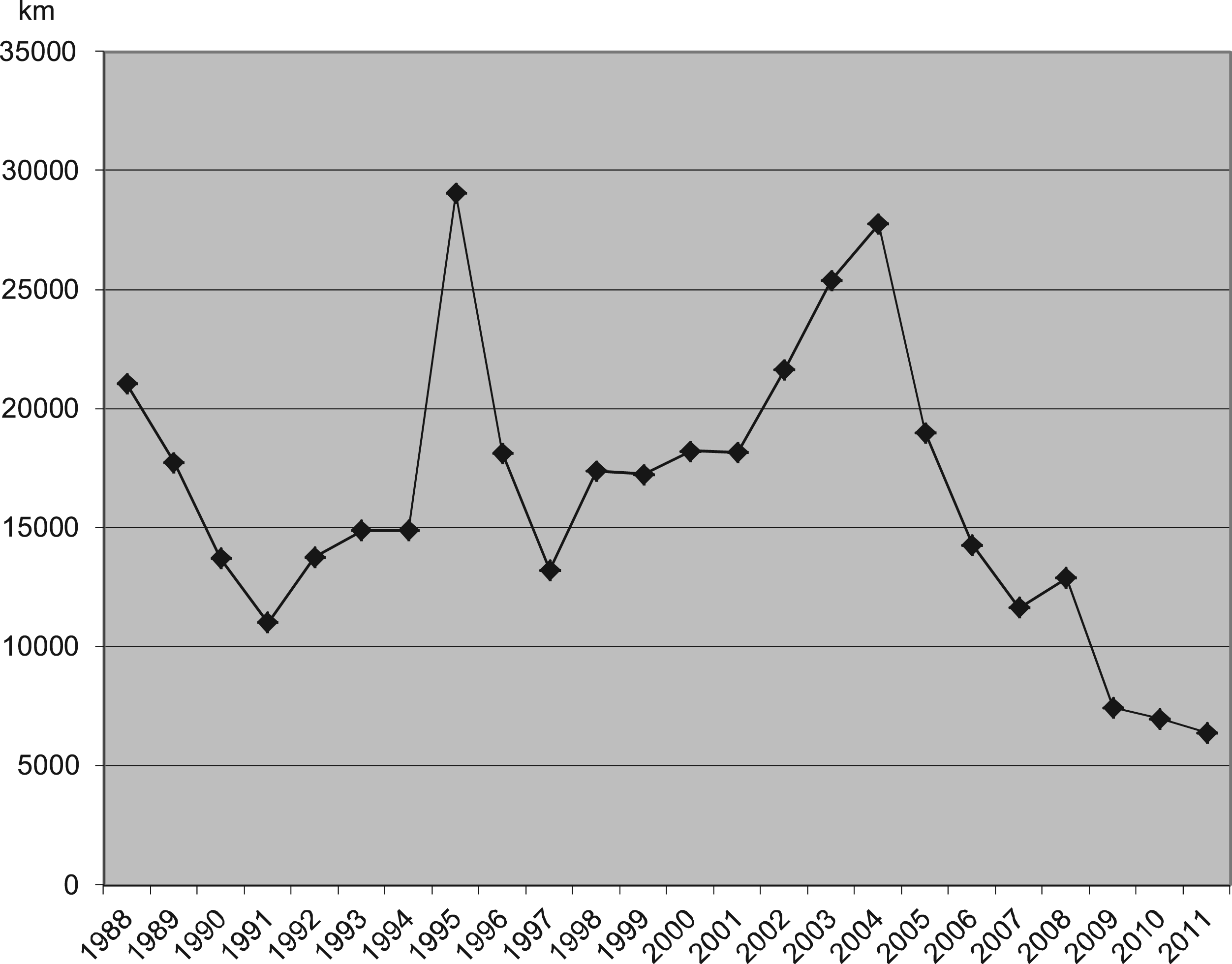
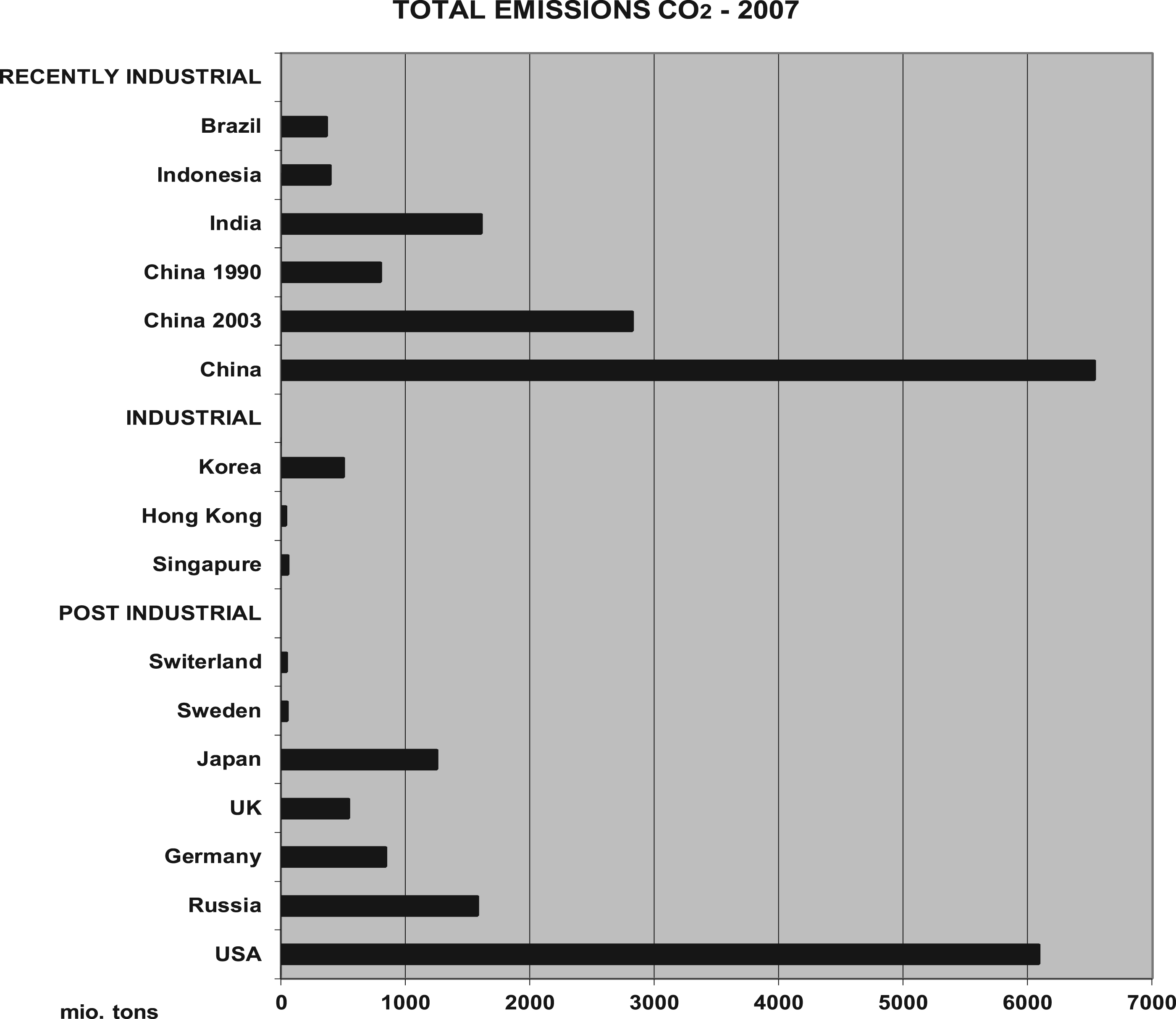
In fact, global emissions have much more to do with industrial activity in China and India and the unsustainable post-industrial live-styles of certain European and North American countries than with burning tropical forests. There are many good reasons for preserving the Amazon but CO2 emission is not the most important one, unless one holds the view that Brazil must carry the burden of absorbing other country’s emissions. Indeed, the Brazilian government has long opposed proposals of carbon credits based on forest conservation projects because they allow post-industrial countries to continue polluting. The inconvenient question then would be why should Amazonian peasants underwrite countries lacking the political will or inclination to curb their own emissions? Seen this way the issue becomes highly colonial both ideologically (the ignorant peasant other is responsible for emissions not me) and socio-economically (let subsistence-minded peasants eat trees so that I can maintain my lifestyle).
Instead of instinctively demonizing settlers in the Amazon as ‘enemies of mankind’ or ‘pathological peasants with chain saws’ like some environmentalists and anthropologists specialized in Amerindian studies do (cf. Nugent, 2002: 171), this work will explore the complex relationship between frontier farming systems, rural livelihoods, peasant geographical mobility and deforestation, the latter easily observed from satellites by spatial scientists but not always explained satisfactorily in terms of the motivations of the people involved. Another less publicized inter-regional chain reaction is presented here, which is just as important as commodity chains: poor North-easterners in their spatial movement from being desperately poor farmers on the past and now consolidated frontier of western Maranhão state (to where before them their parents had moved from the eastern states of the North-east) to decades of gold prospecting in western Pará state and finally back to frontier farming in western Pará after 1990 (Figure 3).
3
The emphasis will be on going beyond the cold statistics of farm failure and onward migration to see how the people perceive the comparative advantages of their past and present livelihoods.
From frontier farming in western Maranhão (1) to the Itaituba gold rush (2) and then back to frontier farming in western Pará (3).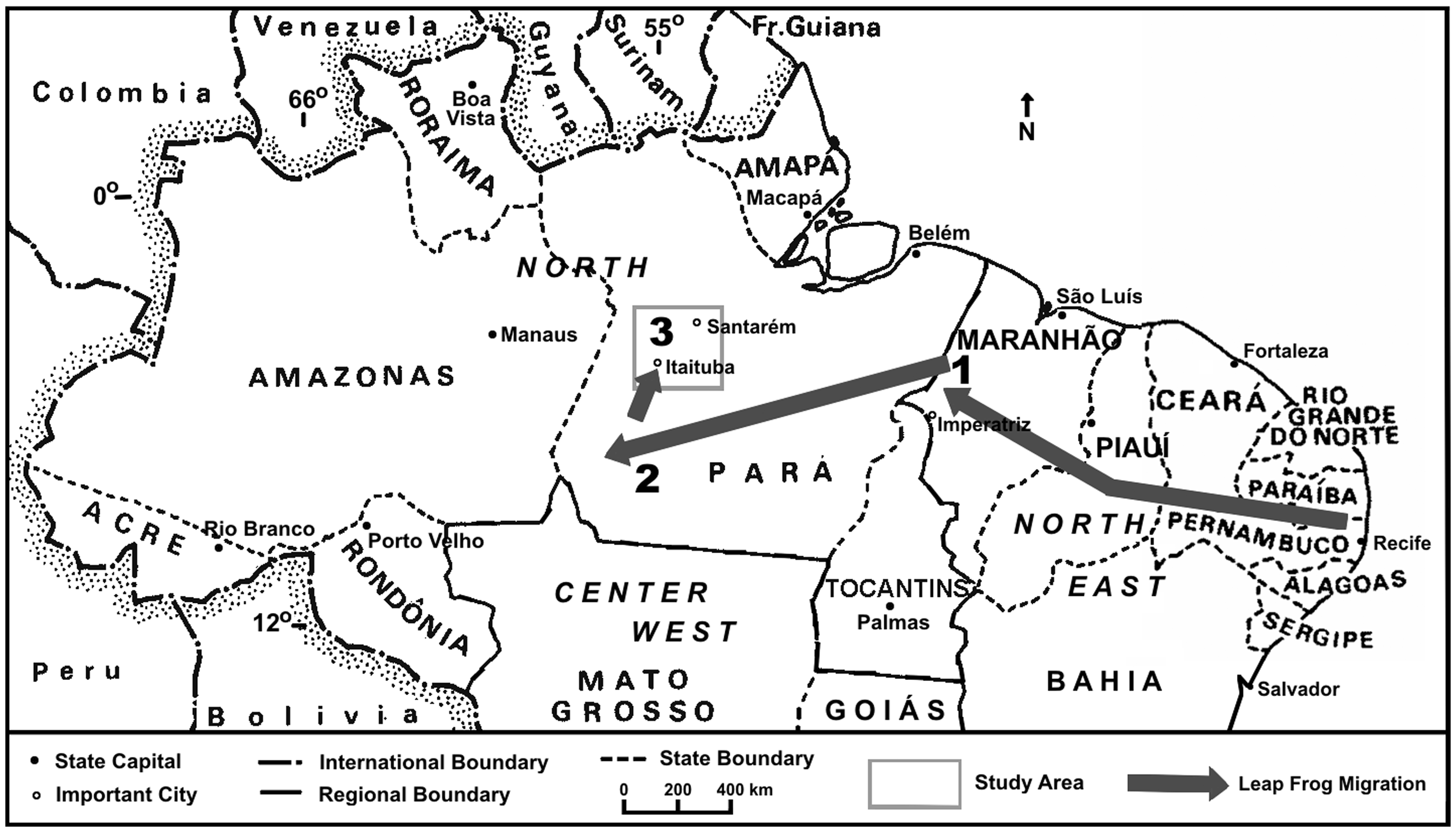
The idea for constructing the present work around the life paths of what would seem to be the most humble social actors of the Brazilian frontier became evident in the field after listening to repeated stories of the misery of their origins in the North-east and the squalor of gold prospecting in the Amazon, which made their present situation as poor frontier farmers seem a vast improvement in livelihood. In 2008 and 2010 fieldwork was undertaken on the life histories of 77 frontier peasants, riverine peasants, ranchers and commodity farmers who live along roads and rivers in Belterra, Itaituba and Santarém municipalities, located in western Pará state. The focus here is on the past and present rural livelihoods of frontier peasants living out at the road heads on the edge of the Amazon National Park (situated in Itaituba municipality at the most westerly point of the advancing frontier in the eastern Amazon) which are compared to the livelihoods of established small farmers located near the municipal seat. In addition to investigating land use and labor systems, market articulation, family matters, access to public services and political mobilization, spatial mobility was researched by questioning smallholders about where they have lived since birth, how long in each place, the line of work practised in each and why they moved elsewhere.
The overall process encompassing these peasant families is further contextualized using experience gained from decades of research with Amerindians, riverine peasants and settlers further west in Amazonas and Roraima states as well as in the North-east. The key issue is to determine how the cultural baggage that North-eastern farmers bring to the Amazon influences how they see the land, what kind of farming is practiced, what types of environmental impacts are produced and how the farmers perceive their rural livelihoods on the frontier.
The failure of regional development policy in the North-east and reproducing poverty on the frontier
To understand why so many of the North-easterners migrated to the Amazon over the years, one must look back to the failure of regional development policy in the North-east, the poorest region of Brazil. Despite once having been the economic centre of Brazil during the heyday of sugar production in the 16th and 17th centuries, after that time the plantations entered into long decline, so that the North-east has long suffered from problems with social polarization, rural exodus and urban and rural underemployment and unemployment. This densely populated region has been the object of different regional development schemes funded by the federal government since the late 19th century. SUDENE (Superintendência do Desenvolvimento do Nordeste) was the first integrated regional development agency to be set up in Brazil and it tried to repeat the experience of the Tennessee Valley Authority (Bicalho and Hoefle, 1990; Furtado, 1973; MINTER, 1973; Prado, 1987; Souza, 1978).
Shifting ‘excess’ population from the North-east, as an escape-valve measure, has always been an integral part of settlement schemes of the Amazon, particularly during periods of drought in the North-east. In the late 1950s and early 1960s the newly-established SUDENE embarked on yet another programme moving poor peasants out of the densely-populated Agreste zone and the environmentally-problematic, semi-arid Sertão to settle frontier areas of western Maranhão, located in the zone of environmental transition to the Amazon. In addition to peasant agitation which some feared to be revolutionary, once again the immediate cause was a severe drought, as had been the case in other massive population movements to the Amazon during the rubber boom in the late 19th century and early 20th century (Andrade, 1973; Bicalho and Hoefle, 1990; MINTER, 1973; Page, 1973).
Income and quality of life indices according to state and region in Brazil. Source of data: IBGE, IPEA.
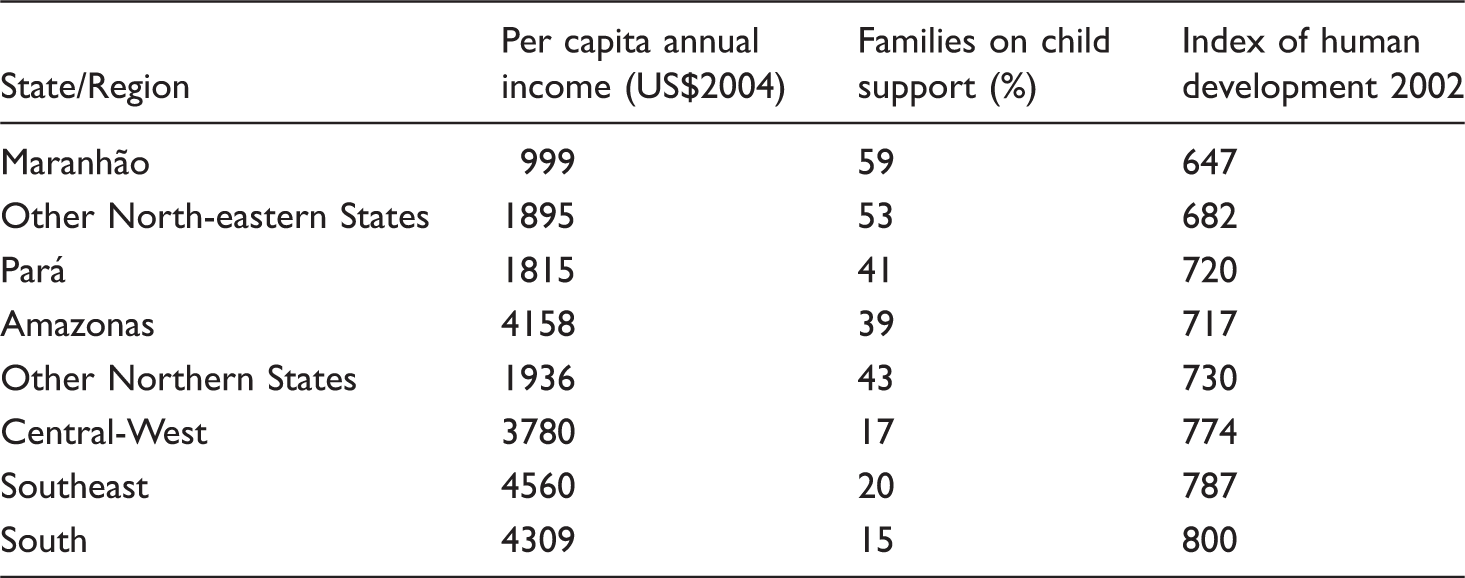
To these push factors, a number of pull factors exist which still attract Maranhenses to the Amazon. As many Amazonian states hold out the promise of free land and today have higher income and social statistics it is no wonder that landless peasants of the North-east have been drawn to the region since the late 1960s. The answer to the question of why migrants left their place of origin was inevitably ‘to find land’. Almost all the migrants from Maranhão left between 18 and 22 years of age, i.e. when they attained adulthood without prospects of finding work or inheriting sufficient land, which had to be parcelled equally in families with from 5 to 15 children. One generation’s productive logical of a large family to help in the fields is the next generation’s ruin or forced out-migration (Figure 4).
Typical large frontier family from Maranhão (mother-in-law symbolically positioned opposite right).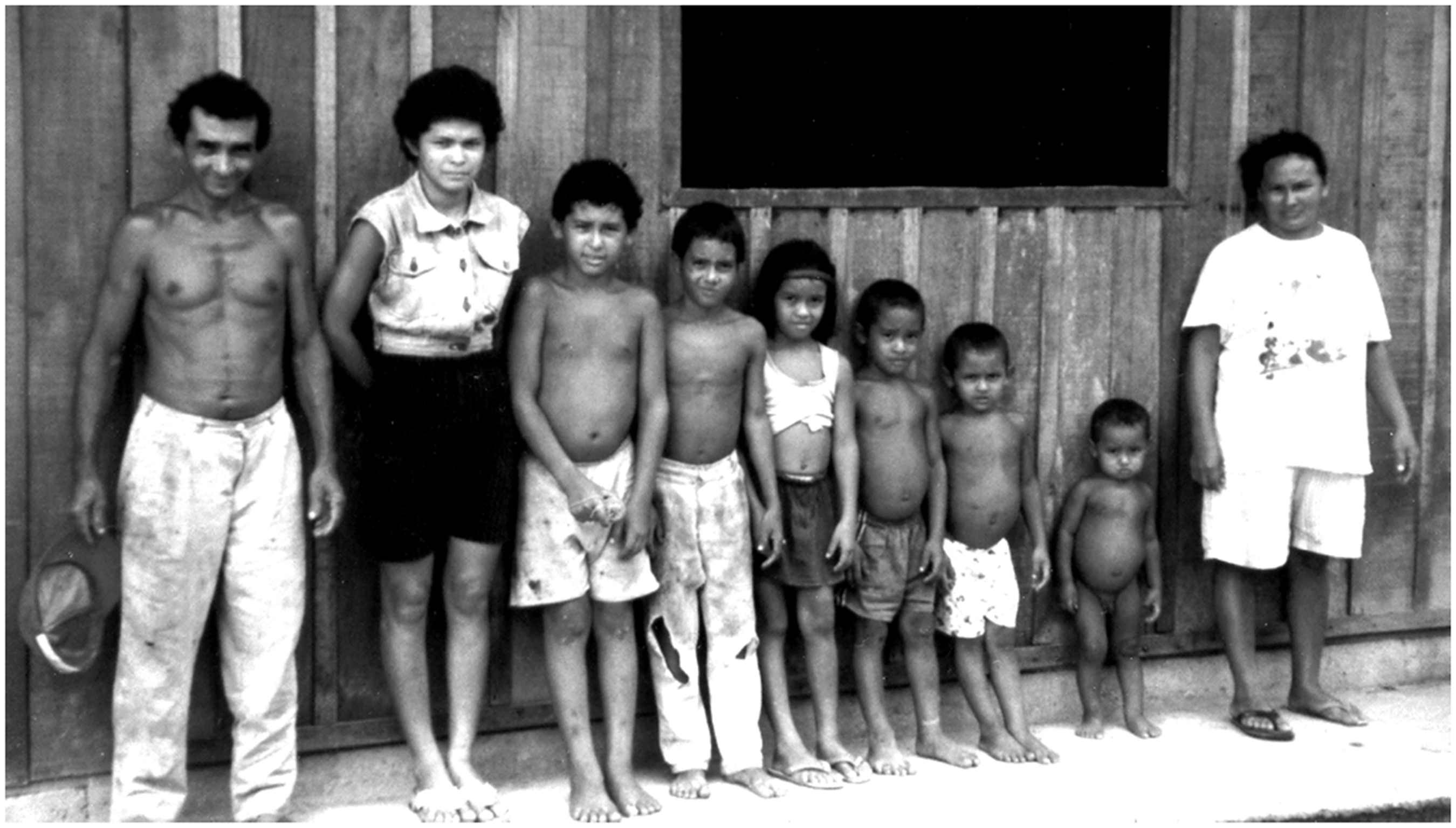
To this situation add the gold rushes of the 1970s and 1980s and one can understand how a large number of Maranhenses undertook leap-frog migration directly to the prospector camps. Of interviewed farmers 73% were originally from Maranhão or passed their formative years in that state and 62% were ex-prospectors.
From poverty to squalor in Amazonian gold rushes
In the second half of the 20th century there were three major gold rushes in the Brazilian Amazon: (1) Itaituba (Pará), (2) Serra Pelada (Pará) and (3) Yanomamö Amerindian Territory (Roraima). The Itaituba gold rush in the study area was older and lasted longer (late 1960s to 1990), followed by Serra Pelada in the 1980s and Roraima in the late 1980s and early 1990s. First-hand study of Serra Pelada was made by Cleary (1990) and of Roraima by MacMillan (1995) while the Itaituba gold rush is treated briefly by Mathis (1998) in an historical study of prospecting in the Amazon and a memoir was published by a prospector who participated in the gold rush (Rabello, 2006). The intent here is not to provide a detailed historical study of the Itaituba gold rush but rather to focus on life stories concerning the squalor of the camps as opposed to the current situation of frontier farmers.
Gold was first discovered on the tributaries of the Tapajós River in 1958 and over the next three decades prospectors swarmed to the area establishing more than 300 camps and 200 dirt air strips to access remote areas where gold was to be found blasting the river bank with water pressure equipment. The environmental impacts were degradation of river banks, silting of creeks and mercury pollution in the rivers. The immediate impact on population movements besides attracting outsiders directly to the camps was to empty the planned colonization projects being established at that time along the Transamazonian (BR-230) and the Cuiabá-Santarém (BR-163) highways, slowing down the process of settling western Pará by decades.
Three actors were involved in the gold rush: (1) gold buyers, (2) site operators and (3) prospector peons. The gold buyers were Santarém- and Itaituba-based merchants who seized the opportunity to make large sums of money selling provisions and equipment to operators on credit and buying nuggets and powder at windfall prices. The site operators came from all over Brazil and arrived with enough capital to guarantee credit arrangements from the buyers. They lived in the camps and suffered the same squalor as the peons who did the hard manual labour. As the activity was an informal one in which no one declared income for taxation and gold was often smuggled out of Brazil to avoid paying taxes, it is impossible to ascertain exact income and profit margins. An approximate idea is provided by Mathis (1998) who reports that peons were paid according to a sharing scheme in which they received only 25 g of gold per 100 g panned.
In the camps located along the tributaries of the Tapajós River, peons and operators alike lived in even worse conditions than those present in Maranhão. Both slept in hammocks strung under flimsy plastic tarps, ate irregularly and poorly and suffered from malaria which infested the camps. As one man stated, ‘when I was a prospector I lived under a plastic sheet and would get drenched when a rain storm occurred in the middle of the night’. One ex-prospector recalls spending up to one-third of his income with exorbitantly priced medications brought in by airplane. Others complained about living on a diet of salted beef and manioc meal at the same time that a successful operator would spare no expense to celebrate a birthday, to the point of flying in imported whisky and luxury foods. Apart from this, the only other leisure activity after hours was heavy drinking of cheap cane spirits, which is a classic source of violence on highly masculine mining frontiers of the past and present (Hine and Faragher, 2000; Hoefle, 2006). There were some woman prospectors in the gold camps and one commented about her present life in contrast to that of the gold camps, ‘This place is peaceful, I live on my own land and nobody comes around [drunk] bothering me at night’.
Perhaps the greatest difference between site operators and peons was working conditions. Workers passed long hours in the water and muck and were exposed to dangerous chemicals such as mercury used to separate gold. They were also compelled to work day in and day out, even when ill with malaria, which is evident in two comments concerning the advantage of being an independent farmer, ‘I now work for myself and not others and no one forces me to work when I am sick or it is raining outside’ and ‘No one is going to sack me because I am sick’.
When peon and operator went to town to make up for months of monotony spent out in the wilderness far from urban social interaction (a highly valued part of life for Brazilians), they threw themselves into acts of conspicuous consumption undertaken for all to see, which assumed similar but qualitatively different forms. Former peons thought it was easier to earn money in prospecting than in farming today but they also recalled squandering their hard-earned cash in drinking, gambling and whoring. Most operators also did the same but in more prestigious establishments in addition to buying expensive pickups to parade along Main Street Itaituba and Santarém. Some bought houses in town but only a few had the wisdom to invest in productive land, usually ranches around Itaituba. Consequently, almost all operators also spent their entire income. Even the man who first discovered gold and who was once elected representative to the Pará State Assembly ended his days in poverty.
The gold rush collapsed in 1990 when the federal government adopted yet another unconventional economic programme meant to tame hyper-inflation. The most polemical measure was to freeze all money in bank accounts for 6 months without adjusting for inflation, which was not tamed, so that savings lost much of their value. Over night the buyers no longer had access to the operating capital used to finance the site operators. As buyers were not able to convert their savings into the new currency, which was pegged at the rate of one-on-one with the US dollar (the currency used to calculate the price of materials and equipment), the cost of prospecting increased immensely. Even when buyers still had capital in the form of US dollars and tried to continue financing prospecting in 1990 the increased costs reduced profits to the point that operators did not make money, reneged on their advances from buyers and fled to the gold rush of Roraima.
Some peons also went to Roraima but others stayed on in western Pará where they settled farms located on feeder routes opened along the advancing frontier. MacMillian (1995) reports a similar trend when the Roraima gold rush collapsed in the 1990s, which was also confirmed in interviews with Maranhense settlers in my own field research undertaken in that state in 1998. Indeed, this is a common pattern along historical frontiers, such as those of western North America in the second half of the 19th century, in which many prospectors went from gold rush to gold rush but some always stayed on in each place where they would become miners or farmers (Hine and Faragher, 2000).
From squalor to basic necessities on the expanding frontier
The ex-prospectors who became frontier peasants in western Pará suffer the typical limitations to commercial farming along most roads in the Amazon (for more details see Bicalho and Hoefle, 2008; Caldas et al., 2007; Gomes et al., 2012). Most crops are harvested during the rainy season when poorly maintained unpaved feeder routes and unpaved main roads become mired in mud and traffic becomes impassable. Some of the frontier farmers try to raise cattle prime for sale after the rainy season but a standard 100-hectare lot, of which legally since the late 1990s only 20 hectares can be cleared for use, does not furnish enough pasture to support a herd large enough to generate a decent living. The 20% limit of land which can be converted for agricultural use is roundly criticized because migrants come from deforested landscapes and expect to be able to do the same on their new land. Their environmental ethics reflects this and lacks the enchanted elements and lore found among Amerindians and historic riverine peasants who live in forested landscapes. 4
Due to the transport problems which make it difficult to market higher-income perishable crops, farmers plant beans, maize, manioc and fruit trees for subsistence and rice for local markets. Pigs and poultry are raised mainly for self-provisioning and some cattle are sold in the limited urban markets of western Pará, where cities are few and far between. However, the main cash activity, rice production, is being curtailed due to the appearance of a fungus which destroys the crop and is a perennial problem when commercial-scale cropping is attempted in the Amazon. Consequently, little monetary income is earned, usually from selling hardwood and animal skins, which obviously are not sustainable practices, especially when taken from within the Amazon National Park (Figure 5).
Settler with shotgun used for hunting and on this particular day carried for protection from a jaguar prowling in the vicinity.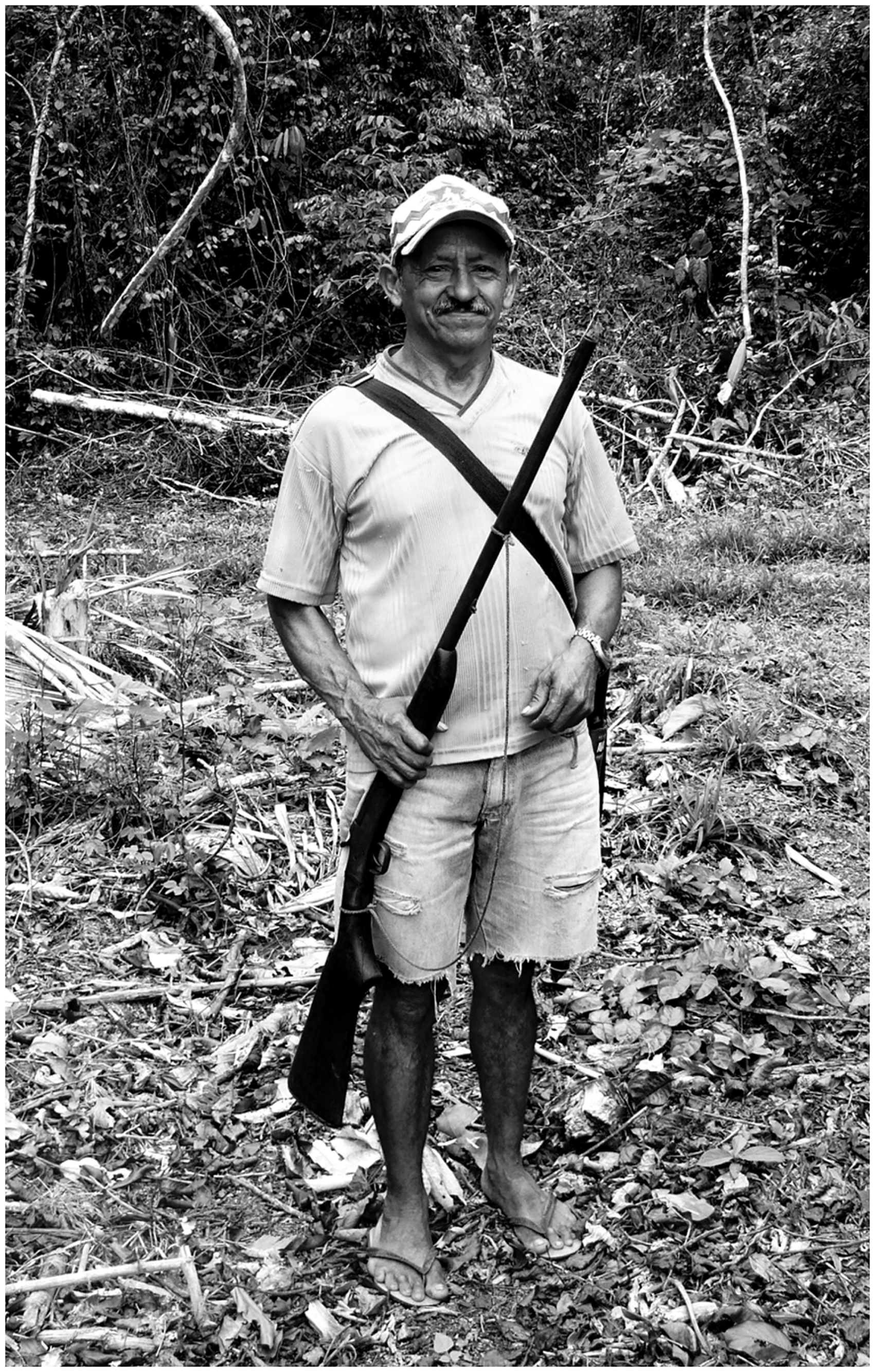
Land use on farms in Itaituba municipality (hectares).

Lack of sustainability in frontier farming in turn causes high spatial mobility as farmers move on when the natural fertility of the poor rainforest soils is exhausted. Fifty-seven percent of the distant farmers have moved 5 to 8 times during their lifetime and another 16% from 9 to 15 times. Many of the moves took place due to the high mobility of gold prospectors but exhausting the soil through lack of fallowing was responsible for spatial mobility over the last 20 years.
Farmers located near Itaituba are all from Maranhão and half were once prospectors so that this life path in itself does not make them unsuccessful farmers. Similar to the ‘stickers’ of the US frontier literature (cf. Hine and Faragher, 2000), they were successful and have lived on their present farm for an average of 15.5 years and before this 83% had moved four or less times in lifetime. Distant farmers by comparison on average have lived only 8.5 years on their present land, which reflects greater spatial mobility.
Average farm income in Itaituba municipality (US$2007).
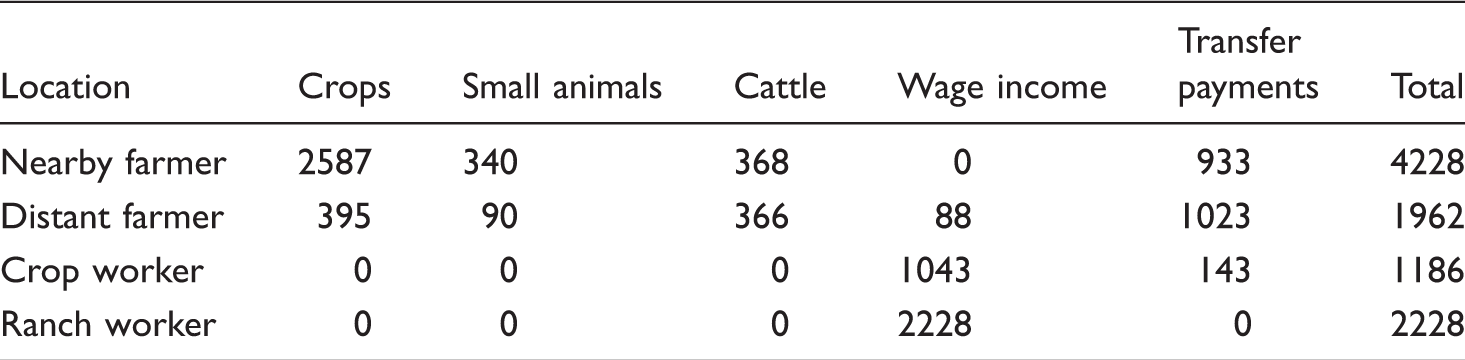
Low income notwithstanding, most settlers living out on the road heads considered themselves to be well off in comparison to their former life in Maranhão and fortunate to have survived the squalid conditions of life in the prospector camps. When asked about their life today as compared to that when they were gold prospectors 78% considered themselves to be better off today. They cited owning land, working with family members, housing conditions and quality of diet as the main reasons. A 40-year-old man stated, ‘Today I have a family and now I always have food to eat’, a sentiment shared by a 52-year-old man who said, ‘When I was a prospector I spent a long time away from my family and now I am with them constantly and we work together’. Many ex-prospectors started their comments by saying ‘Today I live in a house …’, which may be a simple house but it is a solid one with brick walls, a tiled roof and a cement floor and this is a vast improvement over camping out for months on end when they were prospectors. With statements like ‘I eat better today’ and ‘Now I always have food to eat’ settlers expressed how they now have a more varied diet, consisting of chicken, pork, rice, beans, green onions, some lettuce, bananas and other fruit.
What the settlers lack in monetary income they compensate with political pressure on municipal officials to provide basic education and health services. A similar life path of originally being from Maranhão and having been prospectors means that they have the same social background and this facilitates political union.
5
When they were prospectors living out in the wilderness they did not have health or educational services and many died of malaria. Today as settlers they live in legally constituted communities with electricity and water services, basic schools and health clinics. More organized communities even mount group projects in order to finance better housing than that normally found along the cutting edge of the Brazilian frontier (Figure 6).
Decent housing in the reasonably well-served community of New California.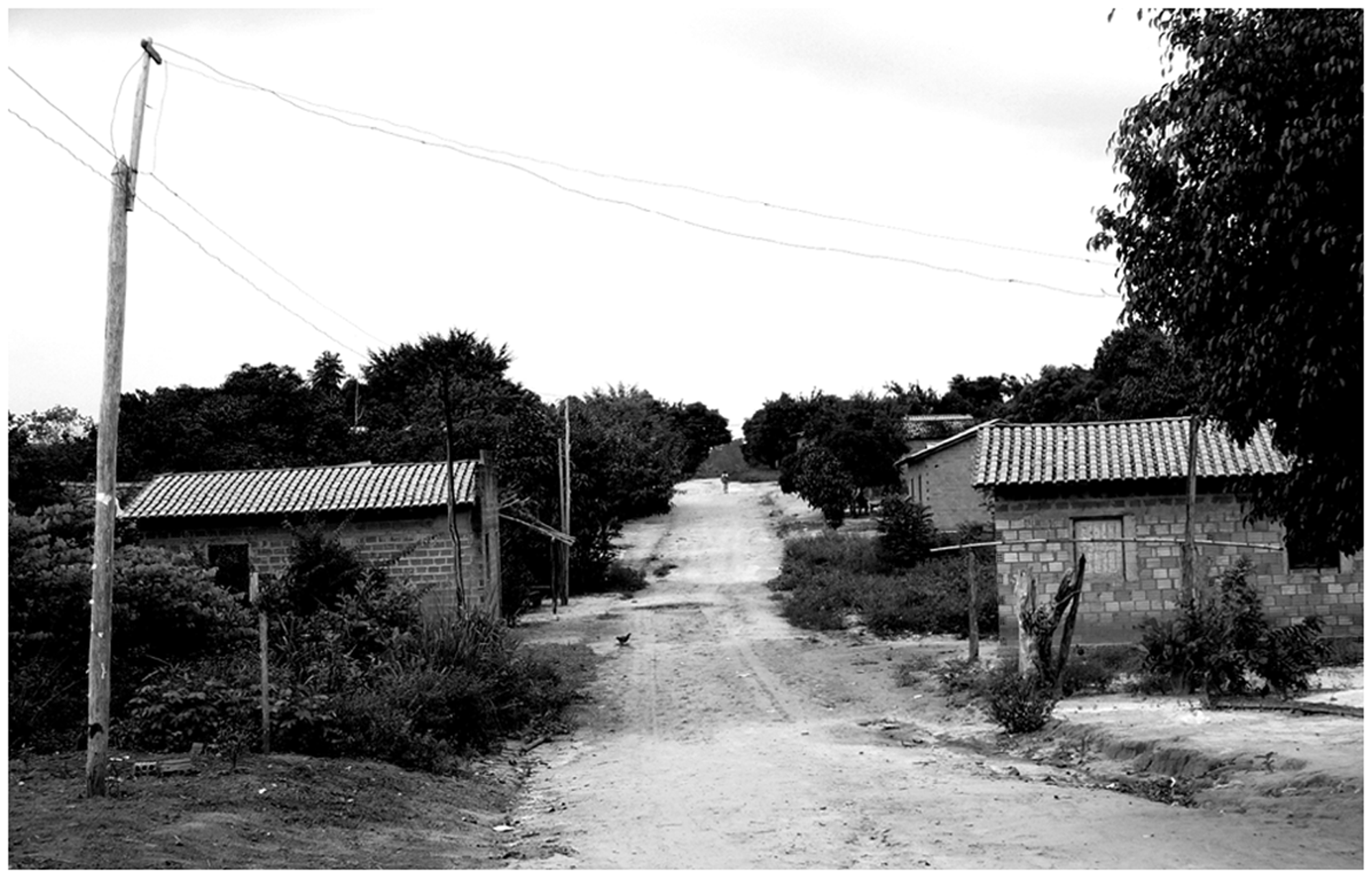
On the negative side, some ex-prospectors considered themselves worse off today. This is usually due to the low monetary income earned in frontier farming. One man lamented that, ‘as a prospector I made money faster but prospecting ended and nothing better appeared’, referring to the collapse of prospecting in 1990. Also negative opinions can be held by farmers living out in the countryside and not in legally constituted communities in which public educational, health and utility services are available.
Deforestation or carbon colonialism?
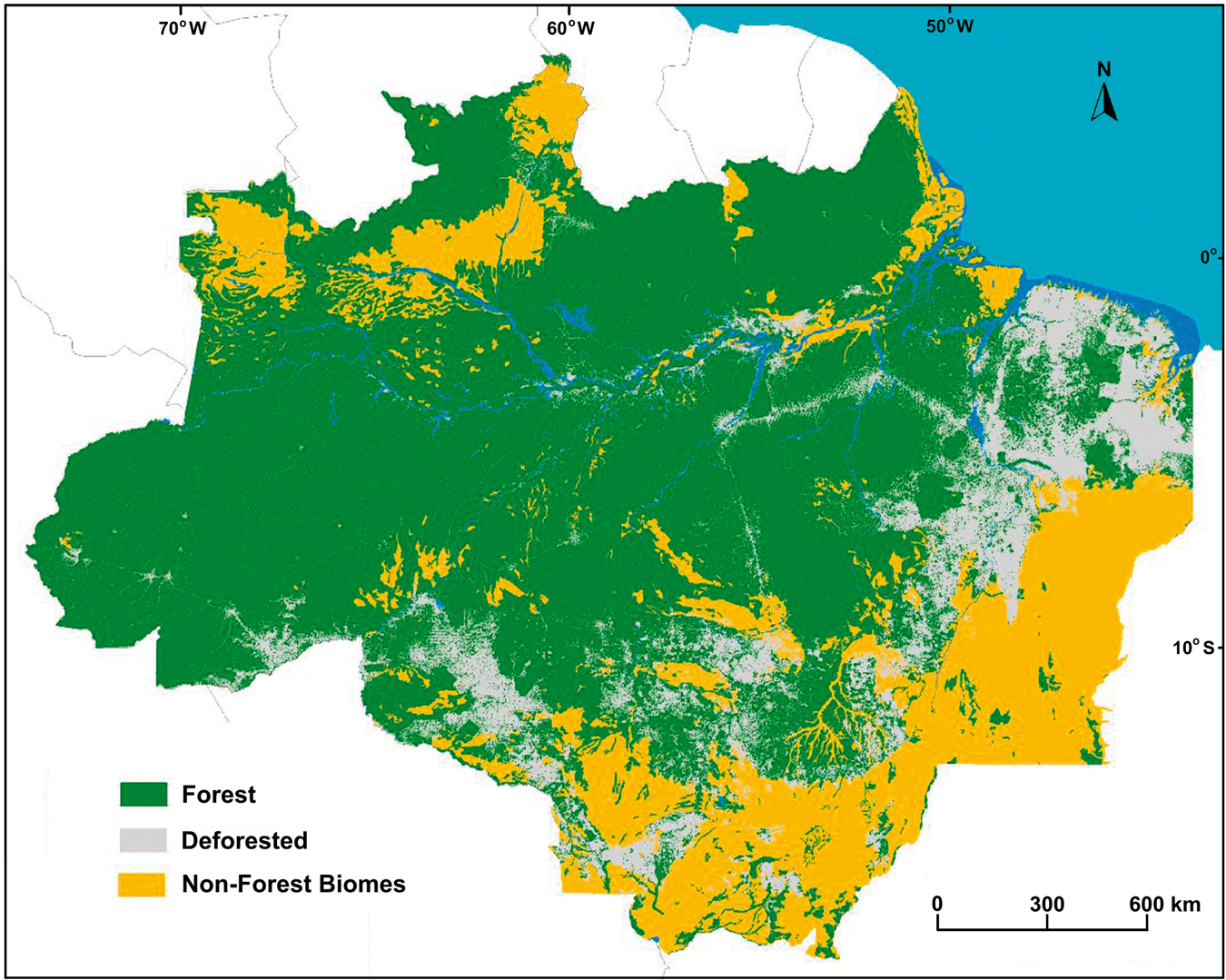
This account of frontier farmer livelihoods in the Amazon could have ended with the relativist and interpretative material presented in the previous section. The flexibility of the concept of sustainable rural livelihoods could allow one to accept the fact that what an outsider considers poor farmers actually think of themselves as being prosperous when contrasted with the abject poverty in Maranhão and the squalor of the gold camps. However, the reproduction of frontier peasant farming, as practiced by North-easterners (Figure 7), together with ranching and recently soybean farming undertaken by medium and large farmers of southern origin, is devastating the southern, northern and eastern Amazon (Figure 8). Large ranchers and soybean producers are the high profile despoilers of the land but in recent years it has become clear that smallholders also contribute significantly to deforesting the Amazon, though not as much as in other parts of the world. Up to this point we have seen why this happens: inadequate farm size and fallowing practice, lack of transport facilities and limited local markets. Consequently, if left unchecked, most smallholders will keep moving from farm to farm along the advancing frontier and so continue contributing to deforestation.
One way to break this cycle would be to provide income in the form of payments for environmental services so that the rain forest intact is worth more than its potential in timber and commodity farm land. Such payments are usually made within a framework of emission reduction credits, which was established by a series of global agreements: the UN Framework Convention on Climate Change at the 1992 Rio Earth Summit, the 1997 Kyoto Protocol and the Reducing Emissions from Deforestation and Forest Degradation (REDD) scheme ratified for forest protection in Bali in 2007. The basic rationale is for post-industrial countries to pay for nature conservation projects in developing countries in order to compensate their emissions in a global carbon trade-off system. This system has been criticized for involving carbon colonialism because: (1) plantations can be considered forest to the detriment of local peoples and biodiversity, (2) carbon stocks become commodities while other non-commoditized elements of the local ecosystem are ignored, (3) the credits permit post-industrial countries to continuing polluting because (until recently) they have the resources to finance projects elsewhere in the world and (4) national sovereignty issues arise concerning who actually owns the carbon resources protected (Bumpus and Liverman, 2011: 201, 217–281).
North-easterners in the Brazilian Amazon. Source of data: IBGE (2000). Deforestation in the Brazilian Amazon. Source: IMAZON (2007).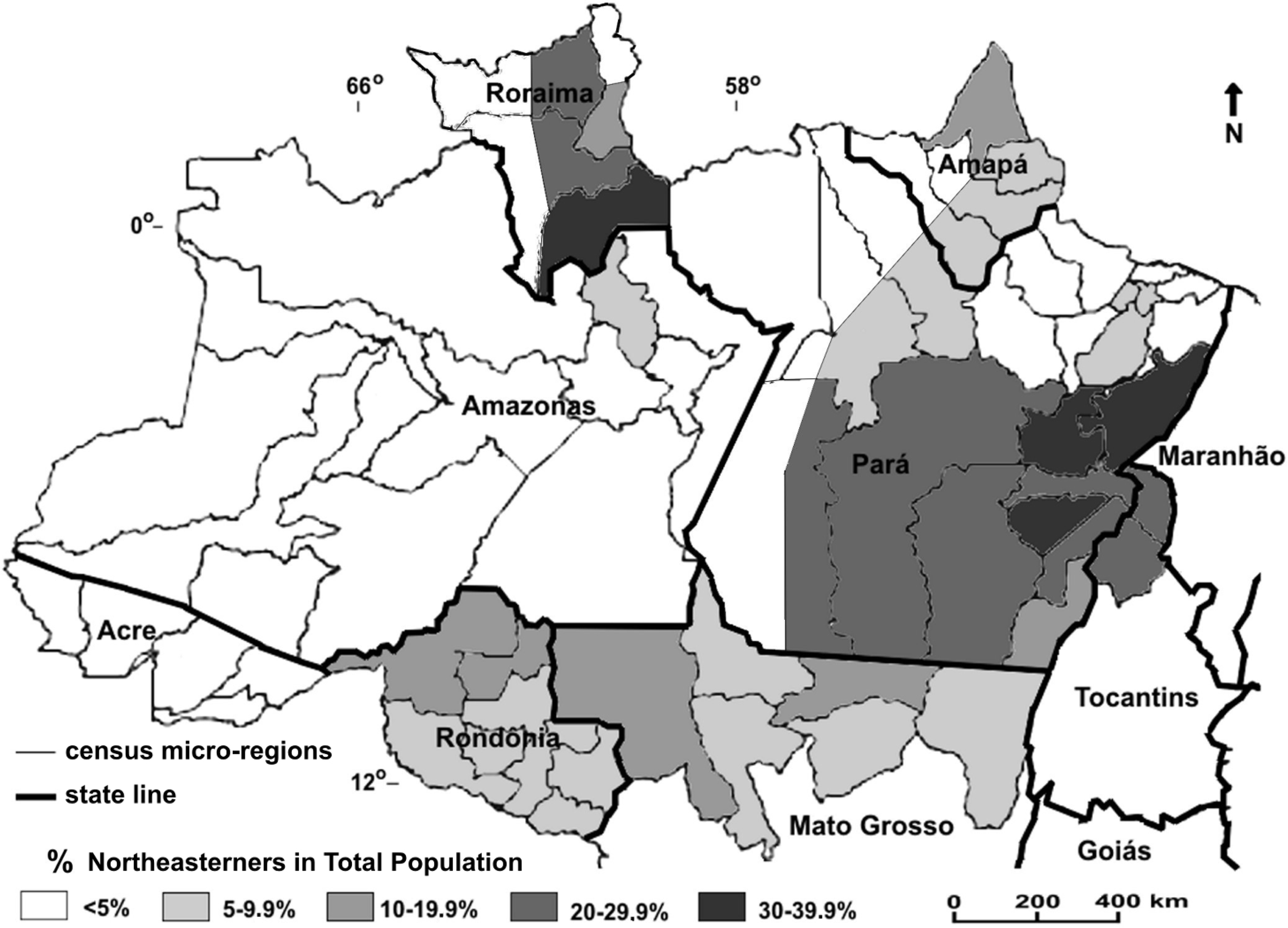
To date attempts at making environmental service payments to poor small farmers of the Brazilian Amazon within a UN-REDD kind of framework have focused on historic peasants and Amerindians living along rivers in preserved parts of the Amazon. Since 2007 in the Forest Grant Programme undertaken by the state government of Amazonas monthly payments of about US$33 per family have expanded from benefitting 4244 registered families living in conservation units to 8090 in March, 2012. This transfer payment is associated to other community development projects meant to lift the poorest population of the state out of poverty (FAS, 2007, 2012; Viana, 2008).
In late 2011 the federal government began a new entitlement program called the Green Grant which targeted the same kind of population within conservation units located in other states of the North but also could include peasants in federal settler projects if located in important wilderness areas, like that treated here. The programme began benefiting 18,000 families in the Amazon region and has the aim of reaching 73,000 rural families throughout Brazil by 2014. The payment is about US$56 per month but can be combined with the national family support programme, which varies from US$18 to US$170 depending on family size and income (Presidência da República, 2011; Viana, 2011).
The two programmes are a vast improvement over previous neo-liberal policy, which places the burden of forest preservation on poor farmers by limiting crop and pasture land to 20%, but the monthly payments are a pittance in comparison to the value of hardwood and commodity land located outside of conservation units where the greatest pressure to deforest occurs. 6
It also remains to be seen if state and federal government will stay the course through economic crisis. The context of the 1990s was favourable for setting up innovative environmental programmes while after 2000 the political and economic global context for such initiatives has soured considerably, to the point that the Rio + 20 UN environmental summit failed to achieve global environmental consensus, repeating what had happened in the 2009 Copenhagen summit. Since the 1990s the European Union has been a major player in Brazilian environmental issues but given the present global context of economic crisis, the EU will have to devote more resources within the Union so that new environmental initiatives are not going to be undertaken anytime soon.
Finally, the Brazilian economy is not as robust as the Emerging Nations rhetoric would have it. In recent years economic growth has petered out and the federal government has axed R$50 billion from the 2012 budget, cutting into essential social services such as health care and pensions, so that the goal of extending the Green Grant to thousands of families throughout Brazil will likely be forgotten, particularly after the fiasco of the Rio + 20 summit reduced any sense of political urgency for this.
In addition to this, solutions which only focus on the Amazon are inadequate because they do not address the grinding poverty of the North-east, which dislocated landless peasants to what was once the frontier in western Maranhão and from there over two to three generations ever deeper into the Amazon. Maranhão in particular is a landscape of despair and has little to show for the fact that its politicians have occupied some of the highest posts in Brazil, such as the Presidency, the Leadership of the National Senate and Federal Ministries, though the politicians themselves have profited enormously in the form of well-paid federal jobs and widespread corruption and graft. So ultimately, if one wants to reduce deforestation in the Amazon the environmental, economic, social and political problems of the North-east must be addressed in addition to introducing sustainable farming practices in the Amazon. 7