






Abstract
Defining the role of cities within economic networks has been a key theoretical challenge, particularly as nuanced understandings of positionality are increasingly championed over hierarchical notions of influence or power in the World City Network (WCN). This paper applies social network analysis (SNA) to identify the critical role that a wide range of cities plays in the Australian economic system. Drawing upon the set of Australian Securities Exchange (ASX) listed firms, four distinct sub-networks are compared against the overall urban network. Each of the materials, energy, industrials, and financials sector sub-networks are found to have unique configurations of inter-urban relations, which are articulated through institutional and industry-specific factors, grounded in diverse histories and path-dependent trajectories. This analysis applies five different centrality measures to understand how positionality within the overall network and respective sub-networks might better inform policymakers formulating ‘globalizing’ urban policy. This addresses the long-standing theoretical debate regarding territorially articulated hierarchies of urban/corporate power, extricating WCN research from the core-periphery assumptions tied to its world-systems theory lineage. Understanding how, rather than if, cities are global provides contextual knowledge about how cities are situated within broader circuits of production, and the exogenous relations that shape urban economies around the world, providing a framework for research in other global contexts.
Introduction
Understanding the role of cities (or city-regions) within global economic networks has been a key theoretical challenge (Alderson et al., 2010; Coe et al., 2004; Dicken et al., 2001). As decades of research has firmly established, cities are defined by their positionalities within multiple overlapping networks, derived from inter-urban flows of capital, knowledge, and information (Derudder et al., 2010; Knox and Taylor, 1995; Sassen, 1991; Taylor, 2005). With urban governance increasingly estranged from the larger state apparatus (Acuto, 2010; Harrison, 2013; Harrison and Hoyler, 2014), defining how individual cities are placed within broader economic networks becomes a critical task in formulating ‘globalizing’ policy (Jansson and Power, 2010; Moonen and Clark, 2013), as does understanding how industry-specific networks operate, with cities as strategic nodes (Martinus et al., 2015). Identifying the specific vectors along which fruitful relations emerge thus becomes an important analytical task, particularly as urban governance is now critically reliant upon the networks channelling investment and ideas to and from other cities (McCann and Ward, 2010, 2011). As Dicken et al. have argued, networks have “become the foundational unit of analysis for our understanding of the global economy, not individuals, firms or nation states” (2001: 91).
The need to better understand and define the role of cities within global economic networks is underlined by a pronounced move toward nuanced ways of theorizing urban positionality, and away from hierarchical understandings of the World City Network (WCN) (Alderson and Beckfield, 2004; Koch, 2013; Sigler, 2013b; Watson and Beaverstock, 2014). This puts greater emphasis on the practices and processes through which globalization occurs, probing ‘the’ WCN’s ostensible singularity (e.g. New York and London as world cities) as a set of uniform outcomes within and between urban spaces (Simmie and Martin, 2010). All cities, whether “ordinary” or “extraordinary” (cf. Robinson, 2006; Taylor, 2012), are situated within networks produced by extra-urban dependencies contingent upon the embeddedness of political and economic structures (cf. Bathelt et al., 2004; Dicken et al., 2001; Taylor, 2005). And as new analytical tools and greater access to ‘global’ datasets render comparative urban research (cf. Ward, 2010) increasingly accessible, numerous scholars have made the call for greater application of network theory to a refined understanding of the role of cities in a global economy (Alderson and Beckfield, 2004; Pflieger and Rozenblat, 2010; Sheppard, 2006; Smith and Timberlake, 2001).
Innovating upon extant WCN research is both critical and timely. With a focus on firm embeddedness within transnational network relations, global production networks (GPN) and global value chain (GVC) scholars have made considerable progress in theorizing the structural processes that underlie global economic activity (Coe et al., 2004). Though these major approaches are yet to be fully brought together, GPN and GVC approaches more recently have focused on how individual and collective agency transcends organizational boundaries (Riisgaard and Hammer, 2011), something the WCN literature has attempted to explain through its applied relational approach. This paper further extends WCN’s theoretical impact by placing primary industries alongside advanced services as equally indicative of globalized vectors of inter-urban activity, thus exposing how relational processes unfold through both agency within firms and the institutional and political structures within which they operate.
This paper uses social network analysis (SNA) to uncover the cities of strategic importance within Australia’s global economic networks. Unlike previous research that may have identified Sydney and Melbourne as Australia’s global cities (Hu et al., 2013), this paper presents a much more comprehensive perspective in which numerous Australian cities play nuanced roles in specific sub-networks, and hundreds of international cities complement these roles through relational proximity established through socio-political and/or functional ties. Five different measures of point centrality are applied to derive a refined understanding of the roles of cities in a large corporate network consisting of intra-firm exchanges between respective office locations. The overall corporate network is further broken down into four sub-networks to uncover how the materials, energy, industrials, and financial sectors produce unique relational networks of cities, and how the role of each city can be more sharply theorized from a multidimensional perspective. Despite robust empirical understandings of how cities are arranged within networks (Derudder et al., 2010; Hanssens et al., 2012; Hoyler, 2011), little research has investigated the relative positionality of cities across networks (cf. Taylor, 2005), and how cities may play different roles within one or multiple networks (Wall and Van der Knaap, 2011) as a function of how their relational situation is articulated through industry-specific attributes.
World City Networks
Political and economic restructuring in the neo-liberal era has had profound effects on cities (Curtis, 2011; Peck and Tickell, 2002; Wainwright, 2012; Warf and Erickson, 1996), as fundamental changes in global modes of production, exchange, and consumption have destabilized and reconfigured labour and capital markets (Coe et al., 2004). Urban change on a local scale has been compounded by the longue durée of globalization, which has resulted in significant reterritorialization as devolutionary pressure has emphasized the role of governance at the urban and regional scales (Brenner, 1999).
Several strands of literature have emerged to theorize how the ‘global’ economy can best be situated territorially (Coe and Yeung, 2015; Taylor, 2004). Among these, the WCN literature has emerged as a largely empirical offshoot of the structuralist ‘world cities’ or ‘global cities’ literatures, which in the 1980s and 1990s were instrumental in reconceptualizing how capital was increasingly concentrated in particular cities, and how this reflected broader trends in the international division of labor (Cohen, 1981). WCN scholars’ key contributions relate to attempts to explain the ‘world of cities’ through a macrostructural spatial lens vis-à-vis shifting economic realities, devolutionary governance, and socio-cultural flows through a number of heuristic approaches (Neal, 2011; Taylor et al., 2014, 2013).
One of the most significant innovations of WCN research has been a concerted effort to operationalize a more refined understanding of urban positionality (Hanssens et al., 2012; Surborg, 2011). The positionality of cities within the global economy is shaped by relational networks structures which are continually constructed and reconstructed by the power and influence of corporate actors and the industries that define them. An important concept within much ethnographic (Chiseri-Strater, 1996) and feminist (England, 1994; Rose, 1997) scholarship, positionality captures “the shifting, asymmetric, and path-dependent ways in which the futures of places depend on their interdependencies with other places […] as a way of representing the highly non-Euclidean spatiality of the global economy” (Sheppard, 2002: 308). Within WCN research, positionality is highlighted through nuanced relationships over discrete spatial attributes, informing an understanding of how, rather than if, cities are globally connected (Derudder and Taylor, 2016; Neal, 2017). Ultimately, WCN approaches seek to understand how power relations are articulated spatially in the global economy. As Hesse (2010) notes, connectivity and accessibility are key determinants of urban futures, and specific inter-urban vectors are critically important to support network relations with the extra-local.
The broader context of how specific cities are situated within a global economic
system relates to a long-standing debate regarding how “planetary urbanism”, to
use Brenner and Schmid’s
(2014) terminology, has reoriented a fixation on territorialized
socio-spatial processes in favour of an approach that marries territories,
places, scales and networks (Jessop et al., 2008). As Amin and Thrift (2002) note, propinquity
is now a fundamentally non-geographic concept, with relational ‘proximity’
(Torre and Rallet,
2005) of greater importance than anything to do with distance. It is
therefore vital to consider network relations alongside territorially
articulated ones (Jones,
2009), as Positionally advantaged agents are at the center of, and control,
networks of relationships that simultaneously position others in a
present and possibly future state of compliance or dependence [… and]
positionally advantaged territories can shape the space economy to their
advantage. (Sheppard, 2006: 51)
Thus, shifting positionality in a sense reterritorializes places through a command over extra-local networks, and a firm understanding of network structures is critical to defining how inter-urban relations are applicable to planning and development outcomes, as urban governments increasingly look for global ‘solutions’ to local problems.
This research applies a WCN approach toward a refined understanding of the global positionality of cities within the Australian economic network. A limited number of industry-based studies have explored positionality through economic and spatial organization in other contexts, notably Beaverstock et al. (2000) on advanced producer services (APS), Krätke (2014) on manufacturing, Taylor (2004) on non-governmental organisations (NGOs), Surborg (2012) on minerals, and Krätke and Taylor (2004) on media cities. Such studies reveal industry-specific relations, highlighting cities’ roles in particular networks as shaped by prevailing economic conditions and path dependency which bear on local practices and processes (Martin and Sunley, 2006; Simmie and Martin, 2010). The positionality of cities results from the competitive advantage they provide as the strategic backdrop for the flows, connections and relations of labor, capital, goods and services in facilitating economic activities.
Methodology
Most widely applied within the field of sociology, SNA has become an increasingly popular means in WCN research to understand the spatial patterns and positionality of cities associated with overlapping and interlocking urban industrial networks (Alderson and Beckfield, 2004; Derudder and Taylor, 2005; Hennemann and Derudder, 2014; Toly et al., 2012). More specifically, the interlocking World City Network model (IWCNM) has become relatively standard in WCN research on inter-urban relations, and although it is not without its critics (cf. Derudder and Parnreiter, 2014; Robinson, 2011), it has evolved from a relatively unsophisticated analytical tool for hierarchizing ‘global’ cities based on APS to a more nuanced way of understanding positionality within a range of industries (Hoyler and Watson, forthcoming, 2013; Parnreiter, 2014).
Global Industrial Classification Standard (GICS) sectors and associated economic activities.

Indicates GICS sector detailed herein.
Though this research is fundamentally from a ‘national’ perspective, the ASX contains significant multinational activity. Of 1,840 corporations, 1,755 are headquartered across 36 Australian cities and the rest in 40 international cities. Branch offices are located in 568 cities in 132 countries. The list of ASX firms enabled the construction of five two-mode city/firm matrices of corporate headquarters and branch city locations: one based on the complete set of GICS sectors and the remaining based on each of Australia’s four largest industry sectors. Excluding small local sales offices or offices of partly or jointly owned subsidiary firms, the final list represents the locations of 4,887 offices across the globe. Service values assigned to each corporate office weighted firm global headquarters as 5, regional headquarters with extra-territorial functions as 4, national headquarters as 3, ordinary offices as 2, ordinary offices with reduced functions as 1, and no presence as 0 (see Derudder and Taylor, 2016; Hennemann and Derudder, 2014). Though this applies a certain degree of generalization to complex firm activities and varying firm sizes, office weightings were chosen in line with significant previous researching using a similar scale (Derudder and Parnreiter, 2014).
These were placed in the matrix, with office locations recorded in the largest
city within a 50 km radius. Judgment calls were made regarding classification in
extended metropolitan regions where large and significant cities were adjacently
located, such as the Gold Coast-Brisbane-Sunshine Coast city grouping
(separated) or the San Francisco Bay Area (aggregated). The final number of
cities derived from the ASX corporate list was 585. A one-mode 585 × 585
city-by-city directed matrix was compiled from the two-mode firm-by-city matrix
of office service values (v), with directionality ascribed by
having first column cities (a) report to top row cities
(b). This represented the flow of regional or local
information from smaller to larger offices, and then onto headquarters, under
the assumption of the territorial embeddedness of corporate networks where local
knowledge (e.g., legal, labour) is critical to firm global operational and
strategic success. For example, if ordinary or national offices in
a cities of Brisbane (v = 2) and Jakarta
(v = 3) reported to a regional office in the
b city of Kuala Lumpur (v = 4), it then
became the a city reporting to global headquarters in the
b city of London (v = 5). The service
value of each a city was summed into the corresponding
a–b city-pair matrix cell. As such, a directed matrix
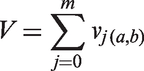
(V) cell was the aggregate sum of services values
(v) for all m firms between each city dyad
(a,b), where a and
b are the respective cities of the lower and higher service
value corporate offices for firm j, or mathematically:
The SNA program NodeXL was applied to the subsequent directed matrix to calculate various centrality metrics. In WCN research, several of these are commonly used to assess urban network configurations as well as the role and positionality of cities, including closeness centrality (Alderson and Beckfield, 2004); degree centrality (Alderson et al., 2010), flow centrality (Wall and Van der Knapp, 2011), eigenvector centrality (Mahutga et al., 2010; Neal, 2011, 2013; Smith and Timberlake, 2001), and betweenness centrality (Alderson and Beckfield, 2004; Lyons and Salmon, 1995; Neal, 2008). Several other types of centrality exist, but are not commonly applied to urban analysis for one reason or another.
Comparison of five point centrality measures.

A few studies on urban networks have applied some combination of these, including Liu et al. (2014) and Neal (2008), who use degree, closeness, and betweenness centrality, and Tranos (2011), who uses degree, betweenness and eigenvector centrality to measure urban positionality in airline and internet backbone networks. Taylor (2005) uses out-degree and in-degree centrality to indicate ‘site’ and ‘situation’, respectively, after Alderson and Beckfield (2004). Out-degree and in-degree centrality are applied to directed graphs in lieu of degree centrality, which assumes equivalent two-way relations.
Each centrality measure adds a novel dimension to an analysis of inter-urban relations, presenting another measure of positionality vis-à-vis others in the network (Everett and Borgatti, 2005). Betweenness centrality indicates a strong brokering role, which may be quite detached from the transactions that support distant sub-networks, identifying nodal points of economic exchange (Borgatti, 2005; Lyons and Salmon, 1995) and ‘bridges’ to sub-networks (Neal, 2013). In the WCN, this corresponds to intermediate (Neal, 2008) or gateway cities (Burghardt, 1971), which act as mediators between spatially or economically organized regions. Eigenvector centrality is generally associated with ‘power’, and as Bonacich (2007) argues it has inherently unique properties giving it distinct advantages as a measure of nodal influence, especially if the network does not reflect the typical core-periphery hierarchy. In-degree and out-degree are complementary measures, with the former indicating prestige and the latter direct influence (Alderson and Beckfield, 2004). Closeness centrality is a proxy for degrees of separation as it indicates network propinquity to near and distant nodes of the network, meaning that those with higher scores are at an informational advantage. The latter three are useful supplements to eigenvector and betweenness centrality, as their utility is greater when strong cliques or sub-networks emerge (Neal, 2011).
In addition to centrality, city-pairs were analyzed to measure the strength of individual connections. This was defined as the ‘edge weight’ of bilateral inter-urban relations, being the sum of the reciprocal ties between two cities (Newman, 2004). The weights between city-pairs – referred to as dyads – reveal specific ties binding particular industrial configurations (Choi et al., 2006), providing supplementary information on which specific connections were formative of centrality as a global measure.
Five networks
This paper aims to examine the role of cities across multiple networks from an antipodean geographic perspective that to date has not been analyzed as such. Australia serves as the primary geographical focus for this analysis, where a relatively high reliance on primary activities renders it somewhat representative of other spatial economies in which growth in the resources sector has been profitable while at the same time exposed to the vagaries of global commodity markets (Dyster and Meredith, 2012). In the post-war period, economic booms tied to various resource/commodity spikes have channelled significant investment into Australia, including in the early 1960s, early 1970s, the late 1980s, and most recently post-2002. At the peak of the latest resources-led boom in 2011–2012, mineral and energy exports accounted for more than 60% of the nation’s export earnings, most significantly iron ore and concentrates, coal, gold, crude petroleum, and natural gas (Danish Institute for International Studies (DIIS), 2016). Though Australia has not experienced economic doldrums to the same degree as elsewhere in the industrialized world, economic troughs between these intervals were shaped by commensurate commodity busts. Aside from strong trans-Pacific relations with the United States, the increasing economic prowess of Asia has in particular had a large influence on the Australian economy, with Japan, and more recently China and a broad range of Southeast and East Asian trading partners providing large amounts of foreign direct investment.
Given Australia’s transition toward a more global – and less Anglocentric – economic orientation, a multitude of research since the 1980s has linked globalization and urban processes (Beer, 2012; Fagan and Webber, 1994; Searle, 1996; Stimson, 2011; Wilde and Fagan, 1988). Globalization has urbanized labor markets and broadened trade relations beyond former colonial ties (Sigler, 2012), accompanied by many of the same urban processes found elsewhere in the world: large-scale urban renewal and gentrification; a shift toward a service-based economy; and, devolutionary governance which has led to a focus on cities through metropolitan coalitions, councils and special-purpose configurations of governance (Ruming, 2005). Sydney is almost invariably depicted as Australia’s world/global city (Hu et al., 2013; Searle, 1996; Taylor et al., 2013) with Melbourne similarly high on international league tables, while other cities (e.g. Perth and Brisbane) exhibit greater specialization in resources in recent literature (Martinus et al., 2015; Sigler, 2012; Tonts and Taylor, 2013).
With the Australian economy having undergone significant restructuring tied to globalization and global commodity markets, the urbanization of capital, and reorganization of territorial structures to accommodate the services economy, an analysis of the network relations between Australian cities and their international counterparts provides a timely backdrop to building new theory on actually existing globalization. To investigate global positionality across multiple urban economic networks, the energy, materials, industrials and finance sectors were selected for their significance in the globalization process based on the number of corporate office locations worldwide, as well as for their distinct differences in the way firms in each sector operate. It was hypothesized that each would have a unique geographic footprint tied to firms’ locational needs and industry requirements such as natural resource endowments (e.g. materials, energy), large industrialized population centres (e.g. energy), levels of economic development and specialization (e.g. industrials, financials), and/or co-location with other advanced services (e.g. financials).
Measured by the number of listed corporations, the most significant of these GICS sectors are energy and materials, which are large contributors to Australian economic wealth (Martinus et al., 2015; Sigler, 2013a; Tonts et al., 2013). Given the broad categories assigned to individual firms under the GICS rubric, these two together represent a large component of Australia’s extractive industries and, although distinct in their corporate composition, are subject to considerable overlap and complementarity. Of the energy companies listed on the ASX, there were 245 firms in 579 office locations across 191 cities in 66 countries engaging in exploration, production, extraction and distribution. Materials corporations accounted for almost half of the total ASX listings – 752 firms with 1,434 office locations in 248 cities.
After materials and energy, industrials and financials are the next two most significant sectors in terms of number of listed firms. The industrials sector features 1,151 offices recorded in 183 cities across 79 countries. Industrials are primarily associated with manufacturing, though the category comprises a diversity of activities ranging from engineering consulting to transportation services. Finally, the financials GICS sector comprises 579 headquarter and branch offices for its 223 firms across 104 cities in 39 countries. This sector is a key component of the broader APS category which has been used as a proxy for a wide spectrum of economic activity given its supporting role for key sectors driving economic development (Taylor et al., 2013).
SNA applied to the overall ASX network reveals the power, influence, prestige,
and brokering roles of various cities in the Australian economic system to
varying degrees. As Table
3 shows, Perth and Sydney both wield leading positions in the
network, depending on the measure applied. Sydney’s ‘power’ position relates to
eigenvector centrality, while global and local ‘influence’ derive from closeness
and out-degree centrality, respectively, in which Sydney and Perth have
approximately equivalent figures. Sydney’s ‘influence’ is derived the fact that
it connects to other well-connected cities, so although Perth has more ties,
Sydney has stronger ties. This is evidenced by the city-pair analysis, which
reveals that eight of the 10 strongest city-pair links feature Sydney, with ties
to both national (Melbourne, Brisbane, Perth) and international (London,
Auckland, Singapore) commercial nodes (Figures 1 and 2). The ‘prestige’ of the two cities, as
indicated by in-degree centrality is approximately equivalent, with many firms
reporting to Perth-based headquarters in mining, and Sydney particularly
prominent in financials, as detailed below. Entire ASX network:
Eigenvector centrality. Entire ASX network: betweenness
centrality. Urban nodal centrality in overall ASX
network.


Perth’s intermediary (brokering) role is evidenced through high betweenness centrality, as it contains more corporate headquarters than any other Australian city. As the economic and political center of resources-rich Western Australia, Perth has strong connections throughout Africa and Southeast Asia.
The overall network offers some immediate insights, namely that Perth’s geographic situation and resources-orientation sets it apart from Sydney, Melbourne and much of the Australian east coast, and that international cities play quite an important role in what is nominally a ‘domestic’ industry list. Additionally the analysis suggests that some international cities play strong brokering roles as well, particularly those with strong regional functions such as Johannesburg (Africa), Dubai (Gulf states), and London (Britain and continental Europe). This indicates a strong regional dimension to the organisation of economic activity in the form of network clusters, which further justifies the use of multiple centrality measures. As Figures 1 and 2 reveal, there are differences in how power and brokering roles play out across the network, but both reveal a strong role for Australian and international cities as integral network nodes.
When broken down into respective sub-networks, a great degree of differentiation
is revealed that helps further explain the overall ASX network. The energy
sector is the most globally extensive of the networks incorporating both
producer and consumer nations (Figures 3 and 4). Perth’s strong role in energy is explained by the presence of a
few of the largest firms (Woodside, Aurora) tied to Western Australia’s abundant
offshore gas resources. Sydney, Houston, London and Johannesburg also play
strong roles, connecting respective continental systems to the Australian energy
industry (Table 4).
Energy hubs such as Tulsa, Lagos and Calgary are connected within the network,
whereas other strongly state-oriented oil production capitals (Caracas, Riyadh,
Mexico City) are conspicuously absent. Kuala Lumpur, Beijing and Calgary all
maintain strong positions across multiple centrality measures, attributable to
the local presence of the headquarters of state-owned Petronas (Malaysia) and
Sinopec (China), and legacy energy giant Encana (Canada), respectively.
Melbourne’s ‘power’ position in the network is primarily a result of strong
connectivity to other powerful nodes (eigenvector centrality) whereas Dubai’s is
articulated by betweenness centrality through its strong role in brokering
regional energy flows from Bahrain, Qatar, Oman, Saudi Arabia and Kuwait.
Jakarta and Denver’s strong out-degree centralities indicate roles as reporting
centres to Australian firm headquarters. Energy network:
Eigenvector centrality. Energy network: betweenness
centrality. Urban nodal centrality in ASX energy
network.


Urban nodal centrality in ASX materials network.

Given the magnitude of the mining industry in Western Australia, Perth emerges as
the most influential in materials, ranking highest in all centrality measures,
and holding the two most important bilateral connections (with Johannesburg and
Sydney, respectively). These linkages are attributable to two very different
processes, however, with Johannesburg providing a pathway into the African
resource economy and Sydney linking Western Australian firms with domestic
financial and production circuits. Other international connections can be
explained by even more specific functional linkages. Several copper and
gold-related companies such as Arrium, BHP Billiton, and Orica and have
co-presence in both Australia and Santiago, and Alcoa and Orica both have branch
offices in the Rhine-Ruhr region in western Germany (Duesseldorf). Singapore
plays a ‘power’ role in the materials network with high eigenvector and
closeness centrality, shaped by its links to Taiwan, Malaysia, China, Vietnam,
Indonesia and elsewhere in Asia. Its low out-degree centrality, however, reveals
that it serves more of a regional headquartering function than a branch office
reporting function. The opposite, however, is true of Jakarta, whose reporting
role is evident in high out-degree centrality without complementary ‘power’
metrics. The national capital hosts offices of coal, gold and iron ore related
companies – many conducting business hundreds of kilometers away in Sumatra,
Kalimantan, Papua, and Timor – that report to headquarter offices higher up the
corporate chain of command. In contrast to energy, Shanghai’s position within
the materials network is more prominent than Beijing’s, confirming as Lai (2012) has
suggested that the two cities play highly complementary roles with distinct
financial and economic functions. Positionality in the materials network is thus
determined by specific resource-oriented industry constellations, which bring
spatially distant cities together around globalized commodity chains (Figures 5 and 6). Materials network: Eigenvector
centrality. Material network: betweenness
centrality.

In distinction to highly globalized energy and materials sub-networks, the
industrials sub-network is largely a national one. Perth and Brisbane play
strong roles in the industrials network, but in slightly different capacities
(Table 6).
Brisbane plays an intermediary role (betweenness centrality), particularly
within the state of Queensland, connecting to numerous smaller cities such as
Mackay, Townsville and Gladstone. This takes the form of engineering services
providing support to local agricultural and mining activities in northern parts
of Queensland. Furthermore, while Brisbane-based firms have vast global networks
(notably ALS, Ausenco, and Cardno), reporting structures appear more
hierarchical, concentrating decision-making capacity within Australia. This
strong intermediary role is further explained by a small number of firms with
many global branch offices. While Perth does play some role in transactions
between regional Western Australian places such as Kalgoorlie and Karratha, it
also has strong linkages to cities in Southeast Asia and other Australian
states, particularly Queensland, and it plays the most influential role in the
network as measured by eigenvector centrality only (Figures 7 and 8). Industrials network:
Eigenvector centrality. Industrial network: betweenness
centrality. Urban nodal centrality in ASX industrials
network.


Outside of Australia, Singapore and Hong Kong play strong roles as measured by eigenvector and closeness centrality, indicating the presence of large and well-connected firms, but not extending to Europe or the Americas to any significant degree. All Australian state capitals (except Hobart in Tasmania) are integral to the network to some measure, and the majority of non-Australian cities are in the Anglophone world (e.g. Wellington, Washington, Hong Kong, London, Milton Keynes, Johannesburg), in contrast to other networks extending widely across Asia.
Of the four sub-networks, nodes within the financials network are the least well-connected, with approximately half the overall network density (4.57 × 10⁻⁴) of the most connected (materials). This implies that power is most consolidated amongst a few key cities and lesser nodes are less connected to each other, supporting the notion that the financial world is mediated from a handful of global centres (Wójcik, 2013). Perhaps unsurprisingly, the financials network most closely resembles the ubiquitous global city metageography elaborated by successive scholarly efforts (Beaverstock et al., 2000; Friedmann, 1986).
Urban nodal centrality in ASX financials network.

Melbourne plays a strong secondary role in financials, as home to the other two
‘Big Four’ banks (ANZ and NAB), exhibiting a ‘power’ role through high
eigenvector and closeness centrality. Measured by betweenness centrality,
however, London and New York play stronger roles than Melbourne indicating a
brokering position tied to financial agglomerations around two of the world’s
two largest stock exchanges (NYSE and LSE). Conversely, New York and London are
remarkably low in out-degree centrality, demonstrating that they play regional
headquartering rather than reporting roles. The importance of the New
York–London–Sydney nexus in the Australian context reinforces the strategic
importance Wójcik
(2013) has assigned to the ‘NY-LON’ North Atlantic pair, in this
instance relating financial flows to Australia’s financial capital. Other
important cities outside Australia are home to the world’s most significant
stock exchanges (e.g. Singapore, Hong Kong), suggesting that the ASX financial
network is interwoven with other nationally and regionally based financial
circuits (Figures 9 and
10). Financials network: Eigenvector
centrality. Financial network: betweenness
centrality.

Positionality through multiple networks
Economic networks are neither monolithic nor internally undifferentiated. In other words, ‘the’ global economy does not exist; what does exist is a set of industry-specific network relations that when analyzed across multiple measures and sub-networks reveals the intricacies of global firm behaviour. Likewise, ‘the’ world city hierarchy that has captured the popular and scholarly imagination in many regards has given way to a nuanced approach in which urban positionality differs from one network to another (Parnreiter, 2014; Martinus and Tonts, 2015; Surborg, 2012). With the application of five centrality measures to the overall ASX network and four industry sub-networks, this paper has attempted to advance the theoretical debates regarding the relational processes by which reterritorialization has occurred in contemporary cities, and to shed new light on the actually existing processes by which globalization connects cities around the world.
As city-regions are constructed as the mediated outcome of political claims to territory and extra-local economic relations (Harrison, 2010), an understanding of global city network relations serves to better inform city leaders and policymakers. A key question is thus to address how, rather than if, cities are global. Indeed, even within an economic system that is situated in a fundamentally national industrial configuration, a truly global system emerges from the Australia-based network, reaching 582 city-regions in 132 countries. The extent of this network is best explained through multiple globalizing processes (Krätke, 2014), which exert divergent pressures on multifarious urban development practices and processes.
As many scholars, particularly in economic geography, have been wary of ‘encompassing’ approaches that privilege north-south relations (Sheppard et al., 2013; Werner, 2012), this paper makes no assumptions regarding global power structures, allowing the organic inter-urban network structures of firms to uncover how relations are built through functional economic, socio-cultural, and political ties. Its primary theoretical contribution is an enhancement of how the WCN approach is capable of exposing globalizing processes that transcend narrow hierarchical foci that fixate on core-periphery or other territorially bounded perspectives. As the paper reveals, while organizational hierarchies do emerge, they are detached from the assumed structure of ‘global cities’ and far more driven by regional organization and path dependence than by so-called “command and control”.
The findings of this paper strengthen arguments regarding the need to employ more location-specific data using a variety of ‘globalising’ industries (Martinus et al., 2015; Toly et al., 2012). In this instance, we have shown that economic globalisation occurs through multiple inter-urban networks, and that although financial circuits are the most concentrated and consolidated, the connectivities of primary industries are not only highly international but highly influential in situating cities within global systems. The positionality of Perth, for instance, is highly contextual, and depends critically upon the individual sub-network being analyzed, and the network measure used to do so.
Further research into the nature of the specific connectivities inherent to each network is needed to refine a more complete understanding of urban positionality. Industry-specific considerations are responsible for many of the spatial relations in the ASX, such as the need for face-to-face contact in some industries and the need to be located near production sites in others. The high concentration of financials among a handful of cities, for example, contrasts with the diffused nature of globalized production networks in energy and materials. Diverse historical economic geographies supplement resource-based considerations, explaining why a handful of medium-sized cities (e.g., Calgary, Duesseldorf, Denver) play important roles in some sub-networks but not in others. These are the result of a complex interplay between path-dependent history (Martin and Sunley, 2006), resource base (Surborg, 2012), political economy (Harrison, 2010), and sectoral differentiation (Wall and Van der Knaap, 2011), which in turn are differentiated between industry- and firm-based locational strategies. For optimal strategies to be devised to suit the political realities of 21st century urban governance, it is paramount that the formation of economic network vectors be better understood so as to situate urban positionality within a set of relations that are specific to each city and industry, rather than the one-size-fits-all approaches of the past. This allows for a critical break from the scalar and territorial constraints of past urban networks research and provides an opportunity for a truly ‘global’ urban system to emerge through both structural processes and the agency of individual actors and institutions.
Footnotes
Acknowledgements
We would like to acknowledge the following individuals: Samuel Evans, John Harrison, Michael Hoyler, Glen Searle, Scott Shearer, Peter Taylor, and Matthew Tonts.
Declaration of conflicting interests
The author(s) declared no potential conflicts of interest with respect to the research, authorship, and/or publication of this article.
Funding
The author(s) received no financial support for the research, authorship, and/or publication of this article.