






Abstract
As the circular economy gains traction as an alternative sustainability paradigm, its translation into local and regional policy frameworks reveals a spectrum of interpretations shaped by divergent goals. Consequently, the adoption of the circular economy agenda becomes highly contingent upon context-specific governance visions and priorities. This paper explores how the circular economy is mobilised in two structurally shrinking European regions, Satakunta (Finland) and Parkstad Limburg (Netherlands), and how the resulting policy agendas reflect underlying “goal dependencies” in urban and regional governance, that is, the influences of constructed and shared futures on present-day choices. Drawing on Evolutionary Governance Theory, the study examines through a comparative discourse analysis how enduring visions of economic renewal, image reconstruction, and institutional legitimacy shape the practical deployment of circular economy initiatives. In Satakunta, circularity is aligned with industrial modernisation, growth stimulation, and the attraction of foreign investment, continuing a long-standing developmental trajectory. In contrast, the policy discourse in Parkstad focuses on circular construction as a tool to combat regional stigma, restore public trust, and reposition the region within national and European circular economy narratives. In both cases, the circular economy vision functions less as a predefined endpoint and more as a strategic instrument for enacting future-oriented governance goals. The findings highlight how governance coalitions in shrinking cities and regions mobilise circular economy discourses to sustain reinvention, address structural decline, and reassert relevance, underscoring the importance of unpacking local goal orientations in understanding circular transition pathways.
Keywords
Introduction
Over the past decade, the circular economy has gained considerable traction in policy and academic debates, where it is presented as a novel paradigm of sustainability and a potential response to mounting concerns over resource depletion, climate change, and uneven development (Geissdoerfer et al., 2017). Rather than operating as a neutral technical fix, it has been embedded in heterogeneous policy agendas that reflect divergent governance priorities, institutional arrangements, and power relations (Kębłowski et al., 2020; Niskanen and McLaren, 2023). From multinational corporations and national governments to regional authorities and grassroots organisations, the circular economy discourse has been mobilised to pursue diverse aims—ranging from industrial modernisation and green growth to place branding and legitimacy building (Bourdin and Jacquet, 2025; Chembessi et al., 2025).
In this light, recent research suggests that, from a conceptual standpoint, the circular economy should be understood less as a predefined endpoint than as an instrument deployed to advance contested visions of sustainable development (Corvellec et al., 2022; Kirchherr et al., 2023). This interpretation underscores its instrumental value, often framed through an ecomodernist lens, in which the adoption of circular economy principles holds the promise of green growth, that is, achieving resource efficiency and environmental sustainability while sustaining economic expansion (Genovese and Pansera, 2021). Hence, the circular economy is conceived not merely as a distant objective to be attained, but as something potentially already present, waiting to be harnessed and mobilised in pursuit of broader goals.
While these broader goals are, in principle, aligned with achieving sustainable development, their interpretation and implementation can vary significantly in practice, particularly given the increasingly diffuse and contested nature of the concept of sustainability itself, which some argue has become so broad as to lack any substantive meaning (Brown, 2016; Gunder and Hillier, 2009). This ambiguity is especially pronounced in cities and regions, where urban and regional development agendas are co-constructed and co-framed by a diverse array of actors with differing interests, priorities, and capacities (Fratini et al., 2019; Lynch, 2022; Marin and De Meulder, 2018). Consequently, circular economy initiatives rarely function as radical departures from past trajectories. Instead, they are shaped by place-specific conditions, uneven power relations, and the politics of territorial repositioning (Bourdin and Jacquet, 2025; Bourdin et al., 2024; Fratini et al., 2019). As a means to an end, the circular economy thus becomes an empty signifier or boundary object, that is, a concept whose ambiguity allows different actors to invest it with varying meanings and strategic purposes. This makes it capable of serving a wide range of goals, some more, and others less, aligned with its foundational promise of sustainable development (Marjanović and Williams, 2024; Winslow and Coenen, 2023).
While the adoption of circular economy agendas in major global cities and regions and how they serve other goals has been widely studied (e.g. Chembessi et al., 2025; Pegorin et al., 2024; Winslow and Coenen, 2023), comparatively little attention has been paid to their implementation in urban and regional areas undergoing structural shrinkage. This omission is striking, since shrinking contexts may offer distinctive conditions for certain forms of circular economy experimentation. Processes of urban decline often leave behind vacant land, obsolete industrial sites, underused buildings, and lower real-estate development pressure, which can make it easier to test new forms of reuse, repurposing, deconstruction, and material recovery than in high-demand metropolitan contexts where land competition and development costs are more intense (Williams, 2019). At the same time, the pressures that actors in shrinking cities and regions face to revalorise redundant assets, confront the visible consequences of decline, and articulate credible futures make them a particularly revealing setting for examining how circular economy discourses are reconfigured in response to demographic decline, economic restructuring, and crises of territorial relevance (Marjanović and Williams, 2024; van Schaick, 2026).
Hence, we contend that, given the increasing prevalence of such contexts globally, together with the complex challenges involved and the distinctive policy approaches and governance arrangements developed in response, they represent a highly relevant and valuable setting for this inquiry. As a result, the following research questions guide our investigation:
- What goals underpin the adoption and pursuit of the circular economy agendas in shrinking cities and regions?
- How are circular economy discourses and practices mobilised to reinforce these goals?
- Why is the circular economy considered a promising or relevant model for addressing the challenges of urban shrinkage?
To address these questions, we undertake a comparative discourse analysis of circular economy agendas in two shrinking European regions: Parkstad Limburg in the Netherlands and Satakunta in Finland. Drawing on Evolutionary Governance Theory (EGT) and its associated concept of goal dependency, the analysis explores how circular economy discourses are articulated, legitimised, and aligned with governance trajectories shaped by demographic decline, economic restructuring, and struggles for institutional legitimacy.
The paper contributes to the literature in three main ways. First, it extends debates on the political economy of sustainability transitions by focusing on shrinking regions, a type of territory often neglected in circular economy research. Second, it demonstrates that circular economy agendas function as instruments of territorial reinvention, mobilised to restore institutional credibility, attract external resources, and contest symbolic marginalisation. Third, it advances a conceptual dialogue between EGT and critical urban and regional studies, showing how goal dependencies channel circular economy discourses into established governance paths. Namely, the article uses goal dependency to explain the selective stabilisation of circular economy agendas by linking imagined futures to coalition-building, policy choice, and territorial legitimation.
Goal-setting and goal dependencies in governance
Scholars argue that the transition to a circular economy in cities and regions is fundamentally a matter of governance (Fratini et al., 2019; Obersteg et al., 2019). This perspective emphasises that urban and regional governance provides a framework for managing the uncertainty and complexity inherent in such a far-reaching societal transformation (Frantzeskaki et al., 2012; Heurkens and Dąbrowski, 2020; Obersteg et al., 2019). A central claim is that governance operates through goal-setting rather than strict rule-making, with flexible and outcome-oriented approaches replacing rigid regulatory prescriptions (Hofstad et al., 2021). From this angle, governance is conceived as a reformative programme aimed at achieving shared objectives in an efficient and effective manner, assuming a foundational consensus on these goals (Westerman, 2007). This goal-oriented logic opens up space for a broad array of actors to engage in shaping rules, crafting policies, setting priorities, and defining desired outcomes, all of which hinge on a shared understanding of the overarching aims (Hofstad et al., 2021; Westerman, 2007).
Although this governance perspective is primarily explored in the context of global governance (Biermann et al., 2017), its underlying logic of goal-setting is equally relevant to urban and regional governance, albeit in more nuanced and intricate ways. In cities and regions, governance goals are not simply articulated through formal municipal or regional policies. Instead, they emerge from a complex web of political dynamics involving competing interests and layered expectations of diverse actors and institutions (Kesar and Ache, 2024; Mahoney and Thelen, 2010). Through deliberation and negotiation processes, some of these goals gain more institutional traction than others because they are supported by stronger coalitions, better aligned with higher-level policy priorities, or more easily translated into visible projects and funding opportunities (Fischer and Losacker, 2025). As a result, the goals that come to dominate a given governance constellation tend to be less explicit and more ambiguous in order to accommodate divergent agendas and foster broad-based engagement and mobilisation of actors, ideas, and resources (Hofstad et al., 2021). They frequently take the form of collective visions—aspirational representations of possible futures—rather than concrete and measurable objectives (Kesar and Ache, 2024; McPhearson et al., 2016).
Given that the circular economy is widely understood as a means to advance sustainable development, and that sustainable development itself functions as an empty signifier, open to broad and often contradictory interpretations (Brown, 2016; Gunder and Hillier, 2009), it follows that the practical implementation of circular economy agendas in cities and regions depends heavily on the governance goals and visions embedded within local frameworks (Bourdin and Jacquet, 2025). This makes it essential to identify which actor groups are able to shape dominant visions and how these visions influence the practical deployment of circular economy agendas. To explore how this shaping occurs, we draw on EGT, particularly its concept of “goal dependency” (Van Assche et al., 2013). This concept denotes the influence of constructed futures on present-day choices. It describes the rigidity produced when consistent decisions are repeatedly directed towards particular images of the future, so that each new step reinforces the same trajectory (Adam and Groves, 2007; Van Assche et al., 2013). Goal dependency, therefore, manifests in persistent ideas, visions, and shared images of the future that guide decision-making. It implies “dependence on the future” and the impacts of constructed shared futures on governance (Van Assche et al., 2013, 2014).
Goal dependencies bear similarity with a more conventional concept of path dependency, but represent constraints arising from committed ends (goals, targets, and visions of promised futures) rather than those stemming from past trajectories or earlier choices, with both embedded in institutions and dominant policy narratives. As shown in Figure 1, path dependency, rooted in past choices and decisions, narrows the range of plausible trajectories by excluding alternatives beyond the inherited development path (Martin and Sunley, 2006). Goal dependency, in turn, is shaped by commitments to particular futures and steers action towards selected trajectories while foreclosing others. For instance, in a shrinking city, public officials may continue to pay for maintaining an oversized transit network built for growth (path dependency) while also diverting scarce funds into a high-profile downtown revival they promised to voters (goal dependency). This means that path dependencies and goal dependencies co-produce each other: past trajectories shape which goals are even thinkable, while adopted goals then reframe elements of the past to keep and mobilise.
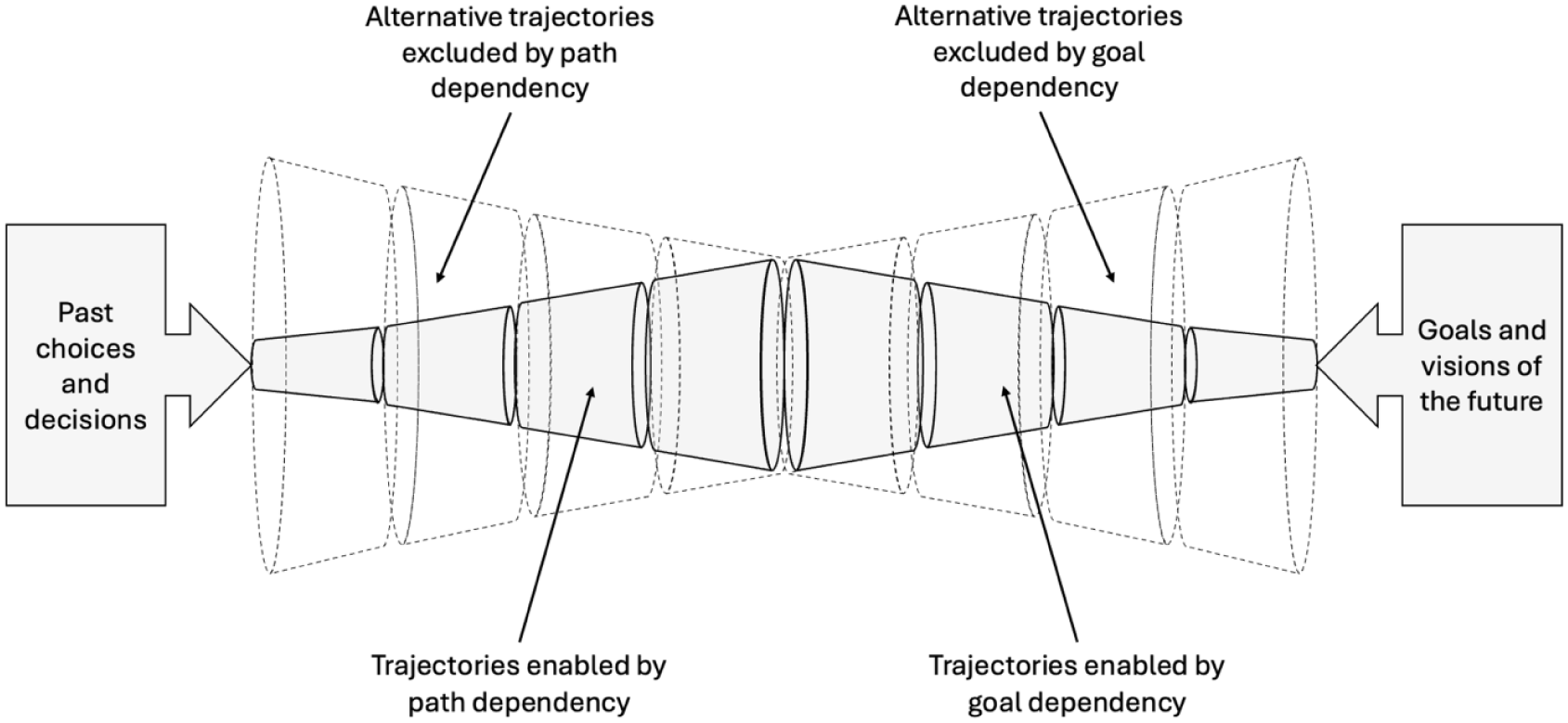
Interaction of path dependency and goal dependency in shaping possible development trajectories.
Constructed futures structuring goal dependencies are not merely imagined but produced through discourses and institutions (Adam and Groves, 2007). They include futures yearned and feared by actors, embedded in institutions, and emerging from governance interactions (Van Assche et al., 2021). Shared images of the future motivate actors’ responsibilities and urge them to act according to these envisioned futures, serving as a binding force that guides action (Lösch et al., 2017; Schneider and Lösch, 2019).
Within the context of the present study, the notion of goal dependency implies that the circular economy agenda in cities and regions is likely to be mobilised in ways that align with and reinforce shared visions of urban and regional futures. It also offers a valuable perspective on the relationship between shrinking cities and the circular economy. Research on shrinking cities highlights how their governance frameworks are shaped by prevailing interpretations of both current realities and anticipated trajectories of urban shrinkage (Rink et al., 2011). Whether urban actors anticipate renewed growth or accept ongoing decline profoundly influences the strategies adopted (Pallagst et al., 2017). Similarly, Fratini et al. (2019) argue that understandings of the circular economy are shaped by collectively held visions of desirable futures, which are grounded in shared assumptions about what forms of social life are attainable and worth pursuing.
Research approach and methodology
This study employs a qualitative research design based on comparative case studies and discourse analysis to examine how circular economy agendas are developed and mobilised in relation to governance goals within structurally shrinking urban and regional contexts. The objective is to uncover the discursive construction of the circular economy and the ways in which it is aligned with, or shaped by, long-standing goal dependencies embedded in regional governance frameworks.
The selected case studies, Satakunta in Finland and Parkstad Limburg in the Netherlands, were chosen through purposive sampling based on two key criteria. First, policymakers in both regions have been relatively proactive in adopting circular economy principles within their policy frameworks, making them relevant cases for studying the implementation of circular economy principles beyond major metropolitan centres that dominate the contemporary scholarship on urban and regional circular economies (Marjanović and Williams, 2024). Second, they share comparable socio-demographic trajectories marked by long-term population decline, largely driven by industrial restructuring and broader demographic transitions such as low birth rates, common to many post-industrial regions in Northern and Western Europe (Marjanović and Lilius, 2025a). Their location within the institutional setting of European welfare states also provides a shared governance and policy context, enhancing the basis for meaningful comparison. At the same time, Finland and the Netherlands are recognised as European forerunners in advancing the circular economy, providing a broader policy backdrop that has influenced and set benchmarks for other countries across the continent (Fonseca and Michie, 2024; Marjanović and Williams, 2024).
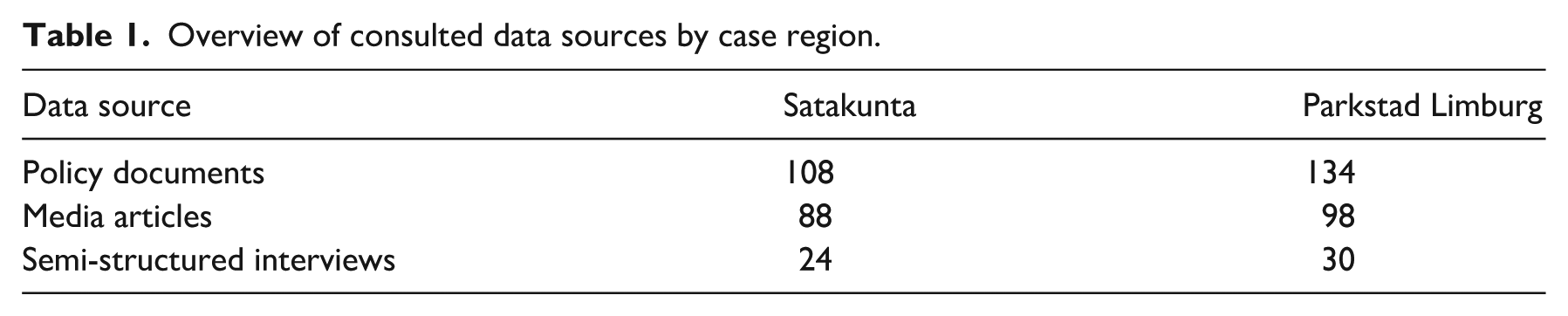
The research design rests on discourse analysis, which is understood here as the systematic examination of language, narratives, and framings through which policy agendas are produced, legitimised, and contested. The analysis examines how circular economy agendas are presented to the public, how they are linked to regional development strategies, and how they reflect broader trajectories of restructuring and decline. To ensure analytical rigour, we employed data triangulation across three sources, as outlined in Table 1:
- Policy documents at municipal, regional, and national levels that reference the circular economy, particularly those related to spatial development, industrial policy, sustainability, and economic restructuring.
- Media narratives from local, regional, and national newspapers and online platforms, which capture how the circular economy is represented and discussed in the public sphere.
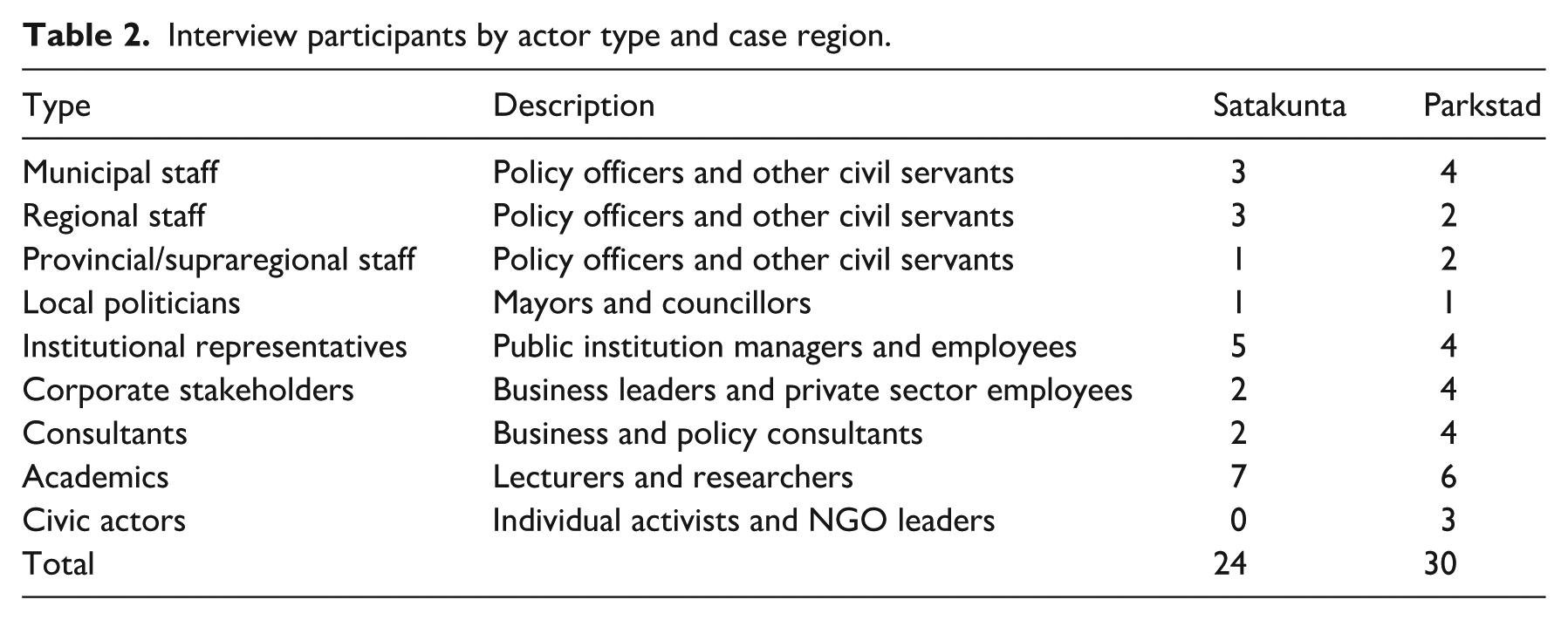
- Semi-structured interviews with key stakeholders, including municipal and regional policymakers, civil servants, project managers, business representatives, and local activists, as presented in Table 2. These interviews offered insights into how different actors interpret, promote, and strategically mobilise the circular economy agenda.
Overview of consulted data sources by case region.
Interview participants by actor type and case region.
The aim of this triangulated approach was not only to identify recurring themes and discursive patterns, but also to reveal how particular goals are foregrounded in circular economy discourses and how mechanisms of alignment between circular economy principles and local governance aims are articulated and operationalised.
The triangulated design strengthens the robustness of the study by allowing the identification of recurring discursive patterns across different sources and by ensuring that interpretations were not dependent on a single type of material. The approach also makes it possible to capture how official strategies, public debates, and stakeholder perspectives intersect in shaping circular economy trajectories. The comparative design adds explanatory depth by enabling the identification of both similarities and divergences across the two cases. This cross-case analysis was employed to derive more general insights into the relationship between structural shrinkage and circular economy governance, and to explore potential causal mechanisms through which circular economy discourses are grounded in regional goal dependencies. Finally, the empirical findings were situated within the conceptual framework of goal dependency as elaborated by EGT. This allowed us to assess how circular economy agendas contribute to the reproduction of long-term governance goals in shrinking regions, while simultaneously opening up limited space for discursive and institutional reorientation.
Urban shrinkage and the circular economy in the selected case studies
Satakunta
Satakunta is a region in western Finland with a population of 214,281 (as of 2022), most of whom reside in its two main urban centres: Pori (83,482) and Rauma (38,959; Statistics Finland, 2022). Historically shaped by manufacturing, it has long been one of the most industry-intensive regions in the country. Population decline in Satakunta began as early as the 1960s, particularly in smaller municipalities. However, industrial restructuring from the 1970s onwards, combined with falling birth rates, eventually led to depopulation in the larger urban centres as well (Marjanović and Lilius, 2025a). Since 1984, the region as a whole has been experiencing steady demographic decline (Statistics Finland, 2022).
For a long time, this trend remained largely unaddressed in policymaking (Kahila et al., 2022). The region’s strong industrial performance, reflected in its above-average share of national industry and exports, contributed to a perception of economic resilience (Marjanović and Lilius, 2025a). As a result, regional policy focused primarily on boosting industrial productivity through automation and technological modernisation as a way to sustain economic growth (Marjanović, 2026).
However, this approach began to falter as the long-term effects of population loss became more difficult to ignore. A shrinking tax base, diminishing access to basic services, and increasing difficulties among local companies in recruiting qualified labour gradually brought the issue of demographic decline to the forefront of the political agenda (Marjanović and Lilius, 2025b). This shift has prompted a slow but noticeable turn towards a more proactive policy stance, aimed not only at halting and managing demographic decline but at reversing it by making the region more attractive for both people and businesses, and thus attempting to restore a trajectory of growth (Marjanović and Lilius, 2025b).
In Satakunta, the circular economy first gained traction within regional industrial parks around 2016, where the close geographic proximity of industrial enterprises offered unique opportunities for industrial symbiosis and the integration of waste streams across different operators (Marjanović and Williams, 2024). Recognising the growing prominence of the circular economy agenda at both national and EU levels, companies began to reframe their operations through this lens. They sought to position themselves advantageously in light of tightening environmental regulations and increasing policy emphasis on clean industrial technologies (Marjanović and Williams, 2024).
These developments coincided with the launch of the EU-funded national flagship project CIRCWASTE (2016–2023), which aimed to improve material efficiency and prevent waste generation in selected areas of Finland. The City of Pori participated as a partner in several sub-projects, particularly those focused on integrating industrial waste streams in sectors such as construction and metal recycling. This involvement strengthened municipal commitment to the industrial circular economy agenda and culminated in the signing of the so-called ecosystem agreement with the national government in 2021 (Marjanović and Williams, 2024). The agreement formalised support for advancing the circular economy in industry, both within Pori and across the broader Satakunta region.
Parkstad Limburg
Parkstad Limburg is a region in the southern Netherlands, home to 257,660 residents (as of 2022), with two principal urban centres: Heerlen (86,845) and Kerkrade (45,324; Statistics Netherlands, 2022). Once a thriving coal mining area, the region experienced unprecedented growth and prosperity during the 1950s, when coal production was at its peak. However, the national government’s decision to phase out coal mining from the mid-1960s, followed by the systematic erasure of mining heritage in the late 1970s, set the region on a path of sustained economic decline and escalating social problems, such as drug abuse, prostitution, and crime (Ročak, 2019). These issues intensified over the following decades, culminating in the mid-1990s with the onset of continuous demographic decline, as outward migration driven by socio-economic pressures could no longer be offset by natural population growth amidst steadily falling birth rates (Marjanović and Lilius, 2025a; Statistics Netherlands, 2022).
The loss of the mining sector, which had not only provided employment but also structured much of the region’s social infrastructure and community life, created a deep sense of mistrust towards public authorities. Many residents felt the decision to close the mines was made without their input and left the region at a severe disadvantage. Over time, the demographic decline and persistent social challenges contributed to a growing sense of marginalisation known as the “Calimero complex,” with the region increasingly subjected to stigmatising narratives from the outside (Elzerman and Bontje, 2015; Marjanović, 2026).
Although the issue of population decline was initially ignored, it eventually prompted regional decision-makers to initiate a large-scale spatial restructuring programme in 2010 (Elzerman and Bontje, 2015). The focus was on the demolition of vacant housing and retail spaces and on reshaping the region’s image, from one associated with social problems and urban decay to a more compact and liveable area, adapted to a smaller population (Marjanović and Lilius, 2025b).
The circular economy in Parkstad initially took shape through a local initiative and flagship project known as SUPERLOCAL (2017–2020; Marjanović and Williams, 2024). In response to spatial restructuring goals, the housing corporation HEEMwonen in Kerkrade had been scaling down its housing stock. However, following resident protests against the demolition of an apartment complex in the Bleijerheide neighbourhood, the corporation reconsidered its approach and sought to preserve both the physical environment and the social fabric of the area (Maurer, 2015). This led to the launch of SUPERLOCAL, a project centred on the redevelopment of the apartment complex with a focus on circular (de)construction, prioritising the reuse of building materials and the retention of community value (Banach, 2020).
As the project secured significant European funding and in light of the growing prominence of the circular economy agenda at the EU level, actors from the regional construction sector began to adopt the narrative of the circular (construction) economy (Marjanović and Williams, 2024). Many initiated similar projects, motivated in part by the opportunity to access comparable funding streams. At the same time, regional leadership recognised the strategic potential of these emerging initiatives, particularly in the context of a shrinking and structurally challenged region. Embracing the circular (construction) economy agenda, they began actively supporting new initiatives, viewing them not only as instruments for sustainable development but also as vehicles for attracting public investment. These efforts culminated in the signing of the Regional Deal agreement with the national government in 2019, which provided more structured support for regional restructuring objectives and the advancement of circular construction in Parkstad (Marjanović and Williams, 2024).
Circular economy as a means of attracting private investments and modernising the manufacturing sector in Satakunta
Favourable developments in the industrial circular economy raised expectations among Satakunta’s decision-makers that stimulating circular initiatives would enhance business life and strengthen the economy. Circularity was expected to generate business growth and economic diversification by facilitating clustering processes in industry, encouraging enterprises to utilise each other’s waste streams, and requiring dedicated recycling facilities that could improve industrial processes and reduce dependence on raw material procurement (Suni, 2019). These developments were also expected to attract circular economy experts and researchers, further advancing industrial-scale experimentation and knowledge production (Reko, 2020).
Against this background, Satakunta’s leaders increasingly came to view the industrial circular economy not only as part of the sustainability agenda but also as a way to raise the region’s profile as an investment destination for international business (Kallio and Rajala, 2021). A policy officer from Pori stressed this ambition: We would like to be recognised as a forerunner city in the industrial circular economy. That is why we want to create a story of Pori as a centre for the industrial circular economy. We have quite many circular investments in the area.
This ambition was reinforced by evidence that foreign investment in Satakunta had increased alongside the strengthening of its industrial circular economy ecosystem (STT, 2021). Regional decision-makers therefore promoted circular initiatives not only to support industrial change, but also to enhance the region’s attractiveness to investors and create a positive feedback loop for growth. In this context, major industrial recycling actors such as Critical Metals and Fortum were seen as catalysts that could place Satakunta on the radar of international circular businesses (Marjanović and Williams, 2024). A policy officer from Pori elaborated: The circular economy is one of our best opportunities for growth because we have so much going on at the moment. Many firms are investing in green growth and the circular economy. The more we develop the circular economy, the more we are on the map. It’s the law of nature: when you have a few bigger companies, the others will come too. At the moment, it is going in the right direction. It’s becoming like a circular cluster now.
For this reason, municipal governments were seen as needing to play an active enabling role by providing land, infrastructure, and supportive regulatory conditions for circular activities (Sorri, 2021). Anticipating increased tax revenues, local authorities sought to improve business conditions by revising plans, adjusting regulations, engaging directly with potential investors, and leveraging existing circular projects in order to attract international firms and stimulate circular economy investment. As another policy officer from Pori noted: It has always been the aim of circular economy projects, like CIRCWASTE, to create new businesses. The opportunity to have new green businesses is what motivates circular economy projects in Pori.
At the same time, promoting circularity was closely tied to broader efforts to reprofile Satakunta’s industry as resource-efficient and carbon-neutral, in line with the longer-term ambition to rebrand the region as “a region of renewable industry” (Marjanović, 2026; Varjonen, 2019). The 2021 regional strategy, for example, envisaged the transformative renewal of Satakunta’s industrial base through innovative and resource-efficient production processes, with a strong emphasis on climate action and the transition to a carbon-neutral industrial circular economy (Satakuntaliitto, 2021). In this way, the circular economy was framed not only as a route to industrial modernisation but also as a way to align Satakunta with emerging environmental regulation and wider national and international agendas around carbon neutrality (Hammarberg, 2020; Marjanović and Williams, 2024; Rajala, 2019; Suni, 2019). The government of Pori was especially proactive in presenting circularity as a means of attracting cleantech companies and green businesses, while ensuring the region’s continued relevance in a global economy increasingly shaped by resource scarcity and demand for clean industrial services (Varjonen, 2019).
Importantly, these aspirations were not articulated in a vacuum. Efforts to frame Satakunta as a carbon-neutral and resource-efficient industrial region relied heavily on the automation and robotics cluster that had developed over previous decades. With a high annual growth rate, a substantial share of national exports, and growing importance within the national ecosystem agreement with Pori, this sector provided an existing platform through which circularity could be linked to competitiveness, innovation, and industrial upgrading (Hammarberg, 2021; Marjanović and Williams, 2024). Seen in this light, current efforts to position Satakunta within the circular economy thus represent a continuation of a longer policy trajectory, dating back to the 1980s, in which regional actors had sought to revitalise manufacturing through technological upgrading and more efficient and sustainable production systems (Kosonen, 2008; Marjanović, 2026; Satakuntaliitto, 2003, 2017).
Regional and municipal leaders also understood Satakunta’s industrial heritage in more material terms, as a concrete territorial advantage for circular development. The disappearance of traditional industries had left behind extensive industrial land and vacant facilities, as shown in Figure 2, which were considered particularly well-suited to the locational needs of industrial circular economy operators. Specifically, the ports of Pori and Rauma were valued as logistical gateways to international markets, while nearby vacant industrial lots were regarded as prime locations for new recovery and processing facilities (Hammarberg, 2020; Reko and Karonen, 2020). More broadly, Satakunta’s industrial ecosystem was seen as part of a wider manufacturing chain that could support material recovery and reuse by connecting producers and users (Nore, 2019). As one local policy officer explained: This area is very interesting for investment. We have two ports in Pori, we have green energy, and we have available land and infrastructure. We want to share this information with potential investors. Everything is geared towards getting new circular investments in Pori.
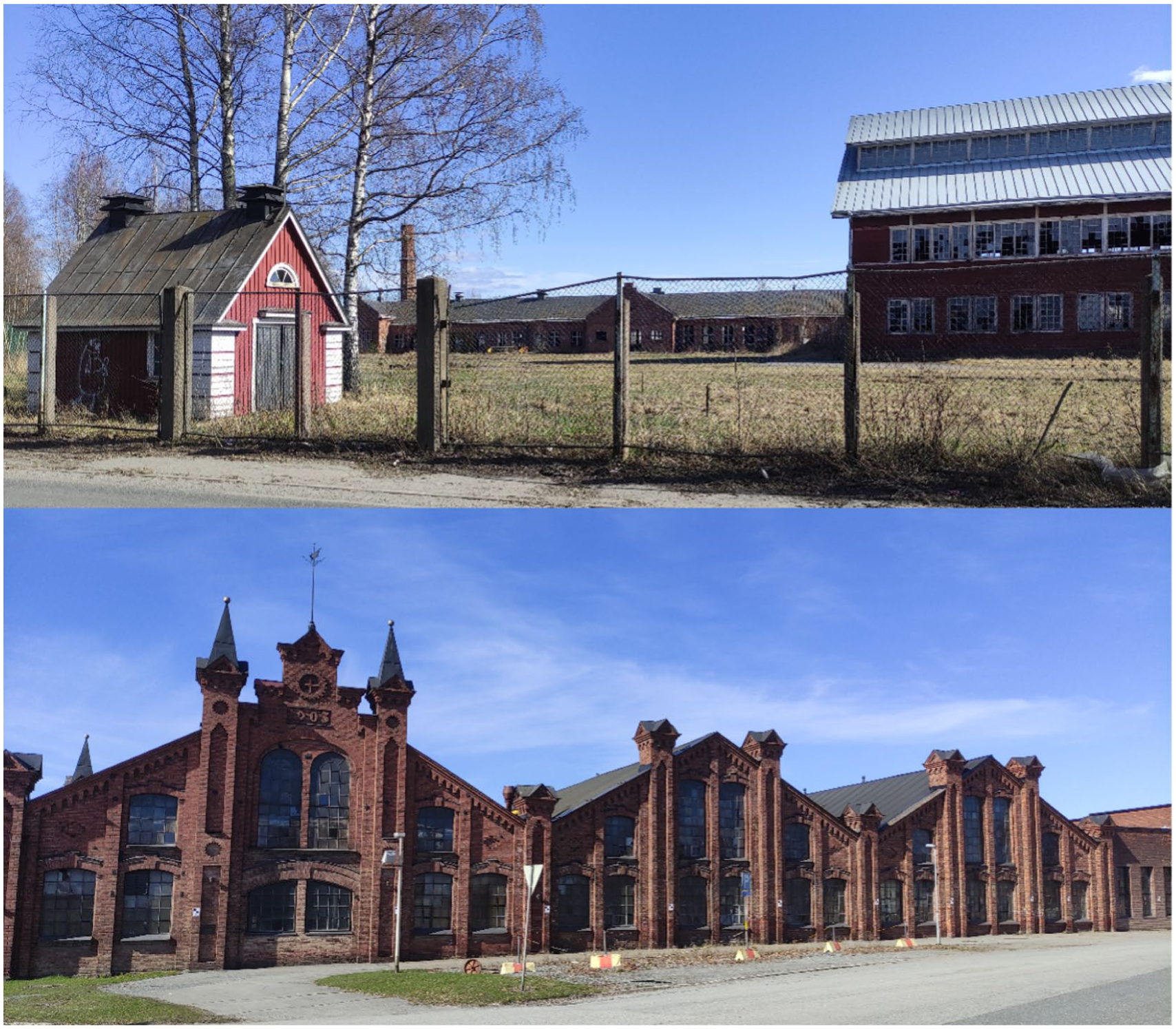
Vacant industrial facilities in Pori (first author, May 2022).
Vacant industrial lots were therefore valued not only as passive assets, but also as sites that could themselves be reactivated and revalorised through circular investment. For example, the construction of the vanadium recovery plant at Pori’s Tahkoluoto port was expected to increase the visibility of the neighbouring Kirrinsanta industrial area and stimulate wider investor interest (Marjanović and Williams, 2024; Reko, 2020). A local politician reflected: We have to adapt the city to the structural change. We don’t have those traditional industries anymore that we used to have. So, we have to create something new, and we have seen, and the political decision-makers agreed, that we are a good basis for a circular economy in the industry for different companies. Different types of companies are welcome here because we have old industrial plots from when we lost all those industries.
In this way, Satakunta’s manufacturing legacy was not only perceived as a basis for transition towards a circular economy, but also as a means of addressing the lingering consequences of industrial restructuring while modernising the manufacturing sector. Although this had been a longstanding policy ambition, conditions of structural shrinkage made it more urgent and, at the same time, more contested. As one local journalist observed: For the past couple of decades, the management and politicians of the city of Pori have been dead-set on acquiring new higher-tech businesses in our city. The crying need for new jobs and increased tax revenues through them has grown year by year. It is said that a drowning man grasps at the last straw. For Pori, that straw has been the circular economy, the overall picture of which, expanding landfills, wastewater emissions and growing piles of industrial by-products, has not even been thought about by the decision-makers. Is this what the people of Pori want for the future? (Hacklin, 2021)
Circular economy as a means of reframing the regional image and restoring public trust in Parkstad Limburg
The emergence of the circular economy agenda in Parkstad provided regional leaders with a new way to reshape the region’s image and offer residents a more optimistic outlook on its present and future. In particular, initiatives that employed circular construction to address shrinkage-related challenges were presented as evidence that Parkstad’s actors were proactive and capable of reshaping regional development prospects rather than resigning themselves to lamenting their “unfortunate destiny,” that is, the Calimero complex. As a result, circular construction increasingly entered political discourse as a means of projecting a more positive image of the region, both internally and externally. Leading this effort was the highly acclaimed SUPERLOCAL project, which was repeatedly invoked as proof of what regional initiatives could achieve in confronting structural decline.
This positive framing of circularity was intended not only to normalise circular practices in a shrinking region but also to strengthen confidence in regional leadership and to counter the widespread lack of trust in public authority among residents (Ritzen et al., 2019). In this way, circularity was used not simply to promote a technically sustainable or environmental approach to urban shrinkage, but to communicate that meaningful action was being taken and that government interventions were producing visible results. A local activist spoke directly to this communicative function: There are many tendencies to use circularity to communicate within the region and to please all the politicians and stakeholders. We must inform and convince the politicians and the people that we are doing good things here and implementing good projects.
SUPERLOCAL was especially important in this regard because its highly visible interventions provided a striking visual language through which regional actors could narrate progress. One of the most publicised moments involved the use of a massive crane to cut out and lift an entire apartment, an event described as “a beautiful spectacle” and widely circulated in project communications to convey a creative and proactive response to pressing regional problems, as shown in Figure 3 (Hannema, 2021). Through such imagery, circular construction became closely associated with visible transformation and with a style of governance that appeared inventive, interventionist, and future-oriented.
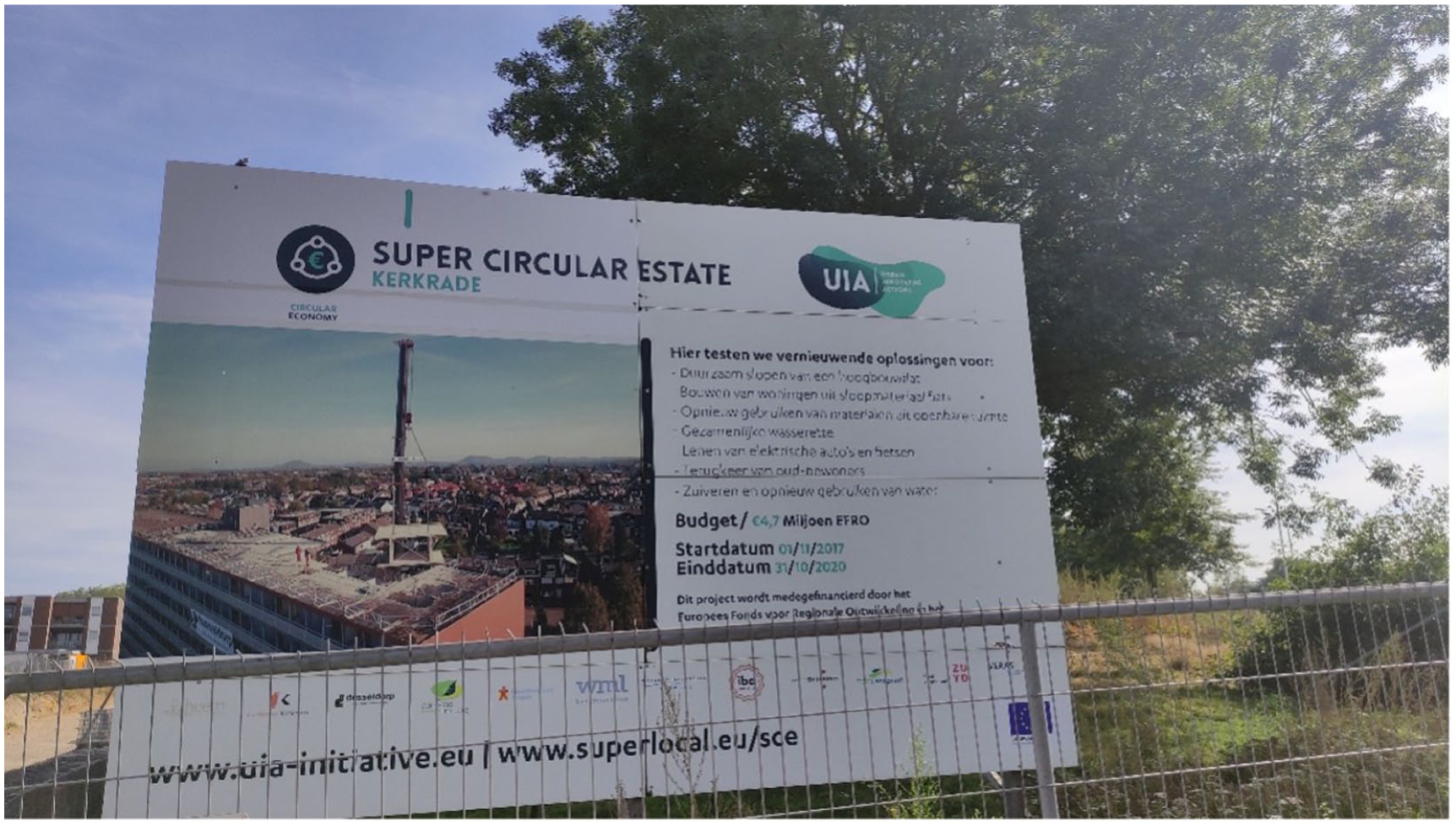
The image of a whole apartment removed from a building as part of SUPERLOCAL proliferated in project communications (first author, September 2021).
At the same time, this narrative was meant to restore hope, optimism, and local pride among Parkstad’s residents. By counterbalancing negative public perceptions and rekindling a sense of regional worth, stories of circular projects such as SUPERLOCAL were used to move beyond a self-pitying mindset and encourage belief in the possibility of change. A regional policy officer explained: What you tend to see now is also a lack of local pride and a lack of hope. Therefore, it is important that circular projects like SUPERLOCAL can really put the region back on the map in a positive way and bring it a good reputation. From a societal point of view, the SUPERLOCAL project is a beautiful one since it has generated a lot of positive reputation. People are hungry for that. As a region, you want them to share your story and to be proud of the things you do.
This effort was further strengthened by the local origins of the project itself. Because SUPERLOCAL emerged from within the region, residents could witness its development firsthand and more readily identify with the circular construction discourse. The project, therefore, did more than promote the use of local resources to tackle regional challenges. It also cast circularity as a local accomplishment, a solution that came from within rather than from more successful cities or external experts. In this way, it supported the idea that urban shrinkage did not have to be addressed by copying metropolitan models from places such as Amsterdam or Rotterdam but could instead be confronted through local ingenuity and experimentation (Housing Europe, 2020).
The narrative of successful circular initiatives was also mobilised externally to counter the negative image of Parkstad as a deficient shrinking region, often reproduced in national policy communications (Marjanović, 2026). Here, broader national and European circular economy discourse amplified the visibility of Parkstad’s efforts in circular construction and helped the governing coalition present itself as a reliable and forward-looking partner to higher levels of government. The success of SUPERLOCAL and its spin-off initiatives was therefore repeatedly cited as evidence that regional actors had moved beyond the limitations associated with shrinkage and had taken an active role in steering regional development. As one local activist observed: The national image of Parkstad benefits the most from this story about the circularity here. In the newspapers, there was a report that the regional minister in the Netherlands said that Limburg should become the circular hub of the country, especially because of the circular construction projects they have been developing in Parkstad.
To reinforce this image of success, regional leaders also highlighted the numerous accolades received by SUPERLOCAL. These included domestic awards such as the “Dutch Construction Prize” and the “Limburg Sustainability Award,” both conferred in 2019 (Van Erp, 2019), as well as international recognition through the “Innovation in Politics Award” in 2020 and the “Guangzhou International Award for Urban Innovation” in 2021 (de Veen, 2020). Publicising these honours helped underline the significance of circular construction and spatial restructuring in Parkstad, while also supporting a broader narrative in which the region was no longer presented as a struggling periphery, but as a place capable of innovation, experimentation, and meaningful change (Marjanović, 2026). At the same time, this external projection also attracted some scepticism. As another activist noted: We need to communicate it to the outside and try to frame the region differently, not as a problem region, but as a region open to experimenting and trying out different forms of urban development. A project such as SUPERLOCAL is very suitable for that. It has been “milked”—overused—in the communication and profiling of the region to the outside.
Circular economy in the service of desired futures
The central finding of this study is that the circular economy operates less as an end in itself than as a means of reinforcing pre-existing images of the future. This pattern reflects an instrumental conception of circularity, consistent with earlier debates that portray it as a way of enhancing efficiency and competitiveness rather than as an end state of transformation (Genovese and Pansera, 2021; Kirchherr et al., 2023). At the same time, the comparison suggests that, in shrinking cities and regions, circular economy agendas can acquire additional significance beyond efficiency and competitiveness by contributing to symbolic revaluation, public legitimation, and future-making under conditions of structural decline. This broader role was especially visible in Parkstad, where flagship projects in the built environment, strategic narratives, awards, and multi-level coordination were mobilised not only to advance circularity itself, but also to improve the region’s image, foster local pride, and position the region more favourably within national and European policy arenas. In Satakunta, by contrast, circularity was more strongly tied to industrial renewal, competitiveness, and investment attraction, while also helping to project a more credible and forward-looking regional future. These findings indicate that circular initiatives in shrinking contexts can function not only as economic or sustainability-oriented interventions, but also as devices of territorial future-making through which actors seek to present places in decline as institutionally governable, politically relevant, and socially open to renewal.
This point becomes clearer when viewed through the lens of goal dependency, namely the idea that collectively constructed futures constrain present choices and channel resources towards enduring objectives (Adam and Groves, 2007; Van Assche et al., 2013, 2014). This perspective is especially useful here because path dependency alone cannot explain why Satakunta and Parkstad, despite sharing broadly similar trajectories of industrial growth and decline, mobilised circular economy agendas in markedly different ways. In both regions, path dependencies shaped which futures appeared plausible and available, but distinct goal dependencies then oriented governance in different directions, as shown in Figure 4. In Satakunta, inherited industrial structures and long-standing ambitions of economic revitalisation were reworked through a dominant future vision of competitive green industrial renewal, which framed circularity as a means of restoring economic relevance through industrial modernisation, investment attraction, and new market opportunities. In Parkstad, by contrast, a history of shrinkage, stigma, and legitimacy deficits interacted with a dominant future vision of regional image repair and territorial revaluation, through which circularity was framed as a way to restore legitimacy, counter negative reputation, and demonstrate ongoing capacity for innovation and renewal. Seen in this way, circular economy agendas did not simply emerge from the past, but were also shaped by the futures to which actors had become structurally committed over time.
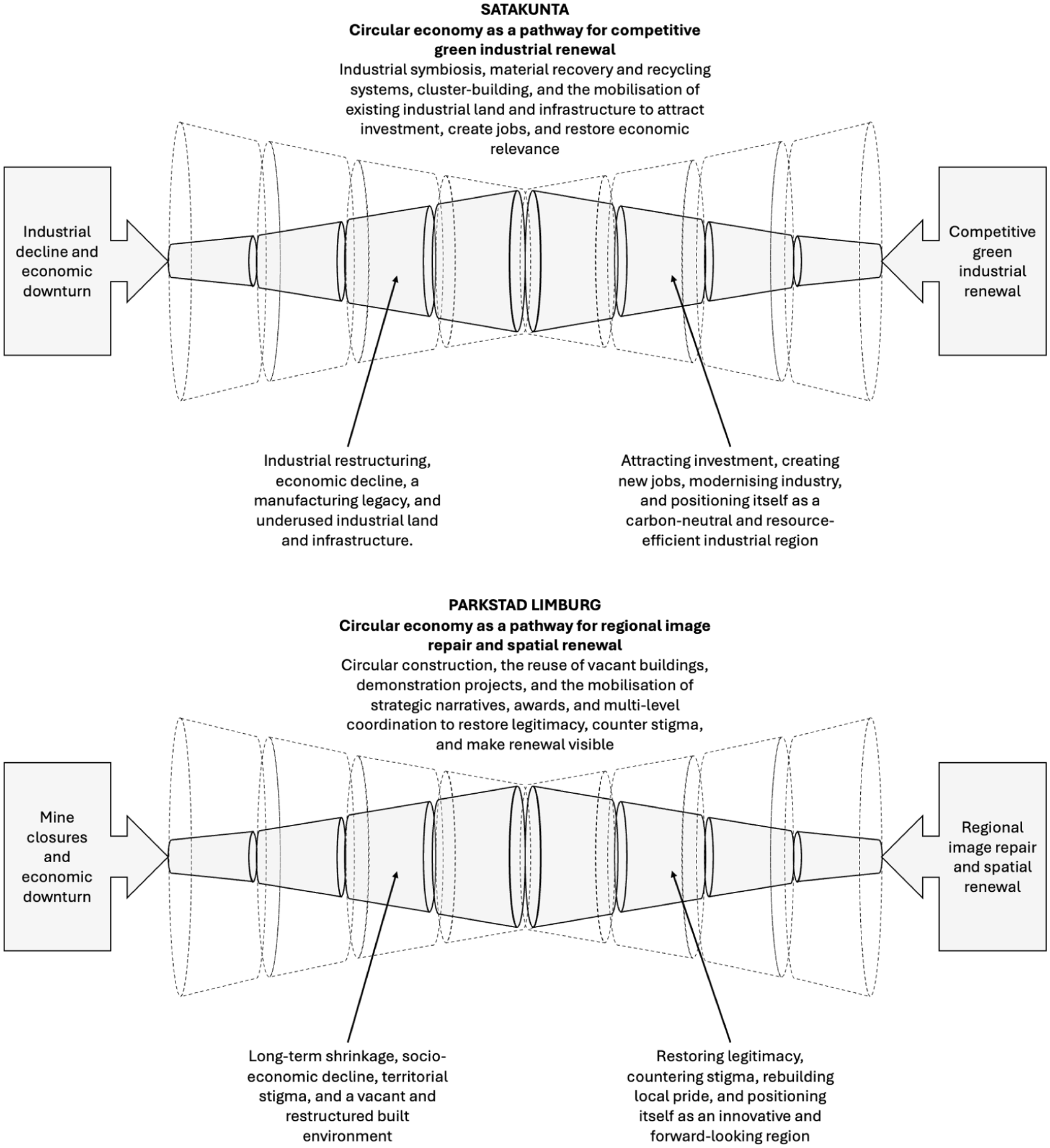
Path and goal dependency in shaping circular economy trajectories in Satakunta and Parkstad.
This interaction between inherited conditions and future-oriented commitments also helps explain why the dominant circularity discourses in both regions appeared relatively coherent while, in practice, remaining selective rather than universally shared. Namely, across both cases, the strongest discursive convergence emerged within governing coalitions, although for different reasons in each region. Municipal and regional policymakers framed circularity as a governance strategy for restoring territorial relevance, political leaders translated it into a broader story of adaptation and renewal, and business actors aligned with it when it opened market, funding, or reputational opportunities, as shown in Table 3.
Dominant visions and actor goals in Satakunta and Parkstad.
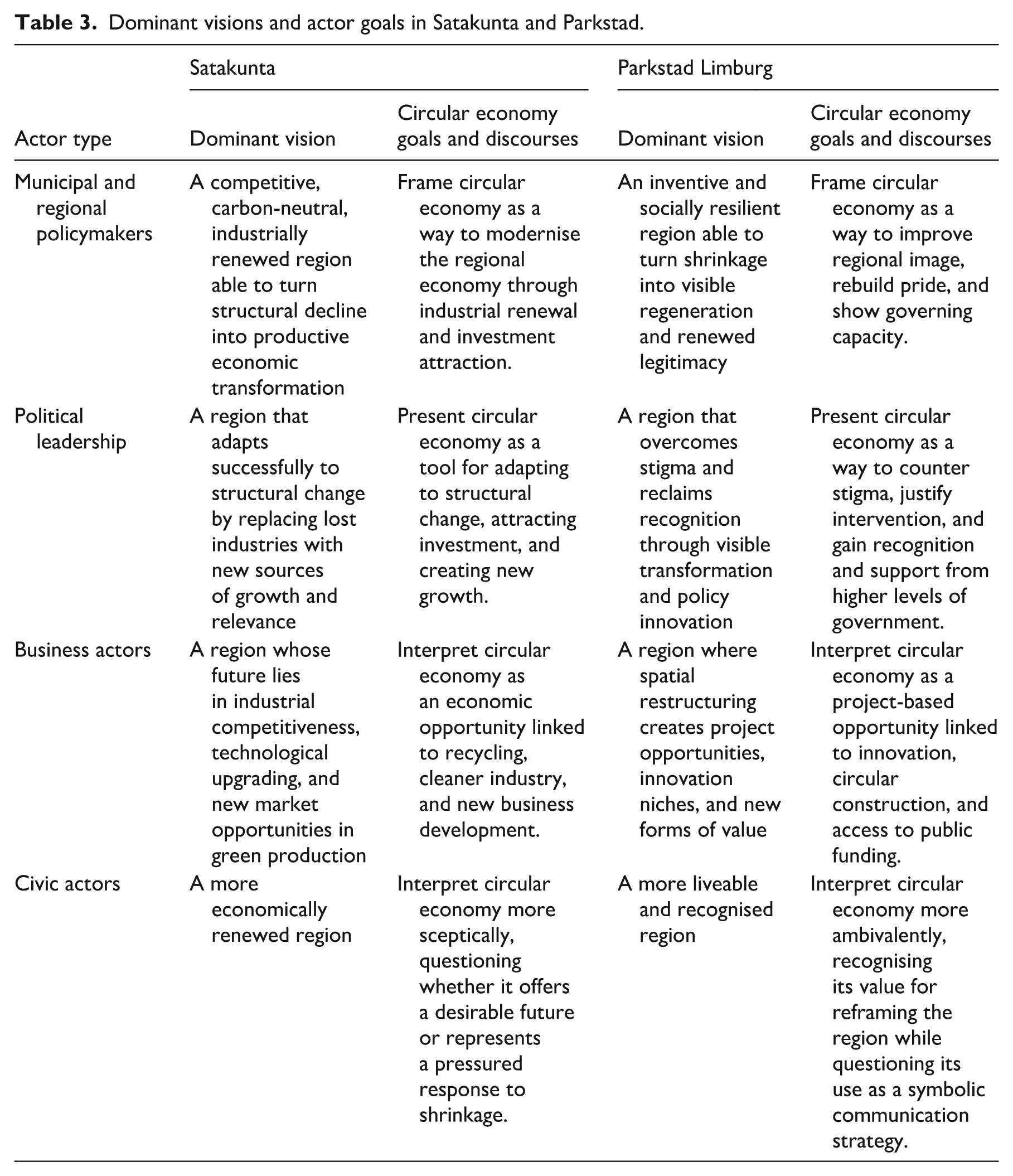
Civic actors, by contrast, remained more sceptical or ambivalent, pointing to the gap between visible circular storytelling and deeper material transformation. In Satakunta, civic and public-critical voices suggested a more contested future in which circular-industrial expansion appeared less as a convincing path to renewal than as a pressured and insufficiently scrutinised response to job loss, fiscal pressure, and urban decline. In Parkstad, meanwhile, civic actors articulated a more ambivalent future in which circularity could help reframe the region’s image, but it also risked functioning as a strategic communication device that amplified symbolic recognition without fully matching the material effects of the envisioned transformation. The apparent coherence of circular economy discourse in both regions, therefore, did not rest on a universally shared transformative vision, but on the predominance of an enduring growth-oriented imagined future in Satakunta and an imagined future of regional image restoration in Parkstad over more sceptical interpretations of how those futures were being narrated and performed through the circular economy agenda.
Seen in this light, the comparison between the two cases also shows how distinct imagined futures were translated into different circular economy pathways and policy configurations. In Satakunta, the dominant future vision of competitive green industrial renewal took a more productive-material form, centred on industrial symbiosis, material-recovery plants, logistics infrastructures, and cluster policies geared towards competitiveness and growth. In Parkstad, by contrast, the dominant future vision of image repair and territorial revaluation took a more symbolic-institutional form, centred on flagship projects in the built environment, strategic narratives and awards, and intergovernmental coalitions mobilised to reframe the region’s image and strengthen legitimacy. While these configurations differed, both cases suggest a similar dynamic in which enduring visions of the future oriented coalition-building and policy choice, and were then reinforced through funding, recognition, and visible outcomes. Circular economy thus functioned not as an end in itself, nor merely as a flexible repertoire of tools and images, but as a politically malleable signifier through which local and regional coalitions assembled support around territorially specific priorities, governance roles, and imagined futures (Bourdin and Jacquet, 2025; Williams, 2019).
Conclusion
This article has examined how circular economy agendas are mobilised in shrinking regions and what roles they play in shaping regional futures. The comparison of Satakunta and Parkstad shows, first, that the circular economy does not function primarily as an end in itself, but as a means of advancing broader territorial goals. In Satakunta, it served mainly the goals of industrial renewal, competitiveness, and investment attraction. In Parkstad, it was used more strongly in support of spatial restructuring, image repair, and legitimacy-building. In both cases, circularity gained traction not because it carried a single predefined meaning, but because it could be connected to already established priorities and translated into territorially specific futures.
Second, the analysis shows how these agendas were stabilised through governance processes shaped not only by inherited trajectories, but also by commitments to particular imagined futures. This is where the concept of goal dependency adds analytical value. While path dependency helps explain how past decisions and inherited development paths structure what futures appear plausible, goal dependency helps explain how certain futures become politically binding and begin to orient present choices. In Satakunta, circularity became part of a longer-standing project of competitive green industrial renewal, supporting efforts to modernise manufacturing, attract investment, and restore economic relevance. Conversely, in Parkstad, circularity gained traction as a means of image repair and territorial revaluation, helping frame the region as innovative, proactive, and still capable of renewal under conditions of shrinkage. The circular economy thus took different forms not simply because the two regions had different pasts, but because actors in each case became structurally committed to different futures.
Third, the paper shows why the circular economy may appear particularly relevant in shrinking regions. These contexts often contain underused land, obsolete industrial sites, vacant buildings, and other redundant assets that can be repurposed through circular practices. But their relevance is not only material. Shrinking regions also face pressures to confront visible decline, restore credibility, and articulate convincing futures. For governing coalitions and regional actors, this makes the circular economy especially appealing compared with more explicitly environmental concepts or more openly critical alternatives, because it brings together material reuse, economic opportunity, technological modernisation, and ecological responsibility within a single policy framework. Its appeal is amplified by its current policy momentum, particularly in the EU, where circularity is tied to major funding streams, collaborative platforms, and visible forms of recognition, from Horizon Europe and LIFE funding calls to stakeholder initiatives and awards. The circular economy can therefore be presented at once as a practical solution to material problems, a credible development strategy, and a publicly appealing sign that the region remains active, investable, and capable of shaping its own future.
At the same time, this dependence on supportive funding environments and policy momentum raises questions about durability once subsidies end or wider political and geopolitical conditions shift. The longer-term stability of circular initiatives in shrinking regions thus depends on how deeply they become institutionally, fiscally, and politically embedded. Yet, this process of embedding may also generate new path dependencies, locking regions into particular coalitions, policy instruments, and territorial futures even as external conditions change.
This insight helps explain why circularity in both case studies was advanced through highly visible projects, strategic narratives, and branding interventions that stabilised particular imagined futures and assembled support around them. But such visibility also risked making certain pathways, especially those centred on economic growth and renewed attractiveness, appear more central, coherent, and transformative than they necessarily were. In both cases, dominant circular visions left limited room for sufficiency-oriented approaches, strategies centred on reducing material throughput, or more alternative urban and regional metabolic imaginaries less closely tied to competitiveness, visibility, and attractiveness. In this way, the circular economy functioned not only as a policy agenda but also as a vehicle for place-based storytelling, coalition-building, and the selective narration of regional futures. The analysis, therefore, cautions against treating circularity in shrinking contexts as a uniformly desirable or inherently transformative pathway. Rather, its meaning, uptake, and effects depend on the territorial futures to which it becomes attached and the actors able to define those futures.
Taken together, these findings suggest that circular transitions should be analysed not only in relation to inherited conditions, but also in relation to the futures that actors seek to secure through them. By bringing goal dependency into view, this article underscores that the governance of the future is as constraining as the governance of the past, demonstrating that imagined futures can also acquire institutional force, shape present choices, and stabilise particular trajectories. This is especially important in shrinking cities and regions, where demographic decline, economic restructuring, and struggles over territorial relevance intensify the stakes of future-making. The implication is not that other shrinking regions should replicate either of the pathways identified here, but that they should approach circular strategies more reflexively, asking whose goals are being stabilised, which futures are being marginalised, and whether more transformative alternatives are being closed off. Only through such reflexivity can circular strategies remain adaptive, inclusive, and genuinely transformative, rather than becoming captured by the inertia of either history or vision.
Footnotes
Acknowledgements
The authors would like to express sincere gratitude to Joanna Williams and Claire Colomb for their invaluable support in the development and completion of this research.

Funding
The authors disclosed receipt of the following financial support for the research, authorship, and/or publication of this article: The research presented in this article was sponsored by the UCL Research Excellence Scholarship (previously known as GRS and ORS scholarships).
Declaration of conflicting interests
The authors declared no potential conflicts of interest with respect to the research, authorship, and/or publication of this article.