







Abstract
Intercountry adoption requires adoptive parents to assume their parenthood as well as to acknowledge the cultural and ethnic origins of their child. Narratives are effective means to help individuals cope with non-normative transitions, including adoption, as they allow them to make sense of and legitimise their experiences. This qualitative study sought to extend knowledge about the value of using narrative methods with adoptive families to explore how the language they employ determines the ways in which they perceive situations and vice versa. It uses the word-driven textual analysis software T-LAB to identify key topics highlighted by parents and analyse them in relation to specific variables. Child characteristics, such as gender, age at adoption and birth country, and family variables, such as mother’s and father’s narratives and first or not-first parenting experience, were considered. From the 37 narratives sampled, those parents adopting from Asia and Eastern Europe, mothers and first-time parents faced the most challenges.
Keywords
Introduction
In the last few decades, most western countries have seen a large influx of internationally adopted children. Despite a recent decrease in numbers, Italy is still a major receiving European country in this respect: in 2019, 1205 foreign minors were authorised to enter for adoption purposes (Commission for Intercountry Adoptions, 2019).
Becoming a parent brings with it profound changes in individual well-being, couples’ relationships and family and social relations, more than any other stage of the family lifecycle. Intercountry adoptive parents, however, have to deal with additional issues that are unique to the adoption process and the history of their child (Canzi, et al., 2019a; Palacios and Sanchez-Sandoval, 2006). One of the most critical tasks stems from inner legitimation, the so-called ‘entitlement process’ (Cohen, Coyne and Duvall, 1996), where parents are expected to fully assume their new role and legitimise themselves as parents of that particular child. This, in turn, will establish them over time as the child’s own parents. Although this process of inner legitimation occurs in biological parenthood, in the case of adoption it may be more difficult due to the absence of blood ties and missing out on the pregnancy phase and early stages of the child’s life. While the legal right to be the parent of an adopted child is conferred by the court, the inner legitimation process requires parents to feel comfortable with their roles as mother and father and to gradually acknowledge and turn the child’s difference into something that, in itself, becomes part of the family (Cigoli and Scabini, 2006). According to Brodzinsky and Schechter (1990), adoptive families use various coping strategies to manage features related to the child’s origin. At one extreme, differences are rejected, banished and denied and the adoptive child is assimilated to a biological child; at the other, parents tend to insist on distinctions, experiencing the child as an outsider. In the middle of this is an area where differences are both acknowledged and incorporated into the family. In intercountry adoptive families, this divergence of origin includes ethnic factors, such as traditions, values, social class, religion and, in some cases, race (Ferrari, et al., 2015; Ferrari, et al., 2017; Lee and Park, 2019; Montgomery and Jordan, 2018). The ability to acknowledge these kinds of differences is an important aspect of parental cultural socialisation regarding the child’s background and intercountry adopters are expected to accept and actively support this process (Anderson, et al., 2015).
As intercountry adoption requires adoptive parents to legitimise their parenthood in addition to managing the different origin of their child, communication between family members plays an important role in the process of legitimisation and shaping family identity. Galvin (2006) explains that adoptive families are examples of the ‘discourse-dependent family’ in that they are more reliant on communication to construct and manage their identity and use language to constitute and reconstitute themselves as a family (Colaner and Soliz, 2017; Grotevant, et al., 1999). They tend to be more engaged in discursive practices than traditional families as they have to explain the adoption process, create a parent–child relationship despite the lack of genetic link, manage family bonds by including birth relatives, at least at a symbolic level, and help their child to understand his or her place and role within the family (Colaner and Kranstuber, 2010). Communication about adoption among family members is not limited to providing information; it seeks to share meanings and emotions related to the history of the adoption. Parents play a pivotal role as meaning-makers, helping their children cope with the adoption transition. For instance, they do this by creating stories about how and why the adopted child entered the family, so influencing the child’s sense of place and history (Krusiewicz and Wood, 2001), by giving names and titles indicating familial status that build internal family identity (Suter, 2012), by openly discussing race and ethnicity and by acknowledging the child’s origin and cultural background. All of this strengthens the adoptees’ ethnic identity (Anderson, et al., 2015; Galvin, 2006; Harrigan, 2009; Hu, Zhou and Lee, 2017; Kim, Reichwald and Lee, 2012). Some studies have also suggested that parents’ ability to talk about and create a narrative around adoption helps their children to manage their self-concept and promotes their psychological well-being (Colaner and Kranstuber, 2010; Kranstuber and Koenig Kellas, 2011). By sharing information, thoughts, feelings and emotions about adoption, by encouraging their children to ask questions and by empowering them to normalise their experiences and face uncertainty, parents can encourage their child’s connection with their origins and enable them to become more secure about their adoptive identity, thus facilitating the legitimation process (Brodzinsky, 2011; Grotevant, et al., 2000).
Self-report scales assess specific and pre-determined dimensions of the adoptive process, but the construction of meaning about the inner experience falls beyond the scope of these instruments. Narratives represent an effective way to fill this void and to make sense of it (Baxter, et al., 2014). The process of constructing them helps individuals to organise personal events in a coherent way and gain a sense of control and manageability over them (Pennebaker and Seagal, 1999). Thus, they may be particularly useful when individuals cope with non-normative experiences, such as adoption, allowing them to become aware of and to legitimise those experiences. Few studies have investigated how adoptive parents write about their adoption, and even fewer have used a qualitative approach to analyse them (Baxter, et al., 2012; Baxter, et al., 2014; Grotevant, et al., 1999).
To fill this gap, the current study sought to extend knowledge about the narrative process within intercountry adoptive families during the first year after adoption. Because little is known about parents’ subjective experiences and meanings during this period, a qualitative approach was used. The aim was to identify key topics in the parental narratives and to analyse them in relation to variables known to be associated with the process of adjusting to adoption. Selected adoptee characteristics, namely gender, age at adoption and birth country, and family variables, such as mothers’ or fathers’ narratives and whether it was their first parenting experience, were investigated in the analysis. These factors have been found in research to influence the process of adjusting to adoption. Specifically, being a boy and of older age at placement have been found to be associated with problem behaviours in adopted children (e.g. Juffer and van IJzendoorn, 2005; Juffer, Stams and van IJzendoorn, 2004) and to poor parent–child relationships (e.g. Tan, et al., 2015). With regard to children’s birth country, findings are more inconsistent with children adopted from South East Asia showing better outcomes than those from elsewhere (Lindblad, Weitoft and Hjern, 2010; Pomerleau, et al., 2005; Welsh and Viana, 2012). However, these studies were more focused on outcomes and behaviours than on processes and experiences, and mostly based their conclusions on analyses of parents’ self-report questionnaires. The current study sought to shift the focus and consider the role of these characteristics in shaping parental narratives that illuminate adoptive parents’ subjective experiences. Moreover, past research on the adoptive population has revealed that mothers’ and fathers’ perceptions may be different and may show different trajectories (Canzi, et al., 2019a; 2019b; Canzi and Rosnati, 2018; Ferrari, et al., 2015; Rosnati, Montirosso and Barni, 2008; Rosnati, Ranieri and Barni, 2013). Thus, similarities and differences between mothers’ and fathers’ narratives were also considered, along with whether their parenting competence increased according to the more children they had (Whiteman, McHale and Crouter, 2003).
Materials and method
Sample narratives
For this study, 37 narratives (written interviews) were sampled. Eighteen were written entirely by the adoptive mother and 19 by both parents. In the latter case, mothers and fathers were asked different questions and each responded to them individually. Thirty families were first-time intercountry adopters and seven already had one or more biological or adoptive children. The parents were aged between 34 and 55 years old (the mean age for mothers was 43.1; SD = 4.4, and for fathers 43.7; SD = 4.3). Regarding the level of education, 13% of the mothers and 14% of the fathers had only an elementary level of education (primary school), 34% of the mothers and 54% of the fathers had a medium level (secondary school) and 53% of the mothers and 32% of the fathers had a university or post-graduate qualification. In accordance with Italian law, all the adoptive parents were heterosexual couples, married for at least three years, without any separation pending or likely, with a maximum age difference of 40 and a minimum of 18 years between them and their child. They also had to display a capacity to educate and to provide for their child. Finally, all the parents were Caucasian and had adopted children who were born in a foreign country: 13 from Africa, 11 from Eastern Europe, nine from Asia and four from Latin America. The 37 adopted children (16 girls and 21 boys) were, on average, 4.1 years old (SD = 2.8) when placed, with 20 aged between zero and three years, nine between four and six years and eight over seven. These figures are very similar to the overall statistics of intercountry adopted children in Italy (Commission for Intercountry Adoptions, 2019).
Based on our theoretical framework, we selected nine open questions to ask parents, as follows:
‘Tell us about the first meeting with your child. How did you feel and how did your child react?’ ‘What do you remember about the trip to your child’s birth country?’ [places, people, impressions…] ‘Tell us about something special your child did with Mum.’ ‘Tell us about something special your child did with Dad.’ ‘Have you had the chance to talk about adoption with your child? How? And has your child told you and/or asked you something about his/her past? If so, what?’ ‘How do you imagine your child when grown up?’ [wishes and worries] ‘Tell us about a situation, a characteristic or a behaviour of your child that has changed over time.’ ‘During the period of preparation before adoption, waiting for your child to come, what source of help was the most important for you?’ ‘In your opinion, which differences and similarities are there between adoptive and biological families?’
Participants were recruited via an adoption agency that was involved in a monitoring study during the first post-adoption year. 1 At the time of data collection, all parents were supported by public social services for one year after placement, as required by Italian law. Parents were seen within two months of the children’s arrival in the family and were given a questionnaire to be returned one year later. All parents gave informed consent, and anonymity and data confidentiality were guaranteed. The study was approved by an Ethical Committee and followed the APA ethical guidelines for human research (www.apa.org/ethics/code/).
Data analysis
The narratives (written interviews) were analysed using the word-driven textual analysis software T-LAB (Lancia, 2004). This belongs to the family of Computer Assisted Qualitative Data Analysis Software (CAQDAS) and allows for a number of different analyses to be performed on a given text (the corpus), both at an exploratory as well as an interpretative level, so highlighting its key features. It is based on a mixed method (i.e. quantitative and qualitative) and comprises a set of linguistic, statistical and graphical tools that enable a thematic approach to text analysis, leading to an exploration of the relationships between words (called lemmas). Its proponents suggest that since the software is based on various mathematical algorithms, the results are more reliable than those obtained from more traditional paper/pencil analysis. According to its author, the software presents both strengths and weaknesses: ‘It is powerful because it looks for similarities in a “human-like” way and for this very reason it is also weak: in fact, the way data are “partitioned” into groups needs the human being as a sort of referee’ (Lancia, 2012: 4). It is important to note, however, that T-LAB is a question-oriented software and there is a strong relationship between the research questions, how the text is segmented and indexed and the software output.
In this study, the corpus (the entire text) comprised 37 narratives. To investigate the effects of specific variables on parents’ narratives, it was divided into groups (called sections) depending on the variable under consideration. For example, if the focus is whether children’s gender affects the parental experience, the texts are divided into two sections: narratives of parents of boys and narratives of parents of girls.
Five variables were investigated and a separate analysis conducted for each one. These were:
adopted child’s age at adoption (three categories: infants – from zero to three years, preschool – children aged four to six years, and school-age children aged seven years and over); adopted child’s birth country (four categories: Eastern Europe, Asia, Africa and Latin America); adopted child’s gender (two categories: male and female); parent who wrote the narrative (two categories: mother and father); parenting experience (two categories: first and not first).
The corpus was then ‘cleaned’ to eliminate ambiguities and repetitions and in its final form comprised 855 lemmas.
The analysis produced the following results.
Results
Correspondence analysis for child’s age at adoption
In order to explore if the experiences of adoptive parents were significantly different depending on variable (1), the adopted child’s age at adoption, a correspondence statistical analysis was used. This extracts new summary variables called factors. The first factor identifies from a linguistic point of view differences between the infant, and the preschool and school ages.
Table 1 shows the lemmas that characterise each of the three age groups. The software uses a specific statistical test to measure the significance of each lemma but the relevant point is that the higher the values, the more important is the lemma in defining the category.
Correspondence analysis – child’s age at adoption.
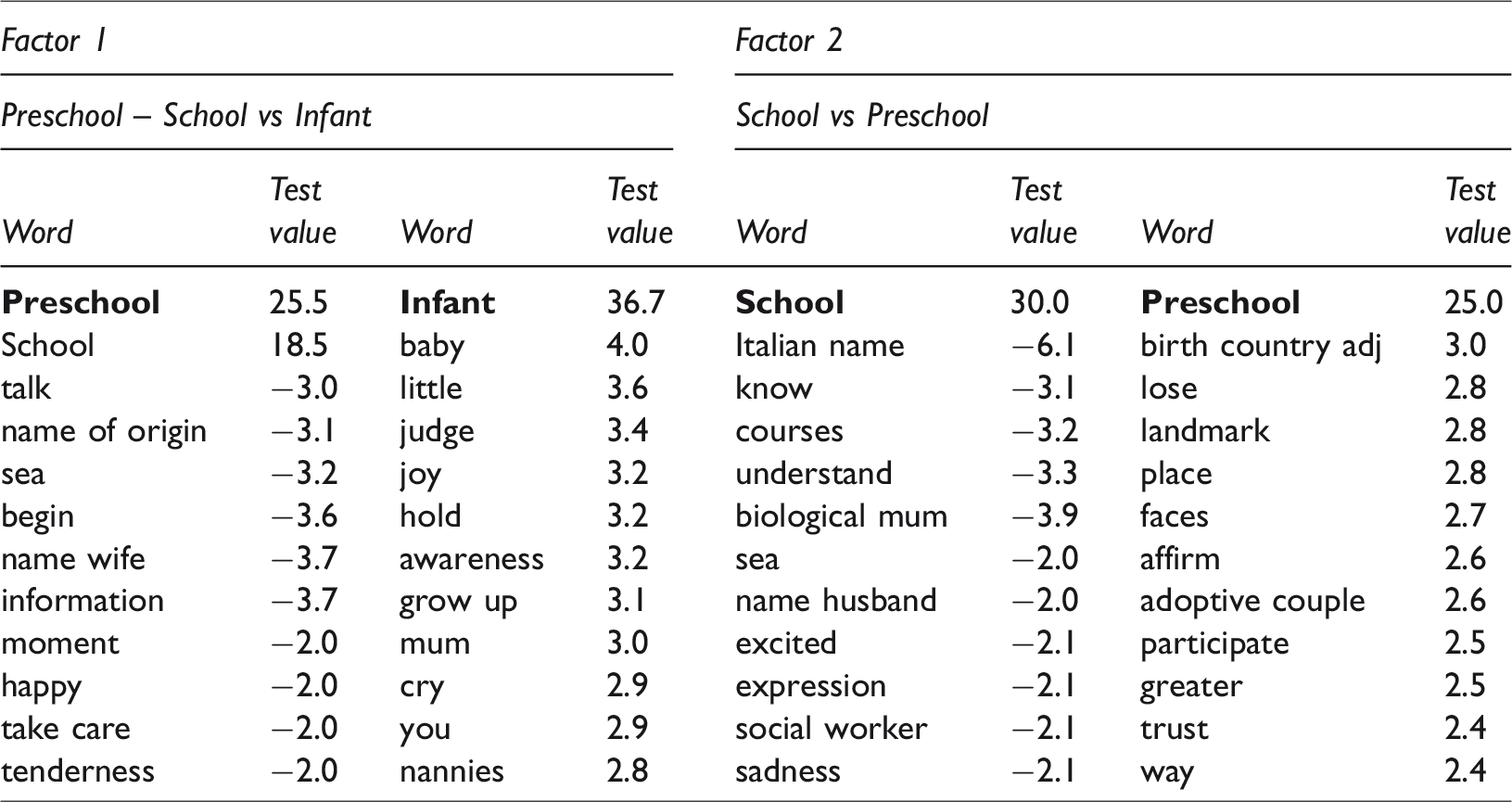
The most frequent lemma associated with the infant age category is ‘baby’, followed by others that refer to the common experience of any new parent with a newborn child (e.g. ‘little’, ‘hold’, ‘grow up’, ‘mum’, ‘nannies’). This experience is marked by positive emotions and feelings (e.g. ‘joy’). The specific properties of preschool and school age categories can be more clearly identified by considering the second factor. The preschool age category is characterised by lemmas that refer more to the child’s birth country and past (e.g. ‘birth country’, ‘place’, ‘faces’), but also express a high and future-oriented commitment by the couple to the adoptive process (e.g. ‘participate’, ‘trust’, ‘landmark’). In the school age category, the lemmas primarily refer to the need to ‘understand’ and ‘know’ (also ‘courses’ can refer to this semantic world). For this group of parents, findings also reveal an ambivalent attitude toward the child’s origin; some lemmas express the desire to include the child in the new family by giving him or her an ‘Italian name’ while others express a strong reference to the child’s origin (‘biological mum’). In addition, the emotions reported are more ambivalent (‘excited’, ‘sadness’).
Correspondence analysis for child’s birth country
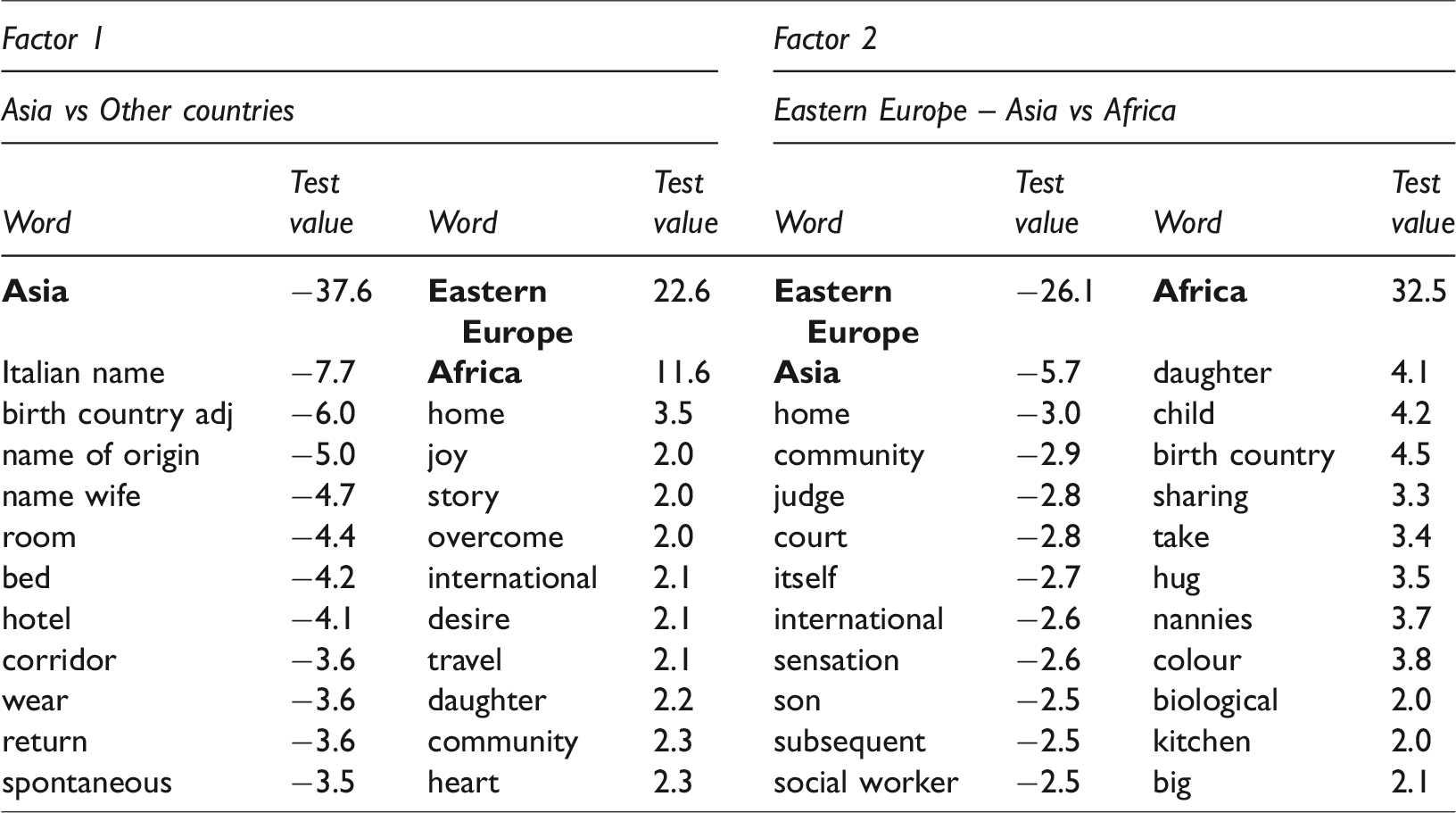
To explore whether the experiences of adoptive parents were significantly different depending on variable (2), adopted child’s birth country, a correspondence statistical analysis was again used. The first factor identifies a difference between the Asian experience and all the other countries (Table 2). The Asian experience appears to contain references to the concrete experience of the journey (‘bed’, ‘room’, ‘hotel’, ‘corridor’). The second factor also identifies a difference between ‘Eastern Europe’ and ‘Africa’ (Table 2). It can be seen that parents who adopted children from Africa talked about their child using relational terms such as ‘daughter’, which may express the need to legitimise their role as parents of that child as well as the need for their parenting to be legitimised by others; indeed, their narratives are illustrated by words with strong emotional connotation (‘hug’, ‘sharing’, ‘kitchen’), in which the memories of the journey are still vivid (‘colour’). In contrast, Eastern Europe is associated with lemmas that refer more to the legal aspects of the adoption process (‘judge’, ‘social worker’, ‘court’, ‘community’, ‘international’). With regard to adoptions from Latin America, the analysis did not reveal any specific linguistic characteristics.
Correspondence analysis – birth country.
Specificity analysis for child’s gender
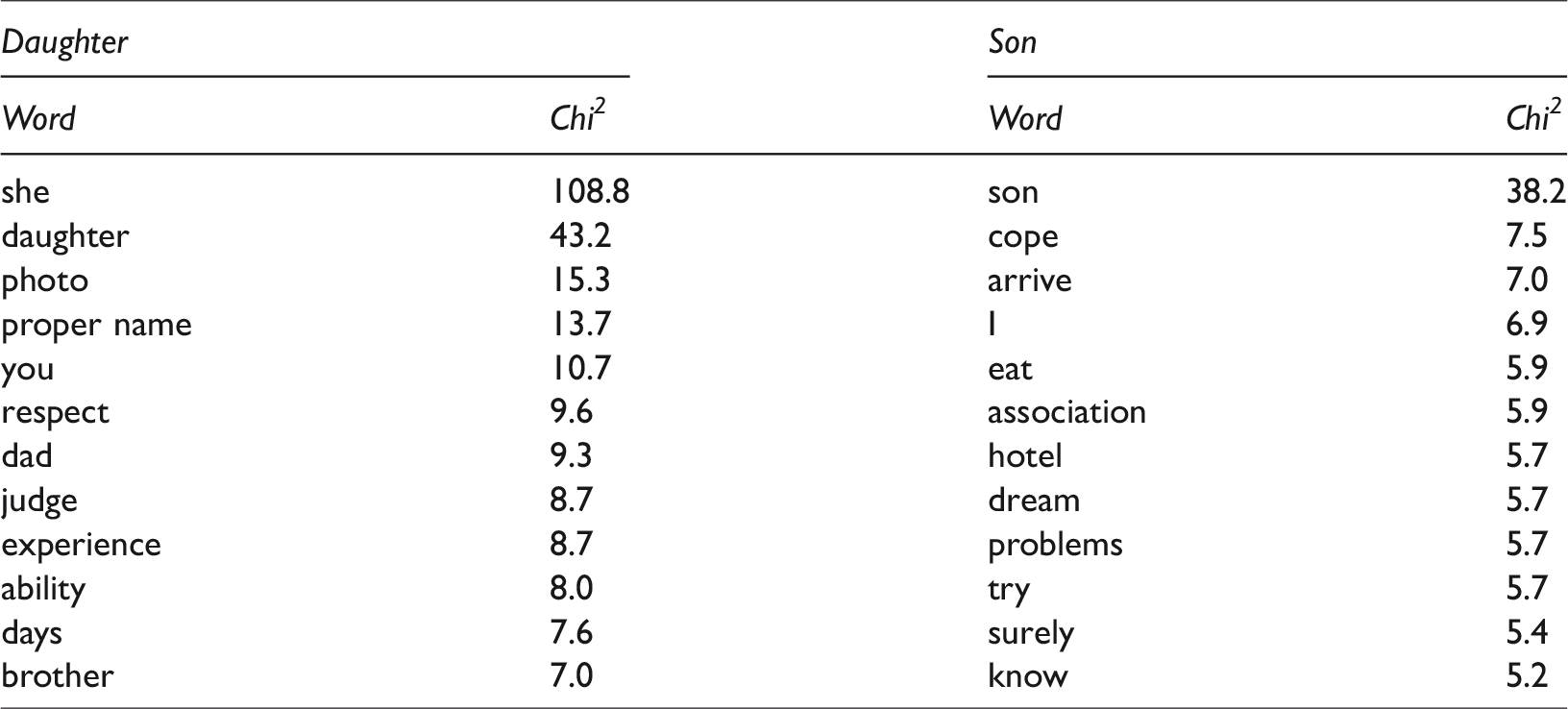
In order to explore whether the experiences of adoptive parents were significantly different depending on variable (3), adopted child’s gender, specificity statistical analysis was used. This compares different sections divided by the variable explored (e.g. parental experiences of boys vs parental experiences of girls), and allows the identification of lemmas that are typical, i.e. more frequent, to a specific part of the text. A chi-square statistic is provided for each one: the higher the value, the more significant the lemma within that part of the text. The analysis showed that although the widely used lemmas are ‘daughter’ and ‘son’ (Table 3), in families with a female child the most frequent lemma refers to daily parent–child interactions (‘photo’, ‘dad’, ‘experience’, ‘days’, ‘brother’, ‘ability’), whereas in families with a boy, parents write about their child using terms such as ‘cope’, ‘problems’, ‘try’ and ‘know’ which indicate more challenging parent–child interactions.
Specificity analysis – child’s gender.
Specificity analysis for parent’s gender
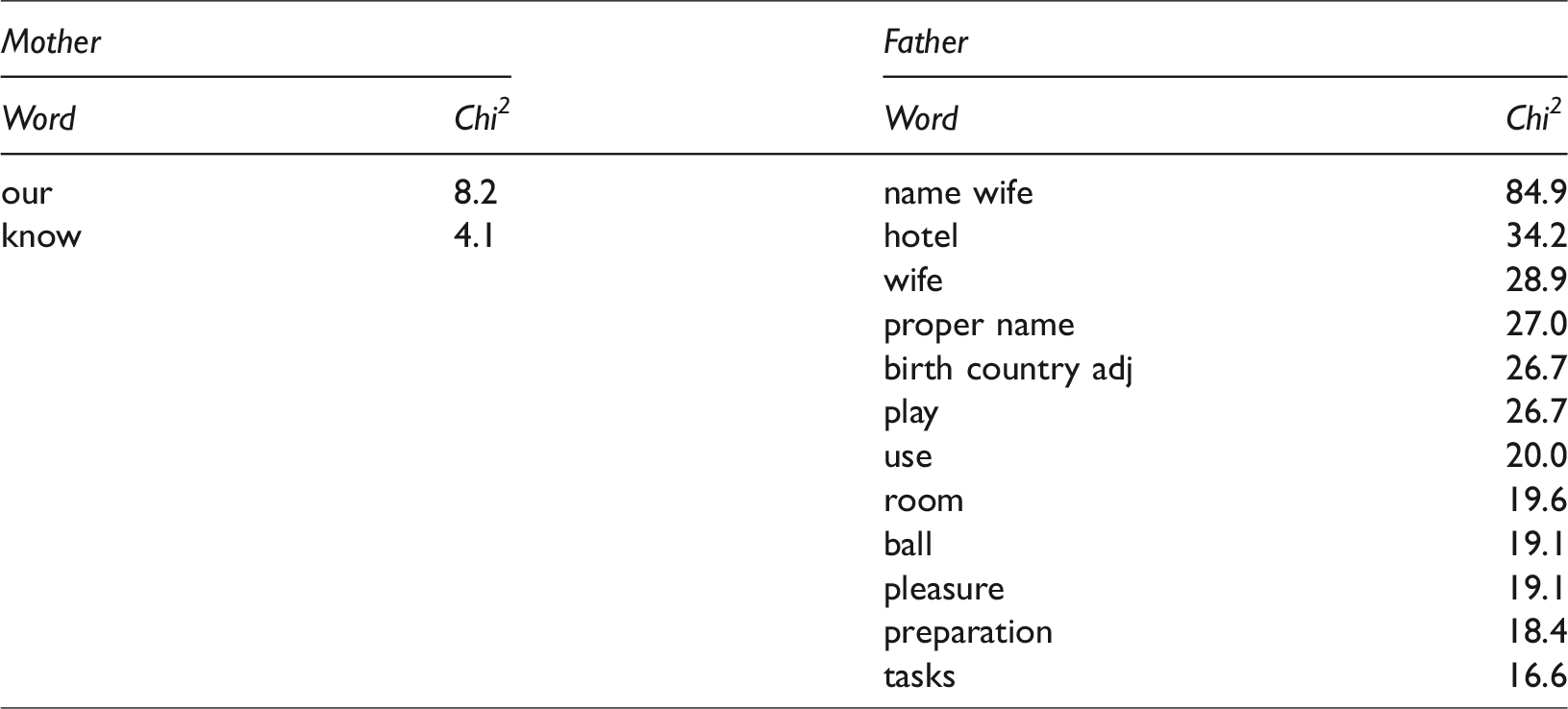
To explore if the experiences of adoptive parents were significantly different depending on variable (4), parent’s gender, specificity statistical analysis was performed. This compares mothers’ and fathers’ narratives and shows that mothers use a less rich and variegated language than fathers. As shown in Table 4, in mothers’ narratives there are only two typical, that is more frequent, words (‘our’ and ‘know’), whereas in fathers’ narratives there are a larger number of typical lemmas. Considering that most narratives (and thus the greater part of the text) were written by mothers, these findings suggest that the fathers’ experiences are more varied and richer than the maternal ones. Specifically, mothers express a higher need for knowledge (‘know’), talking about an experience that is emotionally uncertain and that has to be rationally controlled, whereas fathers use terms that refer to a more practical and concrete dimension of parenting, such as daily activities with the child (‘play’, ‘ball’, ‘room’) associated with positive emotions (‘pleasure’).
Specificity analysis – mothers’ vs fathers’ narratives.
Specificity analysis for first-time or not-first-time parental experience
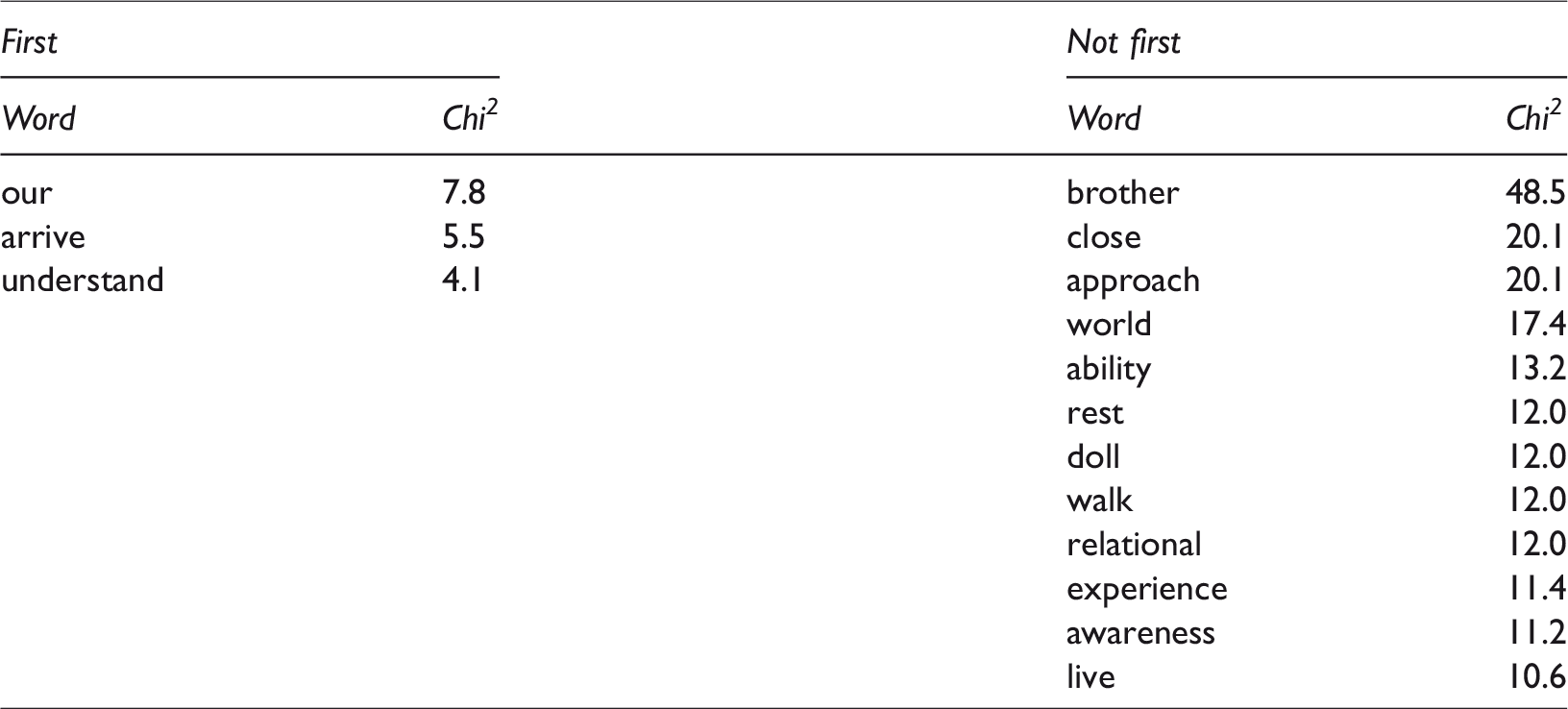
To see if the experiences of adoptive parents were significantly different depending on variable (5), first-time or not-first-time parental experience, a specificity statistical analysis was again used and evidenced that parents for whom it was their first experience use a language organised around only three lemmas: ‘our’, ‘arrive’ and ‘understand’ (Table 5), but it is important to note that most of the narratives were written by first-time parents. It is likely that they felt less prepared for the challenges of intercountry adoption and display a strong need to ‘understand and know’, cognitive verbs that are similar to those found for the mothers in the parental gender analysis. In contrast, in the case of parents for whom it was not their first parental experience, a larger number of typical lemmas emerged. There is a proliferation of terms referring to daily interactions with the child (‘experience’, ‘walk’, ‘doll’, ‘brother’), experienced as ‘close’ and ‘relational’. This ‘approach’ is likely to reflect the ‘ability’ and ‘awareness’ arising from their past child-rearing experiences.
Specificity analysis – first parenting experience versus not-first parenting experience.
Discussion
This study has sought to expand current knowledge regarding the narrative process within intercountry adoptive families. The focus is on the process of ‘making meaning’ in this new and challenging experience through the analysis of parental narratives written during the first year following adoption. The key topics in these were analysed according to specific characteristics of the adopted child (i.e. gender, age at adoption and birth country) and family variables (i.e. mothers’ and fathers’ narratives, whether or not it was their first parenting experience).
The initial conclusion has to be that the parental narratives highlighted the complexity and the variability in the construction of meaning in the adoption process. More specifically, analysis shows that the child’s age at adoption significantly shapes parental experiences. Parents of children adopted below the age of four often use language referring only to joyful experiences and to newborn-parent activities (e.g. ‘hold’). The most frequent word associated with this age group is ‘baby’, indicating that adopting a small child allows parents to live and feel their child only as a ‘baby’ with little, if any, reference to his or her past history, birth family or previously established social bonds. The language patterns of these adoptive parents tend to be very similar to non-adoptive families with any potential differences unacknowledged (Brodzinsky and Schechter, 1990). On the one hand, this strategy may have some benefits during this early phase as it facilitates the reciprocal adjustment process to adoption; on the other, it may hinder the development of realistic expectations about the child, particularly if it is used for a long time. In contrast, parents who adopted children over three years of age show greater awareness of their child’s difference from the very start. They are more likely to refer to their child’s birth country, so demonstrating awareness of their child’s origins, and look more to the future by encouraging the process of building family belongingness which is associated not only with positive emotions but also with challenges and worries. Besides this, older children are more prone to question their identity and origin.
Parents who adopted school-aged children are different again and use much more ambivalent language. Two of the most frequently used words are the child’s Italian name, thus indicating an attempt to facilitate their child’s assimilation, and reference to the child’s biological mother, thus highlighting the fact that the child’s origin is different from their adoptive family. As suggested by previous studies (Ferrari, et al., 2015; Reinoso, Juffer and Tieman, 2012), from the very start, adopting an older child renders the need to integrate the child’s foreign background into a coherent personal and family identity, and strongly activates the adoptee’s past. Parents are faced with these psychological challenges more than in the other two groups.
Parental narratives also revealed further some specificities with regard to adoptees’ birth countries. Compared to those adopting from Asian countries, parents who adopted a child from Africa are more prone to using relational terms and words with stronger emotional connotations: the memories are vivid, intense and colourful. In contrast, the Asian experiences appear to be characterised by more factual lemmas related to concrete aspects of the journey (e.g. the actual trip that the parents took to fetch the child) and are less emotionally charged. The experience of those adopting children from Eastern Europe seem to be centered more on legal aspects of the process than on the journey as the final step. This difference could be explained by the greater geographical proximity and cultural similarities that make the experience of the journey to Eastern European countries less complicated than travelling to Africa and Asia. These findings highlight the importance of strengthening service delivery protocols among the different sending countries in order to favour parental cultural engagement (Paulsen and Merighi, 2009).
With regards to child gender, narratives of parents adopting boys were found to be associated with words reflecting more challenges in parents’ relationship with their child. Parents adopting girls describe involvement in daily interactions with their child in more relational and softer terms. Research on adopted children (e.g. Juffer, Stams and van IJzendoorn, 2004; Tan, et al., 2015), as well as among the general population (e.g. Achenbach and Rescorla, 2001), has shown that boys are more likely to show externalising and behavioural problems than girls, which could affect daily family life.
The parenting experience of the adopters showed further differences in the tone and content of the narratives. The descriptors used by mothers and first-time parents are less rich and varied than those of fathers and parents with previous experience. The former groups focus more on a need for knowledge and control and are more emotionally stilted, expressing a greater need for support from professionals. This confirms findings from other studies that report how adoptive parents often find themselves unprepared for the complexity of problems that emerge following adoption, especially physical health, cognitive delays and attachment difficulties (Shapiro, Shapiro and Paret, 2001).
Differently, fathers and not first-time parents tend to refer more to daily interactions with their child, express more positive emotions and are more natural and carefree. Building on the findings of earlier research (Canzi, et al., 2017; 2019a, b; Ferrari, et al., 2015; Rosnati, Montirosso and Barni, 2008; Rosnati, Ranieri and Barni, 2013), it can be hypothesised that mothers and fathers differ in how they approach adoption and cope with the specific tasks of adjustment. They also support the concept of ‘adoptive-enhanced fatherhood’ as a peculiar feature of adoptive families (Levy-Shiff, Zoran and Schulman, 1997). Within the transition to adoptive parenthood, fathers are strongly involved and engaged from the very beginning, offering valuable resources for the adjustment to adoption and their child’s future development (Ferrari, et al., 2015).
Limitations
This study has some limitations. First, the limited number of narratives and the self-selected sample restrict the potential for the generalisation of results. Second, only a limited number of variables within the narratives have been considered. Third, the study focuses on a one-off point in the adoption process and, finally, the interdependence between family members needs to be considered.
Implications for research
Future studies should include a higher number of narratives and take into account the specific features of mothers’ and fathers’ experience within the same family. Data triangulation should also be pursued by considering other possible informants (e.g. psychologists and social workers). The T-LAB textual analysis software should be further tested as a method for understanding narratives by running it alongside other methodologies, such as thematic analysis (full qualitative, interpretative approach) or cluster analysis (fully explorative approach).
Implications for practice
This study offers some suggestions for practice. In particular, narrative post-adoption interventions may be effective in facilitating the integration of children’s and adoptive parents’ life stories into a meaningful and unique narrative. Writing is an effective tool in promoting psychological and physical well-being not only after trauma but also when facing life transitions and identity issues (Pennebaker and Seagal, 1999). Hence, narrative building in whatever form (paper or digital short book, daily diary, free narratives) can be adapted according to the specific developmental phase the adoptive family is facing and should be considered as a useful practical tool for monitoring and supporting adoptive families immediately after the child’s adoption and during the following years.
While there are well-established practices that guide interventions with adopted children (Hammond and Cooper, 2013; May, et al., 2011; Ryan and Walker, 2007), there is a lack of research that supports the use of life story books in interventions with parents. Psychologists and social workers might find life story work with adoptive parents a useful tool for helping families give meaning to their adoption history and aid the development of family identity. Parents and children build their autobiographical memories together and create a coherent family life narrative, especially where aspects of the child’s past are missing. As found in health research with vulnerable individuals (e.g. Holloway and Freshwater, 2007), narratives also help people come to terms with their own difficulties by sharing emotions, dramatising experiences and feeling empowered. They provide families with an opportunity to think about their experiences, re-elaborate them and shape their meaning in their lives (Hooley, Stokes and Combes, 2016; Watson, Latter and Bellew, 2015).
Finally, it is important to note that narratives have much more significance than recounting stories and personal experiences. They emphasise the importance of language and how the concepts and terms used in discussing adoption affect carers’ perceptions, self-esteem and competence, while at the same time revealing how adopters’ experiences are reflected in the language they use. The study also illustrates that the T-LAB software offers a promising method for analysing the wealth of complex and rich data that narratives produce.
Footnotes
Acknowledgements
We would like to thank the adoption agencies and the adoption professionals who collaborated with this research project and all the families who took part.
Declaration of conflicting interests
The author(s) declared no potential conflicts of interest with respect to the research, authorship, and/or publication of this article.
Funding
The author(s) received no financial support for the research, authorship, and/or publication of this article.