







Abstract
Non-violent resistance (NVR) therapy is a parenting intervention increasingly used for violent and/or controlling behaviour by adopted children. However, little is known about adoptive parents’ experiences of using it. In this study, semi-structured interviews with 10 mothers were analysed using interpretative phenomenological analysis. Four superordinate themes were identified: (1) The importance of values: experiences of NVR are underpinned by the fit between personal values and those of NVR; (2) NVR is hard work; (3) Providing hope for change; (4) A spectrum of success. Results indicated that if the NVR approach is aligned with mothers’ values, it is experienced as an effective intervention for child–to–parent violence (CPV). In addition, while considerable effort is required to ‘do’ NVR, it becomes easier as it is unconsciously incorporated into practice. These findings add to the emerging evidence-base for NVR, complementing empirical studies that have shown it to successfully reduce CPV. These findings may also help clinicians prepare adoptive parents for the challenge of using it.
Introduction
The Department for Education’s (DfE) commissioned audit, Beyond the adoption order (2014) evaluated adoption ‘disruption’ (breakdown) and challenges within adoptive families in England. Over 83% of adoptive parents stated that their children’s aggressive behaviour had been or was very challenging. These behaviours included destroying property, running away and verbal and physical aggression. Moreover, Selwyn and Meakings (2015) found that children’s violent behaviour was responsible for most placement disruptions.
Child–to–parent violence
Child–to–parent violence (CPV) is complex. Various definitions are offered in the literature, ranging from those restricted to physical violence and the threat of it to those including psychological violence, financial abuse and/or intent to cause harm (Gallego et al., 2019). Cottrell and Finlayson defined violence against parents as ‘any harmful act by a child intended to gain power and control over a parent’ (2001: 1). Such behaviours include physical, verbal, psychological and financial aggression, such as hitting, name-calling, threats of harm, stealing, damaging parents’ possessions or making demands that the parent cannot afford. Gallego and colleagues (2019) concluded that key to these definitions is the requirement that victimisation of the parent has occurred according to the United Nations’ (1985) description of ‘victims’, namely: ‘persons who individually or collectively have suffered harm, including mental or physical injury, emotional suffering, economic loss or substantial impairment of their human rights’. They note, however, that while this definition is helpfully broad, it relies on parents’ subjective experience of suffering which means that disobedience and shouting may not be experienced as harmful by all parents.
Risk factors for CPV fall into three related categories:
learnt behaviour from maladaptive parenting practices, such as witnessing violence and suffering abuse (Jaffe, Wilson and Wolfe, 1986; Mitchell and Finkelhor, 2001); poor parental attunement with the child and attachment difficulties which impact the development of emotional regulation and mentalisation (Selwyn and Meakings, 2015; Sharp and Fonagy, 2008); neuropsychological changes and psychopathology in the context of environmental stressors that alter the child’s stress response (McCrory, De Brito and Viding, 2012).
Adopted CPV
Adopted children in the UK are likely to have experienced many of the risk factors for CPV. Removal from birth parents due to risk of harm is a common experience and, by implication, most will have experienced separation from and loss of their birth parents. As these factors directly affect attachment security, attachment disorders and disorganised attachment styles are more prevalent among adopted children, especially those adopted after 12 months of age (Kay, Green and Sharma, 2016; van den Dries et al., 2008). Moreover, attachment insecurity associated with poor early parenting may persist despite the efforts of adoptive parents to provide restorative environments for their children (Golding et al., 2006). Such attachment difficulties and their associated negative internal working models, specifically a lack of trust in the adoptive parents and beliefs about being unlovable, may lead adopted children to behave in rejecting and aggressive ways (Lieberman, 2003). Consequently, attuned, sensitive parents may find themselves ill-equipped to manage their child’s emotional and behavioural responses. Lieberman has concluded: Good enough parenting is often not good enough for an emotionally disturbed child. In this sense, adoption is a radical intervention only if the adoptive parents become adept interveners, able to decode and respond appropriately to the child’s psychological needs (2003: 282).
Intervention for CPV in adoptive families
CPV is poorly recognised in policy and research and has been described as ‘the last taboo’ of family violence (Condry and Miles, 2014). The National Institute for Health and Care Excellence (NICE) guidelines (NG26, 2015) for children with attachment difficulties do not recommend any interventions specifically for CPV due to such attachment-focused therapies being in their infancy (e.g., Dyadic Developmental Psychotherapy; Hughes, 2004). The guidelines more generally recommend ‘intensive training’ for adoptive parents which includes positive behavioural management, help with peer and parent relationships for the child and ways of defusing conflict. Similarly, the guidelines (CG158, NICE, 2013b) for antisocial behaviour and conduct disorders in children recommend ‘parent training programmes’ that follow the developers’ manual where the programme has been positively evaluated in a randomised controlled trial.
Parent training interventions based on social learning theory have been extensively evaluated as an effective means of treatment for externalising behavioural problems in children (e.g., Barlow et al., 2016; Reyno and McGrath, 2006). The Incredible Years (see Webster-Stratton, 2001) is a widely used and empirically supported programme to prevent significant child behaviour problems through parent and teacher training and child education (see Gardner, Burton and Klimes, 2006; Webster‐Stratton, Reid and Stoolmiller, 2008). However, evidence for an adapted programme for adoptive families is limited (Gilkes and Klimes, 2003; Henderson and Sargent, 2005) and what exists is only suitable for pre-adolescent children. The Triple P programme (Sanders, 1999; Sanders, Markie-Dadds and Turner, 2003) has been developed for children up to 16 years old and has been found to be effective in reducing parent-reported child behaviour and parenting problems (Thomas and Zimmer-Gembeck, 2007), but despite being recognised as a useful intervention with ‘welfare populations’ (Petra and Kohl, 2010), it has not been evaluated with adoptive families.
Given the paucity of therapeutic interventions for CPV within adoptive families, clinicians and researchers have urged the consideration of non-violent resistance (NVR) therapy (Omer, 2004; 2011) as a promising intervention (NICE, 2013a; 2014; DfE, 2014).
NVR
NVR is an innovative systemic therapy for parents and carers to reduce violent, self-destructive and/or risk-taking behaviour in their child(ren). It was developed by Haim Omer in Israel and has been implemented in several countries through adapted manuals and guidance. This has resulted in some differences between treatment programmes, for example Coogan and Lauster (2015) draw on some narrative approaches in the recruitment of ‘Supporters’, while Fisher (2017), writing as an adoptive parent herself, includes some coaching for improved communication. Additional minor differences in terminology and categorisation of constructs also exist; for example, the model proposed by Partnership Projects UK includes the ‘Sit-in’ as an element in its own right, rather than a sub-element of ‘Resistance by presence’ (Weinblatt and Omer, 2008). Similarly, Lavi-Levavi, Shachar and Omer (2013) refer to ‘Anti-escalation’ rather than ‘De-escalation’ as in other programmes, and the Oxleas NHS Foundation Trust (2017) includes a specific module on ‘Active resistance’. However, at their core, all of these models teach parents a set of techniques that enable them to take action against the violence and oppression they are experiencing from their children.
NVR focuses on both empowering parents to take non-violent action that makes the perpetuation of oppression and violence gradually impossible and developing and rebuilding relationships between the parent and the child, fundamentally through ‘Parental presence’. The central construct of ‘Parental presence’ is supported by up to nine intertwined elements or techniques (see Figure 1) based on five key principles (Partnership Projects UK, 2013):
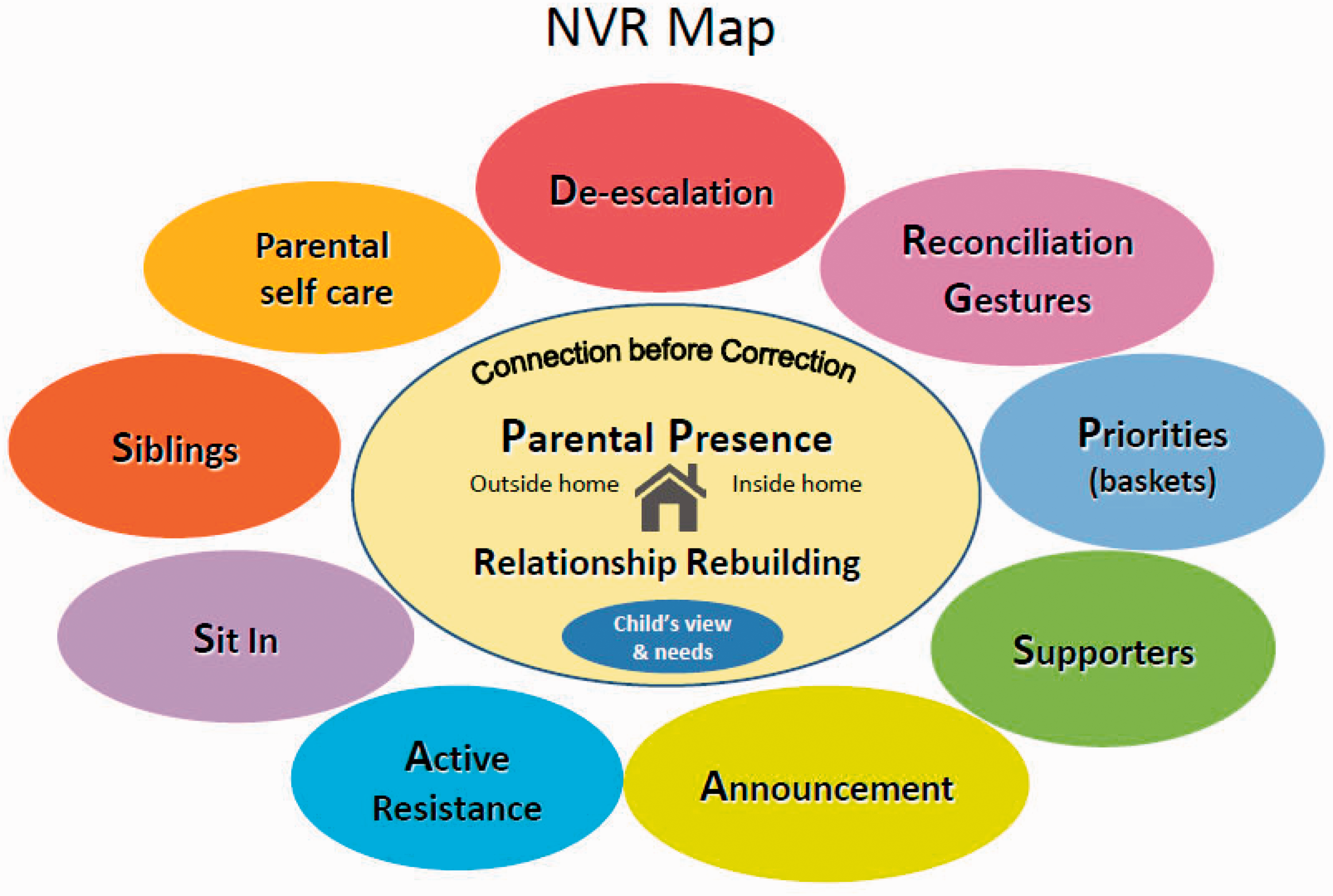
Treatment ‘map’ of nonviolent resistance techniques adapted from Omer (2004). Reproduced with kind permission from the Oxleas NHS Foundation Trust (2017).
refuse to give in and break taboos – parental disobedience;
de-escalate;
develop support;
raise presence through organised protest;
reconcile.
It may be facilitated as a group programme or through individual sessions with parents (Coogan, 2014).
NVR comprises a collection of activities that convey the message: ‘I am no longer prepared to continue with this situation and will do all in my power so as to change it – except by attacking you physically or verbally’ (Omer, 2004: 48). Key to this message is a societal shift with regards to the concept of ‘authority’. Expanding on Baumrind’s 1968 description of ‘authoritative parenting’ (characterised by high demandingness and high responsiveness), Omer proposed a ‘new authority’ which additionally attends to a systemic means of authority and factors that strengthen the parent–child bond (Omer et al., 2013). The ‘new authority’ contrasts with an ‘old authority' which is based on the belief akin to the ‘authoritarian parenting style’ (Baumrind, 1966, 1971) that children should be obedient, in awe of and distant from adults (Omer, 2011).
Review of NVR evidence
Parents in the first controlled study of parental training in NVR (Weinblatt and Omer, 2008) reported reduced helplessness and permissiveness in their parenting style, reduced parental escalatory behaviour, significant reduction in their child’s destructive and violent behaviours, and increased positive behaviours and social support. These findings were maintained at a one-month follow-up with the exception of the mothers’ perceived social support which had returned to baseline. However, there were no significant effects on parental distress and self-efficacy; this may reflect the short follow-up period with an impact on parental distress and self-efficacy taking longer than a month to become apparent (Van Holen et al., 2016). Moreover, there were no significant changes in parents’ tendency towards authoritative or authoritarian styles.
Using a quasi-experimental design, Ollefs and colleagues (2009) found that NVR can be more effective than the Triple P parenting programme in reducing aggressive behaviour, possibly due to different mechanisms of change between the two interventions (Gieniusz, 2014).
Lavi-Levavi and colleagues (2013) undertook a randomised wait-list control study of NVR with parents of children presenting acute behavioural problems. Both mothers and fathers reported reduced parental helplessness; however, only fathers reported improvement on scales of parent–child escalation processes. Compared to fathers, the mothers reported higher levels of escalation with their child both before and after the intervention. The authors concluded that mothers may experience a ‘special plight’ that NVR does not yet meet.
Van Holen and colleagues (2016) completed the first randomised controlled trial of individualised NVR training for foster parents. They found no reduction in CPV and proposed that this reflected the high level of support offered to the ‘Treatment-as-usual’ group who had regular contacts with mental health services. There was, however, an increase in the perceived support experienced by foster parents following NVR, which is consistent with Weinblatt and Omer (2008) and Ollefs and colleagues’ (2009) findings. Change also included foster mothers in the NVR group monitoring their children more, reduced carer stress and more consistent discipline.
Most recently, Schorr-Sapir and colleagues (2021) evaluated a randomised NVR intervention for parents of children with attention deficit hyperactivity disorder (ADHD). Compared to parents in a wait-list control group, the parents in the NVR condition group reported reduced internalising, externalising and core ADHD symptoms in their child, as well as improvements in parental helplessness. All gains were maintained at a month follow-up, except for core ADHD symptoms.
Rationale for the study
At present, there is little evidence on interventions for CPV within adoptive families. Yet violence in adopted children is a significant problem (DfE, 2014), and the needs of adoptive families are distinct and different from typical foster care in terms of their legal basis, the sense of permanency offered and the statutory support that is provided post-placement (which is less for adoption). Moreover, studies of NVR are dominated by key researchers and therapy developers (see Omer and Lebowitz, 2016) with qualitative explorations limited to case examples and theoretical reviews (Jakob, 2018a; Omer and Dolberger, 2015); one exception is the detailed study of the experience of NVR supporters, which used interpretative phenomenological analysis (IPA) (Hicks, Jakob and Kustner, 2019). The present study aims, therefore, to explore how mothers experienced using an NVR intervention with their children, using a systematic qualitative methodology. Such findings will hopefully inform future developments of NVR while raising the profile of the unique needs of these families.
Methodology
Choice of methods
IPA was selected as an established analytical methodology whereby participants are considered experts in their ‘lived experience’ (Smith, Flowers and Larkin, 2009). Qualitative analyses using IPA have been shown to provide insightful accounts of parents’ experiences of parenting training interventions (e.g., Vella et al., 2015), including parenting approaches used with adoptive parents (Wingfield and Gurney-Smith, 2019).
Design and participants
Semi-structured, single-time-point interviews were completed with 10 mothers and analysed using IPA.
Participants were recruited from a local authority service providing psychological interventions for children who no longer live with their birth parents (referred to hereafter as ‘the Service’). Since 2016, the Service has offered NVR via individual sessions with parents and/or through 10-session group therapy facilitated by clinical psychologists or senior practitioner social workers who have completed either foundation or advanced training in NVR.
The following two inclusion criteria were used to identify a small, homogenous sample of adoptive mothers (parents identifying as female) who had:
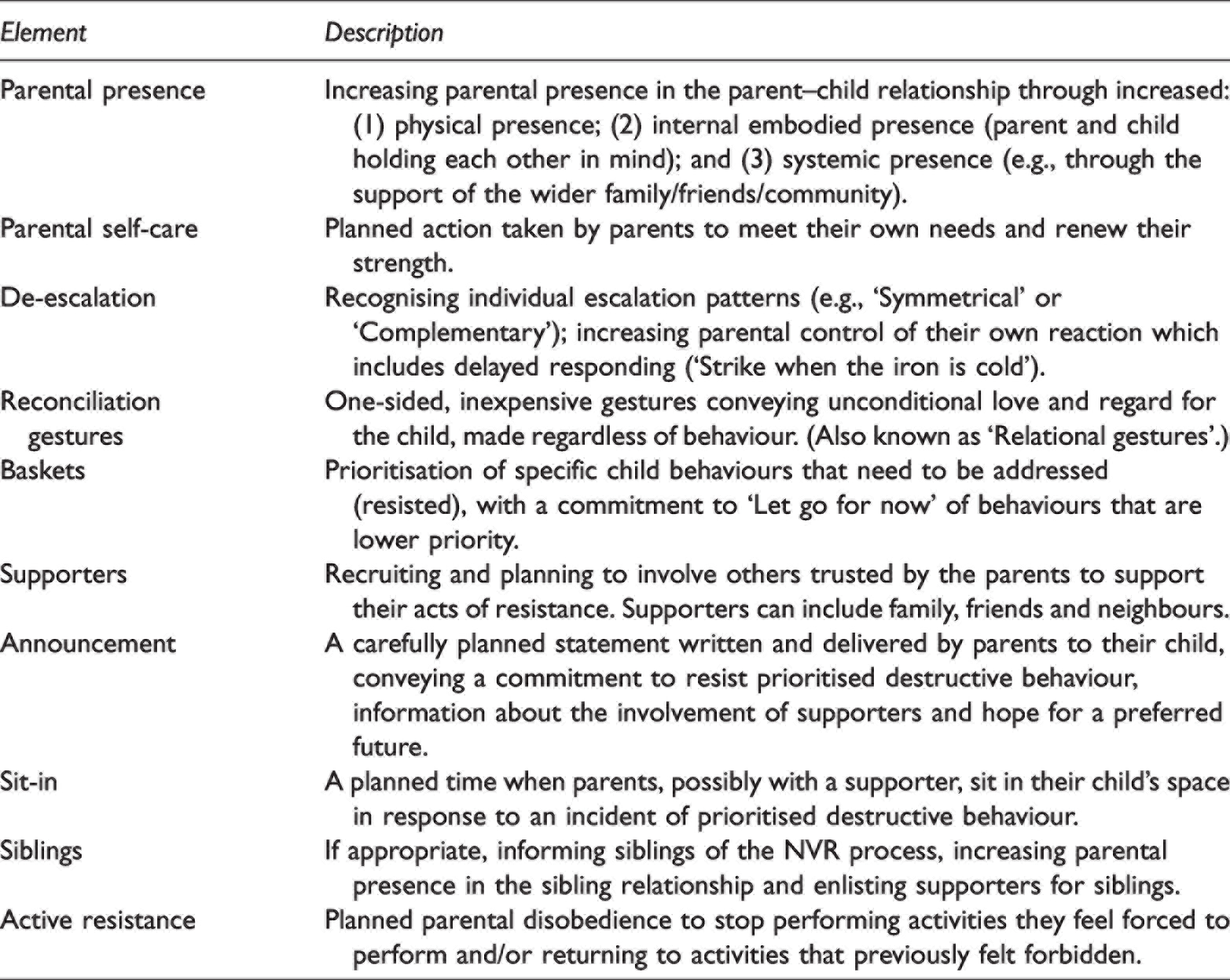
received support to use NVR with their child(ren) (aged up to 18 years) from the Service, either in a group (attending at least eight sessions) or individual format; Description of NVR elements.
These criteria identified 10 eligible mothers. Five others met the criteria but were ineligible due to low attendance (one) or insufficient engagement with the intervention (four).
NVR intervention
The individual and group sessions introduced parents to the key elements of the NVR model. The nine elements presented by the Oxleas NHS Foundation Trust (2017) are described in Table 1.
Measure
A semi-structured interview schedule was developed in accordance with IPA principles (Smith, Flowers and Larkin, 2009). The questions were reviewed by a kinship foster carer, who had received NVR therapy from the Service, and Sarah Fisher, an adoptive mother who has used NVR and is the author of an NVR parenting guide. Following some minor amendments, they agreed that the important topics had been included and the interview questions were acceptable.
Research procedure
Recruitment and interviewing
The 10 eligible participants were approached by practitioners in the Service who explained the research. All agreed to participate. All participants chose to be interviewed at home by the lead researcher, and the data were collected between August and December 2018.
Data analysis
All interviews were audio-recorded and transcribed verbatim. Data were analysed following IPA guidance (Smith, Flowers and Larkin, 2009; Larkin and Thompson, 2012) to identify potential themes. This involved analysing the transcripts in various ways, reflecting on whether researchers’ views and experiences might have influenced the interpretation of the material and using an external expert to review the conclusions.
Ethical considerations
This study was approved by the University of Oxford Research Ethics Committee.
Results
Situating the sample
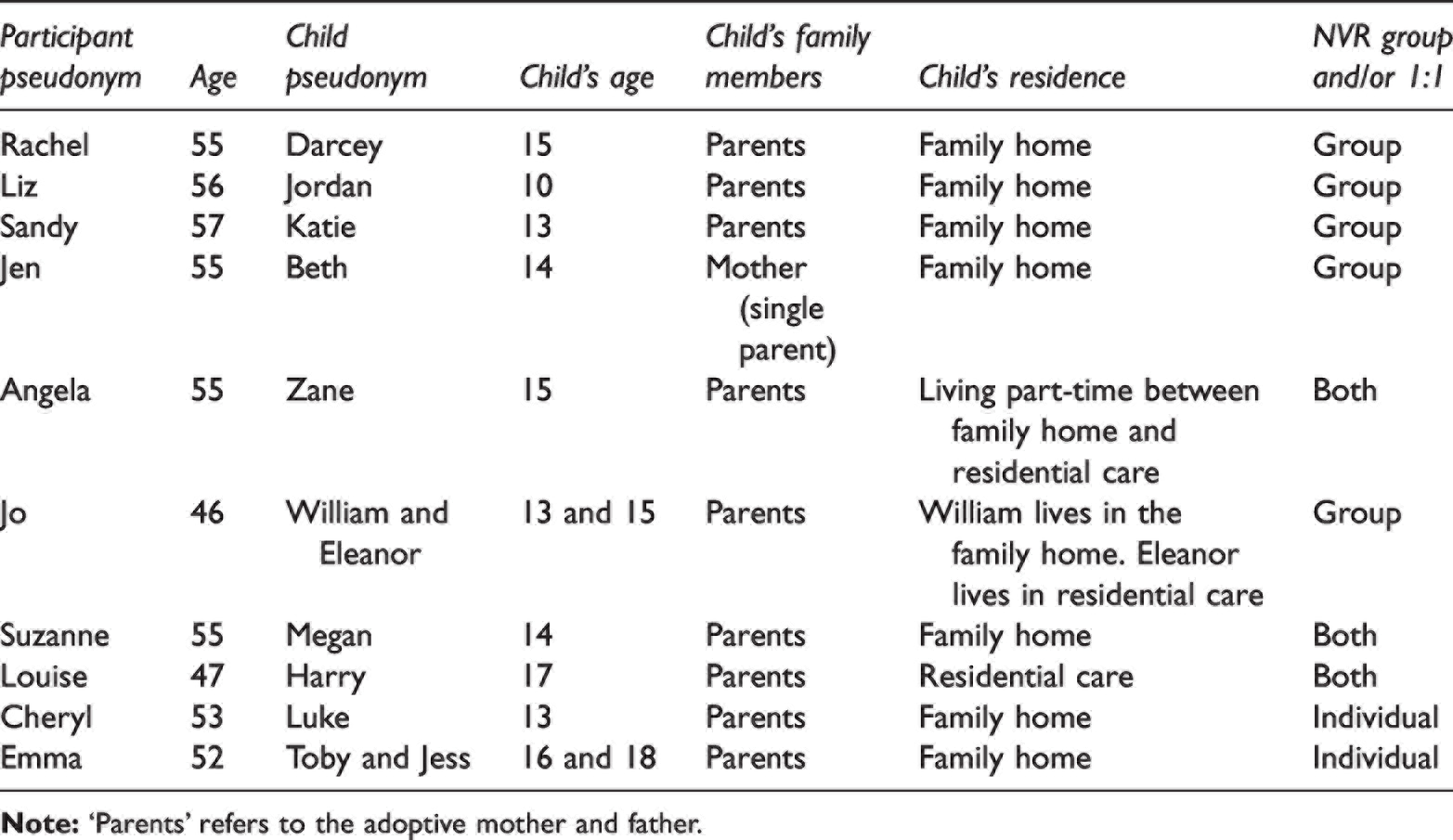
The mothers’ ages ranged from 46 to 57 years (M = 53 years). Nine of them identified as White British and one as British Asian. Nine identified as heterosexual and one chose not to answer. They discussed 12 children for whom they had used NVR; their ages at the time of the interview ranged from 10 to 18 years (M = 14 years). Children were aged between 18 months and seven years when placed with their families (M = 4 years). Ten children were White British and two were of mixed ethnic backgrounds. The children of the eight mothers were receiving either direct or indirect input from the Service at the time of the interview. Table 2 shows the participants’ demographic characteristics.
Participants’ demographic information.
The emerging themes
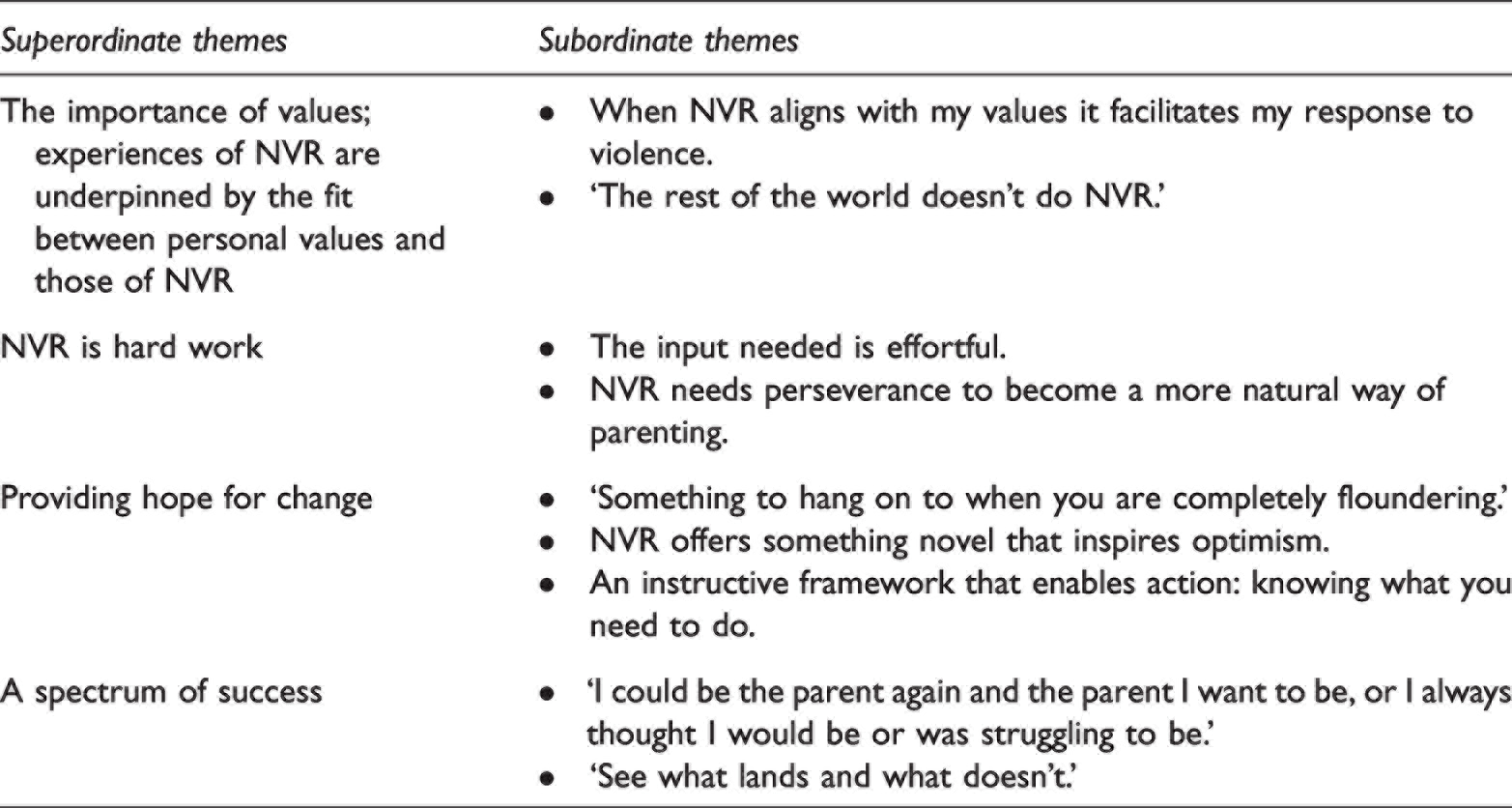
Four superordinate themes and nine subordinate ones were identified from the data as shown in Table 3.
Superordinate and subordinate themes.
Parents’ endorsement of the themes
The first theme, ‘The importance of values’, encapsulates the mothers’ experiences of how NVR fitted with their personal values and beliefs. It was either aligned with their values and/or they expressed difficulty transitioning from a more traditional (and societally normative) ‘old’ authority to the ‘new’ one offered by NVR. All 10 mothers stressed the importance of agreement between their values and those of NVR. Eight reported that this method facilitated their response to violence, but three pointed out that the rest of the world does not use it.
The second theme, ‘NVR is hard work’, highlights the demands of employing NVR, stressing that it requires perseverance to make it become easier. All agreed that it was hard work and nine emphasised the need to persevere with it.
The third theme, ‘Providing hope for change’, evidences the expression of hope that mothers experienced. NVR provided a ‘life raft’ at times of desperation, was completely novel and enabled action through a structured, instructive framework. The mothers also discussed how it offered hope for change due to its new approach towards violence. Ten acknowledged their optimism and nine mentioned the specific benefits.
The final theme, ‘A spectrum of success’, highlights that the mothers reported a continuum of success. Some said that it had transformed their parenting and relationships with their children, whereas others explained that some techniques were effective while others were not.
In the quotations that follow, italics have been used to indicate emphasis in the participants’ comments.
Parents’ discussion of the themes and subthemes
The importance of values: Experiences of NVR are underpinned by the fit between personal values and those of NVR
All mothers discussed whether NVR was compatible with their parenting values; some discussed the discrepancy with social norms and a tension between ‘old’ and ‘new’ authority in terms of consequences for violent behaviour.
When NVR aligns with my values it facilitates my response to violence
Most mothers discussed the congruence between NVR and their personal beliefs about non-violent behaviour. Rachel and Emma made links between their Christian faith promoting peace and forgiveness and NVR’s theoretical underpinnings. Others referred to their life experiences, the well-known non-violent role models they admired and the process they experienced: But now … for example, with the parental presence that we’ve talked a lot about today, I’m definitely walking into that much more, and it feels more natural … and less like I’m doing something because an approach is telling me to do it, there’s something about [how] I’m valuing that and it’s lining up with my values, and therefore I’m doing it, because it’s lining up, um, so that … I think I’ve kind of … embraced it … more. (Cheryl) … for me, that’s [the Supporters group] a real gift. I wish it had happened much, much sooner in our adoptive journey … it can be quite isolating, being an adoptive parent … and you know, I’ve worked and I will go and do courses and I love new knowledge and I’m interested … and I’ve reached out and made those connections for myself and they weren’t enough for Eleanor [her child]. (Jo)
Understandably, those who described feeling most aligned and integrated with the values underpinning NVR were those who felt more able to embed it into their parenting actions and evaluated it as helpful.
‘The rest of the world doesn’t do NVR’ (Louise)
’ Three mothers discussed at length the incompatibility of NVR for their parenting. In Suzanne’s words: ‘The textbook and the reality can be … fields apart.’ Here, Suzanne uses a metaphor to describe the detachment she experienced between learning about NVR and using it in practice. This explicit claim summarises her difficulties in understanding NVR and feeling very unfamiliar with it. Similarly, she used the word ‘alien’ three times in the rest of her response, indicating that this feeling is at the core of how she experienced NVR. Two mothers (Louise and Angela) discussed how they felt the approach was incompatible with social norms which use punishment in response to violence: … I mean he has been arrested – he’s only been arrested once for breaching the peace – but the rest of the world doesn’t do NVR. So, he’s going to be in situations you know, where people aren’t going to … you know, aren’t going to … um, understand … and you know the world doesn’t work like that does it? (Louise)
Overall, this range of experiences highlights how personal values and perceived social norms, most of which were aligned with NVR’s theoretical underpinnings, appeared to be a central feature of the mothers’ experience of the intervention.
NVR is hard work
All mothers described their experience of ‘doing’ NVR as effortful; either psychologically or in the personal, social or relational resources it required. However, there was a clear sense from mothers who had felt able to maintain NVR that, through continued practice, it becomes easier and ‘doing’ it becomes an established and, for some, unconscious way of parenting.
The input needed is effortful
This theme highlights how effortful finding the personal resources to embark on and ‘do’ NVR was for mothers in changing how they thought about violence and how they responded to their child’s violence in the moment: It’s hard work to put it in place, to get your mind thinking … putting those things in place when you’re in a heightened situation, which it obviously is … is really difficult. (Liz) … I could see how it [NVR] could help – it wasn’t that. It was just the input it would need. The emotional sort of strength … and stamina, and also exposing yourself to your friends, and family, or whoever … and the group actually, to these things that were [voice quivering] really personal … and hard to … put out there. I mean it’s hard to talk about domestic violence … (Jen)
However, two mothers (Suzanne and Angela) described their difficulty in understanding how NVR worked and struggled to foresee how it could help them before using it: ‘I found it incredibly hard to … get my head about … head around it at all … um … I couldn’t visualise it … ’ (Suzanne). In both these cases, the mothers described feeling sceptical about the concept of NVR.
NVR needs perseverance to become a more natural way of parenting
This theme portrays a range of views in which most mothers experienced the burden of effort becoming lighter and NVR becoming less of a conscious process through committed action to using it. For example, Emma expressed that ‘it is ingrained into me’ while Jen explained: ‘I think it became more … natural … ’
However, others recognised they were unable to continue to use NVR due to not feeling committed to it or difficulty in maintaining progress. As Rachel explained: ‘I do wonder about sort of “NVR Part 2” or something … so for me, the sort of ongoing applying NVR is something … I think about’. Rachel presents a reflective stance of considering how to keep NVR going when she had felt some benefit but not experienced complete resolution. Additionally, she recognises, as others did, that there is scope for development following an initial adjustment to embedding it within her parenting. However, Angela expressed a stronger view, explaining that she had actively stopped using NVR as she experienced deterioration in her son’s behaviour: We were trying the techniques. We were giving it a go … Um, it was very hard going, I think, err, to use the techniques. To try and follow them through, using supporters … I think because of the way our son felt shamed. (Angela)
Providing hope for change
All mothers (except Suzanne) spoke about NVR providing them with hope for change. Mothers frequently expressed that it was a ‘lifeline’ offered at a time of desperation. They attributed hope to the novelty it presented them with, often in comparison to other approaches, and the structure it provided. Together these offered a sense of containment and predictability.
‘Something to hang on to when you are completely floundering’ (Jen)
Most mothers discussed that NVR was like a ‘life raft’ that they could use when they were feeling desperate and that it was a means of taking planned action: I think when things get really bad, you do think ‘Gosh’, you know … you know, you get over another hurdle … so I think this is giving us hope that we’re going to be able to do something about it. (Sandy)
NVR offers something novel that inspires optimism
Mothers expressed hope that because NVR was novel and felt different to other approaches it could provide something other options had not. Mothers described finding this ‘refreshing’ (Jo) and ‘curious’ (Cheryl) at the start of NVR. Most mothers attributed this novelty to understanding that the ethos of NVR focused solely on changing the parents’ responses to violence rather than the child’s, encouraging them to refrain from enforcing consequences and demanding obedience, and involved the inclusion of others (the ‘Supporters’) in the process. Most experienced this as a positive, helpful difference compared to other parenting interventions: So, in terms of NVR, it kind of being … you can’t change the children’s behaviours, but you can change how you respond to them … that was empowering for me … I guess we [adoptive parents] are led to believe that there’s hope that the children can change, given the right environment and the right kind of parenting. Actually, my experience is that we can’t do that on our own. One family is not enough for these children, and … the damage that they’ve received not just physically, but their … the brain is damaged … and, um, I guess NVR opens that up … (Jo)
However, Angela and Suzanne found the novelty of NVR problematic: … I can’t see myself doing that [a ‘Sit-in’] at all … because you can’t help as well. I mean … this increasing parental presence, I mean [takes a deep breath] when you live like we do, you actually don’t want to increase your parent[ing] … if she’s upstairs on her phone for a couple of hours, I just think, ‘Let me breathe for a couple of hours!’ (Suzanne)
An instructive framework that enables action: Knowing what you need to do
All of the mothers understood NVR to provide a structure and ‘tools’ (Rachel) to use, except Suzanne who had difficulty comprehending it. The mothers discussed the practical and emotional impact of the framework with which NVR provided them: … the other big thing about NVR is that when [my son punched my husband] … I phoned up [my neighbour] and Jess [my daughter] said to me, ‘What are you doing?’ … And I said, ‘[I’m doing this] because you’ve both been incredibly violent towards us and we’re not keeping it secret’ … And Jess was so shocked by that, that I was actually telling somebody else. She said, ‘Why are you telling anybody?’ And I said, ‘Because this is domestic violence, and we’re not going to tolerate it anymore’ … And I think that’s part [of NVR] that’s helped a huge amount … because, you know, you do get embarrassed, don’t you? … You don’t want to admit that your own children are beating you up and hurting you … so, I think that was a big thing, about being able to say, ‘There’s no shame in it’, just, you know, ‘This is a really difficult situation, we’re dealing with two highly traumatised children and their trauma is coming out against us’. (Emma)
Additionally, the mothers described the framework as enabling them to discuss their changing actions with others (often their supporters) to check their understanding of their child’s behaviour: … and the NVR sort of training gave one a good ‘in’ to go and have that conversation [with a supporter], rather than just having … [intake of breath] I mean I could’ve have had that conversation out of the blue, but it was good to have the NVR framework [which] meant that I could, you know, check her [the supporter’s] understanding of what was … what was going on. (Rachel)
A spectrum of success
All mothers discussed the process of evaluating the impact NVR had had on their relationships with their children and their violent behaviour. Their views ranged from feeling empowered and enabled to parent again to finding the impact somewhat more inconsistent or nuanced – some techniques ‘worked’ and others did not.
‘I could be the parent again and the parent I want to be, or I always thought I would be or was struggling to be’ (Jen)
Jen and Emma expressed a particularly strong feeling that NVR had changed the trajectory of their relationships: ‘I’d sum it up as, um … life changing at that time. It kept us together when I was about to walk away’ (Jen). Jen credited her ability to support her daughter, despite the violence, to NVR. In fact, most of the mothers attributed an improvement in their experience of parenting to NVR, whether to a specific technique (often ‘De-escalation’ or the ‘Supporters network’) or more generally: ‘I probably wish I’d had those techniques with my birth children too … I’m sure life would have been a lot easier’ (Liz).
Other mothers also advocated for NVR to be more accessible as a general parenting approach with adoptive children, often expressing regret that it was only learnt through the onset of violence and at a time of feeling desperate.
‘See what lands and what doesn’t’ (Cheryl)
Many mothers, even those who overall were not entirely favourable towards NVR (Angela, Suzanne and Louise), perceived some of the techniques to be beneficial and others not to be. There was no clear consensus on which were most or least helpful as the mothers’ use of different techniques depended on contexts such as their personal values, life events and their understanding of NVR. Most, however, agreed that it is a worthwhile approach: I’d definitely recommend it [NVR] to parents – I think it does defuse, um … situations. Um … I’d say, have a go! There’s nothing to lose! You know, you’ll find elements that work, elements that don’t work … (Louise) … it hasn’t, like, you know, stopped all the violence and the aggressive behaviour … but maybe it has [questioning tone] helped it to a certain extent, reduced it … I think. (Sandy)
Discussion
This study aimed to understand the experiences of 10 adoptive mothers who have used NVR with their child(ren). Using IPA, four superordinate themes were identified. The first was ‘The importance of values’. At the core of the mothers’ experiences was how well NVR ‘fitted’ with their personal values and responses to CPV. There appeared to be a continuum from mothers aligning and integrating the intervention within their lives to distancing or rejecting it (one was deeply critical) due to its perceived dissonance with ‘old authority’ social norms. This is consistent with literature showing that parenting beliefs or values are drivers for parents’ emotional and behavioural processes, conceptualised as either parenting styles (Baumrind, 1968; Darling and Steinberg, 1993) or more nuanced constructs such as ‘mentalisation’ (Sharp and Fonagy, 2008).
Central to NVR is the recognition of the need to move from the ‘old’ to a ‘new authority’ (Omer, 2011) in which behavioural regulation improves in a context of sensitive, present and authoritative parenting, firmly anchored in this stance through social support and self-control (Omer et al., 2013). Participants who described feeling more aligned with the ‘new authority’ felt more able to embed NVR into their parenting and perceived it as effective. This may account for the relatively low drop-out rates in some of the previous NVR studies (e.g., 5% in Schorr-Sapir et al., 2021).
As found in this study, NVR requires parents to understand, fully commit and trust in this alternative perspective of authority and response to violence, irrespective of the pejorative societal view. Therefore, it is likely that the degree to which mothers’ values are congruent with NVR’s ethos will affect their ability to commit to delivering NVR with their children. Interestingly, recognition of the complexities of the transition to this approach is notably absent in the current literature. The psychological influences of parenting, including values, are hypothesised to transmit between generations with genetic and contextual continuity (van IJzendoorn, 1992). For adoptive parents who have a particular and complex ‘journey’ to parenthood, little is currently understood about how they learn, develop and adapt their parenting.
The second theme was ‘NVR is hard work’ with mothers describing the significant personal, social and relational resources and effort required to practice it. They discussed the need for perseverance to make their parenting styles more unconsciously congruent with the NVR ethos. This is consistent with previous studies which have shown that adjustments to parents’ approaches need time to translate to significant change (Van Holen et al., 2016; Weinblatt and Omer, 2008). In this study, five of the mothers were using NVR but had not been able to engage sufficiently to fully participate. One explained that this was due to the involvement of supporters triggering a feeling of shame in her son. This is a common fear for parents using NVR and is currently addressed by supporting parents to trust in a ‘new’ rather than ‘old’ authority approach in which the involvement of supporters may be experienced as compassionate rather than punitive (see Jakob, 2018b). In restricting the study to mothers, these experiences may also reflect the societal ‘third shift’ of ‘emotional labour’ frequently experienced by co-parenting mothers as those who hold ultimate responsibility for their child’s well-being (Christopher, 2021). Notably, some mothers reported that the trust they had in the Service played a key role in their ability to commit to NVR.
The third theme was ‘Providing hope for change’. Here, mothers reported that NVR provided hope, often in times of desperation, due to its novelty and instructive framework of techniques. In other fields of parenting, research has concluded that interventions to enhance parenting skills should aim to increase ‘dispositional optimism’ (Baker, Blacher and Olsson, 2005). As the DfE audit (2014) reported, adoptive parents whose children are violent can feel helpless and defeated. Therefore, it is reasonable to consider the emotional impact that CPV (including traumatic stress), parental well-being and personality constructs or states, such as optimism, might have on parents’ experiences of using NVR. While some NVR research has considered related constructs, such as parental distress and self-efficacy (Weinblatt and Omer, 2008), there is scope for more understanding of the experience and impact of CPV on adoptive parents prior to starting NVR.
The final theme was ‘A spectrum of success’. Some mothers experienced NVR as ‘life changing’, while others recognised that some aspects of the progamme were more helpful than others and in one case had led to a deterioration in her child’s behaviour. Consistent with favourable quantitative outcomes of NVR, most of the mothers experienced a range of ‘successes’. However, in contrast to previous studies, the mothers evaluated ‘success’ in relational terms rather than on whether violence had reduced (although the two often seemed associated). It may be that success with NVR falls on a spectrum, both in terms of magnitude and specific outcomes, influenced by factors specific to each family and their personal goals. This study highlights a possible discrepancy between valued outcomes for different stakeholders in NVR research.
Strengths and limitations
The strengths of this study are self-evident: the nature and quality of the insights gained from the IPA methodology. Its main limitations are the small sample size and the fact that recruitment was pragmatic, drawing from a clinical setting and involving mothers who had learnt NVR in a number of different ways. The sample was also heterogeneous in terms of the children’s previous experiences and adoption histories. Future studies could consider the use of a fidelity checklist to ensure better characterisation and/or comparability of interventions. The study also excluded mothers who may have struggled to complete ‘enough’ NVR and did not consider the experiences of fathers.
Implications for research
Given the mothers’ largely positive experiences, this study supports a large-scale randomised controlled trial of NVR as requested by NICE (NG26, 2015). Understandably, the focus of previous research has broadly been on whether NVR can reduce CPV, but this study highlights other important issues that may be relevant to an understanding of change processes and future evaluations of the approach. Specifically, these are: the fit of parental values with the ethos of NVR; epistemic trust in the clinicians delivering the therapy; parental resources enabling perseverance; and outcome measures that are sensitive to the nuances in individual goals.
Clinical implications
The findings from this study may also inform the assessment process and rationale for offering adoptive families NVR. Specifically, clinicians may wish to consider:
parents’ understanding of how the NVR approach fits with their parenting values, with explicit discussions around the theory of ‘old’ and ‘new’ authority and the nuance of shame; the degree of trust parents have in their respective local authority service.
Identification of these factors makes sense since NVR is an innovative approach asking parents to try something that might make them feel vulnerable. They should be advised of how effortful NVR can be, and consideration should be given to the resources available or needed to support learning and perseverance.
Conclusion
This first qualitative study of adoptive mothers’ experiences of using NVR with their children reached several conclusions. If the mothers’ values aligned with the NVR approach, the effort to ‘do’ the programme became easier and, through perseverance, provided an unconscious and effective way of parenting and opposing violence. Also, while it offered ‘something different’, it required trust to commit to it. Through its framework, its guided action provided most mothers with the ability to be the parent they wanted to be, and for some ‘success’ was a more varying and nuanced, often relational, experience. This study supports the need for further research into the use of NVR with adoptive parents and offers clinicians some factors to bear in mind when considering NVR as an intervention.
Supplemental Material
sj-pdf-1-aaf-10.1177_03085759221115212 - Supplemental material for How do adoptive mothers make sense of their experiences of using non-violent resistance therapy with their children? An interpretative phenomenological analysis
Supplemental material, sj-pdf-1-aaf-10.1177_03085759221115212 for How do adoptive mothers make sense of their experiences of using non-violent resistance therapy with their children? An interpretative phenomenological analysis by Rosanna Samuel, Claire Holdaway and Lydia Vella in Adoption & Fostering
Footnotes
Acknowledgements
We are grateful to the following people who helped with this research: the mothers who participated, the carer who reviewed our interview schedule, Sabrina Blighe (for administrative support), Sarah Fisher (for consultation), Dr Olivia Hewitt (for consultation) and Dr Peter Jakob (for consultation).
Declaration of conflicting interests
The author(s) declared no potential conflicts of interest with respect to the research, authorship, and/or publication of this article.
Funding
The author(s) received no financial support for the research, authorship, and/or publication of this article.
References
Supplementary Material
Please find the following supplemental material available below.
For Open Access articles published under a Creative Commons License, all supplemental material carries the same license as the article it is associated with.
For non-Open Access articles published, all supplemental material carries a non-exclusive license, and permission requests for re-use of supplemental material or any part of supplemental material shall be sent directly to the copyright owner as specified in the copyright notice associated with the article.
