







Abstract
Because of the complexity of the lightning phenomenon in the physical and electrical aspects, the aggression of lightning strokes on the wind turbines has become, for many years, one of the main causes for insurance agencies of these new electric generation systems. Wind turbines have important dimensions of structures, where they can easily attract lightning and his anger, the effect of heights also captures the farthest lightning. The rotation of the blades may also trigger lightning and result in considerable increase in the number of strikes to a wind turbine unit. Since wind turbines are tall structures, the lightning currents that are injected by return strokes into the turbines will be affected by reflections at the top, at the bottom, and at the junction of the blades with the static base of the turbine. Despite the protection in place in wind turbines, statistics show that they are inefficient, because they are placed in locations where repair is difficult and expensive. In this article, we study lightning strikes and their effects on wind turbines and propose other useful elements in the design of efficient wind turbines and optimal ways to protect them against direct and indirect lightning strikes.
Introduction
Lightning damage mainly affects home appliances, telephones, towers, power transmission, generation equipment malfunctions, and damage due to strikes on power lines. With the adoption of wind power generation equipment, however, lightning damage is also increasing in this area. Due to its dimensional characteristics, the wind power system is more exposed to lightning strikes compared to all other systems. Lightning damage is the single largest cause of unplanned downtime in wind turbines, and that downtime is responsible for the loss of countless megawatts of power generation.
Wind turbine technology is constantly evolving in all areas in recent times, but lightning remains the first danger to this technology growth. Being higher than 100 m and being located in remote areas, wind turbines are exposed to lightning strikes as much as 10 times per year, implying an alarming frequency. In the 1990s, lightning quite often caused heavy damages.
In 1995, approximately 80% of the damages registered by insurances were caused by lightning; however, modern wind power generation units are characterized by ever taller turbines and wind turbine blades are now being produced with lengths of 60 m and beyond. Since insurance companies demand for proper lightning defense, lightning has nowadays lost its terrifying effect for the users. Even retrofitted turbines withstand lightning strikes without serious problems.
Wind turbines are tall, isolated towers composed of sensitive electronics, all of which are factors that make lightning a persistent and real threat. A properly installed lightning protection system, however, will intercept the lightning and effectively and safely conduct it to the earth without causing physical destruction to the wind turbine. According to a German study, lightning strikes accounted for 80% of wind turbine insurance claims (Gromicko, available at: http://www.nachi.org/wind-turbines-lightning.htm).
During its first full year of operation, 85% of the downtime experienced by one southwestern commercial wind farm was lightning-related. Total lightning-related damage exceeded US$250,000.
The German electric power company Energieer-zeugungswerke Helgoland GmbH shut down and dismantled their Helgoland Island wind power plant after being denied insurance against further lightning losses. They had been in operation for 3 years and suffered more than US$540,000 in lightning-related damage.
Lightning damage to wind turbines
The statistics presented in this article are quoted in IEC TR 61400-24 First edition 2002-07, a highly informative paper which presents data on the European countries that are known for events of the turbines damaged by lightning strikes (Germany, Sweden, and Denmark) and where lightning is comparatively infrequent; in general, data show that 4%–8% of all wind turbines suffer lightning-caused damage every year. However, in areas of greater lightning density, this figure is reported to be considerably higher.
In some countries, the percentage of damage by lightning doubled than before. In this way, the increasing installation of wind power generation equipment is causing problems not found in other countries because of the weather conditions.
Wind turbine component damage
The following systems, arranged in order from most to least vulnerable, may be damaged by lightning strikes:
Damage to the control system: These include sensors, actuators, and the motors for steering the equipment into the wind. According to the updated National Fire Protection Association handbook, “While physical blade damage is the most expensive and disruptive damage caused by lightning, by far the most common is damage to the control system (Ahrens, 2013).”
Damage to electronics: Wind turbines are deceptively complex, housing a transformer station, frequency converter, switchgear elements, and other expensive, sensitive equipment in a relatively small space.
Damage to the blades: A lightning strike to an unprotected blade will raise its temperature tremendously, perhaps as high as 54,000°F (30,000°C), and result in an explosive (Figure 1) expansion of the air within the blade. This expansion can cause damage to the blade surface, melted glue, and cracking on the leading and trailing edges. Much of the damage may go undetected while significantly shortening the blade’s service life. One study found that wood epoxy blades are more lightning-resistant than glass-reinforced plastic (GRP)/glass epoxy blades.
Damage to generators: Batteries can be destroyed, or even detonated, by a lightning strike.
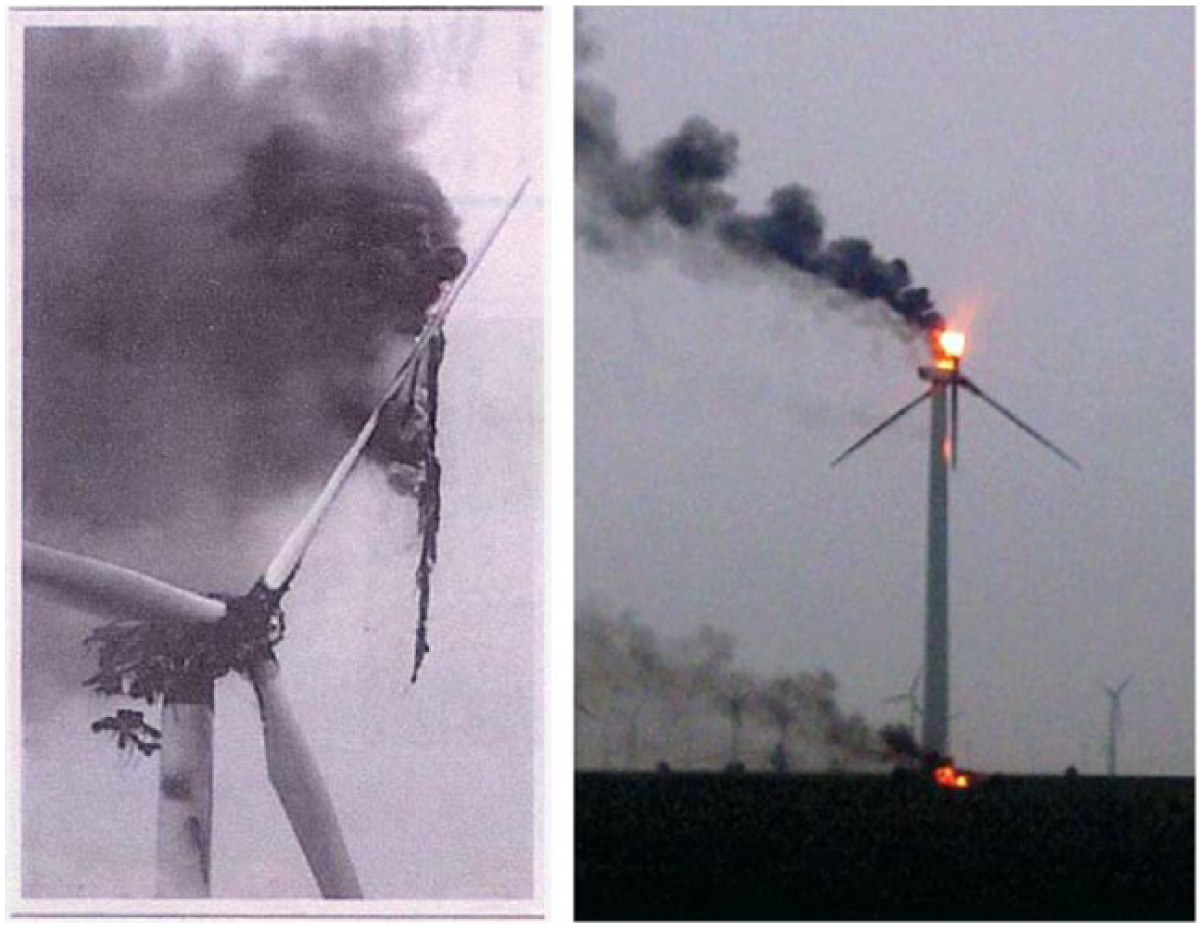
Wind turbines exposed to lightning strokes.
Note that lightning dangers increase with turbine height.
In recent years, windmills have become markedly larger. The height of the blade tips on many of these large windmills is over 100 m, which increases the frequency of damage from lightning strikes. Damage to the blades of large windmills has higher repair costs and requires more time for replacement (including transport and installation). The increase in windmill downtime has brought about a decrease in the operation rate and utilized capacity of windmill equipment (Faulstich et al., 2010).
Almost all modern turbine blades are constructed with built-in lightning protection in the form of conducting elements. This improved blade design has significantly reduced the amount of blade damage (McNiff, 2002).
Principal lightning risk factors
The above statistics give credence to the main conclusion of a study commissioned by the European Union and conducted by the University of Manchester: “the protection of wind turbine electronic systems from indirect effects is of equal importance to, if not greater than, the protection against direct effects” (Cotton et al., 2001; SABS IEC 61024-1-1:1993, 1993).
The three risk factors to be mitigated then are as follows:
Damage to blades caused by direct strikes: This damage can be caused by strikes to the tips of the blades and also to strikes along the length of the blades. Almost all direct strikes to a wind turbine will hit the rotor blades.
Damage caused by surge currents: This damage can be caused by surge currents originating from either direct strikes to the blades or coming from (indirect) strikes to connected power and data lines. This would include the AC power lines as well as the telephone or supervisory control and data acquisition lines used to remotely control the turbines (Impulse PALE, 1995; Urashima, 2007).
Damage caused by voltages: This damage can be caused by voltages induced in circuits (power as well as control) adjacent to the necessary down-conductors that carry the lightning current to “earth.”
Evaluation of lightning incidence to wind turbines
The design of a lightning protection system (LPS) should be based on the risk to the structure in question due to the lightning strike. This risk is a function of the structure’s height, the local topography, and the local level of lightning activity (Figure 2).
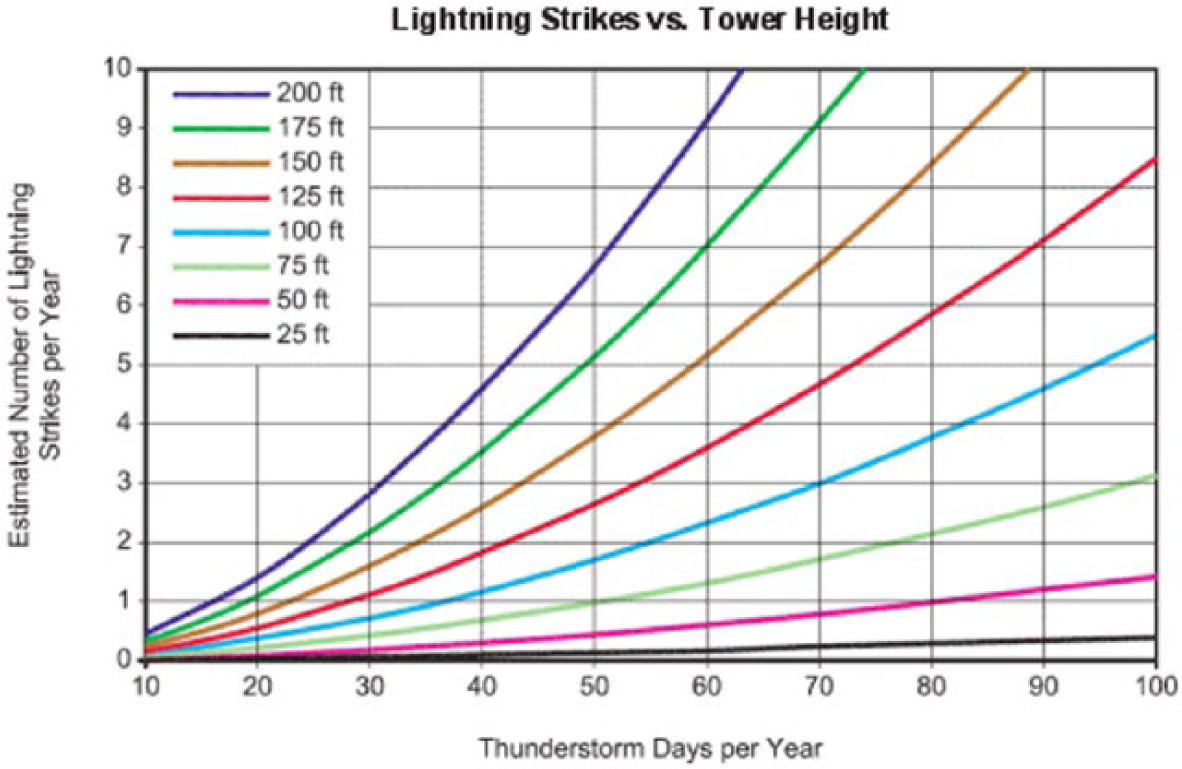
Variation of lightning strikes with tower height.
Elevated objects such as wind turbines experience both downward and upward flashes, the proportion being a function of object height (Baba and Rakov, 2005). The total annual lightning incidence N (in year-1) is given by

where Nu and Nd are the annual number of upward flashes and downward flashes, respectively.
Based on observations of the lightning incidence to structures with heights ranging from 20 to 540 m situated on a flat surface in different regions of the world, Eriksson (IEC TR 61400-24:2002, 2002) derived the following equation

where hs is the height of the structure in meters and Ng is the ground flash density in km−2 year−1 (Figure 3).
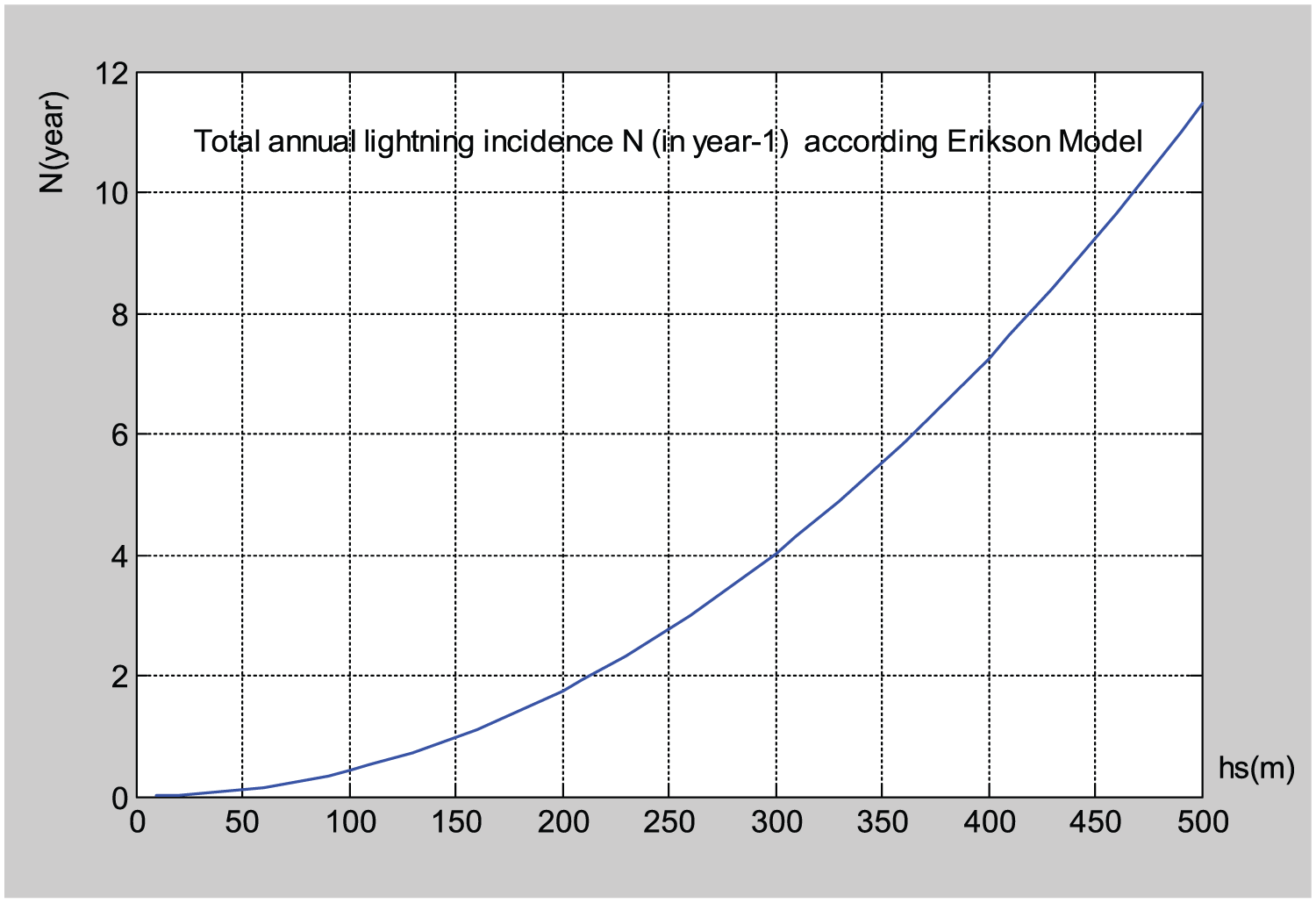
Total annual lightning incidence N (in year-1) according to Erikson model.
IEC TR 61400-24:2002 (2002) recommends that wind turbines on a flat terrain be modeled as a tall mast with a height equal to the hub height plus one rotor radius, the equivalent attractive or collection area being defined as a circle with a radius of three times the turbine height

In IEC TR 61400-24:2002 (2002), the overall number of lightning flashes to the wind turbine is calculated using the expression (Figure 4)

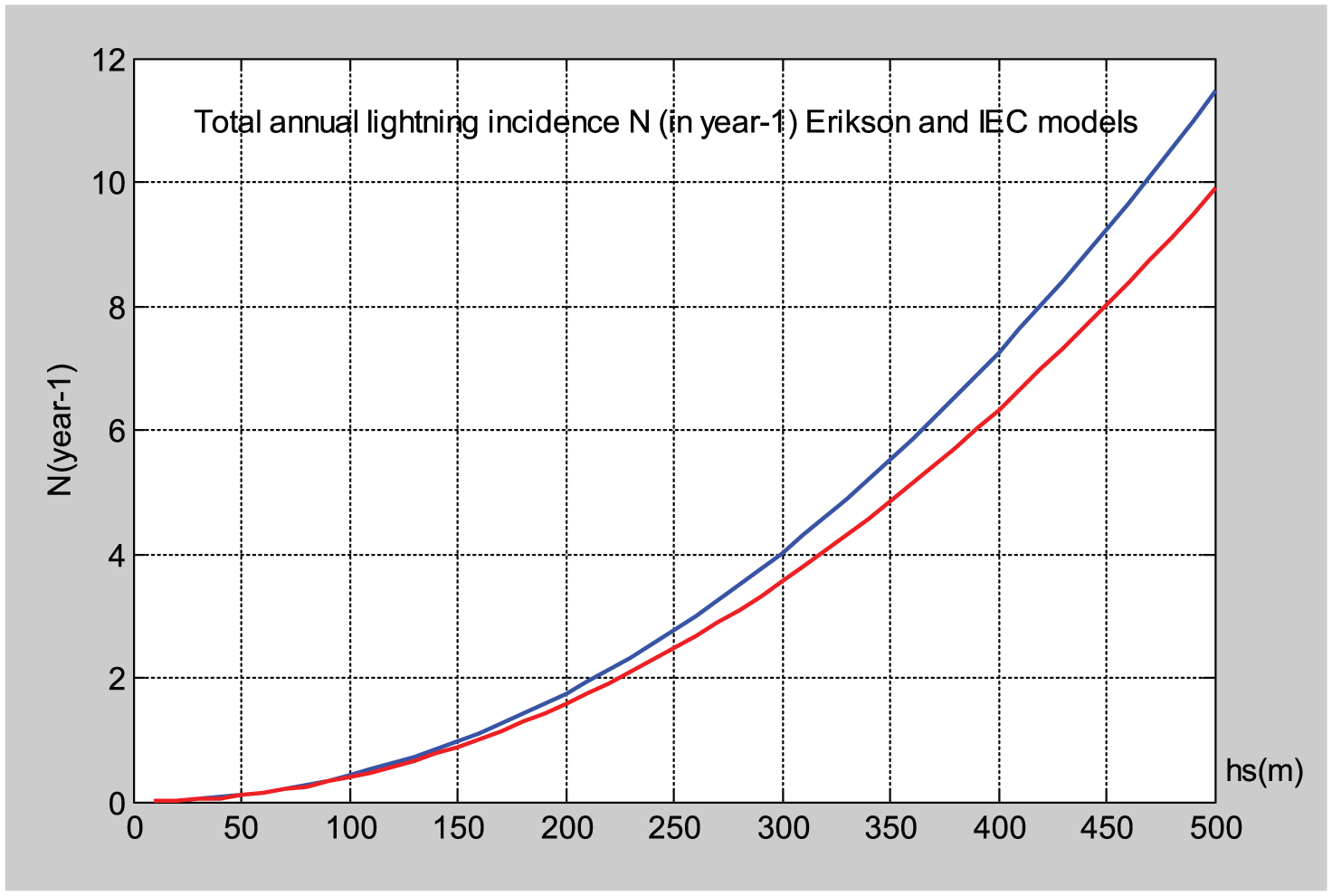
Total annual lightning incidence N (in year-1) according to Erikson (Red) and IEC model (blue). IEC: International Electrotechnical Committee.
Wind turbine failures due to lightning depend strongly on the terrain where the wind parks are installed. As reported in McNiff (2002), wind turbines installed in the low mountain areas in Germany have a higher risk of lightning damage (14 faults per 100 unit years) compared to wind turbines installed in the coastal areas (5.6 faults per 100 unit years). The evaluation of lightning incidence to wind turbines situated in mountainous regions is much more difficult than on flat ground due to the fact that topological factors will play a major role in the enhancement of the electric field at the top of the wind turbine.
Lightning transient current behavior inside the turbine
When lightning strikes an elevated tower or wind turbine, the transient phenomena in the strike object introduce changes in the original lightning current waveform. The influence of the strike object on the current waveform (Figure 5) has been recently investigated by a number of research groups around the world and several of the so-called engineering return stroke models have been extended to take into account the presence of the elevated strike object. In some of these studies, the strike object was modeled as an ideal, uniform transmission line.
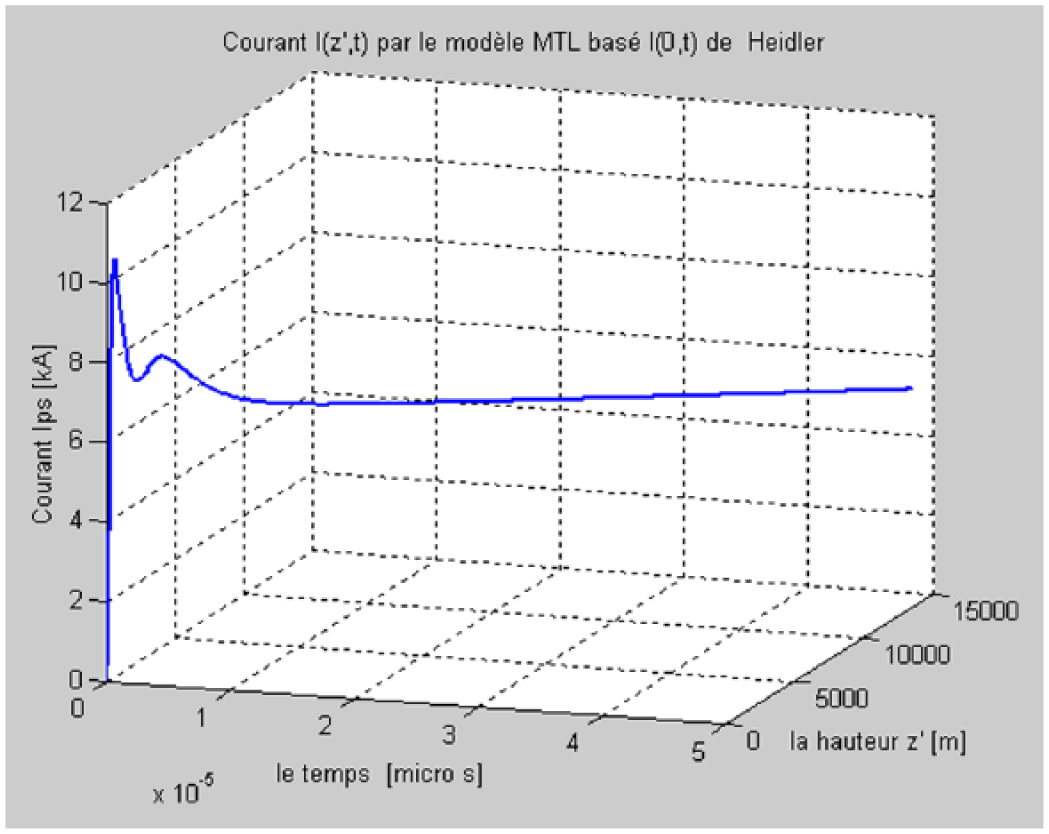
Current in the lightning channel of the modified transmission line exponential model with (0, t) of Heidler.
In the return stroke models that take into account the strike structure, it is often assumed that the propagation speed of current pulses along the strike object is equal to the speed of light c and that the current reflection coefficients at its extremities (qt at the top and qg at the bottom) are constant. Furthermore, the existence of upward-connecting leaders and any reflections at the return stroke wave front are neglected (Pavanello et al., 2007).
The bottom reflection coefficient for the current in the tower can be expressed in terms of the characteristic impedance of the tower Zt and the grounding system impedance Zg as follows

Similarly, the top reflection coefficient for the current in the tower can be expressed in terms of the characteristic impedance Zt and the equivalent impedance of the lightning return stroke channel Zch

For a lightning return strike initiated at the top of the strike object, the current along it and along the lightning channel for a given height z were derived by Rachidi et al. (2008) and it is given by

For

where i0 (h, t) is the so-called “undisturbed” current, defined as the current that would be measured at the top of the strike object (lightning attachment point) if both reflection coefficients qt and qg were equal to zero, z is the height along the strike object for equation (7) and along the channel for equation (8), c is the speed of light, v is the return stroke speed, Htot is the total height, obtained by adding the lengths of the lightning channel and of the elevated strike object, v* is the current-wave speed in the lightning channel, and u (t) is the Heaviside unit step function (Mosaddeghi et al., 2010).
The modified transmission line exponential model
The modified transmission line exponential (MTLE) model, established by Berger (1972) and Rakov and Uman (2003), corrects the defects of the transmission line (TL) model while keeping its simplicity by allowing for an easy use of electromagnetic radiation, based on the formulation of the space-temporal distribution along the channel of the current i(z′, t), defined by

More recently, Heidler proposed a new analytical expression to simulate the current

and

I0 is the magnitude of the current in the channel base, τ1 is the time-constant of the face, τ2 is the constant of decrease, η is the factor of correction factor of magnitude, and n is an exhibitor ranging between 2 and 10 (Djalel et al., 2007; Zhou et al., 2010).
For lightning to wind turbines, the previous model needs to be adapted to take into account the discontinuity between the body and the blades of the wind turbine system at the hub. The instantaneous angle of the struck blade with respect to the base may strongly influence the reflection and transmission coefficients at the discontinuity.
Protecting wind turbines
There is an unabated trend for the utilization of regenerative energy gained from wind turbines, solar, photovoltaic, and biogas plants or geothermal heat. This is an enormous market potential not only for the energy industry, but also for the suppliers and the electrical trade and that worldwide. It goes without saying that surges can cause considerable damage there. Due to the exposed position and the overall height, wind turbines are exposed to direct lightning effects. Multi-megawatt wind turbines with blades reach a total height up to 150 m and are therefore particularly exposed to danger (Motoyama et al., 1996; Rachidi et al., 2008). A comprehensive lightning and surge protection are required.
Lightning protection zone concept
The lightning protection zone (LPZ) concept is a structuring measure for creating a defined electromagnetic compatibility (EMC) environment within a structure (Figure 6). The defined EMC environment is specified by the electromagnetic immunity of the used electric equipment.
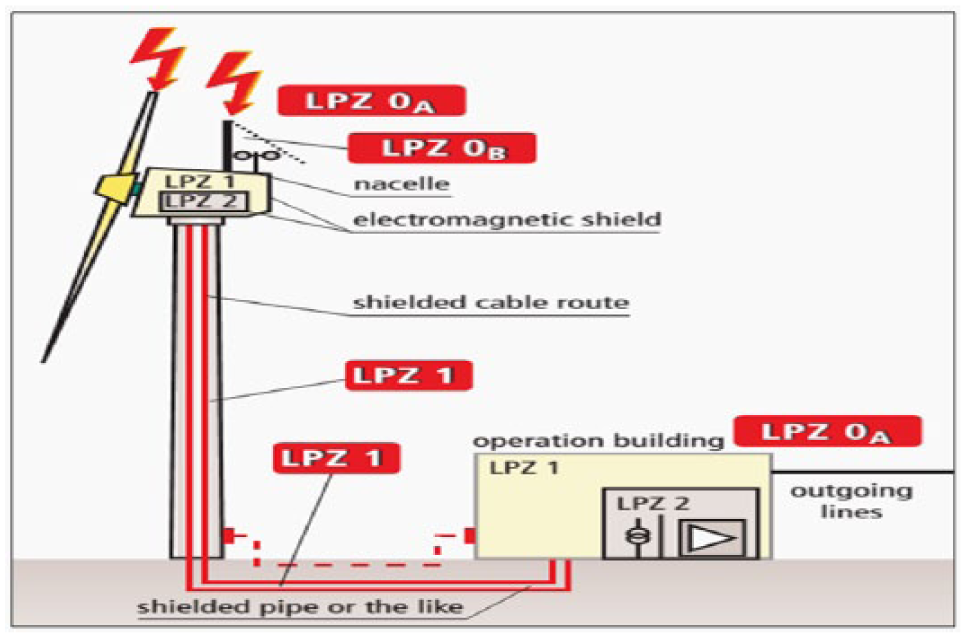
Lightning protection zone concept for a wind turbine.
Being a protection measure, the LPZ concept includes, therefore, a reduction of the conducted and radiated interferences at boundaries down to agreed values. For this reason, the object to be protected is subdivided into protection zones. The protection zones result from the structure of the wind turbine and shall consider the architecture of the structure. It is decisive that direct lightning parameters affecting LPZ 0A from outside are reduced by shielding measures and installation of surge protective devices (SPDs) to ensure that the electric and electronic systems and devices situated inside the wind turbine can be operated without interferences.
Shielding measures
The nacelle should be designed as a metal shield that is closed in itself. Thus, a volume can be obtained inside the nacelle with considerably attenuated, electromagnetic field compared to the outside. The connecting cables should be provided with an outer, conductive shield. With respect to interference suppression, shielded cables are effective against EMC coupling only if the shields are connected with the equipotential bonding on both sides. The shielding must be in contact with all bounds to avoid a improper EMC.
Earthing system of a wind turbine
For earthing a wind turbine, the reinforcement of the tower should always be integrated. Installation of a foundation earth electrode in the tower base, and, if existing, in the foundation of an operation building, should also be preferred in view of the corrosion risk of earth conductors. The earthing of the tower base and the operation building (Figure 7) should be connected by an intermeshed earthing in order to get an earthing system with the largest surface possible.
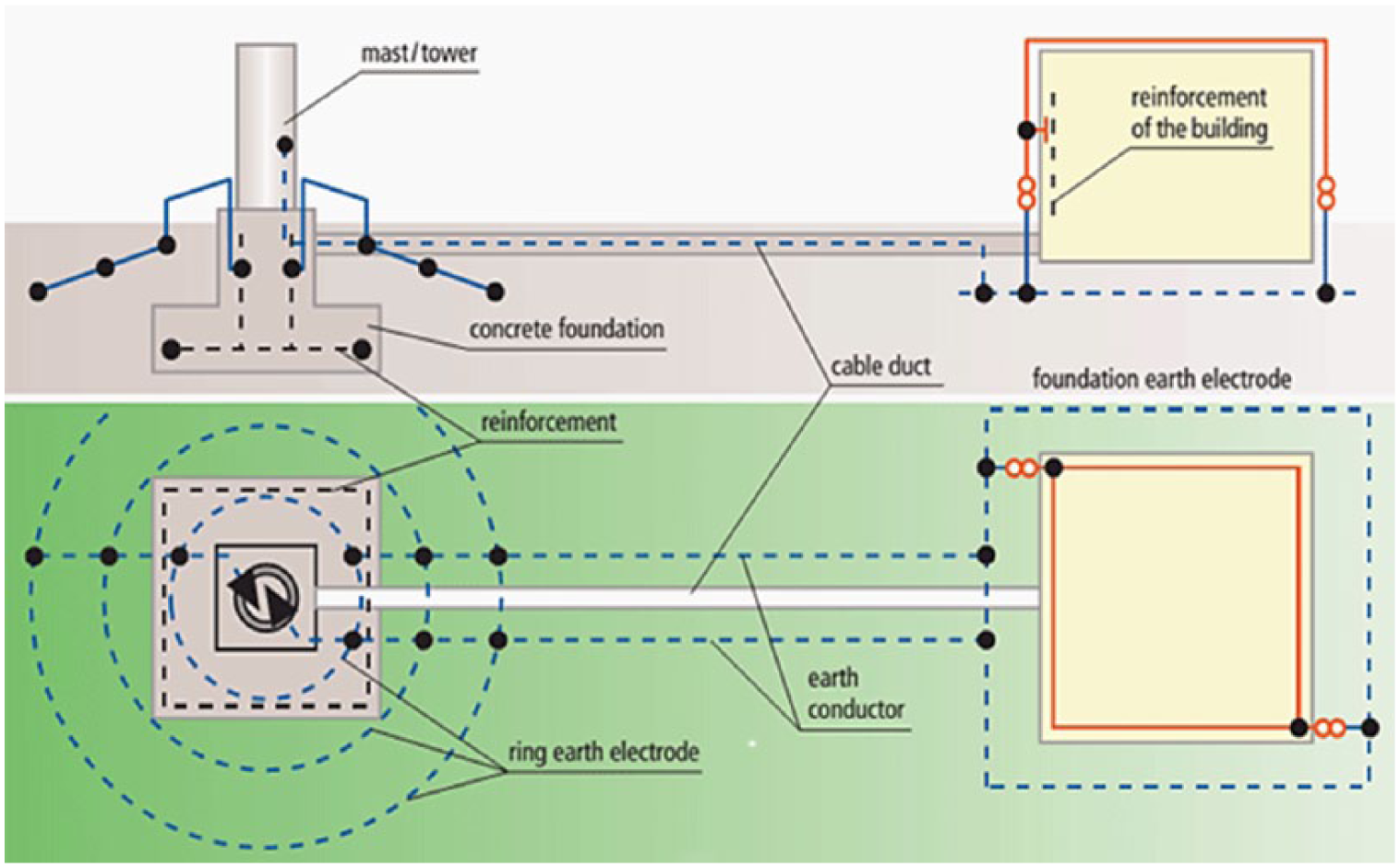
Earthing system with the largest surface of wind turbine (Bermudez et al., 2005; Motoyama et al., 1996).
Protective circuit for conductors at the boundary of lightning protection zone LPZ 0A to LPZ 1 protects the majority of the electrical system of the turbine. Besides shielding against radiated sources of interference, protection against conducted sources of interference at the boundaries of the LPZs must also be provided for reliable operation of the electric and electronic devices. At the boundary of LPZ 0A to LPZ 1 (conventionally also called lightning equal-potential bonding), SPDs must be used, which are capable of discharging considerable partial lightning currents without damage to the equipment. These SPDs are called lightning current arresters (SPD Type 1) and tested with impulse currents of waveform 10/350 µs. At the boundary of LPZ 0B to LPZ 1 and LPZ 1 and higher, only low energy impulse currents, which result from voltages induced from the outside or from surges generated in the system itself, have to be controlled. These protection devices are called SPDs (Type 2) and tested with impulse currents of waveform 8/20 µs.
LPS on blades and working
LPS is vital for wind turbine blades as they are prone to lightning strikes due to their shape and position on the wind turbine. LPS in the present blades in this project consist of a down conductor/receptor-based system (Figure 8). During a thunderstorm, the receptor is the preferred first point of attachment to lightning leaders. After successful interception to the lightning leader, the lightning current is safely conducted through the down conductor.
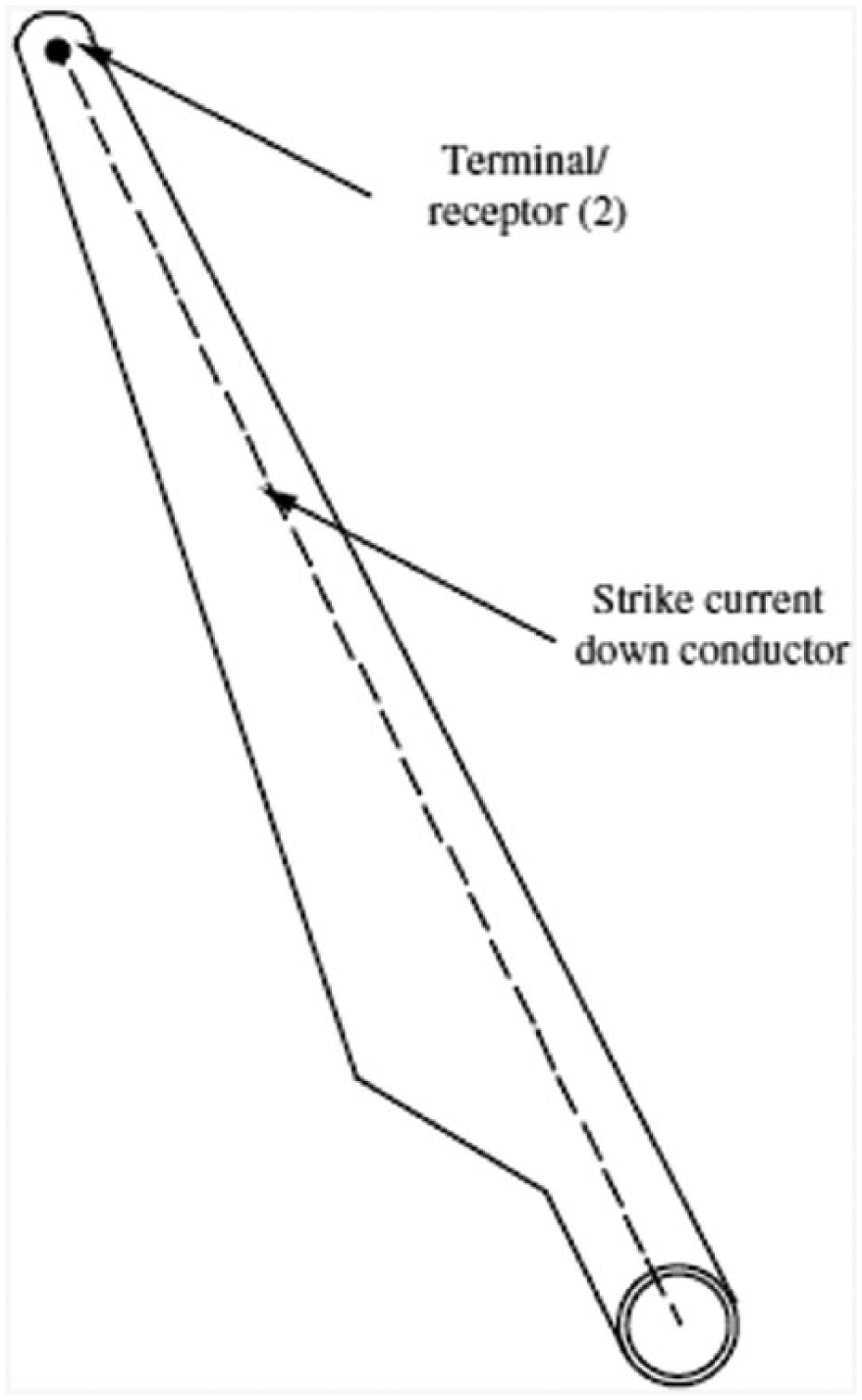
Zone blade conductor retrofit.
Influence of carbon-reinforced plastics
In IEC TR 61400-24:2002 (2002), carbon-reinforced plastic (CRP) materials are considered as electrical conductors and it is recommended to bond CRP to other conducting components for lightning protection purposes. However, this recommendation raises two questions which need to be addressed:
Would CRP components be able to conduct lightning current without being damaged?
How should the bonding between CRP and LPS be made?
Another issue related to the use of CRP is their response to the static electric field below a thundercloud. It is indeed well known that the electric field Eg at ground level below thunderclouds can reach values of about −5 to −15 kV/m. It is likely that the CRP material in the blade practical tests which vary from Eg to a value than can reach a few times of Eg, due to the effect of the field reinforcement when the blade tip is at its highest position.
The circulation of eddy currents results in energy dissipation as heat, which can generate mechanical stresses. To evaluate the eddy current losses in CRP laminates, we consider the geometry presented in Figure 9. The CRP laminate is defined by a volume of thickness d, width l, and length h, and at a distance R from the lightning down conductor (Bermudez et al., 2005; Cotton et al., 2001). The average loss due to eddy currents in a laminate is given by



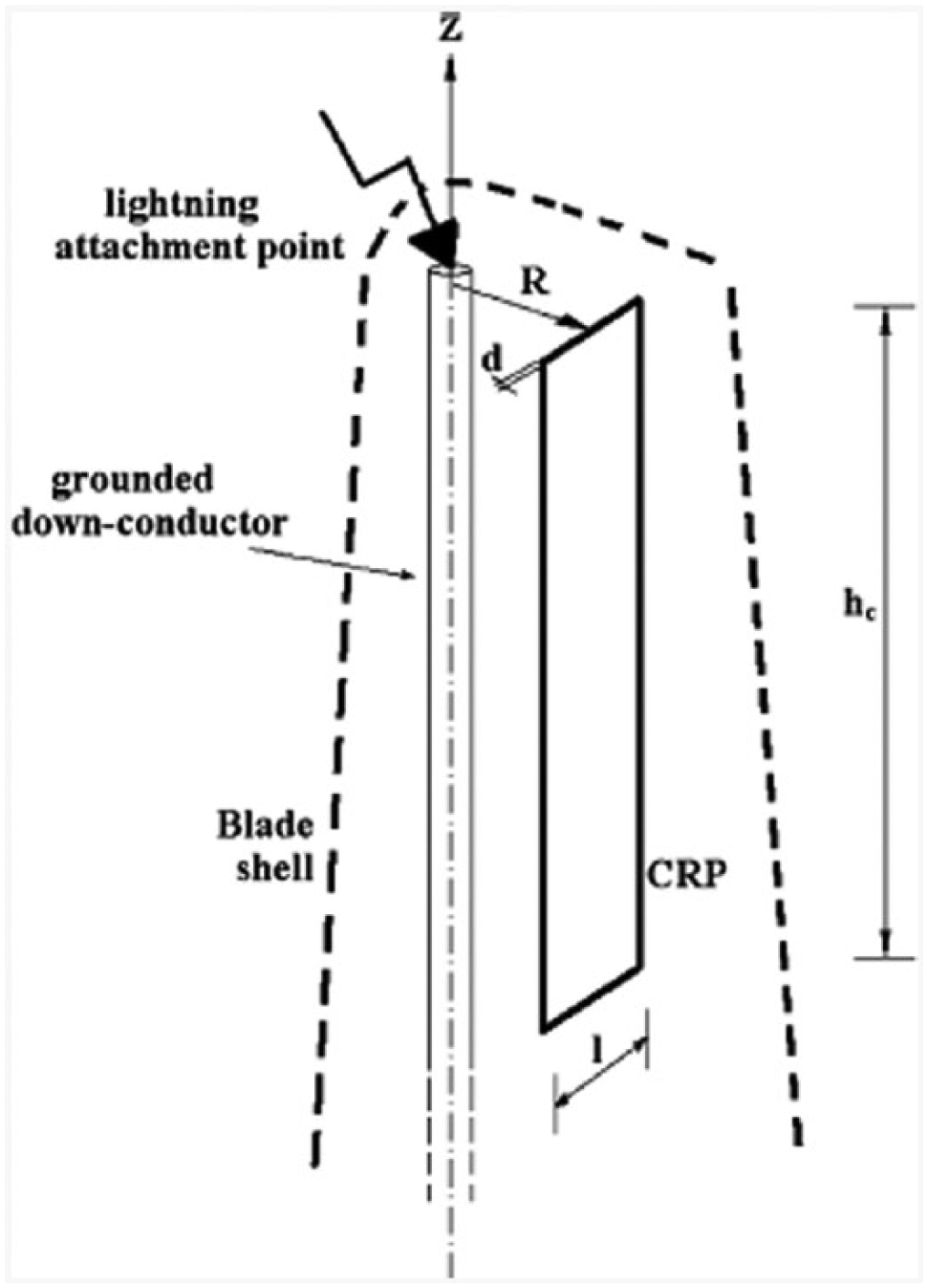
Geometry for the evaluation of eddy currents in a CRP laminate (Rachidi et al., 2008).
l is the medium permeability and r is the conductivity of the CRP.
The energy dissipated per unit volume is given by

And the total dissipated energy in the laminate is therefore

Figure 10 presents the specific energy W0 = W/(1 × h) in J/m2 as a function of width d and considering the following parameters used (Baba and Rakov, 2005; Cotton et al., 2001): R = 0.2 m, σ = 7.2469 × 10⁴ Sm−1 and µr = 1. The return stroke current corresponds to a typical first return stroke and has a magnitude of 30 kA.
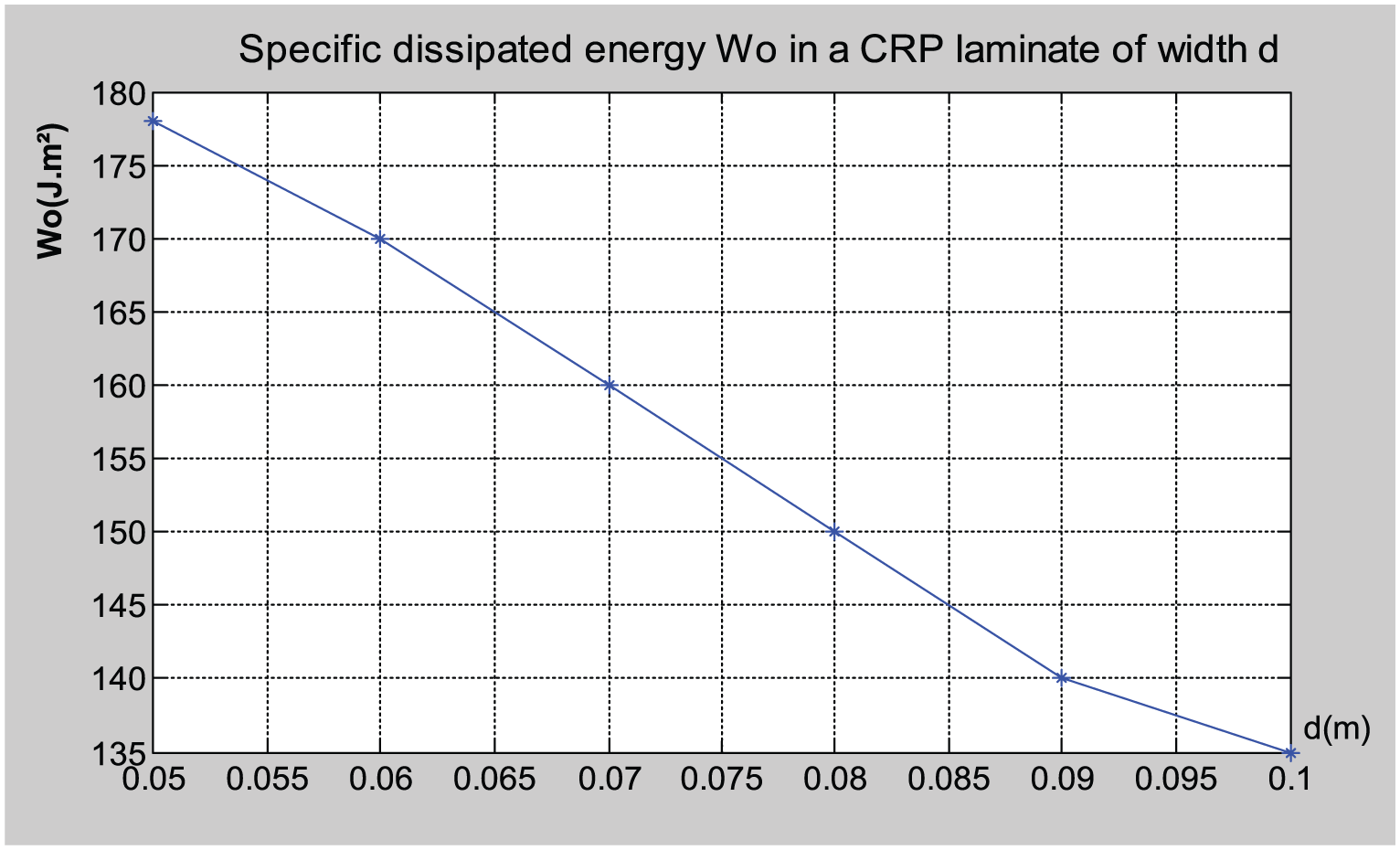
Specific dissipated energy in a CRP laminate of width d (Rachidi et al., 2008).
Results and conclusion
Statistical reports show that 80% of the damage suffered by the wind turbines in the world and especially in Europe are caused by direct and indirect lightning strikes implying the paramount need for their protection in a more efficient manner. Losses consequently are enormous (economic, management, production shutdown of power, stability, etc.).
Lightning protection of wind turbines presents a number of new challenges due to the geometrical, electrical, and mechanical particularities of the turbines, especially for modern turbines that are larger with pale reinforced composite materials such as new fiber in CRP.
The assessment of the lightning risk of turbine is very important for an optimal design of the protection system against lightning, LPS.
The rotation of the blades may have a considerable influence on the number of strikes to the blades of large wind turbines as these may be triggering their own lightning.
Technical protection zones, external and internal LPZ, applied to the wind according to international standards (IEC 62305; IEC TR 61400-24:2002 (2002) Fd.1; CLT/TS 50539-22:2010, and others) is more effective if the internal areas are multiple and distributed in an optimal manner (Zj and j ⩾ 1).
Rotation of the blades may have a considerable influence on the number of strikes to the blades of large wind turbines as these may be triggering their own lightning.
The simulation results show that the influence of height is important in the frequency of lightning on the wind turbines where Erikson’s model gives more credibility and deserves to be adopted to provide for a more efficient LPS and the transient phenomena in general. More than one receptor blade over 25 m (82 ft) in length is necessary.
The grounding system must cover the maximum area where the wind turbine is implanted and must be bound by a mode equipotential earth system.
The presence of CRPs in the blades introduces a new set of problems to be dealt with in the design of the turbines.
Footnotes
Declaration of conflicting interests
The author(s) declared no potential conflicts of interest with respect to the research, authorship, and/or publication of this article.
Funding
The author(s) received no financial support for the research, authorship, and/or publication of this article.