







Abstract
Access to energy is critical for promoting economic growth and alleviating poverty. Cost-effective and dependable energy services are essential for modernising agriculture, expanding trade, saving lives, growing industries and empowering women. Renewable energy resources, which include wind, are employed worldwide to augment energy needs. Apart from generating electricity, it has also been harnessed for pumping water, milling grains, and irrigation in agriculture. Farming remains one of the significant economic activities in Ghana, and for farmers to stay in business all year, they must irrigate their farmlands. Through its Irrigation Development Authority, the Government of Ghana promotes irrigation among farmers. Irrigation in Ghana is mainly done by fossil fuel-operated pumps or manual labour, with little or no irrigation powered by renewable sources. Though the Ministry of Energy and Food and Agriculture promoted the Poldaw Windpump for irrigation and communal water supply in 2004, wind-powered irrigation is non-existent in Ghana. This paper reviews wind irrigation development in Ghana. It highlights the piloting of the Poldaw Windpump in Ghana and the present situation in the country.
Introduction
Background
Renewable energy resources are sources of energy that can be naturally replenished or regenerated over time. Unlike finite resources such as fossil fuels, renewable energy sources are abundant and sustainable, making them crucial in addressing energy needs while mitigating environmental impacts. Common renewable energy resources include solar energy, derived from sunlight through photovoltaic cells or solar thermal systems; wind energy, harnessed through wind turbines; hydroelectric power, generated by harnessing the kinetic energy of flowing water; biomass energy, produced from organic materials like wood, crops, and agricultural residues; geothermal energy, obtained from the Earth’s heat stored beneath its surface; and tidal energy, generated by the gravitational pull of the moon on the Earth’s oceans. These renewable energy sources offer clean and reliable alternatives to traditional fossil fuels, contributing to efforts to reduce greenhouse gas emissions and combat climate change.
Wind is an essential component of the Earth’s climate. Wind occurs when air moves over the Earth’s surface due to temperature differences from the uneven heating pattern by the sun (Landberg, 2015; Manwell et al., 2010; Mathew, 2006). Thermal circulation develops due to the pressure at ground level decreasing and air flowing from higher to lower pressure (Landberg, 2015; Salomonsson and Thoresson, 2010). The power of wind energy has been harnessed over the years for many applications through mechanical and electrical mechanisms (Dzebre, 2019). As a natural resource, wind energy has some desirable characteristics. It is a renewable energy resource that is environmentally friendly, economically competitive, and socially justifiable (Burton et al., 2011; Vargas et al., 2019; Wang et al., 2019). Therefore, developing wind energy resources could improve national energy security and limit climate change by replacing fossil fuels as a source of power generation.
The power of the wind has been harnessed for years. Its kinetic energy is converted into mechanical and electrical energy for various applications. The overconsumption of oil, natural gas, and coal has resulted in greenhouse gas emissions and pollution of the environment (Hong and Rioflorido, 2019). Moreover, reserves for these fuels are depleting and limited. As a result of these, wind energy, being an environmental friendly and abundant renewable energy resource with low operating costs, is considered one the best alternative energy sources available. In December 1997, the Kyoto Protocol was inaugurated to implement the United Nations Framework Convention on Climate Change (UNFCCC). Article 2 of the Kyoto Protocol addresses the fight against global warming through greenhouse gas reduction to a level that would prevent dangerous interference with the climate system (United Nations, 1997). Global warming is approximately 1.0°C above pre-industrial levels and is estimated to reach 1.5°C between 2030 and 2052 (Stocker, 2014). Fighting global warming and the need for an alternative form of cleaner, non-depleting, and economical energy sources for human consumption have led to the increasing harnessing of the energy in wind for electricity production worldwide (Ohunakin et al., 2013).
Wind energy can be used for many applications (Dzebre, 2019). A modern wind turbine with a rated capacity of 1.65 MW can create more than 4.7 million kWh of electricity annually to power more than 470 ordinary residences in the United States (Himri et al., 2012). Various stationery (non-vehicular) agricultural jobs are known to be adaptable to wind energy. Wind energy’s primary applications in agriculture include a general farmstead power supply (mainly electrical), irrigation pumping, product storage and processing, and water supply for rural populations and animals. Most of these applications necessitate remote wind systems ranging from 10 to 100 kW and small wind farms (Adekoya and Adewale, 1992).
In rural regions, energy poverty and a lack of energy intensify poverty in developing countries. When implemented appropriately, sustainable development technology can be considered an efficient method for reducing energy poverty (Borhanazad et al., 2013). Nonetheless, grid extension via challenging terrain islands and dense jungles to serve tiny towns is neither practical nor cost-effective. Grid power provision in rural areas is not economically viable due to the high distribution cost and transmission loss. Blenkinsopp et al. (2013), citing IEA (2012), argue that renewable energy technologies are increasingly being recognised as a critical component of a country’s energy policies, particularly in satisfying the energy demands of rural and distant populations while assisting the government’s other policy objectives of future energy security and climate change mitigation. Renewable energy systems can significantly reduce monthly electricity bills. Wind makes off-grid living possible, particularly for farms with suitable enough topography to construct wind turbines (Calderon et al., 2019).
With an undisputable link between water availability for irrigation is linked to food availability, modern farming uses energy for various purposes, including ensuring a reliable water supply via irrigation (FAO, 2000). Human labour and farm animals have traditionally provided the energy required to pump water from wells. Wind-powered pumps have a long history and became popular in the early twentieth century in the United States and many parts of Europe. Many of these antique pumps can still be seen today, albeit most have been idle for decades due to the availability of low-cost energy to power water pumping equipment. However, in recent times, fossil fuel prices have increased exponentially, and windpumps have become competitive. The demand for water pumping has increased due to aquifer depletion; hence, wind pump gears have been modified to create the force required to retrieve water from deep wells (Bardi et al., 2013). Wind-powered pumps with water storage tanks instantly handle the typical renewable energy intermmitency problem as the average water produced is accumulated in a storage tank.
The global wind energy sector has seen significant growth over the years with advances in wind turbine technology, resulting in larger rotor diameters, taller towers, and more efficient designs. Offshore wind energy has also been gaining momentum as a promising frontier in renewable energy development, offering several advantages, including higher and more consistent energy supply, as well as reduced visual and environmental impacts compared to onshore wind farms. Leading the charge in these developments are developed countries like China, the United States, the United Kingdom, Germany, Denmark, the Netherlands among others. Developing countries like Ghana are currently absent in developing a comprehensive utility-scale wind power industry. Only a handful of downstream participants in the wind power industry supply chain, primarily vendors of small wind power systems and a few developers, are operational in the country (Essandoh et al., 2014). There has been low prioritising of the harnessing of the coutnry’s wind energy resources during significant events such as the 1973 world oil crisis triggered by the Arab-Israeli conflict, when oil became a powerful political tool.
The situation has only slightly improved in recent times when several studies (Energy Commission of Ghana, 2006; Dzebre, 2019; Dzebre et al., 2021; National Renewable Energy Laboratory (NREL), 2004) reported the country’s wind resources as being significant and viable for producing energy. Wind monitoring for meteorological and agricultural uses commenced in Ghana as early as 1921 (Essandoh et al., 2014). However, wind monitoring specifically for utility-scale wind power development began in 1999. The Solar and Wind Energy Resource Assessment (SWERA) Project in Ghana commenced in 2002, funded by the Global Environment Facility (GEF) and the United Nations Environment Programme (UNEP). The Energy Commission of Ghana led this initiative in collaboration with the former Ghana Meteorological Service Department (GMSD), now known as the Ghana Meteorological Agency (GMA). Table 1 shows the recent wind measurements in Ghana.
Recent wind measurements in Ghana.
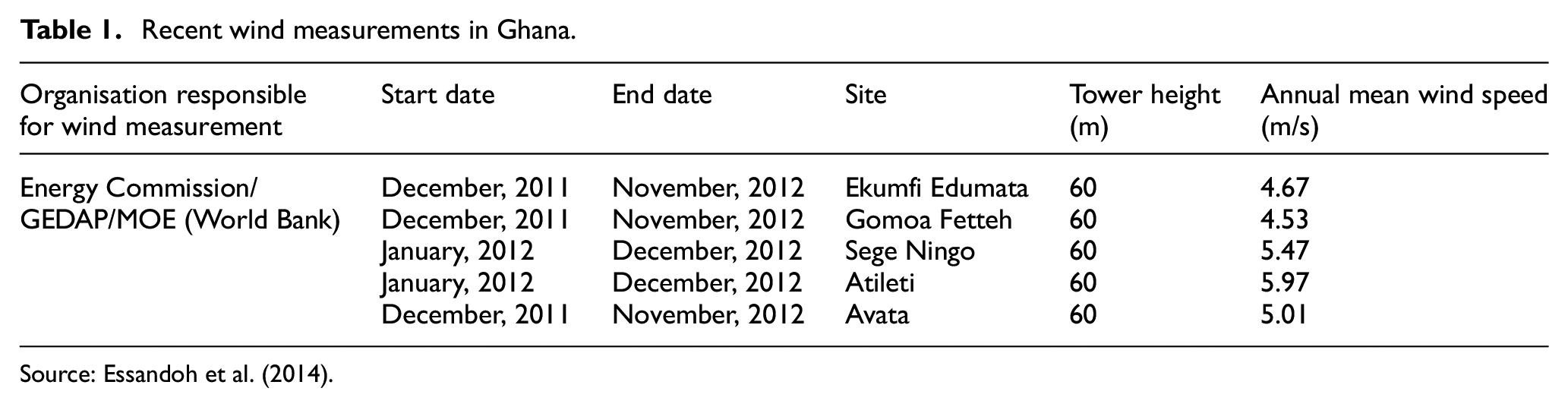
Source: Essandoh et al. (2014).
As per the wind report of Ghana, regions within the central belt of Ghana, particularly the Ashanti Region and certain areas of the Eastern Region, possess varying degrees of wind potential classified as class 3 (moderate) and class 4 (good). Similarly, parts of the Northern Region exhibit moderate to good wind resources, while the Brong-Ahafo and Volta Regions are identified as having moderate, good, and even excellent (class 6) wind speeds. Research by Agbeve et al. (2011) and Dzebre et al. (2021) supports the assertion that the most favourable wind resources in Ghana are situated along the Ghana-Togo border, near the country’s highest peak, Mountain Afadjato, standing at an elevation of 885 m a.s.l. This area extends from the Volta River to the Ghana-Togo border in a Northeast-to-southwest direction. Ghana has a gross wind resource potential of 5640 MW, according to the SWERA National Report (Ghana), and 5563 MW, according to Essandoh et al. (2014). However, due to critical constraints such as land availability, suitability, land use, and topography, Ghana’s exploitable wind power capacity has been estimated to be between 200 and 300 MW by the Energy Commission of Ghana.
Wind as a source of energy for irrigation
Quantity and quality crop yield are a function of available water (Brouwer et al., 1988; Brouwer and Heibloem, 1986). Any disruption in water supply through drought or inconsistency and irregular supply could significantly impact agricultural production. The traditional planting season is planned to tally with the rainy season in most locations worldwide. However, due to the increase in population and reduced availability of land for agriculture, traditional planting seasons based on the rainy season cannot always sustain the national and global food supply. Irrigation, therefore, is a crucial part of crop production instead of directly relying on rain for crop yield. Irrigation is the artificial process of applying controlled water to land during crop production.
Crop production in Africa is predominantly rainfed, and irrigation is insignificant (Namara et al., 2011; You et al., 2011). Due to the lack of proper irrigation, crop yields vary when the rains fail and fall too early or late since rain is not a controlled event during a planting season (Kyei-Baffour and Ofori, 2007). Statistics from AQUASTAT, NEPAD, and AU estimate that, out of the total cultivated land areas, the irrigated share is 6% for Africa, 37% for Asia, and 14% for Latin America (You et al., 2011).
The situation is no different in Ghana. According to Kyei-Baffour and Ofori (2007), the unavailability of irrigation technologies on the global market and that most of Ghana receives adequate rainfall makes it challenging to define the concept of irrigable potential (Namara et al., 2011). Sant Anna of FAO 1997 has estimated Ghana’s irrigable land potential to be 360,000 hectares (FAO, 2005). The potential has also been estimated to be 500,000 hectares by Agodzo and Bobobee (1994). As of 2010, the total irrigated land in Ghana had been estimated as 309,000 hectares (FAO, 2019). The Ghana Irrigation Development Authority (GIDA) regulates irrigation development projects in Ghana. The authority can boast 22 irrigation projects and covers 6505 hectares, an additional 22 under the Small-Scale Irrigation Development Project (SSIDP) and six under the Small Farms Irrigation Project (SFIP) (Ghana Irrigation Development Authority, 2021). The SSIDP and the SFIP are less than 1000 hectares. Still, Tono and Kpong Irrigation Projects are estimated to be 2500 hectares and underdeveloped. Indigenous small-scale farmers are the primary beneficiaries of these projects. However, the tasks have been unproductive due to improper maintenance practices (Ghana Irrigation Development Authority, 2021).
Irrigation systems need power to draw water from the source to irrigate the farmland. These power sources may include diesel or petrol, energy from the utility grid, solar PV or wind. Unfortunately, most indigenous farming communities in Ghana are not electrified with power from the grid. Even if the communities are electrified, the grid does not extend to the farmlands, making it impossible for the grid to be a power source for irrigation. And when the grid does extend to the farmlands, the cost of electricity is too high for the average farmer to afford. The energy cost stands out as a significant hindrance to irrigation development in Ghana (Adzraku, 2017). The prevailing electricity tariff structure in the country renders pump irrigation prohibitively expensive and economically unviable. Formal, informal, and commercial irrigation systems all struggle to operate under these conditions, with some public and private schemes being forced out of operation due to disconnection from electricity supply due to high tariffs. This issue arises from the imposition of a maximum demand levy by the Electricity Company of Ghana on pump equipment coupled with the actual power consumption charges. Often, this levy amounts to three or four times the cost of the electricity consumed. Adding to the burden is that farmers are billed for this levy regardless of whether the pump is in use, resulting in farmers having to pay electricity bills even during periods of non-cropping activity. Such high tariffs become unmanageable for farmers, leading to instances where the power supply to irrigation schemes is severed, sometimes even amid a cropping season when crops are actively growing in the fields. Diesel or petrol-operated generators will be the next option for such off-grid communities. However, as found by Adzraku, 2017), high fuel costs, high operating and maintenance costs render this an unfavourable choice for farmers. Fossil fuel-operated generators also present the issue of GHG emissions. All these shortfalls make the wind and solar energy powered systems an attractive option in addressing the shortfalls of the others.
Problem statement
Farmers struggle to irrigate crops during the dry season in significantly underdeveloped countries because they must lift water from artesian wells, storm drains, and other surface water bodies. Farmers’ work producing agricultural products is ineffective when irrigating farmland using non-mechanised means to lift water onto the farm. These farms are often located in remote and rural parts of the country; hence, there is no access to power supply from the electricity grid. Farmers with enough financial resources can purchase fossil fuel-operated water pumps to irrigate their farms. However, the operating costs can be high due to an erratic increase in fuel costs. Also, the use of fossil fuels is not environmentally friendly. As several government policies focus on reducing carbon dioxide emissions, renewable energy, specifically wind power, can reduce the dependence on fossil fuels for irrigation.
Objective
Many large-scale vegetable producers often transport water to their farmlands for irrigation during the dry season. Irrigation is capital-intensive and unaffordable to smallholder farms. Therefore, many smallholder farms dig up wells and dams to access groundwater and require energy to pump the water to the farms for irrigation; this is labour and capital-intensive.
Pumping groundwater for all-year vegetable cultivation in some parts of Ghana is often done with premix fuel and electricity (Adzraku, 2017), even though some of these areas have been reported to have some of the best wind resources in Ghana (Energy Commission of Ghana, 2006; Dzebre, 2019; Dzebre et al., 2021; NREL, 2004). Though the Agricultural Engineering Service Directorate (AESD) and the Ministry of Food and Agriculture (MoFA) identified wind power as an alternative energy to lift groundwater and piloted the Poldaw Windpump in 2002, the technology failed to roll out for several reasons. Generally, irrigation development propagated throughout Ghana has not yielded many results, as less than 2% of the total cultivated area in the country is irrigated.
This paper’s overall objective is to provide an overview of wind-powered irrigation in Ghana. The article reviews wind power technologies, assesses wind irrigation systems, and looks into the history and status of wind irrigation in Ghana.
Materials and methods
A Systemic Literature Review (SLR), interviews, observations and site visits were used in this study. The study began with desk research to identify wind-powered irrigation projects in Ghana, gather information on the history of identified projects and their current states, collect data on government policies for renewable energy development in Ghana, and other related information relevant to the study. Field surveys and site visits were then conducted to collect more information and data on the projects through observations and interviews with the management of relevant irrigation projects in Ghana. It was also to verify the accuracy of some of the information from the desk study. The study approach is presented schematically in Figure 1.
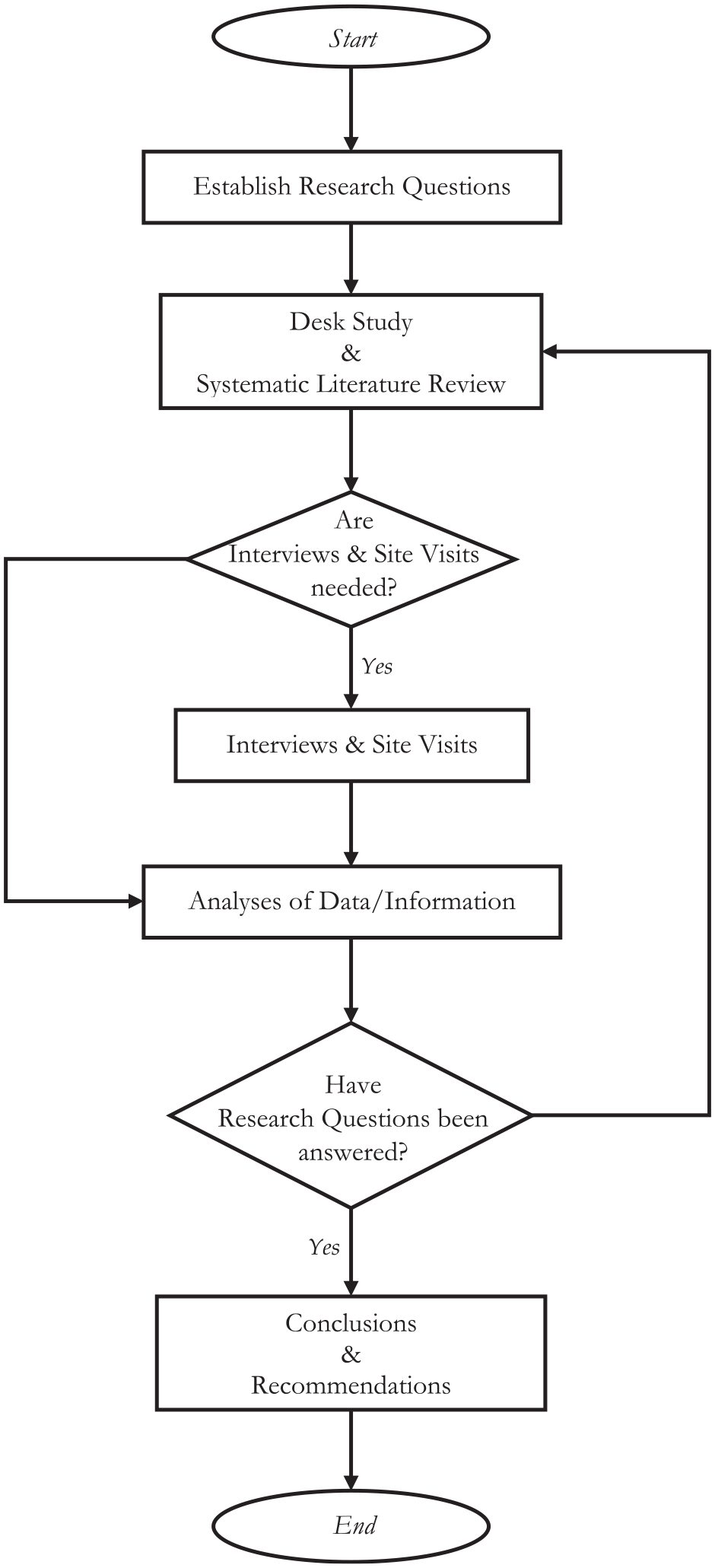
Schematic of study method.
Systematic literature review
The systematic literature review followed the Preferred Reporting Items for Systematic Reviews and Meta-Analyses (PRISMA) systematic review protocol with the following strategy/criteria: forming criteria, search strategy, searching databases, protocol registration, title, abstract, full-text screening, manual searching, extracting data, quality assessment, data checking, statistical analysis, double data checking. For the review, some specific questions were used as a guide in the literature search. The questions were as follows;
What is the state of Irrigation in Africa?
What is the state/progress of Irrigation Development in Ghana?
When did irrigation start in Ghana, and what is the current situation?
What is the history behind the wind irrigation project in Ghana and its current state?
Publications on Wind Energy Irrigation Systems based on the above questions, published between 2000 and 2022, were selected for the review. Only papers published after 2000 were considered because the initial desktop investigation suggested that the most influential work/publications on wind energy irrigation systems in Ghana began around 2000. Figure 2 illustrates the process for selecting the papers modelled after the PRISMA protocol.
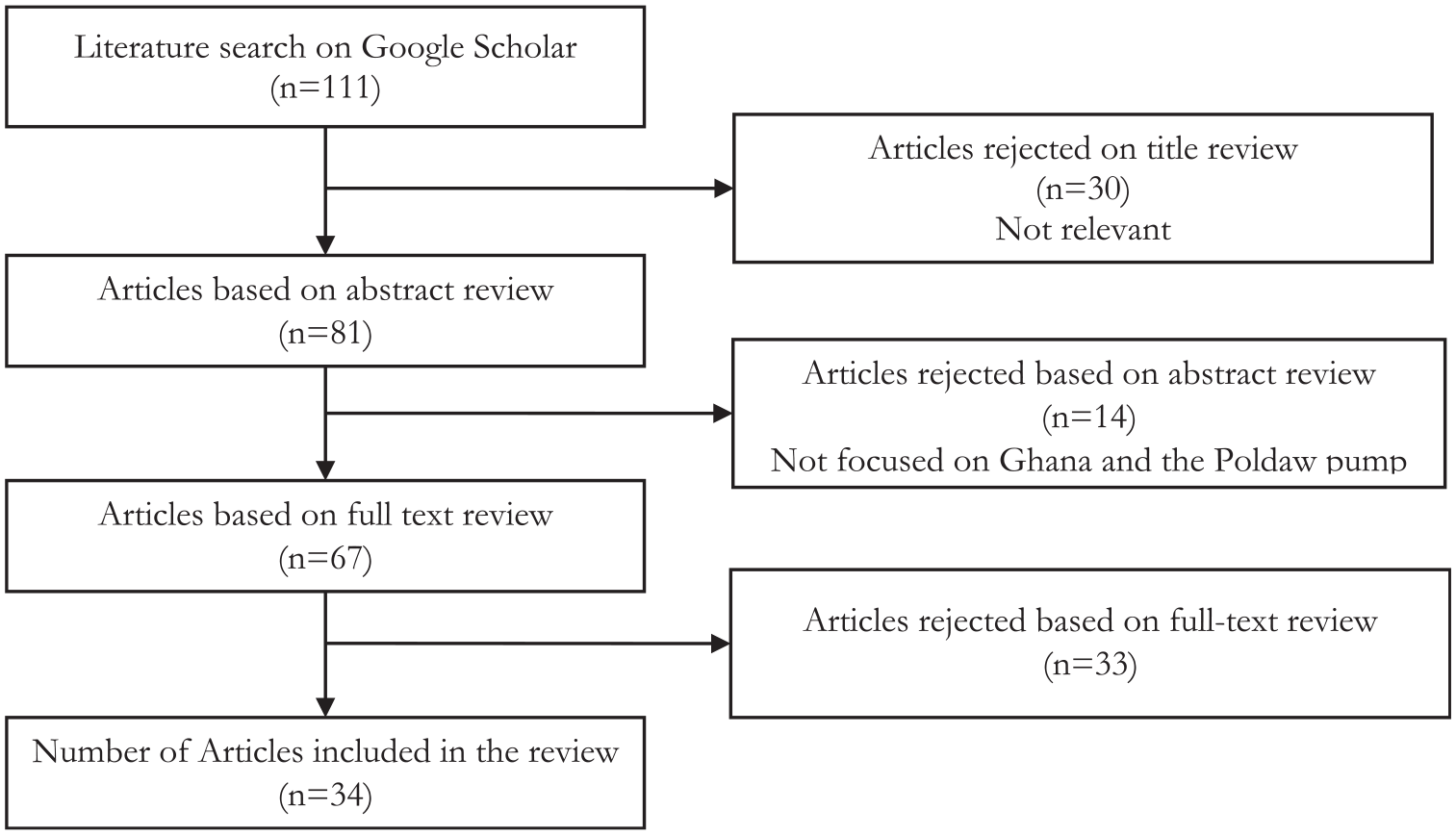
Systemation literature review flow chart.
A significant wind irrigation project identified during the desk study is the Village Infrastructure Project, overseen by the Ministry of Food and Agriculture (MOFA). This project was carried out by the Agricultural Engineering Service Directorate (AESD) at the Adaptive Trial Station (ATS) in Somanya, Ghana. The AESD is the technical directorate of the Ministry of Food and Agriculture (MOFA). They ensure the country’s availability and adoption of appropriate agricultural engineering technologies.
Yilo Krobo, District Director of AESD, who was in charge of the project, was interviewed to gain first-hand insight into the origin and process of the projects. An unstructured interview was conducted using the interview guide presented in Annexe A. The process was face-to-face and recorded. The focus was on understanding the knowledge, viewpoints, values, and stakeholders’ decisions. In areas where he deviated from a specific question, the respondent was allowed to express himself freely and uninterruptedly. The respondent was prompted to provide additional information on particular aspects of the questions when necessary.
Data analysis
The recorded interview was transcribed and analysed using the narrative analysis approach. The categorical approach to narrative analysis was used. All information was analysed compared to information gathered through the desk study. Pictorial evidence was also employed to verify and support the research findings.
Discussion
Overview of irrigation
Food security has been at the top of the agenda with a growing population, increasing climate change, and a global commitment to eradicating hunger and poverty (Kadigi et al., 2019). The question of how to feed 9 billion people by 2025 seems partly answered by more and better irrigation (Eberstadt, 2011). Irrigated agriculture currently produces 40% of global food production on nearly one-third of the world’s harvestable land. This production accounts for 70% of all freshwater used globally, including groundwater and more than 80% of water consumption (Ringler, 2017; The State of Food and Agriculture, 2020; Uhlenbrook and Connor, 2019).
Irrigation systems can be large-scale, medium-scale and small-scale. There are two types of large-scale irrigation: Large-scale systems, which are often planned and managed by the public sector and focus on food security crops such as rice or commercial crops such as sugarcane. Large systems managed by individual or group farmers often focus on profit maximisation (Ringler, 2021). The third form, medium-scale systems, are fewer in number and are developed by farmer groups or the government and then left to farmer groups to manage. Although it is generally accepted that small-scale irrigation systems with greater farmer participation have been more successful in Africa and Asia, using various criteria such as profitability (You et al., 2011), some studies show that even small systems can perform poorly in favourable or unfavourable conditions (Ringler, 2021) citing (Adams, 1990).
Water use in agriculture continues to face many challenges, which will become more acute as population growth and climate change put additional pressure on finances for raw fresh water. These challenges include water depletion, water allocation among competing users, climate change, appropriate pricing of water resources, efficient water collection and storage, and many more management issues. Two of these challenges are discussed.
Water depletion
Much of the world’s agriculture depends on groundwater, especially in arid and semi-arid regions (Shahid, 2011). Thanks to technological innovations, groundwater pumping for irrigation has increased dramatically over the past 50 years (Ringler, 2021). According to Famiglietti (2014), groundwater depletion and contamination by pollutants and seawater in coastal areas have become hallmark signals of growing risks to the sustainability of current agricultural water management practices. The environmental consequences of groundwater depletion are significant: reducing access to fresh water during drought and increasing pumping costs, frequent uses of fossil fuels and increased inequality between those who can afford to dig deeper wells and those who cannot (Ringler, 2021). Pumping groundwater for irrigation can also reduce underground flow to rivers and streams, reducing flow and water availability for other users and uses. Water depletion due to overexploitation of groundwater is the leading cause of land subsidence. Subsoil compaction causes land subsidence by reducing the size and number of open pores that previously held water in some aquifer systems due to excessive groundwater pumping, mainly for irrigation (Raspini et al., 2014). This causes damage to infrastructure, such as buildings, roads and bridges, increases the risk of flooding and can reduce long-term groundwater storage capacity.
Climate change
The increase in carbon dioxide and climate change due to global warming directly affects precipitation and evapotranspiration, therefore, irrigation water requirements (Rehana and Mujumdar, 2013). Increased atmospheric greenhouse gas concentration due to human activities will increase temperatures between 1.4°C and 5.8°C (Hui, 2013; Suppiah et al., 2007). As climate change intensifies globally, future freshwater availability for humans, agricultural production and manufacturing becomes more uncertain. Due to agricultural expansion and deforestation, population growth and land use changes have significantly increased pressure on global freshwater resources (Nejadhashemi et al., 2012). Several studies have attempted to understand the impact of climate change on agricultural water use in terms of changes in net irrigation requirement, crop water demand and usage. The study is critical because agriculture is the most extensive use of freshwater, and water is used for irrigation, accounting for 70% of total water consumption worldwide (Fischer et al., 2007). However, most of these studies have been performed at large spatial scales, for example, global, continental and regional at low resolution (monthly temperature and precipitation data), with exceptions at the basin scale (Gondim et al., 2012). The temperature and precipitation changes directly deplete soil moisture, which can significantly reduce agricultural productivity (Berg and Sheffield, 2018; Tao et al., 2003) and lead to increased irrigation demand. The impact will be felt now in the case of rainfed agriculture and indirectly in the case of hydrology and river basin flows and thus irrigated agriculture. As the competition is increasing between urban and agricultural development in some countries, problems related to water resources may occur due to limited water resources, and the expansion of cultivated areas will require what is available.
The state of irrigation in Africa
The African continent receives 124 mm less precipitation per year than the rest of the world, at 1045 mm. Data from 2005 suggests that the internal renewable water resources per capita are slightly lower than the global average, at 6273 m3 (You et al., 2011). On the other hand, total water withdrawals of 241 m3 per capita are less than half the worldwide average, and withdrawals in sub-Saharan Africa are less than a third of the worldwide average (Svendsen et al., 2009; You et al., 2011). It is explained mainly by the much lower share of area equipped for irrigation, that is, area equipped with technical irrigation facilities – 6% versus a global average of 18%. Compared to the worldwide average, Africans withdraw only one-quarter of water from the rest of the world for human consumption. Their cropland is irrigated at less than one-fourth of the global average (Svendsen et al., 2009).
Colonialists introduced Formal irrigation systems into Sub-Saharan Africa (SSA) (Bjornlund et al., 2020a). Governments of these countries do not care about the local socio-economic and physiological contexts and mainly to meet the interests of export of agricultural production. There is enough evidence to suggest that governments in SSA paid little attention to irrigation development until the last two decades (Baba et al., 1993). After independence, the SSA government continued to develop irrigation systems with donor support (Bjornlund et al., 2020a). These programmes were not motivated by the economic interest of farmers, nor were they used to improve production systems for local development (Bjornlund et al., 2020b). Instead, the growth and management of irrigation projects are driven by policies and government social policies and often conflict with the interest of farmers (Kadigi et al., 2019).
In contrast, complex agricultural water management practices endogenous to SSA have been adapted in scale and management to suit their biophysical and socio-economic environments in many places (Bjornlund and Bjornlund, 2019). We use the term government projects to describe irrigation programmes in which the government has significant control over their management. The degree and form of government control varies across regimes and countries. Government programmes are generally ineffective and do not deliver the promised results (Mutiro and Lautze, 2015). After independence, the government initially focussed on developing large irrigation systems for single crops to protect national food sovereignty. However, these did not yield good results, and a cycle of deterioration-renovation-deterioration began (Jones, 1995). The process has resulted in irrigation infrastructure being abandoned or underutilised. For example, only 54% of irrigated areas are used in the Sudano-Sahel region (Puy et al., 2021). Development then shifted to small projects driven by social goals of household food security but with equally poor results.
Sudan, South Africa, Madagascar, and Nigeria are the leading countries practising irrigated agriculture. Other countries with a total water-controlled irrigation area of over 10,000 hectares are Ethiopia, Kenya, Tanzania, Zimbabwe, Mozambique, and Senegal. Total agricultural consumption in SSA amounts to 105 billion m3 or less than 2% of total renewable water resources. Most countries in the region have low levels of water storage infrastructure, averaging 543 m3 per capita. In Kenya, total storage capacity per capita is only 126 m3 per capita, 4% lower than in Brazil. However, in some countries, including Somalia, Malawi, Mali and Zambia, partially equipped irrigation systems (flood and lowland) prevail. In Nigeria, Angola, Sierra Leone, Chad and Zambia, irrigation is not provided, and wetland farming is essential.
Irrigation projects in Africa are costly, making it difficult for the government to fund them. In research by Inocencio et al. (2005), projects had an average unit total cost of $11,828 per hectare against $3882 per hectare in the rest of the world. Even though small-scale irrigation schemes have a lower unit cost, they can be as high as $ 8000 per hectare, depending on the type of technology. Table 2 shows the unit cost of small-scale irrigation.
Unit cost of small-scale irrigation.
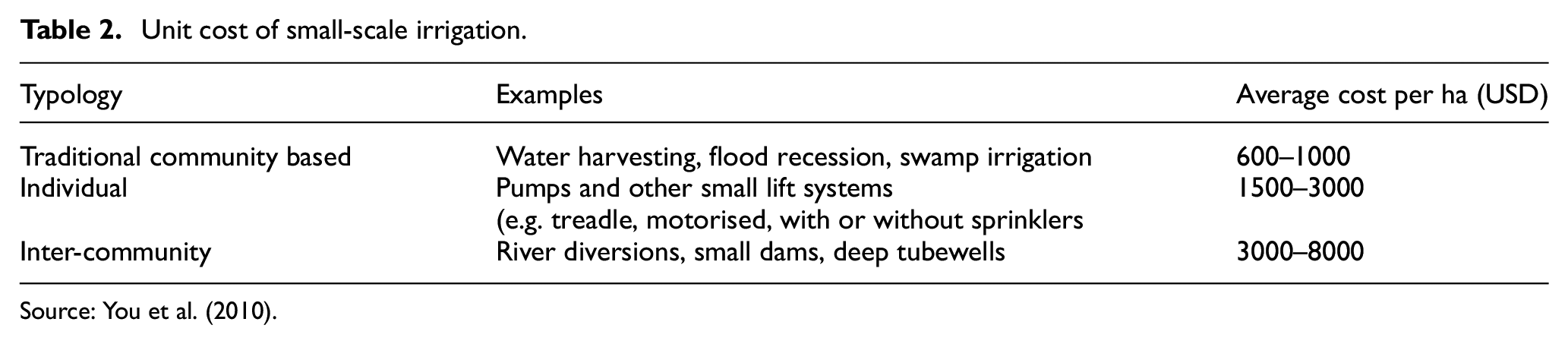
Source: You et al. (2010).
Irrigation in Ghana
Due to dependency on rain, the nation’s productivity of established agricultural land is now poor and unpredictable, notably in the drought-prone and flood-prone Northern areas (Namara et al., 2011). Ghana has a lot of arable land and water resources, so there’s much room for expansion. Irrigation development for agricultural productivity. However, as previously indicated, there is virtually little promise. Land that can be irrigated is being developed. Most of the existing irrigation networks’ effectiveness and production, especially those created publicly, have a poor success rate.
Irrigation development in Ghana
The concept of irrigation is not new in Ghana (Namara et al., 2011). However, the sector has not been well exploited over the years. Traditional irrigation systems, primarily initiated and developed by the Ghanaian government or various non-governmental organisations (NGOs), and emerging irrigation systems, mainly created and developed by private entrepreneurs and farmers, are observed in Ghana. Emerging methods are little understood, but they are rapidly growing, fuelled by access to inexpensive pumping technology and export markets for horticulture products. Irrigated farming in Ghana falls into three main categories: informal or smallholder irrigation, formal irrigation, and large-scale commercial irrigation.
Smallholder irrigation involves individuals cultivating areas of up to approximately 0.5 hectares or more, using basic water storage, conveyance, and distribution infrastructure. This type of irrigation typically requires minimal investment by farmers. It often involves manual water fetching using buckets or watering cans, although some use pumps for lifting water. Examples include traditional and community-led schemes along the southeastern coastline, groundwater irrigation near Bawku, inland valley irrigators, dam and dugout irrigators in the northern region, and urban and peri-urban agriculture irrigation. Currently, informal smallholder irrigation covers an estimated 189,000 hectares (GiDA, 2016).
Formal irrigation relies on permanent irrigation infrastructure funded by the state in collaboration with development partners and civil society organisations. The establishment of formal irrigation schemes in Ghana dates back to the 1960s. Many of these schemes have low utilisation rates due to inadequate operation and maintenance of infrastructure and high energy costs. Pump scheme utilisation stands at 46%, while gravity schemes are 134%, below the targeted 200% mark for irrigation schemes.
Large-scale commercial irrigation, formal or informal, typically focuses on export-oriented cultivation of high-value fruits and vegetables. Formal large-scale commercial irrigation involves government-funded infrastructure such as headworks, conveyance, and primary water distribution facilities, with private investors providing secondary water distribution and application machinery. Examples include Golden Exotics Limited and VegPro Ghana Limited, which operate under Public-Private Partnership (PPP) arrangements to export bananas and baby corn to European markets. Conversely, informal large-scale commercial irrigation is entirely privately funded. There are an estimated 21,000 hectares of large-scale commercial irrigation in Ghana.
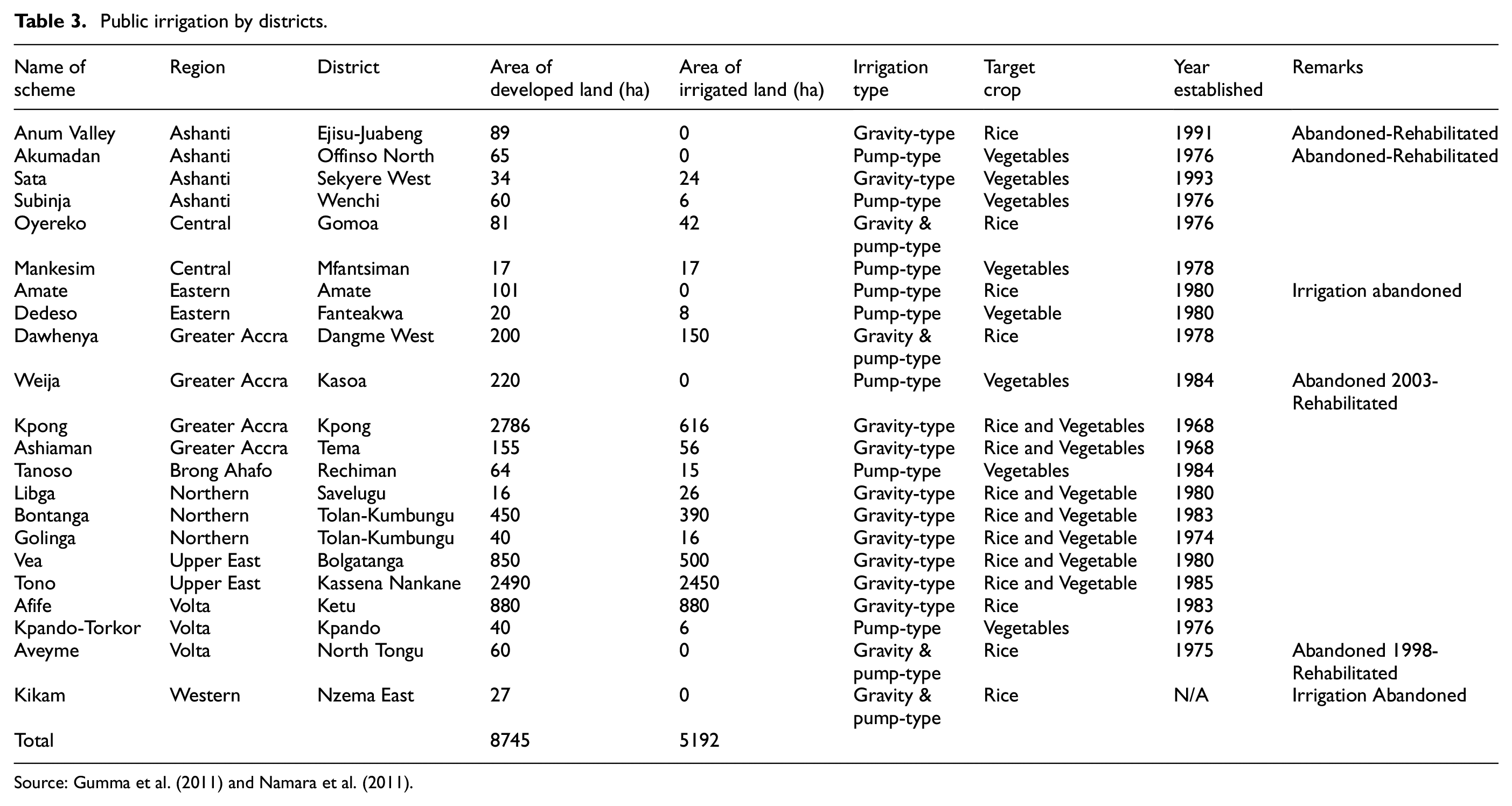
The government of Ghana developed little less than 9000 hectares of irrigated land, with the rest of the area being developed by the private sector. The government developed 22 public irrigation systems across the country. These public irrigation districts have been developed with bilateral financial and technological assistance from countries like China, the former Soviet Union, Taiwan, Japan and the Republic of Korea. International agencies such as the United Nations Food Programme (UNFP) have also contributed. The 22 public irrigation districts controlled by GIDA and ICOUR are shown in Table 2. These public irrigation districts span about 8800 hectares in Ghana and assist about 11,000 agricultural households, with a cultivated area per person of approximately 0.8 hectares per household (Namara et al., 2011).
Ghana’s topography is mostly flat, with limited terrain suitable for gravity-type mining. As a result of irrigation development, many irrigation districts are compelled to construct and maintain costly infrastructure. As a result, irrigated agriculture has been abandoned in some of the areas. Pump irrigation is required in all of these abandoned regions. However, other people utilise gravity as well. Due to this abandonment, only 5192 hectares of 8800 hectares remained theoretically available for irrigation.
Table 3 summarises public irrigation projects executed in Ghana over the years. These irrigation systems were established many years ago, and some are deplorable. Some projects have been abandoned due to sustainability and decreased irrigation land. Actual irrigated land areas are falling due to issues such as a decline in the capacity to convey and distribute water due to ageing facilities, abandonment of irrigated agriculture due to the complete failure of facilities (pumps, etc.), and suspension of irrigated agriculture (due to inability to bear the costs of operating pump stations). However, government efforts in restoration have resulted in four of these irrigated areas being or being on the verge of being rehabilitated in recent times. As a consequence, almost 7000 hectares of land are currently active.
Public irrigation by districts.
Source: Gumma et al. (2011) and Namara et al. (2011).
Policies and initiatives
The difficulties encountered within Ghana’s irrigation sub-sector led to the implementation of two key initiatives. The first initiative involved formulating the National Irrigation Policy, Strategies, and Regulatory Measures, which were endorsed in 2010 and officially enacted in 2011. The second initiative entailed a diagnostic examination of the irrigation sub-sector, ‘The Ghana Agricultural Water Management Pre-Investment Reform Action Framework’, conducted in 2012 in alignment with the Comprehensive African Agricultural Development Programme (CAADP).
National irrigation policy, strategies, and regulatory measures
The National Irrigation Policy, established by the Ministry of Food and Agriculture, is a comprehensive framework addressing issues, constraints, and opportunities across Ghana’s irrigation sub-sector. It encompasses informal, formal, and commercial irrigation, with the overarching objective of fostering sustainable growth and improved performance within the agricultural sector of Ghana (Ghanaian Ministry of Food and Agriculture (MOFA), 2011). Key objectives include boosting agricultural water productivity, expanding irrigation areas, facilitating appropriate funding mechanisms, and attracting private-sector investment. Moreover, the policy emphasises environmental stewardship by adopting best practices and providing cost-effective, demand-driven irrigation services.
The Ghana Irrigation Development Authority, under the Ministry of Food and Agriculture, spearheads policy implementation, fostering collaboration with key agencies such as the Water Resources Commission, the Environmental Protection Agency, local governments, NGOs, and private sector entities. This collaborative approach ensures a proactive and coordinated effort towards advancing public and private irrigation development, thereby enhancing the overall resilience and effectiveness of the agricultural sector.
This policy endeavours to unlock investment avenues for intensified and diversified irrigated crop production, targeting four key challenges: (a) low agricultural productivity and sluggish growth rates, (b) limited socio-economic engagement with land and water resources, (c) environmental degradation linked to irrigated production and (d) insufficient irrigation support services. The policy aims to mitigate these challenges through strategies focussed on performance and growth, socio-economic inclusion, responsible production and enhanced services.
By enhancing irrigation systems and promoting proper utilisation of water resources, the policy contributes significantly to food production and security, aligning with broader national goals of eradicating hunger, food insecurity, and malnutrition. The policy plays a vital role in poverty reduction in rural areas by fostering gender-sensitive, pro-poor agricultural development plans and promoting inclusive land and water resource management. It advocates for women’s participation in decision-making processes and encourages economic incentives for farmer involvement in scheme management.
As Ghana confronts challenges posed by climate change, the policy aims to address the impacts on rainfall patterns and mitigate associated risks within the irrigation sub-sector.
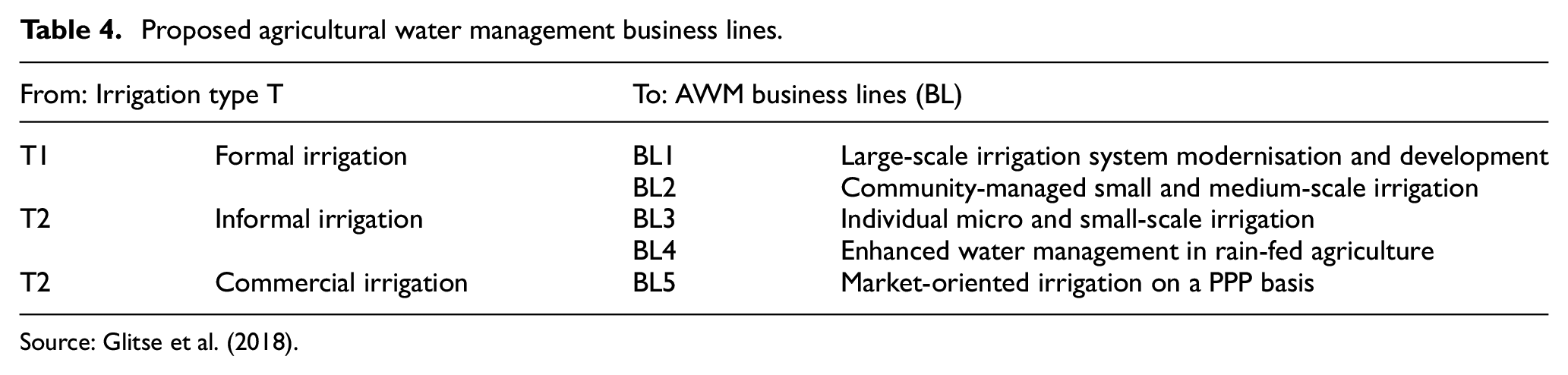
The Pre-Investment Reform Action Framework of 2012 proposed a sub-sector typology based on five business lines, as shown in Table 4.
Proposed agricultural water management business lines.
Source: Glitse et al. (2018).
Emerging irrigation technologies
Emerging irrigation systems displacing traditional irrigation systems in irrigated areas, yield achieved, output levels, and production value. Tube well irrigation, tiny motor-based irrigation, out-grower systems and other systems are examples of these systems. Surface-water-pumping-based private and communal irrigation systems may be found across Ghana’s 10 administrative areas. Still, they are most prevalent in the Western Region. The Eastern, Ashanti, Brong-Ahafo and Volta regions are the most populous in Ghana. Based on the subsurface and groundwater, irrigation systems aren’t uniformly dispersed across the country. However, they’re quickly spreading traditional enclaves like the Keta strip in the Volta area. The primary crops cultivated by developing irrigation systems are horticultural, unlike public irrigation systems, which appear to be geared mainly towards rice cultivation. Some primary crops, such as maize, rice and cassava, are grown solely or with vegetables.
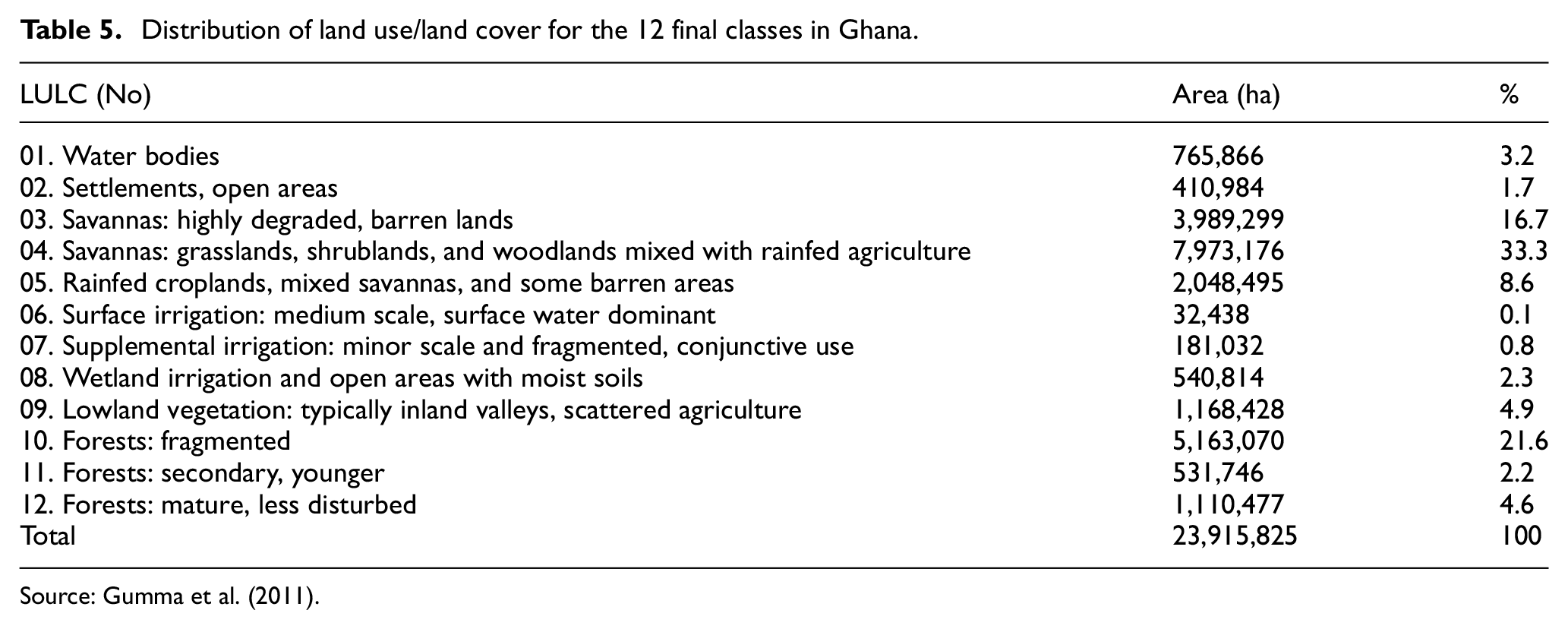
In a study conducted by Gumma et al. (2011) to map out irrigated areas in Ghana using Fusion 30 and 250 m resolution remote-sensing data, 12 classes of land use/land cover were identified, as shown in Table 5. Class 5 indicates by area rainfed cropland, 6 surfaces, and 7 supplementary irrigations. Gumma et al. (2011) analysed that the Upper East (northern part) and Greater Accra regions have significant irrigated and minor irrigation areas, areas along inland valleys and river corridors, and have high agricultural water potential.
Distribution of land use/land cover for the 12 final classes in Ghana.
Source: Gumma et al. (2011).
Major irrigated areas in Ghana are identified in the Upper East (northern part) and Greater Accra regions. Minor irrigation areas, including fragmented and conjunctive irrigation areas along inland valleys and river corridors, have good water potential for agriculture-rainfed riparian agricultural areas spread throughout these regions. Wetlands and lowland areas are identified in 7.2% of total geographical locations, which are highly suitable for rice areas. However, inland valleys have rich soils and good groundwater potential zones (Larson et al., 1977).
The Village Infrastructure Project (VIP)
The Village Infrastructure Project was established to support the government’s efforts to reduce poverty and improve the quality of life of the rural poor by increasing the transfer of technical and financial resources to develop basic village-level infrastructure that beneficiaries could maintain. The project lasted for 7 years, from 1998 to 2004.
The following components were included in the project: (1) Rural Water Infrastructure, (2) Rural Transport Infrastructure, (3) Rural Post-Harvest Infrastructure and (4) Institutional Strengthening. The Rural Water Infrastructure component consisted of integrated development and water resource management practices, such as catchment management and other water conservation practices; investments in the rational use of water for agriculture, livestock, and human consumption, such as small dams, dugouts, boreholes, hand-dug wells, streamflow diversion and pumping to support small-scale irrigation in the dry season; and rainfall conservation and management for more effective use in rainfed areas.
It was jointly funded by the KfW Development Bank ($7 million), the International Fund for Agricultural Development (IFAD) ($10 million), the Government of Ghana (GoG) ($7.1 million), District Assemblies ($3.0 million) and beneficiaries ($2.9 million) (World Bank, 2006).
Results from the VIP
According to the World Bank (2006), the programme generated a 41% macroeconomic return. However, this percentage is unlikely to be true because significantly fewer revenue-generating projects were implemented than anticipated. Contrary to the World Bank’s assumptions, not all projects are in operation due to issues with building quality and a lack of maintenance in the private goods component. The efficiency of the project fell far short of expectations.
The programme had two overarching goals: (a) to contribute to increased agricultural income and (b) to support ongoing decentralisation. The results chain rationale of contributing to agricultural development and municipal strengthening by financing public infrastructures like irrigation and roads was feasible. It was due to this that the windpump system project was funded. However, the agricultural programme’s goal (higher yields) was not met due to the realignment of the measures package and technical flaws. The scale of the irrigation components was severely reduced, and most of the systems built are no longer in operation (Bonsu and Oppong-yankey, 2012; KfW, 2006). The establishment of markets largely replaced the planned measures in post-harvest infrastructure.
The Poldaw Windpump project by MOFA
The Poldaw Windpumps are a series of medium-sized, low-cost machines designed and developed by Neale Consulting Engineers Ltd (NCEL) in the United Kingdom for use in developing countries. The performance of Poldaw Windpumps is determined by the pumping head and the wind speed (Pam et al., 2013). It has a direct drive horizontal axis rotor and uses a pump rod to drive a reciprocating pump. Because there is no gearbox, the technology is relatively cheaper. The pump’s efficiency increases with increasing hydraulic loads and decreases with decreasing mean wind speed. However, the overall efficiency and energy pattern influence hydraulic power output (Agricultural Engineering Services Directorate (AESD), 2016; Pam et al., 2013). Thus, daily water output, rotor diameter, and mean wind speed are substantially influenced.
How the project started
The Poldaw WindPump project was initiated after a government official travelled to Kenya for training, saw the windpump in use, and concluded that Ghana could benefit from this technology. He reported this to the then Minister of Agriculture, Hon. Major Courage Quarshigah. The initial plan was to import already manufactured wind pumps to Ghana. However, the Minister concluded it was best to purchase the franchise and train local artisans to fabricate and assemble the parts.
MoFA purchased a 5-year patent from Neal Consulting Engineers of the United Kingdom. As part of the contract, Neal Consulting Engineers provided on-site training in manufacturing, know-how transfer and technical support to the staff at the ATS. Local artisans were selected from different areas and trained to manufacture specific pump parts. Unfortunately, most of these artisans can no longer be located as they have moved on to various ventures or changed the location of their businesses.
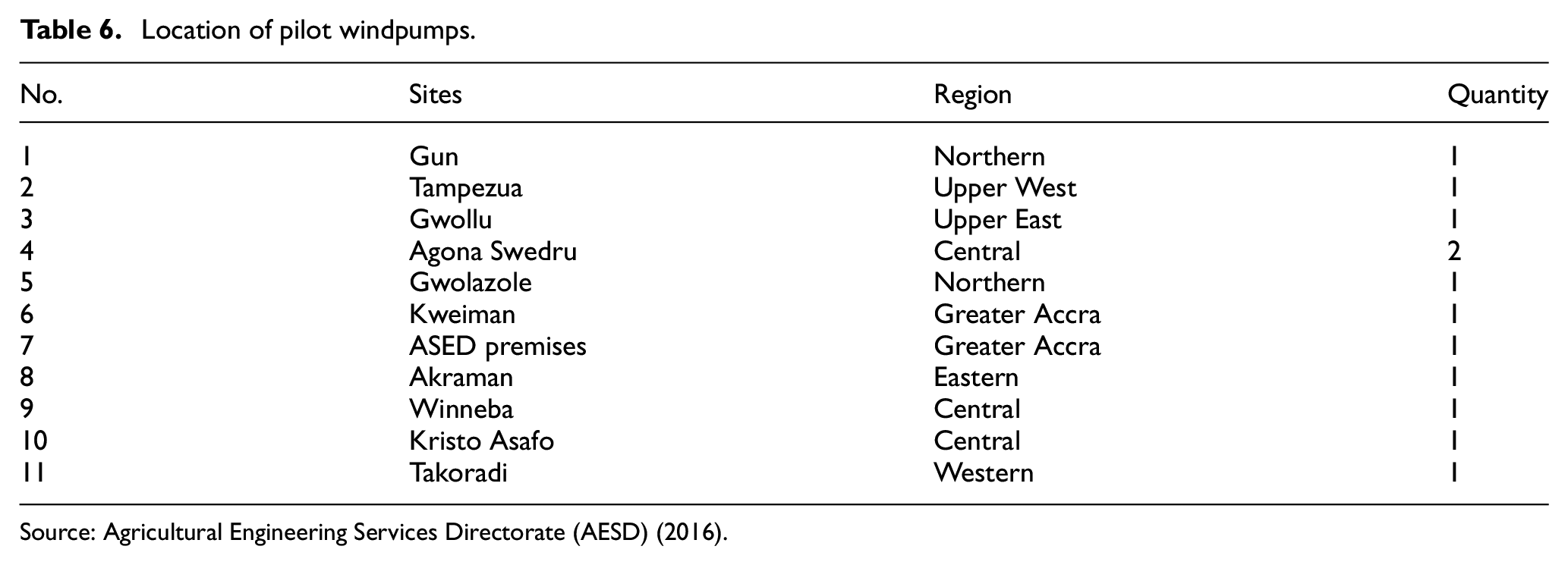
Forty complete pump parts were fabricated at the ATS and ready for assembly and installation. Eleven pilot sites were selected for installation. Table 6 shows the chosen locations. It is vital to note that no feasibility study was conducted before the project commenced. However, a comparative cost analysis, shown in Annexe B, was performed for the technology used for irrigation. The government decided on the beneficiary locations without a concrete reason to back the selection.
Location of pilot windpumps.
The current state of the project
The windpumps were installed at the selected locations, and a performance assessment was conducted. The results from the performance assessment are seen in Annexe C. Figure 3 shows the installation at AESD Head office in Accra, which was for demonstrational purposes. In 2000, boreholes were constructed in the Upper West, Upper East and Northern Regions under the same VIP. These same boreholes were fitted with the Poldaw windpump to use the wind to lift the water. However, according to Namara et al. (2011), they were never operationalised in the Upper West and Upper East Regions. However, AESD (Pam et al., 2013) reports that it was operational in Gun (Northern Region) and Tampezua (Upper West Region). The installation at Kweiman in the Greater Accra region was also fully functional; however, some years later, the land was sold to an individual. The windpump is now on someone’s walled property, limiting access and hence cannot serve its purpose. Diaba et al. (2015) cited that the purchase and installation cost of the Poldaw windpump was GH
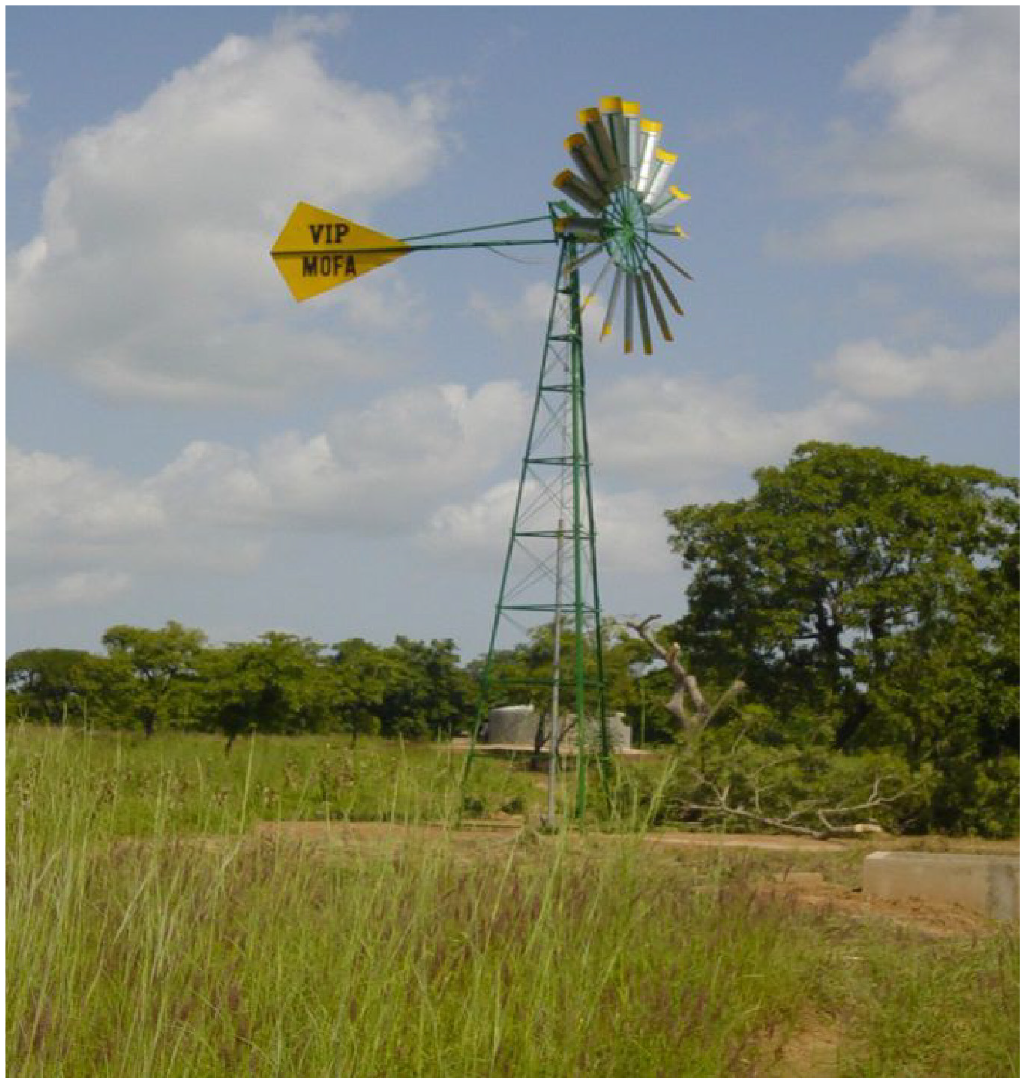
Windpump at AESD Head office (Edem et al., 2015).
What happened to the remaining pumps?
Different artisans fabricated the windpumps in parts and then assembled them before installation. It means that the artisans were trained to manufacture specific parts, and not one person could manufacture all the components. However, the ATS at Somanya can still teach and manufacture the turbines. Figure 4 shows the pump’s abandoned parts at the ATS.
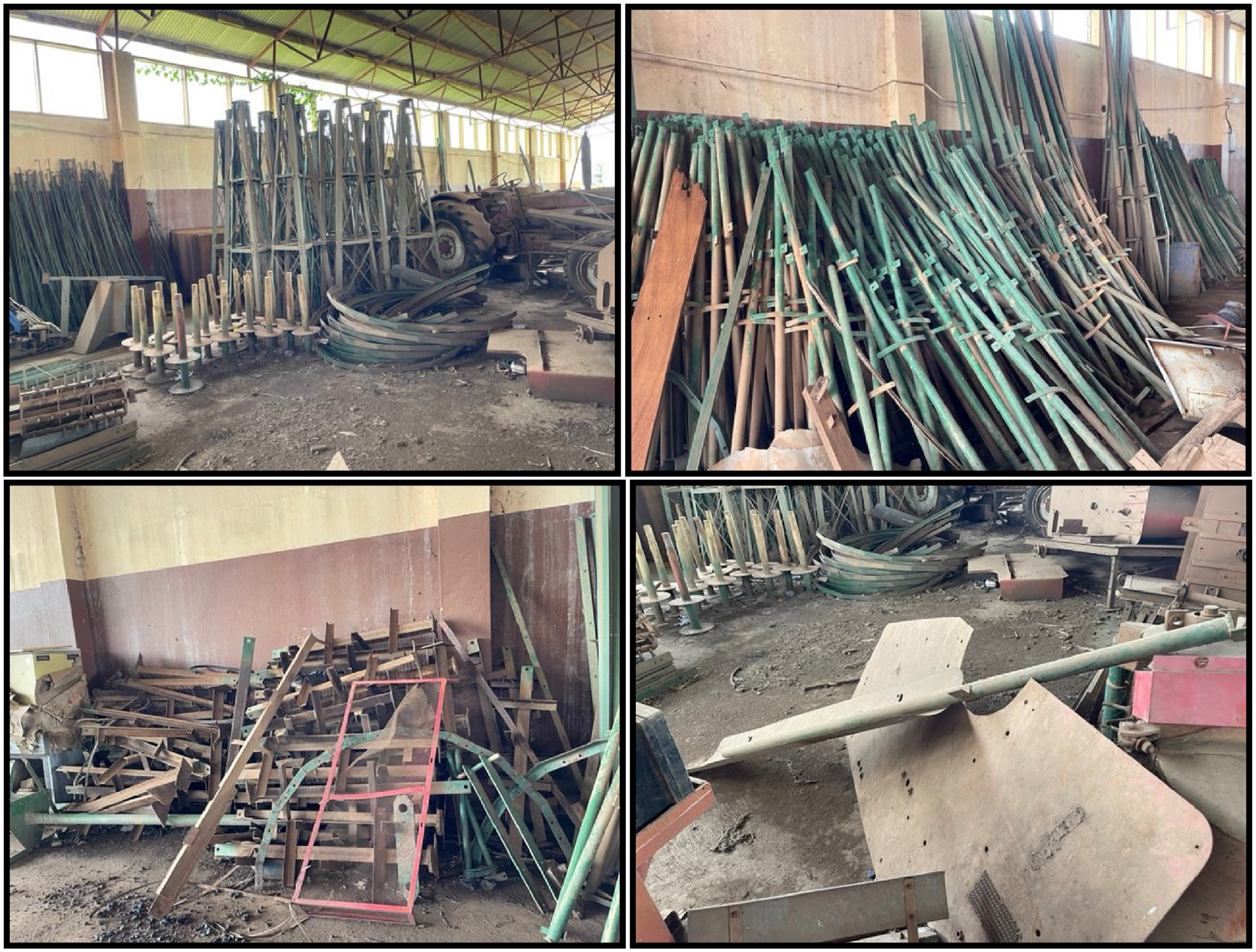
Windpump parts.
Challenges during the project rollout
Some challenges were encountered while implementing the windpump project under the VIP. These challenges are discussed in the subsequent topics.
There was no training from installers to the local authority. Because this was a new technology, training on how to maintain the pump should have taken place to ensure maintenance, leading to the longevity of the windpumps.
Conclusion and recommendation
Conclusion
The wind energy potential for Ghana can be harnessed for our energy needs, including agriculture. The idea behind the Poldaw Windpump project under the VIP was an excellent one to which MOFA should have given maximum attention. The Poldaw technology, specifically designed for developing countries, was one way to help solve irrigation issues and eventually save farmers some cost after recouping the initial investment cost. However, the end is hardly remarkable due to several reasons.
For instance, no known feasibility study that included wind resource assessment and techno-economic analysis to inform some decisions during the project was conducted. Hence, beneficiary communities were not selected based on any evaluation. The cost analysis by AESD in Annexe B is not in-depth. It does not say much to draw concrete conclusions and make informed inferences.
Training artisans to manufacture specific parts did not seem like the right way to go, and there is no record of the people; hence, to get parts to be manufactured locally, new sets of people will have to be trained, which will incur extra cost. Although the patent was for 5 years, the design documents are still available for the continuity of the programme should there be a need. However, as many years have passed, newer technology versions may exist.
Recommendations
An in-depth techno-economic analysis should be carried out for specific vegetable farming locations in the country to determine the right site for a wind irrigation system for all-year-round farming. A sound financial analysis will also help investors decide whether to invest in such a venture as supporting farmers to acquire the pumps.
A windpump should be salvaged from the ATS, installed on one of the farms previously identified through the analysis, and run over a farming season to record the pump’s performance and crop yield. The performance assessment should be compared to a fossil fuel-operated irrigation system.
Design modifications, if any, based on the results of assessments should be explored.
The high system cost of windmill technology appeared to prevent most farmers from considering wind as an alternative energy source for vegetable production. To address this partly, design changes that can reduce the initial outlay can be explored. In addition, farmers can form cooperative societies to purchase the locally manufactured Poldaw windpump to overcome the high initial investment costs.
In addition, hybrid wind-solar systems which can take advantage of the inter-complentary nature of the the two resources can also be explored in the direction of cost reduction and and further reducing issues with intermittency.
Footnotes
Annexe A
Declaration of conflicting interests
The author(s) declared no potential conflicts of interest with respect to the research, authorship, and/or publication of this article.
Funding
The author(s) received no financial support for the research, authorship, and/or publication of this article.
