







Abstract
We apply a neo-institutional theoretical lens to interpret the extent of any significant similarities or differences in doctoral programmes across business schools in Australia and New Zealand (ANZ). Overall, we characterise the state of doctoral education in business as lacking adequate funding, primarily attracting students with limited professional or industrial experience but having diverse approaches to the role of formal training as part of the doctoral programme. Although we view these findings as somewhat inevitable given institutional and isomorphic pressures, they are of concern if ANZ business schools are to produce research that is both rigorous and relevant beyond the academy. Comparisons across institutional groupings and discipline areas largely suggest relatively common approaches to doctoral programme design and administration across and within institutions.
JEL Classification:
Keywords
1. Introduction
The objective of this study is to survey the state of business school 1 doctoral programmes in Australia and New Zealand (ANZ) and determine whether there are substantive differences between university groupings and disciplines. Historically doctoral programmes in Australia and New Zealand have generally presented considerable diversity (Pearson et al., 2008; Usher, 2002) compared with those in the United States. However, there has been relatively little detailed analysis of how doctoral education in business is delivered in Australia and New Zealand and how it has evolved more recently. Indeed, there is only limited recent research of which we are aware on the state business school doctoral education worldwide (Corner and Pio, 2017; Grottke et al., 2013). Hence, it is possible that programmes have become increasingly homogeneous, a function of academic drift (Berdahl, 1985; Miller, 1975; Tight, 2015).
Our motivation stems from the critical foundation doctoral studies have in graduates’ careers, particularly if they pursue an academic career (Bedeian et al., 2010). For example, homogenisation of academic training can bring benefits, including more consistent research skills and expertise, thereby providing a basis for successful academic careers (Bedeian et al., 2010; Fairweather, 1993). However, homogenisation can also be associated with a disproportionate focus on high-ranking journals (Swanson et al., 2007), discouraging interdisciplinary research and research relevant to practice (Jackson, 2022). Consistent with the research preferences of business school leaders, this homogenisation can be an important determinant of who they hire and the opportunities they provide. More broadly, PhD studies can also play an important part in graduates’ outcomes should they pursue non-academic career pathways (Sharmini and Spronken-Smith, 2020).
We apply a neo-institutional theoretical lens (DiMaggio and Powell, 1983, 1991; Scott, 2001) to understand the reasons for any similarities or differences between attributes of doctoral programmes. Our approach is consistent with prior studies using neo-institutional theory to explain similarities in university programme characteristics and how these have evolved (Altbach, 2011; Morphew and Huisman, 2002; Taylor et al., 2013). The scope of doctoral programmes is considerable, so exploring practices that predominate or otherwise, with reference to isomorphic pressures, is an appropriate means of understanding the current state of business doctoral programmes in Australia and New Zealand (Donaldson and Petersen, 2007; Morphew and Huisman, 2002).
We obtain detailed data on multiple characteristics of ANZ business school doctoral programmes using a survey developed in conjunction with input from the Business Academic Research Directors’ Network (BARDsNet). ANZ doctoral programmes in the region are typically 3 to 4 years full-time, focusing on research training via a substantial proportion of thesis completion and a smaller coursework proportion. We examine multiple characteristics in detail, providing insight into potential trends and challenges. We focus on three key areas. While selective, they reflect areas of identified concern (see Section 2). First, we consider the programme structure and assessment. This incorporates the role of coursework versus research and the extent to which formalised assessment occurs concerning coursework and the research component (i.e. thesis). Second, we consider the career objectives and prior experience of doctoral students. Third, we examine the funding of doctoral programmes, including the provision of scholarships. At the same time, we test for differences between university groupings and across major discipline groups.
Our results suggest that while these programmes are subject to isomorphic pressures, to a minor extent coercive and a larger extent normative isomorphism, there has not been extensive academic drift towards substantial homogenisation. For example, while most programmes surveyed have formal stages related to coercive funding considerations, they are not dominated by coercive coursework, leading to diverse research abilities. Normative pressure appears to drive characteristics related to best practice, including supervisory panels, funding for networking and the requirement for external examination. However, we find several areas of concern, including research-centric doctoral programmes, which, through various isomorphic pressures, appears consistent with programmes in the United States but inconsistent with the balanced (i.e. teaching/research) workload models in ANZ, where it is common for new doctoral graduates to carry significant teaching loads. On the contrary, normative pressures have not pushed ANZ business schools to consistently focus on quantitative skills, thereby reducing the extent to which doctoral graduates from ANZ business schools can be expected to publish in top-tier publications.
Our research makes several contributions. First, it extends prior studies of university programmes (especially doctoral programmes), viewed through a neo-institutional framework. We are unaware of prior evidence of this type focused on doctoral education in ANZ business schools. We also provide novel evidence regarding the research training processes within ANZ business schools, thereby providing business school academics and leaders with insights into challenges they may need to address. 2 This contribution is timely given an ageing academic workforce and the impact of COVID-19, whereby many senior business school academics may elect to take attractive redundancy packages, thereby making the role of newly produced doctoral graduates more critical and their impact on business school practices more substantial.
In the following section, we review the major areas of concern identified regarding doctoral education in the business disciplines, globally and within Australia and New Zealand. These issues guide the design of our survey instrument, also described in Section 2. Section 3 presents the results and highlights identified differences between university groupings and/or discipline areas. Section 4 concludes with suggestions for developing doctoral education in Australian and New Zealand business schools.
2. Background and method
2.1. Background
There is evidence of sustained concerns about the structure and content of business school doctoral programmes. For example, frequent calls for a better understanding of the general and ethical values applicable to academic research, with Mitchell (2007), Berry (1989), Krueger (1991) and Trapnell et al. (2009) considering this issue across several business disciplines in the United States. At the same time, there is a strong tendency in certain parts of the world to emulate the United States, often characterised by their perceived prestigious institutions, with a strong component of formal research training, including the completion of core and field courses, as well as seminars and workshops (Krueger, 1991). Institutional theory predicts organisations duplicate what is perceived as ‘correct’ practices so they are viewed both internally and externally as legitimate (Meyer and Rowan, 1977; Scott, 1987). The acquisition of normatively defined practices is argued to be critical for survival, compared with efficiency-related practices (Fligstein, 2001; Meyer, 1980), and isomorphic pressures result, leading to the homogenisation of activities (in this case, homogeneous doctoral programmes). These isomorphic pressures reflect coercive, mimetic and normative pressures (DiMaggio and Powell, 1983).
As institutions seek legitimacy through the isomorphic pressures causing practice duplication, this can broadly cause concerns about the nature of doctoral programme offerings. It has also been argued that the relatively ‘structured’ and ‘formal’ process increases the tendency towards relatively homogeneous research by doctoral students and early career researchers (Fraser, 2014). Schwartz et al. (2005) provide evidence that US accounting doctoral students generally have low familiarity with anything other than traditional ‘premier’ journals. Whether a heavy focus on method and technique results in less than optimal development of broader critical thinking skills and ability to undertake independent and relevant research is subject to conflicting evidence (Hansen, 1991; McKiernan and Tsui, 2019; Sandhu et al., 2019). What follows below is a general overview of the elements of doctoral programmes, beyond structure and content considerations above, that have been suggested in prior evidence as most significant.
An important characteristic of doctoral programmes is the availability and quality of supervision. Not surprisingly, prior studies identify supervisors’ experience heavily influences supervisory style. Yet it is well understood that supervisory style needs to vary contingent on students’ needs relating to their personality, maturity, intellectual and emotional characteristics. Wright et al. (2007) highlight this issue, consistent with often diverse student cohorts in Australia. However, small supervisory pools limit flexibility. While the use of supervisory committees means there is likely to be more variability and adaptability in supervisory styles, the extent of supervisory committees in Australian and New Zealand doctoral programmes is unclear.
Varied feedback and networking opportunities are important determinants of student success. Mitchell (2007) demonstrates the importance of attendance and engagement at events, allowing students in US programmes to network, such as conferences and exchange programmes. Accordingly, we survey the extent to which students can access financial support to attend such events.
While our main focus is on the role of doctoral programmes as a means of research training, we recognise the importance of teaching. Business school faculty are typically employed on a balanced teaching, research and service model. Focusing on the marketing discipline in Australia, Boddy (2007) argues that focus on dissertation completion is inadequate preparation for teaching. This is consistent with Australian doctoral graduates’ heavy teaching loads. Supporting evidence is provided by McCoy and Milkman (2010), who find only half of doctoral candidates who were teaching while completing an economics doctorate in the United States and Canada completed teacher training. Johnston et al. (2014) found similar levels of training among marketing students in the United States, and although 53% of marketing doctoral candidates had formal teacher training, only 11% had credit recognition for this training. We, therefore, explore teaching experience.
Changes to doctoral student funding, for example, by the Australian government, have emphasised the importance of more structured and directive programmes and encouraged faster completion. In addition, doctoral programmes compete for funding with coursework programmes, which are seen as having significantly greater reputational effects (Bearden et al., 2000). Lengthy completion time is expected to be a concern in Australia and New Zealand, as government funding is tied to completion.
US-based evidence identifies direct and indirect financial support as among the most influential factors determining an individual’s choice to apply for doctoral programme admission (Fisher and Garrett, 1984; Stewart et al., 2008). Compared to other forms of tertiary study, doctoral programmes represent a long and sometimes uncertain pathway. Financial support through a mix of scholarship and university work (including teaching opportunities) improves the prospect of attracting doctoral students and the likelihood of completion. Accordingly, we view the extent of financial support provided as an important dimension to survey.
Student characteristics are also an important dimension of doctoral education. Gender balance in academia has remained a long-running concern across disciplines, including those in Australia (Everett, 1994; Flynn et al., 2017). With significantly improved mentoring and networking opportunities directed at addressing gender imbalances (Sandhu et al., 2019), it is important to understand the gender balance in doctoral studies, as this represents the future academic pipeline. Similarly, it is important to understand the mix between local and international students, as implications arising from differences in writing norms and national cultures have been noted, including in New Zealand, where there is a large proportion of international students (Corner and Pio, 2017). The Australian and New Zealand tertiary sector has attracted large cohorts of international students, and our survey considers how extensive international student enrolment is across different business disciplines.
Prospective students’ intrinsic interest in completing a doctoral degree is a key determinant of students’ intention to apply for doctoral studies (Osei, 2013). Prior studies in the United States show students who are ambitious, motivated, persistent, organised and intellectually curious are more likely to complete their doctoral studies and achieve better research outcomes (Grottke et al., 2013; Podsakoff et al., 2018; Smart and Conant, 1990; Stock et al., 2009). While measuring the extent to which students exhibit such characteristics is outside the scope of our study, the diversity of pathways taken by students before enrolling in a doctoral programme may reflect intrinsic interest. We, therefore, attempt to elicit information on students’ professional and educational backgrounds. Concerns about the broader relevance of doctoral research may also reflect doctoral students with a lack of prior industrial and/or professional experience and/or an inability to communicate research outcomes to non-academics.
2.2. Research questions
Our survey gathers relevant descriptive evidence on the programme characteristics, funding, student attributes, student numbers and employment destinations across doctoral programmes in Australian and New Zealand business schools. However, we are also interested in testing for significant differences across recognised university groupings. As previously discussed, there is a tendency for academic drift and homogenisation (Morphew and Huisman, 2002; Tight, 2015). Our testing for differences allows us to examine the extent to which this is occurring in Australia and New Zealand. Examining the differences across the areas we survey is important, as isomorphic pressures may operate with varying effects (Oliver, 1988). As previously detailed, to make sense of any homogeneity observed, we apply a neo-institutional theoretical lens, in particular, focusing on why any programme isomorphism has occurred with reference to cohesive, mimetic and normative pressures.
We define observable university groupings based on the national location (Australia or New Zealand) and then by two well-recognised groupings of Australian universities – the Group of Eight universities (Go8) 3 and Australian Technology Network of Universities (ATN). 4 There is a strong correlation between membership of one of these groupings and the assessment of research quality, as evidenced by successive Excellence for Research in Australia (ERA) assessments (Feng and Taylor, 2021), although even among these groups, there have been significant differences in the overall ranking of Business and Economics research quality. Nevertheless, Feng and Taylor (2021) identified the top six Australian business schools comprising five from Go8 institutions and one from the ATN. Accordingly, it is of interest to understand whether university groupings are related to the state of doctoral programmes or if there is homogenisation of programmes more broadly across the areas we examine. Hence, our first research question (RQ) is:
RQ1: Are doctoral programme characteristics, funding, student attributes, student numbers and employment destinations similar across observable university groupings?
We also recognise there may be discipline-specific differences, although isomorphic forces could be pervasive, resulting in little, if any, difference between disciplines (Scott, 2001). We define disciplinary groupings consistent with the primary Field of Research (FoR) codes used by the Australian Research Council (ARC), namely economics, accounting, finance, marketing and management. Based on our review of prior literature and personal observations of business school practices, we focus on testing for several differences across doctoral programmes based on discipline areas. 5 First, consistent with concerns about the heavy focus on method and technique (Hansen, 1991; McKiernan and Tsui, 2019; Sandhu et al., 2019), we examine whether this is specific to particular discipline areas. Second, consistent with documented differences in writing norms and national culture (Corner and Pio, 2017), it is important to understand if such challenges are more likely in certain discipline areas, in line with students’ origination and language background. Third, the pathways students take before doctoral programme enrolment may have implications for student interest and their doctoral research relevance (Bearden et al., 2000; Perry and Zuber-Skerritt, 1994). Different discipline areas may attract different proportions of students from certain pathways, and consistent with this, differing numbers of students. Finally, the pathways doctoral graduates take post-completion may differ, in line with concerns associated with research relevance in some disciplines (Burgstahler, 2019; Kaplan, 2019). Hence, our second RQ is:
RQ2: Are doctoral programme characteristics, student attributes, student numbers and employment destinations similar across recognised business school disciplinary groupings?
2.3. Method
Our survey was structured consistent with the guidance from Dillman et al. (2014). To maximise responses, we used simple and consistent question scales. We did not randomise question order, as the survey was structured based on a logical flow, aiding ease of completion, developed in consultation with members of the Australian Business Deans’ Council (ABDC) and, especially, from multiple discussions at BARDsNet meetings. This group comprised 46 university member institutions across Australia and New Zealand (essentially all business schools in both countries). Each of the 46 member institutions received the online survey.
There were three follow-up reminders for survey completion over almost 18 months. 6 The survey was not anonymous, allowing targeted reminders. We received 27 responses, providing a 58.70% response rate. It is noteworthy that participation rate was strong across different university groupings. The response rate was 55.26% and 75% for Australian and New Zealand universities, respectively. Among the Australian universities, the Go8 response rate was 62%, while all ATN institutions participated. As these two groups dominate the ERA ratings of business research, there is very strong coverage of institutions most likely to produce successful future researchers. The response rate for the Innovative Research Universities and Regional Universities Network groups was 50% and 40%, respectively. Although we would have liked all ANZ business schools to participate, the strong and generally representative response rate increases our confidence in making generalisations about the underlying process by which future business school academics are produced.
To check for non-response bias, we compared responses received early and late, splitting the responses based on the mid-point according to the date each survey response was received. Our comparison of means using the Mann–Whitney U test indicates differences in the mean responses across the variables are almost all insignificant. We also test for common method bias using Harman’s single-factor test, resulting in five factors with eigenvalues greater than one. The strongest factor explains 32.98% of the total variance, indicating common method bias is not present (Podsakoff et al., 2003).
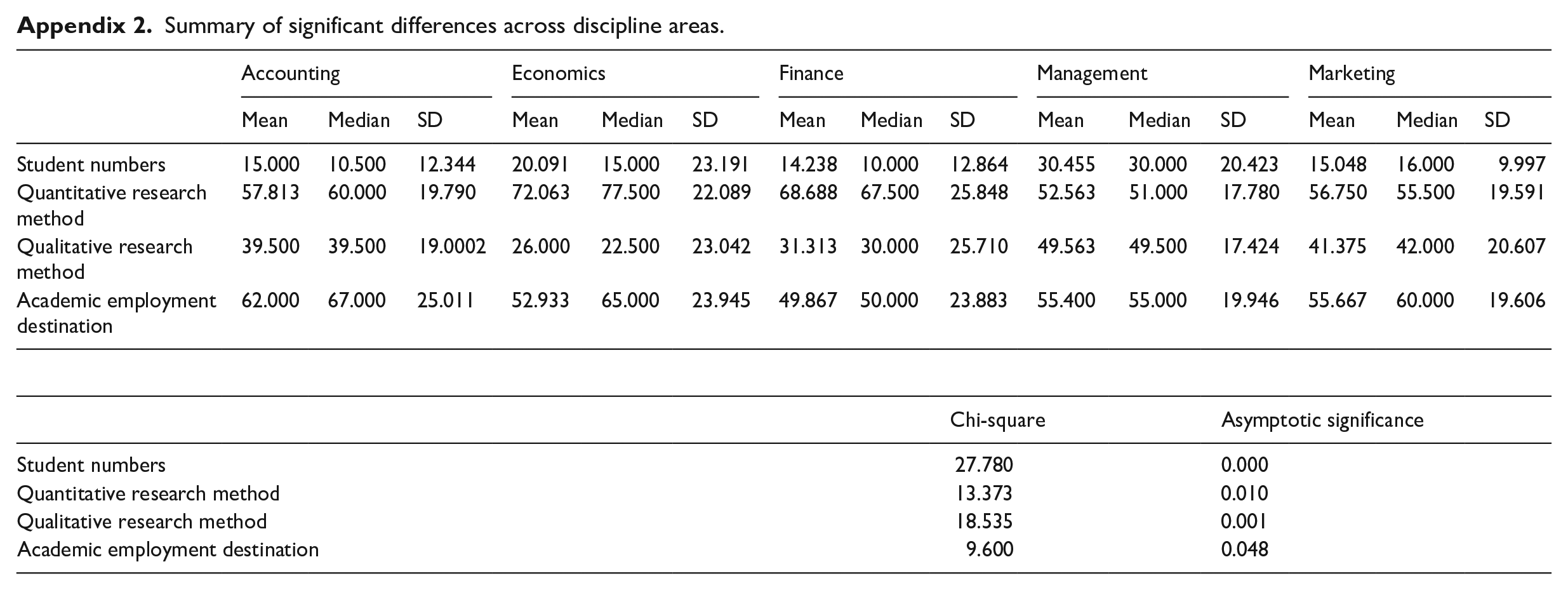
To address RQ1, are doctoral programme characteristics, funding, student attributes, student numbers and employment destinations similar across observable university groupings (Go8/non-Go8 Australia institutions, ATN/non-ATN Australian institutions, and Australian and New Zealand institutions compared), we use the Wilcoxon Z-statistic, consistent with the non-parametric nature of our data. To address RQ2, are doctoral programme characteristics, student attributes, student numbers and employment destinations similar across recognised business school disciplinary groupings (economics, accounting, finance, marketing and management), we use the Friedman test. The Friedman test allows testing of differences across three or more related samples and is appropriate for non-parametric data. We report the Chi-square and associated asymptotic significance output from the Friedman test. All respondent institutions undertake research, to some degree, across all disciplinary groupings. Coupled with the descriptive statistics, we report the differences in Section 3 below. A summary of the significant differences we find across university and disciplinary grouping is reported in Appendices 1 and 2, respectively. 7
3. Results and discussion
3.1. Programme characteristics
Table 1 summarises the programme characteristics of surveyed doctoral programmes. In Panel A, we summarise programme structural characteristics. Almost all programmes (92.6%) have formal stages, with no significant differences noted across university groupings. Government programme funding, based on completion, appears to be a powerful source of influence, causing coercive isomorphism towards more closely monitoring student progression with a view to completion. However, while this might suggest a high degree of programme formalisation and homogenisation, further analysis indicates this is not so, alleviating concerns about such homogenisation as noted in the United States (Fraser, 2014). For example, among the respondent business schools, only half (48.1%) have mandatory coursework. When examining differences across university groupings, we identify 61.9% of Australian institutions require coursework, significantly higher than New Zealand institutions where no coursework is required. The maximum formal component is one-third of the programme, likely reflecting government accreditation requirements in line with the Australian Qualifications Framework (AQF). On average, surveyed programmes have a little less than 20% of the doctoral programme directed to some form of formal coursework (17.7%). We do not find significant differences in the proportion of doctoral programmes directed towards coursework across university groupings.
Programme characteristics.
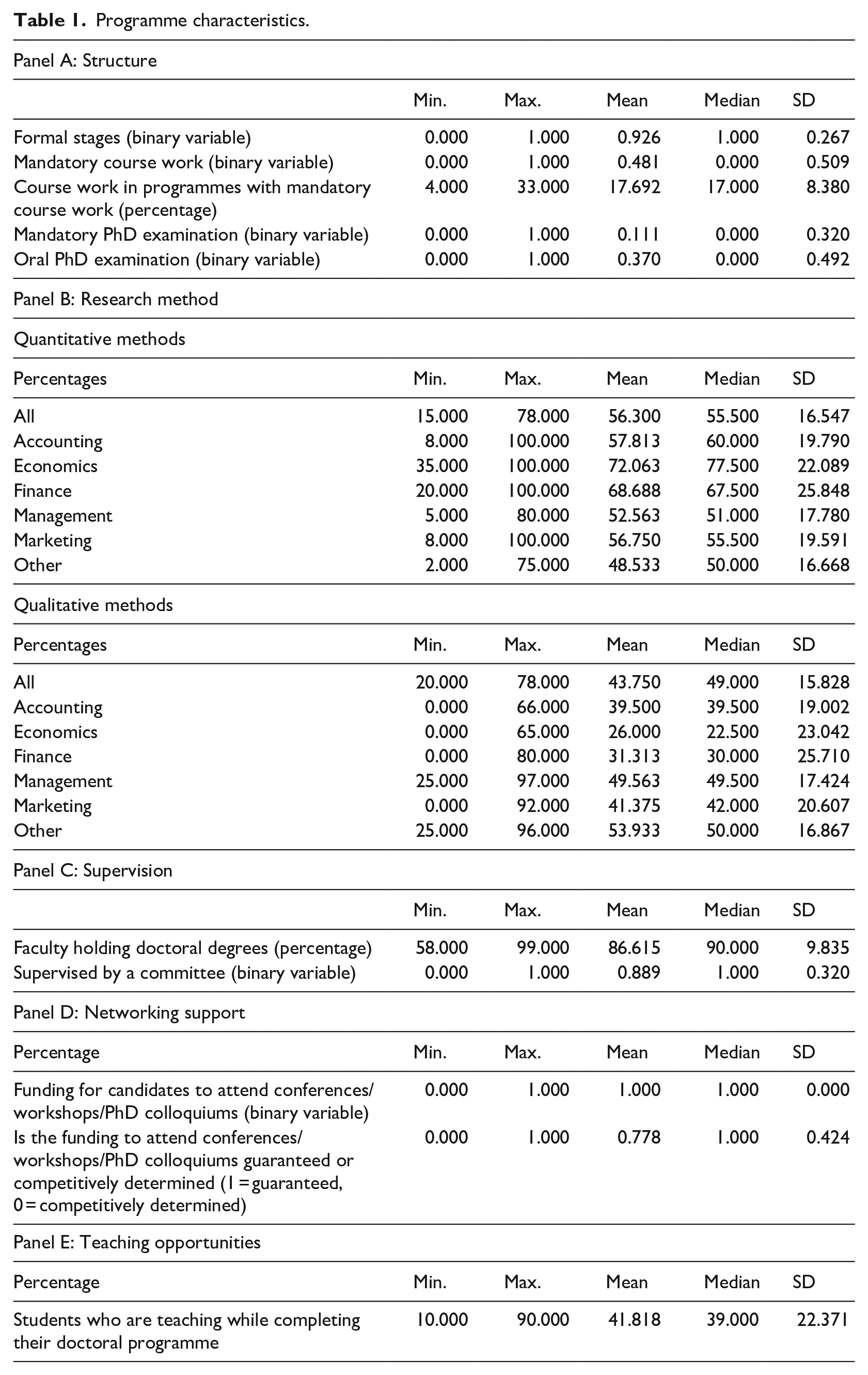
The less formalised nature of doctoral programmes is also evident concerning examinations, with only 11.1% of programmes having a mandatory PhD examination (for example, field and/or comprehensive), while only around one-third include some form of oral PhD examination. However, all New Zealand doctoral programmes for which we received responses include oral examinations, a function of government requirements and, therefore, a form of coercive isomorphism, significantly more than the 19% of Australian institutions using such examinations. Otherwise, there are no other significant differences in examinations across the groupings. Collectively, outside the staged doctoral programme approach and oral PhD examinations in New Zealand, the structural characteristics of programmes vary widely across institutions. This suggests institutions largely determine structural characteristics based on their own managerial and academic judgement, and structural homogenisation is only occurring via coercive isomorphism.
In Panel B of Table 1, we summarise the primary research method (i.e. quantitative versus qualitative) and provide a discipline breakdown. The percentage of students primarily using quantitative methods is on average 56.3%, while those primarily using qualitative methods is 43.8%, with no significant variation across university groupings. However, this percentage varies widely across disciplines, with economics and finance having the highest percentage of students primarily using quantitative methods at 72.1% and 68.7% on average, respectively. This is likely a reflection of the normative isomorphic pressures in economics and finance disciplines, where such methods are widely regarded as more acceptable based on the interaction between academics and as reflected in journal publications. The accounting, management and marketing disciplines are more balanced, with percentages of 57.8, 52.6 and 56.8, respectively. Among the discipline areas, the highest percentage of students who are primarily using qualitative research methods is in management, although accounting and marketing are both around 40%, not very different from management. The Friedman test confirms significant differences across discipline areas relating to the percentage of students employing both quantitative and qualitative methods.
We note the vast majority of articles published in accounting and marketing journals ranked as A* by the ABDC (i.e. journals ranked in the top tier) publish predominantly, or even exclusively, quantitative research, consistent with methods familiar to US doctoral programme graduates (Schwartz et al., 2005). We would have expected such normalisation of the predominately acceptable method, quantitative, would have been reflected in the primary research method of doctoral students, however, this is not the case. It is possible such normative forces have not had a notable impact, largely due to lower publication pressure in Australia and New Zealand compared with the US tenure system (Miller et al., 2011). Given the quantitative focus of A* journals, our survey results suggest that many doctoral graduates from Australian and New Zealand business schools are unlikely to publish research in these outlets. However, the wider scope of methods used by doctoral students in the region means research more relevant to industry may follow.
We next consider the forms of supervision, namely capacity to supervise and the supervision form (individual supervisor or supervisory committee). The availability of suitably qualified supervisors indicates that students are more likely to find supervision in their research area of interest and identify an appropriate fit concerning mentoring style and student motivation skills. The importance of supervisor characteristics in US management and economics programmes is documented by Ford et al. (2006) and Stock et al. (2009), and we note in passing thesis completion typically accounts for a smaller proportion of the doctoral programme than in Australia and New Zealand. For the responding institutions, Panel C of Table 1 reports an average of 86.6% of faculty members hold doctoral degrees. However, the lowest percentage of faculty with doctoral qualifications among responding institutions is a little over half (58%). Panel C indicates that vast majority of business school doctoral programmes require students to be supervised by some form of committee. Only around one-tenth of programmes (11.1%) typically allow a single supervisor. This suggests that any characterisation of doctoral study as a somewhat ‘feudal’ servant–master arrangement is inconsistent with practice in Australia and New Zealand. Furthermore, we do not observe any significant differences across university groupings based on faculty holding doctorates and using a committee supervision structure. The lack of significant differences in supervisory qualification and composition suggests such practice is an accepted professional norm in line with programme quality expectations (Ford et al., 2006; Stock et al., 2009) and increases programme attractiveness. Furthermore, the importance of accreditation in Australia and New Zealand has grown substantially and likely has led to some coercion concerning minimum supervisory expectations.
Panel D of Table 1 summarises financial support directed towards networking. Every respondent university indicated they provide some form of specific funding for doctoral students to attend conferences, workshops and doctoral colloquiums. Moreover, a substantial percentage of funding is effectively ‘guaranteed’ to students, with a small portion competitively determined. Hence, it appears as a universal recognition and an accepted norm that doctoral students benefit from the opportunity to attend conferences, presenting their research and developing a network, consistent with the insignificant differences across university groupings based on networking support. This finding is encouraging in the context of supporting collective doctoral training continuation, including that offered by the Financial Research Network (FIRN) and the Accounting and Finance Australia and New Zealand (AFAANZ) doctoral courses. Such training also potentially fills a vital role given the absence of significant coursework in many individual programmes.
Given doctoral programmes are primarily directed at preparing students for a career in research and teaching, it is important to understand whether it is common for students to gain teaching experience. Panel E of Table 1 indicates, on average, a little less than half of doctoral students (41.8%) teach. Interestingly, a significantly higher proportion of students at Go8 institutions undertake teaching (66.8%) compared with non-Go8 Australian institutions (27.2%). No significant differences are found between ATN and non-ATN Australia institutions, and Australian and New Zealand institutions. The high proportion in some institutions, particularly Go8 institutions, of doctoral students engaged in teaching suggests it is important to consider the teaching-related training provided so they can build on their expertise during doctoral programme completion. On the contrary, the low proportion in some institutions, also teaching, raises questions as to their preparedness to teach when commencing academic careers and the extent to which their employer institutions need to consider the incentives for good teaching and relevant doctoral graduate teaching certifications (Doogar, 2003). Doctoral programmes are an accepted means of preparing students for academic careers; however, through various isomorphic pressures, programmes largely focus on research rather than teaching. While this may be appropriate in the United States, where the early-career academic workload is research-focused, such a model is problematic in Australia and New Zealand, where early-career academics typically have more balanced workloads.
3.2. Funding
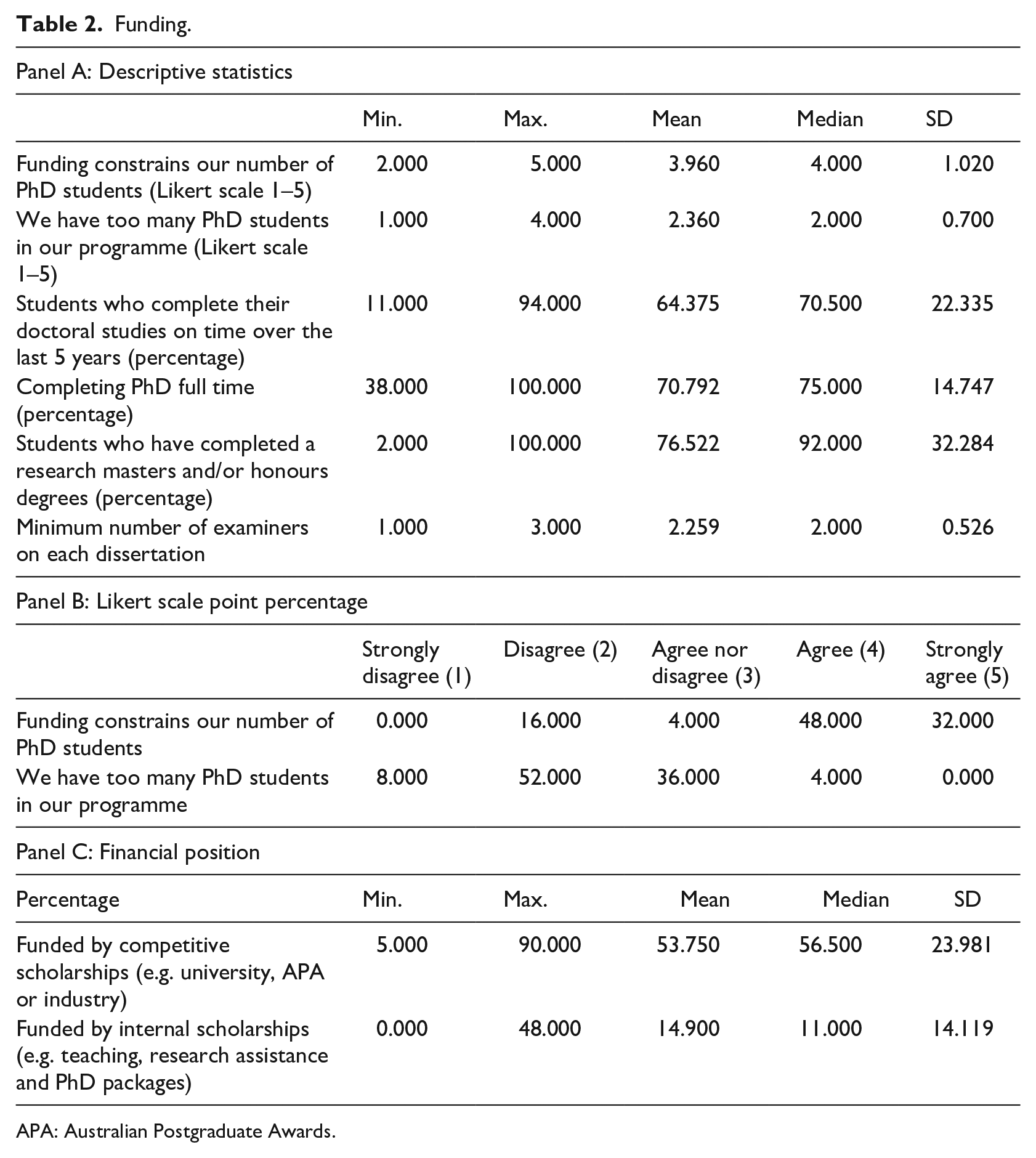
Panel A and B of Table 2 summarises our exploration of funding. Using a strongly disagree to strongly agree (1–5) Likert-type scale, the average response to the statement ‘funding constrains our number of PhD students’ is 3.96, varying from a score of 2 (disagree) to 5 (strongly agree) and a standard deviation of the 1.020. On a strongly disagree to strongly agree (1–5) Likert-type scale, the average response to ‘we have too many PhD students in our program’ is 2.36, varying from 1 (strongly disagree) to 4 (agree) with a standard deviation of 0.70, indicating student numbers are not perceived as excessive in most institutions. The strong indication is funding constrains student numbers, with no significant differences across university groupings. With universities largely reliant on government funding, this appears to be acting as a coercive force limiting numbers. It appears universities would like to expand doctoral programmes and thereby research output, suggesting institutions should pursue further industry-funded engagement. Industry-funded engagement would have the added benefit of encouraging industry-relevant research.
Funding.
APA: Australian Postgraduate Awards.
Consistent with the pressure of limited funding, responses indicate 64.4% of students complete their doctoral studies on time. Students at Australian institutions are significantly more likely to complete on time (68.4%) than their New Zealand counterparts (49%). Higher rates of on-time completion in Australia are likely the result of coercive government pressures whereby universities receive funding based on student graduation. In our sample, we also observe that a substantial number of doctoral students are completing their studies part-time. Panel A of Table 2 reports 70.8% of students are completing their PhD full-time, varying between 38.0% and 100.0% depending on the institution. From our university groupings, we find a significantly higher proportion of students completing their PhD full-time at New Zealand institutions (83%) compared with Australian students (67.6%). There is considerable variation across both countries and across university groupings, indicating study mode of students, whether full or part-time, is likely a function of individual institutional preferences, coupled with the students they attract.
Students who complete research studies before doctoral programme enrolment may also complete at a faster rate. On average, 76.5% of doctoral students have completed a research masters and/or honours degree. Although this varies widely across responding institutions, this is not associated with identifiable university groupings. The higher risk of non-completion for doctoral students without prior research studies is recognised, including the study by Stock et al. (2011) in the United States, where programmes are more course intensive and thereby, students without prior research studies are at less risk compared with students in Australia and New Zealand, where students typically receive less coursework training. While the percentage of students who have completed prior research studies varies widely, the average is high and likely a function of both normative pressure, based on shared knowledge of applicants’ chance of successfully completing doctoral studies, and coercive government forces, constraining funding if the students do not complete. Finally, Panel A of Table 2 reports common approaches to thesis examination. All surveyed institutions use external examiners, with common reliance on two or three examiners, and thereby no significant differences across university groupings. This indicates normative isomorphic pressure that external verification is completely accepted by business school academics, and absence would indicate a disconnect from the academic community.
Panel C of Table 2 reports the methods by which students primarily fund their candidature. Given earlier evidence of institutional funding limitations, it is not surprising that Panel C reveals only around half of enrolled students are typically funded by competitive scholarships, such as those provided by the university, government or industry. However, this percentage varies widely, ranging from 5% to 90%. We also find on average, an additional 14.9% of students are funded by internal scholarships related to teaching, research assistance or other activities. In general, it appears that a large proportion of students do not receive explicit funding and are dependent on other forms of financial support such as external employment and/or family assistance. On average, we find about a quarter of doctoral students live on campus, although this varies widely across institutions. Despite the variation observed in scholarship funding, there are no significant differences across university groupings. This may reflect scholarship determination based on individual student merit at each institution, rather than systematic differences in scholarships awarded across different institutions, driven by government funding constraints and limited industry engagement.
3.3. Student characteristics
Table 3 reports responses to questions regarding student characteristics. We find just over half (52.12%) of doctoral students are females. However, this varies widely across institutions, with a minimum to maximum female candidature of 25% to 78% and a standard deviation of 10.2%, although there are no significant differences across identifiable university groupings. These numbers are consistent with gender balance in the early career researcher pipeline, although some institutions’ cohort of doctoral candidates is far from gender-balanced. Given normative pressures within the sector and potential coercive regulatory pressures, the lack of gender balance in some institutions is surprising.
Student characteristics.
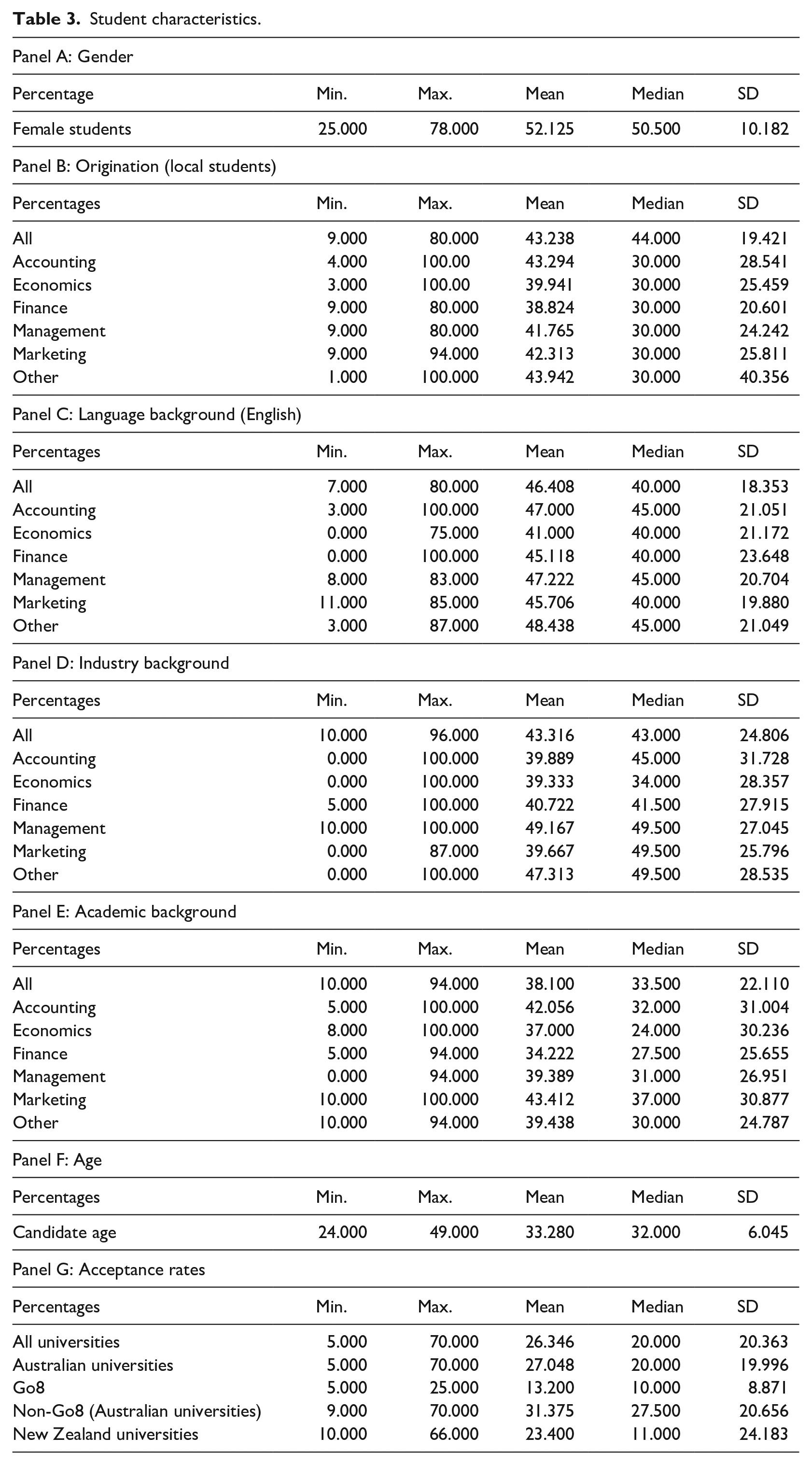
We also consider the extent to which doctoral students are sourced locally versus overseas. Panel B of Table 3 shows an average of 43.2% of doctoral students are local students, varying widely across institutions from 9% to 80% with a standard deviation of 19.4%, although there are no significant differences across university groupings. When we examine this question across specific disciplines, we observe only small insignificant variations. The high numbers of international students are not surprising given the fees charged, which reduces the coercive impacts of government funding. However, it also presents potential challenges associated with those from non-English speaking backgrounds. Panel C of Table 3 reports only 46.4% of PhD students come from English-speaking backgrounds, and once again, we observe no statistically significant variation across the disciplinary areas (confirmed by the Friedman test) or between identifiable university groupings. Such a high proportion of non-English background students has previously been recognised by Corner and Pio (2017) in the New Zealand context as a challenge for effectively delivering doctoral programmes, given different writing norms and academia perceptions. Given the large number of international students in Australia and New Zealand, we expect this challenge to continue and could be made worse by pandemic-induced isolation.
Further evidence on the background of doctoral students is reported in Panels D and E of Table 3. On average, 43.3% of students have industry experience, varying from 10% to 96%, with a standard deviation of 24.8%. Students from industry comprise, on average, between 39.3% and 40.7% of candidates in accounting, economics, finance and marketing. However, industry candidates comprise 49.2% of candidates in management, which is significantly higher than other discipline groupings. This difference may reflect greater intrinsic interest of industry-based students in the management discipline, who are thus prepared to come back to university. It may also reflect a preference among candidates from industry to undertake doctoral studies in a discipline where qualitative research methods are common. Regardless, higher proportions of students with an industry background would likely improve the research relevance. Thus, the low proportion of industry candidates, particularly in some institutions, and lower proportions across some disciplines is a concern. The high proportions of students not from industry is likely a function of the relatively high numbers of such students in the prospective student pool, coercive pressure to accept these students for funding and research output reasons, and limited funding in some cases to attract those with industry experience through scholarships.
Panel E of Table 3 indicates, on average, 38.1% of students have prior academic experience, varying widely from 10% to 94%. The extent to which students come from an academic background within their discipline varies, although not significantly, comprising 43.4% of students in marketing, 42.1% in management, 39.4% in accounting, 37.0% in economics and 34.2% among finance candidates. The lower proportion of candidates with an academic background is likely a function of the coercive pressures in business schools to hire full-time academics who have completed their PhD in line with accreditation requirements. Some candidates may have prior experience through casual research assistant and teaching positions; however, it is more common to undertake such positions while completing doctoral studies.
The average candidate age in our sample is 33.28, varying widely from 24 to 49 with a standard deviation of 6.05, as reported in Table 3 Panel F. This variation in age reflects a student cohort ranging from recent undergraduate coursework graduates to those with significant industry experience and does not vary significantly based on university groupings. Based on average age, doctoral candidates potentially have a little more than 10 years of industry experience following undergraduate studies, although the extent to which this time period also reflects other post-graduate study rather than non-academic career paths is not known. The higher proportion of candidates lacking industry experience suggests many candidates have completed other post-graduate studies, such as masters programmes. Once again, the ability of such candidates with limited experience to identify RQs relevant to industry remains a concern.
We next consider acceptance rates. Acceptance rates provide a basic insight into the level of demand to undertake doctoral studies. Panel G of Table 3 reports these results. On average, 26.4% of applicants are accepted into doctoral programmes, varying widely from 5% to 70%. Given the average acceptance rates are below 30%, there appears to be relatively rigorous selection processes. Based on our university groupings, Go8 institutions have significantly lower acceptance rates than non-Go8 Australian universities. This could be a function of normative pressures to identify as part of the Go8 group with agreement on a higher standard of potential applicants or simply a function of the larger volume of applicants due to perceived higher quality programmes.
3.4. Student numbers
Doctoral candidate numbers are summarised in Table 4. The average number in each institution was 15.0 in accounting, 20.1 in economics, 14.2 in finance, 30.5 in management and 15.0 in marketing, with the Friedman test indicating significant differences across disciplines. The Wilcoxon test indicates management has significantly higher numbers than all other disciplines. This is unsurprising given the wide scope of research topics in management.
Students numbers.
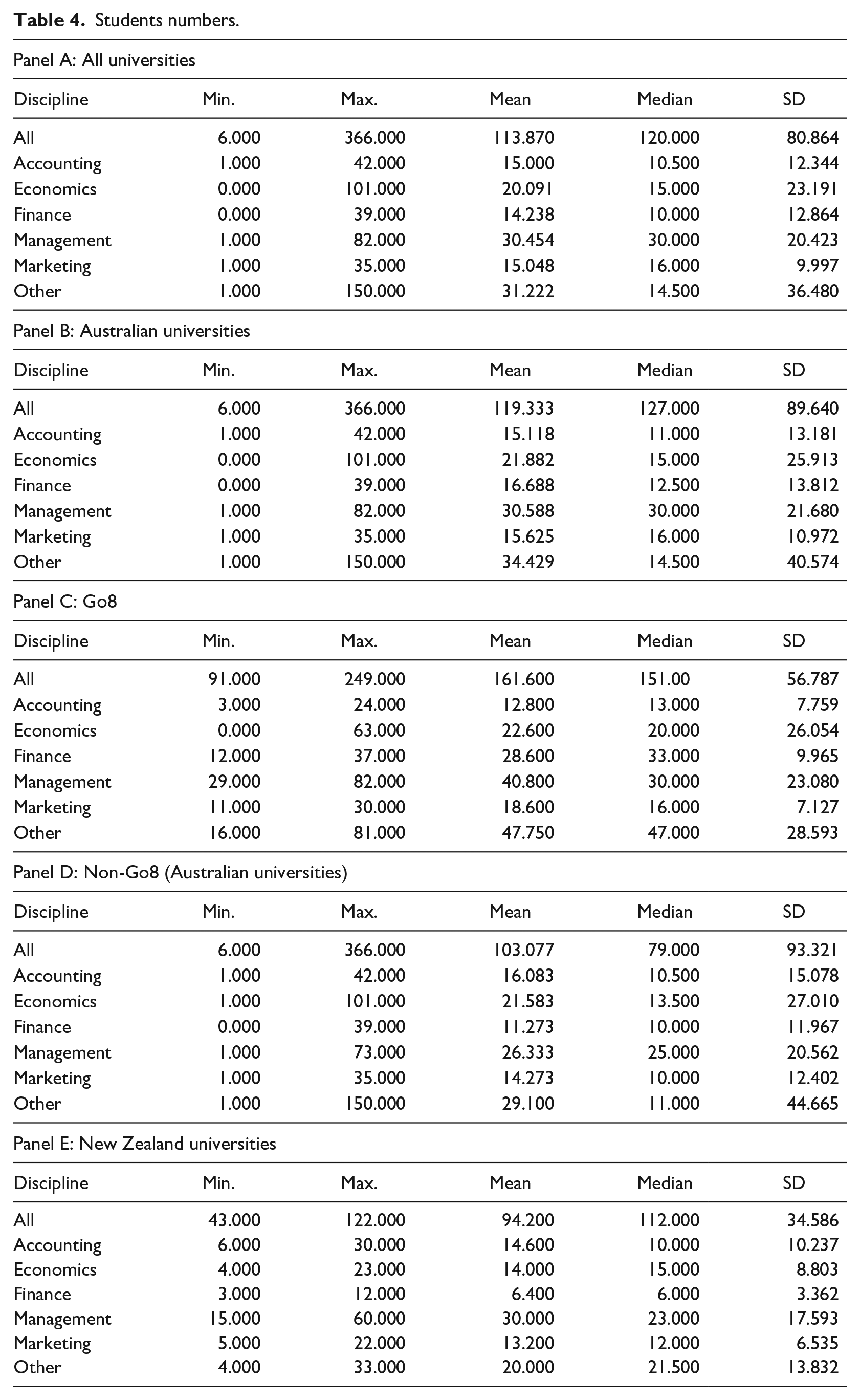
We find significantly higher numbers of students completing finance doctoral studies at Go8 compared with non-Go8 institutions. This possibly reflects the prestige and high-ranking publications in finance studies, aligned with normative pressure in Go8 institutions to maintain their identity as leading research institutions. In contrast, there are significantly higher numbers of accounting and management students at ATN compared to non-ATN Australian institutions. This could reflect the more practice-based nature of accounting and management and, therefore, normative pressure on ATN institutions to maintain their identity as leaders in practice-related research and thereby engage with such practice, although this is difficult to say given the broad range of research topics these disciplines encompass. No other differences across university groupings are noted. When account is taken of the relatively large number of business schools, even allowing for the large number of students who do not take up employment in the university sector (see Section 3.5 below), it would appear there is a relatively substantial pipeline of new academics.
3.5. Employment destinations
To understand immediate graduate outcomes, we survey institutions concerning graduate pathways. On average, 53.1% of graduates go to academic employment destinations, varying widely from 15% to 90% with a standard deviation of 20.9%, as reported in Panel A of Table 5. The Friedman test confirms the proportion of students going to an academic employment destination varies significantly, however, no significant one-to-one differences are found using the Wilcoxon test. The discipline where the highest percentage of graduates go to an academic destination is accounting (62.0%), followed by marketing (55.7%), management (55.4%), economics (52.9%) and finally finance (49.9%), although again, these percentages vary widely across institutions. These percentages do not differ significantly across university groupings. Although we are reluctant to over-extrapolate, the fact accounting doctoral programmes have the highest academic employment destination rate is also consistent with recent criticisms that accounting research is of little relevance to the profession, as shown by Burgstahler (2019) and Kaplan (2019) in the United States. Of course, whether this reflects the way doctoral programmes operate, the background of the doctoral students (e.g. lack of prior professional/industrial experience), succumbing to normative pressures to identify as part of an academic rather than practice-based discipline, or some other factor, is not clear.
Employment destinations.
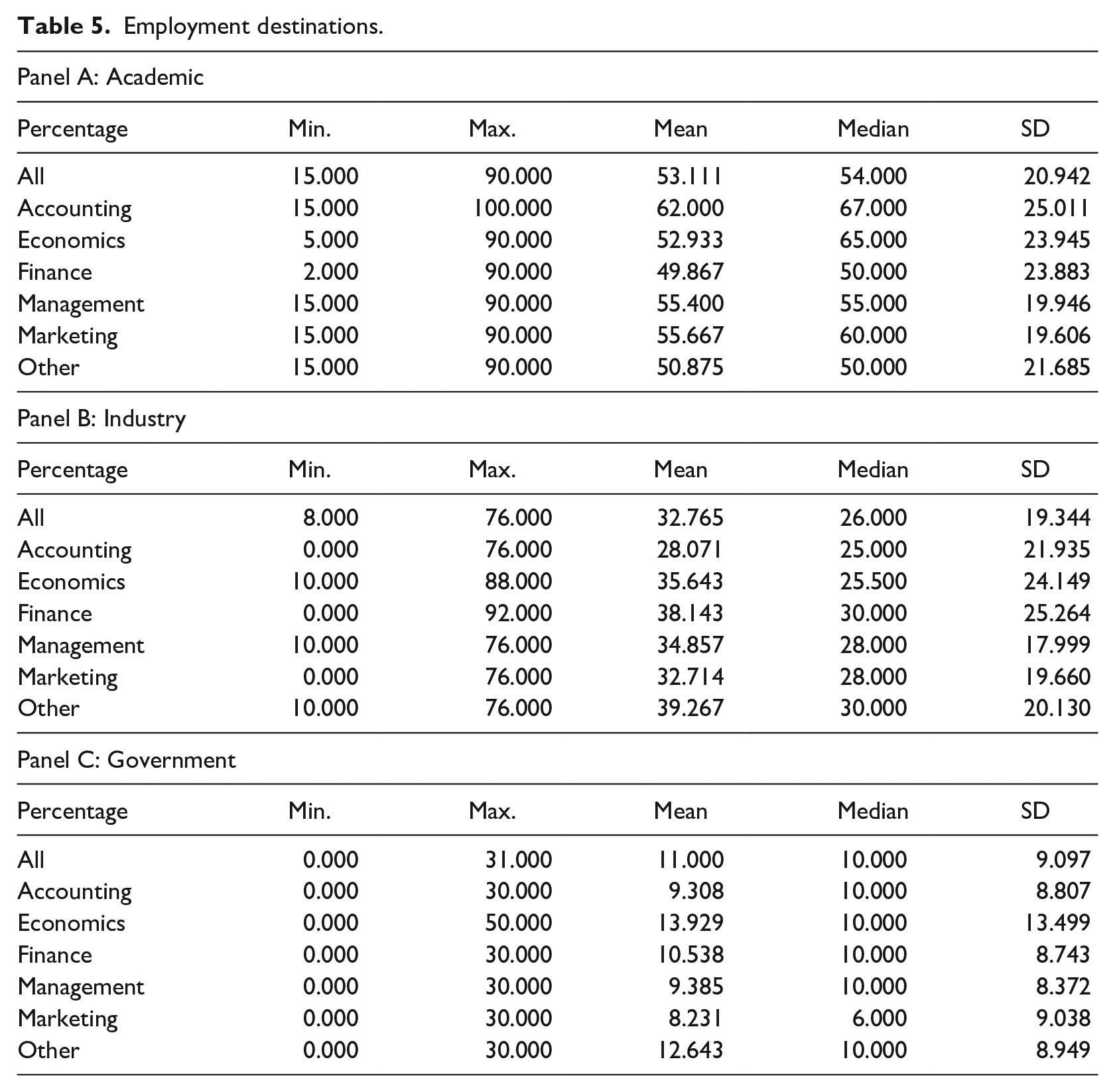
Given our findings that a large proportion of doctoral graduates do not go to academic positions, we further examine alternative employment destinations, with industry and government destinations reported in Table 5, Panels B and C, respectively. Of course, as with all employment destination responses, these figures are dependent in several cases on estimations sourced by the respondents. On average, 32.8% and 11.0% of graduates go to industry and government employment destinations, respectively. The discipline where the highest percentage go to industry is finance (38.1%), followed by economics (35.6%), management (34.9%), marketing (32.7%) and finally, accounting (28.1%), however, these differences are not significant based on the Friedman test. The discipline where the highest percentage of graduates go to government employment destinations is economics (13.9%), followed by finance (10.5%), management (9.4%), accounting (9.3%) and marketing (8.2%), however again, these differences are not significant. Interestingly, the proportion of management students at Go8 institutions going on to industry employment is less than half that of other institutions. In contrast, there is a significantly higher proportion of students going to industry employment across accounting, economics, finance and marketing at ATN compared to non-ATN Australian institutions. These differences appear in line with the normative pressures in both types of institutions and the stakeholders they interact with; Go8 institutions generally focus on high-ranking research, while ATN institutions are more concerned with work readiness outcomes. No other significant differences are found across the university groupings. Overall, these findings suggest that research relevance is more likely to be considered in ATN institutions than in that of Go8 institutions, given the difference in graduate pathways. However, it also must be acknowledged that graduates from Go8 institutions are more likely to find opportunities to stay within academia.
4. Conclusion
Given concerns about future trends and challenges in Australian and New Zealand business schools, we conduct a detailed survey of Australian and New Zealand business school doctoral programmes. We apply a neo-institutional theoretical lens to make sense of the underlying reasons for the state of these doctoral programmes and the degree of observable homogeneity. In general, our survey of doctoral programmes suggests that institutional normative isomorphism largely explains similarities in the key characteristics observed across different university groups and discipline areas, going well beyond the superficial role of coercive pressures (Scott, 2008).
There are many positive aspects of business school doctoral programmes in Australia and New Zealand. The combination of homogeneous and heterogeneous characteristics suggests Australian and New Zealand universities are subject to isomorphic pressures that have varying effects on doctor programme attributes (Oliver, 1988) and which have not led to extensive academic drift and programme replication throughout the region. While the majority of programmes have formal stages, likely relating to coercive funding considerations, they are generally not dominated by coursework or one research method, thereby potentially contributing to heterogeneity in research output and abilities of graduates. Students appear to receive support via supervisory panels (rather than single supervisors), funding to develop their professional network, illustrating recognition of best practice and normative isomorphism in action. However, there appears only limited opportunity to receive scholarships and living support. Furthermore, teaching opportunities vary widely while completing doctoral studies, and it is encouraging to see that significantly higher numbers of students from Go8 institutions are provided with teaching opportunities. Limited teaching opportunities in some institutions is potentially concerning, a reflection of the research-centred nature of doctoral programmes and not the balanced workload models in Australia and New Zealand.
Not surprisingly, our survey reveals the majority of graduates take up academic positions upon completion, consistent with the lack of candidate industry experience, limited industry funding and the universal academic orientation of doctoral programmes. However, with the decline in international student numbers and associated funding, the number of positions available for the foreseeable future may be greatly diminished. A higher proportion of graduates may need to find employment in industry and government, which could be problematic given concerns over research relevance and, consequently, the degree to which non-academic employers value doctoral graduates. We suggest pathways into doctoral programmes need to change substantially, and greater encouragement is needed for those with industry experience to enter programmes, thereby promoting industry-relevant research projects. Of course, the concerns associated with the ad hoc nature of funding also need to be acknowledged. Attracting a higher proportion of candidates with greater industry experience will be difficult in the absence of a financial model supporting such students.
Although our results suggest some diversity in the extent to which Australian and New Zealand business schools prepare doctoral students to address the challenges in producing quality research seen as relevant beyond the academy, there is nevertheless a high degree of commonality around most of the issues. Funding constraints, limited pre-doctoral study experience and pressure to gain teaching experience are relatively common problems in Australian and New Zealand business school doctoral programmes. While there seems to be common acceptance of the need for external examination to verify satisfactory research achievement, we are surprised at the reluctance to adopt a more formalised training in research methods, despite an apparent enthusiasm for progressive assessment/stages. We are, likewise, concerned at the large proportion of doctoral students who see their future as being in qualitative research, despite the high percentage of top-tier research journals in business disciplines having a quantitative focus. The absence of training in quantitative research methods likely limits the extent to which research will be publishable in many of the leading outlets. It seems normative isomorphic pressures concerning research method and focus on high-ranking publications have not taken hold in Australian and New Zealand business schools. This may also have negative implications for future assessments of research quality where quality is implicitly or explicitly linked to the most highly ranked journals.
It is also noteworthy that few doctoral students in business schools have substantive professional or industrial experience, although it should be noted that Go8 institutions appear more discerning in selecting applicants with lower acceptance rates. Hence, even where students receive sufficient research training, their ability to produce academically rigorous research may not be matched by an understanding of (or even an ability to recognise) important RQs relevant beyond the academy (Burgstahler, 2019; Kaplan, 2019). The importance of conducting research, which is relevant to industry, the professions and policy-making more broadly, is likely becoming more important (Jackson, 2022). In addition, there is likely to be an increasing demand to incorporate relevant research into industry-focused curriculum (i.e. in teaching). The characteristics of a typical doctoral student, which we document, suggests caution is warranted in believing business research is of increasing relevance beyond the academy.
A potential limitation of this study is it reports on the state of doctoral programmes pre-COVID-19. Changes in the operating models of business schools are likely, and this may, in turn, lead to significant changes in their doctoral programmes. We suggest that understanding how such changes occur and their implications for teaching and research in the business disciplines will be crucial in predicting the quality and relevance of research (and teaching) in Australian and New Zealand business schools. We also suggest some broader evaluation of the quality of doctoral education is warranted. In the manner of existing evaluation of research quality (i.e. ERA assessments), a potentially important starting point would be to have some record of the publication outcomes of doctoral programme graduates.
Footnotes
Appendix
Summary of significant differences across discipline areas.
| Accounting | Economics | Finance | Management | Marketing | |||||||||||
|---|---|---|---|---|---|---|---|---|---|---|---|---|---|---|---|
| Mean | Median | SD | Mean | Median | SD | Mean | Median | SD | Mean | Median | SD | Mean | Median | SD | |
| Student numbers | 15.000 | 10.500 | 12.344 | 20.091 | 15.000 | 23.191 | 14.238 | 10.000 | 12.864 | 30.455 | 30.000 | 20.423 | 15.048 | 16.000 | 9.997 |
| Quantitative research method | 57.813 | 60.000 | 19.790 | 72.063 | 77.500 | 22.089 | 68.688 | 67.500 | 25.848 | 52.563 | 51.000 | 17.780 | 56.750 | 55.500 | 19.591 |
| Qualitative research method | 39.500 | 39.500 | 19.0002 | 26.000 | 22.500 | 23.042 | 31.313 | 30.000 | 25.710 | 49.563 | 49.500 | 17.424 | 41.375 | 42.000 | 20.607 |
| Academic employment destination | 62.000 | 67.000 | 25.011 | 52.933 | 65.000 | 23.945 | 49.867 | 50.000 | 23.883 | 55.400 | 55.000 | 19.946 | 55.667 | 60.000 | 19.606 |
| Chi-square | Asymptotic significance | ||||||||||||||
| Student numbers | 27.780 | 0.000 | |||||||||||||
| Quantitative research method | 13.373 | 0.010 | |||||||||||||
| Qualitative research method | 18.535 | 0.001 | |||||||||||||
| Academic employment destination | 9.600 | 0.048 | |||||||||||||
Acknowledgements
We acknowledge the suggestions of the editor, Andrew Jackson, and two anonymous reviewers. We also appreciate the support of many past and present Deans and Associate Deans-Research, in enabling the administration of our survey. We also appreciate the feedback of attendees at meetings of the ABDC, meetings of the Business Academic Research Directors’ Network (BARDSNet) and our UTS colleagues.
Final transcript accepted 19 August 2022 by Andrew Jackson (Editor-in-Chief ).
Funding
The author(s) disclosed receipt of the following financial support for the research, authorship, and/or publication of this article: Financial support for this research was provided by the Australian Business Deans’ Council (ABDC) and UTS Business School. However, the views expressed are solely those of the authors.
