







Abstract
In 2018, the Harry Ransom Center at the University of Texas at Austin rehoused over 300 illustrated movie storyboards from the popular and frequently used David O Selznick Collection. Preservation technicians tracked this project from its inception to the survey and design conception, and through to its execution. By creating a new housing model and refining it over the course of a year, the Preservation Unit was able to consider how housing affects an object, which led to new systems and structures to facilitate process management and workflow, and how an object is impacted by its housing.
Keywords
This case study recounts an extensive rehousing project undertaken by the Preservation Unit in the Harry Ransom Center at the University of Texas at Austin over the course of about 12 months in 2018. Over 300 illustrated movie storyboards from the David O Selznick Collection were surveyed and rehoused. As preservation technicians, we create housings for everything: handwritten letters, delicate bindings, modern movie props, etc. Our preservation staff during this time consisted of Genevieve Pierce (myself), Alan Van Dyke, and Jill Morena. We were tasked with the extraordinary opportunity of rehousing one of the Ransom Center’s most exciting collections. The project involved surveying the entire Selznick storyboard collection, designing housing and workflow for it, moving the collection from one storage space to another, keeping disparate departments abreast of developments, and ensuring that the day-to-day work went smoothly. The project yielded an inventive new housing design, a workflow model on which to base future projects, and new preservation-management questions.
Overall, the project was a success. Among other things, it brought to light how an object’s housing changes it in terms of its size, storage, durability, sustainability, and identity. Housing and storage are at the very center of preservation, yet rarely does an institution as a whole consider an object in conjunction with its housing. Nevertheless, an item and its housing together constitute a single object, and proper preservation housing adds value beyond the protection it provides.
During this process, we also had the opportunity to ponder how past preservation decisions alter the future of collections. When preservation departments make compromises out of constraints of time, money, staff, and space, these choices are incorporated into how we think of an object. Initial housing decisions tend to color future preservation decisions, from rehousing to shelving to exhibition. Not all initial decisions are wrong, but it behooves preservationists to consider how their actions will influence future judgements about an object.
This case study is divided into four sections. The first outlines the history and characteristics of the Selznick Collection; the second details our survey of the items, including the construction design and materials used, workflow, assembly steps, and labeling/access; the third recounts our takeaways from this year-long housing project; and the final section considers both how this project will inform future project management at the Ransom Center and what preservation housing may mean in the context of an item and a collection, and within a larger institution.
The Selznick storyboard collection
History
The David O Selznick archive is one of the largest and most popular collections at the Ransom Center, and is vital to the study of the golden age of Hollywood. David O Selznick was a movie producer during the 1930s, 1940s, and 1950s at Metro-Goldwyn-Mayer, Paramount, RKO, and, most importantly, his own company, Selznick International Pictures. His archive spans from 1916–1966. He produced such classic films as A Star Is Born, The Adventures of Tom Sawyer, The Third Man, and Gone with the Wind. Selznick also brought Alfred Hitchcock to Hollywood and produced Hitchcock’s pictures Rebecca, Notorious, and Spellbound (Harry Ransom Center, 2020b).
The history of the Selznick Collection is, in some ways, the history of early American cinema, and represents a massive collaboration of writers, directors, performers, musicians, art directors, and designers. These movies are beloved and critically important to those interested in American culture. Storyboards, moreover, are beautiful pieces of art in their own right (see Figure 1). Many artists are featured in this collection, including Dorothea Holt, Mac Johnson, Lyle Wheeler, and William Cameron Menzies. Selznick had a high regard for Menzies especially; he was responsible for the art direction on Gone with the Wind, and Selznick later called on Menzies to lead the art direction of Spellbound and Rebecca. The Selznick archive contains many of Menzies’ original pieces, with the “slashing diagonals, overreaching shadows, the low horizon, and worm-eye views” that make Menzies’ style so distinctive (Halligan, 2013: 21–22). The storyboard artists’ work as creators and film designers is one of the principal draws of this collection.
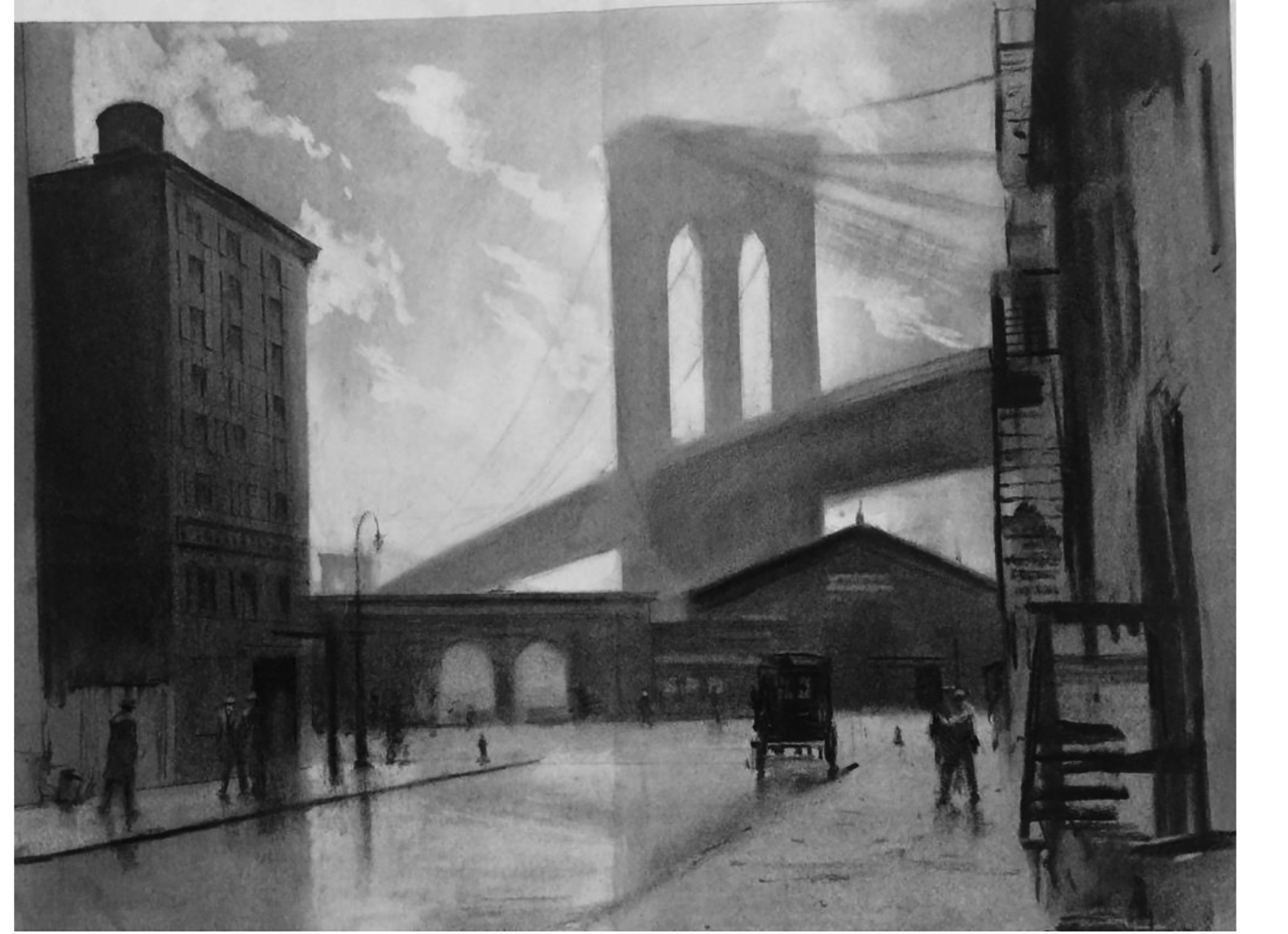
Storyboard from the David O Selznick Collection (photograph by Genevieve Pierce).
Collection scope and materials
The object of the project was to rehouse over 300 unique storyboards and drawings. The Harry Ransom Center contains approximately 2300 linear feet of Selznick archives, but this project focused on rehousing 35 flat-file drawers of storyboards (Harry Ransom Center, 2020a). The size of each object was, on average, 30″ x 20″, although the items varied in size considerably. The scene illustrations are painted in watercolor or mixed media on artist board, and depict set designs, costumes, and interior and exterior shots. The different kinds of paper and stages of deterioration of the items in the Selznick Collection made the material complexity of this project quite high (Murphy, 1987).
The storyboards, which were not created to be standalone pieces, are incredibly fragile. Most are illustrations painted directly onto artist board or onto paper that was adhered to artist board. The board used for these objects was made by pressing adhesive and cheap wood pulp paper together to form a thick support; it is now brittle and delaminating. The artists used a wide range of paper for their illustrations, from Bristol to newsprint, which they then adhered to the board with rubber cement. These multiple layers of unstable material both add to the bulk of the pieces and increase their fragility (Murphy, 1987). The Selznick paintings are watercolor or gouache and the drawings are graphite or charcoal. All the media in this collection is prone to cracking, flaking, fading, or smudging. The friability of this media is another reason why the housing had to be carefully designed and sufficiently protective. Most of the art is quite thick, probably 5 mm on average. Many corners and pieces are tenuous or missing, and the boards have bowed, warped, and cracked, and sometimes been taped back together.
Use and previous housings
The popularity of David O Selznick and his movies has led many patrons to seek out this collection. The visual appeal of the storyboards also makes them a favorite. These objects have frequently been handled by researchers and scholars, displayed for tours and classes, and exhibited. The collection was stored on the seventh floor of the Ransom Center and, whenever an item was called down for classroom or reading-room use, a page had to find the piece, carefully lift it out of its drawer, put it on a cart, and, finally, maneuver it through the stacks onto an elevator and to the second floor. Pieces in this collection have made this journey many times, and every trip increases the chance of injury in inadequate housings.
This system presented many problems. Previous housings were either insufficient or nonexistent. Many of the pieces were put in 20-point or 40-point folders and stacked on top of one another; in consequence, the folders made direct contact with the face of the paintings, subjecting them to smudging or offset. Moreover, the labeling of the folders was not standardized, adding to the difficulty of finding a specific piece. Faulty housing can lead to a cascade of issues, including potential physical damage, cramped storage, and improper labeling. Preserving this collection is especially complicated because each piece is valuable and unique. Consequently, the project necessitated individual housing for each piece. Outsourcing this work was cost-prohibitive, so the Ransom Center relied on staff resources. The institution also had to adopt a plan that would be feasible in the lab space available, provide protection in flat-file storage, cut down on material loss by reducing human error, and still not require years of staff time. In short, we needed a hybrid between mass-produced and customized housing.
To meet the project’s needs, the preservation team created a sink-mat structure out of archival-grade corrugated board, which is both extremely light and strong (see Figure 2). The team settled on two different sizes that could be built in assembly-line style. The team also pasted in Permalife paper corners to hold each piece securely in place. We carefully measured these corners to fit each piece individually.
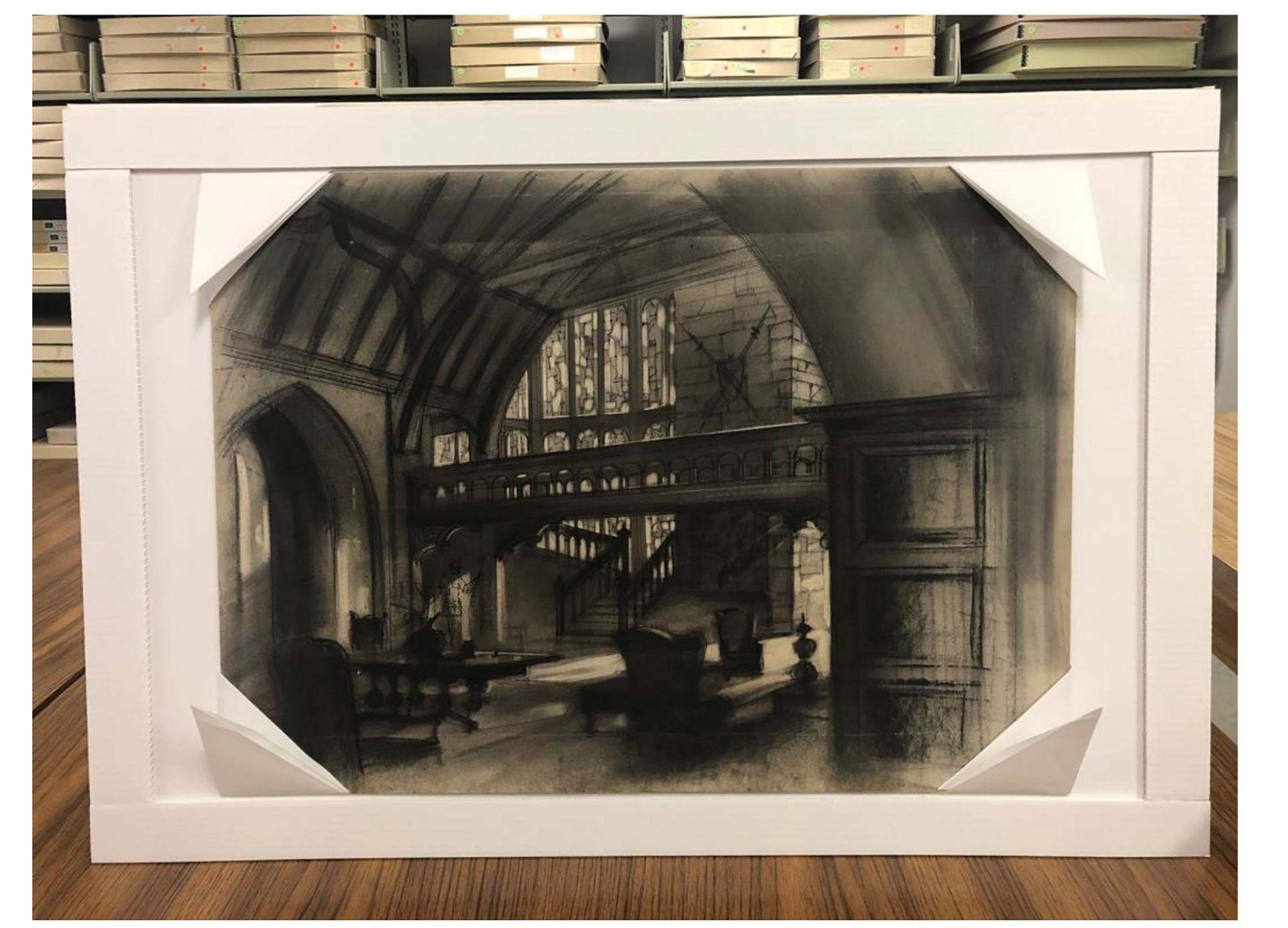
A storyboard in sink-mat housing (photograph by Genevieve Pierce).
Process
Survey
The team conducted an extensive survey of the collection before deciding on appropriate housing. Because this collection is used so often, it was important to have every piece organized in one survey. In the end, we studied the collection through the lens of preservation and did not do extensive condition-reporting. We recorded measurements, support type, media type, general condition, and any major condition issues, such as losses or cracks.
All told, four staff members, in rotation, measured the pieces and recorded data over two months. The data revealed that the pieces could be sorted into two major categories based on the size of the file drawer into which each one would ultimately be placed. Because we knew where the collection would be stored, the team worked the storage space into the initial design and planned housing to meet its restrictions. This foresight made the project much more efficient. Anything over 20″ x 30″ was considered large and was housed on 36″ x 48″ supports. Anything smaller than 20″ x 30″ went into a 24″ x 36″ folder. The folder sizes correspond nicely with standard flat-file storage and leave enough space to retrieve the folders easily out of their drawers.
In the past, the Preservation Unit has usually handled large projects like this one in batches, and housed items in vendor-purchased housings. For example, for the Ransom Center’s collection of 300 oversized photographs, most were separated by size and housed in premade sleeves in batches of about 50. When large photographs needed customized pockets, however, the project often required a considerable amount of material and staff time. Housing a very large photograph in mylar is difficult and, despite our best efforts, creating 300 custom housings necessarily would have taken a massive amount of time, energy, and materials. We created the mass-production model for the Selznick project specifically to cut down on such waste.
Housing concept and design
For this project, the usual concern of making a bespoke sink to fit each item was irrelevant; the goal here was to create 300 sink mats that would give each item a protective “box” before customizing each box for its piece. The housing design was, essentially, an oversized sink mat with a lid. Permalife paper corners would then be pasted onto the base support board, which would hold the object gently, but firmly, in place. Traditionally, the walls of a sink mat come right to the edge of the object to provide maximum protection. For this modified sink mat, however, the walls create a structure in which the object sits, which provides protection for the face of the painting or graphite illustration without coming too close to the object itself.
This modified sink mat consisted of a single-core support board with 2″ double-core walls glued around the perimeter. This design created a standard-sized frame in which the storyboard could sit. The storyboard was then secured in place with four Permalife paper corners, much like those used for photograph storage. Finally, a single-core-board lid the same size as the support was hinged on top, creating a “box” which enveloped the storyboard and protected the fragile illustrations (see Figure 3).
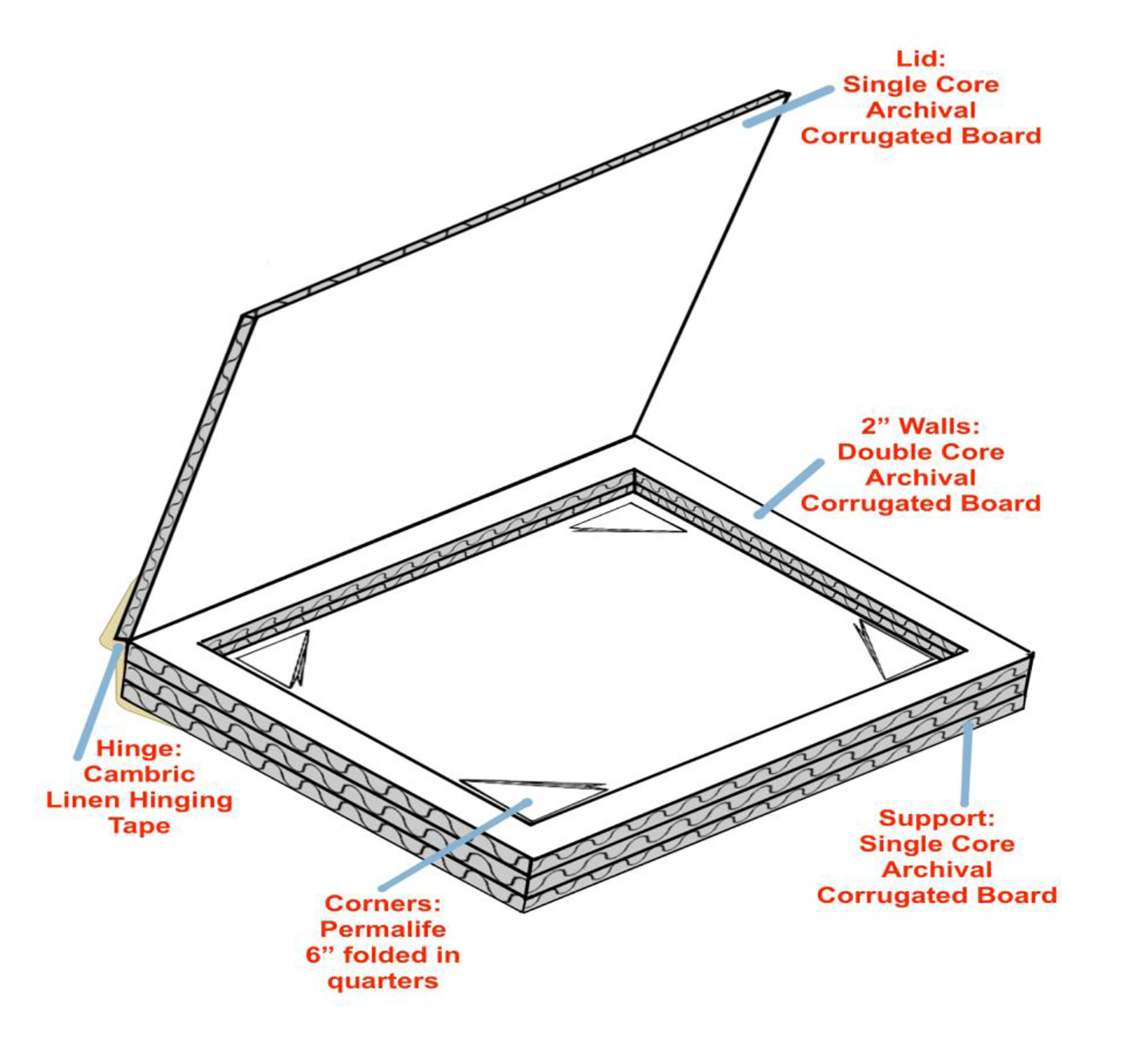
Illustration by Chloe Gise, HRC Preservation Technician.
Materials and supplies
We created a plan with simple components and simple assembly to facilitate a smooth workflow. The principal material we used for this project was archival corrugated board, which is both lightweight and strong, making it ideal for large housing projects. 1 The team used single-core archival corrugated board for the primary support and cover. For the walls, we used double-core archival corrugated board cut into 2″ strips. Corrugated board is three pieces of paper glued together with potato starch. Because two pieces of paper flank a fluted inner layer, corrugated board is both lighter and stiffer than boards made by laminating many layers.
The team cut Permalife paper, which is both strong and acid-free, into 6″ x 6″ squares and folded each one twice to create a protective corner. 2 Polyvinyl acetate (PVA) adhesive was used to glue the walls to the primary support. PVA is a synthetic copolymer emulsion that is commonly used in bookbinding; it is incredibly stable and bonds material tightly with minimal drying time. The preservation lab frequently uses acid-free archival-grade PVA.
Gummed linen hinging tape fixed the cover to the base support board. We use this water-activated adhesive tape for much of our framing because it bonds quickly and is incredibly strong. Wheat-starch paste was used to stick the paper corners to the primary support board. Starch adhesives are made by cooking powdered wheat starch in water until a paste forms. They are mainly used for paper-conservation treatments due to their reversibility and pH neutrality (Preservation Self-Assessment Program, 2016).
Workflow
Developing our workflow helped us also to better envision the design of the housing. The key to both the workflow and structure design was knowing where this collection would be housed. Separating the items to be housed based on the size of the flat-file drawer for which they were destined also informed the workflow. Similarly, ordering the supplies and determining how many supports, walls, and lids would be needed helped us to organize the project. Our first goal was to prepare a stock of pre-cut boards from which a technician could readily assemble the parts of the boxes. A work-study student was assigned the bulk of the materials preparation. She cut standard-sized pieces and stacked them in the labs; this way, the preservation technicians could focus on the sink-mat assembly.
Two part-time preservation technicians and one work-study student were dedicated exclusively to this project. I led the project and the other staff member allotted it 10 hours per week. The student employee was available for approximately 11 hours per week and spent almost all her time on this assignment. Neither of the full-time staff members, however, could focus solely on this project. Balancing our responsibilities was complex, and we adjusted our methods continually to increase their efficiency.
Structure and assembly
Each folder consisted of two large single-core corrugated boards, one for the bottom support board and one for the hinged lid. To create the sink structure, four double-core corrugated pieces cut in 2″ strips were glued down to the main support board as a frame. We never varied the size of the walls, which saved time by ensuring consistent sink-mat construction.
The folders were either large (36″ x 48″) or small (24″ x 36″), so we had batches of corresponding support boards pre-cut each day. This way, there was a constant supply and the preservation technicians did not have to pause to replenish the components. All told, we cut 200 small (24″ x 36″) boards, 400 large (36″ x 48″) boards, and 1200 (2″) walls. In addition, we cut and folded 1200 Permalife paper corners.
We did this work across two labs because the project required a lot of space. In the Paper Lab, we handled, measured, and pasted the corners, and stored the art pieces in flat files; this segregation kept the work space cleaner. Once we had measured the storyboard onto the support and added the custom corners, the supports were transferred to the Preservation Lab, where we glued on the walls and attached the box lid. Because we had access to two labs, we had plenty of space for board storage and construction.
The structure and assembly involved four steps. First, our student worker pre-cut the primary support boards and stacked them according to size in the Paper Lab, where the storyboards would be measured. She also pre-cut all the corners and grouped them alongside the support boards so that each piece of the assembly was easily accessible to the preservation technicians. All of the other pieces—the sink, walls, and lids—were stacked in the Preservation Lab. Segregating the two labs ensured that the storyboards were kept in a separate area away from the PVA.
In the second step, the preservation technicians carefully measured each storyboard onto its support. We could not “eyeball” where each piece went; the process required that we measure each piece and center it on the mat. The piece was centered on the support board and position-marked by using small sticky notes to indicate each of the corners. By using sticky notes, we could avoid drawing graphite marks on the support surface. It also made the work go more quickly than if we had marked the board directly. Once the storyboard had been measured, it was put away, and 6″ x 6″ folded Permalife paper corners were adhered to the boards using wheat-starch paste (see Figure 4). The boards were stacked with sheets of blotter paper in between and given ample time to dry.
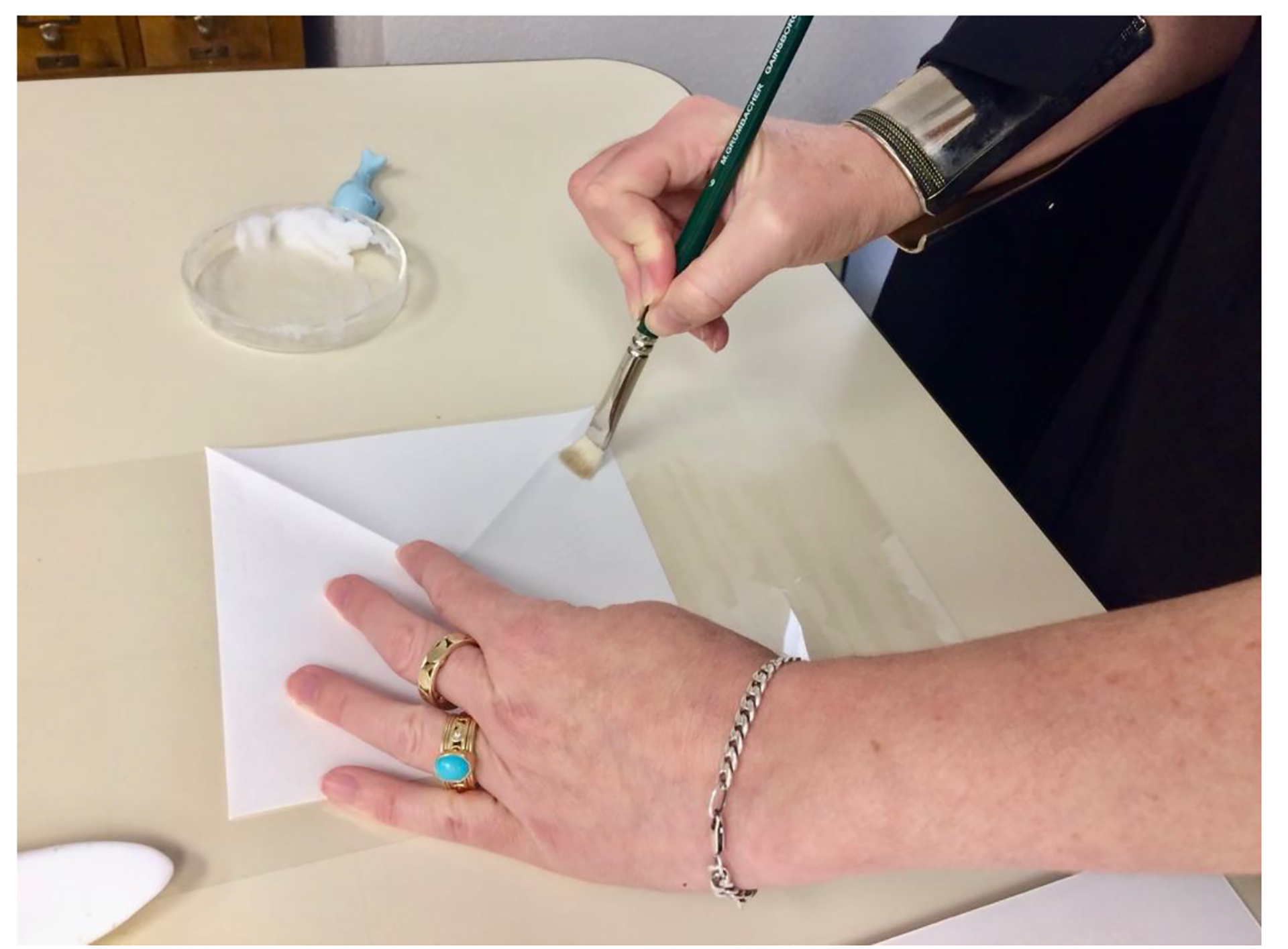
Preservation technician Jill Morena pasting Permalife paper corners (photograph by Genevieve Pierce).
After the corners had dried, the support boards and their adhered corners were taken to the Preservation Lab and 2” double-core walls were glued onto the main supports, creating a frame around the corners. The newly glued frame was allowed to dry and then a lid that was the same size as the support board was hinged on top using gummed linen hinging tape. Building this frame structure was essentially assembly-line work, which allowed us to maximize our time and energy. Although precision was still important, it was relatively easy to glue the walls to the support boards and hinge on the lids. We were not yet dealing with the storyboards, just fabricating sink mats. In other words, this part of the project was mass production.
The final, tailored step of the project was challenging because, by this point, the team was fatigued. This portion of the project demanded meticulousness and forced us to focus intensely after performing so much rote assembly; the overall patience for the project was waning. Because the artist board was so fragile, transferring the storyboards to their new housing took both skill and a lot of time to prevent further damage. Handling the delicate pieces was far more difficult than we imagined. The storyboard corners, many of which were tenuously attached, had to be carefully fitted into the Permalife paper corners. Lastly, the housings, which had taken months to design and build, sometimes did not fit correctly and had to be modified. However, this last step of the process was also the most gratifying. Seeing a delicate object in a new, successful housing is rewarding, as is showing off the work that will help preserve these objects (see Figure 5).
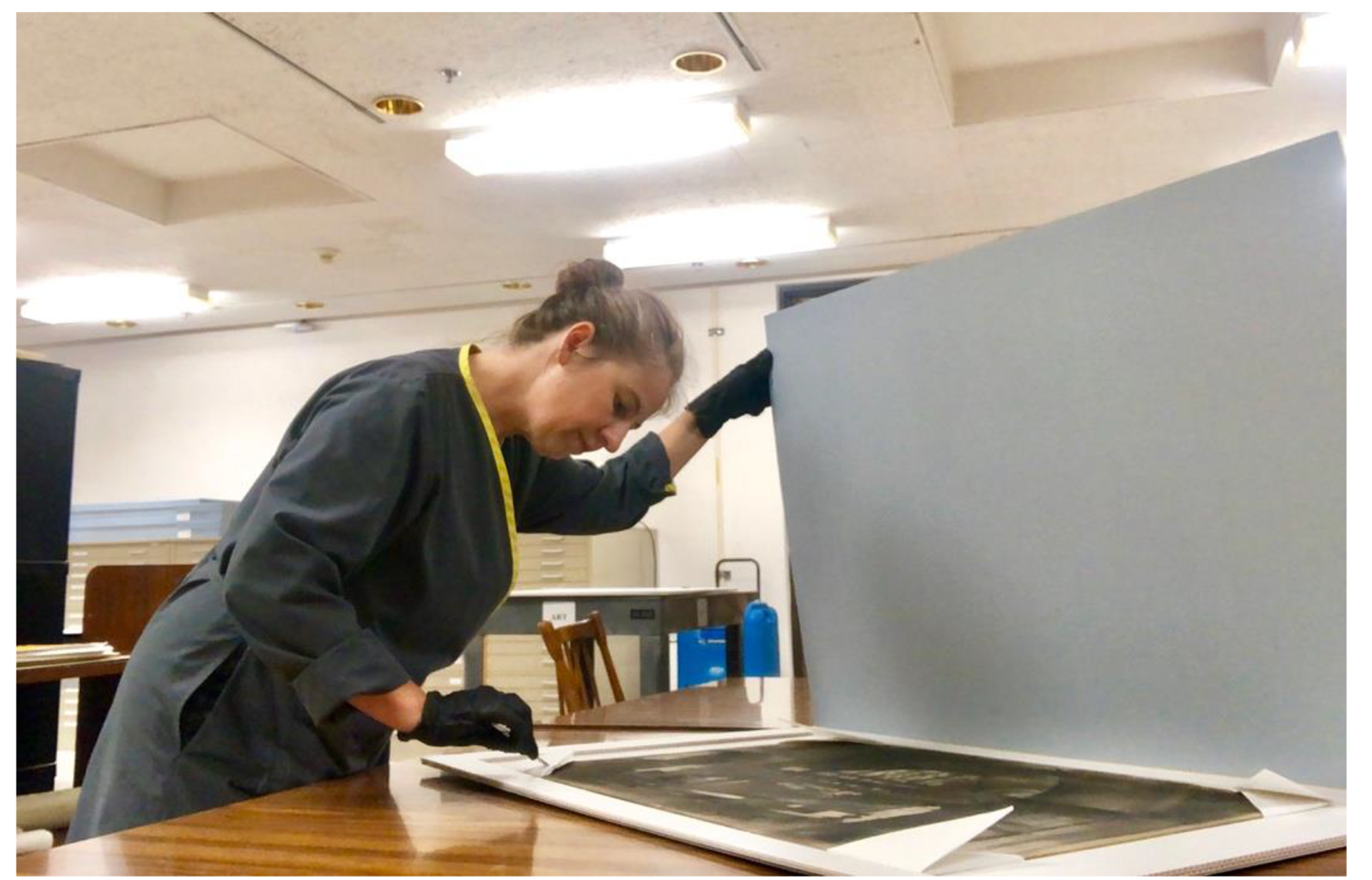
Genevieve Pierce housing a Selznick storyboard (photograph by Genevieve Pierce).
Labeling, description, and access
The last, but essential, step of this project was applying labels. Labeling was not something that we had considered when we began the project. As preservation technicians and conservators, we usually leave this responsibility to cataloguers and archivists. However, we observed during our survey of the original folders that the labeling was inconsistent. In this collection, different movies had different labeling standards, which made counting the items difficult. The team consulted with archivists, cataloguers, and our film curator before settling on a standard numbering system based on the Ransom Center database and divorced from drawer-location assignments. This alleviated a lot of frustration about a piece belonging to a particular drawer—now it could go in any of the collection’s drawers and not be as easily misplaced. This approach allowed for fluidity, which better connected the collection as a whole. We also included a photograph of the corresponding piece on the new lid of each folder so that a page or archivist could easily recognize each one. In this way, the items are much less likely to be put in the wrong folder. In the new drawer layout, the folders stack neatly in tiers, and each label is clearly visible. During the rehousing process, the cataloging and description records for each piece were also updated.
Successes, failures, and reflections
Successes
The survey
From a preservation perspective, one of the most important steps of rehousing this collection was our thorough survey. Although we were not able to create a conservation-treatment report for each item, our assessment provided a snapshot of the overall condition of the collection. The time spent with the materials allowed us to evaluate the needs of each piece and consider several different housing designs before making a decision.
Staff time and communication
When starting a project that may take hundreds of hours to complete, staff time is one of the chief considerations. Because the most complicated steps of creating housing tend to come at the end, progress seems to decelerate as one goes on. A flexible and understanding attitude regarding the difficulty of a large project like this is helpful. In addition, open communication that allows one to acknowledge challenges and ask for help is essential. Among the other advantages, open communication allowed our team to shift deadlines when needed, reevaluate our goals throughout the year-long process, and confer with everyone involved to move the process forward in mutually agreeable ways.
Because we welcomed open communication from the beginning, we were able to take a more measured approach to the mass production that was necessary at the start of this project. This method took into account not only efficiency, but also the preservation technicians’ capacity to produce excellent work over time. Worried about fatigue setting in, we reevaluated the timeline about six months in and delayed the projected completion by another eight weeks. To facilitate our best work as the project progressed, the team found that we needed to pace ourselves. Organizers usually consider material sustainability in projects like these, but it is equally important to consider a project’s toll on its contributors. The workflow and construction design should account for workers’ ability to sustain their energy throughout.
The Harry Ransom Center’s film curator, Steve Wilson, provided vital support to the Preservation Unit by helping us define our project and set clear goals. He is the steward of this collection and gave excellent advice on what requirements the housing had to satisfy, including handling needs, staff and patron use, future exhibit requirements, and it offering sufficient space. His contributions throughout the project were essential, especially in helping us to correct our course whenever he spotted something that was incompatible with how the collection would be stored, moved, handled, or exhibited.
Sustainability
The question of sustainability for this project is twofold. We used far more materials to create the customized housing than had been used in the past for similar projects. However, by creating a longer-lasting box for each piece, we cut down on the need to make additional folders in the future. Also, by investing in robust materials, the housings will protect the items for many years to come. The conservation of collections is the goal of preservation and, without a doubt, the new housing is far superior to what preceded it. The items are now in little danger of damage, despite heavy use and their frequent movement through the stacks. Also, most of the offcuts from this corrugated B-flute board were either used for this project—making the walls of the sink mat—or saved for other initiatives. Inevitably, there was some waste, but we were able to repurpose most of the board that went unused for future projects. Additionally, the environmental impact of this project was minimal because the housings were made entirely out of paper products rather than mylar.
The material costs for this project were greater than those generally allotted for housing a single collection. However, because this collection had never been properly housed, is popular, and is of great research value, the expenditure was justified. Nonetheless, giant projects such as this place strains on time, budgets, resources, and staff. These challenges may discourage preservationists from even attempting a fix, for fear of not being able to finish the project or of wasting time and resources. However, taking into account the cost of potential future damage caused by neglect or improper housing, the expense of this project was a good investment.
Storage and use
This collection’s popularity made it a priority for the Ransom Center. For this reason, finding new space for it was relatively easy. We moved the collection, wholesale, to newer, larger flat-file drawers on a different floor, and our housing design took full advantage of this additional space. Having a storage plan in place from the beginning both informed the design and workflow and contributed to the project’s overall success.
Similarly, renumbering and relabeling each piece benefited the collection; now, anyone searching for a particular piece can identify it from the photograph pasted on the housing. Although clear labeling is not usually considered an issue of space, any measure that helps keep a storage space tidy prevents items from getting lost in drawers or mishoused. Clear access to an object, without obstruction, also lessens handling and, thus, chance of injury. Although all materials need housing and proper storage, collections that are constantly handled and exhibited are in greater danger of loss.
Failures
Our principal misstep was not initially incorporating digitization into our workflow. As we were labeling each object, we realized that only the most popular items and those that had been previously exhibited were already digitized. Digitization is separate from the Preservation and Conservation Division at the Ransom Center. Thus, interdepartmental coordination and buy-in from the outset would have been necessary to digitize the rest of the collection. Unfortunately, we did not have the foresight to propose this additional step at the beginning.
Several other impediments also existed to taking these steps. Digitization would undoubtedly have delayed the project, possibly by another few months. Because we were motivated to finish the project, we may have shortchanged this facet of preservation. In addition, because the storyboards are so large, it would have taken a substantial amount of time and expertise to photograph each one adequately. Nevertheless, we might have missed a great opportunity to add research value to this collection. In future large-collection rehousing projects, because the objects are already being handled, the team should allot time for recto and verso photography.
Reflections
This project presented contradictory goals. Bespoke sink mats had to be mass-produced; delicate, popular pieces needed housings that privileged handling and exhibiting, rather than simply storage; and although the workflow was protracted and labor-intensive, the most delicate and intricate work occurred at the very end of the process. Nevertheless, our dual-purpose design met all the Preservation Unit’s goals and still had a reasonable cost. For easy production, we designed a support that would come in two sizes. All the pieces would be cut and assembled identically, yet each measure was tailored for the specific piece. The housings would be strong and durable, light enough to carry, and robust enough to bear frequent handling, moving, viewing, and exhibiting. The workflow was based on open communication between departments, and the stakeholders acknowledged the requirement to tailor the project’s timelines to the workers’ needs.
By quickly creating hundreds of sink mats, the team established a new precedent in the Preservation Unit. We now regard sink mats as a standard boxing option, alongside tux boxes, phase boxes, drop-front boxes, and folders. Also, the preservation technicians are now so familiar with sink mats that we can easily build, design, and tailor them to whatever object needs to be housed. One of the best ancillary benefits of a mass-production project like this is that it gives our team lots of practice. It was gratifying to be able to refine the technical aspects of this design and monitor its future use by staff and patrons. Moreover, part of the value of completing such a large project is being able to collect data and establish procedures that will facilitate future workflows and designs. In short, we can use the tools we learned here to create more efficient projects going forward.
The Selznick storyboard project highlighted one of the questions that hounds preservation departments, especially when working on large projects: Since storage space in institutions like ours is so scarce, how can we justify rehousing projects that may expand the dimensions of the collection several times over? Originally, this collection was housed in thin folders and the storyboards were confined to a smaller storage area. Nonetheless, smaller housings were not the best choice to protect the objects. This project was an excellent example of how initial housing decisions that reduce a collection’s storage footprint can lead to future issues when items are properly rehoused and the collection’s size expands. Ideally, adequate preservation housings would be integrated into the initial evaluation of the collection, which would guide storage requirements, regardless of the additional footprint. Housing projects, however extensive, are not ancillary to the items they protect; they are as vital as an accession number or cataloging and description.
Conclusion
Future preservation management
The value of preservation projects is widely acknowledged, but the time, money, staff, and space that rehousing requires can be very costly. To provide proper protection, preservationists essentially change the nature of an object and the space in which it is stored. While this adds longevity and sustainability to the object, there are often practical considerations, such as storage options and space limitations.
Nevertheless, from the time of an object’s initial procurement, preservation housing is integral. The benefit of documenting and tracking housing projects such as this one is in learning how housing evolves throughout the life of a collection, and how housing can change a collection for the better. However, in preservation, human comfort is as important as object sustainability. We strove to balance what was best for the objects, the project, and our team. Reimagining a project’s design to include consideration for staff will yield better results for both the object and the institution in the long run.
Preservation as advocacy
Having an independent Preservation Unit within the Preservation and Conservation Division gives our team ample opportunity to consider object housing and advocate for proper housing and storage. In the same way as conservators advocate for an item through means of treatment, catalogers through description and access, and curators through research and exhibition, preservationists add institutional value to a collection by ensuring the proper housing and storage of objects.
Sometimes, preservation work is invisible, just as the protective housing of an item is peripheral to its core existence. Nonetheless, housings can give items a chance to be handled, extend their use value, and inform better storage. In sum, well-executed housing is a necessary addition that affects how an object is observed, handled, and protected.
Footnotes
Declaration of conflicting interests
The author declared no potential conflicts of interest with respect to the research, authorship, and/or publication of this article.
Funding
The author received no financial support for the research, authorship, and/or publication of this article.
