







Abstract
This study examines research topic selection among LIS postgraduate students in Tanzania. A quantitative approach was used to collect the data, and purposive sampling was used to recruit a total of 105 respondents. Key findings showed that research topic selection is influenced by how extensively the topic has been researched, postgraduates’ personal interests and whether the topic has been previously researched by a student. Insufficient research knowledge, little global LIS research exposure and insufficient supervisory leading roles affect research topic selection. Findings showed male and doctorate postgraduate students face more challenges in LIS research topic selection. The study concludes that LIS postgraduates’ research topic selection is challenging due to insufficient research methodology training and foundations. The study suggests research methodology training for supervisors and students, revising LIS curricula and appropriate research guidance to LIS postgraduates would be important in addressing the challenges found. The study also recommends the establishment of an LIS national repository centre with research content accessible to all students.
Introduction
Research is an important and mandatory academic endeavour that most postgraduate students undertake during their postgraduate education. Globally, universities and colleges train postgraduate students in research to equip them with knowledge, skills and competencies so they become lifelong learners (Elia and Ndenje-Sichalwe, 2022). As such, postgraduate education and research remain vital for countries to generate new knowledge and skills required for a functional economy (Castillo-Martínez and Ramírez-Montoya, 2021; Mutula, 2011). In most countries around the globe, students pursuing postgraduate studies in academic institutions are required to conduct research in the form of a dissertation or thesis as part of the requirements for earning academic degrees (Abdulai and Owusu-Ansah, 2014). Apart from meeting other requirements prior to completion of an academic postgraduate programme, students ought to have skills and knowledge to formulate a research topic (Wang and Park, 2016). Possessing and applying analytical research skills and knowledge are crucial not only to fulfil an academic programme completion requirement (Leedy and Ormrod, 2021) but also to shape the understanding of the essence of research and its application in the real world.
The systematic process of collecting, analysing and interpreting data and information to enhance a community's understanding of a phenomenon is an essential goal of a research endeavour (Leedy and Ormrod, 2021). In an academic environment, the research write-up process commences with the selection of a topic and is largely influenced by what a researcher aims to achieve (Abdulai and Owusu-Ansah, 2014; Adhikari, 2020; Hair et al., 2020). Research topic selection in the social sciences, particularly in the library and information science (LIS) discipline, requires conducting tasks such as critically reviewing the literature to identify recommended areas for future research, identifying study limitations, observing and exploring societal problems and reading research articles (Adhikari, 2020; Ameen et al., 2019). Selecting a research topic is an essential preliminary step researchers embark upon in the research development process, extensively contributing to research growth (Ameen et al., 2019). Simply put, a successful research write-up process is shaped by the quality of the research topic identified (see Hair et al., 2020; Samuels, 2023). Eventually, a good research work is measured based on an array of research attributes embedded in the selection of the topic. Key attributes of a research write-up therefore include: a clear research topic supported by a sound theoretical base, a well-defined problem, the research being of mutual interest to both the supervisor and the researcher and research questions and objectives that are specific and thoroughly address a rigorous research design (Hair et al., 2020; Samuels, 2023).
The quality of a research project depends on the researcher's ability to choose a good research topic; undeniably, the majority of postgraduate students experience challenges in topic selection (Leedy and Ormrod, 2021). In fact, despite postgraduates’ training in research and the existence of various means they can use to identify and select a topic of interest, abilities to identify it and conduct a preliminary literature search have remained problematic among students (Abdulai and Owusu-Ansah, 2014; Snyder, 2019). Globally, the majority of postgraduates face challenges in topic selection, extant literature exploration, problem formulation and gathering of relevant information on the research theme (Naveed and Ameen, 2017). In Tanzania, where this study was conducted, Manda (2002) and Ndenje-Sichalwe and Elia (2021) found the lack of research knowledge to be problematic in the entire research process. In fact, the two studies found this process to be frailer when it came to framing a clear research topic and questions, critically reviewing the literature and making methodology choices. It is against this backdrop that this study seeks to particularly examine LIS postgraduate students’ topic selection using Tanzania as a developing country context. In addition, the study specifically aims to identify challenges postgraduate students face and to suggest areas of improvement in topic selection. The researchers further propose a conceptual framework for topic selection in the context of LIS in developing countries.
Study context
The University of Dar es Salaam (UDSM) established its Information Studies Programme (ISP) in 1997 with the aim to offer master’s and doctorate studies. The doctoral ISP lasts three years and has a thesis as completion requirement where students engage directly with their supervisors. The master’s programme, on the other hand, requires students to undertake coursework training for nine months and then to conduct a dissertation for nine more months. In the doctoral programme, students do not take coursework training as in the master’s programme, where Research Methods is a core course taught in one semester. The modules covered in the Research Methods subject include an introduction to research methodology, which entails the basics of conducting research, the research process and its components; research design and sampling; data collection methods; and analysing and reporting on findings. Apart from Research Methods, other courses offered for postgraduate master’s students in the ISP include Information and Communication Theory, Information Sources and Reference Services, Information Technology and its Application, Organization of Knowledge (cataloguing and classification), Records Management and Archives Administration, Management for Information Professionals and Collection Development and Management. Other courses are Information User Studies; Legal Information Services; Information in Science and Technology; Website Design; Knowledge Management; and Analysis, Design and Evaluation of Information Systems and Digital Libraries (University of Dar es Salaam, 2023).
Literature review
Difficulties encountered by postgraduate students in the research write-up process has been an area of interest among a number of scholars globally (see Ekpoh, 2016; Jung et al., 2022; Komba, 2016; Mosyjowski et al., 2017; Rafi and Moghees, 2022; Shahsavar and Kourepaz, 2020). Ameen et al. (2019), Keshavarz and Shekari (2020), Mutula and Majinge (2018) and Natividad-Franco (2022) have explored the challenges in research and particularly in the selection of the research topic in LIS. In the global arena, the reviewed literature reveals that postgraduate students, both in developing and developed countries, face challenges in the research process (Elia and Ndenje-Sichalwe, 2022; Mutula, 2011; Scholtz, 2007). For example, Mutula (2011) indicated that postgraduates from East, Central and Southern sub-Saharan Africa face challenges in conducting research. Scholtz (2007) indicated that Germany, Australia, Canada, the United States and New Zealand were among the countries in the developed world were postgraduates faced challenges in the research process. Although postgraduate students from both developed and developing countries encounter difficulties in research, higher learning institutions in developing countries may experience more challenges in the research process as a result of institutional barriers. These institutional factors include limited research expertise, weak research infrastructure, inexperienced supervisors, lack of a research agenda, lack of access to research outputs, low educational qualities of students pursuing tertiary education and, broadly, scarce funding.
A number of studies have explored students’ challenges in research. A study by Ameen et al. (2019) explored the difficulties faced by novice LIS researchers in Pakistan while formulating their research topic. The findings showed a lack of conceptual clarity, poor time management and lack of research culture as the major difficulties postgraduate students faced in the course of preparing their research topic. Other scholars (e.g. Shahsavar and Kourepaz, 2020) conducted studies to understand the problems postgraduates encounter in theses write-up and literature review processes. Key findings revealed that most postgraduate students failed to conduct a critical analysis of the reviewed literature in their work. Additionally, the authors indicated that postgraduate students mainly focused on summarizing other researchers’ findings and interpretations rather than establishing a critical discourse, resulting in difficulties in formulating a topical research problem. Another study in Pakistan by Rafi and Moghees (2022) investigated writing challenges, causes and strategies to facilitate the doctoral dissertation writing process. The study revealed that doctoral students faced intertwined challenges related to topic selection, such as the mechanics of writing and the development and structural organization of the dissertation.
Keshavarz and Shekari (2020) researched factors affecting topic selection for theses and dissertations in LIS. Findings showed research operability and feasibility as the most effective factors in topic selection. Other attributes included information resources, personal issues and the nature of the topic. Mosyjowski et al. (2017) investigated the drivers of research topic selection among doctoral engineering students. The study found most students lacked the opportunity to fully choose their own topic as they were constrained by extrinsic factors. Mosyjowski et al.'s study revealed prior work experience, personal interest and funding played a major role in shaping students’ topic selection.
Jung et al. (2022) explored how master’s students in Hong Kong perceived their experience and conceptualization in research. These authors found students had insufficient knowledge at the initial stages of the research process, affecting research topic selection and related tasks, as well as the research focus and direction. In addition, Jung et al. found that difficulties in research primarily resulted from not having research experience and from improper guidance from supervisors. Furthermore, a study in Nigeria (Ekpoh, 2016) highlighted institutional-related factors such as supervisors not being up to date, a lack of expertise on students’ topic and incompatibility with supervisor as the major challenges facing postgraduate students in research and thesis writing.
Furthermore, a study in East, West and Southern African universities by Mutula and Majinge (2018) revealed insufficient review of related studies among LIS postgraduate students as a factor extensively affecting postgraduates’ ability to appropriately select a research topic. The authors further noted that LIS doctorate students failed to link the selected topic with their own world view (ontological, epistemological and methodological perspectives). Gul et al. (2021) found the majority of postgraduate students in Pakistan lacked a clear initial understanding of research methodology and/or the ontological and epistemological comprehension in framing their research. Postgraduates’ insufficient knowledge on the theoretical underpinnings of their study was found to be a major setback in academic thesis or dissertation write-up processes (Hair et al., 2020).
In Tanzania, where the present study was conducted, Manda (2002) and Ndenje-Sichalwe and Elia (2021) found research knowledge to be problematic among postgraduate students. The observed challenge was attributed to problems in contemplating the research process, such as posing clear questions and critically and extensively reviewing the literature, attributes related to insufficient skills in conducting research. Komba (2016), who investigated challenges in writing theses and dissertations among postgraduate students in Tanzania, found the research process to be challenging, particularly in writing dissertation chapters, all related to a lack of research skills.
Based on the reviewed literature, a number of scholars have researched attributes and challenges postgraduate students encounter in conducting research. Based on the literature reviewed, although identifying a research topic is fundamental to the process of designing and successfully conducting a postgraduate study, there is scant research conducted on topic selection in the LIS discipline. In fact, from the reviewed studies, no empirical research investigating postgraduate LIS topic selection and factors influencing it in Tanzania was found. This study therefore broadly seeks to explore the problem and contribute new knowledge on this important step of the research process.
Theoretical underpinnings of the study
A number of scholars (see e.g. Belkin, 1980; Chowdhury and Chowdhury, 2011; Kuhlthau, 1991) have explained situations that information users encounter in the process of searching for information to meet their needs. Belkin (1980) described an information need as an anomalous state of knowledge (ASK), a condition where users find it challenging to state or define the information needed to address a gap in knowledge. For instance, with respect to Belkin's ASK model, postgraduate students, despite being aware of research methods learned either in their previous or current studies, find themselves unable to clearly express their research information needs to choose their research topic. On the other hand, Kuhlthau (1991) described initiation, selection, exploration, formulation, collection and presentation as the six stages a person undertakes when searching for information. Kuhlthau’s ISP model is applicable to postgraduate students’ research process, from the initiation to the presentation stage. For instance, in the course of searching for a research topic, postgraduate students experience positive and negative feelings associated with increasing and decreasing uncertainty (Ford, 2015). Students find themselves in a situation where they, initially, are confused on what they want to pursue. In such a scenario, where they engage in a number of information seeking processes in topic selection, they tend to encounter situations where retrieved sources of information are vague, not specific to their perceived need. Depending on their information seeking skills, students may continue to search for information, becoming more focused by formulating and refining search techniques. In the research topic selection process, a number of factors, such as their own academic background, guidance from supervisors or own cognitive abilities, can help students identify and/or select a general research topic/problem to be explored. As such, during research topic seeking, users undergo three processes, namely feelings (affective), thoughts (cognitive) and actions (physical; Kuhlthau et al., 2007). Chowdhury and Chowdhury (2011) also explained users’ information searching process in a digital environment. Chowdhury and Chowdhury's model explains uncertainty stages users encounter in seeking and retrieving information. The steps include user, information need, information seeking and retrieval stages (referred to as information seeking activities and information seeking problems), positive and negative impact of uncertainty and ideas. Chowdhury and Chowdhury’s model (2011) is applicable to the present study, as it describes the context that postgraduate students face when seeking for information in a digital environment. The digital environment entails the use of the internet in searching for research information from electronic databases. In the context of this study, when seeking research information, postgraduates encounter situations where there is scattered information and information overload. Under the present information explosion context, students find it hard to identify relevant research information sources. Such a scenario may have either a positive or negative impact on students’ search for literature. Students may experience a positive feeling if they can successfully identify a topic and frame the problem, and it may be negative if the student fails to retrieve relevant results on a searched topic. Thus, although uncertainty may be higher in the preliminary stages of searching and organizing ideas for a research topic, framing the research question and searching for a body of relevant literature to identify a study problem may be highly problematic, causing confusion in the majority of students. In the context of this study, Belkin’s (1980), Kuhlthau’s (1991) and Chowdhury and Chowdhury’s (2011) models are applicable as in the course of identifying research gaps and setting the research problem in context, postgraduate students find themselves in situations where they cannot comprehend their information needs. Thus, they also encounter challenges related to understanding and identifying their particular needs as they search for a research topic of interest to complete their university degree. To successfully identify and write on a topic, postgraduates need to seek vast sources of information so they can clearly identify what is relevant for them and appropriately frame the topic of research.In a nutshell, in the process of research topic selection, postgraduates go through affective, cognitive and physical stages.
Research methodology
This study used a quantitative approach to collect data from LIS graduates across Tanzania. Data were collected online using Google Forms from December 2021 to January 2022. This was the preferred data collection method at the time considering that the globe, including Tanzania, was and continue fighting COVID-19. Purposive sampling was used to identify LIS graduates working in different organizations. A total of 23 organizations participated in the study. The organizations include College of Business Education, Center for Foreign Relations, Eastern Africa Statistical Training Center, Mbeya University College of Health and Applied Science, Institute of Finance Management, Institute of Accountancy Arusha, Institute of Adult Education, Institute of Social Work (ISW), Kibaha Education Center, Mkwawa University College of Education, Moshi Cooperative University and Muhimbili University of Health and Applied Sciences. Other institutions also included are Mwl. Julius K. Nyerere University of Agriculture and Technology, Mzumbe University, National Defence College, Open University of Tanzania, Research on Poverty Alleviation, Parastatal Social Security Fund, School of Library, Archives and Documentation Studies, Tanzania Library Services Board, The Tanzania Institute of Bankers, University of Dodoma and University of Dar es Salaam.
Data collection was conducted largely using a closed ended questionnaire. Prior to data collection, the questionnaire was tested on 10 postgraduate students who were in the advanced stages of their research. Questions that were unclear were revised and incorporated in the data collection tool. Researchers used a literature review method (see Ameen et al., 2019; Mutula and Majinge, 2018; Ndenje-Sichalwe and Elia, 2021) to identify key questions to be included. The questionnaire in a Google Form was shared with respondents through email and WhatsApp groups. The response rate was 92% (out of the 114 questionnaires distributed, 105 were answered). Data were analysed using SPSS (Version 21) and Microsoft Excel 2007, where graphs and tables were used to present data.
Research findings
This section presents the study findings indicating the gender, level of education and age of respondents. The section further presents findings on drivers of topic selection, challenges faced by postgraduate students and their suggestions on LIS topic selection.
Socio-demographic data
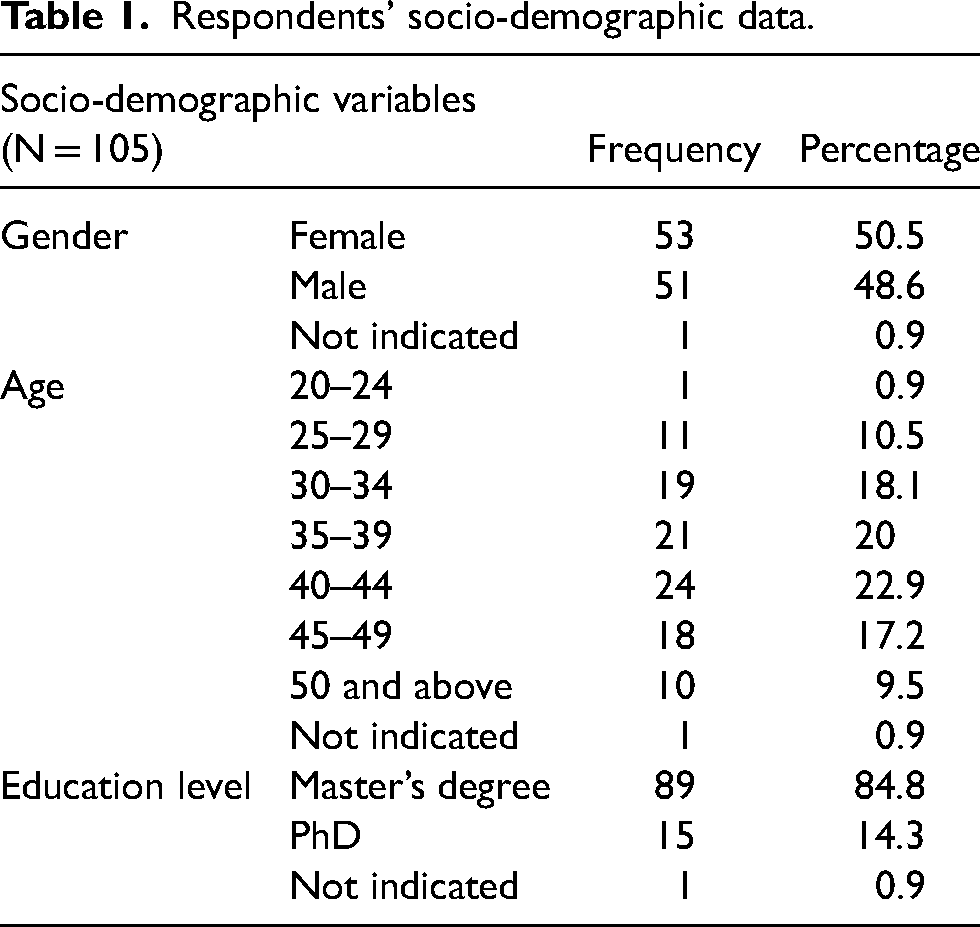
The study findings showed that the majority (53; 50.5%) of respondents were female (51; 48.6% male). One respondent did not indicate gender. Results on age indicate that the majority (two-thirds) of respondents were between 30 and 49 years old. Findings on level of education showed that 89 (84.8%) respondents were master’s graduates, while 15 (14.3%) had a PhD degree. One respondent did not indicate level of education (see Table 1).
Respondents’ socio-demographic data.
Drivers of LIS topic selection among postgraduates
Respondents were asked to indicate the factors that influenced their decision to choose their research topic(s). Results indicated that the majority of respondents (46; 43.8%) chose a topic based on it being widely researched (see Figure 1).
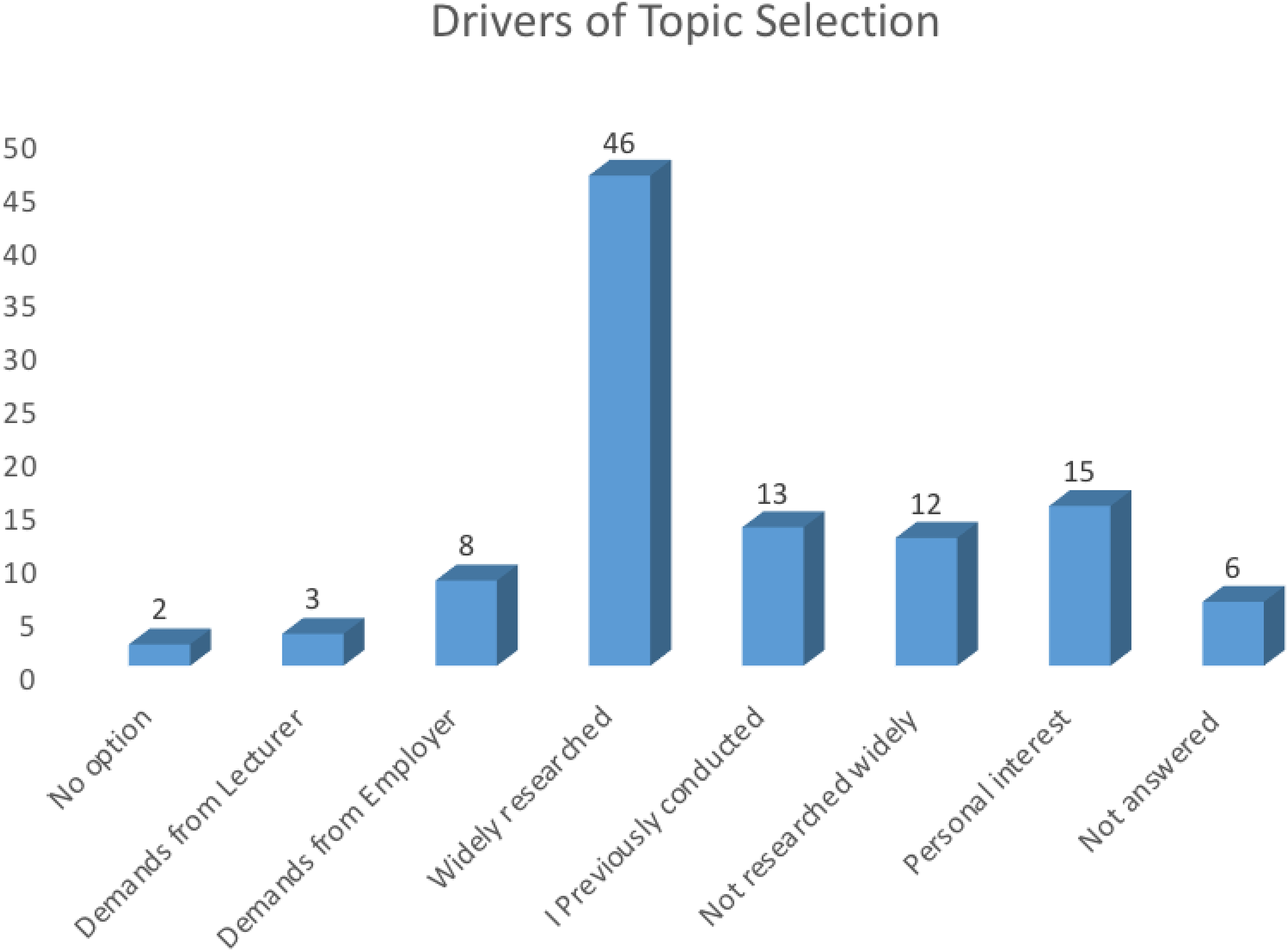
Drivers of LIS topic selection.
Sources consulted in topic selection
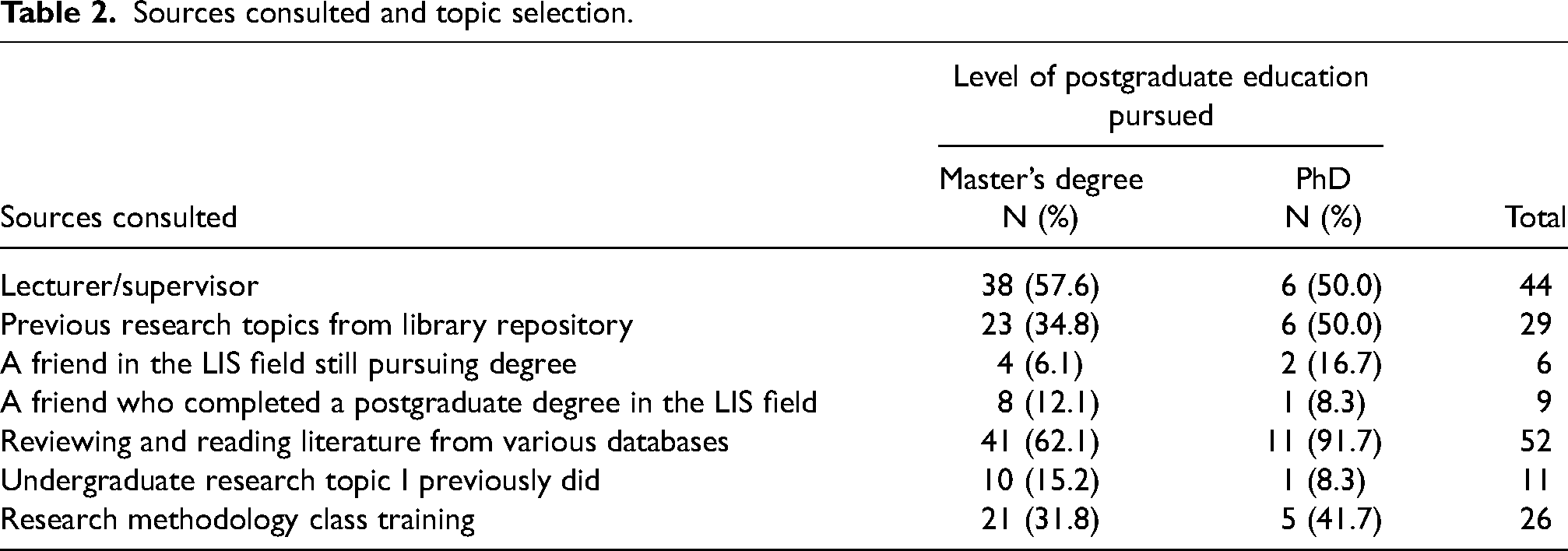
The study investigated what sources postgraduate students consulted when seeking for a research topic. Results showed that master’s students relied more on their supervisor/lecturer compared to PhD students. Findings also showed that doctoral students (91.7%) relied more on reviewing literature from databases compared to their counterparts. Results also showed that taking a research methodology class, to a certain extent (31.8% and 41.7% for master’s and PhD students, respectively), influenced research topic selection (Table 2 summarizes these findings).
Sources consulted and topic selection.
Postgraduate students’ satisfaction with sources consulted in LIS topic selection
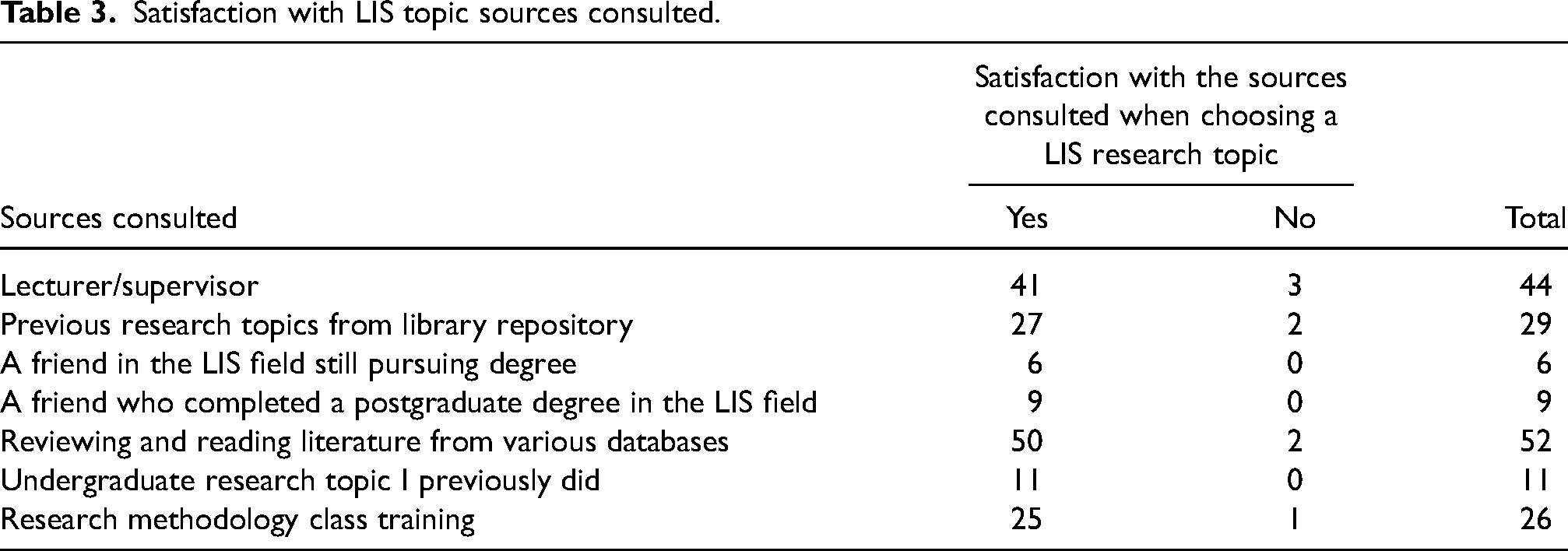
Respondents were further asked to indicate whether they were satisfied with the sources consulted when choosing a LIS research topic. Results showed postgraduates were satisfied with reviewing and reading literature from various databases (50) and consulting lecturers (41) as sources highly used during the research topic selection process (see Table 3).
Satisfaction with LIS topic sources consulted.
Challenges and support in research topic selection
Respondents were requested to give their general views on whether LIS postgraduates face challenges when choosing a research topic of interest. Findings showed that the majority of respondents (80; 76.2%) indicated that students do encounter challenges (see Figure 2). Furthermore, respondents were asked to indicate whether they faced challenges in selecting a LIS research topic when conducting research. Results revealed that the majority (63; 60%) faced challenges, compared to 42 (40%) who did not. In addition, respondents were asked, as a follow-up question, whether they received assistance in identifying a research topic of interest. Findings showed that 67 (63.8%) received assistance, seven (6.7%) did not and two (1.9%) indicated ‘maybe’; 29 (27.6%) respondents skipped the question indicating they did not have challenges in identifying a topic of interest.
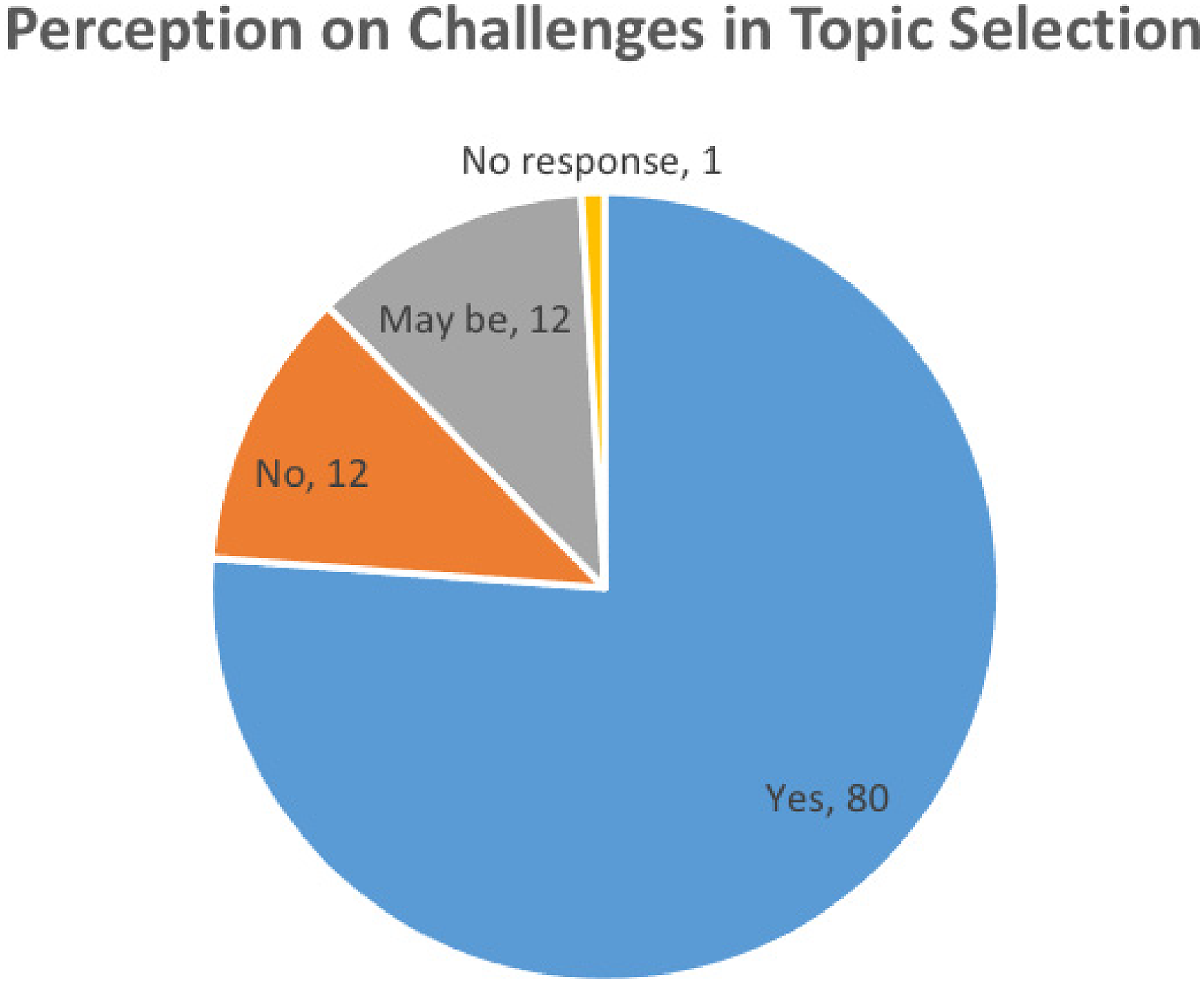
Respondents’ perceived challenges in selecting a LIS topic.
Exploring challenges in research topic selection across education levels
The study further explored the challenges LIS postgraduate students encountered in identifying a research topic. Findings showed five main problems postgraduate students face in topic selection: lack of knowledge to identify a topic, insufficient knowledge of topic selection, problems identifying a research method that fit the selected topic, little knowledge on LIS topics and insufficient guidance on topic selection (see Table 4).
Postgraduates’ type of challenges faced in research topic selection.
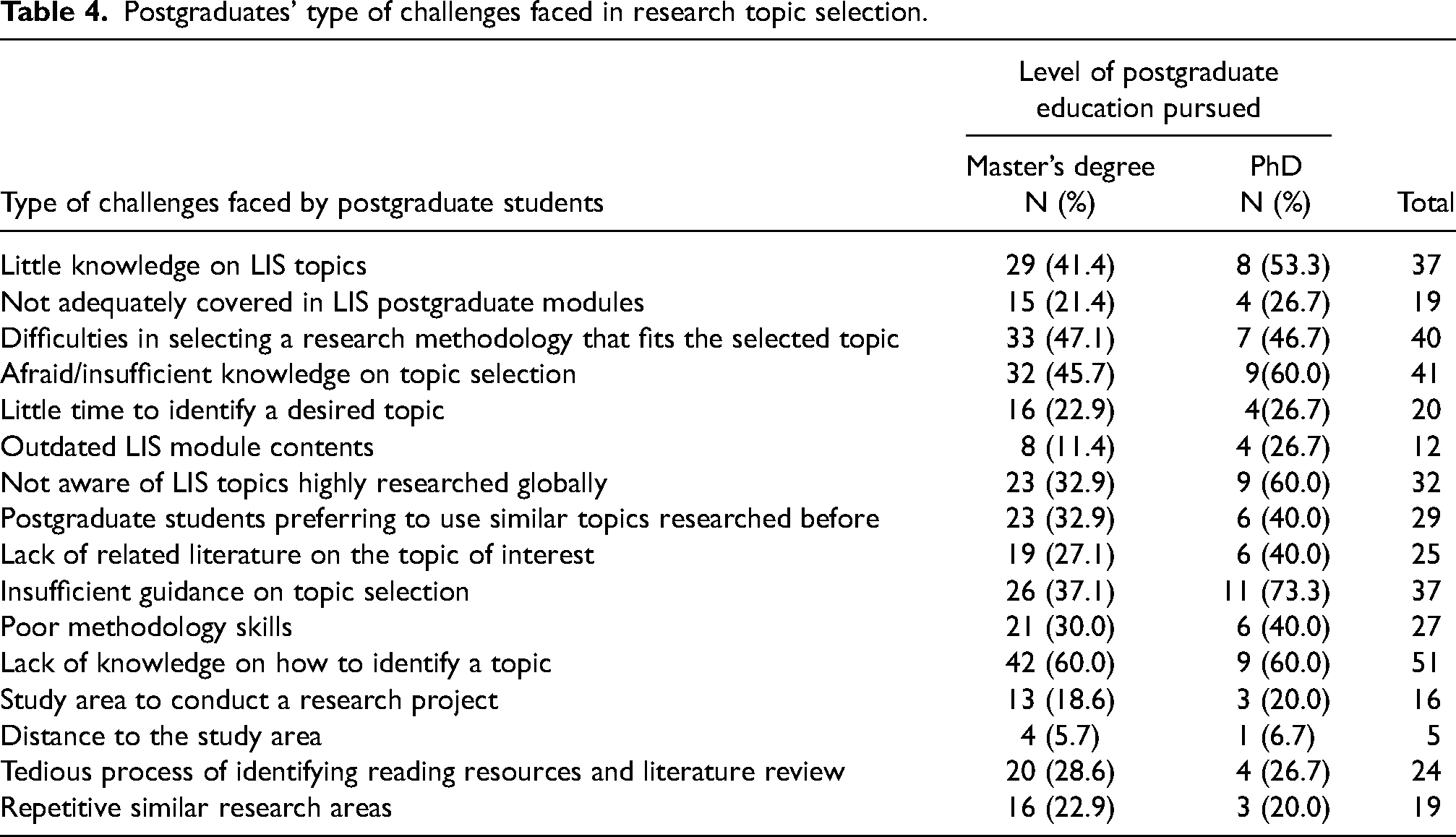
As part of the study, a cross-tabulation was conducted to establish whether the challenges in research topic selection were caused by students’ level of education. Generally, findings showed (see Table 4) that both doctorate and master’s postgraduate students faced challenges in research topic selection. Based on the results, doctorate students faced more challenges (75%) related to topic selection when compared to master’s students. This may be attributed to a lack of rigorous training in research methodology, as doctorate students do not undertake such coursework training, as described previously.
Analysis of research topic selection challenges related to gender
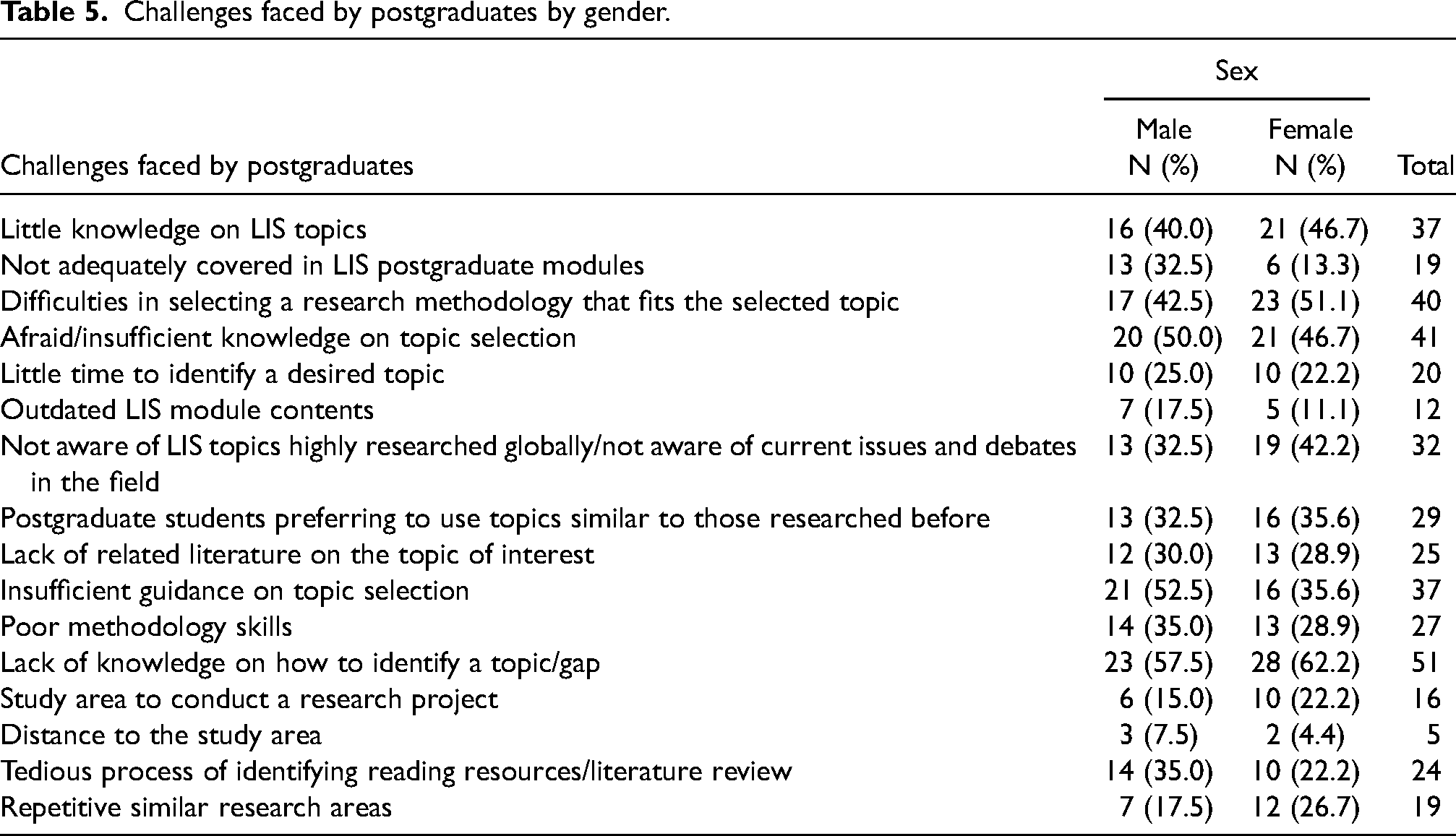
A cross-tabulation was also conducted to explore whether research topic selection challenges were gender-related. The study findings revealed (see Table 5) that although male and female postgraduate students faced a number of challenges in LIS topic selection, male students faced more challenges (56.3%) than their female counterparts. These results imply that male postgraduate students may need more training in identifying a research topic (see Table 5).
Challenges faced by postgraduates by gender.
Respondents’ rating of the process of LIS topic selection
The study further sought to identify respondents’ views on LIS postgraduates’ challenges in identifying a research topic of interest. The majority (49; 46.7%) of respondents revealed that the process of identifying a research topic is problematic (see Figure 3).
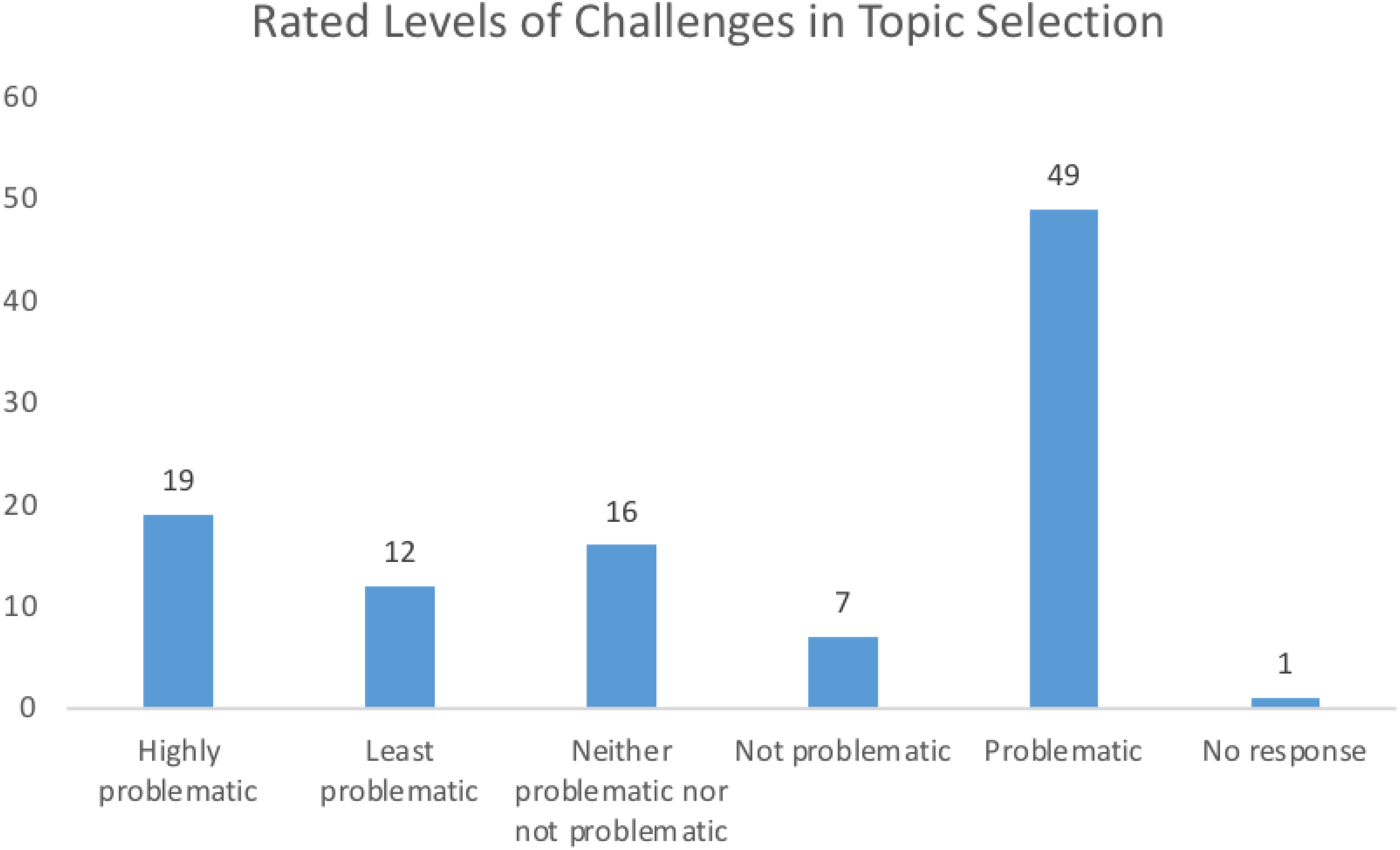
Rating of challenges in LIS topic selection.
Rating of level of difficulty in LIS topic selection per level of education
The researchers further investigated, through cross-tabulation, whether education level was related to the level of challenges perceived by students. Findings revealed that, regardless of level of education, students perceived identifying a LIS topic as problematic. For instance, 13 (86.7%) and 55 (62.5%) of doctorate and master’s students, respectively, perceived identifying a research topic as generally difficult (see Table 6).
Rating of how challenging LIS topic selection is across education levels.
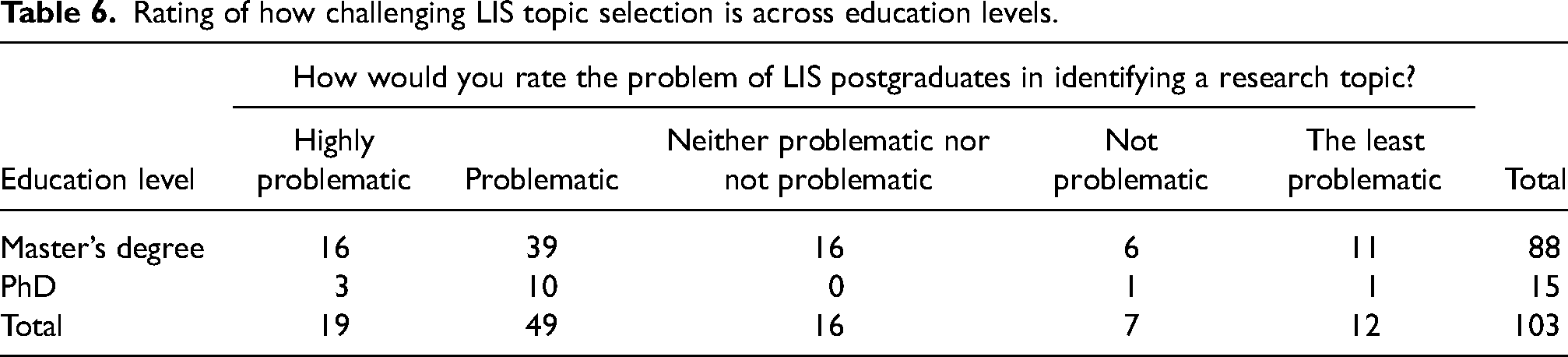
These results imply that doctorate students generally perceive the process of selecting a LIS topic to be more challenging compared to master’s students. The challenges could be attributed to factors such as the tasks engaged in doctoral studies and students’ research methodology foundations and training.
Strategies to improve postgraduate research topic selection
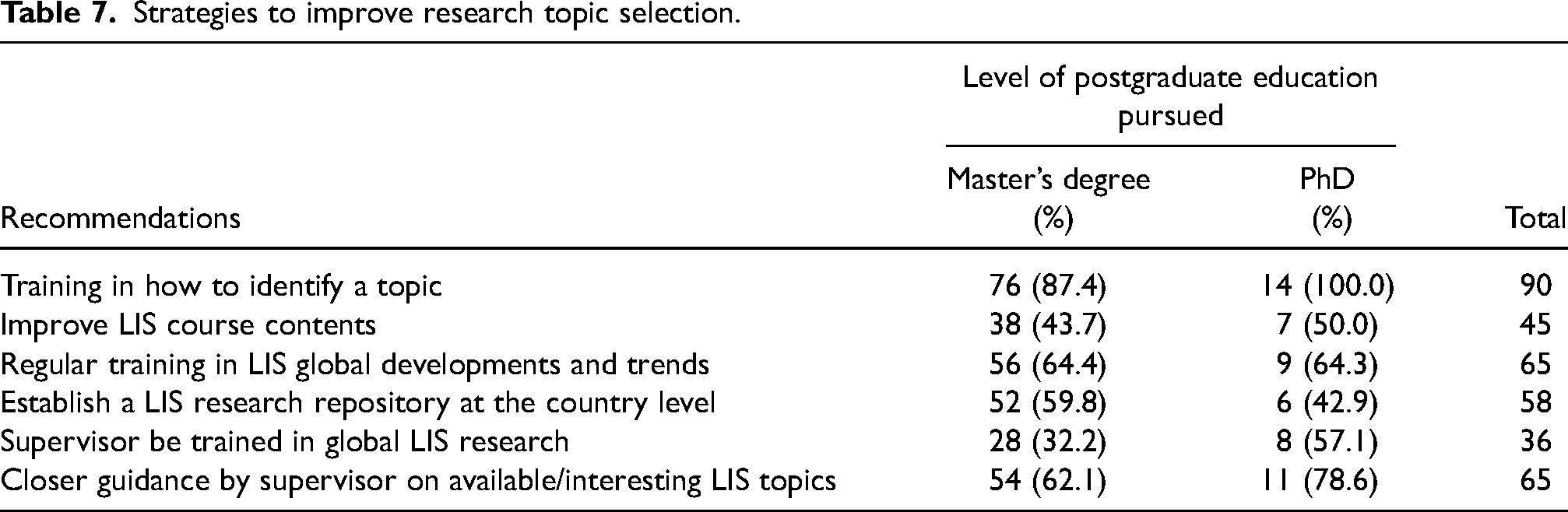
The study explored postgraduate students’ suggestions on the developments needed in LIS schools in Tanzania to improve research processes. They were required to recommend what they considered to be the best approaches needed to improve postgraduate students’ selection of LIS research topics. Findings revealed that the majority (90) of respondents considered that training in how to choose a topic would be highly recommended, followed by closer guidance by supervisors on available/interesting LIS topics (65; Table 7 summarizes these findings).
Strategies to improve research topic selection.
Proposed conceptual research topic selection framework
Based on the study findings, a research topic identification framework is proposed (see Figure 4). The diagram links independent, intermediate and dependent variables in the students’ research process.The framework encompasses stages such as LIS research topic selection, drivers of topic selection, challenges faced by postgraduates and recommendations to address the highlighted challenges. The proposed framework further indicates expected outcomes and benefits in research topic selection and in the entire research process upon adoption of recommendations.
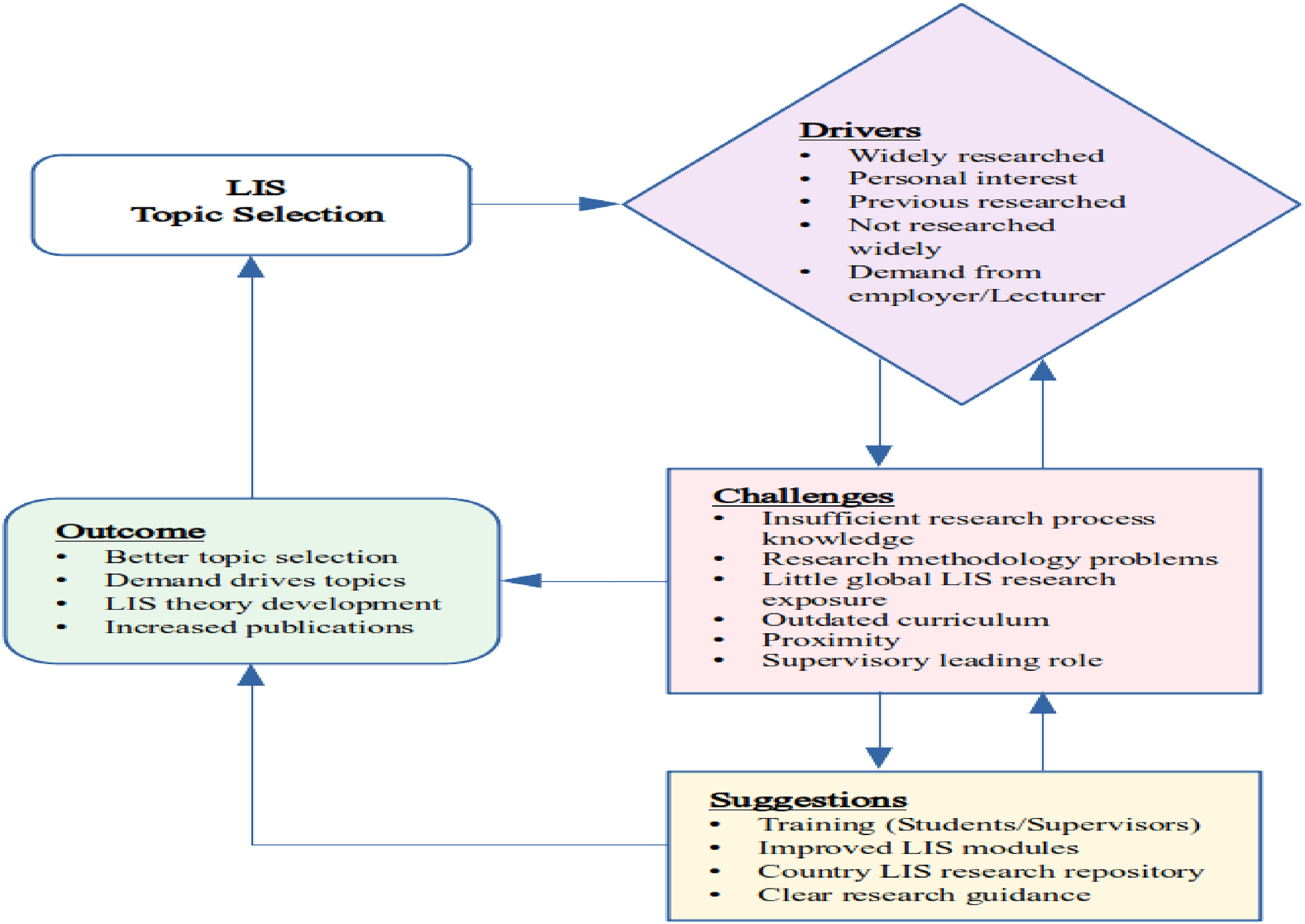
Map and conceptualization of LIS research topic selection.
Discussion
The study revealed a number of factors influencing LIS postgraduate students’ research topic selection. Findings showed that the majority of LIS postgraduate students’ choice of research topic was determined by it being extensively researched, personal interests and the topic being previously researched by a student. Based on the three aforementioned factors in LIS topic selection, the present researchers’ postgraduate supervision experience indicates that students’ topic selection largely hinges on the topics having been widely researched in the country/locally rather than globally. However, again, based on the present researchers’ experience during their postgraduate studies and with their current teaching and supervision work with LIS postgraduates, students repeatedly choose similar LIS topics. This observation is supported by Ndenje-Sichalwe and Elia (2021) and Mutula and Majinge (2018), who found that LIS postgraduates in East, West and Southern Africa researched common themes, resulting in high levels of copying and pasting of research content. Research findings from the aforementioned studies raise a number of issues worth reflecting through the theories underpinning this study. For instance, it appears that although students complete their research write-up process, their topic selection and research development process is highly uncertain, resulting in them choosing an extensively researched topic due to the challenges encountered during this process. Kuhlthau's (1991) and Chowdhury and Chowdhury (2011) models highlights that at the beginning of the research process, students experience feelings of uncertainty and anxiety, information overload and an unclear path to identify relevant sources of information. With respect to Kuhlthau’s model (1991) regarding the research topic selection process, results indicate that LIS students appear to be negatively influenced mostly by affective factors. For instance, to identify and write on a good research topic, students may need to balance the early stages of searching for a research topic and applying cognitive and physical searching qualities. Postgraduates’ ability to initiate, select and explore literature from relevant sources is essential in the successful selection of a research topic. Thus, in the information search process, which involves synthesizing and filtering large amounts of information, students’ successful topic selection and thesis write-up entail having the ability to apply the best strategies in terms of feelings (affective), thoughts (cognitive) and actions (physical).
In addition, students’ preference for previously done research speaks volumes of their research culture, one of little enthusiasm for exploring new research areas. One reason possibly contributing to postgraduates’ selection of previously studied research topics could be departmental pressure forcing them to research topics acceptable to the LIS department/school or supervisor. In such a context, the selection of a topic usually abides by key factors stipulated in the FRIENDS (feasibility, relevant, interesting, ethical, narrow, discipline and supervisor) framework. This framework is used to evaluate research topic selection in higher learning institutions (HLIs; Adhikari, 2020). Based on the FRIENDS framework and supervision experience of the present researchers, these findings support that most postgraduate students end up researching areas that have been extensively studied to abide by the framework, which evaluates the feasibility of the research topic, available resources and manpower, time frame, financial resources and equipment. Thus, despite students having passion for and interest in different areas and research topics of scientific relevance and merit, they end up replicating research and methodological approaches. Findings on the drivers of research topic selection shed light on a challenge many LIS schools have in developing countries, which is the lack of a clear research agenda (Mutula, 2011; Ndenje-Sichalwe and Elia, 2021) and providing little guidance on the application of working experience to new global LIS research agenda topics. Olalere et al. (2014) highlighted that postgraduate students’ topic choices were influenced by departmental research agendas, personal and professional experience and core training courses.
However, despite the aforementioned challenges that affect students' research process, the present authors’ supervision experience indicates that postgraduates struggle with conducting comprehensive literature reviews in their research projects. Supporting this, Shahsavar and Kourepaz’s (2020) study revealed that most postgraduate students failed to conduct a critical analysis of the reviewed literature in their work. The lack of literature analysis and synthesis is rooted in language, writing and reading culture challenges. For example, although the English language is used as the medium for teaching and learning in HLIs in most developing countries, it is not the native language in Tanzania, where this study was conducted and where the native language, Swahili, is widely used in day-to-day communication even though the official language for teaching is English. Based on supervisory experience, postgraduate students face notable challenges with respect to the use of English for reading and writing meaningful, acceptable scientific research texts. The language problem largely contributes to challenges postgraduates experience in reading, conducting extensive literature searches, synthesizing content and establishing a niche topic for the entire research process. The process of topic selection is usually lengthy, involving a combination of skills, including language, information seeking and searching, applying appropriate literature searching methods and retrieving relevant resources. A clear outcome of the three fundamentally intertwined problems (language, reading and writing culture) is that graduates cannot develop a critical literature analysis and instead become reproducers of existing knowledge (Shahsavar and Kourepaz, 2020). These challenges align well with Chowdhury and Chowdhury (2011) model, where postgraduates find it challenging to identify their specific research information needs as a result of problems in brainstorming and refining research ideas. Uncertainty-related challenges are therefore accelerated by the lack of reading culture among students as well as insufficient information searching and research skills, which results in insufficient research knowledge and ultimately copying and pasting research topics for quick completion of their research works.
Supporting the highlighted arguments above, a recent study by Elia and Ndenje-Sichalwe (2022) indicated that LIS postgraduates in Tanzania broadly had similar research patterns; the authors noted that common themes were information behaviour, access and use. While such topics were found to be preferred by most postgraduates, research from the developed world seems to have shifted towards new research approaches, methods and topics, leaving the majority of developing countries stagnant and continuing to embrace outdated LIS curriculum content (Elia and Sife, 2018; Ndenje-Sichalwe and Elia, 2022). Thus, although the present study findings revealed personal interests to be among the factors in postgraduate students’ research topic selection, their interests tend to be limited to traditional, outdated LIS curriculum content, which does not respond to job market requirements. For example, a recent study of LIS graduates by Kassim et al. (2022) revealed a mismatch between what the LIS curriculum offers at the ISP from the University of Dar es Salaam and the job market requirements. Thus, the challenges postgraduates face related to topic selection hinge on insufficient research funding, insufficient research skills and little application of new LIS research methods. Kazoka and Wema (2020) identified insufficient research skills, poor collaboration between senior and junior academic staff and lack of proactivity and commitment in conducting research as the challenges facing higher learning institutions’ research capacity development in most developing countries. Most postgraduate students in developing countries like Tanzania face the problem of inadequate guidance on trending global research themes (Ekpoh, 2016; Mutula and Majinge, 2018). Based on the present researchers’ experience, institutional barriers such as supervisory workloads; lack of expertise, especially in technology-related fields; official preparations for proposal presentations and thesis defence; slow internet speed and access to articles from databases; and poor information seeking skills result in postgraduate students making little effort in selecting up to date research topics that could have more impact on LIS education development. Based on the issues presented and discussed relating to inadequate topic selection, LIS theory development becomes challenging in most developing countries like Tanzania.
The present findings further identified that LIS postgraduate students face a number of challenges in the process of selection of research topics. The majority of respondents (68) indicated that the process of identifying a research topic is problematic. Thus, respondents’ rating of the process generally showed that they view the process of selecting a postgraduate topic as measurably challenging. These views from students reflect the earlier discussion that postgraduates prefer to research a topic that is already widely researched rather that identifying an interesting and up to date topic. Therefore, results reflect that the entire research process is challenging to most postgraduate students, commencing from topic selection through problem identification to setting the framework of the study. As such, most postgraduate students, despite being able to successfully complete their research, face serious challenges in the overall research write-up process, such as those related to problem identification and topic selection, which emanate from insufficiently strong research methodologies training from basic LIS education levels. Additionally, the multidisciplinary and diverse nature of the LIS discipline may be another challenging factor in selecting a research topic. Some scholars (Keshavarz and Shekari, 2020; Ndenje-Sichalwe and Elia, 2021, 2022) noted that recent changes in LIS education, particularly the LIS multidisciplinary paradigm shift towards embracing technology, have contributed to notable changes in the LIS discipline, influencing research topic selection. For instance, the LIS profession is highly diversified and crosscuts other related fields such as computer science, management, science, education, social sciences, agriculture, environment and business. In fact, under such a context, a postgraduate student may need much more time and resources – including financial resources, which is a highly pressing issue – to settle to a topic considering that he/she will need to seriously embark on extensive reading, which translates into more time needed for conducting research as well as reading and synthesis capabilities, which most lack. Thus, the multidisciplinary nature of LIS may arguably tend to require even higher research and information seeking skills as it may expose postgraduates to uncertainty, vagueness and disorientation in the course of searching for a research topic, particularly in the digital environment.
The present study findings further revealed that postgraduates lack knowledge to identify a topic gap, have problems in linking a selected topic with research methodology and have insufficient knowledge on topic selection, which are the most notable challenges they face in selecting a research topic of interest. Other critical cited factors include insufficient knowledge on LIS topics and insufficient guidance on topic selection. Additionally, lack of literature related to the topic of interest was also cited among the challenges facing LIS postgraduate students. Some of the challenges highlighted in this study, such as selecting a research topic, insufficient knowledge of a topic and methods and inadequate guidance, were also revealed in Nigeria (Ekpoh, 2016). Ameen et al. (2019) revealed lack of conceptual clarity, poor time management, lack of research culture and insufficient access to literature to be the difficulties LIS researchers encounter when formulating a research topic. Lack of relevant electronic databases subscriptions remains challenging to researchers in developing countries (Elia, 2021; Mwantimwa et al., 2017). Postgraduates from other disciplines from most developing countries, such as those from West, East and Southern Africa, seem to experience similar problems in the research write-up process (Ekpoh, 2016; Mutula and Majinge, 2018). In fact, the present authors’ supervision experience indicates that postgraduate students have insufficient analytical, rhetorical and academic writing skills. These challenges affect their abilities to identify a topical research gap, synthetize and conduct a critical analysis to support or critique a previously done research.
Generally, the present findings indicate that more male postgraduate students faced challenges in topic selection compared to their female counterparts. Additionally, doctorate postgraduate students also faced more challenges in research topic selection than master’s students did. The study implies that higher level of education does not translate into better research skills. The present researchers therefore argue that, based on the present findings, challenges in research topic selection seem to cut across lower and higher education levels. However, the result showing that doctoral students face more challenges was unexpected. In the academic knowledge hierarchy, doctorate students are expected to possess advanced research foundations, knowledge and comparatively higher analytical research skills. There are a number of factors that could contribute to the observed pattern. One is the lack of advanced research methodology courses for doctorate students. For instance, as pointed out in previous sections of this paper, doctorate students do not receive advanced training in research methods prior to commencing their research. For example, some postgraduate students, regardless of their level of education, may find it hard to disentangle the ontological and epistemological view and select a topic in an information explosion context. The problem arguably also lies in postgraduate students’ poor abilities to apply research knowledge during the research process. Supporting evidence from the current findings shows that, despite postgraduates indicating that they were satisfied with research topic selection sources like lecturers, research methodology classes, library databases and other online databases, they still faced critical challenges in selecting a topic of interest. Often, LIS postgraduate students contest research teaching methods for being more theoretical than practical, calling for more evidence-based research methods that can address existing societal problems. Other factors include inadequate advanced training in research methods, insufficient time allowed for master’s students to pursue research, insufficient analytical skills, lack of research culture and little local and international research collaboration. Additionally, present researchers argue that, in postgraduate education, personal characteristics such as technology knowledge, reading culture and analytical abilities are essential components conducive to students’ social learning and self-efficacy. These factors largely affect research topic selection and problem identification in students from most developing countries (Mutula, 2011; Ndenje-Sichalwe and Elia, 2021).
The present study identified respondents’ recommendations to address the studied problem: training in how to identify a topic, supervisors’ closer guidance on available/interesting LIS topics, regular training in LIS global developments and trends and the establishment of a LIS research repository at the country level. These factors revolve around the inadequacy of the LIS education offered in most developing countries like Tanzania. Postgraduates are often criticized for delays in proposal and dissertation write-up in most developing countries. However, the present findings indicate that postgraduates lack the foundations and skills necessary for the entire research process, commencing from identifying a topic. In fact, these findings call for a quick revamp of LIS research modules to address the topic selection conundrum. A curriculum review seems inevitable for fostering LIS theory development, which, according to the current findings, is stagnant and scarcely addressing the changing discipline and societal needs. The recommendations from respondents call for LIS schools in Tanzania and other developing countries to devote more funding to facilitate training and capacitate postgraduate students and supervisors, to adopt new LIS research trends, to implement methodological changes, to attend to global LIS developments and to promote reliable research hubs that can be accessed and shared by postgraduate students and researchers.
Conclusion and recommendations
This study examined LIS postgraduates’ challenges in research topic selection in Tanzania. The study concludes that LIS postgraduates lack the foundational skills necessary for the entire research process, starting from identifying a research topic. The main challenges in research topic selection include insufficient knowledge of the research process, poor research methodology skills, little exposure to global LIS research and inadequate supervision. The study further concludes that male postgraduates encounter more challenges in research topic selection than their female counterparts. Further, doctorate candidates face more challenges than master’s students. The study thus concludes that research topic selection is problematic to many postgraduate students.The study suggests a drastic overhaul in HLIs to change the institutional research policy framework towards evidence-based research. HLIs should change their curricula to focus more on research practical skills, seek more research funds and promote collaboration between students and supervisors, both locally and internationally. The study calls for a critical review of LIS teaching modules and supervision processes. Also critical would be students’ empowerment in language, analytical research skills, reading culture and scientific writing abilities. In addition, students’ information literacy skills and access to online local and international databases should be of paramount importance. The study recommends regular training in LIS global developments and trends as well as in the whole research process for both students and supervisors. Also important would be to establish a LIS research repository at the country level to contribute to the body of knowledge, as well as the improvement of research guidance by supervisors on available/interesting LIS topics. The authors recommend that a broader study be conducted to compare qualitative and quantitative methodologies to identifying critical research problems among postgraduates.
Supplemental Material
sj-docx-1-ifl-10.1177_03400352241287789 - Supplemental material for Challenges library and information science (LIS) postgraduate students encounter in research topic selection
Supplemental material, sj-docx-1-ifl-10.1177_03400352241287789 for Challenges library and information science (LIS) postgraduate students encounter in research topic selection by Emmanuel F Elia and Esther Ndenje-Sichalwe in IFLA Journal
Footnotes
Declaration of conflicting interests
The authors declared no potential conflicts of interest with respect to the research, authorship, and/or publication of this article.
Funding
The authors received no financial support for the research, authorship, and/or publication of this article.

Supplemental material
Supplemental material for this article is available online.
Author biographies
References
Supplementary Material
Please find the following supplemental material available below.
For Open Access articles published under a Creative Commons License, all supplemental material carries the same license as the article it is associated with.
For non-Open Access articles published, all supplemental material carries a non-exclusive license, and permission requests for re-use of supplemental material or any part of supplemental material shall be sent directly to the copyright owner as specified in the copyright notice associated with the article.
