







Abstract
This study investigates the perceptions of librarians regarding sustainable practices in libraries across the United Arab Emirates. The research addresses a significant gap in the literature as most of the sustainable studies related to libraries have been focused on developed countries, with limited research in the context of the United Arab Emirates. The study aims to explore the awareness levels, attitudes towards sustainability and implementation strategies among librarians in various types of libraries. The study employs a quantitative approach. A structured survey was conducted among 112 library professionals across the United Arab Emirates using a 5-point Likert scale to assess and examine the current state of sustainable practices, key environmental and community engagement initiatives, the perceived importance of sustainability practices, and actions, attitudes and challenges related to sustainability practices in libraries. The study also investigates the potential differences in perceptions based on librarians’ roles, gender, type of library and years of experience. The findings reveal a generally positive attitude towards sustainable practices with moderate variability in the responses. The key challenges identified include limited funding, insufficient resources, the need for training and resistance to change. The study’s findings emphasize the need for enhanced training programmes, a dedicated budget, increased awareness campaigns and strategic community engagement to overcome these challenges. They will contribute to the growing body of knowledge on sustainable practices in libraires in the Middle Eastern region, providing insights into challenges and opportunities. Furthermore, the study provides recommendations for enhancing sustainability efforts, integrating smart technologies and aligning library practices with the United Nations Sustainable Development Goals. This has implications for library policy, practice and education in the United Arab Emirates and beyond, potentially leading to a collaborative sustainable movement among libraries to implement innovative green practices and community engagement initiatives. The study also provides recommendations for future research, such as similar studies on users’ perspectives, the evaluation of the impact of existing sustainable polices, and the use of artificial intelligence technologies in enhancing sustainable practices in libraries.
Keywords
Introduction
The United Arab Emirates (UAE) has experienced unprecedented economic growth over the last two decades but, at the same time, it has been able to maintain a balance through environmental stewardship and various strategic policies and initiatives aimed at sustainable development. Some of the key approaches have been to promote renewable energy, integrate green economy principles in manufacturing and production practices, and implement sustainable urban planning and development (Ahmed et al., 2023). The UAE's skyline has been transformed, especially in Dubai, with its strategic plan to build a smart city through various sustainable practices in urban development such as green building regulations and specifications that encourage green construction practices, reduce energy and water consumption, and minimize the production of waste (Al-Dabbagh, 2022). The UAE has also made great progress in clean energy production and a significant number of investments in renewable energy projects, including both solar and wind. Masdar City in Abu Dhabi is a wonderful example of a sustainable model for urban development and the utilization of renewable energy (Sobczyk, 2015). Libraries have not been left behind in these initiatives and they play a crucial role in promoting sustainability practices by creating awareness and integrating diverse strategies related to social, economic and environmental dimensions. This study seeks to explore sustainable practices in the UAE through the perceptions of librarians, and how the transition to and awareness of green practices is being achieved in terms of the adoption of innovative green practices with the help of technology to create an inclusive environment in libraries. The study not only explores operation efficiency but also investigates how it relates with the United Nations Sustainable Development Goals (SDGs). Diversity and inclusion are crucial to sustainability efforts, and all demographic factors – age, gender, occupation and educational background – are essential for the promotion of inclusivity in library practices. This ensures equitable access to information and resources not only in print but also in digital form, at the same time meeting the varied needs of library users, which can foster community engagement and a sense of belonging (Nnatu et al., 2024).
Libraries can contribute significantly towards meeting the objectives of the SDGs by creating awareness, providing access to information, entering into collaborations with other organizations and offering educational programmes. Libraries can utilize their resources and, through community outreach programmes, promote sustainability and address problems related to socio-economic disparities (Odularo, 2024). Various green library initiatives in both public and academic libraires, in the form of energy-efficient libraries, sustainable infrastructures, resource conservation and recycling strategies, have raised awareness about sustainable practices among users, and these libraries have also partnered with local environmental organizations to make these initiatives successful (Maina and Mwiti, 2024). ‘Going green’ also involves the integration of smart technologies in libraries, which includes automation practices, energy-efficient lighting, and equipment and devices that reduce energy consumption, as these enhance user experiences (Vijaianand et al., 2024). Artificial intelligence (AI) and machine learning are also being integrated in library work processes, operations and services for the optimization of resources and provision of personalized user experiences, thereby reducing environmental impact and promoting sustainability (Ramachandran, 2024; Yunus and Ismail, 2024). Furthermore, organizations such as the Climate Action Libraries Network have demonstrated their role in environmental education and advocacy, and made collective efforts to promote sustainability and address climate change at the global level (Ajani et al., 2024b). Although libraries have been greatly involved in the cause of sustainability and made significant strides, several challenges remain, including resource constraints, resistance to change, technological barriers and the need for training for professionals. The use and adoption of e-resources should be part of policies and agendas towards meeting sustainability goals, and continuous innovation, adaptation and collaboration among library professionals is required (Maina and Gichohi, 2024; Yunus and Ismail, 2024).
Research problem
While exploring various research studies, it was found that most of the studies on sustainability and green practices are primarily focused on developed countries, and there has been limited research on addressing the specific challenges and opportunities in the UAE. There is clearly a need for more localized studies that consider the UAE's economic, cultural and environmental context for developing effective sustainable practices in libraries (Saxena and Kumar, 2019). There is a lack of measures in terms of assessing the capability and adoption of green technologies in UAE libraries (Mago, 2015). Yunus and Ismail (2024) recommend that libraries in the UAE need to explore the integration of smart technologies to improve their energy efficiency and optimize their resources, and these areas have not been covered in the research domain. There is insufficient research on how libraries in the UAE can effectively foster community engagement and increase awareness and education to promote sustainability. There is a gap with regard to leveraging libraries as educational platforms (Kumar Das and Singha, 2023). Radwan and Khalil (2021) highlight that despite awareness and positive attitudes towards sustainability, there has been limited adoption of sustainable behaviours among university students in the UAE. Furthermore, there is a lack of systematic evaluation of sustainable practices in UAE libraries in terms of the management of resources such as energy and water, as well as recycling initiatives (Ortega-Martinez et al., 2022). This study aims to address these gaps and delve into the sustainability scene in libraries in the UAE from a librarian's perspective. The research will provide an increased awareness among library professionals and motivate them to implement sustainable practices, especially smart technologies and AI to enhance energy efficiency in libraries. The study further aims to catalyse a sustainable movement among libraries in the UAE and motivate them to organize various environmental and community engagement events to promote sustainability not only in the library domain, but also among the public and academic communities. By bridging these critical gaps, the study will contribute towards the strategic development of sustainable library practices that are aligned with the UAE's national sustainability agenda and the global framework of the SDGs.
Research questions
Sustainability has emerged as a critical issue across multiple sectors, including libraries, which serve a crucial function in promoting environmental consciousness and community involvement. This study examines the perceptions of librarians in the UAE concerning sustainable practices in libraries, with the objective of understanding their awareness, implementation and attitudes in respect of sustainability. This research aims to elucidate the integration of sustainability into library services in the UAE by analysing essential environmental and community engagement strategies, as well as variances across different library types, positions and experience levels. These enquiries will direct research into pinpointing opportunities for enhancement and promoting best practices for sustainable growth in libraries. The following research questions therefore guide the study:
What is the current level of awareness and implementation of sustainable practices in different types of libraries in the UAE? How do librarians perceive the importance of sustainability in library services? What are the key environmental and community engagement practices for promoting sustainability in libraries? Are there differences in librarians’ perceptions of sustainable practices based on library type, librarian role and years of experience?
Libraries function as vibrant centres for education, community involvement and knowledge distribution, making them optimal venues for promoting sustainability. This study investigates and assesses the implementation and perception of sustainable practices across different types of libraries in the UAE. It aims to reveal essential insights into the incorporation of sustainability in library operations by analysing librarians’ awareness and attitudes, as well as the efficacy of current programmes and regulations. Moreover, the study aims to look deeper into the awareness levels and understanding of librarians with respect to sustainable practices in libraries, and will identify gaps and provide recommendations for best practices to meet the challenges.
Literature review
Libraries can promote sustainability in a big way and implement best sustainable practices within the library itself, whether for designing infrastructure, operations or services. Libraries around the world are adopting best sustainable practices and using various strategies to integrate sustainability into all of their core functions, processes and operations. These practices range from energy-efficient infrastructures to creating environments for inclusive community engagement. They have brought a paradigm shift in the attitudes of librarians towards sustainability and enhanced the role of libraries as community leaders. This literature review is the outcome of extensive research, which began with building a search strategy using keywords and then applying advanced search techniques in various databases, including EBSCO, Emerald, Sage, Scopus, Google Scholar and ProQuest. The peer-reviewed articles were critically analysed based on the research questions, and various gaps were identified to arrive at the research problem. This literature review attempts to delve deeper into sustainable practices and identify the core best sustainable practices in libraries and explore the challenges libraries face in their implementation.
Libraries are playing a dynamic role when it comes to embracing diversity and inclusivity as part of their sustainability efforts. All demographic factors are taken into consideration – age, gender, occupation – for promoting inclusivity and equitable access to information in all formats (Nnatu et al., 2024). Libraries are entrusted with including the core values of inclusivity, diversity and equity not only in their collections and practices but also in their policies and procedures. The auditing systems of libraries also involve diversity-related audits to evaluate and improve overall library collections (Calderon, 2024). Several independent libraries are engaged in cultural sustainability through the preservation and promotion of cultural identity, vitality and diversity (Loach and Rowley, 2021). Some libraries organize exhibitions and community outreach programmes to reflect and celebrate diversity and provide a multicultural environment to engage with their communities (Chen et al., 2018). Libraries around the world have been engaged in various environmental sustainability initiatives that primarily include the concept of reduce, reuse, recycle (the 3Rs; Ren, 2024). The American Library Association has identified and recognized sustainability as its core value, and has been engaged in promoting sustainability efforts by assisting libraries in reducing their carbon footprints and creating awareness about climate change (Hamad et al., 2024; Ren, 2020; Ren and Lu, 2024). Libraires are also serving as centres for disseminating environmental education, advocating for policies supporting the SDGs and conducting various workshops related to environmental preservation (Ajani et al., 2024a). The SDGs have triggered various green library movements, which are actively calling for libraires to go green in terms of their buildings, services and operations (Adeyemi et al., 2024; Cardoso, 2018; Singh and Mishra, 2019), while promoting sustainability, regeneration and resilience (Tribelhorn, 2023). Some libraires have integrated sustainable preventive conservation practices, which include the use of renewable energy and waste management practices (Sulaiman and Lakshmi, 2024). Libraries also act as catalysts for change and promote social sustainability in terms of community activism, social equity and economic development (Ren, 2024; Williams et al., 2015). Libraries have worked out strategies to implement economic sustainability through resource-sharing in the form of inter-library-loan practices by signing memorandums of understanding with partner libraries and consortiums to provide them with resources and social and cultural support (Ajani et al., 2024a; Ren, 2024; Ren and Lu, 2024). Various technological sustainability initiatives have been adopted by several libraries to reduce the use of paper, ink and electricity (Corrado, 2024). The sustainable environmental management practices that have been adopted in libraries include acid-free folders, ultraviolet-ray-protected windows and the protection of archives from floods, which have helped reduce environmental impacts while at the same time preserving library materials (Obi, 2023). Ibtisam (2022) highlights the importance of libraires in promoting sustainable development by adopting green practices, including energy-efficient technologies, the use of renewable energy, recycling, waste reduction and the design of sustainable buildings, all of which align with the SDGs. Ibtisam’s study also highlights challenges, such as budget constraints and staff training, and emphasizes the need for continuous evaluation of existing sustainability practices.
Some Asian libraries are engaged in the conservation of their collections and have integrated pest management controls to protect their rare and precious collections (Rachman et al., 2023). Makerspaces and tinkering in libraries provides spaces that nurture and foster innovation and knowledge creation, which contributes to sustainable practices (Edobor, 2022; McManus, 2024). The use of cloud computing is vital for reducing environmental impact as it ensures efficient service delivery of library operations (Karthika et al., 2024). Several libraries are investing in renewable energy such as solar-powered systems and windmills, and integrating these energy-efficient technologies to reduce their carbon emissions (Adeyemi et al., 2024). The architecture of various green libraries, such as the Rajagiri Business School Library, has incorporated sustainable designs that align with the SDGs (Vijesh et al., 2024). Libraries have been seen replacing traditional lighting systems – florescent lamps – with light-emitting diode lights with motion sensors, which significantly reduce energy consumption and avoid energy waste (Vijaianand et al., 2024). Some libraries have installed advanced lighting control systems based on natural light levels and occupancy, which optimize energy use through the day. AI and machine learning have also been deployed for predictive analytics to optimize resource management and provide personalized user experiences, which contributes to a reduction in the use of physical resources (Ramachandran, 2024). Various recycling programmes have been implemented for paper and other materials, which reduces carbon footprints and helps in managing waste effectively while promoting sustainability (Maina and Gichohi, 2024). The installation of microcontrollers for automating various library operations can optimize energy management and avoid wasting resources (Kalpana and Gopalakirshnan, 2024). Libraries around the world have taken the lead in promoting sustainable practices and have been engaged in various environmental campaigns related to going green. Libraries have adopted e-resources, which has led to enhanced user engagement. Their use is further improved through awareness campaigns in the form of outreach programmes, information literacy programmes, workshops and events to educate users on the benefits of digital resources in terms of ease of access, user-friendliness and, above all, how they benefit the environment by reducing paper usage and lowering carbon footprints (Maina and Gichohi, 2024; Yunus and Ismail, 2024). Jackson (2022) and Aldrich and Kropp (2023) recommend adopting the triple bottom line approach to ensure sustainable practices that focus on environmental social equity, soundness and economic feasibility. This means that every task should be viewed as a climate-related task, so that libraries can integrate sustainability into all their operations, from programming to community engagement.
The key challenges for libraires in integrating sustainability primarily lie in the lack of funding, budget constraints, the lack of expertise in promoting best environmental practices, and providing climate-related staff training that is focused on sustainable operations (Rachman et al., 2023; Tribelhorn, 2023). Transitioning to green libraries requires significant investment in architectural designs and maintenance costs, which can be resistant to change (Sivaprasad et al., 2024). On the other hand, there is a lack of systematic sustainable practices in some countries and a need for a more structured approach and investment (Keller, 2023; Ren, 2024). The most common challenge for many libraries has been inadequate funding for sustainable programmes, which restricts them from adopting sustainable practices and technologies (Odularo, 2024). Budget limitations hinder libraries’ ability to invest in new technologies such as smart systems and AI (Ghosh et al., 2024), and they may be unable to meet the initial costs of implementing and adopting these advanced technologies (Gao, 2022). One of the key challenges identified by Keller (2023) is the lack of academic literature on sustainability in libraries, which leads to methodological gaps in implementation, while Sivaprasad et al. (2024) view a lack of training for staff as one of the challenges in maintaining sustainable practices, as an absence of training can lead to ineffectiveness. Odularo (2024) identifies gaps in the research and literature related to the impact of libraries on sustainable practices, which may delay advocacy for necessary resources, and there is a need for partnerships with other organizations for effective implementation. Gao (2022) identifies organizational barriers, such as resistance to change, which may deter staff from adopting new technologies due to the fear of losing their job or lack of training, while Ghosh et al. (2024) argue that there is a need for strategic planning for effective integration that can address both human and technological factors, as well as concerns related to data privacy when adopting AI-related technologies. Sokolov and Serzhan (2022) emphasize the importance of user awareness in adopting e-resources as it affects usage, so training at regular intervals should be given to librarians as well as library users. Maina and Gichohi (2024) argue that in order to understand the challenges associated with the adoption of sustainable practices, libraries need to have a feedback mechanism so that they can understand users’ perceptions of e-resources and identify any barriers to their adoption. Nnatu et al. (2024) recommend various assessment tools, such as surveys and questionnaires, to collect user feedback on sustainable practices, while Tribelhorn (2023) advises having established key performance indicators to assist libraries in tracking their sustainability efforts in terms of economic feasibility, social equity and environmental stewardship. Ismail et al. (2022) highlight the need to have checklists for green initiatives, which can guide libraries in the implementation and evaluation of their green practices. Abdel Qader (2023) emphasizes the need for interdisciplinary and holistic approaches towards designing and operating green libraries, and provides an example of India's experience related to establishing green libraries. Abdel Qader’s study advocates for the need for collaboration among libraries and develops a localized standard based on Leadership in Energy and Environmental Design measures for effective implementation, which may result in international best practices and lead to maximum impact.
Research methodology
The research design applied a quantitative approach to explore the importance of sustainability and the sustainable practices in various libraries in the UAE. A survey tool was used, which was structured around various demographic independent variables – age, gender, years of experience, type of library and role in the library – and four constructs involving 22 dependent variables. The four constructs were sustainability practices in operations; community engagement activities to promote sustainability; policies related to sustainability; and awareness and training related to sustainability. These constructs were the outcome of a thorough literature review where key relevant concepts were identified for the research problem and widely accepted constructs in previous similar studies were used. Two more questions, related to the importance of and challenges related to implementing sustainable practices, were included in the survey. For the question related to challenges, multiple answers were permitted.
The target population was library professionals working in UAE libraires, which included public, academic (school, college, university) and special libraries. The online survey was circulated using the researcher’s contacts through various channels such as LinkedIn and WhatsApp. There is a total of 73 universities and institutions accredited by the Ministry of Higher Education and Scientific Research (2023) in the UAE that are currently active. A total of 112 responses were collected from librarians across the UAE, which suffices for statistical analysis considering the target population and the number of libraries in the UAE. The snowball sampling technique was used, which facilitated a swift, efficient and convenient method of collecting data, as it was easy to identify professional networks and recruit participants due to the researcher's extensive experience working in the UAE. The data collection process was undertaken during the months of November and December 2024.
The structured survey was designed and distributed through Microsoft Forms, and consists of demographic questions and construct-specific items using a 5-point Likert scale to measure the perceptions, actions, attitudes and challenges related to sustainability practices in libraries. The reliability and validity instruments were pretested using a pilot study with a small group of 20 library professionals, and adjustments were made based on the feedback. The reliability test was determined through Cronbach's alpha, and the data reliability was well over .7 for all the constructs. The study followed a rigorous mechanism in terms of ethical considerations and all necessary guidelines and protocols were followed during the preparation and writing of this research article. The participants were asked for their informed consent and confidentiality was assured throughout the data collection and statistical analysis process. One open-ended question was included to understand the librarians’ perceptions in terms of qualitative data. This was designed to lead to a better understanding of sustainability practices among UAE libraries and will offer valuable insights for meeting the SDGs.
Data analysis and findings
As illustrated in Table 1 below, the gender distribution among the respondents shows a higher proportion of male librarians (62.50%) compared to female librarians (37.50%). The data related to age group indicates a diverse range of ages, with a significant number in the middle-aged professional category, whereas there are not too many young people in the 18–24 age category working in libraries in the UAE. The largest group of participants works in higher education libraries (50.89%) and school libraries (42.86%), which aligns with the significant presence of libraries in universities, colleges and schools in the UAE. Special libraries (2.68%) and public libraries (0.89%) were the least represented in the survey data. This suggests that there is a need to carry out an exclusive study on public libraires related to sustainability practices as the data represented in this study is negligible. As for the ‘role in the library’ variable, most of the participants were in mid-level and senior positions, which aligns with the distribution of libraries in the UAE. Most of the respondents had 16 years or more of experience, which suggests an experienced sample and consequently provides valuable insights into the challenges and practices related to sustainable library initiatives and how they can be improved.
Demographic details of the participants.
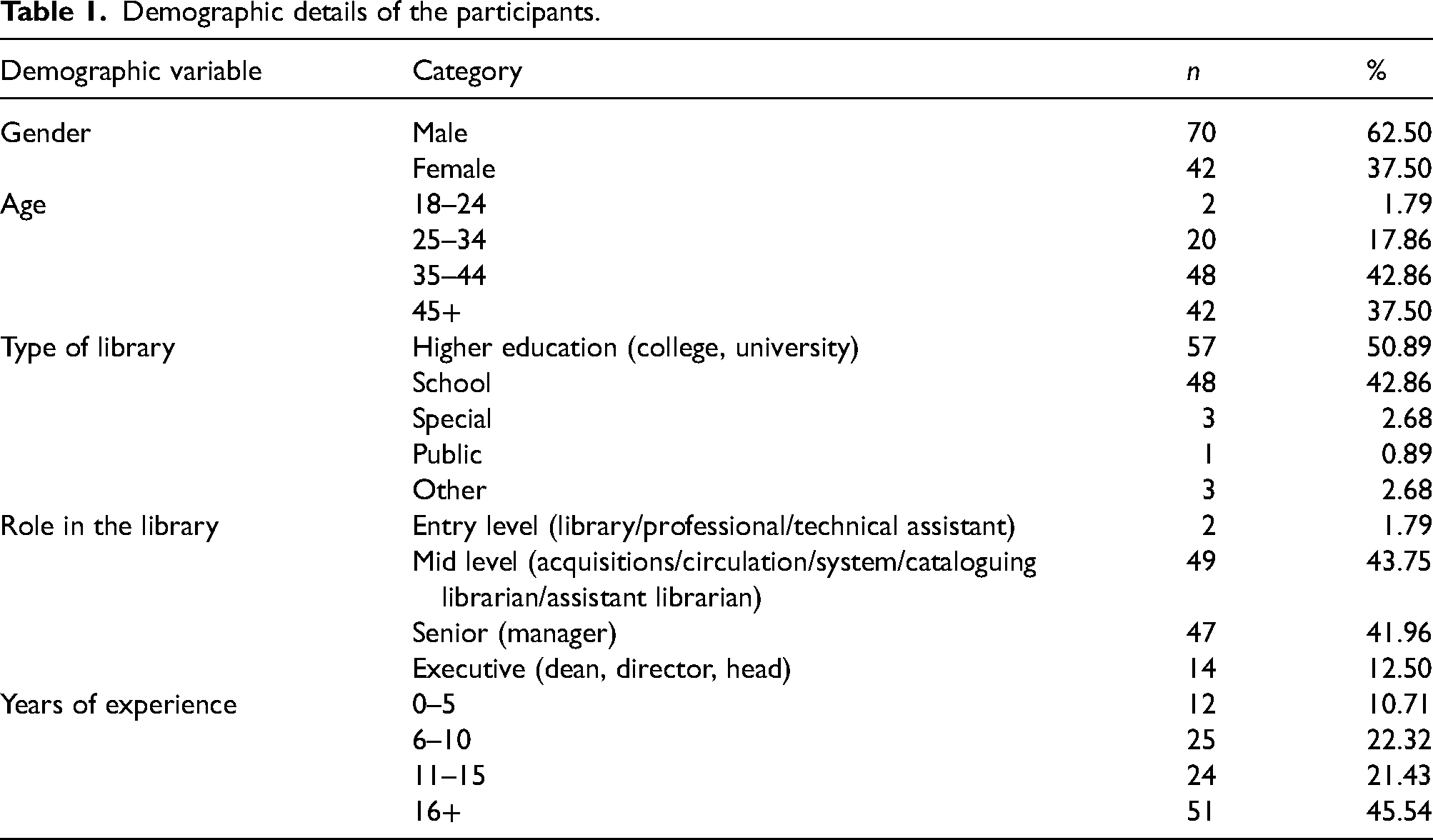
Table 2 below, reveals that the majority (46.43%) of the librarians considered sustainability in libraries to be very important and 29.46% believed that it is extremely important. No one considered it to be not at all important and only 3.57% of the respondents felt that it is slightly important, while 20.54% considered it to be moderately important. This indicates that 75.89% of the respondents believed that sustainability is crucial in libraries and can play a big role in the overall green and environmental protection movement. The average mean is 4.02, suggesting that the respondents were very positive about the importance of sustainability practices in today’s environment, and going green is a priority for all.
Importance of sustainability in libraries.
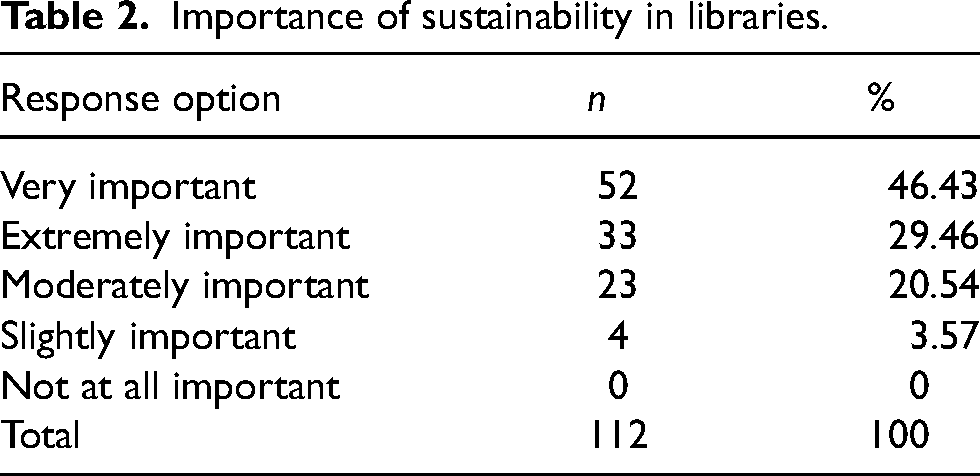
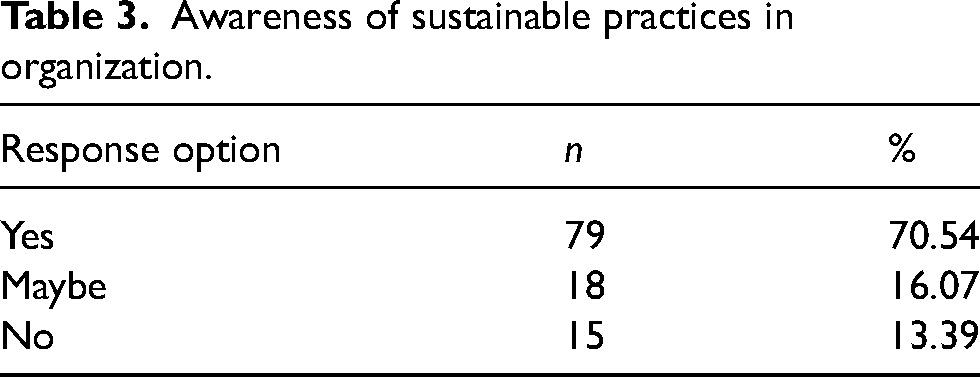
Table 3 below clearly shows that 70.54% of the respondents were aware of the sustainable practices in their organization, while 16.07% were not sure and 13.39% had no awareness. This data shows that the majority of organizations have some kind of sustainable practices in the workplace. However, some people might not be aware of them as they might not have been implemented throughout the organization or people have not been told about them.
Awareness of sustainable practices in organization.
As shown in Table 4 below the survey data reveals that the majority of the libraries have recycling programmes in place for paper, plastic and other materials, as 32.14% and 19.64% of the respondents confirmed that they mostly and fully, respectively, had recycling programmes, while only 8.04% confirmed that they had none. The ‘recycling programme’ (M = 3.37, SD = 1.22) variable suggests that, on average, the librarians were leaning towards partially or mostly in their responses, while the standard deviation suggests a moderate level of variability. The ‘energy-efficient lighting and equipment’ variable also suggests a positive inclination, with 33.93% and 25% responding mostly and fully, respectively, while only 3.57% were not using any energy-saving devices for lighting in their libraries. The mean (3.75) and standard deviation (0.97) suggest a leaning towards mostly, with some inclination towards fully, and there was low to moderate variability within the responses. The statement ‘digital resources to reduce paper use’ also shows a positive leaning (M = 3.78, SD = 0.95), as the majority of the respondents agreed mostly (37.50%) and fully (25%), while only 2% were not using any digital resources for reducing paper usage. As for the variable on the ‘use of sustainable building materials in construction and green building’ (M = 2.95, SD = 1.18), a little over half of the respondents were using them their libraries, which is a positive sign. With regard to the use or implementation of renewable sources of energy such as solar and wind power (M = 2.45, SD = 1.23) and the variable related to green certifications (M = 2.67, SD = 1.38), both variables show signs of growth and a high level of variability, as 31.25% and 27.93% of the librarians, respectively, responded not at all. The ranking of the variables in this construct suggests that UAE libraries are doing well when it comes to digital resources and energy-saving equipment, while a lot of work needs to be done in terms of applying for green certifications and the utilization of renewable energy sources.
Construct 1: sustainable practices in operations.
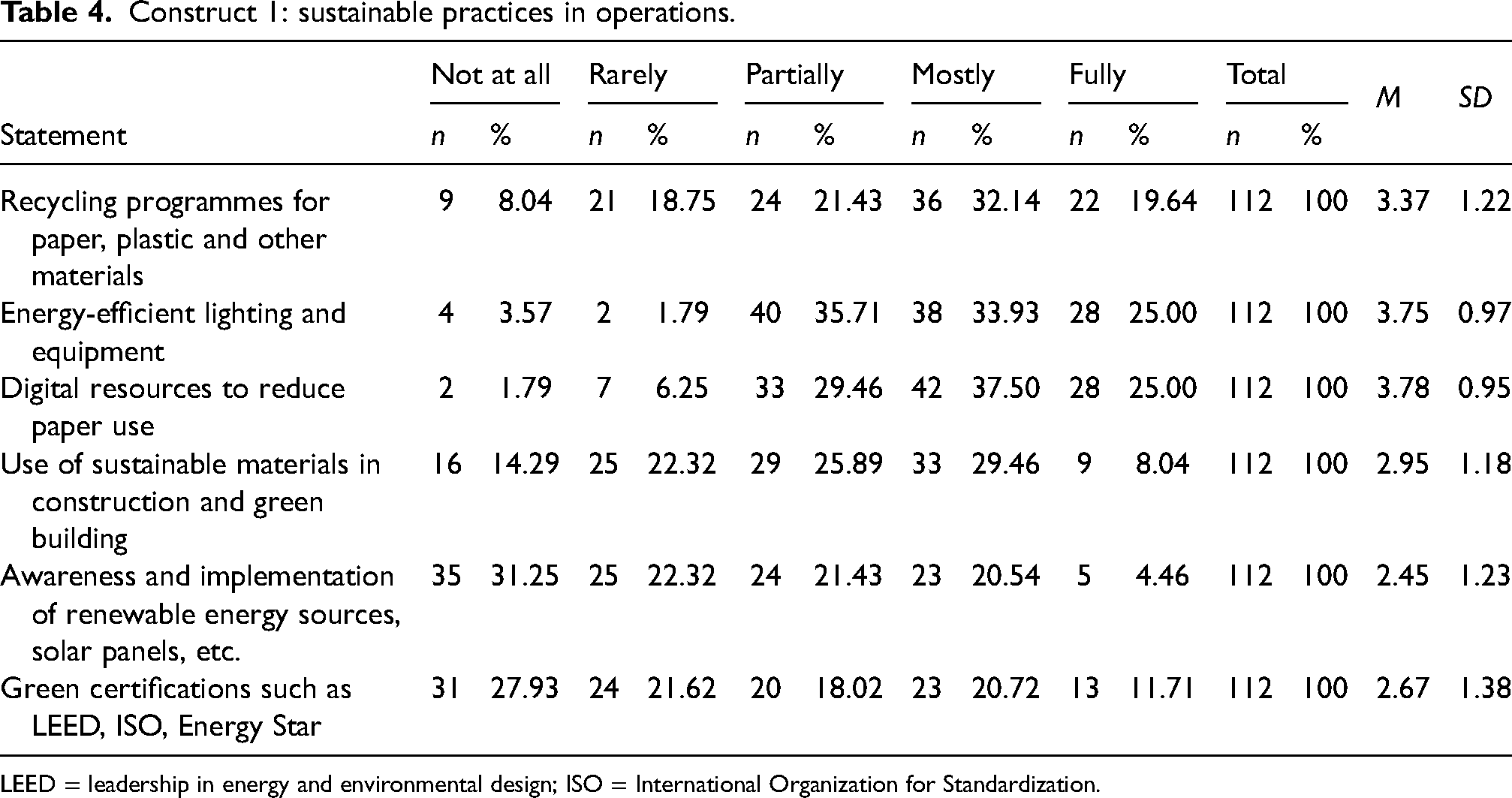
LEED = leadership in energy and environmental design; ISO = International Organization for Standardization.
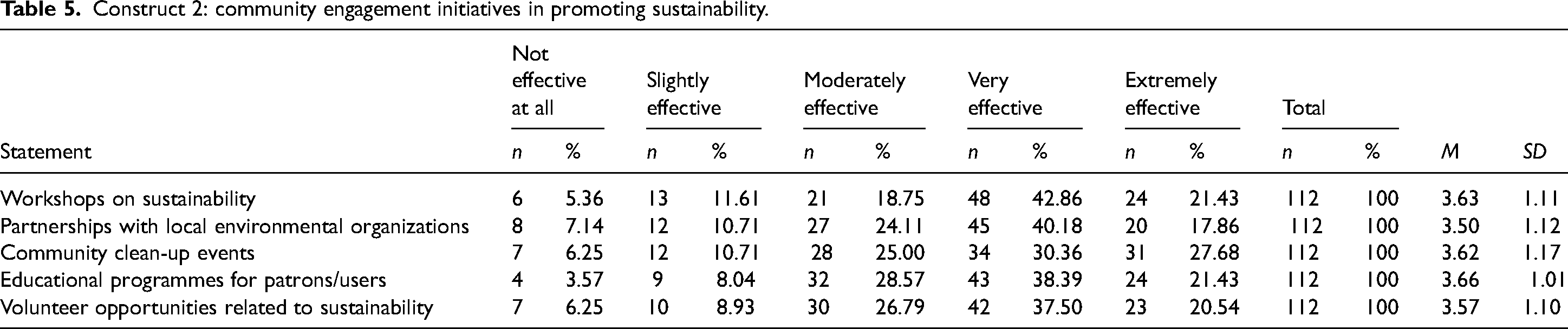
The survey data for Construct 2 relates to community engagement initiatives in promoting sustainability among the libraries and has five variables (see Table 5) below. The first, ‘workshops on sustainability’, reveals that the average effectiveness rating was between moderately effective (18.75%) and very effective (42.86%), but leaning towards very effective. The standard deviation indicates a moderate spread of responses with the most frequent being very effective; only 16.97% of the responses were below moderately effective. The data overall suggests that there was a generally positive perception of the effectiveness of workshops in promoting sustainability. The ‘partnerships with local environmental organizations’ variable reveals that the average effectiveness rating was between moderately effective (24.11%) and very effective (40.18%), but leaning towards very effective. The standard deviation, on the other hand, indicates a moderate spread of responses. Overall, 82.15% of the respondents answered either moderately effective or higher, while only 17.85% responded below moderately effective. This also shows that there was a positive perception of the effectiveness of partnerships with local environmental organizations in promoting sustainability. The perceptions relating to the effectiveness of community clean-up events range between moderately effective (25.00%) and very effective (30.36%), but leaning towards very effective. Extremely effective accounts for 27.68%, which shows a positive attitude. Overall, 83.04% of the responses were moderately effective or higher, while 16.96% of the responses were below moderately effective. The data clearly shows that there was a positive perception of the effectiveness of clean-up events, with a strong tendency towards the higher end of the scale. The ‘educational programmes’ rating ranged between moderately effective (28.57%) and very effective (38.39%), but leaning more towards very effective. The standard deviation indicates a moderate spread of responses but less dispersed than the previous variable. Of the responses, 88.39% were moderately effective or higher, while only 11.61% were below moderately effective. The data suggests that, overall, there was a positive perception of the effectiveness of education programmes, with a strong concentration in the upper range of the scale. The last variable relates to volunteer opportunities, which also elicited positive responses with regard to effectiveness, as the most frequent was very effective (37.50%); 84.83% of the responses were moderately effective or higher, while only 15.18% were below moderately effective. The ranking of the variables in this construct shows that education programmes were the most preferred, followed by clean-up events, while partnerships with local environmental organizations need to be improved.
Construct 2: community engagement initiatives in promoting sustainability.
Construct 3 is related to sustainability policies in libraries and has five variables (see Table 6 below). The first concerns sustainable purchasing polices, which had an average satisfaction rating between neutral (41.07%) and somewhat satisfied (32.14%), but leaning towards neutral. Overall, 46.43% of the participants were positive while 12.50% were negative. The data (M = 3.43, SD = 1.07) clearly suggests a neutral sentiment with a slight leaning towards positive satisfaction. As for waste reduction polices, it can be observed that the average satisfaction ratings also ranged between neutral (27.68%) and somewhat satisfied (37.50%). Overall, 55.36% of the respondents were positive while 16.97% were negative. The data (M = 3.48, SD = 1.10) suggests a moderately positive sentiment with a clear preference for somewhat satisfied. A similar satisfaction level may be observed for energy conservation policies, where the average satisfaction rating hovered between neutral (31.25%) and somewhat satisfied (33.04%), but leaning towards neutral. Overall, 51.79% of the respondents were positive while only 16.96% were negative. The data (M = 3.44, SD = 1.09) suggests a moderately positive sentiment with a balanced distribution across the satisfaction levels. An upward trend can be seen when it comes to policies promoting digital and electronic resources, as the average satisfaction rating was between somewhat satisfied (44.64%) and very satisfied (28.57%), but leaning towards somewhat satisfied. Overall, 73.21% of the respondents were positive, 10.72% were negative and 16.07% remained neutral. The data (M = 3.83, SD = 0.98) clearly suggests a very strong positive sentiment with a preference for the somewhat satisfied rating. The last variable, relating to staff training, showed an average satisfaction rating between neutral (25.89%) and somewhat satisfied (31.25%), but with a leaning towards neutral. Overall, exactly 50% of the respondents were positive while 24% were negative. The data indicates mixed sentiments across the board, with a slight inclination towards satisfaction but with notable dissatisfaction also present. As for the ranking of the variables in this construct, it suggests that librarians have prioritized policies related to promoting digital and electronic resources and waste reduction, while energy conservation and staff training policies need to improve drastically.
Construct 3: policies related to sustainability in libraries.

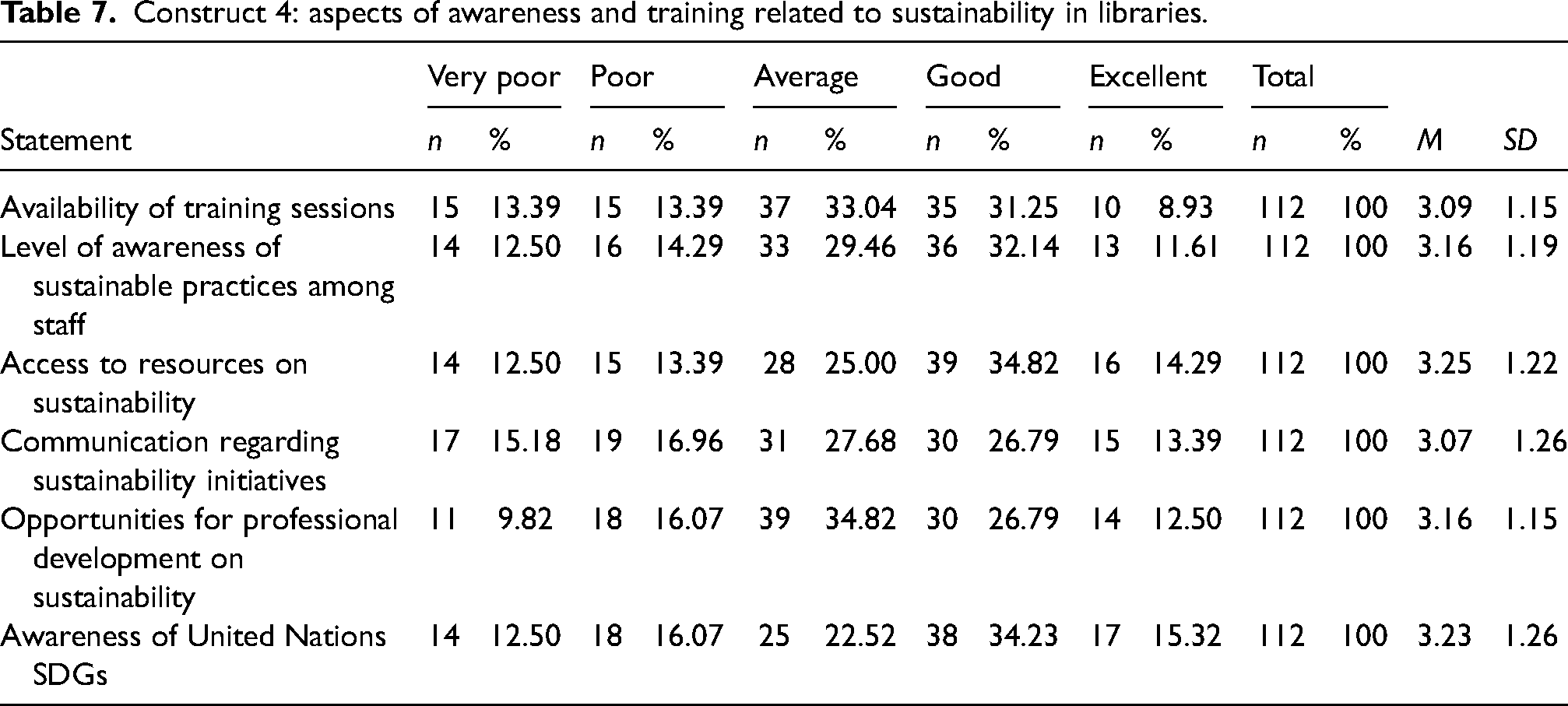
Construct 4 covers various aspects of awareness and training related to sustainability, and comprises six variables (see Table 7 below). The first, concerning the availability of training sessions, was rated between average (33.04%) and good (31.25%), indicating a positive sentiment. The standard deviation (1.15) shows a moderate variability in the responses. The second variable, relating to the level of awareness of sustainable practices among library staff, was rated slightly above average, with 73.21% showing a positive sentiment while 26.79% showed a negative sentiment. The standard deviation (1.19) suggests a moderate variability in the responses. As for access to resources on sustainability, the rating was between average (25%) and good (34.82%), which indicated a generally positive sentiment. The standard deviation (1.22) suggests a moderate variability in the responses. ‘Communication related to sustainable activities’ was rated between average (27.68%) and good (26.79%), showing a generally positive sentiment, while the standard deviation (1.26) suggests a moderate variability in the responses. As for the opportunities provided for professional development on sustainability, the rating was again between average (34.82%) and good (26.79%), indicating a positive sentiment, while the standard deviation (1.15) suggests a moderate variability in the responses. The last variable, related to awareness of the SDGs, was rated between average (22.52%) and good (34.23%), showing a positive sentiment, while the standard deviation (1.26) indicates considerable variability in the responses. The distribution was slightly skewed towards positive ratings. The rankings of the variables in this construct suggest that although librarians are doing well with regard to training related to access to resources and increasing awareness about the SDGs, communication regarding sustainability initiatives has not been up to the mark and needs to be addressed.
Construct 4: aspects of awareness and training related to sustainability in libraries.
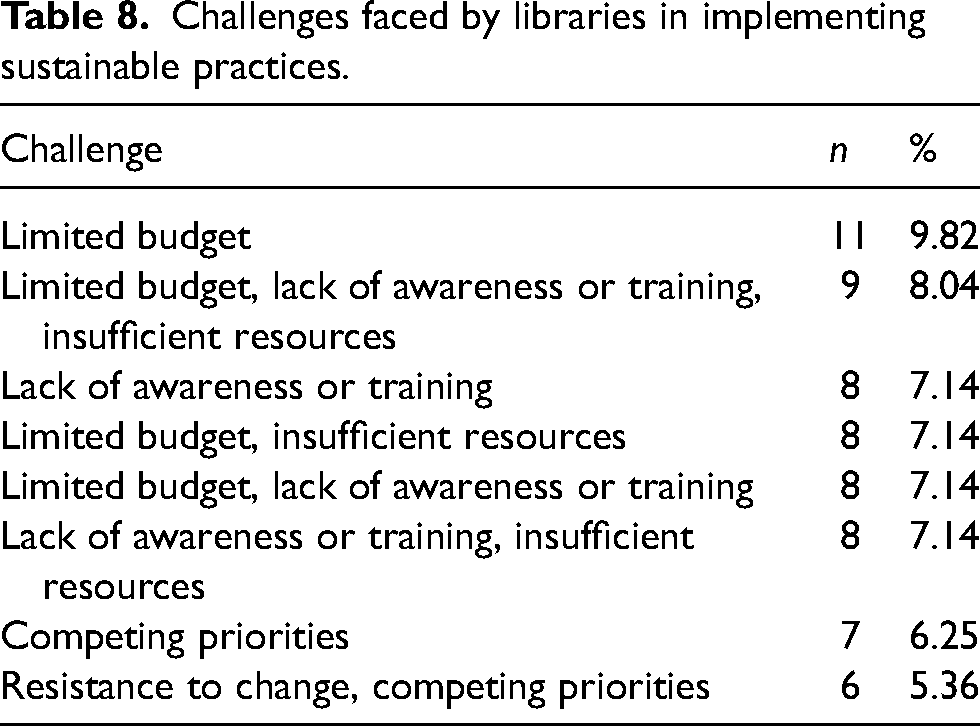
For the variables related to challenges faced by libraries, multiple answers were permitted; the numbers of responses are provided in Table 8 below. It can be confirmed that the top-five key challenges faced by library professionals in the implementation of sustainable practices in their workplace were a limited budget (11); insufficient resources (8); lack of awareness or training (8); competing priorities (7); and resistance to change (6).
Challenges faced by libraries in implementing sustainable practices.
A t-test for gender was performed to investigate the significant differences in perceptions related to sustainability for all the dependent variables (see Table 9 below). Two statistically significant differences were found for two variables – namely, the importance of sustainability (t = −4.228, p < .001
The t-test for gender.
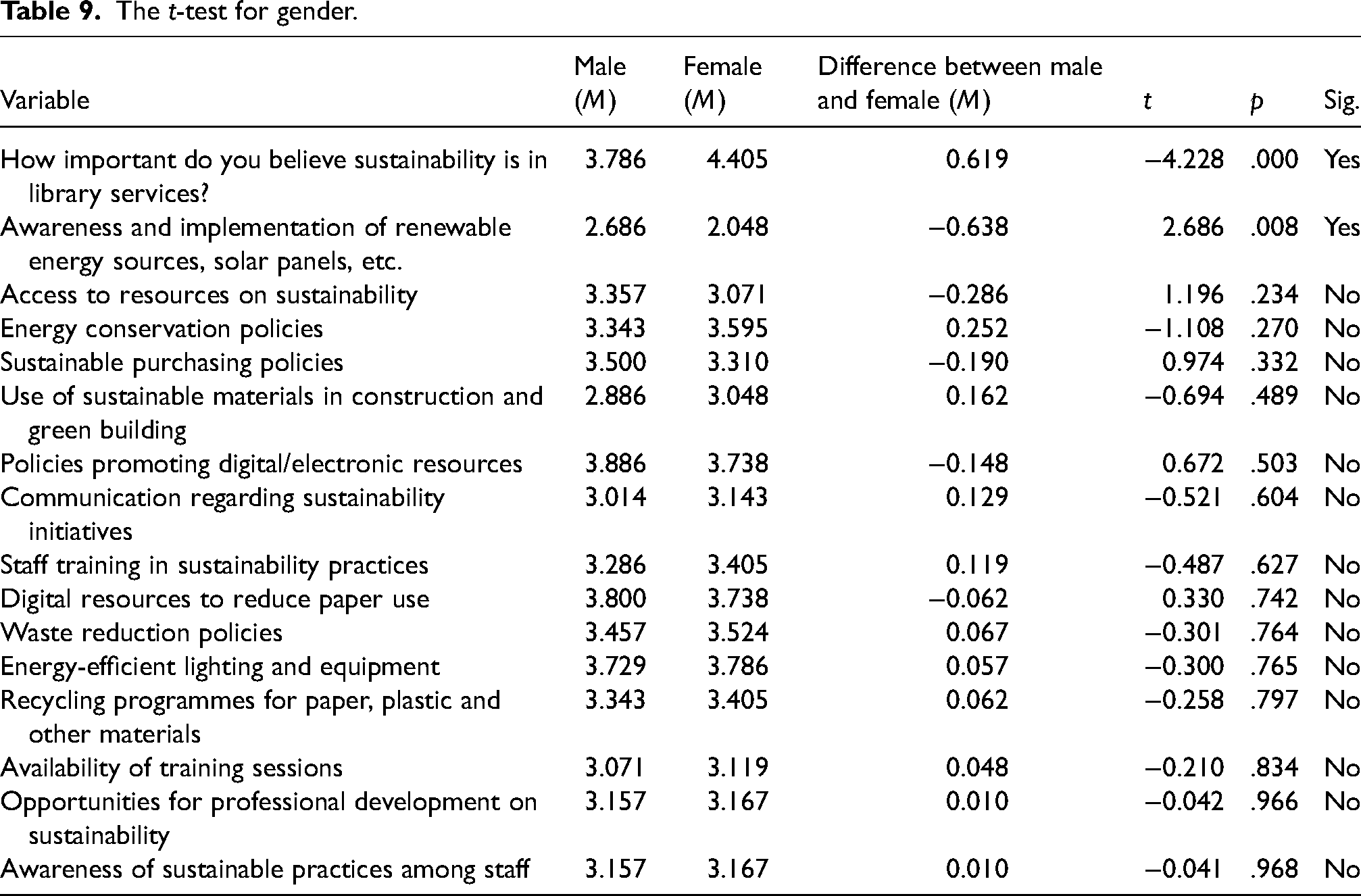
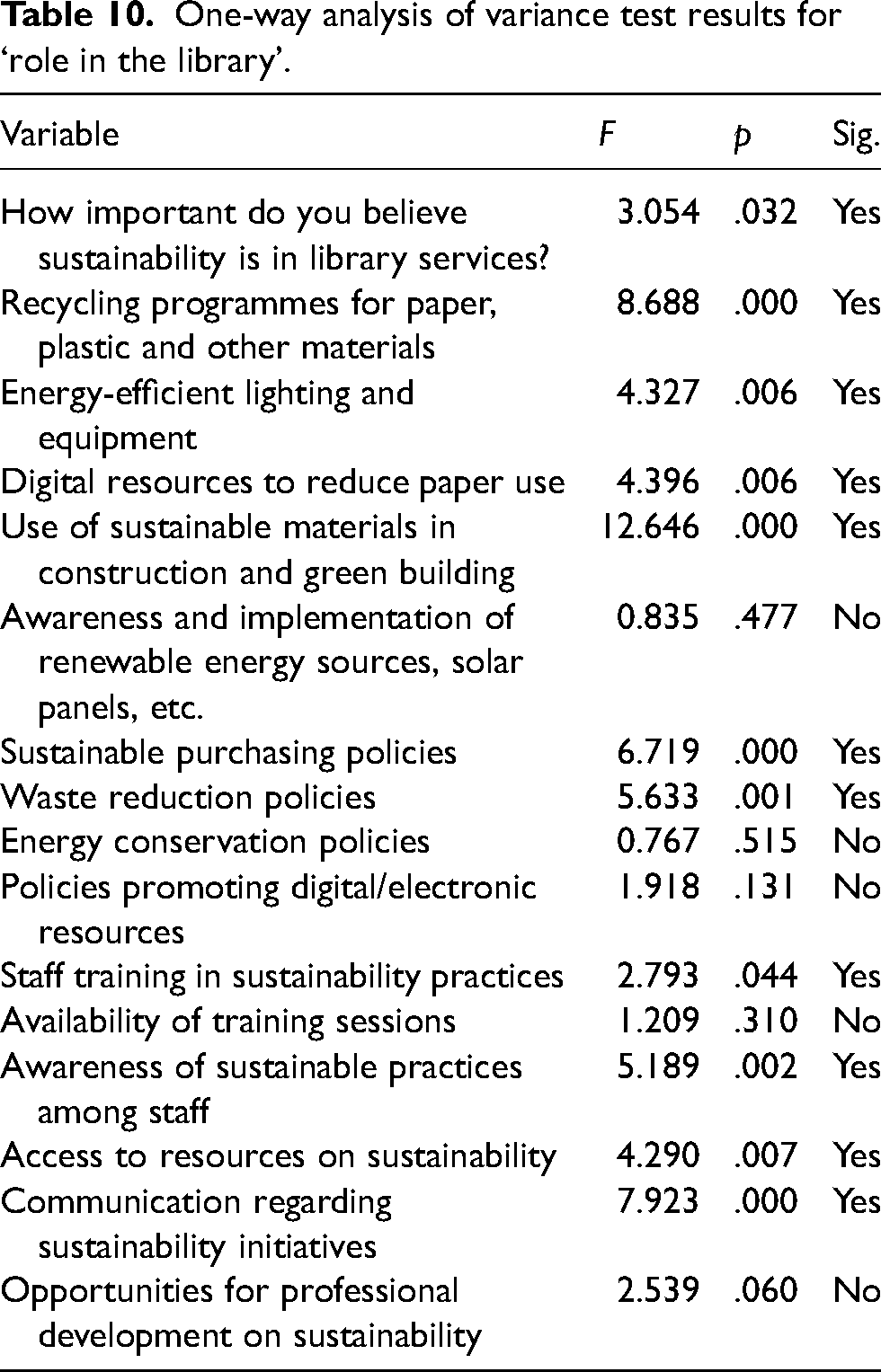
Table 10 below shows the results of ANOVA test that there were significant differences between the librarians’ roles and perceptions towards sustainability on many variables. The prominent variables include the importance of sustainability (F = 3.054, p = −.032), with executives showing the highest level of perception (M = 4.429), followed by those in senior (M = 3.872) and mid-level positions (M = 4.082), while entry-level staff scored the lowest (M = 3.0). This indicates that higher-ranking staff placed more emphasis on and prioritized sustainability. Similar differences were observed with recycling programmes (F = 8.688, p < .001), energy efficiency (F = 4.327, p = .006), digital resources (F = 4.396, p = .006), sustainable materials (F = 12.646, p < .001), sustainable purchasing policies (F = 6.719, p < .001), waste reduction policies (F = 5.633, p = .001), staff training (F = 2.793, p = .044), awareness of sustainability practices (F = 5.189, p = .002), access to resources on sustainability (F = 4.29, p = .007) and communication regarding sustainability (F = 7.923, p < 0.001). Role-specific patterns show that executives (directors, deans, managers, heads) consistently scored the highest, demonstrating a strong strategic commitment to sustainability. Mid-level staff might have faced challenges in implementing initiatives while entry-level staff showed moderate engagement, reflecting awareness but limited authority. Those in senior positions are well equipped to act as a bridge and their role is crucial in addressing practical challenges. Overall, the findings underscore a hierarchy-driven perception gap and implementation divide between operational and strategic levels. There were no significant differences found between different types of libraries, which suggests that the perceptions of their librarians were the same. The reason for this might be that the majority of the libraries were academic, including university and school libraries, whereas there were just three responses from special libraires and one response from a public library. This also suggests that there is a need to carry out a separate in-depth study on public libraires using a qualitative approach.
One-way analysis of variance test results for ‘role in the library’.
Discussion
This study provides a detailed insight into the perceptions of library professionals on sustainable library practices. Various aspects of sustainability awareness and practices within libraries were included, focusing on resource access, training and sustainable operations (see Rachman et al., 2023; Tribelhorn, 2023). The study evaluated the availability and effectiveness of training sessions related to libraries and found that the responses generally reflected a positive sentiment and satisfaction-level range from average to good on various aspects, such as training availability, access to resources and awareness of sustainable practices (see Hamad et al., 2024; Ren, 2020; Ren and Lu, 2024). Sustainable practices such as recycling programmes (Ren, 2024), the use of energy-efficient lighting and devices (Ibtisam, 2022), and the use of digital resources (Yunus and Ismail, 2024) to reduce paper usage aligned with a positive sentiment, and there was an overall positive trend towards sustainability in libraries in the UAE. Many libraries have implemented recycling programmes (Ren, 2024) and adopted energy-efficient lighting systems (see Ibtisam, 2022; Vijaianand et al., 2024). There has also been a huge shift towards digital resources, which will help in reducing paper usage (see Maina and Gichohi, 2024; Yunus and Ismail, 2024) and supports the SDGs. Certainly, there is room for improvement, especially in areas such as renewable energy use and green certification across libraries (Abdel Qader, 2023; Sivaprasad et al., 2024; Vijesh et al., 2024).
There was moderate variability in the responses related to awareness and implementation of sustainability practices, which suggests that there are differing levels of engagement and challenges across libraries. The study also found that there was moderate variability in terms of degrees of engagement with sustainable practices across the libraries, as some libraries are leaders while others are still facing challenges in implementing similar initiatives. The study reveals that libraries in the UAE are making great strides in sustainability practices, but efforts are required to enhance awareness levels and the implementation of sustainable practices across all areas. To achieve a culture of sustainability, libraries should focus on investing in training and awareness programmes to improve engagement with best sustainable practices (Ibtisam, 2022).
The two key areas where many libraries showed lower levels of engagement were their pursuit of green certifications and the use of renewable energy sources such as solar energy, which has tremendous potential, as the UAE receives plenty of sunlight throughout the year. The study highlights that the perceptions of females towards the importance of sustainability were much higher than those of their male counterparts, but when it came to implementation (Barrachina Fernández et al., 2021; Slepian and Jones, 2013), they tended to be behind due to a lack of technical knowledge. Also, librarians in leadership roles were more knowledgeable, active and instrumental in driving sustainability goals. Overall, the study highlights that the key challenges for libraries have been limited budgets, lack of training, low awareness levels, competing priorities and resistance to change.
Conclusion and recommendations
This study provides a detailed insight into the sustainability scene in libraries in the UAE. As a nation, the UAE has made great strides in sustainability practices and been at the forefront of achieving the SDGs. There are several key findings where this study will have an impact in creating more awareness and identifying the areas where more efforts and investment are needed. One of the key findings is the difference seen in the perception of the importance of sustainability in relation to gender, where females considered sustainability more important than their male counterparts. Another key finding is that the role of library professionals impacts their perception towards sustainable practices. Those in leadership roles were very positive towards sustainable practices but, moving down the hierarchy, there was a decline, which may be the result of less authority or decision-making powers. A further key insight is that although awareness among library professionals was relatively high, the presence of uncertainty among some of the respondents suggests that they had not been fully informed and there is a lack of communication about sustainable practices within libraries. With regard to community engagement initiatives such as workshops and partnerships, they were perceived positively, which suggest that these activities can further trigger or enhance sustainability efforts. The lower satisfaction rate regarding training is a matter of concern, and there is a need for improved educational and professional development programmes focused on sustainability practices. The key challenges libraries are facing in the implementation of sustainable practices include limited budgets or lack of funding, insufficient resources, a lack of awareness and training, competing priorities and resistance to change.
The key recommendations resulting from this study include enhancing training programmes to ensure consistency in awareness and implementation across all levels; prioritizing renewable energy initiatives; increasing awareness campaigns; and leveraging community engagement through workshops, clean-up events and partnerships with local environmental groups to promote sustainability and dedicated sustainability budgets. To meet these challenges, the priority of librarians should be to seek funding opportunities for the implementation of sustainable practices and invest in training and creating awareness among all community members. If libraries in the UAE can address these gaps, it will provide a major boost towards sustainable initiatives and implementation, and position them as one of the key contributors towards meeting the goals of the UAE's sustainability agenda.
One of the main limitations of this study is that it relies heavily on the perceptions of library professionals, which may involve a degree of subjectivity and overlook users’ perspectives. Although the study highlights the gaps in training and awareness, it fails to provide specific frameworks for improvement. It is recommended that future research is based on the limitations and findings of this study, and involves a comparative study between academic and public libraries related to sustainability practices with users’ perspectives. Another recommendation for future research is an evaluation of the impact of sustainability policy on library operations and the role of technology in enhancing sustainability in libraries. The application of AI technologies in libraries can have a great impact on sustainability practices, and studies in this area could improve resource savings and efficiency, as well as contribute to reducing wastage.
Footnotes
Declaration of conflicting interests
The author declared no potential conflicts of interest with respect to the research, authorship and/or publication of this article.
Funding
The author received no financial support for the research, authorship and/or publication of this article.
