






Abstract
Generative artificial intelligence (AI) applications, such as ChatGPT, Bard, Gemini, and Copilot, have revolutionized education, capturing the attention of faculty, administration, and students alike. Academic libraries have actively engaged in facilitating the use of AI technologies while addressing challenges like misinformation, academic integrity concerns, and ethical considerations. This study examines AI integration, education, and outreach in academic libraries across Europe, North America (Canada and USA), Sub-Saharan Africa, Latin America and the Caribbean. An environmental scan of 40 academic library websites from the Times Higher Education 10 highest-ranked libraries in each region was conducted. Results show that more than 50% of the libraries offered educational materials and 42.5% conducted educational activities, while only 12.5% included AI policies. The study results demonstrate that although many libraries have begun to integrate AI into their services, significant differences exist between regions in the Northern and Southern Hemispheres.
Keywords
Introduction
Throughout history, technological developments have led to significant changes in the ways we live and work. Although technology has been an integral part of human culture and society since the harnessing of fire (Stiegler, 1998), the last decade has seen an unprecedented acceleration in technological development and a level of digital transformation unlike any other in history, especially in relation to the recent increase in the availability of generative artificial intelligence (AI) tools. These recent changes have dramatically redefined our communications and interactions with technological systems, as well as possibilities for accessing information and sharing knowledge.
The acceleration and rapid development of AI tools, particularly in the last two years, have aroused the interest and concern of the academic community, governments, and other stakeholders, owing to their implications and scope for individuals and for society in general (Crowell, 2023; Ferrara, 2024; Hervieux and Wheatley, 2021; Lequesne et al., 2024; Okunlaya et al., 2022). Research has demonstrated that AI is having a significant impact on almost all sectors of society, including health care, the environment, finance, entertainment, the automotive industry, education, research, and others (Bakare et al., 2023; Espina-Romero et al., 2023; Zhang, 2023). Education and research are key sectors for individual and societal advancement; thus, understanding the role of AI in these areas is crucial. Although there is a substantial history of AI integration in education (Poellhuber et al., 2024), recent advances in AI, such as the public release of ChatGPT and other generative AI tools, have caused concern in the academic community and beyond, especially in relation to the potential associated benefits and drawbacks for higher education and research.
Academic libraries, recognized for their role in information literacy and considered cross-cutting units collaborating with multiple disciplines and departments, are well-positioned to play a significant role in the integration and responsible use of AI in universities (Akakpo, 2024; de Leon et al., 2024; Lund et al., 2020). The integration of AI in academic libraries is an area of growing interest within library and information science; however, despite ongoing contributions to the literature regarding best practices for the adoption and integration of AI in academic libraries, there remains a dearth of information about how academic libraries in different regions of the world are implementing AI technologies in their services and how they are informing and supporting their users when it comes to these technologies.
The purpose of our study is to analyze the current AI landscape in academic libraries in four different regions: Europe, North America, 1 Latin America, and Sub-Saharan Africa. The goal of our research is to understand how academic libraries in these regions are integrating AI technologies into their services. Further, we aim to discover the role these libraries play in supporting and educating their users about these technologies, which may be accomplished through AI literacy, outreach and information workshops, informative guidance available on the libraries’ websites, library policy statements concerning AI, and other publicly available sources.
Literature review
AI concepts and definitions
Globally, many people find it challenging to understand what AI is, how it works, and how it might affect their lives and society. Extant research has provided various definitions of AI; however, many scholars agree that defining AI is inherently complex. Although there is no single or standardized definition of AI (Buitrago-Ciro, 2024; Sheikh et al., 2023), scholars have developed definitions of AI that align with their theoretical and practical perspectives. For example, Cox and Mazumdar (2024) explored various definitions of AI within the field of library and information science. Approaching the question from the field of communication, De Zúñiga et al. (2024) defined AI as “the tangible real-world capability of non-human machines or artificial entities to perform, task solve, communicate, interact and act logically as it occurs with biological humans” (p. 320). Sheikh et al. (2023) proposed using the European Commission's definition of AI, asserting that it is one of the most appropriate and inclusive definitions when taking into consideration potential future developments in the field. The European Commission defined AI as: any system based on software or embedded in physical devices that exhibits behavior simulating intelligence, inter alia, by collecting and processing data, analyzing and interpreting its environment, and taking action, with a certain degree of autonomy, to achieve specific objectives (Lebreton, 2021: 6).
Although researchers approaching their work from different perspectives employ varying definitions, there is a general consensus that AI is a human-designed computer system that enables machines to communicate, perform tasks, and solve problems autonomously through a purposefully designed system of data, algorithms, and computational capacity in ways that seem similar to those of humans (De Zúñiga et al., 2024; Lebreton, 2021; Roy, 2023; Sastry et al., 2024).
Adoption of new technologies in academic libraries
Academic libraries have a history of early technological adoption with the aim of best supporting their users; however, research has also indicated that technology has traditionally been viewed as a force capable of transforming libraries and librarianship. Sutton (1996), writing nearly 30 years ago, explored the ways new technologies were likely to transform library services in the coming decades. Sutton noted that as academic libraries integrated new technologies into their services, librarians would need to adapt and develop new skills to meet users’ needs. Writing more recently, Tait et al. (2016) observed that new information technologies could change libraries from their traditional structure to more dynamic and technologically rich environments. Similarly to Sutton (1996), Tait et al. (2016) noted the relationship between this type of transformation and the need for proactive adoption of emerging technologies and training for library staff. In an analysis of academic libraries’ adaptation to emerging technologies, Uzwyshyn (2018) highlighted the impact on research processes and the importance of academic librarians’ digital literacy to best support the academic community. Sandhu (2018) emphasized the crucial role academic libraries play in the digital transformation process of the universities of which they are part. According to Sandhu (2018), academic libraries are particularly well-positioned to redefine the digital environments of higher education and research, as they are often the first to adopt new technologies. That said, and especially in the context of the present study, it is essential to consider the inequality in the adoption of new digital technologies between libraries in developed and developing countries, as Liman and Aliyu (2023) pointed out. It is vital for academic libraries in developing countries to receive more support and better infrastructure to reduce the digital divide.
AI integration in academic libraries
Scholars have increasingly focused their work specifically on the adoption and integration of AI in academic libraries as AI has continued its rapid development. Literature concerning AI in academic libraries often highlights how libraries adapt to new AI technologies and the necessary new competency development for academic librarians. For instance, Cao et al. (2018) explored ways academic libraries could adapt to technological advances and take advantage of new AI technologies to become “smart libraries”, better responding to users’ needs. Lund et al. (2020) assessed the perceptions and attitudes of academic librarians towards the adoption and integration of AI into their services, finding that a large proportion of respondents are optimistic about using AI to improve their services. In addition, they believe that academic librarians could play an important role in the integration and use of AI tools. In three separate studies, Cox (2023), Frederick (2020), and Jenkins and Zhang (2024) examined the impact of AI on the academic librarian profession and the competencies that librarians need to acquire. The authors note that academic librarians must be leaders when faced with new technologies. Therefore, they must acquire knowledge and skills concerning AI to ensure success in libraries’ digital transformation.
AI integration in academic libraries has also recently been studied. Okunlaya et al. (2022) presented a conceptual framework for AI integration in academic libraries to allow said libraries to offer more innovative and efficient services. Other publications explored the integration of AI in reference services and collection and acquisitions management. For example, Daimari et al. (2023) demonstrated the effectiveness of ML models, particularly Light Gradient-Boosting Machine (LGBM), to accurately classify favorite books in a library environment. Meanwhile, Walker and Jiang (2019) noted that some predictive capability algorithms, such as AdaBoost, can help libraries better decide which books to purchase based on usability data. On the other hand, Xiao and Gao (2020) pointed out that machine learning algorithms provide more accurate and relevant recommendations, which could assist with the transformation of academic libraries. In another piece concerning AI integration in library services, Hussain (2023) noted potential benefits such as improved access to information and automation of mundane tasks. He stressed, however, that to achieve this, libraries must improve their technological infrastructure as well as the AI-related skills and competencies of staff and users alike.
Researchers have also explored different AI tools that can be and have been employed by academic libraries. For example, Nawaz and Saldeen (2020) studied the use of AI chatbots to improve access to library services and reduce the workload of library staff. The authors noted that chatbots can provide an easy-to-use conversational interface for users searching for information. In addition, they have the potential to serve multiple users simultaneously and deliver personalized notifications and alerts. Similarly, Adetayo (2023) investigated the implementation of conversational AI tools, such as Bing Chat, to enhance reference services, access, and user experience. The authors pointed out that the integration of AI tools in academic libraries, such as Bing Chat, would help make the services more modern, dynamic, and user-centered. Additionally, they note that it fosters a more dynamic and accessible information environment. Ehrenpreis and DeLooper (2022) examined the use of a chatbot to improve information searches on an academic library website, explaining that chatbots could improve library websites by helping them respond to basic reference questions and providing data on user searches. Cox and Tzoc (2023) analyzed the use of ChatGPT and other similar generative AI tools as a means of transforming some traditional library services in order to improve access and efficiency of library services. In a study of the extent of AI implementation in academic libraries and related challenges, Hamad et al. (2023) found that academic libraries in the study offered a moderate level of smart information services using SDI and RFID technology, but advanced technologies like augmented reality and chatbots were not widely used.
Library policies, education and user support regarding AI
While AI has the potential to augment library services, there are also significant social, ethical, and practical issues related to AI integration and use. As Nayyer and Rodriguez (2022) and Wójcik (2021) highlighted, possible errors, biases, and prejudices associated with AI tools can be mitigated and addressed by academic libraries, as such institutions are well positioned to assist the academic community in responding appropriately. Similarly, Bradley (2022) emphasized the role of academic libraries in regulating and ensuring the responsible and ethical use of AI tools. In their discussion of ethical challenges academic libraries face when integrating AI, Kautonen and Gasparini (2023) underscored that academic libraries are well positioned to create guidelines for the ethical use of AI. Lo (2023) noted the importance of AI policies in academic libraries, asserting that these policies should strike a balance between encouraging technological development and setting standards that protect users and institutions. In addition, Lo (2023) emphasized that policies should focus on specific aspects of AI, such as ethical issues, transparency, and data privacy. Similarly, Michalak (2023) highlighted the need to establish ethical policies on AI owing to the frequent use of AI tools in academic environments. The author explained that academic librarians are well positioned to contribute to the creation of these AI policies owing to their expertise in issues related to information ethics, privacy and intellectual property.
In their extensive literature review of research concerning AI in research libraries, Gasparini and Kautonen (2022) found that seven reviewed papers highlighted “librarians’ central role in safeguarding societal values” (p. 8), in part by promoting AI and algorithmic literacy initiatives. The authors also found a number of articles describing the ways in which academic libraries can strengthen pre-existing relationships within educational institutions to provide learning resources, workshops, and tutorials to help people understand AI use and the implications of AI technologies. Honodu-Wusu (2024) asserted the need for libraries to proactively reach out to marginalized communities by “providing access to technology and offering training programs to empower individuals to navigate and utilize AI-driven resources effectively” (p. 9). Cordell (2020) pointed out the need for libraries to help “patrons become more active agents against growing systems of surveillance and algorithmic injustice” (p. 31) and emphasized that academic libraries can take a leadership role, not only in educating patrons, but also in influencing the larger societal conversation about AI. Notably, while a growing body of research affirms the possibilities for academic libraries to provide AI-related support and education, the extent to which academic libraries do so is currently unknown.
Challenges faced by academic libraries in different regions
In general, academic libraries have been transforming and integrating new technologies to offer better services and better respond to the needs of their users. However, academic libraries in developed and developing countries often face different challenges depending on their social, economic, and infrastructural context. For example, according to Sharma (2012), libraries in the Global North have greater financial support, better infrastructure, and a high level of literacy. This has allowed them to integrate and adapt more easily to new technological changes and resources offered by libraries in these regions. Jain and Akakandelwa (2016) pointed out that libraries in the Global South face significant challenges related to access to resources, technological infrastructure, staff training, and funding.
According to Lemaitre (2017) and Mora et al. (2018), the Latin American region is characterized by significant social, cultural and economic heterogeneity. This diversity is reflected in its universities, which range from public to private institutions and from high-income to low-income. As a result, there are considerable disparities in the resources available to academic libraries across the region. As noted by Arciniegas et al. (2018) and Nureña (2019), these differences manifest in the availability of services, access to information and knowledge dissemination, particularly in countries with fewer resources. Similarly, Arellano and Mireles (2018) emphasized that academic libraries in Latin America must contend with challenges such as social, economic, and educational inequality. These constraints may hinder the integration of AI tools into library services within the region.
Kavulya (2007) explained that academic libraries in the Sub-Saharan African region also face several challenges, including a lack of financial resources, insufficient technological infrastructure, and limited digital skills among library staff. Adekoya et al. (2024) emphasized that funding issues in the region are largely attributable to a lack of institutional support. Sharma (2012) and Bakare-Fatungase (2024) similarly noted that academic libraries in Sub-Saharan Africa are confronted with inadequate infrastructure and insufficient training in emerging technologies, which hinders the modernization of library services. As Barsha and Munshi (2023) asserted, the barriers and challenges described above, especially those related to technology infrastructure, internet connectivity, and limited hardware, are likely to significantly hinder the adoption and integration of AI in academic libraries in the Global South.
Methods
The main objective of the study is to discover how AI is integrated into academic libraries’ services, policies, and educational activities by exploring the AI literacy initiatives presented on library websites, assessing the libraries’ role in the broader context of higher education and their support for AI-related learning.
This study aims to answer the following overarching research question: how do academic libraries in Europe, North America, Latin America, and Sub-Saharan Africa integrate AI technologies? The specific research questions are:
Are academic libraries in Europe, North America, Latin America, and Sub-Saharan Africa incorporating AI technologies into their services? If yes, how?
What (ethical and otherwise) guidelines and policies have academic libraries established to govern the use of AI within their activities?
What types of educational outreach efforts do academic libraries employ regarding AI?
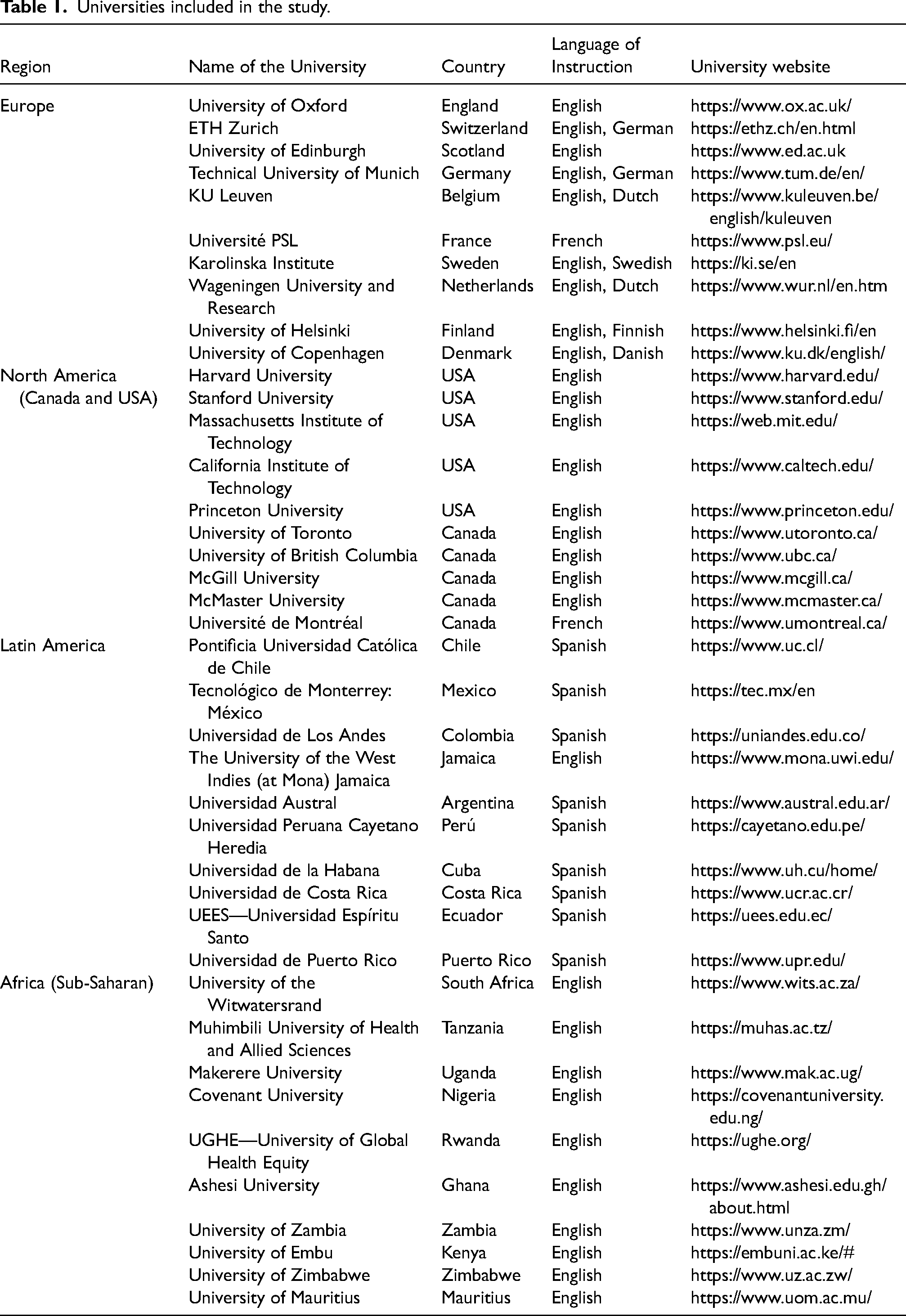
To answer the research questions above, the research team used an environmental scan methodology to perform an analysis of 40 library websites from four geographic regions (Europe, North America, Latin America, and Sub-Saharan Africa) displayed in Table 1.
Universities included in the study.
The environmental scan methodology provides a systematic approach to gathering, analyzing ,and interpreting data over a specific period (Choo, 2001). This methodology, which originally emerged from business research, can help researchers explore specific elements of the organizational environment in order to anticipate trends, challenges, and possible opportunities (Aguilar, 1967; Charlton et al., 2019; Choo, 1999; Nagi et al., 2020). It also plays a role in Library and Information Science education (Greene & Groenendyk, 2021; Zhang et al., 2012) and can provide important insights into how organizations approach or manage specific interventions concerning organizational planning or managerial decisions (Choo, 1999). In the context of this study, the environmental scan methodology was utilized to provide a snapshot in time of how libraries from different regions of the world adopt and integrate AI in their services, which can help academic libraries and their stakeholders understand and consider future AI integration plans.
Selective sampling
Initially, the Times Higher Education World University Rankings (THE, 2023) were utilized to identify the leading universities in each region examined in this study. However, considering the distinct social and economic contexts of Latin America and Sub-Saharan Africa, we employed the specific regional rankings provided by THE 2023 for these areas (i.e. Latin America University Rankings and Sub-Saharan Africa University Rankings).
Initially, our goal was to select the top 10 universities ranked by each region according to THE 2023. However, this approach resulted in limited geographic and cultural diversity. For example, only five countries were represented among the top 10 universities from Latin America and six countries from sub-Saharan Africa. To obtain a more holistic representation of the regions, a selective sampling method was applied. This method consisted of selecting the top-ranked university from the first 10 top-ranked countries in each region, according to THE 2023. Selective sampling allowed for the inclusion of countries that might not be as highly ranked overall, but which are significant in reflecting the diversity of their respective region. For example, for the Sub-Saharan Africa region, countries such as Mauritius, Zimbabwe, Zambia and Kenya were included, which would have been excluded in the initial focus on the top 10 universities in the region. Similarly, for the Latin American region, countries such as Costa Rica, Cuba, Ecuador, Peru and Puerto Rico were included, allowing for greater geographic and cultural diversity in the region. This selective sampling approach allowed us to obtain a broader geographical, cultural, economic, and social representation of the regions. Brazil was excluded from the Latin American sample owing to language limitations.
For Europe, the top-ranked university from each of the top 10 countries in the THE 2023 rankings was selected, avoiding overrepresentation of a few countries (i.e. the UK, Germany, and Switzerland). In North America, the top five universities from Canada and the USA were included, avoiding overrepresentation of the USA. This sampling method provided a more balanced representation of these regions.
Data collection
Once the selection of university libraries was completed, the researchers collected data using internet searches in a three-step process: (1) examining library websites in detail and identifying relevant information; (2) using the search feature on the website; and (3) conducting an additional level of searching, using site searching techniques (i.e. site:[domain of the library website] keywords). The searches used a predetermined set of keywords to ensure consistency and included the following terms: “artificial intelligence”, “AI”, “Artificial intelligence library”, “Artificial intelligence workshop”, “Generative AI”, “ChatGPT”, “AI ethics”, “Artificial Intelligence literacy”, “AI literacy”, “Machine Learning”, “Deep Learning”, “Natural Language Processing”, “Academic integrity and AI”, “Plagiarism and AI”, “Artificial intelligence tools”, “Artificial intelligence library services”, “Artificial intelligence policy”. Terms were translated as needed and results were manually reviewed for relevance.
Data collection took place in May and June 2024. Two co-authors conducted a separate review of all websites to ensure the accuracy of the information collected and recorded the results in a spreadsheet. In case of the conflict, a third co-author participated to resolve the differences in the analysis, as well as to reduce biases and subjective interpretations. Data analysis was performed by the researchers using descriptive statistics and textual analysis methods.
Results
Study results are based on data extracted during the environmental scan and provide insights into how academic libraries in four different regions of the world integrate AI technologies across three different dimensions: library services, library policies, and library educational outreach activities. Results are organized by research question, as outlined in the Methods section earlier.
AI integration in academic libraries’ services
When exploring whether and how academic libraries integrate AI technologies into their services, the results demonstrate that integration of AI-based tools, such as chatbots, virtual assistants, automated cataloguing, and recommendation systems, is limited. For example, only three university libraries in North America, two libraries in Europe, one library in Latin America and one in Sub-Saharan Africa integrate AI into their services (see Figure 1).
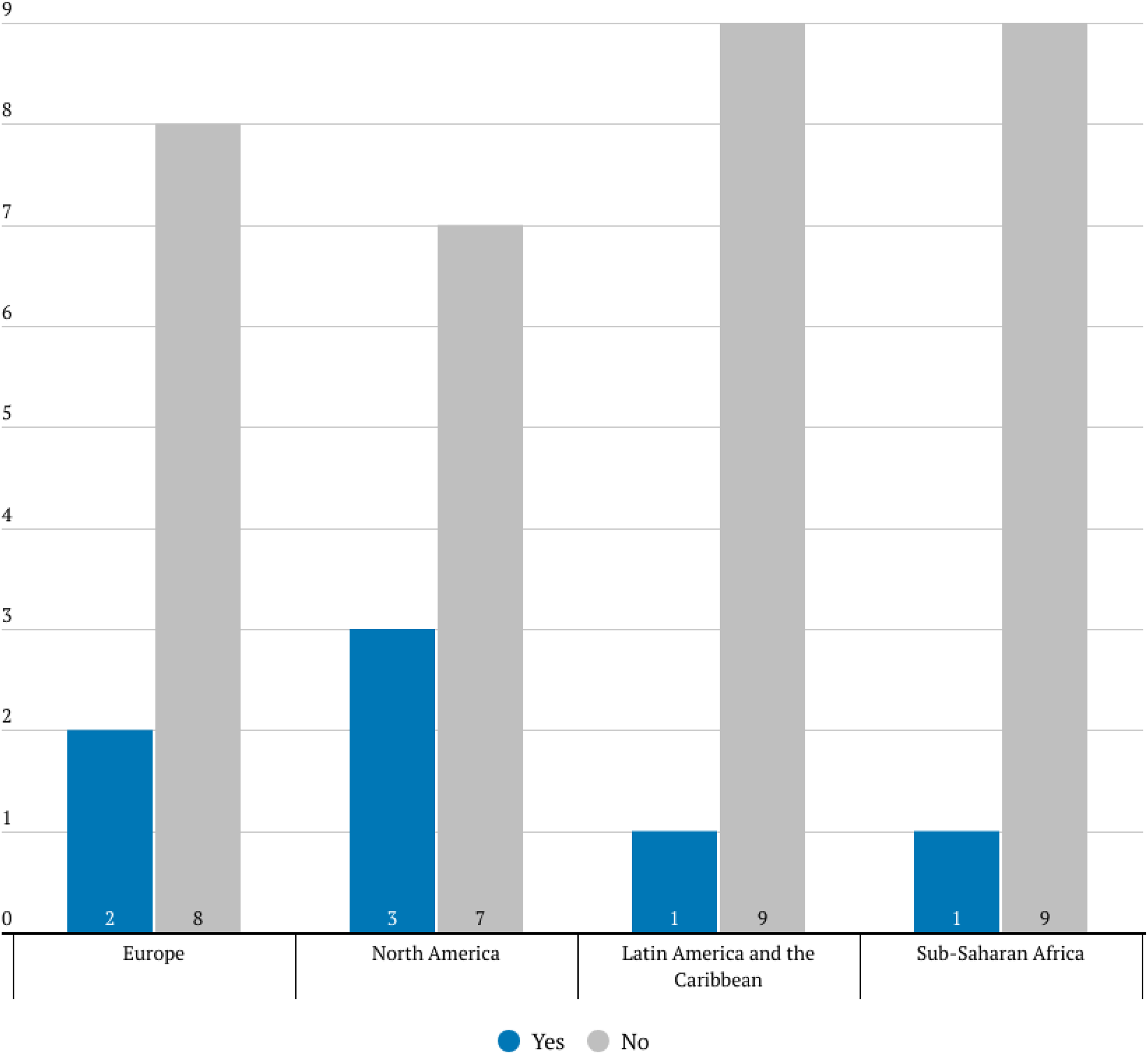
AI integration in the library services by region.
Integration of AI into services includes providing users with the opportunity to use and test specific AI tools like Scopus AI (Technical University of Munich, Germany; University of the Witwatersrand, Africa) and AI-based search tool Keenious (University of Helsinki, Finland), or have institutional access to Scite (McMaster University, Canada). In addition, one library integrates an AI chatbot, called TECbot, to help users get quick information about library services and meet their information needs (Tecnológico de Monterrey, México). Additionally, AI is integrated into managing library collections (Stanford University, USA) and cataloguing (Princeton University, USA).
Academic libraries’ AI guidelines and policies
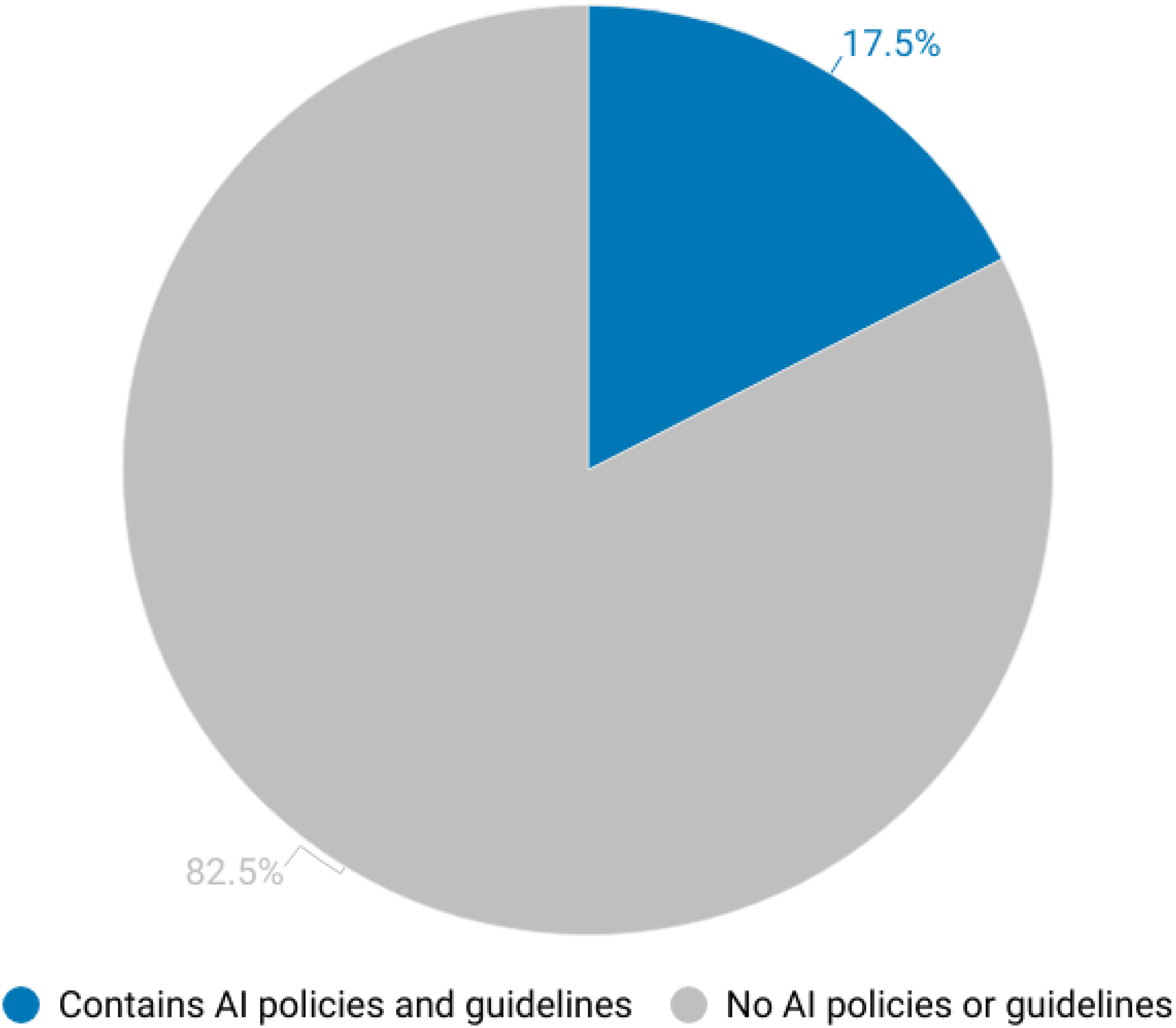
According to our results, only four out of the 40 libraries worldwide (i.e. ETH Zurich, The University of Helsinki, Stanford, and MIT) include library statements regarding AI on their websites (see Figure 2). These four library statements discussed such AI-related topics as copyright, academic integrity, co-authorship, and how to declare the use of AI in one's work. The University of Helsinki (2023) has highlighted the expertise and proactive role of libraries in facilitating conversations about AI-based tools, as well as the pivotal role libraries can play in promoting and facilitating AI literacy on campuses. The Stanford statement discussed important challenges associated with Generative AI, such as misinformation, data privacy and security, and the cut-off date of its knowledge base (Stanford Libraries, 2023). The MIT libraries’ statement on AI and disinformation outlines a strategy focused on ethical, human-centered practices, and educational interventions to address disinformation propagated by AI (MIT Libraries, 2021). It is particularly notable for outlining a commitment to approaching AI ethically and responsibly. The MIT Libraries (2021) statement reads:
We will create inclusive approaches to understanding the impact of AI on our user communities both inside and outside of MIT. We will advance ethical practices with the use of AI within our libraries. We will commit to incorporating human-centered design philosophies with the potential impact of AI in current and future staffing models. We will produce an ongoing series of educational programming and research initiatives on disinformation and AI in partnership with MIT faculty and researchers and our colleagues in the information professions.
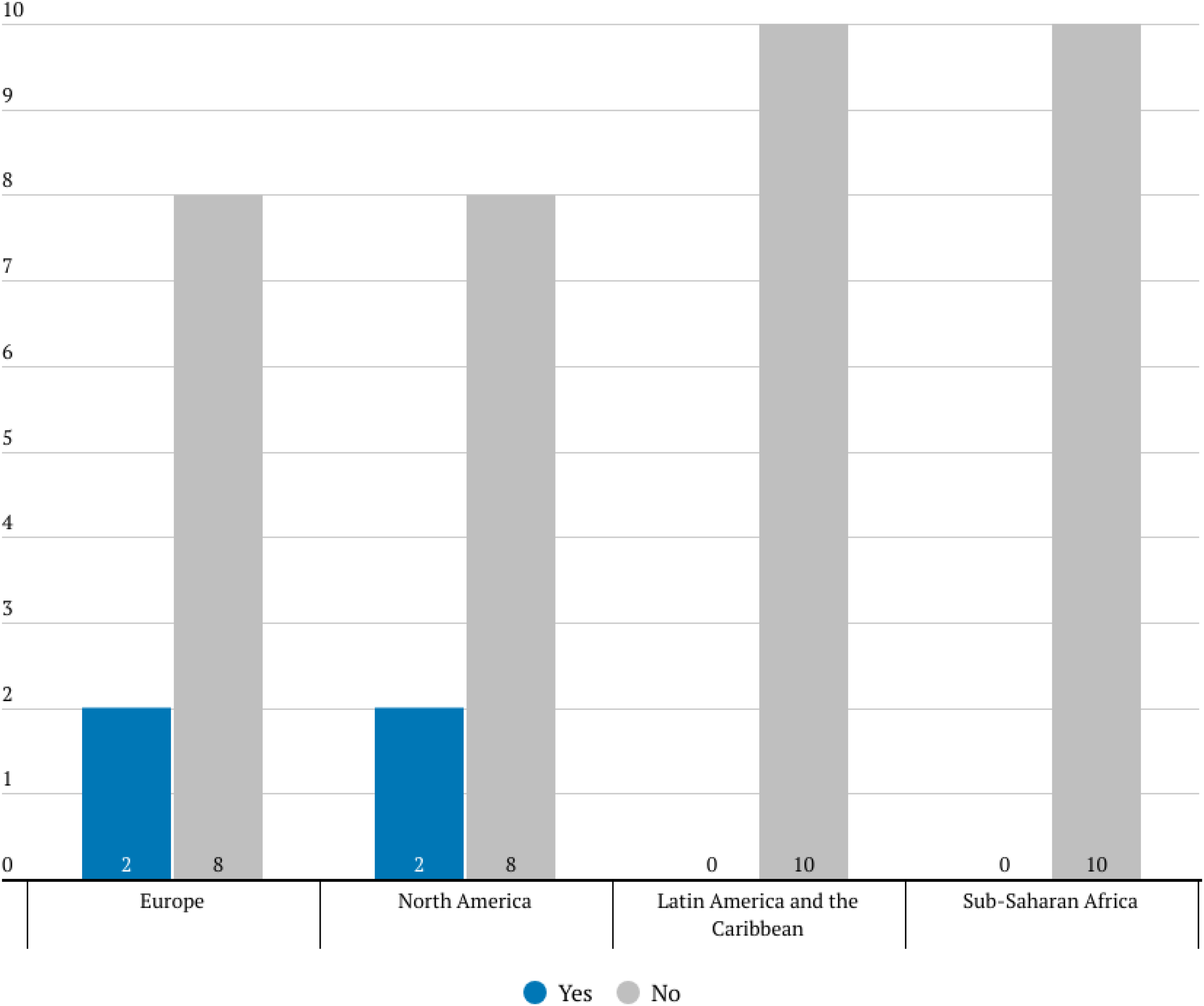
Availability of library AI statements by region.
While three European and four North American academic libraries have implemented policies and guidelines to govern the use of AI within library activities, none of the libraries in the other two regions have done so (see Figure 3). Of the 40 university libraries examined in our study, 33 (82.5%) had no existing AI policies or guidelines for the library included on their websites. Of those university libraries that did not have their own policies, only two libraries referred to institutional AI policies (i.e. ETH Zurich and University of Helsinki (see Figure 4).
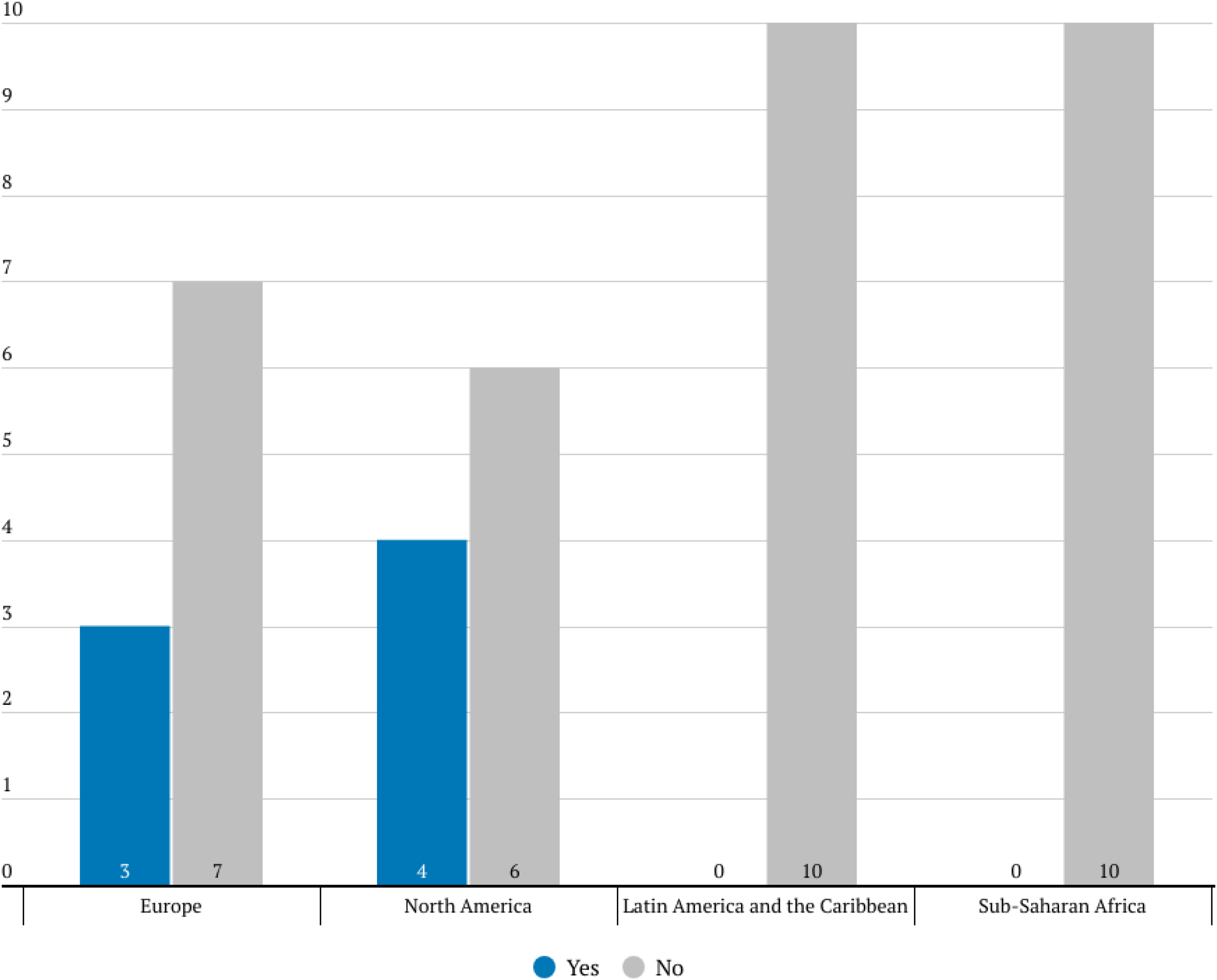
AI policies and guidelines by region.
Presence and reliance on institutional AI-related policies and guidelines.
When examining whether libraries rely on their own AI-related policies or refer to institutional policies on AI, it was discovered that very few rely on institutional policies and guidelines. Just three libraries in Europe and one in North America referred to institutional policies and guidelines, with none of the libraries in Latin America or Sub-Saharan Africa referencing institutional policies. In addition, we have compared whether academic libraries relied on institutional policies while also creating their own policies and guidelines and whether the absence of their own policies and guidelines pointed out institutional resources. Our findings demonstrated that 31 (77.5%) libraries examined do not have their own policies and do not explicitly rely on institutional policies and guidelines. Five (12.5%) included library policies on AI but did not reference institutional policies, one did not have library AI policies but referenced institutional policies and guidelines and one had its own policies and also referenced institutional policies and guidelines (see Figure 5).
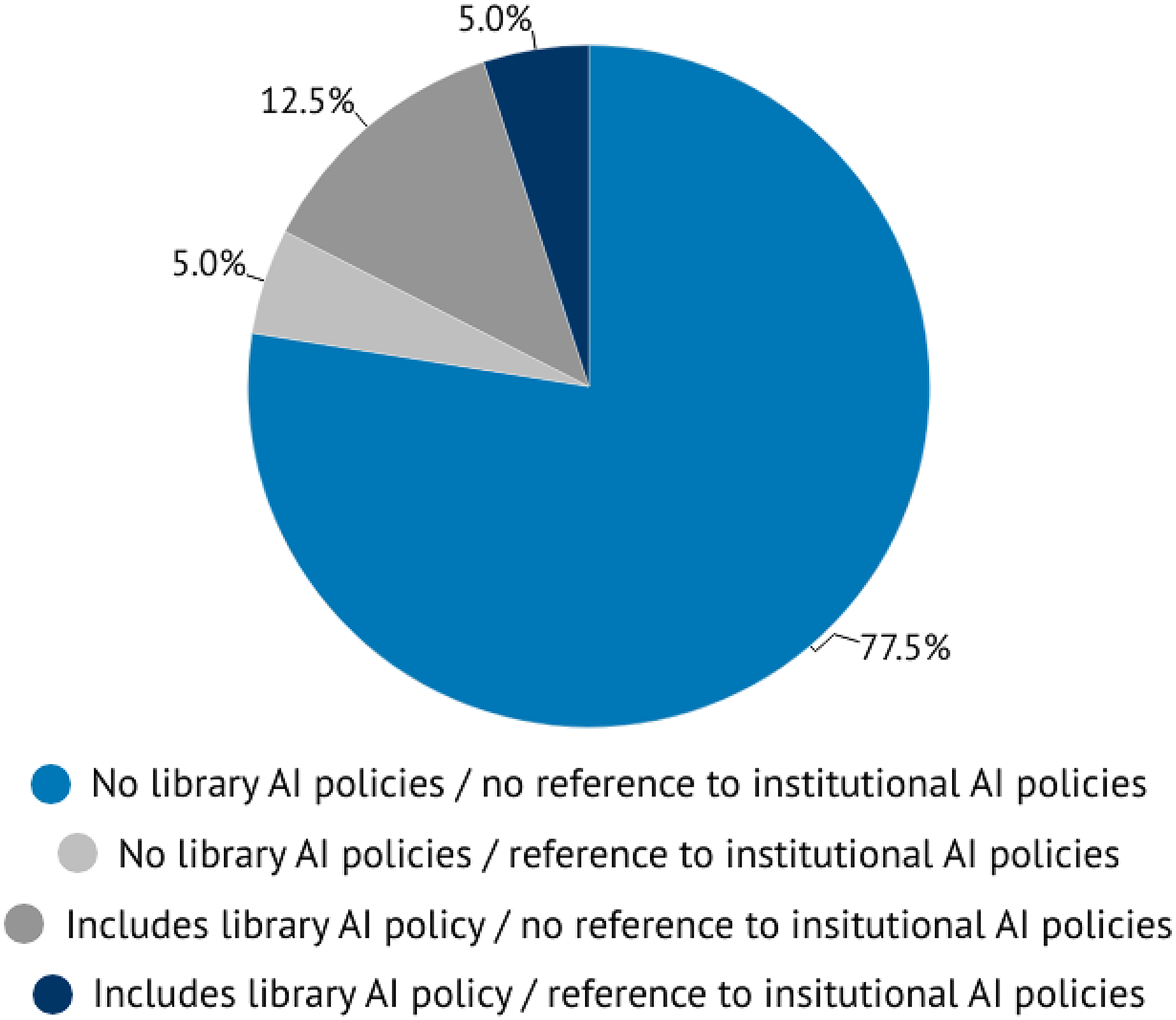
Library/institutional AI policies and guidelines.
Most of these library AI policies discussed copyright issues, while some others focus on the ethical use of AI and AI guiding values.
Academic libraries’ educational outreach efforts
To evaluate academic libraries’ educational outreach efforts, this study examined the following elements: educational activities, including workshops, seminars, instructional sessions, and other similar activities; educational resources and materials, such as research guides, infographics, webpages that aim to educate library patrons or library staff; and the presence of an AI specialist at the library.
Educational activities
Of all 40 libraries across all geographic regions, 17 (42.5%) have demonstrated some type of AI-related educational activities (see Figure 6). These educational activities included individual workshops and/or workshop series, guest lectures, research cafes, 2-day training programs, open seminars, and instructional sessions. The topics included AI for scientific writing and scholarly communication, digital curation, machine learning, deep learning, natural language processing, introduction to AI, ethical regulations surrounding AI, use of AI tools for systematic literature reviews, AI challenges, evaluation of sources in the age of AI, prompt engineering, extraction, and filtering information.
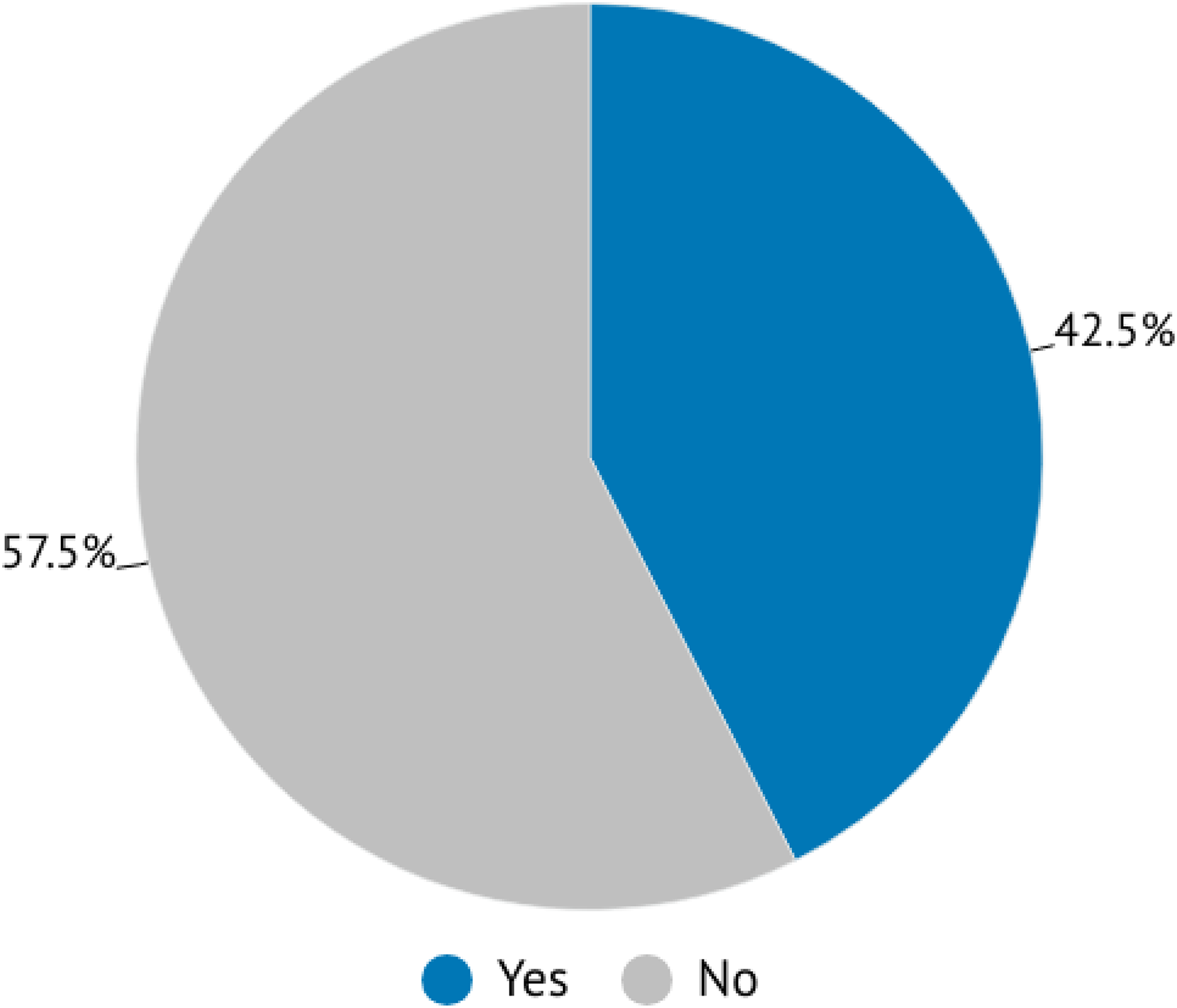
Libraries across all geographical regions that offer educational outreach activities.
Nine out of 10 North American libraries offered educational activities, while five of the 10 European libraries offered them. In Latin America and the Caribbean, two of the 10 university libraries provided educational opportunities related to AI and only one of the university libraries in Sub-Saharan Africa did so (see Figure 7).
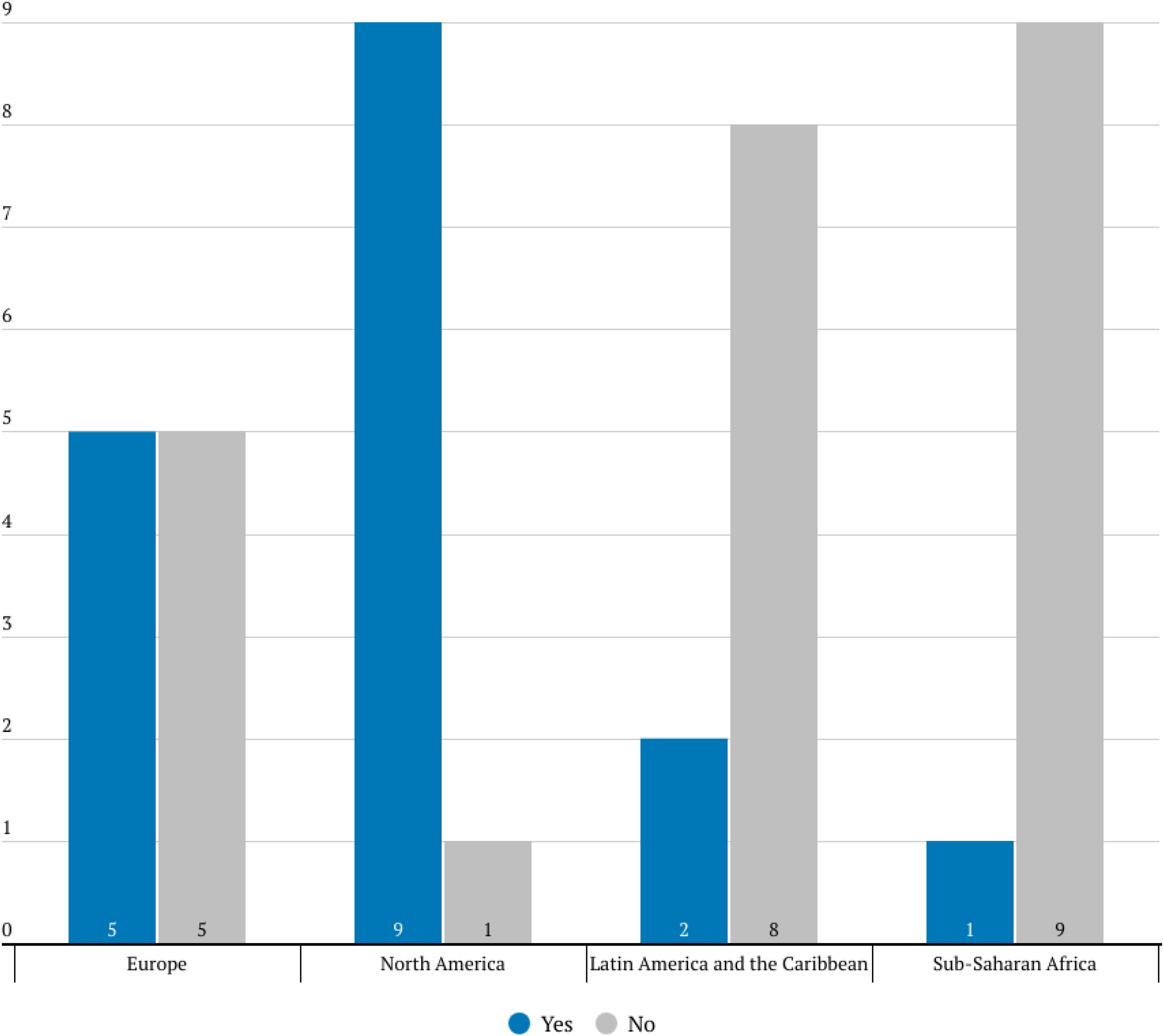
Educational outreach activities on AI across geographic regions.
Educational resources
Furthermore, we examined whether libraries offer AI-related educational resources, such as research guides and infographics. Overall, half of the included libraries offered some type of AI-related educational materials on their websites. In terms of regional differences, it is evident that all regions except Sub-Saharan Africa offer many educational materials on AI (See Figure 8).
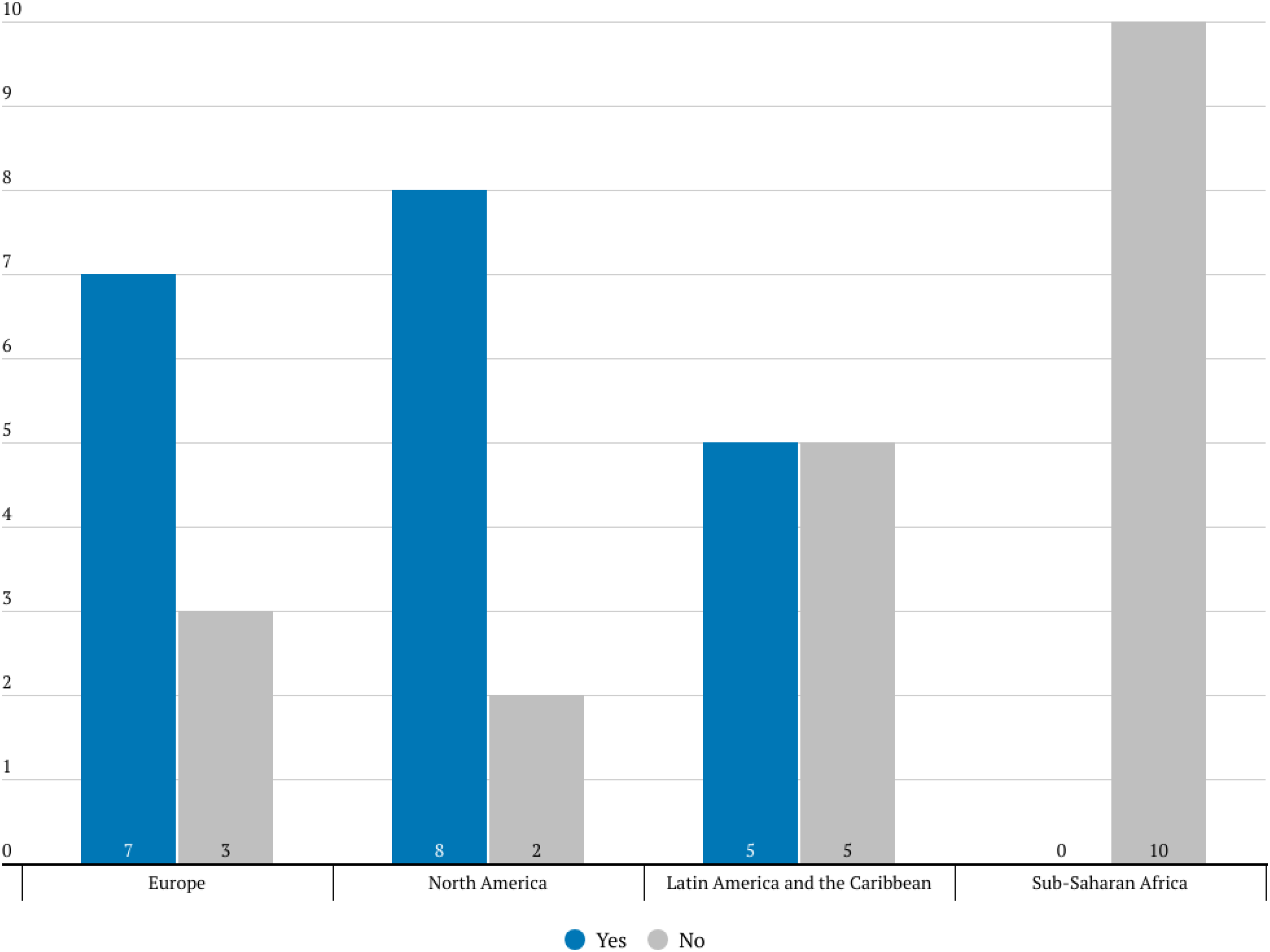
Libraries that offer AI-related educational materials on their websites by region.
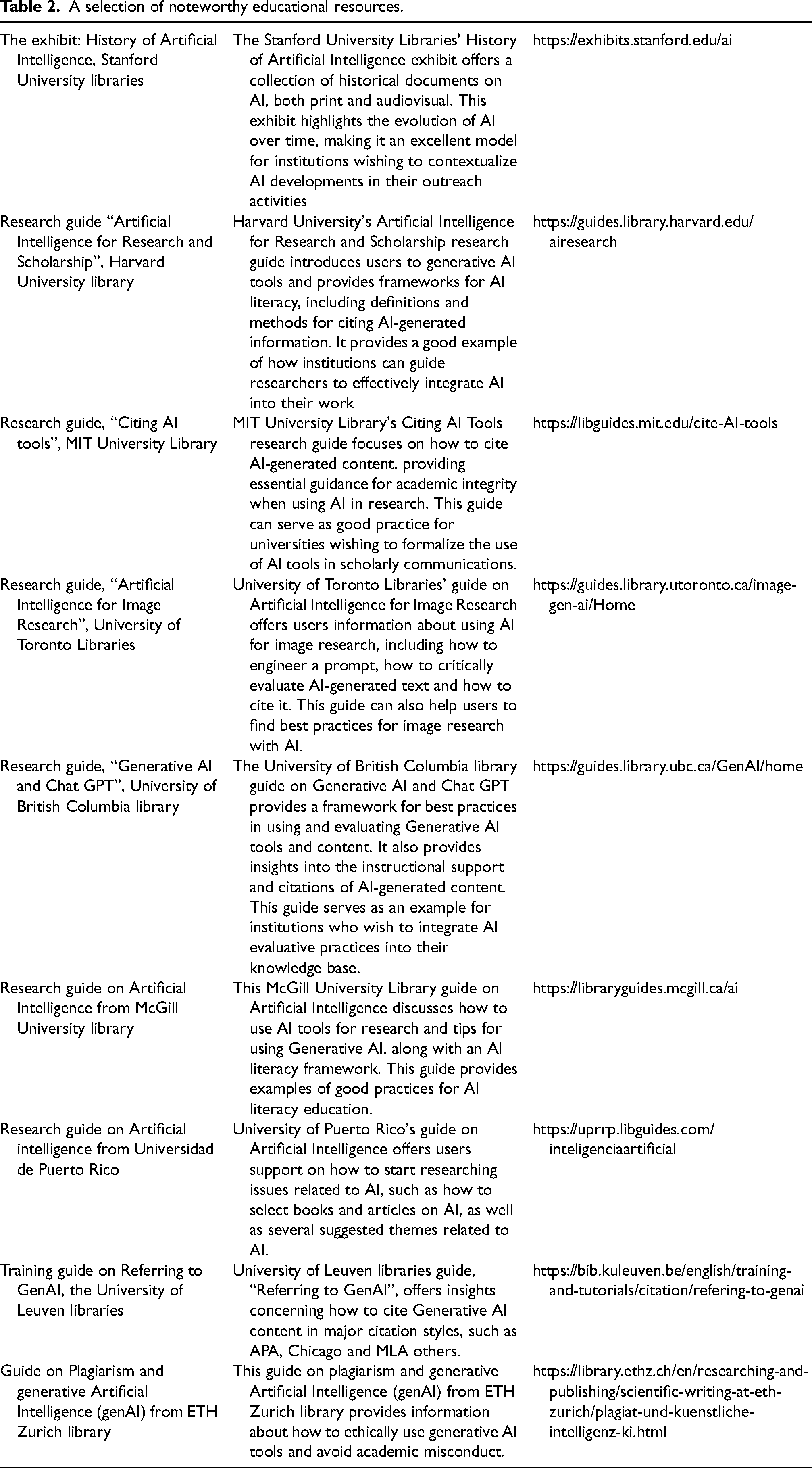
The libraries’ educational resources cover a variety of topics, such as using AI for research, the history of AI, how to cite content generated by AI and how to use AI with integrity. Some of the examples of noteworthy educational resources that could inform institutional best practices include the guides in Table 2.
A selection of noteworthy educational resources.
Libraries that included educational resources and information on AI discussed or mentioned a variety of AI tools. Most mentioned tools included ChatGPT, Research Rabbit, Perplexity AI, Scopus AI, Deepl, Grammarly, and Microsoft Copilot (see Figure 9).
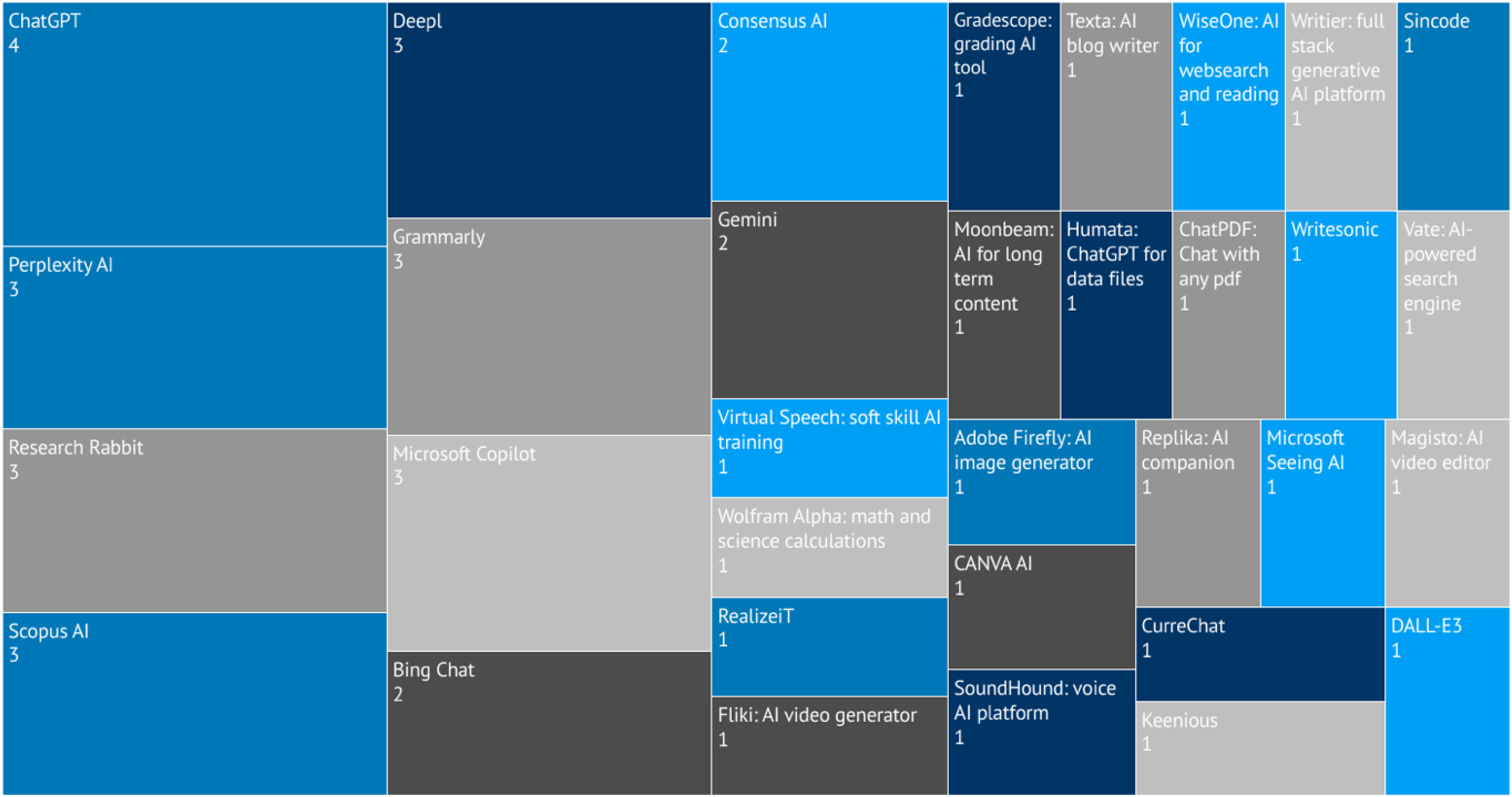
Tools mentioned in educational resources across all regions.
AI specialists
When exploring whether academic libraries have an AI specialist, we found that some academic libraries have a librarian interested in AI who prepares resources and teaches workshops. However, these libraries have not yet created positions specifically related to AI integration needs. The study found that three of the libraries in Europe and one of the libraries in North America have librarians who also specialize in AI-related interventions (see Figure 10). Some libraries also have working groups that address AI-related issues.
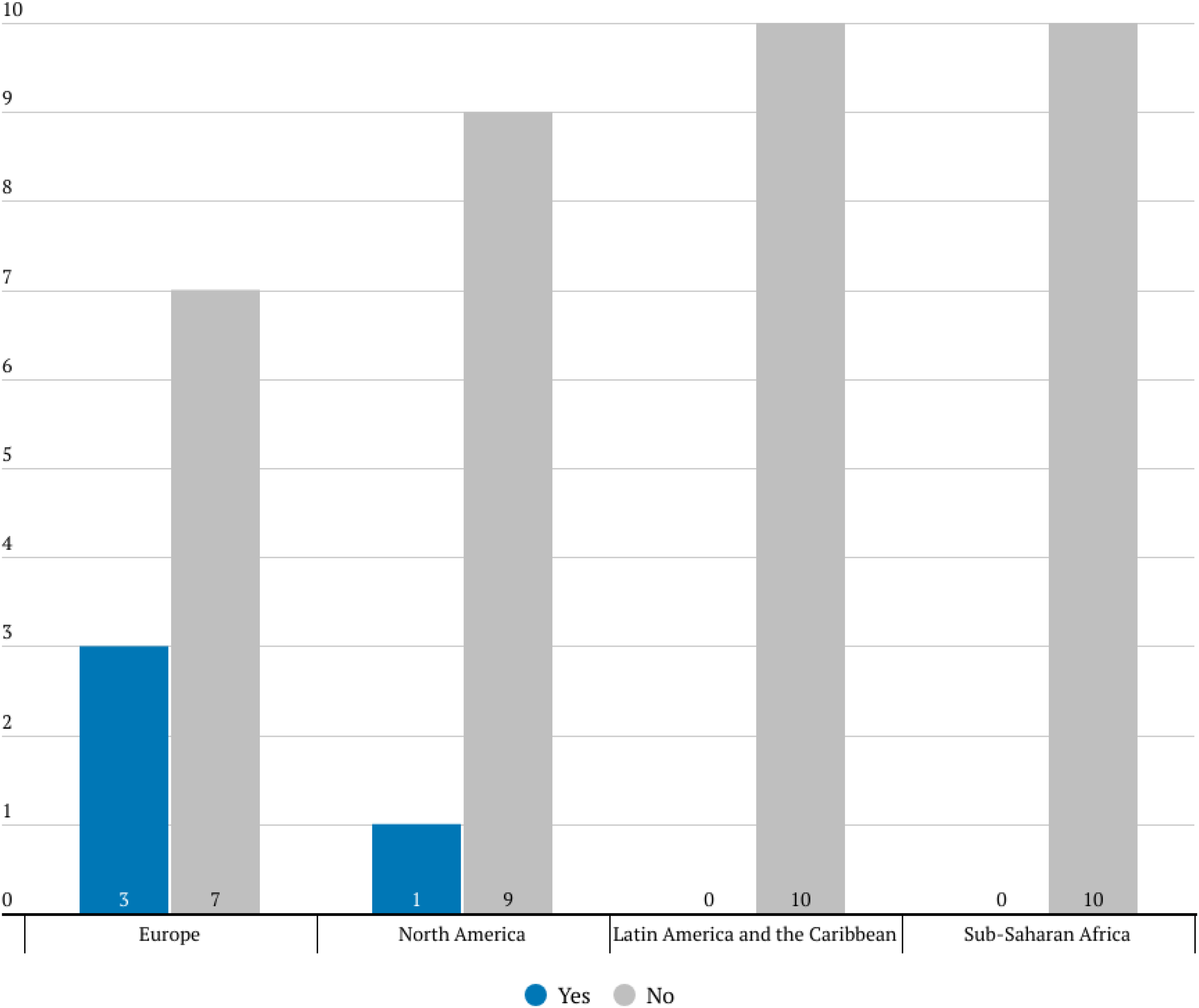
AI specialist in academic libraries by region.
Comparative analysis
Overall, the results across all topics of interest indicate that AI integration varies greatly across regions and across different aspects of integration. For example, European and North American academic libraries in our sample have significantly integrated AI into their services, policies, and educational outreach activities (see Figure 11). Education outreach activities appear to be the main area of focus, while services and policies are still in the development stages.
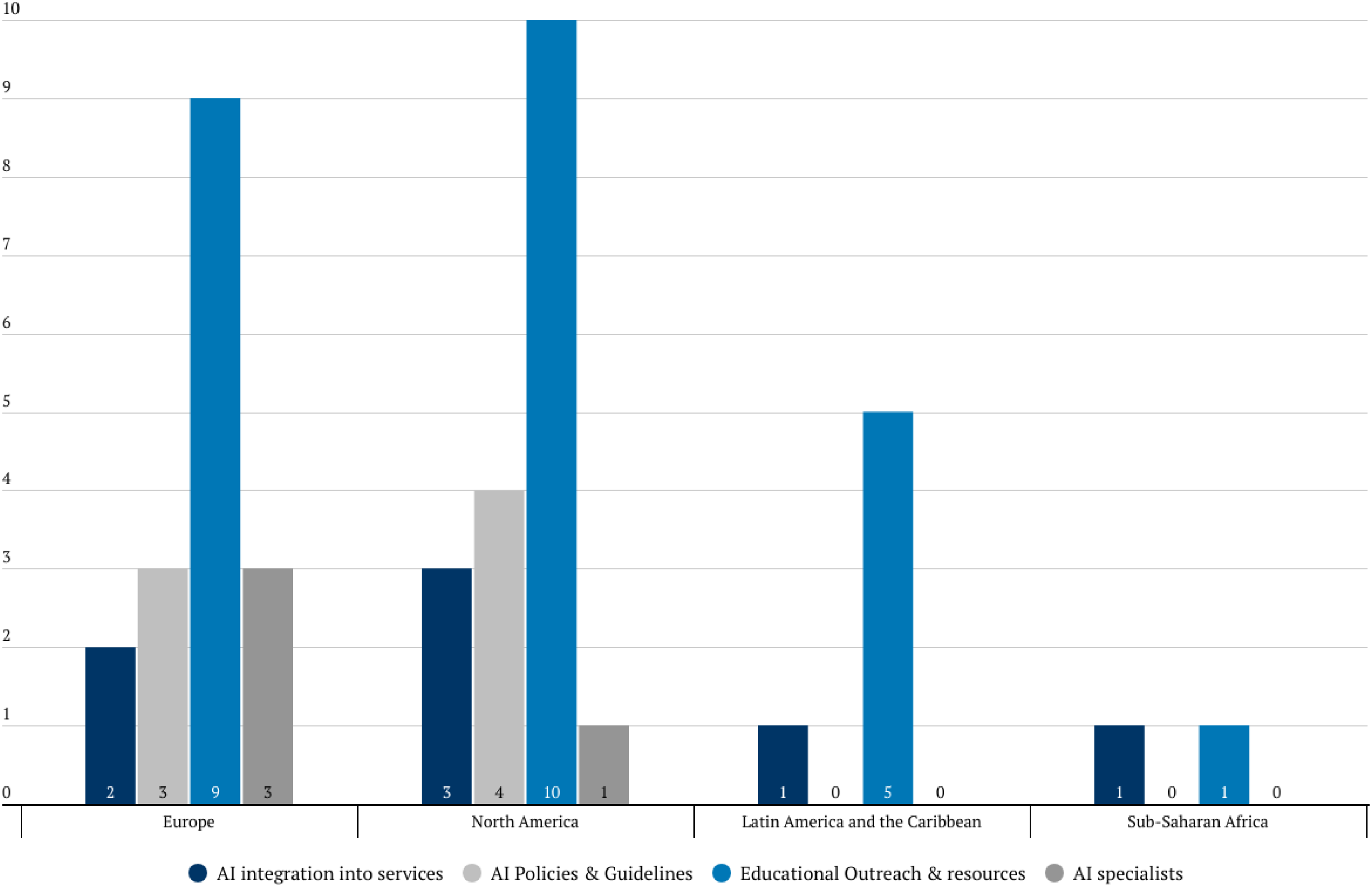
Correlation between policy, educational interventions and integration of AI into services.
Figure 11 demonstrates the overall AI integration score by country, which includes the presence of AI statements, services, policies and guidelines, educational outreach activities, educational resources, and AI specialists in academic libraries.
Discussion
Our results have demonstrated a significant difference in how universities in the four regions included in our study are integrating AI into their library services. These differences may stem from each region's distinct socioeconomic contexts, social inequalities, and technological gaps. This observation aligns with the findings of Arakpogun et al. (2021), who noted that developing countries may face significant challenges regarding AI integration owing to inequalities in infrastructure, the digital divide, and economic resources. Our analysis of library websites in the four regions focused on exploring different ways AI is integrated into library services, such as information on AI technologies, AI guidelines and policies, outreach activities, educational resources, presence of AI specialists and official statements regarding AI. This analysis uncovered significant disparities between Europe, North America, Latin America, and Sub-Saharan Africa. To illustrate these disparities, we have organized our discussion first by region, then discussed interregional similarities and differences.
AI integration in library services, policies and outreach activities in Europe
Our results have shown that academic libraries at ETH Zurich and Wageningen University and Research demonstrate a significant commitment to integrating AI policies and exhibit a high level of engagement in conducting outreach activities, providing educational resources and employing AI specialists. Similarly, the academic libraries at the University of Edinburgh and the Karolinska Institute also offer guidelines and conduct outreach activities; however, only the Karolinska Institute employs an AI specialist. The academic libraries at the Technical University of Munich, KU Leuven and the University of Helsinki primarily integrate AI through related technologies and educational resources. In contrast, the academic libraries at Oxford University, PSL University and Copenhagen University focus mainly on providing AI-related educational resources; yet they do not offer information on AI policies or have AI specialists on staff.
While there is a significant commitment to AI integration within academic libraries in the European region, it is evident that some libraries rely solely on institutional AI policies. For instance, the academic libraries at ETH Zurich and the University of Helsinki depend on broad institutional AI policies without specifying library-centric guidelines for these technologies. The commitment to AI policy integration in the European region aligns with the observations of Demaidi (2023), who noted that advanced economies and robust technological infrastructures in developed countries enable better leverage of AI technologies. This advantage helps maintain their competitive edge and drives economic and technological growth. However, the uneven and varied integration of AI across this region might suggest the absence of cohesive and unified strategies concerning AI among universities and libraries. This observation corresponds to the assertions of Okunlaya et al. (2022), who noted the importance of establishing strong conceptual frameworks to plan and implement AI tools in academic libraries effectively.
AI integration in library services, policies and outreach activities in North America
According to the results of our study, libraries in the North American region demonstrate a greater commitment to integrating AI into their services than other regions. Overall, these libraries offer a wider array of AI-related resources and services. Numerous AI literacy initiatives and educational outreach programs are prominent in this region. These initiatives, from workshops and seminars to online resources and research guides, are designed to enhance users’ understanding of AI technologies. For instance, libraries at Harvard, Stanford and the University of Toronto have developed foundational AI literacy programs and are actively integrating AI tools into their services. This aligns with the observations of Lo (2024), who emphasized the importance of developing and offering AI literacy workshops in academic libraries. It also concurs with Sandhu's (2018) points, which noted the key role of academic libraries in the digital transformation processes of universities. Likewise, academic libraries at Stanford and the University of Toronto feature specific AI policies and offer a considerable number of AI outreach activities. This corroborates claims made by Frederick (2020) and Jenkins and Zhang (2024), who pointed to the leadership role of academic libraries in this region in adapting to technological changes, such as AI. However, the limited integration of AI tools into library services and the limited presence of AI specialists in academic libraries in this region raises questions, as Cox (2023) pointed out, about the need for more structured training of academic librarians in AI.
AI integration in library services, policies and outreach activities in Latin America and Sub-Saharan Africa
Our results have clearly demonstrated that libraries in Latin America and Sub-Saharan Africa are lagging in integrating AI into their services compared with those in Europe and North America.
Latin America
In this region, AI integration is moderate and mainly focused on providing AI-related resources or educational materials. Half of the libraries offer these types of materials. The university libraries of Tecnológico de Monterrey, Pontificia Universidad Católica de Chile and the University of Puerto Rico mention specific AI tools on their websites. However, only Tecnológico de Monterrey has integrated an AI assistant into its library services. AI integration is minimal and limited for the rest of the academic libraries in this region.
Sub-Saharan Africa
In Sub-Saharan Africa, only one university library provides AI-related educational outreach, highlighting a significant deficit in AI integration efforts. This observation aligns with findings of Liman and Aliyu (2023), who highlighted disparities in adopting new digital technologies between developed and developing countries. Furthermore, academic libraries in Sub-Saharan Africa will probably face challenges, such as inadequate infrastructure and resources needed to adopt and implement AI in their services. This coincides with Hussain (2023), who pointed to the need to improve the technological infrastructure and AI skills of both librarians and users to take full advantage of the potential benefits of AI.
AI integration across the four regions
Overall, the integration of AI in academic libraries in the four regions we analyzed is still in its infancy. Only three libraries, all of which are located in the Global North, provide an explicit statement or strategy detailing how AI is being integrated into their services. Only seven libraries, also located in the Global North, provide policies and guidelines on AI. The overall absence of explicit policies on AI integration could highlight a significant gap in the strategic incorporation of AI in academic libraries worldwide, especially in developing regions or those in the Global South. However, libraries will probably encounter obstacles in developing specific AI statements or strategies.
On the other hand, our study revealed that over 40% of the libraries surveyed across all geographic regions have implemented AI-related educational activities in various formats and in relation to a variety of topics. This reflects the proactive role that many academic libraries play in the adoption of AI tools and in literacy on AI-related subjects. There is a perceived geographic inequality in AI educational outreach and literacy initiatives by academic libraries. For instance, while 14 libraries in the Global North offer AI-related educational activities, only two libraries in Latin America and one in Sub-Saharan Africa offer similar activities. This disparity is probably due to the advantages that libraries in the Global North have in terms of technological infrastructure, funding, and greater digital literacy of librarians and users in this region.
Limitations and implications for future research
Our study was limited to the data that was publicly available on academic library websites. Although internal strategies and activities that are not reflected on these websites may exist, our inability to access them poses a limitation. Future research should consider employing surveys and interviews with library staff and users to gain a deeper understanding of AI integration in academic libraries. Additionally, this research included only 10 academic libraries per region and regions such as Asia and countries like Brazil were excluded owing to the authors’ linguistic limitations. For future research, it would be beneficial to expand the geographical scope to obtain a more comprehensive view of AI integration in academic libraries worldwide. We also only analyzed one academic library per country in the regions of Europe, Latin America and Sub-Saharan Africa. It is possible that some academic libraries not included in this study are integrating AI into their services. Future research could expand on our findings by conducting a study that includes a larger number of academic libraries per country to gain a more in-depth local understanding of how academic libraries in each country are integrating AI.
As our study is exclusively focused on academic libraries, we did not investigate how other university units or other types of libraries are addressing the issue of artificial intelligence. Future research should consider exploring how various units within universities or other types of libraries approach artificial intelligence. In addition, it would be helpful to understand how institutional policies regarding AI might impact academic libraries’ services and educational outreach.
Conclusion
AI in academic libraries is a topic of increasing interest in scholarly literature. However, there is limited research on how these libraries incorporate AI into their services. Moreover, the integration of AI by academic libraries from diverse social and cultural contexts and their support for their communities on this topic have not been thoroughly investigated. In response, this study explored and provided an overview of how 40 academic libraries across four distinct regions integrate AI technologies into their services and support their users.
This study found that although many libraries have begun to integrate AI into their services, significant differences exist between the Global North and Global South. We found that academic libraries in Europe and North America not only integrate and adopt AI technologies in library services, but they also are more likely to have developed AI policies and guidelines than those in the Global South. In particular, academic libraries such as Harvard University, Stanford University and the University of Toronto are leading literacy programs and integrating AI tools into their services. This may be owing to better socioeconomic conditions, technology infrastructure, and levels of AI literacy. In contrast, libraries in the Latin American region, particularly in Sub-Saharan Africa, have limited AI integration.
This study also demonstrated that few academic libraries have an AI integration strategy or statement. Although no specific reason for lack could be identified in this study, it is possible that some academic libraries do not yet consider AI integration a priority, or that they encounter barriers to developing such strategies or statements. Finally, this study recognizes the critical role of academic libraries as cross-cutting units in integrating, informing, and supporting the academic community on issues related to new technologies, such as artificial intelligence.
Footnotes
Declaration of conflicting interests
The authors declared no potential conflicts of interest with respect to the research, authorship and/or publication of this article.
Funding acknowledgement
The authors disclosed receipt of the following financial support for the research, authorship and/or publication of this article: This research was funded by the National Autonomous University of Mexico Postdoctoral Fellowship Program. Research conducted at the Institute of Library and Information Research. The authors also wish to acknowledge funding received from an Explore Grant SPU-SSHRC, provided by Saint Paul University, Ottawa, ON.
