






Abstract
Collaboration is essential for strengthening graduate education in Information Science, particularly within regional academic networks such as the Asia–Pacific iSchools. This study develops a multi-dimensional model of collaboration comprising five dimensions: Vision and Shared Goals; Partnership Agreements; People; Projects and Activities; and Communication and Relationships. Using a descriptive cross-sectional design, data were collected from graduate students and academic staff across six AP iSchools countries. Results show consistently positive perceptions of all five dimensions, with the People and Projects dimensions receiving the highest endorsement. Students emphasized human and activity-based aspects of collaboration, while staff placed greater importance on strategic alignment and formal agreements. These findings highlight the critical role of leadership, digital competencies, intercultural communication, and well-structured joint activities in supporting effective cross-institutional engagement. The study offers a framework and practical insights to guide regional cooperation, enhance program relevance, and prepare graduates for digitally driven and globally connected Information Science environments.
Keywords
Introduction
Collaboration in graduate education has become a central strategy for enhancing quality, relevance, and global competitiveness in higher education. International partnerships, joint curricula, co-taught courses, and mobility schemes are widely used by universities to respond to globalization, digital transformation, and evolving labor-market demands (Jindarat and Chaiyawat, 2023; Zhiqi et al., 2023). In this context, the internationalization of higher education is often framed as the intentional integration of international, intercultural, and global dimensions into the purposes and delivery of education (Chaudhry, 2007). Information science (IS) 1 education has been deeply affected by these shifts, particularly as programs strive to prepare graduates for digitally mediated, data-intensive, and globally connected information environments (Raju, 2020). Recent scholarship highlights that international collaboration is now integral to the future of Library and Information Science (LIS) education, not only for curriculum updating but also for reshaping program structures, partnerships, and pedagogical models (Nguyen et al., 2025a). The internationalization of IS education may also be understood through the lens of international and comparative librarianship. Lor (2019) conceptualizes international influence as a process of diffusion of ideas, models, and professional standards across national boundaries, shaped by asymmetries in resources, language, and institutional power. From this perspective, collaboration is not merely institutional cooperation but also a mechanism through which educational paradigms and professional competencies circulate and are adapted within regional contexts.
Across many regions, IS schools have experimented with collaborative mechanisms such as shared online courses, dual-degree programs, web-based consortia, doctoral colloquia, staff exchanges, and comparative curriculum initiatives. In Europe, collaborative curriculum reforms emerged partly in response to the Bologna Process (Virkus, 2007), while similar initiatives have expanded in North America and Asia through networks such as WISE-Web-based Information Science Education (Foo et al., 2006) and ASEAN cross-border teaching partnerships (Khoo, 2013). In developing regions, collaboration is widely viewed as a means to address disparities in infrastructure, curriculum quality, and faculty expertise, providing opportunities for capacity building through mutual exchange (Ameen et al., 2018).
The iSchools movement originated in the early 2000s as a consortium of information-focused schools seeking to reposition the field beyond traditional librarianship toward a broader interdisciplinary study of information, technology, and society. Today, the iSchools organization includes over 130 member institutions across North America, Europe, Asia–Pacific, and other regions. Unlike traditional LIS schools, iSchools typically emphasize data science, information behavior, human–computer interaction, digital scholarship, and socio-technical systems, while maintaining strong connections to library and information traditions. With more than 130 member schools worldwide, the iSchools network promotes interdisciplinary research and collaboration through doctoral consortia, shared conferences, curriculum experimentation, and network-wide research initiatives (Shah et al., 2021). Within this global network, the Asia–Pacific iSchools (AP iSchools) chapter brings together institutions from Australia, China, Japan, Korea, Singapore, Taiwan, Thailand, and other countries to strengthen education and research through collaborative structures such as the AP-iConference, A-LIEP, and ICADL. These activities reflect a strong regional commitment to supporting early-career researchers, sharing expertise, and advancing the field through collective identity.
In the broader Asia–Pacific region, however, IS education faces the dual challenge of aligning with global standards while addressing diverse national priorities, digital infrastructures, and local information needs. Curriculum analyses consistently report gaps in digital competencies, data literacy, and global perspectives, calling for more robust collaboration across institutions to co-develop curricula and enhance competency-based training (Jindarat and Chaiyawat, 2023; Mubofu and Mambo, 2023). Regional initiatives such as Consortium of iSchools in Asia-Pacific Region and other professional networks have attempted to address these gaps through joint curriculum reviews, faculty exchanges, and shared teaching resources, although with varied depth and sustainability.
Against this backdrop, collaboration in graduate Information Science education can be conceptualized as a multi-faceted construct spanning strategic, structural, human, operational, and relational layers. International Federation of Library Associations and Institutions (IFLA) has long emphasized the importance of clear frameworks for international cooperation including shared goals, governance mechanisms, resource sharing, and competency development, to ensure sustainable and equitable partnership development (Raju, 2020; Sacchanand, 2012; Tammaro, 2011). Yet, despite conceptual clarity, much of the existing literature either focuses on singular initiatives or relies on broad policy narratives. Empirical studies examining stakeholders’ perceptions of collaboration—especially within the Asia–Pacific iSchools context—remain limited (Roy and Habib, 2024).
To address this gap, the present study proposes and illustrates a five-dimensional model of collaboration in graduate Information Science education across AP iSchools. Drawing from literature on higher-education internationalization, IS curriculum reform, and inter-institutional collaboration, the model conceptualizes collaboration along five interrelated dimensions: (1) Vision and Shared Goals; (2) Partnership Agreements; (3) People; (4) Projects and Activities; and (5) Communication and Relationships. These dimensions were operationalized in a structured questionnaire administered to graduate students and academic staff and programme administrators from AP iSchools across six countries. Using descriptive statistics, the study examines how these stakeholders’ groups perceive the extent and strength of collaboration across the five dimensions, identifying convergences and divergences that reflect their distinct experiences and responsibilities.
The purpose of the study is twofold: (1) to develop a conceptually grounded, multi-dimensional model tailored to the Asia–Pacific IS education context; and (2) to provide empirical insight into collaboration readiness by mapping perceptions of collaboration factors across stakeholder groups. The study is guided by the following research questions: (1) what are the key dimensions and indicators of collaboration in graduate Information Science education across AP iSchools; (2) how do graduate students and academic staff perceive the level of collaboration across these dimensions; and (3) which dimensions are perceived as relatively strong, and which are seen as requiring further development to enhance collaboration readiness?
By addressing these questions, the article contributes to ongoing international debates on LIS education by offering a structured, empirically informed framework that can be used by AP iSchools and other LIS programs to diagnose their current collaboration practices, identify priority areas for improvement and design more sustainable and equitable partnerships.
Literature review
Internationalization and collaboration in IS education
Internationalization has become a defining force in higher education, shaping the structure of graduate programs through mobility schemes, cross-border curricula, and globally networked academic initiatives. In Information Science, internationalization is understood as the intentional integration of intercultural and international perspectives into teaching, research, and professional preparation to enhance program quality and graduate employability in digitally intensive information environments (Chaudhry, 2007). Earlier IFLA work also emphasized that Library and Information Science (LIS) curricula must embed substantial international content and collaborative structures to remain relevant during periods of digital transformation, urging institutions to align curricula with global standards while remaining responsive to local contexts (Ameen et al., 2018; Tammaro, 2011). Beyond structural reforms under the Bologna Process, European LIS education has also developed structured collaborative Master's programs, particularly in digital library education. Pérez-Montoro and Tammaro (2012) examined outcomes of Bologna-aligned LIS programs, highlighting increased mobility, credit harmonization, and curriculum transparency. Tammaro (2017) further describes the DILL (Digital Library Learning) International Master’s as a competency-based, multi-institutional program designed to prepare digital heritage professionals through coordinated governance, shared curriculum frameworks, and joint supervision. These initiatives demonstrate how collaboration can be institutionalized through structured agreements, shared competencies, and clearly articulated professional profiles.
Across regions, Information Science schools face growing pressure to integrate digital competencies, research skills, and data-oriented content into their offerings, particularly at the Master's level. Recent analyses highlight notable gaps in digital readiness and workforce alignment, indicating that many programs still only partially address the needs of data-intensive and digitally mediated information environments (Mubofu and Mambo, 2023). Studies of Information Science programs in Southeast Asia similarly suggest that schools are actively revising curricula toward more competency-based designs, particularly in response to shifts in digital librarianship, information management, and data services (Konlan et al., 2025; Tran, 2023). These developments reinforce the need for more robust collaborative structures to support curriculum modernization and strengthen digital capacity across institutions (Roy and Habib, 2024).
At the same time, digital transformation in libraries and higher education worldwide has intensified the need for collaboration (Lu and Lin, 2024). Research on digital library services and school library innovation in regions such as Ghana and Nigeria shows that technology adoption is closely linked to staff preparation, pedagogical readiness, and cross-unit cooperation, reinforcing the importance of collaboration as a mechanism for capacity building (Loglo, 2024). In the Asia–Pacific region, studies point to persistent gaps in digital competencies and international exposure, calling for deeper inter-institutional cooperation to strengthen curricula and enhance graduate outcomes. Ameen et al.’s (2018) report further highlights that collaboration among LIS schools, particularly in developing countries, is essential to addressing resource disparities and advancing collective curriculum modernization efforts.
Collaboration models in IS education and practice
Collaboration in IS education is multi-level and multifaceted, spanning research partnerships, educator–practitioner collaboration, shared teaching initiatives, and cross-border degree programs. Early European developments highlighted structural reforms that encouraged inter-university collaboration, shared courses, and joint curriculum initiatives as responses to globalization in the LIS field.
More recent empirical studies (2020–2025) deepen this understanding. Roy and Habib (2024)'s study on collaboration between LIS academics and practitioners in Bangladesh identifies both benefits such as professional development and shared expertise, and barriers, including limited institutional support and communication challenges. In Nigeria, Nkemdilim and Ejovwokoghene (2024) similarly found that collaboration between educators and practitioners remains limited and uneven, constrained by attitudes, time pressures, and resource scarcity. Olanusi's analysis of academic librarians in Turkey echoes these findings, reporting increasing but uneven collaboration across institutions and subject areas.
These studies collectively reinforce that collaboration is not merely structural but deeply shaped by human factors such as trust, communication, competencies, and institutional culture (Nguyen et al., 2025a). This perspective aligns with Tammaro's (2011) research, which frames international IS cooperation as a strategic response to disparities in expertise and resources, emphasizing governance structures, shared frameworks, and faculty development as core components of sustainable collaboration. Beyond educator–practitioner collaborations, partnerships between libraries and external sectors also provide insight.
While several studies examine collaboration in LIS education (e.g. Maluleka and Onyancha, 2017; Roy and Habib, 2024), few propose explicit multi-dimensional conceptual models of collaboration readiness. European initiatives such as DILL illustrate structured collaborative design but do not operationalize collaboration into measurable dimensions. Therefore, the present study contributes by integrating strategic, structural, human, operational, and relational components into a unified empirical framework.
Regional and contextual perspectives: Asia–Pacific and the Global South
Regional studies affirm both the importance and the complexity of collaboration in IS education. Research examining collaboration between Mainland China and Taiwan documents substantial progress in shared curricula, exchanges, and joint research, while also identifying persistent challenges such as language barriers, administrative complexity, and differing institutional priorities (Chaudhry, 2007). In Southeast Asia, emerging work on cross-border IS teaching during periods of disruption shows how virtual collaboration can sustain instructional continuity and expand student exposure, even as technological limitations and limited institutional recognition for cross-border teaching continue to impede deeper cooperation (Ameen et al., 2018; Khoo, 2013).
Broader research on digital education in African IS programs highlights infrastructure disparities, uneven faculty readiness, and evolving pedagogical models, reinforcing the need for stronger regional and international collaboration to support capacity building and curriculum renewal (Konlan et al., 2025; Mubofu and Mambo, 2023). These contextual studies collectively illustrate that collaboration must be interpreted within wider political, infrastructural, and cultural constraints, particularly in the Global South, where disparities in resources and digital capacity shape institutions’ ability to engage in sustained, meaningful partnerships (Roy and Habib, 2024; Shatona and Mwiiyale, 2025).
IS education, digital transformation, and collaborative capacity
Recent global research shows that digital transformation reshapes competencies expected from IS professionals and requires collaboration among institutions, sectors, and stakeholders. The work of Mubofu and Mambo (2023) finds that although IS curricula increasingly recognize global trends, many still lack full alignment with digital and data-intensive professional realities, and recommends stronger collaboration among universities, employers, and professional associations to bridge these gaps.
Information schools are integrating data science, analytics, and computational content into IS education, but with notable variation in structure and depth (Hagen, 2020; Urs and Minhaj, 2023). This variation underscores a need for collaborative curriculum development, shared course materials, and joint supervision of student projects. Other recent studies such as Konlan et al. (2025) on school library digital transformation and Nguyen et al. (2025b) on digital competencies in Thai IS Master's programs emphasize that digital transformation requires both technological and human capacity, and that collaboration across institutions can support more consistent digital readiness.
IFLA's programmatic documents provide a broader normative vision for collaboration in IS education. Roy and Habib (2024) underscore the interaction of structural, cultural, and relational factors in sustaining collaboration and calls for formalized frameworks to anchor joint research and curriculum reform. Previous issues of IFLA Journal and IFLA programmatic documents on LIS education and information literacy have emphasized the importance of cross-institutional collaboration in strengthening professional competencies and digital readiness. (Roy and Habib, 2024; Tammaro, 2011). This informs perspectives converge on key principles: collaboration is essential for IS curriculum renewal; human competencies are central; formal structures and agreements sustain partnerships; and empirical evidence on collaboration remains limited, especially in underrepresented regions.
Conceptual framework for a multi-dimensional model of collaboration
Synthesis of the literature reveals collaboration as a multi-dimensional construct that extends beyond simple partnership arrangements to encompass strategic, structural, human, operational, and relational dimensions. IFLA studies emphasize that effective collaboration requires a clearly articulated vision and mutually agreed objectives that align with institutional missions and global trends, forming the strategic foundation of inter-institutional cooperation. Structural components including formal agreements, governance mechanisms, and clearly defined roles provide stability and accountability, especially in cross-border and multi-institutional contexts. Human factors, such as leadership, faculty expertise, digital competencies, and intercultural communication skills, consistently emerge as core drivers of successful collaboration, particularly in regions where disparities in capacity persist. Activity-based components, including jointly designed projects, shared teaching, and co-developed learning activities, operationalize collaboration and make it visible in practice. Finally, relational dimensions—trust, communication, and social connectedness—underpin the sustainability of collaborative networks and are frequently cited in empirical studies as the most fragile yet essential elements of long-term cooperation.
Drawing from these theoretical and empirical insights, the present study conceptualizes collaboration in graduate Information Science education across five interrelated dimensions: Vision and Shared Goals; Partnership Agreements; People; Projects and Activities; and Communication and Relationships. Together, these dimensions constitute the conceptual basis for the multi-dimensional model operationalized in this research, offering a holistic lens through which to examine institutional readiness, stakeholder perceptions, and the conditions that enable meaningful, sustainable collaboration within the Asia–Pacific iSchools network.
Research method
Research design
This study employed a quantitative, cross-sectional survey design to propose and empirically illustrate a multi-dimensional model of collaboration in graduate Information Science education across Asia–Pacific iSchools (AP iSchools). The design follows a conceptual + descriptive approach, which is appropriate for studies that aim to (a) define complex constructs using a theoretically grounded model and (b) examine stakeholder perceptions through systematic descriptive analysis (Nguyen et al., 2025b; Roy and Habib, 2024). Rather than testing predictive relationships, the purpose of the analysis is to map patterns of perception across multiple collaboration dimensions to better understand collaboration readiness at program and network levels. This methodological approach aligns with prior research on IS curriculum evaluation, competency assessment, and international partnership studies, which often adopt descriptive and exploratory designs to establish conceptual frameworks and identify priority areas for improvement (Chaudhry, 2007).
The five dimensions were derived through iterative synthesis of prior theoretical and empirical literature on internationalization, LIS collaboration, and competency-based education (Chaudhry, 2007; Roy and Habib, 2024; Tammaro, 2011). Rather than emerging inductively from survey data, the model served as a theoretically grounded starting framework, which was then operationalized and empirically illustrated through descriptive analysis. The study therefore follows a theory-informed conceptual validation approach rather than an exploratory factor-development design.
Participants and sampling
The study involved two stakeholder groups from AP iSchools member institutions: (1) graduate students enrolled in Information Science–related programs (n = 39); and (2) program administrators and academic staff responsible for curriculum, teaching, or academic management in graduate programs (n = 26). A total of 65 respondents from six Asia–Pacific countries participated, including Thailand, China, the Philippines, Malaysia, South Korea, and Japan. The six participating countries were selected based on confirmed participation from AP iSchools institutions that responded to the study invitation during the data collection period. The sample reflects active AP iSchools members with accessible graduate programs and willingness to participate, rather than a predefined regional quota. As AP iSchools participation varies annually, the sample represents a pragmatic cross-section of engaged institutions. This diversity reflects the regional distribution of AP iSchools and enhances the relevance of the findings for cross-institutional collaboration. Given the exploratory nature of the study, purposive sampling was used to ensure that respondents were directly involved in, or directly affected by, international collaboration activities. Similar sampling strategies have been used in previous LIS collaboration studies (Roy and Habib, 2024).
Importantly, the relatively small number of participants corresponds to the characteristically small cohort sizes in many AP iSchools graduate programs, and the limited number of academic staff involved in IS curriculum management. Such enrolment patterns are typical of specialized, research-oriented IS programs in the region and therefore accurately represent the population under study. As this study employs a descriptive, exploratory design rather than inferential modeling, the sample size does not compromise the reliability or interpretive value of the results. Instead, it provides a realistic cross-section of stakeholder perceptions within a network where program sizes are intentionally small and academically focused.
Instrument development
A structured questionnaire was developed based on established frameworks of inter-institutional collaboration, internationalization in higher education, and IS competency and curriculum development (Chaudhry, 2007; Maluleka and Onyancha, 2017; Nguyen et al., 2025a; Raju, 2020; Tammaro, 2011). The instrument operationalized the study's five collaboration dimensions: (1) Vision and Shared Goals (e.g. clarity of purpose, mutual benefits, alignment with institutional mission); (2) Partnership Agreements (e.g. clarity of roles, governance mechanisms, IP and benefit-sharing arrangements); (3) People/Human Capacities (e.g. leadership commitment, digital skills, intercultural communication, project management); (4) Projects and Activities (e.g. relevance to institutional needs, co-teaching, joint research, flexibility in implementation); and (5) Communication and Relationships (e.g. frequency and quality of communication, trust-building, conflict resolution, social ties). The same core instrument was used for both students and academic staff to allow direct comparison across stakeholder groups. While certain items (e.g. governance mechanisms) may be interpreted differently by students and staff owing to role differences, wording was intentionally kept parallel to capture perception-based differences. This role-based interpretive variation is acknowledged as a limitation and discussed in the Conclusion.
Each dimension consisted of multiple Likert-scale items rated from 1 (strongly disagree) to 5 (strongly agree). Items were written to reflect both theoretical constructs and practical considerations found in IS collaborative initiatives such as joint curricula, consortia teaching, international practicum placements, and regional professional networks.
Content validity was established through expert review by three senior IS academics from AP iSchools. Items were refined for clarity, cultural neutrality, and relevance to the Asia–Pacific context. Wording was aligned across student and staff versions to enable meaningful comparison. The final instrument included: 41 items. (See the Online Appendix.)
Data collection procedures
Data were collected electronically over a 6 week period in 2025 using a secure online survey platform. AP iSchools member institutions were contacted via program administrators, graduate coordinators, AP iSchools’ workshops and conferences, and international-relations offices. Participation was voluntary and anonymous. Informed consent was embedded on the first page of the survey. No personally identifiable information was collected. Participants were free to withdraw at any time. The study followed ethical standards for educational research involving adult participants and complied with institutional guidelines.
Data analysis
Given the descriptive aim of the study, data were analyzed using descriptive statistics, including: means and standard deviations for each item; dimension-level mean scores created by averaging item scores; frequency distributions and percentages for agreement levels; and comparative descriptive patterns between student and staff groups. This analytic strategy aligns with similar IS studies evaluating competencies, collaboration readiness, and curriculum alignment (Mubofu and Mambo, 2023; Raju, 2020; Roy and Habib, 2024). No inferential statistics were conducted, consistent with the study's objective of illustrating a conceptual model rather than testing predictive relationships. Descriptive comparison provides insights into perceived strengths and areas for development across the five collaboration dimensions.
Results
Profile of respondents
Table 1 presents the demographic profile of the study participants, comprising 39 graduate students and 26 academic staff members from AP iSchools. Academic staff include a balanced range of academic ranks: assistant professors, associate professors, professors, and lecturers, with nearly half teaching at both Master's and Doctoral levels. Participants across both groups reflect diverse academic and research expertise, including information management, archival studies, data analytics, digital literacy, knowledge organization, information technology, digital humanities, and information behavior. Among staff, teaching experience varies widely, with over one-third having more than 10 years of professional experience. Overall, the demographic characteristics indicate broad disciplinary diversity and regional representation suitable for examining collaboration in graduate Information Science education across AP iSchools.
Profile of respondents.
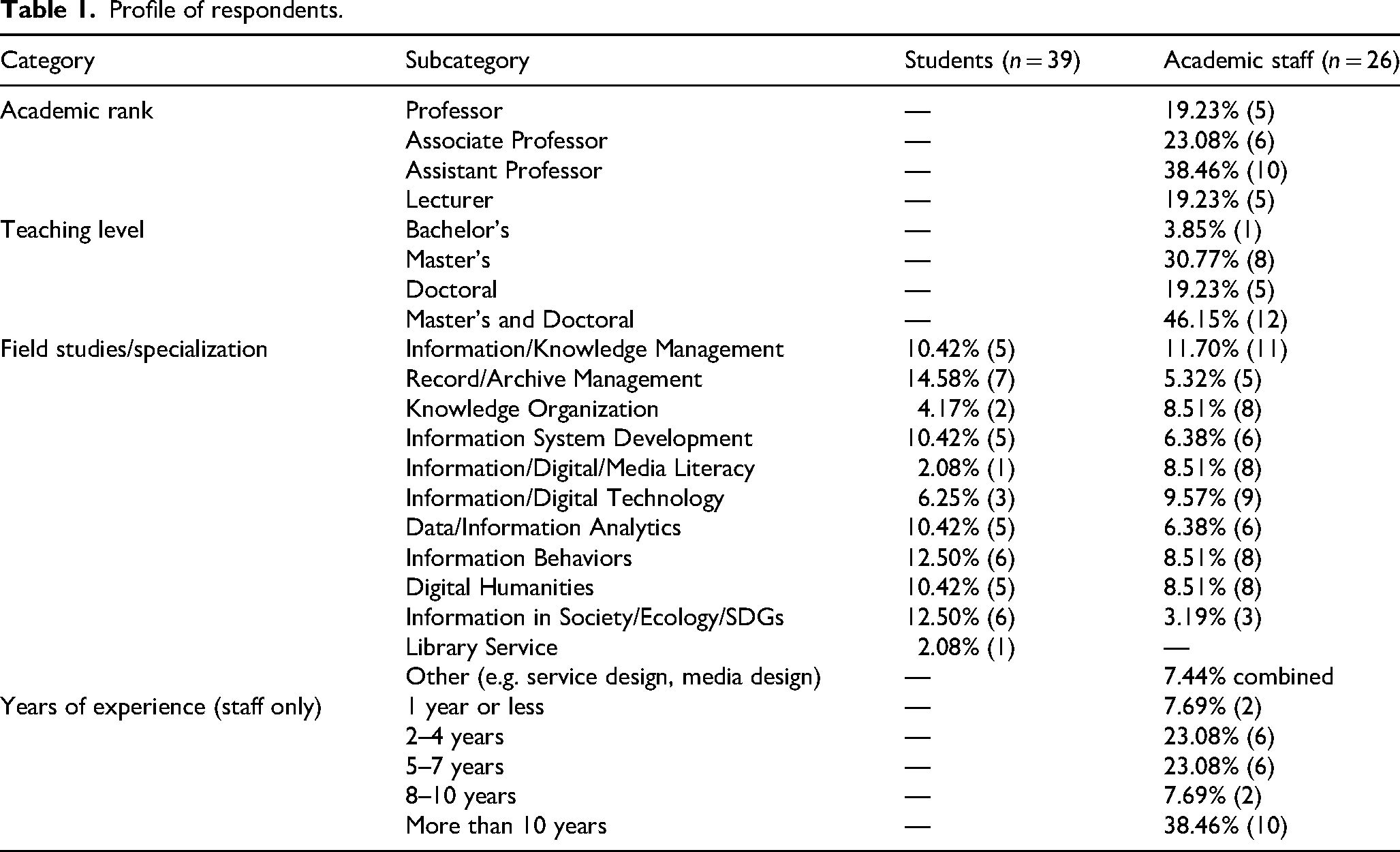
Although disciplinary representation varied across subfields, the study focuses on perceptions of collaboration rather than discipline-specific curriculum content. No single specialization dominated the dataset, and descriptive patterns remained consistent across groups. However, the potential influence of disciplinary orientation is acknowledged as an area for future comparative analysis.
Collaboration dimension means: students
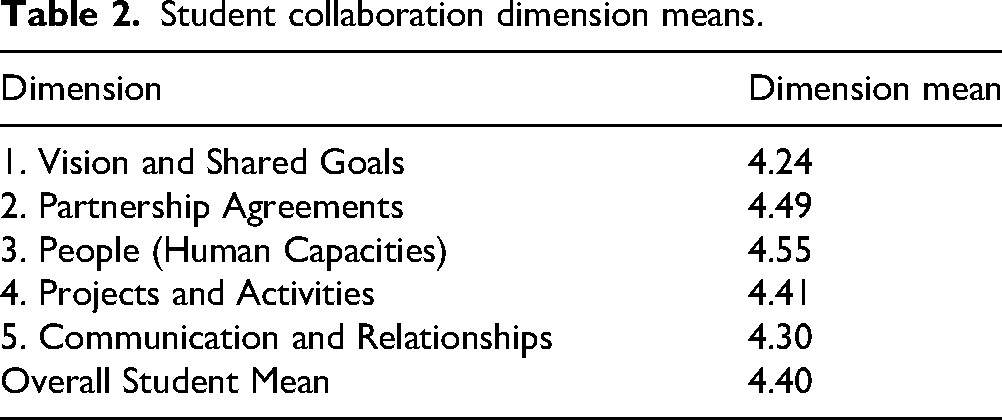
Table 2 summarizes the mean scores of the five collaboration dimensions based on student responses. Overall, students rated all dimensions positively, with an overall mean of 4.40 on a five-point scale. The highest-rated dimension among students was People (M = 4.55), reflecting strong agreement regarding the importance of leadership, digital competencies, intercultural communication readiness, and staff–student attitudes toward collaboration. Students also rated Projects and Activities highly (M = 4.41), emphasizing opportunities to exchange knowledge, participate in well-designed digital-age learning activities, and engage in flexible cross-institutional projects. Other dimensions, including Vision and Shared Goals (M = 4.24) and Partnership Agreements (M = 4.49), were also seen as important, although with slightly more variation at the item level. Communication and Relationships received a moderately high estimated mean of 4.30, suggesting generally positive but less consistent perceptions regarding communication structures and relational trust.
Student collaboration dimension means.
Agreement distribution: students
As shown in Table 3, student responses demonstrate consistently high levels of agreement across all dimensions. For most items, over 90% of students indicated “Agree” or “Strongly Agree,” with the percentage of “Strongly Agree” responses often exceeding 60% in the People and Projects dimensions. Neutral responses were minimal, and no negative responses were recorded. The strongest clusters of positive responses were seen in: Attitudes and perceived benefits of collaboration, Digital and communication readiness, and Relevance and flexibility of collaborative projects. These patterns indicate that students view collaboration as central to their academic and professional development. (See details of the descriptive statistics in the Online Appendix)
Agreement distribution for students.

Collaboration dimension means: academic staff
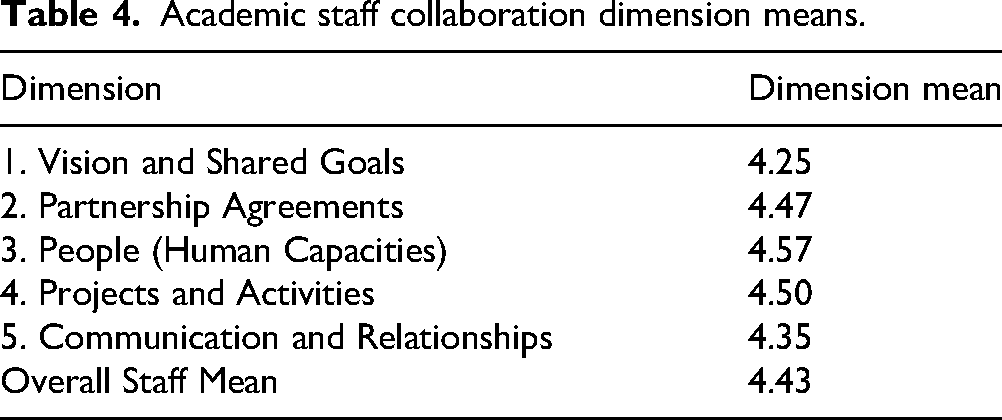
Table 4 presents the dimension means for academic staff. As with students, staff expressed strong agreement across all dimensions, with an overall mean of 4.43, slightly higher than the student group. The highest-rated dimensions for staff were: People (M = 4.57), reflecting strong emphasis on leadership commitment, digital competencies, and involvement of personnel at all levels; Projects and Activities (M = 4.50), highlighting staff prioritization of well-designed, context-appropriate collaborative activities; and Partnership Agreements (M = 4.47), indicating staff's attention to formal structures, roles, flexibility, and intellectual property considerations. Staff also rated Vision and Shared Goals positively (M = 4.25), consistent with their institutional responsibilities. Communication and Relationships received an estimated mean of 4.35, reflecting recognition of its importance but also the complexity of sustaining cross-institutional communication.
Academic staff collaboration dimension means.
Agreement distribution: academic staff
Table 5 shows that academic staff expressed even stronger positive agreement than students in several areas. Across all dimensions, Strongly Agree responses ranged from 60 to 75%, with the highest concentration in the People and Projects dimensions. Staff overwhelmingly endorsed the following: Clear, mutually beneficial goals and agreements; Well-defined and flexible partnership structures; Strong leadership and capable project coordinators; and Digital readiness of personnel and institutions. Neutral responses were minimal; no staff selected Disagree or Strongly Disagree on any item. (See details of the descriptive statistics in the Online Appendix.)
Agreement distribution for academic staff.

Cross-group comparison
Table 6 provides a direct comparison of student and staff dimension means. While both groups expressed strong agreement, some patterns emerged.
Cross-group comparison (Students vs. Staff).

Areas of convergence
Both groups rated People as the strongest dimension (students, M = 4.55; staff, M = 4.57). Both groups rated Projects and Activities highly, affirming the importance of joint activities, co-teaching, and knowledge exchange. All dimensions received mean scores above 4.20, indicating a shared positive orientation toward collaboration.
Areas of divergence
Staff rated Projects and Activities slightly higher (+0.09), reflecting their operational responsibility in designing and implementing collaborative initiatives; Students rated Partnership Agreements slightly higher (+0.02), possibly because their perceptions focus more on anticipated benefits than on administrative challenges; Communication and Relationships showed small differences, with staff slightly more positive (+0.05), although both groups remained favorable.
Overall, both groups consistently supported the five-dimensional conceptual model, with only minor variations reflecting their distinct roles within academic collaboration.
Multi-dimensional conceptual model
The conceptual model illustrated in Figure 1 presents collaboration in graduate Information Science education as a multi-dimensional and interconnected system. At the center is the overall construct of collaboration, surrounded by five key dimensions that together shape effective cross-institutional engagement within the Asia–Pacific iSchools.

Multi-dimensional model of collaboration in graduate IS education.
The first dimension, Vision and Shared Goals, emphasizes the importance of aligning institutional missions and articulating mutually beneficial outcomes. Partnership Agreements capture the formal structures, such as memoranda of understanding, role definitions, and governance frameworks—that provide stability and clarity for joint initiatives. People (Human Capacities) highlight the critical role of leadership, digital expertise, intercultural communication, and staff readiness in enabling successful collaboration. Projects and Activities represent the tangible, action-oriented components of collaboration, including joint courses, co-teaching arrangements, research partnerships, and mobility opportunities. Finally, Communication and Relationships focus on ongoing interactions, trust-building processes, and communication channels that sustain collaboration over time.
The graphic underscores that these five dimensions are distinct yet interdependent, collectively illustrating collaboration as a dynamic, holistic construct rather than a single factor. This visual model provides a clear conceptual foundation for analyzing collaboration readiness and designing strategies to strengthen educational partnerships across the region.
The empirical results did not alter the conceptual structure of the model but provided descriptive validation of the relative strength of each dimension. The consistently high endorsement across all five dimensions supports the theoretical coherence of the model, while minor variations between stakeholder groups illustrate role-based emphasis within the same structural framework.
Discussion
The findings of this study provide empirical support for the multi-dimensional model of collaboration proposed for graduate Information Science education across AP iSchools, comprising five interrelated dimensions: Vision and Shared Goals, Partnership Agreements, People (Human Capacities), Projects and Activities, and Communication and Relationships. These dimensions reflect the strategic, structural, human, operational, and relational components that together enable sustainable collaboration across institutions. The strongest dimensions identified People and Projects and Activities, confirming that collaboration is enacted through the leadership, digital readiness, and intercultural competence of individuals and operationalized through meaningful joint activities. Meanwhile, the consistently high ratings for Vision, Agreements, and Communication reinforce the importance of clarity, formal structures, and ongoing relationship-building. Together, the conceptual model and empirical results demonstrate that collaboration must be approached holistically, with each dimension contributing to the overall strength and effectiveness of cross-institutional partnerships across AP iSchools.
The central role of people and human capacities
Across both groups, the People dimension emerged as the strongest, with the highest mean scores and the largest percentage of “Strongly Agree” responses. This aligns with recent LIS scholarship emphasizing that collaboration depends fundamentally on human capacities: leadership, digital skills, intercultural communication, motivation, and competence (Onyebuchi et al., 2024; Raju, 2020; Thiruppathi, 2024). In the context of AP iSchools, where institutions vary significantly in resources, maturity, and language contexts, the readiness of people becomes even more critical.
This finding reinforces IFLA's position that international cooperation in LIS education requires strong leadership, skilled coordinators, and professionals who can navigate cultural and institutional differences (Roy and Habib, 2024; Tammaro, 2011). Staff in this study emphasized leadership commitment and digital competencies slightly more than students, which is expected given their operational experience in planning and implementing joint activities. The strong student endorsement suggests that graduate learners see collaboration as a pathway for building globally relevant professional identities.
Projects and activities as operational engines of collaboration
The second strongest dimension across both groups was Projects and Collaborative Activities, highlighting the importance of tangible, well-designed opportunities such as joint courses, co-teaching arrangements, shared research, practicum exchanges, workshops, and online learning initiatives. This resonates with previous studies showing that collaboration becomes meaningful and sustainable only when it is operationalized through concrete, mutually beneficial activities (Foo et al., 2006; Jindarat and Chaiyawat, 2023).
During the COVID-19 period, ASEAN and Asia–Pacific IS schools experimented widely with cross-border online teaching and shared instructional resources (Chaudhry, 2007; Khoo, 2013). The positive perceptions found in this study suggest that students and staff see such initiatives not as temporary substitutes but as potential models for sustained international collaboration. This is consistent with global trends observed in iSchools, where collaborative and data-driven pedagogy is increasingly common (Shah et al., 2021; Zhang et al., 2023).
Shared vision and strategic goals: high support but some variation
Both students and staff rated the Vision and Shared Goals dimension positively, although with slightly more variation compared with the strongest dimensions. Staff assigned marginally higher importance to this dimension, probably owing to their direct involvement in institutional planning, accreditation, memorandum development, and international strategy alignment. This aligns with literature emphasizing that successful collaboration requires a clearly articulated shared purpose, alignment with institutional missions, and long-term strategic commitment (Chaudhry, 2007). Variation in student ratings may reflect limited visibility into strategic decision-making processes. Nonetheless, high overall scores indicate that both groups recognize the importance of articulating mutual benefits and defining realistic, context-sensitive goals, especially in a region as diverse as the Asia–Pacific.
Partnership Agreements: perceived as important but less visible to students
Partnership Agreements, formal structures such as memoranda of understanding, role definitions, intellectual property rights, shared governance, and resource allocation were rated highly by both groups, although academics evaluated them slightly more favorably. This aligns with studies emphasizing that formal agreements are foundational for sustainable collaboration, particularly when institutions differ significantly in capacity, expectations, or regulatory environments (Roy and Habib, 2024). Staff ratings reflect their operational familiarity with these structures. Students, meanwhile, may experience collaboration more through activities than through administrative processes, which explains their comparatively moderate but still positive ratings.
This finding supports the argument that AP iSchools should place greater emphasis on communicating the purpose, scope, and mutual responsibilities defined in collaborative agreements so that students better understand the structure underlying their learning opportunities.
Communication and relationships: positive but indicating space for strengthening
The relatively lower, but still positive, ratings for Communication and Relationships suggest a need to strengthen consistent communication channels, trust-building processes, and mechanisms for conflict resolution. Prior research in Asian and African LIS collaboration contexts shows that even when institutions have formal partnerships and shared goals, collaboration often falters owing to inconsistent communication, differing expectations, and limited relational capital (Shatona and Mwiiyale, 2025; Widyawan and Sari, 2023; Yi and Du, 2016). Staff, who play a greater role in ongoing communication with partner institutions, rated this dimension slightly higher than students, indicating some confidence in current communication structures but also the presence of coordination challenges. For students, limited direct interaction with foreign partners may explain more cautious responses.
Given the geographical and cultural diversity of AP iSchools, communication should be seen not merely as information exchange but as a continuous relationship-building process, requiring regular interaction, transparent updates, and clear mechanisms for addressing challenges.
Convergence and divergence across stakeholder groups
The cross-group comparison shows notable convergence: all dimensions received high ratings from both groups, demonstrating shared belief in the value of collaboration in graduate Information Science education. Differences between students and staff were small and aligned logically with their roles: staff prioritize vision, agreements, and institutional alignment; Students emphasize human capacities and the learning value of activities; both strongly support project-based collaboration and shared learning. This convergence provides a strong foundation for designing collaboration strategies that benefit both groups. The small divergences are valuable because they highlight areas where institutional communication may be improved, for example, informing students about formal agreements or strengthening communication channels visible to both groups.
Implications for AP iSchools and global is education
The findings reinforce several principles highlighted in IFLA's educational agenda and contemporary LIS scholarship: (1) collaboration must be multi-dimensional and holistic—human capacities, projects, agreements, vision, and communication must work in concert; (2) people are the most critical driver of collaboration—skill development, particularly digital, intercultural, and leadership skills should be prioritized; (3) project-based collaboration is highly effective—joint teaching, cross-border supervision, research collaboration, and shared curricula offer immediate impact; (5) formal agreements matter, but must be transparent to students—communicating the structure and rationale of collaboration can improve student engagement; and (6) communication and relational maintenance remain ongoing challenges—AP iSchools may benefit from establishing regional coordination units or communication frameworks. These insights contribute to the broader discourse on IS education reform, internationalization, and collaborative competence development areas identified by IFLA, iSchools, and regional networks as essential for digital-era readiness.
The implications proposed in this study are directly grounded in the observed patterns of stakeholder perceptions across the five collaboration dimensions. The consistently high endorsement of the People dimension indicates that leadership, digital competencies, and intercultural readiness are perceived as the most critical enablers of collaboration. This empirical strength justifies prioritizing capacity development initiatives, such as leadership training, digital skill enhancement, and intercultural communication modules within graduate curricula and staff development programs. Similarly, the strong ratings for Projects and Activities demonstrate that tangible, well-designed joint initiatives serve as the operational engine of collaboration, supporting recommendations for co-teaching models, shared research supervision, and cross-border learning activities. In contrast, although still positively rated, the comparatively lower mean scores for Communication and Relationships suggest that coordination mechanisms and sustained interaction may require additional attention. This finding emphasizes the recommendation for structured communication platforms, clearer information flow, and potentially a regional coordination framework within AP iSchools. Thus, each proposed strategy corresponds directly to areas identified as either strengths to be consolidated or dimensions that present opportunities for further strengthening.
Conclusion
This study proposed and empirically illustrated a five-dimensional model of collaboration: Vision and Shared Goals; Partnership Agreements; People; Projects and Activities; and Communication and Relationships, within the context of graduate Information Science education across AP iSchools. Across both stakeholder groups, the People and Projects dimensions emerged as the strongest drivers of effective collaboration, while Vision, Agreements, and Communication were also rated positively but with slightly greater variation. These patterns reflect a shared recognition that collaboration must be anchored in capable human resources and well-designed activities, supported by clear agreements, strategic alignment, and sustainable communication mechanisms. Overall, the results affirm that collaboration is viewed not merely as a desirable enhancement but as a core requirement for high-quality, globally relevant IS education, particularly in a diverse and digitally evolving region such as the Asia–Pacific.
This study contributes to IS education and collaboration research in three key ways.
The study integrates strategic, structural, human, and relational elements into a comprehensive model of collaboration. While previous research tends to examine individual aspects such as curriculum alignment, research collaboration, or partnership governance, this study offers a more holistic framework suited to complex, multi-country networks like AP iSchools. The study provides one of the few data-driven examinations of collaboration readiness in the Asia–Pacific LIS education context, addressing a noted gap in existing literature, which has historically been dominated by North American and European experiences. By comparing student and staff perceptions, the study highlights areas of convergence and divergence, demonstrating that collaboration must address both institutional priorities and learner needs. This dual perspective contributes to more balanced models of international and intra-regional academic cooperation.
The results also offer actionable insights for IS schools, program leaders, and regional networks. As the strongest dimension, People-related factors, leadership, digital skills, intercultural communication should remain a priority in staff development, graduate curricula, and professional training. High endorsement of Projects and Activities underscores the need for joint courses, co-teaching, cross-border supervision, collaborative research, and shared workshops that create meaningful learning experiences. Students showed slightly lower familiarity with institutional agreements and communication processes, therefore, making collaboration structures more transparent can enhance engagement and ownership. Courses focusing on teamwork, international project management, digital collaboration technologies, and intercultural literacy can complement formal agreements and strengthen the People dimension.
To support sustainable collaboration across AP iSchools, institutions should consider: (1) a shared AP iSchools coordination unit or steering committee could support communication, joint activities, and resource sharing; (2) clear roles, standardized templates for memoranda of understanding, and mutually recognized credit transfer mechanisms can strengthen the Partnership Agreement dimension; (3) high-quality learning management systems, collaborative platforms, virtual classrooms, and digital libraries are essential to operationalize project-based collaboration; and (4) joint repositories of teaching materials, co-developed modules on digital-age LIS competencies, and shared online courses can reduce redundancy and elevate regional capacity.
This study has several limitations that should be acknowledged. Although respondents were drawn from multiple AP iSchools countries, the number of participants, particularly academic staff, is limited, reflecting the relatively small size of graduate cohorts and academic teams within LIS schools. The small sample is typical for IS programs but still limits generalizability. Not all AP iSchools were represented equally; some institutions contributed more respondents than others. The study used a descriptive design without inferential testing (e.g. Exploratory Factor Analysis, Confirmatory Factor Analysis, Structural Equation Modeling). While appropriate for conceptual illustration, this limits the ability to establish causal relationships or validate measurement models statistically. Finally, students’ limited direct involvement in partnership agreements and communication structures may have influenced their responses in those dimensions.
Based on the limitations and findings, future research should consider expanding to more AP iSchools and additional regions; using mixed-methods research designs; applying inferential techniques for data analysis; and conducting comparative analyses across IS disciplines.
In conclusion, this study demonstrates that collaboration in graduate IS education is multi-dimensional, deeply valued by both learners and educators, and essential for strengthening LIS education in the Asia–Pacific region. The proposed model provides a practical and theoretically grounded framework for diagnosing collaboration readiness and guiding future strategies within the AP iSchools network and beyond.
Footnotes
Acknowledgements
The authors are grateful for the Faculty of Humanities and Social Sciences, Khon Kaen University which provides scholarships for the study.

Ethical approval
This study was reviewed and approved by the Human Research Ethics Committee of Khon Kaen University. All research procedures strictly adhered to international ethical standards for research involving human subjects, including the principles of respect for people, beneficence, and justice as outlined in the Belmont Report, and the standards of Good Clinical Practice applicable to social and behavioral research. Formal approval was granted under certificate no. HE673385, approval date: 24 October 2024. The study did not require written informed consent from participants, as it involved minimal risk and did not collect any identifiable personal data. It was conducted according to the ethical guidelines outlined by the National Policy on Behavioral, Social Science, and Humanities Research (Thailand, B.E. 2564).
Author contributions
[Muansanam P.]: Conceptualization, Methodology, Instrument Development, Data Collection & Analysis, Writing—Original Draft; [Nguyen L.T.]: Instrument Development, Data Analysis, Supervision; [Tuamsuk K.]: Conceptualization, Methodology, Supervision, Writing—Original Draft, Data Writing—Review & Editing
Funding
The authors received no financial support for the research, authorship, and/or publication of this article.
Declaration of conflicting interests
The authors declared no potential conflicts of interest with respect to the research, authorship, and/or publication of this article.
Data availability
The data that support the findings of this study are available from the corresponding author upon reasonable request.