







Abstract
This study investigates how artificial intelligence understanding influences AI self-efficacy among university students within academic library contexts, with AI use behavior and AI skills examined as sequential mediators. Based on Bandura's social cognitive theory, self-efficacy is strengthened through conceptual understanding, which leads to purposeful AI use and subsequent skills acquisition. Using partial least squares structural equation modeling with data from 525 university students in Bangladesh, the results indicate that AI understanding significantly predicts AI use behavior (β = 0.777, p < .001), and AI use behavior significantly predicts AI skills (β = 0.573, p < .001). In turn, AI skills significantly predict AI self-efficacy (β = 0.468, p < .001), while AI understanding has a significant direct influence on AI self-efficacy (β = 0.268, p < .001). Mediation analysis further reveals a significant sequential indirect effect of AI understanding on AI self-efficacy through AI use behavior and AI skills (β = 0.440; 95% confidence interval = 0.338–0.542), indicating partial mediation.
Keywords
Introduction
Artificial intelligence (AI) is rapidly reshaping higher education and, in particular, the information environments in which students seek to evaluate, produce, and use information. From AI-powered discovery systems integrated into library platforms to generative AI applications that support writing, coding, and problem-solving, AI is increasingly embedded in students’ everyday information practices (Cope et al., 2021; George, 2023; Kasinidou et al., 2024). As these technologies become normalized within academic workflows, libraries are confronted with expanding responsibilities. Beyond providing access to AI-enabled tools, libraries are now expected to support students in developing the knowledge, evaluative behaviors, and ethical competences required for responsible and critical AI use. In this context, students’ confidence in their ability to work with AI—conceptualized here as AI self-efficacy—emerges as a crucial outcome for academic library instruction and information literacy initiatives.
Self-efficacy is especially topical within library and information science (LIS) because it relates to how users engage with information tasks, such as searching, source evaluation, engagement with digital systems, and the ethical application of information. Building on this perspective in the context of AI-mediated learning environments, AI self-efficacy refers to students’ perceptions of their efficacy to comprehend and utilize appropriate AI applications, critically assess AI outputs, and embed AI in their academic and research-related tasks (Ahmed and Hasnine, 2023; Li et al., 2025; Suardewa et al., 2024). Whereas students with higher AI self-efficacy will be more willing to experiment with AI tools, iterate and refine their information strategies, and apply critical judgement, those with lower self-efficacy may avoid such systems or rely on them uncritically (Bauer et al., 2025; Bergdahl and Sjöberg, 2025; Chen et al., 2025; Falebita and Kok, 2025; Jia and Tu, 2024; Sufyan Ghaleb and Alshiha, 2023). For academic libraries, a better understanding of the development of AI self-efficacy is crucial to designing effective frameworks to support AI literacy instruction and guidance (Hu et al., 2024; Mah and Groß, 2024).
Although interest in AI self-efficacy is increasing, most studies conceptualize and measure it as a consequence of general digital literacy or technology exposure. These approaches must be combined with a more mechanistic understanding of how AI-related competence emerges in the socio-technical structures of information literacy, including those facilitated by academic libraries, as this context can easily be overlooked. We identify three interrelated dimensions—AI understanding, AI use behavior, and AI skills—that may work collectively to influence AI self-efficacy, grounded in AI literacy scholarship and LIS perspectives on information practices.
AI understanding reflects fundamental concepts concerning the principles, limitations, and ethical implications of AI capabilities, which are increasingly emphasized in library-led AI literacy dialogues. AI use behavior indicates the degree and intent with which students use AI tools for academic and informational tasks such as idea generation, summarization, searching, drafting, analysis, and so on. AI skills refer to students’ ability to use AI strategically and responsibly, including assessing outputs, identifying limitations, and incorporating AI into tasks and decision-making (Khairullah et al., 2025; Khreisat et al., 2024). Considering these dimensions independently may obscure the translation of understanding into practice and confidence—an issue that resonates strongly with the LIS themes of information literacy, information behavior, and responsible engagement with emerging information systems.
Recent literature has called for theory-driven models that specify how the components of AI literacy interact to drive learning and information outcomes in higher education. However, there are few empirical studies that simultaneously examine understanding, use behavior, skills, and self-efficacy using sophisticated multivariate techniques. In addition, as AI is rapidly expanding among universities globally, evidence from developing and emerging contexts remains relatively scarce (Hong et al., 2025; Jin et al., 2025; Sharma et al., 2022). This gap is significant for LIS as academic libraries and information professionals are functioning as institutional mediators of AI technologies, providing instruction, consultation, and ethical guidelines on the use of AI applications (Von Garrel and Mayer, 2023). Without a model-based description and clear exemplification of how AI competence develops, library interventions may risk being conceptually vacuous and unsupported by evidence. To address these gaps, the present study proposes and tests a sequential mediation model in which AI understanding influences AI self-efficacy through AI use behavior and AI skills. Using partial least squares structural equation modeling (PLS-SEM) with data from university students in Bangladesh, this study examines both direct and indirect pathways among AI understanding, AI use behavior, AI skills, and AI self-efficacy.
In this regard, academic libraries in Bangladesh play a significant role in developing AI literacy among university-level students by providing access to resources, organizing workshops, and offering consultation that guides students in how to make responsible and effective use of AI tools. These initiatives strengthen students’ technical competences and promote the critical thinking and ethical awareness required for the responsible use of AI systems.
Literature review
This study reviews existing scholarly work on AI literacy within academic libraries, examining key concepts, emerging trends, and its integration into educational practices. It also highlights the challenges academic libraries face in supporting AI literacy initiatives while emphasizing their expanding role in developing essential AI-related competences.
AI literacy in academic libraries
AI refers to computational systems that are capable of performing tasks that typically require human intelligence, such as problem-solving, pattern recognition, decision-making, and natural language understanding (Norvig and Russell, 2021). As AI becomes increasingly embedded in everyday life and professional contexts, the ability to understand and interact effectively with AI technologies is crucial. AI literacy is broadly understood as the set of competences that enables individuals to function effectively in an AI-driven digital environment (Mansoor, 2024). Various groups have begun to define these competences through several frameworks (Ng et al., 2021; Touretzky et al., 2019).
AI literacy is generally defined as the ability to understand, use, analyze, and evaluate AI technologies, and reflect critically on these technologies, without necessarily being able to design or program AI systems (Laupichler et al., 2023; Ng et al., 2021). It includes an understanding of AI concepts, applications, ethical issues, and safety aspects (Kong et al., 2023; Wang et al., 2023). In LIS, AI literacy is emerging as an extension of information literacy. Some academic libraries are integrating AI-related competences into their instructional programs, research consultations, and ethical guidance materials (Cox, 2023; LaFlamme, 2025). These initiatives typically focus on the assessment of AI-generated writing, identification of the systemic biases inherent in algorithms, citation and attribution of sources, and responsible use of AI-powered solutions in academic work. As a result, AI literacy in LIS is not merely a technical skill but also a characteristic of critical thinking and informed engagement with AI-mediated information systems (Paladhi and Maruthaveeran, 2024; Sabatini et al., 2023).
Kong et al. (2023) highlighted that AI literacy is commonly characterized by four interrelated dimensions: awareness, use, evaluation, and ethics. Programming and system-development skills are adequately addressed, as they constitute a distinct technical skill set (Mansoor, 2024). From a LIS perspective, responsible AI use is also consistent with the profession's commitment to ethical information behavior and critical engagement with digital technology (Robinson et al., 2020). However, despite an increasing professional discussion of AI literacy in academic libraries, there are few theorized and empirically assessed models of how components of AI literacy contribute to students’ competency development.
AI understanding, use behavior, and skills in academic libraries
AI conception is defined as students’ knowledge of AI principles, systems capabilities, and limitations, as well as its ethical implications. For students to interact with AI tools responsibly, they must have a sufficient level of understanding so that they are not unintentionally abusing or relying without critique on AI systems, leading to inadequate learning outcomes or ethical issues (Hornberger et al., 2023; Kong et al., 2023). In academic libraries, theoretical AI literacy is also being addressed through workshops, research guides, and embedded instruction that encourage the informed use of AI.
Relying on conceptualized knowledge, AI use behavior reflects students’ interactions with AI technologies in learning tasks as they use them for information retrieval, content generation, data analysis, and personal support for learning (Bozkurt and Sharma, 2023; Sukmiarni and Kristianti, 2024). Studies have shown that use intentions and behaviors are also influenced by perceived usefulness, ease of use, and facilitating conditions (Kong et al., 2023; Venkatesh et al., 2003). In the case of academic libraries, facilitating conditions encompass the provision of licensed tools, instructional assistance, and guidance with ethical issues. Frequent and intentional use not only enhances practical competence but also solidifies conceptual knowledge (Ng et al., 2021).
Hornberger et al. (2025) and Laupichler et al. (2024) focused on AI skills that encompass learners’ practical competences in strategically deploying AI tools effectively and ethically. These issues involve choosing appropriate applications, interpreting AI results, identifying system limitations, and learning to embed AI in schoolwork. The process of experiential learning theory suggests that skills are acquired through engaged practice and reflective involvement rather than just being taught theories (Jullien and Kolb, 1984; Kong et al., 2023). These skills are critical in achieving LIS outcomes such as evaluating sources, using information ethically, and interacting with information strategically. AI comprehension, AI use and users’ AI capabilities are all part of paving the way toward higher levels of AI self-efficacy (Bandura, 1997; Mansoor et al., 2024).
Even with the increasing acknowledgment of AI and its broader applications, the teaching of AI is still in its infancy. For example, joint initiatives between Bangladeshi universities and international academic institutions have resulted in seminars and an AI literacy program for the creation of locally oriented AI materials. This is an attempt to make this approach relevant to local communities—these initiatives provide conceptual as well as hands-on engagement for students and teachers. Weerasinghe and Huq (2025) pointed out the need to consider the ethical issues and sociocultural dimensions of the integration of AI in education. There is also evidence of differences in AI literacy skills among Bangladeshi LIS professionals in university libraries, as well as an investigation that reveals the awareness levels and application rates of AI tools in academic services (Hossain and Biswas, 2023; Karmaker, 2025; Tarafdar et al., 2025). These findings indicate that while AI literacy efforts are expanding, consistent evidence-based instructional frameworks within academic libraries remain underdeveloped.
AI self-efficacy and library-supported competence development
AI self-efficacy refers to students’ beliefs in their ability to understand, use, and benefit from AI technologies successfully. Rooted in social cognitive theory, self-efficacy influences motivation, learning persistence, experimentation, and adaptability (Bandura, 1997). Domain-specific self-efficacy, such as digital or computer self-efficacy, has been shown to strongly predict technology adoption and skills acquisition (Gupta and Bamel, 2023; Venkatesh et al., 2003). From a LIS perspective, self-efficacy is closely connected to information literacy outcomes. Students with higher levels of confidence in working with information systems are more likely to approach searching and critically evaluate results. This reasoning can be transferred to AI-mediated systems, highlighting the connection between AI self-efficacy and its application in academic contexts. In the case of AI, “self-efficacy” reflects confidence in using AI tools both strategically and confidently for academic tasks (Hornberger et al., 2025; Mansoor et al., 2024).
Empirical studies indicate a sequential relationship between AI understanding, AI use behavior, AI skills, and AI self-efficacy. Conceptual knowledge provides the foundation for conscious engagement with AI tools (Laupichler et al., 2023). Extended use strengthens cognition and facilitates skills acquisition (Ng et al., 2021; Wang et al., 2023). Experiential education, as a gateway to AI, has the potential to develop self-efficacy, as students engage in direct experiences that challenge their limitations (Bandura, 1997; Jullien and Kolb, 1984; Kolb,1984). When combined with practice such as guided AI tutorials, hands-on workshops, and ethical discussion sessions in Bangladesh, theory is supplemented by the ever-important practical use for AI and can also directly contribute to the development of applied or pragmatic AI (Chowdhury et al., 2023; Weerasinghe and Huq, 2025). The capabilities of AI skills allow for the provision of situational knowledge, through which self-efficacy is enhanced (Al Issa et al., 2025; Hossain et al., 2025; Sufyan Ghaleb and Alshiha, 2023; Tarafdar et al., 2025). These findings reveal clear research gaps and highlight the importance of customized, context-driven educational interventions that integrate theoretical and experience-based knowledge with reflective practices to improve students’ capability and confidence in using AI technologies in Bangladeshi higher education institutions (Chowdhury et al., 2023; Hossain et al., 2025). In this context, the study emphasizes the importance of designing educational interventions in which theory, practice, and reflective practice are interconnected to make students confident and competent in using AI technologies.
Although there is the emerging issue that AI literacy and AI self-efficacy are crucial, most studies focus on fragmented approaches that do not consider how knowledge turns into confidence. There are few theoretical models of the role of AI use behavior and AI skills in serving as mediators between AI understanding and AI self-efficacy. Works addressing emerging higher education spaces are also limited, yet academic libraries are increasingly invested in playing a role in fostering AI literacy. This study therefore uses social cognitive theory and information literacy research to propose a model that shows how AI knowledge leads to higher self-efficacy by influencing use behavior and skills development. By empirically validating this framework, the study contributes to the LIS field and provides evidence-based guidance for academic libraries as they develop meaningful AI literacy instruction and support.
Research questions
The research was guided by the following questions:
1. How does AI understanding influence AI use behavior? 2. Does AI use behavior impact AI skills? 3. Do AI skills influence AI self-efficacy? 4. Does AI understanding directly impact AI self-efficacy? 5. How do AI use behavior and AI skills mediate the relationship between AI understanding and AI self-efficacy? 6. How can academic libraries enhance AI understanding, AI use behavior, and AI skills to improve students’ AI self-efficacy?
Methodology
Research design
The study employed a quantitative cross-sectional survey design to examine the determinants of AI self-efficacy among university students, focusing on AI understanding, AI use behavior, AI skills, and AI self-efficacy. Cross-sectional surveys are widely used in behavioral research to assess the relationships among latent constructs at a single point in time (Pearlson et al., 2019; Rindfleisch et al., 2008). The study is situated within the context of academic libraries, which increasingly support AI literacy through instruction, information services, and guidance on responsible AI use. The survey data was collected from October to December 2025.
Research area and participants
The study was conducted with postgraduate and undergraduate students at two public universities in Bangladesh: the University of Dhaka and Noakhali Science and Technology University. These institutions were purposively selected to represent two distinct types of higher education settings: the University of Dhaka is a traditional research-intensive university and Noakhali Science and Technology University is a relatively newer technology-oriented institution.
Sampling
A convenience sampling method was adopted and a total of 525 respondents participated in the survey. The sample size was sufficient for PLS-SEM, exceeding the minimum requirement of 10 times the maximum number of structural paths pointing to a construct. The diverse sample allowed for the examination of variations in AI understanding, AI use behavior, AI skills, and AI self-efficacy across different academic backgrounds.
Instrument development
Relying on social cognitive theory and AI literacy research (Bandura, 1997; Ng et al., 2021), a relationship model was constructed including AI understanding, AI use behavior, AI skills, and AI self-efficacy. A structured questionnaire was used to collect the data. The questionnaire comprised two sections. The first collected demographic information from the participants, such as university affiliation, age, gender, level of education, academic discipline, and residential status. The second had multiple items per construct, evaluating the four core constructs of AI understanding, AI use behavior, AI skills, and AI self-efficacy. The survey items were adapted from previous research on the academic and information-related use of AI among students; checked by experts for content validity; and pilot-tested for clarity and comprehensibility. The responses were recorded on a 5-point Likert scale (1 = strongly disagree to 5 = strongly agree). AI understanding was conceptual understanding; AI use behavior was purposive tool use; AI skills were applied competences; and AI self-efficacy was confidence in the use of AI. Although the study did not test for specific library interventions, it is theoretically based on the academic library as a central conduit of AI literacy support in higher education. The reliability and validity were satisfied for the instrument to use in the mediation model.
Preliminary data analysis
Prior to the PLS-SEM, the data was tested for suitability using SPSS. The Kaiser–Meyer–Olkin (KMO) measure of sampling adequacy (all KMO > 0.9) showed excellent sampling adequacy and the Bartlett's test of sphericity (all p < .001) confirmed that the correlation matrices were factorable. Conversely, exploratory factor analysis was utilized to test the dimensionality of the study’s constructs, where a good factor structure was shown. The explained variance per construct (79.8% to 85.4%) suggested that the items measured the underlying factors consistently and that the constructs were suitable for further analysis.
Assessment of the measurement model
The measurement model was evaluated using SmartPLS 4 for the purpose of both reliability and validity. All of the outer loadings exceeded the recommended threshold of 0.7, indicating strong indicator reliability. All of the constructs were above 0.9 for Cronbach's alpha and composite reliability, indicating strong internal consistency. Convergent validity was confirmed—that is, the average variance extracted values exceeded 0.8. The Fornell–Larcker criterion showed that the discriminant validity was also fulfilled. Furthermore, all of the variance inflation factor values (not higher than 10) were found to be below the acceptable limit, confirming that there was no multicollinearity among the indicators.
Assessment of the structural model
The structural model was assessed using SmatPLS 4 through path coefficients, coefficients of determination (R2), effect sizes (f2), and overall model fit. Aside from the two non-directional relationships, all of the proposed relationships were statistically significant (p < .001) and are characterized as strong and practically significant relationships between the constructs; the R2 values of 0.604 for AI use behavior, 0.328 for AI skills, and 0.219 for AI self-efficacy illustrate considerable explanatory power. The effect sizes (f2) demonstrated meaningful contributions from all of the identified exogenous variables. The overall model fit was acceptable, with a standardized root mean square residual of 0.071, indicating a good fit of the proposed model with the observed data.
Ethical considerations
The study was conducted in accordance with established ethical standards. The participants were informed about the purpose of the research and that participation was entirely voluntary. Anonymity and confidentiality were ensured throughout the study, and no personal identifying data was collected or retained. The researchers also confirm that there was no conflict of interest related to this study.
Research hypotheses
Based on prior literature, the following hypotheses were proposed to examine the relationships between AI understanding, AI use behavior, AI skills and AI self-efficacy.
1. AI understanding has a significant positive effect on AI use behavior.
2. AI use behavior has a significant positive effect on AI skills.
3. AI skills have a significant positive effect on AI self-efficacy.
4. AI use behavior and AI skills sequentially mediate the relationship between AI understanding and AI self-efficacy.
Results
Table 1 presents the demographic characteristics of the 525 participants from two major Bangladeshi universities: the University of Dhaka (50.5%) and Noakhali Science and Technology University (49.5%). The participants were primarily aged from 22 to 25 (58.8%), with a relatively balanced gender distribution (male = 54.3%; female = 45.7%).
Demographic information.
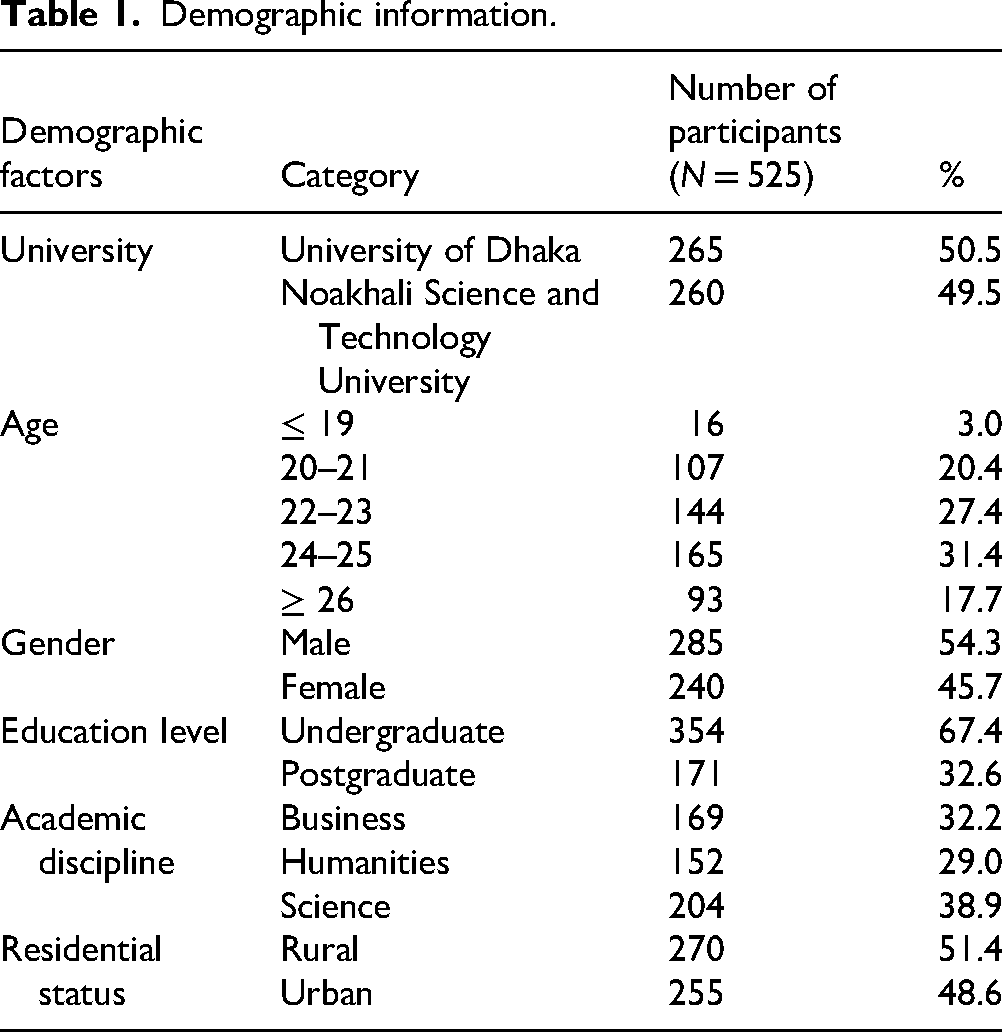
As shown in Table 1, most were undergraduates (67.4%), with representation across the disciplines of science (38.9%), business (32.2%), and the humanities (29.0%). Their residential status was almost evenly split between rural (51.4%) and urban (48.6%). This diverse sample provides a robust foundation for examining variations in AI understanding, AI use behavior, AI skills, and AI self-efficacy across demographic groups in Bangladesh.
Table 2 shows the KMO values, Bartlett's test results, and internal consistency for the study’s constructs. The KMO values were high for all dimensions (AI understanding = .942; AI skills = .945; AI use behavior = .941; AI self-efficacy = .914), indicating sampling adequacy. The Bartlett's tests were significant (p < .001), confirming suitability for factor analysis. Each dimension included 6–7 items, with the mean scores ranging from 23.13 to 28.22 and standard deviations from 7.27 to 9.22, indicating a reliable and valid measurement for examining AI-related competences and self-efficacy.
KMO values, Bartlett's test, and items.

Note. *Sig. ≥ .7. **Sig. ≤ .05.
The factor analysis results in Table 3 show that all of the constructs—AI understanding, AI skills, AI use behavior, and AI self-efficacy—demonstrated strong factor loadings, with the total variance explained ranging from 79.81% to 85.39%. The high cumulative variance confirms the unidimensionality of each construct and supports the reliability of the measurement model for examining AI competences and self-efficacy.
Factor analysis.

Table 4 presents the results for the measurement model, demonstrating strong reliability, convergent validity, and the absence of multicollinearity for all of the constructs. The item loadings for AI understanding, AI skills, AI use behavior, and AI self-efficacy range from 0.896 to 0.943, exceeding the recommended threshold of 0.70 and thereby confirming indicator reliability. The internal consistency is well established as the Cronbach's alpha, rhoA, and composite reliability values for all of the constructs are above 0.95. Convergent validity is further supported by high average variance extracted values, ranging from 0.827 to 0.854, which surpass the minimum criterion of 0.50. Additionally, all of the variance inflation factor values fall below the conservative threshold of 10, indicating no serious multicollinearity issues among the indicators. Overall, these results confirm that the measurement model is robust and suitable for the subsequent structural model analysis.
Factor loadings, reliability, and validity.
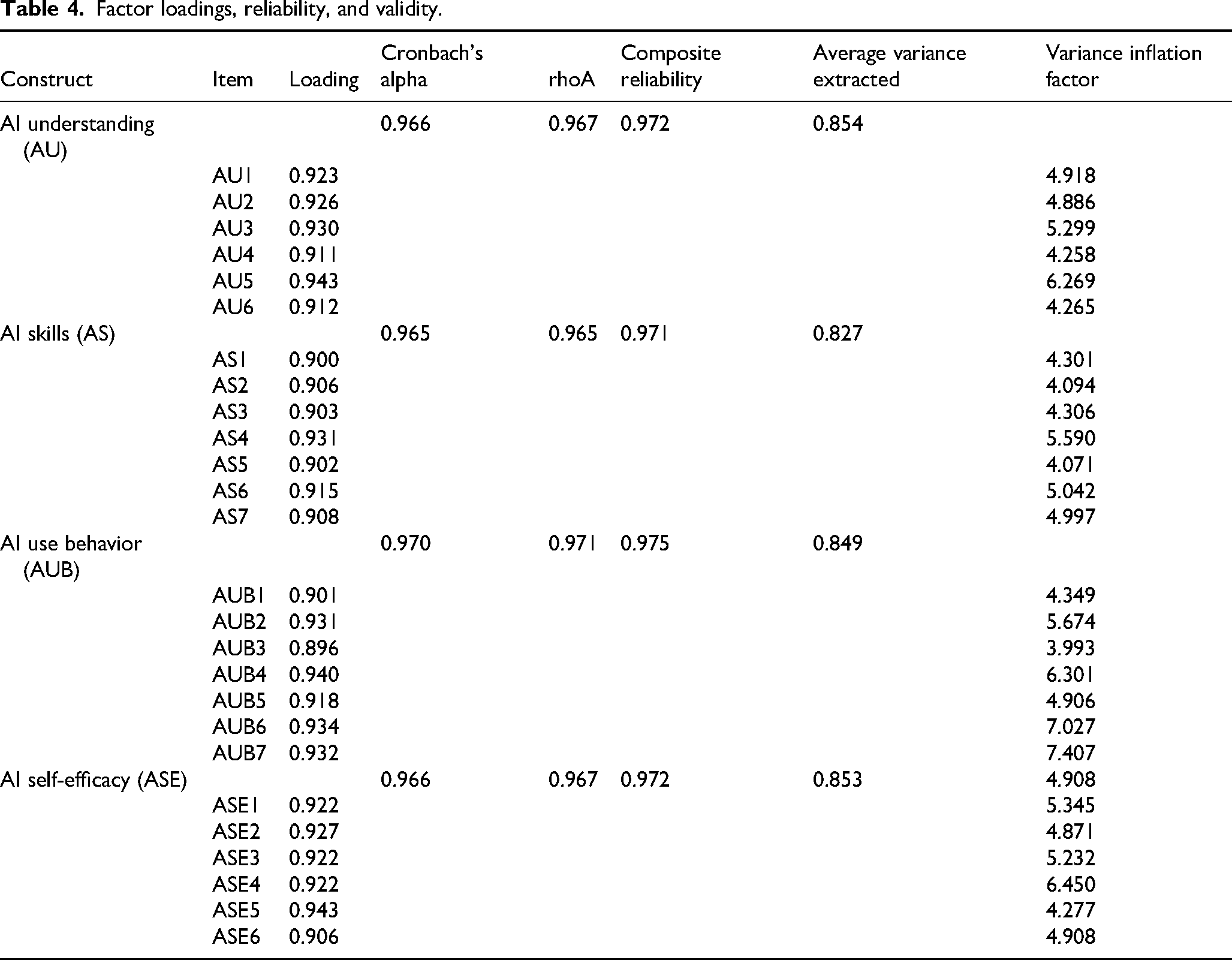
Table 5 reports the discriminant validity assessment using the Fornell–Larcker criterion. According to the Fornell–Larcker criterion, the square roots of the average variance extracted (shown on the diagonal) for AI skills (0.909), AI self-efficacy (0.924), AI understanding (0.924), and AI use behavior (0.922) are higher than the corresponding inter-construct correlations, indicating adequate discriminant validity among all the constructs.
Discriminant validity using the criterion of Fornell and Larcker.
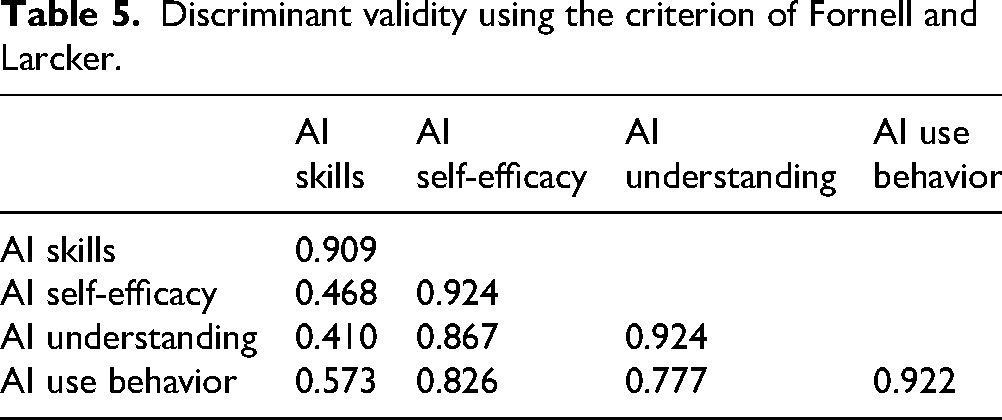
Table 6 demonstrates adequate discriminant validity based on cross-loading analysis. All of the indicators load more strongly on their respective constructs, with primary loadings ranging from 0.896 to 0.943, while cross-loadings on other constructs remain comparatively lower (generally below 0.826). This clear difference between primary and cross-loadings confirms that each item is empirically distinct and measures its intended construct. Overall, the results provide strong evidence of discriminant validity at the indicator level.
Discriminant validity and cross-factor loadings.
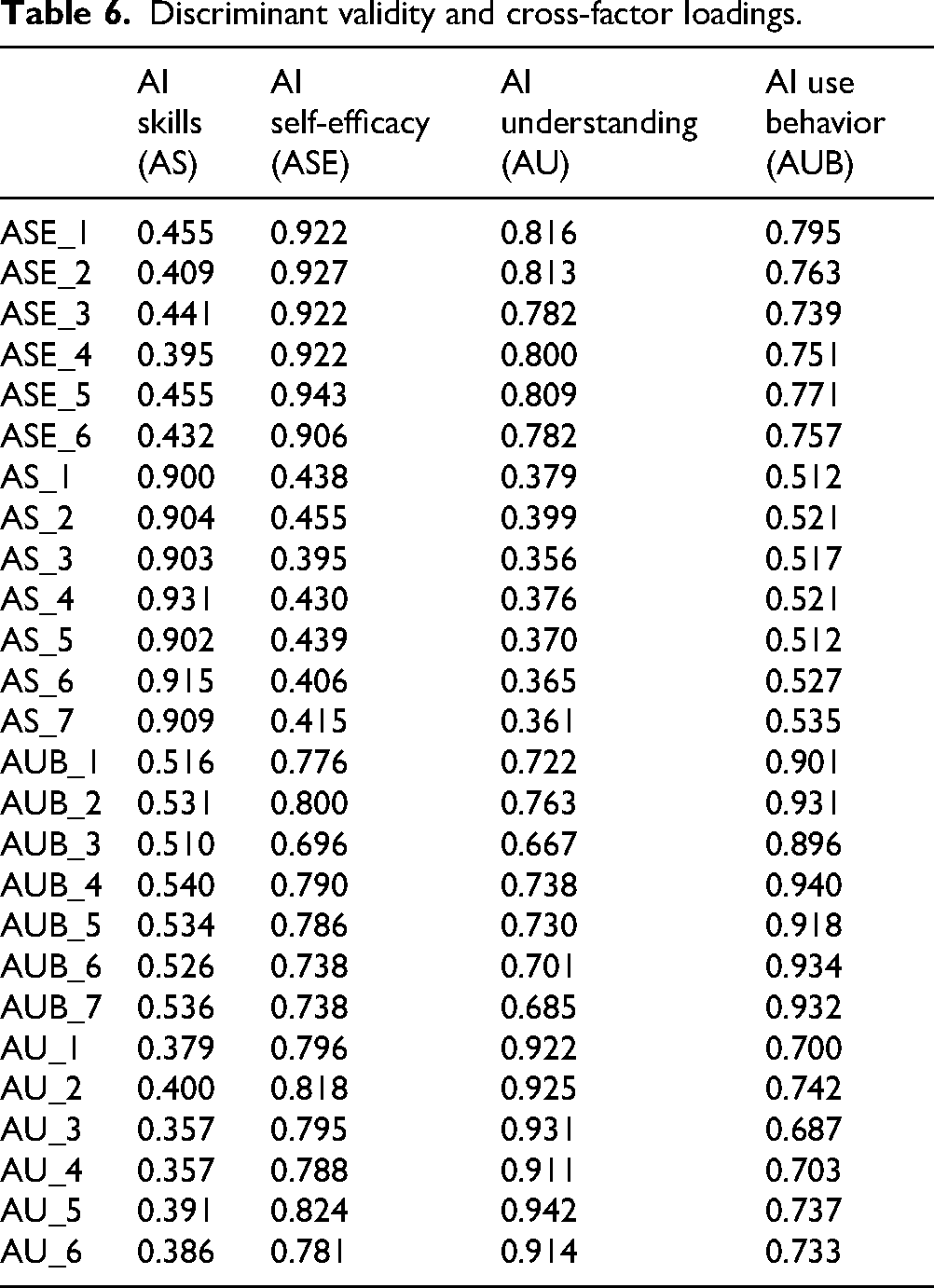
Table 7 reports the direct effects (path coefficients) of the structural model. All of the hypothesized relationships are positive and statistically significant (p < .001), with t-values ranging from 6.560 to 29.164. AI understanding has a strong effect on AI use behavior (β = 0.777); AI use behavior significantly predicts AI skills (β = 0.573); and AI skills significantly predict AI self-efficacy (β = 0.468). AI understanding also has a significant direct effect on AI self-efficacy (β = 0.268), supporting the robustness of the proposed structural relationships.
Direct effects (bootstrapping).

Table 8 shows the effect size (f2) results, indicating the substantive impact of exogenous constructs on the endogenous variables. The effect of AI skills on AI self-efficacy is moderate (f2 = 0.281), while the effect of AI use behavior on AI skills is large (f2 = 0.488). Notably, AI understanding has a very large effect on AI use behavior (f2 = 1.523), highlighting its strong explanatory power. Overall, these effect sizes confirm that the key predictors make meaningful contributions to the structural model.
Effect size (f2).
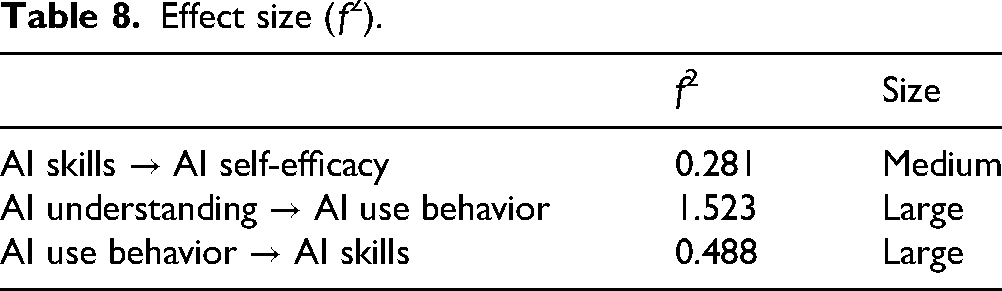
Figure 1 illustrates the proposed structural research model, depicting the hypothesized relationships among AI understanding, AI use behavior, AI skills, and AI self-efficacy. The model shows both direct and indirect paths, highlighting the mediating role of AI use behavior and AI skills in explaining the effect of AI understanding on AI self-efficacy. Overall, Figure 1 provides a clear visual representation of the theoretical framework tested using PLS-SEM.
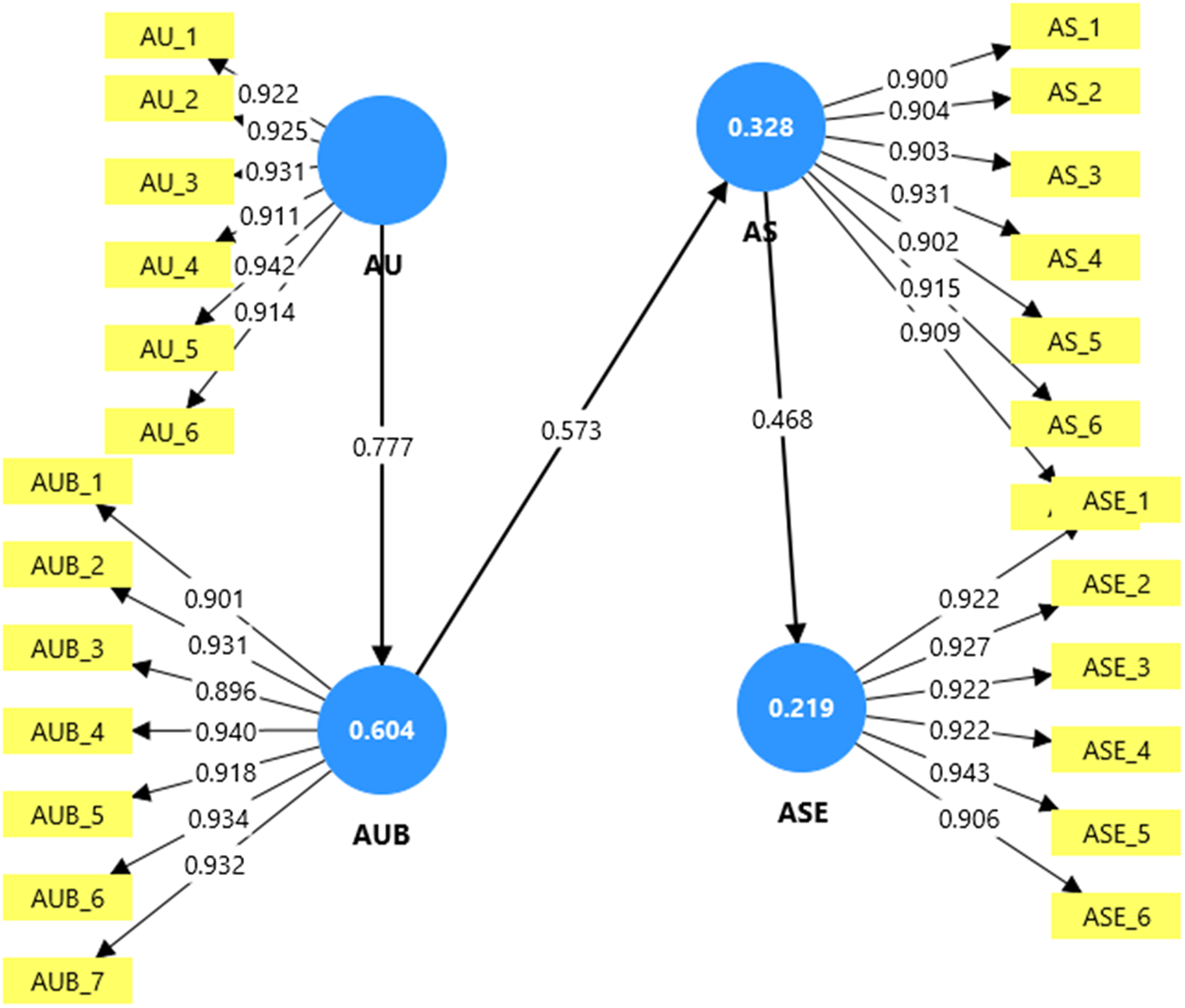
Mediating role of AI use behavior and AI skills.
Table 9 presents the model fit indices for both the saturated and estimated models. The standardized root mean square residual for the saturated model (0.071) indicates an acceptable fit, and the standardized root mean square residual for the estimated model (0.071) is also below the recommended 0.08 threshold, supporting an acceptable overall model fit. The remaining indices—unweighted least squares discrepancy = 21.167, geodesic distance = 1.225, chi-square = 2906.898, normed fit index = 0.853—further suggest a reasonable fit of the estimated model. Overall, together with evidence of reliability, validity, significant path coefficients, and predictive power, the model is adequate for hypothesis testing.
Model fit.
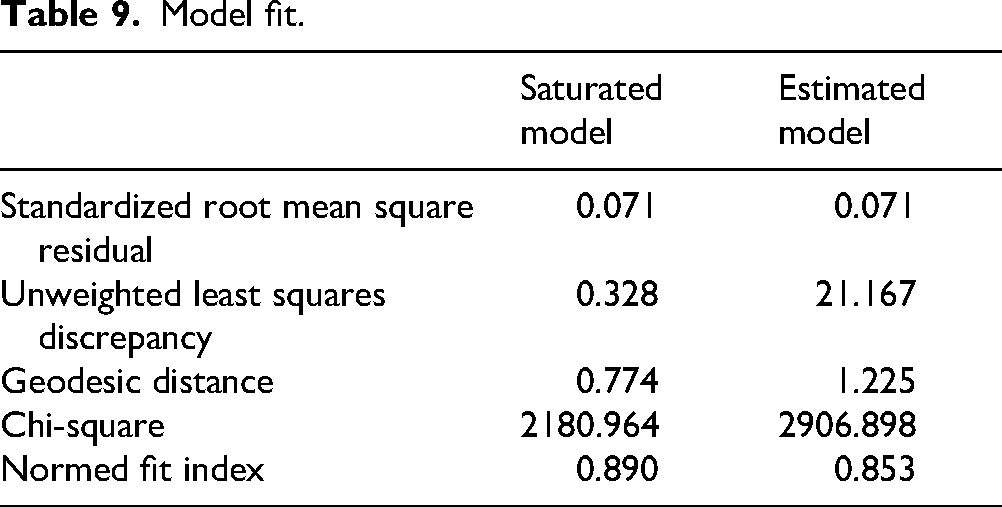
Table 10 summarizes the results of the direct relationship tests. All of the hypothesized paths are statistically significant at p < .001 and thus supported: AI understanding → AI use behavior (β = 0.777, t = 29.164), AI use behavior → AI skills (β = 0.573, t = 14.256), and AI skills → AI self-efficacy (β = 0.468, t = 11.062). The R2 values indicate the explanatory power of the model, with AI use behavior accounting for 60.3%, AI skills for 32.7%, and AI self-efficacy for 21.8% of the variance in their respective endogenous constructs. These results confirm the robustness and predictive relevance of the proposed structural model.
Hypothesis-testing summary.
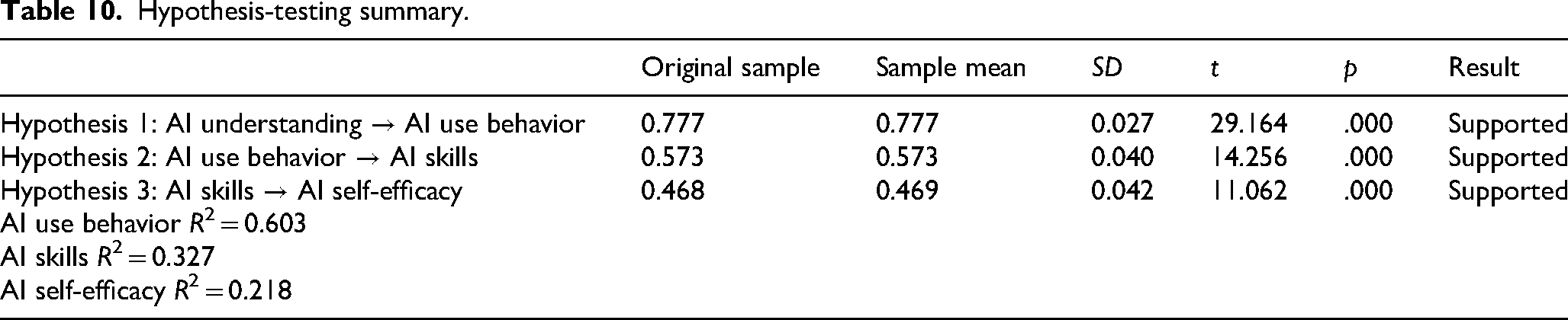
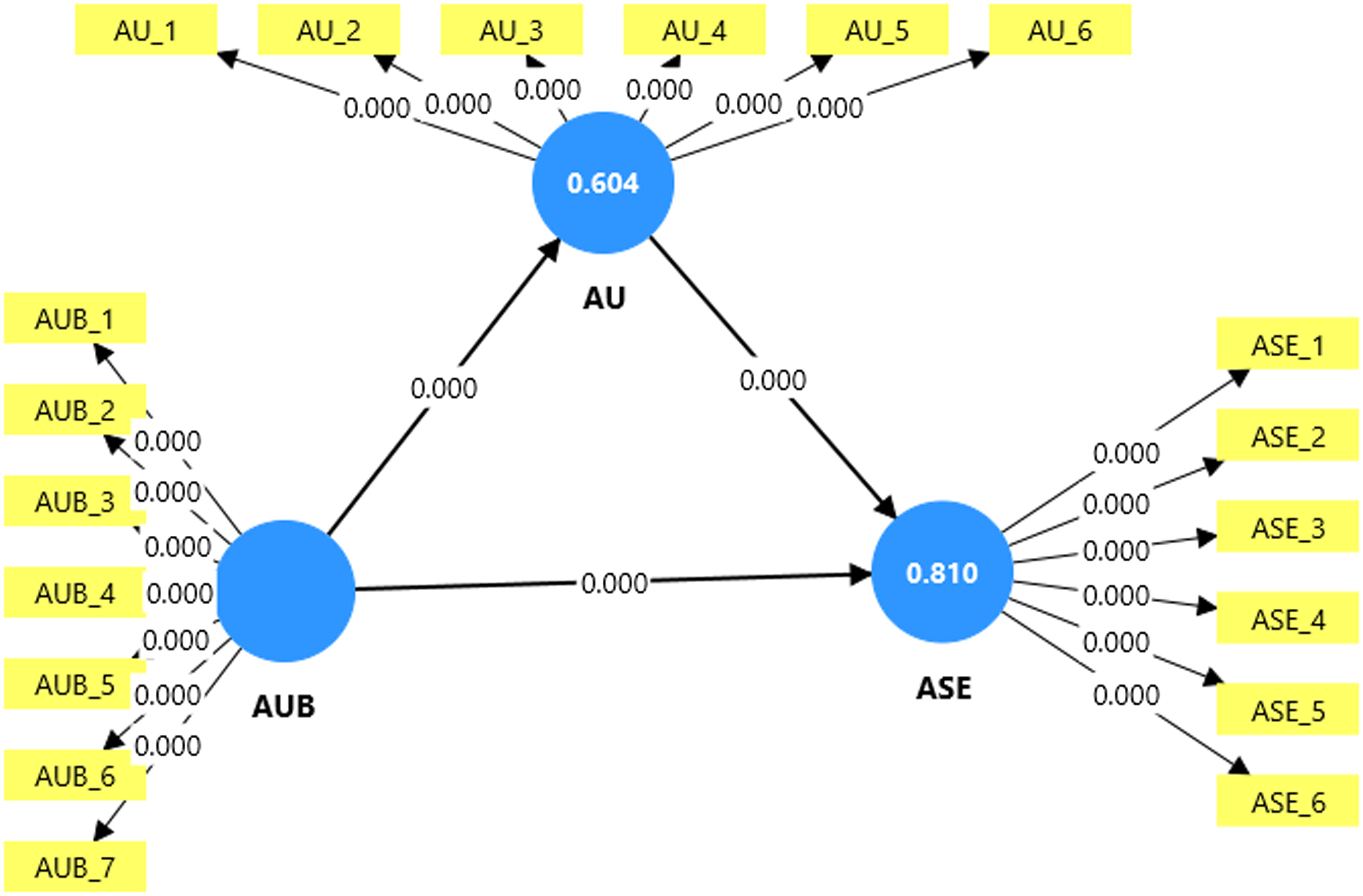
Figure 2 depicts the tested structural model with the path coefficients, t-values, and significance levels for all of the hypothesized relationships. It visually confirms that all of the direct paths— AI understanding → AI use behavior, AI use behavior → AI skills, and AI skills → AI self-efficacy—are positive and statistically significant. It also illustrates the explained variance (R2) for each endogenous construct—AI use behavior = 0.603, AI skills = 0.327, and AI self-efficacy = 0.218—highlighting the predictive strength of the model. Finally, Figure 2 provides a clear representation of the validated PLS-SEM results.
Mediation analysis.
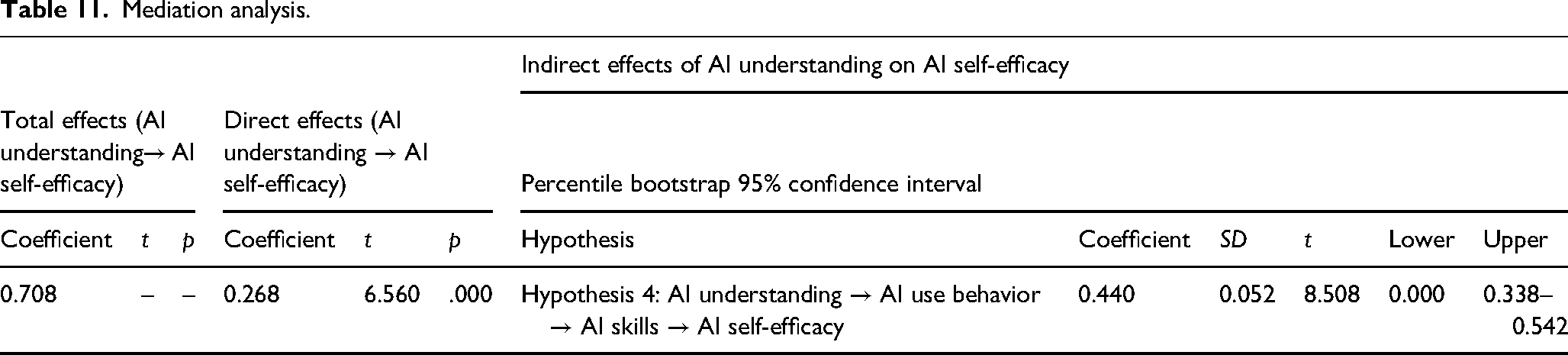
Table 11 presents the sequential mediation results for Hypothesis 4 (AI understanding → AI use behavior → AI skills → AI self-efficacy). The total effect of AI understanding on AI self-efficacy is 0.708, and the direct effect is significant (β = 0.268, t = 6.560, p < .001). The sequential indirect effect via AI use behavior and AI skills is also significant (β = 0.440, t = 8.508, p < .001; 95% confidence = 0.338–0.542), indicating partial mediation. These findings confirm that AI understanding influences AI self-efficacy both directly and indirectly through increased AI use behavior and subsequent skills development.
Mediation analysis.
Discussion
This study examined the effects of AI understanding, AI use behavior, and AI skills on AI self-efficacy among university students. The measurement model possessed strong reliability and validity characteristics, and the structural analysis supported a distinct competence-building pathway, where students’ understanding enables confidence mostly through purposeful use, as well as building skills. From a LIS perspective, this indicates that AI self-efficacy is not simply a psychological attribute of individuals or solely driven by technical skills and context (Price and Kirkwoo, 2014) but formed through information practices—how they actively engage with information systems to find, understand and apply AI in ways that enhance their self—efficacy in context (Wilson, 2000).
Based on the first research question, the results show that Bangladeshi university students in general held a relatively high level of conceptual understanding of AI, as evidenced by their average AI understanding scores. The high KMO values and exploratory factor analysis loading also support the adequacy of the students’ understanding of AI principles, accounting for between 79.8% and 85.4% of the variance. However, although the students’ knowledge of theory is quite sound, the way in which they bring AI into practice differs, as demonstrated by the differences in their use behaviors and skills development. The structural results confirm that AI understanding strongly affects AI use behavior (β = 0.777, f2 = 1.523), leading to the conclusion that students’ conceptual understanding of AI—including its capabilities, limitations, and ethical considerations—serves as a foundation for effective interaction with AI tools. From a LIS standpoint, AI understanding may be conceptualized as an emerging facet of AI literacy embedded within the larger construct of information literacy to promote students’ intentionality in using AI for information-oriented activities. Students who possess a clear understanding of AI’s operational limits are more adept at leveraging the technology in a purposeful manner, especially in academic settings, where controlled use is crucial. This finding resonates with information behavior research, which emphasizes that system design has a profound impact on users’ behavior and approach to tasks (Wilson, 1999).
According to the second research question, the AI use behavior suggests that students are using AI responsibly in various educational contexts, such as idea generation, summarization, and data analysis. A strong positive correlation was found between AI use behavior and AI skills (β = 0.573, f2 = 0.488), indicating that increased use of AI tools leads to enhanced proficiency in utilizing them. This finding supports the theory of experiential learning, which asserts that learning is a process in which knowledge is created through the transformation of experience (Jullien and Kolb, 1984). AI competences are best developed through repeated, purposeful practice in real academic work and reinforcing the importance of using practice-based learning from a LIS perspective.
With respect to the third research question, students who possess advanced AI skills also have improved critical thinking with regard to AI output and awareness of system limitations, both of which increase AI self-efficacy in academic work. The strong positive link between AI skills and AI self-efficacy (β = 0.468, f2 = 0.281) is consistent with Bandura's (1997) claim that mastery experiences are central in the formation of self-efficacy. Competences such as the ability to critique and use information ethically are considered to be advanced information literacy outcomes from a LIS perspective, thereby affirming that confidence in an information system comes not only from exposure but also from demonstrated capability (Compeau and Higgins, 1995).
In relation to the fourth research question, it was found that AI understanding, AI use behavior, and AI skills improvement reduce prospective barriers to the effective adoption of AI. Insufficient knowledge of AI algorithms tends to prevent students from using AI tools effectively, which eventually results in outcomes that are not optimal or even avoid the use of AI. Inadequately developed skills may also limit their ability to assess AI tools and outputs critically. These results may have implications for potential combined interventions (involving both the provision of information and practical skills training) that could prove more efficacious. Furthermore, there was also a direct effect of AI understanding on AI self-efficacy (β = 0.268), which suggests that conceptual knowledge plays a part in increased confidence, not only via behavioral and skills pathways.
The results pertaining to the fifth research question show that AI use behavior and AI skills mediate the influence of AI understanding on AI self-efficacy (β = 0.440, p < .001), which clearly suggests the significance of comprehension and that hands-on practice contributes to students’ self-efficacy with using AI. This is consistent with Bandura's (1997) notion that self-efficacy beliefs are formed through the interplay of cognition, action, and experience. The findings indicate that a structured introduction to AI tools directly influences users perceptions and confidence. These findings suggest that it is important for LIS professionals and academia to incorporate AI literacy in education curricula and create opportunities for hands-on experience with AI.
Although academic library interventions were not modeled as a separate construct in the structural analysis, the validated sequential pathway offers indirect yet theoretically grounded insight into the final research question. The findings demonstrate that the gradual progress of AI self-efficacy from cognition to use behavior and ultimately to capacity implies that academic libraries can assist students by integrating knowledge of AI literacy into curricula and running workshops, as well as encouraging the informed application of AI. This level extends beyond the ability to use and provides opportunities for students to critically reflect on use in AI-mediated environments.
These findings may be notably relevant to the Bangladeshi higher education context, where AI literacy support is still emerging. Students’ confidence develops through a progression of conceptual understanding, practical use, and skills acquisition, rather than awareness alone. Academic libraries can play an important role in the development of AI self-efficacy in higher education through supporting students’ awareness and understanding of AI tools, promoting the critical and ethical use of those tools, and offering guided practical experiences.
Conclusion
This study aimed to explore the impact of AI understanding on AI self-efficacy among university students in Bangladesh and determine the mediating role of AI use behavior and AI skills. The results indicate that AI understanding leads to AI use behavior, which subsequently influences AI skills and finally improves the level of AI self-efficacy. AI understanding also has a direct positive effect. These findings indicate that students’ confidence in the use of AI relies on an interconnected process whereby conceptual understanding supports meaningful use, practical engagement, and skills acquisition—all of which is consistent with social cognitive theory and prior research (Bandura, 1997; Kong et al., 2023; Ng et al., 2021).
The study further highlights the role of academic libraries in supporting the development of AI literacy. Libraries can integrate AI literacy into information literacy initiatives; support students as they assess the quality of AI-developed work; and offer opportunities for safe and responsible practice (Cox, 2023; Hu et al., 2024; LaFlamme, 2025). These findings are valuable for researchers and librarians, as well as higher education institutions focused on improving AI competence. Future studies should include other types of institutions, explore differences between disciplines, and serve directly to assess the impact of library-based AI literacy initiatives on students’ learning and confidence.
Footnotes
Acknowledgments
We would like to thank the university students who participated in this study.

Funding
The authors received no financial support for the research, authorship, and/or publication of this article.
Declaration of conflicting interests
The authors declared no potential conflicts of interest with respect to the research, authorship, and/or publication of this article.