







Abstract
Isochrone analysis and assessments of cumulative opportunities are a common way to quantify accessibility. However, different time cut-offs have been used by different researchers, with little investigation into what is the ‘best’ cut-off time. Outstanding questions remain concerning the most effective or predictive cut-off time and the potential implications of choosing one time limit over another. The primary objective of this paper is to explore how different cut-off times affect the calculation of isochrone-based accessibility measurements and their potential to predict travel-mode choice. Fifty dissemination areas (DAs) within the Greater Toronto and Hamilton Area (GTHA) are selected to test the impact of different isochrone cut-off times in 5-minute intervals for public transit, automobile, and walking accessibility. The relative predictive power of 30- and 45-minute isochrones in modeling mode choice is also examined. This paper finds that different cut-off times do impact the interpretability of accessibility measurements in the isochrone approach, but a defined cut-off time for general use cannot be determined based on the analysis.
Accessibility is widely used in the transportation field to interpret or predict travel behavior ( 1 – 4 ). Accessibility is often quantified through the calculation of travel time isochrones and the cumulative opportunities of population, jobs, or other activities captured within the isochrone. Different time cut-offs have been used by different researchers, with 30 and 45 minutes being common choices ( 5 – 8 ). Outstanding questions remain around the most effective or predictive time cut-off and the potential implications of choosing one time limit over another. The primary objective of this paper is to explore how different cut-off times affect the calculation of isochrone-based accessibility measurements and their potential to predict travel mode choice.
Fifty dissemination areas (DAs) from across the Greater Toronto Hamilton Area (GTHA) were selected to test the change in calculated accessibility at 5-minute intervals. Accessibility is calculated from 0~90 minutes for automobile and 0~60 minutes for walking and public transit. Additionally, accessibility was calculated for all DAs (9035) within the GTHA at 30 and 45 minutes. Bivariate linear regression is used to check the relative predictive power of accessibility to mode share at 30 and 45-minute isochrone cut-offs.
The structure of this paper is as follows. The next section presents a literature review of accessibility research. We then discuss the methods adopted and the selection of 50 sample DAs. We follow this with a presentation of the isochrone maps and accessibility results using graphical, ranking, Interquartile Range (IQR), and linear regression analyses. Finally, the paper summarizes the significance of the findings and recommends paths for future research.
Literature Review
Accessibility is defined as “the potential of opportunities for interaction” that measures the spatially distributed activities for a specific location considering the abilities and desires of travelers ( 9 ). The measurement of accessibility is complicated because of the variability of individual trips and activities ( 10 ). Many approaches for measuring accessibility have been developed. As summarized by Geurs & Van Wee ( 11 ), there are four types of accessibility measures, including infrastructure-, person-, utility-, and location-based measures. Isochrone approaches and cumulative opportunities assessments within the isochrone are a popular method for quantifying accessibility without defining a destination. The isochrone defines the achievable locations from a fixed starting point within the given cut-off time using a transportation mode, with the isochrones shape being defined by the network of the mode in question.
The isochrone approach has been widely used for quantifying accessibility through the counting of the opportunities (cumulative opportunities) within the isochrone – commonly jobs and or population. To cite a few examples, it is used to evaluate: block-level accessibility measures with space-time constraints, the influence of accessibility on commuting mode share, spatial-temporal dynamics of transit supply, and the relationship between accessibility and land use ( 1 , 3 , 6 , 12 ).
Despite the widespread use of this approach, researchers vary in their choice of cut-off times. For example, Chen et al. calculate different accessibility indicators using 10, 20, and 50-minute cut-off times ( 1 ), while Owen and Levinson use cut-off times ranging from 10 to 60 minutes with a 10-minute interval to calculate accessibility to jobs ( 3 ). El-Geneidy et al. investigate the correlation between gravity-based accessibility measures and cumulative measures of accessibility with cut-off times varying from 20 to 45 minutes ( 2 ), while Martens analyzes the changes of accessibility deficiency between 20- and 30-minute cut-off times ( 4 ). A recent study uses a 30-minute cut-off time to investigate an accessibility-based regression model ( 13 ), while another recent study analyzes public transit accessibility with a 30-minute cut-off time and daily grocery trips with 10 or 20 minutes ( 6 ). A 30-minute cut-off time is sometimes selected based on the argument that the average commuting time in one direction is often found to be about 30 minutes ( 5 ). In U.S. federal transportation projects, the cut-off time is frequently set as 30 or 45 minutes ( 7 , 8 ). Considering various preferences for choosing cut-off times in research studies, this paper evaluates the impact of picking different cut-off times on accessibility measurements when using the isochrone approach.
Methodology
Study Area and Transportation Networks
The study area for this work is the Greater Toronto and Hamilton Area (GTHA) illustrated in Figure 1. The GTHA consists of two single-tier municipalities, the Cities of Toronto and Hamilton, and four regional municipalities, Durham, Halton, Peel, and York ( 14 ). The total population of GTHA was 6,954,000 in 2016, which is approximately 19.8% of Canada’s population ( 15 ).
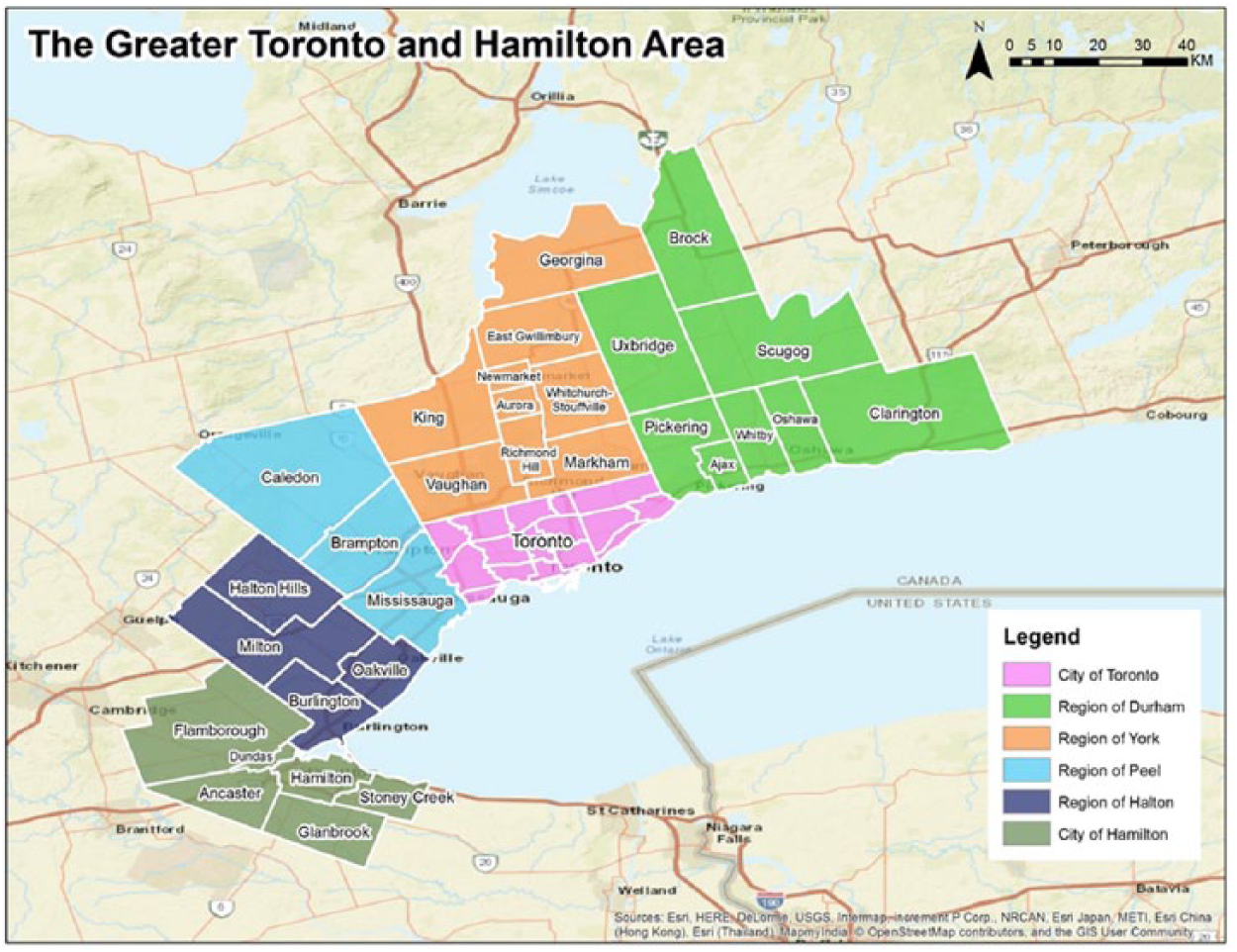
The Greater Toronto and Hamilton Area (GTHA) map.
Automobile, public transit, and walking are the three most common travel modes in the GTHA ( 16 ) and are the modes examined in this paper. All networks were built using morning–peak-hour conditions.
The walking network was constructed based on the National Road Network (NRN) datasets with an assumed uniform walking speed of 4.8 km/h (3.0 mph) ( 17 ), excluding high-speed roads where walking is prohibited. Automobile travel times were simulated using the EMME network modeling software with the combination of the NRN datasets ( 17 ) and the 2011 GTAModel V4.0, developed by the University of Toronto’s Travel Modelling Group ( 18 ). For the major roads, such as expressways, the travel speeds were defined based on the predicted morning–peak-hour speeds from GTAModel. For minor roads not included in the GTAModel, such as local streets, the travel speeds were based on the posted speed limit in NRN datasets. The public transit network was built by combining the walking network with the available transit routes and travel times, which were extracted from the GTAModel simulated through EMME software to include waiting and transferring times for point-to-point transit travel times between all transit nodes in the GTHA ( 13 ). The types of public transit available in the GTHA include TTC subways, streetcars, buses, GO trains, and local buses ( 18 ).
Selection of Sample DAs
Dissemination area (DA) is a spatial agglomeration for the Canadian Census defined by Statistics Canada; it is a small geographic unit consisting of 400~700 persons ( 19 ). Fifty DAs were selected as test cases for an exploratory analysis based on household characteristics including income level, location, and 30-minute transit accessibility to population.
As many studies have discussed, the choice of transportation mode for travel and associated accessibility are correlated with household income ( 20 – 22 ). Therefore, income level is one of three criteria used for selecting test cases. Based on the 2011 National Household Survey, the average household income in Ontario is $95,842 before tax ( 23 ). In this paper, the high-income DAs are defined as where the DA’s median household income is in the range of $125,000 ~ $260,000 and low-income DAs have a median household income of $25,000 ~ $50,000.
The second criterion is household location. DAs were selected to have some inside the historic City of Toronto and current downtown, some in areas with more suburban forms, and some in Mississauga and Hamilton, the second and third largest cities within the GTHA.
Finally, estimates of the 30-minute transit accessibility to population are used as the third criterion, to ensure selection of sample DAs with a variation in access to public transit. Previous research shows that the average 30-minute transit accessibility to population in the GTHA is approximately 79,000 ( 13 ). Therefore, in this paper, the DAs with high access are defined as those in the range of 150,000–700,000 and the DAs with low access have the results of 500–50,000.
Based on these criteria, 50 DAs within the GTHA were selected as test cases to evaluate the change of impact that different cut-off times have on accessibility measurements for various types of household and modes of travel. The 50 test cases were divided into 6 categories based on location and income as shown in Figure 2.
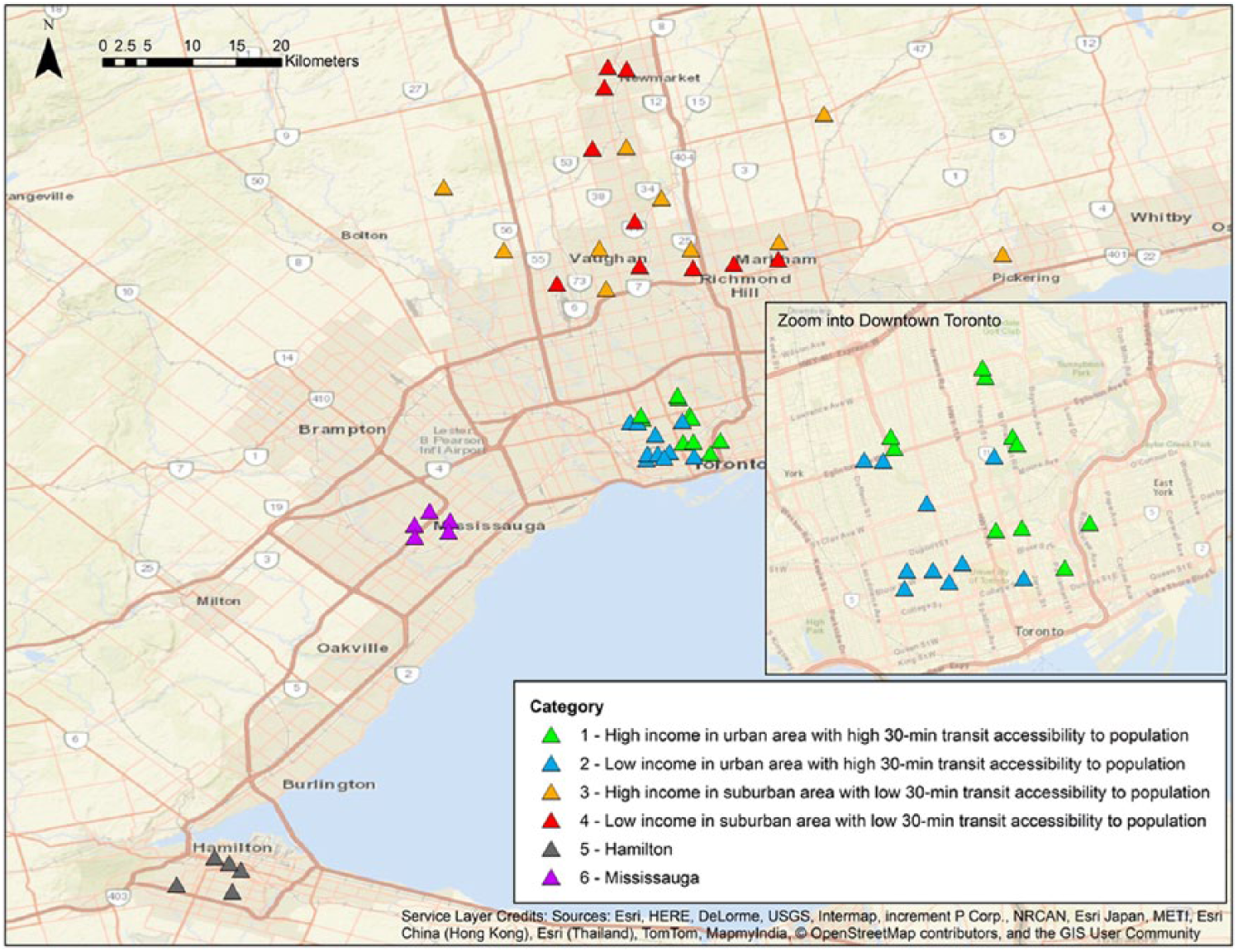
Geographical locations of 50 test cases.
Calculation of Isochrones
Isochrones for each of the 50 test cases were calculated using the service area tool in ArcGIS ( 24 ). The cut-off time was set in 5-minute increments for walking, public transit, and automobile trips. Accordingly, the sets of isochrones are as follows: (i) every 5 minutes up to 60 minutes for walking; (ii) every 5 minutes up to 60 minutes for public transit; and (iii) every 5 minutes up to 90 minutes for automobile. The starting points of trips are the centroids of the test-case DAs; the routes or travel times are based on the transportation networks discussed below. The accessibility to population for each test case is calculated as the cumulative population within the isochrones, which varies with different cut-off times and transportation modes. The population data was extracted from the datasets of the 2011 Census of Population ( 25 ) and agglomerated to DAs. Similarly, the accessibility to jobs for each test case is computed as the cumulative opportunities of jobs within the isochrones. Job data was obtained from the 2011 Transportation Tomorrow Survey (TTS) and agglomerated to TAZ-level ( 26 ). TAZs are 4~7 times larger than DAs ( 27 ), resulting in reduced accuracy for job-based accessibility. The distributions of population and jobs are illustrated in Figure 3. Linear regression models investigated the correlations of travel mode shares with accessibility at different cut-off times (10, 15, 20, 30, 40, 45, and 50 minutes) for the 50-DA test case. The regression equation is:

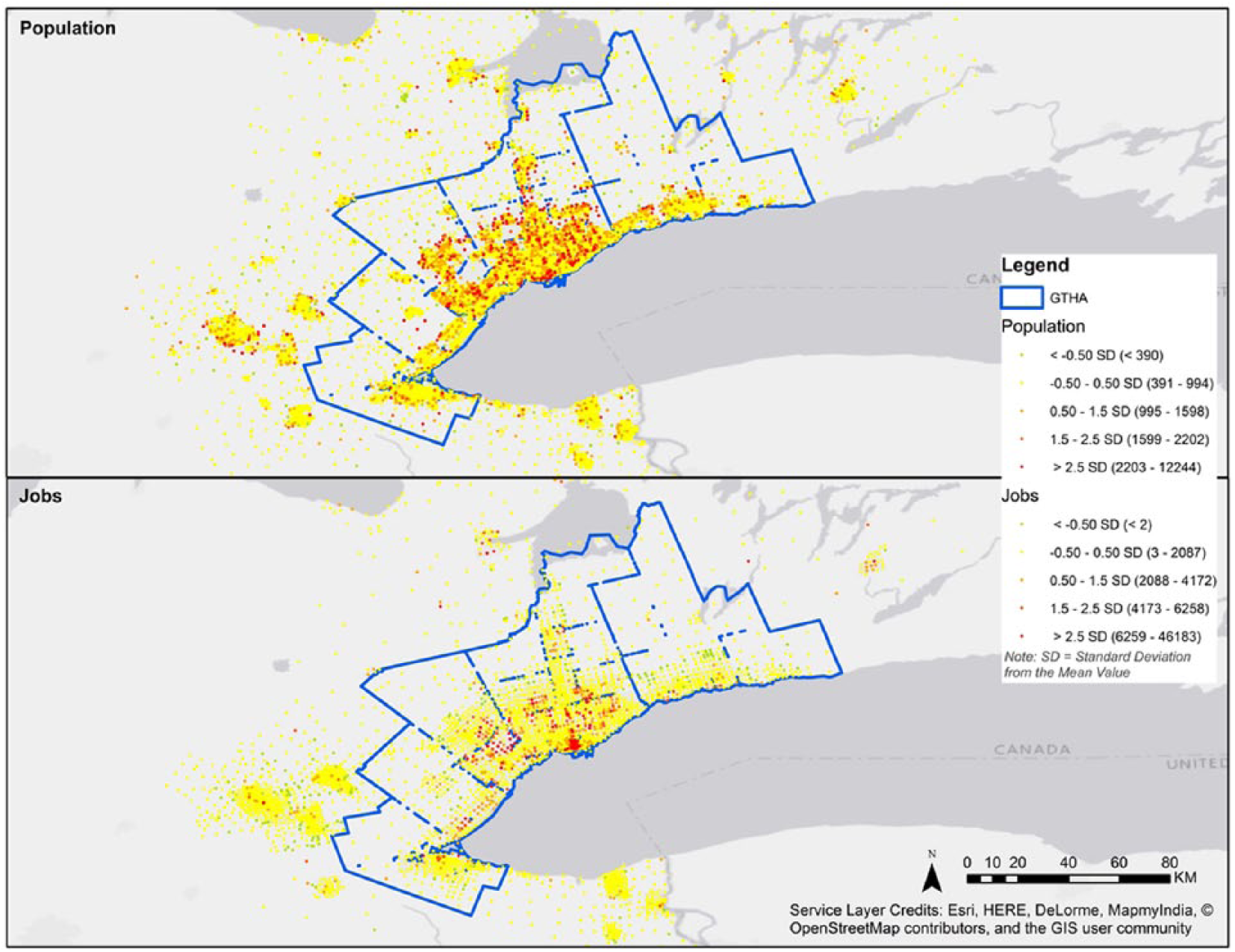
Distribution of population and jobs.
Where Mode Share is the percentage of total 24-hour weekday trips completed by the transportation mode (transit or automobile) originating in the DA, and Accessibility is the cumulative opportunities of population or jobs captured within isochrones defined by the cut-off time. Mode share calculations were based on TTS trip data.
Extended Examination
According to the literature review, 30 and 45 minutes are commonly used cut-off times in the isochrone approach ( 5 – 8 ). Therefore, an extended examination was conducted for 30- and 45-minute cut-off times for all 9,035 DAs within GTHA. In addition, bivariate linear regression models were built for each combination of accessibility and mode share (i.e., population/job vs. automobile/public transit) with similar steps described in Section 3.3. The regression models were also run excluding DAs with zero automobile and/or transit mode shares, all DAs with more than 10 trips, and all DAs with more than 30 trips to eliminate the impact of DAs with low trip numbers and the potential for associated artificially high mode shares.
Findings
Fifty Test Cases
Isochrones were drawn for the 50 test cases with different cut-off times and transportation modes. A sample isochrone map for the 30-minute cut-off time with six selected test cases (i.e., each represents a different category) is shown in Figure 4 to illustrate the procedure used. In addition, Figure 5 delineates sample public transit isochrones with different cut-off times. The maps reveal stark changes in the size and shape of isochrones between different modes and in different geographic locations. As would be expected, the walking and automobile isochrones are more circular, while the transit isochrones reflect the location of the transit network. The walking isochrones have a similar size at any location reflecting relatively uniform walking speeds, while the size of automobile or transit isochrones change between urban city and other regions. A relatively steady expansion in size is observed as the cut-off times increase for all transportation modes.
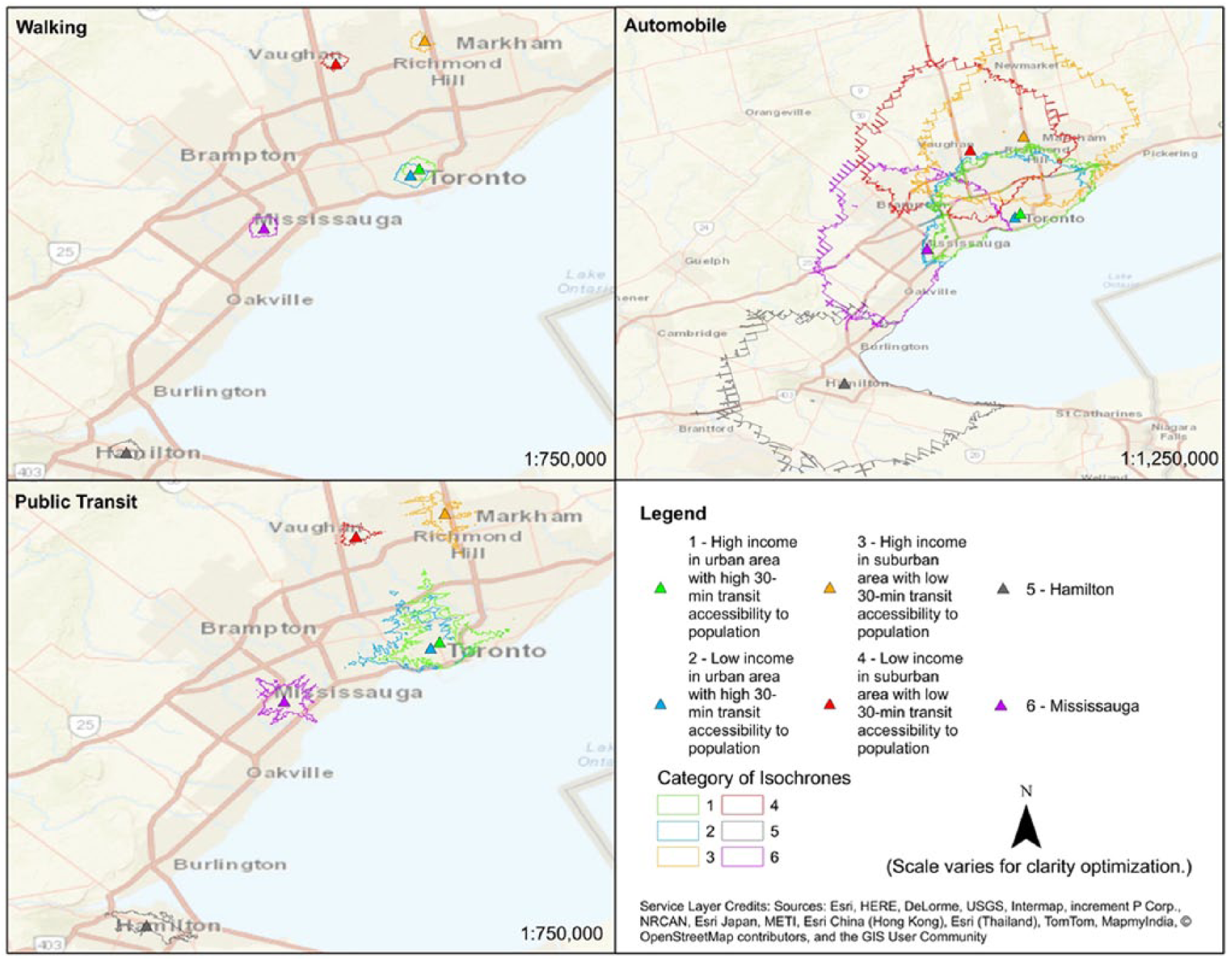
Sample isochrone map for 30-minute cut-off time with selected test cases.
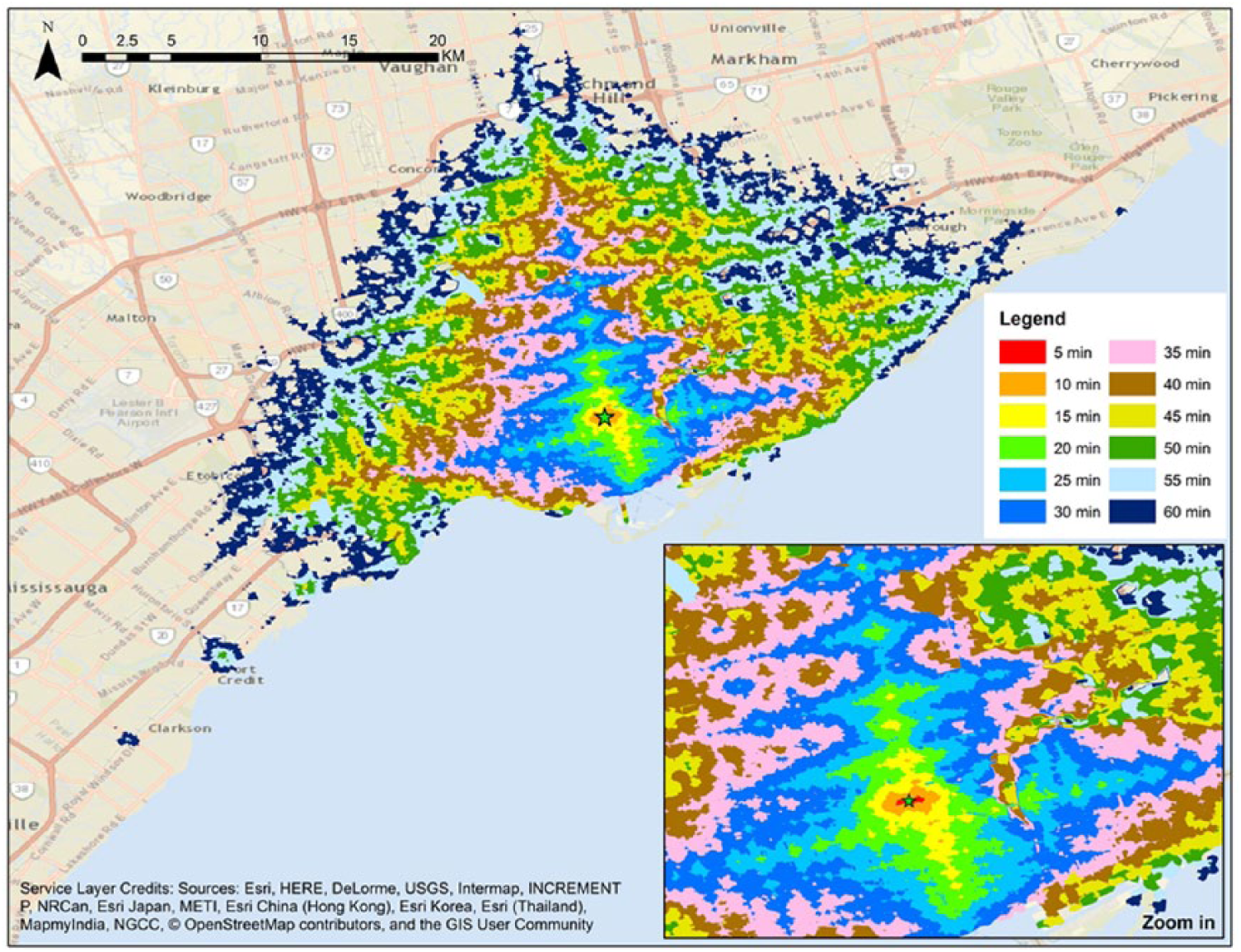
Sample transit isochrones with different cut-off times for a test case.
The graphical analysis of cut-off times and associated accessibility to people and jobs shows more complicated relationships in Figure 6. Had the relationships been linear any cut-off time would accurately describe the line. However, the graphs indicate the relationship is not completely linear for any transportation mode, although some parts of the curves have linear trends (e.g., transit accessibility after a 40-minute cut-off time) or are approximately bilinear (e.g., green curves in automobile accessibility).
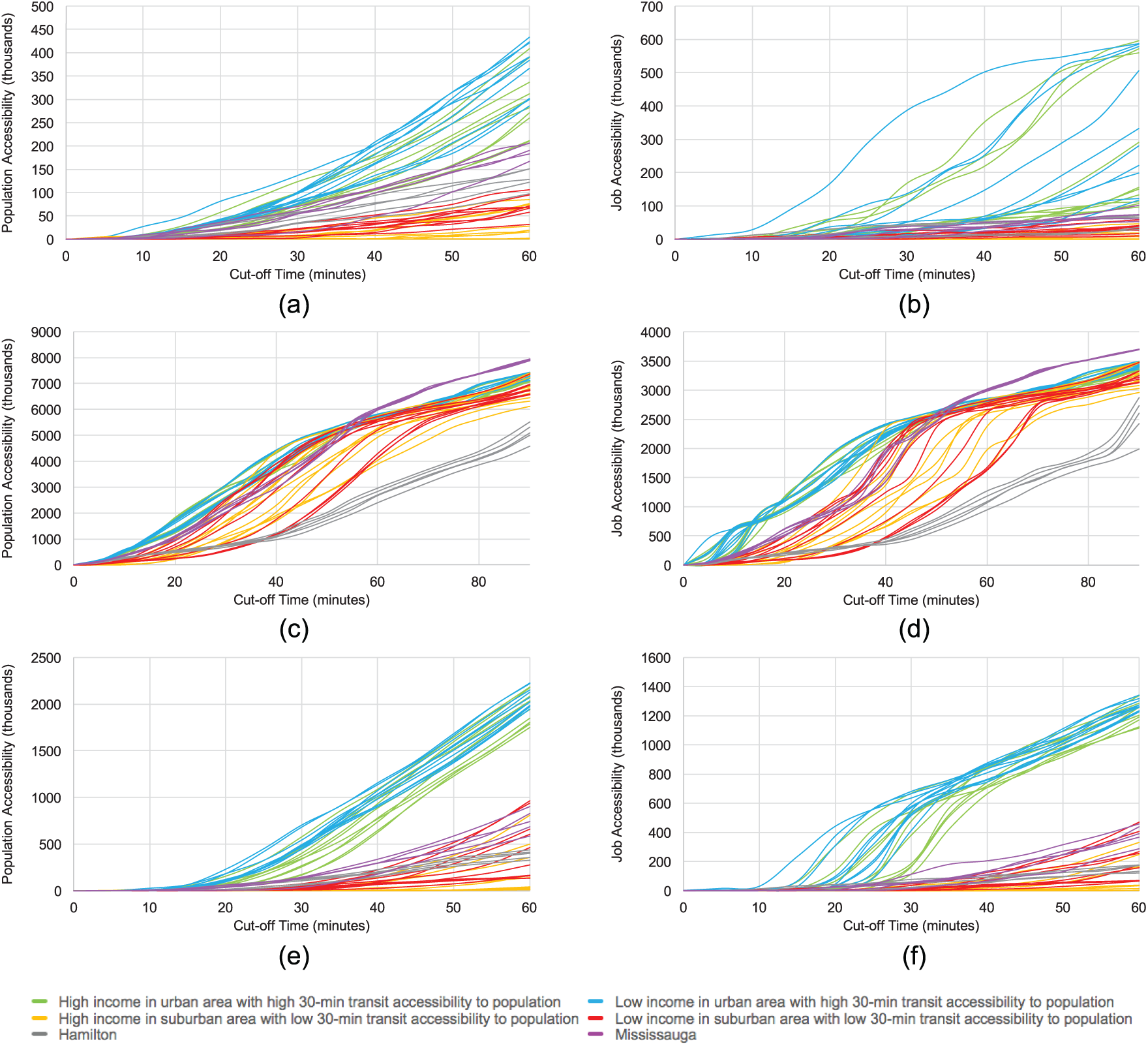
Graphical analysis of population and job accessibility: (a) population accessibility of walking; (b) job accessibility of walking; (c) population accessibility of automobile; (d) job accessibility of automobile; (e) population accessibility of public transit; (f) job accessibility of public transit.
Unlike the walking access to population, which increases constantly with the cut-off time for all test cases, the job accessibility of walking rises quickly in the urban core, especially for cut-off times greater than 20 minutes. For the automobile, the rate of increase in population accessibility keeps changing as the cut-off time rises and the inflection points are different for each category. Such patterns are also observed in the job accessibility of travel by automobile, which suggests the possibility that a slightly different cut-off time used for measuring accessibility could lead to large differences in the results. For instance, over 800,000 more jobs become accessible for a suburban test DA as the cut-off time increases from 45 to 50 minutes. This 5-minute change facilitates accessibility to large job concentrations in the downtown core and airport employment. The population accessibility of public transit shows more distinctive patterns, where a divergence occurs between the city and other regions (i.e., suburban areas and Mississauga/Hamilton). Because of limited local transit services, no additional transit accessibility beyond walking is observed when the cut-off time is less than 20 minutes. As the cut-off time increases, transit accessibility increases sharply, showing an inflection point when the isochrones capture major shopping malls and transit terminals. The significant difference before and after the inflection point demonstrates the impact of picking cut-off times. A similar divergence appears in the job accessibility of public transit, and the rate of increase is much faster in Toronto than in other regions in the 10~40-minute cut-off range. Also, many inflection points are observed, which indicates the possibility of large differences in job accessibility due to a small change in the cut-off time.
Figure 6 illustrates convergence of the isochrones at overly small and overly large cut-off times. Below 10 minutes there is very little variability between the accessibility calculated for each of the test DAs, after 20–30 minutes for all modes studied there is increasing variability between the calculated accessibility for each mode. The spread of calculated accessibility is useful for differentiating between the accessibility of different places. This continues through 60 minutes. For automobiles, the only mode examined for cut-off times above 60 minutes, the calculated accessibility begins to converge around 70 minutes, indicating diminishing returns of larger isochrones as major population and employment centers are already within the isochrone.
Ranking and IQR Analysis
When used as a predictor of other outcomes (e.g., travel mode choice, land use intensification, equity analysis), the relative accessibility between areas is critical. Similarly, when planning transportation infrastructure, understanding which parts of a study area have more (or less) accessibility can be key to allocating new infrastructure to underserved areas.
An ideal cut-off time would be when there was enough spread between different points to differentiate between the accessibility (i.e., higher variability) and when small changes in cut-off time did not meaningfully change the relative accessibility of studied points (i.e., higher stability).
An Interquartile Range (IQR) analysis was used to examine the variability in test cases by computing the vertical spread of curves at different cut-off times. This “spread” was measured as the difference between the 25 and 75 percentile accessibility values where the DAs are ranked from lowest to highest accessibility for a given cut-off time. Table 1 shows the results of the IQR analysis for Figure 6, where the IQR values represent the vertical spread of the curves. A higher IQR indicates a higher variability in accessibility measures at that cut-off time. For walking access to population and jobs, the IQR increases constantly with the cut-off time indicating a higher variability when using larger cut-off times. In the automobile case, the peak IQR values occur at the 40-minute cut-off for population accessibility and at 35 minutes for job accessibility, after which the IQR values keep decreasing until 65 minutes and then increase again. The IQR for public transit access to population increases with the cut-off time, however, the rate of increase is much larger between 20 and 40 minutes than at other cut-off times. Similarly, the job accessibility also increases with the cut-off time having the highest rate of increase at 30 minutes.
IQR Analysis Results for 50 Test Cases
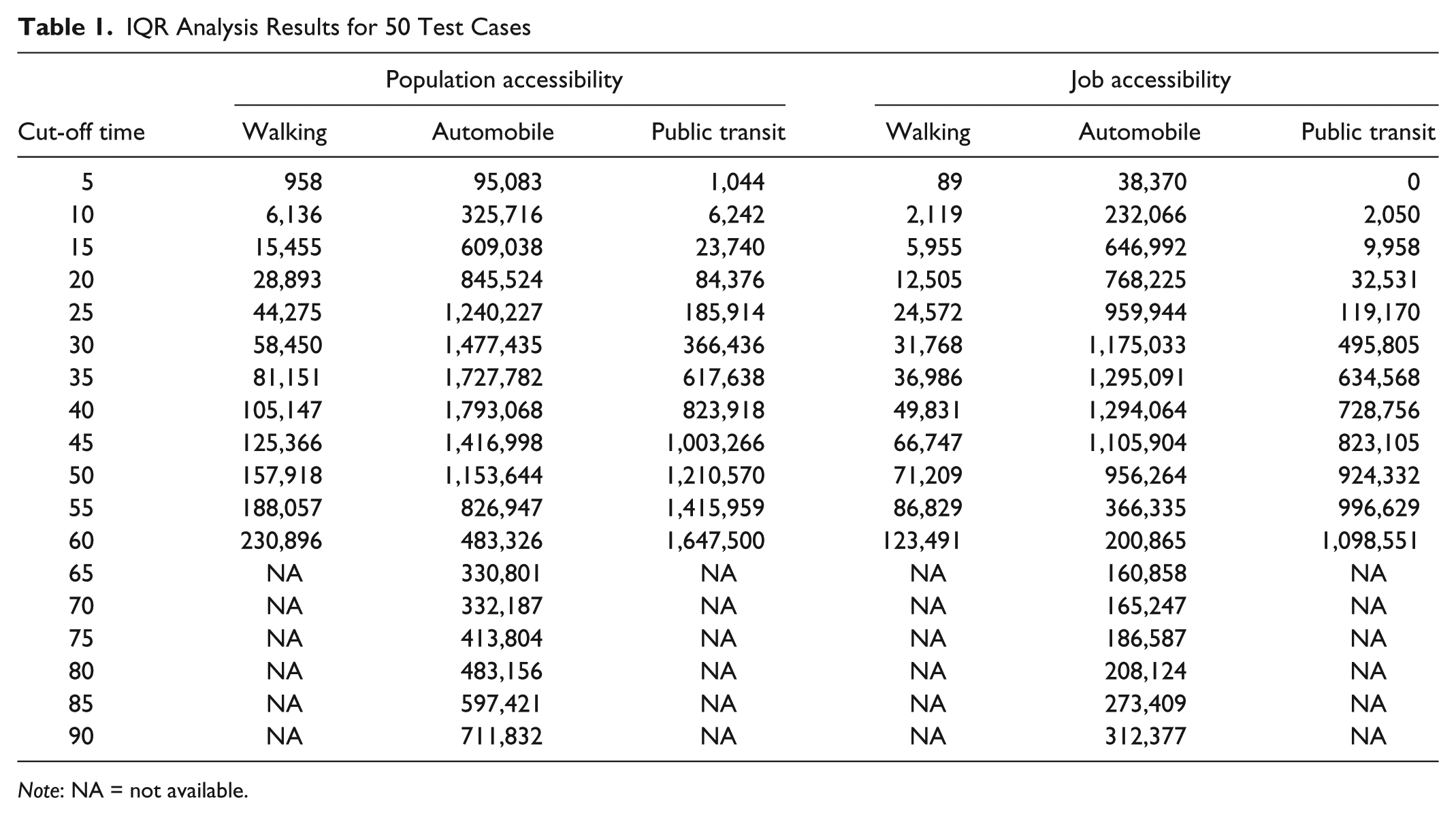
Note: NA = not available.
A ranking analysis of the 50 test DAs was carried out to investigate if there is a stable relationship between the accessibility of the studied points at a given cut-off time or range of times. Figure 7 illustrates the ranking of each DA, #1 to #50, at each cut-off time, with the most accessible DA for each increment on top. Rankings are graphed for all modes for cut-offs ranging from 0 to 60 minutes. Many changes are observed in the ranking positions of population accessibility (i.e., large increase or decrease of the ranking number for a test case), especially before the 15-minute cut-off time for walking and 25-minute cut-off for public transit. However, for automobile access to population, frequent and significant changes occur at all cut-off times. The job accessibility also shows many changes in the ranking positions, especially before the 20-minute cut-off time for walking and 25 minutes for public transit. Similarly, frequent and significant changes occur for automobile access to jobs.
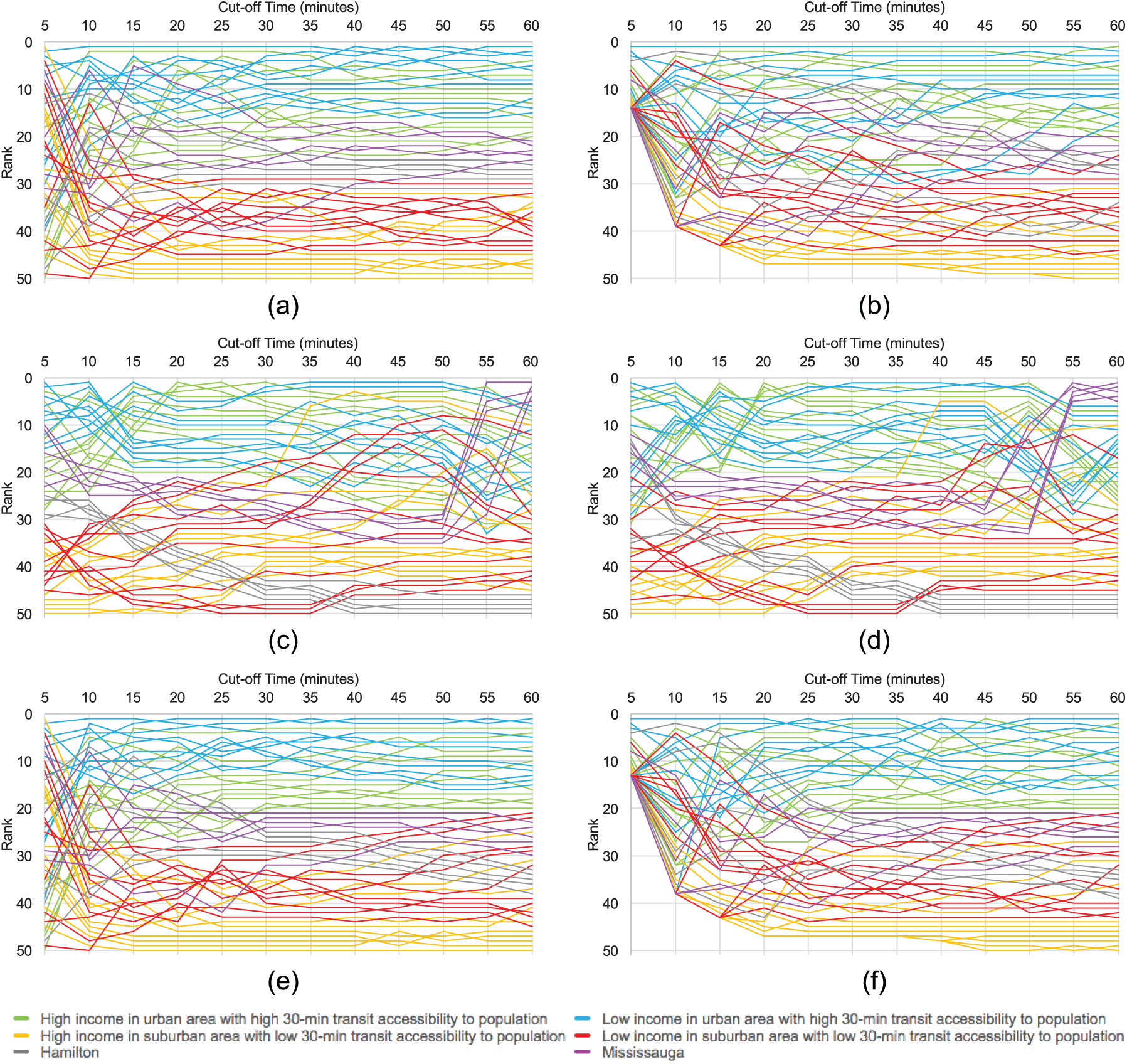
Ranking analysis of population and job accessibility: (a) population accessibility of walking; (b) job accessibility of walking; (c) population accessibility of automobile; (d) job accessibility of automobile; (e) population accessibility of public transit; (f) job accessibility of public transit.
Accessibility & Mode Share, 50-DA Test Case
Using the equation and steps described in Section 3.3, linear regression models were built to examine the relationship between travel mode shares and accessibility at different cut-off times for the 50 test cases. Table 2 shows the adjusted R-square values and parameters of the regression models.
Linear Regression Results for 50 Test Cases
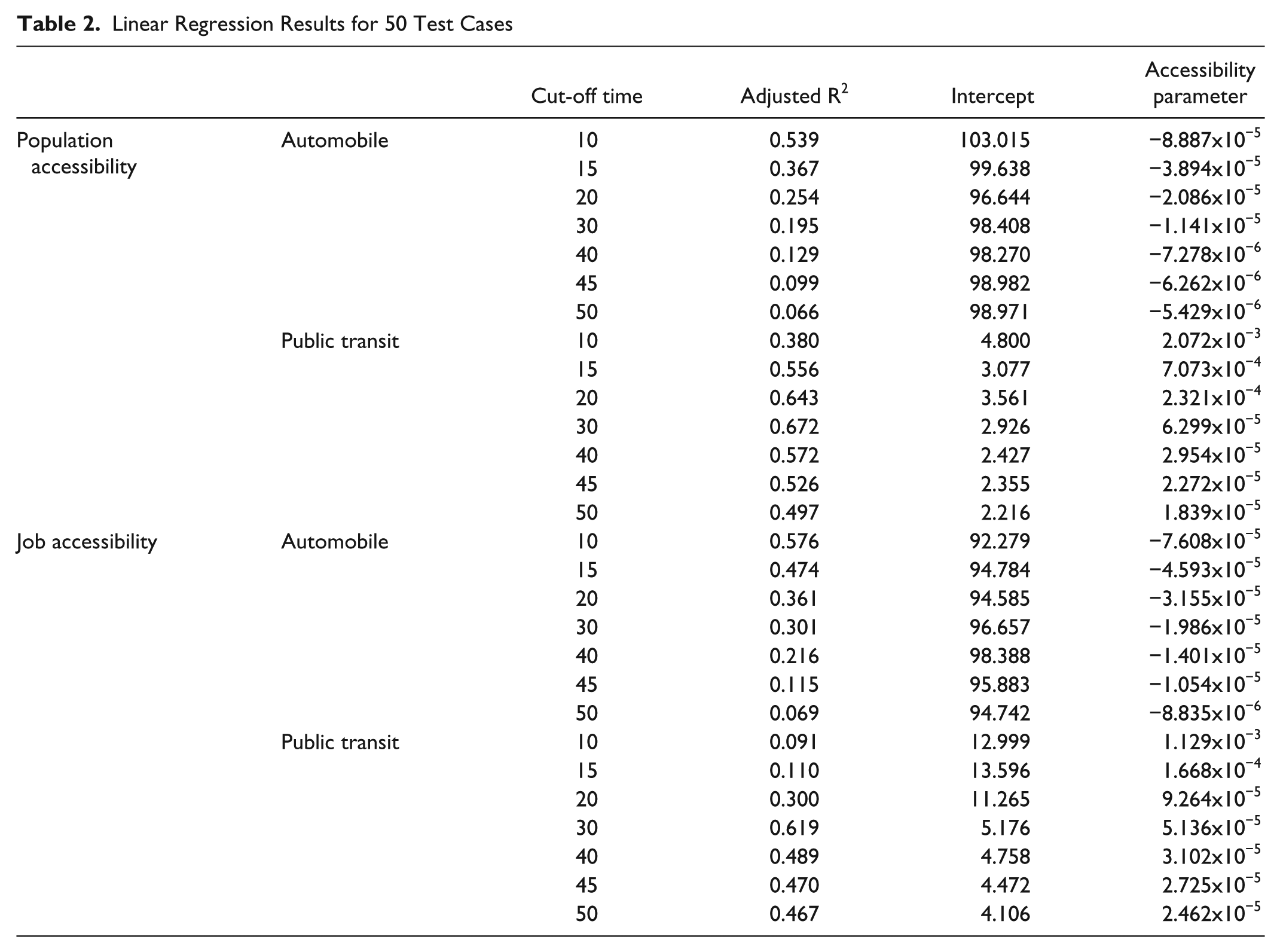
The adjusted R-square values indicate that public transit mode share is better explained by both the population and job accessibility measures than automobile mode share for cut-off times larger than 20 minutes. For transit mode shares, the model displays a clear optimal predictive power when a 30-minute cut-off time is used, for both the population and job accessibility cases. The automobile mode-share models, on the other hand, display monotonically decreasing adjusted R-square values with increases in cut-off time (i.e., no obvious optimal cut-off time exists). Additionally, the correlations to the transit mode share at different cut-off times are consistently higher with respect to access to population than to jobs, but job accessibility has higher explanatory power for automobile mode shares.
Extended Examination
To further explore the relationship between accessibility and travel mode shares, the linear regression analysis was extended to include all DAs in the GTHA using the 30- and 45-minute cut-off times. The regression results are shown in Table 3. A large decrease in adjusted R-square value is observed for the public transit models at both the 30- and 45-minute cut-off times for both population and job accessibility relative to the 50-DA test case. This is expected given the much larger dataset. For the automobile models, the full sample adjusted R-square is also somewhat lower for the 30-minute case relative to the 50-DA test case, but is higher for the 45-minute case. The accessibility correlations with automobile mode shares are now higher than the transit mode-share correlations for both population and job accessibility measures for both cut-off times. Presumably, these results reflect the dominance of the automobile mode in the full sample, which adds many suburban and rural DAs to the analysis relative to the 50-DA test case.
Linear Regression Results for Extended Examination
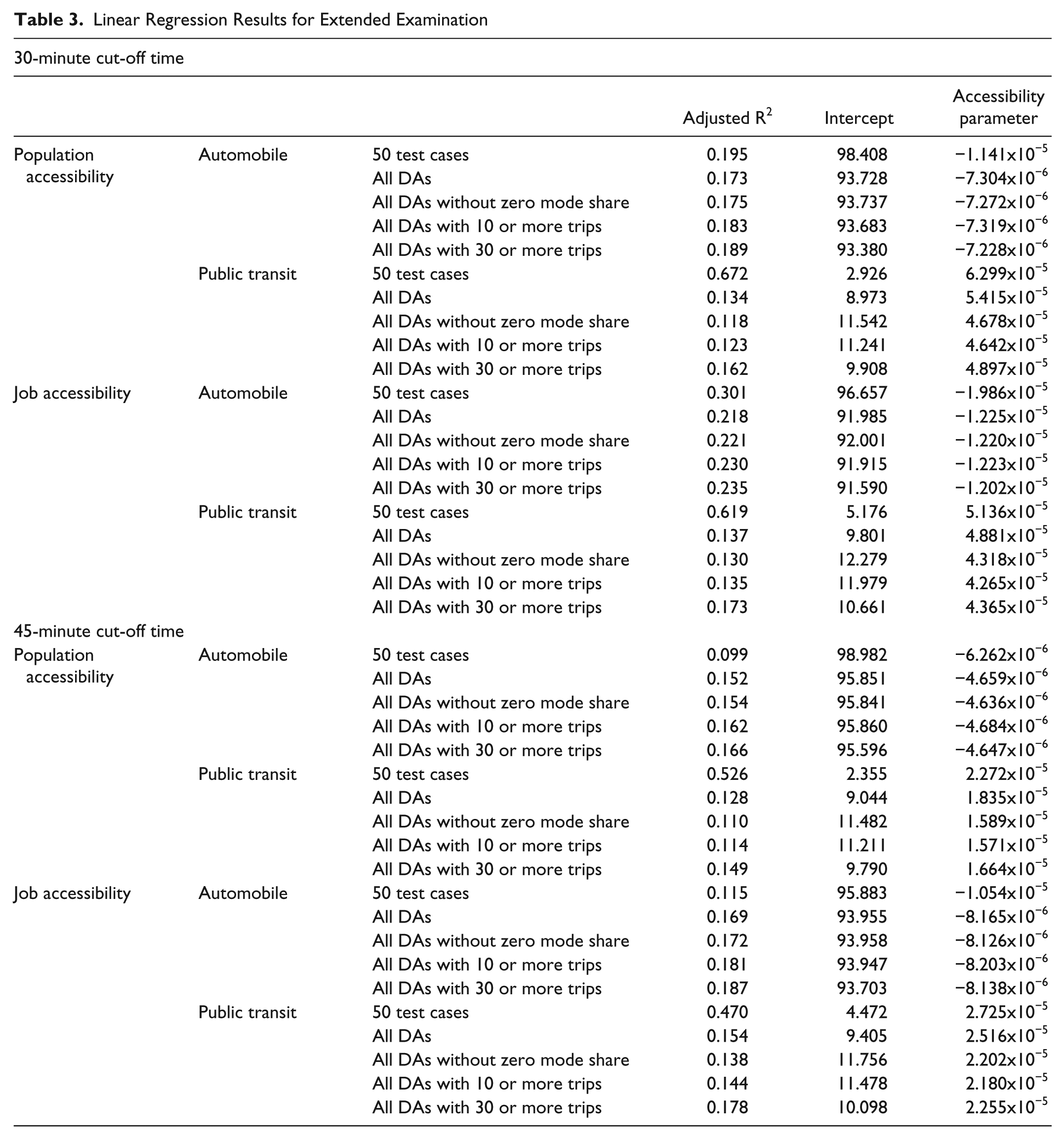
Since the adjusted R-square value decreases significantly in the all-DA case, additional regression models were built to investigate potential sources of this poor fit. First, models were run in which DAs with zero automobile and/or transit mode shares were deleted, since the simple linear model being used will not capture zero mode shares well. This results in only a very marginal increase in automobile model fits and decreases in transit model fits. Next, since the dependent variable is mode share and small-sample mode shares can be subject to significant sampling bias, models were estimated excluding DAs with less than 10 and 30 total trips. This improves the model fits marginally, yet overall the conclusions remain the same.
Nevertheless, 30-minute automobile model adjusted R-squares are generally about 2%~5% higher than the 45-minute model values. Yet for transit models, the 30-minute case only has a marginally higher adjusted R-square value than the 45-minute case for population accessibility, while the reverse is true for job accessibility. At both cut-off times, the job accessibility measure has a slightly higher correlation with either automobile or public transit mode shares than the population accessibility measure.
Conclusions
The analysis presented in this paper indicates that different cut-off times do impact the interpretability of accessibility measurements in the isochrone approach, as well as the extent to which such measures can explain travel mode choice.
The effect of picking different cut-off times changes between households because of their distinctive characteristics (e.g., located in urban or suburban area). Different types of accessibility measurements are also differentially affected by the chosen cut-off value. Given the large concentration of jobs in major, discrete employment areas within the urban area (e.g., downtown, near the airport) and the agglomeration of jobs to TAZ the impact of different cut-off times is greater on job-based accessibility measurement than population-based ones; a slightly different cut-off time used for measuring job accessibility may lead to a large difference in the results.
An ideal cut-off time would permit the analyst to differentiate meaningfully between cases (“variability”) while providing stable results for marginal changes in the cut-off value (“stability”). As indicated by the IQR analysis, variability is optimal at a 40-minute cut-off for population accessibility and a 35-minute cut-off for job accessibility in the automobile case. The variability increases with the cut-off time for both walking and public transit accessibility calculations without an obvious optimal value, although the rate of increase is higher between 20 and 40 minutes for transit access to population and 30 minutes for jobs. In the ranking analysis, the relationships between test cases becomes stable when the cut-off time for walking accessibility is larger than 15 or 20 minutes depending on whether a population- or job-based measure is used. In the public transit case, a stable relationship occurs after a 25-minute cut-off time for both types of accessibility measurements. However, there is no stable relationship observed at any cut-off times in the calculation of automobile accessibility.
Based on the linear regression results using the small 50-DA sample, a 30-minute cut-off time is preferred, in the region-wide analysis, the 30-minute cut-off works better than 45 minutes for population accessibility of automobiles, job accessibility of automobiles, and population accessibility of transits. For job accessibility to transit, a 45-minute cut-off time finds a better fit. Although the 50-DA test fails to identify a “best” cut-off time, for automobiles, a 30-minute cut-off works better than 45 minutes in both 50-DA and all-DA cases. In all tested linear regressions, job accessibility is a better predictor of mode choice than population accessibility.
Finally, the impact of different cut-off times on accessibility measurements exists when using the isochrone approach, but the results vary considerably between different transportation modes, population or job accessibility, and household characteristics. Comparing two commonly-used cut-off times, 30 minutes appears to be more suitable than 45 minutes for measuring automobile accessibility, but neither cut-off time demonstrates outstanding advantages in measuring public transit accessibility. Thus, a defined cut-off time for general use cannot be determined based on this analysis.
In general, the primary objective of this study was to find the ideal cut-off time for accessibility measures, but the analysis results indicated that it is hard to identify an optimal value for general use as it changes significantly under different conditions. Accordingly, this paper analyzed how the cut-off time varied and affected the measurement of accessibility to provide possible directions for future studies.
Future Work
Although it is found that different cut-off times do affect accessibility measurements, which further affect the predictions of travel behavior, the best general-purpose cut-off time for isochrone-based accessibility measurements is not yet determined, and may not be identifiable. This paper first explored the impacts of a wide range of cut-off times for a selected sample of 50 DAs, and then focused in detail on an analysis of all DAs in the GTHA using the two commonly used cut-off times (i.e., 30 and 45 minutes). It is suggested to continue the analysis for all DAs using more cut-off times and potentially smaller intervals. Also, the predictive power of these selected cut-off times can be further evaluated by comparing the predicted travel behaviors with real-time travel data once it is available in the future. More elaborated models analyzing the relationship between mode choice and accessibility (non-linear specifications, additional explanatory variables, etc.) can also be explored.
Footnotes
Author Contributions
The authors confirm contribution to the paper as follows: study conception and design: Prof. Shoshanna Saxe, Prof. Eric J. Miller; data collection: Prof. Saxe, Yang Xi; analysis and interpretation of results: Yang Xi, Prof. Saxe, Prof. Miller; draft manuscript preparation: Yang Xi. All authors reviewed the results and approved the final version of the manuscript.
The Standing Committee on Transportation Demand Forecasting (ADB40) peer-reviewed this paper (18-04640).