







Abstract
Travel is difficult without the supportive attitudes, norms, and skills that make up “motility,” the capacity for travel. Travel experiences are critical to developing motility. This study identifies factors that influence the development of bicycling motility through analysis of a prospective panel of 19 children, interviewed at ages 9, 12, and 15. This study is set in Davis, California, USA, where bicycling infrastructure is comprehensive, allowing a focus on the role of bicycle experiences. We analyze the interviews using structural and longitudinal coding techniques and find that bicycling experiences are associated with the types of attitudes held by the participants, especially at age 15, when the children come to value the independence and convenience of bicycling. Parental behavior and rules had important associations with the children’s bicycling behavior, particularly at younger ages. Friends reinforced bicycling behavior directly through the logistical challenges of traveling as a group at age 15. Gender was not associated with bicycling behavior in this setting. This study provides confirmatory evidence for the importance of motility and its behavioral determinants.
Driver’s training is considered a rite of passage for most US teenagers. Through online courses and in-vehicle training, they acquire the knowledge and skills needed to earn their driver’s license and become safe drivers. Depending on where they live, they may also informally acquire skills and knowledge necessary to make use of other modes of transportation, such as riding a bicycle or taking the bus. The competence to make use of transportation modes is called “motility,” a construct comprised of several dimensions: transportation access, skills and knowledge, and attitudes and norms ( 1 ).
Motility is necessary for travel. Those lacking formal (e.g., a driver’s license) and informal (e.g., years of driving experience) elements of motility face difficulties traveling, with implications for safety, accessibility, and equity. Yet travel experiences are necessary to build motility. An adult who never learned to bicycle as a child is unlikely to pick up the habit later in life, due to a lack of bicycling skills and knowledge, and perhaps negative perceptions as well. Despite its importance, the process of motility development has not been well studied, as most studies of travel behavior investigate the influence of attitudes, norms, and skills on behavior rather than the reverse, and usually at only one point in time ( 2 ).
We focus in this study on the development of bicycling motility, motivated by the environmental and health benefits of this mode. We conducted a prospective panel of interviews with parents and their children at ages 9, 12, and 15 in Davis, California, USA, to investigate how children build motility. Davis, with its extensive network of bicycle facilities, offers the opportunity to examine motility’s psychological constructs and causal influences in a context where infrastructure is not a limiting factor. We explore the questions: (a) How do bicycling behavior, attitudes, and norms change through childhood? (b) What role do bicycling experiences play in developing bicycling attitudes and norms? We consider as well, the influence of parents, peers, friends, and personal characteristics on behavior and motility. The results show a strong connection between bicycling motility and bicycling behavior.
Literature Review and Conceptual Model
Many studies have demonstrated the influence of the physical environment (e.g., distance to school, pedestrian and bicycle infrastructure) on active school travel (see Stewart et al. ( 3 ) for a review). Evidence exists for the influence of children’s personal characteristics and social spheres, as well. Though these factors are not the primary focus of this study, we include them as part of a larger socio-ecological framework ( 4 ) in examining motility development. The literature on motility and on the influence of personal and social-environmental characteristics informed our conceptual model.
Motility
The term “motility” has a well-established meaning in the fields of biology and medicine, referring to the ability to move ( 1 ). But in the early 2000s, the sociologist Vincent Kaufmann co-opted the term, applying it more abstractly to the skill and knowledge needed for traveling ( 1 ), such as understanding a timetable or bus route map. Kaufmann went further in postulating that motility also includes an individual’s “representations” of modes of travel, such as their attitudes or norms, as well as the constraints imposed by context, including physical or monetary barriers. Importantly for this study, individuals can increase their motility over time through their travel experiences, he suggested.
To more clearly operationalize the concept of motility, which at times is hazily described in the literature, we borrow the elements of the theory of planned behavior (TPB) ( 5 )—attitudes, subjective norms, and perceived behavioral control—as elements of motility. In contrast to most travel behavior studies, which use psychological constructs to explain or predict travel behavior, we focus on motility as the outcome variable of interest and behavior as a key determinant.
The theory of cognitive dissonance is particularly relevant to the motility framework’s positioning of behavior as a determinant of attitude. Cognitive dissonance theory originally posited that individuals are likely to work to re-align dissonant (i.e., conflicting) attitudes and behaviors, with attitudes more likely to change to be consonant (i.e., in agreement) with behaviors than the reverse ( 6 ). One might expect, given the authority dynamic between children and their parents, that children who are encouraged, instructed, or otherwise told to bicycle would bring their bicycling attitudes in line with their behavior. But studies show this tendency holds true among adults as well. Kroesen et al. (2017) found that dissonant Dutch travelers (i.e., those whose travel behavior and attitudes did not match) in a panel survey were more likely to shift their attitudes to a consonant state than to shift their behavior ( 7 ).
Researchers have also demonstrated that norms, that is, unwritten rules of proper behavior, have a strong relationship with behavior. Psychologists often distinguish between different types of norms, such as personal, descriptive, and injunctive. Personal norms are strongly tied to self-concept, in that violating personal norms tends to result in guilt while complying yields feelings of pride ( 8 ). Descriptive norms relate to what is perceived as typical behavior, and injunctive norms describe what behaviors are considered acceptable ( 9 ). Though the motility framework does not mention norms explicitly, it describes the importance of “appropriations” and “project[ions],” which refer to a bundle of psychological elements, including perceptions and personal meanings of different travel patterns ( 10 ). Research into bicycling ( 11 ) and other modes of travel confirms that social norms have strong influences on behavior.
Several studies have demonstrated that bicycling skills are influenced by maturation as well as experience ( 12 ), which is consistent with the power-law rule of practice: additional time spent learning a skill is (log-log linearly) associated with improved ability ( 13 ). In addition to the work of bicycle safety researchers, travel behavior scholars have also examined the influence of bicycling skill as described by perceived behavioral control or the related construct of “self-efficacy” ( 14 ), that is, what individuals think that they are able to do (e.g., ride a bicycle, read a transit map). Studies demonstrate that these constructs are associated with greater bicycling frequency ( 15 ).
Influence of Personal Characteristics and the Social Environment
Personal characteristics, especially gender and age, directly or indirectly influence children’s travel behavior and motility, according to prior studies. Girls are less likely to bike to school than boys ( 16 ), and young women tend to hold more negative attitudes toward bicycling, especially in adolescence ( 17 ). These gender differences often extend into adulthood as well ( 18 ).
Parents play a particularly strong role in early childhood development of bicycling skills and attitudes through the decisions they make ( 19 ) and the rules and examples they set ( 20 ). In contrast, friends’ behavior and attitudes may increase in importance as the child enters their teenage years ( 21 ). Researchers have not examined the role of friends and peers as closely as they have the influence of parents, but those studies that have analyzed friend and peer influence have demonstrated its importance ( 22 ). This effect appears to be particularly strong for active travel modes among girls, while boys appear to be indifferent to whether they feel that their peers think bicycling is cool ( 17 ).
Conceptual Model
Our conceptual model reverses the TPB to resemble the motility framework: bicycle behavior is the independent variable of interest, and the multi-dimensional construct of bicycling motility is the principal dependent variable. This study primarily attends to attitudes and norms as the underlying dimensions of motility, as the early rounds of interviews did not systematically assess bicycling skills and knowledge. This study also includes independent variables from the personal, social, and environmental spheres, consistent with the socio-ecological approach ( 4 ). All four independent factors (personal, parental, environmental, and friends’ influences) are conceived as influencing bicycling behavior directly, while friends, parents, and personal characteristics also influence bicycling motility. Personal characteristics, particularly age, are expected to moderate the influence of the other three independent variables on behavior and to moderate the influence of parents and friends on motility. We include a causal link from motility to behavior, reflecting the idea that attitudes and norms also influence behavior, in addition to being shaped by behavior, in a causal loop.
Methodology
Setting
This study uses a prospective panel of interviews in the city of Davis, CA ( 23 ). Davis, known as the bicycling capital of the United States, is virtually flat, has a Mediterranean climate, and is home to roughly 65,000 residents. Davis resembles, to a notable degree, a Dutch city: with over 50 miles (80 kilometers) of on-street bicycle lanes and 50 miles (80 kilometers) of off-street shared use paths in its 10 square miles (16 square kilometers) ( 23 ), Davis residents can reach many destinations within a short distance on safe facilities. In a striking similarity to Dutch statistics, 30%–50% of the city’s children aged 5 to 18 bicycle to school ( 24 ), 50% of the city’s university students bicycle to campus ( 25 ), and approximately 20% of staff and faculty at the University of California, Davis, the largest employer in the city, commute by bicycle ( 25 ).
Despite these conditions, a substantial proportion of children are driven to school and other activities, suggesting that bicycling infrastructure is a necessary but insufficient condition for bicycling ( 26 ). Davis thus enables us to study how personal and social factors rather than infrastructure influence children’s bicycling motility and behavior.
Sampling, Interviews, and Analysis
In the first round of interviews in 2009, Maiss and Handy recruited participants for the panel via flyers, convenience sampling, and newspaper ads ( 27 ). The resulting sample of 20 children, aged 8 and 9, was spatially distributed around Davis and balanced between boys and girls. Driller and Handy followed up with the panel in 2012 ( 28 ), refreshing and augmenting the panel as needed to build a new sample of 25 children, who at this stage were about 12 years old. In 2015, we conducted a third round of interviews with the participants, now aged 15. We added five new participants to account for dropouts, for a sample size of 24. Eleven of the original 20 children in 2009 participated in all three rounds of interviews, and an additional eight children participated in both 2012 and 2015. These 19 children form the basis for this study’s analysis. Since most of the children in the sample were age 9 in 2009, 12 in 2012, and 15 in 2015, the participants in these three rounds are collectively referred to as 9, 12, and 15-year-olds, respectively, in the results section.
Each round of semi-structured interviews used a script from which the interviewer could deviate slightly as appropriate to clarify meaning or elaborate ( 29 ). Though the focus of each round shifted slightly (e.g., Maiss and Handy studied mental maps ( 27 )), we asked a core set of interview questions regarding bicycling attitudes and behavior in all three rounds. In the 2015 interviews, we supplemented this core with questions about parental attitudes and behavior, friends’ attitudes and behavior, and subjective norms. We also issued a short survey to supplement the interviews and to better gauge the representativeness of the sample compared to the Davis population (using 2011–15 American Community Survey 5-Year estimates ( 30 )). The sample was approximately representative of the overall Davis population by measures of their families’ income, education, race, and gender (Table 1).
Sociodemographic Characteristics of the Sample and the Davis Population
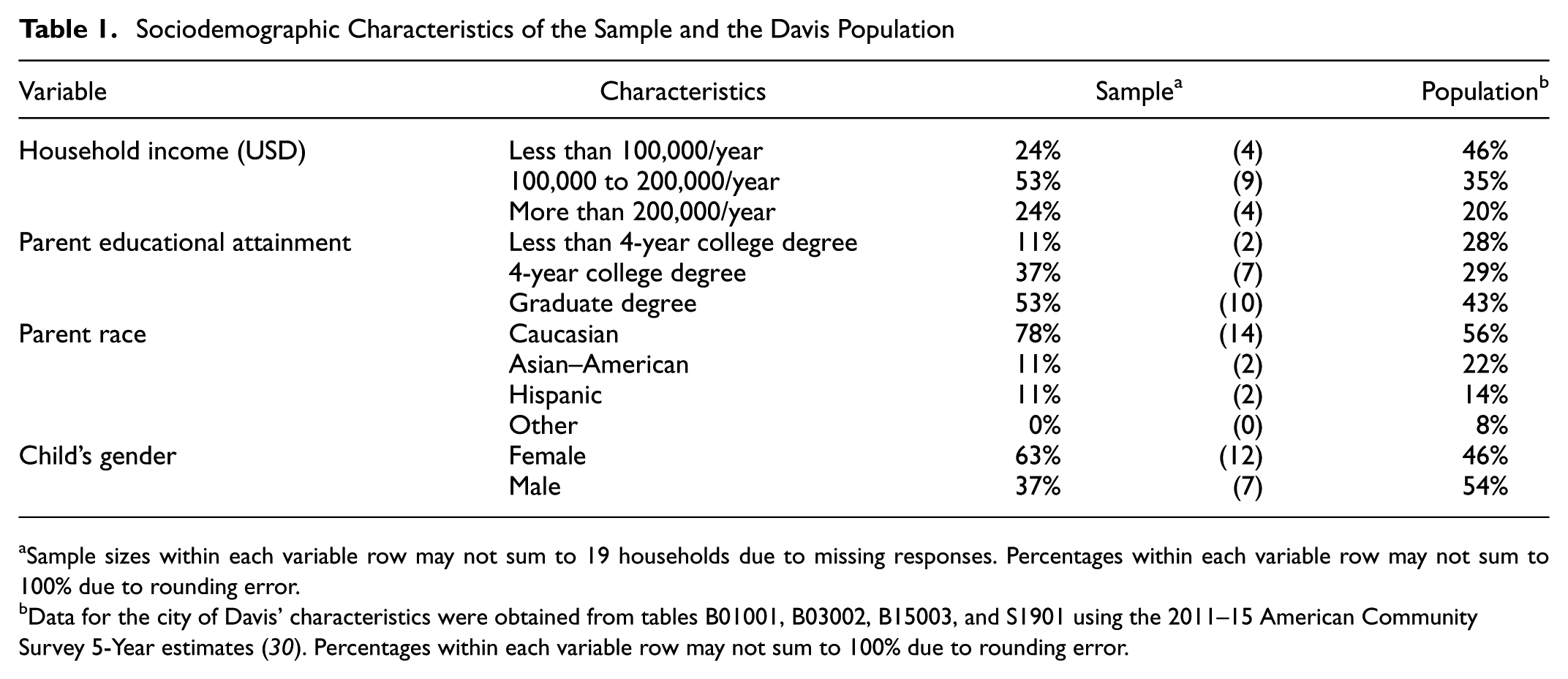
Sample sizes within each variable row may not sum to 19 households due to missing responses. Percentages within each variable row may not sum to 100% due to rounding error.
Data for the city of Davis’ characteristics were obtained from tables B01001, B03002, B15003, and S1901 using the 2011–15 American Community Survey 5-Year estimates ( 30 ). Percentages within each variable row may not sum to 100% due to rounding error.
Each interview was audio-recorded, and a professional transcription service converted the interview recordings into text. For the first cycle of analysis, we used a structural coding approach, in which we assigned a code representing one of our variables or other aspects of our conceptual model to specific statements by the participants ( 31 ). We conducted structural coding for all three rounds of the panel. We then applied a longitudinal coding scheme to the structural codes in a second cycle of analysis, allowing us to examine how the children’s bicycling frequency was associated with their bicycle use and motility (attitudes and norms), as identified in the structural codes. We present the longitudinal coding results in both descriptive and explanatory fashions in the results section.
Limitations
The small sample of this study reduces its generalizability, but the qualitative nature of the interviews and the prospective panel design contributes to good internal validity. The interviews more readily permit identification of causal mechanisms and important contextual factors than surveys alone, while the panel design allows us to assess the influence of characteristics in one time period on attributes in a later period.
The study has a number of potential biases. The types of families who move to Davis may be more pro-bicycling than families in other cities, resulting in self-selection bias. The sample did include families with a range of attitudes towards bicycling, however. The drop-out rate of panel participants would represent a source of bias if the probability of dropping out systematically varied with important characteristics of the participants. However, the children who dropped out were evenly split by gender and were somewhat more likely to bicycle frequently, resulting in more varied mode use among the remaining group of panel participants.
The generalizability of the specific results obtained in this study to other communities is uncertain, as Davis possesses unique attributes that encourage bicycling. However, the more universal relationships identified in this study with respect to travel behavior and motility are likely to generalize to other modes of travel and other contexts.
Results
Descriptive Analysis
Descriptive analysis of the temporal change in bicycling behavior, attitudes, and norms provides a starting point for understanding motility development in this study. In the discussion that follows, we provide the number of participants reporting a particular characteristic in parentheses (e.g., “[three]” to indicate three participants). The inset, italicized quotations include a letter in parentheses indicating the unique ID for that participant (e.g., “‘It’s fun to bike.’ [G]” refers to a quote from participant “G”).
Behavior
At age 9, most participants (six) rode their bicycle frequently (once a week or several times a week), while a smaller number rode daily (three) or infrequently (two; less than once a week; see Table 2). Three years later (after the addition of eight new panel members), this panel was composed of more frequent riders: eight rode daily, seven rode frequently, and four rode infrequently. The slight increase was due to increased bicycling frequency among the panel participants who participated in all three rounds, not due to bias in the panel participants that joined in the second round. Approximately the same was true at age 15, as nine rode daily, eight rode frequently, and two rode infrequently. Overall, the panel increased how often they rode their bikes, though in each round of interviews at least two participants rode their bicycle infrequently. This is the reverse of the age-related trend in bicycling seen elsewhere in the United States, where bicycling frequency is typically at its highest among young children and declines as individuals age ( 32 ).
Children’s Bicycling Behavior Over Time
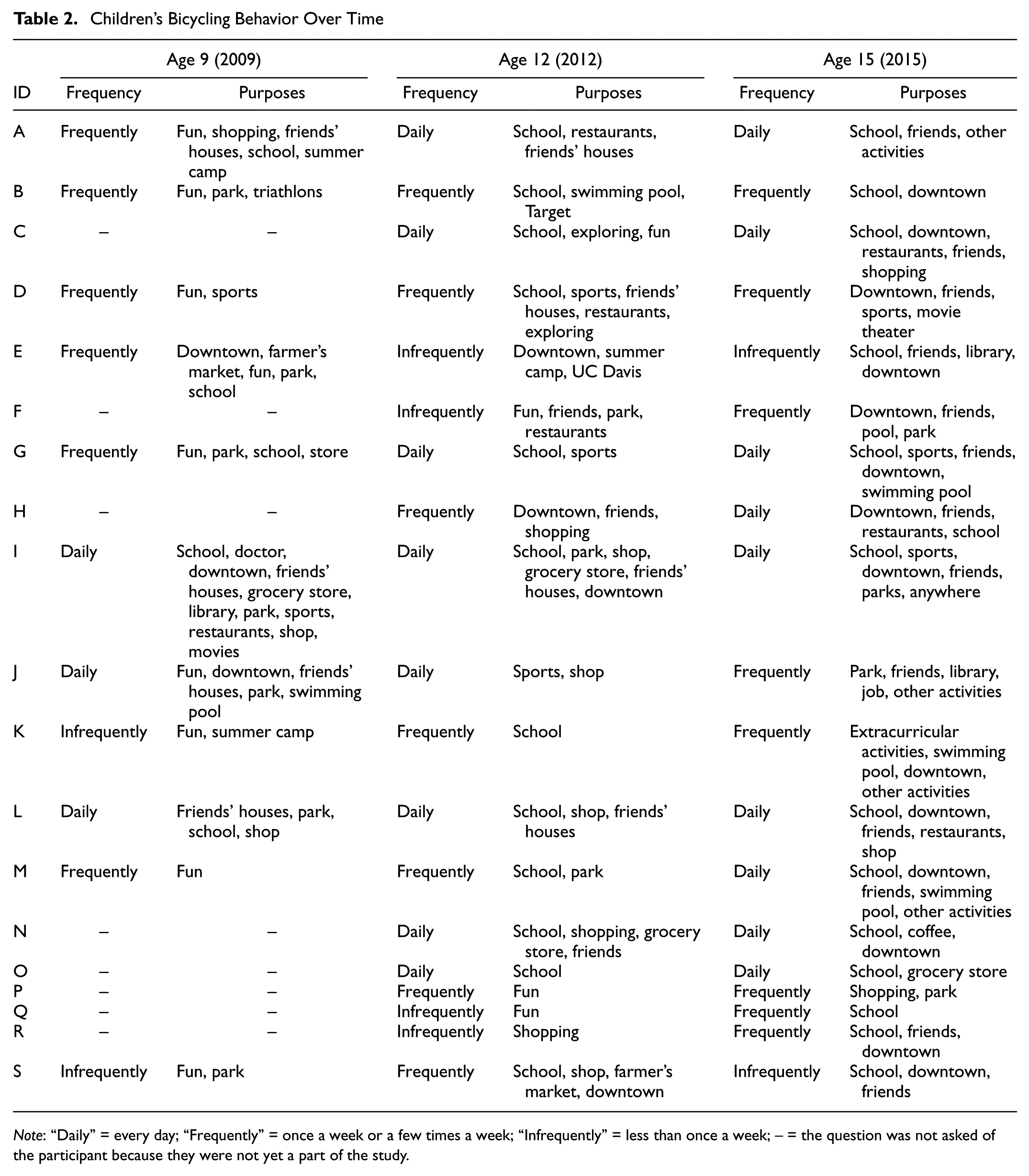
Note: “Daily” = every day; “Frequently” = once a week or a few times a week; “Infrequently” = less than once a week; – = the question was not asked of the participant because they were not yet a part of the study.
At age 9, the participants provided a wide variety of reasons for bicycling, though biking for enjoyment took precedence. The most common response (nine) was “for fun”—the intrinsic enjoyment of biking. On a related note, seven of the participants said they biked in order to get to the park, where they presumably had fun. Five of the respondents biked to school, and four each biked to meet with friends (typically at their house) or to go shopping. Three of the respondents mentioned biking downtown. The minimum number of purposes provided was one (by one respondent), the maximum was eleven (five excluding this apparent outlier), and the median was four purposes.
Three years later, respondents indicated fewer purposes for bicycling and the most common purposes had shifted. Twelve participants biked to school, eight rode their bicycle to go shopping, while six biked to meet with friends and five each for fun or to go downtown. The maximum number of purposes at age 12 dropped to six and the median dropped to three, suggesting that the overall variety of trips being taken by the 12-year-olds decreased slightly.
At age 15, the most common purposes shifted yet again, to biking to meet with friends (thirteen) and to reach downtown destinations (fourteen), suggesting that social outings were particularly important to this age group. Bicycling to school remained one of the most common purposes (fourteen), while participants mentioned other purposes substantially less often. At age 15, the minimum number of purposes remained at one, the median increased to four, and the maximum remained at six, a slight uptick in the overall variety of trips taken by the teenagers.
Overall, bicycling frequency was associated with the number of bicycling purposes: those who bicycled more often were more likely to report a larger number of purposes. Over time, the participants increased how often they rode their bicycles and simultaneously shifted the types of trips they made by bike. While 9-year-olds overwhelmingly rode for the intrinsic enjoyment of bicycling, by 12 the same children were more likely to be bicycling to get to school and at 15 most of the panel cohort had added biking for social purposes to their repertoire.
Attitudes
Across all three rounds of interviews, the participants almost unanimously reported liking to bike, overall (Table 3). The real nuance in understanding the children’s attitudes thus lies in the characteristics they cited as being reasons they like or dislike bicycling. As the children aged, the characteristics of bicycling that they like changed. 9- and 12-year-old children were more likely to enjoy intrinsic aspects (e.g., fun, movement, speed) of bicycling as well as the fun and ability to explore that they derived from bicycling. Yet these same children at age 15 appreciated the functional characteristics of bicycling as a way to travel quickly, independently, and flexibly, both with friends and to meet friends, and as a way to relax. In all three rounds, the most common characteristics of bicycling that participants disliked were the weather and effort associated with bicycling. Concerns about traffic and falling were somewhat prevalent at age 9 and 12, while concerns about appearance arose among some participants by age 15.
Children’s Bicycling Attitudes Over Time
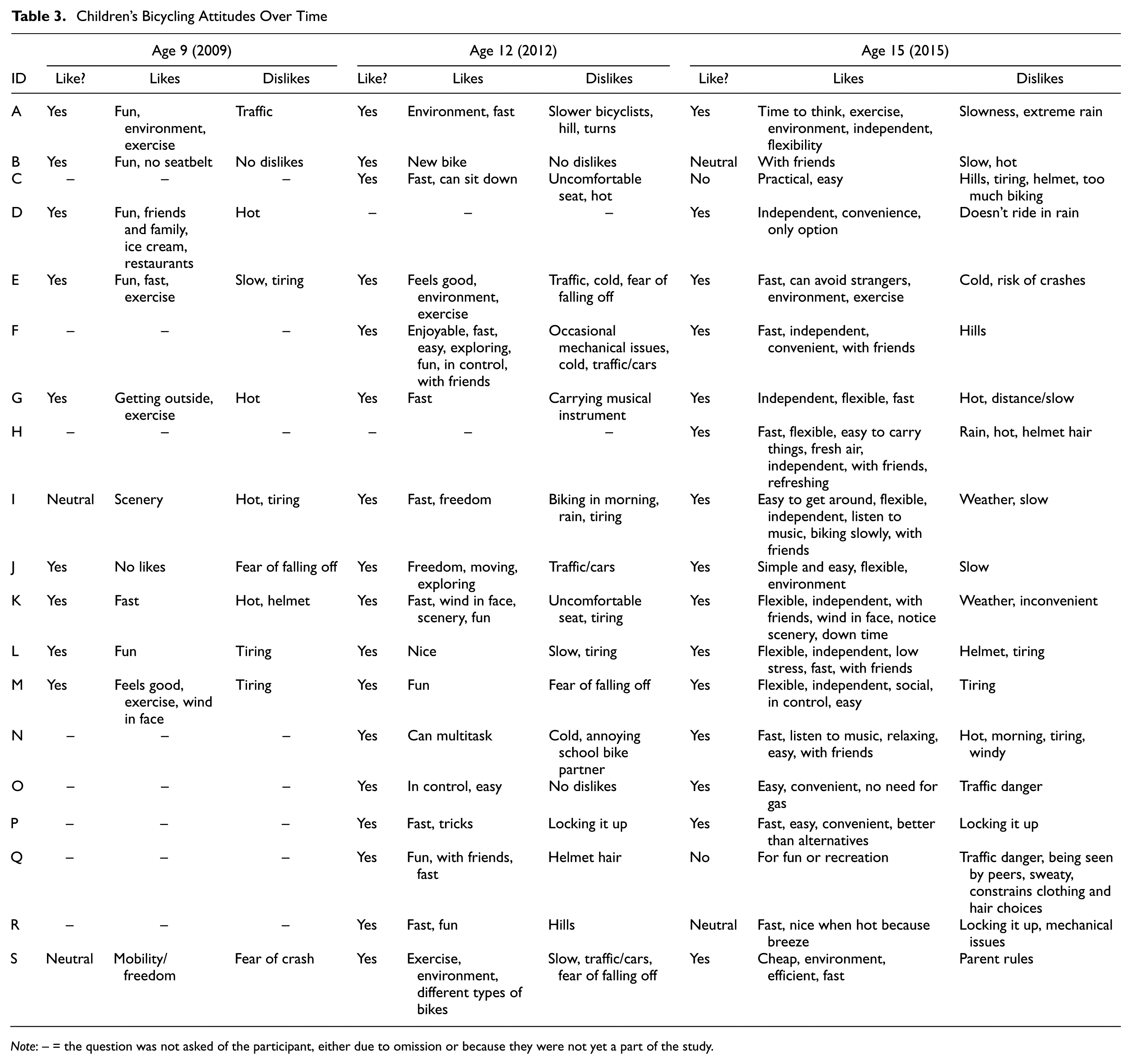
Note: – = the question was not asked of the participant, either due to omission or because they were not yet a part of the study.
At age 9, among the 11-person panel, the most frequently cited aspects of bicycling that the participants liked were related to the intrinsic enjoyment of biking as “fun” (six). Though their descriptions at this age were plain, they were clear: It’s fun to bike. (G)
Four also said they enjoyed it for the exercise; three said they liked biking for the physical, embodied experience (its movement and freedom); two reported enjoying being outside, seeing the scenery, and not being confined to a car; and two liked the speed of bicycling.
After the panel was augmented by an additional eight participants at age 12 (bringing the panel size to 19), many of the same characteristics were mentioned again: speed (nine), fun (seven), the physicality of bicycling (five), and seeing scenery/exploring (three): There’s wind in your face and stuff, and it’s nice and you can look around more than in a car because there’s only a window. You can look around and you see all sorts of things. (K)
One change was an increase in the number of children (three) noting the environmental benefits of bicycling as a reason they liked it: Well, it’s healthy for you and it’s healthy for the environment and stuff. (S)
At age 15, the 19 participants were much more likely to cite functional aspects of bicycling as reasons they liked to ride a bicycle. Flexibility, convenience, or practicality (fifteen), independence (nine), and speed (especially relative to walking; nine) were the most frequently-mentioned characteristics at this age. These children appreciated being able travel efficiently and quickly on their own (with parental permission) without needing to schedule a car ride with their parents in advance. Many of these teenagers liked the convenience of leaving when they wanted, rather than potentially being restricted to leave at a certain time in order to match their parents’ schedules: I don’t have to wait for my parents to be able to take me places so I can just go when I’m ready. (G)
They also attributed their enjoyment of bicycling at this age to socializing (eight) and relaxation (six): Being with your friends is kind of more fun. And I guess in general when you’re with your friends more, and it wouldn’t really matter where you’re going because you’re with your friends and you can like talk and stuff. (B)
A small number of participants labeled the physicality of bicycling (e.g., being in control, moving; four) and the environment (four) as reasons for liking to bike.
Though most children reported a substantially larger number of qualities they liked than disliked about bicycling, almost all had at least one quality of bicycling that they said they disliked in each round of the interviews. At age 9, unpleasant weather (four) and the effort and slow speed of bicycling (four) were the most commonly cited reasons for disliking to bike: If you have to bike really far sometimes it’s kind of tiring and you have to stop at lights and stuff. (E)
Fear of traffic and cars were mentioned by two respondents and concerns with falling were mentioned by one participant.
At age 12 (keeping in mind that the panel increased in size from 11 to 19 children), the effort and slow speed of bicycling (seven) and unpleasant weather (five) remained common responses. The children became more likely to report traffic/cars (four) and fear of falling (three) than they were at age 9: I’m scared of crossing the street. [And] I just get scared that I’m going to fall off sometimes. That’s why I don’t like riding my bike alone. (E)
Three years later at age 15, the 19-child panel provided unpleasant weather (nine) as well as the effort and slow speed of bicycling (eleven) as the primary reasons for not liking to bicycle. Fear of falling was not mentioned, while fear of traffic remained present but uncommon (three). Concerns about appearance became prevalent (four), primarily related to helmets and their impact on hair style choices, as well as the need to choose certain types of clothing if riding a bike.
At ages 9 and 12, several of the children had concerns regarding falling off their bicycle, suggesting that these children may not have been very confident in their bicycle handling skills, particularly on city streets. Though skills and knowledge were not directly assessed in the interviews, these attitudinal responses point to low bicycling skill (i.e., perceived behavioral control or self-efficacy). By age 15, in contrast, the slow speed of bicycling and the effort required were the main characteristics of bicycling that these children disliked, and fear of falling had completely disappeared, indicating bicycle handling proficiency.
Norms
We assessed injunctive norms (i.e., unwritten rules about how you should behave) at age 15 through questions about peers’ personal attitudes toward bicycling and the image of bicycling at school (Table 4). Participants viewed their peers as holding neutral or slightly positive attitudes toward bicycling: nine said that the average attitude toward bicycling was neutral, six said that their peers were at least neutral toward it, while four said that most of their peers liked to bike: I’d say at least the majority of people bike to school [and] they enjoy it. … It’s just sort of normal, it’s like eating. (A)
Children’s Perceptions of Peer Norms at Age 15
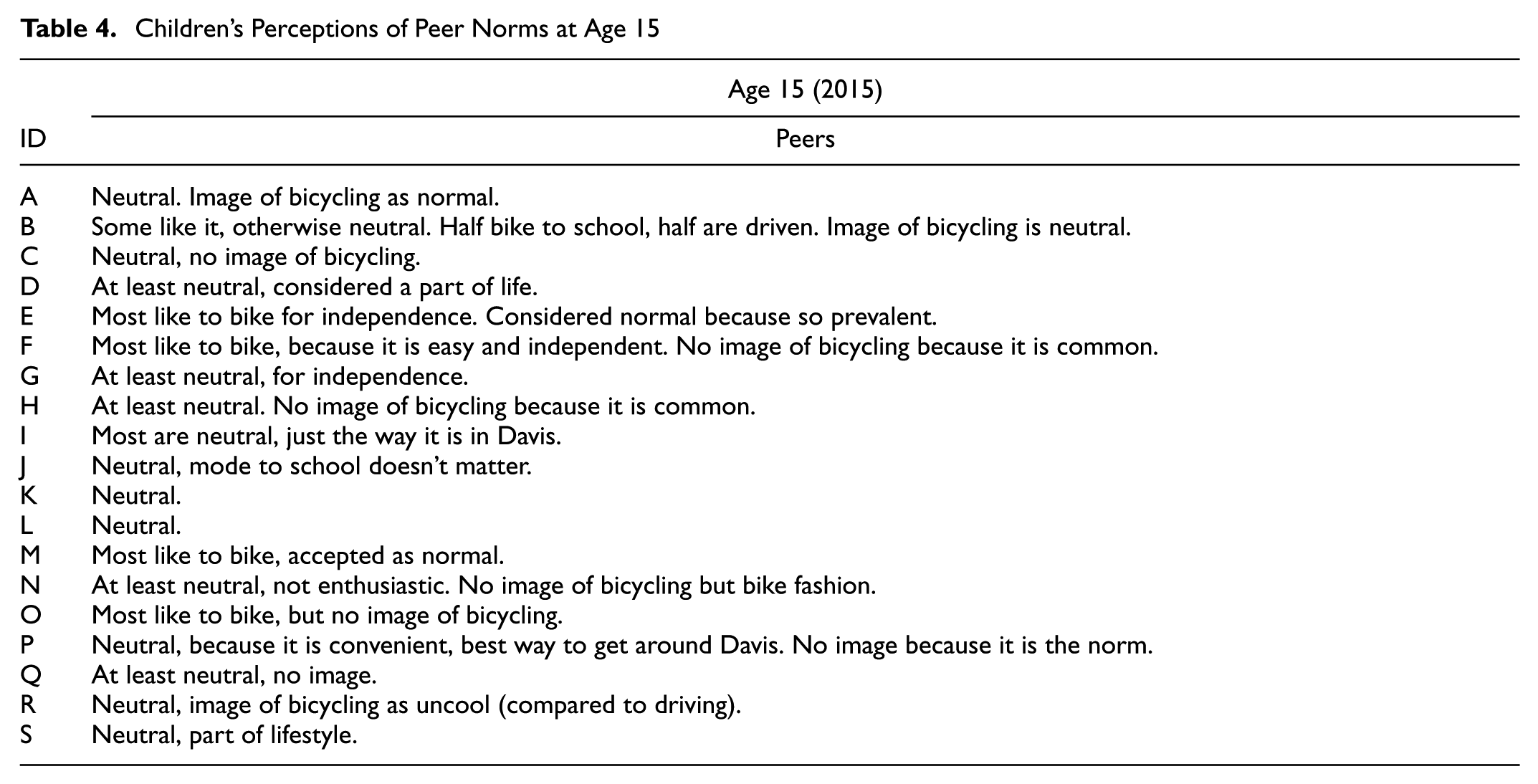
Several participants justified this perspective by suggesting that bicycling is part of the Davis lifestyle: I think biking is just kind of part of life in Davis. (D)
Explanatory Analysis
Our goal for this study was to answer the question: What role do bicycling experiences play in developing bicycling attitudes and norms? To do so, we begin by dividing participants according to their typical bicycling frequency over the three rounds of interviews. We define three groups: infrequent bicyclists (E, F, Q, R, and S), frequent bicyclists (B, D, H, K, M, and P), and daily bicyclists (A, C, G, I, J, L, N, and O). Each individual child’s bicycling frequency was remarkably stable, shifting by no more than one category throughout the six years of this panel study. We assess systematic differences in attitudes and norms between these three groups before examining the additional influence of parents, friends, and personal characteristics.
Attitudes and Attitude Change
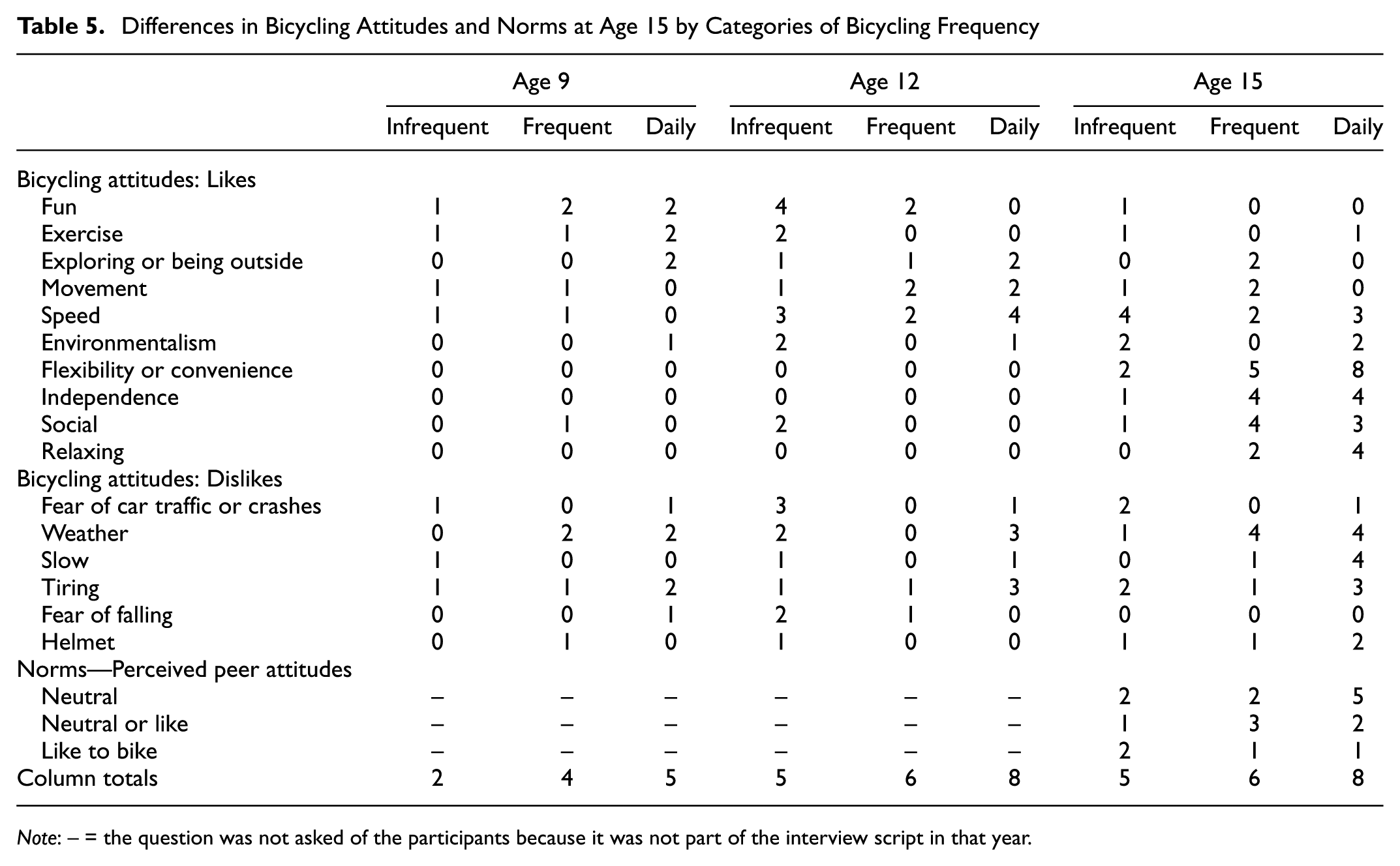
All three groups had similar bicycling attitudes at age 9 and 12 (Table 5). The biggest divergence seems to occur at age 15: just two of the five infrequent bicyclists came to appreciate the independence and flexibility afforded by bicycling, while all but one of their peers who bicycled frequently or daily came to like that aspect of bicycling. This result is intuitive, as infrequent bicyclists are unlikely to experience the independence and flexibility provided by a bicycle if they do not ride it often enough. But it has important ramifications, as failing to gain an awareness of how bicycling can fit into a (young) adult life could possibly hinder later adoption of bicycling.
Differences in Bicycling Attitudes and Norms at Age 15 by Categories of Bicycling Frequency
Note: – = the question was not asked of the participants because it was not part of the interview script in that year.
Dislikes of bicycling were also associated with bicycling behavior. Fears of falling or crashing were more likely to be reported by the infrequent bicyclists, suggesting that less bicycling experience reduced these participants’ bicycling skills, another important component of motility. At age 12, three of the five infrequent bicyclists mentioned fear of car traffic as a reason they disliked bicycling, whereas their peers were unlikely to list these fears at all. Similarly, two of the infrequent bicyclists mentioned fears of falling off their bike, while only one frequent bicyclist and one daily bicyclist identified this as a dislike. Although concerns about bicycle handling disappeared by age 15, two infrequent bicyclists and one daily bicyclist still cited fear of crashing as a characteristic of bicycling that they disliked.
Norms and Norm Change
Norms, which we operationalize as perceived peer attitudes toward bicycling, were negatively associated with personal bicycling behavior. Infrequent bicyclists were proportionally more likely to feel that their peers liked to bike (two of five infrequent bicyclists) compared to their frequent and daily bicyclist peers (one of six and one of eight, respectively). Though this association is tenuous, this pattern suggests that the infrequent bicyclists see their peers as liking to bike more than they do, as a way to explain to themselves why their peers are bicycling at higher rates.
Influences of Parents, Friends, and Personal Characteristics
Parents’ bicycling behavior was associated with their children’s bicycling behavior and attitudes, though not with their children’s injunctive norms about what is acceptable. Parents’ bicycling appears to serve as a model to the children, and the parents’ bicycling experiences could inform rules requiring their child to bike as well as aid them in helping their child overcome common bicycling barriers. Some parents imposed rules to limit the distance or location of independent bicycling at age 9 and 12. For example, some parents identified key locations that caused them worry, such as a bicycle underpass beneath a railroad track with low visibility. However, these rules declined in strictness as the child aged, in line with this study’s conceptual model.
We could not explore the influence of friends’ behavior, attitudes, and norms as easily as those of parents, who were directly involved in the interviews. The evidence we do have suggests that the influence of friends is similarly potent, particularly at older ages. At age 15, the social element of bicycling rose to the fore. Through the interviews, it became apparent that friends likely reinforced positive bicycling attitudes and norms indirectly through the relatively mundane act of coordinating social gatherings with friends. For example, if several friends were meeting downtown, and one friend was driven by a parent, the teenagers would complain that they were hindered from moving around downtown easily by bicycle because they would need to walk with their bicycle-less friend. They therefore much preferred when all members of the group had bicycled to get downtown so that they could spontaneously create or change plans.
Gender differences in bicycling seen elsewhere in the United States do not seem to hold in Davis. Both sexes are well represented in each bicycling behavior group: infrequent bicyclists (1 male, 3 female), frequent bicyclist (3 males, 3 females), and daily bicyclists (3 males, 5 females). However, at age 15, young women were the only panel participants to report neutral (two) or negative (two) attitudes toward bicycling. This may be related to external, societal standards of appearance for young women, reflected in their reported concerns over the impacts of bicycling on perspiration, hair style, and clothing choice.
Discussion of Results
This study finds that children’s bicycling frequency is associated with their bicycling attitudes and norms, in support of the motility framework and this study’s conceptual model. At age 15, frequent and daily bicyclists almost universally voiced their appreciation of the independence and convenience provided by the mode. Infrequent bicyclists were less likely to note these characteristics as reasons for liking to bike, likely because they did not use it often enough or in sufficient settings for this benefit to become apparent. This research identifies behavioral antecedents of these attitudes: because these individuals were bicycling at high levels before they acquired their liking of the independence and convenience of bicycling, we can conclude that their bicycle behavior in part caused the development of these attitudes.
Whether positive bicycling attitudes have formed by age 15 is especially relevant from a practical standpoint, since at this age the teenagers’ ineligibility to hold a full driver’s license restricted their mobility. Holding positive attitudes toward bicycling at this life stage is therefore likely to facilitate independent travel (and vice versa) rather than a dependence on chauffeured trips by parents.
Bicycling behavior was also associated with the perception of norms held by peers and with the bicycling behavior of friends. Infrequent bicyclists were more likely to perceive peers as liking to bike, perhaps as a way for them to explain to themselves why others are bicycling more frequently. The social influence of friends increased bicycling and contributed to more positive attitudes about bicycling, creating positive feedback loops to reinforce bicycling behavior.
Previous research at both aggregate ( 32 ) and disaggregate ( 21 ) scales suggests that bicycling rates decline when American children reach their teenage years. The results of this study demonstrate the opposite, showing that children in Davis, CA, are as, if not more, likely to ride their bicycles as young teenagers. Though the influence of the built environment is not the primary focus of this paper, these results inevitably point to the value of the comprehensive, safe bicycle network that Davis planners and elected officials have cultivated over the past decades ( 23 ) in not just promoting bicycling but also building bicycling motility. Another round of interviews with this panel will enable us to assess the degree to which bicycling motility changes as these teenagers become eligible for driver’s licenses.
Footnotes
Acknowledgements
The authors thank the University of California Transportation Center, National Center for Sustainable Transportation Dissertation Fellowship, and Dwight D. Eisenhower Transportation Fellowship for funding interview administration and analysis. They also thank Rachel Maiss and Brigitte Driller for their excellent stewardship of the first two rounds of interviews. Lastly, they wish to thank the Davis, California, families for taking the time to share their travel experiences and attitudes over multiple rounds of interviews.
Author Contributions
The authors confirm contribution to the paper as follows: study conception and design: S. Handy, C. Thigpen; data collection: S. Handy, C. Thigpen; analysis and interpretation of results: S. Handy, C. Thigpen; draft manuscript preparation: S. Handy, C. Thigpen. All authors reviewed the results and approved the final version of the manuscript.
The Standing Committee on Bicycle Transportation (ANF20) peer-reviewed this paper (18-00147).