







Abstract
This study investigates transportation disadvantage (TD) and its impact on social exclusion among lower-income older adults (n = 10) through the use of a custom-designed daily transportation diary app, MyAmble. The study utilized an ecological momentary assessment design using the Travel Buddy, which was the qualitative feature of MyAmble. The Travel Buddy allowed study participants to share their transportation experiences as they relate to the following domains of social exclusion: quality of life, participation, and resources. Conventional content analysis revealed five primary themes related to TD and social exclusion: constrained autononmy and flexibility, safety concerns, dimished emotional well-being, barriers to community engagement, and burdensome. The Travel Buddy produced qualitative data that contextualize lost opportunities and how characteristics of economic justice exacerbate the risk of TD, as well as how individuals manage within these intersections of disadvantage. Study findings provide insight for expanded conversations about how to transform transportation planning from mobility to equity. Finally, the use of ecological momentary assessment through digital platforms such as the Travel Buddy offer an innovative way to collect holistic data related to TD that will lead to better opportunities for transportation planners, engineers, and social service providers to work together to address the needs of environmental justice populations, including lower-income older adults.
In the United States, more than 20% of residents are projected to be age 65 or older by the year 2030 ( 1 ). Most older adults report preferring to remain in their home as they age; however, with growing numbers of older adults seeking home and community-based supports to age in place, communities around the United States often encounter complex challenges in meeting the long-term needs of this population ( 2 , 3 ). Environmental obstacles to aging in place are especially salient in low-density urban and suburban cities characterized by sprawl ( 4 ). Older adults who are lower-income, have a disability, or both are often considered transportation disadvantaged ([TD]: please note, TD refers both to transportation disadvantage and the disadvantaged in this paper) ( 5 ), in that they are unable to drive owing to disability or a medical illness, are unable to afford a vehicle, or lack access to transit services, and also have limited access to other transportation options. In the context of urban sprawl, TD is compounded ( 6 ), as they face further obstacles that impede access to healthcare services, healthy food, social connectivity, and community engagement ( 7 , 8 ). TD is characterized by difficulties both accessing and maintaining adequate transportation ( 9 – 11 ). Research demonstrates that TD can have detrimental implications on individuals’ overall quality of life ( 12 ) and life opportunities, including employment ( 13 – 16 ), education ( 15 – 17 ), healthcare ( 16 , 18 – 20 ), social activities ( 10 , 15 , 16 , 21 ), and nutrition ( 16 ). TD may also be a contributing factor in the social exclusion (SE) of some populations ( 22 – 26 ).
Social Exclusion
SE, broadly used in the social policy literature, refers to a “group of people living on the margins of society and, in particular, without access to the system of social insurance” (e.g., government assistance) ( 27 ). Although scholars note that there are differing operationalizations of the concepts associated with SE, the term has generally come to be accepted as the process by which marginalized individuals’, groups’, and communities’ abilities to obtain resources, goods, and services are impeded upon ( 27 – 33 ). One of the critiques of the extant literature on SE is the lack of standardized, validated measures to capture the complex concept ( 34 , 35 ).
Although difficult to measure, scholars have found that SE is a multi-dimensional process that can occur across one or a combination of the following arenas: a) economic; b) social; c) cultural, and; d) political ( 27 , 32 , 33 ). Exclusion in one arena can lead to exclusion in another, simultaneously or across the life-span, and this cumulative disadvantage can perpetuate a cycle that is difficult to overcome ( 29 ). Therefore, some advocates propose strategies and solutions to prevent social exclusion altogether, rather than strategies to combat or mitigate the symptoms associated with SE ( 29 , 31 ). Acceptable access to affordable, suitable, and adequate public transportation may be a preventive solution as public transport involves traveling with others and provides opportunities for social engagement while traveling to obtain goods and services ( 29 , 36 ).
Transport-Related Social Exclusion
Transportation, or lack thereof, is an important factor to consider when analyzing SE. Transport-related SE limits individuals’ abilities to participate and engage in desired activities ( 21 , 22 , 37 , 38 ). Individuals experiencing TD and transport-related SE often report high costs, limited available routes, safety concerns, long wait times, length of time spent traveling, and inconvenient stops and transfers ( 21 , 37 – 39 ). Research demonstrates that transport-related SE significantly negatively affects social outcomes including employment, health, education, and social inclusion ( 21 , 38 ). Church and colleagues identified seven transport-related SE types: 1) physical exclusion, 2) geographical exclusion, 3) exclusion from facilities, 4) economic exclusion, 5) time-based exclusion, 6) fear-based exclusion, and 7) space exclusion ( 38 ). Later, Greico collapsed these seven types into three core components: 1) place-based measures, 2) social-based measures, and 3) person-based measures ( 40 ).
Transportation Disadvantage and Social Exclusion
Research demonstrates that some groups are particularly vulnerable to either TD or SE but there are also groups at increased risk of both TD and SE ( 41 ). Many of these particularly vulnerable groups are considered environmental justice populations, including individuals living in low-density urban environments ( 7 , 16 ), older adults ( 11 , 42 – 46 ), racial and ethnic minorities ( 16 , 47 ), and households below the poverty line ( 39 , 48 – 50 ). Although large cities and metropolitan areas tend to have public transportation systems, infrastructure is lacking in low-density urban environments and rural areas ( 7 , 51 , 52 ). Therefore, individuals living in these areas are dependent on personal vehicles, and individuals who are unable to afford a vehicle or are unable to drive because of a physical or mental disability experience high rates of TD ( 7 ). For these individuals, research indicates that they spend little time outside of their homes and rarely engage socially with unpaid visitors ( 34 , 53 ).
Households below the Poverty Line
Household income is associated with the primary type of transportation utilized, car ownership, and SE. In fact, researchers found that “social exclusion is intricately related to poverty and deprivation, and it is difficult to separate the two at both a theoretical and a practical level” ( 34 ). In the United States, over three-quarters of public transportation users have annual household incomes of less than $50,000, with nearly one-third of users earning less than $15,000 ( 15 ). Not only do low-income households have to rely on public transportation, but they also have to spend a more substantial proportion of their annual incomes on transportation. Households in the lowest income quintile spend about 36% of their annual budget on transportation compared with 14% for those in the highest quintile ( 15 ).
The proportion of annual household income that low-income families spend on transportation is projected to increase in the coming decades ( 54 , 55 ). The majority of households living below the poverty line do not have access to reliable personal vehicles and fares are disproportionately expensive for public transportation, when it is accessible and suitable ( 15 , 21 , 56 , 57 ). Consequently, many people with low incomes become isolated, unable to travel to desired activities outside of their immediate neighborhoods ( 56 , 57 ).
Older Adults
Research suggests that lower-income older adults are at high risk of SE in part on account of TD ( 58 ). A study of 20,275 home-dwelling older adults across 80 municipalities found that more than 60% of participants experienced SE in two or more of the SE arenas ( 35 ). The most commonly reported exclusion arenas were political and social, with older adults describing the desire to vote and participate civically and limited interactions with friends as well as high rates of self-reported loneliness ( 35 ). Findings indicate that access to adequate transportation may play a critical role in successful aging in place ( 59 – 61 ). Driving cessation causes older adults to become more dependent on public transportation or to rely on family and friends for rides to goods and services ( 12 , 44 ). In the United States, studies estimate that more than 600,000 older adults will stop driving every year because of changes in physical and cognitive health status ( 44 , 62 ). Without adequate transportation, these individuals are at high risk of becoming excluded, particularly politically and socially ( 12 , 35 , 44 ).
SE means more than social isolation. It is a process in which structural factors within the community impede individuals’ opportunities for upward mobility and deny them basic needs and rights. Structural factors may include discriminatory allocation of public services and infrastructure, such as transportation. Unsurprisingly, the individuals at high risk of SE tend to be the same individuals who are at high risk of TD—low-income older adults, minority populations, and individuals who are on lower incomes ( 41 ). TD may even cause SE; at the very least, adequate access to transportation is a fundamental component of social inclusion ( 24 , 26 , 63 , 64 ).
Current Study
In summary, a paucity of published research using the SE framework to explore TD among older adults within the United States currently exists. Existing studies examining the relationships between older adults and transportation mobility often focus on individual level factors (e.g., sociodemographics, health-related variables) with scant attention to the contextual factors behind older adults’ experiences with transportation. Furthermore, research on transportation mobility and aging is hampered by methodological difficulties and the limited scope of discovery inherent in the use of traditional travel surveys and travel diaries to capture the lived experience of transport structure ( 64 , 65 ). Thus, the current study fills an important gap in the literature by investigating TD and its impact on SE among a highly vulnerable population of older adults that are often overlooked by transportation researchers. The research team custom-designed a daily transportation diary app, MyAmble, which included a feature for older adults to qualitatively share their transportation experiences as they relate to the following domains of SE: resources, participation, and quality of life ( 66 ). This qualitative feature was named Travel Buddy in reference to the text-messaging that occurred between two “buddies” (i.e., participant–researcher dyad). The use of Travel Buddy extends the typical travel diary to capture more qualitative detail about the lived experience of TD individuals using a digital platform for data collection. The researchers also collected quantitative data related to participants’ daily activities using MyAmble; however, these results are presented in detail elsewhere ( 67 ) as the focus of the current study is on the Travel Buddy feature of the app.
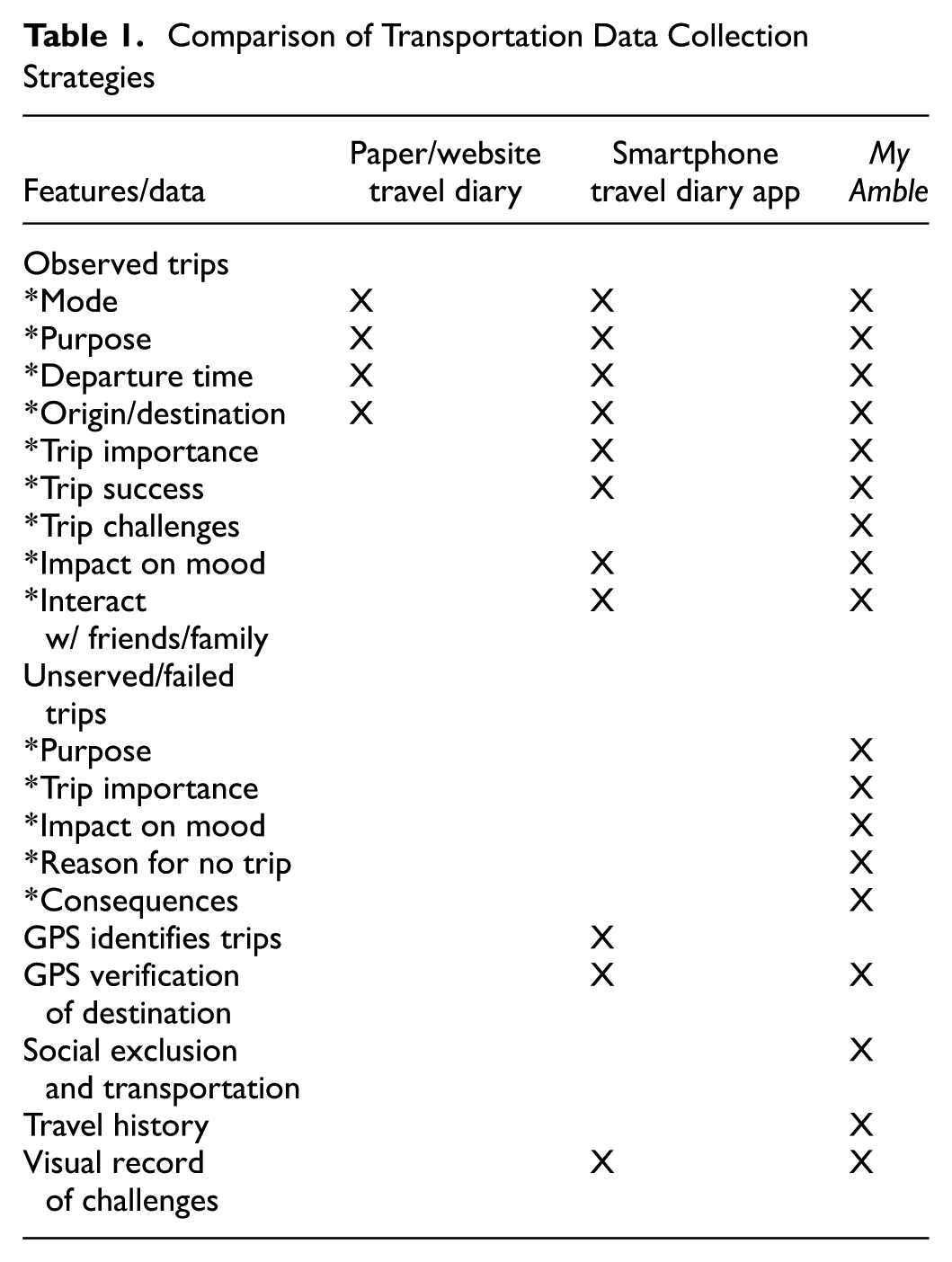
The overall purpose of creating MyAmble and the Travel Buddy was to address the need for data collection strategies and techniques that capture the unserved travel demands of TD individuals. Unlike other transportation data collection strategies, MyAmble provides the advantage of holistically capturing the consequences of unrealized but desired travel experiences (see Table 1). MyAmble includes four features: 1) daily trip planner, 2) travel history, 3) challenge logger, and 4) Travel Buddy ( 66 ). The daily trip planner allows participants to record their daily experiences with transportation mobility and includes prompts to capture unserved travel demand. The travel history prompted participants to share their previous experiences with transportation mobility with the aim of capturing the contextual factors related to TD. The challenge logger enabled participants to utilize videos, photos, or both to document real-time transportation barriers in the environment. Finally, the Travel Buddy enabled the research team to collect data related to SE and TD.
Comparison of Transportation Data Collection Strategies
Methods
Design
A large and diverse team comprised of faculty and graduate students in social work, civil engineering, and computer science undertook this project. The team utilized an intentional inter-disciplinary approach in that the members actively integrated the expertise of the three disciplines into the conceptualization, planning, and implementation of the app ( 68 ). Table 1 illustrates a comparison of transportation data collection strategies including MyAmble. Android tablets were used as the digital platform for this study, in part given their dominant market share (60%). Each participant was lent a Samsung Galaxy tablet (10 in.) and a Verizon Wi-Fi hotspot for the duration of the study. The participants returned the tablets to the university at the conclusion of the study.
The study utilized an ecological momentary assessment design ( 69 , 70 ) using Travel Buddy, which was the qualitative feature of MyAmble. An ecological momementary assessment design provided the advantage of real-time, qualitative data collection in a naturalistic setting (e.g., home/community) with minimal recall bias ( 69 ). Travel Buddy was designed to be a dynamic feature that captures more in-depth, perceptual data related to TD versus traditional static data collection methods such as surveys or in-person interviews that do not take place on a daily basis. The Travel Buddy provided a digital platform for the use of ecological momentary assessment whereby more in-depth, ongoing conversations related to the lived experience of TD could take place. Each study participant was partnered one-to-one with a virtual “Travel Buddy” (researcher); the researcher text messaged six standardized questions related to TD and social exlusion four to five times per week over the 14-day study period. Travel Buddy questions elicit information across the three domains of the theoretical framework of SE: quality of life, participation, and resources (see Figure 1). Probing questions were also used to keep the lines of communication open between researcher and participant, and to encourage conversation related to the domains of SE. Participants could respond to Travel Buddy questions using the tablet’s keyboard or through a voice-to-text microphone embedded in MyAmble. To notify participants of when they received a message, the tablet device played a musical alert and presented a pop-up notification. When the participant pushed “OK” on the notification, it led them directly into the Travel Buddy chat where he or she could respond via text message to the question/s.
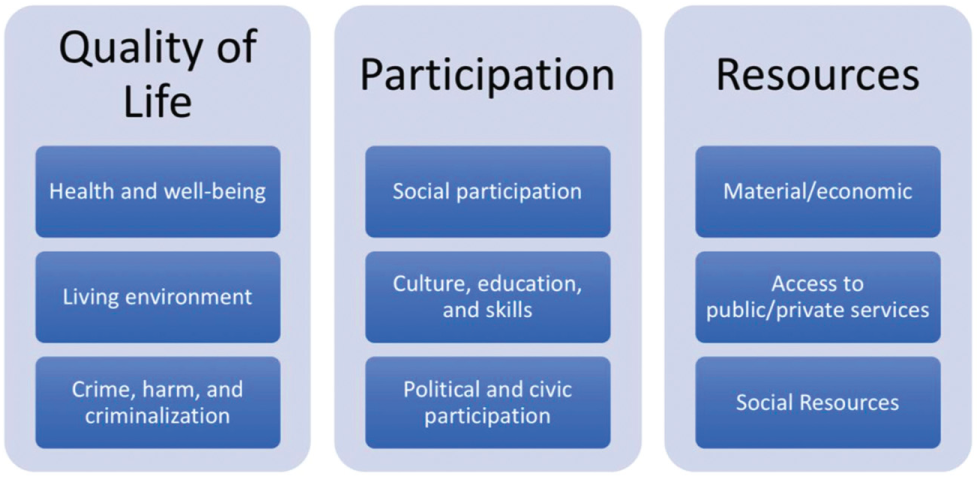
Domains of social exclusion.
Setting
The study occurred in two cities in Tarrant County, TX—Fort Worth and Arlington. Tarrant County is the third largest county in Texas and borders Dallas County in north central Texas. Data from the 2015 American Community Survey (ACS) ( 71 ) reveal that the region includes some of the fastest-growing communities in the United States, and Tarrant County’s population is projected to grow to more than 2 million people by 2020. Fort Worth is the largest city in Tarrant County, and Arlington is the second largest. Arlington is also the largest municipality in the United States to lack a public transit system. The ACS found that the average regional travel time to work in 2015 was 26 min, compared with a national average of 25 min. The poverty rate in 2015 was 13.1%, and persons 65 years and older represented 10.5% of the total population ( 71 ).
Sample
Building upon previous pilot data related to aging issues in Tarrant County ( 8 ), the research team utilized an already established community partnership with Meals On Wheels of Tarrant County for sample recruitment. A purposive sample of 20 low-income TD older adults were drawn from the client database at the agency. Inclusion criteria for sample selection included adults aged 62 and older; English-speaking; able to read and write in functional English; and ability to provide informed voluntary consent. The final sample included 10 older adults. Attrition was because of health concerns of the participants (e.g., prolonged hospitalization) and challenges with technology (e.g., weak Wi-Fi signal).
The mean age of participants was 69.56 years (SD = 3.75, median = 70). The majority of participants were female (n = 7, 70%) and retired (n = 6, 60%). Half of the participants were White and the other half were African American. Most participants were living alone (n = 7, 70%) in a senior housing complex (n = 6, 60%) and had lived in their place of residence for longer than 5 years (n = 6, 60%). The majority of participants reported that they did not currently drive (n = 9, 90%), did not own a car (n = 9, 90%), and did not have a valid driver’s license (n = 8, 80%). Most individuals (n = 8, 80%) reported using paratransit services (e.g., Mobility-Impaired Transportation Service (MITS) and Handitran) or a public bus (n = 5, 50%) as their primary forms of transportation. For more details on the study population’s demographics, see Table 2.
Demographics
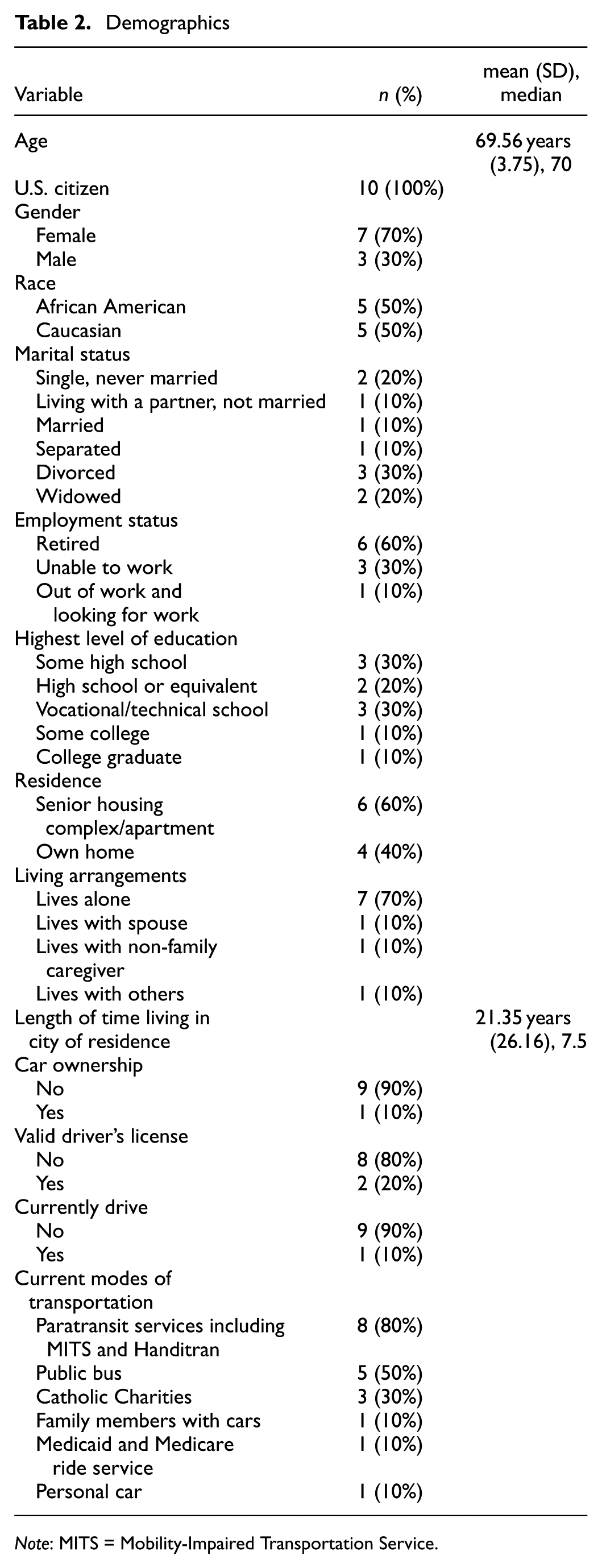
Note: MITS = Mobility-Impaired Transportation Service.
Most participants in this sample owned a phone (n = 8, 88.9%). Prior to this study, three of the participants (33.3%) had never used a tablet device. Some individuals were able to access the Internet from their homes (n = 5, 55.6%) and others occasionally accessed the Internet from public spaces. Two participants (20%) had never accessed the Internet, prior to this study. See Table 3 for more details about participants’ experience with technology.
Participant Experience with Technology
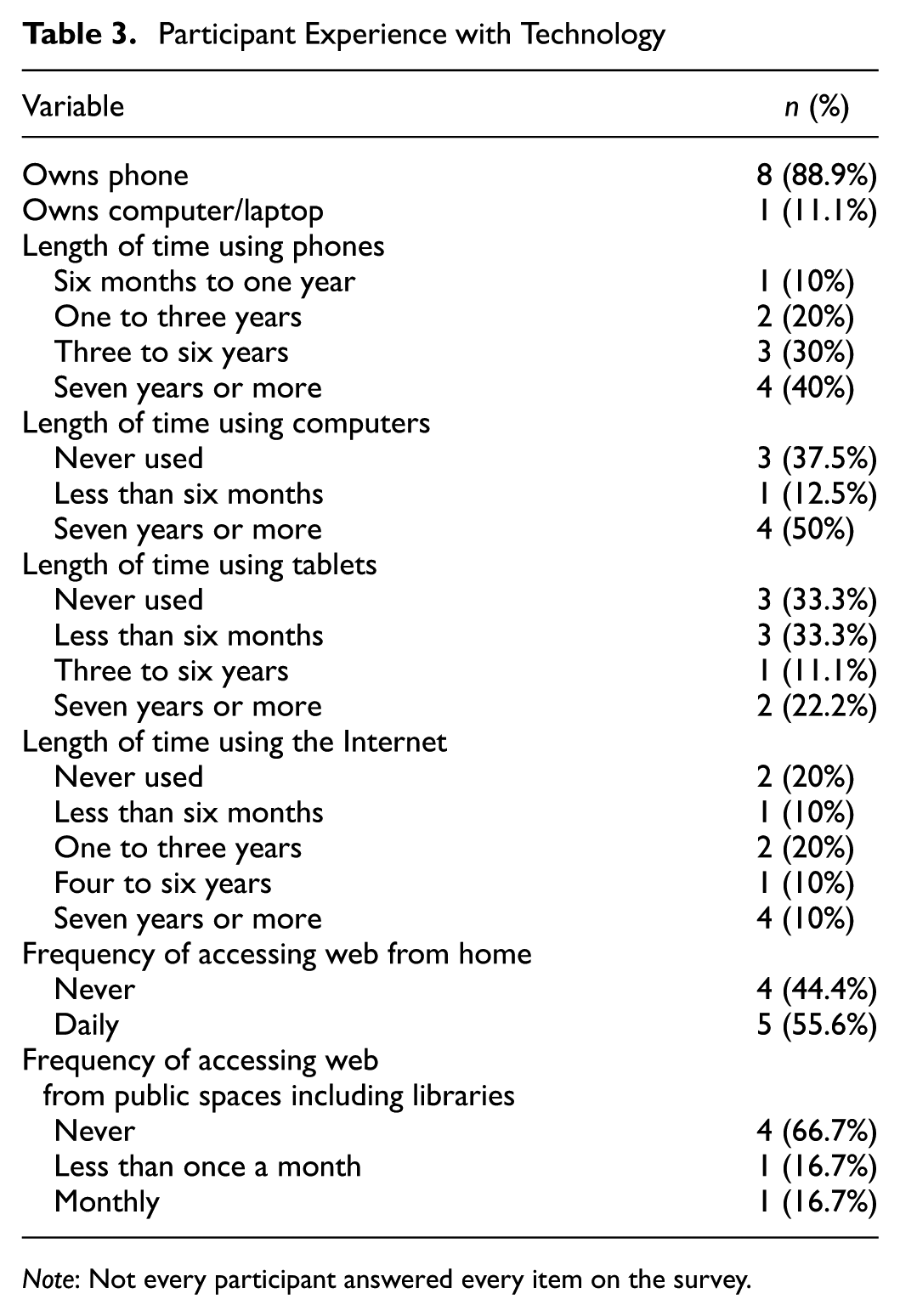
Note: Not every participant answered every item on the survey.
Data Collection
Prior to any data collection, the study was approved by the University of Texas at Arlington Institutional Review Board. Four graduate research assistants (GRAs) and two faculty worked individually with the 10 participants. To train the participants to use the tablet and Travel Buddy, the GRAs and faculty arranged a time to meet with each participant individually in a location convenient for the participant (e.g., home, coffee shop). Part of the training included a step by step user guide that included instructions on how to use the tablet and Wi-Fi as well as included screen shots on how to use the Travel Buddy feature of MyAmble. The GRAs and faculty met with the participants twice prior to Travel Buddy data collection to provide training as well as to complete the demographic survey. The participants then used Travel Buddy via the tablet for 14 days. The Travel Buddy was Wi-Fi dependent and all data were stored in a cloud-based interface and extracted into a custom-built MyAmble database.
Data Analysis
The Travel Buddy database organized text messages between the researcher and participant first by participant identifier, researcher, date, and the domains of SE. Results were exported into Excel and then copied into Microsoft Word for analysis. The researchers used conventional content analysis ( 72 ) and iterative coding ( 73 ) to identify and move from codes to summary themes. Coding was conducted line by line and categories evolved into themes as three members of the research team (two faculty and one GRA) independently read and re-read the Travel Buddy conversations. The team convened to discuss the themes and this iterative process continued until consensus was reached. Although the Travel Buddy questions were theoretically informed, the analysis was inductive and focused on answering the primary research question: how does TD relate to the domains of SE?
Findings
During the 14-day study period, researchers sent a total of 449 text messages to the 10 participants (M = 44.8; SD = 40.34). The participants responded to these text prompts by sending 213 total text message responses, or a text message response rate of 47.4%. The text responses of participants ranged in length from one-word answers, such as “okay” or “good,” to one 381-word answer. The mean text message response length was 23.60 words, with a standard deviation of 40.45. (The median text message response length was nine words.) See Figure 2 for a sample illustration of a Travel Buddy conversation.
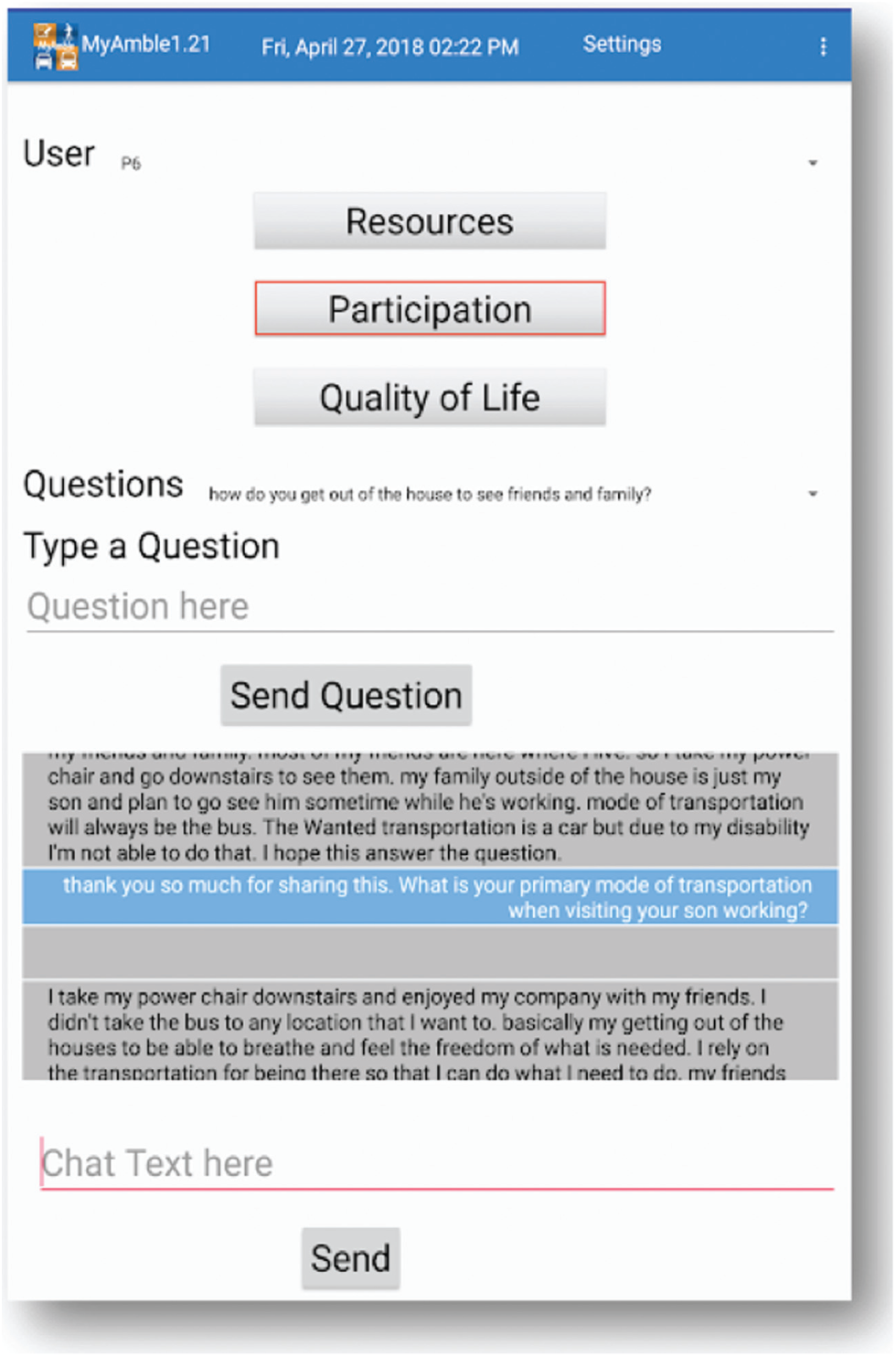
Travel Buddy Conversation.
Within the context of the lived experience of lower-income older adults, the themes related to TD and SE ( 74 ) were examined. Content analysis revealed five primary themes related to TD and SE: constrained autononmy and flexibility, safety concerns, dimished emotional well-being, barriers to community engagement, and burdensome (see Figure 3).
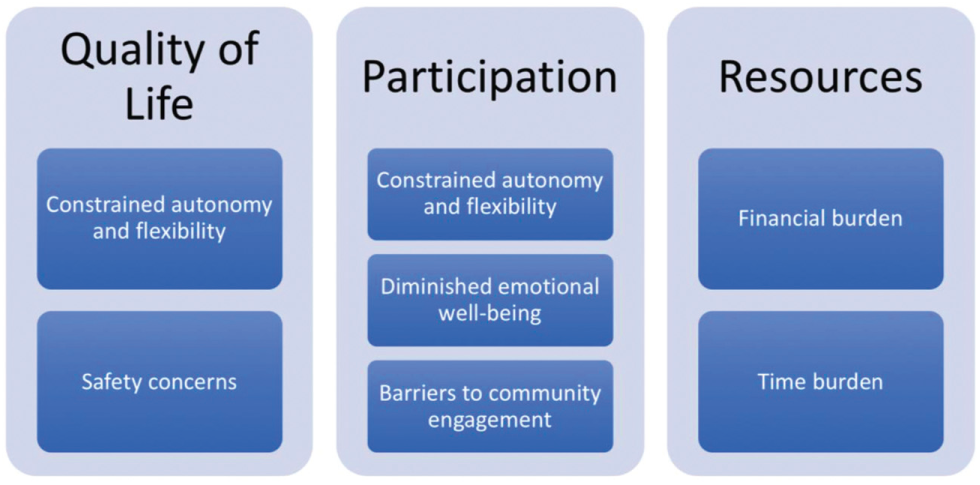
Five themes related to TD and social exclusion.
Constrained Autonomy and Flexibility
Constrained autonomy and decreased flexibility was a theme that emerged from questions across the domains of both quality of life and participation. One Travel Buddy conversation emphasized the participant’s reliance on others to get out of the house to see family and friends and to complete errands, such as taking a trip to the pharmacy. For example, one participant explained that owing to a lack of transportation, her friends and family had to “come see me or pick me up to go places.” She further shared that to access the services that she might need at short notice (i.e., pharmacy) that “[I] have to wait for a ride from my sister.” Similarly, another participant shared that if her prescription medications were not ready by the end of the day on a day that she had a ride arranged, it would take several more days to secure transportation and travel to the pharmacy to get her prescription.
Participants shared that access to transportation meant having the ability to freely participate in life outside of their homes. One participant reported that having transportation means “basically my getting out of the house to be able to breathe and feel the freedom of what is needed. I rely on the transportation for being there so that I can do what I need to do.” Another participant stated, “I always feel better if I am able to get out some time during the day. I don’t feel like a shut-in. I think it is important for seniors to be able to go out.” Other participants shared about the lack of freedom that TD and SE may bring. For example, one participant stated “You ask about my day-to-day life, which is pretty boring since I’m house-bound and in a wheelchair.” Another participant stated: “I don’t always have a chance to go [anywhere]… most days we don’t get out at all.”
Several participants shared that flexibility with transportation affected their quality of life. One participant stated: Lack of flexibility is a major issue … there haven’t been any times when MITS forgot a planned trip. They just have a huge time window that can be difficult. Today we were finished with our shopping but had to wait over an hour for our scheduled pick up time.
Another participant explained that planning trips ahead of time using her limited transportation options hindered her day-to-day flexibility: The lack of [transportation] access affects me. If there were easier ways to get around it would be nice. One problem I have is since I have to schedule a day ahead of a planned trip I have no “wiggle room.” If I wake up the day of a scheduled trip and don’t feel well I still have to go, even if I would rather go back to bed. There just isn’t an easy way to make adjustments and there have been times I didn’t think about planning a trip because I didn’t feel well but the next day I felt great by comparison and it wasn’t possible to schedule a trip. I really need a working crystal ball to be able to accurately predict trips.
One participant who often called her son to take her places shared that “it’s hard when you have to depend on people or transportation because you have to be there on time and not late.” Similarly, another participant reported that transit schedules limited her flexibility: I also find it hard when I miss the bus because I have to wait a whole hour afterwards for the next one to come. One of the problems I have is that if I’m changing buses one bus gets me there late and the other one leaves early makes it hard to get from point A to point B.
Safety Concerns
Participants shared that a concern for personal safety while traveling affected their quality of life. One participant felt particularly unsafe traveling alone because of her disabilities: “I only feel unsafe when I travel by myself. People in wheelchairs seem to have a bulls-eye target on them and I get scared sometimes when I get too many people around me that I don’t know.” Several participants shared fears related to evening traveling. For example, one participant shared “I feel safe traveling around my neighborhood during the day but not at night. Our neighborhood has people who seem to find their way in drinking and visions of drugs too.” Another participant commented that although she felt safe in her immediate community, a lack of environmental safety features such as lighting hindered her evening travel. She commented that she felt, very, very safe in my home and in the community. But the only thing is afraid of that where we say there are no lights no street lights lit up where I stay easy to get raped or a beat up or robbed.
Two participants shared that they limit their travel because of safety concerns. One shared, “we usually don’t go far, just JPS [hospital], Walmart and the dollar store down the street,” whereas the other reported “I generally don’t go places where I might feel unsafe.”
Diminished Emotional Well-being
When asked questions within the domain of participation, several participants shared that lacking reliable transportation negatively affected their emotional well-being. For example, one participant mentioned, “it gets very depressing when you don’t have transportation to get to some of the places that you would like to go and spend time there.” This participant also shared that her son had recently been hospitalized and that not having transportation was “very hard and also depressing because you always want to be there for your children no matter what.”
Social isolation also emerged as a negative outcome of TD related to emotional well-being. One participant shared: Due to our health issues most of our so-called friends have disappeared. One of the few left has a house I cannot get in with a wheelchair. As for family, [her partner] has no family left. I have my 84-year-old mother who lives in Keller, but MITS won’t go there.
Barriers to Community Engagement
Within the domain of participation, several participants shared that TD created barriers to engaging in the greater community. Transportation prevented one participant from being engaged in volunteer activities. As a resident of a subsidized, senior living housing complex, she tried to find ways to volunteer for her neighbors, however, she wanted to volunteer in other ways. She shared: “I do volunteer work in the building … every third Saturday … we give out bags of groceries to the tenants in this building … it’s a blessing and I love doing it” but, “I would love to volunteer at nursing homes, hospitals … I love meeting new people … transportation is the biggest problem that I have.” When asked by the researcher what type of transportation would allow her to volunteer in the community she explained that she could possibly take MITS but that it goes too many other places to pick up other passengers for doctor’s appointments and pharmacy trips. She further shared “With your MITS or logisticare [non-emergency medical transportation] you are really at their Mercy … so there’s nothing you can do but just go for the ride.”
Another participant explained that although she is able to see her friends because of their proximity to her home, she was unable to engage in activities in the larger community. She shared: my friends basically live where I live. but I still want to travel where my son works and watch him as he does his tattoo work. I’d like to take time to go to the zoo or two [sic] the Will Rogers Stadium or even to the main area Fort Worth just to wander around and look at the scenery.
Burdensome
Within the domain of resources, public transportation was found to be a financial- and time burden on many participants. One participant shared that using the city bus can be an all-day ordeal and took away from his already limited finances. This was especially true in several situations for this participant such as when the bus was not on time as scheduled, when he had to transfer buses, and when he had more than one doctor’s appointment scheduled in a day. This participant stated that he would rely on an alternative mode of public transit, MITS, however, he shared that the cost for senior citizens and disability people is $4.50 one way so therefore the total cost is $9 for the doctor’s appointment travel. If you have more than one doctor’s visit per month let’s say 5 appointments, it will cost the senior citizen $45 in transportation fee. This therefore takes away from there medicine and food allowance.
Similarly, another participant shared that the costs of MITS could be a financial challenge for those on a fixed income: “with MITS you have to pay 325 [$3.25] … but you have to pay every time you ride it … either way it goes it gets pretty hard to get around if you don’t want [to] have someone take you or your own transportation … with MITS you have to pay going and coming back … you have to pay twice.”
Many participants noted time burdens related to transportation. One participant shared, “we have (to) wait (a) long time for pickup.” Another participant recalled another instance in which time waiting for MITS was a burden, sharing, “one lady who walked to the store offered to go home and get her car to give me a ride home so I wouldn’t have to sit there for another hour waiting for MITS.” Similary, participants expressed that once they were riding on the transportation system, time burden increasingly became a challenge. For example, one participant reported, “it’s hard on MITS because it goes too many other places and makes too many stops.”
Conclusion
Within the framework of SE, our findings begin to reveal the extent to which transportation may prevent lower-income older adults from participating in the broader society, primarily by constraining their independence. Consistent with previous research ( 75 , 76 ), participants in our study reported that they often depended on friends or family for transportation, however, this dependence often led to feelings of dimished autonomy. Furthermore, our participants reported that they had trouble creating and maintaining social relationships or that they could not engage in civic activities (e.g., volunteering) because they lacked independent transportation to get out of the house. They reported that relying on public transportation meant that a doctor’s appointment could require spending an entire day waiting and traveling, thereby preventing them from taking care of household chores, spending time with family and friends, engaging in leisure activities, or relaxing. The Travel Buddy findings suggest that a lack of flexibility with transportation greatly hindered their quality of life and ability to participate in the larger community.
The framework of SE suggests that the key aspects of quality of life are health and well-being ( 74 ). Although the link between TD, SE, and poor quality of life outcomes have been well-established in previous research ( 11 , 77 – 79 ), the Travel Buddy allowed the research team to examine these issues within the context of the lived experiences of lower-income older adults in the United States. In particular, the Travel Buddy data suggested that TD negatively affected participants’ emotional well-being and contributed to social isolation. These findings are important given that social isolation has been linked to increased mortality and functional decline among older adults ( 80 , 81 ). Furthemore, the benefit of utilizing an ecological momentary assessment design with Travel Buddy is that the research team was able to examine the findings within the context of the participants’ daily lives, which are impacted by intersecting social forces such as poverty, age-related disabilities, discrimination, and the built environment.
SE also involves the lack or denial of resources available to the majority of individuals in a society ( 74 ). Research suggests that in the United States, older adults consider transportation services inconvenient, expensive, and mismatched with their travel needs ( 82 ). Moreover, the SE of older adults is often reinforced by inadequate transit systems ( 83 ). Many participants in our study shared that MITS and the bus system were burdensome both in relation to time and financial costs. These burdens ultimately affected their ability to engage in the typical relationships and activities that are afforded to many in the United States. Ultimately, the Travel Buddy findings suggest that lower-income older adults feel disenfranchised and undervalued by broader society.
In general, the results suggest that to participate in society at a basic level, individuals require transportation. The impact of the lack of reliable, independent transportation on participants’ lives underscores the need to conceptualize transportation within a basic rights paradigm in the United States rather than as an individual responsibility. Thus, the study holds several implications for public planning and policy making. In the same way that food is a basic need, and thus, individuals in the United States can receive food subsidies through the supplemental nutrition assistance program, the government could offer transportation subsidies in recognition that transportation is also a basic need. Subsidies could come in the form of transportation vouchers, which would reduce the economic burden. Moreover, allowing participants to apply vouchers toward transportation innovations like ride-sharing services would also increase rider autonomy. Regarding the latter, public planners ought to consider expanding ride-sharing services for older adults. In our study, the predominant form of transportation was paratransit, which has several limitations including being time-intensive and requiring advanced scheduling. Although paratransit may be amendable to activities that are scheduled in advance, such as regular doctor’s appointments, it is less effective for day-to-day activities such as grocery shopping or social engagements, and unexpected events. It may be possible to design a ride-sharing service that recognizes the unique needs of lower-income older adult riders and that requires drivers to offer more disability accommodations. In addition, city planners could create a Travel Buddy program for older adults to help them transition to new services, many of which require using app technologies. Travel buddies could assist older adults in downloading the ride-sharing app onto their phones and could accompany them on the first several rides from ordering the ride, to traveling to the destination, to requesting the return ride, and returning home.
Limitations
Results from the current pilot study represent a first step in understanding the lived experience of TD and SE among older adults. However, the study findings should be interpreted cautiously as several limitations exist. The research team encountered technical challenges with the Wi-Fi hotspots as they periodically failed causing the Travel Buddy to lose data, so some participants may have answered more questions than reported by the app. Furthermore, the sample was small and limited to a particular geographical area, thus findings are not generalizable. Additionally, the participants in this study volunteered to participate, and thus, selection bias may have influenced the data. Finally, our participants were lower-income older adults with significant health challenges. Older adults who are healthier with more resources may experience TD and SE differently.
Future Research
Travel Buddy is an innovative tool for data collection that can be used for other environmental justice populations including persons with disabilities and residents of lower-income neighborhoods. By utilizing the SE framework, the team was able to examine the opportunity costs related to civic engagement, social relationships, and community belonging. Second, results from this study have produced qualitative data that contextualize lost opportunities and how characteristics of economic justice exacerbate risk for TD, as well as how individuals manage within these intersections of disadvantage.
These data will lead directly into expanded conversations about how to transform transportation planning from mobility to equity. Current methods to ensure that all individuals have access to transportation fail to consider that not all individuals have the same resources in society to utilize the transportation that may be available, for example, mass transit that operates on limited schedules and with limited routes. Infrastructure transformations may include more creative solutions for reducing the last-mile gap, and leveraging new technologies such as Lyft, Uber, and app-facilitated ride-sharing to offer door-to-door and on-demand transportation to those for whom mass transit is not realistic, for instance, disabled and older adults. The Travel Buddy data may also have practical implications for social service agencies in relation to highlighting the role that TD and SE play in individual general well-being. Case managers and social service providers may want to assess individuals for TD and develop action plans and referral services to respond to transportation needs. Finally, the use of ecological momentary assessment through digital platforms such as the Travel Buddy may offer new ways to collect holistic data related to TD that will lead to better opporutnities for transportation planners, engineers, and social service providers to work together to address the needs of environmental justice populations.
Footnotes
Author Contributions
The authors confirm contribution to the paper as follows: study conception and design: NF, CC, SM; data collection: NF, CC, EM, VM; analysis and interpretation of results: NF, CC, VM; draft manuscript preparation: NF, CC, SM, EM, VM. All authors reviewed the results and approved the final version of the manuscript.
The Standing Committee on Environmental Justice in Transportation (ADD50) peer-reviewed this paper (19-04734).