







Abstract
Motorcycles in Iran, especially in metropolises such as Tehran, are used extensively for various reasons such as low maintenance costs, high maneuverability, and the possibility of entering congestion priced zones without paying a toll. Nevertheless, motorcycles are involved in 25% of accidents and produce almost 30% of air and 50% of noise pollution in Tehran. Current research aims to investigate possible scenarios for reducing the use of motorcycles in Tehran’s traffic and transportation master plan strategies. After designing the scenarios, a stated preference method is used for gathering the required data from various groups of motorcycle riders in Tehran. More than 2,000 questionnaires were completed of which 1,766 were deemed acceptable for data entering and further analysis. Increasing the price of motorcycle maintenance and charging motorcycles to enter the congestion priced zone of Tehran (CPZT) were two main scenarios which were considered in this research. Multinomial and nested logit models were applied to analyze the trip choice behavior of motorcycle riders who had participated in the survey. Results indicated that strategies such as increasing motorcycle maintenance costs could be effective in reducing the use of motorcycles. For instance, increasing motorcycle maintenance costs by 4.7 times and imposing a 70,000 IRR toll price to enter the CP zone resulted in a 66% reduction in motorcycle mode choice by motorcycle riders.
Motorcycles are one of the major mobility modes in many Asian countries. With increasing use of motorcycles, couple with the unsafe nature of the vehicle, motorcycle related accident statistics have risen recent years. In the U.S.A., for example, the motorcycle death rate (59 per 100,000) is approximately three times that of personal car users (17 per 100,000) ( 1 ). Significant growth in the production of motorcycles, especially in Asian developing countries like Iran, in addition to factors such as a lack of protective clothing and basic safety equipment for the riders, improper training and enforcement difficulties for this group of users, complicate many issues relating to the use of motorcycle. In Iran, especially in Tehran, the motorcycle is popular because of its size, high maneuvering capabilities, low price, high speed, and the difficulties in enforcing rules on motorcycle in Tehran (e.g., motorcycles can enter the congestion priced zone of Tehran (CPZT) without paying a toll). With motorcycles taking an increasing share of the city’s traffic, rates of traffic violations and accident casualties are also growing dramatically. In addition to safety related problems, motorcycles in Tehran also create significant environmental pollution and are one of the major factors in noise generation ( 2 ). In accidents reported by Tehran Traffic Police, motorcyclists are more likely to lose their lives in crashes; 33% of fatal incidents in Tehran over the last Iranian calendar year 1396 (March 2017–March 2018) involved motorcycles ( 3 ). Also, motorcycles produce almost 30% of air and 50% of noise pollution in Tehran. Moreover, congestion is growing because of the high number of motorcycles and their traffic violations (e.g., moving in opposite direction to the traffic, sudden lane changing, etc.). This presents another challenging problem for the city’s authorities seeking to manage the road network. In response, the municipality of Tehran, in the city’s comprehensive transportation master plan, has decided to reduce the share of motorcycles from 9% to 3% by 2025 ( 4 ). To achieve this goal, and considering the negative effects of motorcycle traffic in Tehran, research is under way to investigate the strategies which might produce a reduction in motorcycle mode choice in Tehran. Based on demand management strategies successfully implemented in Tehran and also on experiences from other countries, two proposed strategies were studied in this paper: 1) increasing motorcycle maintenance costs; and 2) charging motorcycles to enter the CPZT. The proposed strategies were surveyed based on a stated preference approach and analyzed by using discrete choice models which are presented below.
Literature Review
Several studies had been carried out regarding the evaluation of scenarios aimed at reducing motorcycle mode share and increasing the use of public transport modes. Most of this research has been performed in southeast Asian countries which are feature high motorcycle usage in their cities.
Satiennam et al. ( 5 ) studied ways of persuading people to change from motorcycle to public transport in Thailand. Motorcycle related problems such as noise pollution and increasing rate of accidents were the motivations behind this research. Using a stated preference approach, 480 students from a university were surveyed and a binary logit model was applied to estimate the share of the mode shifts from motorcycles. Strategies included reducing bus trip times, increasing motorcycle fares, increasing motorcycle trip times, and increasing motorcycle trip costs. The results of this research indicated that the tendency of students to choose motorcycles would be reduced by improving the bus headways and the convenience of public transportation. Ibrahim Sheikh et al. ( 6 ) looked at excessive growth in motorcycle usage and high rates of accidents and studied the mode choices of motorcyclists in Malaysia between motorcycles and public transportation. In this research, a cross-sectional survey approach was used and the data of 538 motorcycle and bus users in Selangor were taken. Using a binary logit model, strategies such as improving the number of buses, reducing bus fares, improving the coverage of bus services in the city, enhancing the capacity of transit system, using bus lanes and intelligent transportation systems, and street pricing were evaluated. Results show that the share of motorcycles could be reduced by 70% through improvements in the public transportation system and reductions in fares, along with other policies. Santos et al. ( 7 ) identified factors affecting the mode choices for work trips in 112 European cities with populations ranging from 100,000 to 500,000. In this study, data were collected for 2001–2004 and were analyzed using nested and multinomial logit models. The increase in vehicle registration costs, annual tax costs, rising parking prices, lower prices for public transportation, and rising fuel prices in the cities were reviewed as solutions. The results showed that imposing these strategies caused a reduction in the use of personal vehicles, an increase in public transportation use, and an increase in motorcycle usage. Since the early 1990s, motorcycles have been used increasingly as a mode for transporting passengers and earning income in Guangzhou, China. Several scenarios were analyzed in this research ( 8 ) to reduce the adverse side effects of motorcycle usage such as air pollution, noise pollution, and accidents. These scenarios included motorcycle travel prevention in some regions and setting up 11 bus lines to run at night. Research indicates that results could include a reduction in noise pollution, a 17.5% decrease in the accident rate, the creation of 3,000 jobs for those working with motorcycles, a 20% level of personal vehicle usage, and a 50% reduction in traffic problems. In the study by Ibrahim and Yakub ( 9 ), restrictions on use of motorcycles during daytime and a ban at night were proposed as ways of reducing the effects of motorcycles on accidents in Nigeria. Data were collected from the Nigerian Police Office for five central areas in Jos city, Nigeria, from 2004 to 2008 (two years before and after the imposition of restrictions on night time riding). The results showed a reduction in the accident rate. After investigating data related to motorcycle accidents up to 2012 in Michigan State, the National Highway Traffic Safety Administration (NHTSA) ( 10 ) decided to make some recommendations to improve the use of motorcycles and reduce accidents. The proposed strategies included: increasing the cost of motorcyclist’s renewal licensing by 30%; increasing the insurance costs of motorcycles; prohibiting motorcycle from entering the CPZT; increasing the price of motorcycle training courses to $50; and making the wearing of helmets compulsory for all riders (including passengers). A 15% reduction in unlicensed motorcyclists and a 3.2% annual reduction in fatalities and injuries in 2016 were the main outputs of these strategies. Hiroki Inaba ( 11 ) analyzed the potential impacts of motorcycle demand management in Yangon, Myanmar, where motorcycles had been banned since 2003. A vehicle ownership model with travel demand models of modal choice, destination choice, and trip frequency was estimated using a dataset comprising 8,289 households and 24,373 trips in Yangon. A traffic demand forecast system was developed in which a traffic assignment model was integrated with a vehicle ownership model and travel demand models to evaluate the impact of the motorcycle ban. The expected impacts of the ban were estimated by comparing multiple scenarios for 2013 and 2035. The results showed that the ban could reduce traffic volume and vehicle kilometers traveled by approximately 18.0% and 26.9% in 2013, but by only 4.5% and 6.0% in 2035. Oriol Marquet ( 12 ), studied the motorcycle phenomenon from a threefold perspective, following the temporal trend of growth in motorcycle usage, identifying socio-demographic profiles of motorcycle users, and assessing their subjective motivations that explain the use of this specific mode of transport. Logistic and multinomial regression models were implemented to analyze the drivers and identify significant predictors of motorbike ownership and modal choice. The results highlighted the importance of motorized two-wheeled modes of transport for everyday mobility and also emphasized the role of the affordability factor to help understand the rise of this kind of transport. The Hong Hu paper ( 13 ) aimed to fill part of the knowledge gap by examining travel mode choice in Changting, a small city that has been experiencing fast spatial expansion and growing transportation problems. Using survey data collected from 1,470 respondents on weekdays and weekends, the study investigated the relationship between mode choice and individuals’ socio-economic characteristics, trip characteristics, attitudes, and home and workplace built environments.
Considering the scenarios in the previous studies for reducing the share and use of motorcycles in Tehran, two scenarios were selected for study: 1) increasing motorcycle maintenance costs; and 2) charging motorcycles to enter the CPZT. The main reasons for choosing these two scenarios were the obvious incentive of low costs encouraging greater use of motorcycles and the ability to enter the CPZT without being stopped or having a charge enforced. Tehran municipality created a border around the Central Business District of Tehran, and defined the congestion priced zone of Tehran (CPZT). Any vehicle entering the zone during working hours had to pay a charge. In Figure 1, the cordon of the CPZT is shown with a bold line. The CPZT operates from Saturday to Wednesday (working days in Tehran) between 6:30 a.m. to 7:00 p.m and charges any vehicle entering the zone 300,000 IRR (about U.S.$7). On Thursdays, Fridays, and official holidays entry is free. Enforcement against violations is performed using a system of automatic number-plate recognition (ANPR), which had been designed for personal car license plates. Motorcycle plates cannot be read by the existing enforcement system.
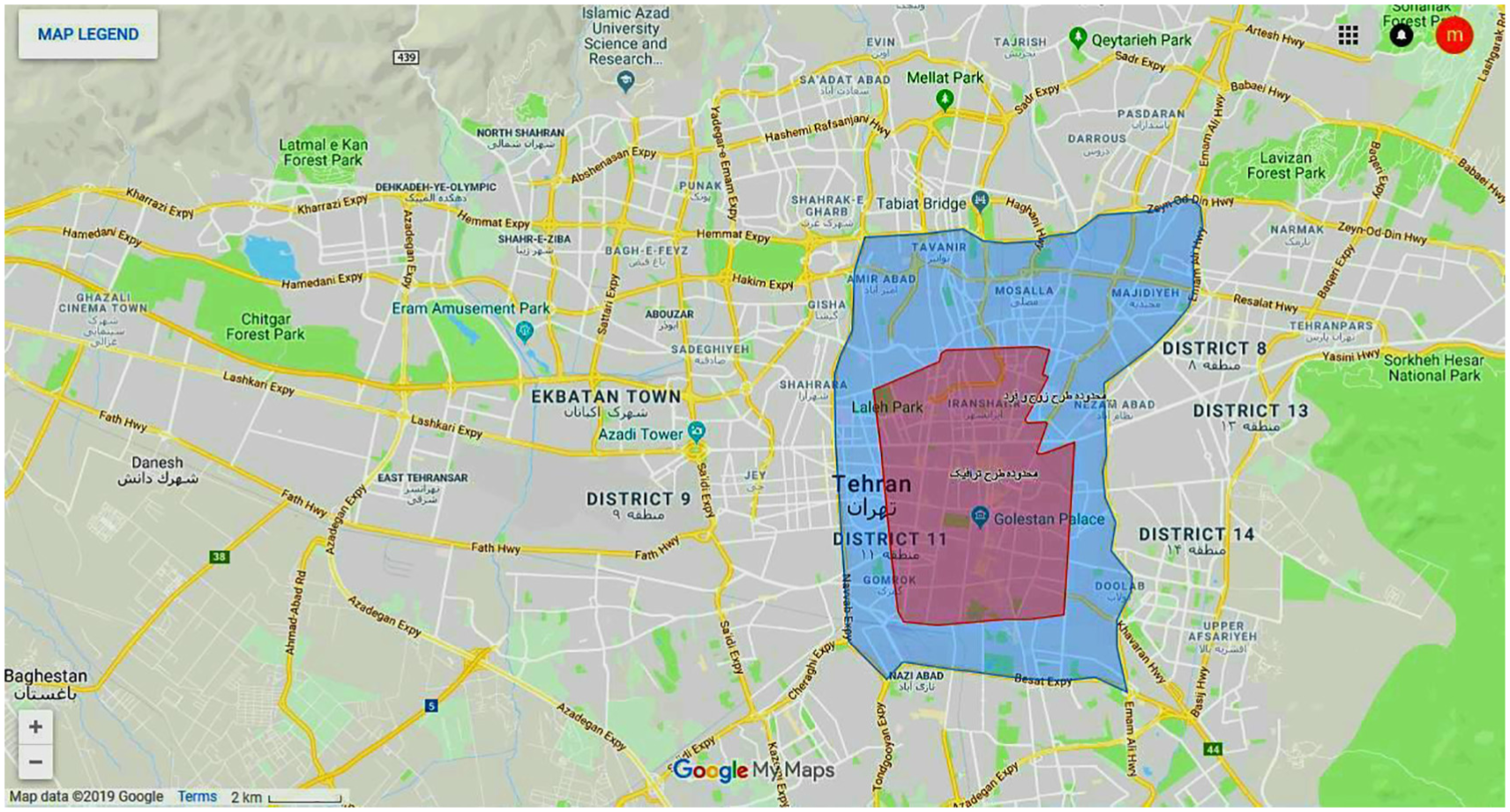
The CPZT zone.
Methodology
The major goal of this research is to analyze the effect of the scenarios mentioned on the share of motorcycle mode choice in Tehran. The required data were, therefore, collected using a stated preference approach. Stated preference approaches to nonmarket valuations rely on answers to carefully worded survey questions. Those answers in the form of monetary amounts, choices, ratings, or other indications of preference are scaled following an appropriate model of preference to yield a measure of value ( 14 ). Moreover, as mentioned in the literature review this method has been used in different research projects. In the study by Satiennam ( 5 ), using a stated preference approach, 480 students were surveyed and a binary logit model was applied to estimate the share of the mode shifts from motorcycles. Also, the study of Hong Hu ( 13 ) used survey data collected from 1,470 respondents on weekdays and weekends to investigate the relationship between mode choice and individuals’ socio-economic characteristics, trip characteristics, attitudes, and home and workplace built environments. According to this research, effective scenarios for reducing motorcycle share were provided in the form of the strategies mentioned. The questionnaires sought three types of information: 1) the socio-economic circumstances of the respondents; 2) the designated scenarios; and 3) the last trip made by respondents. Some information such as trip purpose, origin and destination, average trip time, and the number of occupants in the trip were sought from the respondents to gather their nearest completed trip. Considering the respondents’ ability to remember these details, their last trip was selected as the reference for normal daily trips which every individual takes. To collect the required data, in-person interviews with riders were performed.
In the first scenario, increased motorcycle maintenance costs (including insurance, annual tax, technical examinations and repair and maintenance costs) were proposed as a way of reducing the share of motorcycles in urban trips in Tehran. This scenario includes two strategies which recommend increasing prices by two times for the first strategy and by three times for the second. Respondents could choose five alternatives including: gasoline motorcycle, electric motorcycle, using a transit or para-transit mode, cancelling the trip, or taking other modes.
In the second scenario, the motorcycles would be charged to enter the CPZT between 6.30 a.m. and 7:00 p.m. The ANPR method would be used and the license plate of any violating motorcycles would be recorded and the owner would receive a ticket for this violation. In this scenario, motorcyclists will have two alternatives if they want to choose to use a motorcycle. In the first alternative, they can enter the CPZT by paying the toll. In the second alternative, they can change the trip time, the route, or destination (to avoid entering the CPZT between 6:30 a.m. and 7:00 p.m.). There is also an alternative for motorcyclists to choose electric motorcycles which in this case can enter the CPZT for free. This time interval (6:30 a.m. to 7:00 p.m.) was selected after studying the distribution of daily trips by residents of Tehran in relation to the trip mode, as well as the hourly changes in traffic volumes at the major intersections in the CPZT.
For the survey, areas with higher motorcycle activities and more motorcycles per household were selected along with places with higher numbers of motorcycle-related crashes. Some of the most important streets which were planned for surveying were: Enghelab, Jomhuri, Hafez, Manuchehri, Baharestan, Lalehzar, Mohamadiyeh Sqaure, Pamanar, Khayyam, 15 Khordad, and RaziSquare. In all of these streets there was: 1) a high density of access routes; 2) a significant proportion of commercial properties and shopping centers; and 3) high demand for passenger and cargo transport. The survey map is shown in Figure 2. The dots are the locations of the survey (parking lots, fuel stations, etc.) and red lines show the areas where questioning took place.
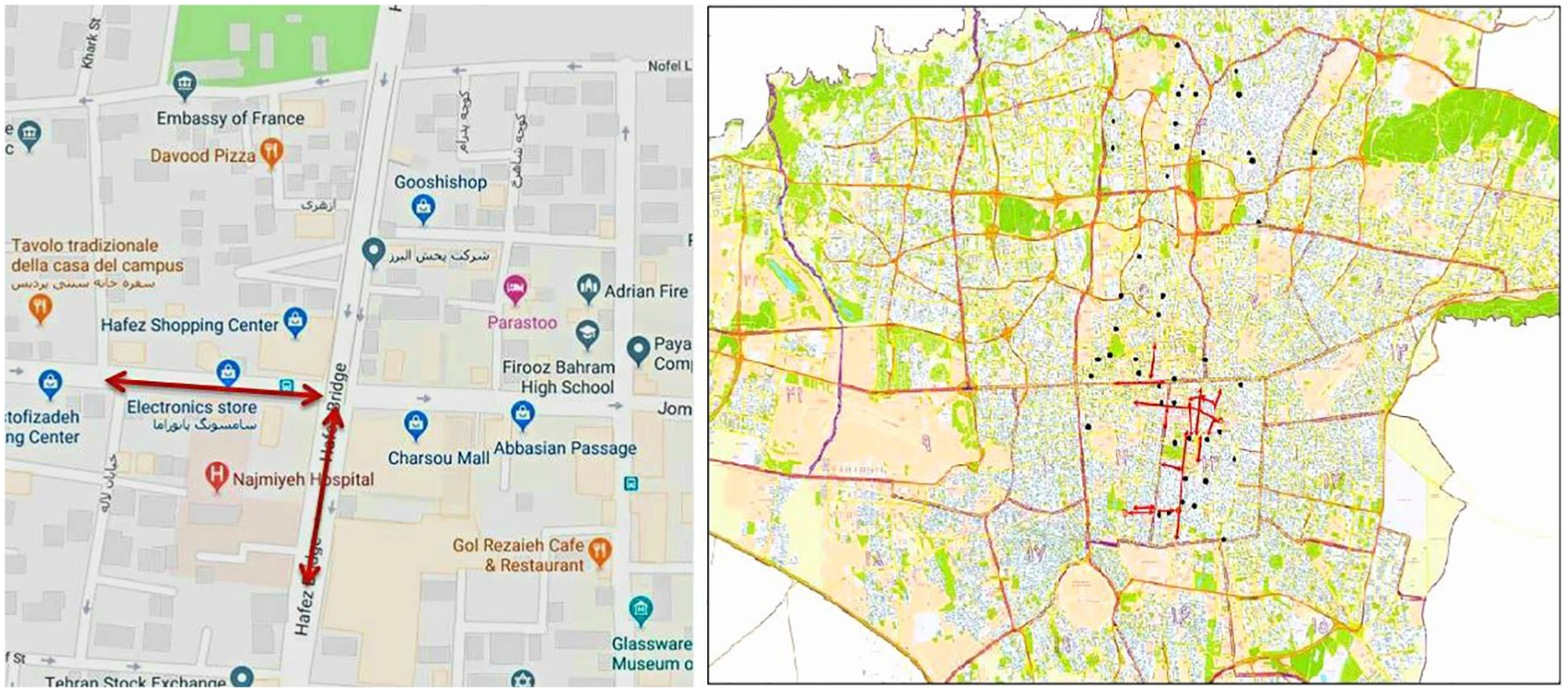
Areas in which motorcyclists were surveyed.
To evaluate the questionnaires, a pilot survey was performed on September 20, 2017 by three surveyors in 15 Khordad, Khayyam, and Enghelab Street. Using the results of the pilot survey, the main survey was carried our between September 17 and 22, 2017 and between 25 and 27 September from 9 a.m. to 5 p.m. Given the type of data gathering needed and time required to answer the questions, the surveying was performed only in areas where motorcyclists were present at the survey site. In this regard, many areas with a large accumulation of parked motorcycles were identified. Examples of the survey locations are shown in Figure 3.
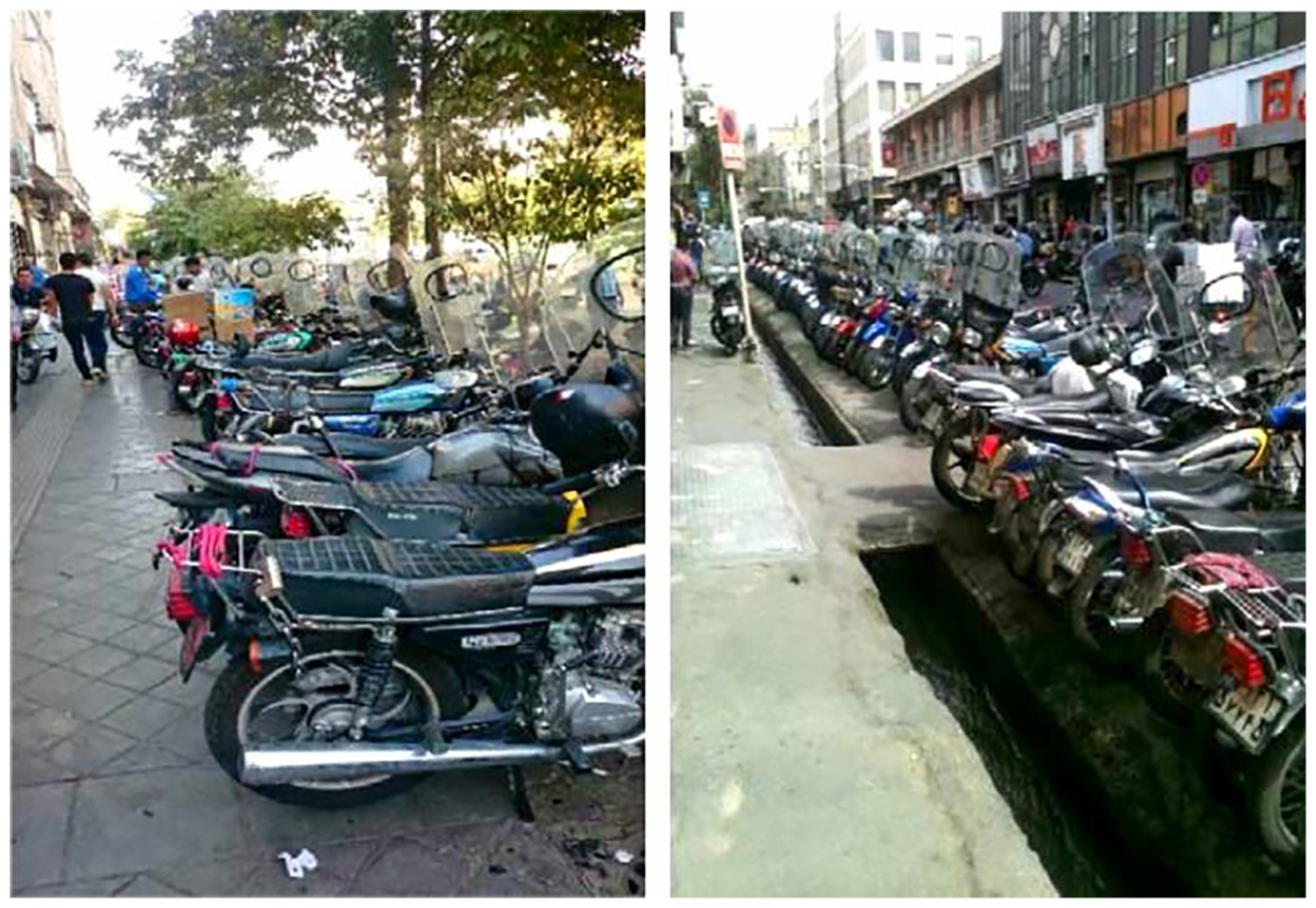
An overview of the survey sites for questioning.
Training classes were held to prepare the interviewers for the survey. Because of the complexity of the stated preference questionnaires, it was imperative to explain the scenarios to the interviewers. A view of a surveying sample from a motorcyclist is shown in Figure 4.
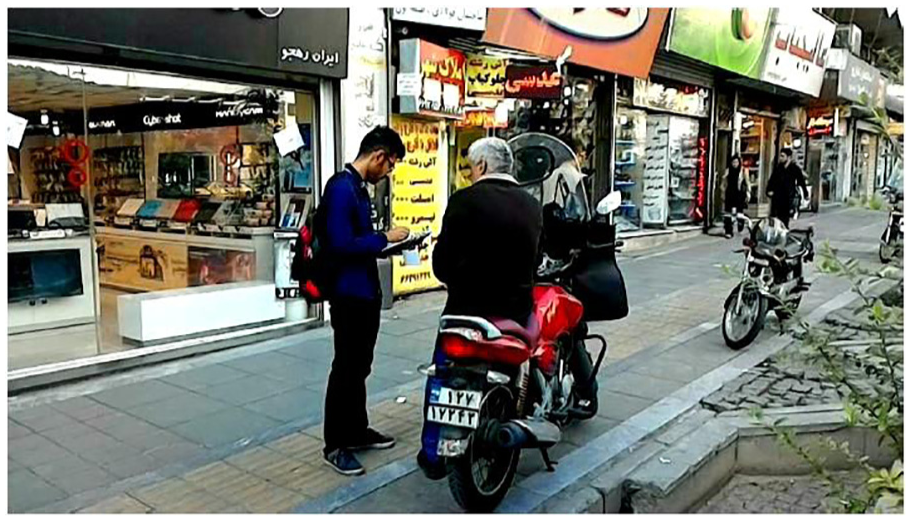
Taking a survey sample from a motorcyclist.
Determining the Number of Required Sample Size
Decision making about the sample size is crucially important in relation to the accuracy of sampling, time, and cost saving. Hensher ( 15 ) suggested that when the number of the statistical population is not exactly defined, the sample size for the study can be estimated by Equation 1.

where
n is the sample size,
and
P denotes the percentages of individuals having the attribute and q stands for the percentage of individuals which do not have the attribute in the population. The
Descriptive Statistics
Figures 5–8 show some descriptive statistics obtained from the surveying data. As can be seen in Figure 5, the main purpose for using motorcycles is going to work. As discussed above, this result was expected because of the ability of motorcycles to enter the CPZT without paying the charge. The second important trip purpose for motorists in Tehran is also related to work issues. As can be seen, more than 40% of respondents use the motorcycle as a work tool for cargo and passenger transportation. Figure 6 shows the amount of daily average hours which a motorcycle is used by individuals. More than 30% of motorcyclists used their motorcycles for less than one hour which refers to those individuals who use motorcycles as a transportation mode for going to and from work. Also, according to Figure 7, most motorcyclists use their motorcycle every day of the week. Figure 8 also shows that more than 56% of motorcyclists are less than 43 years old.
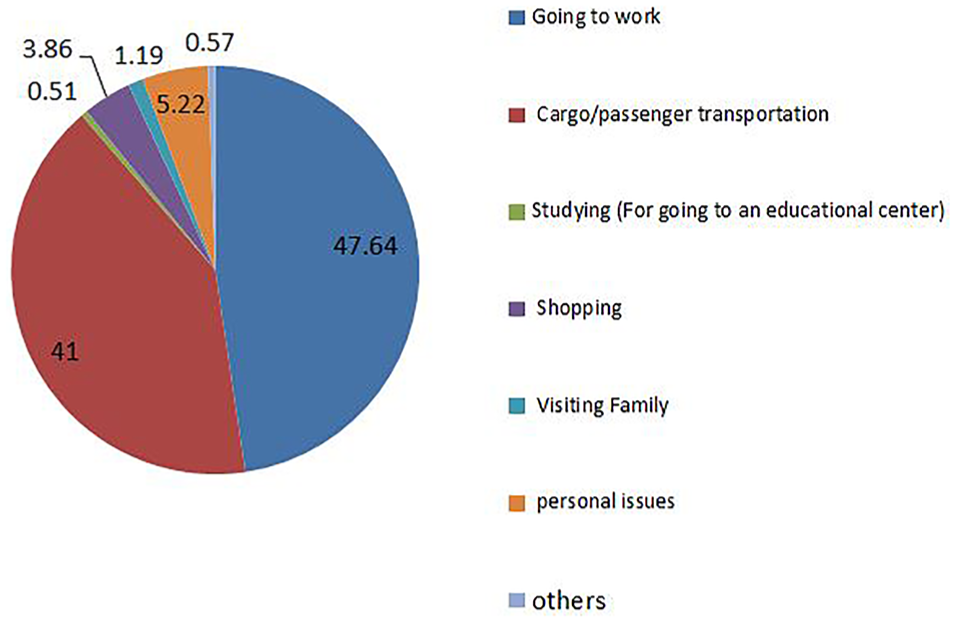
Motorcyclists’ trip purposes.
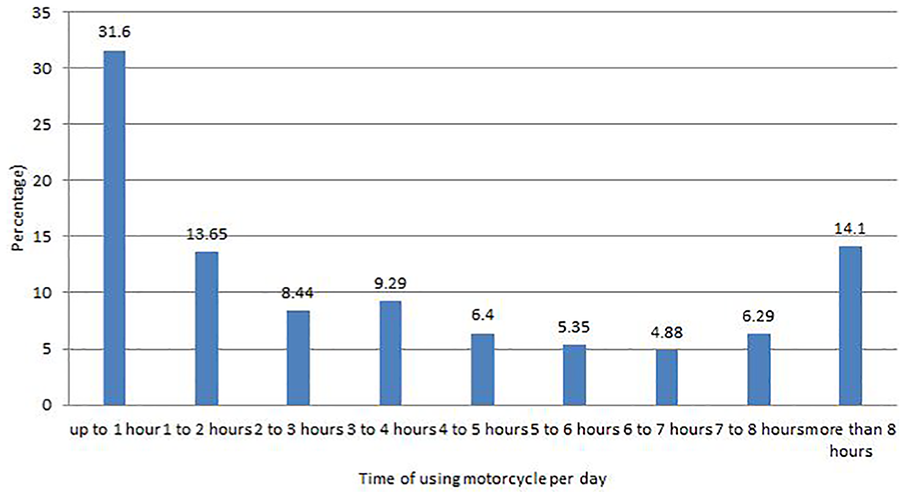
Percentage of motorcyclists based on their average use of motorcycles, hours per day.
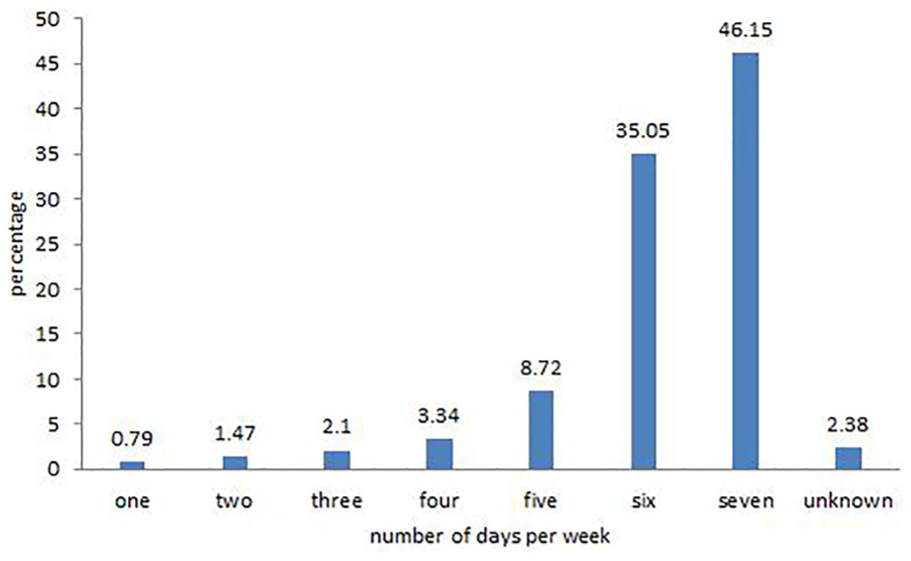
Percentage of motorcyclists based on their average use of motorcycles, days per week.
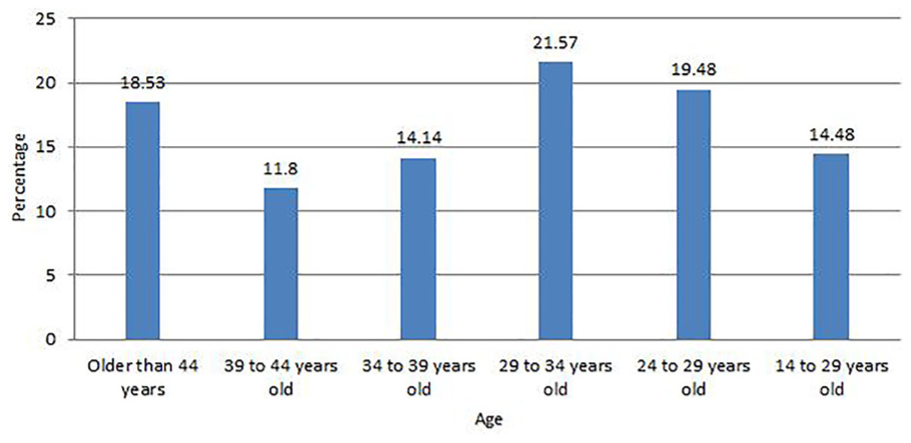
Percentage of motorcyclists in age groups.
Modeling
For evaluating the effect of the two scenarios on individual behavior toward choosing the motorcycle, based on the data from the survey and also the independence of the scenarios, discrete choice modeling was considered for the analysis. In this regard, logit models are one of the methods for predicting discrete events (here, choice of the desired alternative), and aim to identify descriptive variables and their relationship with event occurrence and, eventually, an estimate of the likelihood of an event occurrence for a particular individual. It is assumed that Uin is a linear function of characteristics of individual n variables, which is related to the likelihood of occurrence of event i. In this case, according to Equation 2:

where
Xin is a vector of measurable characteristics of individual n (including personal characteristics and behavior),
βi is a vector of measured coefficients, which is calculated using maximum likelihood estimation, and
εin denotes non-observable parts of characteristics.
In this relation, if εin follows a Gumble distribution, then the probability of occurrence of event i for individual n, that is, P (i, n), can be represented using a logit model as closed form in Equation 3 ( 14 ):

The nested logit structure was proposed for modeling the choice behaviors of respondents in scenario 1. The nested logit model, which was first raised by Ben-Akiva in 1973–1974, is a new format of multinomial logit model. It considers some correlations between the options, and is based on the Cn selection set partitioning to m nests like Cmn ( 16 ):


The utility function of each alternative is composed of a term specific to an alternative and a term related to the nest. If (i) is an alternative of Cmn nest, then ( 17 ):

The error terms

The probability for individual n to choose alternative i within nest

Modeling Approach
In the following, the modeling process for two scenarios for limiting the share of motorcycles will be discussed.
Scenario 1: Increasing Motorcycle Maintenance Costs
This section addresses the structure of analysis for the scenario of increasing motorcycle maintenance costs (insurance, annual tax, technical examinations, repair, and maintenance). To this end, every respondent was asked to choose their trip choice according to the related scenarios of increasing the motorcycle maintenance costs by two or three times. It should be noted that in each scenario, respondents could choose five alternatives including: gasoline motorcycle, electric motorcycle, a transit or para-transit mode, cancelling the trip, and taking other modes. The nested logit structure in Figure 9 was proposed for modeling the choice behaviors of respondents. As can be observed, gasoline and electric motorcycles are in the same nest for their identical nature, also choosing transit and para-transit modes, trip cancellation, and taking other modes were put in the other nest.
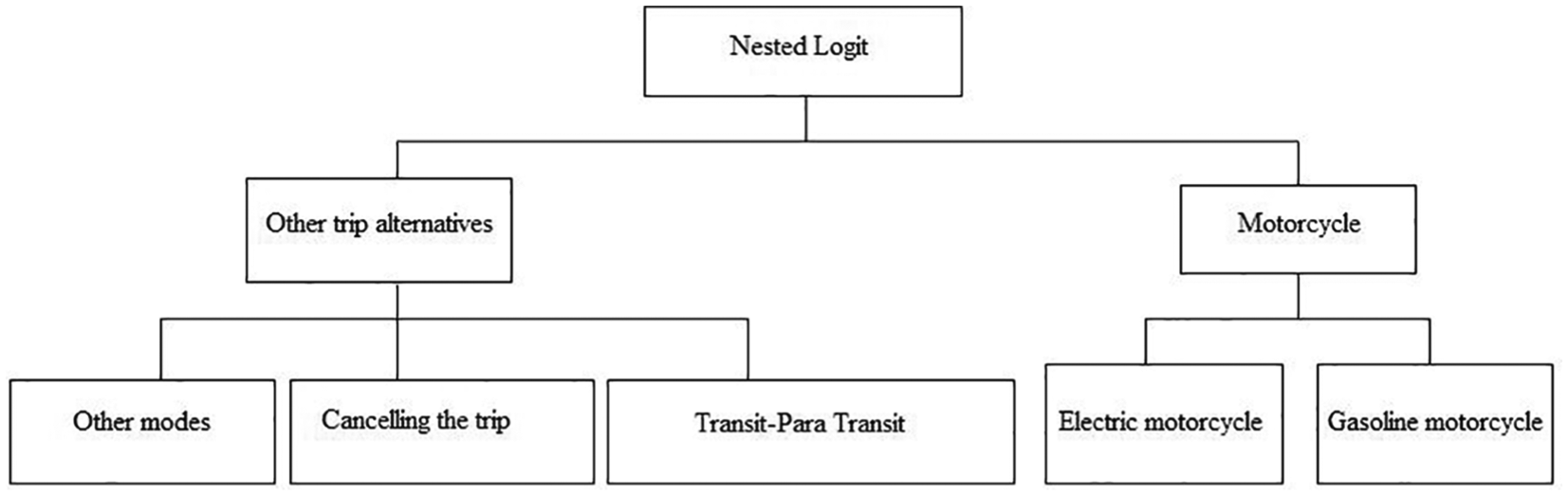
Nested Logit structure proposed for scenario 1.
Scenario 2: Charging Motorcycles for Entering the CPZT
The second scenario proposed for reducing the share of motorcycles on urban trips was to charge gasoline motorcycles to enter the CPZT in Tehran City. Three pricing scenarios were defined and surveyed from respondents. In each pricing scenario, the respondents should choose an alternative according to the price to enter the CPZT. The fares proposed for tolls were 85,000, 150,000, and 300,000 IRR per entry, which would be taken automatically through recording of the motorcycle number plate by the cameras mounted on the entrances to the CPZT. During the survey, the method of charging was explained along with the extra charges for not paying the entrance fares. Also it was explained that there would be no charge for electric motorcycles.
The structure of modeling approach is shown in Figure 10.
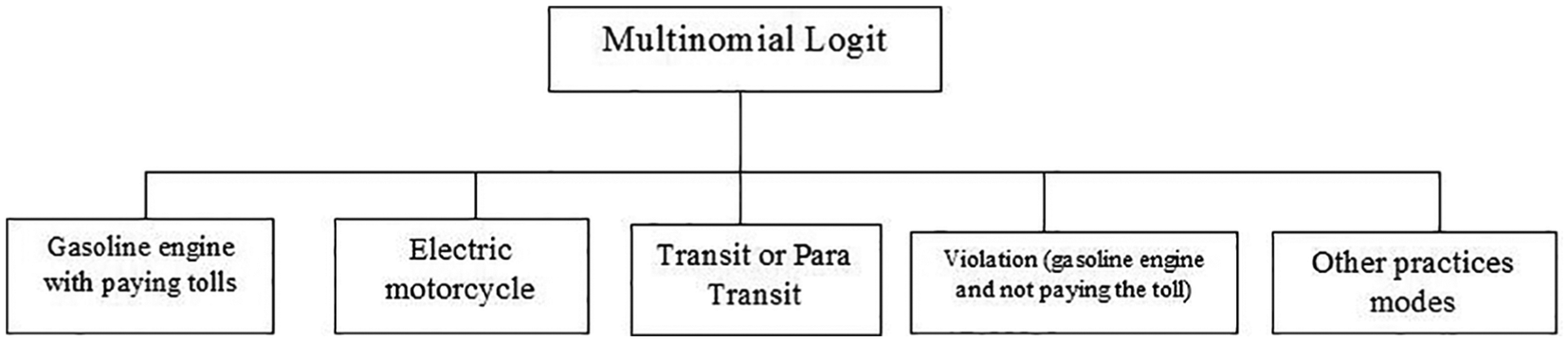
Multinomial logit structure proposed for scenario 2.
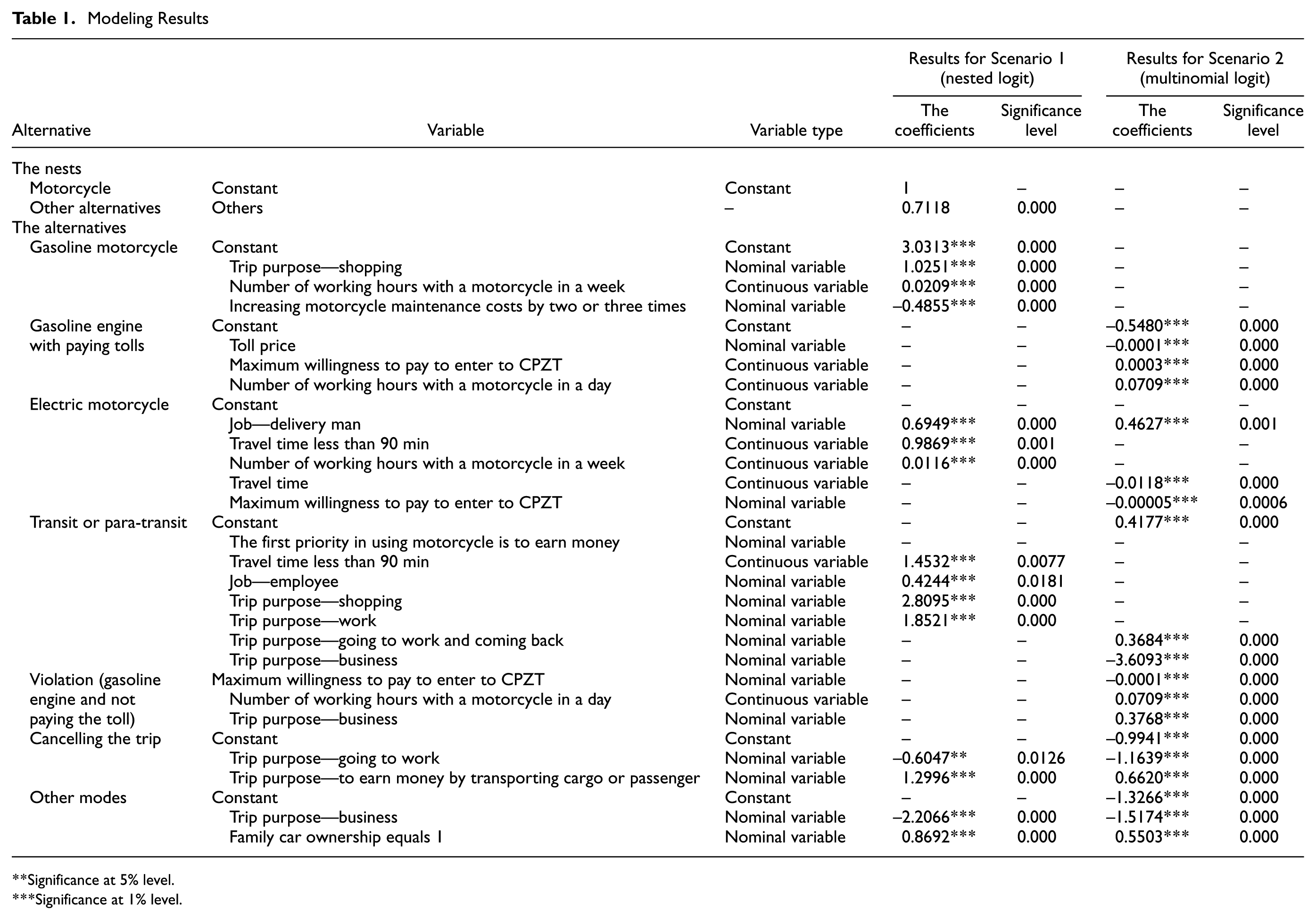
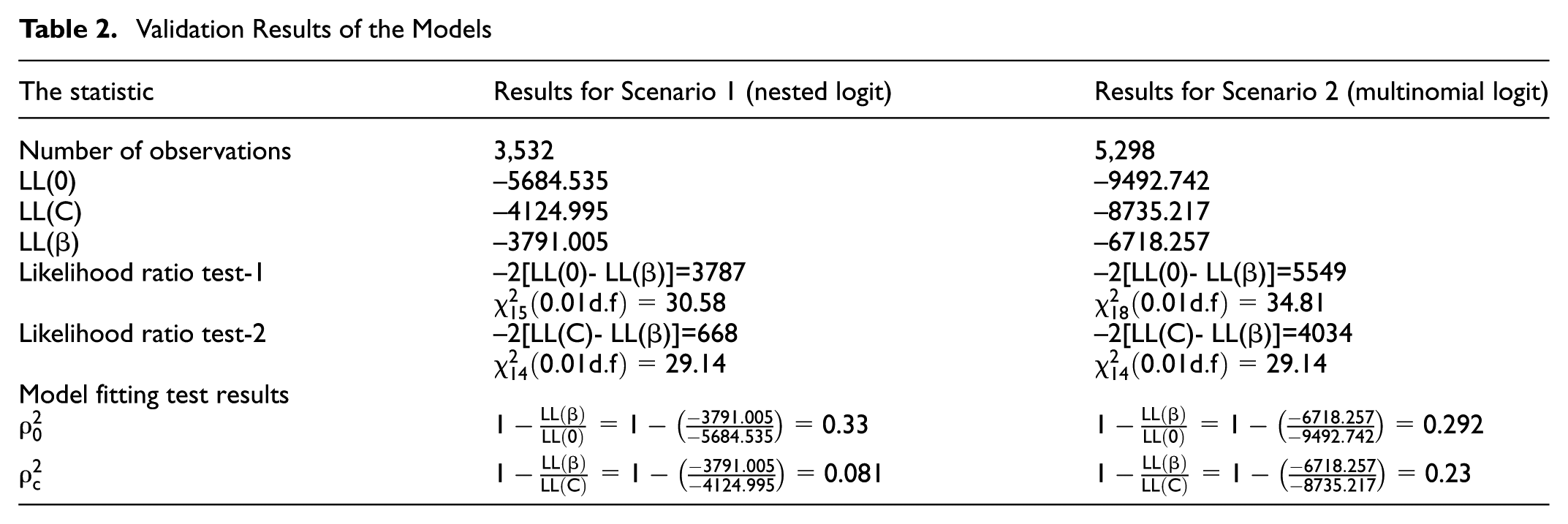
The modeling results for each scenario are shown in Table 1. For each variable in the models, significance levels and their coefficients are provided. Table 2 also shows the validation results for the calibrated models. The likelihood ratio test is used to validate the models (comparing the estimated model with the base model) which show that both estimated models are better compared to their respected base and market share models. The coefficients obtained from modeling the first scenario are interpreted as follows:
Being an employee (Job–Employee variable) has significant impact on utility of (other alternatives) in the upper nest for the first scenario. If the motorcyclist is an employee, there is a higher tendency to change the mode of travel and choosing transit, para-transit, or other modes (car, walking, etc.).
If the motorcyclist uses the motorcycle for business, he is less likely to violate (–0.692).
The dummy variable which stands for using the motorcycle as a tool for earning income (e.g., delivery men) appeared with a negative sign in the utility function of transit and para-transit modes (–2.752). In other words, the individuals who use motorcycles mainly to earn income are less likely to change their mode to transit or para-transit modes. The obvious reason is the dependency of their income on the motorcycle.
The number of working hours with the motorcycle in a week also has significant impact on the utility of choosing gasoline (0.0209) and electric motorcycles (0.0116). The longer the working hours with the motorcycle, he more likely the user is to choose a gasoline over electric motorcycle. Investigation of coefficients of this variable suggests that the impact of this variable in choice of gasoline motorcycle is higher than for electric ones. The reason could be the fact that the respondents who work with motorcycles for long periods often use them for earning money, and in the case of changing the mode of their trip, they have to use electric motorcycles or eliminate their trips (changing their job).
Increasing the costs of motorcycle maintenance has a significant negative impact (–0.4885) in the utility of the gasoline motorcycle alternative. The tendency to use gasoline motorcycles is reduced by increasing motorcycle maintenance costs by two or three times.
Dummy variables of trip times shorter than 90 min have a significant positive impact (0.9869) on the utility of electric motorcycle. If the trip time for the respondent to the destination is less than 90 min, the tendency to use electric motorcycles is increased. This can be because of the fact that electric motorcycle needs charging and respondents assume that it is not possible to use electric motorcycles for trips longer than 90 minutes. In addition, a dummy variable of a trip time of 90 min or longer has a significant positive impact on the utility of public and semi-public transportation options. That is, in case of a longer trip time, the tendency to change to use of public and semi-public transportation is increased.
If the purpose of using a motorcycle is to earn money, and the occupation of a motorcyclist is transporting cargo or passengers, the likelihood of cancelling the trip alternative increases by imposing the first scenario. This is justified by the fact that these individuals are self-employed, and it is easier to reschedule their trips.
Modeling Results
Significance at 5% level.
Significance at 1% level.
Validation Results of the Models
According to the model results for the second scenario, it can be stated that:
The toll price has significant negative impact (–0.0001) in the utility of choosing gasoline motorcycle alternative. This denotes that the tendency to use a gasoline motorcycle is significantly reduced by increasing the toll price.
The motorcyclists who work as delivery men have a higher tendency to use electric motorcycles. The municipality of Tehran makes it more convenient to buy this kind of motorcycle. Also, given the high number trips into the CPZT every day, choosing this mode can have more benefits in the long term.
The number of working hours a day on a motorcycle has a positive effect (0.0709) on the utility of choosing gasoline motorcycles with paying the tolls and also committing violations. It can be concluded that individuals that routinely use motorcycles every day, have a higher tendency to use their motorcycles in any conditions.
The variable of travel time has a negative effect (–0.0118) on choosing electric motorcycles, which suggests that for longer travel times, the individuals do not like to use electric motorcycles. This could be because of issues related to the lack of electric motorcycle facilities (for example: charging stations) which has convinced the motorcyclists that they are not suitable for long trips.
The results show that using motorcycles for going to work and also having a job such as shopkeeper, employee, or manager has a positive effect (0.3683) on choosing transit or para-transit alternatives. That is, by applying the toll scenario, the probability of changing their regular choice (motorcycle) and choosing the latter alternative is increased in this group.
The variable of using motorcycles for earning income has a negative effect on the utility of transit and para-transit alternatives (–3.6093) and other modes (–1.5174). By applying the toll scenario, those who use the motorcycle to earn money are less willing to use these two alternatives. In addition, a comparison of two coefficients indicates that the impact of this variable on transit and para-transit alternatives is greater than for the other modes. On the other hand, this variable has significantly positive impact (0.3768) on violations of the alternative’s utility. Therefore, if the purpose of using a motorcycle is to earn income, the tendency to violate is also increased.
Figure 11 shows the changes in choosing alternatives because of the first scenario. For analysis purposes, all variables were assumed at their average levels, and demand elasticity for each alternative has been analyzed because of changes in the maintenance costs of the motorcycle. As a result of increasing the maintenance costs, the share of gasoline motorcycle usage is obviously reduced, and the related demand is diverted to other alternatives. As observed in Figure 11, among different alternatives, a shift in demand to electric motorcycles is happening at a higher rate than for other alternatives. For example, when motorcycle maintenance costs are doubled, about 64% of the demand is diverted to using gasoline motorcycles and the rest is diverted to other alternatives. In this situation, the share of using electric motorcycles, transit, and para-transit alternatives, trip cancellation, and other modes of travel is 17%, 12%, 4%, and 3%, respectively. While, if the maintenance costs rise to three times the current cost, the share of gasoline motorcycle demand would be reduced by 52%. In this situation, the share of using electric motorcycles is 23% and for transit and para-transit alternatives about 15%. Finally, to reduce the share of motorcycles as predicted in Tehran’s comprehensive transportation plan (3%), 66% of the demand should be reduced. By considering the first scenario, this could be achieved by increasing the maintenance costs for motorcycles by up to 4.7 times compared with the current prices.
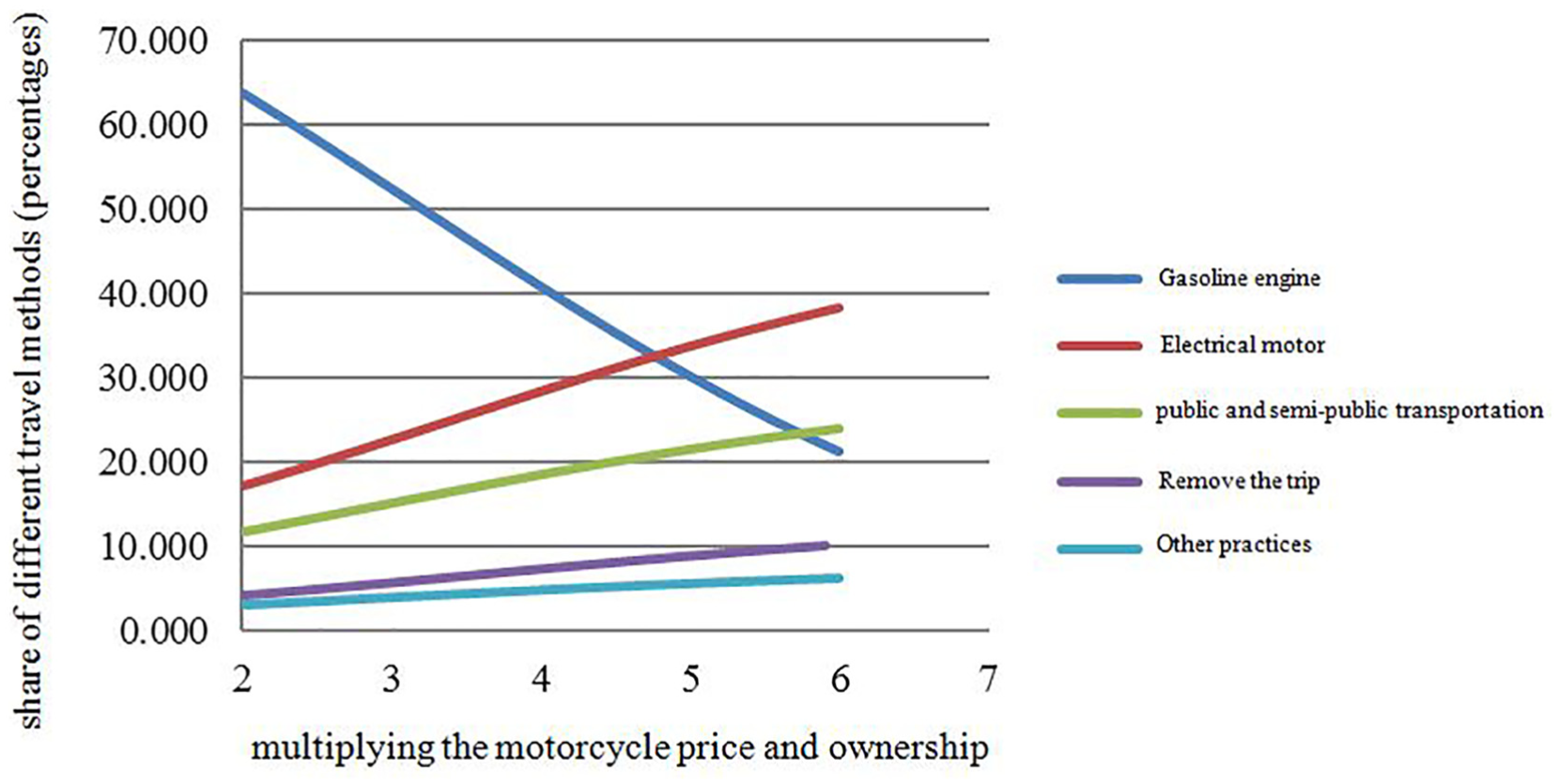
Sensitivity analysis of the probability of choosing each alternative because of increasing the maintenance costs of the motorcycle.
Figure 12 shows the changes in the mode choice versus different toll prices to enter the CPZT. As observed, the probability of choosing a gasoline motorcycle is reduced by increasing the toll fares and the demand is diverted to other alternatives. Also it is interesting to note that among different alternatives the share of the violation alternative (using gasoline motorcycle without paying toll) has a higher share when the toll price is increased. The share of gasoline motorcycle usage is not reduced in this situation. For example, when the toll price is 10,000 IRR, about 32% of users tend to pay the toll and use a gasoline motorcycle, and 25% use gasoline motorcycles without paying the toll which means that 57% continue using gasoline motorcycles. In this situation, the share of electric motorcycles, transit and para-transit alternatives, trip cancellation, and other modes is 14%, 19%, 6%, and 4%, respectively. Motorcycles had a 9% share according to 2004 statistics. This should be reduced to the predicted rate of 3% by the years cited in the master plan. To achieve this, it will be necessary to reduce demand by 66%. This can be achieved by imposing 70,000 IRR toll price to enter the CPZT.
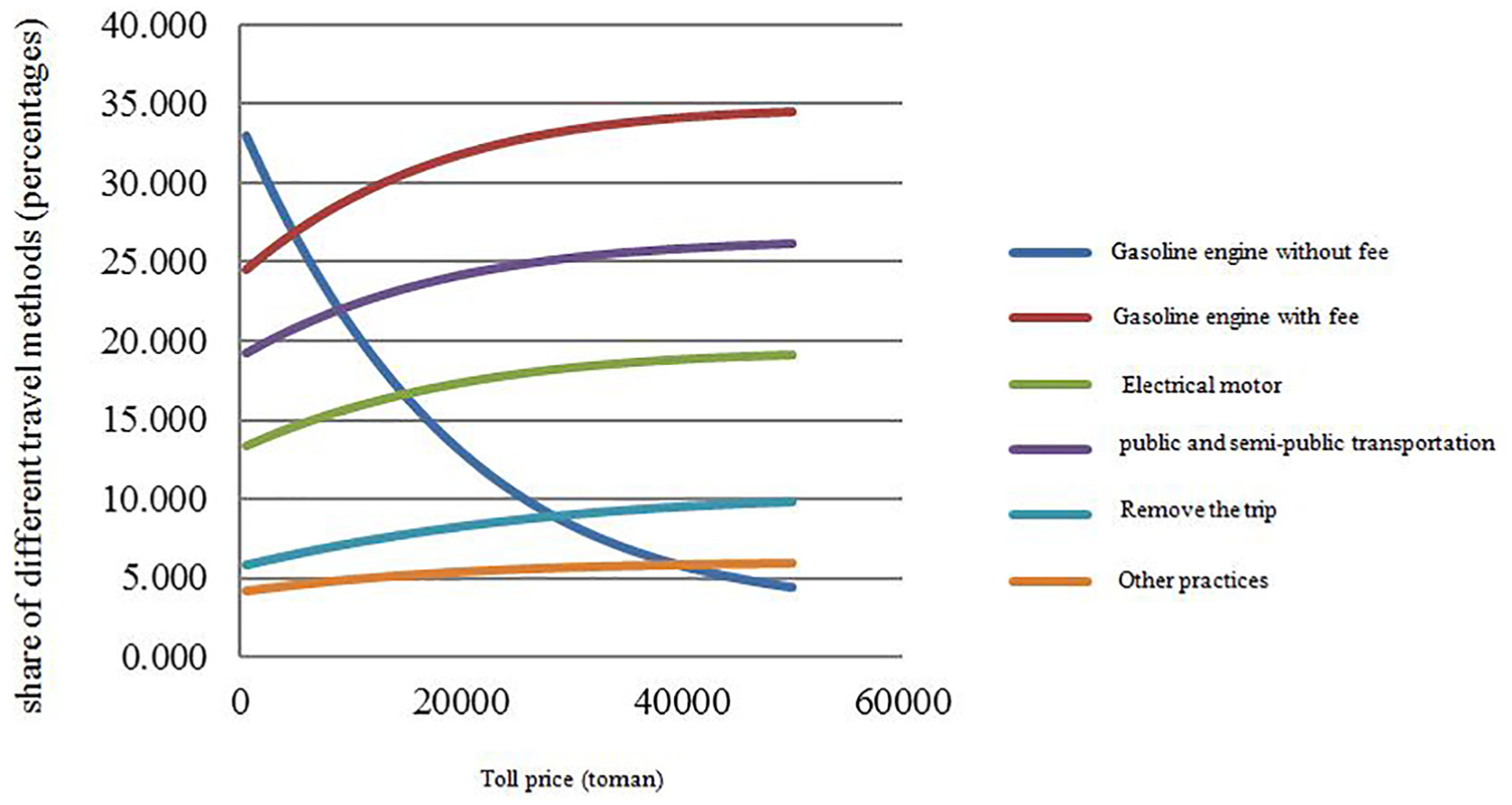
Sensitivity analysis of the probability of choosing each alternative because of increasing the toll price to enter the CP zone.
Conclusion and Further Recommendations
In this paper, we sought to evaluate two main scenarios for demand management on the use of motorcycles in Tehran. The many problem and challenges which arise from the use of motorcycle as a mode for cargo and passenger transportation in Tehran mean that one of the main goals in the city’s comprehensive transportation plan is to reduce the share of this mode in the future. As discussed, the scenarios included increasing motorcycle maintenance costs and charging motorcycles to enter the CPZT. A stated preference approach was used for data gathering and nearly 1,800 motorcyclists were surveyed about their socio-economic characteristics, routine trip chains, and also the designated scenarios. Discrete choice modeling was applied to model the behavior of motorcyclists in the scenarios mentioned. Results showed that in the case of doubling motorcycle maintenance costs, demand for gasoline motorcycled would be reduced by 32%, which reduces the total mode share of motorcycle to 5.8%. This share can be reduced to 3% when the maintenance costs increases by 4.7 times. In the tolling scenario, three prices including 85,000, 150,000, and 300,000 IRR were considered as possible toll fares to enter the CPZT. This changed the share of individuals who tended to choose gasoline motorcycles motorcyclists to 25%, 13%, and 9%, respectively. In the three proposed prices, the average share of electric motorcycle was 17%. As expected, in seeking to achieve a reduction in motorcycle share and changes in trip modes, the tolling scenario had better feedback compared with other scenarios. The results of the sensitivity analysis for gasoline motorcycle demand versus different toll prices indicated that the share of gasoline motorcycle with toll payment is reduced by increasing the toll, and the excess demand would be shifted to other alternatives. In addition, it was found that the first scenario was more effective with motorcyclists who have trip purposes other than income earning. The tolling scenario would influence almost all trip purposes with the highest effect on work trips. Additionally, it was observed that in the case of increasing toll prices, motorcyclists who used motorcycles for transporting cargo and passengers (earning money) would gradually tend to eliminate their trips—in other words, change their job. For further research, other demand management strategies could be evaluated for controlling the demand of motorcycles in cities that have major issues with motorcycles. Changing working hours and banning motorcyclists from entering some areas of the city could be effective solutions for this problem.
Footnotes
Acknowledgements
The authors would like to thank Tehran Municipality Urban Research and Planning Center for their financial support and cooperation in accomplishing this project.
Author Contributions
The authors confirm contribution to the paper as follows: study conception and design: BM; data collection: BM, FM; analysis and interpretation of results: BM, FM; draft manuscript preparation: BM, FM. Both authors reviewed the results and approved the final version of the manuscript.
The Standing Committee on Motorcycles and Mopeds (ANF30) peer-reviewed this paper (19-00677).