







Abstract
In New York City (NYC), as in several other U.S. cities, pediatric occupant restraint laws exempt rear-seated passengers in vehicles-for-hire from those that apply to private vehicles. This study compares rear-seated infant, child, adolescent, and teen passenger restraint use and injury in taxis compared with other passenger vehicles. New York State Department of Health Crash Outcome Data Evaluation System (CODES) was analyzed for rear-seated pediatric passengers aged 0–19 years traveling in taxis (n = 1,631) or other passenger vehicles (n = 21,984) involved in a crash in NYC 2011–2013. CODES is a probabilistically linked data set comprising emergency department, hospitalization, and Department of Motor Vehicle crash data. Bivariate and multivariable logistic regression odds ratios (OR) are reported with 95% CI. Taxi passenger restraint use was lower than in other passenger vehicles (51.2% vs. 86.7%, p < 0.0001). Use of a child restraint for ages < 8 years was low (5.9%) and one-tenth that of other passenger vehicles. Multivariable adjusted odds of restraint use was 9.80 (8.2–11.7) for other passenger vehicles compared with taxis. Compared with passengers in other vehicles, passengers in taxi crashes were twice as likely to be moderately or severely injured (p < 0.0001) and twice as likely to have traumatic brain injury (p = 0.0070). This study documents lower restraint use and higher injury, including traumatic brain injury, for pediatric taxi passengers compared with other passenger vehicles. Improved data systems, surveillance, and enforcement are needed to improve restraint use and reduce injury in children and teens, particularly those in vehicles-for-hire.
Age-appropriate restraint use has been shown to significantly lower motor vehicle occupant injury in both front- and rear-seated passengers ( 1 – 6 ). Proper use of child restraint systems for passengers under the age of 8 years has been shown to provide added protection in motor vehicle crashes ( 1 , 5 , 7 ). Although observational studies demonstrate that more than 90% of passengers of all ages are restrained ( 6 ), there are reports that restraint use is not uniform across front- and rear-seating positions and across subgroups of the pediatric population ( 4 , 7 – 9 ).
In the United States (U.S.), most states exempt vehicles-for-hire from restraint laws. In New York State (NYS), passengers under the age of 16 years are required to be restrained when traveling in a private passenger vehicle. However, passengers of all ages riding rear-seated in taxis and vehicles-for-hire are exempt from this law ( 10 ). More than one-third (35%) of the passengers in the 485,000 daily yellow medallion taxi trips in New York City (NYC) are under the age of 21 ( 11 ). In addition, other vehicles, such as the newly introduced green boro taxis as well as ride-hailing services, are exempt from pediatric restraint laws in NYC.
Until early 2016, the NYC Taxi and Limousine Commission required all yellow taxis to have a Plexiglas partition separating passengers seated in the rear to protect drivers from robbery. Although this requirement is now waived if there is a video camera inside the taxi, most yellow taxis continue to have partitions. In addition, video screens and card payment machines mounted in the front space of the already tight rear-seat passenger compartment are now commonplace in taxis across the U.S. and abroad. These have potential to be especially hazardous for unrestrained rear-seated occupants. During a sudden stop or a crash, unrestrained rear-seated occupants can sustain head and facial injuries as a result of making contact with the Plexiglas dividers, video screens, or card payment machines.
Although taxis are a major form of transportation in NYC, other than anecdotal reports from emergency departments, there is little information on pediatric restraint use or injury in taxi occupants involved in a motor vehicle crash. This study aims to investigate and compare restraint use and injury for passengers aged 0–19 years involved in a motor vehicle crash while riding in the rear seat of a NYC taxi compared with similarly aged rear-seated occupants of other passenger vehicles.
Methods
Data Source(s)
The NYS Crash Outcome Data Evaluation System (CODES) was used to examine restraint use and occupant injury in NYC crashes of taxis and other passenger vehicles. The surveillance system, originally funded by the National Highway Traffic Safety Administration (NHTSA) ( 12 ), utilizes probabilistically linked data collected from the NYS Department of Motor Vehicle (DMV) law enforcement and motorist motor vehicle crash reports, and trauma registry data and discharge records for hospital emergency departments and inpatient care. Multiple identifying factors were used to link the law enforcement and motorist crash reports to the hospital records. Probabilistic linkage uses identifying factors to estimate the probability that records are the same person from the same event. The final analytic data set used for these analyses was de-identified and received institutional review board clearances from Columbia University and the New York State Department of Health.
Study Population
The study population included passengers aged 0–19 years, reported as sitting in the rear seat of a vehicle (left rear, right rear, middle rear, or rear cargo area) involved in a crash in NYC, 2011–2013. NYS DMV vehicle registration and body type variables were used to identify taxis from other passenger vehicles and to exclude buses and non-passenger vehicles. The body type of the other passenger vehicles was limited to sedans (2-door, 4-door, and unreported doors), SUVs, convertibles, pickup trucks, and van trucks. The body type of taxis was limited to sedans (2-door, 4-door, and unreported doors), SUVs, and van trucks. All other vehicle body types were excluded from the other passenger vehicle category: commercial, emergency vehicles (ambulances, fire trucks, police and other law enforcement vehicles), school car, (special) omnibus, (regular) omnibus, (livery) omnibus, buses, van pool, agricultural truck, tow truck, and missing registration types.
Outcome and Exposure Variables
Restraint Use
Restraint status was obtained from the DMV crash reports. Use of any safety belt or child restraint was coded as restrained. Unrestrained was obtained from the crash report category noting that no safety equipment was being used at the time of the crash. Unknown restraint status included the reported safety equipment as unknown/not reported. Children under age 8 years were categorized dichotomously as using a child restraint or not in a child restraint as indicated on the crash reports.
Injury
Injury was defined using data from two sources: (1) DMV crash reports; and (2) emergency department and hospitalization data. Total injury was defined using the KABCO score assigned by the DMV crash report with injury severity reported: killed (K), severe injury (A), moderate injury (B), minor injury (C), injury of unknown severity (Z), or uninjured (O). Total injury included K, A, B, C, and Z. Total injury captured minor injury that may not have received medical care from a hospital.
The Statewide Planning and Research Cooperative System (SPARCS) emergency department and inpatient hospitalization data (2011–2013) and the International Classification of Diseases, 9th Revision, Clinical Modification (ICD-9-CM) codes were used to further classify injury as traumatic brain injury, facial injury, and any injury receiving emergency department or hospital care ( 13 ).
Traumatic brain injuries (TBIs) were identified using the following ICD-9-CM codes: 800 (0.0–0.9) fracture of the vault of the skull, 801 (0.0–0.9) fracture to the base of the skull, 803 (0.0–0.9) other and unqualified skull fractures, 804 (0.0–0.9) multiple fractures involving skull or face with other bones, 850 (0.0–0.9) concussion, 851 (0.0–0.9) cerebral laceration with contusion, 852 (0.0–0.9) subarachnoid, subdural, and extradural hemorrhage following injury, 853 (0.0–0.1) other unspecified intracranial hemorrhage following injury, 854 (0.0–0.1) intracranial injury of other and unspecified nature, 950.1 injury to optic chiasm, 950.2 injury to optic pathways, 950.3 injury to visual cortex, and 959.01 head injury unspecified.
Facial injury was defined using the following ICD-9-CM codes: 802 (0.0–0.9) facial fracture, 870 (0.0–0.9) open wound of the ocular adnexa, 871 (0.0–0.9) open wound of the eyeball, 873 (0.0–0.9) other open wound of the head.
Covariate Variable Definitions
Person-Level Variables
Passenger Age
Age categories were defined as: 0–7, 8–13, 14–15, and 16–19 years. Child passenger ages were categorized to align with the laws and recommendations that NYS DMV provides for children riding in motor vehicles. NYS law requires all children under the age of 8 years to use a child restraint system while riding in the rear seat of a private passenger vehicle except when traveling in vehicles-for-hire and special-use vehicles. All children and teens under the age of 16 years must be restrained while in the car regardless of their seating position. Where numbers did not support separate analysis, ages were collapsed to address sample size issues.
Number of Passengers
The number of rear-seated passengers aged 0–19 years riding in the vehicle at the time of crash was categorized as 1, 2, 3, and 4 or more.
Seating Position
Seating location of the passenger included occupants who were rear-seated in either a left or right outboard seat, middle seat, or in a rear cargo area.
Driver Age
Age of the driver was reported in years and categorized into six intervals: <21, 22–29, 30–39, 40–49, 50–59, and 60+ years.
Driver Restraint Status
Driver restraint status was coded using the safety equipment information provided in the DMV crash reports. The driver information was identified by both the crash number and vehicle number and driver restraint status was then flagged to those passengers involved in that specific vehicle and crash.
Vehicle and Crash-level Variables
Vehicle Body Type
Vehicles were grouped by registration status into taxi or other passenger vehicle and were classified into six categories based on the vehicle’s registration code as previously noted in the study population inclusion/exclusion criteria.
Vehicle Year
Vehicle year was collected from the DMV crash reports and categorized into the following four groups: pre-1999, 1999–2003, 2004–2008, and 2009–2014 ( 14 ).
Geographic Location
The NYC County (borough) of crash was obtained from the DMV crash reports and was used to identify in which of the five counties (boroughs) the crash occurred: New York County (Manhattan), Richmond County (Staten Island), Kings County (Brooklyn), Bronx County (Bronx), and Queens County (Queens).
Weekday versus Weekend
Weekend crashes include all crashes that occurred on Saturday or Sunday and weekday crashes included those occurring Monday–Friday.
Time of Day
Time of day corresponds to the time the crash occurred as noted by the DMV crash reports; this was divided into five intervals: Midnight–5:59 a.m., 6:00–9:59 a.m., 10:00 a.m.–3:59 p.m., 4:00–7:59 p.m., and 8:00–11:59 p.m. Categories for time of day were selected in consideration of morning rush hour, evening rush hour, evening, and very late night.
Speeding or Fault
The driver’s speeding and crash fault determination variables were law enforcement-reported vehicle speeding or driver at fault.
Collision Manner
Collision manner was grouped into five categories: turning, rear-end collision, over-taking, head-on collision, and sideswipe. The turning category included five variations in which one of the vehicles in the crash could be turning left or right.
Statistical Analyses
Predictors of restraint use were examined for passengers aged 0–19 years by whether the crash occurred in a taxi versus other passenger vehicle. Initially, bivariable analysis was performed for the hypothesized predictors of being restrained for taxis, other passenger vehicles, and the total sample. Chi-square test statistics were used to examine bivariable associations with restraint status of the passenger with a level of significance of 0.05 for covariates. Those covariates found to be significant in the total population and in the subgroup bivariate analyses at the 0.20 level were included in the multi-level, multivariable logistic regression models. A manual backward model selection process was used and model fit assessed at the end. The overall model was significant (p < 0.0001), with an r 2 of 0.14. Unadjusted and adjusted odds ratios are reported with 95% confidence intervals (CIs). SAS software version 9.4 was used for all statistical analyses ( 15 ).
Results
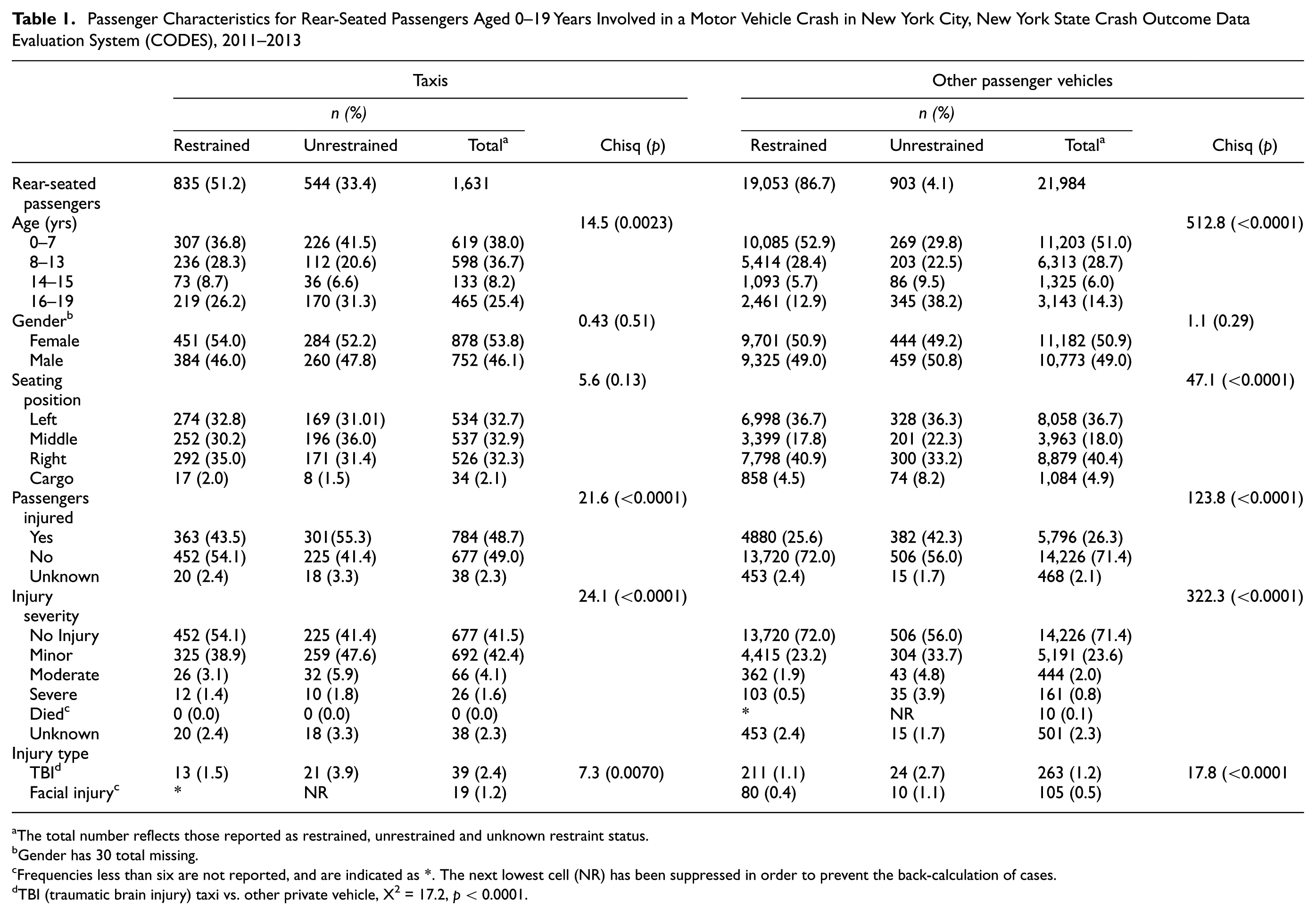
The total study population consisted of 23,615 rear-seated passengers aged 0–19 years with 1,631 passengers in taxis and 21,984 passengers in other passenger vehicles. Overall, 19,888 (84.2%) rear-seated passengers in both taxis and other passenger vehicles were reported as being restrained, but this was lower in taxis (51.2%) than in other passenger vehicles (86.7%) (Table 1).
Passenger Characteristics for Rear-Seated Passengers Aged 0–19 Years Involved in a Motor Vehicle Crash in New York City, New York State Crash Outcome Data Evaluation System (CODES), 2011–2013
The total number reflects those reported as restrained, unrestrained and unknown restraint status.
Gender has 30 total missing.
Frequencies less than six are not reported, and are indicated as *. The next lowest cell (NR) has been suppressed in order to prevent the back-calculation of cases.
TBI (traumatic brain injury) taxi vs. other private vehicle, X2 = 17.2, p < 0.0001.
Passenger Characteristics
The passenger age distribution varied between taxis and other passenger vehicles, with taxis having a larger proportion of teens aged 16–19 years and a smaller portion of young children aged 0–7 years than other passenger vehicles (Table 1). Passengers aged 0–19 years in taxis were less likely to be restrained compared with other passenger vehicles (Figure 1). Child occupants aged less than 8 years old in taxis were infrequently restrained in a child restraint compared with other vehicles (5.9% vs. 50.3%, p < 0.0001). There were no gender differences in the proportion of male and female passengers traveling in taxis that crashed compared with other passenger vehicles (Table 1).
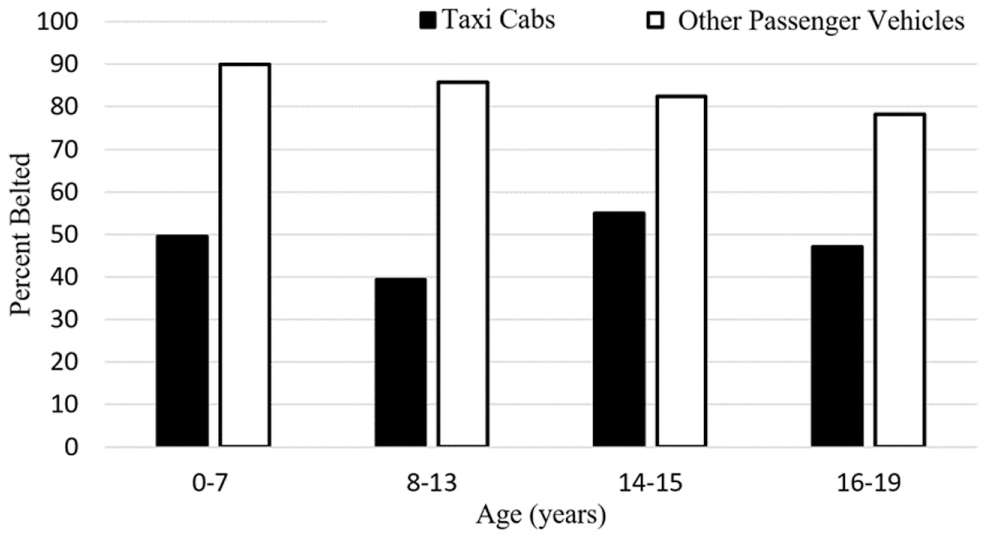
Percentage of passengers using a seatbelt or child restraint system by age group for taxis and other passenger vehicles, NYS CODES1 2011–2013.
Driver Characteristics
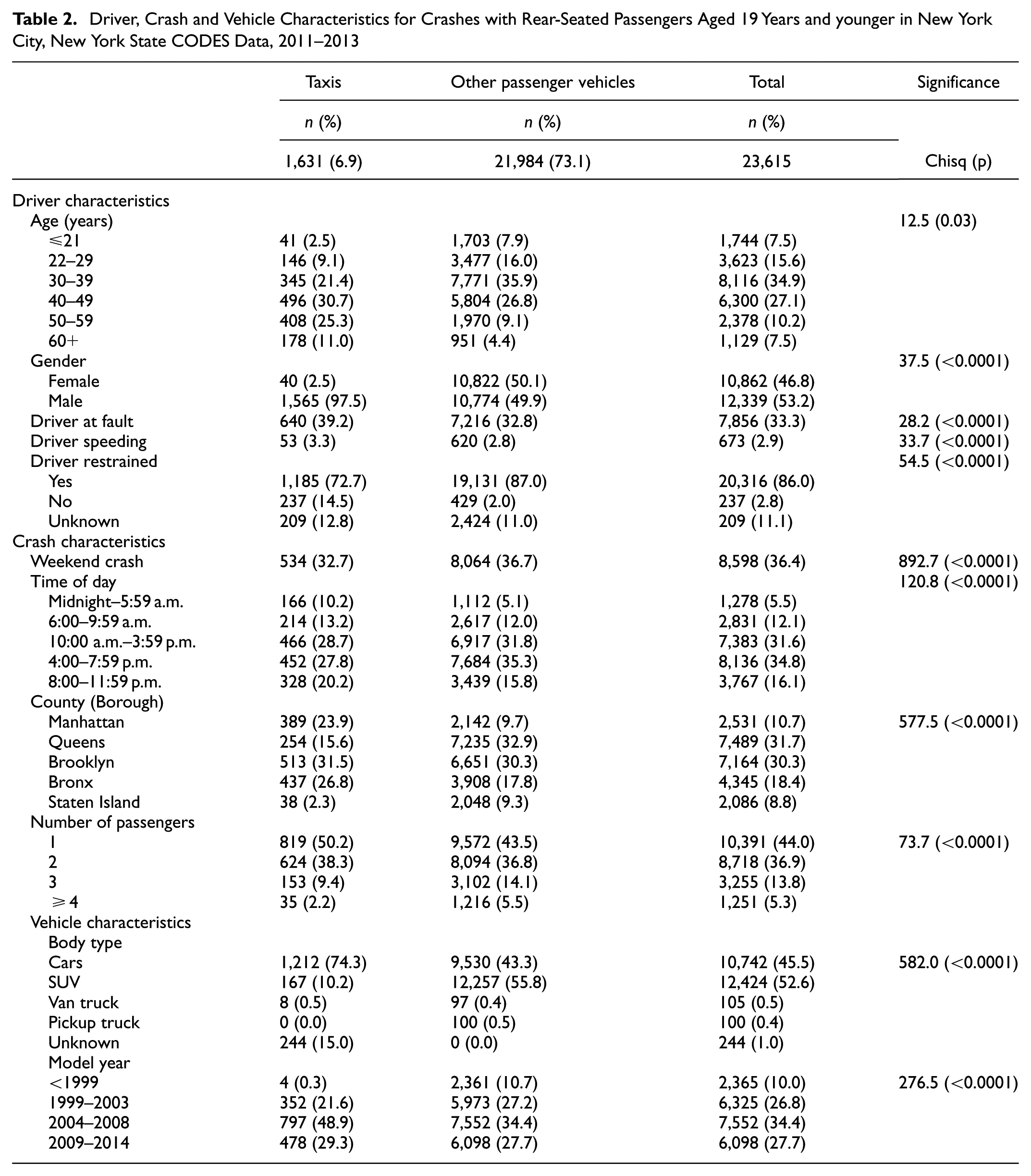
There were age and gender differences in the drivers of taxis being older and more likely to be male. Few taxis were being driven by females (2.5%) compared with half (50.1%) of passenger vehicles. Taxi drivers were nearly three times more likely to be aged 50 years or older, with other passenger vehicles being nearly 2.5 times more likely to be driven by a driver age 30 years or younger (Table 2). Driver restraint use at the time of crash was lower in taxis (72.7%) than in other passenger vehicles (87.0%) (Table 2). Nearly 40% of taxi drivers were found to be at fault for the crash compared with nearly one-third of drivers of other vehicles (Table 2). Reported speeding was slightly higher in taxis (Table 2).
Driver, Crash and Vehicle Characteristics for Crashes with Rear-Seated Passengers Aged 19 Years and younger in New York City, New York State CODES Data, 2011–2013
Injury Characteristics
More than a quarter of rear-seated passengers were reported by law enforcement to have a crash-associated injury, with 13% of passengers aged 0–19 years receiving treatment in the emergency department. This was higher in taxis than in other vehicles (19.1% vs. 12.4%, p < 0.0001). A similar percent of occupants of taxis and other vehicles were hospitalized (Table 1). Mortality was low in both groups, with no deaths occurring in taxi passengers (Table 1). Taxi crash occupants were two times more likely to be diagnosed with TBIs (2.4% vs. 1.2%, p < 0.0001) and 2.4 times more likely to experience facial injuries (1.2% vs. 0.5%, p < 0.05) compared with crashes in other passenger vehicles (Figure 2a and b ).
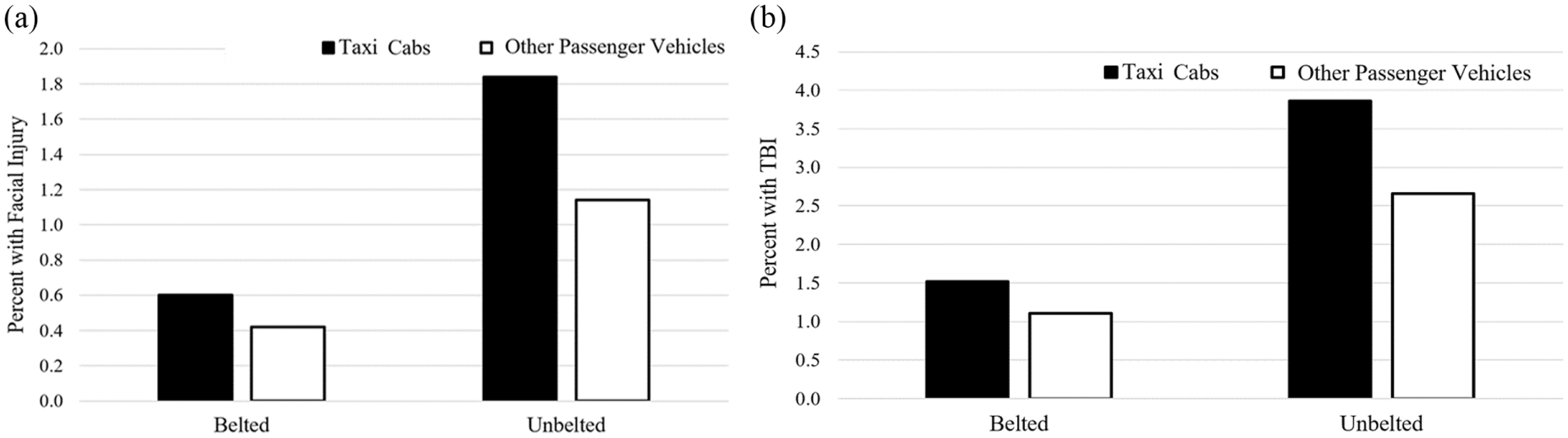
(a) Percent of passengers with facial injuries by restraint status for taxis and other passenger vehicles, NYS CODES 2011–2013 and (b) Percent of passengers with TBI by restraint status for taxis and other passenger vehicles, NYS CODES 2011–2013.
Vehicle and Crash Characteristics
The distribution of time of day differed significantly for crashes of taxis compared with other passenger vehicles (Table 2). In particular, the number of taxi crashes was higher than that of other passenger vehicles between the hours of 8:00 p.m. to 6:00 a.m. The number of taxi crashes occurring between midnight and 6:00 a.m. was double that of other passenger vehicles (Table 2). Taxi crashes were lower than that of other passenger vehicles during the evening rush hour timeframe (Table 2). SUVs and passenger cars comprised 97.8% of vehicle body types involved in crashes. Taxis had a greater number of unknown vehicle types (15% vs. 0%).
The largest proportion of all crashes occurred during the summer months of June, July, and August, and the smallest proportion during the winter months of December, January, and February (data not shown). Weather and day of the week did not have a significant relationship with passenger restraint status or injury. The distribution of taxi crashes and other passenger vehicle crashes varied significantly by county (Table 2). Nearly one-third of both taxi and other passenger vehicle crashes occurred in Brooklyn. Nearly one-fourth of taxi crashes occurred in Manhattan and slightly over one-fourth in the Bronx. In contrast, the proportion of taxi crashes that occurred on Staten Island was small and about one-fourth that of other passenger vehicles (Table 2). The proportion of other passenger vehicle crashes was less than 10% in both Manhattan and in Staten Island (Table 2).
Independent Predictors of Passenger Restraint Use
Passengers in other passenger vehicles were nearly 10 times more likely to be restrained than those in taxis (Table 3). In the multivariable adjusted model for the total population, passengers in crashes that occurred in Queens and Staten Island were more likely to be restrained compared with passengers of crashes that occurred in Manhattan (Table 3). Passengers were less likely to be reported as restrained when there were four or more passengers in the vehicle and when the crash occurred between the time of midnight and 6 a.m. (Table 3). Passengers were almost 40 times more likely to be restrained when the driver was also restrained (Table 3). Passengers of female drivers were more likely to be wearing a seatbelt during the crash than passengers of male drivers (OR = 1.34, 95% CI = 1.14, 1.57).
Unadjusted and Adjusted ORs (95% CI) for Restraint Status of Passengers Aged 0–19 Years Involved in a Motor Vehicle Crash in New York City, New York State, CODES 2011–2013 (n = 23,615)
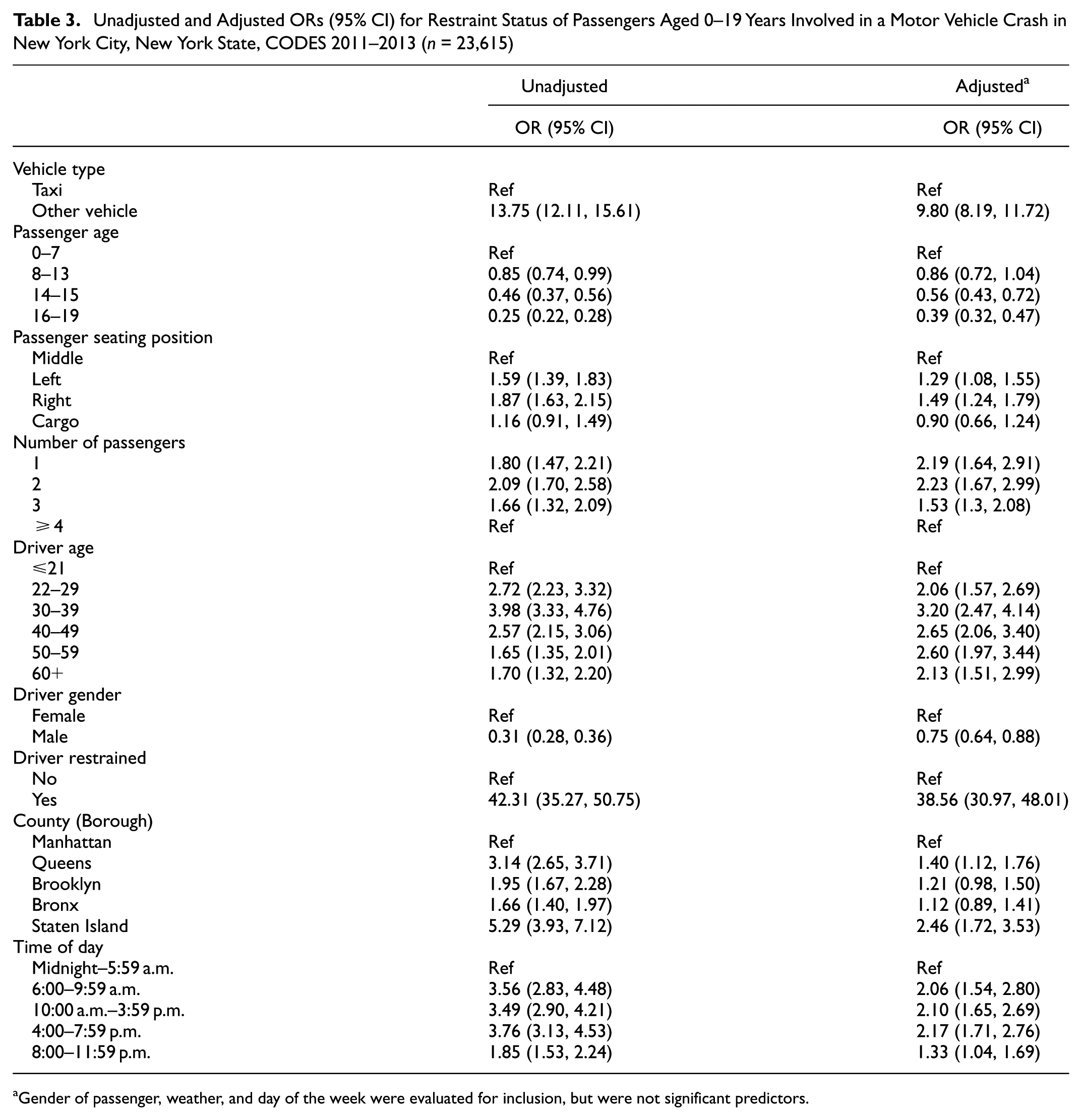
Gender of passenger, weather, and day of the week were evaluated for inclusion, but were not significant predictors.
Discussion
In many states, pediatric passengers are exempt from occupant restraint laws that apply to private vehicles when traveling in a vehicle-for-hire. This study documents a significantly lower restraint use and higher injury rate, including TBI, across the pediatric age span for pediatric passengers in NYC who crashed while traveling in taxis compared with other passenger vehicles. Infant, child, and teen restraint use is lower and injury higher in taxis than in other passenger vehicles involved in a motor vehicle crash in NYC. Younger children who are required by law to be in an infant, child, or booster seat while traveling in a private vehicle are exempted from the child restraint law when traveling in a NYC taxi or other passenger vehicles for hire ( 10 ). Child restraint use in younger children and belt use in older children is well documented to reduce injury risk and severity during a motor vehicle crash ( 1 , 3 , 16 – 18 ). Injury was observed to be higher in unrestrained rear-seated passengers traveling in either a taxi or other passenger vehicle, with injury being higher in taxis. For both taxis and other passenger vehicles, seatbelts were especially protective for injury.
This study is consistent with historical accounts from the 1990s and current anecdotal emergency department reports of increased dangers to unrestrained rear-seated taxi passengers resulting from Plexiglas dividers in taxicabs ( 19 ). Facial injuries and TBIs, more prevalent in taxi crashes than in other passenger vehicles, may occur as passengers are less likely to be restrained and more likely to contact with Plexiglas dividers, taxi TVs, or electronic card payment machines. In NYC, The Vision Zero Action Plan aims to end traffic injuries and fatalities through enforcement, education and outreach, and engineering improvements. Although NYC’s Vision Zero has made significant progress in increasing the accessibility of functioning seatbelts in taxis, there is evidence that passengers and policy makers continue to underestimate the dangers associated with riding unrestrained in the rear seat ( 4 , 20 ).
NYS has a primary enforcement law for passengers under the age of 16 in any seat in a private passenger vehicle ( 21 , 22 ). Passengers in NYC taxis, who are excluded from the restraint laws, exhibited low restraint use for all rear-seat seating positions. Children and teens younger than 16 years in taxis were just over half as likely to be restrained as were those in other passenger vehicles. It was rare (approximately 1 in 20) for children in a taxi to be properly restrained according to NHTSA and the American Academy of Pediatrics guidelines ( 8 , 17 , 22 ). Although children and young adults in the rear seat of other passenger vehicles appear to follow NHTSA guidelines for restraint use and seating position more frequently than those in taxis, this study shows there continues to be room for improvement in urban passenger vehicles as well.
The finding in this study that the strongest predictor of restraint use for both taxis and other passenger vehicles was driver restraint status is consistent with other reports on rear seatbelt use ( 8 , 16 , 23 ). Predictors that were significant for other passenger vehicles but not significant for taxis were driver age, driver gender, and passenger seating position.
This study has limitations. All information used in the multivariable adjusted models was collected from the law enforcement and motorist crash report of the crash. Restraint status was reported as “unknown” for 9% of the population and therefore these cases could not be included in the logistic regression analyses for restraint use. Finally, misclassification may have occurred as a result of the lack of information to categorize for-hire vehicles, such as Uber and Lyft, from private passenger vehicles. The impact of this could be expected to result in an under estimation of the true difference in restraint use and injury in vehicles-for-hire compared with private passenger vehicles. Sample size was an issue in the analysis, limiting the number of variables that could be examined and requiring the combining of some variables, such as age groups, to satisfy the need for sufficient sample size to conduct analyses.
In summary, this study documents a significantly lower restraint use and higher injury rate, including TBIs, for pediatric passengers in NYC who crashed while traveling in a taxi compared with a private vehicle. Restraint law exclusions for child and teen occupants of taxis in NYC are associated with lower restraint use and increased injury. The rapid growth in vehicles-for-hire suggests the need for policymakers to re-examine restraint exclusions for passengers traveling in vehicles-for-hire. Improved data systems, surveillance and enforcement are needed to improve restraint use and reduce injury in children and teens, particularly those traveling in vehicles-for-hire.
Footnotes
Author Contributions
PP carried out the initial analysis, interpreted data, drafted the initial manuscript and reviewed and revised the manuscript. LMH provided the data, participated in and assisted with data analysis, provided guidance on the appropriate use of data, assisted in data interpretation, manuscript preparation and manuscript revision. MJB conceptualized and designed the study, provided data and data insight, assisted with data analysis, provided guidance on appropriate use of the data and critically reviewed the manuscript. CL assisted with data analysis and data interpretation, drafted, reviewed and revised the manuscript. MG and JL provided the data, assisted with data analysis, data interpretation and reviewing and revising the manuscript. JCP conceptualized and designed the study, assisted with the interpretation of the data, drafted and critically reviewed the manuscript. All authors approved the final manuscript as submitted and agree to be accountable for all aspects of the work.
The Standing Committee on Occupant Protection (ANB45) peer-reviewed this paper (19-05512).
The contents of the paper are the sole responsibility of the authors and do not necessarily reflect the official views of the funding or data collection agencies.