







Abstract
Microbial induced calcite precipitation (MICP) has been widely studied in laboratories to test changes to soil strength and density. Rarely studied is the biogeotechnology’s influence on real-world conditions. Consideration for the natural environment coexisting with treated soil is important, particularly vegetative responses to biochemical and physical changes from treatments. In this factorial designed study, vegetative response from one-time biochemical surficial treatments is observed in four soil growth mediums: two variants burned soil, unburned side slope construction soil, and Ottawa sand. Treatment objectives are to create a light crust that provides short-term erosion control, protects concurrently applied seeds and provides a beneficial plant environment (BPE). The crust creates a BPE through increased soil water retention and shear soil strength allowing better root and plant stability. An overly dense crust prevents root penetration and is avoided because established root systems are crucial in long-term erosion control. This study successfully created such a crust in all soil types treated. Also studied were influences of solution components on germination rates. Component influence proved highly dependent on soil type as calcium chloride inclusion was highly detrimental to seedling success in clean sand, somewhat detrimental to burned soil with ash layer, insignificant in unburned soil, and beneficial to burned soil without ash layer. These results give an indication of the complex biochemical soil reactions occurring from MICP treatment. This study gives evidence that a one-time application of a seeded biochemical solution has real-world potential as a balanced short-term and long-term erosion control technology for burned and construction soils.
Microbially induced calcite precipitation (MICP) is a geotechnical biotechnology that is being extensively researched as a solution to enhance a range of soil hydromechanical properties through biomineralization. MICP improvements to soil hydromechanical properties include increases in strength, increases in stiffness, and decreases in hydraulic conductivity. MICP biomineralization occurs when a microorganism produces enzymes or physiological byproducts that initiate biomineralization reactions through processes such as urea hydrolysis, denitrification, sulfate production, or iron reduction. Many microorganisms can be involved in the various biomineralization processes such as ureolytic bacteria, cyanobacteria, fungi, sulfate reducing bacteria, or nitrogen fixing bacteria (1, 2). During biomineralization of calcium carbonate (CaCO3) through urea hydrolysis, a ureolytic bacterium produces the urease enzyme which catalyzes the conversion of urea into a carbamate molecule that degrades under the right conditions into a carbonate ion that, when combined with calcium (or other ions), creates calcite (or other precipitates such as aragonite or vaterite). The bacteria remain in the void space between soil particles and act as the centers of calcification which allow calcite crystals to fill the void space between soil grains, eventually providing a cementitious link between particles.
Calcium carbonate precipitation through biomineralization is a natural process that occurs in several environments and under a diverse range of time scales. As an example of a natural biomineralization process, coral reefs are composed of individual corals that are produced slowly as aragonitic (CaCO3) coral skeleton formations occurring as intercalated organic macromolecules which control the macroscopic shape and size of the growing crystals. In corals, organic compounds play a key role in controlling the morphology of crystals in a wide variety of calcium carbonate precipitation processes by binding to specific sites and thereby causing direction-specific binding energies on the crystal surfaces. Centers of calcification in corals are millimeter-sized, rounded aggregates of randomly oriented, nanometer-sized calcium carbonate crystals embedded in an organic matrix of sulfated polysaccharides and acidic proteins that take decades for the fibrous aragonite structure to grow appreciably around to form the familiar coral shapes seen on reefs the world over ( 3 ).
In the case of MICP, human intervention is used to accelerate or magnify the precipitation reaction at scale to meet the needs of an engineered system and the timescales of modern cradle-to-grave design lives. In biostimulation MICP, native populations of ureolytic bacteria are stimulated to produce biomineralized carbonates at scale. In bioaugmentation MICP, a culture of ureolytic bacteria are added to the soil to produce the biomineralized carbonates. It is important to note that in bioaugmentation of soils in the field that biostimulation may also occur depending on the native microbiota in situ. The biomineralization precipitate reaction from ureolytic bacteria is well described in previously published literature as is human intervention bioaugmentation MICP and the processes and protocols for human intervention biostimulation MICP ( 4 – 6 ). To summarize the protocols for MICP in a conceptual manner, MICP bioaugmentation biomineralization treatments typically consist of a two-part liquid application: 1) a urea-broth solution consisting of a microbial culture solution, nutrients and urea; and 2) a cation supply solution that includes calcium chloride, both of which are believed to be critical for the urease reaction to occur and precipitate calcium carbonate (e.x. calcite). Figure 1 provides an overview concept of bioaugmentation MICP.
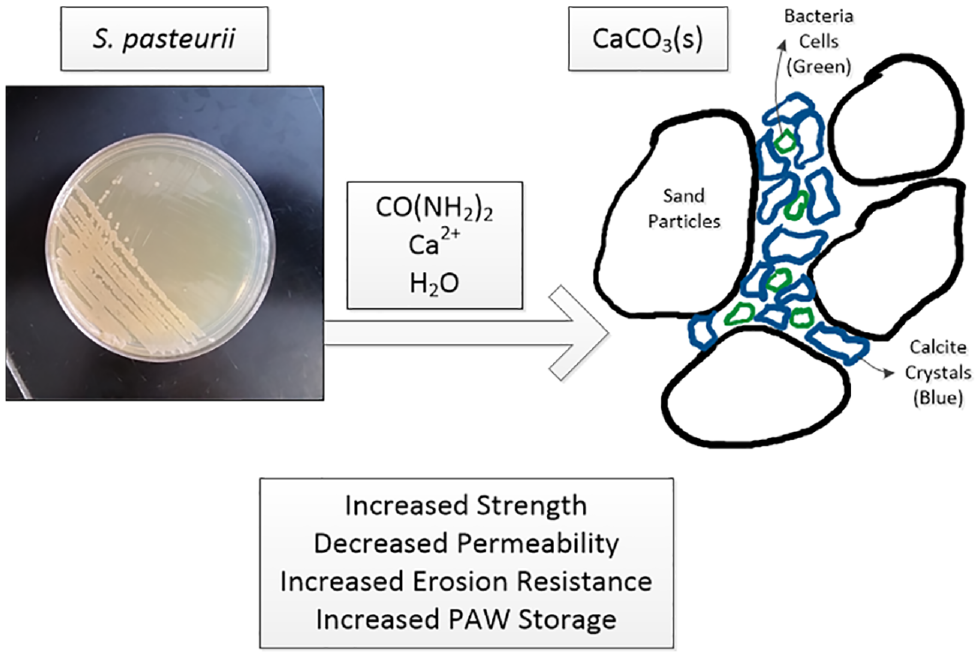
Conceptual overview of Microbially Induced Calcite Precipitation.
The effectiveness of MICP for soil biomineralization and resulting cementation has been proven in laboratory, bench scale, and small controlled field scale research. There is extensive literature on MICP containing further details on laboratory, bench scale, and small field tests performed to date ( 7 – 15 ). Using the bacterium, Sporosarcina pasteurii, significant reductions of mass-loss from wind erosion have been observed in laboratory experiments through biomineralization of surficial soil grains and prevention of saltator mobilization ( 16 – 18 ). Surface application of MICP can be performed by spraying the microbial solution combined with a nutrient broth and calcium solution on the surface of the soil. Subsurface application may be performed by injecting the 2-part liquid treatment under low to high pressure, or via mixing mechanically into the soil.
Statement of the Problem
Roadside vegetation is composed of grasses, flowers, shrubs, and sometimes trees and is an often forgotten critical component of the highway system infrastructure in the United States. The mix of vegetation along roadsides tends to be native species or well vetted introduced species that complement native strains which provide for increased tolerance to site-specific environmental conditions ( 19 ). These plants subtly create much of the aesthetic of a highway. Vegetation plays important roles in the stability of slopes and provides critical erosion resistance. Many instances of surficial slope stability issues and undermining of pavement sections as a result of erosion can be traced to insufficient or absent vegetation along highway side slopes ( 19 ). Roadside vegetation is also important in controlling particulate pollution that disperses from roadways by increasing residence time and reducing dispersion of PM2.5 pollution from traffic emissions ( 20 ).
No matter the location or causes, loss of vegetation generally necessitates revegetation. Wildfires are a cause of loss of vegetation on roadside slopes resulting in scorched and vaporized organic matter from the surface and subsurface. The heat changes the chemical and biological makeup of the soil, affecting the microbial environment ( 21 ). Both wind and water erosion of slopes pose problems to highways after a fire. The fine particulate matter created from the burned organics and broken-down soil structure easily becomes airborne which reduces air quality and visibility as wind erodes the surface. Currently, no large-scale vegetative or technical solutions exist that can be rapidly implemented to greatly minimize the dangers posed after wildfires ( 22 ). As the wildland–urban interface increases these solutions are desperately needed to protect human and animal lives, protect infrastructure, and to preserve watershed and ecosystem health ( 23 ). Figure 2 shows one site in Custer State Park, South Dakota that was burned in the December 2017 Legion Lake Fire. The figure shows the burned soil, ash, and remnants of scorched vegetation along a roadway. Revegetation is most often simple broadcast seed application of mixes of native grasses and plants ( 24 ).
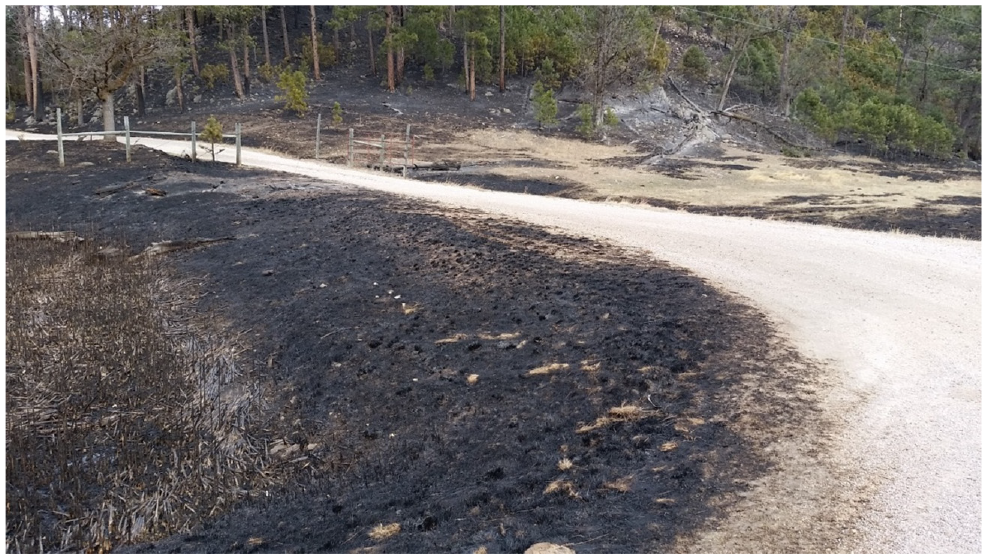
Roadway slopes after wildfire that requires revegetation.
Another event causing vegetation loss is construction. Several procedures for post-construction revegetation exist including topsoiling, fertilizing, procurement of Mycorrhizae, planting, seedling mulching, and browser control ( 19 ). Varied terrain and geology can present additional challenges and require context-sensitive revegetation planning to account for variations such as climate, management considerations, and wildlife. A particular challenge for highway agencies and other land managers to follow timelines occurs when weather events wash away seeds, topsoil, fertilizers, and mulches before the vegetation takes root on the slope.
Slope revegetation and erosion control are needed in an accelerated manner which requires additional technologies to the standard revegetation procedures to keep topsoil, seeds, seedlings, mulches, or any combination of these, in place throughout storm or other erosion events. Some remediation technologies exist in this category including: surfactant coated seed applications ( 25 ), seeded agricultural mulches ( 26 ), seeded straw mulching ( 27 ), and vegetated compost blankets ( 28 ). The proposed innovation, adding to the previous list, considered in this study is the use of a seeded MICP treatment. This solution provides a thin crust induced by surface MICP solution application in conjunction with seeding. In this proposed innovation, the surficial crust is robust enough to protect seeds and vulnerable soil particles from some external forces while still allowing seed germination and vegetation growth. The treatment solution provides short-term erosion protection while revegetation provides long-term protection. Other potential benefits include plant fertilization and increased soil water retention. In this study, seeded MICP treatments, both bioaugmented and biostimulated, are evaluated under laboratory conditions for their seed germination and subsequent growth rates. Wind erosion mitigation from the solution treatments was evaluated but presented in a separate paper ( 14 ) as well as field scale testing ( 15 ). Water erosion resistance from rainfall, strength of the crust, chemical and crystalline composition and imaging, microbial colony analysis, and other environmental considerations are being published soon.
Project Feasibility
In this research, the topic of pursuit is the effectiveness of MICP biomineralization solution treatments as a means to enhance land rehabilitation after a soil disturbance event such as a wildfire or construction. Enhancements would result from a reduction in soil particle vulnerability to wind and water erosion as well as increased rates and abundance of vegetation growth. The soil particle vulnerabilities are a result of denuded soils, common in the semi-arid American West during summer, fall, and sometimes winter after intense and widespread wildfires as well as the long construction season. In this study, the focus is vegetation response to MICP biochemical stabilization treatments at the soil surface. The potential use of MICP biochemical treatment solutions as protection against erosion or fugitive dust control of burned soils raises several key questions and concerns among federal and state land managers when implementing at scale. One concern to land managers is an overly robust crust that would result in massive amounts of runoff, little to no infiltration, and a high density that would prevent seedling penetration. Secondary concerns are: 1) MICP and fire are both known to change soil pH, and there are concerns about large changes in soil pH and effects on flora and fauna; and 2) how native grasses and plants will respond to the chemicals in treatments for surface erosion control. The first concern, an overly robust crust, is addressed by only performing one treatment on the soil samples which creates a light crust as discussed earlier. The secondary concerns are addressed by the data analysis and show that in most cases the vegetation responded well to treatments with an exception in some soil type and treatment combinations as will be discussed in the results section. This study presents evidence that a one-time application of a seeded MICP biochemical solution has real potential to control surface erosion of burned soils and constructed slopes leading to a balanced short-term and long-term erosion control technology.
Materials and Methods
Soil Sampling, Characterization, and Preparation
For this study, four soil types were used to test the interactions between MICP surface treatments and revegetation. The control soil is clean Ottawa sand graded to retain 98% on a No. 100 (150 µ) sieve, 75% on a No. 50 (300 µ), 30% on a No. 40 (425 µ), and 2% on a No. 30 (600 µ). Ottawa sand serves as the control as the vast majority of all MICP research to date has been performed on this cohesionless soil. Most studies have demonstrated that biomineralization by MICP is effective in clean sands. However, other soil types were tested and treated in this research since most highway side slopes and embankments are not clean sand and clean sand is unable to provide an ideal growth medium for plants as a result of low water retention and low shear strength making it hard for roots to establish and hold up the plant weight. The second soil is a typical organics-rich commercial topsoil available at most home centers and commercial landscaping companies that consists of compost, finely ground wood chips, peat moss, silty soil and vermiculite amendments and commonly referred to as “potting soil”. The open structure of commercial topsoil allows for good drainage and airflow while facilitating the high-water contents needed for seed germination and robust growth. This commercially available soil is an ideal growth medium for plants and was used in this research study to prove experiment plant growth apparatus setup and to prove the success of various seed species in the laboratory growth conditions as well as to identify seedlings (See Table 1). The third soil type was a sandy clayey soil from the Black Hills of South Dakota and represents a “typical” highway side slope material as well as the “unburned soil” comparison to the fourth soil type. This third material was obtained as undisturbed samples and placed in trays to either maintain the in situ characteristics or to be in a controlled burn environment which is the fourth soil type used.
South Dakota (DOT) Grass and Plant List Used by Known pH Tolerances
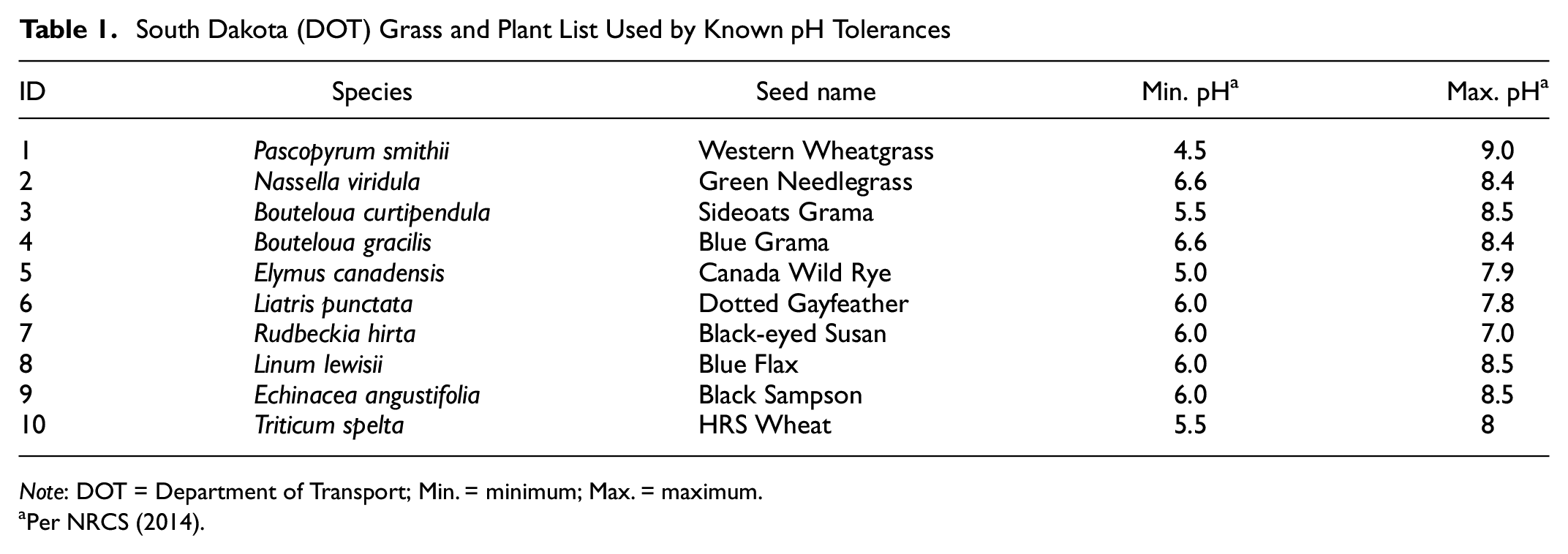
Note: DOT = Department of Transport; Min. = minimum; Max. = maximum.
Per NRCS (2014).
The fourth soil type tested in the experiment was soil subjected to burning in a controlled environment, also referred to as “burned soils”. The controlled environment was a container in which undisturbed bulk samples of soil (with turf and topsoil intact) were placed with 50-mm (2-in.) of dried pine needles, a 76-mm layer of dried twig kindling, and a layer of larger branches. After ignition of the blaze, sufficient pine logs were added so that the fire burned for at least 30 min with an average temperature on the soil surface exceeding 800°C. This temperature and duration is consistent with typical forest and grass fires and was sufficient in providing samples displaying a degraded soil matrix and particle structures as is typically found in naturally burned soil. This controlled burn approach allowed for control of variables, such as temperature and duration of burn, to provide higher sample consistency than can be obtained in wildfire conditions. These soils were compared with samples from wildfire in the Black Hills and found to have similar burn depths, vitrification of clay minerals, and development of mineral salts. Any charred remnants or debris of 10-mm or larger were removed, but the ash layer was kept intact. The controlled burning allowed for undisturbed samples to be carefully cut to the dimensions of the test cups and left at the in situ density. The unburned (third soil type) and the burned (fourth soil type) soil samples were very comparable in all characteristics since sampling was from the same area at the same time and through identical extraction and preparation methods with the only difference being that the fourth soil type was subjected to controlled burning.
All soil samples for the unburned and burned soil sample types came from the same geologic formation, a clayey sand with gravel common to the region in the hills. Clay content is approximately 20%–25% by mass in the materials, with silt content of 10%–15%, and gravel content of 5%–15%. Fines vary from lean to fat (liquid limit of 30–60, with plasticity index of 10–30). Care was used to not disturb the hydrophobic layer in the soil developed during burning. Ash was preserved as best as possible in the samples and preserved throughout sample transport, handling, and preparation in the laboratory for MICP biomineralization solution treatment.
Soil samples were carefully obtained in an undisturbed manner and taken to the lab where they were cut to the correct size and placed in the vegetation cups at the in situ density. This is lighter than the common compaction specifications of embankment materials, as surficial soils are not compacted as densely as the embankment to allow for revegetation ( 19 ). Seeds used in this research consisted of varieties used by the South Dakota and Wyoming DOTs in Western South Dakota and Eastern Wyoming. Table 1 presents plant species included in the testing that span native grasses, wildflowers, plants, and non-native species known to revegetate well in the dry conditions of the region. Included in Table 1 are the known pH tolerances for each species per NRCS ( 29 ). Since MICP is known to change soil pH, it was imperative in this research program to monitor changes in soil pH and track if the changes in pH had any effect on seedling germination or growth.
Procedural Biomineralization Verification
Before laboratory or field trials of the proposed technology were performed on burned soils, a laboratory research phase was performed to verify that MICP protocols were resulting in the desired biomineralization crusts. MICP bioaugmentation treatments of clean Ottawa sand were performed to demonstrate that the formula developed by Stocks-Fischer ( 4 ) and Bang ( 8 ) using ureolytic Sporosarcina pasteurii indeed formed a dense, strong protective crust. Tests of soil crust strength were made with a pocket penetrometer and simple shear testing, while pH was also monitored. Ottawa sand was treated with a surface applied spray of MICP biochemical solution and then each cylinder was tested for crust strength development with a pocket penetrometer at 3 and 7 days after treatment, respectively. Crust strengths of 25 kPa were achieved with a single surface treatment. Strength of singly treated sand were also tested in unconfined compression and simple shear to strengths of 25 kPa. As a reminder, the purpose here is not to create a dense sand brick with very high strength but to control erosion while allowing infiltration and plant growth. This testing was also used to plan and design full scale laboratory and field tests of MICP treatments for erosion prevention (14, 15)
Vegetation Experimental Procedures—Phase I: Growth Apparatus and Species Testing
Phase 1 consisted of verifying vegetation growth procedures and apparatus by observing germination rates in topsoil with no treatments. This provided a laboratory baseline for germination, seedling success, and identification in each plant species as germination rates and effectiveness vary greatly based on species and growth conditions including water application amounts and rates, relative humidity, temperature, and a host of other factors. Rather than account for all factors, germination rates in ideal soil, soil type 2, were examined in Phase 1. Likewise, the time to germinate or time from planting to seedling sprouting, varies by species and had to be evaluated based on average time to germination per species as measured in days. Phase 1 data was critical in design and data monitoring procedures that were implemented in the full testing program in Phase 2. Phase 1 results showed that at least one seed of each seed type in Table 1 germinated under the provided environmental conditions within 12 days. Over the experiment time of approximately one month germination percentages ranged from 6% for Green Needle Grass and Black Sampson tied and up to 88% for HRS wheat in which the germination percentage is the number of seeds sprouting above the soil surface per the total number of seeds planted. The germination rates from Phase 1 were used to determine the number of seeds of each species planted for future experiments. Figure 3 shows sample cups with soil type 2 for three South Dakota DOT seed mix Type F grass species during phase 1 testing. Notice the obvious differences in germination rates and growth rates among different species.
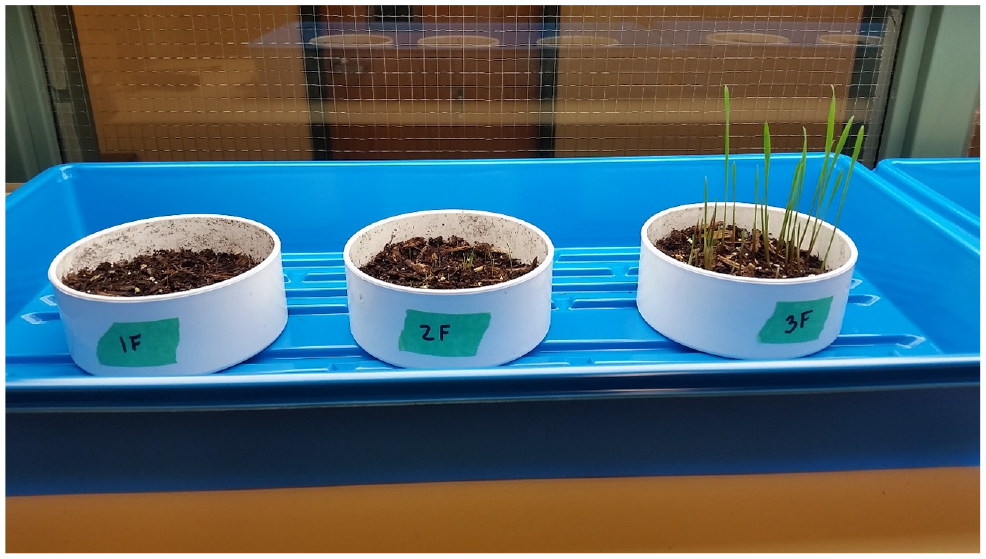
Soil vegetation experiments underway in topsoil for three varieties of grasses in South Dakota Department of Transportation seed mix Type F at six days of testing. Sample cup numbers indicate species 1, 3, and 10 in Table 1.
Vegetation Experimental Procedures—Phase II: MICP Solutions for Stabilization Testing
Phase 2 was conducted with the same environmental growth conditions as were proven in Phase 1. In Phase 2, the experimental program was a 4×4 factorial design in which four soil variants were tested with four treatment variants. The factorial designed experiment style was used to minimize unknown factors that may come from a specific treatment type and soil type interactions which gives a more comprehensive understanding of treatment efficacy by soil type. The soil variants used during experimental Phase 2 testing were: (1) burned with a 1" ash layer intact; (2) burned with ash removed; (3) unburned soil; and (4) clean silica sand. The term variant is used instead of type to reduce confusion with the four soil types given earlier, which are categorically different. The terms variant, level, or type are all accepted terminology to use with factorial designed experiments. For reference to sampling procedures and soil characteristics for the four Phase 2 variants of soil they correspond as follows: soil variants (1) and (2) are soil type 4 “burned soil”; soil variant (3) refers to soil type 3 “unburned soil”; and variant (4) refers to soil type 1 given earlier or Ottawa sand.
The four variants or levels of soil treatment are: (1) the control with no treatment; (2) a 1× MICP treatment (i.e., 90% 1× urea-broth and 10% 1× calcium chloride) without bacteria solution; (3) a 1× MICP urea-broth solution inoculated with S. pasteurii cells at a concentration of 1.64 × 10⁶ cells/mL without any CaCl2 (i.e., no additional calcium); and (4) with the 1× MICP full treatment (i.e., 90% 1× urea-broth, 10% 1× CaCl2 and S. pasteurii at the same bacterial concentration as treatment (3). The term “1×” refers to the chemical concentrations which are given in the next section. The bacterial concentrations were calculated by averaging three readings on a microplate reader using a 96 well plate and calculating the number of cells using the growth curve equations from Ramachandran whose equation was used as a result of the similarities in incubation and growth of the bacteria ( 30 ). Bacteria were cultured in the SDSMT biogeotechnical engineering laboratory. Treatment (2) was used for comparative purposes to show the relative merits of bioaugmentation versus biostimulation and treatment (3) was used to show the feasibility of leveraging in situ cations in the soil for biomineralization as fire has been shown to increase cation availability in soils. All biochemical solutions were made with distilled water and were sterilized before application to soils and sterile pipets used for surface drip application to the soil samples. The control was treated with the same volume of liquid as only sterile distilled water. Soil was not sterilized or autoclaved to preserve existing microbiota. Samples were measured for seedling germination and plant growth rates and compared by soil type and treatment type.
Treatment Solution Preparation, Soil Application, and Vegetation Growth Procedures
The treatment solutions were applied to the soils at a rate of 1 mL/in2. This application rate was deemed to be sufficient by calculating the amount of solution used in previous studies which used a volumetric application rate to clean silica sand (8, 17) and extrapolating that amount to a surface application rate which would allow for infiltration up to 15 mm in depth. The void ratio used for clean sand in the calculations was 0.6. In preliminary experiments a crust was observed that was more than 0.5-in. deep in clean silica sand after an application rate of 1 mL/in2. The control sample, treatment level 1, had distilled water applied at a rate of 1 mL/in2 to eliminate the effect of the liquids within the MICP treatment solutions. The 1× urea-broth solution contained 0.333 g nutrient broth, 2.22 g urea and 1.11 g ammonium chloride each per 100 mL solution and the 1× calcium chloride solutions contained 2.8 g CaCl2 per 10 mL of solution which was diluted into 90 mL of urea-broth. The pH of the urea-broth was adjusted to 6.0 before the addition of calcium chloride solution.
The soil sample cups were prepared consistently, with samples carefully cut to the exact cup dimensions from the undisturbed samples. The sand sample cups were prepared by three lifts with 20 tamps per lift with a 1,000 g hammer weight. The samples were tested for unconfined compressive strength with a penetrometer before treatment or seeding. Each cup was then lightly raked and watered with 25 mL of tap water. This was done to try to minimize the effect that water would have in the unburned samples germinating faster because the burned and sand samples were completely dry. The samples each had 1.05 g of well mixed South Dakota DOT type F seeds evenly spread across the top. The type F seeds were used instead of type E in this experiment to more closely resemble a typical highway project in the grasslands or foothills instead of at higher elevations and mountain roads which is where type E is typically used. The treatment solutions were applied to the cups by a surface drip method. Each vegetation specimen cup was again lightly raked and placed approximately 6 in. under a full-spectrum fluorescent light (Figure 4 for example). The lights were on the sample cups for 16 h a day and each vegetation cup was watered 25 mL/day. The watering amount corresponds to approximately 3 mm per day which is equivalent to average rainfall in Rapid City, SD throughout the months of May and June when extrapolated to daily totals.
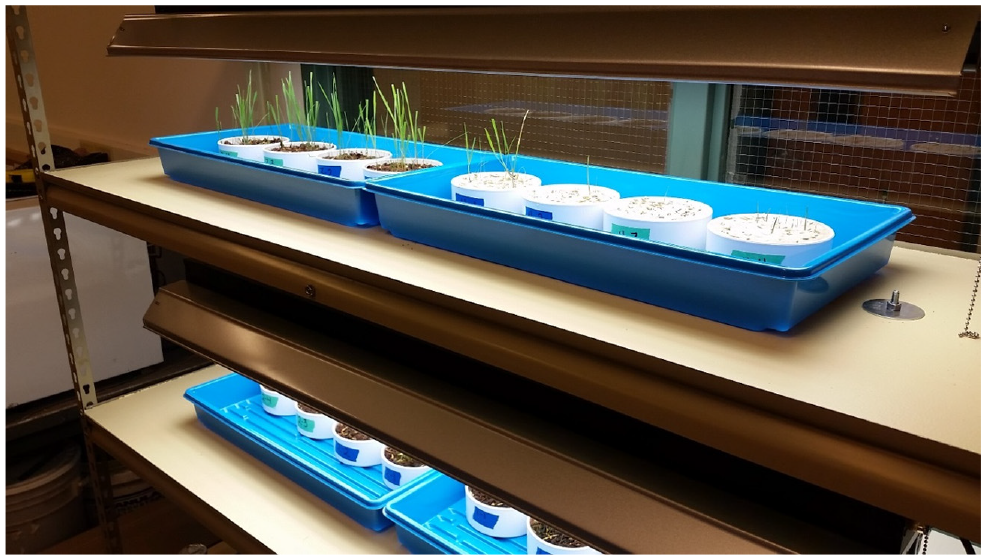
Samples under grow lights. Note the growth performance of clean sand compared with other media.
The sample cups were watered, with measurement and observations recorded nearly daily. Unconfined compressive strength measurements with a penetrometer were taken for the first four days until seedlings started to emerge at which time strength measurements were stopped so as not to damage the new growth of plants. The surface temperature of each cup was recorded daily as well as the germination rates and growth rates of seedlings. Once the seedlings grew to the height of the lights they were cut and the growth of the plant continued to be recorded (Figure 4).
Results
Excellent germination rates and growth rates were observed in the topsoil testing in Phase 1, that led to a total experimental time of 25 days. The most rapid germination was observed in HRS Wheat and Blue Grama, sprouting at least two seeds by day 4. Last sprouting was observed in Black Sampson, at first sprouting at day 12. By day 12, all seed types had sprouted and growth rates were observed in Phase 1 testing.
This experimental program is a 4×4 factorial design, in which multiple treatments and soils are tested. To assist in understanding the factorial experimental results, Figure 5 shows a summary of the experimental results, summed for all plant species, to focus on the response of the suite of seed types to both soil and treatment. The hypothesis of the research team was that seeds and sprouts would respond most favorably to unburned soils, where nutrients were available compared with clean sand, but less available compared with the burned soils. However, the hypothesis is that the burned soils are denuded of their microbial colony, in which microbes are well known to encourage germination, sprouting, and growth ( 19 ) and thus will have a setback compared with unburned soils despite more nutrients being available. The team considered the advantage the burned soil has in a more open structure compared with unburned, but with a lack of supporting data, this was not included in the working hypothesis of the experiments. The assumption of the team was that seeds would respond least favorably to the clean sand, which is poor in essential water retention, nutrients, and microbial colonies despite an open structure with good airflow and drainage.
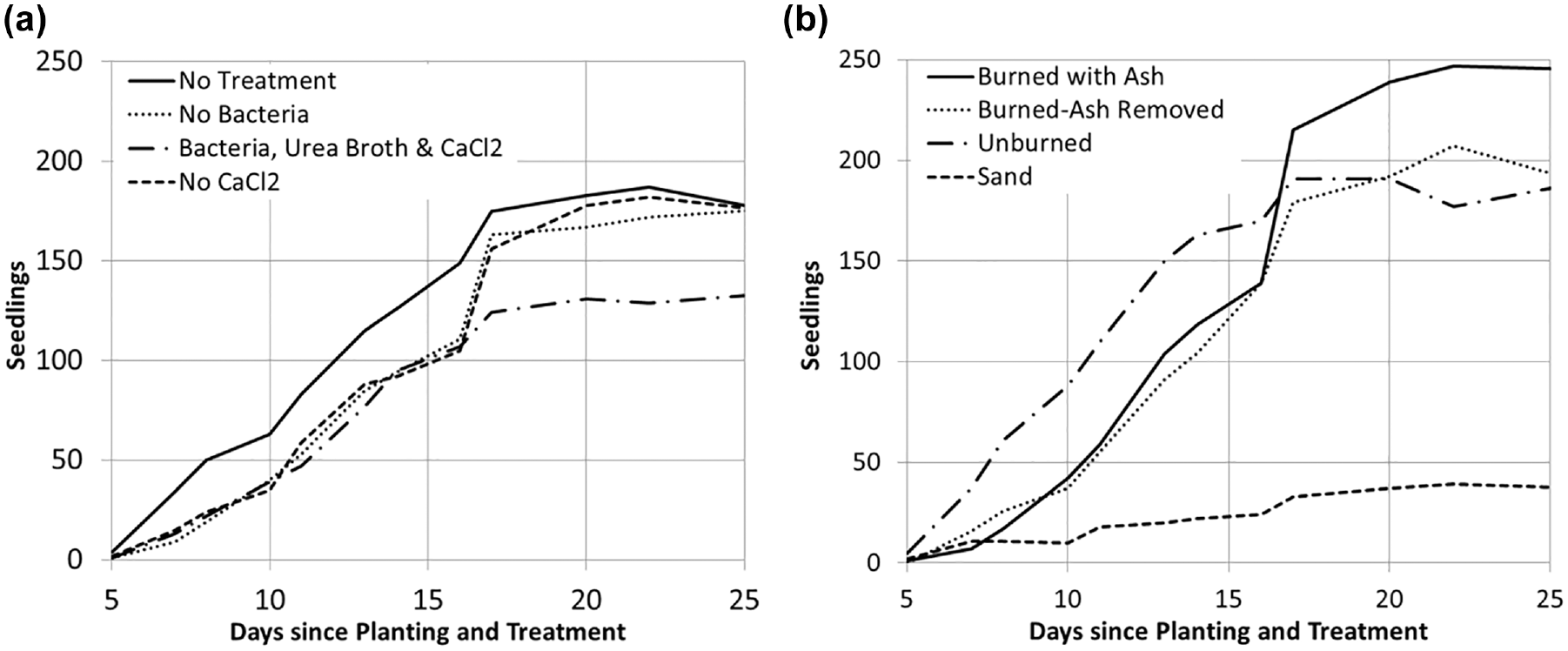
Summary of seed germination by: (a) treatment type; and (b) soil type for the seed varieties shown in Table 1. The y-axis represents the summation of all sample cups tested of that type.
Given the seeds used and the protocols for seed germination tested in this research program, Figure 5 shows the summary across all species. Figure 5a shows that for all soils, seedlings responded most favorably to all treatments except the full MICP treatments. There was no statistical significance in the no-treatment, no-bacteria, and no-CaCl2 treatments after 17 days, although the no-treatment option resulted in better rates up to 17 days. The full MICP treatment protocol with urea-rich bacteria inoculate and CaCl2 resulted in the worst rates for all species and all soils, with 20%–30% less germination than the other three treatments from day 17 to 25.
Figure 5b tracks seedling rates for all treatment types as a function of soil for all species tested. In Figure 5b, a strong trend is observed, where burned soil with ash had stronger seed germination, sprouting, and growth rates than when the ash was removed or for the unburned soils that were otherwise identical to the burned except for the scorching. Clean sand, however, resulted in the worst rates over the experimental period. For the clean sands, few seeds sprouted after 17 days, and those that had sprouted before 17 days struggled to survive. After 30 days, when water was no longer provided the seedlings in the clean sand were no longer able to survive whereas the other soil types retained some moisture allowing the seedlings to continue to live. From Figure 5 it is clear that clean sand is the worst for revegetation, as is consistent with the other research findings and recommendations (19, 24). Less clear, however, is whether the full MICP treatment is deleterious, given the poor response of sand unilaterally. To explore the effects of MICP in full detail, the full experimental results are presented in Figure 6, which shows the eight combinations of soil and treatment, again for all seed types.
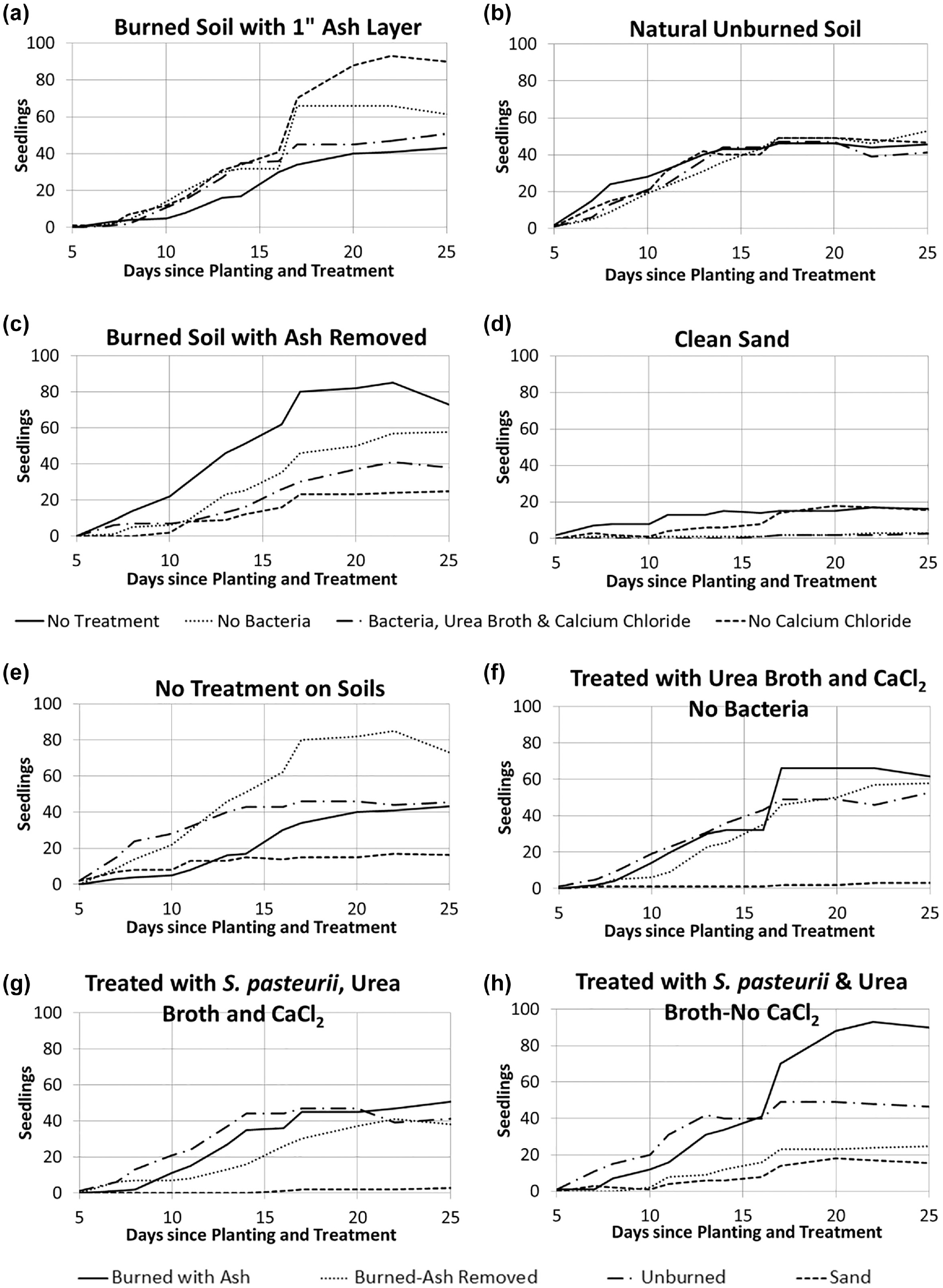
Detailed results of the seed germination experiments organized by (a–d) soil type and (e–h) treatment type. See Table 1 for tested grass species.
For differences in treatment, Figure 6, a–d, show that for all treatments seed response was the worst in clean sand. Rates in clean sand were a fraction of those measured in the other soils. Response to various treatments was statistically identical in the unburned natural soils, while in burned soils, results were inconsistent, with large differences between treatments for when the ash layer was or was not present in the soil. Figure 6, e–h, confirm that clean sand performed worst for all treatments. However, seeds responded best in clean sands when treatments did not include CaCl2, confirming that the saltiness of the MICP treatment solutions can be detrimental. For unburned soils typical of those on highway embankments, the response was good for all treatments, though not as good as for burned soils with the ash layer removed and no treatment (Figure 6e) or burned soils with the ash layer intact and the full MICP treatment (Figure 6h). Those two cases had the most vigorous response of the eight cases. If the no-ash/no-treatment case and the with-ash/MICP-treatment extreme cases are removed from consideration, seed response to burned and unburned soils was essentially similar for all treatments. Therefore, unless the soil is a clean sand, MICP treatments with the chosen formulation have only a negligible effect on seed germination, sprouting, and growth rates compared with the control baselines.
Soil pH changes during treatments were measured, so that trends in seed germination by species could be evaluated. The soil slurry method was used to measure soil pH in which equal parts by mass of soil and De-ionized water are mixed thoroughly and allowed to sit before pH measurement. Table 2 shows the measured pH changes. Note that the distilled water that was used for MICP treatments was measured to have a pH of 7.0, while the tap water which was used to water seedlings had a pH of 6.24. Table 1 showed the maximum pH for most species to be 8.5 or less, but that all species were generally tolerant of a lightly alkaline environment. Testing and tracking pH changes are important so that the effects of the salts from both NaCl and CaCl2 in the MICP treatment solutions could be separated from changes in pH. If pH raises significantly over 8 and species were to struggle, then the effects of salts would be difficult to discern from pH. If pH stays at 8 or less, or changes by 1.0 or less, then it is more probable that the salts in the MICP treatments are having a more pronounced effect than acidity. However, separate testing of highly saline versus highly alkaline conditions was not performed in this research and this is an area of research that needs to be performed so that salinity and acidity can be evaluated for revegetation.
Change in pH for Each Soil by Treatment Type
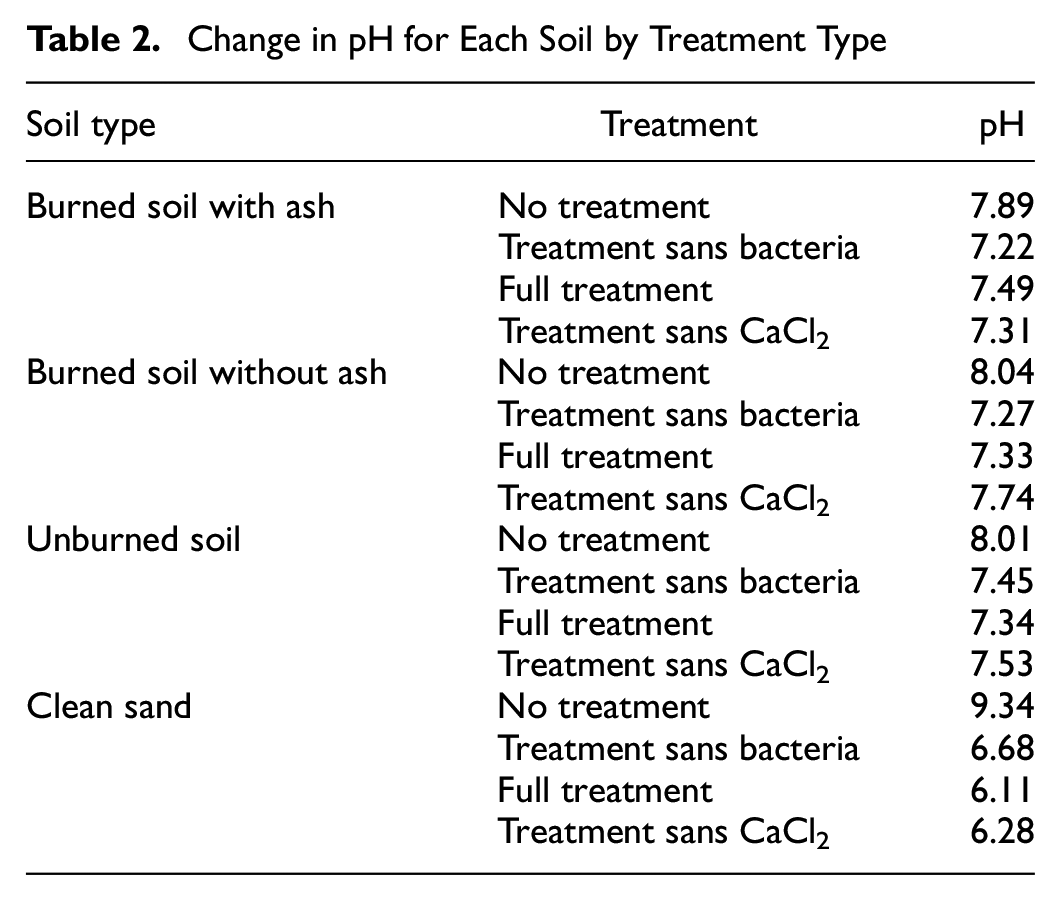
Table 2 shows that for all treatments, the pH stayed lower than 8. It is, therefore, likely that pH changes from MICP treatments are not having a large effect on revegetation. Likewise, MICP treatments tended to buffer the soil, reducing pH and bringing the soil closer to neutral. This is reasonable as MICP treatment solutions include buffering agents to create pH conditions that bacteria prefer. It is recommended that, for future implementation of MICP treatments for soils, site engineers evaluate, before large-scale implementation, soil pH with and without treatment as the results of this study are insufficient to make a blanket statement about the efficacy of MICP solutions to reduce soil pH or to neutralize acidic or alkaline conditions. For Table 2, pH was measured after the end of the experiment at a temperature of 20.5°C +/– 0.5°.
Discussion and Assumptions
The results of this research program are dependent on the amount of MICP treatment solution applied. In this research study, the surface applied solution volume was only sufficient to create a thin crust of biomineralization strengthened material. This was intentional so that the crust was thin enough to allow germinating seeds to actually break through the crust and sprout into a seedling. If more treatment solution was applied, then the crust would be much more resistant to sprouting and would have a much greater effect on the soil biogeochemistry. Because revegetation of slopes is sensitive to soil crusting, water content, pH, salinity, nutrient content, microbiome, and a suite of other considerations, any implementation of MICP for surface erosion control should be carefully evaluated with small-scale laboratory or field trials before implementation. This research showed that minor variations in the soil biogeochemistry resulted in moderate to large variations in revegetation. Still unknown is how the MICP treatment affects soil fungi, essential for plants to extract nutrients and water from the soil, that are known to be sensitive to changes in salinity and pH. As this was not a long-term study over several growing seasons, considerable unknowns still exist that need to be researched before large scale implementation of MICP for surface erosion control.
Conclusion
In this study, revegetation of soil denuded by construction or wildfires was studied in conjunction with MICP biomineralization soil stabilization. MICP produced a thin erosion resistant crust on the samples, and seeds applied at the time of MICP treatment germinated, sprouted and grew in controlled conditions. In the experiments, clean sand was used as the baseline soil as MICP crusts form easily in clean sands. To evaluate the effect of bacterial inoculate solution chemistry and cation solution chemistry on revegetation, these solutions were applied independently along with full MICP treatments. The results of the program showed that revegetation was unsuccessful for clean sands, but regardless of whether the soil was or was not treated with an MICP treatment or variation thereof, that revegetation was successful with the thin MICP crust applied in this research. Minor variations in results for differing combinations of soil chemistry and MICP chemistry lead to variability in the overall results for soil other than clean sand. These variations show the complexity of soil biogeochemistry and its effect on revegetation. Therefore, the authors recommend that biogeochemistry be studied in greater detail with soil stabilization treatments so that designers and highway agencies are better prepared to design and implement revegetation efforts.
Footnotes
Acknowledgements
The authors wish to thank Inam Jawed under IDEA project NCHRP-200 for funding. Additional thanks to Custer State Park, South Dakota DOT, CALTRANS, USDA Forest Service, South Dakota Department of Forestry, Dr. Darren Clabo, and undergraduate researchers: Dominic Krause, Brittany Coupe, and Maxwell Southbloom.
Author Contributions
The authors confirm contribution to the paper as follows: study conception and design: B. Lingwall and T. Hodges; data collection: T. Hodges; analysis and interpretation of results: T. Hodges; manuscript preparation: B. Lingwall. All authors reviewed the results and approved the final version of the manuscript.
Declaration of Conflicting Interests
The author(s) declared no potential conflicts of interest with respect to the research, authorship, and/or publication of this article.
Funding
The author(s) disclosed receipt of the following financial support for the research, authorship, and/or publication of this article: Funding provided by the NCHRP IDEA program under contract NCHRP-200.
Data Accessibility Statement
Data are available from the corresponding author (