







Abstract
The global expansion of ridehailing platforms has been accompanied by a diversification of service offerings as platforms fit within new urban contexts. While ridehailing has been of great interest to transportation researchers, analysis of its adoption and use in developing cities that differentiates between service offerings is lacking. To help address this knowledge gap, this study analyzes primary survey data collected from frequent users of the DiDi Chuxing ridehailing platform in three Mexican cities: Mérida, Toluca de Lerdo, and Aguascalientes. It investigates how ridehailing fits into the travel behavior of its users, explicitly differentiating between express (exclusive) and comparte (pooled) services. Findings were that (i) frequent use of ridehailing is positively correlated with use of public transport—city-run and privately-operated buses—and taxi, but negatively correlated with use of private car and motorcycle; and (ii) ridehailing trips are more likely to substitute public transport and taxi trips, but that the mode substitution depends on the service offering, with high substitutability between express and comparte. This degree of substitutability suggests that there is potential to encourage ridehailing users to pool trips, increasing the occupancy rate of ridehailing vehicles and reducing their negative impacts on congestion. Among the many factors involved in choosing between exclusive and pooled services, study participants rated safety, travel time, travel time reliability, and price as key determinants, with a highly elastic relation between travel time and price. These results inform efforts by urban transportation policymakers and ridehailing operators to encourage pooling in the Latin American context.
In recent years, on-demand ridehailing services have expanded to cities all across the world, with Uber operating in over 60 countries and 700 cities worldwide ( 1 ), DiDi Chuxing operating in 10 countries and 1,000 cities, and many other competitors joining the market. Despite this global expansion, there remains little understanding about how individuals are adopting ridehailing services, and how these services are affecting travel choices in urban markets in developing countries ( 2 ).
The global adoption of ridehailing platforms has been accompanied by a diversification of the services they offer. Most ridehailing platforms primarily offer an exclusive service, in which a driver is paired with a single rider (or rider party of up to four people) serving a single trip. Examples of exclusive service include UberX and Lyft Classic in the U.S.A. or DiDi express in Mexico. However, an increasing number of platforms are also offering dynamically pooled (or ridesplitting) services that match a rider (or rider party of one or two people) with other riders (or rider parties) in the same vehicle. Pooled services are available in fewer markets worldwide, but examples include UberPOOL and Lyft Shared in the U.S.A. and DiDi comparte (recently rebranded as DiDi connect) in Mexico.
The introduction of ridehailing services has expanded mobility options for urban residents, but is generally accompanied by increases in vehicle-kilometers-traveled (VKT) and congestion due to low vehicle occupancy rates ( 2 ). Pooling has the potential to improve vehicle occupancy rates to mitigate negative impacts of ridehailing services in dense cities and to expand access to lower income populations who cannot afford the exclusive fare. For individual travelers, choosing the pooled service over an exclusive trip can save them money, making pooling more price competitive with public transport, but at the cost of longer and less certain travel times. Despite these differences, existing survey studies of actual ridehailing users have not differentiated between exclusive and pooled services.
This study addresses this gap in the literature by investigating the use of exclusive and pooled ridehailing services in three cities in Mexico: Mérida, Toluca, and Aguascalientes. Using primary survey data from users of DiDi Chuxing’s express (exclusive) and comparte (pooled) services, it investigates the travel behavior of ridehailing adopters, including: the frequency with which they use ridehailing and other modes; trip purposes served primarily by ridehailing; and mode substitution. It then considers how users rate the many factors involved in the choice between using the exclusive or the pooled ridehailing service. Together, these results help inform how ridehailing operators and policymakers might encourage existing ridehailing users to pool, increasing the occupancy of ridehailing vehicles and reducing the impact of these new services on urban mobility systems.
Literature Review
Since the launch of Uber in the San Francisco Bay Area in 2010, many studies have considered the adoption of ridehailing services and how they interact with existing urban mobility systems—with a particular focus on cities in the U.S.A. This literature overwhelmingly finds that ridehailing is more widely adopted among younger, well-educated, and wealthier urban residents, and that ridehailing is most often used for occasional trips, with the majority of riders using the service only a few times per month with the primary trip purpose being social or entertainment trips as opposed to work or study ( 2 ). The relationship of ridehailing with other transportation modes is less clear. Ridehailing trips in the U.S.A. appear to be replacing public transport, walking and bicycling more than personal vehicle use on a trip-by-trip basis, but access to ridehailing can also help support more multimodal lifestyles that do not rely on owning and using a car, potentially encouraging use of public transport and other non-motorized travel ( 2 ). Fewer studies consider the differential adoption of exclusive and pooled ridehailing services, with mixed results across most sociodemographic groups ( 3 ).
Literature examining ridehailing adoption in the Latin American context is less prevalent. A few studies have focused on drivers of ridehailing platforms ( 4 , 5 ), while others have considered policymaking and regulation around these new platforms ( 6 ). This section of the paper provides a detailed review of a few studies that have looked at individual adoption of ridehailing services and their potential impacts on incumbent urban mobility systems in Latin American cities.
In Santiago, Chile, data from an intercept survey suggested that “(i) ride-hailing is mostly used for occasional trips, (ii) the modes most substituted by ride-hailing are public transport and traditional taxis, and (iii) for every ride-hailing rider that combines with public transport, there are 11 riders that substitute public transport” ( 7 ). The study also found that more affluent and younger individuals had greater monthly frequency of ridehailing use, while car ownership was not a significant predictor after controlling for income and age ( 7 ). Another study in Santiago used a simulation approach to evaluate the impact of ridehailing on VKT, finding that unless these platforms substantially increase average occupancy rates of trips by pooling their impact is to increase VKT ( 8 ).
Stated preference survey research in Mexico City, Mexico and Medellín, Colombia found that being female, younger (20–30 years of age), highly educated, and higher-income are positively predictive of likelihood to be a ridehailing user, while household car ownership decreases the likelihood ( 9 ). When it came to trip purpose, ridehailing was most frequently used for leisure and health trips rather than work trips when compared with other modes of travel, affirming that ridehailing is used primarily for occasional rather than regular trips. In Mexico City, ridehailing was found to be used mainly for door-to-door trips; whereas in Medellín, 35% of users combine ridehailing with public transport. Further analysis finds that ridehailing is used most frequently in areas of the city where bus service is less frequent, suggesting that ridehailing may be complementing public transport more in Medellín than in other Latin American cities studied thus far ( 9 ).
Using data from the Survey on Transport Safety and Victimization sponsored by Uber Technologies, Mexico, another set of studies looked at ridehailing use and perceptions of ridehailing compared with other modes in Mexico City and its surrounding municipalities. The survey found that 2% of respondents use ridehailing on a daily basis, while 12% and 18% use it a few times a week or once a week, respectively ( 10 ). People who use ridehailing are much more likely also to be users of public transport ( 11 ). Among non-private modes of travel, respondents rated ridehailing highest in relation to comfort and personal security; and second only to subway and commuter trains in relation to risk of accidents ( 10 ). Price was cited as a barrier to using ridehailing rather than other forms of public transport, with 44% of respondents who had used ridehailing reporting that the price was too high (compared with 66% for taxi) ( 10 ). When it comes to risk of victimization, public transport (including privately-operated minibuses, city-run buses, and the metro) were seen as the most unsafe modes. Over 80% of respondents (both men and women) stated that they were afraid of being victims of a crime on buses, and 66% of women and 53% of men stating that they were afraid of being victims of a crime on the subway ( 11 ). Taxis are also considered unsafe, with 60% of women and 55% of men reporting fear of victimization in taxis ( 11 ). This contrasts significantly with ridehailing applications, which were considered the safest form of non-personal transport, with only 36% of women and 25% of men reporting fear of victimization while using such platforms ( 11 ).
Only one study differentiates between adoption of exclusive and pooled ridehailing services in the Latin American context. Using data from an online survey implemented in over 50 cities in Brazil, researchers found that 79% of current Uber users would use pooling depending on the fare conditions and the number of passengers sharing the same trip ( 12 ). However, concerns about safety are critical in determining a user’s decision to use pooling, with the willingness to pool dropping quickly as the number of unknown passengers sharing the trip increased ( 12 ). While ridehailing platforms overall were seen as safer than other forms of collective transport in Mexico City ( 11 ), this result might suggest that these positive safety perceptions are driven primarily by the exclusive rather than the pooled service offering. Cost was a secondary factor in determining a user’s decision to pool in Brazilian cities ( 12 ).
Case Study Cities
This study considers data collected in the only three cities (ciudades) in Mexico in which DiDi operated comparte service in 2019: Mérida, Toluca, and Aguascalientes. Each of these cities is also the seat of their respective municipalities (municipio), which are the second-level administrative divisions of Mexico similar to a county in the U.S.A. (with the first-level administrative division being the state [estado]) (Figure 1).
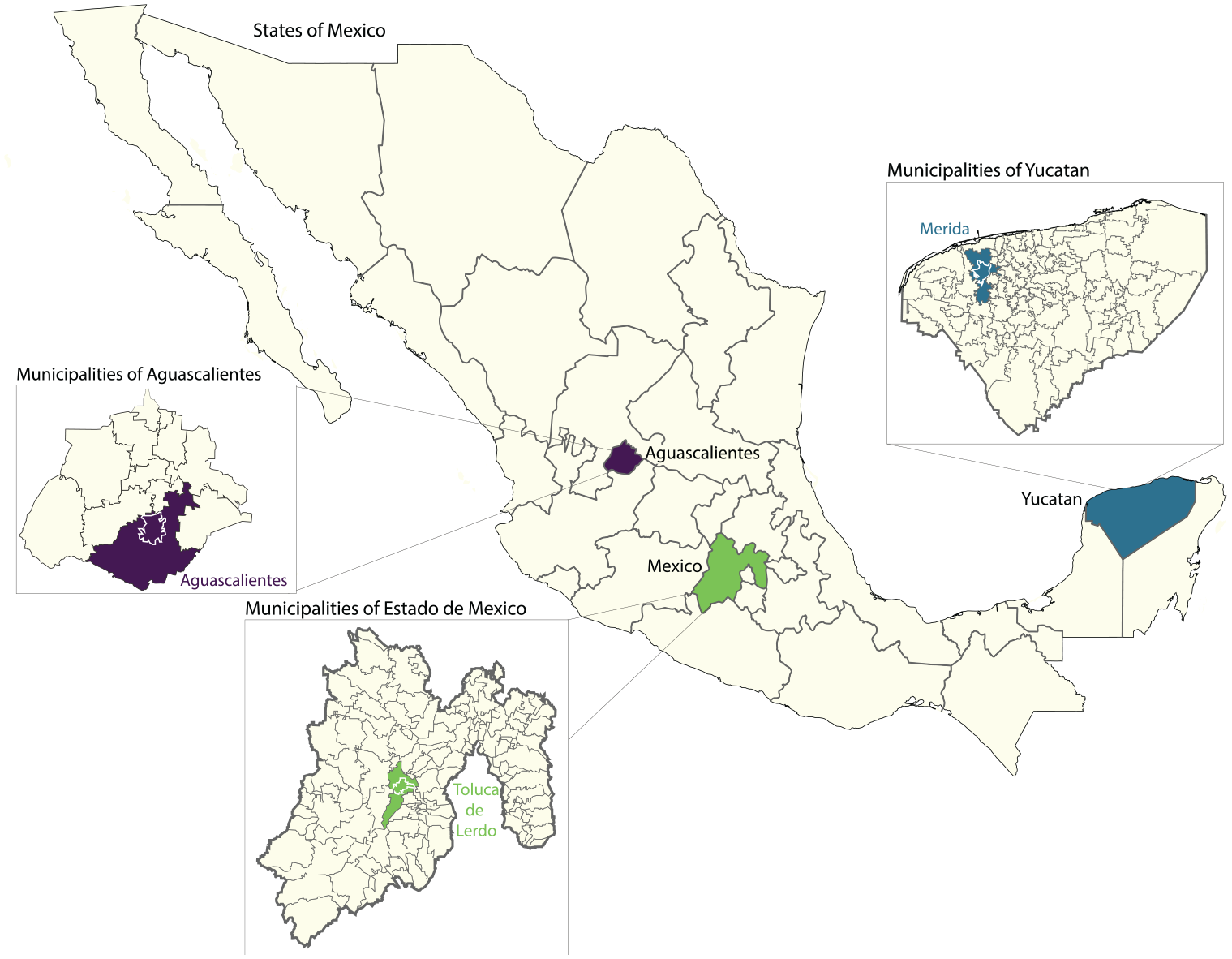
Nesting of the three cities studied within municipalities and states of Mexico.
Mérida is the capital and largest city in the State of Yucatan. Mérida is the most populous of the three cities in the study (Table 1), ranking among the top 15 most populous Mexican cities according to the 2015 Mexican Intercensus. While there is no longer a passenger train service to the city, there is an extensive city-run bus network, and there are also privately-operated microbuses (colectivos) that usually carry eight to 10 people on a predefined route for a small fare. Multiple taxi unions operating smaller vehicles also operate within the city, with a mixture of metered service and flat rate services for specific destinations.
Key Features of the Three Case Study Cities in Mexico
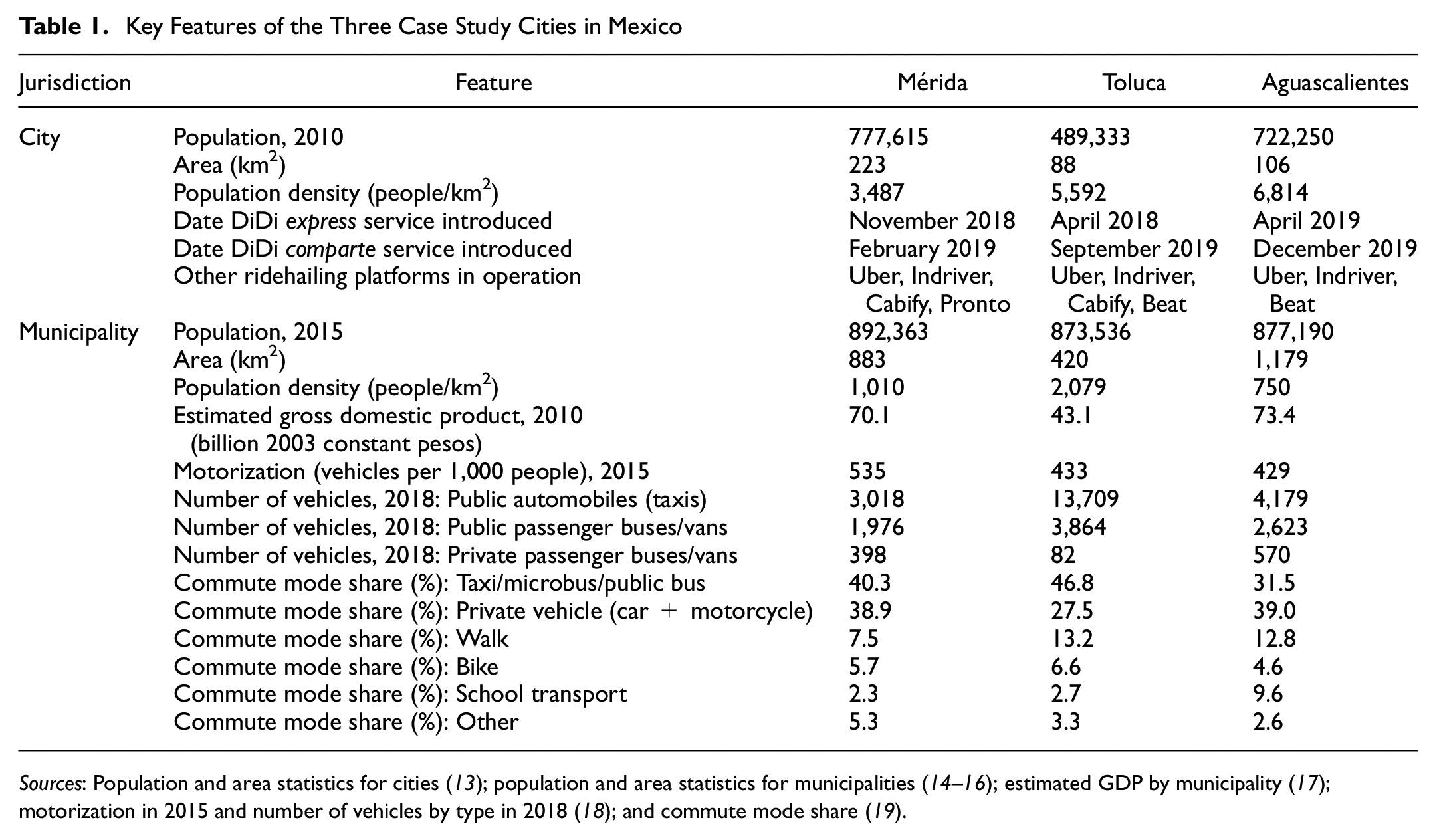
Toluca de Lerdo is the capital of the State of Mexico as well as the seat of the municipality of Toluca. The city is the center of a rapidly growing urban area located 63 km (39 mi) west-southwest of Mexico City. While no passenger rail service currently exists, a commuter rail line connecting Toluca with Mexico City is under construction. There is no city-sponsored bus system, which has contributed to the growth of a large and competitive environment for private microbus and taxi operators, which are used for a healthy majority of commuting trips (Table 1). Traffic congestion has been a problem in recent years as transportation infrastructure has failed to keep up with the growing population ( 20 ). Toluca has a public bike share system, Huizi, launched in 2015.
Aguascalientes is the capital of the State of Aguascalientes and is its most populous city. It is one of the fastest-growing cities in Mexico and home to two of the world’s largest Nissan automobile manufacturing plants. Notably, Aguascalientes is a strategically planned city, with urban development organized around three beltway loops. In addition to its unique urban form, Aguascalientes has ambitions to be one of the most bicycle-friendly cities in Mexico despite low bike mode share at the municipal level ( 21 ). The city has a public bus system that runs alongside privately-operated microbuses and taxis, which are all metered.
For all three cities, it is important to note that incumbent public transport service is provided by bus rather than rail, with a mix of city-run (with the exception of Toluca) and privately-operated vehicles of varying size. In general, public transport in these cities is significantly cheaper than ridehailing, with a (mini)bus ride costing around 10 pesos compared with 35 pesos for a median exclusive ridehailing trip and 25 pesos for a median pooled ridehailing trip via DiDi. DiDi’s connect service discount of 30% to 40% less than the equivalent exclusive trip, with the exact discount being determined by city, day, and market characteristics. In addition, DiDi is not the only ridehailing platform to operate in the three case study cities (Table 1).
Data
Data Collection
This study uses data collected from two surveys administered to separate cohorts of registered users of DiDi Chuxing’s ridehailing platform:
The first survey was administered to users who have taken at least one trip by DiDi’s comparte (or pooled) service in any of the three case study cities. This comparte user survey was launched on June 25, 2020 with a push notification through the DiDi app and remained open for one week. Email and SMS were sent to 50% of the cohort selected at random to recruit additional respondents on June 25 and 27.
The second survey was administered to users who have only taken at least one trip by DiDi’s express (or exclusive) service (and who have not taken a trip by comparte) in any of the three case study cities. This express user survey was launched on July 22, 2020, with a push notification to the app. The following day, an email and additional push notification were used to recruit additional respondents. On July 24, an SMS was sent to a randomly selected subset of express users in cities with lagging response rate (81% of the cohort in Aguascalientes and 40% in Mérida). Data collection closed on July 27.
Surveys were administered in Spanish, asking individuals to provide: basic sociodemographic characteristics; their typical travel behavior by mode and by trip purpose; the importance of different factors in determining their use of (pooled) rideahailing over other modes of travel; and their worries about using DiDi comparte service during the COVID-19 pandemic. Surveys were administered during the COVID-19 pandemic (during which time DiDi comparte services were halted in all cities), but asked respondents to recall their typical travel needs and behavior before COVID-19.
Survey responses were matched to DiDi account data to understand the number of trips that the respondent actually took on the platform in the third month after launch of comparte service in each city—before the COVID-19 pandemic.
Sample Sociodemographics
Across the three cities, a total of 470 complete responses to the comparte user survey and 937 complete responses to the express user survey were collected. Filtering out individuals who did not provide a phone number that could be matched to a DiDi account, 30 individuals were removed from the comparte user survey for a final sample size of 440, and 55 individuals were removed from the express user survey for a final sample size of 882.
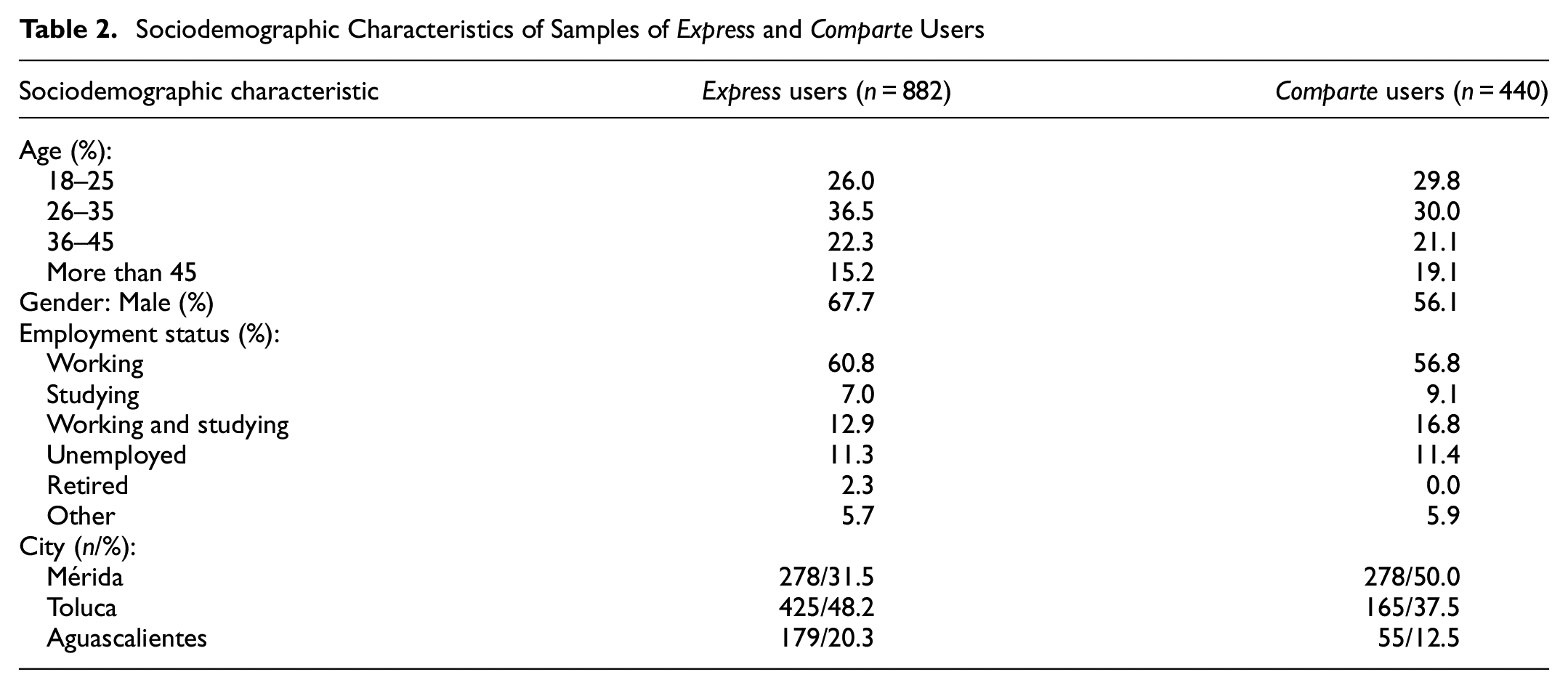
Table 2 provides the sociodemographic characteristics of the two samples. Because there is no data available on the population of interest—users of ridehailing platforms in Mexican cities—the representativeness of these samples cannot be determined. It is possible, however, to compare the sociodemographic characteristics of the samples of express and comparte users. It can be seen that the express user sample has a greater proportion of male respondents, and a greater proportion of individuals who are currently employed, whereas the comparte user sample has a greater proportion of individuals studying (as well as studying and working). There is also greater representation of the youngest and oldest age groups within the sample of comparte users.
Sociodemographic Characteristics of Samples of Express and Comparte Users
Sample Ridehailing Use
While there is no available dataset that allows us to check the representativeness of the sample by sociodemographic characteristics, it is possible to see how the sample of voluntary respondents compares with other users of DiDi’s platform in relation to trip numbers. The distribution of the number of trips taken in the third month after launch of the comparte service in each city by the sampled users was compared with 10,000 randomly selected DiDi user accounts. It was found that the sample overrepresents frequent users of ridehailing (for both express and comparte trips) in all cities compared with the general DiDi user. Therefore, the results of this study may not generalize to the casual user of ridehailing platforms. This might be because more frequent users are more likely to answer surveys about the service.
The authors also acknowledge that users of a single ridehailing platform may not be representative of all ridehailing users, since there may be some self-selection of users to specific platforms. Most individuals in the sample said that they use other ridehailing platforms, with only 31% of the express users and 35% of the comparte users indicating that they use DiDi for all of their ridehailing trips.
Results
This section presents the descriptive results and summary statistics from the surveys of express and comparte users. First, the travel behavior of ridehailing users is considered, including the frequency with which they use ridehailing and how that correlates with frequency of travel by other modes; trip purposes served primarily by ridehailing; and mode substitution. Second, the trade-offs and factors involved in the choice of using the exclusive or the pooled ridehailing service are considered.
Travel Behavior of Ridehailing Users
Frequency of Ridehailing Use
Respondents to both surveys were asked to report how frequently they used each available mode of travel in their city on a six-point scale: less than once in 30 days, less than once every 15 days, once in 15 days, 1–2 days a week, 3–4 days a week, 5–7 days a week. Respondents reported a relatively high frequency of ridehailing use, with the majority of respondents reporting using the service at least once in a typical week (Figure 2). This result is likely due to self-selection bias within the sample, since comparing these results with the frequency of ridehailing use seen in other studies of Latin American cities suggests that the sample may overrepresent the most frequent ridehailing users. Across user groups, it was found that express users tend to be slightly less frequent users than comparte users.
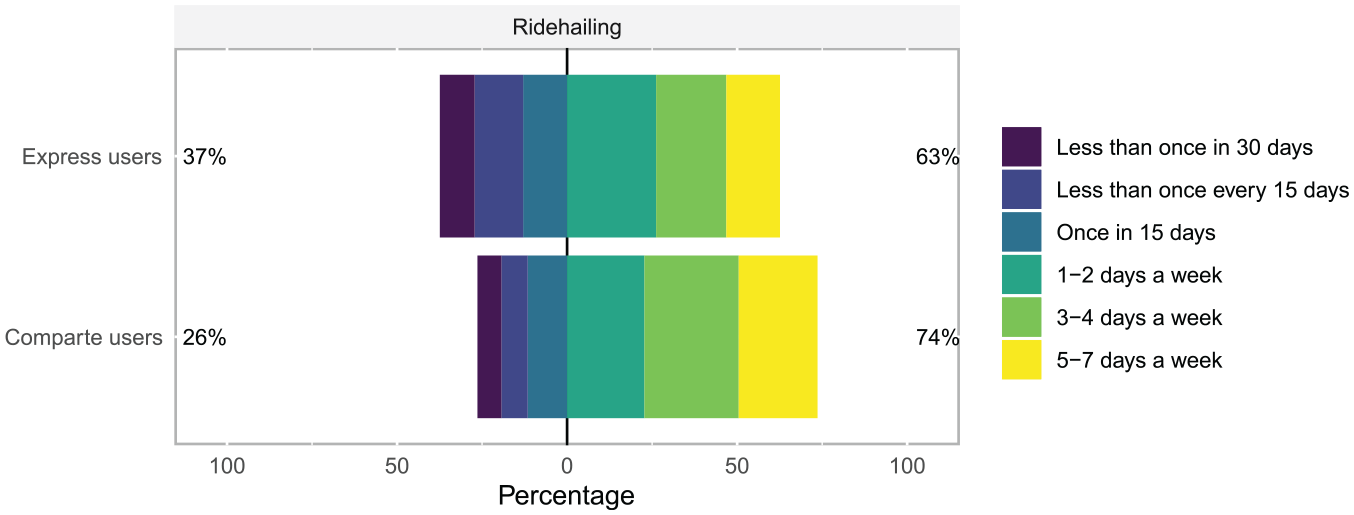
Distribution of survey responses to the question “Before COVID-19, with what frequency would you use ridehailing?” by user group.
There is naturally some risk of bias when asking individuals in the survey to recall their typical travel behavior before COVID-19. Therefore, an additional reasonableness check of the data was performed, comparing the number of trips actually made by survey respondents on DiDi’s platform with their self-reported frequency. This is a limited baseline given that we do not have data on the trips made by respondents on other ridehailing platforms and are comparing the number of trips to a frequency based on days traveled, but a clear pattern was found of increasing number of trips by frequency category.
Next, how frequency of ridehailing use correlates with frequency of use of other travel modes is considered (Figure 3). The pairwise Spearman rank correlation for reported frequency of use by each mode was calculated; because the frequency for each mode is reported on the same six-point ordinal scale, a non-parametric correlation was used that avoids any distributional assumptions.
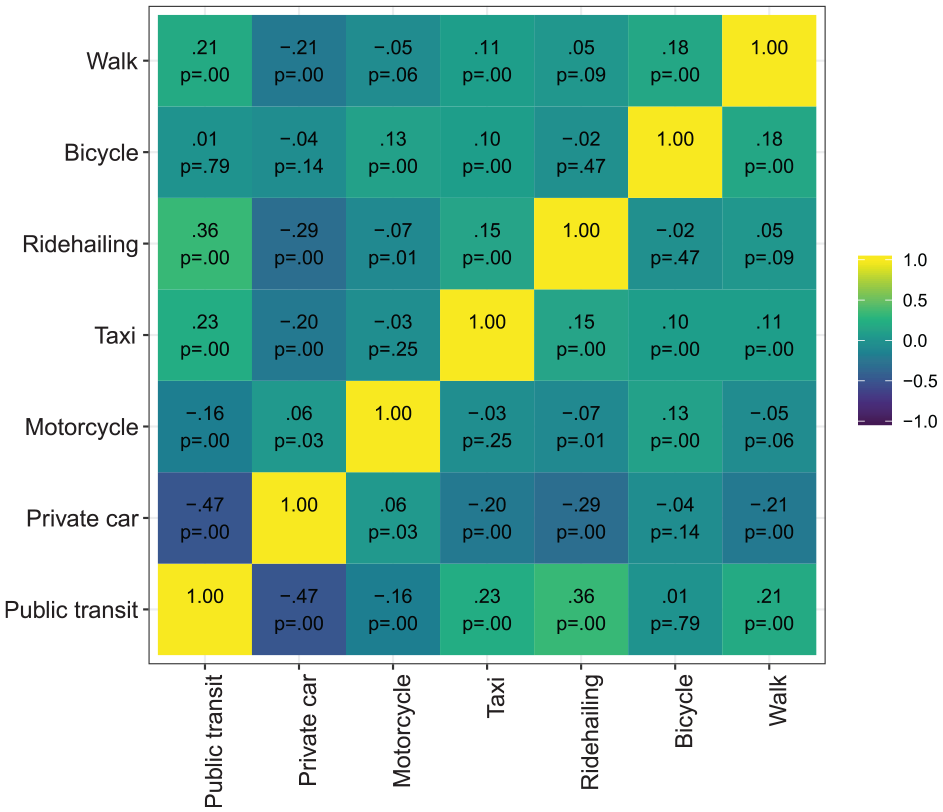
Spearman rank correlation matrix of frequency of use of travel modes for all sampled ridehailing users.
It was found that more frequent ridehailing use is positively correlated with use of public transport and taxi. From a simple correlation, it is not possible to tease out complementarity or substitution across modes, but this finding may suggest that those who rely more heavily on ridehailing services use public transport and taxis for their other travel, lending credibility to the argument that ridehailing helps support or supplement more multimodal travel patterns. On the other hand, frequent ridehailing is negatively correlated with travel by private car and motorcycle. This may suggest that those with access to personal mobility options rely less on ridehailing services; conversely, it could suggest that those who use ridehailing more frequently have less need for personal cars or motorcycles.
Purpose of Ridehailing Use
Next, individuals were asked to report the primary mode that they used for each of a set of trip purposes. Figure 4 summarizes the percentage of respondents in each survey sample that selected ridehailing as their primary mode for the given trip purpose; individuals were allowed to select ridehailing as their primary mode for any number of trip purposes, so the percentages shown will not sum to 100.
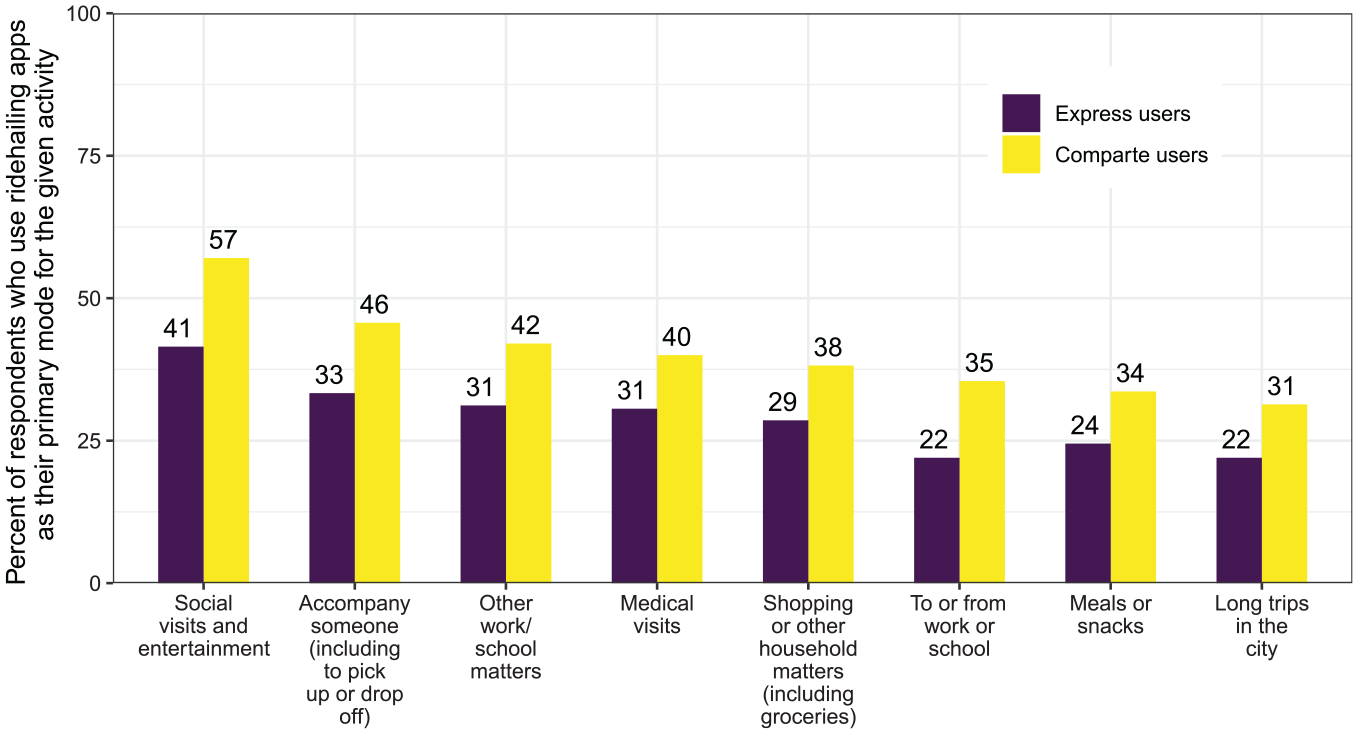
Proportion of individuals who selected ridehailing applications as their primary mode of transportation for each trip purpose, by user group.
It was found that social visits and accompanying others are the most common trip purposes for both samples of express and comparte users. This conforms with literature in both developed and developing countries ( 2 ), which finds that ridehailing trips are primarily for leisure and social visits. Comparing across types of users, we see that comparte users appear to rely on ridehailing as their primary mode more than express users, regardless of trip purpose. This might suggest that the comparte service offering, with its cheaper price, provides its users greater mobility compared with the express service. Finally, when considering less frequent trip purposes, it appears that comparte users are more likely to use the service for work/school commutes than express users.
Mode Substitution
To better understand the impact of ridehailing on incumbent modes of travel in the three cities, respondents were asked what mode they primarily would have taken had DiDi express and DiDi comparte service not been available. Each response was weighted by the number of trips that the individual actually took on DiDi’s ridehailing platform in a given month to reflect the frequency of trips substituted. In doing this calculation, it was assumed as a first approximation that each individual replaces all of their ridehailing trips by their primary substitution mode. This provides insight into the types of trips that ridehailing services are replacing.
First, it was found that 4% of express trips and 5% of comparte trips would not have been made at all had the ridehailing service not been available. This suggests that both types of ridehailing service options are expanding mobility for urban residents, serving trips that may not have been possible by other travel options, opening up new economic and social opportunities (Figure 5).
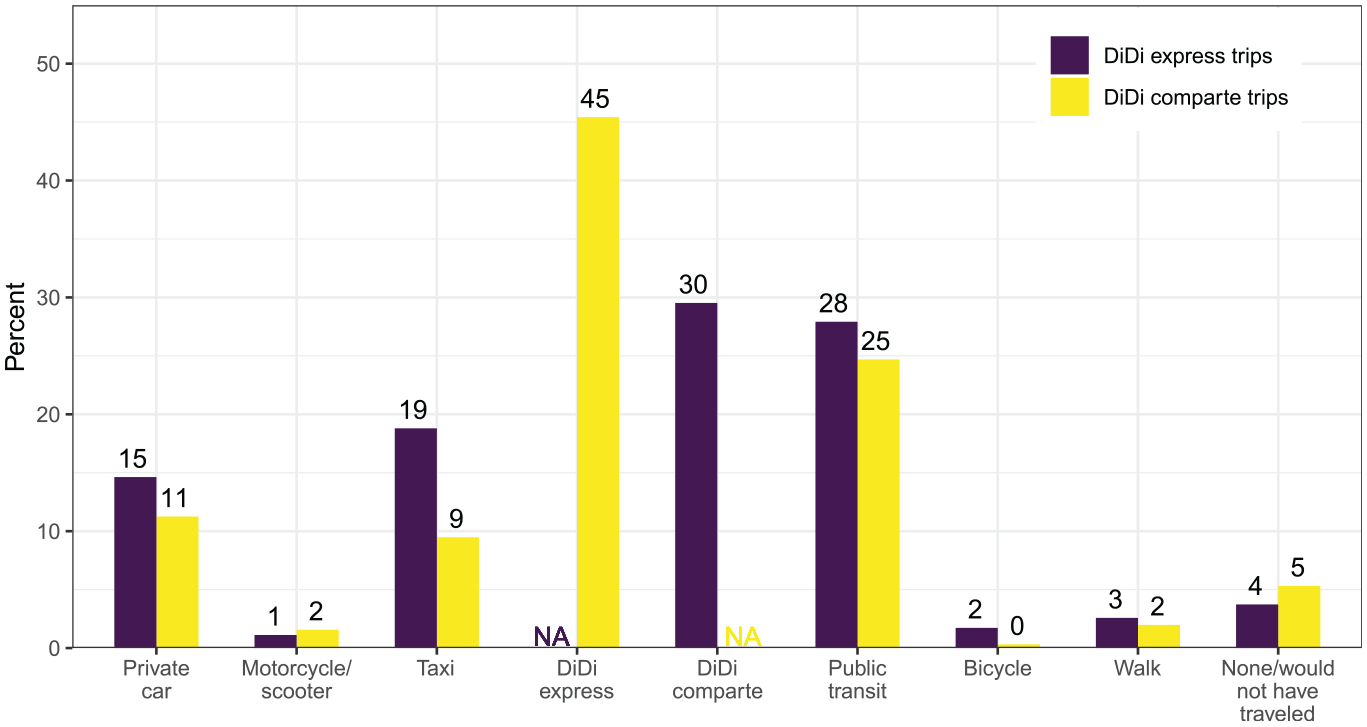
Primary mode substitution of DiDi ridehailing trips by service type (all users).
For trips that would have been made by another mode had ridehailing not been available, the greatest substitution was by public transport and taxi rather than by private car (Figure 5). This result is closely aligned with previous research on modal substitution of ridehailing trips in the Latin American context. Studies have found that the two transport modes most frequently replaced by ridehailing are taxis and public transport—with 39.2% of users replacing taxis and 27.6% replacing public transport in Santiago, Chile ( 7 ) and 49.7% replacing taxis and 30.2% replacing public transport in Brazilian cities ( 12 ). Taken in the context of other survey studies of perceptions of ridehailing and other modes, these results suggest that ridehailing users in Latin American cities are already multimodal users of shared modes who opt for new platforms because they provide greater comfort, convenience, and/or safety compared with existing bus and taxi services ( 10 , 12 ). However, this substitution of public transport trips (and relatively low substitution of private car) could increase VKT; an impact some have argued is unlikely to be compensated by efficiency gains from the replacement of taxis with ridehailing unless the occupancy of ridehailing vehicles were to increase substantially ( 8 ).
Considering mode substitution by type of service offering for the first time in the Latin America context, it is found that express trips are slightly more likely to replace trips by other forms of private, motorized transport like personal car (15%) and taxi (19%) than they are to replace public transport (28%). Comparte trips, on the other hand, are most likely to be replaced by public transport (25%) than by private car (11%) or taxi (9%). The finding that exclusive ridehailing trips are more likely to replace private, motorized modes while pooled ridehailing trips are more likely to replace public transport is similar to results seen in Singapore despite its different urban and transportation context ( 3 ).
A high degree of substitutability was also found between the two types of DiDi services—with 45% of comparte trips being substituted for express trips and 30% of express trips being substituted for comparte (Figure 5). The high substitutability between express and comparte services seen among this sample of frequent ridehailing users might suggest that there is substantial room to improve the occupancy of ridehailing vehicles by encouraging adoption of the pooled rather than the exclusive service option. Understanding how ridehailing platforms might encourage this switch requires an investigation of the different factors and trade-offs faced by users in choosing between service offerings.
Choosing Between Exclusive and Pooled Services
To better understand determinants of a ridehailing user’s choice to pool, current users of the express service were asked to indicate the importance of different factors in considering whether to travel by comparte instead of express (Figure 6). Overall, safety was rated one of the most important factors—in line with results from Brazil that found that concerns with using pooled ridehailing increased as the number of additional passengers matched in the vehicle increased toward levels seen in microbus services that have a poor reputation for safety ( 12 ). Other important factors were utilitarian attributes like travel time and its trustworthiness, or reliability, privacy, price, and comfort. More altruistic motives, such as reduced impact on the environment and congestion, or the possibility of meeting new people, ranked lowest in relation to importance.
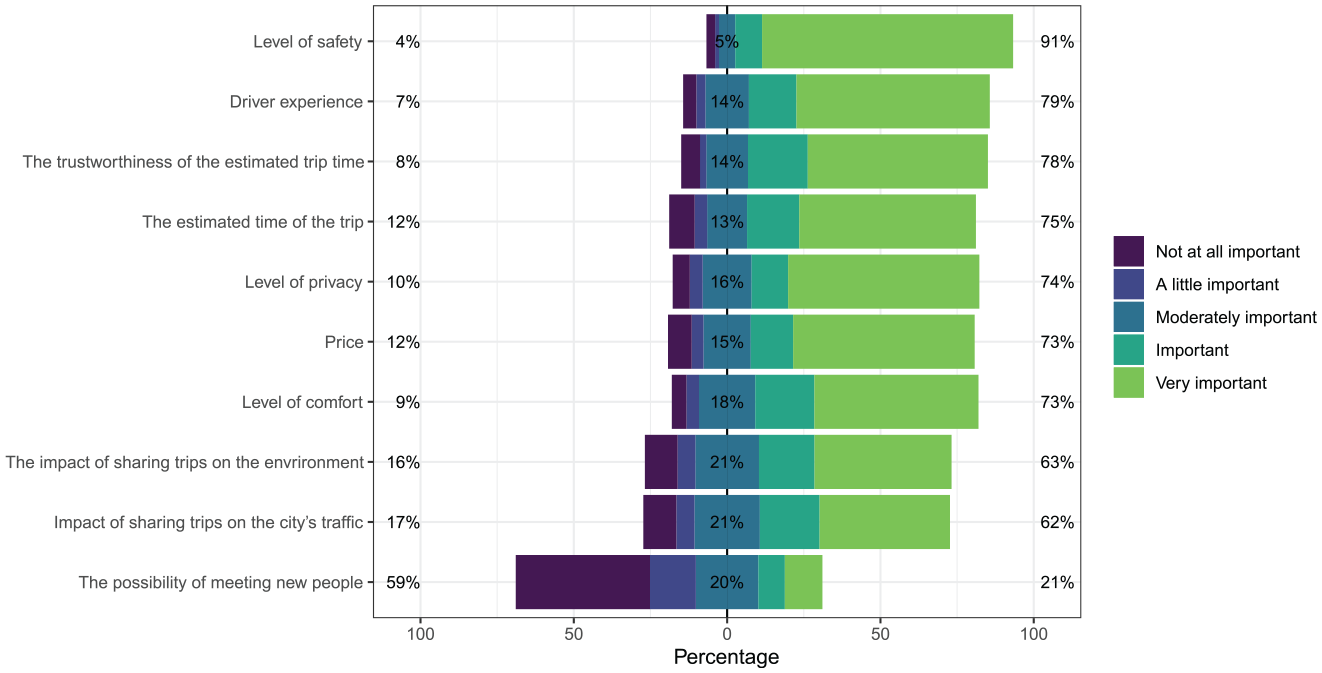
Distribution of responses among express users to the question “What factors are important for you to consider traveling with DiDi comparte instead of DiDi express?”.
The surveys also asked both user groups to rate the importance of different factors in determining their decision to use DiDi’s comparte service in general (rather than relative to DiDi express) (Figure 7). There was little difference in the rating of importance of factors between the samples of express and comparte users; overall, individuals care about multiple factors, including travel and wait time, and reliability as well as price. On the other hand, having additional information about the passengers that will join the trip and the experience of the driver were less important factors, with the exception of knowing how many passengers will join the trip (which affects detour time). For this factor, there is an apparent difference between express and comparte users, with those who do not currently use pooling being more concerned about how many people will be matched in the trip than those who already use the service.
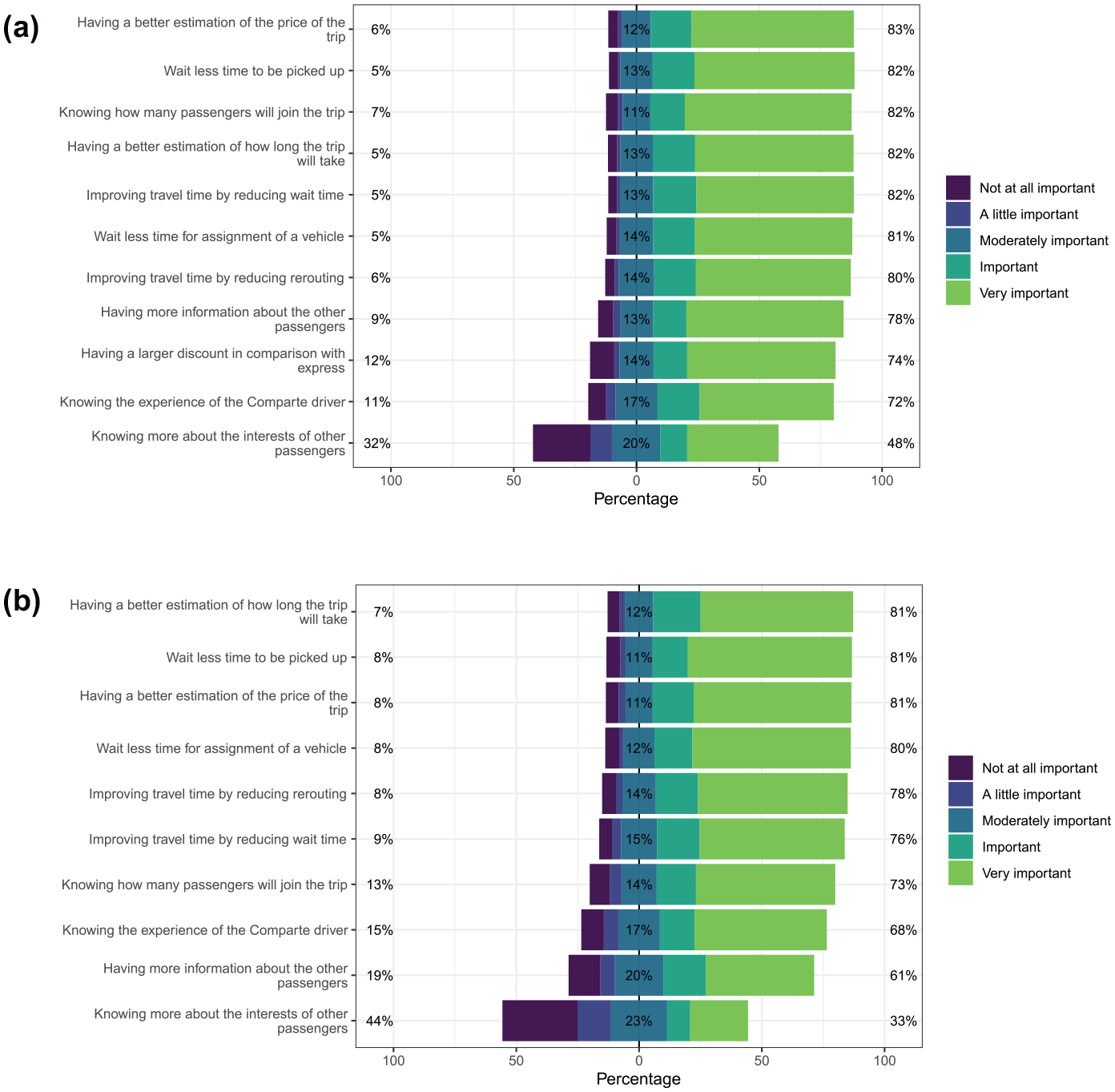
Distribution of responses to the question “How important are the following factors for using DiDi comparte more frequently?” by user group: (a) Express users and (b) Comparte users.
Price Elasticity of Detour Time
The above results reinforce the finding that utilitarian characteristics of the trip—such as travel time, travel time uncertainty (from matching of passengers and potential detours), and price—are the primary considerations when ridehailing users are considering an exclusive or a pooled trip. Because both travel time and price are rated as highly important factors in determining pooling suggests that users are well aware of the key trade-off that they are making between increased travel time (from detouring to pick up and drop off additional passengers) and reduced price. Here this trade-off is investigated further.
A robust measurement of the trade-off involves the implementation of choice experiments, which observe choices between exclusive and pooled ridehailing while systematically varying trip attributes (e.g., 22 ). The present survey takes a simpler approach, asking individuals to report the travel time of their last trip by express and how much additional deviation time they would be willing to accept for a 40% discount. This scenario is realistic given that pooled trips in the three Mexican cities are often offered at a discount of 30% to 40% off the cost of an equivalent express trip. From these responses, we can calculate a point estimate of the price elasticity of additional travel time for each individual:
Comparte users: 1st quartile = 0.83, median = 1.67, mean = 2.38, and 3rd quartile = 2.50
Express users: 1st quartile = 1.00, median = 1.50, mean = 2.18, 3rd quartile = 2.50
Across user groups, both the median and mean elasticities are well over 1, suggesting that, on average, a 1% change in price corresponds to a 1.5% to 2% change in travel time. The high elasticities estimated suggests that frequent ridehailing users in the three Mexican cities are willing to trade significant travel time in exchange for monetary discount. While there is significant variation across individuals, there was no statistically significant difference in the mean elasticity between express and comparte users (t = −0.91, p-value = 0.36).
The express user survey additionally asked individuals to “Imagine that a trip with DiDi express costs Mex$50 and takes 20 minutes. How much would you pay for the same trip with comparte if the estimated time were 30 minutes?” (a 50% increase in travel time). From this question, another point estimate of price elasticity of additional travel time can be calculated:
Express users: 1st quartile = 0.62, median = 0.83, mean = 2.4, 3rd quartile = 1
Different point estimates are obtained when asking individuals to report price rather than time, but again a mean elasticity substantially greater than 1 is measured.
These results suggest there is a significant portion of frequent ridehailing users who would be willing to accept substantial in-vehicle detour times (to pick up additional passengers) to achieve a discount—a clear market for pooled operations. In fact, the elasticities would suggest that ridehailing users in the three Mexican cities may be willing to trade off substantially greater detour time (as much as a 50% increase) than is currently seen on comparte service for the existing 30% to 40% discount.
Discussion
Using primary survey data collected from frequent users of DiDi’s ridehailing platform, this study addressed existing knowledge gaps by investigating patterns of use of exclusive and pooled ridehailing services in three cities in Mexico. It was found that ridehailing users are also likely to be frequent users of public transport and taxi services, suggesting that ridehailing fits into existing multimodal lifestyles. However, it was also found that ridehailing trips are more likely to substitute trips by public transport and taxi than by private car, suggesting that individuals who rely on shared modes of travel may be switching to these new services in search of better comfort and safety.
Differentiating mode substitution by service offering for the first time in the Latin American context, we can see high substitutability between express and comparte. This degree of substitutability suggests that there is potential to encourage existing ridehailing users to pool trips, increasing the occupancy rate of ridehailing vehicles and reducing their negative impacts on congestion. Among the many factors involved in choosing between exclusive and pooled services, the sample of ridehailing users in Mexico rated safety, travel time and its reliability, and price as key determinants, with a highly elastic relation between travel time and price. This again suggests that there is a market for pooled services, since a significant portion of this sample would be willing to trade off substantial amounts of detour time for a reduction in price.
Implications
Operators of ridehailing platforms can use this information to help encourage pooling among their users, by ensuring the safety of their passengers and providing more reliable estimates of travel (and detour) time and price. Each additional passenger trip in a pooled system reduces the cost for users, but often at the expense of increased trip duration (especially when these systems have not yet reached scale) and reduced levels of safety and comfort. Given that safety and comfort are two important factors for ridehailing users in cities in Mexico and elsewhere in Latin America, operators may want to continue to investigate how many additional passenger trips are acceptable on such a platform without reducing safety and comfort too much.
Urban transportation policymakers, concerned about the negative system-wide impacts on VKT that result from ridehailing trips replacing higher capacity modes like public transport, could encourage greater use of pooling on these platforms or even among incumbent taxi services. The effectiveness of different measures—such as road pricing schemes with discounts for higher-occupancy vehicles or the inclusion of performance metrics in ridehailing service licensing schemes—on quality of service and externalities should be investigated. However, these measures to encourage shared travel by ridehailing platforms should also be accompanied by interventions to address safety concerns on incumbent public transport and taxi services to provide multiple options for high-quality mobility in Mexican cities.
Future Research
For researchers, this study continues to demonstrate the importance of urban context. While some trends, such as ridehailing primarily serves social and leisure trips, hold in cities in both developed and developing countries, others such as patterns of mode substitution vary depending on the car ownership levels, the type, quality, and safety of other travel alternatives in the market, and the built environment. Future research could investigate how these different factors help explain relationships between ridehailing and other modes. Furthermore, future studies should continue to differentiate by service offering—exclusive or pooled—to better understand the key trade-offs involved in choosing how to use ridehailing platforms. These studies should consider not only trip characteristics like (detour) time and costs, but also issues of comfort, safety, and other qualitative factors that influence the choice to pool rides. This is only one of many studies that are needed to understand how ridehailing services are interacting with urban mobility systems in cities in Latin America and other developing countries and how policymakers and operators can encourage the use of pooling.
Footnotes
Acknowledgements
Data for this study were provided by DiDi Chuxing. The authors thank Sigfried Eisenmeier, Tonatiuh Anzures Escandon, and Silvia Ariza Sentis and their colleagues at DiDi for their coordination of this data exchange and for their comments on this work.
Author Contributions
The authors confirm contribution to the paper as follows: study conception and design: J. Moody, D. Keith; data collection: J. Moody; analysis and interpretation of results: J. Moody, E. Esparza-Villarreal; draft manuscript preparation: J. Moody, E. Esparza-Villarreal, D. Keith. All authors reviewed the results and approved the final version of the manuscript.
Declaration of Conflicting Interests
The author(s) declared no potential conflicts of interest with respect to the research, authorship, and/or publication of this article.
Funding
The author(s) disclosed receipt of the following financial support for the research, authorship, and/or publication of this article: Research support was provided by the MIT Energy Initiative’s Undergraduate Research Opportunities Program.
Data Accessibility Statement
The data that support the findings of this study were provided by DiDi Chuxing. Restrictions apply to the availability of these data, which were used under license for this study.