







Abstract
Although commuters have been identified as potential early adopters of autonomous vehicles (AVs) that can boost the adoption rate of this technology, there is a lack of knowledge on their willingness to pay (WTP) for this technology and the attitude that influences this decision. Using data from a consumer survey conducted in the United States, this study presents a comprehensive analysis of the decision to pay for AVs among commuters. An integrated choice and latent variable (ICLV) model was applied in this study, considering its robust performance in modeling choice behavior for integrating users’ attitudes. The results showed that commuters with a favorable view toward multitasking tended to put a higher value on driverless cars. On the other hand, although a favorable view toward technology motivated commuters to pay more for AVs, data privacy and trust issues with the technology could outweigh this factor and discourage commuters from adopting and paying for AVs. This study also provides in-depth insights and comprehensive views on the impacts of commuters’ socioeconomic and demographic attributes on the decision to pay for AVs. Notably, although age and educational attainment did not directly affect WTP behavior, they played important roles in this decision, with significant effects mediated through latent attitudes. These in-depth analyses provide useful insights that can help develop customized marketing strategies for different market segments according to their specific and unique preferences and concerns.
Keywords
Autonomous vehicle (AV) technologies are expected to revolutionize transportation systems and bring significant societal benefits such as improved safety and fuel efficiency, mobility for non-drivers, and enhanced traffic flow ( 1 ). The value of these societal benefits was estimated to be in the range of $2,000 to $4,750 per AV per year ( 2 ). A high penetration rate is needed to fully achieve these potential benefits ( 3 ). Many researchers have studied market penetration and user adoption, and willingness to pay (WTP) for AVs to predict the demand and market for AVs ( 4 – 6 ). Other researchers have focused on early adopters in relation to user characteristics and adoption behavior, considering their roles in accelerating new technologies’ adoption.
Commuters were estimated to be among early adopters of AVs ( 7 , 8 ). A recent study showed that commuters were 12% more interested in using shared AVs and 9% more interested in having privately owned AVs compared with non-commuters ( 9 ). This higher interest in the use of AVs among commuters may originate from several aspects. Zhong et al. focused on value of travel time (VOT) among commuters and found that riding in AVs could reduce their VOT by as much as 18–32% ( 10 ). Liu modeled the equilibrium of departure time and parking location choices and found that commuters would be motivated to adopt AV technology as it can remove the burden of finding parking spaces ( 11 ). Malokin et al. investigated the impact of activities conducted during commute trips on mode choice behavior ( 12 ). This study assumed the ownership and maintenance cost of AVs to be similar to those of conventional vehicles, and found that the multitasking opportunity associated with AVs was an influential factor in the decision to shift toward this technology. The findings showed that a significant portion of commuters would shift from shared rides to private AVs, and estimated an increase in the number of vehicles on the roadway.
Although commuters have been identified as early adopters of AVs that can boost the adoption rate of this technology and realize its potential benefits, there is a lack of knowledge on their WTP as well as the attitudes that affect this decision. In view of WTP, Cunningham et al. have shown that it serves as a “critical facet of acceptability for AVs” as people may support the use of driverless cars but may not be willing to actually pay for it ( 3 ). Lee et al. also showed that the purchasing cost served as the most influential factor in adopting AVs ( 13 ). Although commuters have shown distinct attitudes in their decision to adopt and use AV technology compared with the general population ( 12 , 13 ), their attitudes toward the WTP decision have yet to be studied. This paper contributes to the body of literature by investigating commuters’ WTP for privately owned AVs; this may provide useful insights on the market prices for massive adoption of AVs and lead to more accurate prediction of AV market penetration curves, which would provide the critical foundation for meaningful and reliable estimation of the potential impacts and benefits of AV technologies. This study intends to answer these research questions: How much extra are commuters willing to pay (compared with conventional vehicles) for driverless cars? What socioeconomic and demographic characteristics influence the decision to pay for AVs? What are commuters’ attitudes toward AVs, and how do these attitudes impact their WTP decisions? Using data from a consumer survey conducted in the United States, an integrated choice and latent variable (ICLV) modeling approach is applied to estimate commuters’ WTP decisions. The ICVL approach has shown robust performance in modeling complex theories of behavior by allowing a simultaneous estimation of psychological constructs as well as the choice behavior ( 14 , 15 ). To the authors’ best knowledge, this is the first study that estimates the decision of WTP for AVs among commuters while incorporating their attitudinal constructs.
The next section reviews the literature on WTP for AVs and also discusses the existing studies on the adoption of AVs for commute trips. The consumer survey and the data characteristics are elaborated in the third section. The fourth section presents the ICLV modeling framework and formulas. The ICLV model results, including the WTP choice estimation and attitude model results, are explained in the fifth section. The last part discusses the key findings and concludes the study.
Literature Review
WTP for AV
Several studies in the transportation literature have investigated public interest in paying for AV technologies. These studies mainly relied on consumer surveys to identify the amount of money each respondent was willing to pay for the technology. Some studies further investigated the survey results by developing statistical models to estimate the WTP decision. These studies reported the impacts of socioeconomic and demographic characteristics as well as the users’ attitudes on the WTP decision. This section summarizes the existing studies on WTP for AV technologies.
Schoettle and Sivak surveyed 1,533 people residing in the United States, United Kingdom, and Australia about their WTP for self-driving technologies ( 4 ). The study asked, “How much extra would you be willing to pay to have completely self-driving technology (Level 4) on a vehicle you own or lease in the future?” The result revealed that a majority of the respondents (ranging from 55% to 60%) were not willing to pay extra for AV technologies. Only 10% of Americans were willing to pay above $5,800 for the technologies, and this value was reported to be $5,130 and $9,400 among participants in the United Kingdom and Australia, respectively.
Bansal and Kockelman conducted a nationwide stated preference survey across the United States with 2,868 participants and asked about their WTP for different AV levels ( 5 ). The majority of respondents selected not to pay extra for having level 3 and level 4 automation (55% and 59%, respectively). About 8% indicated their WTP $10,000 or more for level 3 automation, and only 17% selected to pay above $14,000 for level 4 AVs.
Liu et al. conducted a stated preference survey with 1,355 participants in China and used a contingent valuation method to measure the WTP ( 16 ). About 26% of the respondents decided not to pay extra money for AV, 47% chose to pay less than $4,350, and only 26% chose to pay above $4,350 for this technology. The study applied a component-based structural equation modeling approach. Four attitudinal factors were identified, including perceived benefit (reduce crashes, traffic congestion, and air pollution), perceived risk (system failures, legal liability, cyber-attack), perceived dread (worried/frightened in AV), and trust in AV (AV is reliable/dependable). The study showed that trust in AV and perceived benefit of AV were positively associated with WTP decision, whereas perceived risk and perceived dread showed negative contributions. The study also reported that age negatively affected the decision to pay for AVs, whereas higher education and income levels led to higher WTP.
Cunningham et al. asked 6,131 participants from Australia and New Zealand about their WTP for AV compared with a conventional vehicle ( 3 ). The study provided four options (less, same, more, a lot more) to the participants and found that 57% were willing to pay the same or less amount for having AVs, 33% were willing to pay more, and 10% selected a lot more. The study used exploratory factor analysis to identify attitudes toward AVs and applied a hierarchical binary logistic regression to estimate the binary decision (willing or unwilling to pay more for AV). The attitudes that were positively associated with the decision to pay a higher amount for AV technology include awareness (familiarity with AV), benefits (AV is safer), conditions (use AV when traffic is congested or when the driver is bored), functions (control speed function, lane-keeping function), low-risk activities (eat or drinking, interacting with others). In view of demographics, the study reported that females and older adults put a lower value on driverless cars.
Daziano et al. implemented a nationwide survey with 1,260 participants to determine if people are willing to pay to allow vehicles to drive for them ( 17 ). The survey result showed that the average American households are willing to pay $3,500 to own a level 3 AV and $4,900 to have a level 4 AV. Most importantly, the study reported a significant heterogeneity in the WTP for AV, meaning that although a major part of the sample is willing to pay even above $10,000 for AV, there are many respondents with no inclination to pay extra money for this technology.
Bansal and Kockelman surveyed 1,088 participants across Texas in relation to their WTP for different AV levels ( 5 ). In view of level 4 automation, 27% chose to pay less than $1,500, 29% selected $1,500 to $5,999, and 45% were willing to pay above $6,000 for adding the technology. The study used the interval regression approach and directly incorporated the attitudinal questions to measure Texans’ WTP for different AV levels. The results revealed that Texans familiar with Google car (Waymo) and connected vehicle technology, single respondents, high-income earners, and individuals with high annual vehicle miles traveled (VMT) had a higher inclination to pay for level 4 automation. On the other hand, experienced licensed drivers, those who reside close to public transit stations, and older people showed less motivation to pay for full automation. Besides, Texans who do not reside close to downtown areas, those who experienced severe crashes, and individuals who had more personal business trips showed higher WTP for level 3 automation. In contrast, those familiar with ridesourcing services and experienced licensed drivers placed a lower value on level 3 AVs.
AV for Commute Trips
Focusing on commute trips and commuters, this section summarizes existing studies investigating the adoption and use of AVs. These studies mainly relied on stated preference surveys to measure the inclination to adopt driverless cars. Some studies also investigated the impact of attitudes on the propensity to use AVs.
Lee et al. investigated the preferences and behavior toward AVs of 721 car commuters ( 13 ). The study presented three alternatives to the commuters, including conventional vehicles, private AVs, and shared AVs, and applied a gradient boosting machine learning method to analyze their choice behavior. The survey results showed that 44% of respondents chose regular vehicles, 32% selected private AVs, and 24% preferred shared AVs. Four attitudinal indicators were directly incorporated in the model and labeled pro-AV sentiments, environmental concerns, technology interest, and public transit attitude. Notably, AVs’ purchasing/trip cost was found as the most influential factor in the decision to adopt this technology, followed by pro-AV sentiments attitude, commute time, environmental concern attitude, and technology interest attitude. The demographic variables such as education, age, income, and household size showed a significant contribution but had a relatively smaller impact than the attitudes and purchasing/trip cost of AVs.
Malokin et al. estimated the effects of attitudes on commuters’ mode choice ( 12 ). The study used a revealed preference survey, with 2,229 respondents who lived in Northern California. Factor analysis was applied to drive attitudinal factors incorporated into a multinomial logit model to investigate the mode choice behavior. The findings revealed that the polychronic attitude (prefer doing several activities simultaneously) only had a positive impact on the use of shared mobility. In contrast, convenience (privacy, reliability), benefit/cost (environmental effect, avoiding congestion), comfort (safety, carrying personal belongings), multitaskability, and productive time use (amount of time at work) intensified the inclination to use transit. Leveraging the mode choice model results, the study presented two scenarios about AVs with different hypotheses about laptop use and multitaskability, and asked respondents to select their preferred mode of travel. The hypothetical AV scenario results showed that when a high level of engagement in productive activities was allowed during trips with private cars, the drive-alone percentage would increase, and shared-ride adoption would decrease.
Wang and Akar explored the factors that affect propensity for AVs among commuters using the 2015 and 2017 Puget Sound Regional Household Travel Studies data with 3,515 respondents ( 18 ). In relation to their interest in commuting alone using AVs and commuting with others using shared AVs, the survey indicated that 30%–39% (2015 and 2017, respectively) of the respondents were not interested at all to commute alone with AVs, 7%–9% chose somewhat uninterested, 14% were neutral, 20%–24% indicated somewhat interested, and 20%–24% were very interested. A bivariate ordered probit model was applied to estimate the users’ interest in these two modes simultaneously. The results showed that single drivers and households with more vehicles were more willing to commute alone with AVs. Moreover, transit users, carshare riders, users with flexible work schedules, and urban residents showed a higher inclination toward commuting with shared AVs. In contrast, individuals living in locations with adequate public transit services showed less interest in commuting with shared AVs.
Nazari et al. estimated the adoption of AV-alone (without ridesharing) and AV-carpool (with ridesharing) modes for both daily and commute trips ( 9 ). They used the 2017 Puget Sound Regional Travel Survey data. Latent variable measurement and structural equation models were applied to estimate latent attitudes, and a multivariate ordered probit model was used to investigate the mode choice behavior. The findings indicated that full-time employed individuals had a positive propensity to use both AV-alone and AV-carpool modes for commute trips. Furthermore, the presence of children, a greater number of adults, and higher land-use mix diversity increased AV-carpool probability. In relation to attitudinal factors, safety-concern attitude (vehicle security, legal liability, equipment safety) decreased the probability of commuting with AVs, whereas green travel patterns (transit, bike, and walk frequency) and MOD (Mobility-on-Demand)-savvy (ridesourcing and carsharing frequency, having a smartphone) attitudes had a positive impact on the individuals’ propensity to use both types of AVs as for commute purpose.
Summary
In summary, the literature showed a high portion of people (ranging from 26% to 60%) not willing to pay extra money for driverless technologies. Females, older adults, experienced licensed drivers, and those who reside close to public transit stations tended to put a lower value on AV technology. In view of people’s attitudes, perceived dread (worried/frightened in AV) and perceived risks (system failures, legal liability, cyber-attack) were negatively linked with the WTP decision. On the other hand, people with higher education and income level, individuals who had more personal business trips or had high annual VMT, and those who experienced severe crashes tended to place a higher value on AV technology. Attitudes that were positively linked with WTP include familiarity with AV, perceived benefits, and functional benefits. Roadway infrastructure such as information and communications technology coverage, and exclusive AV lanes were also found to be positively associated with peoples’ inclination to pay for AVs.
Although previous studies have investigated commuters’ propensity toward AV adoption and commute trips in hypothetical scenarios, cost considerations have not been incorporated into the studies. This study intends to fill this knowledge gap and examine commuters’ WTP behavior, which has great implications on AVs’ actual adoption.
Methodology
The ICLV model bridges the gap between discrete choice models and behavioral theories by incorporating travelers’ unobserved preferences or attitudes ( 14 ). Attitudes play a critical role in travelers’ choice behavior but cannot be adequately captured using traditional discrete choice models ( 19 ). The ICLV model utilizes three components to estimate travelers’ decisions to pay for AVs ( 20 ).
The measurement equation component of the ICLV estimates the latent variables or attitudinal factors by leveraging the information from a set of observed indicators. Equation 1 shows the measurement component where
The structural component quantifies the latent variables
The discrete choice component has the utility function






The developed ICLV model was estimated simultaneously rather than sequentially, meaning that the measurement, structural, and choice components were estimated together. In the sequential approach, the measurement and structural components are estimated independently from the discrete choice component, leading to inconsistent estimation ( 22 , 23 ). The simultaneous approach addresses this limitation and, as a result, provides a better model fitting but requires more computational power because of the increases in the model complexity.
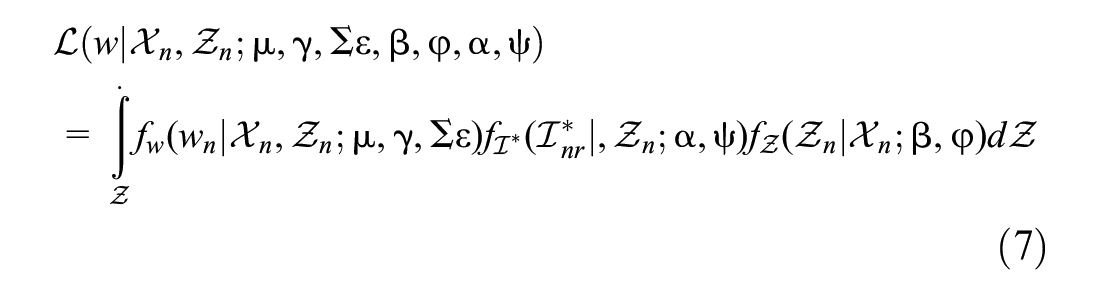
The likelihood function for the joint estimation is presented in the following equation, where
Consumer Survey
An online consumer survey was conducted in the United States to investigate the implications of shared mobility and AVs on travel behavior. The survey was completed in 2017 and collected information from 1,394 individuals in relation to their existing mobility patterns, socioeconomic and demographic characteristics, mobility preferences, and attitudes toward AV technologies and shared mobility. A stratified random sampling approach was applied according to the 2010 Census in relation to age, gender, race, income, and education, with oversampling for adults less than 35 years old. Information about the survey design, sampling approach, and sample attributes can be found in previous work by the authors ( 24 ).
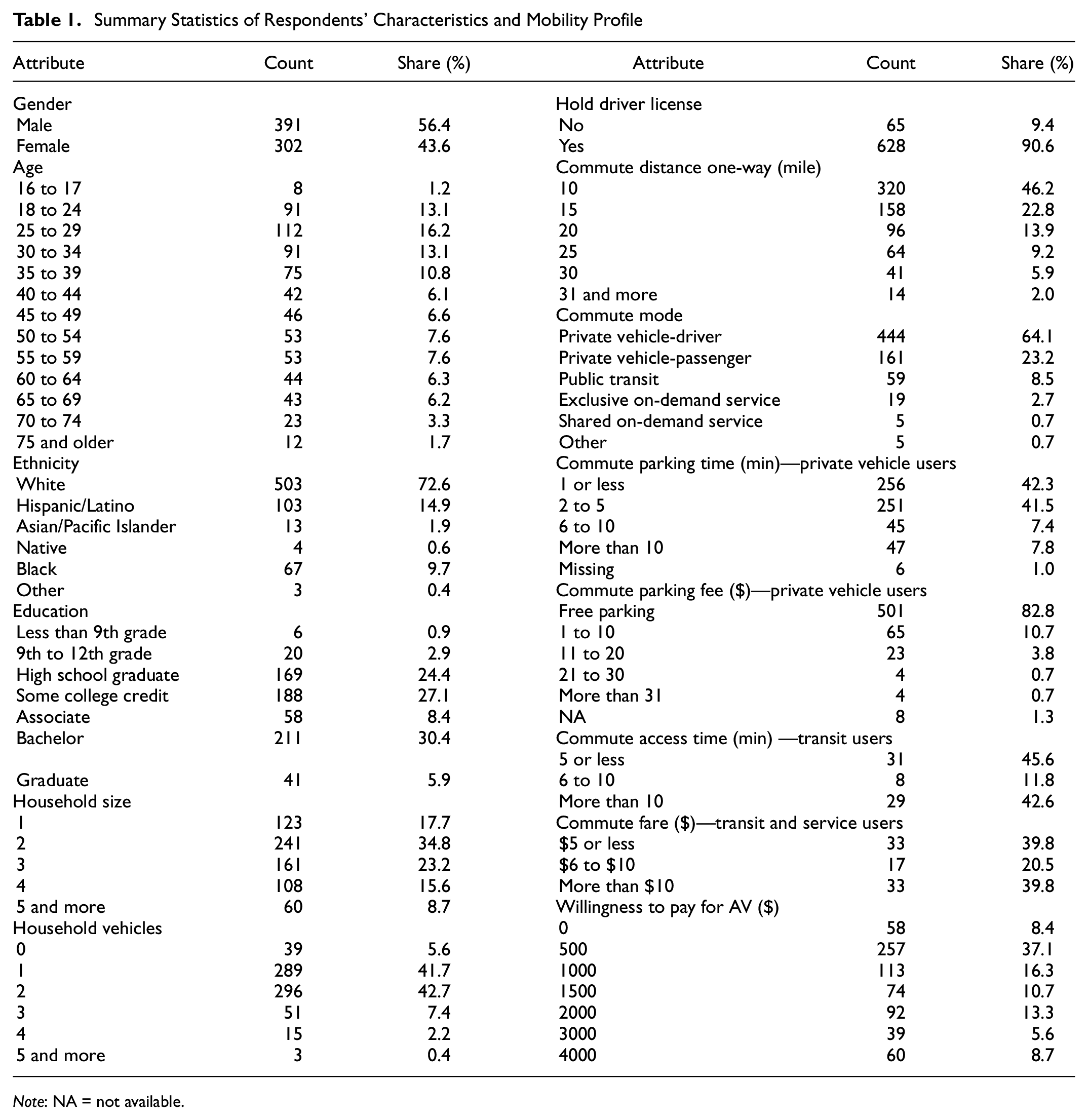
For this study, we focused on 693 commuters whose one-way commute distance was 10 miles or longer. It should be noted that commuting was defined as frequent travel from home to work or school where the travelers leave the boundary of their home community. Trip information for their commutes was also collected, including trip purpose, trip mode, trip distance, access time, parking time, and parking cost. The sample characteristics are presented in Table 1.
Summary Statistics of Respondents’ Characteristics and Mobility Profile
Note: NA = not available.
Table 1 shows that 90.6% of the commuters held a driver’s license, and only 5.6% had no vehicle in their household. The majority of commuters (64.1%) drove a private vehicle, 8.5% used transit services, and only 2.7% adopted exclusive on-demand services for their commute. Those who used private vehicles for commute were asked about their parking time and parking cost. Most people (about 83%) spent 5 min or less to find parking, about 8% spent more than 10 min to find a parking space. In relation to parking cost per trip, about 15% of the respondents paid between $1 to $20 for parking, about 1.4% paid more than $20 for parking.
For the respondents who used transit for commute, they were asked about their access and initial wait time. As shown in Table 1, about 46% of transit commuters spent less than 5 min, but about 43% needed to spend more than 10 min. This may have implications for their preferences toward shared mobility and AV technologies. For those who used transit or ridesourcing services, trip fare information was also collected, as shown in Table 1.
In view of AV technologies, the commuters were asked how much extra they were willing to pay for AVs and were presented with seven options, as shown in Table 1. The range of WTP was select based on existing information at the time that the survey was implemented. Literature reported $2,500 to $3,500 as a possible cost for adding partial automation and $3,000 to $3,500 for full automation ( 25 , 26 ). In addition, IHS Automotive ( 27 ) estimated that the price of AVs would be around $5,000 in 2030 and $3,000 in 2035. The results indicated that 8.4% had no intention to pay extra for AVs, 53.4% were willing to pay $1,000 or less, 13.3% were inclined to pay $2,000 more, and 8.7% were willing to pay $4,000 or more.
The commuters were then presented with two sets of questions focusing on their preferences and attitudes. Figure 1 shows the responses to the questions related to mobility preferences and technology usage. When asked about their driving experience, 69% stated that they enjoyed driving (selected agree or strongly agree), and only 14% reported a negative view toward driving. On the other hand, a majority of commuters (69%) agreed that driving in congested areas was stressful. In view of on-demand services, 43% agreed that the services could increase life quality, whereas 14% disagreed. In addition, 50% of the respondents preferred multitasking on their commute trips, whereas 25% had the opposite view. Finally, the majority of the commuters were highly engaged in online activities (63%) and inclined to learn about and use new technologies (71%).
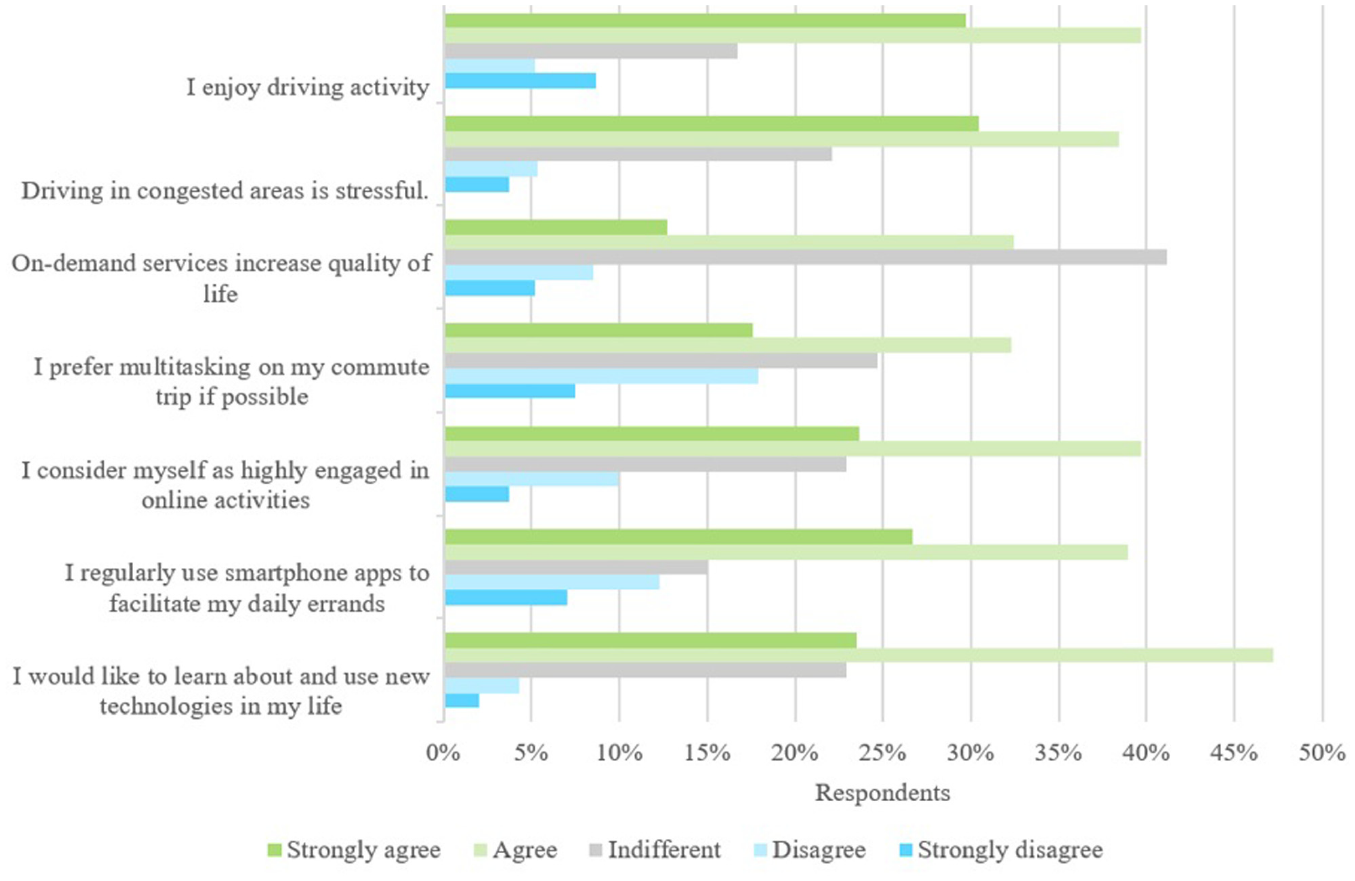
Preference for mobility options and technology usage.
Focusing on the respondents’ views toward on-demand services, Figures 2 and 3 present their responses on the concerns and benefits of ridesourcing. Six potential concerns and four potential benefits were presented to the respondents, who were asked to rank them from the highest priority (rank 1) to the lowest priority. As presented in Figure 2, data privacy was ranked as the top concern (ranked as the #1 concern by 35% of the respondents, as the #2 concern by 17%), followed by higher travel time (ranked as the #1 or #2 concern by 46% of the respondents). The respondents were the least concerned about unreasonable fares and complicated service request procedures. Figure 3 shows that most respondents valued cost-effectiveness and less driving stress as the top benefits of ridesourcing. The benefits of multitaskability and on-demand service received a relatively lower ranking from the respondents.
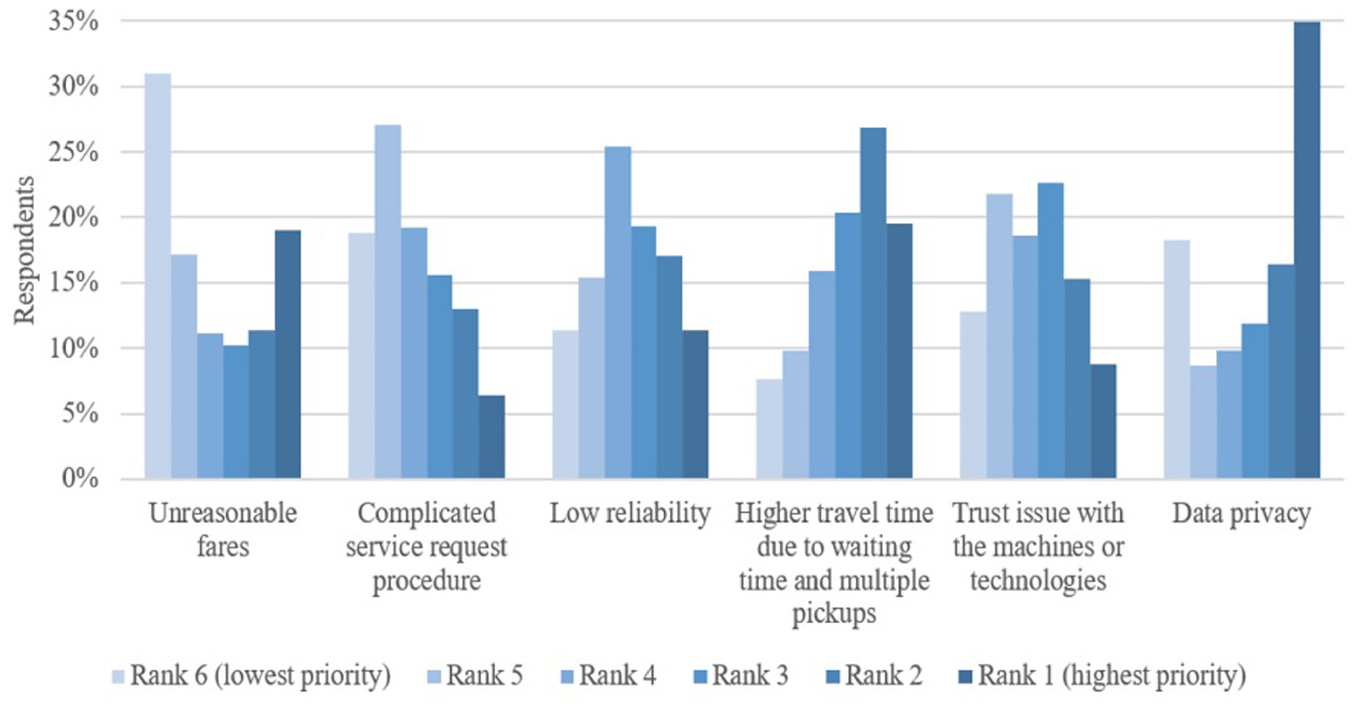
Concerns about on-demand services.
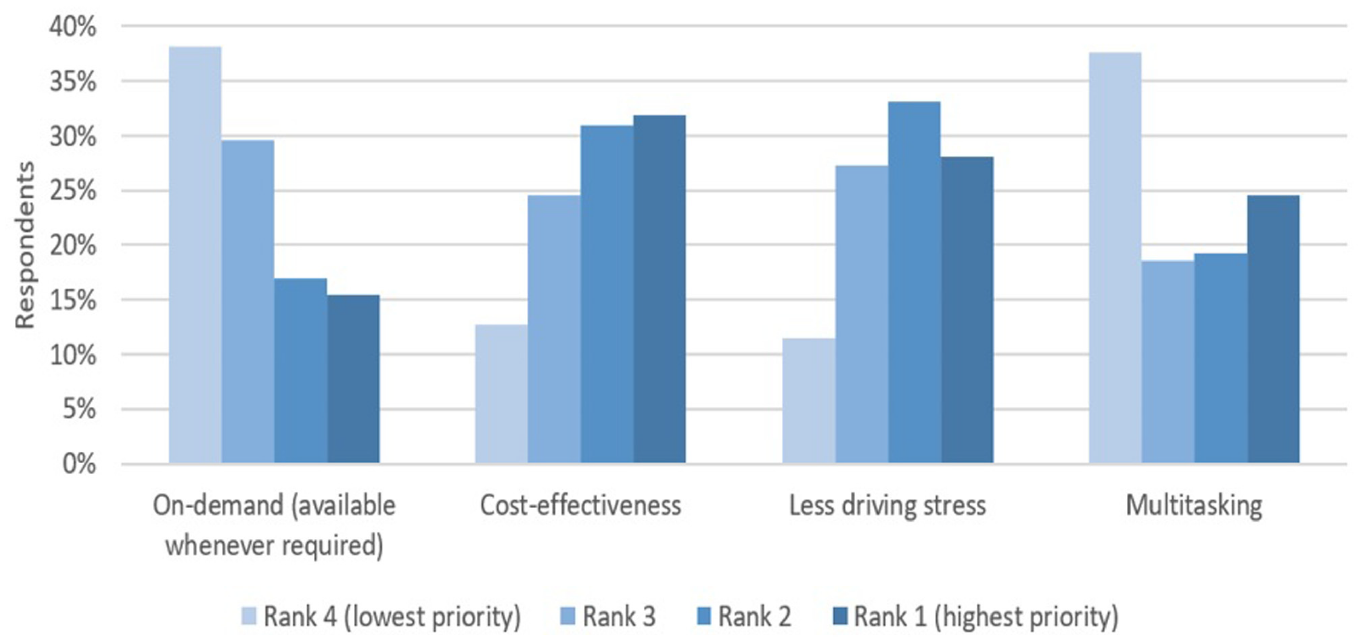
Benefits of on-demand services.
Model Results
The ICLV model was estimated using the PandasBiogeme package in Python developed by Bierlaire ( 22 ). Figure 4 presents the path diagram. The measurement component of the ICLV identified three latent variables from a set of attitude indicators introduced to the model. These indicators significantly contributed to the latent factors and were used to define the associated attitudes. The structural equation component of the ICLV estimates the connection between the identified attitudes and the socioeconomic and demographic attributes. The model’s choice component estimated the respondents’ decision to pay for AVs based on the latent attitudes, socioeconomic and demographic characteristics, and commute trip attributes.
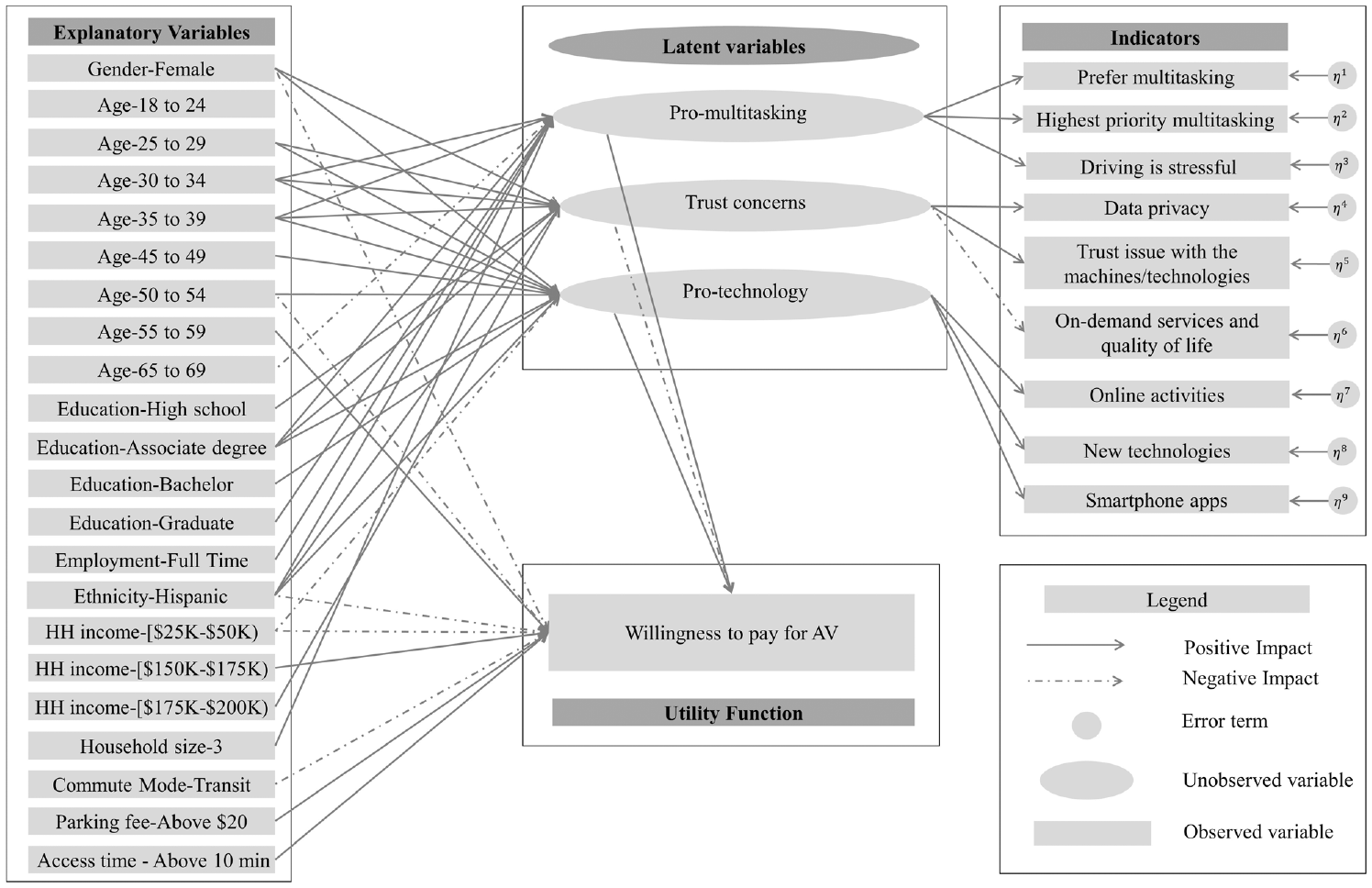
Integrated choice and latent variable model path diagram.
Focusing on the
Table 2 presents the ICLV model results. The
Integrated Choice and Latent Variable Model Result
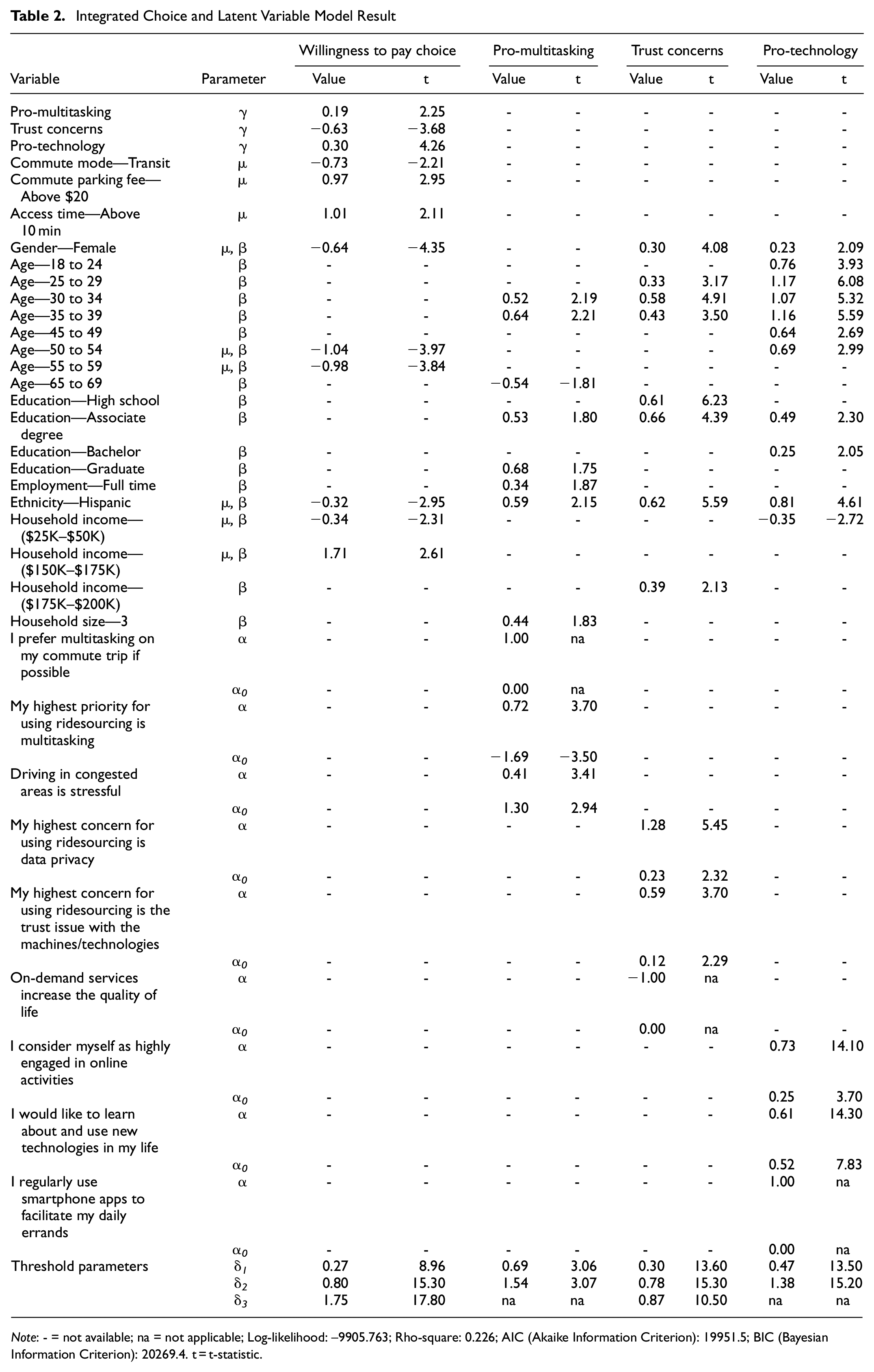
Note: - = not available; na = not applicable; Log-likelihood: –9905.763; Rho-square: 0.226; AIC (Akaike Information Criterion): 19951.5; BIC (Bayesian Information Criterion): 20269.4. t = t-statistic.
Focusing on the
In relation to the
The
This also indicates the potential market of AVs for these users. It is reasonable to expect higher or early adoption of AVs in areas with high parking costs and/or demand and in areas with low transit accessibility.
Commuters with a favorable view toward pro-multitasking and pro-technology attitudes were found with higher WTP. In contrast, concerns about technology and data privacy would have negative impacts on the WTP for AVs.
Focusing on the socioeconomic and demographic characteristics, females, those with low income ($25K to $50K annually), commuters between 50 to 59 years old, and Hispanics showed less WTP for AV technology, whereas high-income earners ($150K to $175K annually) were more likely to exhibit higher WTP.
Figure 5 shows the magnitude of impacts for the variables in the ICLV model, where the y-axis represents the size of coefficients. For the
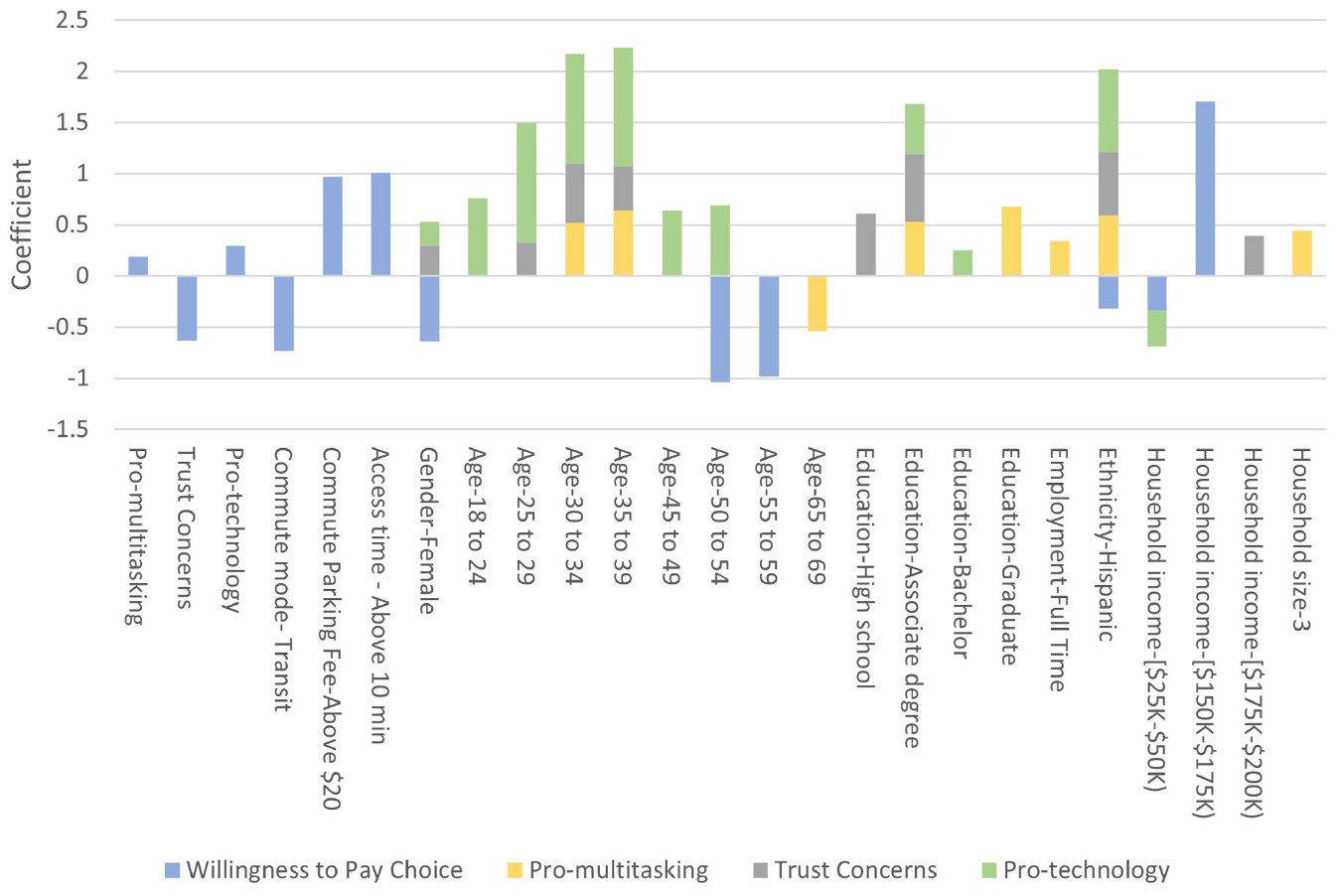
Magnitude of impacts for the variables in the integrated choice and latent variable model.
In relation to the
Focusing on market segment analysis, it seems that females exhibited a significant though small magnitude of attitude toward pro-technology; they also showed significant trust concerns compared with males, which may lead to lower WTP overall among females. Adults between 18 and 55 years old all indicated pro-technology attitude, whereas trust concerns seemed to be prevalent only among adults between 25 and 40 years old, which may indicate higher WTP among middle-aged users. Interestingly, people with lower education attainment (high school graduates or associate degrees) were more likely to have trust concerns, though the negative effect may be offset to some extent by the pro-technology attitude among those with associate degrees. Hispanics showed high magnitudes of pro-multitasking and pro-technology attitudes as well as trust concerns, though they generally showed lower WTP compared with other segments.
Discussion
Focusing on the identified attitudes, the results showed that commuters with a favorable perspective toward
Moreover, the model results showed that although a favorable view toward
Besides the influences from the latent attitudes, there were mediation effects reflected through the attitudes from the socioeconomic and demographic attributes. For example, although female commuters expressed a favorable view of new technologies, they were less inclined to pay extra for AVs. This reluctance could be attributed to their notable concerns about data privacy and trust issues with the technology.
Age was not found to be a direct determinant factor in the decision to pay for AVs among those between 18 and 49 years old. However, there were indirect effects through the latent attitudes. Model results showed that
Focusing on ethnicity, Hispanics were less likely to pay more for AV technology. This may originate because they were more likely to exhibit greater
Interestingly, educational attainment did not show any direct impacts on the decision to pay for AVs. There were significant indirect effects mediated through the latent attitudes. Model results indicate that the favorable view toward new technologies among individuals with a bachelor’s degree and the motivation for multitasking among respondents with a graduate degree would lead to a higher WTP for AVs. Commuters with an associate degree also did not reveal a significant preference to pay for driverless cars, but their underlying motivation might be different from their peers. For this group of commuters, significant
In view of commuters’ existing mobility profiles, the findings showed that transit commuters were less likely to pay for driverless cars unless they were from communities with poor transit accessibility. Access time to transit (10 min or above) showed the second-highest positive impact (next to income) on the decision to pay for AVs. This finding underscores the importance of transit-oriented design and development to encourage transit usage and promote sustainability. Similarly, high parking costs ($20 or above) would also motive commuters to pay for AVs. This finding indicates the market demand for parking at remote locations, which has implications for land development and potentially increasing VMT as a result of empty vehicles, especially in areas with high parking costs.
A comparison of the findings with the literature showed a consistent pattern in relation to some contributing factors on the WTP for AVs and also revealed new information about this decision. Similar to the findings of previous studies ( 3 , 5 , 8 , 11 ), this paper found that females, those with low income ($25K to $50K annually), and individuals between 50 and 59 years old have less interest in paying for AVs, whereas technology-savvy respondents, those with a greater number of household members, and high-income earners ($175K to $200K annually) had high inclination to pay for this technology. On the other hand, this paper sheds light on the factors contributing to the commuters’ WTP decisions that have not been reported for the general population. In view of latent variables, trust concerns and pro-multitasking attitudes were found to be highly influential on the commuters’ WTP decision. It should be noted that although a few studies mentioned the impact of multitaskability and concern about technology on commuters’ mode choice behavior, this paper contributed to the literature by estimating the impact of these factors on the WTP decision. In view of mobility profile, this study, for the first time, reported that commuters with poor public transportation access and those who pay a significant amount of money for parking tend to pay higher prices for AVs, whereas transit commuters tend to put a lower value on this technology.
Conclusions
Although commuters were expected to be among the early adopters of the AVs, there is a lack of knowledge about their WTP for this technology. Using data from a consumer survey conducted in the United States, this study aims to fill the knowledge gap and investigate commuters’ decision to pay for AVs while incorporating their attitudinal construct. The survey collected socioeconomic and demographic attributes and mobility profile characteristics such as commute distance, commute mode, and commute parking cost. The study also presented several attitudinal questions to the respondents to understand their preference for mobility options, AV technology, and on-demand services.
An ICLV model was applied in this study because of its robust performance in modeling choice behavior while integrating the users’ attitudes. Three latent attitudes were identified that showed significant influence on the WTP decision. Specifically, positive views toward technology and multitasking would lead to higher WTP, whereas trust concerns would lower the WTP for AVs. The magnitude of impacts from trust concerns was much higher than the other two attitude variables. Therefore, it would outweigh the positive influence from pro-technology and pro-multitasking attitudes. This was evident for various market segments, including females, younger generations, those with associate degrees, and Hispanics.
Leveraging the advantage of simultaneous estimation of the attitudes and choice behavior, this study also provides in-depth insights and comprehensive views on the impacts of commuters’ socioeconomic and demographic attributes on the decision to pay for AVs. Particularly, although age and educational attainment did not directly affect the WTP behavior, they played important roles in this decision with significant effects mediated through the latent attitudes. These in-depth analyses provide useful insights that can help develop customized marketing strategies for different market segments according to their specific and unique preferences and concerns. These strategies and policies would be much more effective in addressing customer needs and concerns than generalized programs. The study results provide useful information that may help manufacturers and service providers better design the products and services to meet consumers’ needs. The findings from this study will also equip planners with a better knowledge to understand and estimate the potential market for AV technologies and to facilitate policy and investment decisions with a more accurate prediction of the potential impacts of AV technologies.
One limitation of this study was the lack of information on land-use attributes. Future work will focus on incorporating the land-use attributes in the modeling framework to obtain a more comprehensive view of the decision to pay for AVs. Future studies may also consider developing a choice experiment to capture the WTP for AV and compare the result with the direct survey approach used in this study. Considering the dynamic nature of people’s decisions, future studies may repeat the survey frequently to measure changes in the inclination toward AVs.
Footnotes
Author Contributions
The authors confirm contribution to the paper as follows: study conception and design: Alireza Rahimi, Xia Jin; data collection: Xia Jin; analysis and interpretation of results: Alireza Rahimi, Ghazaleh Azimi; draft manuscript preparation: Alireza Rahimi, Xia Jin. All authors reviewed the results and approved the final version of the manuscript.
Declaration of Conflicting Interests
The author(s) declared no potential conflicts of interest with respect to the research, authorship, and/or publication of this article.
Funding
The author(s) disclosed receipt of the following financial support for the research, authorship, and/or publication of this article: This work is funded by the research office of the Florida Department of Transportation (BDV29 977-47).

The opinions, findings, and conclusions expressed in this publication are those of the authors and not necessarily those of the Florida Department of Transportation or the U.S. Department of Transportation.