







Abstract
This study presents a computational fracture modeling approach for predicting highly nonlinear viscoelastic cracking, such as fatigue damage, in asphalt mixtures and pavements. The modeling approach is presented and validated against field performance data from the FHWA-Accelerated Loading Facility (ALF) performance test sections. To that end, five mixtures differing either in the type of binder used or the amount of reclaimed asphalt pavement and reclaimed asphalt shingles were selected to assess their linear viscoelastic behavior, fracture properties, and field performance. A nonlinear viscoelastic cohesive zone fracture model was used along with a Gaussian distribution damage evolution to characterize the mixture fracture properties through a numerical-experimental calibration process. Individual mixture characteristics were then used as inputs to analyze the ALF pavement structure, and the fatigue response was predicted and compared with the field performance data for model validation. Although there are several model limitations to improve, the good agreement in performance rank order among test lanes demonstrates the capability and validity of the modeling approach. This implies that the computational modeling approach attempted in this study could potentially be used to analyze and design pavements in a mechanistic manner. This could be done with just a few laboratory tests for mixture properties such as viscoelastic dynamic modulus and cohesive zone fracture parameters.
Keywords
Damage within the asphalt pavement structure is induced by a multitude of interconnected phenomena that make design a challenging task. Fatigue cracking is one of the major distresses that can degrade the structural performance and life of the pavement. Assessing the fatigue failure in bituminous pavements is a complex task as the fatigue usually starts at the microscale, which is strongly influenced by the mixture microstructure and the constituents in the mixture. Owing to the viscoelastic nature of its constituents, a bituminous mixture exhibits strong rate-dependent behavior in both linear and nonlinear regimes. Given the inelastic and well as temperature- and rate-dependent behavior of bituminous materials, a purely mechanistic pavement design and analysis approach is a difficult problem which has been of interest to many researchers for several decades. The current study primarily focuses on fatigue cracking distress observed within flexible pavements.
One of the earliest pavement design approaches was based on layered-elastic analysis, incorporating analytical solutions under circular tire loads. A major advance was later made through the AASHO road test, which generated the first interim design guide in 1961. Several revisions were made over the following decades, eventually resulting in the AASHTO 1993 pavement design guide. Partly as a result of the empirical nature of the design equations and distress calculation, a major shift toward a mechanistic and performance-based evaluation of the pavement was sought. To that end, the Mechanistic-Empirical Pavement Design Guide (M-E PDG) was developed through the National Cooperative Highway Research Program (NCHRP) 1-37A project. This research, in addition to enhancements over subsequent years, led to the development of the AASHTOWare Pavement ME design software for analysis of new and rehabilitated pavements. Although widely used by many state and highway agencies in implementing and evaluating different pavement design strategies, it still poses some limitations. For example, the conversion from predicted damage to pavement distress is done with empirical transfer functions.
In recent years, many researchers have focused on the mechanistic evaluation of pavement distresses and the use of the finite element method (FEM) ( 1 ). Depending on the mechanistic model used or implemented for evaluating the distresses, there are different pavement design approaches. Of note are the Pavement Analysis using Nonlinear Damage Approach (PANDA) and Layered Viscoelastic Critical Distress (LVECD or FlexPAVETM) pavement analysis tools that are based on the continuum damage mechanics approach. The PANDA method for flexible pavement analysis focuses on the damage within the asphalt concrete (AC) layer and permanent deformation in all layers ( 2 – 4 ). The method incorporates a nonlinear viscoelastic-viscoplastic-viscodamage model for the AC layer and plasticity-based models for the underlying layers to predict fatigue and rutting distresses within the pavement structure. The PANDA method has been quite successful in predicting laboratory level and field-level distresses ( 5 , 6 ). FlexPAVETM uses a 3D-FEM model of the pavement to simulate stress-strains under a moving load and then uses continuum damage models to predict the fatigue and rutting distresses ( 7 – 13 ). The fatigue damage analysis is based on the simplified viscoelastic continuum damage (S-VECD) model for the AC layer ( 14 , 15 ). The main components of the S-VECD model include a damage-characteristic curve for the AC mixture and its failure criterion which are typically obtained through laboratory tests such as direct cyclic tension tests on cylindrical specimens. One major disadvantage of the continuum damage mechanics-based model is that it does not consider or simulate the physical creation of internal boundaries or cracks within the body. Rather, damage is represented by a decrease in stiffness or material integrity in the bulk state. Nonetheless, the continuum damage mechanics-based modeling approaches are quite powerful tools for distress analysis given their numerical stability and computational efficiency.
Another powerful technique for evaluating fatigue cracking response within the AC pavement structure is the use of fracture mechanics-based approaches. The advantage of using these models is that one can explicitly define damage in relation to physical cracks within the material. To use such an approach, one needs to know the fracture process zone for the material and the crack progression criterion to fully describe the damage evolution within a given material. Within the fracture mechanics-based approach, there are several methods to model the crack initiation and propagation. The cohesive zone (CZ) modeling ( 16 , 17 ) approach has been used quite extensively for defining and characterizing the fracture processes within the AC ( 18 , 19 ). Owing to the complex heterogenous composition and the time- and rate-dependent behavior of the AC, the viscoelastic response during fracture has been characterized by micromechanical, nonlinear viscoelastic cohesive zone (NVCZ) models ( 20 – 24 ). Laboratory scale experiments have been integrated with numerical simulations along with digital image correlations (DIC) to capture the localized fracture process zone within the AC mixtures ( 25 – 27 ). The numerical simulations were carried out using finite element models incorporated with the viscoelastic CZ to analyze the fracture process zones within the asphalt mixtures. The results indicate sensitivity to rate, temperature, and mixed mode (mode-I and mode-II failure) failure response. Based on the hypothesis that most of the microscale cracks occur within the matrix phase known as the fine aggregate matrix (FAM), several investigations were carried out on the FAM phase of the mixture to understand its influence on the fracture resistance characteristics of the mixture ( 28 – 30 ). Results from these studies indicate rate-, temperature-, and mode-sensitive fracture responses similar to those observed for mixtures. Microstructural influence has also been investigated ( 31 ) based on CZ models. The fatigue distress analysis of AC pavements using the CZ models, therefore, serves as an effective tool to investigate the failure response of pavement structures ( 32 ).
Recently, Kim et al. ( 33 ) have demonstrated the efficiency in capturing the highly nonlinear rate-dependent fracture behavior of bituminous materials by using the NVCZ model incorporated with a novel Gaussian damage evolution function. They showed that the rate-dependent fracture within FAM and asphalt mixture can be characterized by using a unique set of fracture parameters. They also demonstrated the applicability of the Gaussian damage model to assess the pavement fatigue response through a parametric analysis by varying several key pavement design factors. As an extended effort from the study by Kim et al. ( 33 ), in particular for model validation-calibration, this study used the NVCZ fracture model to identify the mixture-specific fracture properties of five different AC mixtures used in the FHWA-Accelerated Loading Facility (ALF) test sections under fatigue damage.
Study Objectives and Scope
This study implements a computational fracture modeling approach for predicting highly nonlinear viscoelastic cracking such as fatigue damage in asphalt mixtures and pavements. The specific objectives of this study are summarized as follows:
integrate simple laboratory tests that can determine fundamental mixture properties (e.g., viscoelastic dynamic modulus and NVCZ fracture properties) within a finite element model that uses an advanced rate-dependent fracture model to predict the fracture process within the bituminous mixtures;
incorporate mixture properties directly into a pavement model to predict pavement damage caused by cracking, such as those that manifest via fatigue damage; and
validate the modeling approach by comparing model simulation results with actual field performance data from FHWA-ALF test lanes modeled using the FEM based on the NVCZ incorporated with Gaussian damage evolution.
Described next is the NVCZ model that is used for characterizing the mixture-specific fracture parameters for the mixtures selected from the FHWA-ALF study based on the laboratory tests conducted. Finally, the finite element modeling to identify mixture properties and to conduct pavement model simulation of the ALF sections is presented. Model simulation results are compared with ALF pavement performance data to examine the capability and validity of the modeling approach.
NVCZ Fracture Model
As outlined above, there are several approaches to modeling the fracture behavior within viscoelastic media. The current study is based on an NVCZ model proposed by Yoon and Allen ( 17 ) to effectively capture the rate-time-mode dependent fracture behavior within the bituminous mixture. The model is implemented using an algorithm that can adaptively insert the CZ elements when a critical stress state is reached within the material, a so-called extrinsic manner. This way can avoid any artificial compliance induced by other typical intrinsic CZ models and also provide vast computational efficiency as CZ elements are not embedded within the body a priori. The NVCZ model is suitable for describing the fracture process within bituminous materials as the inelastic viscoelastic damage behavior ahead of the crack tip is governed by a traction-separation law described in Equations 1 to 3.



where
E(t) is relaxation modulus of the cohesive zone (which is normally assumed to be the same as the bulk material in which the CZs are inserted) described using the Prony series representation of the generalized Maxwell model.
As depicted in Equation 3,
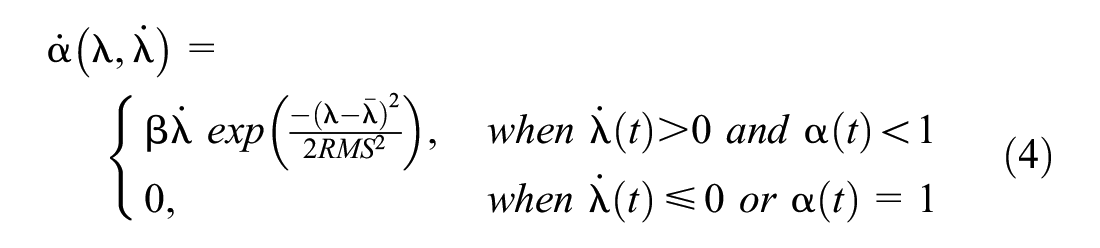
Essential to the NVCZ model described in Equation 1 is the evolution criterion for the damage parameter

where
As shown in Equation 4,
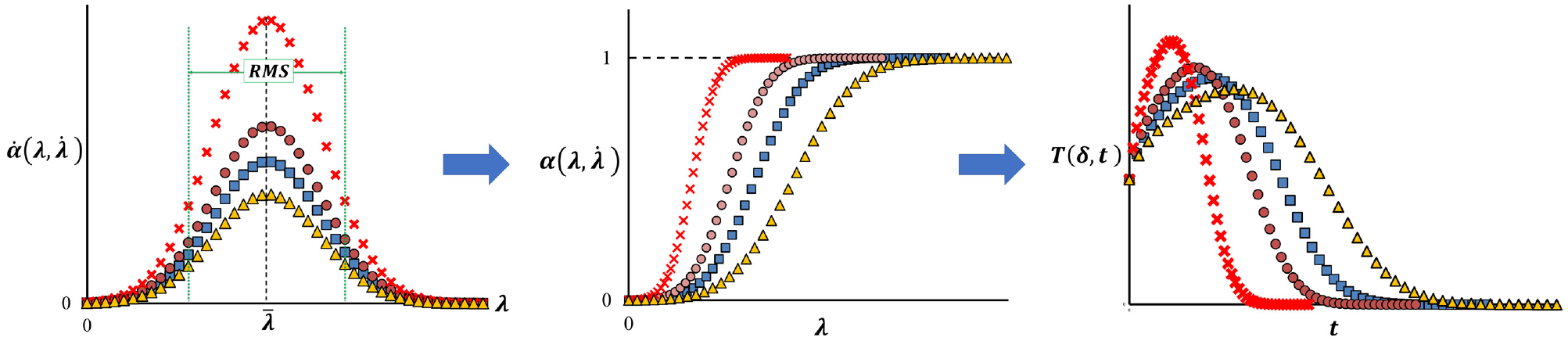
Schematic of the Gaussian damage evolution law,
Materials, Tests, and Mixture Properties
The materials selected for the current investigation are from an ongoing study at FHWA-ALF. In 2013, test sections with various mixtures that contained high levels of reclaimed asphalt pavement (RAP) or reclaimed asphalt shingles (RAS) were constructed. For the current study, five mixtures (Lane-3, Lane-5, Lane-6, Lane-7 and Lane-8) were selected from the 2013 ALF study. The various lanes differed either in the base binder used within the mixture or the reclaimed binder ratio coming from RAP or RAS as described in Table 1. Two PG binders (PG 64-22 and PG 58-28) were selected and were obtained from the same source refinery. The PG 64-22 binder was used in Lanes 3, 5, and 6 and the PG 58-28 binder was used in Lanes 7 and 8. Also, the RAP used was obtained from a single source, and similarly the RAS was also from a different, but single source. All mixtures have a nominal maximum aggregate size of 12.5 mm and their corresponding mixture properties, and volumetrics are depicted in Table 1.
Properties and Volumetrics of the Mixtures Selected
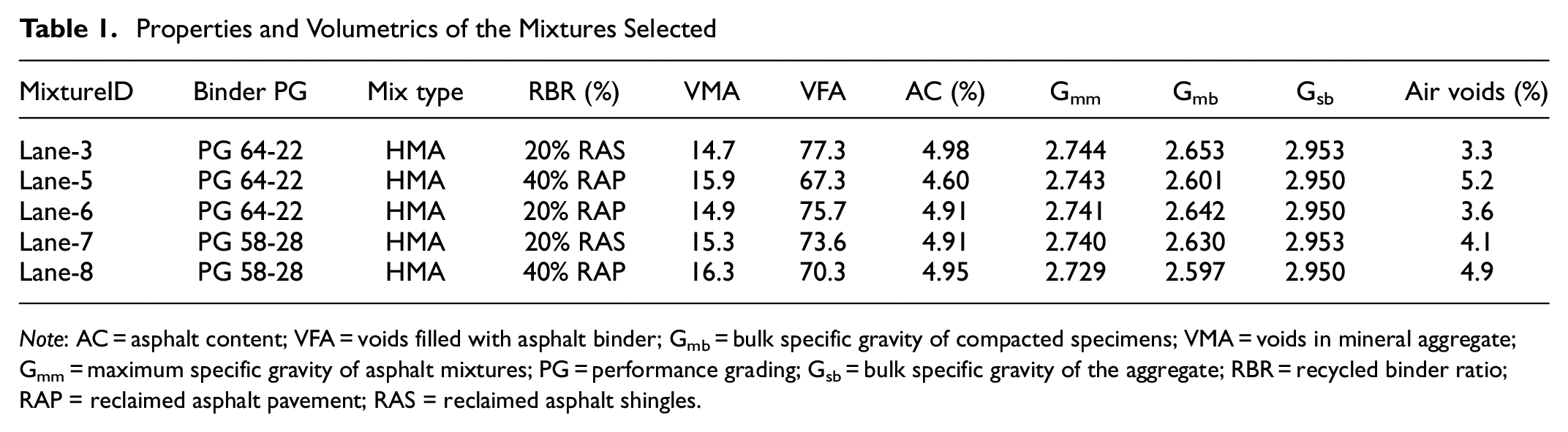
Note: AC = asphalt content; VFA = voids filled with asphalt binder; Gmb = bulk specific gravity of compacted specimens; VMA = voids in mineral aggregate; Gmm = maximum specific gravity of asphalt mixtures; PG = performance grading; Gsb = bulk specific gravity of the aggregate; RBR = recycled binder ratio; RAP = reclaimed asphalt pavement; RAS = reclaimed asphalt shingles.
It should be noted that each of the mixtures depicted in Table 1 was obtained during the construction stage, where the loose mixture was collected and placed in an air-tight sealed bucket and later stored in an environmentally controlled chamber to minimize any further aging of the mixtures. Before the laboratory experiments, a specific mixture was reheated in the oven and compacted with a gyratory compactor to obtain the target air voids of 7.0% ± 0.5%. The laboratory-prepared mixtures were only subjected to short-term aging conditions. The laboratory experiments conducted to characterize the properties for each of the mixtures depicted in Table 1 is described next.
Linear Viscoelastic Properties of Mixtures
To characterize the linear viscoelastic behavior of the mixtures shown in Table 1, dynamic modulus experiments were conducted on cylindrical specimens in accordance with the AASHTO TP 132 standard. The specimens were subjected to a dynamic, haversine strain between 85 and 115 microstrain at frequencies of 25, 10, 5, 1, 0.5, and 0.1 Hz and the experiment was repeated at temperatures of 4°C, 21°C, 38°C, and 45°C. Later, master curves of dynamic modulus (|E*|) and the phase angle (δ) for each mixture were obtained at a reference temperature of 21°C using the time-temperature superposition principle. As an example, Figure 2, a and b , depicts the |E*| and δ master curves, respectively, as a function of frequency at the reference temperature for three replicates of the Lane-3 mixture. The specific master curve data were then used to obtain the Prony series parameters described in Equation 3, which represents the linear viscoelastic behavior of the mixture using the methodology outlined by Park and Schapery ( 34 ). Similarly, the Prony series parameters were obtained for each of the mixtures used in the current study. The resultant fit for the |E*| and δ for all the mixtures is shown in Figure 2, c and d , respectively. One can observe in Figure 2, c and d , that Lane-8 mixture is softer than all other mixtures at low frequency (high temperature). The two RAS mixtures (Lanes 3 and 7) had lower phase angles compared with the other mixtures. Lane-7 showed much lower phase angles compared with Lane-8, while they had the same virgin binder attributing the difference to RAS versus RAP inclusion.
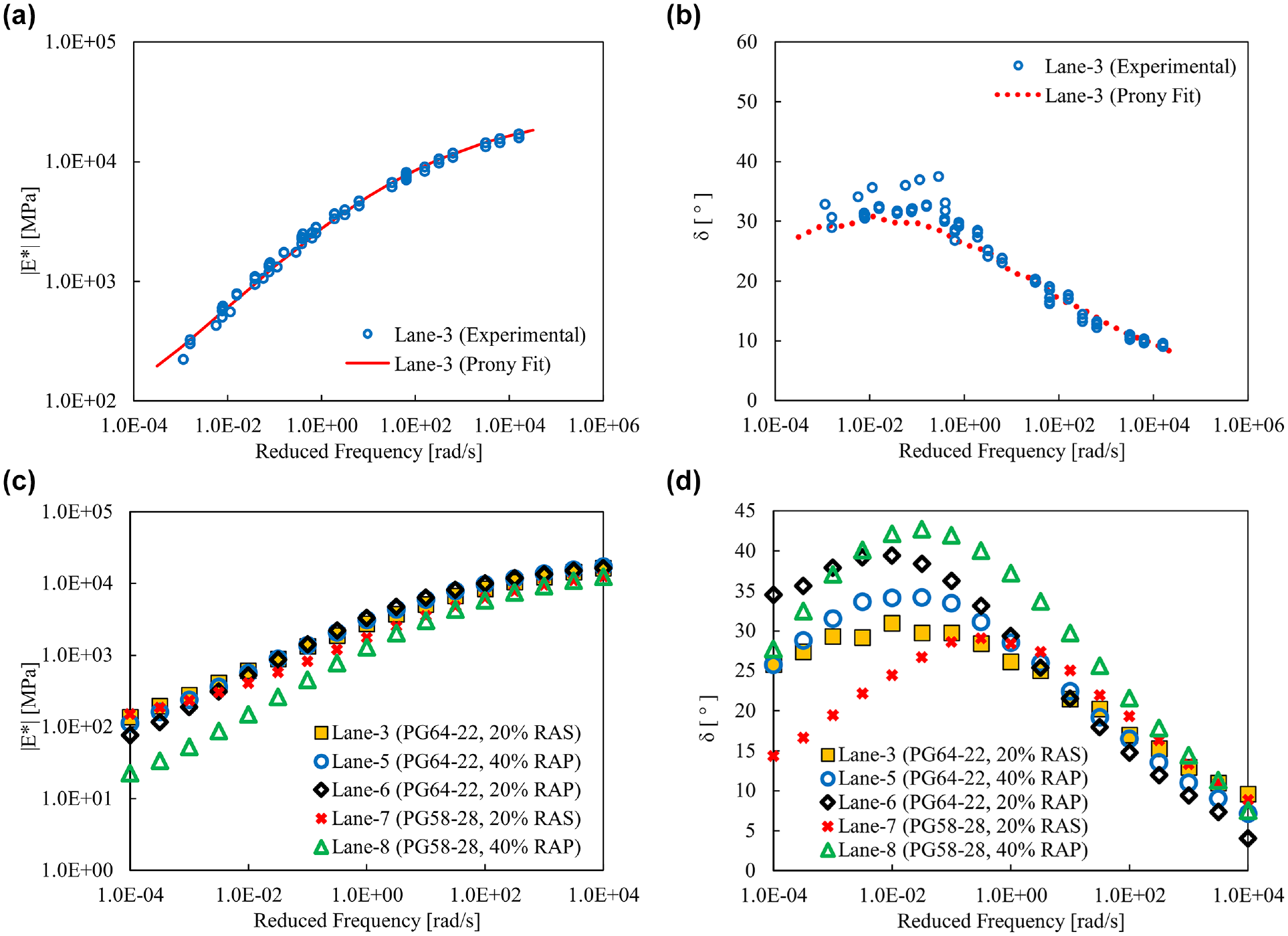
Prony series fit to the experimental data: (a) |E*| master curve; (b) δ master curve; (c) resultant fit for the |E*| for all the mixtures; and (d) resultant fit for the δ for all the mixtures.
Semicircular Bending (SCB) Test
The current study used the semicircular bending (SCB) experiment at 25°C (I-FIT) to obtain the fracture properties of the selected mixtures. The SCB experiment was performed in accordance with AASHTO TP 124. The test was conducted on four replicates at a loading rate of 50 mm/min.
Finite Element Modeling for NVCZ Fracture Properties of Mixtures
Indices such as fracture energy (FE) and flexibility index (FI) derived from the SCB test are often used to evaluate mixtures, to conduct balanced mix design for pavements, or both. At times, the indices might not be enough to delineate the mixture performance, especially when the pavement system is considered as a whole. This situation is often encountered when using different RAP/RAS content in the mixture as a result of a lack of understanding with regard to diffusion of RAP/RAS binder with the virgin binder. Nonetheless, the SCB data can still be used to obtain the fracture properties of mixtures in a more mechanistic sense by coupling the experimentation with its numerical modeling that incorporate fundamental fracture properties. The fracture simulations of the SCB specimen allow one to investigate the damage process in a progressive manner by incorporating the appropriate fracture model where crack initiation and propagation can be captured more effectively.
The current study used the NVCZ model incorporating the rate-dependent Gaussian damage evolution law as described in Equations 1 through 5 to characterize the fracture properties of the mixtures depicted in Table 1. Toward that end, the fracture parameters for each of the mixtures were obtained through a calibration process in which numerical results from SCB simulations were matched to the laboratory data. For each mixture, the numerical simulations were conducted using a finite element model of the SCB testing. Figure 3 shows the SCB model, and the mesh structure used, along with the boundary conditions that were applied to the model specimen. It should be noted that the mixture is assumed to be a homogenous viscoelastic material and the heterogeneity caused by the presence of aggregates and voids was not exclusively considered to simplify the modeling approach. A linear vertical displacement boundary condition at the rate of 50 mm/min was applied to the uppermost node, as depicted in Figure 3.
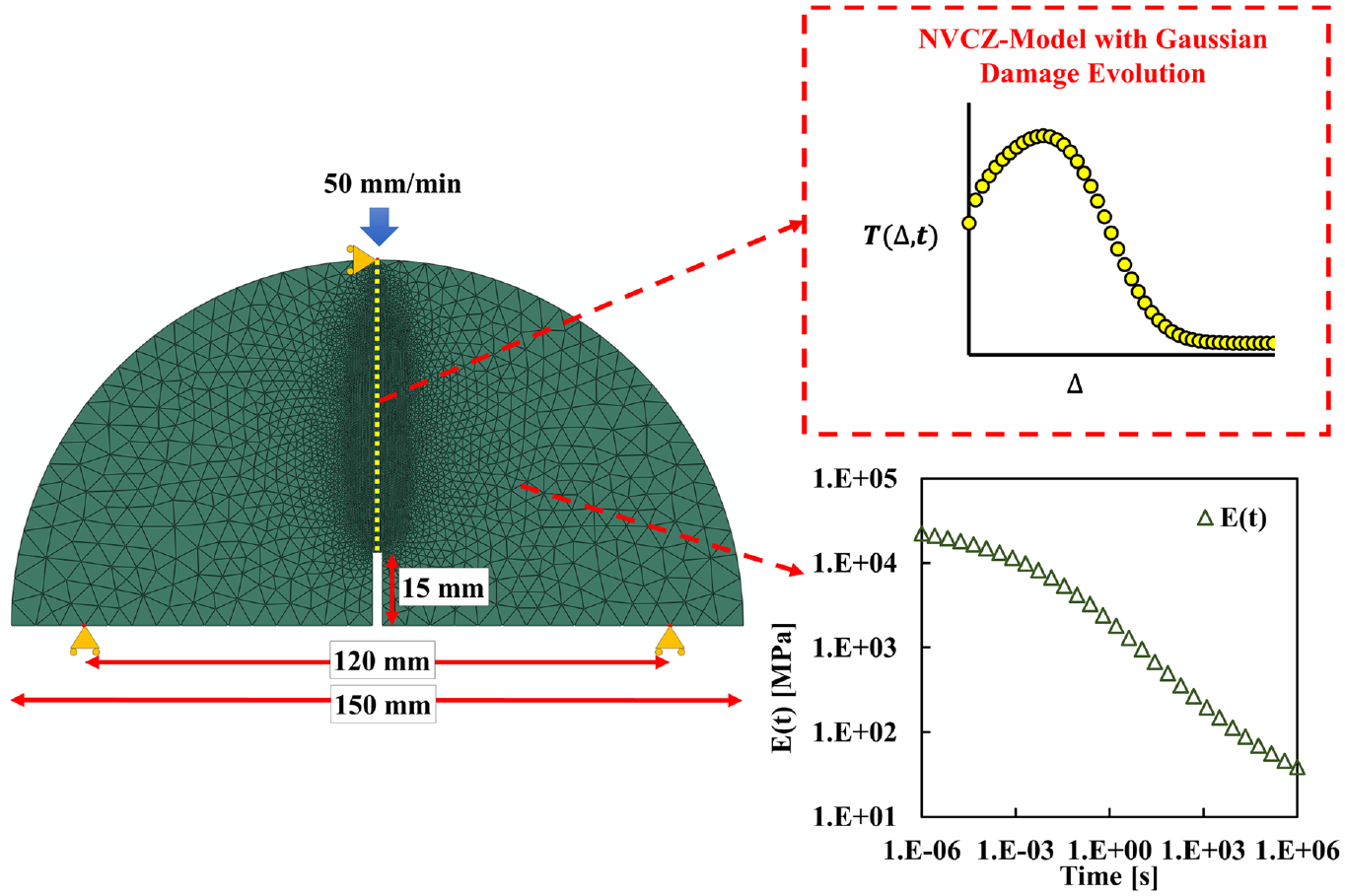
Semicircular bending (SCB) model indicating the loading and boundary conditions along with the material property assigned for conducting the simulations.
To capture the fracture characteristics of the mixture, NVCZ elements were allowed at the centerline of the SCB model as depicted in Figure 3. The modeling algorithm used for SCB fracture can adaptively insert the NVCZ elements when a critical stress criterion is reached. For the current study, the NVCZ elements were restricted to the centerline to reduce the computational cost. The NVCZ elements follow the rate-dependent Gaussian damage evolution law, as described in Equations 4 and 5, and the corresponding traction-separation relation is depicted in Figure 3. A mesh size of 0.5 mm for the NVCZ elements was considered in this study based on earlier convergence study results ( 33 ). One can, therefore, observe a dense mesh structure along the centerline of the SCB model. Since the microstructure characteristics and its influence on the fracture simulations are not considered in this study, a homogenous isotropic viscoelastic property (i.e., relaxation modulus E(t) at 25°C) was assumed for the entire specimen and the same bulk viscoelastic properties were applied to the NVCZ model depicted in Equation 1.
During the calibration process, a series of SCB simulations were performed by sequentially updating the NVCZ model parameters
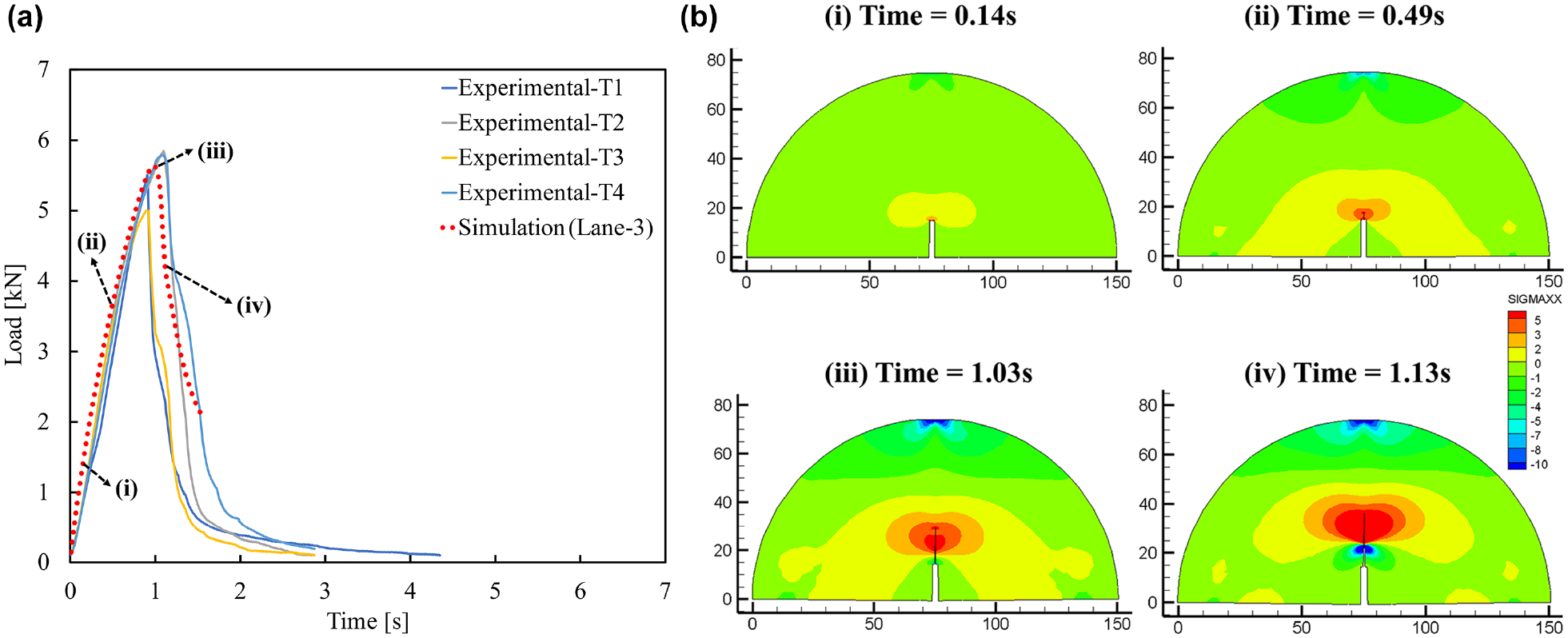
Results of the nonlinear viscoelastic cohesive zone (NVCZ) model calibration process using the semicircular bending (SCB) sample: (a) experimental results versus model simulation results; and (b) horizontal stress contour plots at different stages of loading.
NVCZ Model Parameters Obtained via the Model Calibration
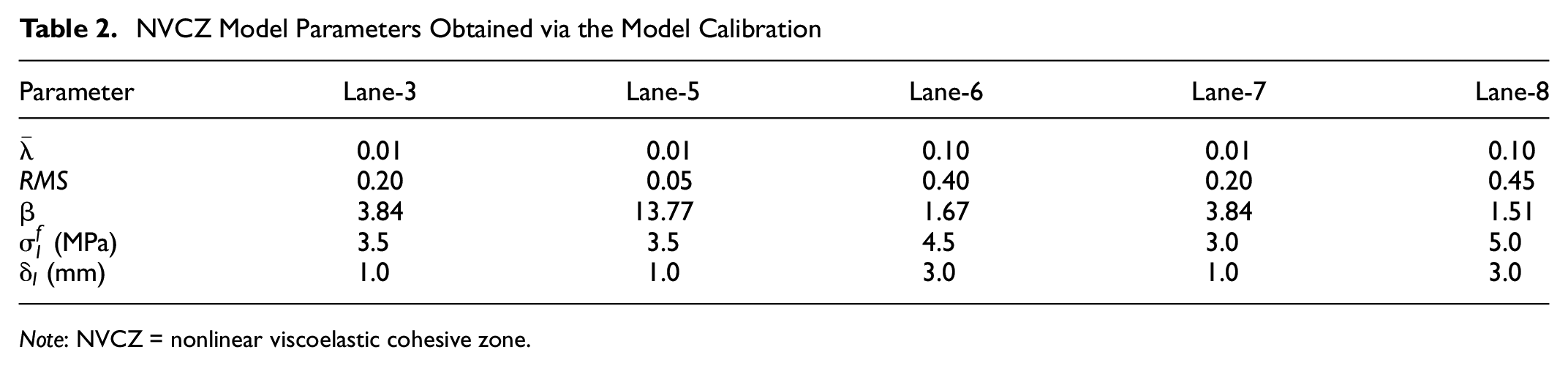
Note: NVCZ = nonlinear viscoelastic cohesive zone.
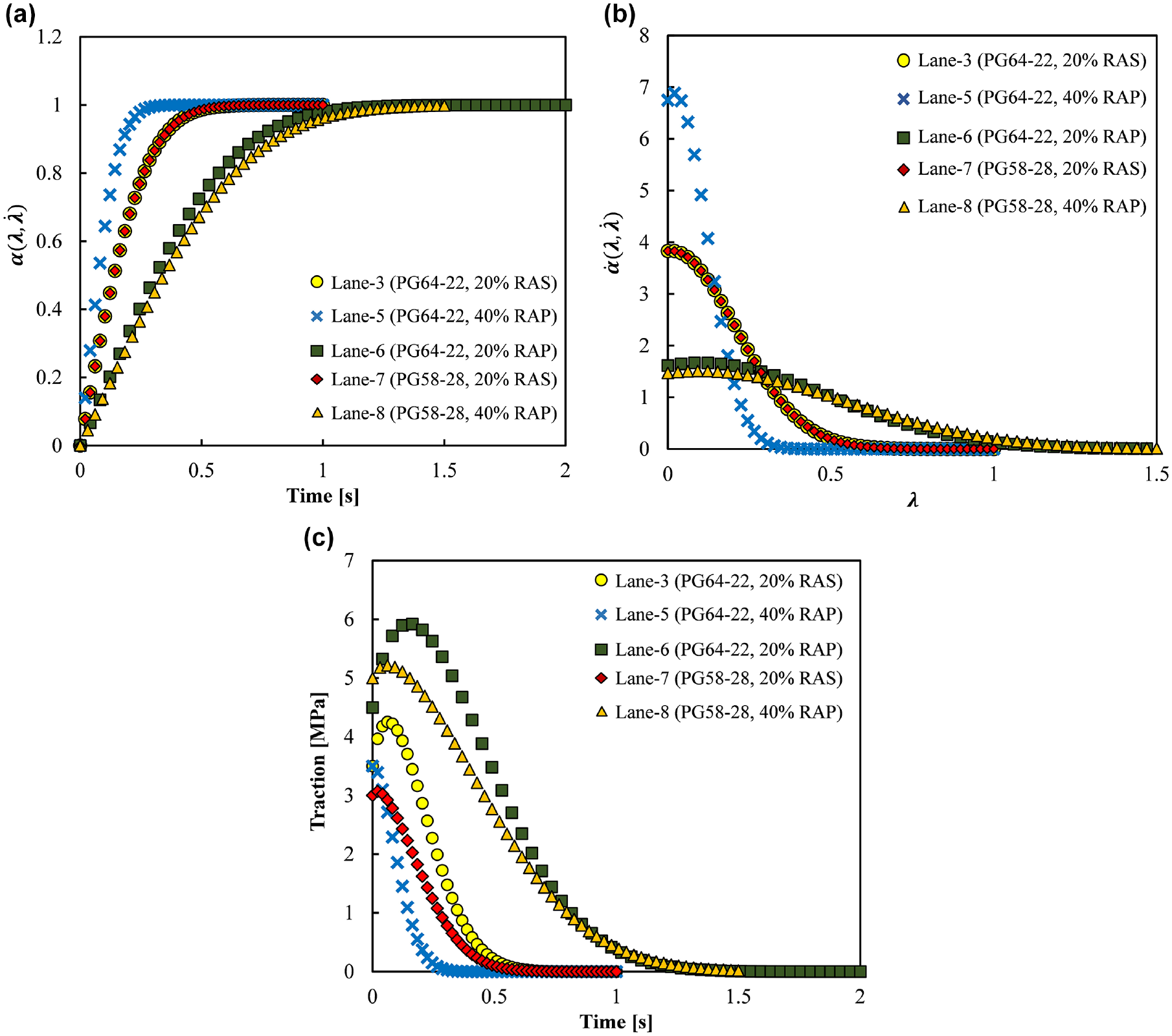
Plot of the Gaussian damage evolution function for different mixtures depicted in Table 2: (a)
FHWA-ALF Test Sections: Field Performance and Model Prediction
The field performance results are from the FHWA-ALF test sections constructed in 2013. Figure 6a shows a pavement section and the tire configuration, and Figure 6b depicts the loading frame. A single tire (425/65R22.5) with a load of 64.5 kN (14.5 kip) was applied. The carriage travels at 16.9 km/h (10.5 mph), covering a loaded area of 13.72 m (45 ft) long and 1.02 m (40 in.) wide. It should be noted that the fatigue loading shown in Figure 6 was applied two to three years after the initial date of ALF pavement construction.
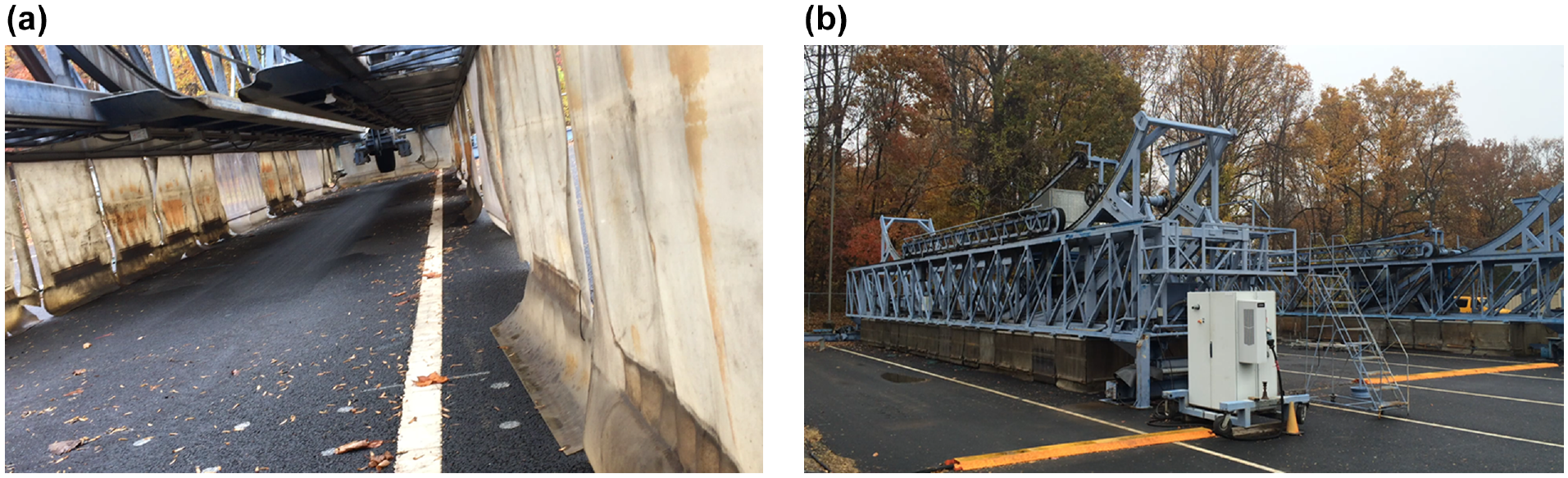
Description of the FHWA-ALF: (a) section of the pavement subjected to loading; and (b) loading frame.
Modeling Fatigue Performance of the FHWA-ALF Test Sections
Once the fracture characteristics of individual mixtures are established through the experimental-numerical calibration process of the SCB, these NVCZ model parameters represent the fracture resistance characteristics of individual mixtures. The NVCZ fracture parameters of the AC mixture, along with individual layer properties, can then be used as inputs within a pavement model to predict the performance of the structure. To simulate fatigue damage response more appropriately, repeated loading conditions are applied.
A 2D model of the ALF pavement cross section is generated using triangular mesh elements, as shown in Figure 7. The pavement section consists of three layers, the same as the ALF test section described earlier, with a bituminous surface layer (101.6 mm thickness) over a crushed aggregate base (558.8 mm thickness) and an A-7-6 soil subgrade (635 mm thickness). This pavement configuration is the same regardless of the surface mixture type used. The viscoelastic properties for the surface layer are provided in the form of the relaxation modulus E(t) using its Prony series representation (Figure 2), and the base and subgrade layers were assumed to be linear elastic with layer properties as follows:
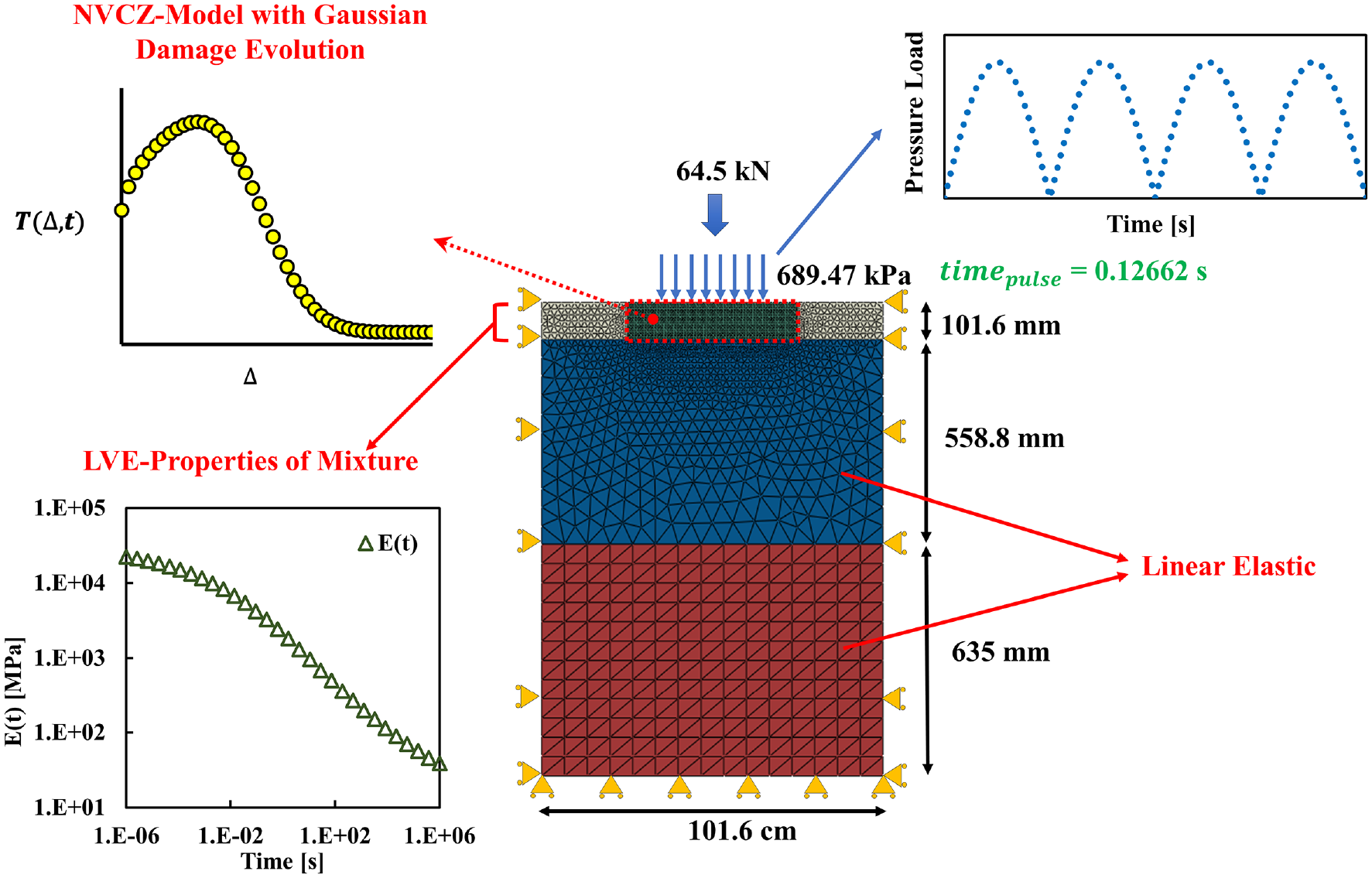
Description of the ALF pavement model along with the boundary conditions and the loading and individual layer material behavior.
Model Simulation Results and Discussion
Figure 8 shows an example of the damage evolution within the critical region for the ALF pavement section of Lane-7 mixture. Figure 8a shows the horizontal stress contour plot within the critical region. One can observe that as the stress state within the region reaches a critical value, NVCZ elements are automatically inserted to depict the fatigue cracking behavior. The number of such elements being inserted is shown to be growing as the loading cycles increase indicating progressive damage within the critical region. The damage within the critical region caused by the cyclic loading condition is predicted from the NVCZ elements and the internal damage parameter
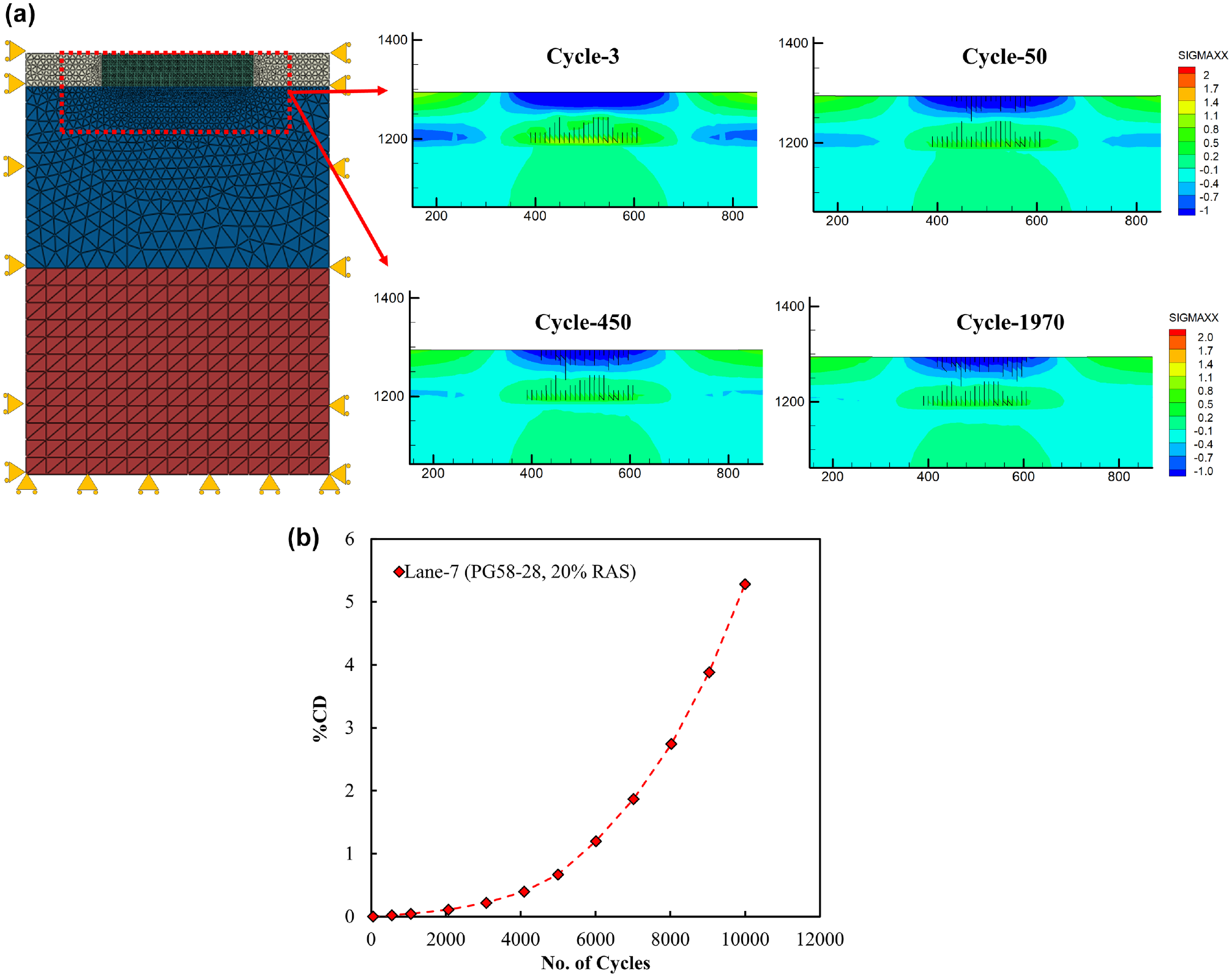
ALF section simulation with Lane-7 mixture: (a) horizontal stress contour within the critical region; and (b) cumulative damage accumulated over 10,000 cycles (%).
Figure 9a shows the field performance data for the five ALF test sections. The figure shows the accumulated cracking on the surface of the ALF pavement section, and data begins when the first cracks appeared on the surface of the pavement. As indicated in the figure, Lane-7 shows the earliest signs of cracking which required 23,000 cycles, whereas Lane-6 shows the slowest signs of first cracks, which required 122,103 loading cycles. As indicated in Figure 9a, once cracking starts for a given mixture it follows a linear trend as the loading cycles increase and the slope of cracking versus number of cycles can indicate how fast the pavement is deteriorating with respect to the traffic loading. Based on Figure 9a, Lane-6 shows the best overall field performance, Lane-7 is perhaps the worst performer based on initial cracking from the pavement surface, and Lane-5 is highly susceptible to faster a rate of deterioration with respect to traffic loading after the appearance of the first surface cracks. It should also be noted that the Lane-8 showed a vertical degradation rate, which was not expected as the laboratory test results of the mixture used in Lane-8 indicate that its performance should be better or comparable to that of Lane-6. This is a result of drainage issues being observed in the unbound layers in Lane-8, which substantially shortened the performance life of the lane ( 15 ).
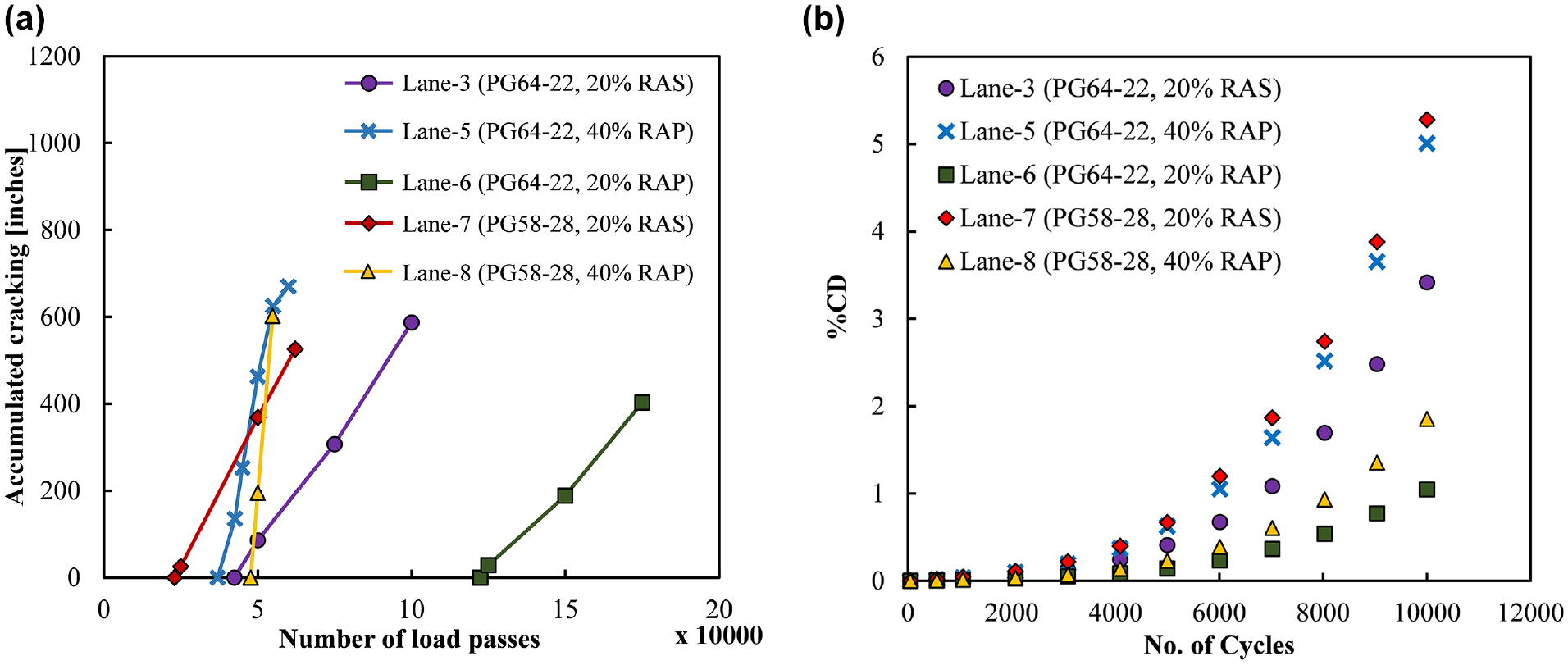
The performance results of the ALF test lanes: (a) accumulated cracking observed in the field; and (b) CD (%) prediction calculated by the computational model.
Figure 9b shows the performance prediction of the ALF test sections using the finite element pavement model shown in Figure 7. The figure depicts the CD (%) as a function of loading cycles for different lanes (AC mixtures). Unlike the field observation presenting appearance of surface cracks, the model simulation presents cumulative damage induced by CZ elements within the critical region. It is thus not feasible to make direct comparisons between the model simulations and ALF observations. Also, the simulation was conducted in 2-D modeling without rest periods between loading cycles, while the ALF was conducted in 3-D with rest periods. Nonetheless, the model is sensitive enough to capture the variability in the pavement performance among lanes. The model predicts similar performance rankings to that observed in the field except for Lane-8, which was substantially deteriorated by moisture within the unbound layers. With regard to performance rankings between Lane-5 and Lane-7, the model predicted a similar CD (%) trend up to 10,000 cycles, which was not observed from the ALF data where a higher rate of damage accumulation was observed from Lane-5. It is not certain why at this stage, and further examination is in progress by the authors. Although not fully validated because of the limited computing power and different indicators used, the results shown in Figure 9 imply the promising capability of the model to predict the performance rank order. The pavement modeling approach presented in this study indicates that, if significant numbers of loading cycles were to be simulated, pavement cracks on the surface could be modeled without the need for transfer functions. The computational modeling approach such as the one in this study has the potential to aid the mechanistic analysis and design of pavements although more field-level validations are still necessary.
Summary and Conclusions
The study presents the capability of the NVCZ computational pavement modeling approach incorporated with the Gaussian damage evolution to predict crack-induced pavement performance. Five mixtures differing in their binder grade and RAP/RAS content were selected and their linear viscoelastic behavior and fracture properties were characterized. The NVCZ fracture model with the Gaussian damage evolution function was used to obtain the mixture fracture properties through the calibration process. The mixture properties were then directly used within a pavement model similar to the ALF test section for predicting fatigue damage under repeated loading cycles. Model simulation results were compared with the field performance data. The following conclusions can be drawn.
The NVCZ fracture incorporated with Gaussian damage evolution function can successfully characterize fracture of the mixtures and pavement cracking within the typical finite element model framework.
The pavement model that used the mixture characteristics as inputs to predict fatigue damage of pavement performance showed similar trends to that observed from the ALF test sections. Although not fully validated because of limited computing power, results imply the promising capability of the model to predict performance rank order among cases.
The computational modeling presented in this study has the scientific rigor to predict complex nonlinear rate-dependent viscoelastic fracture of mixtures and pavements with a good modeling efficiency with a few laboratory tests. Dynamic modulus and fracture properties from a typical SCB experiment are necessary to conduct the modeling.
Several key assumptions were made in the modeling presented in the current study which can be further improved. The AC mixture was assumed to be a homogenous viscoelastic material and the fracture characteristics of mixtures and fatigue performance of pavements were obtained under a single temperature and short-term aging condition. The pavement fatigue simulation was conducted with a relatively small number of loading cycles without considering damage healing as a result of rest periods.
The modeling can be improved by considering other features such as the microstructural characteristics of the mixture and the effects of moisture and aging of mixture properties. A more realistic multiscale-multiphysical aspect can also be considered. In particular, the effects of mixture constituents (such as binder properties, RAP/RAS, aggregate size, gradation, volume fraction, additives, etc.) can be addressed using the two-way coupled multiscale modeling approach where individual properties of the constituents are directly linked to the overall fracture properties of the mixture and pavement performance ( 35 , 36 ).
Footnotes
Acknowledgements
The authors would like to thank Mr. Scott Parobeck and Mr. Frank Davis of SES Group and Associates, LLC for fabricating specimens and performing the testing required in this study.
Author Contributions
The authors confirm contribution to the paper as follows: study conception and design: Y-R. Kim; data collection: M. Elwardany, D. J. Mensching, S. R. Kommidi; analysis and interpretation of results: S. R. Kommidi, M. Elwardany, Y-R. Kim, D. J. Mensching; draft manuscript preparation: S. R. Kommidi, Y-R. Kim, M. Elwardany, D. J. Mensching. All authors reviewed the results and approved the final version of the manuscript.
Declaration of Conflicting Interests
The author(s) declared no potential conflicts of interest with respect to the research, authorship, and/or publication of this article.
Funding
The author(s) disclosed receipt of the following financial support for the research, authorship, and/or publication of this article: The authors are grateful for financial support by Texas A&M Engineering Experiment Station.

Data Accessibility Statement
Some or all data, used during the study are available from the corresponding author by request.
The contents of this paper reflect the views of the authors, who are responsible for the facts and the accuracy of the data presented here. The contents of this paper do not necessarily reflect the official views or policies of the sponsor at the time of publication.