







Abstract
Risk management is an important part of ensuring the successful delivery of major transportation projects. The first step in the risk management process is to identify the risks facing the project team so they can proactively complete the remaining steps: analyzing the severity; choosing how to respond; and controlling the level of risk throughout the lifecycle of the project. Although some state agencies have been practicing risk management for nearly two decades, little analysis of the risks identified during project development has been done. This study analyzes the risk registers pertaining to 51 major transportation projects undertaken by the Washington State Department of Transportation valued at approximately $7.7 billion to determine the distribution of risks among categories in the risk breakdown structure and find the most common risks in each category. The findings were then explored through interviews with industry professionals to gain insight into the results, add context, and illustrate the importance of identified risks. The results contribute to a better understanding of the risks facing transportation departments and lay the foundation for a more comprehensive risk identification step at the project level.
Keywords
Major transportation projects face many challenges during the course of successfully completing their objectives, because transportation departments must navigate a diverse set of stakeholders, a variety of geographic conditions, and in some cases a high degree of technical complexity. Utilizing risk management is one way to increase the likelihood of a project being delivered successfully. Risk management involves identifying and analyzing risks, and determining the appropriate responses so that the project team can gain a degree of control over the uncertainty and act in a proactive, rather than reactive manner. The identification step is often described as the most important part of the process, because unless the risks are identified, they cannot be proactively managed ( 1 ). Among the tools and techniques available to assist with risk identification, brainstorming, case-based approaches, and checklists are the most commonly used, and the outputs are consolidated in a risk register for the team to assess, review, track, mitigate, and control risks throughout the lifecycle of the project ( 2 ). Additionally, risk registers can serve as the basis for risk identification with regard to future projects. For major infrastructure projects, risk workshops at which discussions are held with subject experts and their opinions sought are considered a best practice, and they are used to inform the inputs to the risk register ( 3 ).
As one of the state highway agencies leading the way in risk management, the Washington State Department of Transportation (WSDOT) has developed the cost estimate validation process and the cost risk assessment (CRA) to assist in controlling risk ( 3 ). Following the initial stages of development, it created the Project Risk Management Guide, which outlines the process by which risk management planning, the identification of risks, their analysis, response to risks, and their control are to be carried out ( 4 ). The utilization of these practices is evidence of WSDOT’s reputation as one of the more advanced state highway agencies with respect to risk management, and points to its maturity as an organization in this field. Despite its long history with regard to implementing risk management in relation to transportation infrastructure projects, there has been no analysis to date on the contents of its risk registers. This leaves an open question as to whether the risk workshops are accomplishing the task of comprehensive risk identification, and how effectively the teams are capturing major risks.
This study aims to contribute to the body of knowledge on risk management by examining risk registers concerning major transportation projects compiled by a state agency with a mature risk management program, and comparing the results with established literature. There is a lack of studies that use risk documents from past or current projects and analyze them as a primary source of data. The authors established the following objectives of the study: first, determine the distribution of risks from major transportation projects according to their risk categories; second, find the most commonly identified risks in each category; and third, explore the results with industry professionals to understand the context and obtain a better comprehension of the issues facing transportation projects. Through these three objectives, the study provides a confirmation of existing literature supported by project data rather than hypothetical situations, and a foundation for risk identification in practice. This foundation serves as a basis for further analysis, and for improving risk identification with regard to future projects.
Literature Review
There are different definitions of risk used throughout the literature, but the most commonly adopted definition, and the one used in this paper, is from the Project Management Institute. This states that risk is “an uncertain event or condition that, if it occurs, has a positive or negative effect on one or more project objectives” ( 5 ). Risk identification is the process of systematically and continuously identifying possible risks and their potential consequences for a project using different risk identification tools and techniques, classifying the risks into different categories, identifying their root causes, and documenting the characteristics of each risk ( 6 ). As the first step in the risk management process, the importance of risk identification is well documented ( 1 , 7 – 9 ). Although more than a dozen tools and techniques can be used to identify risks, the most commonly implemented are risk checklists, brainstorming, and input from subject experts ( 2 , 10 ). Both the WSDOT guide and the Federal Highway Administration (FHWA) guide recommend these methods, with the end goal being a comprehensive set of independent risks that the project team can incorporate into their strategy to increase the likelihood of a successful outcome.
The results of the project risk identification process are documented in the risk register. From this document, the risks can be refined, analyzed to determine the probability of occurrence and impact on project objectives if they occur, and updated as the project timeline progresses. The FHWA guide recommends classifying risks into groups of similar types to reduce redundancy and make managing them easier ( 3 ). Classifying risks has its own section of the literature, because different authors propose classifying risks in different ways: source; nature; occurrence at different stages of the project; impact on project objectives; the party who might be the originator of the risk; or a three-level metaclassification approach using macro-, meso-, and micro-levels ( 2 ). The classification method used, and particularly the resulting risk breakdown structure (RBS), will likely differ based on the type of project, the type of procurement, and who is performing or using the risk analysis.
Some studies have attempted to synthesize the literature to develop common categories across multiple types of construction projects. Siraj and Fayek comprehensively reviewed the construction literature with regard to risk identification by examining 130 articles and then compiling the 10 most common risks into 11 different categories ( 2 ). Tavakolan and Etemadinia carried out a literature review to identify 63 risk factors in 9 categories affecting construction projects, while also examining the relationship between risks, or “risk pathways” ( 11 ). Banaitiene and Banaitis developed 20 “controllable” risk factors in 7 categories, combining proposed risk factors from 11 other studies, and then recorded the survey results to determine the most probable and highest impact risks ( 7 ). Other studies focused primarily on transportation infrastructure projects and risks specific to that sector, for example, railroad projects ( 12 ), transportation projects ( 13 ), and highway projects ( 14 , 15 ).
In our examination of the literature, we discovered a trend among studies that propose classification schemes and risk factors. They either review and synthesize existing literature to create a generic list of categories and factors, or they use surveys to identify potential risk factors for hypothetical projects, and then assess their hypothetical probability and impact. How these findings translate into risk identification for real projects is an underexplored area. Hypothetical exercises may be useful on a broad level, but do not benefit from a review of specific project documentation, which can be treated as a source of risk. This study addresses that gap by utilizing the risk registers of projects during their planning and design phases as a primary source for analyzing and documenting what risks are identified by project teams, and how they compare with those identified in the literature.
Methodology
For the analysis, the authors prioritized examining the risks that were identified by the project teams, rather than attempting to study the impact of the projected risks, or focusing on risks that might have occurred during the project. The research design was broken down into two phases: (i) a content analysis of the risk statements provided in the risk registers; and (ii) exploratory interviews with industry professionals based on the results of the first phase. For phase 1, the authors analyzed the content of risk registers pertaining to 51 transportation projects executed by WSDOT valued at approximately $7.7 billion dollars. A breakdown of the projects’ size and the phase during which the risk workshop was conducted is provided in Figures 1 and 2, respectively. The risk workshops were conducted between 2003 and 2013 with the highest number completed in 2005, and no records in either 2007 or 2008. The risks were categorized using the RBS in the WSDOT Project Risk Management Guide ( 4 ). The RBS contains the following 10 categories with example subcategories listed for each:
Environmental and Hydraulics—National Environmental Policy Act/State Environmental Policy Act, environmental permitting, hazardous materials;
Structures and Geotech—design changes, changes to design criteria;
Design/Plans, Specifications, and Estimates—design changes, design reviews, approval of deviations;
Right of Way—right of way plan, acquisition issues, limited access;
Utilities—coordination, conflicts;
Railroad—coordination, right of entry;
Partnerships/Stakeholders—tribal issues, public involvement, third party scope;
Management/Funding—delayed decision making, cashflow restrictions, workforce limitations;
Contracting and Procurement—change in delivery method, market conditions, delays in award;
Construction—traffic control, accidents, earthwork issues.
Content analysis is a systematic means of identifying and organizing themes in written material, and is used to make valid inferences from texts to the context in which the information is used ( 16 ). The units of analysis for the study were the individual risk statements from each project. The categories WSDOT uses in the RBS have changed multiple times since 2003, so the authors manually classified statements that were listed under an outdated category (e.g., Political and other External Influences) according to the current scheme. Further, some similar risks were assigned to different categories depending on the project. For example, one project listed “market conditions” in the Construction category, whereas another project listed it under the Contracting and Procurement category. In this case, the current RBS considers market conditions to be a contracting and procurement risk, so the category was changed in the projects that did not follow the current format. Out of more than 1,300 risk statements, less than 10% of the risks required a change in classification or were classified manually by the authors. The risks were compiled in a database for analysis to determine the overall distribution of risks in each category, as well as the most frequently cited risks in each category. The distribution displays the sum of identified risks in a category compared with the total number of risks from all projects.
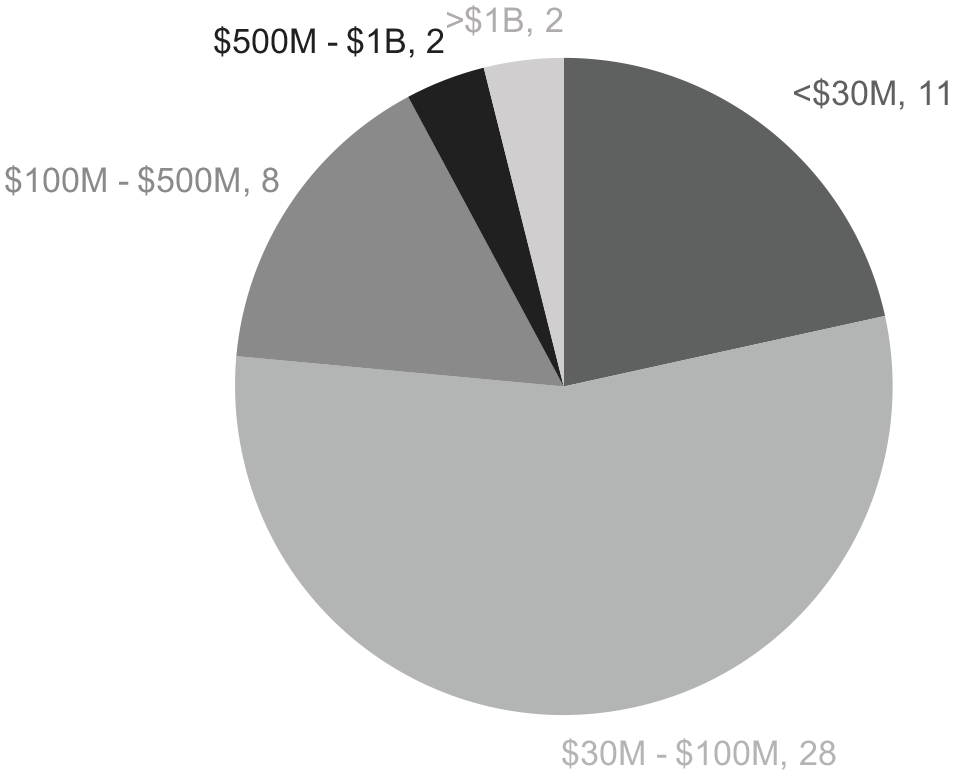
Project size.
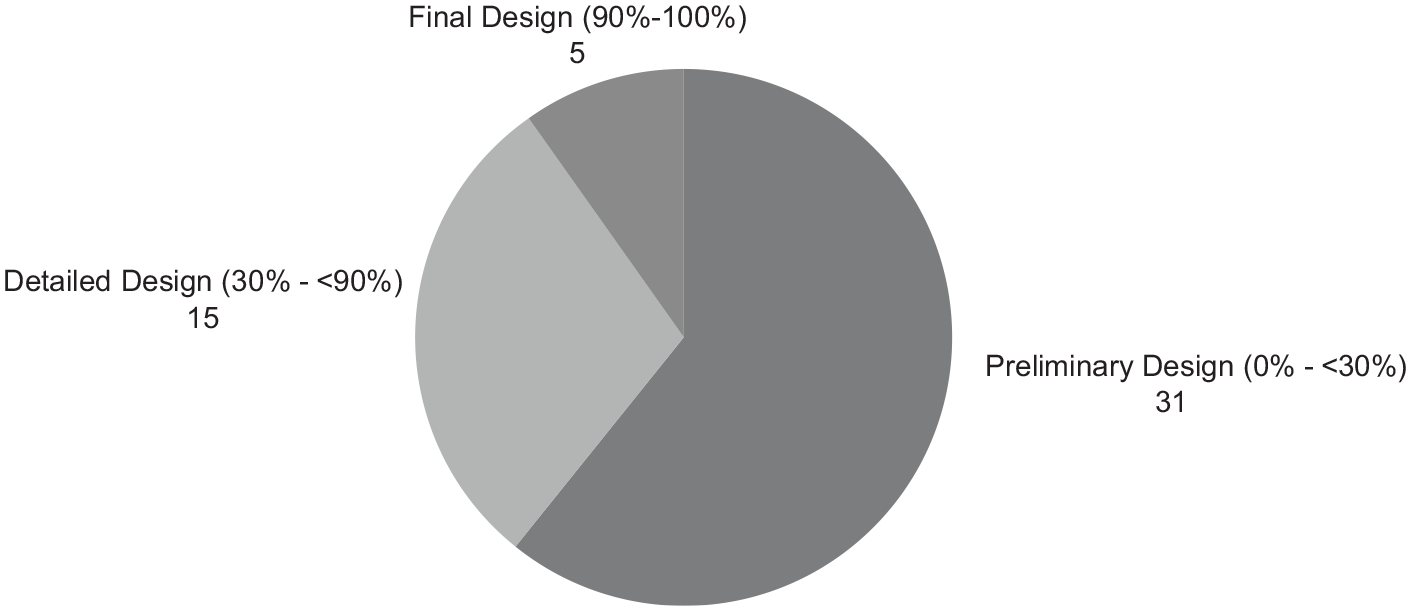
Project phase during which the risk workshop took place.
The risk workshops were conducted primarily in the early stages of design, and consisted of between 12 and 25 participants who contributed to the identification and impact analysis. The CRA reports typically contained a “risk title,” which represented the theme, followed by a detailed description of the events and circumstances that could threaten the project objectives. Because of the varying input from different participants and the specificity of risk statements geared toward individual projects, the authors generated the most common risks by examining themes among the risk statements rather than focusing on the exact wording. For example, the “maintenance of traffic/traffic control” theme in the Construction category consisted of risk titles such as “additional traffic control required,”“traffic control difficulties,”“work zone traffic control (WZTC) problems,” and “construction traffic control.” The number of risk statements assigned to appropriate themes were tallied, and the top risk themes containing at least 10 risk statements across the set of projects were reported for each category. Several categories had fewer than three risk themes that were commonly identified across projects: Utilities; Railroad, Partnerships and Stakeholders; and Management. In contrast, both the Environmental and Hydraulics and Construction categories had more than three.
In phase 2, the authors conducted exploratory interviews with industry professionals to gain insight into the results, add context, and illustrate the importance of identified risks. Exploratory interviews are appropriate in this instance because they seek to add depth and develop ideas rather than gather numerical facts and statistics ( 17 ). An email requesting participation was distributed to members of the cost risk estimating management (CREM) community of practice. At the time of the study, the CREM membership consisted of more than 150 cost and risk analysts in the transportation sector across the U.S.A. Nine interviews were conducted with industry professionals who volunteered to participate in the study: three individuals represented private consulting companies specializing in risk management; four represented state departments of transport; and two were FHWA project engineers. All professionals had between 10 and 30 years of experience in the industry with an average of 23.67 years. Of that industry experience, the participants had an average of 14.1 years of risk-specific experience, with several having been involved in over 100 risk workshops throughout their careers. All but one of these professionals had one or more relevant licenses or certifications. The participants were shown Figures 1 to 3 and Table 1, and asked for feedback with regard to the overall distribution and most common risks in each category. Specifically, the participants were asked to comment on irregularities in the distribution (Figure 3) and identify any uncommon risks or notable absences from Table 1. The professionals were then asked to comment on the individual risk themes and the collective list to add any relevant insights. The interviews provided rich discussion and served the purpose of gaining insight into the content analysis findings and obtaining a deeper understanding of them. Those interviewed provided similar themes and responses, and the authors determined that additional interviews would not likely lead to any new insights and, therefore, would not be necessary.
Most Frequently Identified Risks in Each Category
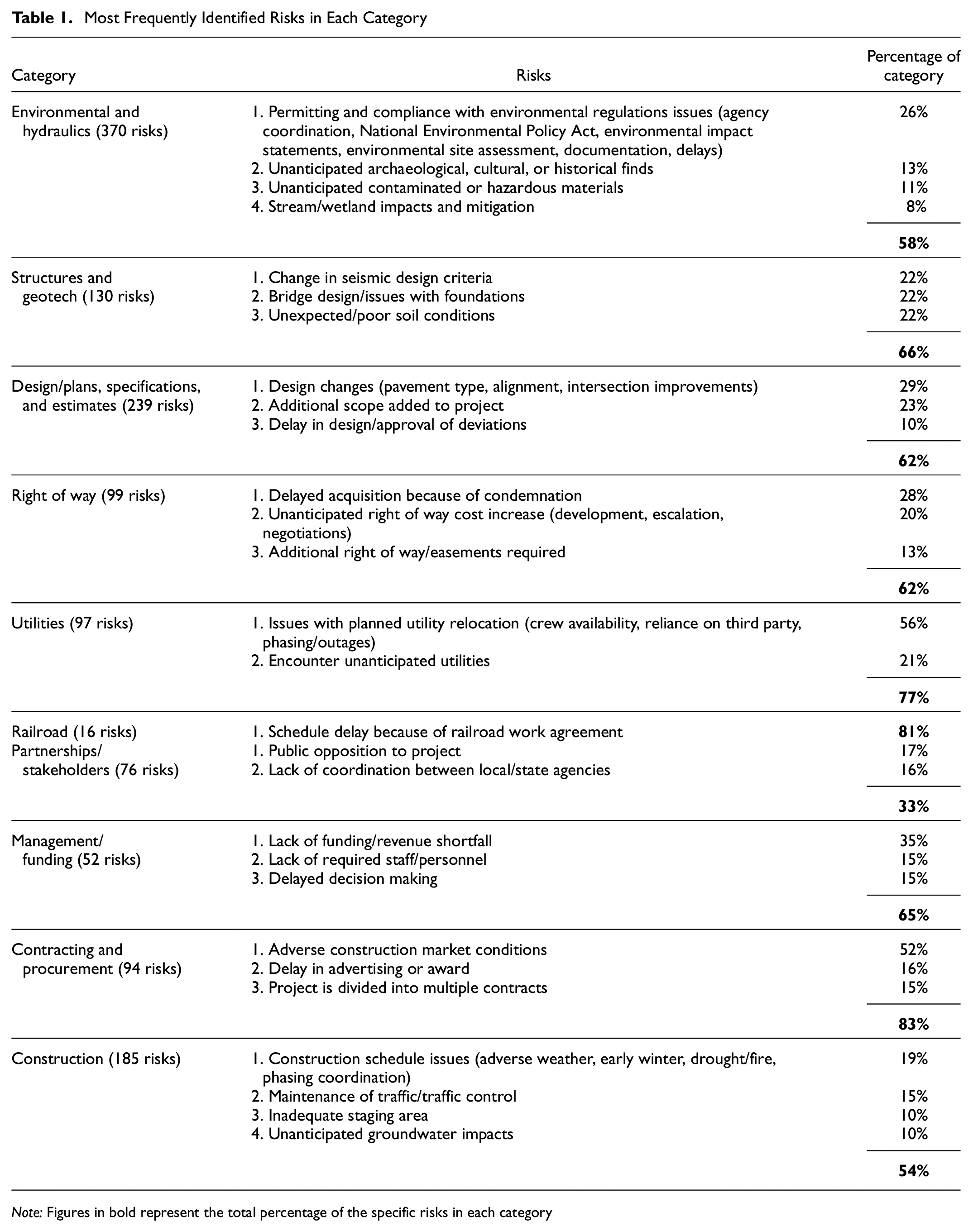
Note: Figures in bold represent the total percentage of the specific risks in each category
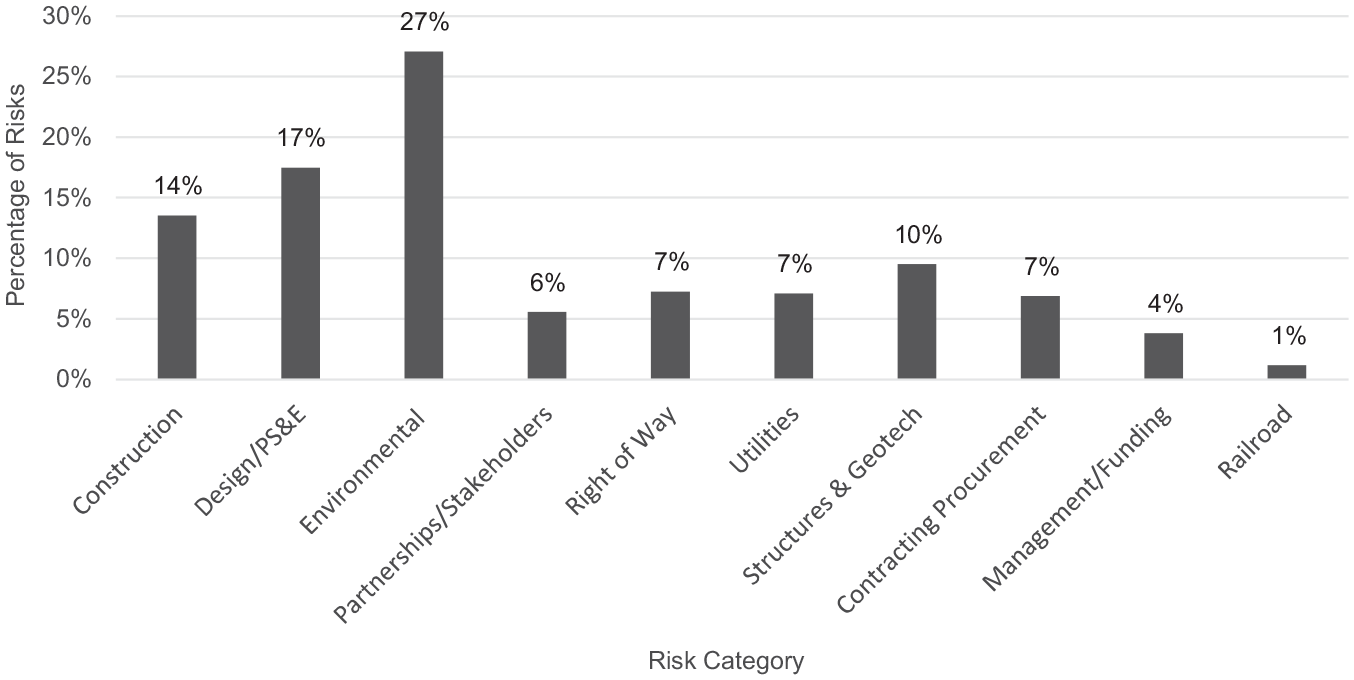
Overall distribution of risks.
Findings and Discussion
The main findings of the content analysis were the distribution of risks among the RBS categories, depicted in Figure 3, and the most frequently cited risks in each category, shown in Table 1. This figure and table summarize the data analysis, whereas the following paragraphs provide insight into the analysis and put the findings in context. The summary of the interview comments with regard to the findings is included in this section, as well as a comparison with existing literature.
Overall Distribution of Risks
The overall distribution is a useful tool that provides an overview for discovering trends among identified risks with the goal of finding areas that have been over- or underemphasized. That is, if one category has a much higher or much lower percentage of total identified risks, this warrants a deeper examination of why that might be the case. If there is no reasonable explanation, this could mean the team is focusing too heavily on the category, or largely ignoring it. Examining this distribution is one way of performing a gap analysis with the purpose of establishing a more comprehensive identification process.
The overall distribution shows a relatively even number of risks identified in most categories with a few notable exceptions. Environmental risks were more frequently identified than any other category. According to the professionals interviewed, this is likely the result of several factors. Washington is a coastal state with many waterways, wetlands, and natural habitats that must be taken into account. The number of environmental considerations is largely unique to this state and a handful of others, so the results should not be generalized across the country. It was also mentioned that the project team tend to be least familiar with environmental risks, so for this reason they get more attention than some of the more technical aspects with which the team is far more comfortable. Finally, the Environmental and Hydraulics category in these risk registers captures many different items, which are more likely to be listed separately rather than grouped together as is the case with risks in some of the other categories such as Utilities or Right of Way. The Utilities and Right of Way categories in particular were mentioned by multiple professionals as containing a lower number of risks than expected, because of grouping. It was extremely common across the projects to see only one or two risks assigned to each of these categories, although the detailed descriptions listed several separate issues. For example, there may be more than 10 properties requiring acquisition in relation to right of way, but they all face the same risks of “delayed acquisition” and “unanticipated cost increase,” so instead of listing the properties separately for each parcel of land, just the two risks were listed, and the impact analysis included the aggregation of the different properties. Railroad risks were also very infrequently identified, accounting for just under 1% of the overall distribution. This is probably because it is unlikely a railroad will be encountered as part of the project; the professionals noted that railroad risks tend to be very significant if they are encountered. Interestingly, there were only minimal changes to the distribution of risks when the projects were separated into the size and phase groups established in Figures 1 and 2. Similarly, when the data were split into groups based on the year of the risk workshop, the distributions were nearly identical. Out of the three groups (2003–2004, 16 projects; 2005–2006, 17 projects; 2009–2013, 18 projects) there was a higher proportion of Environmental and Hydraulics risks in the 2003–2004 group, and a higher proportion of Structures and Geotech risks in the 2009–2013 group. This represents an initial observation based on the available data, and highlights an area for future research.
Most Frequent Risks
The primary focus of the analysis was to find common themes among risks that were identified across many projects in each category. The authors recognize that the frequency of risks may not present a full picture; a minor risk that has little impact on the objectives could be identified for every project, whereas a major risk might only be identified for a handful of projects, yet have a significant impact on the objectives. The authors examined the project documentation to find both agreement between the common themes and the highest impact risks based on the result of Monte Carlo simulations. Nearly all the themes listed in Table 1 and described below were listed as one of the top cost or schedule risks for at least one project. Each category is discussed individually and general comments are included at the end.
Environmental and Hydraulics
The top risks identified in this category were unanimously supported by the professionals interviewed. Naturally, adherence to environmental permitting and compliance regulations is essential, but uncertainty comes from the length of time needed to complete the process, and in some cases, the outcome of an investigation is doubtful. Other risks mentioned under this theme were challenges to environmental documentation that could result in a change in project scope that would increase the cost and lengthen the schedule. Permitting and compliance risks are also commonly mentioned in the literature ( 13 ), as well as incomplete assessments ( 7 ) and challenges to environmental documentation ( 18 ). The next two most common themes are sometimes consolidated in project risk registers as an overarching “unexpected site conditions” theme, but in the registers we analyzed the conditions were itemized so the probability and impact of the individual risk could be assessed better. Encountering unanticipated conditions of any kind can add scope, cost, and time to the project. Stream or wetland mitigation risks mainly referenced the potential for the requirement of additional mitigation beyond what was initially planned. This could be triggered by changing regulations or different modeling results. Additional risk themes that were identified less frequently, but mentioned by multiple professionals, were issues with regard to storm water management and noise mitigation.
Structures and Geotech
The most frequently identified risk in this category is a change in seismic design criteria. After discussions with the professionals, it was noted that this risk was specific to the time frame of the projects during which the seismic standards were undergoing reviews and updates that would require a retrofit or more costly structures, and that it is currently not so much of an issue. Further, it is quite specific to regions with seismic activity. As a result of these discussions, this particular risk was examined more closely, and it was not a risk identified in any of the risk registers in the 2009–2013 group, suggesting that it would likely not be a common risk in the future and could potentially be removed from the list. Bridge design and issues with foundations included risks associated with changing the type of foundations, the span length of the bridge, or widening structures. Unexpected soil conditions is another theme that can sometimes be grouped under the “unexpected site conditions” risk, but is detailed in these risk registers as different soil types or the discovery of obstructions. Soil condition risks are also mentioned throughout the literature on transportation projects ( 15 , 19 , 20 ). These three themes made up nearly all of the risks identified in this category.
Design/Plans, Specifications, and Estimates
Design changes topped the list of identified risks in this category. Generally, the professionals pointed out that this is a broad category, and it may be important to distinguish between preferential design changes and required changes to comply with policies, codes, and regulations. One of the frequently stated reasons for including this risk is the existence of multiple possible scenarios during the planning stage when the risk workshop took place. Making an assumption of a scenario is necessary to budget the project, but creates a risk that the assumption was wrong and the design would need to be changed. Other aspects include errors in the design, different traffic volumes than expected, choosing a different pavement type, or changing the alignment. Design changes are closely related to added scope, and they could be the result of missing a requirement during scope development, or a simple change in preference later in the project timeline. Adding scope often leads to changes in the design, but there were enough risks that identified these as different issues for them to be listed separately. Some of the specific scope additions mentioned in the risk registers included noise walls, turnouts for maintenance access, and general improvements to accommodate the requirements of local municipalities. Finally, delay in design approval or approval of deviations, allowances, or exceptions was a common important risk theme that multiple professionals highlighted. The three risk themes of design changes, adding scope, and delay in approval are frequently mentioned in the literature, and design changes because of errors or omissions is the most common ( 7 , 11 , 12 , 15 ).
Right of Way
This category was frequently mentioned in the interviews as being high impact. It has been noted in the literature that some projects omit right of way costs from early estimates entirely ( 21 ). The professionals certainly agreed with the themes identified in this category, but stressed that although these risks may not initially be seen in the overall distribution of risks, they are very important. That is, there may not be as many separate risks identified in this category but, undoubtedly, they have one of the highest impacts on a project. Condemnation was a frequently mentioned risk in that these projects typically require dozens of land acquisitions and the possibility of any of them requiring settlement in court could delay the project timeline. Although the process may not result in condemnation, any issue delaying the acquisition of right of way should be considered under this theme, and it is also mentioned as a risk factor in the literature ( 18 ). On a related note, the cost increase of land acquisition was frequently listed, as there is a high degree of uncertainty surrounding the acquisition price. This could be because of new developments in or near the area, escalation of costs over time, or negotiations not going quite as expected. Additionally, several projects identified the risk that additional right of way beyond what was initially planned may be required to complete the project scope.
Utilities
Only two major themes dominated this category, accounting for nearly all of the identified risks. The first set of risks involves utility relocations that typically require liaising with local municipalities and utility companies. The coordination and timing of construction windows are extremely important to ensure the disruption to the public is minimal and the crews can operate as safely as possible. The second set of risks is concerned with the discovery of unanticipated utilities that might require relocation or removal. This is yet another risk that is specifically identified in the risk registers that were examined rather than being lumped together under “unforeseen site conditions” as it is in other risk analyses. Unexpected utilities have been categorized separately throughout the literature as well ( 12 , 13 , 15 , 18 , 20 ). Specific risks identify septic systems, wells, water and wastewater lines, gas lines, fiber cables, and power lines as utilities that could be encountered or need to be relocated.
Railroad
As mentioned previously, there were very few risk statements classified in the Railroad category. This is either an oversight by the project teams, or a result of limited railroad involvement in the projects analyzed. For the risks that were identified, the only theme was the necessity of liaising with the railroad companies, which could result in the project having to be postponed because of a delay in design reviews, approvals, or providing necessary work windows. The professionals commented that similar to right of way, risks in this category can have a huge impact on the project even if few specific risks have been identified.
Partnerships/Stakeholders
Some of the risks in this category were initially assigned to a separate category that no longer exists in the current RBS used by WSDOT, that is, Political and other External Influences. After re-classifying appropriately, the first theme in this category is public opposition to the project, which could be protests, lawsuits, pressure to reduce the impact of construction on the public as much as possible, or scope changes because of social/political pressure. This is a risk mentioned directly in numerous studies using the terms public objections ( 7 ), claims and lawsuits ( 19 ), and legal challenges ( 18 ). The second theme concerns having to coordinate with local agencies, which presents the potential for misunderstanding project responsibilities or can result in conflict with other ongoing projects. This risk is also mentioned in the literature using the terms intergovernmental agreements ( 18 ) and poor coordination ( 19 ).
Management/Funding
The main themes in this category address a potential shortage of funding or personnel needed to manage and execute the project. Funding concerns were one reason multiple possible scenarios were considered for some of the projects; certain aspects of the scope were only included in the “full funding” scenario. Delayed funding was also identified as a factor that could delay the overall project. Unavailability of funds ( 11 ) and delay in payments ( 19 , 20 ) were also discussed as risks in the literature. Lack of personnel could result in an inability to complete work on time, or cost increases because of needing to hire consultants or additional staff. A theme that was not initially identified until after the interviews was risks associated with the timeliness of decision making. Any delay in choosing between proposed alternatives, could have knock-on effects with regard to construction work windows, and affect the ability to deliver the project on time.
Contracting and Procurement
The most frequently identified risks in this category came under the theme of market conditions, which could have an impact on the bidding environment or level of competition for the project, and include increases in labor and material costs. Many studies cite market conditions as a risk ( 2 , 12 , 18 ) as well as escalation in material costs ( 11 , 18 ). Delay in the contract timelines in relation to advertising or award dates were other common risks that cited review timelines, nonresponsive bids, or addenda as reasons for the delay. It was identified that projects with multiple phases or a large scope of work were often divided into multiple contracts. Executing multiple contracts rather than a single contract could result in price increases and inefficiencies on the part of the contractors, and the state agency having to undertake additional administrative work to prepare the contracts for bid. A further risk pointed out by the professionals that only appeared a few times in the risk registers is a change in project delivery method.
Construction
The Construction category was unique in that many of the identified risks overlapped with those in other categories, but could be classified as construction risks because of when they occurred. Temporary erosion and sediment control, soil or geotechnical conditions, and procurement of materials are all examples of risks that were identified in the Construction category, but could just as easily belong to the Environmental and Hydraulics, Structures and Geotech, and Contracting and Procurement categories, respectively. The most frequently occurring theme was construction schedule risks, including adverse weather conditions, issues with the coordination of construction phases, and lower productivity than anticipated. There were a few risks that fell into this theme that did not identify a specific reason for the delay, but generically addressed the possibility that the project would not be delivered on time. Weather conditions are frequently mentioned in the literature ( 12 , 13 , 15 , 19 , 20 ), as are other construction-related delays ( 11 ) and scheduling errors ( 7 ). Traffic management during construction was the next most common theme, including WZTC, requiring more traffic control measures or labor than initially planned, or needing to change the traffic control plan because of excessive delays to traffic flow. The literature also supports the identification of traffic management risks ( 14 , 18 ). Staging risks were also frequently identified, covering issues such as a lack of space or difficulties in accessing the work site, and the inability to store or dispose of materials. Finally, the impact of groundwater was commonly listed as a construction risk, with the need for dewatering operations beyond what was initially planned. This is yet another risk that could be classified in the Structures and Geotech category, but was almost exclusively captured as a construction risk in the registers.
Implementation
The common risks listed in each category can serve as a useful tool for any transportation project team conducting a risk analysis. During discussions, the professionals unanimously agreed that such a list capturing as many risks as possible would be beneficial for comprehensive risk identification. Discussions about implementation of the list converged on two possible uses: (i) as a starting point for risk identification to generate discussion on the themes listed and identify project-specific risks associated with the theme; or (ii) as a “back pocket” checklist to ensure the major items have been covered once the initial round of risk identification is complete. The first approach allows participants to generate relevant risks and potentially save time by focusing the brainstorming, but comes with the possibility of introducing bias and limiting the creativity that might have been generated without a pre-populated list. The second approach removes the possibility of bias, but could result in a less focused session with fewer risks identified until the list is consulted to address gaps. There was no consensus among the professionals as to which approach would be better, but all agreed that having the list would add to a team’s ability to identify risks. The authors recommend organizations evaluate their specific circumstances to determine which method would be most effective. If the risk workshop participants have some experience with the project type and are likely to be active in discussions, the second approach of producing the list after the initial round of risk identification may be more appropriate. Conversely, if the members of the team have less experience or are not particularly vocal, using the list to generate discussion may prove to be more effective.
Limitations
The study was conducted using a limited dataset of transportation projects specific to the state of Washington. Considering the geography of the state, seismic activity in the region, and the type of project analyzed, the results may not be generalizable to the construction industry as a whole, or in some cases even to other transportation departments across the country. The specific generalizability limitations have been pointed out in the discussion, but the findings should be considered within that context. The dataset also consisted of projects that fall primarily between $10 million to $100 million. Although there were no differences in the risks identified between projects of different sizes examined in this study, we recognize that the top risks may be slightly different for major projects exceeding $500 million or smaller projects of less than $10 million. For instance, inflation would be a more important risk for a major project that lasts several years, as opposed to a smaller project taking only a year or two to complete. Another limitation is that the analysis focuses on the frequency of risks identified without a detailed examination of the severity of the risk or its impact. The number of times a risk is mentioned across projects may be a good indication of its presence, but may not tell the whole story with regard to how important the risk is. Future research could focus on identifying the risks with the highest projected impact, and comparing those results with the risks identified in this study. Further, the analysis was focused on risks identified at an important phase of the design. The analysis was limited to this time frame and did not include either changes to the risk register as the project progressed, or a consideration of risks that occurred during construction of the project. These areas were not in the scope of this study and could be the subject of future research if sufficient data on risk mitigation and resolution could be obtained. Finally, the analysis did not include the specific type of transportation project (e.g., add capacity, intersection, rehabilitation, or bridge), which could add even greater context to the distribution of risks or most frequently cited risks. Future research will include additional risks from other state agencies, as well as examine the relationships between the risks, and the relationships between identified risks and project characteristics that are recognized in the planning stages of the project.
Conclusion
Major transportation projects face many challenges during the course of successfully completing their objectives. Implementing risk management is widely recognized as a way of improving the chances of doing so. Although some state agencies have been practicing risk management for nearly two decades, little analysis has been done on the risks identified during project development. This study analyzed 51 major transportation project risk documents to determine the risks that were frequently identified by project teams. The analysis identified 28 risk themes that were commonly classified under the 10 categories of the RBS. The results of the analysis were presented to industry professionals for added context and additional understanding of the risks. The feedback from the professionals revealed that as a whole, the common risk themes covered the types of risk a project team could expect to encounter, suggesting that the risk workshops were successful in identifying the relevant risks. The professionals’ discussions were supplemented with a review of the literature to determine areas of agreement. The risk themes presented in this research can be used by WSDOT to facilitate future risk workshops, or by other state agencies as the basis for creating their own RBS or risk checklist to assist in identifying risks associated with their projects.
Footnotes
Acknowledgements
The authors would like to acknowledge the assistance provided by Mark Gabel and the Cost Risk Assessment Office, Washington State Department of Transportation, and members of the cost risk estimating management community who contributed their time in support of this research.
Author Contributions
The authors confirm contribution to the paper as follows: study conception and design: Evan Dicks and Keith Molenaar; data collection: Evan Dicks; analysis and interpretation of results: Evan Dicks and Keith Molenaar; draft manuscript preparation: Evan Dicks. All authors reviewed the results and approved the final version of the manuscript.
Declaration of Conflicting Interests
The author(s) declared no potential conflicts of interest with respect to the research, authorship, and/or publication of this article.
Funding
The author(s) received no financial support for the research, authorship, and/or publication of this article.

Data Accessibility Statement
Some or all data that support the findings of this research are available from the corresponding author by reasonable request.